Arxan
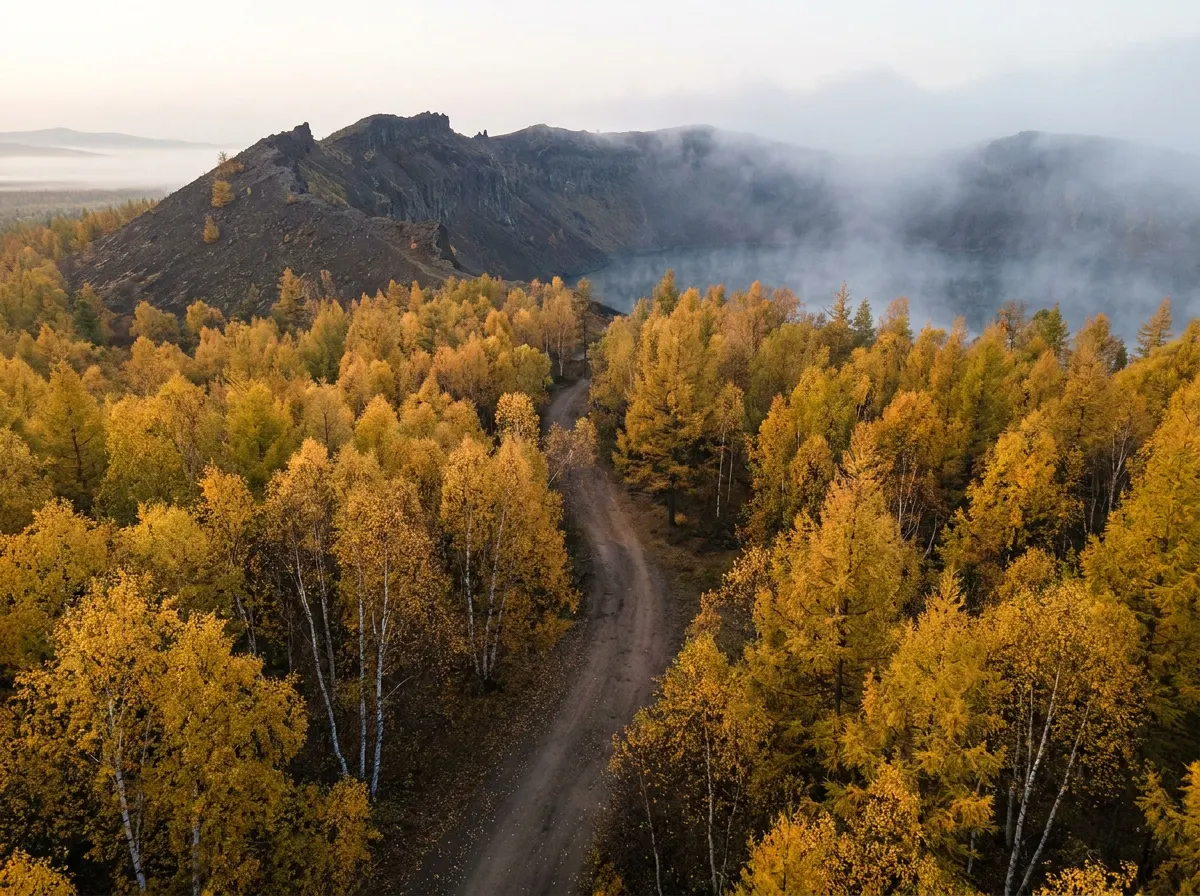
Arxan (阿尔山, Ā'ěr Shān) is a small town of about 50,000 people in the Greater Khingan Mountains (大兴安岭, Dàxīng'ān Lǐng) of eastern Inner Mongolia, near the border with Mongolia proper. Its name comes from the Mongolian word for "hot spring" (Arshan), and the town has been a spa destination since the 1930s, when Japanese colonial authorities built a hot-springs sanatorium and the small railway station that is now arguably China's most beautiful surviving Japanese-era station building. The landscape around Arxan is dormant volcanic terrain — lava plateaus, crater lakes, mineral springs, and birch and larch forests that turn brilliant gold in late September — all set in the crisp, clean air of the Greater Khingan range at elevations of 1,000-1,700 meters. The signature attraction is the Arxan National Forest Park (阿尔山国家森林公园), which contains a volcanic crater lake (Tianchi, 天池 — different from the more famous Changbaishan Tianchi), the dramatic Santan Gorge (三潭峡), and the surreal Shitang Forest (石塘林), where trees grow directly out of a lava field. The honest downside: Arxan is remote — 5-6 hours from Hailar by road, with no high-speed rail connection as of June 2026 — and the infrastructure is limited, with basic hotels and almost no English spoken. The visiting window is short (June-September for green landscapes, late September for autumn colors, December-February for the snow-covered winter landscape). But for travelers who want a Chinese nature destination that feels genuinely remote, Arxan delivers a landscape of volcanic lakes, birch forests, and mountain air that is unlike anything in China's better-known national parks. Allow 3-4 days for the park plus 1-2 days for grassland excursions. Direct flights from Beijing or Hohhot to Ulanhot Airport, then 2-hour drive to Arxan town. The town also has a small airport (YIE) with limited regional connections. Travel insurance with medical evacuation coverage is essential due to the remote location and limited medical infrastructure. The autumn foliage window (late September to early October) draws the largest crowds — book accommodation 2-3 weeks ahead for that period. The combination of volcanic geology, hot springs, and larch forests makes Arxan one of China's most distinctive nature destinations, appealing to travelers who have already seen the famous parks and want something genuinely off the beaten path. Photography is best at sunrise and sunset, with misty mornings producing the most atmospheric shots of the crater lakes and birch forests. Local guides are available in town but English is rare — a Chinese-speaking companion or translation app is essential for exploring the park efficiently. The park shuttle bus system works well for a 1-2 day exploration, with key stops including Tianchi, Santan Gorge, Shitang Forest, Dujuan Lake, and the Unfixed River. The combination of volcanic, hot spring, and forest landscapes makes Arxan one of China's most distinctive nature destinations, attracting travelers who want an alternative to the more famous Chinese national parks. The Tianchi crater lake is the single most photographed view, best captured at sunrise when mist rises off the dark water and the surrounding larch slopes catch the first golden light. For travelers with more time, a 2-day park pass allows a slower exploration that includes short hikes into the surrounding birch forests. The Hokkaido-style atmosphere of the older larch stands — straight-trunked, dense-canopied — gives Arxan a unique character among Chinese nature destinations.
Why Arxan in 2026.
A hot springs town in Inner Mongolia's Greater Khingan Range, where dormant volcanoes cradle alpine lakes, birch forests turn gold in autumn, and China's most beautiful railway station stands frozen in 1937. Best visited September-October for autumn colors or June-August for green season. Allow 3-4 days for the park plus grassland excursions. The 1937 Japanese-era railway station is one of China's most beautiful surviving station buildings. Travel insurance with medical evacuation is essential. The Tianchi crater lake is the signature view. Late September is the most photographed peak season. Direct flights from Beijing to Ulanhot, then 2-hour drive. The autumn foliage is among the most beautiful in China. Mongolian grassland culture and ger camp stays add cultural depth to the natural beauty. Allow buffer time for weather delays at the remote airport. The Tianchi steps are steep but manageable. The hot springs are therapeutic year-round. Bring sun protection and insect repellent in summer. The Tianchi lake is the single most photographed single view. The Santan Gorge is the most popular hiking route within the park. The Shitang Forest lava field is the most unusual geological sight. The 1937 railway station is the most photographed building. Direct flights from Beijing to Ulanhot Airport, then 2-hour drive. The forest park shuttle bus is the standard way to explore. Mongolian ger camp stays offer authentic cultural experiences. The Unfixed River is a winter highlight. Combine with Hailar grassland for a broader Inner Mongolian trip. The hot springs therapeutic properties attract older Chinese tourists. The larch forests are most photogenic in late September. Tianchi steps require 998 steps, manageable for most. Sunset photography is excellent at Tianchi. Dujuan Lake offers quieter reflections in autumn. The hot springs museum is a quirky indoor experience. The town has 30+ crater lakes within an hour drive. Local guides are helpful but English is rare. Translation app is essential for non-Chinese visitors. The winter season draws serious photographers and photographers love the snow. Hot springs soak while the snow falls is an well-known experience. The Rose Peak viewpoint is best at golden hour. The grassland excursions outside town offer cultural depth. Horseback riding on the grasslands is a popular activity. Mongolian dairy products are worth trying. Travel insurance with medical evacuation is essential. The town is walkable and small. The local restaurants serve hearty northern Chinese fare. The natural beauty makes Arxan worth the travel. Allow at least 3 days for the experience. The Tianchi lake is the signature sight. The autumn colors are the main attraction. The grassland excursions add cultural depth. Hot springs year-round. Naadam in late July or August. Bring sunscreen and bug spray. The Tianchi crater lake is the highlight. Late September is peak season. Bring warm clothing. Tianchi is the highlight. The larch forests glow in autumn light. Ger camp stays are memorable. Naadam is the cultural highlight. Allow buffer for weather. Hot springs are open year-round. Allow time to soak. The larch forests are stunning in autumn.
Quick Answer
Arxan (阿尔山, Ā'ěr Shān) is a small town of about 50,000 people in the Greater Khingan Mountains (大兴安岭, Dàxīng'ān Lǐng) of eastern Inner Mongolia, near the border with Mongolia proper. Its name comes from the Mongolian word for "hot spring" (Arshan), and the town has been a spa destination since the 1930s, when Japanese colonial authorities built a hot-springs sanatorium and the small railway station that is now arguably China's most beautiful surviving Japanese-era station building. The landscape around Arxan is dormant volcanic terrain — lava plateaus, crater lakes, mineral springs, and birch and larch forests that turn brilliant gold in late September — all set in the crisp, clean air of the Greater Khingan range at elevations of 1,000-1,700 meters. The signature attraction is the Arxan National Forest Park (阿尔山国家森林公园), which contains a volcanic crater lake (Tianchi, 天池 — different from the more famous Changbaishan Tianchi), the dramatic Santan Gorge (三潭峡), and the surreal Shitang Forest (石塘林), where trees grow directly out of a lava field. The honest downside: Arxan is remote — 5-6 hours from Hailar by road, with no high-speed rail connection as of June 2026 — and the infrastructure is limited, with basic hotels and almost no English spoken. The visiting window is short (June-September for green landscapes, late September for autumn colors, December-February for the snow-covered winter landscape). But for travelers who want a Chinese nature destination that feels genuinely remote, Arxan delivers a landscape of volcanic lakes, birch forests, and mountain air that is unlike anything in China's better-known national parks. Allow 3-4 days for the park plus 1-2 days for grassland excursions. Direct flights from Beijing or Hohhot to Ulanhot Airport, then 2-hour drive to Arxan town. The town also has a small airport (YIE) with limited regional connections. Travel insurance with medical evacuation coverage is essential due to the remote location and limited medical infrastructure. The autumn foliage window (late September to early October) draws the largest crowds — book accommodation 2-3 weeks ahead for that period. The combination of volcanic geology, hot springs, and larch forests makes Arxan one of China's most distinctive nature destinations, appealing to travelers who have already seen the famous parks and want something genuinely off the beaten path. Photography is best at sunrise and sunset, with misty mornings producing the most atmospheric shots of the crater lakes and birch forests. Local guides are available in town but English is rare — a Chinese-speaking companion or translation app is essential for exploring the park efficiently. The park shuttle bus system works well for a 1-2 day exploration, with key stops including Tianchi, Santan Gorge, Shitang Forest, Dujuan Lake, and the Unfixed River. The combination of volcanic, hot spring, and forest landscapes makes Arxan one of China's most distinctive nature destinations, attracting travelers who want an alternative to the more famous Chinese national parks. The Tianchi crater lake is the single most photographed view, best captured at sunrise when mist rises off the dark water and the surrounding larch slopes catch the first golden light. For travelers with more time, a 2-day park pass allows a slower exploration that includes short hikes into the surrounding birch forests. The Hokkaido-style atmosphere of the older larch stands — straight-trunked, dense-canopied — gives Arxan a unique character among Chinese nature destinations.
| Worth visiting | Yes, for the volcanic crater lakes, the golden birch forests in autumn, and the Japanese-era railway station — but accept that it is remote and infrastructure is basic. |
|---|---|
| Recommended days | 2-3 days |
| Best time to visit | Late September for autumn colors (the birch forests turn brilliant gold); June-August for green summer landscapes; December-February for snow-covered winter scenery and hot springs |
| Daily budget | $45 (backpacker) / $130 (mid-range) / $350+ (luxury) |
| Family friendly | Good — the forest park is accessible by car, the walking paths are well-maintained, the hot springs are family-friendly, and the landscape is gentle rather than dramatic. Best for families with children 6+. |
| Solo friendly | Challenging solo — the sites are spread out, public transport is minimal, and a driver or tour is essential. Best with a Chinese-speaking companion or organized tour. |
| Airport | Arxan Yiershi Airport (YIE) — 30 minutes from Arxan town. Hailar Dongshan Airport (HLD) is 5-6 hours by road. Ulanhot Airport (HLH) is 4 hours by road. |
| High-speed rail | No direct HSR to Arxan as of June 2026. Nearest HSR station is Ulanhot (乌兰浩特, 4 hours by road) or Hailar (海拉尔, 5-6 hours by road). Most visitors arrive by flight to Arxan Yiershi Airport or by road from Hailar. |
| Language | Mandarin with Mongolian influences; English is essentially nonexistent |
| Currency | CNY (¥) — Alipay and WeChat Pay accepted at the forest park ticket office and larger hotels; carry ¥500+ cash for smaller restaurants, hot springs, and local transport |
| Time zone | China Standard Time (UTC+8) |
| Last updated | 2026-06-18 |
Want a Arxan plan built for you?
Jump to:
National Forest Park·Tianchi Crater Lake·Santan Gorge·Shitang Lava Forest·Hot Springs·Railway Station·Getting Around·Where to Stay·Itineraries·Weather·Food·Tips & Warnings·Emergency Contacts·FAQ
Why visit Arxan? Is this remote Inner Mongolian town worth the journey?
Arxan is not on any standard China tourist itinerary. It is a small town of 50,000 people in the Greater Khingan Mountains, 5-6 hours from the nearest city of any size (Hailar), with no high-speed rail, basic hotels, and almost no English. Most foreign travelers have never heard of it. And that is precisely the point. The landscape around Arxan is a dormant volcanic field set in one of China's most beautiful forests — the Greater Khingan Range, a 1,200-kilometer mountain system that forms the eastern edge of the Mongolian Plateau. The Arxan National Forest Park contains volcanic crater lakes of extraordinary clarity, lava fields where birch trees grow from black basalt, a gorge carved through volcanic rock by a crystal-clear river, and forests of birch and larch that turn a shade of gold in late September that has to be seen to be believed. The autumn colors here — gold birches against black lava against blue sky — are among the most beautiful in China, and the park receives a fraction of the visitors of Jiuzhaigou or Zhangjiajie. The town itself has a quiet, frontier character — wide streets, low buildings, a mix of Han Chinese and Mongolian cultures, and the 1937 Japanese-era railway station that is a genuinely beautiful piece of architecture. The hot springs have been drawing visitors for over a century, and the bathing culture is local and unpretentious — this is a place where people come to soak in mineral water and breathe mountain air, not to take selfies. The honest downside: Arxan is remote and logistically demanding. The journey from Hailar (the nearest major city) is 5-6 hours by road. The forest park is spread across a wide area and requires a car and driver. Hotels are basic (3-star equivalent at best). English is nonexistent. The visiting season is short — June through September for green landscapes, late September for autumn colors, December through February for winter scenery — and outside these windows, the town is largely shut down. Arxan rewards travelers who value landscape and solitude over comfort and convenience; it frustrates everyone else.
What is the landscape and geology of Arxan: volcanoes, crater lakes, and hot springs?
Arxan sits in the Arxan Volcanic Field, part of the broader Greater Khingan volcanic province that extends across eastern Inner Mongolia. The volcanism here is intraplate — fed by a mantle hotspot beneath the continental crust, similar to Wudalianchi further east — and the landscape is dominated by lava plateaus, volcanic cones, crater lakes, and mineral springs. The Arxan Tianchi (天池, "Heavenly Lake") is the signature feature — a volcanic crater lake at 1,332 meters elevation, about 450 meters in diameter, with water of extraordinary clarity. Unlike the more famous Changbaishan Tianchi (a massive caldera lake on the China-North Korea border), Arxan's Tianchi is smaller, more intimate, and surrounded by birch forest rather than bare volcanic rock. The lake has no visible inlet or outlet — it is fed solely by rainfall and groundwater, and its water level remains constant year-round, a hydrological phenomenon that adds to its mystique. Reaching the lake involves climbing 998 wooden steps from the parking area — a moderate 20-30 minute climb. The Shitang Forest (石塘林, "Stone Pond Forest") is the most geologically dramatic feature — a lava flow from an eruption estimated 2,000-3,000 years ago, where larch and birch trees have colonized the black basalt, their roots finding purchase in cracks and fissures. The contrast between dark, twisted lava and the green (or gold, in autumn) foliage is surreal, and a boardwalk allows visitors to walk through the landscape without damaging the fragile ecosystem. The hot springs are the reason for the town's existence. Forty-eight springs emerge at temperatures from 8°C to 48°C, with different mineral profiles — some rich in radon, some in sulfur, some in silica, some in iron. The springs have been used for bathing since at least the 19th century, when Mongolian herders brought their sick to soak in the waters. The Japanese recognized the springs' potential and built a sanatorium here in the 1930s during their occupation of Manchuria. Today, the hot-spring complex is a utilitarian public-bath facility rather than a luxury spa — the focus is on the water's therapeutic properties, not on ambiance. The Santan Gorge (三潭峡) is a 3-kilometer gorge carved by the Halaha River through volcanic rock, with three distinct pools connected by rapids and small waterfalls. The water is extraordinarily clear, and the volcanic walls are dark, sculptural, and dramatic. A boardwalk follows the gorge, and the walk is one of the most beautiful in the forest park. The Unfixed River (不冻河, Bù Dòng Hé) is a section of the Halaha River that never freezes, even in winter when temperatures drop to -30°C, because it is fed by geothermal groundwater. In winter, the steaming river flowing through a snow-covered landscape is a surreal sight, and it is one of the few places in the forest park that remains accessible in deep winter.
How to get to Arxan: flights, roads, and the slow train?
Arxan is remote, and getting there requires planning. The easiest option is to fly to Arxan Yiershi Airport (YIE), which has direct flights from Beijing (2 hours, from ¥800), Hohhot (2 hours, from ¥600), and Harbin (1.5 hours, from ¥500). Flight frequency is limited — typically 1-2 flights per route per day — so book 1-2 weeks ahead. The airport is about 30 minutes by taxi from Arxan town (¥50-80). From Hailar (海拉尔), the largest city in the region and the gateway to the Hulunbuir grasslands: the drive to Arxan is 5-6 hours by road (about 350 km). The road is paved and in reasonable condition, passing through the Greater Khingan forest. A private car from Hailar costs ¥1,200-1,800 one-way. There are also buses from Hailar to Arxan (5-6 hours, ¥80-120, 2-3 daily in summer), but they are Chinese-only and infrequent. From Ulanhot (乌兰浩特), a city about 280 km southeast of Arxan: the drive is about 4 hours on a paved road. Ulanhot is connected to Beijing by HSR (5 hours) and to Harbin (3 hours). From Ulanhot, buses run to Arxan (4-5 hours, ¥60-90, 2-3 daily) or you can hire a private car (¥800-1,200). The slow train: The Baicheng-Arxan railway line (白阿铁路) serves Arxan Railway Station with a slow K-class train from Baicheng (白城, in Jilin province) or Ulanhot, taking 6-8 hours. The train is slow, basic, and infrequent (1-2 daily), but it arrives at the beautiful 1937 station — a memorable arrival if you have time and patience. Hard seat ¥30-50, hard sleeper ¥80-120. Practical recommendation: Fly to Arxan Yiershi Airport if possible — this is the fastest and most convenient option. If flights don't work with your schedule, fly or take HSR to Hailar, overnight in Hailar, and drive to Arxan the next morning. The drive from Hailar is long but scenic — the road passes through the Greater Khingan forest and the landscape shifts from grassland to birch-and-larch forest as you gain elevation. A critical note: public transport to and from Arxan is limited, infrequent, and Chinese-only. For most foreign travelers, a private car or organized tour is the only reliable option. Do not attempt to reach Arxan by public bus without Chinese language ability and a flexible schedule.
How to get around Arxan: the forest park, the town, and transport logistics?
Arxan town is small and walkable — the main street (Wenquan Street, 温泉街) has hotels, restaurants, the hot-spring complex, and the railway station, all within a 15-20 minute walk. For the town itself, walking is sufficient. The Arxan National Forest Park is about 60 km from town (40-60 minutes by car). The park is large — the main sites (Tianchi, Santan Gorge, Shitang Forest, Dujuan Lake, the Unfixed River) are spread across a 30-kilometer radius within the park. The park operates an internal shuttle bus (¥105 as of June 2026, included in the forest park ticket) that connects the main sites, departing roughly every 20-30 minutes from the park visitor center. The shuttle bus is the standard way to explore the park — park your car at the visitor center and use the shuttle. To reach the forest park from Arxan town: hire a taxi or private car for the day (¥500-800 for a full day, including the round-trip to the park and waiting time at the visitor center). Some hotels can arrange this, or you can negotiate with a taxi driver in town. There is no public bus from Arxan town to the forest park. Rose Peak is about 25 km north of town (30 minutes by car). Include it as a stop on the way to or from the forest park, or as a short separate trip (¥150-200 by taxi round-trip). The Unfixed River (不冻河) is within the forest park and accessible by the park shuttle bus in summer. In winter, the park shuttle does not operate, and a private car with winter tires is essential to reach the river — the sight of steaming water in a frozen landscape is worth the effort. Practical summary: walk in Arxan town, hire a car for the forest park (¥500-800/day), and use the park shuttle bus once inside. Budget ¥1,000-1,600 for transport over 2-3 days.
Where to stay in Arxan: hot-spring hotels, town guesthouses, and seasonal availability?
Accommodation in Arxan is limited and basic — this is a small mountain town, not a resort destination. Options improve each year as tourism grows, but as of June 2026, expect 3-star equivalent at best. The Arxan Hot Spring Hotel (阿尔山温泉酒店, ¥400-800 per night) is the most established option, located near the hot-spring complex. Rooms are comfortable but dated, and the hotel has its own hot-spring-fed baths. This is the best choice for most visitors — central location, hot-spring access, and the most reliable service. The Grand Arxan Hotel (阿尔山大酒店, ¥500-1,000) is the newest and most upscale option, with larger rooms, better amenities, and a restaurant serving Chinese and Mongolian food. It is about a 10-minute walk from the hot-spring complex. Budget guesthouses and family-run inns (农家乐, nóngjiālè, ¥150-300) are scattered along Wenquan Street and in the surrounding streets. These are simple — clean rooms, basic bathrooms, no English — but offer a more personal experience and home-cooked meals. The owners can often help arrange a driver for the forest park. Near the forest park entrance (about 60 km from town), there are a few basic guesthouses and the Arxan Forest Park Hotel (阿尔山森林公园酒店, ¥300-500) for visitors who want to be at the park entrance for an early start. These are isolated — no restaurants or shops nearby beyond the hotel itself — and are only recommended for photographers who want to be in the park at dawn. Seasonal note: many guesthouses and smaller hotels close from October through May due to the cold and the lack of visitors. The larger hotels (Hot Spring Hotel, Grand Arxan) remain open year-round but with reduced services. If visiting in winter (December-February), confirm that your hotel is open and has heating — winter temperatures drop to -30°C. Neighborhoods: Wenquan Street area (town center, walkable, most hotels and restaurants), the hot-spring complex area (closest to the baths, quiet), and the forest park entrance area (isolated, for early park access). For most visitors, Wenquian Street is the right choice.
What are the top attractions and experiences at Arxan in detail?
1. Arxan Tianchi (阿尔山天池): The 998-step climb from the parking area takes 20-30 minutes and is well worth it. The lake appears suddenly as you crest the rim — a near-perfect circle of blue-green water, 450 meters across, surrounded by birch and larch forest, with no visible inlet or outlet. The water is fed solely by rainfall and groundwater, and its level never changes. On calm mornings, the surface is a mirror reflecting the forest and sky. The best time is 08:00-09:00, before the tour groups arrive and the wind picks up. The climb down is easier than the climb up. 2. Santan Gorge (三潭峡): A 3-kilometer boardwalk along a gorge carved by the Halaha River through dark volcanic rock. The river forms three deep pools — the "three pools" of the name — connected by rapids and small waterfalls. The water is extraordinarily clear (visibility 5+ meters), and the volcanic rock walls are dark, sculptural, and dramatic. Birch and larch forest lines the gorge, and in autumn, the gold leaves against the dark rock and blue water create a color palette that feels almost artificially saturated. The walk takes about 1-1.5 hours at a relaxed pace. 3. Shitang Forest (石塘林): A boardwalk loops through a lava field where trees grow directly out of black basalt. The contrast between the twisted, dark lava and the living forest is surreal — larch and birch trees with roots visibly gripping the rock, moss and lichen softening the lava surfaces, small pools of water trapped in depressions in the stone. The interpretive signs (Chinese only) explain the volcanic geology, but the visual impact needs no translation. The boardwalk takes about 45-60 minutes. 4. The Arxan Railway Station (阿尔山火车站): This 1937 building is a hybrid of Japanese and European styles — two stories of grey stone with a peaked roof, wooden eaves, a small clock tower, and a platform where the slow train from Baicheng still arrives once or twice a day. It is an active station — you can buy a ticket and ride the train — but most visitors come to photograph it. The best light is late afternoon, when the setting sun warms the grey stone. The station is in the center of town, a 5-minute walk from most hotels. 5. Arxan Hot Springs (阿尔山温泉): The hot-spring complex (温泉博物馆, ¥298 as of June 2026) has indoor and outdoor pools fed by different springs at different temperatures (8°C to 48°C). The experience is more public bath than luxury spa — expect a utilitarian facility with tiled pools, Chinese-language signage, and a local clientele of retirees and families. The water is genuinely mineral-rich, and the tradition of "taking the waters" here is over a century old. The hottest pools (40-48°C) are the most popular; the cold pool (8°C) is for the brave. Bring your own swimwear and towel (rentals available but basic). 6. Dujuan Lake (杜鹃湖): A calm, reflective lake within the forest park, named for the azaleas that bloom around its shores in May and June. In autumn, the gold larch needles float on the water's surface, creating a mosaic of gold on blue. A boardwalk leads to a viewing platform, and the lake is particularly peaceful — fewer visitors than Tianchi, and the walk from the parking area is flat and easy. Allow 30-45 minutes. 7. Rose Peak (玫瑰峰): Reddish granite formations rising from the birch forest 25 km north of town, best photographed in late-afternoon light when the rock glows rose-colored. The 20-30 minute climb on stone steps leads to a viewpoint over the forest and the Arxan valley. A smaller, less-visited site, but the color of the rock and the view are worth the short detour. ¥30 as of June 2026. 8. The Unfixed River (不冻河) in winter: A section of the Halaha River that never freezes, fed by geothermal groundwater. In winter, when the air temperature is -30°C, the river steams as it flows through a snow-covered landscape — the contrast between the frozen world and the living, steaming water is surreal and beautiful. Accessible only by private car in winter (the park shuttle does not operate), and only with a driver who has winter tires and local knowledge.
What are 1-day, 2-day, and 3-day itineraries for Arxan?
One-day sprint (tight but doable from Arxan town): Start by 07:00. Drive to the National Forest Park (40-60 minutes). Park shuttle to Tianchi — climb to the crater lake (1.5 hours round-trip). Shuttle to Santan Gorge — walk the 3-km boardwalk (1-1.5 hours). Shuttle to Shitang Forest — boardwalk loop (45 minutes). Lunch at the park visitor center restaurant (basic, ¥40-60). Afternoon: shuttle to Dujuan Lake (30 minutes). Return to town by 16:00. Evening: hot springs (2 hours) and dinner. This covers the forest park essentials but misses Rose Peak and the railway station. Two-day plan (recommended): Day 1 — National Forest Park as above, but at a more relaxed pace. Add the Unfixed River if time allows. Return to town by late afternoon. Evening: photograph the railway station in late-afternoon light, then hot springs (2 hours) and dinner. Day 2 — Morning: Rose Peak (25 km north, 1.5 hours round-trip including the climb). Return to town for lunch. Afternoon: explore Arxan town — the railway station interior (if a train is due), the hot-spring museum (if interested in the history), or a second visit to the hot springs. If you are a photographer, consider an early-morning return to the forest park (Tianchi at sunrise is spectacular and empty). Depart by late afternoon. Three-day immersive plan: Day 1 — Forest Park: Tianchi, Santan Gorge, Shitang Forest, Dujuan Lake (full day). Evening: hot springs, dinner. Day 2 — Morning: Unfixed River (summer: accessible by shuttle; winter: private car). Rose Peak in late-morning light. Afternoon: free time — second visit to a favorite park site, a walk through Arxan town, or a longer soak at the hot springs. Evening: photograph the railway station at sunset. Day 3 — If autumn (late September): morning return to the forest park for sunrise photography — the gold birches in early light are the best reason to visit Arxan. If summer: a relaxed morning, a walk through the birch forest on the town's outskirts, and a final hot-spring soak. Depart by midday. The third day adds the time to absorb the landscape rather than just tick off sites.
What is the monthly weather and the best time to visit Arxan?
Arxan has a subarctic climate (Köppen Dwc) with long, harsh winters and short, cool summers. The elevation (1,000-1,700m) keeps temperatures moderate in summer and extremely cold in winter. January: -32 to -18°C. Deep winter. The landscape is under deep snow — the forest park is a frozen white world, the Unfixed River steams, and the hot springs are at their most atmospheric (soaking in 40°C water while the air is -30°C is a memorable experience). The park shuttle does not operate; a private car is essential. Average 4 snowy days. February: -28 to -12°C. Still deep winter. The snow-covered birch forest is starkly beautiful. The Chinese New Year period brings domestic visitors to the hot springs. Average 3 snowy days. March: -16 to 0°C. Thaw begins. Snow starts to melt. Muddy and transitional — not a good month to visit. Average 4 precipitation days. April: -2 to 11°C. Spring arrives slowly. The first green appears on the birches by late April. The forest park begins to reopen. Average 6 rainy days. May: 5-18°C. Spring in full effect. The forest greens up. Azaleas bloom around Dujuan Lake (mid-to-late May). The landscape is fresh and green, and the park shuttle begins operating. Average 8 rainy days. June: 10-23°C. Early summer — one of the best months. Warm days, cool nights, the forest is lush and green. All facilities are open. Mosquitoes appear but are less intense than in Wudalianchi or Jingpohu due to the elevation. Average 12 rainy days. July: 14-26°C. Peak summer, peak visiting season. Warm days, comfortable for hiking. The forest park is at its greenest. Afternoon thunderstorms are common. Average 14 rainy days. August: 12-24°C. Still peak summer, gradually cooling. The best balance of warm weather and manageable crowds. Late August sees the first hints of autumn color. Average 12 rainy days. September: 5-18°C. Early autumn. The first two weeks are still green; by mid-September, the birches begin to turn. Late September (roughly the 20th-30th) is the peak autumn color window — the birch and larch forests turn brilliant gold, and the landscape is at its most beautiful. The weather is crisp and clear. This is the single best time to visit. Average 8 rainy days. October: -4 to 9°C. Late autumn. The gold leaves fall by mid-October. The first snow is possible. The forest park begins to close facilities. The landscape is stark but beautiful in a spare, late-autumn way. Average 5 rainy/snowy days. November: -16 to -3°C. Winter arrives. Snow covers the ground. Most guesthouses close. The hot springs remain open. The transition to winter is bleak. Average 5 snowy days. December: -26 to -13°C. Winter. Snow-covered landscape. The Unfixed River steams. The hot springs are at their most atmospheric. The forest park is accessible by private car only. Average 5 snowy days.
What to eat in Arxan: Mongolian and Northeast Chinese food in the mountains?
Arxan's food culture blends Mongolian traditions (mutton, dairy, and hearty stews) with Dongbei (Northeast Chinese) cooking, adapted for the cold mountain climate. The food is simple, warming, and meat-heavy. Mongolian-style roast lamb (烤羊, kǎo yáng) is the regional centerpiece — whole or half lambs roasted over charcoal, seasoned with cumin, chili, and salt. A half lamb serves 4-6 people and costs ¥300-500. Smaller portions — lamb skewers (羊肉串, yángròu chuàn, ¥5-10 each) and lamb chops (羊排, yáng pái, ¥80-120 per plate) — are available at barbecue restaurants. The lamb here comes from the Hulunbuir grasslands and is notably tender and flavorful. Mongolian milk tea (蒙古奶茶, Měnggǔ nǎichá) is the traditional drink — a savory, salty tea made with brick tea, milk, butter, and salt, sometimes with millet or dried meat added. It is an acquired taste (salty tea surprises most foreign palates) but is warming and authentic. ¥10-20 per pot. Dongbei dishes fill out the menus: guo bao rou (锅包肉, crispy sweet-and-sour pork, ¥35-50), di san xian (地三鲜, stir-fried potato, eggplant, and green pepper, ¥25-35), dumplings (饺子, jiǎozi, ¥20-35 for a plate of 15), and hot pot (火锅, huǒguō, ¥60-100 per person) — the last is especially welcome on a cold evening. Wild mushrooms and mountain vegetables (山野菜, shānyě cài) are a local specialty — the Greater Khingan forests produce prized mushrooms (hazel mushrooms, 榛蘑, zhēn mó) and edible ferns (蕨菜, jué cài) that appear on menus in summer and autumn. Mushroom hot pot (菌汤火锅, jūn tāng huǒguō, ¥80-120 per person) is a lighter alternative to the lamb-based standard hot pot. For vegetarians: Mongolian and Dongbei cuisine is challenging — meat and animal fat are central. The phrases "wǒ chī sù" (我吃素, I eat vegetarian) and "bùyào ròu" (不要肉, no meat) are essential. Mushroom hot pot (confirm vegetable broth), di san xian (confirm no meat), vegetable dumplings (素饺子, sù jiǎozi), and wild mountain vegetables are the safest options. Be aware that "vegetable" dishes in small-town Inner Mongolia often include small amounts of minced pork. Restaurants are concentrated on Wenquan Street in Arxan town. Quality is variable — the food is hearty and generous but not refined. The hot-spring hotel restaurant and the Grand Arxan Hotel restaurant are the most reliable options for foreign visitors (menus with pictures, slightly higher hygiene standards).
What practical tips and warnings should I know for Arxan?
1. ARXAN IS GENUINELY REMOTE. The nearest city of any size is Hailar, 5-6 hours by road. Medical facilities are basic, and English is nonexistent. This is not a destination for travelers who need infrastructure, English support, or quick access to major transport hubs. 2. THE AUTUMN COLOR WINDOW IS SHORT AND UNPREDICTABLE. The peak gold-birch color in the Greater Khingan lasts roughly 7-14 days, typically in late September (around the 20th-30th). The exact timing varies with the weather — a cold snap can accelerate the color, warm weather can delay it. If autumn colors are your goal, check recent photos on Chinese social media (Xiaohongshu, Weibo) or ask your hotel before booking. 3. THE FOREST PARK REQUIRES A FULL DAY BY CAR. The park is 60 km from town, and the main sites are spread across a 30-kilometer radius within the park. The park shuttle bus works once you are inside, but you need a car to reach the park entrance. Hire a driver for the day (¥500-800). 4. SUMMER DAYS ARE WARM, NIGHTS ARE COLD. Even in July, when daytime temperatures reach 26°C, nights drop to 12-14°C. Bring a warm layer regardless of the season. In winter, temperatures drop to -30°C — dress in thermal base layers, a heavy down coat, insulated boots, hat, gloves, and a face covering. 5. THE HOT SPRINGS ARE PUBLIC-BATH STYLE, NOT LUXURY-SPA STYLE. The ¥298 hot-spring complex is a utilitarian facility with tiled pools, Chinese-language signage, and a local clientele. The water is genuinely mineral-rich and the experience is authentic, but if you expect a luxury spa, you will be disappointed. Bring your own swimwear and towel. 6. THE 1937 RAILWAY STATION IS A FUNCTIONING TRAIN STATION. It is not a museum — it is an active station serving 1-2 slow trains per day. You can buy a ticket and ride the train to Ulanhot or Baicheng (6-8 hours) for the experience. If you are photographing the station, be respectful of passengers and station staff. 7. ENGLISH IS ESSENTIALLY NONEXISTENT. Signage in the forest park is Chinese-only (with occasional Mongolian). A translation app, pre-saved Chinese-character destination names, and patience are essential. The forest park shuttle bus announcements are in Chinese only. 8. THE FOREST PARK ALTITUDE IS 1,100-1,700 METERS. This is high enough to cause mild altitude effects in some people — shortness of breath on stairs, faster fatigue. The 998 steps to Tianchi feel longer than they are. Pace yourself, hydrate, and the altitude is not dangerous for healthy adults. 9. BRING CASH. Smaller restaurants, taxi drivers, and some hot-spring services may not accept mobile payment. Carry ¥500-800 in cash. 10. COMBINE WITH THE HULUNBUIR GRASSLANDS. Arxan is on the southern edge of the Hulunbuir region, one of China's largest and most beautiful grasslands. The classic Inner Mongolia road trip: Hailar → Hulunbuir grasslands (2-3 days) → Arxan (2-3 days) → return to Hailar. This loop takes about a week and combines two of Inner Mongolia's best landscapes. The grasslands are best in July-August; Arxan is best in late September. You cannot have both at their peak on the same trip — choose your priority.
What are the emergency contacts for Arxan?
Police: 110. Ambulance: 120. Fire: 119. Tourist complaint: 0482-7122210 (Arxan Tourism Bureau). The town has a small hospital — Arxan People's Hospital (阿尔山市人民医院) — for minor injuries and illnesses. For serious medical emergencies, patients are evacuated to Hailar (5-6 hours by road) or Ulanhot (4 hours by road). Comprehensive travel insurance covering medical evacuation is essential — Arxan is remote and medical infrastructure is very limited. Tap water is not potable. Bottled water is available in town (¥3-5 per bottle) and hotels provide kettles. The hot-spring water should not be drunk unless specifically indicated as drinking water. Air quality is excellent year-round (AQI typically below 30) due to the remote, forested location and lack of industry. The area is very safe. The main risks are: slipping on wet boardwalks in the forest park (after rain), hypothermia in winter (temperatures drop to -30°C — dress appropriately), getting lost in the forest park (stay on marked paths and boardwalks), and the remote location (medical evacuation takes 4-6 hours). Pickpocketing and crime are essentially nonexistent.
What is the geology and natural history of Arxan?
Arxan sits in the southeastern Greater Khingan Range (大兴安岭), a mountain system that extends 1,200 km across northeastern Inner Mongolia and Heilongjiang. The range was formed during the Mesozoic era and the volcanic activity that created the Greater Khingan's distinctive landscape continued into the Quaternary period — Arxan's volcanic crater lakes are evidence of geologically recent activity (within the past 10 million years). The park contains over 30 volcanic crater lakes (天池, tiānchí), with diameters from a few meters to several hundred meters, and depths up to 50 meters. Each crater lake has distinctive mineral content from different volcanic sources, producing colors ranging from cobalt blue to emerald green to amber. The vegetation is dominated by larch (Larix gmelinii), the only deciduous conifer native to northern China. The larch forests turn brilliant gold in late September before dropping needles in October. Below 1,200m, the forest transitions to mixed broadleaf trees including birch, aspen, and mountain ash. Wildlife in the park includes red deer, roe deer, wild boar, foxes, and occasional bears and wolves (rarely seen). Bird life is rich, with over 100 species including black woodpeckers, hazel grouse, and several species of owls. The park is also known for its hot-spring-fed wetlands, which support unique plant communities including several endemic species. The region was designated a UNESCO Global Geopark in 2009 in recognition of its outstanding volcanic geology and ecological significance. The combination of volcanic, glacial, and forest landscapes within a relatively small area makes Arxan one of China's most geologically diverse natural parks. Researchers from the Chinese Academy of Sciences maintain a long-term ecological monitoring station in the park.
How do you experience the grassland landscapes around Arxan?
The grasslands around Arxan are part of the vast Hulunbeier Grassland ecosystem, which extends north into the Hinggan League and beyond. The most accessible grassland areas are within 1-2 hours drive of Arxan town. The local Oirat Mongolians (a subgroup of the broader Mongolian ethnicity) maintain traditional pastoral lifestyles on these grasslands — herding sheep, cattle, and horses, living in portable gers (yurts), and producing traditional dairy products. Visitors can experience this culture through ger-camp visits, horseback riding, and traditional Mongolian meals featuring hand-grabbed lamb, milk tea, and dairy products. For a multi-day grassland experience, several ger-camp operators offer 1-3 night stays with full meal service, horseback riding (¥100-300 per hour), traditional archery, evening bonfires with Mongolian song-and-dance performances, and stargazing under dark grassland skies. The overnight grassland experience is one of the most memorable parts of an Arxan visit, particularly in summer when the grass is green and the weather is mild. The ger-camps outside Arxan are typically Mongolian family-run businesses with 5-20 gers, basic but comfortable bedding, and home-cooked meals. The Naadam Festival (late July or early August) is the most spectacular time to visit — traditional Mongolian wrestling, horse racing, and archery are demonstrated, and the ger camps organize special festival events with bonfires, traditional costumes, and celebration. Photographers should bring telephoto lenses (200mm+) for capturing the horsemanship and wrestling action. The grassland landscapes are most photogenic at sunrise and sunset, when the low light rakes across the grass. The grassland excursions are also a chance to experience the local Mongolian minority culture more directly than in the town. Several ger-camp families are third-generation Oirat Mongolians who speak both Mongolian and Mandarin, and they often share stories of the traditional pastoral life and the area's history. For travelers interested in cultural exchange, requesting a stay with a family that includes traditional meals (lamb, milk tea, dairy products, and bread baked in the ger) is one of the most memorable experiences available in Inner Mongolia. The ger-camp operators are typically happy to translate and explain the customs, even when there is no shared language with English-speaking visitors.
What is the practical experience of visiting Arxan and what should travelers know?
Visiting Arxan requires a different mindset than visiting most other Chinese destinations. The town has limited tourism infrastructure compared to the better-known parks — there are no international hotel chains, only a few mid-range hotels and several small local hotels. English is rarely spoken outside the hotel front desks of the mid-range options. The food scene is limited to a handful of restaurants on the main street, serving standard northern Chinese fare with some Mongolian-influenced dishes (lamb hotpot, hand-grabbed lamb, milk tea). The local dairy products — yogurt, milk curds, cheese (奶豆腐, nǎi dòufu) — are worth trying. Connectivity is limited. Mobile internet works in the town and at the forest park visitor center but is unreliable on the grassland and inside the forest park's deeper trails. The town has several ATMs but they may run out of cash during peak season. There are no reliable Western-style restaurants or international food options. Travelers with specific dietary needs should bring their own supplies. The town has a small hospital for minor issues but medical evacuation is needed for serious conditions. Despite the limitations, Arxan rewards visitors who come prepared. The combination of the volcanic landscape, the larch forests, the hot springs, and the grassland culture creates a uniquely Inner Mongolian experience that cannot be replicated elsewhere in China. The town is safe, friendly to foreign visitors (though most locals will be curious rather than experienced with foreigners), and the cost is moderate by Chinese standards but high for what you get in terms of comfort. Most visitors find that the experience justifies the logistical hassle, and the rare combination of hot springs, forests, and grasslands in one accessible place makes Arxan worth the effort. The shoulder seasons (May-June, September-October) are the consensus best windows for combining comfortable weather with fewer crowds. The late September autumn color window is the most popular — the larch forests turn gold, the weather is crisp, and the sunlight has a golden quality that photographers prize. The summer season (July-August) is busy with domestic tourists but offers the best grassland access and the Naadam Festival. Winter (December-February) is for the dedicated — the cold is severe (-30°C or below), but the snow-covered landscape and the steaming hot springs create a surreal beauty.
What are the specific sights in the Arxan National Forest Park?
The Arxan National Forest Park contains seven major sights accessible by the internal shuttle bus (¥105, included in park entry). Each is a boardwalk circuit of 30-90 minutes: 1. Arxan Tianchi (阿尔山天池) — the 998-step climb from the parking area to a 450-meter volcanic crater lake, appearing suddenly as you crest the rim. The lake has no visible inlet or outlet, fed solely by rainfall and groundwater, and its level never changes. 2. Santan Gorge (三潭峡) — a 3-km gorge carved through dark volcanic rock with three deep pools connected by rapids and small waterfalls, water clarity of 5+ meters. 3. Shitang Forest (石塘林) — a boardwalk loop through a lava field where larch and birch trees grow directly out of black basalt. 4. Dujuan Lake (杜鹃湖) — a calm reflective lake named for the azaleas that bloom in May and June, with gold larch needles floating on the water surface in autumn. 5. The Unfixed River (不冻河) — a section of the Halaha River that never freezes even in -30°C winter due to geothermal groundwater, steaming in the snow. 6. Rose Peak (玫瑰峰) — reddish granite formations rising from the birch forest, best photographed in late afternoon light. 7. Three-Stage Waterfall (三叠泉) — a smaller waterfall section with three tiers. The park's internal shuttle bus connects the sights roughly every 20-30 minutes during summer operating hours. A 1-day park pass covers the main four sights; a 2-day pass allows hiking into the surrounding birch forests at each crater lake. The Tianchi crater lake is the single most photographed single view, best captured at sunrise when mist rises off the dark water and the surrounding larch slopes catch the first golden light of the day.
What is the cultural significance of Arxan's 1937 Japanese railway station?
The Arxan Railway Station (阿尔山火车站) was built in 1937 during the Japanese occupation of Manchuria (northeastern China and Inner Mongolia) as part of the Japan South Manchuria Railway's expansion. The station was designed in a hybrid of Japanese and European architectural styles — two stories of grey stone with a peaked roof, wooden eaves, a small clock tower, and decorative woodwork — designed to project an image of civilizational permanence. The station was strategically important as the terminus of the line that connected the Inner Mongolian grasslands to the broader Manchurian rail network. After the Japanese defeat in 1945, the station continued to operate under Chinese administration and remains an active station today — you can still buy a ticket and ride the slow train that comes through a few times per day. The station is widely considered one of the most beautiful surviving Japanese-era railway station buildings in China, with the historical and aesthetic significance recognized by preservation efforts. It is also a working monument: slow trains from Baicheng in Jilin province still arrive and depart, allowing travelers to experience the station as it was meant to be experienced — as a transit hub in the middle of the Inner Mongolian grasslands. The best photography is in late afternoon when the low sun warms the grey stone and the platform casts long shadows. The station is in the center of town, a 5-minute walk from most hotels, and is the visual symbol of Arxan for many visitors.
Top attractions
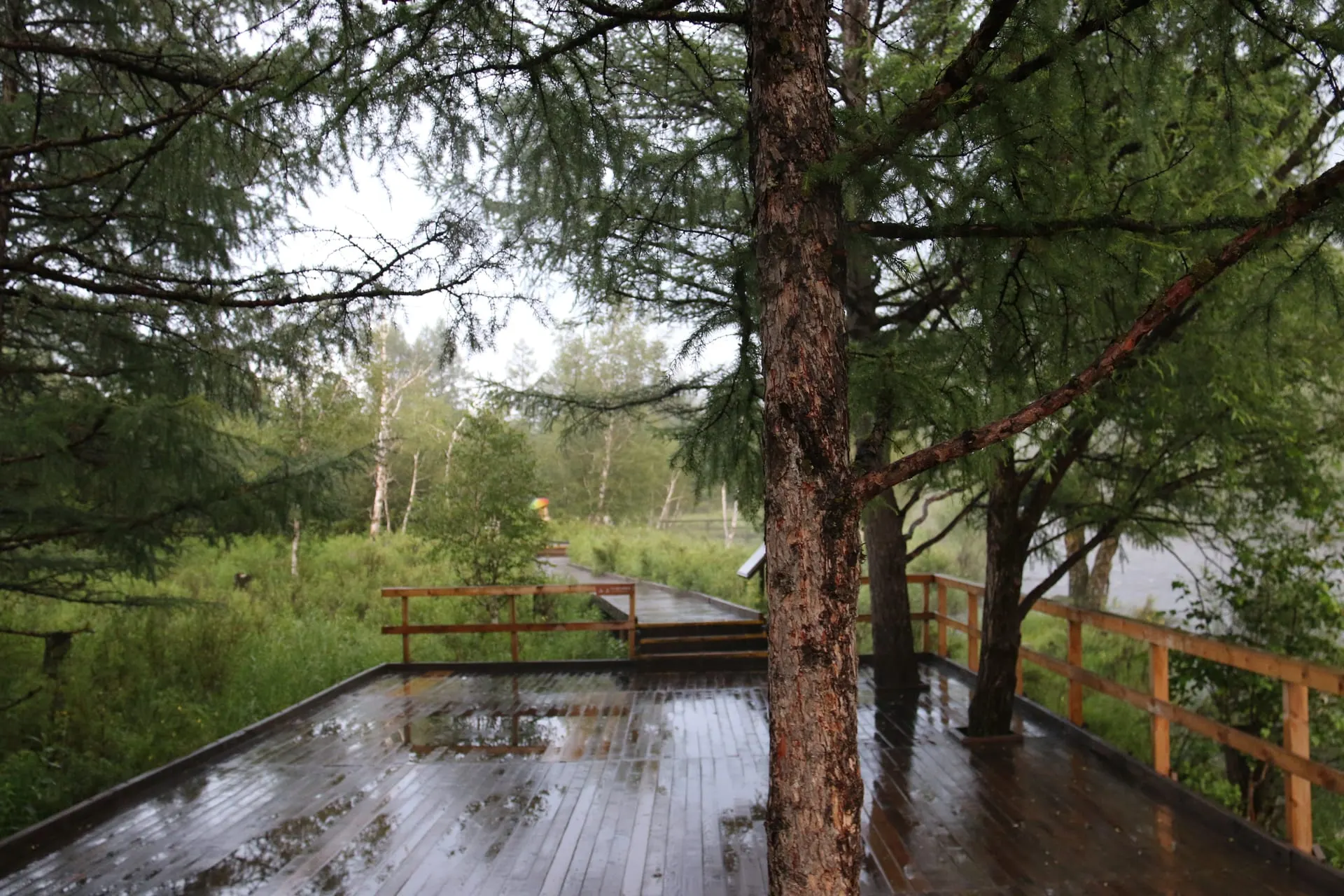
Arxan National Forest Park (阿尔山国家森林公园, Ā'ěr Shān Guójiā Sēnlín Gōngyuán)
The 103,000-hectare park is the main reason to visit Arxan, containing volcanic crater lakes (Tianchi, 天池), the Santan Gorge (三潭峡), the Shitang Forest lava field (石塘林), Dujuan Lake (杜鹃湖), and the Unfixed River (不冻河). The park is spread across a wide area and requires a full day by car. The autumn colors (late September) — gold birch and larch against black volcanic rock — are some of the most beautiful in China. ¥180 entry + ¥105 shuttle bus as of June 2026.
Wikimedia Commons · CC-BY-SA
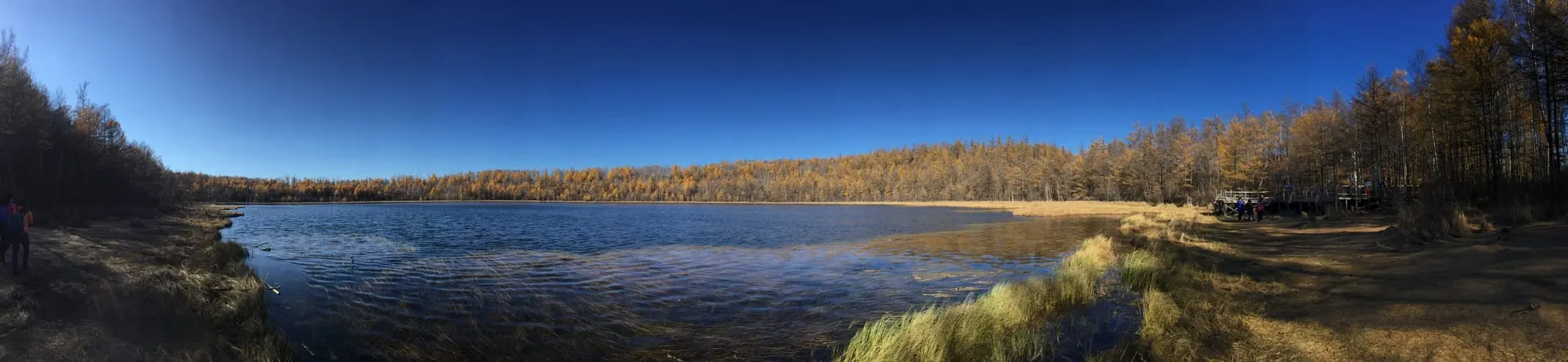
Arxan Tianchi (阿尔山天池, Ā'ěr Shān Tiānchí)
A volcanic crater lake at 1,332 meters elevation, roughly 450 meters in diameter and crystal-clear blue-green. Unlike Changbaishan's Tianchi (which straddles the China-North Korea border), Arxan's Tianchi is smaller, more intimate, and surrounded by birch forest rather than bare volcanic rock. Reached by climbing 998 wooden steps from the parking area. The lake has no visible inlet or outlet — it is fed solely by rainfall and groundwater, and its water level never changes. ¥180 forest park entry includes this. Best in morning light when the surface is still.
Wikimedia Commons · CC-BY-SA

Santan Gorge (三潭峡, Sāntán Xiá)
A 3-kilometer-long gorge carved by the Halaha River (哈拉哈河) through volcanic rock, with three distinct pools (the "three pools" of the name) connected by rapids and small waterfalls. A wooden boardwalk follows the gorge, crossing the river on bridges and passing through birch and larch forest. The water is extraordinarily clear, and the volcanic rock walls are dark and sculptural. One of the most photogenic sections of the forest park. Included in forest park entry.
Wikimedia Commons · CC-BY-SA
Shitang Forest — Lava Field Forest (石塘林, Shítáng Lín)
A surreal landscape where trees — mainly larch and birch — grow directly out of a black basalt lava field, their roots finding purchase in cracks in the stone. The lava flow is from a relatively recent eruption (estimated 2,000-3,000 years ago), and the contrast between the dark, twisted lava and the green (summer) or gold (autumn) foliage is striking. A boardwalk loops through the forest, with interpretive signs (Chinese only) explaining the volcanic geology. Included in forest park entry.
Wikimedia Commons · CC-BY-SA
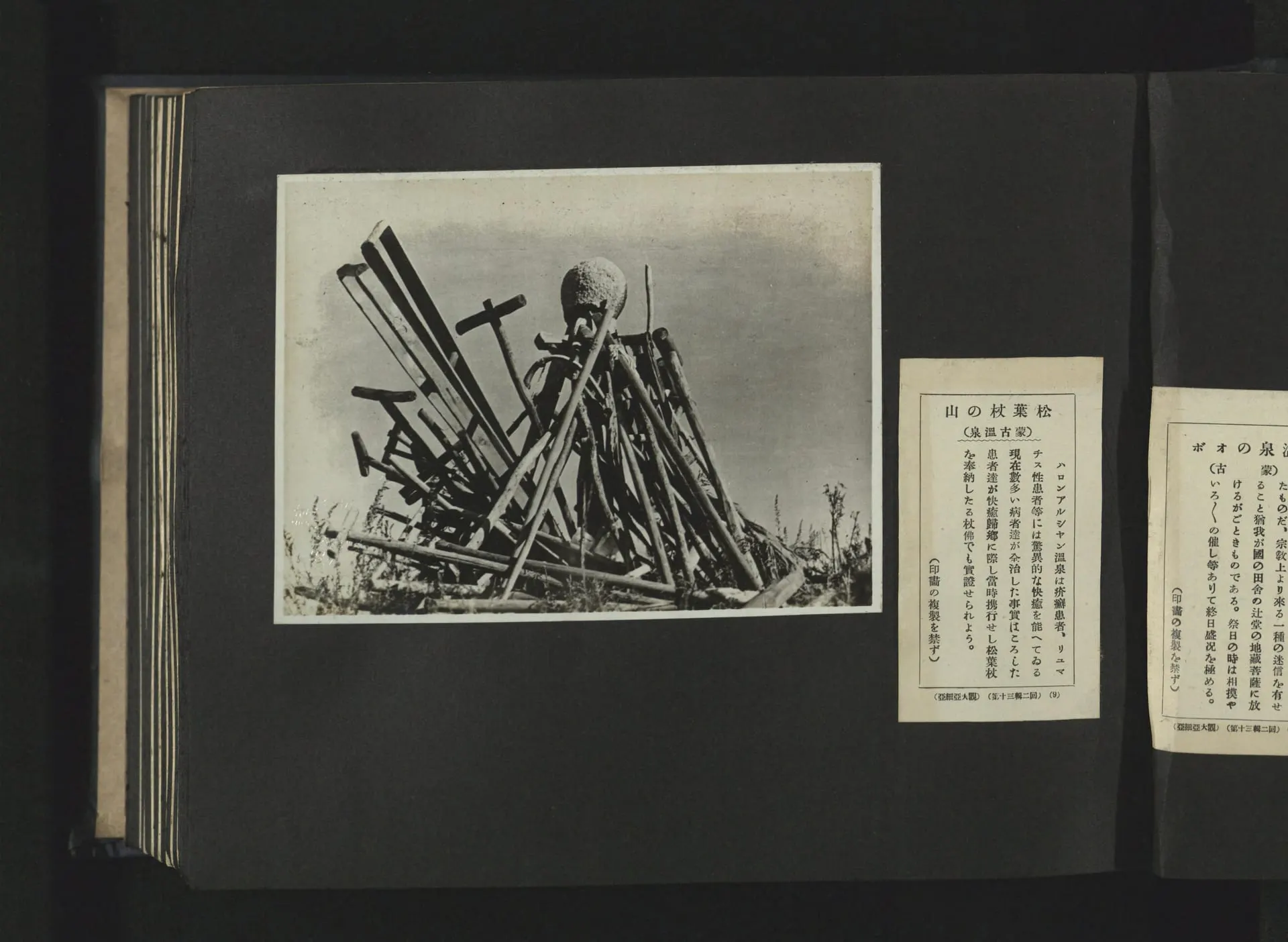
Arxan Hot Springs (阿尔山温泉, Ā'ěr Shān Wēnquán)
The namesake attraction — a cluster of 48 natural hot springs at temperatures from 8°C to 48°C, with different mineral profiles (some rich in radon, some in sulfur, some in silica). The springs have been used for bathing since at least the 19th century, and the Japanese built a sanatorium here in the 1930s. The modern hot-spring complex (阿尔山温泉博物馆, ¥298 as of June 2026) has indoor and outdoor pools fed by different springs. The experience is more public-bath than luxury spa — utilitarian, local, and genuinely therapeutic rather than Instagram-ready.
Wikimedia Commons · CC-BY-SA
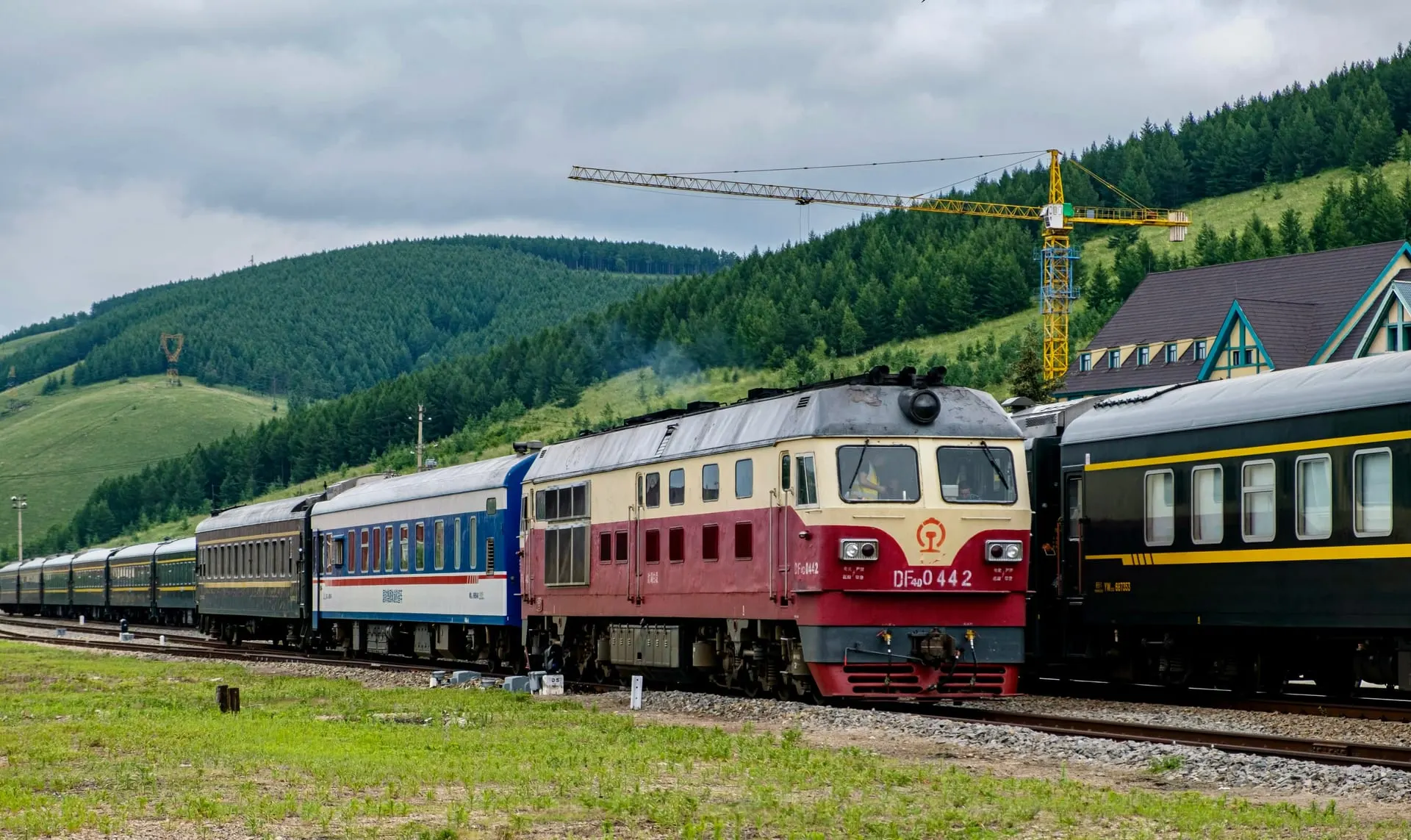
Arxan Railway Station (阿尔山火车站, Ā'ěr Shān Huǒchē Zhàn)
Built in 1937 by the Japanese during their occupation of Manchuria (Manchukuo), this small station is a hybrid of Japanese and European architectural styles — a two-story stone building with a peaked roof, wooden eaves, and a small clock tower. It is still in active use, serving slow trains on the Baicheng-Arxan railway line. The station is arguably the most beautiful small railway station in China, and it has become a symbol of Arxan. Free to photograph from the outside; the interior is a functioning station with a waiting room. Best photographed in late-afternoon light.
Wikimedia Commons · CC-BY-SA
Dujuan Lake (杜鹃湖, Dùjuān Hú)
A volcanic barrier lake within the forest park, named for the azaleas (杜鹃, dùjuān) that bloom around its shores in May and June. The lake is 128 hectares, calm and reflective, surrounded by larch forest. A boardwalk leads to a viewing platform, and the lake is particularly beautiful in autumn when the gold larch needles float on the water's surface. Included in forest park entry.
Wikimedia Commons · CC-BY-SA

Rose Peak (玫瑰峰, Méiguī Fēng)
A cluster of reddish granite rock formations rising abruptly from the forest about 25 km north of Arxan town, named for their rose-colored stone. The formations are the result of ancient volcanic activity and erosion, and a short climb (20-30 minutes on stone steps) leads to a viewpoint over the surrounding birch forest and the Arxan valley. Best in late afternoon when the setting sun intensifies the rose color of the rock. ¥30 as of June 2026.
Wikimedia Commons · CC-BY-SA
ITINERARIES
Sample itineraries from Arxan
Three ready-made routes, from a 1-day imperial sprint to a 5-day deep dive. Copy the day-by-day plan and adapt to your own pace.
- 1 DAY
One-Day Arxan Sprint
National Forest Park highlights in a single day. Misses the town, Rose Peak, and the hot springs.
- Travelers with very limited time
- Those prioritizing the forest park over everything else
- Day 01
Morning
Depart Arxan town 07:00. Drive to National Forest Park (40-60 min). Shuttle to Tianchi — climb 998 steps, crater lake views (1.5 hours). Shuttle to Santan Gorge — 3-km boardwalk (1-1.5 hours).
Afternoon
Shuttle to Shitang Forest — lava field boardwalk (45 min). Lunch at park visitor center (¥40-60). Shuttle to Dujuan Lake (30 min). Return to town by 16:00.
Evening
Photograph the railway station in late-afternoon light. Quick visit to hot springs (1-2 hours) if time allows. Dinner on Wenquan Street.
- 2 DAYS
Two-Day Classic Arxan
Forest park on Day 1, town and Rose Peak on Day 2. The recommended visit for most travelers.
- Most visitors
- Nature and photography enthusiasts
- Those wanting forest park + town + hot springs
- Day 01
Morning
Early start. Drive to National Forest Park. Tianchi crater lake (1.5 hours, best in morning light). Santan Gorge boardwalk (1-1.5 hours).
Afternoon
Shitang Forest lava field (45 min). Dujuan Lake (30 min). Optional: Unfixed River (if time). Return to town by late afternoon.
Evening
Photograph the railway station. Hot springs (2 hours). Dinner: Mongolian-style roast lamb or hot pot on Wenquan Street.
- Day 02
Morning
Rose Peak (25 km north, 1.5 hours round-trip including climb). Best in morning or late-afternoon light. Return to town for lunch.
Afternoon
Explore Arxan town — railway station interior (if a train is due), walk through the birch forest on the town outskirts, or a second hot-spring soak. Photographers: consider a pre-dawn return to the forest park for Tianchi at sunrise (leave town by 05:00).
Evening
Final hot-spring soak. Depart by late afternoon or stay a third night for a relaxed departure.
- 3 DAYS
Three-Day Immersive Arxan + Autumn Photography
The full Arxan experience — forest park at sunrise, autumn photography, hot springs, and time to absorb the landscape.
- Photographers
- Slow travelers
- Autumn-color enthusiasts (late September)
- Day 01
Morning
Arrive, settle in. Late-morning forest park: Tianchi, Santan Gorge (3-4 hours). Lunch at park visitor center.
Afternoon
Shitang Forest, Dujuan Lake (1.5-2 hours). Return to town by late afternoon.
Evening
Railway station photography in late light. Hot springs (2 hours). Dinner on Wenquan Street.
- Day 02
Morning
Pre-dawn departure (05:00) for forest park — Tianchi at sunrise, the lake a mirror, the forest gold (autumn) or green (summer). Second visit to Santan Gorge in morning light.
Afternoon
Unfixed River. Rose Peak in afternoon light. Return to town.
Evening
Second evening at hot springs. Dinner: Mongolian hot pot. Night walk through quiet Arxan streets.
- Day 03
Morning
Relaxed morning. Final walk through town — railway station, birch forest, a last coffee or milk tea. Optional: third hot-spring visit.
Afternoon
Lunch. Depart for Hailar or airport by early afternoon.
Evening
Arrive Hailar by evening. Optional: overnight in Hailar for next-day flight or HSR connection.
STAY SAFE
Emergency contacts in Arxan
Save these three numbers before you board the plane. China uses different hotlines than most countries — there's no 911.
- POLICE
110
- AMBULANCE
120
- FIRE
119
- TOURIST HOTLINE
0482-7122210 (Arxan Tourism Bureau)
- ENGLISH-SPEAKING ER
Arxan People's Hospital (阿尔山市人民医院) in Arxan town — basic; critical cases evacuated to Hailar (5-6 hours) or Ulanhot (4 hours); limited English
Problems travelers hit in Arxan
- Why is my Alipay not working?You linked a foreign Visa or Mastercard to Alipay but every transaction is rejected at the merchant.
- My China visa was denied — what now?Your L visa application was refused at the Chinese consulate and your trip is in 2–4 weeks.
- My passport was lost or stolen in China — what do I do?Your passport is gone (theft or loss) and you're in mainland China without travel documents.
- Why can't I book on 12306 with my foreign card?You tried to book a high-speed rail ticket on 12306.cn and your foreign Visa/Mastercard is rejected at checkout.
- Why is my VPN not working in China?You arrived in China, opened your VPN, and it will not connect at all or connects but no traffic loads.
- Why can't I book a Tibet trip on my own?You try to book Lhasa flights and hotels yourself but the booking fails, or you're turned away at the Lhasa airport without a permit.
Book activities in Arxan
These are licensed tour operators and booking platforms we've vetted independently. Booking through these links may earn us a commission — see our affiliate disclosure. This never affects our editorial recommendations or the price you pay.
Frequently asked questions
Is Arxan worth visiting?
How do I get to Arxan?
How many days do I need in Arxan?
What is the best time to visit Arxan?
Is the Arxan Tianchi the same as the Changbaishan Tianchi?
What are the Arxan hot springs like?
Show all 21 FAQs
What is special about the Arxan Railway Station?
Can I visit Arxan without a car?
Is Arxan suitable for children?
Can I visit Arxan in winter?
How is Arxan different from other nature destinations in China?
Can I combine Arxan with the Hulunbuir grasslands?
What should I pack for Arxan?
Is the Arxan National Forest Park open year-round?
What is the best photography in Arxan and when to capture it?
What is the Unfixed River and why does it not freeze?
What is the best season to visit Arxan?
How do you get to Arxan from Beijing or Hohhot?
What is the Arxan National Forest Park and what makes it special?
Are the hot springs in Arxan accessible to visitors and which are the best?
How many days do I need in Arxan and what should I include?
References

Related guides & destinations
Guide
How We Research 2026: NihaoVisit’s Methodology for China Travel Information
How NihaoVisit sources, verifies, and maintains 700+ pages of China travel information — our source hierarchy, fact-checking process, update
Guide
Fact-Checking Log 2026: Verified China Travel Information — NihaoVisit
A public log of fact-checking verification passes on NihaoVisit, showing what was verified, when, and against which sources — covering visa
Guide
Best Time to Visit China 2026: Month-by-Month Weather, Crowds, and Prices
The best time to visit most of China is April–May and September–October. Winter (Dec–Feb) is cold but cheap; summer (Jun–Aug) is hot and cro
Guide
VPN for China 2026: Which VPNs Work, eSIM Alternatives, and the Complete Pre-Trip Checklist
Most Western apps and websites are blocked in mainland China. A reliable VPN is essential for Google, Gmail, WhatsApp, Instagram, and most n
Guide
China SIM Card and eSIM Guide 2026: Stay Connected Without WeChat
A Chinese SIM or eSIM lets you use mobile data, maps, and ride-hailing without WiFi. Here is how to get one, the cost, and which provider to
Guide
Solo Female Travel in China 2026: Safety, Tips, and Real Experiences
China is one of the safer destinations for solo female travelers. Petty theft is rare, violent crime against tourists is extremely uncommon,