Beidaihe
Beidaihe (北戴河, Běidàihé) is a seaside resort town on the Bohai Sea in Hebei province, about 280 km east of Beijing. Since the late 19th century it has been northern China's premier beach destination — first as a foreign concession enclave of grand European villas, then as the summer retreat of China's Communist Party leadership from the 1950s onward. The beaches stretch for over 10 km along a gentle bay, the water is warmer than most northern Chinese coastal spots, and the surrounding hills hold Bird Island, one of Asia's most important migratory stopovers. Russian tourists discovered Beidaihe in the 1990s and today the town has Cyrillic signage, Russian menus, and a distinct Sino-Russian beach culture that feels unlike anywhere else in China. Two to three days is plenty for the beach and the main sights; budget roughly ¥110-300 per day for mid-range comfort. The honest downside: Beidaihe is not a tropical paradise — the Bohai Sea is turbid grey-green, not turquoise, and the beaches can be crowded in July and August. Come in June or September for the best balance of warmth, space, and atmosphere.
Why Beidaihe in 2026.
China's original seaside resort on the Bohai Sea — a summer escape of sandy beaches, early 20th-century villas, and Bird Island, once the private retreat of CPC leaders and still Hebei's favorite coastal getaway.
Quick Answer
Beidaihe (北戴河, Běidàihé) is a seaside resort town on the Bohai Sea in Hebei province, about 280 km east of Beijing. Since the late 19th century it has been northern China's premier beach destination — first as a foreign concession enclave of grand European villas, then as the summer retreat of China's Communist Party leadership from the 1950s onward. The beaches stretch for over 10 km along a gentle bay, the water is warmer than most northern Chinese coastal spots, and the surrounding hills hold Bird Island, one of Asia's most important migratory stopovers. Russian tourists discovered Beidaihe in the 1990s and today the town has Cyrillic signage, Russian menus, and a distinct Sino-Russian beach culture that feels unlike anywhere else in China. Two to three days is plenty for the beach and the main sights; budget roughly ¥110-300 per day for mid-range comfort. The honest downside: Beidaihe is not a tropical paradise — the Bohai Sea is turbid grey-green, not turquoise, and the beaches can be crowded in July and August. Come in June or September for the best balance of warmth, space, and atmosphere.
| Worth visiting | Yes, if you want a northern Chinese beach experience with history, architecture, and birdwatching — not a tropical resort. The Sino-Russian cultural mix and the CPC summer-retreat history make it genuinely distinctive. |
|---|---|
| Recommended days | 2-3 days |
| Best time to visit | June and September — warm enough to swim, fewer crowds than the July-August peak. April-May and October for birdwatching and quiet walks. |
| Daily budget | $35 (backpacker) / $110 (mid-range) / $300+ (luxury) |
| Family friendly | Yes — sandy beaches, gentle waves, Lianfeng Mountain Park, and the Safari Park are all child-friendly. The beach promenades are stroller-accessible. |
| Solo friendly | Yes — compact, walkable, safe, and the Russian-oriented cafes and bars make solo dining easy. |
| Airport | Qinhuangdao Beidaihe Airport (BPE) — limited domestic flights. Most visitors fly into Beijing (PEK/PKX) and take the HSR (2 hours) or drive (3-4 hours). |
| High-speed rail | Yes — Beidaihe Station on the Beijing-Harbin HSR line: Beijing (2h), Tianjin (1.5h), Shenyang (2.5h). Seasonal summer services increase frequency. |
| Language | Mandarin with a Hebei accent. Russian is surprisingly common in signage and menus in the core tourist zone. English is rare outside international hotels. |
| Currency | CNY (¥) — Alipay and WeChat Pay accept foreign Visa/Mastercard. Cash useful for beach vendors and small guesthouses. |
| Time zone | China Standard Time (UTC+8) |
| Last updated | 2026-06-18 |
Want a Beidaihe plan built for you?
Jump to:
Beaches·Lianfeng Mountain·Pigeon Nest Park·Bird Island·Villas & Architecture·Getting Around·Where to Stay·Itineraries·Russian Beidaihe·Weather·Mao at Pigeon Nest·Biluota Bar Park·Seafood & Dining·Cycling the Coast·Off-Season Quiet·Strange Tower·Tips & Warnings·Emergency Contacts·FAQ
Why visit Beidaihe? Is it worth going for foreign tourists?
Beidaihe is not on most foreign tourists' China itinerary — and for a very specific kind of traveler, that is exactly why it is interesting. It is China's original seaside resort, a place that has been hosting summer visitors for over 120 years, and the layers of its history are genuinely unusual: a late-Qing fishing village that became a foreign concession enclave of grand European villas, then the private summer retreat of Mao Zedong and the entire CPC leadership from the 1950s onward, then a Russian tourist boomtown in the 1990s, and now a domestic mass-tourism beach destination with a distinctly Sino-Russian flavour. The three reasons to come, ranked: the historical architecture (hundreds of early 20th-century villas in styles ranging from Swiss chalet to Spanish colonial, scattered through pine-forested lanes), the birdwatching (Beidaihe sits on one of the world's great migratory flyways and the spring and autumn passage brings species you will not easily see elsewhere), and the sheer oddity of the Sino-Russian beach culture — Cyrillic menus, Russian pop music from beach bars, babushkas in swimsuits playing cards under umbrellas, and the best borscht you will eat in China. The honest downside: the Bohai Sea is not the Mediterranean. The water is grey-green and turbid, visibility is poor, and industrial pollution from the broader Bohai region is a real issue. The beaches are clean sand but the sea itself is a working northern sea, not a tropical lagoon. If you want turquoise water and white sand, fly to Hainan. If you want a northern Chinese beach town with real history, genuine birdwatching, and a cultural mix you will not find anywhere else in the country, Beidaihe delivers.
What is the history of Beidaihe: from fishing village to CPC summer capital?
Beidaihe's transformation from a quiet fishing village to China's premier summer resort began in the 1890s, when British railway engineers building the Tianjin-Shanhaiguan line discovered the bay and its sandy beaches. Word spread through the foreign concession communities in Tianjin and Beijing, and by the 1910s Beidaihe had become a summer colony for Western diplomats, missionaries, and businessmen, who built hundreds of villas in European styles on the wooded slopes above the beach. The architectural legacy of that period — Swiss chalets with Chinese roof curves, Spanish colonial villas with wrap-around verandas, German Gothic cottages with steep pitched roofs — still defines the lanes behind the beach today. After 1949, the new Communist government took over the villas and turned Beidaihe into the summer seat of the CPC Central Committee. Every summer from the 1950s through the early 2000s, the entire party leadership — Mao, Deng, Jiang, and their inner circles — decamped to Beidaihe for weeks of rest, informal meetings, and back-channel political negotiations. The annual "Beidaihe Conference" became a fixture of Chinese political life, and major policy decisions (including the launch of economic reforms in the late 1970s and early 1980s) were shaped in the villas and on the beach walks of Beidaihe. The CPC's summer retreat ended in 2003, when the leadership stopped holding formal summer sessions at Beidaihe (though senior leaders still vacation here privately). Since then the town has reinvented itself as a mass domestic tourism destination, with Russian visitors forming a large and visible minority — an estimated 50,000-80,000 Russians visit annually, mostly from the Russian Far East, and the town has Russian-language signage, dedicated Russian restaurants, and a tourist infrastructure tailored to the Russian market. The villas have been partly preserved, partly converted to hotels and guesthouses, and partly left to decay — a patchwork that rewards exploration.
What are the best beaches in Beidaihe and how do they compare?
Beidaihe has roughly 10 km of sandy beach divided into three main sections, plus satellite beaches north and south. The water quality is acceptable — the Bohai Sea is not pristine but Beidaihe's beaches are cleaner than those closer to Tianjin, and the local government has invested significantly in water treatment in recent years. Tiger Stone Beach (老虎石海滨, Lǎohǔ Shí Hǎibīn) is the central beach and the most developed. Named for the boulder formations in the surf that look like crouching tigers, this is where most first-time visitors end up. The sand is medium-grain yellow-brown, the water is shallow (waist-deep out to 50 meters), and the amenities are the best in town: deck chairs, umbrellas, showers, changing rooms, snack stalls, and beach bars. Entry ¥10-30 depending on season. Crowded in July and August, especially on weekends. Middle Beach (中海滩, Zhōng Hǎitān) is the quieter middle section, about 2 km south of Tiger Stone, favored by Russian families and returning visitors who want more space. The sand is finer here and the beach is wider. Fewer amenities but also fewer crowds. The Russian-run beach clubs here serve cold Baltika beer and grilled shashlik. West Beach (西海滩, Xī Hǎitān) is the longest stretch, running from Middle Beach south toward Nandaihe. This is the least developed section — no deck chairs, few vendors, just sand and sea. Best for long walks and solitude. The southern end of West Beach blurs into the Nandaihe resort zone. Nandaihe (南戴河) is technically a separate town south of Beidaihe but functionally part of the same beach strip. The beaches here are wider and the sand is finer and lighter in colour. The Nandaihe Sun Island cable car (1,038 meters over the sea) is the headline attraction. Nandaihe is more family-oriented than Beidaihe proper, with amusement parks, an aquarium, and watersports. Swimming is only permitted in the designated areas (marked by buoy lines) from roughly June through September. Lifeguards are on duty during the summer season. The water temperature peaks at about 25°C in August. Outside summer, the beaches are open for walking but swimming is not recommended and may be prohibited.
What makes Beidaihe one of Asia's best birdwatching sites?
Beidaihe sits on the East Asian-Australasian Flyway, one of the world's great migratory bird corridors, and the wetlands, forests, and coastal mudflats around the town form a critical stopover where exhausted birds rest and refuel. Over 400 species have been recorded in the Beidaihe area, and the spring migration (late March to late May) and autumn migration (late August to late November) bring species that birders travel from across the world to see. The best birding sites, north to south: Pigeon Nest Park (鸽子窝公园) is the most accessible and productive site close to town. The tidal wetlands attract waders — redshanks, greenshanks, sandpipers, plovers — and the dawn light over the Bohai makes for excellent photography. Visit at sunrise for the best bird activity and the best light. The Beidaihe Wetland Reserve, north of Pigeon Nest along the coast road, is a larger, quieter wetland area with boardwalks and observation hides. This is the best site for cranes, storks, and the larger waders. The endangered Siberian crane (Grus leucogeranus) has been recorded here during migration. The best months are April and October. Lianfeng Mountain, the forested ridge behind town, is excellent for woodland passerines — flycatchers, thrushes, warblers, buntings — and raptors riding the thermals above the hills in autumn. The Wanghai Ting pavilion at the summit is a good hawk-watch point in September and October. The Qinhuangdao Wildlife Park area includes both forest and wetland habitat, and the road that runs past it toward Shanhaiguan has several productive pull-offs for scanning the coastal mudflats at low tide. Practical birding notes: a spotting scope is useful for the mudflats and wetlands. The best months are late April to mid-May (spring) and mid-September to late October (autumn). The town is busy with Chinese tourists in July and August but birding is poor then — the migrants have moved on. Binoculars and field guides are rarely available locally; bring your own. The Beidaihe International Birdwatching Festival, held annually in May, draws birders from across the world and includes guided walks and lectures.
Where to see the historic villas and CPC summer retreat architecture?
The lanes and hillsides behind the main beach road hold Beidaihe's most distinctive architectural heritage. These are hundreds of early 20th-century villas built by foreign residents between 1895 and 1937, later used by the CPC leadership as summer residences. The villas are scattered through a grid of quiet, tree-lined lanes running from the beach up into the lower slopes of Lianfeng Mountain, and the best way to see them is to walk. The highest concentration of intact villas is in the area roughly bounded by Bao'er Road (保二路, Bǎo'èr Lù) to the north, Dongjing Road (东经路, Dōngjīng Lù) to the south, and the lower slopes of Lianfeng Mountain to the west. This zone — sometimes called the "Villa District" (别墅区, Biéshù Qū) — has the best-preserved examples and the most atmospheric walking. Specific buildings worth looking for: - Zhang Xueliang's Villa (张学良别墅): The young Manchurian warlord who kidnapped Chiang Kai-shek in the 1936 Xi'an Incident had a summer villa here. It is a two-story Spanish-style building with arched windows and a tiled roof, now a small museum (¥20). - The Gu Family Villa (顾家别墅): An elaborate Swiss chalet-style building with steep roofs, carved wooden balconies, and a wraparound veranda. One of the most photographed villas. - Mao Zedong's Summer Residence (毛泽东别墅): Mao's preferred villa during the CPC summer retreats. It is a modest two-story building by Beidaihe standards, deliberately simple, with a study overlooking the sea. Not open to the public but visible from the lane. - The Russian Consulate Villa (俄国领事馆别墅): A grand white colonial building with classical columns, built for the Russian consulate in the 1910s. Now a hotel. About half the villas have been converted to hotels, guesthouses, or private residences. Some are well maintained; others are visibly decaying. The contrast between a beautifully restored Swiss chalet and a crumbling Gothic cottage two doors down is part of the district's character — it is a living architectural landscape, not a museum. Allow 2-3 hours to wander the district on foot. The best light for photography is late afternoon when the sun angles through the pines.
What is the Russian influence in Beidaihe and why is it there?
Beidaihe has the most visible Russian tourist presence of any Chinese city outside the border regions. The Russian connection dates to the 1990s, when the opening of the China-Russia border and the growth of the Russian Far East middle class created a demand for affordable warm-weather beach holidays. Beidaihe — reachable by a relatively short flight from Vladivostok, Khabarovsk, or Irkutsk, and cheaper than Thailand or Vietnam — became the default Russian summer beach destination in China. Today the Russian presence is everywhere in the central tourist zone: Cyrillic menus outside restaurants, Russian-language signage in hotels and shops, Russian pop music from beach bars, and Russian families who have been returning to the same guesthouses for 20 years. The best Russian restaurants in town — places like The Russian Kitchen (俄罗斯厨房) on Bao'er Road and the Cafe Pushkin near Tiger Stone Beach — serve genuine borscht, pelmeni, blini, and shashlik that would pass muster in Vladivostok. The Russian grocery shops sell imported buckwheat, sour cream, black bread, and Russian chocolate. The Russian tourist season runs roughly June through September, with the peak in July and August. Russian visitors cluster in the Middle Beach area and in a handful of Russian-run guesthouses in the Villa District. The atmosphere is friendly and the cultural crossover — Chinese families eating Russian ice cream, Russian kids building sandcastles next to Chinese kids, menus that list dishes in Chinese, Russian, and occasionally English — is one of the things that makes Beidaihe feel genuinely different from any other Chinese beach town. A counter-intuitive tip: the Russian restaurants in Beidaihe are often better than the Chinese seafood restaurants on the main strip. The Chinese seafood is fine but unexceptional and overpriced in the beachfront area. The Russian food is the real local specialty.
How to get to Beidaihe: trains, flights, and connections from Beijing?
Most foreign visitors reach Beidaihe from Beijing, and the high-speed rail is the best option. Beidaihe Station (北戴河站) is on the Beijing-Harbin HSR line, about 3 km west of the beach area. From Beijing Station or Beijing South Station, G-class trains take roughly 2 hours and cost ¥110-175 for second class. There are 15-25 trains per day depending on the season (more in summer). The station has a taxi queue and a bus stop; a taxi to the main beach area costs ¥15-25 and takes 10 minutes. From Tianjin, the HSR takes about 1.5 hours (¥70-110). From Shenyang, about 2.5 hours (¥130-200). From Shanghai, the fastest connection is HSR to Beijing (4.5 hours) then transfer to a Beidaihe-bound train — total journey about 7-8 hours. The nearest airport, Qinhuangdao Beidaihe Airport (BPE), has limited domestic flights from Shanghai, Guangzhou, Chengdu, and a few other cities. It is 30 km from Beidaihe. A taxi to town costs ¥80-100. For international visitors, flying into Beijing (PEK or PKX) and taking the HSR is almost always the better option. Driving from Beijing takes 3-4 hours via the G1 Jingha Expressway, depending on traffic. Summer weekends see heavy outbound traffic from Beijing on Friday afternoons and inbound on Sunday evenings — avoid these windows. Private transfers from Beijing cost ¥600-800 one-way.
How to get around Beidaihe: buses, taxis, and bike rental?
Beidaihe is compact and the core tourist area — the beach strip, the Villa District, and the lower slopes of Lianfeng Mountain — is entirely walkable. For longer trips, the local bus network covers the main routes: Bus 34 runs from Beidaihe Railway Station to the beach area (¥2, about 20 minutes), Bus 22 connects Beidaihe to Nandaihe along the coast road, and Bus 37 runs to Pigeon Nest Park and the wetland reserve. Bus signage is mostly Chinese-only, so have your destination written in characters. Taxis are plentiful and inexpensive. A ride within the Beidaihe core costs ¥10-20. Metered taxis start at ¥8 for the first 2 km. Insist on the meter ("dǎ biǎo" — 打表) for short trips. For the Wildlife Park or the Shanhaiguan Great Wall (about 30 km northeast), negotiate a round-trip fare of ¥200-300. DiDi ride-hailing works in Beidaihe and is often easier than hailing a cab on the street, especially if you do not speak Chinese. The app accepts foreign phone numbers and offers an English interface. Bicycle rental is available from shops along the beach road at ¥30-50 per day. The coast road between Beidaihe and Nandaihe is flat, scenic, and perfect for cycling, with dedicated bike lanes along much of the route. Electric scooters are also available for rent (¥80-120/day) but require a Chinese driving license in theory — rental shops rarely check. In summer, the main beach road (中海滩路, Zhōng Hǎitān Lù) is closed to cars on weekend afternoons and becomes a pedestrian zone — this is the best time to walk the full length of the beach strip.
Where to stay in Beidaihe: neighborhoods and typical prices?
Beidaihe has three useful base neighborhoods, each with a different character. The Central Beach / Tiger Stone area (老虎石一带) is the best base for first-time visitors. Walking distance to the main beach, the best restaurants and bars, the Villa District, and the bus and taxi hubs. Hotels range from simple guesthouses (¥80-180/night) through mid-range Chinese chain hotels (Atour, Jinjiang Inn, Hanting — ¥200-400/night) to a handful of upscale options (Beidaihe Westin, the Friendship Hotel — ¥600-1,200/night). The Friendship Hotel (友谊宾馆, Yǒuyì Bīnguǎn) is itself a historic CPC summer-retreat property and worth a look even if you are not staying there. The Villa District / Middle Beach area (别墅区/中海滩) is quieter and more characterful, with guesthouses and small hotels in converted historic villas. Prices are similar to the Central Beach area. The best option for atmosphere — staying in a 1910 Swiss chalet with creaking wooden floors and a garden of old pines is an experience unique to Beidaihe. The trade-off is fewer dining options and a 15-20 minute walk to the main restaurant strip. The Nandaihe area (南戴河) is more family-oriented, with larger resort hotels, water parks, and wider beaches. Prices are slightly higher (¥300-800/night for mid-range) and the area feels more like a modern Chinese resort development — less character but better facilities for families with young children. The Longwan Hot Spring Resort and the Nandaihe Seaview Hotel are the two most established options. Nandaihe is 10-15 km south of central Beidaihe; you will need taxis or the bus to visit the historic areas. For backpackers, the Beidaihe International Youth Hostel near the railway station has dorm beds at ¥50-80. In the central area, small family-run guesthouses (家庭旅馆, jiātíng lǚguǎn) offer basic private rooms at ¥80-150 — look for the 家庭旅馆 signs on the lanes behind the beach road. Summer (July-August) sees hotel prices double or triple, especially on weekends. Book well ahead for summer weekends. June and September are the sweet spot — warm weather, lower prices, and availability.
What are good 1-day, 2-day, and 3-day itineraries for Beidaihe?
One-day sprint (from Beijing): Take the 07:00 HSR from Beijing Station, arrive Beidaihe at 09:00. Taxi to Tiger Stone Beach — walk the beach, photograph the rock formations, and walk the promenade south toward Middle Beach (2 hours). Midday: explore the Villa District on foot (1.5 hours), then lunch at a Russian restaurant on Bao'er Road (borscht, pelmeni, cold Baltika). Afternoon: taxi to Lianfeng Mountain Park (¥25, 2 hours) — hike to the Wanghai Ting pavilion for the Bohai panorama. Late afternoon: Pigeon Nest Park for the birdlife and the late-afternoon light. Evening: seafood dinner at a Middle Beach restaurant, then the 19:00 or 20:00 HSR back to Beijing (arrive 21:00-22:00). Two-day plan: Day 1 as above but with a more relaxed pace and an evening walk along the beach. Stay overnight in a converted villa guesthouse in the Middle Beach area. Day 2: early morning at Pigeon Nest Park for sunrise and birdwatching (arrive by 05:30). Morning: Nandaihe Sun Island — take the cross-sea cable car (¥65 return), walk the island, optionally do the aquarium or the rides. Lunch in Nandaihe. Afternoon: Qinhuangdao Wildlife Park (¥100, 2-3 hours) for the safari-bus ride and the birding wetlands. Return to Beidaihe Station for a late-afternoon HSR back to Beijing. Three-day plan adds: Day 3 — a day trip to Shanhaiguan (山海关, Shānhǎiguān), the eastern end of the Ming Great Wall where it meets the sea, about 30 km northeast of Beidaihe. The Shanhaiguan Pass (¥50) is the most famous section — the wall drops directly into the Bohai Sea at Laolongtou (老龙头, "Old Dragon's Head," ¥60). Both are worth 2-3 hours each. Combine with a seafood lunch in Shanhaiguan town and the First Pass Under Heaven museum. Taxi or DiDi from Beidaihe to Shanhaiguan costs ¥80-120 one-way and takes 45 minutes. For history buffs, this is the most rewarding day of the three. For birders, substitute a full day at the Beidaihe Wetland Reserve and the Wildlife Park wetlands during spring or autumn migration — bring a scope, a field guide, and patience.
What is the monthly weather and the best time to visit Beidaihe?
January: -8 to 1°C. Cold, dry, grey. The town is largely closed. Beaches are empty but bleak. Hotels at their cheapest. February: -6 to 4°C. Still cold. The Spring Festival brings some domestic visitors but the town remains quiet. March: 0 to 10°C. The start of spring migration — birders begin arriving. Beaches still too cold for swimming. April: 7 to 18°C. Spring migration peaks. Comfortable for walking and hiking. Cherry and plum blossoms in Lianfeng Mountain Park. The best month for birders. May: 13 to 24°C. Excellent weather, warm enough for sunbathing. Labour Day holiday (first week) is crowded — avoid. Late May is one of the best windows: warm, green, and before the summer peak. June: 18 to 28°C. The start of the swimming season. Warm enough for the water, not yet peak crowds. The best all-round month. July: 22 to 30°C. Peak summer. Warm water (23-25°C), crowded beaches, inflated prices. The Russian tourist season at full blast. Thunderstorms possible. August: 22 to 30°C. The hottest and busiest month. The water is warmest (24-26°C). Weekends are packed — visit mid-week if you must come in August. Occasional typhoon remnants bring heavy rain. September: 16 to 26°C. The second golden window. Swimming still possible in the first half, comfortable temperatures throughout, crowds thinning. Russian visitors still present. Autumn migration starts mid-month. October: 8 to 18°C. Cool and crisp. Swimming season over but excellent for walking, hiking, and birdwatching. Autumn migration peaks in the first half. Avoid National Day Golden Week (October 1-7) — the town fills with domestic tourists. November: 0 to 10°C. Cold returns. Migration tails off. The town quiets for winter. December: -6 to 2°C. Winter. As quiet as January. The empty beaches have a stark beauty but few visitors would choose this.
What practical tips, warnings, and honest negatives should I know?
1. THE SEA IS NOT BLUE. The Bohai Sea is turbid, grey-green, and not particularly clean. The sand is fine but the water visibility is poor (less than 1 meter). If you are expecting Mediterranean or Caribbean water, you will be disappointed. Beidaihe is a northern Chinese beach resort — adjust expectations accordingly. 2. SUMMER WEEKENDS ARE PACKED. Beidaihe is within day-trip distance of Beijing (2 hours by HSR) and Tianjin (1.5 hours). Summer Saturdays see a flood of weekenders. If your schedule allows, visit Tuesday-Thursday for a completely different experience. 3. JELLYFISH ARE A REAL THING. The Bohai Sea has seasonal jellyfish blooms, typically in July and August. Most are harmless but a few species (particularly the Nemopilema nomurai, the giant Nomura's jellyfish) have a painful sting. Swim in the designated areas (netted against jellyfish) and ask locally about conditions. If stung, rinse with seawater (not fresh water), remove tentacles with tweezers or a credit card edge, and seek medical attention for severe reactions. 4. SEAFOOD PRICES ON THE BEACHFRONT ARE INFLATED. The restaurants facing the beach on the main strip charge 2-3x what you will pay two blocks inland. Walk three blocks back from the beach and eat where the locals eat. The best seafood restaurants are on the side streets north of Bao'er Road and in the Middle Beach area. 5. THE VILLAS ARE NOT A MUSEUM. Many of the historic villas are private residences or hotels. Some are abandoned and dangerous. Respect private property and do not enter buildings that are clearly closed. The best way to see the villas is from the street; the best way to experience one is to book a guesthouse that operates in a converted villa. 6. THE CPC SUMMER RETREAT HISTORY IS NOT INTERPRETED. The CPC's use of Beidaihe as a summer capital is a major part of the town's history, but there is almost no public interpretation of it — no museum, no signage, no guided tours. The villas were used, the meetings happened, but the official narrative is quiet on the details. Read up before you go if the political history interests you. 7. BIRDERS: SPRING IS BETTER THAN AUTUMN. Both migrations are excellent, but spring (late April to mid-May) has the advantage of breeding plumage — the birds are at their most spectacular. Autumn (mid-September to late October) has higher overall numbers but the birds are in subdued non-breeding plumage. 8. MOSQUITOES ARE FIERCE IN SUMMER. The wetlands, the forests, and the summer humidity create ideal mosquito conditions. Bring strong repellent and consider a mosquito net if you are staying in a budget guesthouse. 9. THE RUSSIAN RESTAURANTS ARE THE HIGHLIGHT. Chinese seafood in Beidaihe is fine but not exceptional. The Russian food — borscht, pelmeni, blini, shashlik, black bread — is the real local specialty and is often better executed than the Chinese options. Follow the Russian families at lunchtime. 10. HOTEL CHECK-IN REQUIRES YOUR PASSPORT. Every hotel in China must register foreign guests. Budget guesthouses and family-run places sometimes refuse foreigners because the registration is a hassle. Book through Trip.com with the "accepts foreign guests" filter or call ahead.
Why does every Chinese tourist take a photo of the sunrise at Eagle Rock, and what is the Mao poem connection?
Almost every visitor to Beidaihe performs the same sunrise ritual: they get up before dawn, take a taxi or bus to Pigeon Nest Park (鸽子窝公园, Gēzǐ Wō Gōngyuán), and photograph sunrise over the Bohai Sea. By 05:30 in summer the park entrance has a queue. By 06:00 the seawall platform at Eagle Rock (鹰角石, Yīngjiǎo Shí) is packed with phone-toting tourists in plastic sandals. By 06:15 the sun crests the Bohai horizon and there is applause. The reason is a poem. In 1954 Mao Zedong visited Pigeon Nest Park and watched the same sunrise, and he wrote a verse about it that became one of the most quoted poems of the early PRC era. The poem, "Looking at the Sea" (浪淘沙·北戴河, Làngtáoshā · Běidàihé), opens with the line "大雨落幽州" (Great rain falls on Youzhou) and ends with the famous couplet comparing the passage of historical eras to the rhythm of the tides — "往事越千年,魏武挥鞭,东临碣石有遗篇。萧瑟秋风今又是,换了人间" (A thousand years of past events, Wei Wu brandishing his whip, east to Jieshi with surviving verses. The desolate autumn wind blows again today, but the world has changed). The reference to "Jieshi" (碣石) is what ties the poem to Beidaihe. The Jieshi of Cao Cao's time — the same "Wei Wu" Mao invokes — was a coastal rock near modern Beidaihe from which the warlord-poet looked at the same Bohai Sea. The geographic continuity is part of what gives the poem its weight for Chinese readers: Cao Cao looked at this sea in the second century, Mao looked at it in the twentieth, and the contemporary tourist stands on the same rock and watches the same sun rise over the same water. The Mao poem is carved on a large stone tablet at the seawall in Pigeon Nest Park, and every Chinese visitor photographs it. Practical notes for foreign visitors: arrive by 05:00 in summer (sunrise is around 04:45 in late June, 05:30 in mid-August). The park opens at 05:00. Bring a light layer — the pre-dawn sea breeze is colder than you expect even in July. The seawall platform gets crowded; the upper boardwalk behind the seawall has equally good views and far fewer people. Allow 1.5-2 hours total: 30 minutes for the sunrise, 30 minutes for the seawall walk, 30 minutes for the wetland boardwalk behind the park, 30 minutes for the Mao poem tablet and the small museum. The photographic light at Pigeon Nest is best in the first 20 minutes after sunrise, when the sun is low and the Bohai takes on a warm copper color. For visitors who cannot or do not want to do the early start: the same sunrise can be seen (less spectacularly) from Tiger Stone Beach and from the West Beach seafront. The mid-afternoon light at Pigeon Nest is also worth the visit even without the sunrise — the wetland boardwalk is good for casual birding and the views across the Bohai are wide. But the sunrise ritual is the Beidaihe experience, and skipping it means missing something that almost every Chinese visitor to Beidaihe considers essential.
What is Biluota Bar Park, and is the party atmosphere worth visiting?
Biluota Bar Park (碧螺塔酒吧公园, Bìluótǎ Jiǔbā Gōngyuán) sits on a low headland at the eastern end of the main beach, a ten-minute walk east from Tiger Stone Beach. It is the most unexpected thing in Beidaihe. By day it is a coastal park with a spiral concrete observation tower, an artificial sand beach, and a long seawall promenade. By night, from roughly June through September, it is an open-air beach bar, live-music venue, and party zone that runs until the small hours, with a sound system that can be heard from the Middle Beach area two kilometers away. The tower (碧螺塔, Bìluótǎ) is the park's namesake and most-photographed structure — a seven-story spiral concrete lighthouse painted in candy stripes and decorated with shells, mirrors, and nautical kitsch. It is not historic; it was built in the 1990s as part of the park development. It has no navigational function and is purely decorative. Climb it for the view, which sweeps from the Beidaihe beach strip west across to the Pigeon Nest headland east. The park's draw, beyond the tower, is the evening entertainment. In summer the park hosts nightly outdoor concerts (mostly Chinese pop covers, occasional rock), beach DJ sets, fire dancing, and a beachfront bar serving cocktails at Beijing prices (¥40-80 for a mojito). The crowd is young, domestic, and overwhelmingly Chinese — Russian visitors do not typically come here, and the park feels like a different planet from the Russian-oriented Middle Beach scene two kilometers west. Foreign visitors are uncommon and will attract curious looks but no hostility; the staff at the ticket gate and the bars speak some English and are used to the occasional outsider. The park's aesthetic is unapologetically kitsch and that is the point. Bright colors, concrete animals, painted murals, fairy lights strung between the palm trees, and a beach sand that is raked daily into geometric patterns. It is the Beidaihe that Chinese twenty-somethings come to Beidaihe for — the Instagram-ready, late-night, summer-vibes version of a beach town. Whether this is your scene depends entirely on what you want from Beidaihe. If you came for the historic villas, the Russian restaurants, and the birdwatching, Biluota will feel jarring and disposable. If you came for a summer night out with loud music, cheap beer, and a few thousand people dancing on the sand under fairy lights, it is one of the best night-time venues on the Bohai coast. Practical notes: the park is open roughly 08:00-23:30 in summer, with reduced hours in shoulder seasons. Entry ¥30-50 depending on the season and whether there is a ticketed event. The bar is cash-and-WeChat-Pay; bring some cash if you want to avoid the Alipay dance. Food inside the park is mediocre and overpriced — eat before you come. The closest proper restaurants are back toward Tiger Stone Beach, fifteen minutes west along the seawall. Coming for the evening only (after 19:00) is the standard move and avoids the daytime heat; the park's transformation after dark is dramatic and the tower lit up is genuinely photogenic. The full Biluota experience is a 3-4 hour evening, not a whole day. The honest negative: Biluota is a developed tourist attraction, not an authentic slice of Beidaihe life. If you want to understand why Beidaihe matters — the century of architecture, the Russian cultural influence, the bird migration, the CPC summer retreat history — Biluota will not contribute. It is a beach club with a tower. Treat it as such and you will have a good time. Expect it to deliver culture and you will be annoyed.
How does the seafood market morning auction work, and how do you eat well in Beidaihe?
Every morning in Beidaihe, between roughly 04:30 and 07:00 depending on the season, the seafood market (海鲜市场, hǎixiān shìchǎng) on the harbor side of town runs an informal auction. This auction supplies most of the day's seafood to the town's restaurants. The market is not a tourist attraction in the polished sense — it is a working wholesale operation with cracked concrete floors, fluorescent lights, and the strong iodine smell of fresh Bohai catch. But for visitors interested in food culture and how a Chinese coastal town actually eats, it is one of the most revealing experiences in Beidaihe. The auction itself is not a formal Dutch-style descending-price auction. It is closer to a high-volume wholesale negotiation: restaurant buyers arrive at 04:30, walk the stalls, inspect the morning's catch (fish, shrimp, crab, clams, scallops, octopus, sea snails, and seasonal specialties like mantis shrimp in late summer), and negotiate by the crate. The negotiation is fast, physical, and conducted in a mix of Mandarin and a thick Hebei coastal accent. Foreign visitors are uncommon but not unwelcome; the merchants are curious and the restaurant buyers are too busy to notice you. The best time to arrive is 05:30-06:00, when the action is at peak and the seafood is freshest. By 07:00 the wholesale buyers are gone and the market transitions to a retail operation for walk-in customers. What arrives at the market in a typical summer morning: Bohai hairtail (带鱼, dàiyú), Bohai shrimp (对虾, duìxiā — the local "pairing shrimp" that is the Bohai specialty), swimming crabs (梭子蟹, suōzixiè), mantis shrimp (皮皮虾, pípíxiā), assorted clams (蛤蜊, gélí), razor clams (竹蛏, zhúchēng), and various small fish. In autumn the catch shifts toward yellow croaker (黄花鱼, huánghuāyú), Spanish mackerel, and seasonal shellfish. The best rule at the market: buy what looks freshest and what the local buyers are buying. The crates being carried out by restaurant staff in volume are the morning's best catch. Everything else is secondary. For visitors who do not want to negotiate live seafood at 05:30, the easier path is to pick a restaurant in the Middle Beach area and let the kitchen do the work. The traditional Beidaihe seafood preparation is steamed or boiled with garlic, ginger, and scallion — a Shandong coastal style that lets the freshness of the fish do the work. Avoid heavy saucing and anything deep-fried; both mask the fish. The signature dish in Beidaihe is simply steamed Bohai crab (清蒸梭子蟹) served with a black vinegar dip. Order one per person at market price; the kitchen will weigh it live and charge by weight (¥80-200 per crab in peak season). Where to eat, specifically: the seafood restaurants facing the main beach on the central strip are inflated (2-3x the inland price) and the quality is the same. Walk three blocks back from the beach, particularly in the lanes north of Bao'er Road and in the Middle Beach area, and you will find the same seafood at half the price. The harbor-side restaurants west of the main beach area are the local favorite — closer to the source, fresher, and cheaper. A whole steamed crab plus a steamed shrimp dish plus two beers per person runs ¥150-250; the same on the beachfront runs ¥400-600. The other honest note about Beidaihe seafood: the Bohai is a working, industrial sea, and the shellfish in particular can accumulate heavy metals and pollutants from upstream industry. Most travelers eat Beidaihe seafood without issue, but for pregnant women, young children, and anyone with a compromised immune system, the official advice is to limit raw or lightly-cooked shellfish. Heavily cooked preparations (steamed, boiled, deep-fried) are safer than raw. This is not unique to Beidaihe — the same advisory applies to most Bohai coastal cities — but it is worth knowing if you have specific dietary sensitivities. The non-seafood alternative for visitors who want to eat well without the seafood dance: the Russian restaurants. The Russian Kitchen on Bao'er Road and Cafe Pushkin near Tiger Stone Beach serve genuine Russian comfort food at ¥60-120 per person, with no negotiating required and no fish scales on the floor. The Russian food is consistently better executed than the Chinese seafood in Beidaihe — a counter-intuitive observation but one that most returning visitors confirm.
Where should I cycle, and is it worth renting a bike for a day in Beidaihe?
Renting a bicycle (or an e-bike) and cycling the coast road is one of the best ways to experience Beidaihe beyond the central beach strip. The road from Tiger Stone Beach south to Nandaihe Sun Island is roughly 10 km of flat, dedicated bike-lane coastal road with sea views the entire way. The road from the main beach area north toward Pigeon Nest Park is another 5-6 km of quieter lanes through pine forest and past the villa district. Together they form a 25-30 km loop that takes a casual cyclist 3-4 hours including stops, or a faster cyclist 2-3 hours. Bicycle rental shops line the main beach road and the lanes behind the beach. Standard city bikes are ¥30-50 per day; mountain bikes ¥50-80; e-bikes ¥80-120 per day. Most shops require a passport or cash deposit (¥200-500); some accept WeChat-Pay deposits that release automatically when you return the bike. Quality is variable — the cheap bikes are functional but rough, the e-bikes are usually better maintained. Ask to test-ride before committing; brakes and tire pressure matter on the longer coastal route. The south route to Nandaihe is the headline ride. From Tiger Stone Beach you head south along the bike lane that runs parallel to the coastal road, passing Middle Beach, West Beach, and continuing through the Nandaihe resort zone. The terrain is flat the entire way, the views are constantly to the east over the Bohai, and there are several cafes and snack stalls along the route. Allow 1-1.5 hours one-way at a relaxed pace, plus time at Nandaihe for the cable car or a swim. The return trip can be by bike (more cycling) or by bus 22 (¥2, takes 25 minutes and saves your legs). The north route to Pigeon Nest Park is shorter and quieter. From the main beach area you cycle through the lower part of the villa district (the architecture is worth slowing down for), then along the coastal road past the Beidaihe Wetland Reserve to the Pigeon Nest entrance. The wetland section has good birdwatching — bring binoculars if you are cycling in spring or autumn migration. Allow 1 hour one-way. For visitors who want a more ambitious ride, the longer loop runs north to Pigeon Nest, then south through the villa district, down the coast road to Nandaihe, and back along the inland road — about 35-40 km total. Allow 5-6 hours including stops. This is a serious ride and not for casual cyclists, but it is the best way to see the full Beidaihe geography in a single day. A counter-intuitive observation: the early-morning bike ride is more rewarding than the late-afternoon ride. The light is better, the air is cooler, the roads are nearly empty (Beidaihe is not a cycling-mad town like Beijing), and the bird activity along the wetland sections peaks in the first two hours after sunrise. Set off by 06:00 in summer and you will have the coast road largely to yourself. By 10:00 the beach road is busy with e-bike tourists and rental scooters, and by 16:00 it is packed with day-trippers. Practical safety notes: Beidaihe roads are shared with cars, electric scooters, and the occasional tractor. Stay in the bike lane where one exists (the south coast road has a good one; the north villa-district lanes do not). Wear a helmet (rental shops usually include one). Watch for sand on the road surface near the beach access points — the sand is loose and the bike will slide. Bring water and sunscreen; the coastal section has limited shade. Carry your passport or a photocopy; police checkpoints occasionally stop cyclists on the inland roads and ask for ID. The e-bikes technically require a Chinese driving license, but rental shops rarely check and enforcement against foreign tourists on rented e-bikes is essentially zero. The risk is legalistic rather than practical.
What is Beidaihe like in October, November, and the off-season quiet?
The Beidaihe of October and November is a different town from the Beidaihe of July and August. The Russian tourists have gone home. The Beijing weekenders have stopped coming. The beachfront restaurants are half-closed. The hotel prices have dropped by 60-70% from peak. The temperature is cool (10-18°C in October, 0-10°C in November), the humidity is low, the sky is often a brilliant northern Chinese autumn blue, and the town has the quiet, slightly melancholy atmosphere of a seaside resort at the end of its season. For a specific kind of traveler — the one who values solitude, walking, and the atmosphere of a place emptied of its summer crowds — this is the best Beidaihe. What is open in October and November: most of the central restaurants and a few of the Russian restaurants (the Russian Kitchen on Bao'er Road typically stays open through October). Most hotels in the central area remain open year-round, though some of the villa guesthouses close for the season. Pigeon Nest Park, Lianfeng Mountain Park, and the Strange Tower are open daily. The Wildlife Park is open daily with reduced hours. The Nandaihe Sun Island cable car stops running in late October. The Biluota Bar Park closes entirely after the first week of October. About 30-40% of the town's restaurants close for the season by mid-October; another wave closes after the National Day Golden Week (October 1-7) once the last domestic tourists leave. What is closed or reduced: the swimming season is over (the water temperature drops below 15°C in mid-October and swimming is officially prohibited). The Biluota Bar Park is shuttered. The Sun Island cable car is parked. Most of the beach equipment rental (deck chairs, umbrellas) is packed away. The summer lifeguard service has ended. Several of the larger resort hotels in Nandaihe close for renovations or for the winter. What to do in the off-season quiet: walk the beach in the morning. The 10 km of beach is essentially empty by 09:00 in October, and the autumn light on the Bohai — lower, warmer, longer shadows than the summer high sun — is the best light for photography in Beidaihe. The sand is clean and raked by the wind into long flat surfaces. The sea is calmer than in summer; the typhoon season has ended. The horizon is often sharp and clear. Visit the villas. The historic villa district is best explored in the off-season. The summer crowds are gone, the air is cool enough for sustained walking, and the architecture of the early 20th-century villas is visible in a way the dense summer foliage hides. You can walk the lanes at your own pace, photograph the buildings without strangers in the frame, and read the small (mostly Chinese) plaques that identify the historic buildings. Do serious birdwatching. October is the peak of autumn migration, with the highest numbers of the year moving through the Beidaihe wetlands. The migrants are in non-breeding plumage (less colorful than spring) but the species count is high. The Pigeon Nest wetlands and the Beidaihe Wetland Reserve are excellent; the Lianfeng Mountain raptor migration is at its peak in the first three weeks of October. Bring a scope, a field guide, and patience. Walk Lianfeng Mountain in the late afternoon. The forested hill park is at its best in October when the deciduous trees (oak, elm, maple) turn color against the evergreen pines. The Wanghai Ting pavilion at the summit is colder in October than the beach (5°C cooler on average), so bring a layer. The sunset view from the pavilion over the Bohai in October is, in our opinion, the single best view in Beidaihe. Eat at the restaurants that are still open. The Russian restaurants in October are quieter and the proprietors have time to talk — a meal at the Russian Kitchen in late October is a more relaxed experience than the packed summer version. The Chinese seafood restaurants serving Bohai crab are at their best in October (the crabs are fattest in autumn before the cold sends them into deeper water). The hotel restaurants tend to be the most reliable in the off-season. The honest negative: the off-season Beidaihe is not for everyone. Many of the things that make Beidaihe distinctive — the Russian beach culture, the Biluota nightlife, the swimming, the Nandaihe amusement parks, the crowds at Tiger Stone — are gone. The town in November can feel genuinely bleak: cold, grey, half-closed, with the Bohai wind cutting through the empty beachfront. If you come in November expecting the summer experience, you will be cold and disappointed. If you come in October or November specifically for the quiet, the walking, the birding, and the architecture, you will find a Beidaihe that almost no foreign tourist ever sees — and that is, in its own way, more rewarding than the summer version. For visitors who cannot decide: come in October for the first visit. The weather is mild, the autumn colors are out, the birding is at peak, the Russian restaurants are still open, the prices are 50-60% off peak, and the town is quiet enough to walk but not so quiet as to feel closed. June and September are the summer alternatives; October is the off-season sweet spot.
What is the Strange Tower (怪楼奇园) actually like inside, and is it worth the entry fee?
The Strange Tower (怪楼奇园, Guài Lóu Qí Yuán) is a small villa complex tucked into a residential block about ten minutes' walk west of Tiger Stone Beach. It is the most unusual attraction in central Beidaihe. The complex was built in the 1920s by an American missionary associated with the YMCA's Hebei coastal work, and the architectural style is a deliberate pastiche: Gothic pointed arches on the windows, Romanesque rounded doorways, a Chinese-tiled hipped roof, decorative balustrades in a vaguely Art Deco style, and oddities like a spiral staircase that does not actually connect floors and a chimney that opens onto a closet rather than the roof. The result is the visual equivalent of a fever dream built in stone. Inside, the building is a maze of oddly-proportioned rooms — some ceilings are twice the height of others, some doorways are too short to walk through upright, some windows look out onto interior walls rather than outside, and the floor plan does not appear to follow any logic. There are hidden passages, dead-end corridors, walls that turn out to be false, and a few optical-illusion features (the famous "anti-gravity room" where balls appear to roll uphill, and a mirror room that scrambles depth perception). Children love it; adults find it surreal and mildly unsettling. The whole building is small enough to explore in 30-45 minutes. The garden (奇园, the second character of the name) surrounding the villa is part of the experience. It is laid out in the Chinese garden tradition but populated with Western-style whimsical sculptures — concrete gnomes, painted dwarves, a topiary of geometric shapes that do not match any plant species, a small reflecting pool with a bronze mermaid, and a series of pebble-mosaic paths in patterns that seem to have no symbolic meaning. The garden is best in late afternoon when the sun angles through the pine trees and the sculptures cast long shadows. Allow another 30 minutes for the garden after the villa. Is it worth the ¥40 entry? For visitors traveling with children, yes — it is one of the few Beidaihe attractions that holds the attention of kids aged 5-12 for a full hour. For visitors interested in early 20th-century architecture, yes — it is a unique example of the experimental Western-in-China residential style of the 1910s-1920s and worth seeing once. For visitors expecting a serious cultural attraction or a museum-quality experience, no — it is a small villa with some unusual features, not a major site. The honest expectation-setting: it is a 1-hour curiosity stop, not a half-day destination. Combine it with a villa-district walk and a Russian lunch on the same morning and you have a well-paced 3-hour Beidaihe block. A few practical notes: the tower is genuinely disorienting inside. If you are visiting with a child, hold their hand in the anti-gravity room and the mirror room. The stairs are uneven and the lighting is dim — visitors with mobility issues will find the upper floors difficult. Photography is permitted but flash is discouraged (the museum-quality pieces inside can degrade with repeated flash exposure). There is a small café in the garden that serves coffee, tea, and Russian-style blini (a nod to the missionary's likely coffee-drinking habits and a small historical in-joke). The café is a pleasant 15-minute stop and a good place to rest after the tower. The Strange Tower is one of those Beidaihe attractions that divides visitors sharply. Some find it delightful — the eccentricity, the kitsch, the historical oddity, the child-friendly fun. Others find it underwhelming — a small house with strange rooms and a garden with strange statues, neither of which justifies the ticket. Both reactions are valid. If you have half a morning free in Beidaihe and are not committed to a specific plan, the Strange Tower is worth a visit; if you are time-pressed, skip it without regret. The villa district walk that surrounds it is free and rewards the time more reliably than the ticket.
What is the Bohai-Soviet architectural heritage, and why is there a Russian Orthodox influence in Beidaihe villas?
The villas of Beidaihe are usually described in travel writing as European, with vague gestures toward "British," "American," "German," and "Russian" styles. The more accurate description is that they are Bohai-Soviet — the architectural product of the Russian Far East diaspora that built and lived in this stretch of the Bohai coast between the 1890s and the 1940s, overlapping with but distinct from the British and American missionary and diplomatic presence. The Russian connection predates the late-20th-century tourist wave. The first Russian visitors to the Bohai coast came in the late 19th century with the construction of the Chinese Eastern Railway and the Russian concession at Dalian (then called Dalny, 旅大). Engineers, diplomats, and merchants from the railway and from the Russian Far East ports of Vladivostok, Khabarovsk, and the Amur basin sought summer retreats within reach of their China stations, and the Bohai coast — connected to the railway by steamer from Dalian or by rail to Shanhaiguan — was the natural destination. By 1900 there were already Russian-built villas along the Beidaihe coast, and by the 1910s the Russian colony was large enough to support a Russian consulate (the Russian Consulate Villa on the central beach strip is one of the largest surviving examples). The architectural style that emerged is distinctive. Russian engineers built in a simplified version of the wooden dacha tradition of Vladivostok — single-story or one-and-a-half-story wooden buildings with steep pitched roofs, deep covered verandas, carved wooden window frames, and decorative brackets under the eaves. The style was adapted to the Chinese coastal climate (heavier timber, raised foundations, tiled roofs rather than the metal roofs of Vladivostok) and blended with local Chinese building practices. The result is a hybrid that is neither purely Russian nor purely Chinese: the massing and roof lines are Russian dacha, the joinery and ornament have Chinese craftsmen's hands behind them, and the materials are local Hebei timber and tile. The best surviving examples are scattered through the lanes west of Tiger Stone Beach, particularly along Hei Bei Jie and the connecting lanes up toward Lianfeng Mountain. The 1917 Revolution and the subsequent Soviet period largely severed the Russian community in Beidaihe from the mainland USSR, but did not destroy the buildings. Many villas were occupied by White Russian refugees who remained in China through the 1920s and 1930s; some passed to British and American ownership; some became the residences of Chinese officials and warlords (Zhang Xueliang's villa is a notable example from the Manchurian-era political elite). After 1949, the surviving villas were absorbed into the state's summer-retreat inventory and used by the CPC leadership. The practical question for visitors: how do you see this heritage beyond the generic "old villas"? The honest answer is that there is no museum, no interpretive signage, and no public walking tour specifically of the Bohai-Soviet architectural layer. The heritage is visible only to the careful walker who reads the building details — the wooden brackets, the steep roof pitches, the carved window frames — and recognizes the Russian dacha DNA. The Russian Consulate Villa is the most obvious example and is visible from the central lane; other examples are scattered through the villa district and require deliberate exploration. A small additional heritage layer worth knowing about: the Orthodox Christian presence. The original Russian community supported an Orthodox chapel (the Beidaihe Orthodox Church, built in 1903 and expanded in the 1910s), and the cemetery attached to the chapel contains Russian graves from the 1900s through the 1940s. The chapel itself was demolished in the 1960s during the Cultural Revolution; the cemetery survives in a degraded state behind the modern Beidaihe Hospital compound, and a small Russian Orthodox cross has been re-erected at the cemetery entrance as a memorial. This is a quiet, off-the-beaten-path site of significant historical interest for visitors who want to understand the deeper Russian-Beidaihe connection beyond the 1990s tourist wave. Finding it requires asking locally for the "old Russian cemetery" (老俄国人墓地, lǎo éguó rén mùdì); Beidaihe residents of a certain generation know exactly where it is.
When is the crane migration at its peak, and where do you actually see Red-crowned Cranes near Beidaihe?
Beidaihe's reputation as one of Asia's great birdwatching sites rests on a single fact: its wetlands sit on the East Asian-Australasian Flyway. This migratory corridor connects Siberian breeding grounds with wintering areas across Southeast Asia, Australia, and New Zealand. Twice a year — spring (March through May) and autumn (August through November) — this corridor fills with several million birds moving through. Beidaihe is one of the most important staging areas on the entire flyway, and the species count of more than 400 recorded in the Beidaihe area reflects the geographic accident of having both coastal mudflats, freshwater wetlands, and forested hills all within a few kilometers of each other. The headline species for most international birders coming to Beidaihe are the cranes. The most famous is the Red-crowned Crane (丹顶鹤, dāndǐnghè, Grus japonensis), Japan's national bird and one of the most endangered cranes in the world. The global population of Red-crowned Cranes is small — fewer than 3,000 mature individuals — and the migratory population that passes through Beidaihe in spring and autumn is one of the species' most important flyway populations. The cranes arrive in Beidaihe in late October (autumn passage) and pass through again in March-April (spring passage). The other crane species seen regularly in the Beidaihe area: the Siberian Crane (Grus leucogeranus), critically endangered globally with a global population under 4,000, has been recorded in small numbers during migration. The White-naped Crane (Grus vipio) and the Common Crane (Grus grus) are more regularly seen, sometimes in flocks of dozens or low hundreds. The Hooded Crane (Grus monacha) passes through in smaller numbers. The Demoiselle Crane (Grus virgo) is occasionally seen in autumn. The actual mechanics of seeing cranes near Beidaihe: the cranes do not come to the central Beidaihe beach area. They use the larger wetland complexes to the north (the Beidaihe Wetland Reserve, between the town and the Shanhaiguan area) and to the south (the Luan River delta wetlands, about 50 km south of Beidaihe). The most accessible site for crane viewing is the northern section of the Beidaihe Wetland Reserve, which has boardwalks and observation hides that overlook the marshland. From late October through November, the marshland hosts staging flocks of Common Cranes and White-naped Cranes, with smaller numbers of Red-crowned Cranes. For Red-crowned Cranes specifically, the best viewing is in the first three weeks of November. The birds typically roost in shallow water within the marsh at night and feed in the adjacent agricultural fields during the day. A spotting scope is essential — the birds are often several hundred meters away and the field marks of the Red-crowned Crane (the bright red crown patch, the pure white body, the black secondary feathers visible only in flight) require magnification to confirm. Photographers should bring a 600mm-equivalent lens at minimum. The Beidaihe International Birdwatching Festival (held in May, dates vary by year) draws serious international birders and includes guided field trips to the wetland reserves. The festival is well-organized and the local guides are knowledgeable. For visitors planning a serious birding trip to Beidaihe, the festival is the easiest entry point. For visitors planning independent birding, the most useful local contact is the Beidaihe Birdwatching Society (北戴河观鸟会), which can arrange guides, transport, and access to restricted wetland areas. A note on the famous "Magpie Bridge" (鹊桥, Quèqiáo): this is a small wooden bridge in the wetland area that has become a romantic symbol for Chinese tourists — a reference to the Qixi Festival (the Chinese equivalent of Valentine's Day), where the magpie bridge is said to connect two separated lovers once a year. The bridge itself is a minor structure, but it sits in excellent bird habitat and serious birders who visit the Beidaihe Wetland Reserve inevitably pass it. If you are birding in autumn, the bridge is a useful landmark and a pleasant 20-minute stop even if the romance angle is not your thing. The honest negative of crane-watching in Beidaihe: the cranes are wild animals and their presence is not guaranteed. In a good year (good weather, favorable winds, undisturbed habitat), several hundred cranes pass through the Beidaihe wetlands in autumn. In a bad year (cold snap, disturbance, habitat pressure), the numbers can be much lower. Plan for the Beidaihe birding trip as part of a broader Northeast Asia birding itinerary (the Yancheng coastal wetlands in Jiangsu, the Zhalong Nature Reserve in Heilongjiang, the Xianghai Nature Reserve in Inner Mongolia all have more reliable crane populations), not as a standalone crane-watching destination. The Beidaihe wetlands are best approached as a guaranteed excellent birding site in their own right — with cranes as a possible bonus, not as the main event.
Top attractions
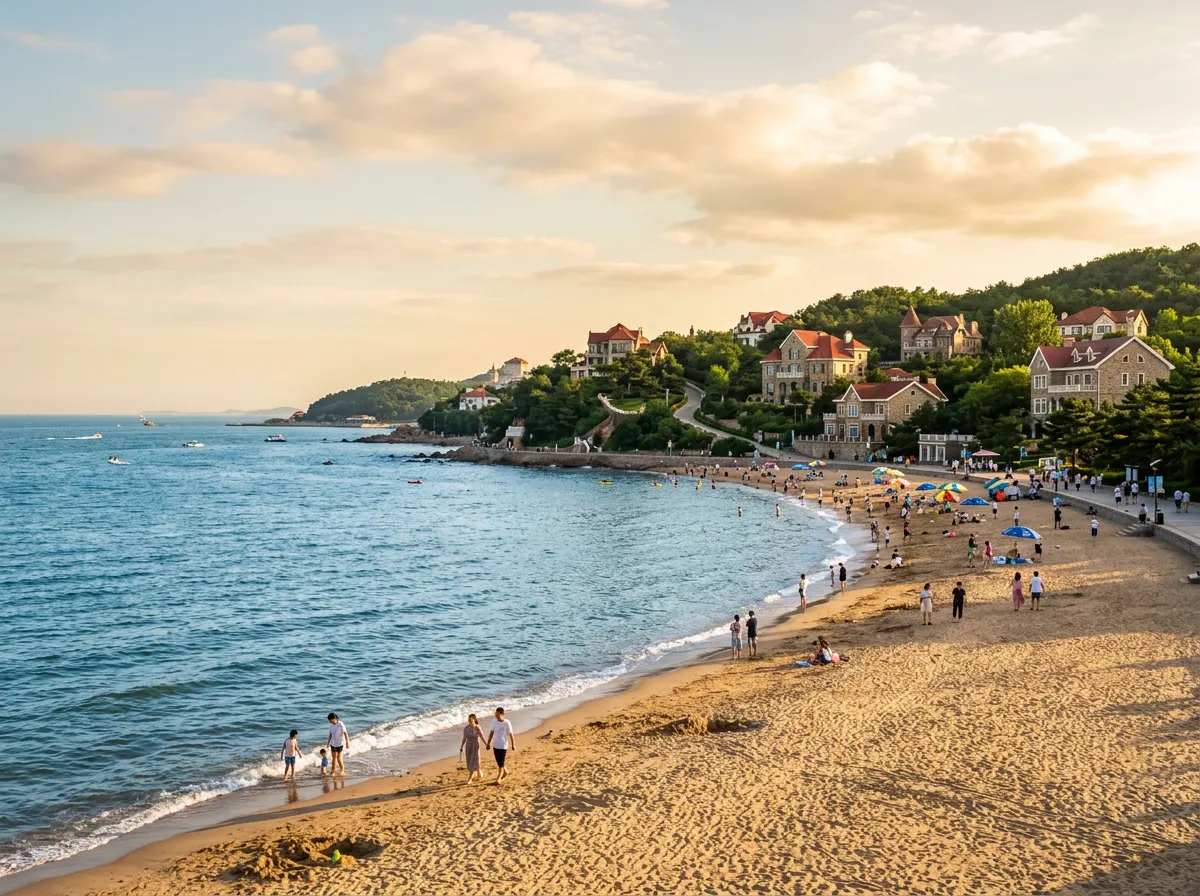
Beidaihe Beach (北戴河海滨, Běidàihé Hǎibīn) — Tiger Stone Beach, Middle Beach, West Beach
The main 10-km stretch of sandy beach along the Bohai Bay. Tiger Stone Beach (老虎石, Lǎohǔ Shí) is the most central and developed, named for the rock formations that resemble crouching tigers in the surf. Middle Beach (中海滩, Zhōng Hǎitān) is quieter and favored by Russian families. West Beach (西海滩, Xī Hǎitān) is the longest and least developed. Swimming is permitted June-September. Free to ¥30 depending on the section. Deck chairs and umbrellas rented separately (¥50-100/day).
Wikimedia Commons · CC-BY-SA
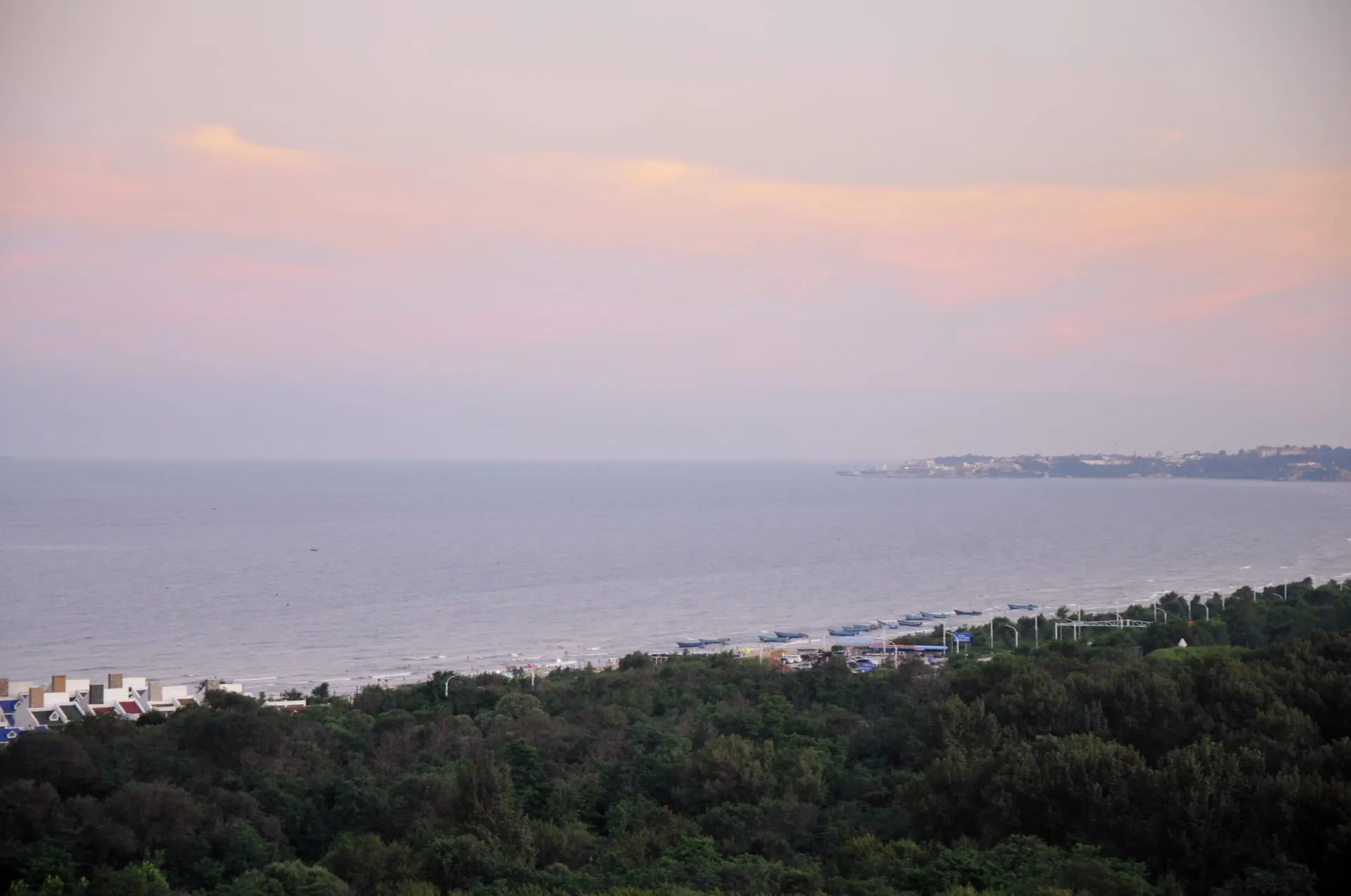
Lianfeng Mountain Park (联峰山公园, Liánfēng Shān Gōngyuán)
Forested hill park rising behind the beach strip with walking trails, a summit pavilion (Wanghai Ting, 望海亭) overlooking the Bohai Sea, and scattered Qing-era and Republican-era pavilions. The park covers 3.1 km² with elevations to 153 m. Particularly good in the early morning when sea mist fills the valleys. ¥25 as of June 2026. Allow 2-3 hours.
Wikimedia Commons · CC-BY-SA
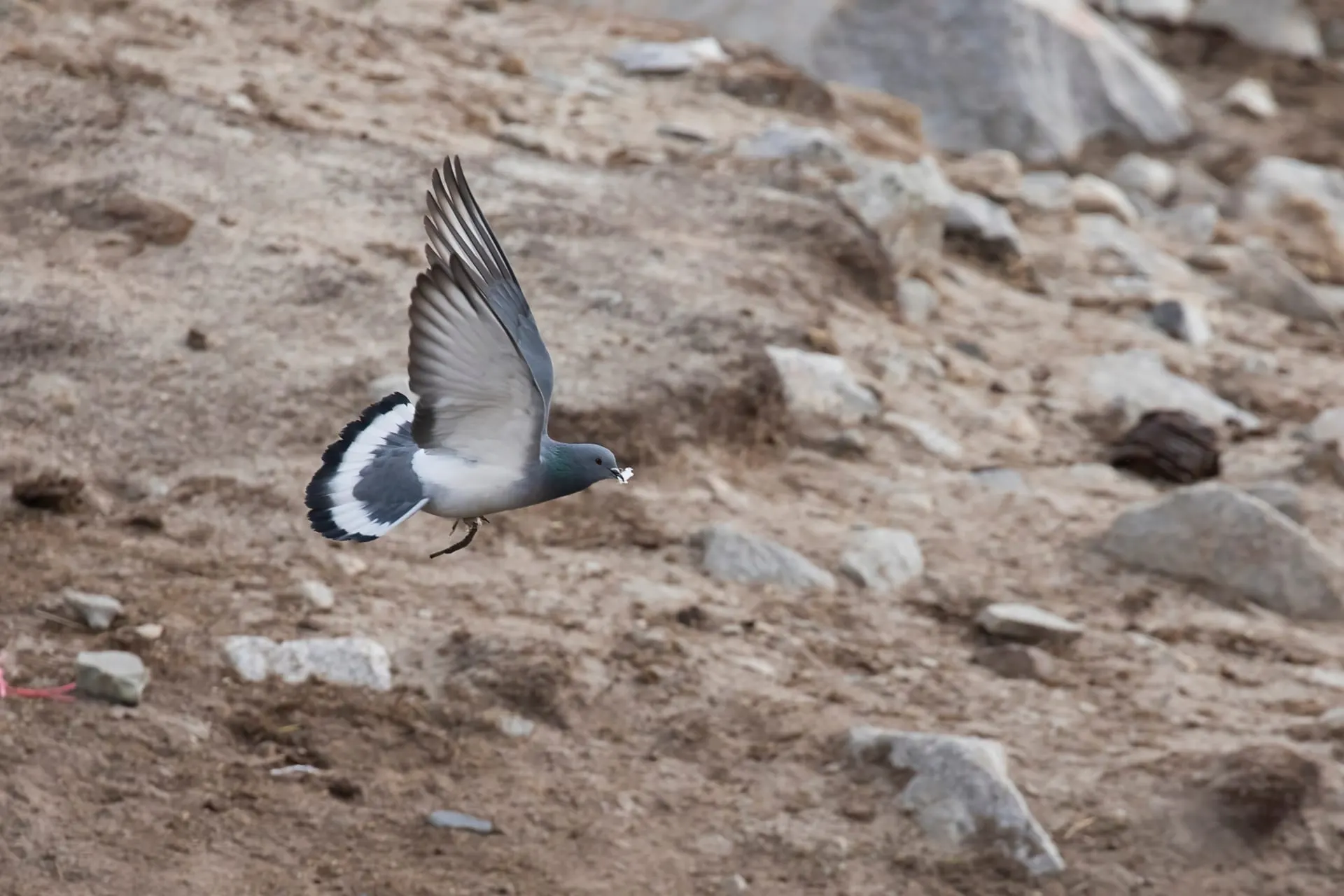
Pigeon Nest Park (鸽子窝公园, Gēzǐ Wō Gōngyuán)
A coastal wetland park at the northern end of Beidaihe, named for the rock crevices where pigeons once nested. The park is the best spot in town for sunrise over the Bohai Sea and is a prime birdwatching site during spring and autumn migration (March-May, September-November). Boardwalks cross the tidal wetlands. ¥25. Best visited at dawn.
Wikimedia Commons · CC-BY-SA
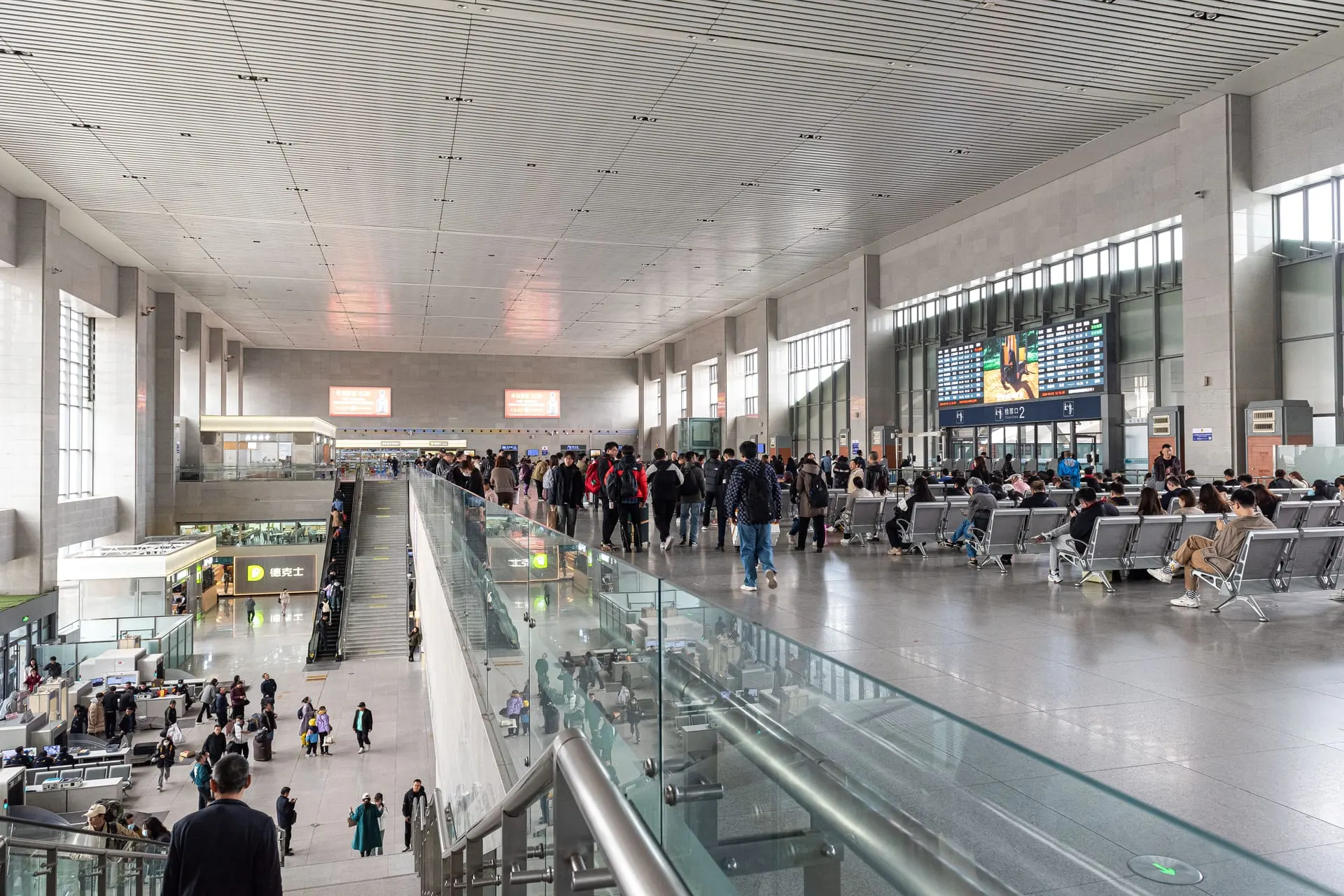
Qinhuangdao Wildlife Park / Bird Island (秦皇岛野生动物园, Qínhuángdǎo Yěshēng Dòngwùyuán)
A large safari-style wildlife park straddling forest and wetland about 15 km north of Beidaihe. Visitors ride a caged bus through tiger, lion, and bear enclosures, then walk through deer, bird, and primate zones. The adjacent Beidaihe wetland is a globally significant migratory stopover on the East Asian-Australasian Flyway — over 400 bird species have been recorded. Best in April-May and September-October. ¥100 as of June 2026.
Wikimedia Commons · CC-BY-SA
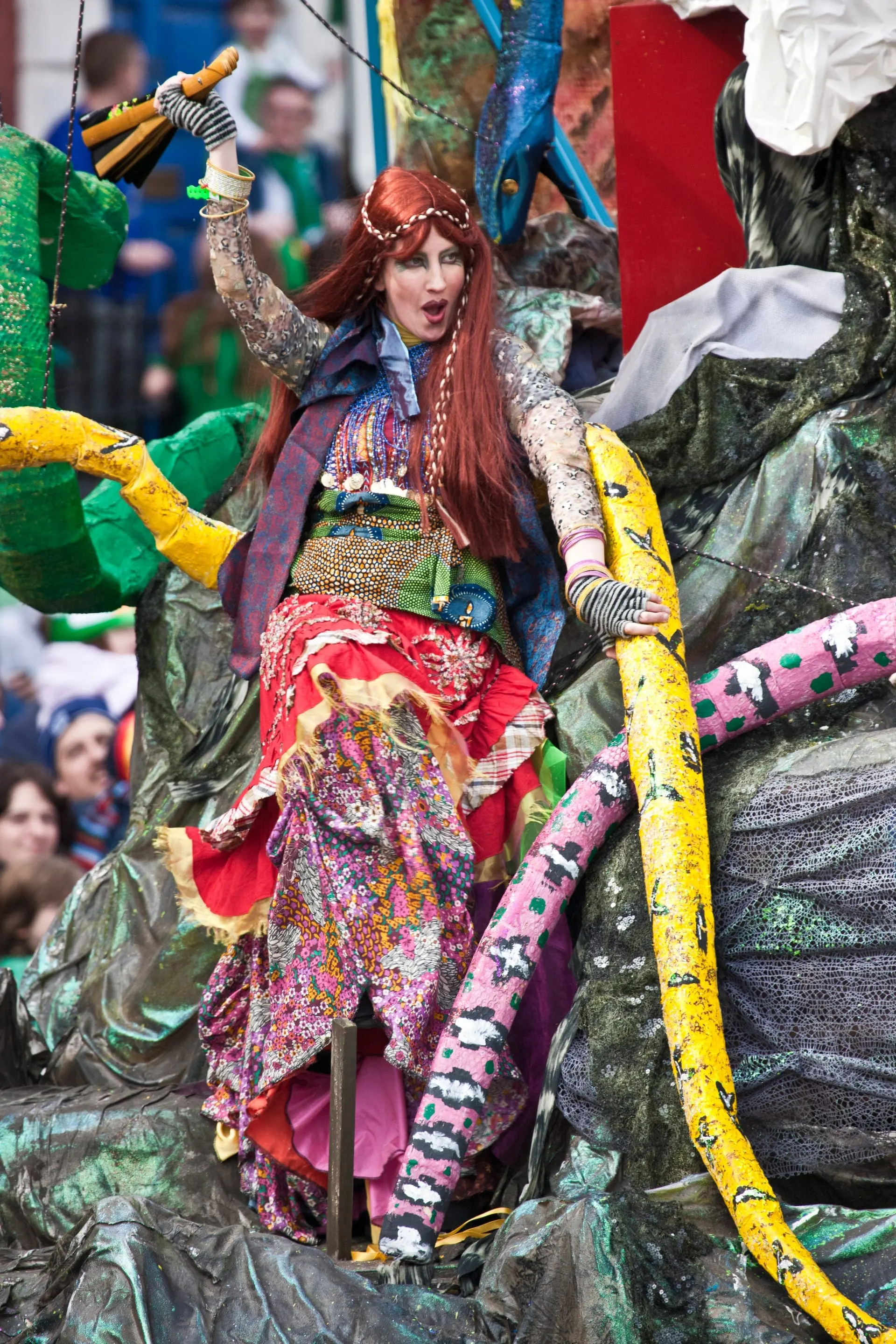
Strange Tower / Weird Building (怪楼奇园, Guài Lóu Qí Yuán)
An eccentric early 20th-century villa built by an American missionary in a bizarre architectural style blending Gothic, Romanesque, and Chinese elements. The interior is a maze of oddly-shaped rooms, spiral staircases, and hidden passages. The surrounding garden has whimsical sculptures and optical illusions. ¥40. Quirky and fun for an hour.
Wikimedia Commons · CC-BY-SA
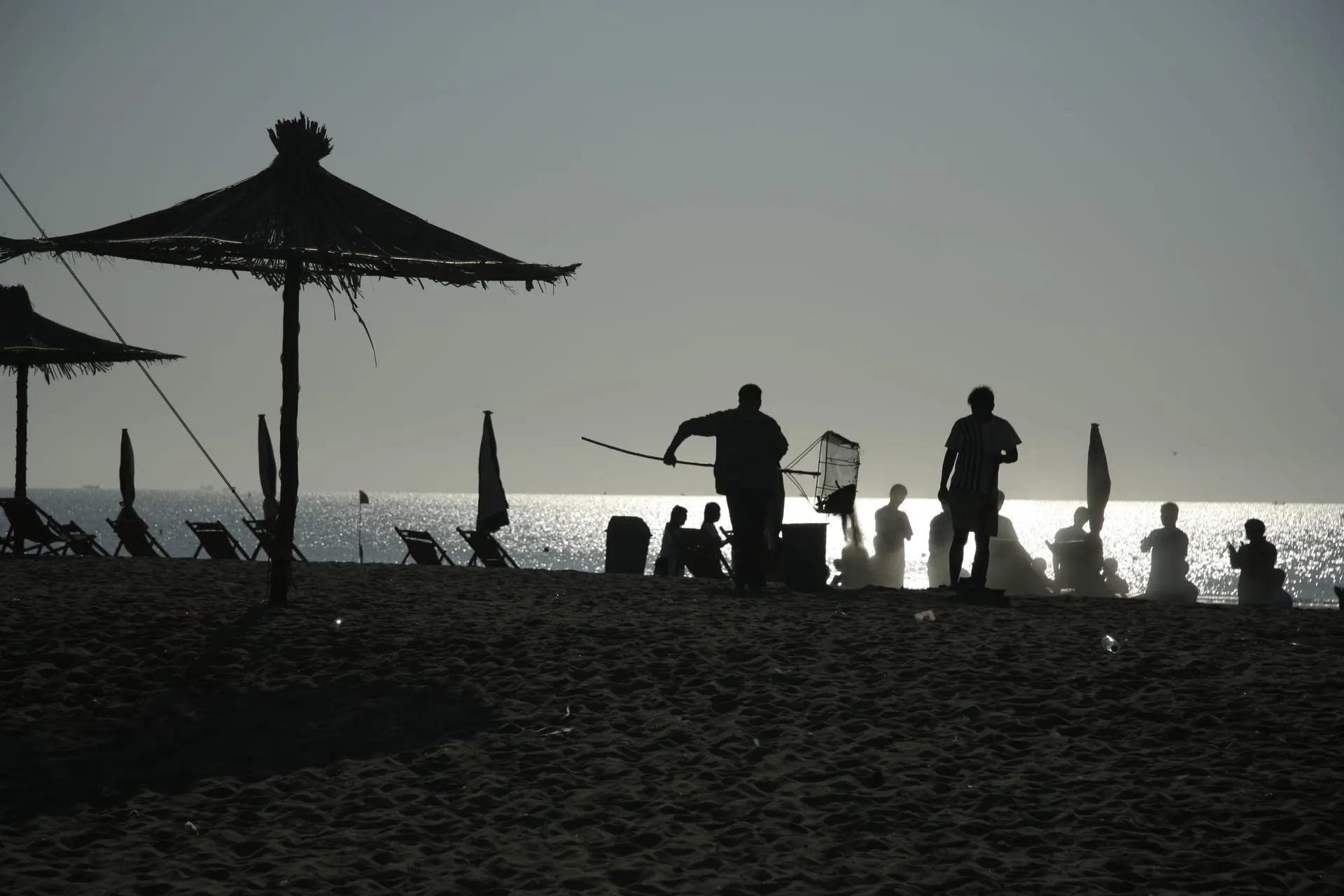
Nandaihe Sun Island (南戴河仙螺岛, Nándàihé Xiānluó Dǎo)
A small amusement-island and beach zone south of Beidaihe proper, reached by a 1,038-meter cross-sea cable car (the longest over-water cable car in China). The island has a small amusement park with rides, an aquarium, and cleaner, less-crowded beaches than central Beidaihe. The cable car ride alone is worth it for the Bohai views. ¥65 for the cable car return trip; ¥120 including the island attractions.
Wikimedia Commons · CC-BY-SA
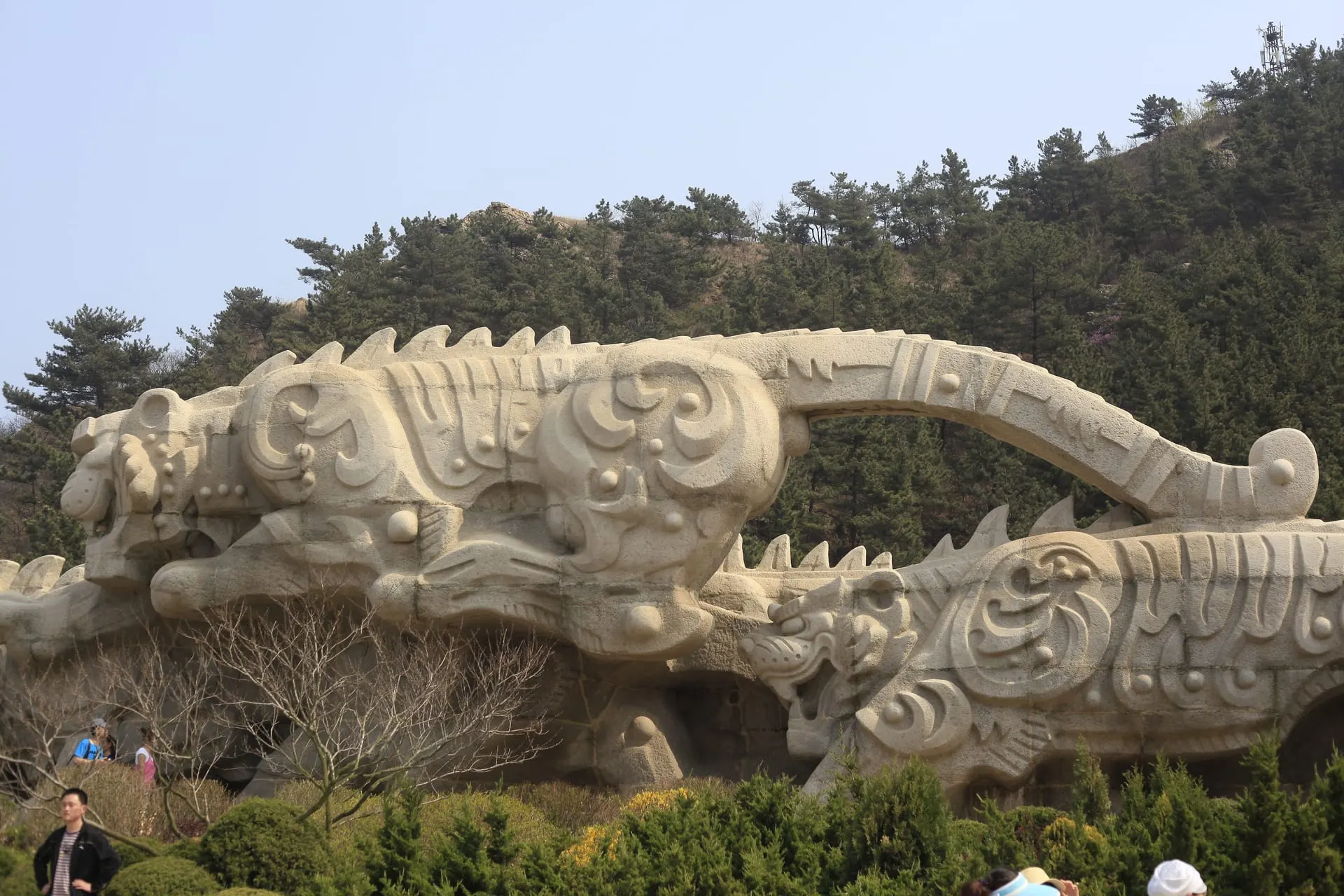
Laohu Shi / Tiger Rock (老虎石, Lǎohǔ Shí)
The well-known rock formations at the center of Tiger Stone Beach — a cluster of wave-eroded boulders that resemble crouching tigers when the tide is right. The rocks are Beidaihe's most-photographed natural feature and the surrounding area is the densest concentration of restaurants, bars, and souvenir shops in town. Free to view from the beach; the immediate rock area requires the beach entrance fee (¥10-30 depending on season).
Wikimedia Commons · CC-BY-SA
STAY
Where to stay in Beidaihe
Pick a base that matches the trip you want — imperial-central for sightseeing, hutong belt for character, Chaoyang for nightlife, or Qianmen for budget.
Tiger Stone Beach (老虎石)
Central beach, best restaurants and bars, Villa District walking distance — best for first-time visitors
#tiger-stoneMiddle Beach (中海滩)
Quieter beach, Russian family zone, converted villa guesthouses — best for return visitors and atmosphere
#middle-beachNandaihe (南戴河)
Wider beaches, family resorts, cross-sea cable car, amusement parks — best for families with young children
#nandaiheVilla District (别墅区)
Historic early-20th-century villas in pine-forested lanes behind the beach — best for architecture and atmosphere
#villa-district
ITINERARIES
Sample itineraries from Beidaihe
Three ready-made routes, from a 1-day imperial sprint to a 5-day deep dive. Copy the day-by-day plan and adapt to your own pace.
- 1 DAY
Beidaihe Day Trip from Beijing
A fast-paced day covering the best of Beidaihe: the beach, the villas, Lianfeng Mountain, and Pigeon Nest Park, with a Russian lunch. Feasible as a long day trip by HSR.
- Time-limited travelers
- Beijing residents
- Weekend impulse trips
- Day 01
Morning
07:00 HSR from Beijing Station (2h, ¥110-175). Arrive 09:00. Taxi to Tiger Stone Beach. Walk the beach, photograph tiger rocks, walk promenade south to Middle Beach (2h).
Afternoon
Explore Villa District on foot (1.5h). Russian lunch on Bao'er Road (borscht, pelmeni, ¥60-120). Taxi to Lianfeng Mountain Park — hike to Wanghai Ting pavilion (¥25, 2h). Late afternoon: Pigeon Nest Park for birdlife and late light (¥25, 1.5h).
Evening
Seafood dinner near Middle Beach (¥80-150). 19:00 or 20:00 HSR back to Beijing (arrive 21:00-22:00).
- 2 DAYS
Beidaihe Classic Weekend
A relaxed two days with an overnight stay in a converted villa guesthouse, adding the Wildlife Park and Nandaihe Sun Island.
- Weekend breaks
- Couples
- First-time visitors who don't want to rush
- Day 01
Morning
Morning HSR from Beijing. Arrive by 10:00. Check into villa guesthouse in Middle Beach area. Walk the beach strip from Tiger Stone south to West Beach (2-3h).
Afternoon
Explore Villa District on foot — Zhang Xueliang's Villa (¥20), Gu Family Villa, Mao's summer residence exterior. Russian lunch. Lianfeng Mountain hike to Wanghai Ting.
Evening
Dinner at a Middle Beach Russian restaurant. Evening walk along the beach promenade. Stay overnight in a converted villa guesthouse.
- Day 02
Morning
Sunrise at Pigeon Nest Park (05:30) for dawn birding and the Bohai sunrise. Morning: Nandaihe Sun Island — cross-sea cable car (¥65 return), walk the island, aquarium if interested.
Afternoon
Lunch in Nandaihe. Qinhuangdao Wildlife Park (¥100) — safari-bus ride and wetland birding walk (2-3h). Return to Beidaihe Station. Late afternoon HSR back to Beijing.
- 3 DAYS
Beidaihe + Shanhaiguan Extended Weekend
The full Beidaihe experience with a third day at Shanhaiguan — the Great Wall meeting the sea at Laolongtou.
- History buffs
- Photographers
- Birdwatchers (substitute a full birding day in spring/autumn)
- Day 01
Morning
Arrive Beidaihe. Check into villa guesthouse. Walk the full beach strip, photograph tiger rocks, explore Villa District. Russian lunch.
Afternoon
Lianfeng Mountain hike. Pigeon Nest Park for late-afternoon birding. Strange Tower (怪楼奇园, ¥40) for a quirky end to the afternoon.
Evening
Seafood dinner. Evening beach walk. Stay overnight.
- Day 02
Morning
Sunrise at Pigeon Nest Park (05:30). Morning: Nandaihe Sun Island cable car and island walk. Wildlife Park safari bus.
Afternoon
Lunch. Free afternoon — revisit favorite spots, cycle the coast road, or relax on Middle Beach. Browse Russian grocery shops.
Evening
Dinner at a different Russian restaurant. Drinks at a beach bar. Stay overnight.
- Day 03
Morning
Taxi to Shanhaiguan (45 min, ¥80-120). Visit the Shanhaiguan Pass (¥50, 2h) — the "First Pass Under Heaven." Walk the wall section above the pass.
Afternoon
Laolongtou — Old Dragon's Head (¥60, 2h) where the Great Wall enters the sea. Seafood lunch in Shanhaiguan town. Return to Beidaihe Station.
Evening
Late afternoon HSR back to Beijing. Dinner on the train or in Beijing.
BUDGET
What a Beidaihe trip costs
Per-person, per-day costs across three spending tiers. Excludes international flights and visa fees.
| Line item | Backpacker | Mid-range | Luxury |
|---|---|---|---|
| Hostel bed (per night) | $8 | $20 | $50 |
| Mid-range hotel / upscale (per night) | $25 | $60 | $150 |
| Local meal (per person) | $3 | $8 | $20 |
| Russian restaurant dinner (per person) | $10 | $18 | $35 |
| Bus / metro ride | $0.3 | $0.5 | $2 |
| Taxi / DiDi across town | $2 | $4 | $8 |
| Beach entry (seasonal) | $1.5 | $3 | $5 |
| Lianfeng Mountain Park | $4 | $4 | $5 |
| Wildlife Park safari | $15 | $15 | $20 |
| Shanhaiguan day trip (taxi + tickets) | $25 | $40 | $60 |
| Daily total (excluding accommodation) | $30 | $55 | $120 |
| Total per day | $123.8 | $227.5 | $475 |
$ USD per person per day, before international flights and visas. Last verified: Q3 2026.
STAY SAFE
Emergency contacts in Beidaihe
Save these three numbers before you board the plane. China uses different hotlines than most countries — there's no 911.
- POLICE
110
- AMBULANCE
120
- FIRE
119
- TOURIST HOTLINE
12301
- ENGLISH-SPEAKING ER
Qinhuangdao First Hospital (秦皇岛市第一医院) — 258 Wenhua Road, Haigang District, +86 335 590 7777. For serious emergencies, medical evacuation to Beijing (2h by HSR) may be necessary.
Problems travelers hit in Beidaihe
- Why is my Alipay not working?You linked a foreign Visa or Mastercard to Alipay but every transaction is rejected at the merchant.
- My China visa was denied — what now?Your L visa application was refused at the Chinese consulate and your trip is in 2–4 weeks.
- My passport was lost or stolen in China — what do I do?Your passport is gone (theft or loss) and you're in mainland China without travel documents.
- Why can't I book on 12306 with my foreign card?You tried to book a high-speed rail ticket on 12306.cn and your foreign Visa/Mastercard is rejected at checkout.
- Why is my VPN not working in China?You arrived in China, opened your VPN, and it will not connect at all or connects but no traffic loads.
- Why can't I book a Tibet trip on my own?You try to book Lhasa flights and hotels yourself but the booking fails, or you're turned away at the Lhasa airport without a permit.
Book activities in Beidaihe
These are licensed tour operators and booking platforms we've vetted independently. Booking through these links may earn us a commission — see our affiliate disclosure. This never affects our editorial recommendations or the price you pay.
Frequently asked questions
Is Beidaihe worth visiting for foreign tourists?
How do I get from Beijing to Beidaihe?
How many days do I need in Beidaihe?
Is Beidaihe beach clean enough to swim?
When is the best time for birdwatching in Beidaihe?
Why are there so many Russian signs and restaurants in Beidaihe?
Show all 20 FAQs
Can I visit the CPC leaders' summer villas?
What is the Shanhaiguan Great Wall and how do I get there?
What is the best Russian restaurant in Beidaihe?
Is Beidaihe family-friendly?
What is the Beidaihe International Birdwatching Festival?
Do I need a visa to visit Beidaihe?
What is the best month to visit Beidaihe?
Can I rent a bicycle or e-bike in Beidaihe?
What is the Strange Tower (怪楼奇园)?
What is the best time of day to visit Beidaihe beach?
Is Beidaihe suitable for travelers without Chinese?
How much does a beach holiday in Beidaihe cost per day?
Can you swim in the sea at Beidaihe?
What is the Pigeon Nest Park (鸽子窝公园) and is it worth visiting?
References

Related guides & destinations
Guide
How We Research 2026: NihaoVisit’s Methodology for China Travel Information
How NihaoVisit sources, verifies, and maintains 700+ pages of China travel information — our source hierarchy, fact-checking process, update
Guide
Fact-Checking Log 2026: Verified China Travel Information — NihaoVisit
A public log of fact-checking verification passes on NihaoVisit, showing what was verified, when, and against which sources — covering visa
Guide
Best Time to Visit China 2026: Month-by-Month Weather, Crowds, and Prices
The best time to visit most of China is April–May and September–October. Winter (Dec–Feb) is cold but cheap; summer (Jun–Aug) is hot and cro
Guide
VPN for China 2026: Which VPNs Work, eSIM Alternatives, and the Complete Pre-Trip Checklist
Most Western apps and websites are blocked in mainland China. A reliable VPN is essential for Google, Gmail, WhatsApp, Instagram, and most n
Guide
China SIM Card and eSIM Guide 2026: Stay Connected Without WeChat
A Chinese SIM or eSIM lets you use mobile data, maps, and ride-hailing without WiFi. Here is how to get one, the cost, and which provider to
Guide
Solo Female Travel in China 2026: Safety, Tips, and Real Experiences
China is one of the safer destinations for solo female travelers. Petty theft is rare, violent crime against tourists is extremely uncommon,