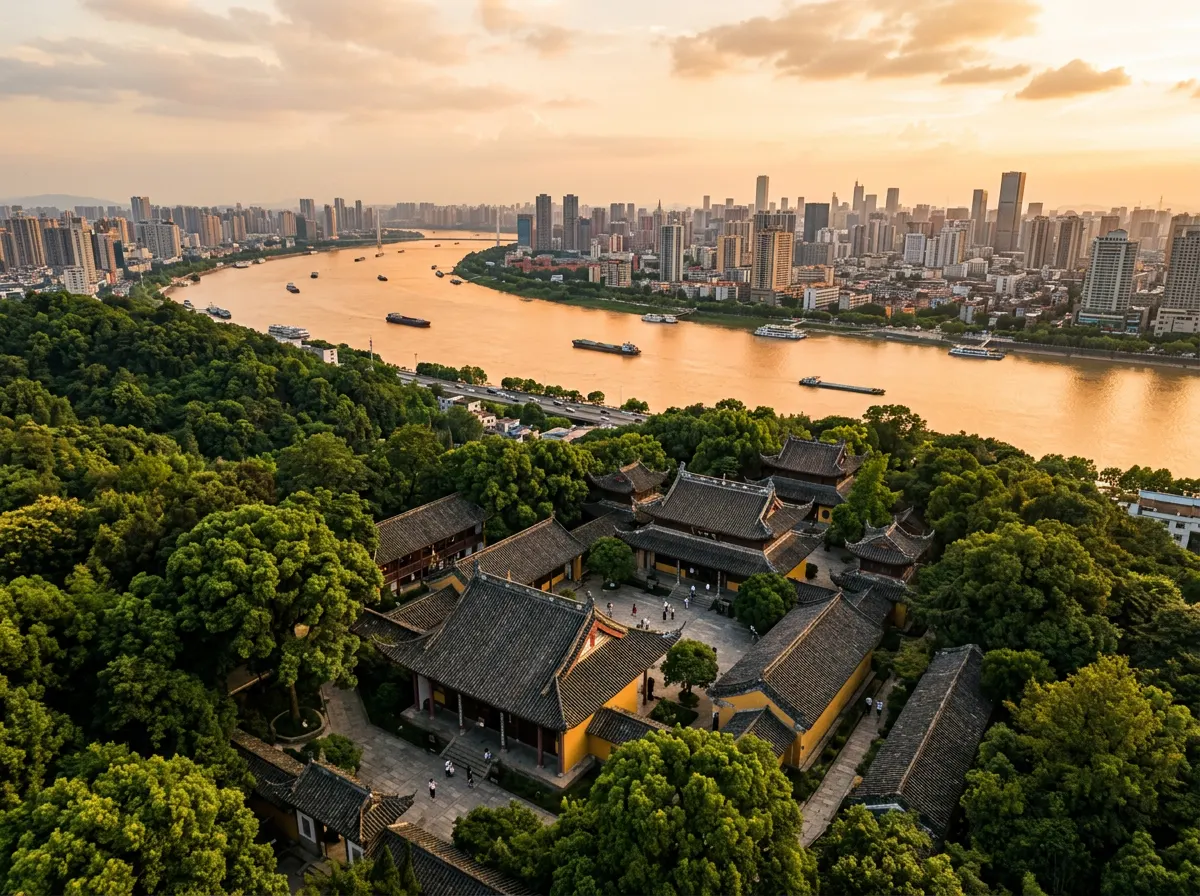
Changsha
Changsha (长沙, Chángshā) is the capital of Hunan province, a city of 10 million that most foreign travelers skip entirely — and that is exactly why you should go. It was Mao Zedong's home from age 17 to 25, the place where he trained as a teacher, joined his first revolutionary groups, and developed the political instincts that would reshape China. The food is Hunan cuisine (湘菜, Xiāng cài), one of China's eight great cuisines, and it is brutally spicy — more direct chili heat than Sichuan, less numbing, a clean fire that builds with every bite. Changsha is young, loud, and stays open late: the entertainment streets around Jiefang Xi Road thrum until 2 AM, the Orange Isle (橘子洲) fireworks light up the Xiang River on Saturday nights in summer, and the city's night-market culture is among the most intense in China. Two to three days is enough for the main sights; budget roughly ¥130-250 per day for mid-range comfort. Day trips to Mao's birthplace village (Shaoshan, 1.5 hours south) and Zhangjiajie national park (5 hours west) extend the visit naturally. The winter is damp but manageable; the summer is hot but the night culture is at its peak. The Hunan Provincial Museum, with its Mawangdui Han Tombs and Lady Dai's preserved body, is one of China's most important regional museums and a major reason to visit. Yuelu Academy is a deep cultural counterweight to the city's frenetic nightlife. Bring an empty stomach and a willingness to try stinky tofu, duck neck, and chili-laden everything — Changsha is the food capital of inland China. The city combines 1,000-year-old Confucian academies, 2,000-year-old Han tombs, and 1930s revolutionary history in one walkable metro area, with a food and nightlife culture that runs later than anywhere else in inland China. Tianxin Pavilion and Yuelu Mountain provide quieter cultural anchors that balance the frenetic night life. The Tianmen Mountain and Zhangjiajie national park are within HSR range for a multi-day side excursion. Beer culture is relaxed and baijiu toasts are the local ritual at group dinners. Hunan's humidity makes summer heat feel more oppressive than the temperature alone suggests, so plan indoor museums for midday in July and August. Winter is damp but rarely below freezing, and hotel rates drop by 30-50%. The city's metro system is among China's newest, with English signage and clean stations — getting around is straightforward. Drivers in Changsha are aggressive, and electric scooters are common on sidewalks, so watch carefully when crossing streets. For most travelers, 3 days captures the essentials, with an optional day trip to Shaoshan for the Mao pilgrimage. The Zhangjiajie Avatar-mountain side trip requires a separate 3-4 day excursion and is best combined with a longer Hunan loop. Changsha's reputation as one of China's most livable cities comes from its food, late-night culture, lower cost than Beijing or Shanghai, and the warmer climate of Hunan. Solo travelers find it especially welcoming because the food scene works for one — many restaurants have counter seating, and the night-market culture is inherently social without requiring you to be part of a group. With three days and an appetite, you can eat your way through the highlights and still feel like you have only scratched the surface. The Wenheyou complex deserves a full evening on its own. Most travelers underestimate how much time the Wenheyou food complex and Jiefang West bar district deserve — plan for a full evening, not a quick walk-through. The Tianxin Pavilion park is a quiet morning or sunset retreat from the urban energy, with views of the surviving Ming-era wall. The Yuelu Academy area benefits from a half-day rather than a quick stop, especially if you include the Aiwan Pavilion walk and the Lushan Temple. The Hunan Provincial Museum requires online reservation 1-3 days ahead via WeChat mini-program, especially on weekends and Chinese holidays when slots fill fast. Allow 2-3 hours for the museum, with the Mawangdui galleries being the highlight and the modern revolutionary history galleries providing context for the city's significance in 20th-century China. Arrive early in the morning to beat the Chinese tourist groups, who typically arrive after 10:00. The Orange Isle fireworks happen on Saturday evenings in summer (June through September), starting at 20:30 — the riverside fills with locals an hour ahead, so stake out a spot on the riverfront near Juzizhou bridge for the best view. The Meixi Lake area on the city's west side combines Zaha Hadid's architectural showcase with a public park and lake — worth a half-day if you appreciate contemporary architecture and want a quieter alternative to the central city. The orange, smoke, and noise of the fireworks are best experienced with a cold beer and a stinky tofu snack from a riverside vendor. Combine the fireworks with a dinner of Hunan hot pot at one of the Jiefang West restaurants, and end with drinks at a Taiping Street bar — this is the Changsha experience locals recommend to friends. Many of the most memorable nights in Changsha are unplanned — wandering the night markets, finding a hot pot place that locals recommend, ending at a bar with friends old and new. The Changsha magic is in this unstructured time, not in chasing the official sights. Allow yourself at least one evening with no agenda, and the city will reward you. The locals are generally curious about foreign visitors and quick to share food recommendations — keep your WeChat ready for adding new acquaintances. The Orange Isle night runs are a particular highlight, especially when the river breeze picks up and the Xiangjiang lights reflect on the water. Most travelers leave Changsha wanting more — the city has a way of pulling you back, and many visitors return for the food alone. If you have time for one more side trip, consider Hengshan (Hunan's Mount Heng) for Buddhist mountain scenery, accessible by HSR in 1.5 hours from Changsha South station. Hengshan is one of the Five Sacred Mountains of Taoism, withstanding the four famous peaks and the historic Nanyue Grand Temple complex at its base. The mountain is less crowded than its sacred counterparts in other provinces, and the hiking routes range from easy to challenging, making it accessible for most fitness levels. The summit area has temple ruins, dramatic cliffs, and sea-of-clouds views on clear mornings. Allow 2-3 days for a Hengshan visit; overnight near the base or at one of the summit-area guesthouses is recommended.
Why Changsha in 2026.
Hunan's capital, Mao Zedong's young-adult home, and the spicy soul of Chinese food culture. Orange Isle, Yuelu Academy, and the night markets that run past 2 AM. Best visited April-May and September-October for mild weather; summer is hot and humid, winter cold and damp. Hunan cuisine is spicy and addictive. The Hunan Provincial Museum holds the Mawangdui Han tombs. Shaoshan is a 90-minute bus ride south for Mao pilgrims. Wenheyou's 1980s-themed food complex is the city's most photographed late-night destination. Direct HSR from Wuhan, Guangzhou, and Shanghai makes Changsha a natural add-on. Tianxin Pavilion is a rare pre-1938 survivor. The metro is clean and English-friendly. Allow 3 days for the city and an optional day for Shaoshan. Travel insurance with medical coverage is recommended. The food alone is worth the trip. Carry a translation app and an empty stomach.
Quick Answer
Changsha (长沙, Chángshā) is the capital of Hunan province, a city of 10 million that most foreign travelers skip entirely — and that is exactly why you should go. It was Mao Zedong's home from age 17 to 25, the place where he trained as a teacher, joined his first revolutionary groups, and developed the political instincts that would reshape China. The food is Hunan cuisine (湘菜, Xiāng cài), one of China's eight great cuisines, and it is brutally spicy — more direct chili heat than Sichuan, less numbing, a clean fire that builds with every bite. Changsha is young, loud, and stays open late: the entertainment streets around Jiefang Xi Road thrum until 2 AM, the Orange Isle (橘子洲) fireworks light up the Xiang River on Saturday nights in summer, and the city's night-market culture is among the most intense in China. Two to three days is enough for the main sights; budget roughly ¥130-250 per day for mid-range comfort. Day trips to Mao's birthplace village (Shaoshan, 1.5 hours south) and Zhangjiajie national park (5 hours west) extend the visit naturally. The winter is damp but manageable; the summer is hot but the night culture is at its peak. The Hunan Provincial Museum, with its Mawangdui Han Tombs and Lady Dai's preserved body, is one of China's most important regional museums and a major reason to visit. Yuelu Academy is a deep cultural counterweight to the city's frenetic nightlife. Bring an empty stomach and a willingness to try stinky tofu, duck neck, and chili-laden everything — Changsha is the food capital of inland China. The city combines 1,000-year-old Confucian academies, 2,000-year-old Han tombs, and 1930s revolutionary history in one walkable metro area, with a food and nightlife culture that runs later than anywhere else in inland China. Tianxin Pavilion and Yuelu Mountain provide quieter cultural anchors that balance the frenetic night life. The Tianmen Mountain and Zhangjiajie national park are within HSR range for a multi-day side excursion. Beer culture is relaxed and baijiu toasts are the local ritual at group dinners. Hunan's humidity makes summer heat feel more oppressive than the temperature alone suggests, so plan indoor museums for midday in July and August. Winter is damp but rarely below freezing, and hotel rates drop by 30-50%. The city's metro system is among China's newest, with English signage and clean stations — getting around is straightforward. Drivers in Changsha are aggressive, and electric scooters are common on sidewalks, so watch carefully when crossing streets. For most travelers, 3 days captures the essentials, with an optional day trip to Shaoshan for the Mao pilgrimage. The Zhangjiajie Avatar-mountain side trip requires a separate 3-4 day excursion and is best combined with a longer Hunan loop. Changsha's reputation as one of China's most livable cities comes from its food, late-night culture, lower cost than Beijing or Shanghai, and the warmer climate of Hunan. Solo travelers find it especially welcoming because the food scene works for one — many restaurants have counter seating, and the night-market culture is inherently social without requiring you to be part of a group. With three days and an appetite, you can eat your way through the highlights and still feel like you have only scratched the surface. The Wenheyou complex deserves a full evening on its own. Most travelers underestimate how much time the Wenheyou food complex and Jiefang West bar district deserve — plan for a full evening, not a quick walk-through. The Tianxin Pavilion park is a quiet morning or sunset retreat from the urban energy, with views of the surviving Ming-era wall. The Yuelu Academy area benefits from a half-day rather than a quick stop, especially if you include the Aiwan Pavilion walk and the Lushan Temple. The Hunan Provincial Museum requires online reservation 1-3 days ahead via WeChat mini-program, especially on weekends and Chinese holidays when slots fill fast. Allow 2-3 hours for the museum, with the Mawangdui galleries being the highlight and the modern revolutionary history galleries providing context for the city's significance in 20th-century China. Arrive early in the morning to beat the Chinese tourist groups, who typically arrive after 10:00. The Orange Isle fireworks happen on Saturday evenings in summer (June through September), starting at 20:30 — the riverside fills with locals an hour ahead, so stake out a spot on the riverfront near Juzizhou bridge for the best view. The Meixi Lake area on the city's west side combines Zaha Hadid's architectural showcase with a public park and lake — worth a half-day if you appreciate contemporary architecture and want a quieter alternative to the central city. The orange, smoke, and noise of the fireworks are best experienced with a cold beer and a stinky tofu snack from a riverside vendor. Combine the fireworks with a dinner of Hunan hot pot at one of the Jiefang West restaurants, and end with drinks at a Taiping Street bar — this is the Changsha experience locals recommend to friends. Many of the most memorable nights in Changsha are unplanned — wandering the night markets, finding a hot pot place that locals recommend, ending at a bar with friends old and new. The Changsha magic is in this unstructured time, not in chasing the official sights. Allow yourself at least one evening with no agenda, and the city will reward you. The locals are generally curious about foreign visitors and quick to share food recommendations — keep your WeChat ready for adding new acquaintances. The Orange Isle night runs are a particular highlight, especially when the river breeze picks up and the Xiangjiang lights reflect on the water. Most travelers leave Changsha wanting more — the city has a way of pulling you back, and many visitors return for the food alone. If you have time for one more side trip, consider Hengshan (Hunan's Mount Heng) for Buddhist mountain scenery, accessible by HSR in 1.5 hours from Changsha South station. Hengshan is one of the Five Sacred Mountains of Taoism, withstanding the four famous peaks and the historic Nanyue Grand Temple complex at its base. The mountain is less crowded than its sacred counterparts in other provinces, and the hiking routes range from easy to challenging, making it accessible for most fitness levels. The summit area has temple ruins, dramatic cliffs, and sea-of-clouds views on clear mornings. Allow 2-3 days for a Hengshan visit; overnight near the base or at one of the summit-area guesthouses is recommended.
| Worth visiting | Yes, if you want a Chinese city that feels raw and real — not polished for tourists. The food alone justifies the trip. |
|---|---|
| Recommended days | 2-3 days |
| Best time to visit | March-May and October-November (avoid July-August — 38°C+ and punishing humidity) |
| Daily budget | $35 (backpacker) / $100 (mid-range) / $250+ (luxury) |
| Family friendly | Moderate — Yuelu Mountain and Orange Isle are good for kids, but the spice level and late-night culture are adult-oriented |
| Solo friendly | Yes — compact, safe, excellent metro, and the food scene works perfectly for solo eaters |
| Airport | Changsha Huanghua International Airport (CSX) — connected by Metro Line 6 (¥8, 40 min) and maglev (¥20, 20 min to Changsha South) |
| High-speed rail | Yes — Wuhan (1.5h), Guangzhou (2.5h), Nanchang (1.5h), Guiyang (3h), Zhengzhou (3h) |
| Language | Mandarin with Hunan dialect (湘语); English is rare outside hotels and university areas |
| Currency | CNY (¥) — Alipay and WeChat Pay accept foreign Visa/Mastercard |
| Time zone | China Standard Time (UTC+8) |
| Last updated | 2026-06-18 |
Want a Changsha plan built for you?
Jump to:
Orange Isle·Yuelu Academy·Food & Nightlife·Getting Around·Where to Stay·Itineraries·Weather·Tips & Warnings·Emergency Contacts·FAQ
Why visit Changsha? Is it worth going?
Changsha is not on most foreign tourists' China radar — and that is precisely the point of coming here. It is one of the few major Chinese cities where you can eat, walk, and explore for three days without hearing another Western language. The city is a raw, unfiltered snapshot of urban China in 2026: construction cranes everywhere, a metro system that has doubled in a decade, streets that feel genuinely lived-in rather than curated for visitors. The three reasons to come, ranked: food, Mao history, and the sheer energy of the place. Hunan cuisine (湘菜, Xiāng cài) is one of China's eight great regional cuisines and the fieriest of them all — not the numbing Sichuan má là but a direct, clean, building chili heat that resets your entire relationship with spice. Orange Isle (橘子洲, Júzǐ Zhōu) is a 5-kilometer island park in the Xiang River with a literally monumental Mao bust, free entry, and a weekend fireworks display that draws half the city to the riverbanks. Yuelu Academy (岳麓书院, Yuèlù Shūyuàn) has been teaching students on the same campus since 976 AD. The honest downside: Changsha is not pretty in a postcard sense. The architecture is functional, the air quality varies, and in July and August the heat is medieval — Changsha is one of China's traditional "Four Furnaces" (四大火炉), with temperatures routinely above 38 °C and humidity that makes the air feel like broth. Come in late spring or autumn, or accept that you will sweat through your clothes twice a day.
What is the history of Changsha: from Chu kingdom to Mao's youth?
Changsha has 3,000 years of recorded history. It was a major city of the Chu kingdom during the Warring States period (475-221 BCE) and a strategic garrison town through the Qin and Han dynasties. The Mawangdui tombs, excavated in the 1970s, revealed a Han-dynasty noblewoman — Lady Dai (辛追, Xīn Zhuī) — whose 2,000-year-old body was so perfectly preserved that her skin was still elastic, her limbs still flexible, and her internal organs intact. She and her silk manuscripts are the headline exhibit at the Hunan Provincial Museum, and seeing them is genuinely unsettling in the best way. The city's modern identity is inseparable from Mao Zedong. He arrived in 1911 at age 17, enrolled at the Hunan First Normal School (湖南第一师范, Húnán Dìyī Shīfàn), and spent his formative years here — teaching, organizing, reading, and starting the political cells that led to the founding of the CCP. He did not leave until 1923. The young Mao of Changsha is not the Chairman of the posters; he is a tall, intense, bookish young man swimming in the Xiang River, writing poetry about autumn on Orange Isle, and arguing politics in tea houses. That younger Mao is the one commemorated across the city, and the contrast with the Beijing-era icon is instructive. Changsha was nearly destroyed during the Second Sino-Japanese War — the 1938 Wenxi Fire (文夕大火, Wénxī Dàhuǒ) burned 90% of the city in three days, a catastrophe set deliberately by Nationalist forces retreating from the Japanese advance. Almost nothing pre-1938 survives above ground. The city you see today was rebuilt almost entirely after 1949, which explains the utilitarian architecture and the absence of the ancient streetscapes you find in Xi'an or Nanjing.
Why is Changsha called one of China's "Four Furnaces"?
Changsha sits on the lower Xiang River (湘江, Xiāng Jiāng) in east-central Hunan, flanked by mountains on three sides. The Mufu range rises to the east, the Xuefeng to the west, and the Nanling to the south. The city core straddles both banks of the Xiang, with the west bank holding Yuelu Mountain and the university district and the east bank holding the commercial center and the railway station. The metro crosses the river on Line 2 and Line 4. The climate is humid subtropical and famously punishing. Summer runs from May through September: daytime highs of 33-39 °C, humidity above 80%, and almost no wind because the surrounding hills trap the air. The "Four Furnaces" designation (四大火炉, Sì Dà Huǒlú) is an old Chinese folk ranking of the country's hottest cities — Changsha shares the title with Chongqing, Wuhan, and Nanjing — and locals genuinely arrange their lives around the heat, shopping after dark and eating on the street well past midnight. Winter is short and damp, with temperatures of 3-10 °C and a pervasive chill that feels colder than the numbers suggest because humidity makes everything cling. Snow is rare — maybe one light dusting per year. Spring (March-May) and autumn (October-November) are the only comfortable windows. Spring brings plum rains in April; October is the consensus best month, with dry, crisp days in the low 20s and the osmanthus trees blooming across Yuelu Mountain. A counter-intuitive fact: summer is actually the most interesting time to be in Changsha. The heat pushes life onto the streets after dark, the night markets run at full blast, and the city's famous late-night culture — arguably the most developed in China — is at its peak. You just need to plan indoor activities (the museum, the metro, air-conditioned restaurants) from 11 AM to 4 PM.
How to get to Changsha: flights, high-speed rail, and connections
Changsha Huanghua International Airport (CSX) is about 25 km east of the city center. It handles direct international flights from Seoul (3h), Bangkok (3.5h), Singapore (4.5h), Tokyo (4h), and a growing number of Southeast Asian cities, plus domestic connections to every major Chinese city. From the airport to the city: Metro Line 6 runs directly to the city center (¥8, about 40 minutes to Wuyi Square), and the Changsha Maglev (¥20, 20 minutes) connects the airport to Changsha South Railway Station, where you can transfer to Metro Line 2 or 4. High-speed rail is how most domestic visitors arrive. Changsha South (长沙南站, Chángshā Nán Zhàn) is the main HSR station, 12 km south of the center on Metro Line 2. Direct G-class trains serve Wuhan (1.5 hours, ¥110-165 second class), Guangzhou (2.5 hours, ¥220-314), Nanchang (1.5 hours, ¥105-157), Guiyang (3 hours, ¥180-260), Zhengzhou (3 hours, ¥195-280), and Shenzhen (3.5 hours, ¥290-390). Changsha Station (长沙站, the older conventional-rail station) is in the city center and handles overnight sleepers and slower K/T trains. Changsha is not China's best-connected HSR hub — Zhengzhou and Wuhan both have more lines — but the connections are more than adequate, and the Wuhan-Guangzhou corridor that passes through Changsha is one of the busiest rail routes in the world. Buy tickets on the 12306 app (Chinese) or Trip.com (English) 3-7 days ahead for peak-travel periods.
How to get around Changsha: metro, bus, DiDi, and bike share
Changsha's metro is the workhorse. Six lines (1-6, with more under construction as of June 2026) cover the core city, with full English signage and announcements. Fares are ¥2-8 depending on distance. The most useful lines for visitors: Line 2 runs east-west through Wuyi Square (五一广场), the central commercial district, and connects Changsha South Railway Station to the Orange Isle and the west bank. Line 4 serves Yuelu Mountain and Hunan University. Line 6 connects the airport to the city center. Trains run roughly 06:00-23:00. Pay with Alipay's transport QR code or buy single-journey tickets from the English-language machines. DiDi (China's Uber equivalent) is the easiest option for point-to-point trips. A ride within the city core costs ¥10-25; from the city center to Changsha South is about ¥35-50. The DiDi app accepts foreign phone numbers and has an in-app translator. Metered taxis are everywhere (flagfall ¥8 for the first 2 km, then ¥2 per km), but the language barrier is high — always have your destination written in Chinese. Buses are ¥2 flat fare and reach places the metro misses, but routes and announcements are Chinese-only. Meituan (yellow) and Hello (blue) shared bikes are scattered across the city at ¥1.5 per 30 minutes, payable via Alipay or WeChat. The Orange Isle and the Xiang River riverfront paths are excellent for cycling. For the area around Yuelu Mountain, walk or use DiDi — the metro station is at the base and the academy is a 15-minute uphill walk.
What are the top attractions in Changsha, ranked and described?
1. Orange Isle (橘子洲, Júzǐ Zhōu). Free. A 5-kilometer island in the middle of the Xiang River, reached by Metro Line 2 (Juzizhou station). The island is essentially a long, slender park with gardens, pavilions, a small beach, and a 32-meter granite bust of a young Mao Zedong at the southern tip. The bust is enormous, surprisingly well-executed, and the single most photographed thing in Changsha. On Saturday nights in summer (roughly May-October), the city fires a 20-minute fireworks display from the island that draws crowds to both riverbanks. I've watched it from the west bank near Yuelu Mountain and it is genuinely spectacular — the fireworks reflect off the river and the skyline lights up behind them. Arrive by 19:00 for a good spot. 2. Yuelu Academy (岳麓书院, Yuèlù Shūyuàn). ¥50 as of June 2026. Founded in 976 AD during the Northern Song dynasty, it is one of China's four ancient academies (四大书院) and has been teaching students continuously — with interruptions during wars — for over a thousand years. Today it is part of Hunan University. The grounds are a series of courtyards, lecture halls, libraries, and gardens climbing the lower slope of Yuelu Mountain. The stone inscriptions, the bamboo groves, and the carved wooden plaques quoting Confucian classics give the place a weight that the newer Mao sites lack. The Aiwan Pavilion (爱晚亭, Àiwǎn Tíng), a red-pillared pavilion in a maple grove at the rear of the academy, is one of the most photographed spots in Hunan and dates to 1792. Allow 2 hours. 3. Hunan Provincial Museum (湖南省博物馆, Húnán Shěng Bówùguǎn). Free, reservation required via the official WeChat mini-program. The Mawangdui exhibit is the must-see: the 2,000-year-old body of Lady Dai (辛追), still with hair, eyelashes, and flexible joints, plus the silk manuscripts, lacquerware, and funeral banners that were buried with her. The preservation is so complete that pathologists found undigested melon seeds in her stomach. The museum also has strong Shang and Zhou bronze collections and a gallery of Hunan calligraphy. Allow 2-3 hours. When I visited in October, the Lady Dai gallery was quiet on a Tuesday morning — by noon, tour groups filled every inch. 4. Taiping Street (太平街, Tàipíng Jiē). Free. A restored Qing-era flagstone street running north from Wuyi Square, lined with traditional shopfronts selling stinky tofu, sugar oil ba ba, craft beer, and souvenir porcelain. It is touristy and self-aware about it, but the food stalls are real and the side alleys hold small bars and tea houses where the crowd thins significantly. Best from 18:00 onward. 5. Tianxin Pavilion (天心阁, Tiānxīn Gé). ¥32. The only surviving section of Changsha's Ming city wall, rebuilt in the Qing and topped with a three-story pavilion. The views of the modern city are fine but not spectacular; the real draw is the wall itself — a rare pre-1938 survivor in a city that lost almost everything to the Wenxi Fire. The surrounding park is a popular spot for local chess players and morning tai chi. 6. Meixi Lake International Culture & Arts Center (梅溪湖, Méixī Hú). Free to photograph; performances ticketed. A Zaha Hadid-designed complex of three curving white buildings on the shore of an artificial lake in the west of the city. The architecture is dramatic — flowing white petals reflected in the water — and the contrast with Changsha's otherwise utilitarian skyline is startling. It is best photographed at dusk when the exterior lights come on. Take Metro Line 2 to Meixi Lake West. 7. Yuelu Mountain (岳麓山, Yuèlù Shān). Free. The mountain behind the academy is a forested ridge with hiking trails, the Lushan Temple (麓山寺, founded 268 AD), the Yunlu Palace (云麓宫), and a TV tower. The summit is 300 meters above sea level — an easy 45-minute climb or ¥30 for the cable car. In autumn, the maple trees turn brilliant red and the mountain fills with local families. The best viewpoint is the Yunlu Palace terrace, which looks west over the Xiang River valley. 8. Window of the World (长沙世界之窗). ¥200 as of June 2026. A theme park with 100+ miniature replicas of world landmarks (Eiffel Tower, Pyramids, Taj Mahal), plus roller coasters, water rides, and seasonal events. It is crowded, expensive, and unapologetically kitschy — and Changsha families love it. Worth it only if you have children and a spare day; skip it otherwise.
Where to stay in Changsha: neighborhoods and typical prices
Wuyi Square (五一广场) and the area around it is the best base for first-time visitors. This is the commercial and transport center of the city, at the intersection of Metro Lines 1 and 2, with walking access to Taiping Street, Jiefang West Road, and the riverfront. Mid-range hotels (Jinjiang Inn, Atour, Ji Hotel) run ¥250-450 per night; international chains (Grand Hyatt Changsha, Niccolo Changsha) are ¥800-1,500. The area is loud at night — request a high floor if you are sensitive to street noise. The Yuelu Mountain / university district on the west bank is quieter, greener, and close to the academy and the hiking trails. Hotels skew toward mid-range business properties (¥200-400) and a handful of boutique guesthouses near Hunan University. This is the best area if you prioritize calm and mountain access. Changsha South Railway Station area has a cluster of budget and mid-range chain hotels (¥150-300) convenient for late arrivals or early HSR departures. The area is functional and charmless — fine for one night, not a base for exploring. For backpackers, hostels cluster around Wuyi Square and the university district with dorm beds at ¥50-80. The Changsha Blue Lotus Hostel and the Wuyi Square Youth Hostel are the two most established options. For luxury, the Niccolo Changsha in the IFS tower is the top pick, with rooms from ¥1,200 and a rooftop bar with the best skyline views in the city.
What to eat in Changsha: Hunan cuisine, stinky tofu, and Chairman Mao's favorite dish
Hunan cuisine (湘菜, Xiāng cài) is the reason many Chinese travelers come to Changsha. It is one of China's eight great cuisines and the country's most aggressively spicy food tradition. The heat is not the numbing, tingling má là of Sichuan — it is direct, capsicum-forward chili fire, using fresh red and green peppers, dried chili, pickled chili, and chili paste in quantities that will make a Sichuan native blink. The flavor base rests on chili, garlic, fermented black beans (豆豉, dòuchǐ), and vinegar, with a heavy use of smoking and curing. The foods you must eat, with Chinese characters and pinyin because you will need to point at menus: Stinky tofu (臭豆腐, chòu dòufu). Changsha-style stinky tofu is deep-fried until the exterior is black and crackling, then split open and filled with a chili-garlic-soy sauce, topped with pickled radish and cilantro. It is the city's defining street snack, sold from carts and stall fronts across the city for ¥8-15 per serving. I have eaten stinky tofu in five Chinese provinces and the Changsha version is the best — the fermentation gives it a funky, almost cheese-like depth that the frying turns crispy and the sauce ignites. The smell is strong but dissipates on the plate. Try it at the He Ji (何记) stall on Taiping Street or from any cart with a long local queue. Chairman Mao's red-braised pork (毛氏红烧肉, Máo shì hóngshāo ròu). This is the dish Mao Zedong ate as a young man and remained his favorite throughout his life. Cubes of pork belly are braised in soy sauce, sugar, rice wine, star anise, and chili until the fat is translucent and the meat collapses under chopsticks. It is rich, sweet-savory, and only moderately spicy. A portion costs ¥58-88 at most restaurants. Huogongdian (火宫殿), the 250-year-old temple-to-restaurant complex near Wuyi Square, serves the canonical version. Chopped chili fish head (剁椒鱼头, duòjiāo yútóu). A whole fish head — usually silver carp — is split open, slathered in a paste of chopped fresh red chili, salted chili, ginger, and garlic, and steamed until the meat falls off the bone. The cheeks are the prize. It is fiercely hot, deeply savory, and the single dish that best represents Hunan cuisine. ¥68-108 depending on the size. Xiangxi Grand Kitchen (湘西大厨房) near Wuyi Square does a strong version. Spicy crayfish (麻辣小龙虾, málà xiǎolóngxiā). Changsha is ground zero for Chinese crayfish culture. Every summer evening, streets fill with open-air restaurants serving heaped platters of crayfish boiled in chili oil, Sichuan peppercorn, garlic, and beer. The standard order is "yī jīn" (一斤, one jin — about 500 grams) for ¥68-98. Jiefang West Road and the area around Nanmenkou (南门口) have the densest clusters. The crayfish quality has declined in recent years as demand has soared — expect smaller specimens than five years ago — but the experience of eating them on a hot night with a cold beer is genuinely one of China's great food moments. Sugar oil ba ba (糖油粑粑, tángyóu bābā). Deep-fried glutinous rice cakes glazed with brown sugar syrup, crisp on the outside, chewy inside, sweet and oily and impossible to eat just one. ¥8-12 for a bag of five. Sold from street carts and small shops across the city; the best are made fresh in front of you. For vegetarians: Hunan cuisine is not naturally vegetarian-friendly — almost everything involves pork fat, lard, or meat stock. The phrase "wǒ chī sù" (我吃素, I eat vegetarian) is essential, and "bùyào ròu" (不要肉, no meat) helps. Buddhist temple restaurants on Yuelu Mountain serve vegetarian versions of Hunan classics. A printed vegetarian card in Chinese is strongly recommended.
What are good 1-day, 2-day, and 3-day itineraries for Changsha?
One-day sprint: Start at Orange Isle (Metro Line 2 to Juzizhou) at 08:00. Walk to the Mao bust (about 40 minutes), photograph it, then return on foot or by tourist tram (¥20). Mid-morning: Metro to Hunan University, walk up to Yuelu Academy (¥50, 2 hours), then climb Yuelu Mountain to the Yunlu Palace for the river panorama. Lunch at a university-area Hunan restaurant (¥30-60). Afternoon: Hunan Provincial Museum (free, 2 hours — book ahead). Evening: Taiping Street for stinky tofu and sugar oil ba ba, then walk Jiefang West Road for drinks and people-watching. Two-day plan: Day 1 as above. Day 2: Morning at Tianxin Pavilion (¥32, 1 hour) and a walk through the surrounding park. Late morning: explore the small lanes around Nanmenkou (南门口) market area for street food and local life. Lunch: Xiangxi Grand Kitchen or Huogongdian for red-braised pork and chopped chili fish head. Afternoon: Meixi Lake for the Zaha Hadid architecture and a lakefront walk. Evening: return to the riverfront for the Orange Isle fireworks if it is a summer Saturday; if not, a second night at the food streets near Taiping or a craft-beer bar in a Taiping Street side alley. Three-day plan adds: Day 3 could be a day trip to Shaoshan (韶山), Mao Zedong's birthplace village about 90 minutes south by HSR and bus, or to Zhangjiajie (张家界) which is 2.5 hours away by HSR — though Zhangjiajie deserves its own 2-3 day trip. Most travelers combine Changsha with Zhangjiajie for a 5-6 day Hunan loop: 2 days Changsha, 3 days Zhangjiajie, connected by a 2.5-hour HSR. The Changsha-Shaoshan day trip is easy by bus from Changsha South (90 minutes, ¥30-40) and shows you the rural Hunan landscape that shaped Mao's early life.
What is the monthly weather and the best time to visit Changsha?
January: 3-8°C, damp, grey. The low tourist season. Hotels are cheapest but outdoor sightseeing is bleak. February: 5-12°C, still damp. The Spring Festival (dates vary) brings crowds and transport chaos. The Lantern Festival ends the holiday period with displays at Orange Isle. March: 10-18°C, cherry and plum blossoms begin on Yuelu Mountain. The weather is unpredictable — warm one day, cold rain the next. April: 15-24°C, the start of the comfortable window. Peach blossoms, green hills, manageable humidity. The best month for hiking Yuelu Mountain. May: 20-30°C, the last good month before summer. The first half is pleasant; the second half starts to heat up. Avoid the Labour Day holiday (first week of May) — every sight is packed. June: 25-34°C, humid, rainy. The plum rain season (梅雨, méiyǔ) brings weeks of intermittent rain. Dragon Boat Festival is in June and the Xiang River dragon-boat races are a local highlight. July: 28-38°C, punishing humidity. The full "Furnace" experience. Plan indoor activities from 11:00-16:00. Night markets are at their peak. August: 28-39°C, even more punishing. The hottest month. On the positive side, the nightlife is at its most intense and the summer fireworks are running. Take the heat seriously — carry water, wear a hat, and don't schedule outdoor sightseeing between 11 AM and 4 PM. September: 22-32°C, still hot but tapering. Humidity drops. Late September is the start of the second comfortable window. October: 15-25°C, the consensus best month. Dry, crisp, clear skies. The maple leaves on Yuelu Mountain turn red and gold. Mid-Autumn Festival (dates vary) brings mooncakes and lantern displays. Avoid the National Day holiday (first week of October) — Changsha is a domestic tourism magnet and every hotel sells out. November: 8-17°C, cooler, still pleasant. The leaves are past peak but the weather is walkable. Good value — hotels are cheaper and crowds are gone. December: 3-10°C, cold and damp. No snow, no holiday cheer (Christmas is not a public holiday), but the city is quiet and the hotpot restaurants are at their most comforting.
What practical information do I need: visa, money, internet, and language?
Visa-free entry: As of June 2026, citizens of 45+ countries can enter China visa-free for up to 30 days. Confirm your eligibility with the nearest Chinese consulate before booking. Money: CNY (¥). ¥100 ≈ US$14 as of June 2026. Alipay and WeChat Pay are accepted everywhere — link a foreign Visa/Mastercard in the app before you travel. Cash is still useful for street-food stalls, small temples, and market vendors. ATMs at ICBC and Bank of China accept foreign cards (per-transaction limit about ¥2,500-3,000). Carry ¥200-300 in cash for a weekend. Tipping is not customary and may be refused. Internet and VPN: China blocks Google, Facebook, Instagram, WhatsApp, YouTube, X, and most Western news sites. Install and test a VPN (ExpressVPN, Astrill, NordVPN) before arriving. A Chinese SIM card (¥100-200 for 30 days with 30-50 GB) from the China Mobile or China Unicom counter at the airport is the most reliable option. Airalo and other eSIM brands sell China data packages but do not give you a Chinese phone number, which you may need for DiDi and some restaurant queuing systems. Language: Mandarin is the lingua franca. Changsha has a strong local dialect (湘语, Xiāng yǔ) that is nearly unintelligible to other Mandarin speakers, but everyone also speaks standard Putonghua. English is rare outside international hotels and university campuses. A translation app (Pleco, Baidu Translate, Microsoft Translator) is essential. Save your hotel address and destination names in Chinese characters. Useful phrases: nǐ hǎo (你好, hello), xièxie (谢谢, thank you), bùyào là (不要辣, no spice — you will need this), duōshǎo qián (多少钱, how much), wèishēngjiān zài nǎlǐ (卫生间在哪里, where is the bathroom?).
What tips, warnings, and things should I avoid in Changsha?
1. THE SPICE IS NO JOKE. Hunan food is hotter than Sichuan, and the heat is direct — no numbing to blunt it. "不要辣" (bùyào là, no spice) is the most important phrase you will learn. Even "微辣" (wēi là, mildly spicy) can be punishing for a foreign palate. When I first ate at a local Hunan restaurant, I ordered "a little spicy" and spent the next 20 minutes crying into my rice. Tell the kitchen you want children's-level spice. They will still add chili, just less. 2. SUMMER HEAT IS DANGEROUS, not just uncomfortable. Changsha in July and August regularly hits 38-39°C with humidity above 80%. Plan indoor activities from 11 AM to 4 PM. Carry water, wear a hat, and recognize heat exhaustion symptoms. The metro and malls are air-conditioned; the Orange Isle has limited shade. 3. THE WENXI FIRE WARNING: Almost nothing in Changsha is genuinely ancient. The 1938 fire destroyed 90% of the city. The "Qing" buildings on Taiping Street are restorations. Accept this, and appreciate what Changsha is — a resilient, rebuilt, forward-looking city — rather than expecting Xi'an-style antiquity. 4. TRAFFIC IS AGGRESSIVE. Changsha drivers are among the most assertive in China. Cross streets at marked crossings only, even if locals are jaywalking. Electric scooters are silent and come from unexpected angles on sidewalks and in pedestrian zones. 5. HOTEL CHECK-IN REQUIRES YOUR PASSPORT. Every hotel in China must register foreign guests with the Public Security Bureau within 24 hours. Budget hotels and hostels sometimes refuse foreign guests because the registration process is a hassle for them. Book through a platform that confirms foreign-guest acceptance (Trip.com has a filter for this). 6. AVOID THE TRAIN STATION AREA AT NIGHT. Changsha Railway Station (the older station, not Changsha South) has the sketchy ecosystem common to older Chinese train stations — touts, overpriced food, and occasional pickpocketing. Pass through quickly; do not linger. 7. THE CHANGSHA MAGLEV IS A GIMMICK. The maglev line from the airport to Changsha South runs only to 100 km/h, takes 20 minutes, and costs ¥20. Metro Line 6 is slower (40 minutes) but costs ¥8 and drops you directly in the city center. Take the metro unless you are a train enthusiast. 8. BOOK THE HUNAN MUSEUM AT LEAST 3 DAYS AHEAD. The museum is free but requires a reservation via the official WeChat mini-program. Time slots fill up, especially on weekends and during summer. Ask your hotel front desk to help with the booking if you do not read Chinese. 9. ORANGE ISLE FIREWORKS ARE NOT EVERY WEEKEND. The Saturday-night fireworks run roughly May-October, not year-round, and the schedule changes. Check with your hotel or on the Changsha tourism WeChat account. 10. A counter-intuitive piece of advice: the best Hunan food in Changsha is not at the famous restaurants. Huogongdian (火宫殿) is an institution but the food is inconsistent and the prices are inflated for the brand. Xiangxi Grand Kitchen, smaller family-run spots in the university district, and the food streets around Nanmenkou serve better food at lower prices. Follow the local lunch crowd, not the tourist buses.
What are the emergency contacts and health information for Changsha?
Police: 110. Ambulance: 120. Fire: 119. Traffic accident: 122. These numbers work from any phone and have English-speaking operators in theory, though in practice Mandarin is standard. Your hotel front desk is your best first call in any emergency — they can translate and coordinate. International hospitals: Changsha has fewer international medical options than Beijing or Shanghai. The Xiangya Hospital (湘雅医院, Xiāngyǎ Yīyuàn) is one of China's top-ranked hospitals and has some English-speaking staff, particularly in the international VIP wing. The Changsha Central Hospital also treats foreign patients. For serious medical emergencies, medical evacuation to Shanghai or Hong Kong may be necessary — comprehensive travel insurance covering medical evacuation is essential. Tap water is not potable. Bottled water is cheap (¥2-3 per bottle) and available everywhere. Most hotels provide complimentary bottled water and a kettle for boiling. Air quality in Changsha in 2026 is moderate — better than Beijing or Xi'an, worse than Shenzhen or Xiamen. The annual average AQI is roughly 70-90. Sensitive visitors should check the AQI on aqicn.org and carry an N95 mask. Winter inversions can push the AQI above 150; summer thunderstorms clear the air quickly.
How Changsha fits into a larger China itinerary
Changsha works best as part of a Hunan-focused loop or as a transit stop on the Wuhan-Guangzhou HSR corridor. The classic Hunan itinerary is a 5-6 day Changsha-Zhangjiajie combo: 2 days in Changsha for food, Mao history, and the academy, then 2.5 hours by HSR to Zhangjiajie (张家界) for 3 days of the sandstone pillars, the glass bridge, and Tianmen Mountain. Fly into Changsha, out of Zhangjiajie (or reverse). For a broader southern China itinerary: Guangzhou (3 days) → Changsha (2 days) → Zhangjiajie (3 days) → fly out. Or: Wuhan (2 days) → Changsha (2 days) → Guilin (3 days) → fly out of Guilin. Changsha sits roughly at the midpoint of the Wuhan-Guangzhou HSR line, making it a natural 2-day break in a north-south rail journey. Changsha can also work as a 2-day add-on to a classic Beijing-Xi'an trip: fly Xi'an → Changsha (1.5 hours, flights from ¥400), 2 days, then HSR to Zhangjiajie or Guangzhou. It is not a natural stop on a first-time China itinerary — Beijing, Xi'an, Shanghai, and Guilin/Yangshuo are more essential — but it is the right choice for second-time visitors who want a Chinese city that feels unpolished, genuine, and defined by its food.
What is the Mao legacy in Changsha and why does it matter?
Changsha is where Mao Zedong spent his formative young-adult years. He arrived in 1911 at age 17, a tall peasant's son with big ambitions and very little money. He enrolled at the Hunan First Normal School (湖南第一师范, Húnán Dìyī Shīfàn), a teacher-training college whose campus still stands in the south of the city and is open to visitors (free, ¥0). He swam in the Xiang River, wrote his first essays, joined his first study groups, and married his first wife, Yang Kaihui. The young Mao of Changsha is usefully different from the later well-known image. The normal school museum shows his student desk, his graded essays, and the reading room where he first encountered Marxist texts in translation. The Orange Isle bust depicts him at age 32, hair flowing, gazing south over the river he swam across. His 1925 poem "Changsha" (沁园春·长沙), carved into a stone at Orange Isle, is the city's unofficial anthem: "I ask the vast blue sky, who decides the rise and fall of this land?" (问苍茫大地,谁主沉浮). The Mao sites in Changsha are less monumental than Beijing's mausoleum. They show a young man — idealistic, intense, and deeply engaged with the intellectual ferment of early-20th-century China. The normal school, in particular, is worth an hour. The buildings are original, the atmosphere is quiet, and the contrast with the Mao sites in Beijing and Shaoshan is instructive. If you are interested in how a bright provincial kid became a central figure of 20th-century China, Changsha tells that story better than anywhere else.
What was the Wenxi Fire of 1938 and how did it erase old Changsha?
On November 13, 1938, Changsha burned to the ground. The fire was not an accident — it was ordered deliberately by retreating Chinese forces ahead of the advancing Japanese army, a scorched-earth tactic intended to deny the enemy resources. The order was given too early, with too little warning, and the fire spread uncontrollably. Over 90% of the city's buildings were destroyed. An estimated 3,000 people died. The fire burned for five days. The Wenxi Fire (文夕大火, Wénxī Dàhuǒ, literally "the night fire of culture") is the single most important fact about modern Changsha and the reason the city looks the way it does. Almost nothing pre-1938 survives. The "old streets" you walk on Taiping Street are restorations. Tianxin Pavilion was rebuilt. The normal school survived because it was on the city's southern edge. The fire is poorly known outside China — domestic visitors learn about it, foreign visitors almost never do — but understanding it transforms how you see the city. A small memorial in the Tianxin Pavilion park commemorates the fire. The Hunan Provincial Museum covers it in a side gallery. But the fire's real memorial is the city itself: a place that lost its entire physical past and chose to rebuild anyway, with concrete towers and a food culture that became its new identity. Changsha is not an ancient city. It is a city that survived the destruction of its ancientness and made something else.
How do you get from Changsha to Shaoshan and what is there to see?
Shaoshan (韶山) is the small village in Xiangtan County, Hunan, where Mao Zedong was born in 1893 and spent his childhood until age 17. Today it is one of China's most-visited political-pilgrimage sites — millions of Chinese tourists visit annually to pay respects to the founder of the modern Chinese state. The village has been substantially developed for tourism: a grand Mao Zedong Memorial Museum, the Mao Family Ancestral Hall, the Mao bronze statue plaza, the former residence (the house where Mao was born and lived until he left for Changsha at 17), and several smaller memorials. The site is treated as semi-religious by Chinese tourists — many lay flowers at the statue, bow, and leave offerings. For foreign visitors, Shaoshan is a fascinating cultural window into the personality cult around Mao and the way Chinese visitors engage with their recent history. The scale of the site is striking — a small village expanded into an enormous complex of memorials, plazas, and museums that draw crowds of Chinese tourists every day. The Mao family history section is particularly interesting — the family were relatively prosperous farmers, and Mao's father was a strict traditional patriarch who clashed with the young Mao. Access from Changsha: 90 minutes by direct tourist bus from Changsha South Bus Station (¥30-40, departures roughly hourly 07:00-16:00), or by hired car with driver (¥400-500 round trip including 2-3 hours waiting time). Most visitors spend 3-4 hours at the site before returning. The buses return to Changsha in late afternoon. There is little English signage at the site — translation app is essential. The experience is more atmospheric on weekday mornings when Chinese tourist crowds are smaller. Combine Shaoshan with the Hunan Provincial Museum in Changsha for a deep Mao-and-modern-China exploration. The pair is one of the most interesting historical combinations in central China for travelers interested in 20th-century Chinese political history.
How does Changsha compare to Wuhan and other central Chinese cities?
Changsha sits on the Xiang River, a major Yangtze tributary, but is not directly on the Yangtze like Wuhan or Chongqing. The comparison with Wuhan is the most useful for travelers planning a central China itinerary: Changsha is smaller (10 million vs 13 million), less industrial, and has more preserved historical atmosphere through Orange Isle, Yuelu Academy, and the Hunan Museum's Mawangdui collection. Wuhan has more dramatic scale (the Yangtze and Han rivers meet in the city center, creating one of China's most distinctive urban geographies), stronger industrial heritage, and more well-known sights (Yellow Crane Tower, Hubei Provincial Museum, East Lake). Changsha has the edge in food culture — Hunan cuisine is more internationally famous than Hubei cuisine — and in nightlife. For travelers with 5-7 days, combining Changsha (2-3 days) with Wuhan (2-3 days) by HSR (1.5 hours) makes for a varied central China experience. For travelers with one week in the region, Changsha is the better single destination because of the food and the museum. Vs. Chongqing (another major Yangtze tributary city): Chongqing is far larger, more mountainous, and more visually distinctive but is more difficult for independent foreign travel due to terrain and distance from other central China destinations. Changsha is more accessible and easier for first-time China visitors. Vs. Nanchang (capital of Jiangxi, on the Gan River): Nanchang is smaller and less visited than Changsha but has the famous Tengwang Pavilion and the Jiangxi cuisine that influenced much of Chinese cooking. Nanchang is 3 hours by HSR from Changsha and can be combined for a longer central China trip. Vs. Zhangjiajie: Zhangjiajie is the natural 3-day side trip from Changsha, accessed by HSR (2.5 hours, ¥140). The Avatar-movie sandstone pillars are genuinely spectacular and contrast with Changsha's urban and historical sights. Most travelers visiting Hunan combine Changsha with Zhangjiajie in a 5-6 day itinerary.
Top attractions
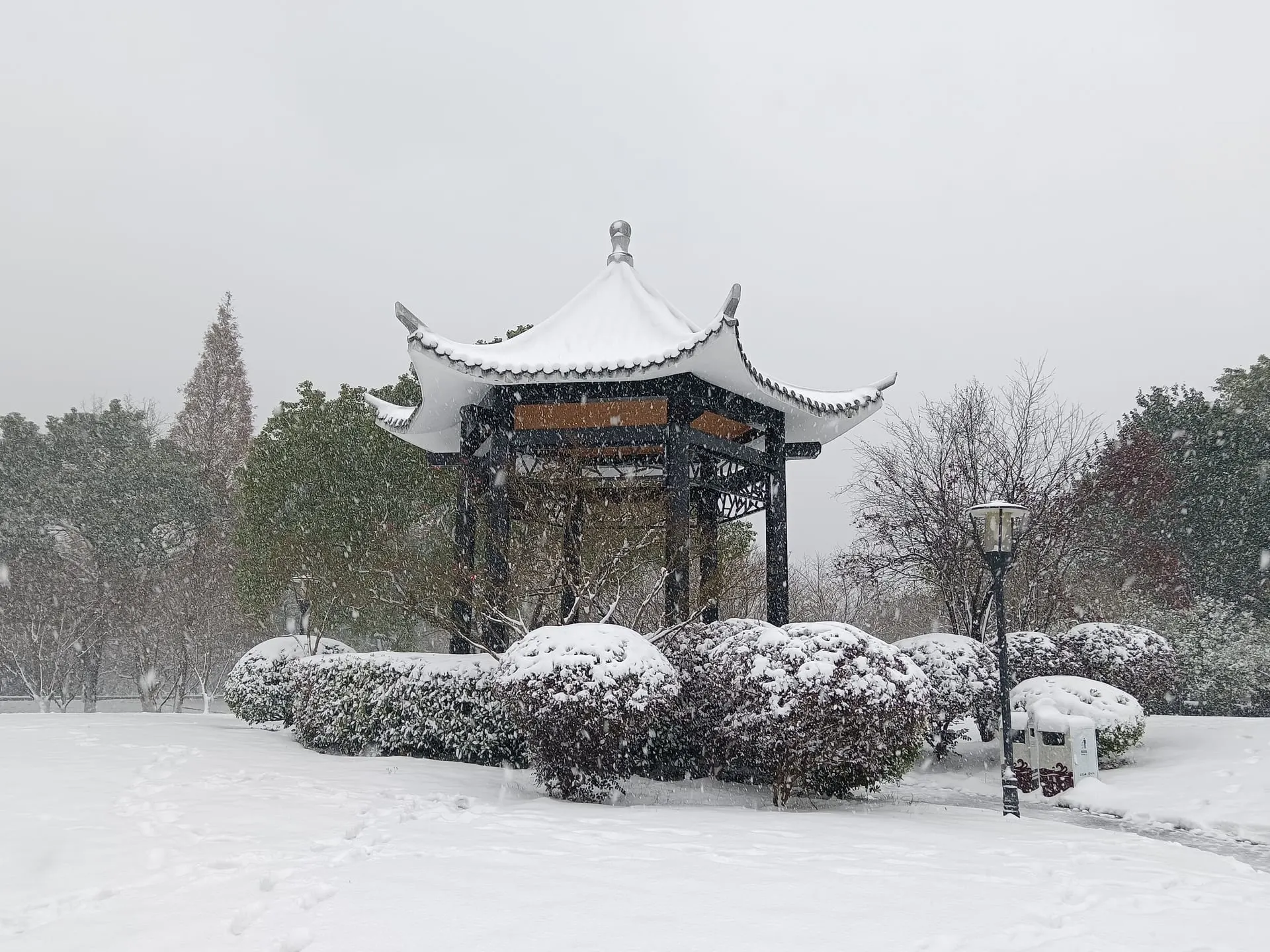
Orange Isle (橘子洲, Júzǐ Zhōu)
A 5-km island in the Xiang River with gardens, walking paths, and the colossal 32-meter stone bust of young Mao Zedong. Fireworks on summer Saturday nights. Free entry.
Wikimedia Commons · CC-BY-SA
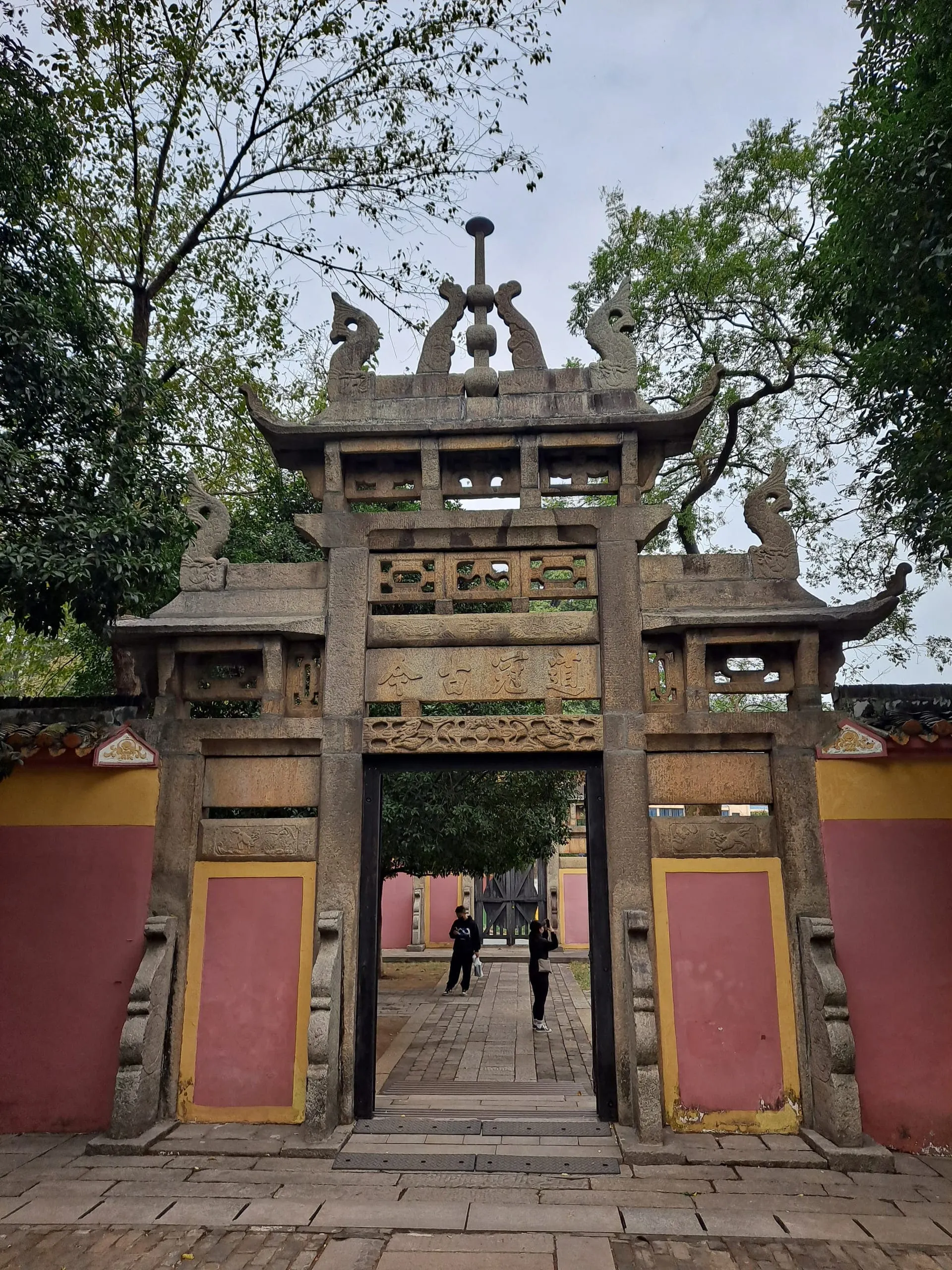
Yuelu Mountain & Academy (岳麓山/岳麓书院, Yuèlù Shān/Yuèlù Shūyuàn)
One of China's four ancient academies, founded 976 AD. The mountain has forest trails, the Lushan Temple, and the Aiwan Pavilion. ¥50 for the academy.
Wikimedia Commons · CC-BY-SA
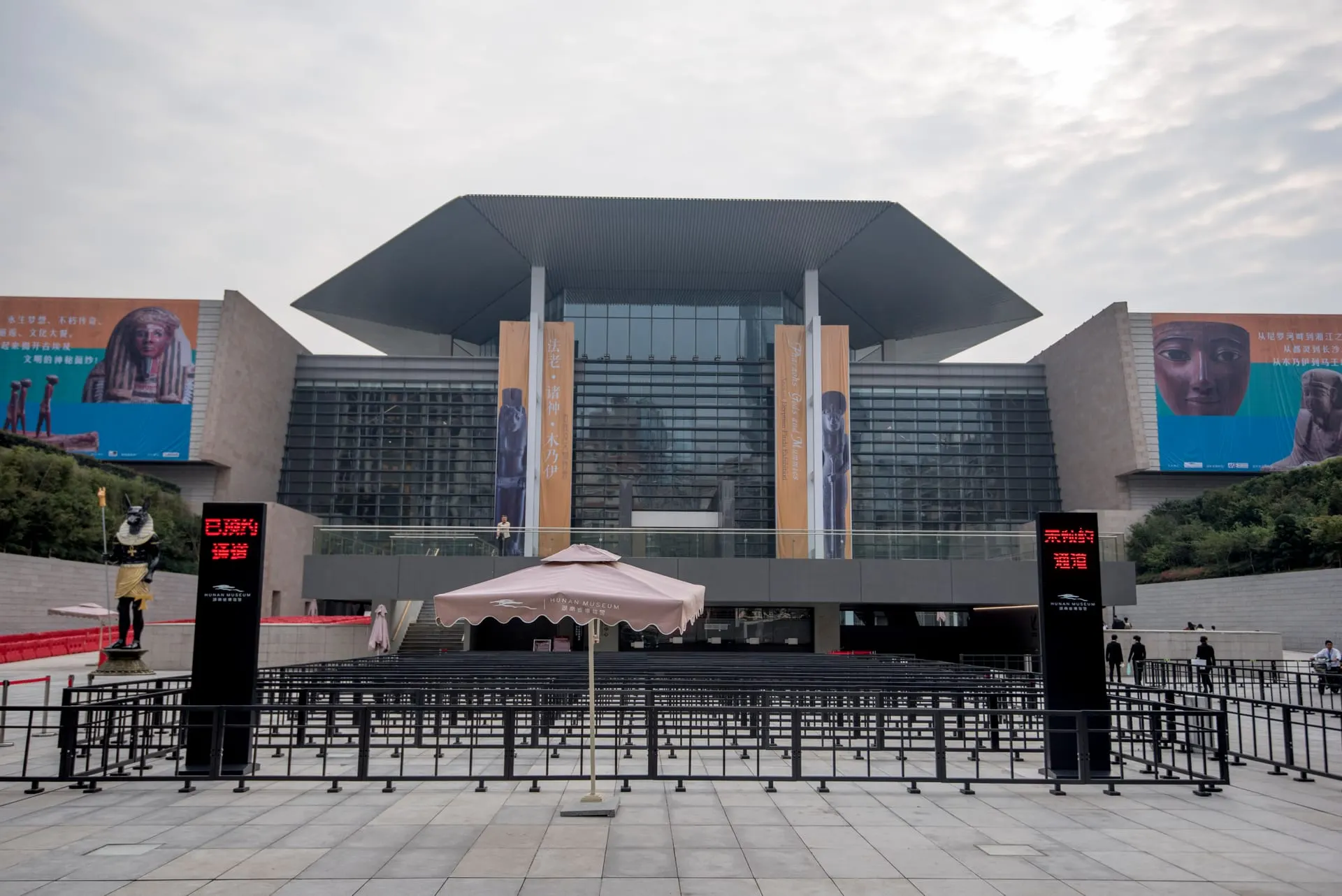
Hunan Provincial Museum (湖南省博物馆, Húnán Shěng Bówùguǎn)
Home to the Mawangdui Han tombs — the 2,000-year-old preserved corpse of Lady Dai, silk manuscripts, and lacquerware. Free, reservation required via WeChat mini-program.
Wikimedia Commons · CC-BY-SA
Taiping Street (太平街, Tàipíng Jiē)
Restored Qing-era commercial street with flagstone paving, traditional shopfronts, stinky tofu stalls, and craft beer bars. Best in the evening.
Wikimedia Commons · CC-BY-SA
Tianxin Pavilion (天心阁, Tiānxīn Gé)
Ming-dynasty city wall remains with a three-story pavilion on top. The only surviving section of the old Changsha wall. ¥32.
Wikimedia Commons · CC-BY-SA
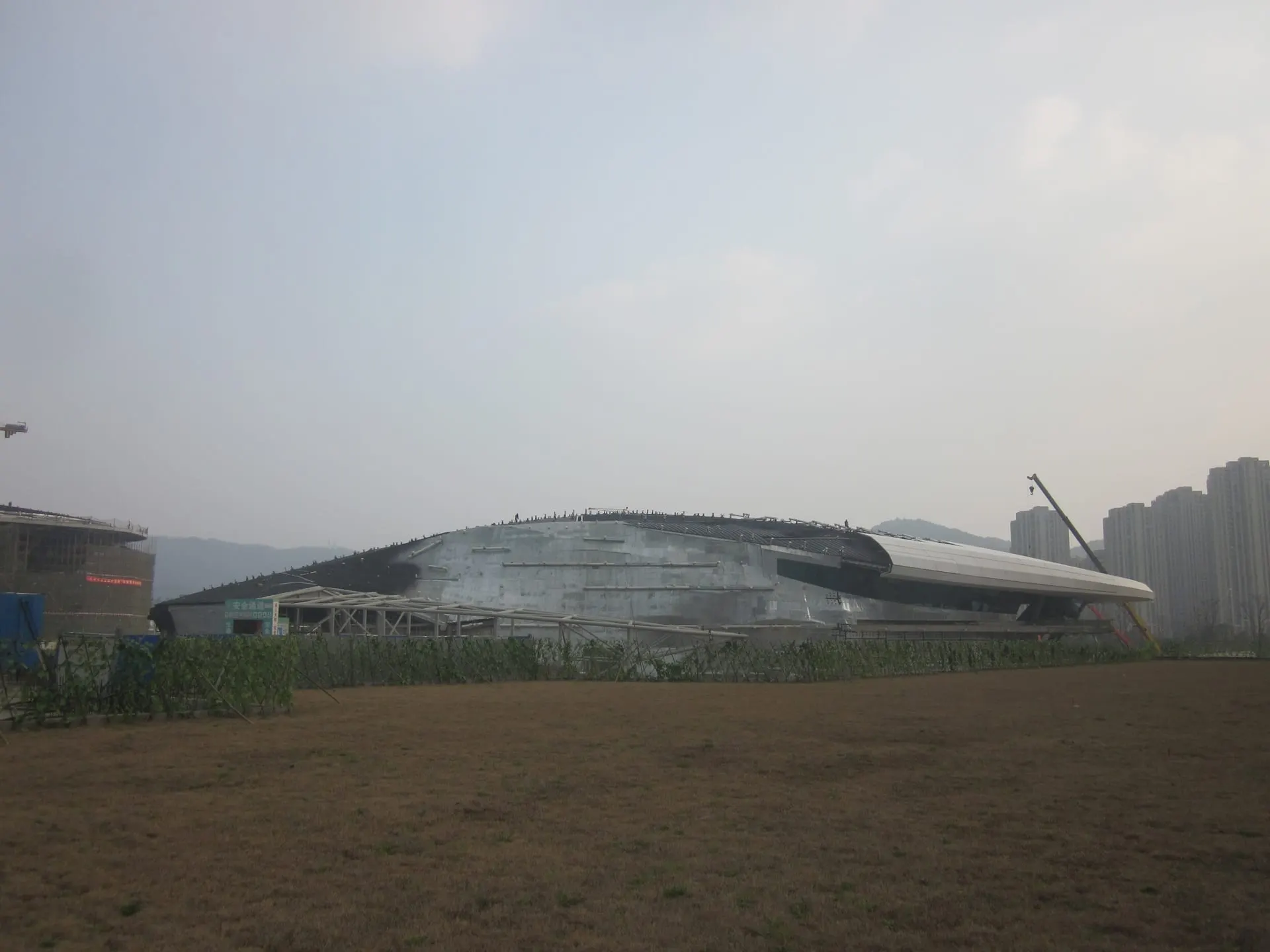
Meixi Lake International Culture & Arts Center (梅溪湖, Méixī Hú)
Zaha Hadid-designed performing arts complex with sweeping white curves reflected in the lake. Free to photograph the exterior; performances require tickets.
Wikimedia Commons · CC-BY-SA
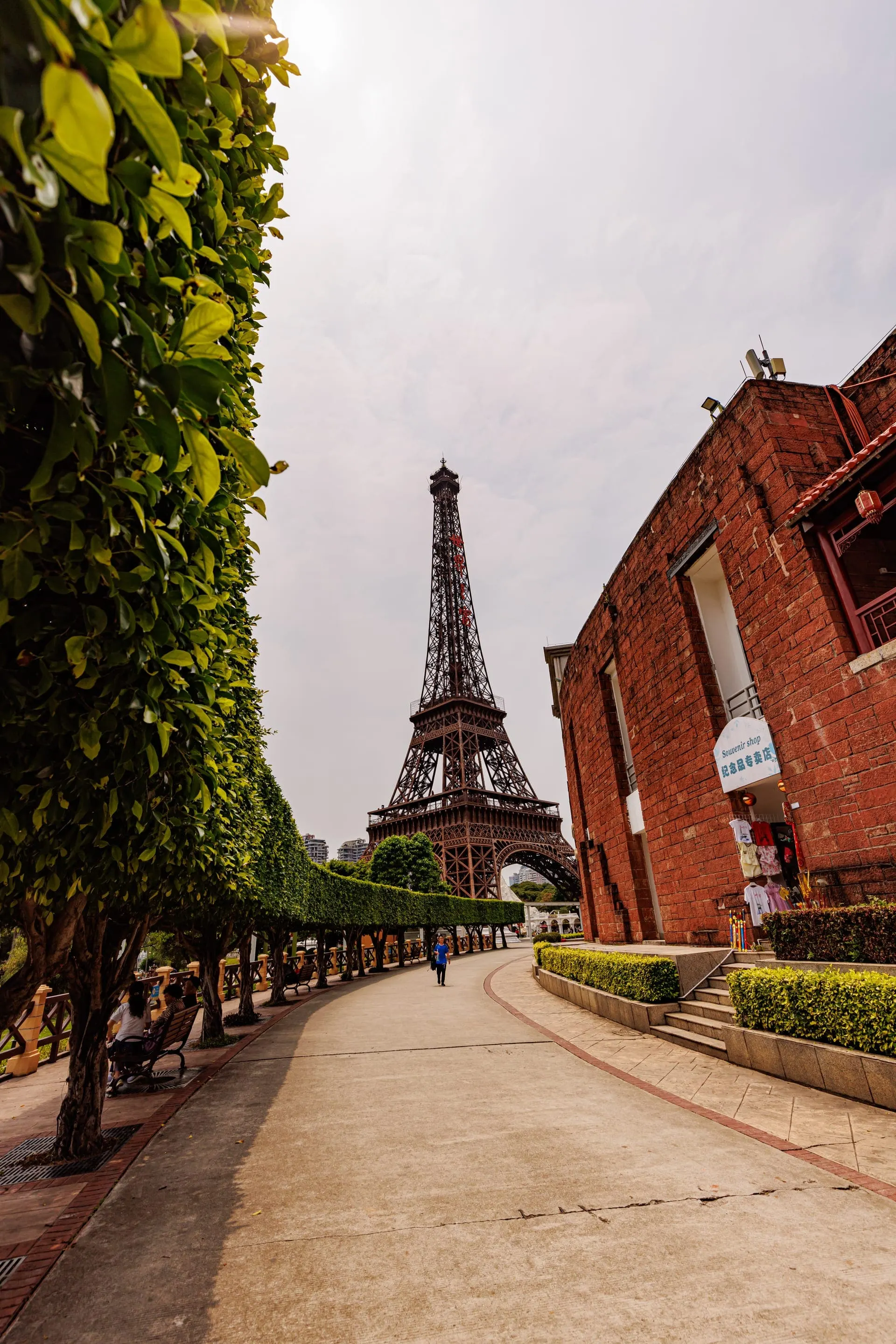
Window of the World (长沙世界之窗, Shìjiè zhī Chuāng)
Theme park with 100+ miniature world landmarks, rides, and seasonal events. ¥200. Family-friendly but crowded on weekends.
Wikimedia Commons · CC-BY-SA
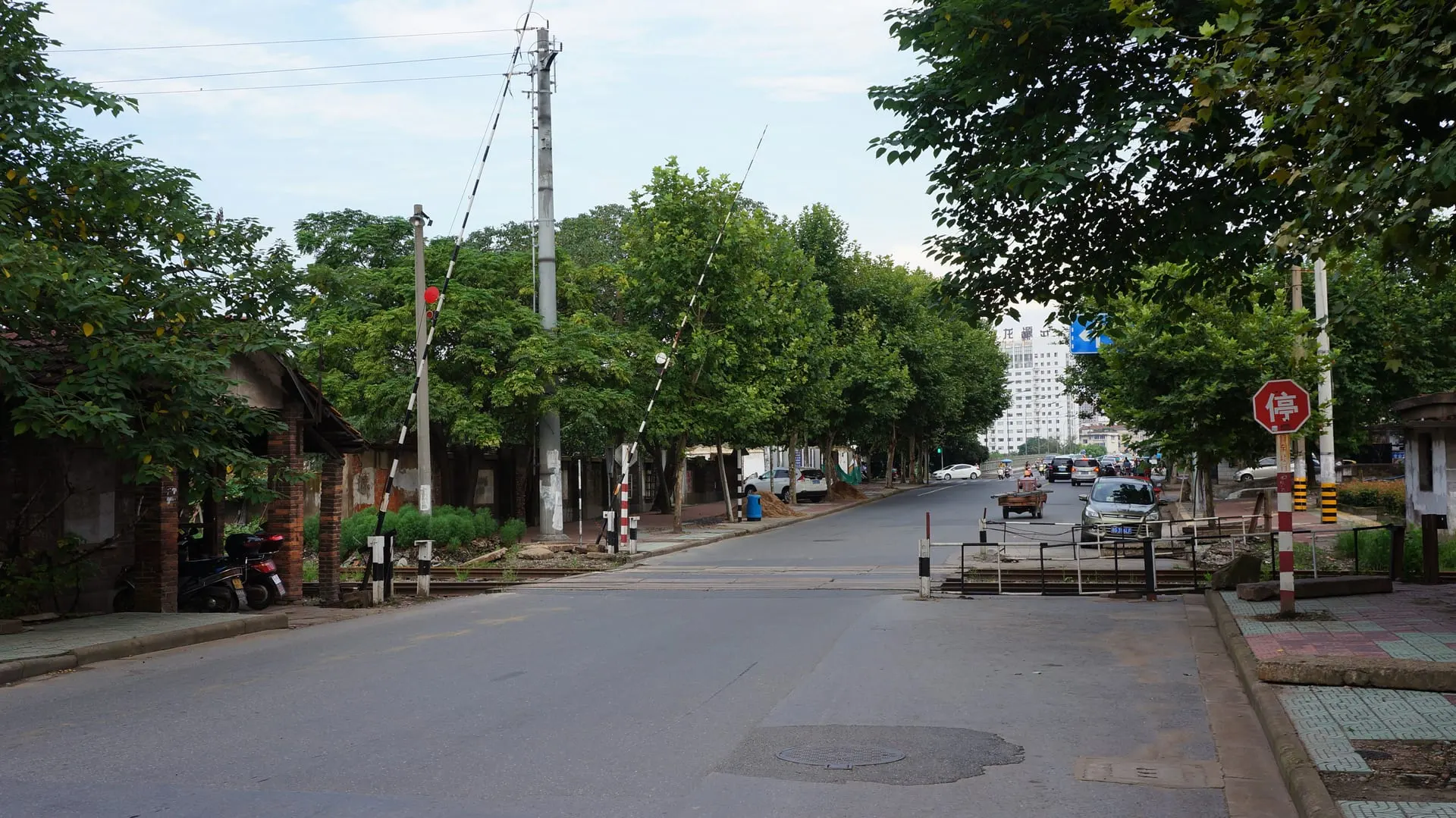
Jiefang West Road (解放西路, Jiěfàng Xī Lù)
Changsha's main nightlife strip — bars, clubs, live-music venues, and late-night food stalls packed until 2 AM. Not a sight; an experience.
Wikimedia Commons · CC-BY-SA
STAY
Where to stay in Changsha
Pick a base that matches the trip you want — imperial-central for sightseeing, hutong belt for character, Chaoyang for nightlife, or Qianmen for budget.
Wuyi Square (五一广场)
Commercial heart — metro hub, Taiping Street nightlife, Jiefang West bars, and the city's densest food zone.
#wuyi-squareYuelu / University District (岳麓区)
Quieter west bank with Yuelu Academy, forested hiking trails, Hunan University campus cafes, and river views.
#yueluMeixi Lake (梅溪湖)
Modern west-bank district with Zaha Hadid architecture, lakefront promenades, and upscale residential towers.
#meixi-lakeChangsha South Station area (长沙南站周边)
HSR transit zone — chain hotels for one-night stops, functional and charmless, Metro Line 2 links to the city.
#changsha-south
ITINERARIES
Sample itineraries from Changsha
Three ready-made routes, from a 1-day imperial sprint to a 5-day deep dive. Copy the day-by-day plan and adapt to your own pace.
- 1 DAY
Changsha in One Day
A packed sprint through the essentials — Orange Isle at dawn, Yuelu Academy, the Hunan Museum, and a Taiping Street food crawl.
- transit stopovers
- first-time visitors short on time
- solo travellers
- Day 01
Morning
Orange Isle at 08:00 — walk or tram to the Mao bust (arrive before crowds). Metro to Hunan First Normal School (1 hour, free).
Afternoon
Yuelu Academy (¥50, 2 hours) and the Aiwan Pavilion. Lunch at a university-area Hunan restaurant (¥30–60).
Evening
Hunan Provincial Museum (booked ahead, 2 hours) then Taiping Street for stinky tofu, sugar oil ba ba, and a side-alley craft beer.
- 2 DAYS
Changsha in Two Days
The full Changsha experience — Mao history, Hunan cuisine at depth, nightlife, and the quieter corners most visitors miss.
- food-focused travellers
- second-time China visitors
- couples and small groups
- Day 01
Morning
Orange Isle at 08:00. Metro to Hunan First Normal School (1 hour).
Afternoon
Yuelu Academy and Yuelu Mountain hike to Yunlu Palace (45 min climb). Lunch near the university.
Evening
Taiping Street food crawl — stinky tofu, crayfish (¥68–98/jin), craft beer. Walk Jiefang West Road for nightlife.
- Day 02
Morning
Hunan Provincial Museum (booked 3+ days ahead, 3 hours) — Lady Dai, Shang bronzes, silk manuscripts.
Afternoon
Tianxin Pavilion (¥32, 1 hour), then walk Nanmenkou (南门口) market lanes for street food and local life.
Evening
Meixi Lake at dusk for architecture photography. Dinner at a riverside Hunan restaurant. If summer Saturday — Orange Isle fireworks.
- 3 DAYS
Changsha in Three Days (City + Shaoshan)
Two city days plus a day trip to Mao Zedong's birthplace village — the full Hunan historical and culinary deep dive.
- history enthusiasts
- Mao pilgrims
- travellers who want depth over speed
- Day 01
Morning
Orange Isle at 08:00. Hunan First Normal School.
Afternoon
Yuelu Academy and Yuelu Mountain. Lunch near the university.
Evening
Taiping Street and Jiefang West — stinky tofu, bars, people-watching until late.
- Day 02
Morning
Bus to Shaoshan (韶山) from Changsha South (90 min, ¥30–40). Mao's childhood home, museum, school.
Afternoon
Continue Shaoshan — memorial park, village walk. Return bus to Changsha by 16:00.
Evening
Hunan Provincial Museum (late slot booked ahead). Dinner at a Nanmenkou Hunan restaurant.
- Day 03
Morning
Tianxin Pavilion and surrounding park. Walk old city lanes near the Xiang River.
Afternoon
Meixi Lake Arts Centre. Last food stop — Chairman Mao's red-braised pork at Huogongdian (¥58–88).
Evening
Window of the World (if with kids) or a second night at Jiefang West bars. Depart.
BUDGET
What a Changsha trip costs
Per-person, per-day costs across three spending tiers. Excludes international flights and visa fees.
| Line item | Backpacker | Mid-range | Luxury |
|---|---|---|---|
| Hostel dorm bed (per night) | $8 | $0 | $0 |
| Budget hotel (per night) | $0 | $30 | $0 |
| International 4–5 star hotel (per night) | $0 | $0 | $120 |
| Street-food meal (stinky tofu, noodles, skewers) | $2 | $4 | $8 |
| Mid-range restaurant meal | $0 | $8 | $20 |
| Metro / bus (single ride) | $0.5 | $0.5 | $0.5 |
| DiDi ride (city core, ~5 km) | $0 | $3 | $3 |
| Attraction entry (average ticket) | $3 | $5 | $8 |
| SIM card (30 days, 30 GB data) | $15 | $15 | $15 |
| Daily total excl. accommodation | $15 | $35 | $55 |
| Total per day | $43.5 | $100.5 | $229.5 |
$ USD per person per day, before international flights and visas. Last verified: Q3 2026.
STAY SAFE
Emergency contacts in Changsha
Save these three numbers before you board the plane. China uses different hotlines than most countries — there's no 911.
- POLICE
110
- AMBULANCE
120
- FIRE
119
- TOURIST HOTLINE
12301
- ENGLISH-SPEAKING ER
Xiangya Hospital VIP Wing (湘雅医院国际医疗部), +86 731 8432 8888, 87 Xiangya Road, Kaifu District — one of China's top-ranked hospitals with English-speaking staff
Problems travelers hit in Changsha
- Why is my Alipay not working?You linked a foreign Visa or Mastercard to Alipay but every transaction is rejected at the merchant.
- My China visa was denied — what now?Your L visa application was refused at the Chinese consulate and your trip is in 2–4 weeks.
- My passport was lost or stolen in China — what do I do?Your passport is gone (theft or loss) and you're in mainland China without travel documents.
- Why can't I book on 12306 with my foreign card?You tried to book a high-speed rail ticket on 12306.cn and your foreign Visa/Mastercard is rejected at checkout.
- Why is my VPN not working in China?You arrived in China, opened your VPN, and it will not connect at all or connects but no traffic loads.
- Why can't I book a Tibet trip on my own?You try to book Lhasa flights and hotels yourself but the booking fails, or you're turned away at the Lhasa airport without a permit.
Book activities in Changsha
These are licensed tour operators and booking platforms we've vetted independently. Booking through these links may earn us a commission — see our affiliate disclosure. This never affects our editorial recommendations or the price you pay.
Frequently asked questions
Is Changsha worth visiting for foreign tourists?
How many days do I need in Changsha?
How spicy is Hunan food really?
What is the best way to get from Changsha airport to the city center?
Can I use Alipay and WeChat Pay in Changsha?
What is the best time of year to visit Changsha?
Show all 25 FAQs
Is Changsha safe for tourists?
Where is the best stinky tofu in Changsha?
Can I visit Mao Zedong's hometown from Changsha?
What should I pack for Changsha?
Is Changsha family-friendly?
What is the difference between Changsha South and Changsha railway stations?
How do I book the Hunan Provincial Museum?
What is the Orange Isle Mao statue and why does it exist?
Is Changsha a good place to learn about Chinese revolutionary history?
What is the nightlife like in Changsha?
Do I need a guide for Changsha?
Can vegetarians eat well in Changsha?
What is the single best day in Changsha?
Is Changsha a good base for exploring Hunan?
What is the Hunan Provincial Museum and why is it worth visiting?
What is Orange Isle and why is it worth a half-day?
What is Yuelu Academy and why is it historically important?
What is the best way to experience Hunan cuisine in Changsha?
What is the late-night culture like in Changsha and why is it famous?
References

Related guides & destinations
Guide
8 Best Chinese Food Cities 2026: Chengdu, Guangzhou, Xi’an, Shanghai, Wuhan, Hangzhou, Changsha, Kunming
A ranked guide to the 8 essential Chinese food cities, from UNESCO-designated Chengdu to mushroom-mad Kunming. Each has signature dishes, wh
Guide
How We Research 2026: NihaoVisit’s Methodology for China Travel Information
How NihaoVisit sources, verifies, and maintains 700+ pages of China travel information — our source hierarchy, fact-checking process, update
Guide
Fact-Checking Log 2026: Verified China Travel Information — NihaoVisit
A public log of fact-checking verification passes on NihaoVisit, showing what was verified, when, and against which sources — covering visa
Guide
Best Time to Visit China 2026: Month-by-Month Weather, Crowds, and Prices
The best time to visit most of China is April–May and September–October. Winter (Dec–Feb) is cold but cheap; summer (Jun–Aug) is hot and cro
Guide
VPN for China 2026: Which VPNs Work, eSIM Alternatives, and the Complete Pre-Trip Checklist
Most Western apps and websites are blocked in mainland China. A reliable VPN is essential for Google, Gmail, WhatsApp, Instagram, and most n
Guide
China SIM Card and eSIM Guide 2026: Stay Connected Without WeChat
A Chinese SIM or eSIM lets you use mobile data, maps, and ride-hailing without WiFi. Here is how to get one, the cost, and which provider to