Chongqing
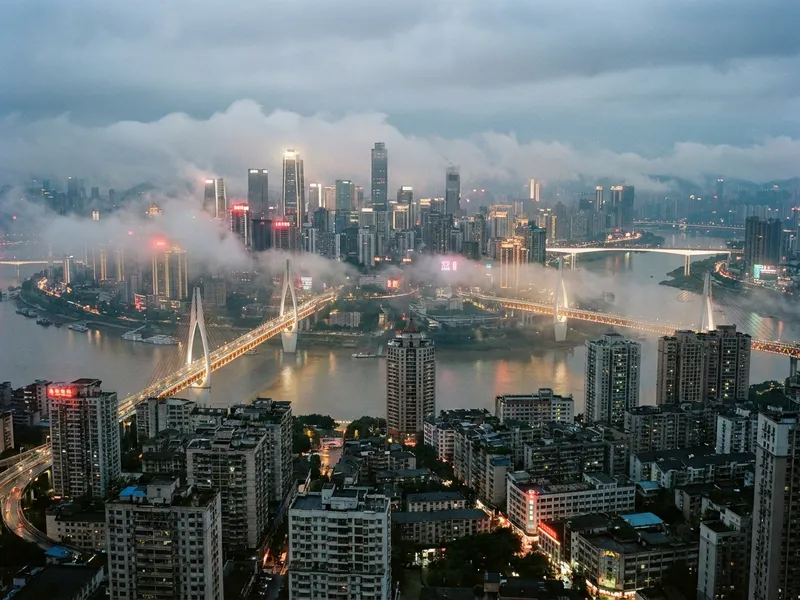
A river-wrapped mountain megacity in southwest China where monorails slice through apartment blocks, spicy Sichuan hotpot fuels late-night conversations, and the Yangtze and Jialing rivers carve a dramatic gorge through a forest of skyscrapers. Plan two to three days for the city itself, plus a day trip to the Wulong karst landscape or the 1,200-year-old Dazu rock carvings.
Why Chongqing in 2026.
Chongqing is a sprawling megalopolis of 31 million people perched at the confluence of the Yangtze and Jialing rivers in southwest China. Famous for its spicy Sichuan-style hotpot, futuristic skyline layered over steep hills, monorails threading through residential towers, and the 2,000-year-old wartime capital legacy, Chongqing rewards travellers who like their cities vertical, steamy, and unapologetically intense.
Quick Answer
A river-wrapped mountain megacity in southwest China where monorails slice through apartment blocks, spicy Sichuan hotpot fuels late-night conversations, and the Yangtze and Jialing rivers carve a dramatic gorge through a forest of skyscrapers. Plan two to three days for the city itself, plus a day trip to the Wulong karst landscape or the 1,200-year-old Dazu rock carvings.
| Best time to visit | October to December (mild, low rain) and March to May (cherry blossoms, comfortable temperatures) |
|---|---|
| Daily budget | $40 (backpacker) / $110 (mid-range) / $320+ (luxury) |
| Language | Mandarin (Sichuan/Chongqing dialect widely spoken; English signage at major sites) |
| Currency | CNY (¥) |
| Time zone | UTC+8 (China Standard Time) |
| Last updated | 2026-06-14 |
Want a Chongqing plan built for you?
What is Chongqing?
Chongqing (重庆, literally Double Celebration) sits at the strategic hinge between the Sichuan Basin and the Yangtze gorges. It is the only Chinese municipality directly under central government control that is not a provincial-level city, and with roughly 31 million residents it is one of the largest urban agglomerations on earth. The city has been continuously inhabited for more than 3,000 years, but its modern identity was forged in 1937 when it became the wartime capital of China after the Japanese capture of Nanjing. The bombing capital of the world between 1938 and 1943, it is remembered for resilience, hotpot dinners in air-raid shelters, and the famous night-time blackout that hid the city from bombers. After 1949 the city pivoted to heavy industry — metallurgy, motor manufacturing, and eventually a vast network of automobile plants. The 1997 elevation to municipality status and the 2010 launch of the Western Development Strategy triggered a building boom that turned the skyline into a forest of glass and steel packed onto narrow river peninsulas. The single phrase locals use most often to describe the city is peng pai — surging, an adjective that fits both the Yangtze current and the urban energy. For visitors, Chongqing feels more like Bangkok, Taipei, or Istanbul than Shanghai: humid, vertical, slightly grungy, and so genuinely Chinese that English menus are a luxury. The food is one of China great regional cuisines (Sichuan, with local Chongqing twists of sesame and extra chilli oil), the hotpot tradition is unmatched anywhere on the planet, and the geography — bridges, tunnels, cliffside escalators, monorails diving into towers — produces a cityscape that looks like a sci-fi concept art. A 2-3 day visit is enough to cover the central peninsula; add a day each for Dazu and Wulong for the cultural and natural must-sees.
What is the history of Chongqing?
The territory of modern Chongqing has been politically significant since the Warring States period, when the state of Ba made Yuzhong (the central peninsula) its capital. The name Chongqing was first used in 1189 by Prince Zhao Dun, who became the Guangzong emperor and renamed the city to celebrate his double ascension to princely and imperial ranks. For most of the imperial era it functioned as a regional military and customs post controlling upstream trade on the Yangtze, with the gorges below the city acting as a natural tax barrier. The Treaty of Chongqing in 1890 forced the Qing to open the port to British and Japanese commerce, and the city became a treaty port in 1891. Steam shipping, foreign concessions, and the first Yangtze bridges in the 1930s modernised the city faster than most inland Chinese centres. The pivotal moment came in November 1937, three months after the start of the Second Sino-Japanese War. As Nationalist forces retreated east of Nanjing, Chiang Kai-shek relocated the government inland to Chongqing, and the city became the world most-bombed city for the next five years. The Japanese Operation Five-Four raids of 1939 alone killed more than 5,000 civilians. In response, residents built the world largest ever air-raid shelter network, much of which is still in use as dance halls and restaurants. After 1949 the city became a Soviet-style heavy-industry hub, building steel at the Chongqing Iron and Steel works, vehicles at the Changan and Lifan plants, and, after 2009, laptops — Lenovo, HP, and Acer all have factories within an hour drive. In 1997 the city was detached from Sichuan Province and elevated to municipality status directly under central government, partly to manage the Three Gorges Dam relocation and partly to anchor the Western Development programme. Since 2010 the city has launched the most ambitious public-transit build-out in inland China: more than 500 km of metro and monorail lines, two of the world longest suspension bridges, and a fleet of the country first commercial-use helicopter routes. The current population of 31 million, the GDP of about US$460 billion (larger than Switzerland), and the ambition of the 2025 master plan — which calls for an additional 200 km of metro, the Yangtze upstream shipping hub status, and a new generation of intelligent-connected vehicles — all confirm Chongqing claim to be the engine room of western China.
What is the geography and climate of Chongqing?
Chongqing is built on a series of steep, loess-covered ridges and river terraces where the Yangtze (Chang Jiang) and its largest tributary the Jialing River meet. The historic Yuzhong peninsula is a thumb of land less than 5 km long and under 1 km wide, surrounded on three sides by water and rising 200 metres to the ridge tops. This impossible topography produces the city signature spatial disorder: roads loop, monorails climb, and pedestrian streets often involve more stairs than walking. The wider municipality covers 82,400 square kilometres, two-thirds of which is mountainous, with elevations ranging from 154 metres above sea level at the Yangtze near Fuling to 2,796 metres at the Wuxi county border with Hubei. Geologically the area sits on a karst limestone shelf that produces dramatic gorges, sinkholes, and cave systems — most famously the Three Natural Bridges at Wulong. Climate is humid subtropical with a notorious twist: the mountains trap humidity and pollution in the river valleys, producing some of the highest fog counts in the world. The city has 100+ fog days per year on average, earning it the nickname Fog Capital (雾都). Summers (June to August) are brutally hot and sticky, with daytime highs of 35-40°C and humidity above 80 percent; July 2022 set a local record of 43°C. Winters are mild, damp, and grey, with January averages around 8°C. Snow is rare. The most comfortable periods are March to May and October to early December. Rainfall peaks in May and again in September. Light, breathable layers year-round are wise, but bring a proper rain jacket between March and November, and a small umbrella is essential — locals will tell you Chongqing weather changes ten times a day and they are not exaggerating.
How to Get There
Chongqing Jiangbei International Airport (IATA: CKG) sits 19 km north of the city centre and is one of China's busiest hubs, with direct flights to London, Doha, Helsinki, Sydney, Singapore, Bangkok, Tokyo, and Seoul. It has three terminals (T1, T2, T3A). Airport Metro Line 3 runs into the city centre in about 50 minutes for ¥7. Taxis from the airport into Yuzhong take 30-50 minutes depending on traffic and cost roughly ¥80-100. For most international visitors, the second cleanest entry is the high-speed rail network. Chongqing has four main train stations: Chongqing North (重庆北) for most high-speed services east to Wuhan, Shanghai, and Beijing; Chongqing West (重庆西) for services south to Guiyang and Kunming; Chongqing Station (重庆站) for slower regional services and the overnight green-skin train; and Shapingba Station (沙坪坝站) for some Chengdu-bound services. The flagship Beijing-Chongqing high-speed line (G-series) covers the 1,800 km in roughly 7.5 hours. Chengdu-Chongqing is just 75 minutes on the new high-speed line that opened in 2015. From the cruise-ship perspective, Chaotianmen Pier (朝天门码头) at the confluence remains the departure point for downstream Three Gorges cruises to Yichang, with three- to four-night journeys operated by Victoria Cruises, Yangzi Explorer, and Century Cruises. International cruise passengers arriving by river from Shanghai or Wuhan on the Yangtze can clear immigration at the port. Note that the city is the starting point for the Chongqing-Xinjiang-Europe rail link (the Yuxinou freight line), so containers bound for Duisburg also stop here. For visa runs and short cross-border land trips, the 18-hour sleeper bus to Chengdu is being rapidly replaced by the G-series high-speed rail — 75 minutes for first class ¥140, almost a no-brainer.
Where should I stay in Chongqing?
Where you stay in Chongqing has a bigger impact on your trip than in most Chinese cities because of the topography. The central peninsula Yuzhong (渝中) is the most central, the most walkable, and the most expensive. It contains Jiefangbei, Hongya Cave, the Yangtze Cableway lower station, and most of the city international hotels — the Westin, the InterContinental, and the Hilton are all on the riverfront here. For first-time visitors who want the Chongqing experience, this is the default choice. Jiefangbei pedestrian street has the densest concentration of malls, convenience stores, and Western restaurants. Nearby Hongyadong has atmospheric cave-style boutique hotels at ¥600-1,500/night with river views. The Jiangbei district (江北) across the Jialing is the new CBD, anchored by the Guanyinqiao pedestrian street, the IFS International Finance Square, and the futuristic Raffles City. It is calmer, cleaner, and well-connected by metro Lines 3, 6, and 9. Mid-range chains like Atour, Hanting, and Ji are well represented. South of the Yangtze, the Nanping and Nan districts (南岸) house the convention centre, Eling Park, and a quieter stretch of riverfront walks. They are great for families because of the wider sidewalks and slower pace. Budget travellers head to Shapingba (沙坪坝) west of the centre, near Chongqing University, where hostels and ¥150-250 rooms are abundant and the local hotpot scene is intense. Ciqikou (磁器口) is scenic but a tourist trap for overnight stays; many of the historic structures are now teahouses. For longer stays, serviced apartments in the Jiangbei and Yubei districts offer more space and a kitchen. Across the city, expect to pay ¥250-400 for a clean business hotel, ¥500-1,500 for a four-star, and ¥1,800+ for the international luxury brands. Most hotels accept WeChat Pay and Alipay; foreign credit cards are accepted only at the top-end internationals. Cash is still useful for tiny hotpot shops and street vendors.
What are the top attractions and experiences in Chongqing?
Beyond the famous Hongyadong night view, the rest of Chongqing signature experiences are scattered. Ciqikou is a 1,000-year-old porcelain-port neighbourhood rebuilt into a stone-lane tourist street — go in the morning, eat a chen mahuan sugar twist, and try maoxuewang (a chilli-blood-curdling stew) at the back lanes. The Dazu Rock Carvings (大足石刻) 90 minutes west of the city are the single most important cultural detour. The site was carved from the late 7th to the 13th century and combines Buddhist, Taoist, and Confucian imagery in over 50,000 figures; the highlight is the 31-metre reclining Buddha at Baodingshan, lit only by natural light through a 14-metre cave. Allow a full day. Closer in, the Three Gorges Museum (重庆中国三峡博物馆) opposite the Great Hall of the People gives a deep, well-translated dive into the wartime capital years, the Yangtze ecology, and the human cost of the Three Gorges Dam relocation. The Eling Park hilltop on the Yuzhong peninsula offers the best photography of the river junction. For the city vertical experience, ride the Yangtze River Cableway at sunset, then descend via the world longest automated outdoor escalator at the Crown Escalator near Lianglukou. The Liziba monorail station where Line 2 dives straight through a 19-storey residential tower is the famous viral photo spot. The new Chongqing Science Museum at Yangtze Riverside Park and the recently reopened 1939 Bombing Victims Memorial Hall are excellent. For nightlife, the Jiefangbei and Guanyinqiao areas are open until 2 a.m. most nights, and the riverside bars near Hongyadong are a perennial favourite for a view drink. KTV (karaoke) culture is huge — locals will tell you to try the chain Maidian or the more upscale Midi Livehouse. Two hours west of the city the Wulong karst area, a UNESCO site, holds the Three Natural Bridges, three giant limestone arches over a 1-km sinkhole, used as the filming location for Curse of the Golden Flower and Transformers: Age of Extinction. The Furong Cave nearby is one of China best-lit show caves.
What local food should I try in Chongqing?
Chongqing food is a regional branch of Sichuan cuisine with a heavier hand on the dried chilli, Sichuan peppercorn, and beef tallow. The single defining dish is Chongqing hotpot (重庆火锅): a nine-grid yuanyang pot of bubbling beef tallow and mushroom broth, into which you dip paper-thin maodu (tripe), goose intestine, duck blood curd, lao rou (pork belly), and fresh vegetables. The standard ritual: order, get a sesame oil + garlic + coriander dipping sauce, and cook your own ingredients in a 90-minute ritual. The homegrown chain Dezhuang (德庄) and the venerable Xiaotiane (晓宇火锅) are safe picks; for the full local experience, head to the unassuming shops in Shapingba and Nanping. Beyond hotpot, the regional dishes to try are: la zi ji (chicken with dried chillies, so spicy the chillies are decoration), mao xue wang (a chilli-oil stew with duck blood and tripe), shuizhuyu (water-boiled fish in a sea of red oil), chongqing xiaomian (small noodles with sesame, vinegar, and chilli — the breakfast staple), and suan la fen (sour-spicy glass noodles, sold as a street snack everywhere). Ciqikou is famous for chen mahuan sugar twists and ma la tang. For non-spicy food, the Yangtze and Jialing produce excellent river fish; try kaoyu (grilled fish) at any riverside restaurant. Hotpot breakfast with sweet baba (rice cakes) and douhua (silken tofu) is a local tradition. Night markets: the Nanshan Night Market near Yuzhong, the Guanyin Bridge night market in Jiangbei, and the weekend food street at Shapingba. Coffee culture has exploded — try the local roaster SeeSaw or the espresso bar at the Westin. Tea houses serve pu and gaoshan cha. For a full sit-down, the city most-celebrated restaurant is the Chunyang Chunyu, a hotpot institution since 1937, while the modern hot pot chain Xihaifeng has a Michelin-recommended branch in Jiefangbei. Do not leave without trying a bottle of Tong Yiku or a glass of local craft beer from the Mith Brewery near Hongyadong.
What is a suggested itinerary for Chongqing?
Two days, classic hit list. Day 1: start at Liziba for the monorail-through-the-building photo, then take Metro Line 2 to Ciqikou (about 35 minutes). Walk the stone lanes, eat mao xue wang for lunch, and take a Didi to the Three Gorges Museum for the afternoon. Finish with sunset at Eling Park and dinner at Hongyadong. Day 2: morning Dazu Rock Carvings (a 90-minute bus or a 1-hour high-speed train from Chongqing West to Dazu South, then a 20-minute taxi). Back in town by 4 p.m., walk Jiefangbei and ride the Yangtze River Cableway at dusk. Hotpot dinner in Shapingba. Three days, deeper dive. Day 3: Wulong Three Natural Bridges day trip (high-speed train to Wulong South, 65 minutes; then the scenic-area shuttle, 25 minutes). Allow six hours on site including the elevator-ride through the sinkhole. If you have a fourth day, consider adding a downstream Three Gorges cruise (3 nights Yichang) or a side trip to the wartime capital museums in the southern suburbs. Two-night Three Gorges cruise from Chaotianmen Pier to Yichang covers the Qutang and Wu gorges plus the Three Gorges Dam; a 1-night express to Fengdu is a less expensive intro. Family-friendly variant: skip Wulong in favour of the Chongqing Zoo (one of the world best giant-panda enclosures, near Yangjiaping), the Chongqing Science Museum, and an evening Huangjueping graffiti street walk. Foodie variant: devote day 2 to a half-day cooking class (Spice School, Mando Kitchen) followed by a market tour in the morning and a hotpot-themed dinner. Photography variant: hit the Hongyadong night view, the Dazu Carvings at golden hour, the Wulong sinkhole at noon, and the wartime Shuangbei airport bunkers at sunrise.
What practical information do I need?
Visas: most travellers enter on a tourist (L) visa, increasingly waived for short stays from 50+ countries as of late 2024; check the latest policy before booking. Currency is the renminbi (CNY, written ¥ or RMB). The official rate is fixed by the People Bank; ¥1 is roughly US$0.14 / €0.13 / £0.11. Cash is still used at small vendors and rural sites, but WeChat Pay and Alipay dominate everywhere else. Foreign credit cards are accepted at international hotels and big malls. Currency exchange is available at the airport, the major banks (Bank of China, ICBC), and licensed hotels. Language: Mandarin is the lingua franca. The local dialect is a branch of Southwestern Mandarin that uses more retroflex and slightly different tones; menus often include the local name in parentheses. English is spoken at international hotels, the airport, and at most metro stations, but rarely elsewhere. Transportation: the metro is clean, fast, and easy to use. Lines 1, 2, 3, 4, 5, 6, 9, 10, and the loop line are operational; tap a foreign bank card or buy a single-ride token. Taxis are cheap (¥13 starting fare) but flag down via apps Didi or Caocao Mobility for safety. Buses cover the older neighbourhoods. The Yangtze River Cableway accepts metro cards. Health and safety: Chongqing is generally safe; the violent-crime rate is among the lowest of any Chinese city. Tap water is not drinkable — buy bottled (Wahaha, Nongfu Spring, Yibao) and refill with a filter. Pharmacies are abundant; bring any prescription medication in original packaging. Air quality has improved dramatically since 2018, but summer haze is still common; sensitive travellers should consider a KF94 mask. Connectivity: a VPN-free Chinese SIM is enough for Google-free use; the China Unicom and China Mobile eSIM is cheap and easy to install on arrival. Most cafés and hotels offer free WiFi. Etiquette: tipping is not customary; small change is appreciated but not required. Smoking is increasingly restricted in public indoor spaces. Tipping at international hotels follows Western standards. The official emergency number is 110 (police), 120 (ambulance), 119 (fire). The Chongqing International Travel Healthcare Center is in Jiangbei. Time zone is China Standard Time, UTC+8 year-round (no daylight saving). Note that Chongqing does not observe the Western clock-changing rhythm — plan your internal clock carefully if arriving jet-lagged from the West.
What makes Chongqing's urban landscape unique?
Chongqing is often called the world's most vertical city, and the claim is not hyperbole. The city is built on a series of steep loess ridges and river terraces where the Yangtze and its largest tributary, the Jialing, converge into a single turbulent channel. The historic Yuzhong peninsula — the city's heart — is a thumb of land less than 5 km long and under 1 km wide, surrounded on three sides by water and rising over 200 metres from the riverbank to the ridge tops. This impossible topography means that Chongqing does not spread out; it stacks up. Skyscrapers crowd every buildable ledge, elevated highways loop over one another like spaghetti, and pedestrian routes often involve more stairs than walking. The city's signature spatial disorder is not chaos but a vertical logic: if you cannot build sideways, you build upward. The most famous product of this geography is the Liziba monorail station, where Line 2 passes directly through the 6th to 8th floors of a 19-storey residential tower — a solution born of the simple fact that there was nowhere else to put the tracks. Less famous but equally surreal are the outdoor escalator systems that serve as public transit: the Crown Escalator near Lianglukou, at 112 metres, is one of the world's longest automated outdoor escalators, and locals use it the way other cities use a bus. The river confluence at Chaotianmen is the city's geographical anchor. Here the brown Yangtze and the green Jialing meet in a visible seam, and the futuristic Raffles City complex — a horizontal skyscraper by Moshe Safdie — bridges the peninsula like a glass cruise ship docked above the water. The fog, meanwhile, is not just weather but atmosphere. Chongqing averages over 100 fog days per year, and the low cloud combined with the stacked skyline produces a cinematic, Blade Runner aesthetic that has made the city a favourite of photographers and filmmakers. At night, when the Hongya Cave stilt-houses glow gold and the bridges light up in sequence, the city looks less like a place and more like a science-fiction concept painting brought to life. For visitors, the landscape is not merely a backdrop — it is the main event. Walking Chongqing means navigating eight-level overpasses, riding cable cars across the river, climbing cliffside staircases, and emerging from metro stations that sit on the 12th floor of a building. No other city in China, and very few in the world, delivers such a three-dimensional urban experience.
What are the best Chongqing day trips?
Chongqing's position at the centre of a vast municipality of 31 million people means the best day trips span UNESCO karst landscapes, ancient Buddhist carvings, and wartime history sites, all within 2.5 hours of the city. The Dazu Rock Carvings (大足石刻), 90 minutes west of Chongqing, are the most culturally significant day trip: over 50,000 Buddhist, Taoist, and Confucian figures carved into cliff faces between the 7th and 13th centuries, with the 31-metre reclining Buddha at Baodingshan as the highlight. Take the high-speed train from Chongqing West to Dazu South (1.5 hours, ¥40-70), then a 20-minute taxi to the site. Allow a full day. The Wulong Karst (武隆喀斯特), 2-2.5 hours east by high-speed train to Wulong Station, features the Three Natural Bridges — three colossal limestone arches spanning a 1-km sinkhole, used as a filming location for Curse of the Golden Flower and Transformers: Age of Extinction. Combine with the Furong Cave, one of China's best-lit show caves. Allow a full day. For a half-day trip, the Gele Mountain (歌乐山) area 40 minutes northwest of the city centre holds the darkest chapter of Chongqing's wartime history: the Zhazidong and Baigongguan prison sites where Communist prisoners were held and executed by the Nationalist government before 1949, now preserved as the Hongyan Memorial Museum complex. The sites are sobering, well-interpreted (some English labelling), and set in the forested Gele Mountain foothills. Combine with a walk through the adjacent Ciqikou Ancient Town for a half-day loop of history and street life. The Fishing Town (钓鱼城) in Hechuan district, 90 minutes north of Chongqing, is one of China's most overlooked historical sites: the fortress where the Southern Song army held off the Mongol invasion for 36 years (1243-1279), the longest siege in Chinese military history. The stone walls, gates, and command platforms are remarkably intact and see few foreign visitors. A driver for the day costs roughly ¥600-800. For nature close to the city, the Jinyun Mountain (缙云山) nature reserve 50 km north offers bamboo forests, hot springs, and hiking trails, reachable by metro Line 6 plus a short taxi. The best day-trip strategy is to allocate one day to Dazu (the must-do), another to Wulong if the karst landscapes interest you, and use half-days for the wartime sites and Ciqikou.
What is Chongqing food like beyond hot pot?
Hot pot defines Chongqing in the culinary imagination, but the city's food culture is far broader and rewards travellers who explore beyond the bubbling cauldron. Chongqing cuisine is a regional branch of Sichuan cooking with a heavier hand on the dried chilli, Sichuan peppercorn, and sesame — it is not just spicy, but ma la (麻辣), the numbing-heat combination that is the region's signature. The essential non-hot-pot dishes, ranked by a local: (1) Chongqing xiaomian (重庆小面), the city's breakfast staple — thin wheat noodles in a bowl of sesame paste, chilli oil, vinegar, soy sauce, minced pork, spring onions, and crushed peanuts, costing ¥8-15 at any street-corner noodle shop. The best xiaomian shops are identified by the queue of locals at 7:30 AM. (2) Laziji (辣子鸡), chicken chopped into bite-sized pieces and buried under a mountain of dried red chillies and Sichuan peppercorns — the chillies are decoration and flavouring, not meant to be eaten, and the chicken is hunted out of the pile with chopsticks. The town of Geleshan outside Chongqing claims to be the dish's birthplace. (3) Shuizhuyu (水煮鱼), water-boiled fish — a misnomer, since the fish is poached in a sea of chilli oil with Sichuan peppercorns and bean sprouts, and the result is silky, numbing, and addictive. (4) Mao xue wang (毛血旺), a chilli-oil stew of duck blood curd, tripe, luncheon meat, bean sprouts, and glass noodles that is Ciqikou's signature dish. (5) Suan la fen (酸辣粉), sour-spicy glass noodles in a vinegar-chilli broth with crushed peanuts, sold as a street snack from pushcarts across the city for ¥6-10. (6) Kaoyu (烤鱼), grilled river fish with a crust of chillies, cumin, and sesame, served on a heated tray — the riverside restaurants near Ciqikou and the south bank are the best. (7) Douhua (豆花), silken tofu served with a dipping sauce of chilli oil, soy sauce, garlic, and spring onion — a humble dish that is the city's favourite hangover cure. (8) Chen mahuang (陈麻花), the sugar twists sold at Ciqikou that are Chongqing's definitive sweet snack. For non-spicy food, the Yangtze and Jialing produce excellent river fish simply steamed with ginger and spring onion, and the city's Muslim quarter near Jiefangbei serves lamb dishes flavoured with cumin rather than chilli. The best food neighbourhoods: Shapingba for the most authentic xiaomian and hot pot, Jiefangbei for upscale Sichuan dining, Ciqikou for street snacks, and Nanping for kaoyu and riverside dining. Night markets worth seeking out include the Nanshan night market with its skyline views and the Guanyin Bridge market in Jiangbei.
What is the wartime history of Chongqing and where can I see it?
Chongqing's years as the wartime capital of China (1937-1945) are the most dramatic chapter in the city's history and left visible scars and memorials across the urban landscape. When the Japanese Imperial Army captured Nanjing in December 1937, Chiang Kai-shek relocated the Nationalist government 1,500 km up the Yangtze to Chongqing, protected by the Three Gorges downstream and the Sichuan basin's mountain walls. The city became the provisional capital of the Republic of China and the command centre of the Chinese war effort. In response, Japan launched the longest and most sustained bombing campaign of World War II: between February 1938 and August 1943, Japanese aircraft flew more than 200 raids over Chongqing, dropping over 20,000 bombs and killing an estimated 10,000 to 30,000 civilians. The Operation Five-Four raids of May 3-4, 1939, alone killed over 5,000 people in 48 hours. The city's response — building the world's largest air-raid shelter network, much of it dug by hand into the sandstone ridges — became the defining symbol of Chongqing resilience. Today the wartime history is preserved at several sites. The General Joseph Stilwell Museum (史迪威将军博物馆) in Yuzhong, housed in the former residence and command headquarters of the American general who served as Chiang Kai-shek's chief of staff, is the best single museum for English-speaking visitors. It covers the Burma Road, the Flying Tigers, and the complex US-China wartime alliance. Entry is ¥15 and the museum takes about 1.5 hours. The Three Gorges Museum (重庆中国三峡博物馆) opposite the Great Hall of the People has a detailed wartime exhibition with photographs, artefacts, and English labelling, covering the bombing campaigns, the relocation of factories and universities inland, and the social history of the wartime capital. The Zhazidong and Baigongguan prison sites on Gele Mountain, now the Hongyan Memorial Museum, are the most emotionally charged sites: the prisons where suspected Communists (including the famous revolutionary Jiang Jie, or Sister Jiang) were held and, in 1949, executed by Nationalist forces as the civil war ended. The cells, interrogation rooms, and execution grounds are preserved, and the site is set in the forested foothills. Allow 2-3 hours. A taxi from central Chongqing takes about 40 minutes (¥50-70). The former site of the Communist Party's Southern Bureau at Hongyan Village (红岩村), where Zhou Enlai and other Communist leaders coordinated the United Front with the Nationalists, is a quieter, more politically nuanced site. The air-raid shelters themselves are still visible: some have been converted into hot pot restaurants (the most Chongqing adaptation imaginable), others into dance halls and shops. The shelter at No. 18 Ti Xi Jie near Jiefangbei is open to visitors. For a comprehensive wartime history day: morning at the Stilwell Museum, afternoon at the Three Gorges Museum, and evening hot pot in a converted air-raid shelter — history, food, and resilience in one day.
Top attractions
Ciqikou Ancient Town
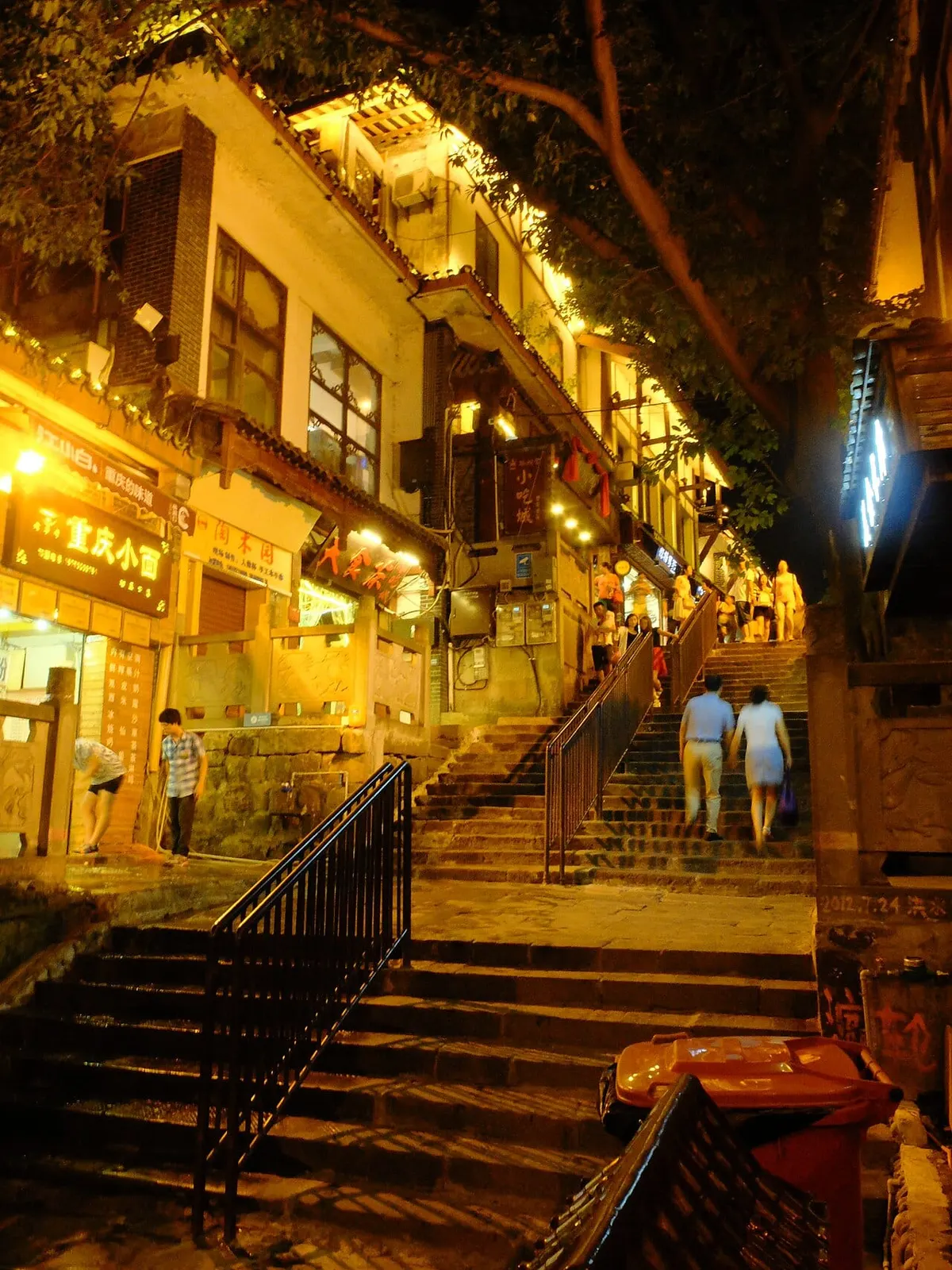
A 1,000-year-old porcelain-port town on the Jialing river, now a bustling lane of tea houses, mahjong parlours, and street-food vendors selling chen mahuan sugar twists and Sichuan snacks.
Wikimedia Commons · CC-BY-SA
Hongya Cave (Hongyadong)
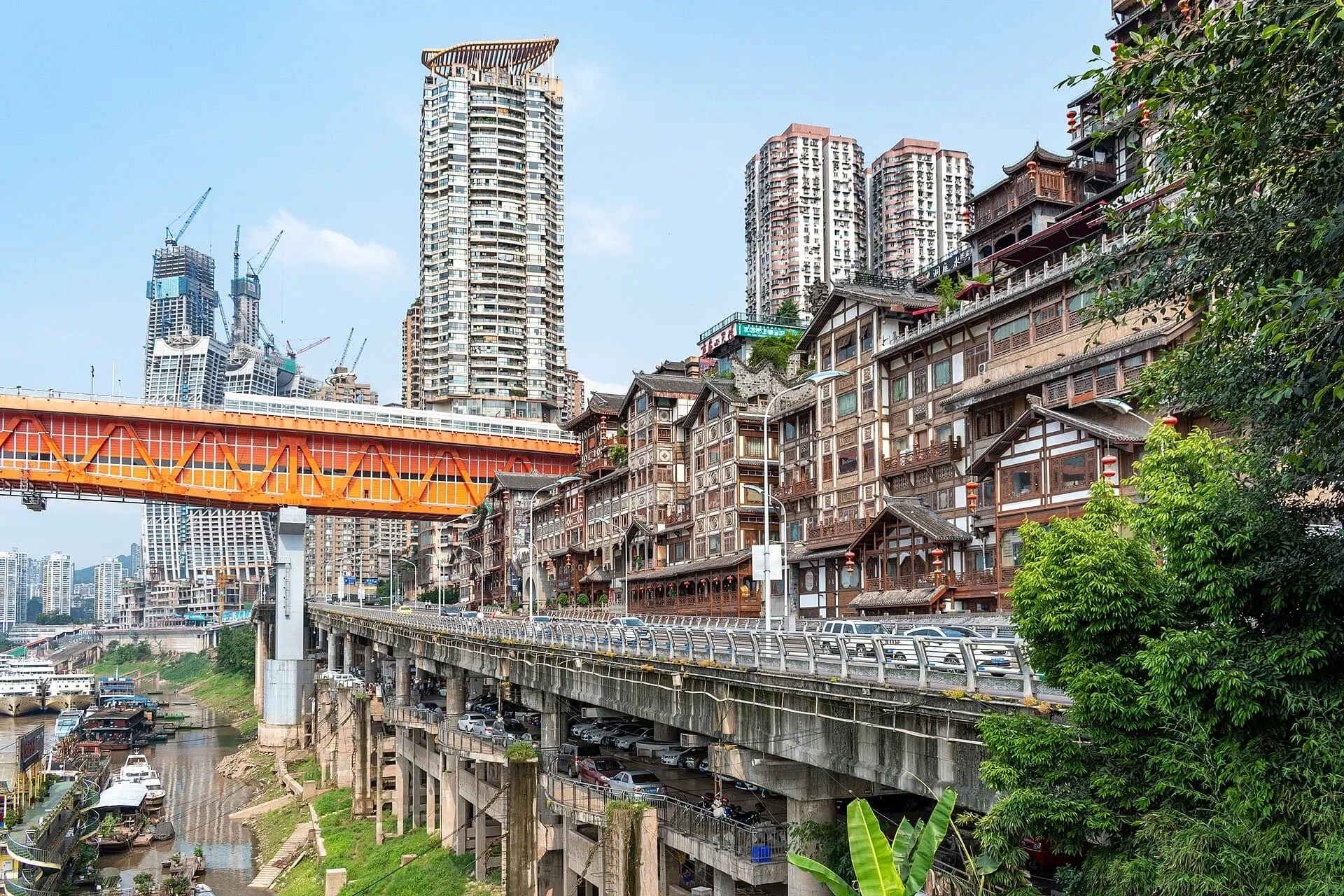
Eleven storeys of stilt-house (diaojiaolou) architecture built into a cliff above the Jialing. The illuminated night view over the river is the single most photographed scene in Chongqing.
Wikimedia Commons · CC-BY-SA
Jiefangbei CBD
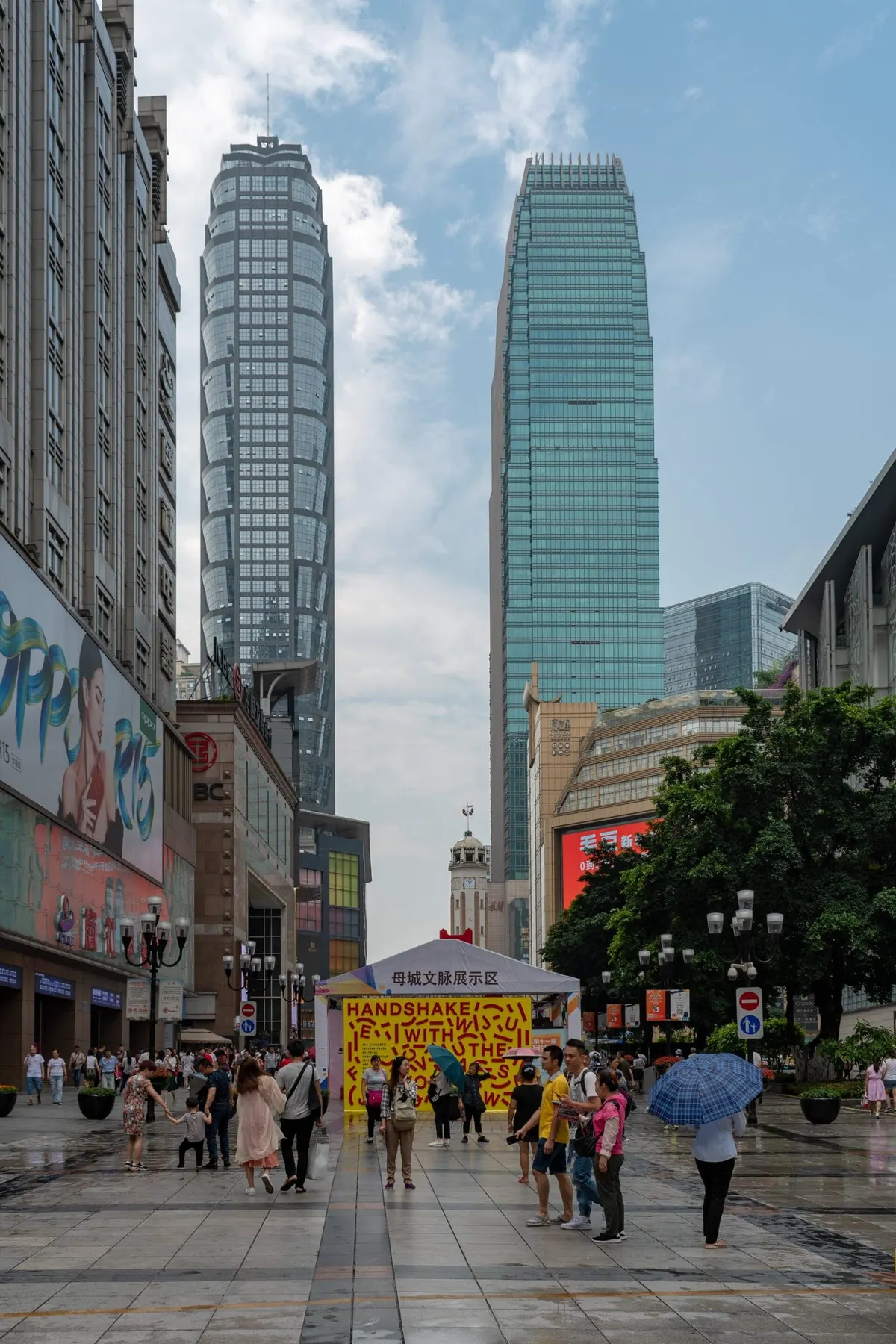
Chongqing commercial heart, anchored by the 1945 People Liberation Monument. Surrounded by luxury malls, walkable shopping streets, and the brutalist Great Hall of the People a few minutes away.
Wikimedia Commons · CC-BY-SA
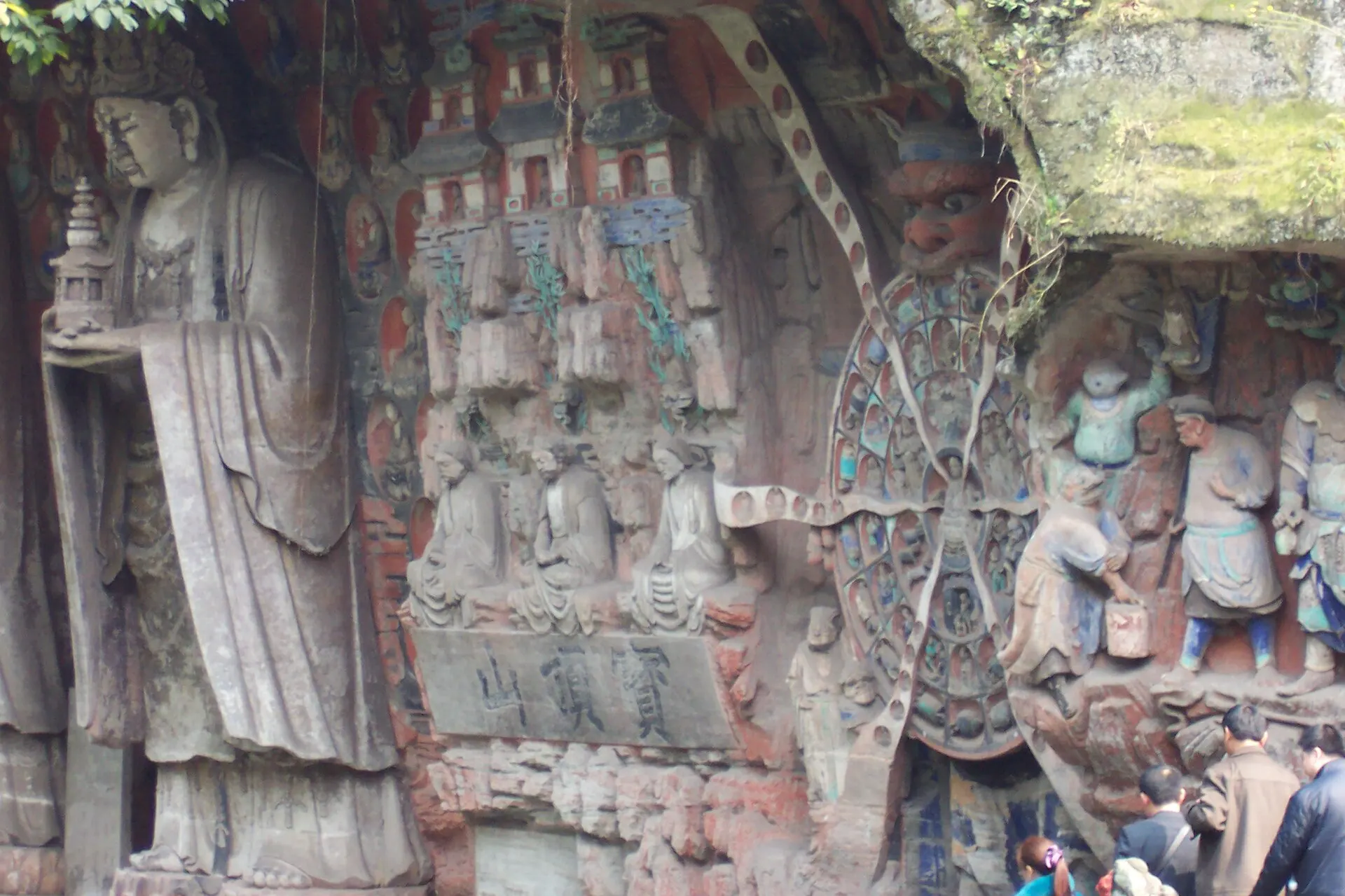
Dazu Rock Carvings
A UNESCO World Heritage Site 90 minutes west of the city. Over 50,000 Tang- and Song-dynasty Buddhist and Confucian figures carved into cliff faces between the 7th and 13th centuries.
Wikimedia Commons · CC-BY-SA
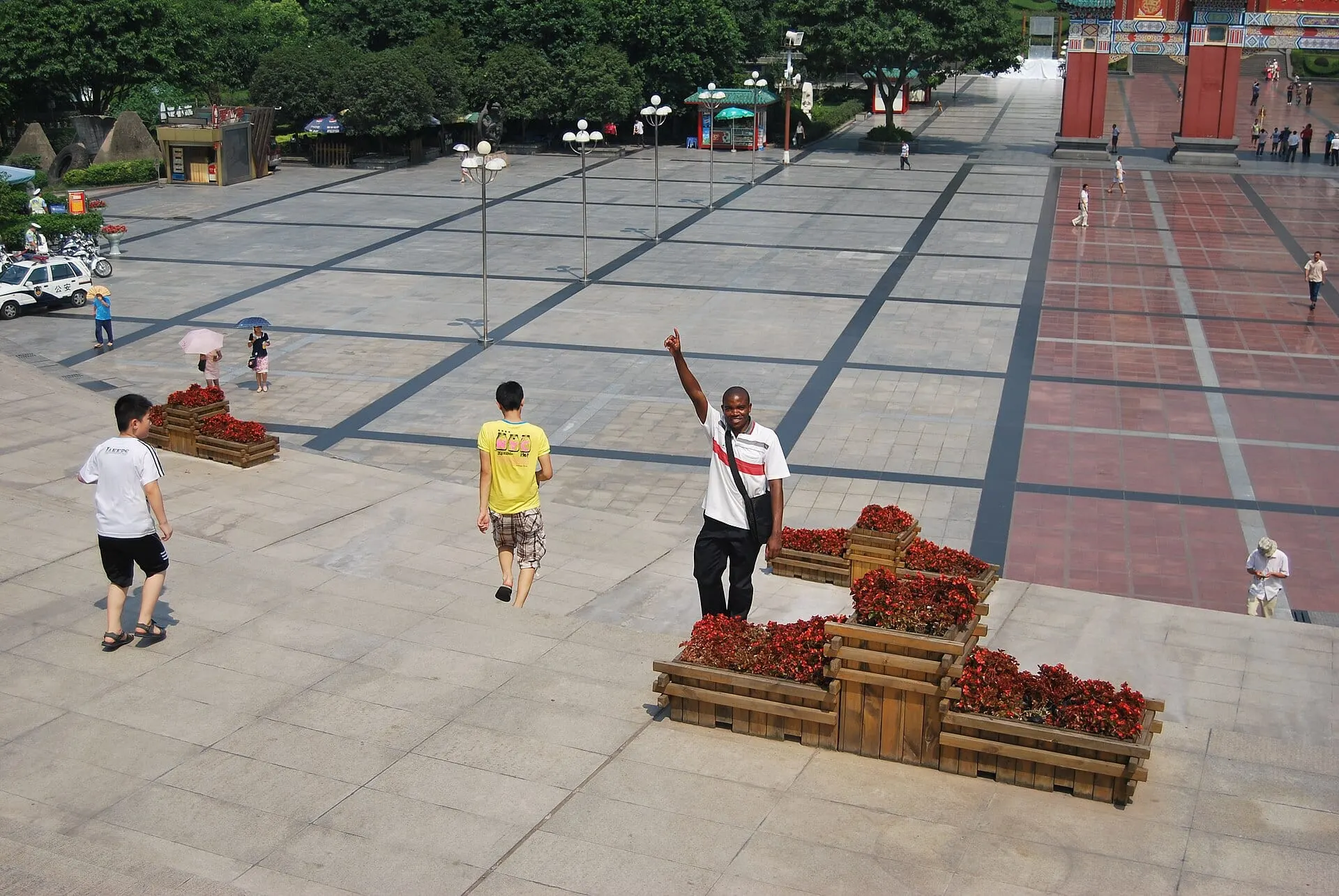
Three Gorges Museum
A 30,000-piece museum opposite the Great Hall, covering the Yangtze, wartime Chongqing as China's wartime capital (1937-1945), and the massive Three Gorges Dam relocation story.
Wikimedia Commons · CC-BY-SA
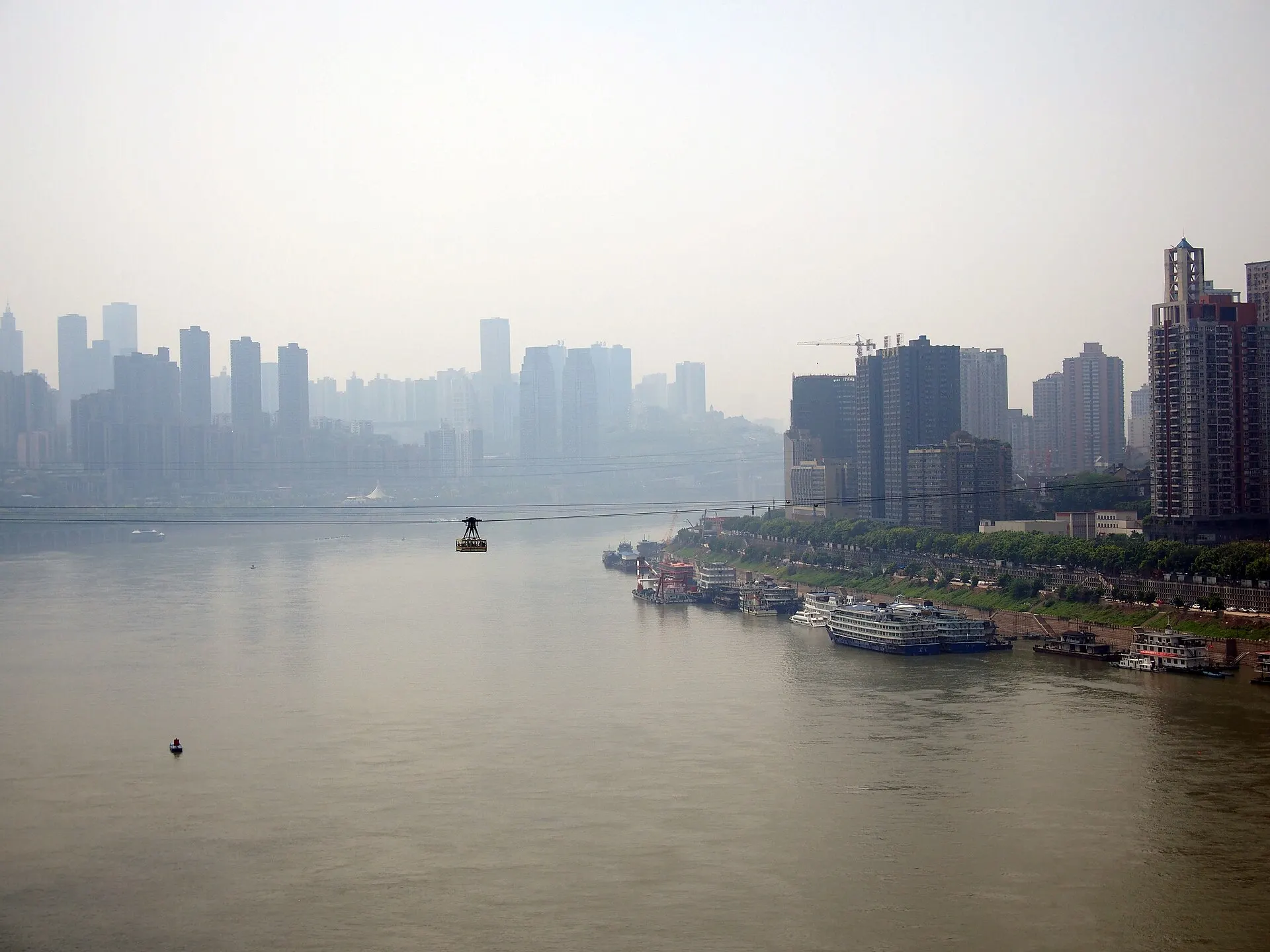
Yangtze River Cableway
Opened in 1987, the 1,166-metre aerial tram still shuttles commuters and visitors between Yuzhong and the south bank. The 4-minute crossing is the cheapest aerial view in the city.
Wikimedia Commons · CC-BY-SA
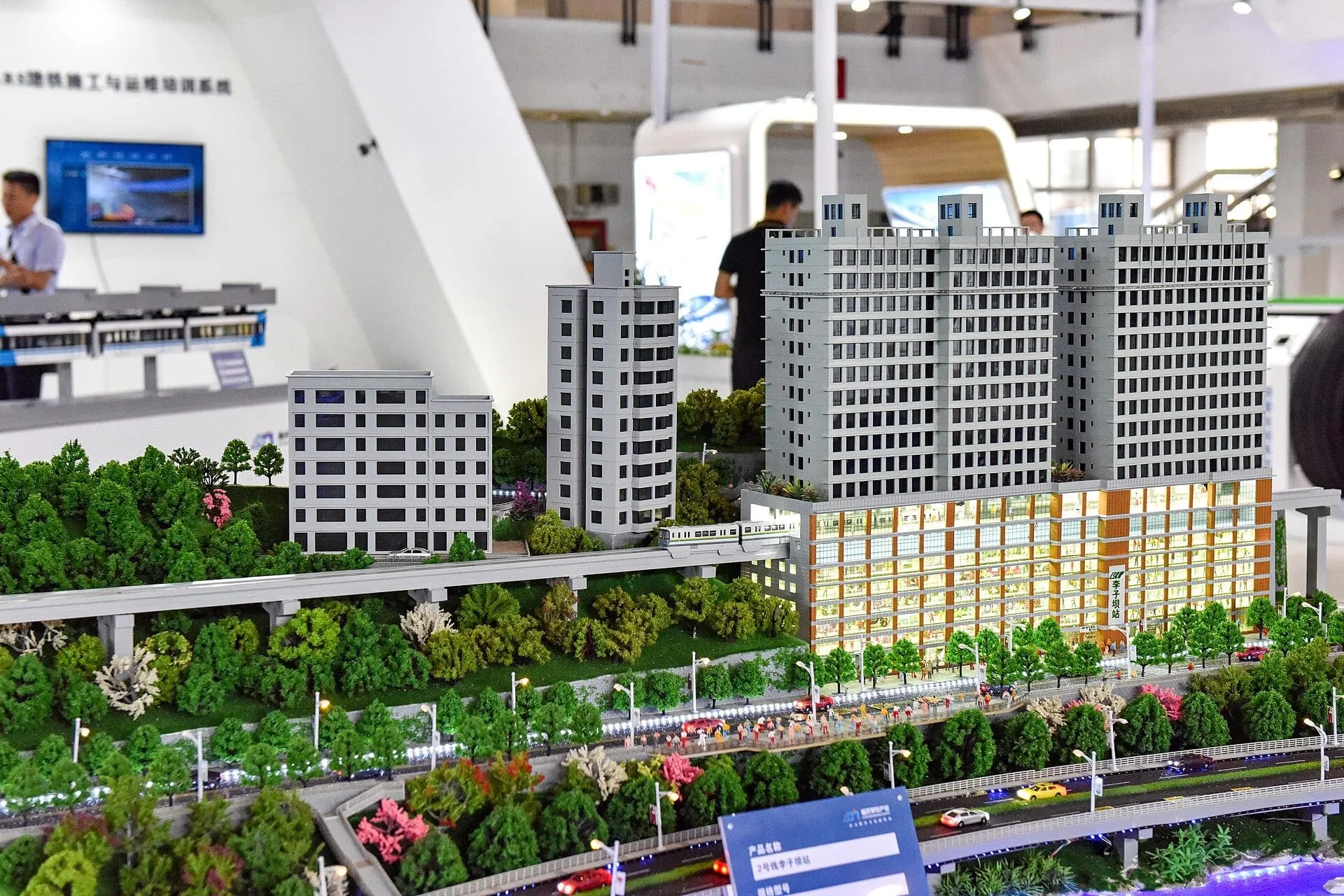
Liziba Monorail Station
Famous worldwide for the moment a Line 2 train passes directly through the middle of a residential tower. A viewing platform on the opposite side lets you photograph the surreal scene.
Wikimedia Commons · CC-BY-SA
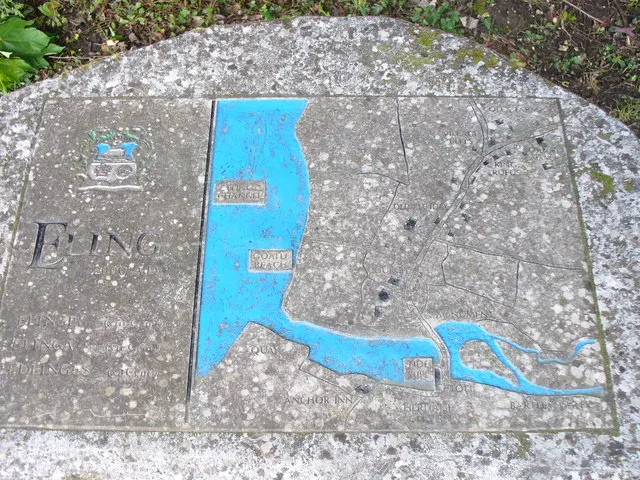
Eling Park
A hilltop garden on the northern tip of the Yuzhong peninsula with panoramic views of the river junction, the Raffles City horizontal skyscraper, and the chaotic spaghetti of elevated roads.
Wikimedia Commons · CC-BY-SA
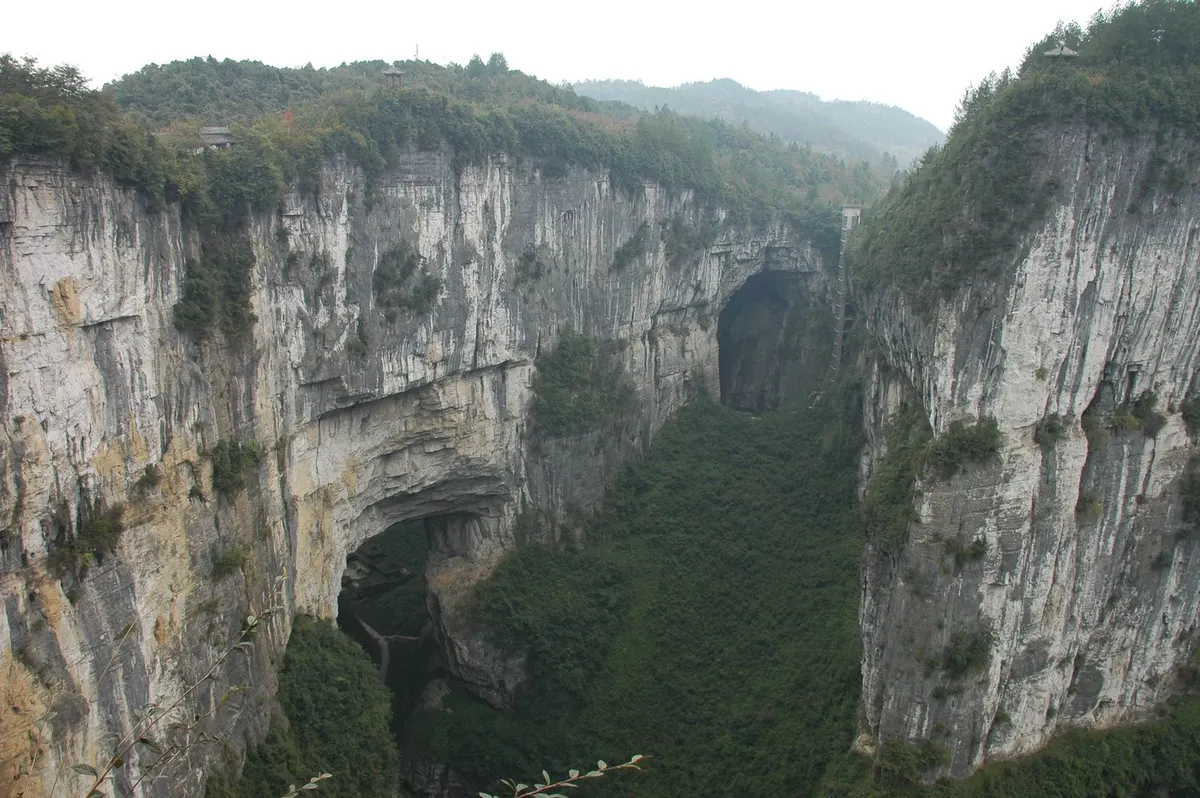
Wulong Karst (Three Natural Bridges)
A UNESCO site 2.5 hours by train: three colossal limestone arch bridges over a 1-km sinkhole, used as the backdrop for Curse of the Golden Flower and Transformers: Age of Extinction.
Wikimedia Commons · CC-BY-SA
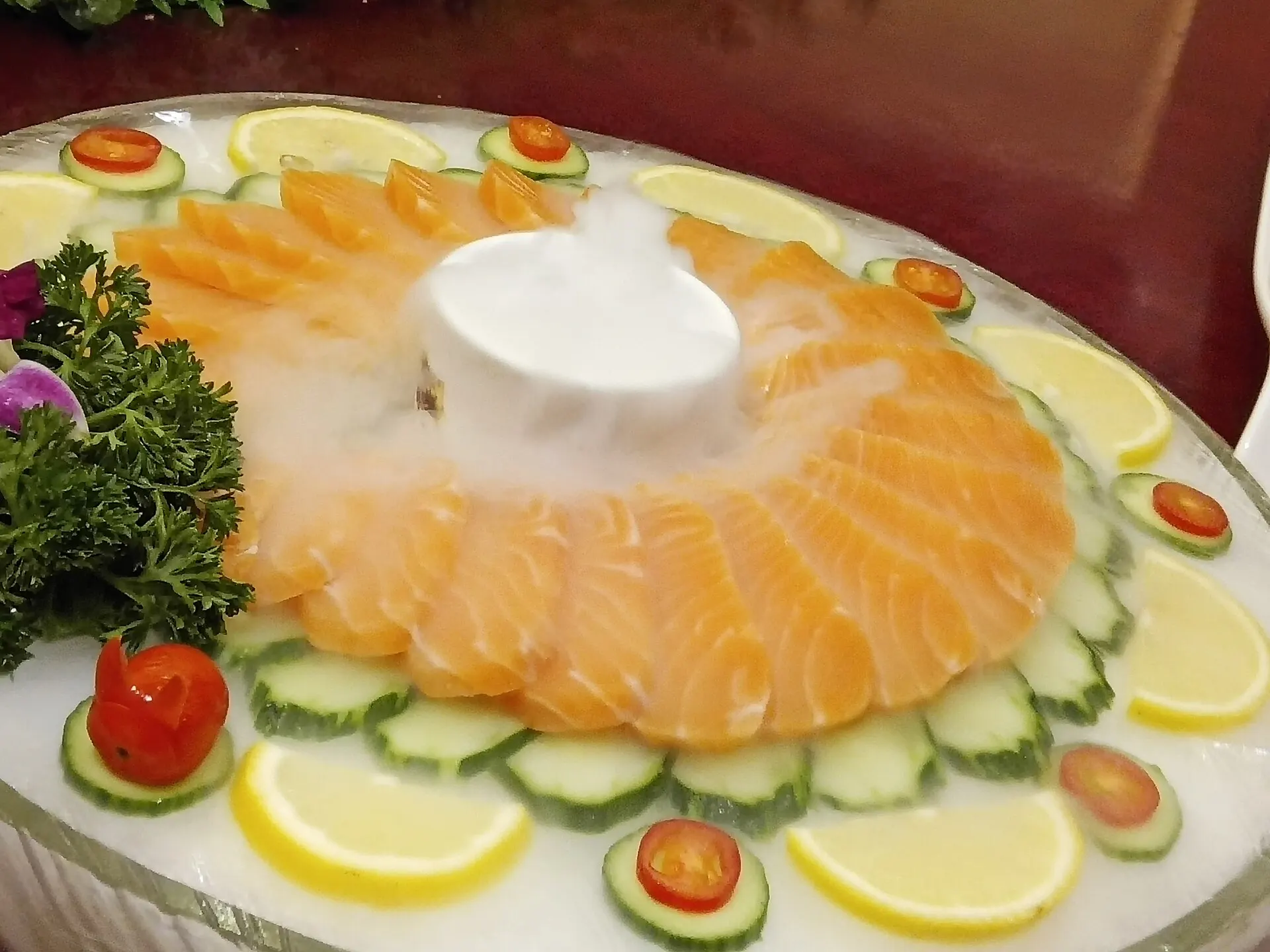
Chongqing Hotpot Experience
Not a museum but an essential stop. Locals swear by the mom-and-pop shops in Shapingba and Nanping; a nine-grid yuanyang pot of beef tallow and mushroom broth with maodu, goose intestine, and duck blood is the rite of passage.
Wikimedia Commons · CC-BY-SA
Gele Mountain (Foshan) Forest Park
A leafy ridge inside the urban core, topped by a Soviet-style 1939 watchtower built for the wartime capital. Locals climb it for sunrise over the city fog.
Wikimedia Commons · CC-BY-SA
Chaotianmen Square
A waterfront plaza where the two rivers meet, anchored by the futuristic Raffles City complex designed by Moshe Safdie. The departure point for Yangtze cruise boats heading downstream to Yichang.
Wikimedia Commons · CC-BY-SA
STAY
Where to stay in Chongqing
Pick a base that matches the trip you want — imperial-central for sightseeing, hutong belt for character, Chaoyang for nightlife, or Qianmen for budget.
Jiefangbei (解放碑)
Central business and shopping heart. JW Marriott, Westin, InterContinental. Walk to Hongyadong.
#jiefangbeiHongyadong & Cangbai Road (洪崖洞)
The well-known stilt-house complex by the river. Boutique hotels with river views. Peak nightlife zone.
#hongyadong-cangbaiNanbin Road (南滨路)
South bank riverside promenade. Rooftop hotels with skyline views. Best night photography spot.
#nanbin-roadSanzhi Square & Ciqikou area (磁器口)
Ancient river port vibe. Budget hostels, tea houses, and traditional snack streets. University district nearby.
#shapingba-sanzhi
ITINERARIES
Sample itineraries from Chongqing
Three ready-made routes, from a 1-day imperial sprint to a 5-day deep dive. Copy the day-by-day plan and adapt to your own pace.
- 1 DAY
Chongqing in One Day
Hotpot, Hongyadong lights, monorail through a building — the essential Chongqing sprint.
- Quick stopovers
- Yangtze cruise pre/post night
- Domestic transit
- Day 01
Morning
Ciqikou Ancient Town — morning snacks and tea, Liziba monorail photo stop
Afternoon
Yangtze River Cableway, E'ling Park skyline panorama
Evening
Hongyadong at night (best from across the river at Nanbin Road), Chongqing hotpot riverside dinner
- 3 DAYS
Classic 3-Day Chongqing
Mountain city hotpot, Dazu carvings, and the Yangtze nightscape.
- First-time visitors
- Foodies
- Photography enthusiasts
- Day 01
Morning
Ciqikou Ancient Town, Sanzhi Square street food
Afternoon
Yangtze River Cableway, Jiefangbei CBD, Hongyadong daytime explore
Evening
Nanbin Road skyline view, Chongqing hotpot at Nanshan, Hongyadong lit up
- Day 02
Morning
Day trip to Dazu Rock Carvings (2h bus/train) — UNESCO Buddhist cliff sculptures
Afternoon
Baodingshan main carvings, Beishan carvings, return to Chongqing
Evening
Jialing River night cruise, Jiefangbei night food street
- Day 03
Morning
Liziba monorail, E'ling Park, Three Gorges Museum
Afternoon
People's Hall, Hongyadong shopping, last riverside tea house
Evening
Farewell hotpot at a Nanshan hillside restaurant (view over the whole city)
- 4 DAYS
4-Day Chongqing & Yangtze Cruise Start
Chongqing plus the start of a Yangtze River cruise or Wulong Karst day trip.
- Cruise travelers
- Nature lovers
- Photographers
- Day 01
Morning
Ciqikou, Liziba, Yangtze Cableway
Afternoon
Three Gorges Museum, People's Hall
Evening
Hongyadong lights, hotpot dinner
- Day 02
Morning
Dazu Rock Carvings day trip (depart early)
Afternoon
Baodingshan and Beishan carvings
Evening
Nanbin Road evening walk, river cruise
- Day 03
Morning
Day trip to Wulong Karst (2h train) — Three Natural Bridges, Houping Tiankeng
Afternoon
Fairy Mountain grassland, karst scenery
Evening
Return to Chongqing, Sichuan opera face-changing show
- Day 04
Morning
Board Yangtze River cruise ship at Chaotianmen Port, or E'ling Park morning walk
Afternoon
Last xiaomian noodles, Hongyadong souvenir shopping
Evening
Sail away on Yangtze cruise toward the Three Gorges, or depart from CKG airport
BUDGET
What a Chongqing trip costs
Per-person, per-day costs across three spending tiers. Excludes international flights and visa fees.
| Line item | Backpacker | Mid-range | Luxury |
|---|---|---|---|
| Hotel (per night) | $12 | $50 | $180 |
| Meals (per day) | $10 | $30 | $85 |
| Local transport | $3 | $10 | $25 |
| Attractions | $8 | $20 | $50 |
| Total per day | $33 | $110 | $340 |
$ USD per person per day, before international flights and visas. Last verified: Q3 2026.
STAY SAFE
Emergency contacts in Chongqing
Save these three numbers before you board the plane. China uses different hotlines than most countries — there's no 911.
- POLICE
110
- AMBULANCE
120
- FIRE
119
- TOURIST HOTLINE
12301 (China National Tourism Administration hotline)
- ENGLISH-SPEAKING ER
Chongqing United Family Hospital — limited English services. Best option: Chongqing Medical University Hospital International Clinic (重医大附一院国际门诊) +86 23 8901 2888. Consider traveling to Chengdu for complex care.
Problems travelers hit in Chongqing
- Why is my Alipay not working?You linked a foreign Visa or Mastercard to Alipay but every transaction is rejected at the merchant.
- My China visa was denied — what now?Your L visa application was refused at the Chinese consulate and your trip is in 2–4 weeks.
- My passport was lost or stolen in China — what do I do?Your passport is gone (theft or loss) and you're in mainland China without travel documents.
- Why can't I book on 12306 with my foreign card?You tried to book a high-speed rail ticket on 12306.cn and your foreign Visa/Mastercard is rejected at checkout.
- Why is my VPN not working in China?You arrived in China, opened your VPN, and it will not connect at all or connects but no traffic loads.
- Why can't I book a Tibet trip on my own?You try to book Lhasa flights and hotels yourself but the booking fails, or you're turned away at the Lhasa airport without a permit.
Compare Chongqing with
Book activities in Chongqing
These are licensed tour operators and booking platforms we've vetted independently. Booking through these links may earn us a commission — see our affiliate disclosure. This never affects our editorial recommendations or the price you pay.
Frequently asked questions
Is Chongqing worth visiting?
How many days do I need in Chongqing?
What is the best time to visit Chongqing?
Is Chongqing safe for tourists?
Do I need a visa to visit Chongqing?
How do I get from the airport to the city centre?
Show all 40 FAQs
Is Chongqing hotpot really that spicy?
Can I drink the tap water in Chongqing?
Should I visit the Dazu carvings?
How do I take the high-speed train from Chongqing to Chengdu?
Is English spoken in Chongqing?
What is the night life like in Chongqing?
What is the climate like in summer in Chongqing?
Should I take a Three Gorges cruise?
Is Chongqing expensive?
Where are the best hot pot streets in Chongqing?
What should I know about visiting Ciqikou Ancient Town?
How do I visit the Dazu Rock Carvings as a day trip from Chongqing?
What is the best way to experience Hongya Cave at night?
How do I ride the Yangtze River Cableway and when is the best time?
How do I arrange a Three Gorges cruise from Chongqing?
How do I get around Chongqing's multilevel city without getting lost?
Where can I see pandas in Chongqing?
What are the best viewpoints and photo spots in Chongqing?
What is the weather and fog like in Chongqing throughout the year?
What is the best way to see the Wulong Karst as a day trip?
What is there to see and do around the People's Liberation Monument area?
What are the best views from Eling Park and when should I visit?
Is Rongchuang Land (Sunac Land) worth visiting?
Is Chongqing a good destination for families with children?
Is Chongqing safe for solo travellers?
How does Chongqing compare to Chengdu for food?
What is Chongqing's nightlife like beyond the riverside bars?
What are the best traditional tea houses in Chongqing?
What medical and pharmacy facilities are available for foreign travellers in Chongqing?
What should I pack for Chongqing's climate?
How do I handle the language barrier in Chongqing?
Where can I see Chongqing's wartime capital history beyond the museums?
What is the best way to see the Yangtze and Jialing river junction?
How walkable is Chongqing and what are the best walking routes?
References

Related guides & destinations
Guide
China in November 2026: Crowds Gone, Prices Drop, and Where to Chase the Light
November is the calmest, cheapest month of autumn shoulder — Golden Week crowds are gone, prices drop 30–40%, and the south stays warm enoug
Guide
How We Research 2026: NihaoVisit’s Methodology for China Travel Information
How NihaoVisit sources, verifies, and maintains 700+ pages of China travel information — our source hierarchy, fact-checking process, update
Guide
Fact-Checking Log 2026: Verified China Travel Information — NihaoVisit
A public log of fact-checking verification passes on NihaoVisit, showing what was verified, when, and against which sources — covering visa
Guide
Best Time to Visit China 2026: Month-by-Month Weather, Crowds, and Prices
The best time to visit most of China is April–May and September–October. Winter (Dec–Feb) is cold but cheap; summer (Jun–Aug) is hot and cro
Guide
VPN for China 2026: Which VPNs Work, eSIM Alternatives, and the Complete Pre-Trip Checklist
Most Western apps and websites are blocked in mainland China. A reliable VPN is essential for Google, Gmail, WhatsApp, Instagram, and most n
Guide
China SIM Card and eSIM Guide 2026: Stay Connected Without WeChat
A Chinese SIM or eSIM lets you use mobile data, maps, and ride-hailing without WiFi. Here is how to get one, the cost, and which provider to