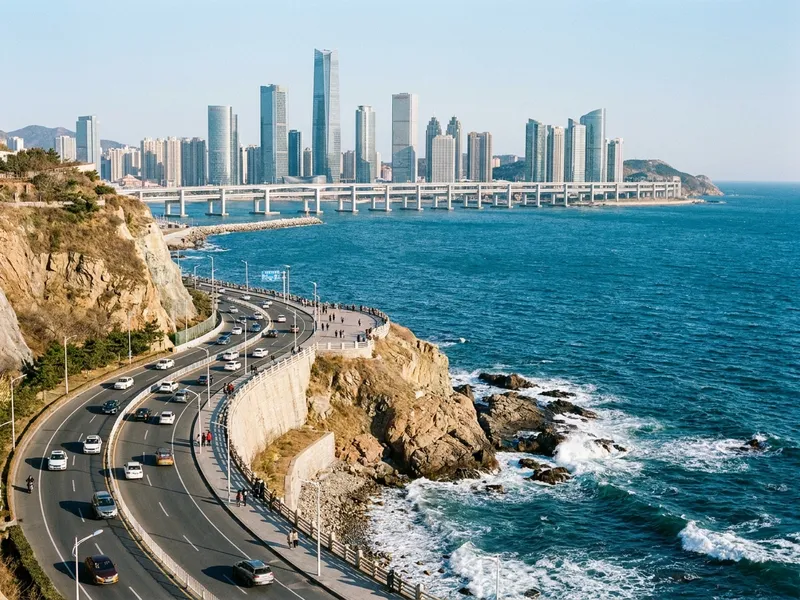
Dalian
Dalian sits on the southern tip of the Liaodong Peninsula on the Yellow Sea, 900 km east of Beijing and a 4-hour high-speed rail journey. The citys identity was forged by successive Russian (1898-1905) and Japanese (1905-1945) colonial occupations, which left behind a remarkable concentration of Russian Baroque and Japanese Meiji architecture in the central districts, particularly the Nanshan and Renmin Square areas. Today Dalian is one of Chinas most livable cities, known for its clean streets, tree-lined avenues, the vast Xinghai Square (one of the largest public squares in Asia), the scenic Bangchui Island, the Jinshitan beach resort (Chinas Hawaii), the Lushun (former Port Arthur) naval port, and the Bohai-Yellow Sea seafood cuisine. Dalian is also the home of the Dalian Wanda Group and the Dalian International Fashion Festival. The city serves as a major international shipping hub with one of the largest container ports in China and is a gateway to the Korean Peninsula and Japan. Most travelers visit on a 3-4 day stopover from Beijing, easily reached by HSR; visa-free entry of 30 days applies to most Western passports. The city is particularly popular with Russian and Korean tourists due to its proximity and cultural connections. Dalians temperate maritime climate makes it pleasant year-round, with mild winters and cool summers moderated by the Yellow Sea.
Why Dalian in 2026.
Dalian is a port city on the Liaodong Peninsula in northeast China, famous for its Russian and European colonial architecture, the massive Xinghai Square, the scenic Bangchui Island, the Jinshitan beach resort, the Lushun naval port, fresh Yellow Sea seafood, the annual Dalian International Fashion Festival, its role as a major international shipping hub, its reputation as one of China's most livable and walkable coastal cities, and its unique blend of Russian, Japanese, and Chinese cultural influences that create a distinctive urban character unlike any other city in China.
Quick Answer
Dalian sits on the southern tip of the Liaodong Peninsula on the Yellow Sea, 900 km east of Beijing and a 4-hour high-speed rail journey. The citys identity was forged by successive Russian (1898-1905) and Japanese (1905-1945) colonial occupations, which left behind a remarkable concentration of Russian Baroque and Japanese Meiji architecture in the central districts, particularly the Nanshan and Renmin Square areas. Today Dalian is one of Chinas most livable cities, known for its clean streets, tree-lined avenues, the vast Xinghai Square (one of the largest public squares in Asia), the scenic Bangchui Island, the Jinshitan beach resort (Chinas Hawaii), the Lushun (former Port Arthur) naval port, and the Bohai-Yellow Sea seafood cuisine. Dalian is also the home of the Dalian Wanda Group and the Dalian International Fashion Festival. The city serves as a major international shipping hub with one of the largest container ports in China and is a gateway to the Korean Peninsula and Japan. Most travelers visit on a 3-4 day stopover from Beijing, easily reached by HSR; visa-free entry of 30 days applies to most Western passports. The city is particularly popular with Russian and Korean tourists due to its proximity and cultural connections. Dalians temperate maritime climate makes it pleasant year-round, with mild winters and cool summers moderated by the Yellow Sea.
| Best time to visit | May-June for the cherry blossoms and azaleas; August-September for the Dalian International Fashion Festival and the beach season; avoid late January to mid-February (Spring Festival) and early October (Golden Week) |
|---|---|
| Daily budget | $250 (backpacker) / $700 (mid-range) / $2500+ (luxury) |
| Language | Mandarin (Putonghua) with the local Dalian dialect among older residents; English is widely spoken in hotels, Renmin Square area, Xinghai Bay, and Jinshitan tourist areas; Russian is spoken in some restaurants and shops on the Russian Street |
| Currency | CNY (¥); Visa, Mastercard, and American Express accepted at hotels, malls, and most restaurants via Alipay and WeChat Pay Tour Card |
| Time zone | China Standard Time (UTC+8), no daylight saving time |
| Last updated | 2026-06-14 |
Want a Dalian plan built for you?
What is Dalian: Why Dalian Deserves a Visit?
Dalian is one of Chinas most distinctive coastal cities, sitting on the southern tip of the Liaodong Peninsula on the Yellow Sea and facing Korea across the water. The citys identity was forged by successive Russian (1898-1905) and Japanese (1905-1945) colonial occupations, which left behind a remarkable concentration of Russian Baroque and Japanese Meiji architecture in the central districts. Most visitors know Dalian for two images: the wide European-style avenues of the city center lined with plane trees, and the vast Xinghai Square overlooking the Yellow Sea. Both images are well-deserving of the hype. But Dalian is far more than a coastal postcard. It is a major port of 50+ million tons a year, one of Chinas most livable cities, the home of the Dalian Wanda Group (Chinas largest real estate conglomerate), and a summer beach resort that draws tens of millions of Chinese tourists each year. For independent travelers, Dalian offers something Beijing cannot: a slower coastal pace, Russian and Japanese colonial architecture preserved in central districts, the largest public square in Asia, a 50-km scenic coastal drive, fresh Yellow Sea seafood, and the Jinshitan Beach Resort that some call Chinas Hawaii. The citys unique position as a gateway between China, Korea, and Japan has created a cosmopolitan atmosphere that feels different from inland Chinese cities. Russian restaurants sit alongside Korean barbecue joints and Japanese izakayas. The citys tram system, built by the Japanese in 1909, still runs through the center. The annual Dalian International Fashion Festival brings international designers and models to the city each September. The city is also a major center for software and IT outsourcing, earning it the nickname "the Bangalore of China" in business circles. The citys commitment to urban greening has earned it recognition as a National Garden City, with over 40% of the urban area covered by parks and green spaces. Three to four days is the ideal length of stay — one day for the Russian Street and the city center, a second for Xinghai Square and Bangchui Island, a third for Jinshitan Beach Resort or Lushun Naval Port, and an optional fourth for the Dalian International Fashion Festival in September or the Liaodong Peninsula Coastal Drive.
What is the history of Dalian: From Qing Fishing Village to Japanese Port Arthur to Modern Dalian?
Dalian began as a small Qing dynasty fishing village called Qingni Wa (Green Mud Bay) on the southern Liaodong Peninsula, with a recorded history going back to the Han dynasty (206 BC-220 AD). The area was known for its sheltered harbor and abundant seafood but remained a minor settlement until the late 19th century. The citys modern history pivots in 1898, when Russia forced the Qing government to sign the Convention for the Lease of the Liaodong Peninsula, gaining a 25-year lease on the southern peninsula including the ports of Dalian (then called Dalny) and Lushun (then called Port Arthur). Russia invested heavily in the new concession: they built a modern ice-free port at Dalny, a Russian-European-style city with grid streets and Baroque public buildings, and the Harbin-Dalian railway linking the port to the Chinese Eastern Railway. The Russian planners envisioned Dalny as a "Paris of the East" — a showcase of European urban planning on the Pacific coast. They imported architects from St. Petersburg, planted plane trees along the boulevards, and built the first tram lines. The 1904-1905 Russo-Japanese War was fought largely over Port Arthur and Dalny, with the Japanese capturing both after the 329-day Siege of Port Arthur (one of the longest and bloodiest sieges in modern history, with over 100,000 casualties on both sides). The Treaty of Portsmouth in 1905 transferred the lease to Japan, which renamed Dalny to Dairen and developed it as the industrial and commercial hub of its Kwantung Leased Territory. Japan built the modern port, the Yamato Hotel (now the Nanshan Hotel), the Yamato-cho commercial district, the Dalian Industrial Exhibition Hall, and many of the European-style buildings that still define the city center. The Japanese also expanded the tram network, built the first modern water supply system, and established Dalian as a major textile and shipbuilding center. The Japanese occupied Dalian until 1945, when the Soviet Union liberated the city in the final days of World War II. The Soviet Union controlled Dalian from 1945 to 1955, transferring the lease to the Peoples Republic of China in 1955. During the Soviet period, the city was renamed Dalian (a transliteration of the Chinese name) and served as a key Soviet naval base in the Pacific. After 1978, Dalian was one of the first Chinese cities to open to foreign investment and developed rapidly as a port, industrial, and tourism hub. The 1984 designation as a coastal open city brought massive Japanese and Korean investment, transforming Dalian into a manufacturing and technology center. The 2017 Summer Davos was held here, and the city continues to host the annual Dalian International Fashion Festival (the largest fashion event in northeast China). Today Dalian is a city of 7 million people, a major software outsourcing hub, and one of Chinas most prosperous coastal cities. The citys history is visible everywhere — from the Russian Street to the Japanese-era tram to the Soviet-era apartment blocks — making it a living museum of 20th-century East Asian history.
What is the geography and climate of Dalian, and when should I visit?
Dalian sits on the southern tip of the Liaodong Peninsula, surrounded by the Yellow Sea on the east and the Bohai Sea on the west, with Korea visible across the water on clear days. The municipality covers 13,237 square kilometers, although the urban core clusters along the Yellow Sea coast and the Xinghai Bay. The terrain is hilly: the citys highest natural point is 663 meters at the Bingtang Mountain in the northeast, and the city is ringed by low mountains and coastal cliffs. The coastline stretches 1,906 km in total, with over 40 named beaches and the Jinshitan Beach Resort as the largest. The city is built on a series of hills and valleys, which gives it a layered, terraced appearance when viewed from the sea. The harbor is naturally sheltered by the peninsula, making it one of the best deep-water ports in northern China. Dalian has a temperate monsoon climate with four distinct seasons and is on the same latitude as Madrid, Naples, and New York. The maritime influence moderates temperatures year-round, making Dalian noticeably milder than inland cities at the same latitude. Summers (June-August) are warm and humid but moderated by the Yellow Sea, with average July highs of 26°C and lows of 20°C; this is the peak tourist season and the time of the Dalian International Fashion Festival in September. The sea breeze keeps the city comfortable even during the hottest days. Winters (December-February) are mild by northern Chinese standards (Dalian is far enough south to escape the worst of Manchurian cold), with January averaging daytime highs of 0°C and nighttime lows of -7°C; the Yellow Sea freezes only in the coldest years, and snow is possible but usually melts within hours. The city receives about 550 mm of precipitation annually, with most falling in July and August. Spring (March-May) is short and cool, with the East Asian dust storms affecting air quality in late March and April. The cherry blossoms and azaleas bloom in late April and May, making this a beautiful if unpredictable season. Autumn (September-November) is the best season by a wide margin: warm dry days, cool nights, the autumn foliage, and the beach season continuing into late September. The best months are May-June (cherry blossoms) and September-October (autumn colors); avoid the first week of October (National Day Golden Week) when domestic tourists flood the city. The Dalian International Fashion Festival in late August and early September is a major draw for fashion enthusiasts. Typhoons are rare this far north, but occasional storms from the Yellow Sea can bring heavy rain in July and August. The citys air quality is generally good by Chinese standards, with the sea breeze helping to clear pollution, though spring dust storms can temporarily reduce visibility.
How to Get There: Flights, Trains, and the Beijing-Dalian HSR
Dalian Zhoushuizi International Airport (DLC), 10 km northwest of the city center, is the main gateway with direct flights across East Asia and a dense domestic network. The airport is connected to the city center by a metro extension (line 2 and line 5) and a 20-minute airport shuttle bus service; a taxi to central Dalian takes 25-35 minutes and costs ¥30-50. The new Dalian Jinzhouwan International Airport is under construction 30 km northwest of the city center and is scheduled to open in 2027. For many international travelers, however, the Beijing-Dalian HSR is the most popular entry route. The Beijing-Dalian HSR connects Beijing North Railway Station directly to Dalian North Railway Station and Dalian Railway Station (the central station on metro line 2), with journey times of 4-5 hours and frequent service every 15-30 minutes during peak hours. Second-class tickets cost ¥430, first-class ¥688, business class ¥1,433. The HSR runs from 6am to 10pm, with up to 50 daily services. The route passes through the coastal plains of eastern Hebei and the Liaodong Peninsula, offering scenic views of the Bohai Sea for much of the journey. From Shanghai, the HSR takes 11 hours via Nanjing; most travelers fly. From Shenyang, the HSR takes 1 hour 30 minutes and costs ¥185 second class. From Harbin, the HSR takes 4 hours and costs ¥350 second class. From Dandong on the North Korean border, the HSR takes 3 hours. Dalian has three main railway stations: Dalian Railway Station (central, on metro line 2, in the heart of the city), Dalian North Railway Station (the largest HSR hub, on metro line 1, in the northern suburbs), and Shahekou Railway Station (mostly conventional rail). Ferries also connect Dalian to Yantai and Weihai in Shandong Province (8-10 hours across the Bohai Strait) and to Incheon in South Korea (13 hours). The Dalian Port International Passenger Terminal handles cruise ships and international ferries. Within the city, the metro has 6 operational lines and 130+ stations covering the main attractions. The Russian Street area is on Line 5 at Qingniwaqiao Station, Xinghai Square on Line 1 at Xinghai Square Station, and Jinshitan on the dedicated Light Rail Line 3.
How do I get around Dalian: Metro, Taxi, DiDi, and Light Rail?
Dalian has a modern, well-organized public transport system that makes getting around straightforward for visitors. The metro is the workhorse: 6 lines, 130+ stations, ¥2-9 per ride depending on distance, English and Chinese signage, and clean air-conditioned cars. The metro runs from roughly 6am to 11pm, with frequencies of 3-7 minutes during peak hours and 8-12 minutes at off-peak times. Line 1 runs north-south through the city center, Line 2 connects the airport to the eastern districts, Line 5 serves the Russian Street and central shopping areas, and Lines 3 and 12 connect to the Jinshitan resort area. A reloadable Mingzhu Card can be bought at any metro station for ¥20 (refundable deposit) and works on the metro, buses, the tourist ferries, and the city bike share. Taxis in Dalian are metered and reasonable; flag-fall is ¥10 for the first 3 km and ¥2.5 per additional km (¥3.5 at night), and an average cross-city ride costs ¥30-60. DiDi operates throughout the city and is the safest and most foreigner-friendly option; the English-language app works smoothly, fares are typically 10-20% lower than taxi meters, and the GPS tracking means you cannot be overcharged. Always insist on the meter or use DiDi; unmarked cabs at the railway stations and the Russian Street area occasionally overcharge tourists. Dalian has a dedicated Light Rail Line 3 (the oldest light rail in China, opened 1903 as the Japanese colonial Sanjiao Railway) running from the city center to the Jinshitan Beach Resort; the journey takes 50 minutes and costs ¥8 — the most convenient way to reach Jinshitan. The light rail offers scenic views of the coastal suburbs and is an attraction in itself. Dalian is one of the best Chinese cities for cycling: the flat coastal terrain around Xinghai Bay, the dedicated bike paths along the Bohai-Yellow Sea coast, and the greenways through Laodong Park all reward two wheels. Bike share is available through Meituan Bike and HelloRide (¥1.5 per 30 minutes via the WeChat app). For day trips to Lushun, tourist coaches depart from the Dalian Tourism Distribution Center (¥30-60 round-trip) or you can take the tram to Lushun for ¥8. The city also operates a historic tram line (Line 201) that runs through the city center in vintage Japanese-era trams — a charming and practical way to travel between the Russian Street and Xinghai Square areas. The tram is particularly popular with tourists and runs every 10-15 minutes during the day.
Where should I stay in Dalian?
Dalians accommodation is concentrated in four areas, each with a distinct character. The Russian Street and Renmin Square area in the city center is the most atmospheric and the best for first-time visitors. Boutique hotels in restored Russian and Japanese-era buildings cluster here: the Nanshan Hotel (¥600, in the 1909 Japanese Yamato Hotel), the Hotel Nikko Dalian (¥900), the Dalian New World Hotel (¥600), and the luxurious Shangri-La Hotel Dalian (¥1,500) are all within walking distance of the Russian Street, the Zhongshan Square, and the central shopping streets. Mid-range options include the Holiday Inn Express Dalian City Center (¥450), the Hanting Express Dalian Russian Street (¥350), and a number of locally run 3-star hotels from ¥250-400. The Xinghai Bay and Convention Center area south of the Old Town is the scenic beach district, with international beachfront resorts and convention hotels. The Grand Hyatt Dalian (¥1,800), the Marriott Dalian (¥1,100), the Hilton Dalian (¥1,000), and the Aloft Dalian (¥600) are all on or near Xinghai Square. The Zhongshan Square area is the historical city center, with the Furama Hotel Dalian (¥700), the Kempinski Hotel Dalian (¥900), and the Renaissance Dalian (¥800) all on or near the central traffic circle. The Jinshitan Beach Resort area northeast of the city is the dedicated beach district, with beachfront resorts like the Holiday Inn Resort Dalian Hot Spring (¥800) and the Golden Pebble Beach Hotel (¥1,000). For backpackers, the Dalian International Youth Hostel (¥60-120 per bed) near the Russian Street and the Easy Hostel Dalian (¥80-150) near Xinghai Bay are the best options. Book at least 2 weeks ahead during the Spring Festival, Golden Week, and the August-September beach season. The Xinghai Bay area is ideal for families and beach lovers, while the Russian Street area suits history enthusiasts and those who want to walk to restaurants and cafes. Business travelers often prefer the Convention Center area for its proximity to the financial district. The city also has a growing number of boutique guesthouses and Airbnb-style apartments, particularly in the Russian Street area, offering a more authentic local experience.
What are the top attractions in Dalian?
Dalians signature attraction is Xinghai Square (Xing Hai Guang Chang), a 1.76-square-kilometer public square on the Xinghai Bay, the largest city square in Asia and the 4th largest in the world. Built in 1993 to commemorate the return of Hong Kong, it is surrounded by modern civic architecture, the 50-meter-tall City Sculpture (a giant white shell), the Century Sculpture (a 80-meter bronze sculpture of 1,000 footprints representing the population of Dalian), and the Xinghai Bay Conference Center. The square is especially impressive at night when the buildings are illuminated and the fountain shows run every evening in summer. Free to enter, open 24 hours. The Bangchui Island is a small peninsula in eastern Dalian featuring a scenic 400-meter boardwalk along the Yellow Sea cliffs, with views of the city skyline across the bay and a popular pebble beach. The boardwalk and cliff views are free; the Bangchui Island Hotel and the seafood restaurants are the main draw. Best at sunset. The Jinshitan Beach Resort, 50 km northeast of central Dalian, is a 50-square-kilometer national tourism resort area with 50+ km of beaches, the Golden Pebble Beach Golf Course, the Golden Pebble Beach Wax Figure Museum, and the Discovery Kingdom theme park. The largest beach resort in northern China; entry ¥30 plus ticket prices for individual attractions. The Russian Street (Renmin Lu and Nanshan Lu) is a preserved 1-kilometer stretch of late-19th-century Russian colonial architecture, with restored Russian Baroque buildings, the Nanshan Hotel, the Soviet-era Friendship Building, and dozens of Russian-themed cafes and souvenir shops. The street is particularly atmospheric in the evening when the buildings are lit and the Russian restaurants fill with diners. Free to enter. Lushun (Port Arthur) Naval Port is a historic naval port 40 km southwest of central Dalian, the site of the Russo-Japanese War (1904-1905) and the Japanese siege of 1894. Features the Lushun Museum, the Baiyu Mountain Tower, and the Soviet-era Naval Cemetery. Entry ¥40. Other standouts include the Dalian Forest Zoo (with giant pandas and Siberian tigers, ¥120), the Dalian Modern Museum (free), the Zhongshan Square (with 10 preserved Japanese-era European-style buildings), the Dalian International Conference Center (designed by German architects), the 250-km Liaodong Peninsula Coastal Drive, and the Tiger Beach Ocean Park with its dolphin shows and marine exhibits. The Laodong Park is also worth visiting for its cherry blossoms in spring and chrysanthemum festival in autumn.
What local food should I try in Dalian?
Dalian cuisine, known as Lv cai, is a coastal branch of Shandong cooking built on fresh Bohai and Yellow Sea seafood. Dalian cuisine specifically, known as Lv cai, is characterized by fresh Bohai-Yellow Sea seafood (clams, oysters, scallops, crabs, prawns, sea cucumbers, abalone, sea urchins), an emphasis on braising and quick-frying, and a rich tradition of pickled and preserved seafood. The most famous local dish is braised sea cucumber with scallions (lu shen shao cong), which Dalian claims to have perfected; the sea cucumbers are caught fresh from the Bohai Sea and braised with green onions, soy sauce, and sugar. Other classics include spicy stir-fried clams (chao ge zi), steamed prawns with garlic (qing zheng da xia), braised mackerel with fermented soybeans (kao qing yu), seafood dumplings (yu xian jiao), and the Dalian-style sea urchin (hai dan) served raw with lemon. The seafood dumplings are particularly noteworthy — filled with a mixture of minced fish, shrimp, and pork, they are a Dalian breakfast staple and are available at dedicated dumpling restaurants throughout the city. For street food, the Dalian Zhongshan Pedestrian Street and the Qingniwa Bridge Night Market have dumpling stalls, scallion pancake shops, the famous Dalian-style seafood BBQ, and dozens of seafood restaurants. The night market is especially lively in summer when outdoor seating fills the streets. The local restaurant scene has a handful of standouts: the Tai He Lou (a refined Lv cai restaurant), the Chuange Fish Dumplings (a seafood dumpling chain), the Mingmen Seafood Restaurant (a casual seafood hall with market pricing), the Bangchui Island Hotel seafood restaurants (with views of the Yellow Sea), and the Jinshitan Beach Resort seafood halls. The Russian Street has authentic Russian restaurants serving borscht, pelmeni (dumplings), and beef stroganoff, a legacy of the colonial period and the modern Russian community. Korean restaurants are also plentiful, particularly in the Xinghai Bay area, reflecting the citys proximity to Korea and its large Korean expatriate population. Japanese izakayas and sushi bars are also common, a legacy of the Japanese colonial period and the ongoing business ties with Japan.
What is a good 1- to 3-day itinerary for Dalian?
A focused one-day Dalian route pairs the Japanese-era buildings at Zhongshan Square with the colonial architecture and cafes of Russian Street. Have lunch at Tai He Lou for braised sea cucumber with scallions. In the afternoon, take a taxi to Xinghai Square for the 1.76-square-kilometer public square and the Xinghai Bay waterfront. Walk south to the Dalian International Conference Center and the Dalian Modern Museum (free). End the day at Bangchui Island for sunset views of the Yellow Sea cliffs and seafood dinner at one of the Bangchui Island Hotel restaurants. If time permits, take a brief ride on the historic tram Line 201 through the city center. Three Days in Dalian: Day 1 as above. Day 2: Take the Light Rail Line 3 to Jinshitan Beach Resort (50 minutes, ¥8) for a full beach day. Visit the Golden Pebble Beach Golf Course or just enjoy the 50+ km of beaches; have lunch at one of the Jinshitan seafood halls. In the afternoon, visit the Golden Pebble Beach Wax Figure Museum (¥80) and the Discovery Kingdom theme park (¥210). Return to central Dalian for dinner. Day 3: Take a day trip to Lushun (Port Arthur) Naval Port (40 km southwest, ¥40 entry; bus from Dalian Railway Station takes 90 minutes). Visit the Lushun Museum (with exhibits on the Russo-Japanese War and the Sino-Japanese War of 1894-1895), the Baiyu Mountain Tower (panoramic view of the Lushun naval harbor), the Lushun Snake Museum, and the Soviet-era Naval Cemetery. Have lunch at one of the Lushun seafood restaurants and return to central Dalian by 5pm. End the day at Laodong Park for the cherry blossoms (if spring) or chrysanthemum festival (if autumn). Optional Day 4: Take the Liaodong Peninsula Coastal Drive for the 250-km scenic loop, with stops at the Tiger Beach Ocean Park (¥200 with dolphin shows), the Liaohe Oilfield, and the Black Mouth Bay scenic area. Or visit the Dalian Forest Zoo (¥120) for giant pandas and Siberian tigers. For families with children, swap the Lushun day for the Tiger Beach Ocean Park and the Dalian Forest Zoo combination. A five-day itinerary could include all of the above plus a leisurely second day in the Russian Street area exploring the museums and cafes, and a half-day at the Dalian Polar Ocean World.
What practical information do I need for Dalian: Visa, Money, Connectivity, and Language?
Visa: Most Western passport holders (US, UK, EU, Australia, Canada, Japan, South Korea, New Zealand, Singapore) can visit China visa-free for up to 30 days. Dalian is covered under the same policy. China also offers 240-hour visa-free transit through Dalian Zhoushuizi Airport or other major airports if you are continuing to a third country. Check the latest rules with your nearest Chinese consulate before booking, as the policy is updated frequently. Most travelers combine Dalian with a Beijing or Shanghai trip. Money and Payment: The currency is the Chinese Yuan Renminbi (CNY, ¥), with an exchange rate of roughly ¥7.2 to US$1. Cash works everywhere. Alipay and WeChat Pay both accept foreign Visa, Mastercard, and American Express cards via the Tour Card feature — set this up before arrival through the Alipay app. WeChat Pay works similarly. Most mid-range and luxury hotels, restaurants, and shops accept both. The Qingniwa Bridge Night Market stalls and some seafood restaurants are cash-only. ATMs are widespread and accept foreign cards; ICBC, Bank of China, and 7-Eleven ATMs all work. SIM Cards and Connectivity: Buy a China Unicom or China Mobile tourist SIM at the airport arrivals hall for ¥80-150 with 10-30 GB of data valid for 7-30 days. eSIM is supported on most modern iPhones and Androids. Public Wi-Fi is patchy; hotel Wi-Fi is reliable. A VPN is needed to access Google, Gmail, Facebook, Instagram, YouTube, and Western news sites — install and test yours before arrival. Language: Standard Mandarin (Putonghua) is the official language and is understood everywhere. The local Dalian dialect is a variant of Jiaoliao Mandarin with Russian loanwords. English is widely spoken in hotels, the Russian Street area, and the major tourist sites; elsewhere it is less common than in Shanghai or Beijing. Keep a translation app on your phone. The Russian Street area has Russian-speaking staff in many restaurants and shops. Electricity and Plugs: 220V, 50Hz, with Type A, C, and I plugs. Bring a universal adapter. Time zone is China Standard Time (UTC+8), with no daylight saving time. Tap water is not drinkable; buy bottled water or boil water before drinking. The city has good air quality by Chinese standards, but occasional dust storms from the Gobi Desert can affect visibility in spring.
What are the best day trips from Dalian?
Dalians location on the southern Liaodong Peninsula makes it an ideal base for several rewarding day trips. The most popular is Lushun (Port Arthur) Naval Port, 40 km southwest of central Dalian — a historic naval port with the Lushun Museum, the Baiyu Mountain Tower, and the Soviet-era Naval Cemetery. The site of the famous 329-day Siege of Port Arthur during the Russo-Japanese War (1904-1905) — one of the longest and bloodiest sieges in modern history, with over 100,000 casualties on both sides. Entry ¥40; bus from Dalian Railway Station takes 90 minutes. The Liaodong Peninsula Coastal Drive is a 250-km scenic loop around the southern tip of the peninsula, with views of the Yellow Sea and the Bohai Sea, the Bangchui Island, the Tiger Beach Ocean Park, and the Black Mouth Bay scenic area. Best done as a self-drive (rental cars from ¥300 per day) or as a private tour (¥600-800 per day). The route passes through fishing villages, coastal cliffs, and scenic overlooks that are inaccessible by public transport. Dandong, 300 km northeast on the North Korean border, is famous for the Yalu River Broken Bridge (destroyed by US bombing during the Korean War and now a museum), the North Korean border views from the Dandong Skyline, and the North Korean cuisine restaurants. Shenyang, the capital of Liaoning Province, is 400 km north and home to the UNESCO-listed Imperial Palace (1625), the Zhao Ling Tomb (one of the three imperial tombs of the Qing dynasty), and the September 18th History Museum. For travelers with more time, a day trip to Beijing by HSR takes 4-5 hours and opens the Forbidden City, the Temple of Heaven, the Great Wall, and the hutongs. Shanghai is 11 hours by HSR or 2 hours by air. Tianjin is 6 hours by HSR via Jinan. Changchun, 600 km north, is the home of the Puppet Manchukuo Imperial Palace and the Changchun Film Studio. For families, the Tiger Beach Ocean Park (¥200) in central Dalian has dolphin shows and sea lion exhibits; the Jinshitan Discovery Kingdom theme park has roller coasters and water rides; the Dalian Forest Zoo (¥120) has giant pandas and Siberian tigers. The nearby fishing village of Pikou, 80 km north, offers fresh seafood lunches and a glimpse of traditional coastal life.
What cultural etiquette and practical tips should I know?
Dalian is one of the easiest Chinese cities in which to navigate cultural differences. As a long-standing port city with strong Russian and Japanese influences, it is cosmopolitan and tolerant. A few practical pointers help visitors blend in. Tipping is not customary in restaurants or taxis; some high-end restaurants add a 10-15% service charge. Round up the fare or hand the driver the small change if you want to acknowledge good service, but do not insist. Chopsticks should never be stuck vertically into a bowl of rice — this is associated with funeral incense. Use the serving chopsticks or the reverse end of your own to take food from shared plates. Smoking is restricted indoors and at tourist sites but still common on the street; most restaurants have smoking sections. The legal drinking age is 18; Dalian local beers include the Lushun Beer, the Dalian Beer, and the Tsingtao (brewed in Qingdao but widely available). Dalian is also the home of a small craft brewery scene. Bargaining is expected at the Qingniwa Bridge Night Market and the seafood market stalls but not in restaurants or shops with fixed prices. When entering a temple, cross the threshold with one foot only (not both), avoid pointing at the Buddha statues, and ask before photographing worshippers. The Lushun Buddhist temples (Baiyu Mountain, Longwang Temple) have functioning Buddhist communities; visitors are welcome at services and the morning chanting. Personal space is closer than in the West, especially in markets and on the metro, but staring is not considered rude. Dalians International Fashion Festival halls expect audience interaction — heckling, applauding, and live tweeting the shows are all part of the experience. Finally, always carry your passport: hotels must register foreign guests with the local police within 24 hours of check-in, and you may need to show your passport when buying train tickets, entering certain museums, or registering for a SIM card. The city is generally safe for tourists, but keep an eye on your belongings in crowded markets and on the metro. The Russian Street area is particularly popular with pickpockets during peak tourist season.
What makes Dalian different from other Chinese coastal cities?
Dalian occupies a unique position among Chinese coastal destinations. Unlike Qingdao, which was shaped by German colonialism, or Shanghai, which was a patchwork of international concessions, Dalian was sequentially Russian and Japanese — and the layers of both cultures remain visible in the architecture, the cuisine, and the city's self-image. The Russian Street is not a tourist reconstruction but a preserved colonial district where Russian families still live and work. The Japanese-era tram still runs through the city center. The city's urban planning — wide boulevards, tree-lined streets, European-style public buildings — was designed by Russian architects in the 1890s and expanded by Japanese planners in the 1910s-1930s. This gives Dalian a fundamentally different streetscape from most Chinese cities, which tend toward dense, high-rise development. The climate is also distinctive: Dalian is the southernmost major city in northeast China, which means it has the mildest winters in the region and the coolest summers, thanks to the maritime influence. The seafood is different too — the Bohai Sea and Yellow Sea produce different species than the East China Sea fisheries that supply Shanghai and Hangzhou. Sea cucumber, abalone, and sea urchin are Dalian specialties that are harder to find fresh elsewhere. The city's fashion industry, anchored by the annual Dalian International Fashion Festival, gives it a cultural profile closer to Seoul or Tokyo than to inland Chinese cities. For travelers who have seen Beijing, Shanghai, and Xi'an, Dalian offers something genuinely different: a Chinese city that feels partly European, partly Japanese, and entirely its own.
Which shopping and nightlife experiences should I not miss?
Dalians shopping scene reflects its cosmopolitan history and modern affluence. The Qingniwa Bridge Commercial District is the main shopping area, with the Mykal Department Store, the New World Shopping Mall, and the Victory Plaza underground shopping center. The Russian Street has dozens of Russian-themed souvenir shops selling matryoshka dolls, Russian chocolates, vodka, and fur products. The Dalian Friendship Store on Renmin Road is the best place for high-end Chinese crafts, silk, and jade. For local specialties, the Qingniwa Bridge Seafood Market sells fresh and dried seafood including sea cucumbers, abalone, and dried scallops that make excellent gifts. The Dalian Modern Museum gift shop has books on the citys colonial history and reproductions of period photographs. Nightlife in Dalian is concentrated in three areas. The Xinghai Bay waterfront has upscale bars and lounges with views of the Yellow Sea, particularly along the Xinghai Square promenade. The Russian Street has a more bohemian scene, with Russian-themed bars, live music venues, and cafes that stay open late. The Zhongshan Square area has the citys most sophisticated cocktail bars and wine bars, many in restored colonial buildings. The Dalian Beer Festival, held each July in Xinghai Square, is a major summer event with hundreds of beer brands, live music, and food stalls. For a quieter evening, the Bangchui Island boardwalk has seafood restaurants that stay open until midnight, and the Laodong Park area has tea houses and traditional Chinese music performances. The city also has a growing craft beer scene, with several microbreweries in the Xinghai Bay area producing experimental beers using local ingredients.
How does Dalian balance its colonial heritage with modern Chinese identity?
Dalians relationship with its colonial past is complex and nuanced, making it a fascinating case study for visitors interested in how modern China engages with its history. Unlike some cities that have erased colonial architecture, Dalian has actively preserved and celebrated its Russian and Japanese heritage. The Russian Street and Zhongshan Square are protected historical districts where new construction must match the existing architectural style. The Nanshan Hotel (formerly the Yamato Hotel) operates as a luxury hotel while preserving its 1909 Japanese interior. The city museum devotes significant space to the colonial period, presenting it as a formative chapter in Dalians development rather than simply a story of foreign oppression. This approach reflects a pragmatic local attitude: the colonial buildings are beautiful, they attract tourists, and they give Dalian a distinctive identity in a country of increasingly homogeneous cities. At the same time, the city is thoroughly modern Chinese. The Xinghai Square, built in 1993, was built to mark Hong Kongs return to China in 1997. The Dalian International Conference Center, the software parks, and the container port represent contemporary Chinese ambition. The fashion festival, the HSR station, and the metro system are all products of the post-1978 reform era. What makes Dalian unusual is how comfortably these layers coexist. A visitor can breakfast on Russian borscht in a 1900s building, take a Japanese-era tram to a modern conference center, and dine on traditional Shandong seafood in a restaurant overlooking a Soviet-era naval cemetery. The city does not seem to feel the tension between these identities that a visitor might expect. For travelers, this means an unusually rich cultural experience — a Chinese city where history is not hidden but lived in, where the past is a source of pride rather than shame, and where the modern and the historical enhance each other rather than competing.
What is the Dalian beach scene and which beach should I choose?
Dalians 1,906 km of coastline gives it more beaches than almost any other major Chinese city, and the beach culture is a defining part of local summer life. The most popular beaches are Xinghai Bay Beach (in the city center, convenient but crowded in summer), Jinshitan Beach Resort (50 km northeast, the largest and best-equipped), Tiger Beach (a smaller city beach with the ocean park), and Bangchui Island (a scenic pebble beach with boardwalks). Each serves a different kind of visitor. Xinghai Bay Beach is the easiest option for travelers staying in the city center. The sand is imported and maintained, the water is calm, and the beach is backed by Xinghai Square and the Grand Hyatt. It is ideal for a quick swim or an evening stroll, but it gets packed on summer weekends. Facilities include showers, changing rooms, and beach-chair rentals. Lifeguards are on duty in summer. Jinshitan Beach Resort is the flagship beach destination. It offers 50+ km of coastline, clean sand, water sports, golf, a theme park, and resort hotels. The resort is family-friendly and can easily fill a full day. Light Rail Line 3 connects it to the city center in 50 minutes, making it accessible without a car. Bangchui Island is better for photography and quiet contemplation than for swimming. The pebble beach and cliff boardwalk offer dramatic views, and the seafood restaurants at the Bangchui Island Hotel are excellent. Visit at sunset for the best light. Tiger Beach is best combined with the ocean park rather than as a standalone beach. The sand is coarse and the area is dominated by the aquarium and marine exhibits. For travelers with limited time, Xinghai Bay plus Jinshitan covers most beach experiences; add Bangchui Island for the scenery and Tiger Beach for families with children.
What is the Dalian fashion and design scene?
Dalian has been a fashion capital in northeast China since the 1980s, when the citys garment industry began exporting to Japan and South Korea. The annual Dalian International Fashion Festival, launched in 1988, is now the largest fashion event in the region and attracts designers from China, Japan, Korea, and Europe. The festival runs for about 10 days in late August and early September, with runway shows, design competitions, a model contest, and a textile expo. Tickets for indoor shows cost ¥200-500, while the outdoor events on Xinghai Square are free. Beyond the festival, Dalian has a growing number of independent designers and concept stores. The Russian Street area has small boutiques selling vintage-inspired and locally designed clothing. The Hanglung Plaza and Times Square malls host mid-range international brands. The Dalian Creative Design Center in the Shahekou District showcases local furniture, product, and fashion designers in a converted industrial space. The citys fashion identity is influenced by its colonial history and its proximity to Korea and Japan. You will see more tailored coats, structured silhouettes, and neutral palettes than in southern Chinese cities. Winter fashion is particularly strong — Dalianers take cold-weather dressing seriously, and the citys department stores stock high-quality down jackets, cashmere, and wool coats. For visitors, the fashion festival is the best time to experience this side of the city, but the boutiques and design centers are worth exploring year-round.
What should I know about Dalians Korean and Japanese connections?
Dalians location on the Yellow Sea, directly across from Korea and within easy reach of Japan, has shaped its culture, economy, and cuisine. The Japanese occupation from 1905 to 1945 left a permanent architectural and infrastructural mark, from the tram system to the Yamato Hotel to the European-style buildings of Zhongshan Square. After 1978, Japanese investment helped build Dalians manufacturing base, and Japanese companies remain major employers in the city. Japanese restaurants, izakayas, and karaoke bars are concentrated in the Zhongshan Square and Xinghai Bay areas. The Korean connection is more recent but equally visible. Dalian is one of the closest major Chinese cities to Seoul, and the city has a large Korean expatriate community plus many Korean-owned businesses. Korean barbecue restaurants, Korean supermarkets, and Korean skin-care shops are common, especially near the Xinghai Bay and the Ganjingzi District. Korean language signs and menus are not unusual in these neighborhoods. For travelers, this means Dalian offers excellent Korean and Japanese dining options alongside Chinese and Russian food. It also means the city feels more internationally oriented than many inland Chinese cities. English is more widely spoken in the tourist and business districts, and the service culture in international hotels and restaurants is closer to East Asian norms than to the more inward-looking parts of northern China. If you have visited Seoul or Tokyo, you will recognize some of the urban rhythms and retail aesthetics in Dalian.
What is a realistic budget for a Dalian trip?
Dalian is more affordable than Beijing or Shanghai but more expensive than inland cities in northeast China. A realistic budget depends on the season, with August and September beach season and the September Fashion Festival pushing prices up. Accommodation in the Russian Street or Xinghai Bay area ranges from ¥250-450 per night for a clean mid-range hotel in shoulder season, rising to ¥600-1,000 in peak summer. International beachfront resorts like the Grand Hyatt or Hilton typically start at ¥1,000 and can exceed ¥2,000 during festivals. Hostel beds are ¥60-150 per night. Food is reasonable, especially seafood. A breakfast of seafood dumplings costs ¥25-40. A mid-range lunch of spicy stir-fried clams, steamed prawns, and rice costs ¥80-150 per person. A dinner at a Russian restaurant on Russian Street costs ¥150-250 per person. Seafood at the Qingniwa Bridge Night Market is cheaper, around ¥60-100 per person. Local Dalian beer is ¥8-15 per bottle. Transport is inexpensive. Metro rides are ¥2-9, taxis start at ¥10, and the light rail to Jinshitan is ¥8. Attractions vary: Xinghai Square is free, Jinshitan entry is ¥30 plus individual attractions, the Dalian Forest Zoo is ¥120, Lushun Naval Port is ¥40, and Bangchui Island is free. A 3-day trip excluding flights typically costs ¥2,000-4,000 per person at mid-range, or ¥5,000+ for luxury with beachfront hotels and private tours.
What are the best photography spots in Dalian?
Dalian offers a rare combination of European architecture, modern skyline, rugged coastline, and yellow-sea sunsets that make it one of the most photogenic cities in northern China. The classic shot is Xinghai Square at dusk, with the 50-meter City Sculpture, the Century Sculpture, and the Xinghai Bay Conference Center reflected in the fountain pools. Arrive 30 minutes before sunset to secure a spot and stay for the blue hour when the buildings illuminate. Zhongshan Square is best photographed in the early morning, when the traffic circle is quiet and the 10 preserved Japanese-era buildings catch the angled light. The Russian Street is atmospheric at any time but particularly after dark, when the facades are lit and the cobblestones reflect the streetlights. Bangchui Island is the top coastal location: the boardwalk along the cliffs offers dramatic views of the Yellow Sea and the city skyline across the bay, with sunset being the best time. For a different perspective, take the light rail to Jinshitan and photograph the golden-rock coastline and the Discovery Kingdom ferris wheel. The Liaodong Peninsula Coastal Drive has multiple overlooks between Dalian and Lushun that are ideal for landscape photography. Drone photographers should note that Xinghai Square, the airport, and the naval port areas have restrictions; check local regulations before flying.
What are the best festivals and events in Dalian?
Dalians event calendar is anchored by the Dalian International Fashion Festival in late August and early September, the largest fashion event in northeast China. The 10-day festival features runway shows, designer competitions, a model contest, and outdoor events on Xinghai Square. Even visitors not interested in fashion will enjoy the festive atmosphere and the late-summer weather. The Dalian Beer Festival in July turns Xinghai Square into an open-air beer garden with hundreds of domestic and international brews, live music, and seafood stalls. It is one of the biggest beer festivals in Asia and draws crowds from across northern China. Spring brings cherry blossoms to Laodong Park and the citys many plane-tree avenues in late April and May. The Jinshitan Beach Resort hosts summer music festivals and water-sport competitions from June through August. In winter, the Russian Street Christmas market and New Year events give the colonial district a European atmosphere. For visitors planning around events, late August and early September offer the best combination of festivals and pleasant weather, though hotel prices rise. May and October are good alternatives for mild weather without the fashion-festival crowds.
Top attractions
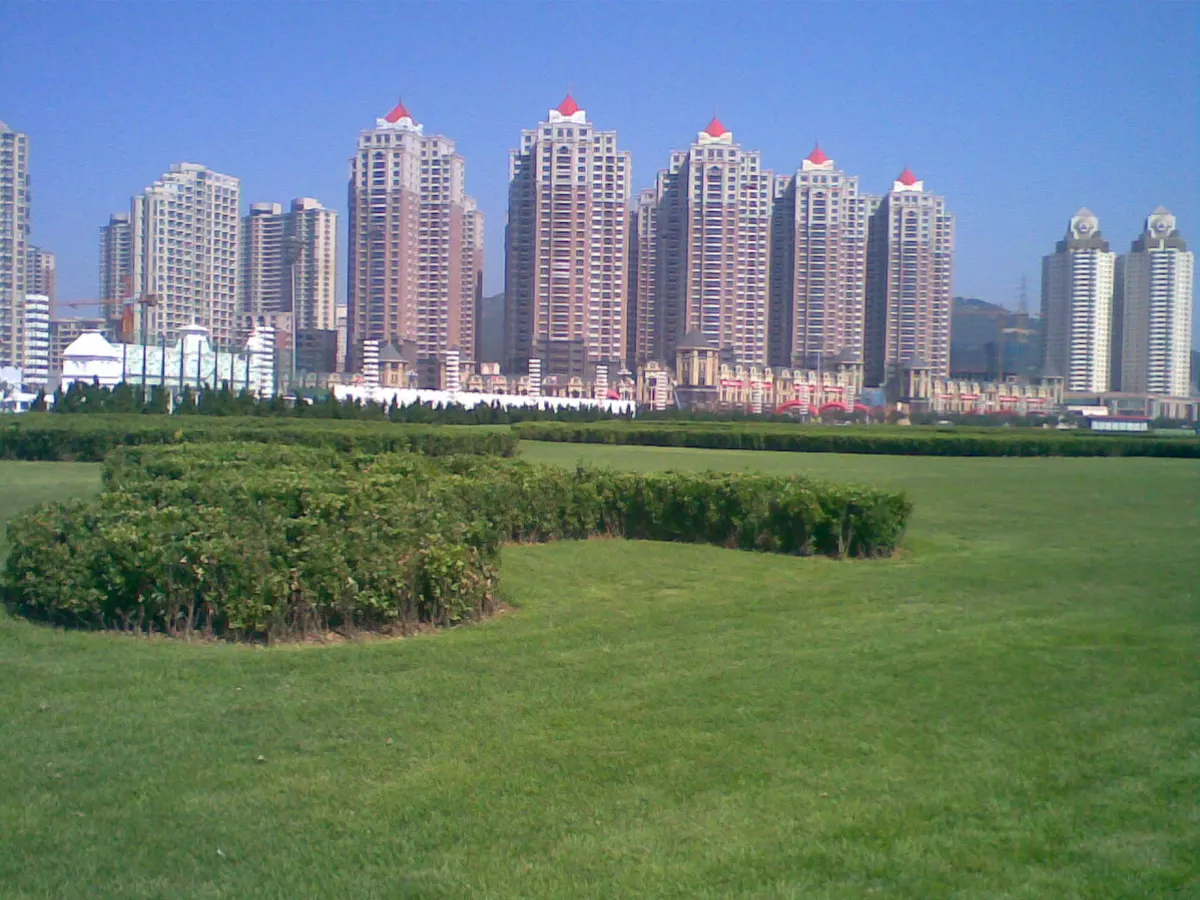
Xinghai Square (Xing Hai Guang Chang)
A 1.76-square-kilometer public square on the Xinghai Bay, the largest city square in Asia and the 4th largest in the world. Surrounded by modern civic architecture, the 50-meter-tall City Sculpture, the Century Sculpture, and the Xinghai Bay Conference Center. Free, open 24 hours.
Wikimedia Commons · CC-BY-SA
Bangchui Island (Bang Chui Dao)
A small peninsula in eastern Dalian featuring a scenic 400-meter boardwalk along the Yellow Sea cliffs, with views of the city skyline across the bay and a popular pebble beach. The boardwalk and cliff views are free; the Bangchui Island Hotel and the seafood restaurants are the main draw. Best at sunset.
Wikimedia Commons · CC-BY-SA
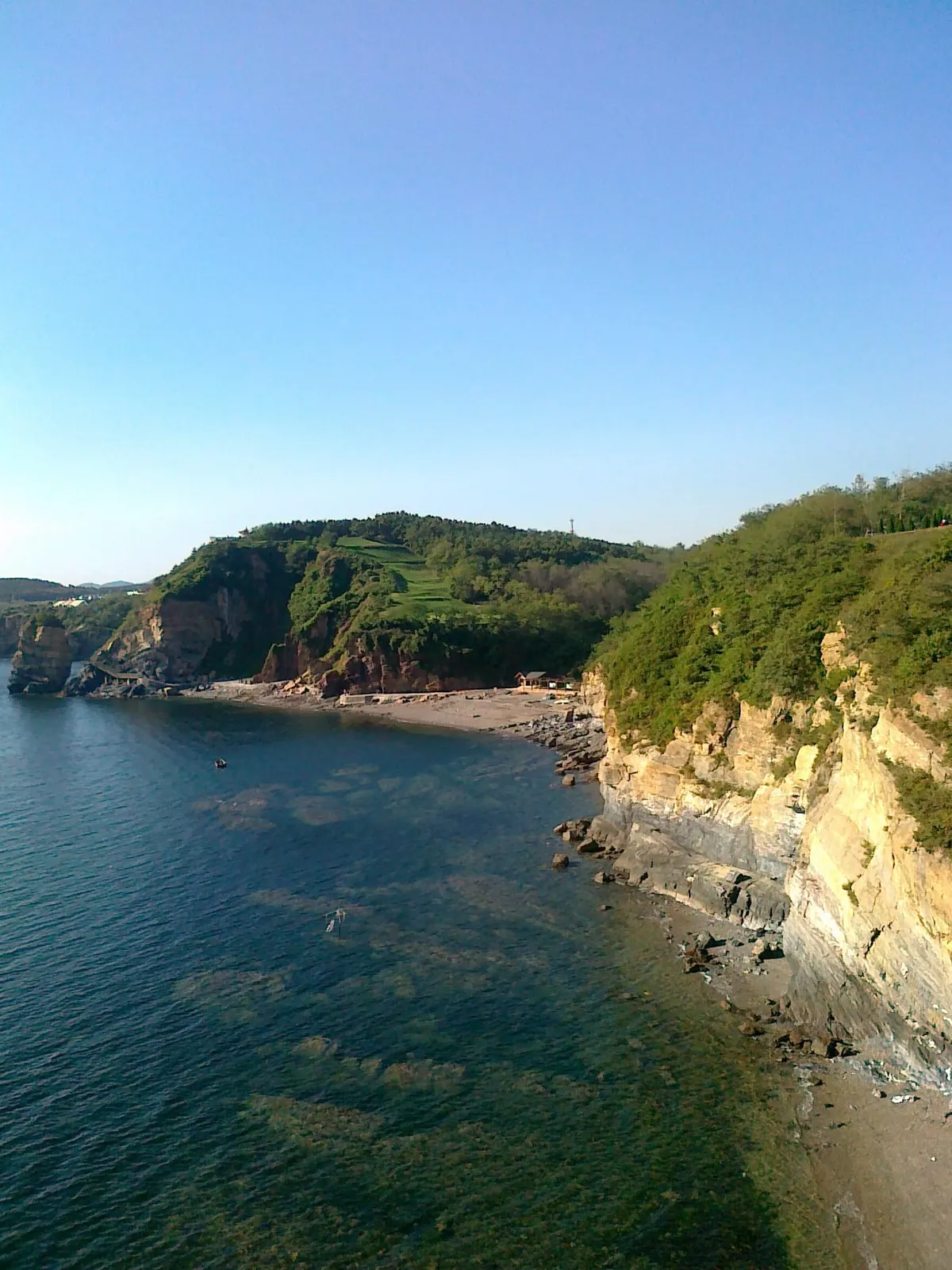
Jinshitan Beach Resort (Golden Pebble Beach)
A 50-square-kilometer national tourism resort area 50 km northeast of central Dalian, with 50+ km of beaches, the Golden Pebble Beach Golf Course, the Golden Pebble Beach Wax Figure Museum, and the Discovery Kingdom theme park. The largest beach resort in northern China. Entry ¥30; multiple tickets for attractions.
Wikimedia Commons · CC-BY-SA
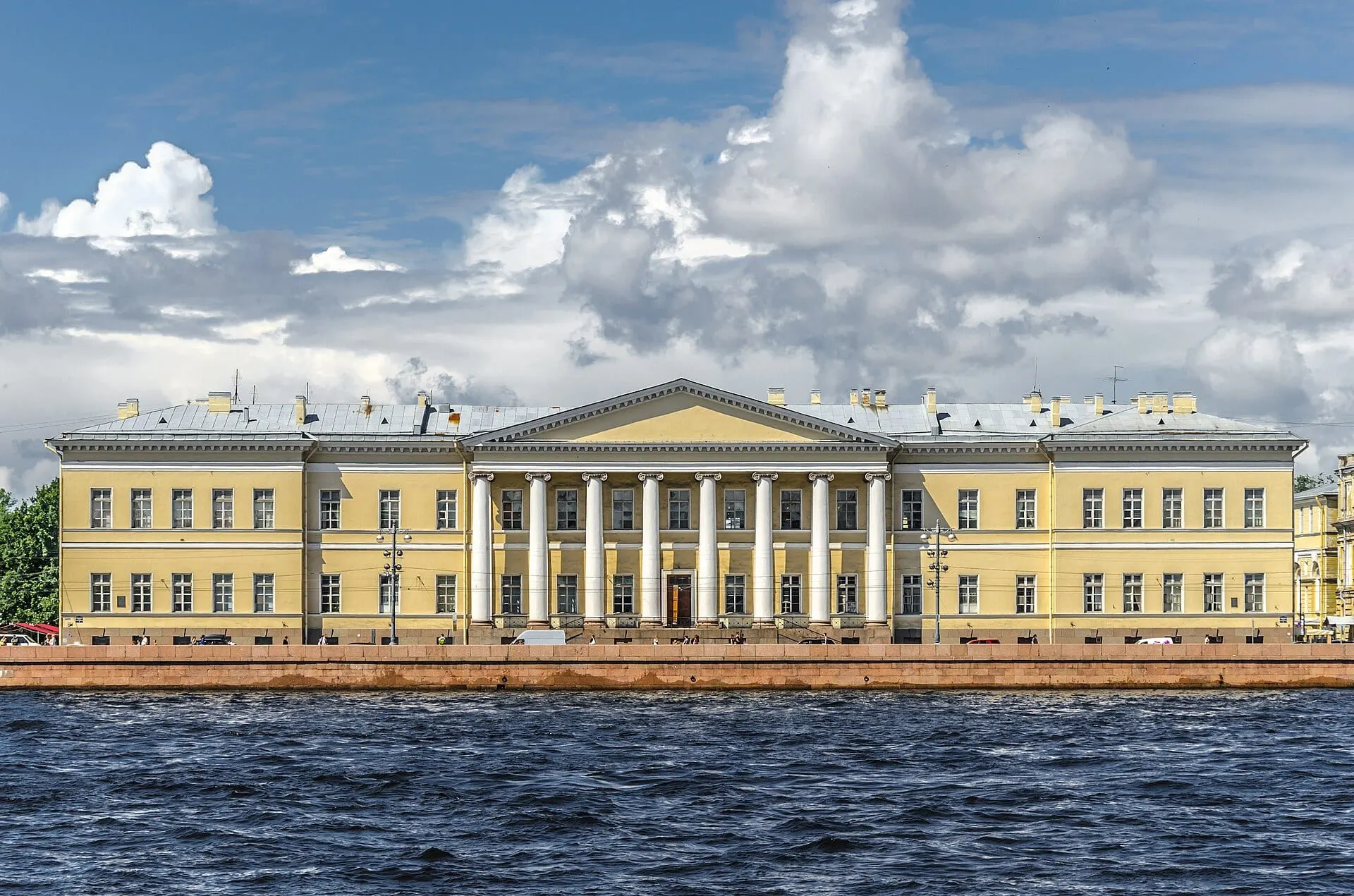
Russian Street (Renmin Lu / Nanshan Lu)
A preserved 1-kilometer stretch of late-19th-century Russian colonial architecture, with restored Russian Baroque buildings, the Nanshan Hotel (the former Japanese-era Yamato Hotel), the Soviet-era Friendship Building, and dozens of Russian-themed cafes and souvenir shops. Free to enter; many buildings house museums.
Wikimedia Commons · CC-BY-SA

Lushun (Port Arthur) Naval Port
A historic naval port 40 km southwest of central Dalian, the site of the Russo-Japanese War (1904-1905) and the Japanese siege of 1894. Features the Lushun Museum (with exhibits on the Russo-Japanese War and the Sino-Japanese War of 1894-1895), the Baiyu Mountain Tower, the Lushun Snake Museum, and the Soviet-era Naval Cemetery. Entry ¥40.
Wikimedia Commons · CC-BY-SA
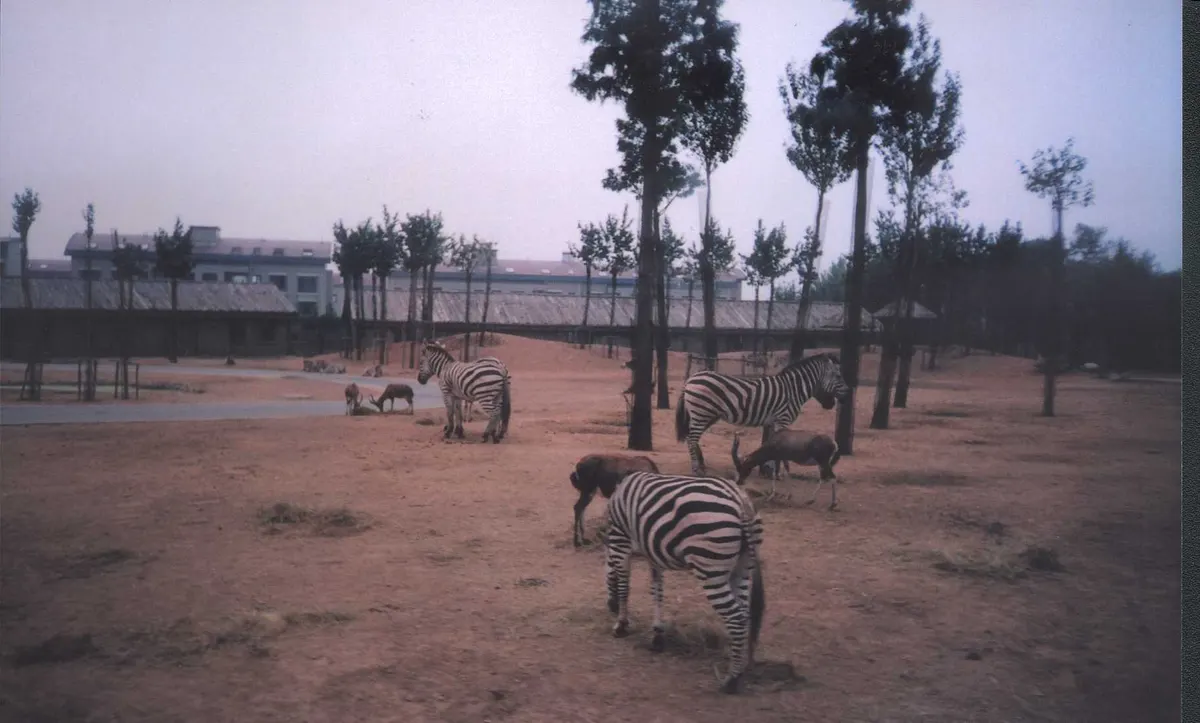
Dalian Forest Zoo (Da Lian Sen Lin Dong Wu Yuan)
A 7.2-square-kilometer zoo in the southern White Cloud Mountain area, with 200+ species including giant pandas, Siberian tigers, polar bears, and African animals. The Free-range Animal Area lets visitors view animals in semi-natural enclosures via a guided safari bus. Entry ¥120; safari bus extra ¥60.
Wikimedia Commons · CC-BY-SA
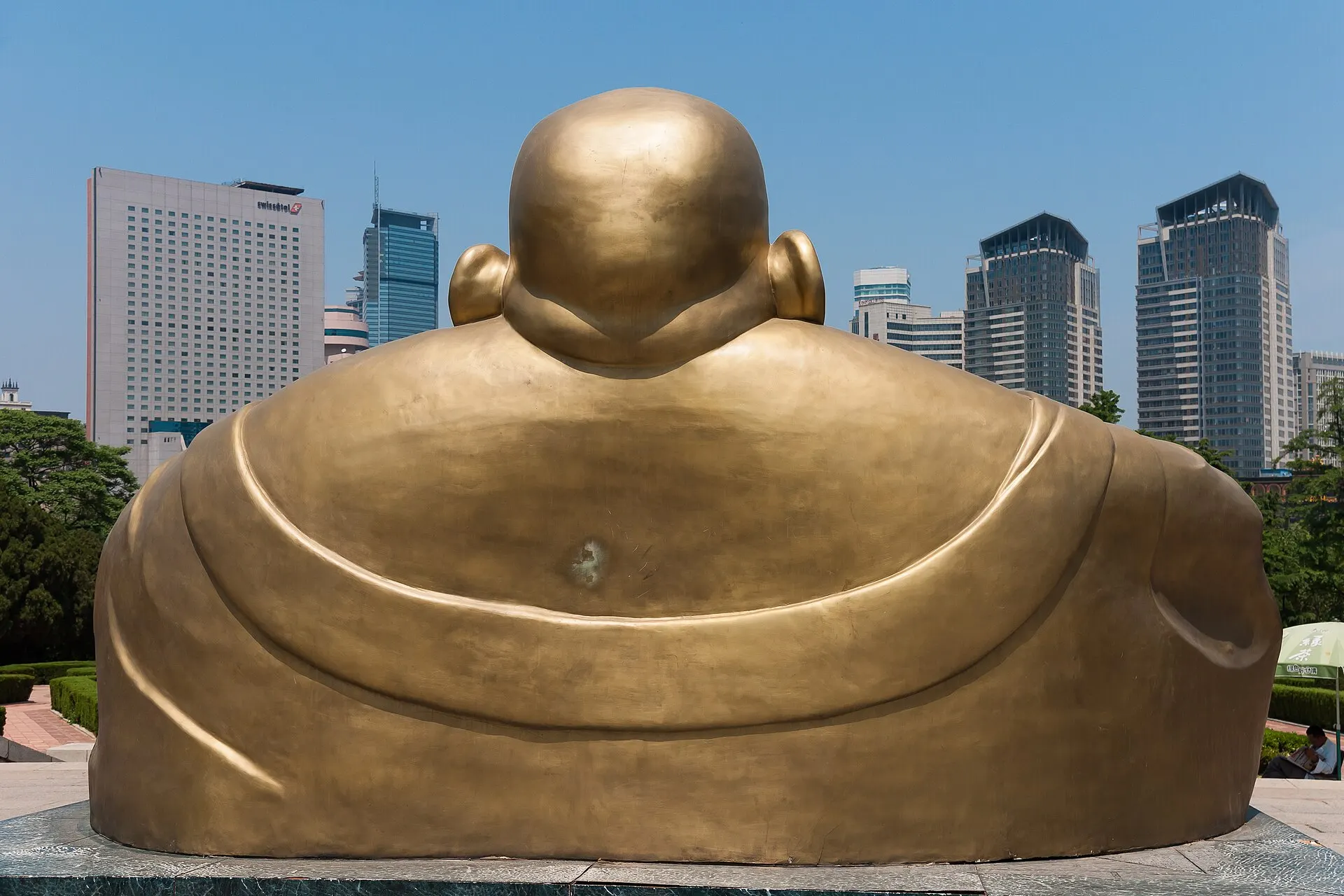
Dalian Laodong Park (Labor Park)
A 1-square-kilometer urban park at the foot of Baiyu Mountain, with the 22-meter-tall May Wind Sculpture, the East Lake Boating Area, and the Five Hills walking paths. Famous for the cherry blossoms in spring and the chrysanthemum festival in autumn. Entry ¥5; cherry blossom season free.
Wikimedia Commons · CC-BY-SA
Dalian Discovery Kingdom
A major theme park in the Jinshitan Beach Resort with roller coasters, water rides, the Chinese Dream Theater, and the ancient civilization exhibition halls. The largest theme park in northeast China. Entry ¥210; combination tickets with the Wax Figure Museum ¥260.
Wikimedia Commons · CC-BY-SA
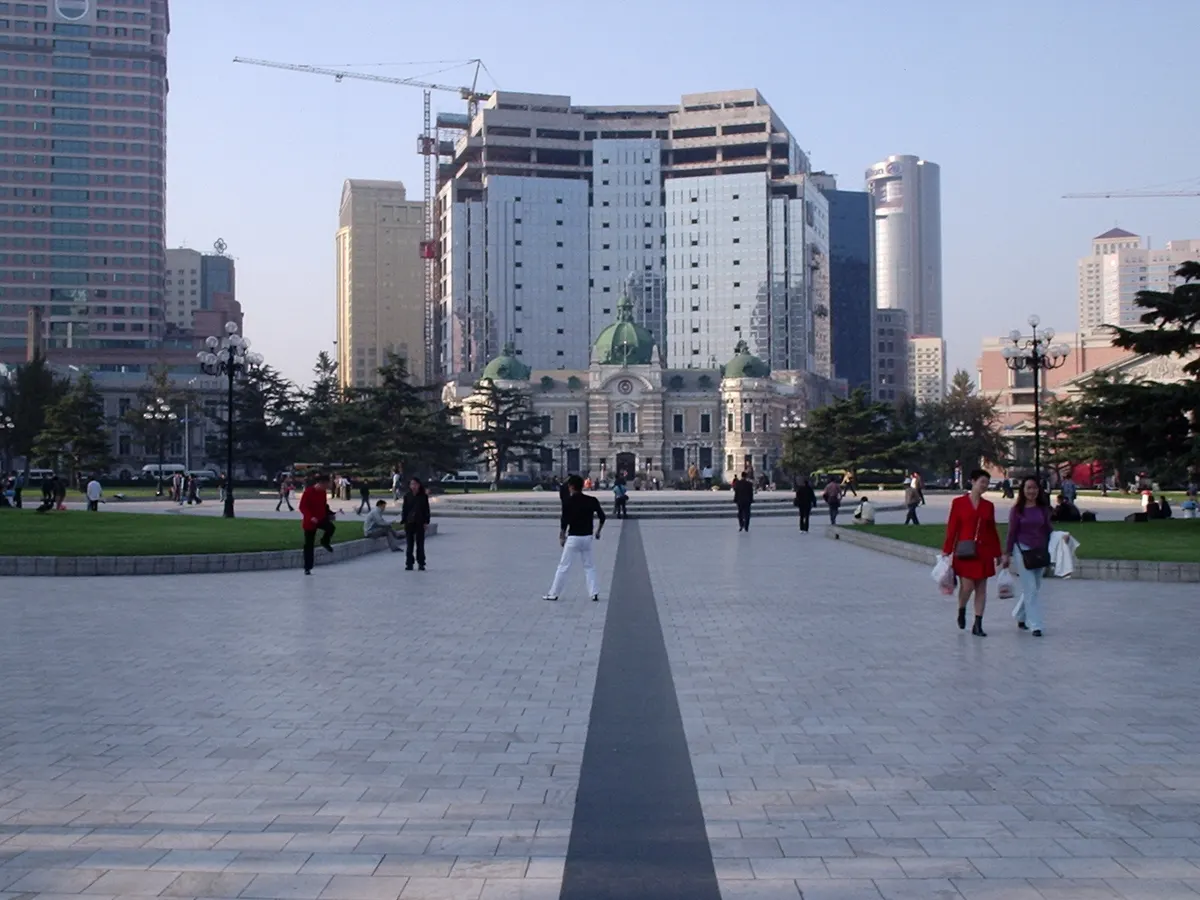
Zhongshan Square (Zhongshan Guang Chang)
A historic traffic circle in the city center surrounded by 10 preserved Japanese-era European-style buildings from the 1910s-1930s, including the Dalian Hotel (now the Dalian Bank), the Yamato Hotel, and the Yokohama Specie Bank. The architectural ensemble is one of Dalians most photographed. Free to view.
Wikimedia Commons · CC-BY-SA
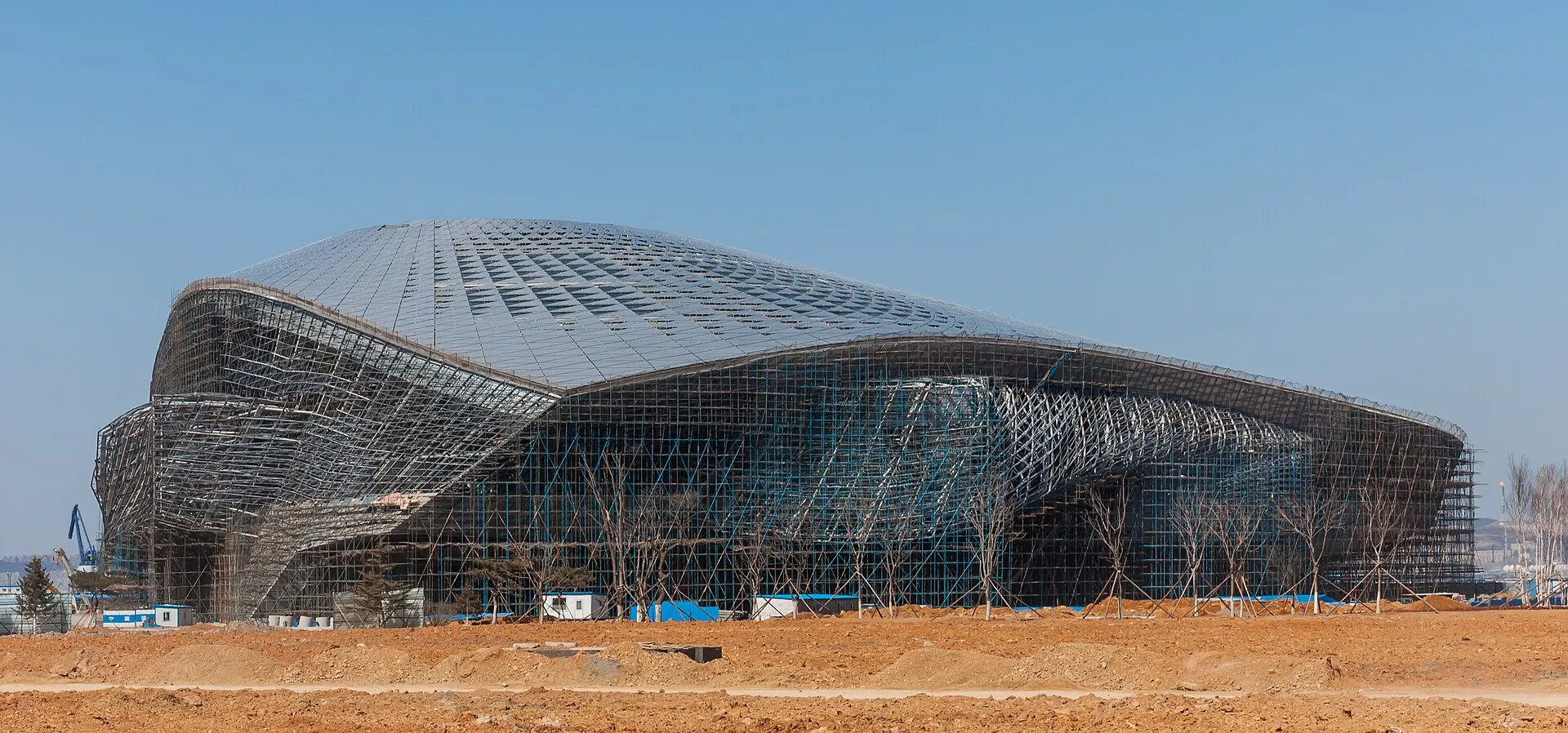
Dalian International Conference Center
A futuristic waterfront convention center on the Xinghai Bay designed by German architects von Gerkan, Marg and Partners, with a roof inspired by sea shells and waves. The 2017 Summer Davos was held here. Free to view from outside; the building is occasionally open for guided tours. Free exterior.
Wikimedia Commons · CC-BY-SA
Liaodong Peninsula Coastal Drive
A 250-km scenic drive along the Liaodong Peninsula coastline, with views of the Yellow Sea, the Bohai Sea, the Lushun naval port, the Bangchui Island, and the Jinshitan Beach Resort. Best done as a self-drive (rental cars from ¥300 per day) or as a private tour (¥600-800 per day). Free.
Wikimedia Commons · CC-BY-SA
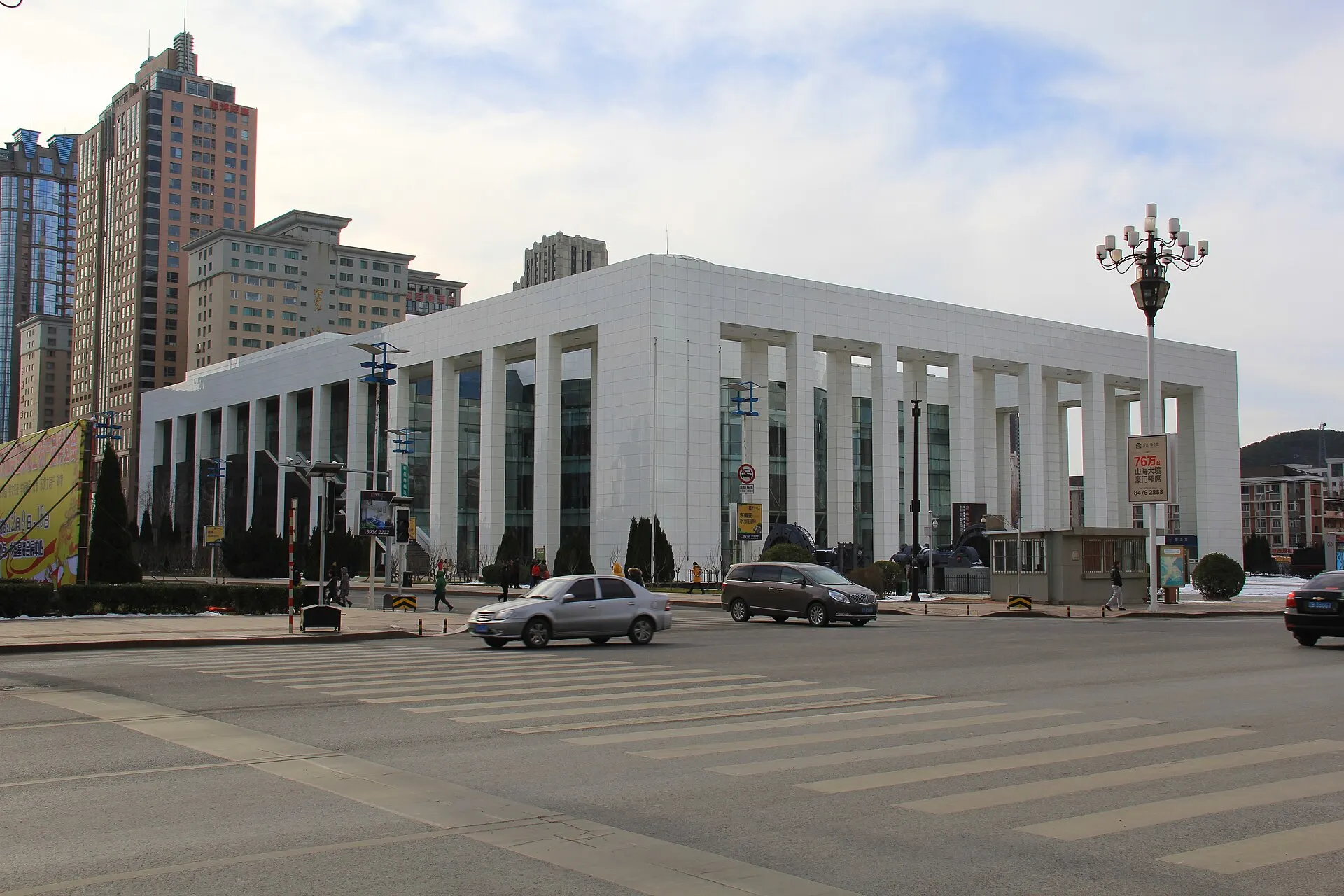
Dalian Modern Museum (Xinghai Bay)
A modern museum on the Xinghai Bay waterfront covering the history of Dalian from the late Qing dynasty through the Russian and Japanese colonial periods to the present. Includes exhibits on the Russo-Japanese War, the Japanese surrender of 1945, and the modern industrial rise of Dalian. Free admission.
Wikimedia Commons · CC-BY-SA
STAY
Where to stay in Dalian
Pick a base that matches the trip you want — imperial-central for sightseeing, hutong belt for character, Chaoyang for nightlife, or Qianmen for budget.
Russian Street / Renmin Square
Late-19th-century Russian Baroque architecture, boutiques, cafes, and the Nanshan Hotel — the most atmospheric base
#russian-streetXinghai Bay / Convention Center
Asia's largest city square, waterfront resorts, the modern skyline, and beach access
#xinghai-bayZhongshan Square
Historic traffic circle with 10 Japanese-era European-style buildings, luxury hotels, and central convenience
#zhongshan-squareJinshitan Beach Resort
50-km beach resort with golf, theme parks, and dedicated beach hotels — best for summer stays
#jinshitanLushun (Port Arthur)
Historic naval port 40 km southwest with Russo-Japanese War sites and a quieter, historical atmosphere
#lushun
ITINERARIES
Sample itineraries from Dalian
Three ready-made routes, from a 1-day imperial sprint to a 5-day deep dive. Copy the day-by-day plan and adapt to your own pace.
- 1 DAY
Dalian in a Day
A fast-paced day covering Zhongshan Square, Russian Street, Xinghai Square, and Bangchui Island.
- Short stopovers
- Business travellers
- Seoul–Dalian weekend hops
- Day 01
Morning
Start at Zhongshan Square to photograph the 10 Japanese-era buildings in morning light. Walk west to Russian Street (Renmin Lu) for Russian Baroque architecture and a coffee in a restored 1900s building.
Afternoon
Take a taxi to Xinghai Square — walk the 1.76-sq-km plaza, see the City Sculpture and the Century Sculpture. Lunch at a seafood restaurant near Xinghai Bay.
Evening
Take a taxi to Bangchui Island for sunset on the cliff boardwalk. Seafood dinner at the Bangchui Island Hotel restaurant. Ride the historic tram back to the city centre.
- 2 DAYS
Dalian Weekend
City heritage on day one, then Jinshitan Beach Resort or Lushun Naval Port on day two.
- Weekend travellers
- Couples
- History enthusiasts
- Day 01
Morning
Zhongshan Square, Russian Street walk, Nanshan Hotel lobby (the 1909 Yamato Hotel). Coffee in a Russian-era building.
Afternoon
Xinghai Square and the Xinghai Bay waterfront. Dalian Modern Museum (free). Walk the Xinghai Bay promenade.
Evening
Bangchui Island at sunset. Seafood dinner near Russian Street. Evening walk along the lit Russian Street.
- Day 02
Morning
Choose your day trip: (A) Light Rail to Jinshitan Beach Resort (50 min, ¥8) for beaches, golf, or the Wax Figure Museum. (B) Bus to Lushun Naval Port (90 min) for the Lushun Museum, Baiyu Mountain Tower, and Russo-Japanese War sites.
Afternoon
Continue at Jinshitan (Discovery Kingdom theme park) or Lushun (Soviet-era Naval Cemetery, Lushun Snake Museum).
Evening
Return to central Dalian. Farewell dinner at Tai He Lou for braised sea cucumber and Lv cai classics.
- 3 DAYS
Dalian Explorer
The full Dalian experience: city heritage, beaches, Lushun history, and the coastal drive.
- First-time northeast China visitors
- Photographers
- Russian history enthusiasts
- Day 01
Morning
Zhongshan Square, Russian Street, Nanshan Hotel, St. Vladimir's Church (if accessible). Coffee and Russian pastries.
Afternoon
Xinghai Square, Dalian Modern Museum, Xinghai Bay waterfront. Lunch at a seafood restaurant with sea views.
Evening
Bangchui Island sunset. Dinner on Russian Street — borscht, pelmeni, and beef stroganoff. Lit Russian Street walk.
- Day 02
Morning
Day trip to Lushun Naval Port. Lushun Museum (Russo-Japanese War exhibits), Baiyu Mountain Tower for the harbour panorama.
Afternoon
Lushun Snake Museum, Soviet-era Naval Cemetery. Lunch at a Lushun seafood restaurant. Return to Dalian by late afternoon.
Evening
Dinner at a Korean barbecue restaurant near Xinghai Bay. Evening walk along the Xinghai Square fountains.
- Day 03
Morning
Light Rail to Jinshitan Beach Resort. Morning at Golden Pebble Beach — swim (summer) or walk the 50+ km coastline. Visit the Wax Figure Museum.
Afternoon
Return to Dalian. Visit the Dalian Forest Zoo for giant pandas and Siberian tigers, or take a section of the Liaodong Peninsula Coastal Drive.
Evening
Farewell dinner at Tai He Lou or the Shangri-La's Shang Palace. Final tram ride through the lit city centre.
BUDGET
What a Dalian trip costs
Per-person, per-day costs across three spending tiers. Excludes international flights and visa fees.
| Line item | Backpacker | Mid-range | Luxury |
|---|---|---|---|
| Budget Guesthouse / Hostel Dorm | $10 | $25 | $50 |
| Mid-range Hotel (3-4 star) | $35 | $65 | $120 |
| Luxury / 5-star Hotel | $80 | $140 | $250 |
| Local Meal (per person) | $4 | $8 | $15 |
| Mid-range Restaurant Meal | $12 | $22 | $45 |
| Local Transport (daily) | $4 | $10 | $25 |
| Attraction Entry Fees (daily avg) | $10 | $20 | $40 |
| Daily Total (per person) | $35 | $105 | $300 |
| Total per day | $190 | $395 | $845 |
$ USD per person per day, before international flights and visas. Last verified: Q3 2026.
STAY SAFE
Emergency contacts in Dalian
Save these three numbers before you board the plane. China uses different hotlines than most countries — there's no 911.
- POLICE
110
- AMBULANCE
120
- FIRE
119
- TOURIST HOTLINE
12301
- ENGLISH-SPEAKING ER
Dalian Municipal Central Hospital (大连市中心医院) — international ward with English-speaking staff; Dalian Friendship Hospital also serves foreign patients
Problems travelers hit in Dalian
- Why is my Alipay not working?You linked a foreign Visa or Mastercard to Alipay but every transaction is rejected at the merchant.
- My China visa was denied — what now?Your L visa application was refused at the Chinese consulate and your trip is in 2–4 weeks.
- My passport was lost or stolen in China — what do I do?Your passport is gone (theft or loss) and you're in mainland China without travel documents.
- Why can't I book on 12306 with my foreign card?You tried to book a high-speed rail ticket on 12306.cn and your foreign Visa/Mastercard is rejected at checkout.
- Why is my VPN not working in China?You arrived in China, opened your VPN, and it will not connect at all or connects but no traffic loads.
- Why can't I book a Tibet trip on my own?You try to book Lhasa flights and hotels yourself but the booking fails, or you're turned away at the Lhasa airport without a permit.
Book activities in Dalian
These are licensed tour operators and booking platforms we've vetted independently. Booking through these links may earn us a commission — see our affiliate disclosure. This never affects our editorial recommendations or the price you pay.
