Dandong
Dandong (丹东, Dāndōng) is China's largest border city, a prefecture-level city of 2.4 million people in southeastern Liaoning province, pressed right up against the North Korean border along the Yalu River (鸭绿江, Yālù Jiāng). It is the only place in China where you can stand on Chinese soil and look directly into North Korea — not through binoculars from a distant watchtower, but from a bridge you can walk across, a boat that skims within meters of the far bank, or a riverside park where North Korean soldiers wave back at you. The Yalu River Broken Bridge (鸭绿江断桥, Yālù Jiāng Duàn Qiáo) is the city's defining landmark: a steel truss bridge half-destroyed by American bombing during the Korean War, left standing as a war memorial with twisted girders and shell holes still visible. The city is also home to the Tiger Mountain Great Wall (虎山长城, Hǔshān Chángchéng), the easternmost section of the Ming Great Wall. Dandong has a peculiar energy — part Chinese border town, part Cold War observation post, part bustling trade hub — and the North Korean restaurants run by the Pyongyang government with live accordion performances are unlike anything else in China. The Korean War Memorial Hall, the boat tours on the Yalu, and the Fenghuang Mountain scenic area round out the major draws. The best time to visit is late spring through autumn; winters are brutally cold with the river wind dropping temperatures well below -15°C at night. Two to three days is sufficient. Budget roughly ¥100-200 per day for mid-range comfort.
Why Dandong in 2026.
China's largest border city, facing North Korea across the Yalu River. The Broken Bridge, Tiger Mountain Great Wall, and a rare glimpse of the DPRK from a few meters away. Best visited in late spring or early autumn for mild weather and clear border views; winter brings extreme cold and occasional ferry suspensions.
Quick Answer
Dandong (丹东, Dāndōng) is China's largest border city, a prefecture-level city of 2.4 million people in southeastern Liaoning province, pressed right up against the North Korean border along the Yalu River (鸭绿江, Yālù Jiāng). It is the only place in China where you can stand on Chinese soil and look directly into North Korea — not through binoculars from a distant watchtower, but from a bridge you can walk across, a boat that skims within meters of the far bank, or a riverside park where North Korean soldiers wave back at you. The Yalu River Broken Bridge (鸭绿江断桥, Yālù Jiāng Duàn Qiáo) is the city's defining landmark: a steel truss bridge half-destroyed by American bombing during the Korean War, left standing as a war memorial with twisted girders and shell holes still visible. The city is also home to the Tiger Mountain Great Wall (虎山长城, Hǔshān Chángchéng), the easternmost section of the Ming Great Wall. Dandong has a peculiar energy — part Chinese border town, part Cold War observation post, part bustling trade hub — and the North Korean restaurants run by the Pyongyang government with live accordion performances are unlike anything else in China. The Korean War Memorial Hall, the boat tours on the Yalu, and the Fenghuang Mountain scenic area round out the major draws. The best time to visit is late spring through autumn; winters are brutally cold with the river wind dropping temperatures well below -15°C at night. Two to three days is sufficient. Budget roughly ¥100-200 per day for mid-range comfort.
| Worth visiting | Yes, if you want a genuinely unusual Chinese experience — nowhere else lets you peer into North Korea from a few meters away while eating Pyongyang-style cold noodles. |
|---|---|
| Recommended days | 2-3 days |
| Best time to visit | May-June and September-October (avoid December-February — temperatures drop to -15°C with biting river wind) |
| Daily budget | $30 (backpacker) / $90 (mid-range) / $220+ (luxury) |
| Family friendly | Moderate — the Broken Bridge and Great Wall are fine for kids, but the Korean War content is heavy and Dandong lacks child-focused attractions |
| Solo friendly | Yes — compact, walkable, safe, and the border-viewing experience works perfectly alone |
| Airport | Dandong Langtou Airport (DDG) — limited domestic flights only (Shanghai, Beijing, Yantai); most visitors arrive by high-speed rail |
| High-speed rail | Yes — Shenyang (1.5h), Dalian (2h), Beijing (5.5h via Shenyang), Harbin (4h via Shenyang) |
| Language | Mandarin with Northeastern dialect (东北话); Korean is spoken by the ethnic Korean minority; English is extremely rare outside hotel front desks |
| Currency | CNY (¥) — Alipay and WeChat Pay accept foreign Visa/Mastercard; North Korean souvenir stalls may only take cash |
| Time zone | China Standard Time (UTC+8) — North Korea is 30 minutes ahead (UTC+8:30), visible from Dandong |
| Last updated | 2026-06-18 |
Want a Dandong plan built for you?
Jump to:
Yalu River Broken Bridge·Tiger Mountain Great Wall·Korean War Museum·North Korean Restaurants·Getting Around·Where to Stay·Itineraries·Weather·Tips & Warnings·Emergency Contacts·FAQ
Why visit Dandong? Is it worth going?
Dandong is not on any standard China itinerary — and that is exactly the point of going there. It is the only city in China where you can stand on Chinese soil, walk out onto a bridge, and see North Korea not as an abstract geopolitical problem but as a real place: farm fields, apartment blocks, people on bicycles, soldiers smoking on the riverbank. The Broken Bridge puts you 200 meters from North Korean territory and the boat tours take you within 10-20 meters of the far shore. There is nothing else like it in China. The three reasons to come, ranked: the North Korea border experience, the Korean War history, and the food. The border-viewing is more immediate and more personal than you expect — you will see individual North Koreans going about their day, and they will see you. The Korean War (known in China as the War to Resist US Aggression and Aid Korea, 抗美援朝) is remembered here with a scale and emotional intensity that has no equivalent in the West. The memorial hall is the largest war museum in northeast China and worth two hours. The food is a unique Liaoning-Korean fusion: North Korean cold noodles served by waitresses trained in Pyongyang, Yellow Sea seafood so fresh it was swimming an hour before, and the strawberries and chestnuts that Dandong is famous for across China. The honest downside: Dandong is a long way from China's main tourist circuit. Beijing is 5.5 hours away by high-speed rail, Shanghai is 8+ hours. The city infrastructure is functional rather than polished, English is vanishingly rare, and winter (December-February) is brutal — temperatures of -10 to -15°C with a river wind that cuts through any coat. The border tourism can also be affected by political tensions: when relations between China and North Korea sour, access to certain viewpoints and boat routes can be restricted with no notice. Dandong is not for a first trip to China. It is for a second or third trip, when you want something that the standard Beijing-Xi'an-Shanghai loop cannot give you.
What is the history of Dandong and the Yalu River border?
Dandong's entire identity is defined by the Yalu River (鸭绿江, Yālù Jiāng), which has marked the border between Chinese and Korean territory for centuries. The river rises in the Changbai Mountains (长白山) on the China-North Korea border and flows 795 kilometers southwest to the Yellow Sea. The name "Yalu" comes from the Manchu word for "boundary between two countries," and the river has been precisely that since the Ming dynasty. The modern city of Dandong emerged in the late Qing dynasty as a trading post and was originally called Andong (安东, Āndōng, "pacify the east"). It was renamed Dandong in 1965 during the Cultural Revolution because the name Andong was considered to imply Chinese dominance over Korea — a diplomatic gesture toward North Korea. Across the river sits Sinuiju (新义州, Xīnyìzhōu), North Korea's fourth-largest city and the capital of North Pyongan Province. The two cities are connected by the Sino-Korean Friendship Bridge, which carries a single-track railway and a narrow road lane, and were once connected by the now-broken bridge that gives Dandong its most famous landmark. The defining event in Dandong's modern history is the Korean War (1950-1953). In October 1950, Chinese People's Volunteer Army (中国人民志愿军) forces crossed the Yalu River into Korea at Dandong, entering a war that would kill an estimated 180,000-400,000 Chinese soldiers. The Yalu River bridges became critical supply arteries for Chinese forces and primary bombing targets for the US Air Force. On November 8, 1950, American B-29 bombers destroyed the older bridge — now the Broken Bridge — with the intention of cutting Chinese supply lines. The Chinese side of the bridge was left standing as a war memorial; the North Korean side was dismantled. A second bridge, the Friendship Bridge, survived the bombing and remains in use. The 2010s brought a new layer to Dandong's border identity: economic sanctions evasion. Dandong became a hub for Chinese companies trading with North Korea — coal, minerals, seafood, textiles — and the city's economy boomed. When UN sanctions tightened after 2017 (in response to North Korean nuclear and missile tests), the Chinese government cracked down on cross-border trade. Dozens of Dandong businesspeople were arrested, trade volumes collapsed, and the city entered an economic slump. In 2026, sanctions remain in place and the border economy is a fraction of its 2015 peak. The North Korean restaurants, the souvenir stalls selling North Korean stamps and liquor, and the boat tours are among the few remaining visible links to the DPRK.
What is the Yalu River Broken Bridge and why is it still there?
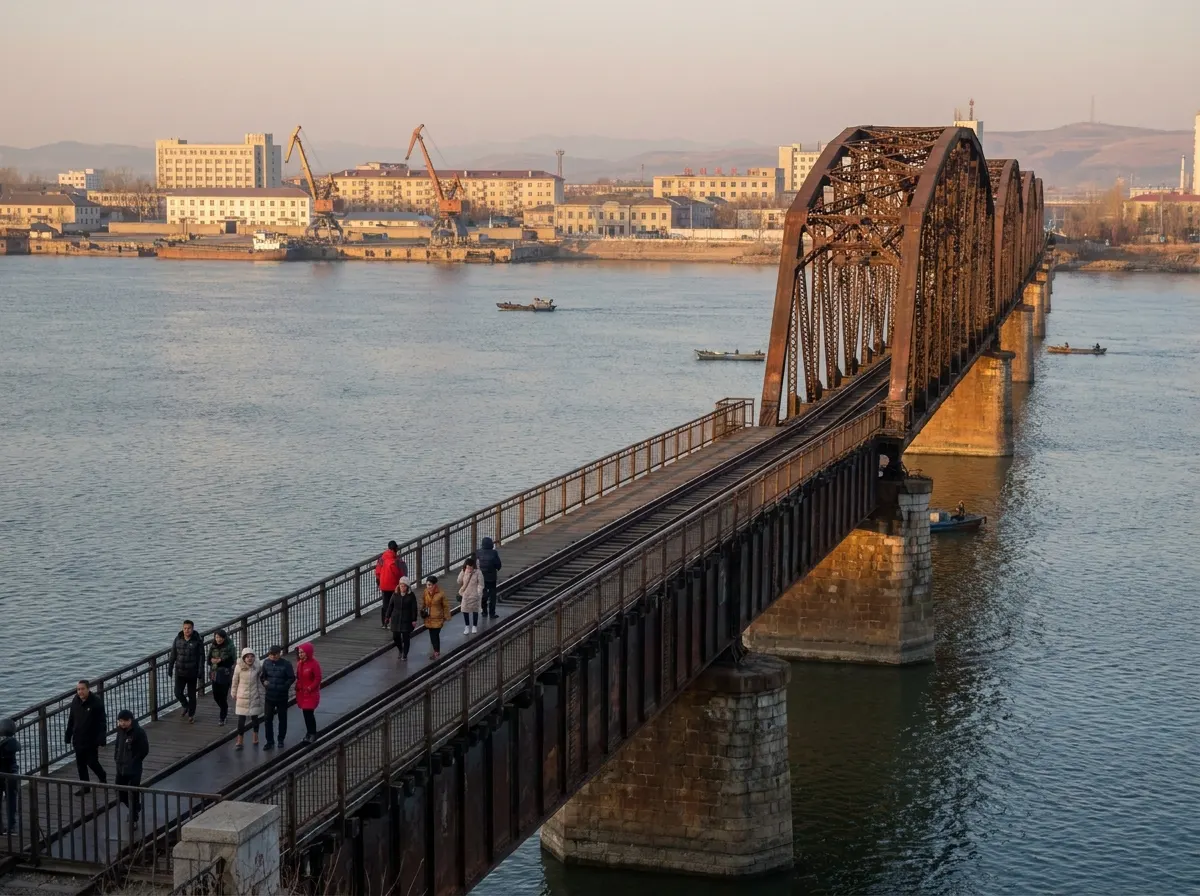
The Yalu River Broken Bridge (鸭绿江断桥, Yālù Jiāng Duàn Qiáo) is the single most important sight in Dandong and the image that defines the city in Chinese minds. It is a 944-meter steel truss bridge originally completed in 1911 by the Japanese during their occupation of Korea, designed to carry rail and road traffic across the Yalu. On November 8, 1950, during the Korean War, United States Air Force B-29 bombers dropped 600 tons of bombs on the Yalu bridges. The bombs destroyed the Korean half of the older bridge, leaving four spans of twisted steel dangling into the river. The Chinese half survived. After the war, the Chinese government decided to leave the bridge exactly as it was: a permanent war memorial, a deliberate ruin, a monument to what China calls the War to Resist US Aggression and Aid Korea (抗美援朝). The North Korean side was dismantled — only the piers remain, visible from the Broken Bridge and from boats. The Chinese side was preserved, reinforced for safety, and opened to visitors. You walk 474 meters out over the river on the original steel deck, past shell holes in the girders, past anti-aircraft gun positions, past plaques explaining the bombing in Chinese and (sometimes) English. At the end, the bridge simply stops. Ahead of you is open water, then the North Korean shore. On the North Korean side, the bridge piers stand empty. A Chinese flag flies at the terminus. Practical details as of June 2026: Entry is ¥30. The bridge is open roughly 07:30-18:00 (hours shift seasonally). Allow 45-60 minutes. The walk out to the terminus is flat and easy. The best time to visit is late afternoon when the sun is behind you and the light on the North Korean bank is clear. Bring binoculars if you have them — you can see individual North Koreans on the far shore, the Sinuiju skyline, and the occasional truck or bicycle on the roads opposite. Photography is unrestricted on the bridge itself, though pointing long lenses directly at North Korean border guards is politely discouraged by Chinese staff. A note on tone: The bridge's interpretive material is entirely from the Chinese perspective. The bombing is described as an unprovoked American attack. The Chinese People's Volunteer Army is portrayed without ambiguity as a heroic defensive force. If you are American or from a country that fought on the UN side, the experience can be uncomfortable. That discomfort is part of the point. The Broken Bridge is not a neutral historical site — it is a Chinese war memorial with a clear point of view. Engaging with that honestly is more valuable than pretending it is not there.
How to see North Korea from Dandong: boats, bridges, and viewpoints?
There are four ways to look into North Korea from Dandong, each offering a different level of proximity and a different quality of encounter. 1. The Broken Bridge walk (¥30). The closest you can get on foot. The bridge terminus puts you roughly 200 meters from North Korean territory. You are looking at the western edge of Sinuiju — industrial buildings, a few apartment blocks, riverbank guard posts, and on clear days, people moving on bicycles or on foot. Bring binoculars. 2. Yalu River boat tours (¥50-120 depending on the operator and route). This is the closest approach. Small tourist boats depart from the docks near the Broken Bridge and motor upriver along the Chinese bank. The more adventurous operators — and the more expensive tickets — take you within 10-20 meters of the North Korean shore. You will see North Korean soldiers, workers, and children. Some wave; most ignore the boats. The boat operators know which sections of the river are safe for close approach and which are not. The standard route is 30-40 minutes. The extended route (about an hour, ¥100-120) goes further upstream where the river narrows and the views are more intimate. Negotiate the route before paying — not all operators go equally close. Do not wave too enthusiastically at North Koreans. Do not try to throw anything onto the shore. Do not shout political slogans. These are not just etiquette — they are legal requirements. Chinese boat operators are licensed and monitored. The Chinese government takes border security seriously. Obey your boat operator's instructions. 3. Yalu River Park promenade. Free. A long, landscaped riverbank path with benches, sculptures, and telescopes (¥2-5 for a few minutes). This is the relaxed way to observe: sit with a coffee or a beer, watch the river flow, and take in the surreal contrast between Dandong's neon-lit high-rises on one bank and Sinuiju's dark, low-rise skyline on the other. The park is busiest at dusk when the lights come on — Dandong's riverfront glows; Sinuiju stays largely dark. 4. Jinjiang Mountain summit pavilion. Free. A 20-minute climb from the park gate to the hilltop pavilion gives you a panoramic view of the Yalu River bend, Dandong, and Sinuiju. This is the best wide-angle view of the border. You can see the Friendship Bridge, the Broken Bridge, the river islands that shift nationality depending on water levels, and the farmland stretching inland on the North Korean side. A practical warning: The border situation can change. During periods of political tension between Beijing and Pyongyang, boat routes are shortened or suspended, access to certain viewpoints is restricted, and photography rules are enforced more strictly. Check with your hotel front desk for the current situation before booking boat tickets.
How to get to Dandong: flights, high-speed rail, and connections?
Dandong Langtou Airport (DDG) is about 13 km southwest of the city center and handles a limited number of domestic flights — primarily to Shanghai Pudong (2.5 hours, 2-3 flights per week), Beijing Capital (2 hours, 3-4 flights per week), and Yantai (1 hour, daily). The airport is small, with a single terminal, and flight cancellations are common in winter due to weather. A taxi from the airport to the city center costs ¥30-40. There is no metro; bus route 204 connects the airport to the downtown area (¥2, 40 minutes) but is Chinese-only. High-speed rail is how most visitors arrive, and it is the recommended approach. Dandong Railway Station (丹东站, Dāndōng Zhàn) is in the city center, a 10-minute walk from the Broken Bridge and the Yalu River. Direct G-class and D-class high-speed trains serve Shenyang (1.5 hours, ¥70-110 second class), Dalian (2 hours, ¥110-150), and Beijing (5.5 hours, ¥310-430, most trains require a transfer at Shenyang). Shenyang Taoxian International Airport (SHE) has far more flight options than Dandong's own airport and is only 1.5 hours away by HSR — fly into Shenyang and take the train to Dandong for maximum flexibility. From further afield: Dalian to Dandong is 2 hours by HSR (¥110-150). Harbin to Dandong is about 4 hours with a transfer at Shenyang. Changchun to Dandong is about 3.5 hours. There are also slow overnight trains (K-class) from Beijing (12 hours, hard sleeper ¥200-280) for travelers on a budget. Bus connections from Shenyang (3.5 hours, ¥60-80), Dalian (4 hours, ¥70-90), and Tonghua (3 hours, ¥50) are available but the HSR is faster, more comfortable, and similarly priced. Bus stations are Chinese-only environments. Buy HSR tickets on the 12306 app (Chinese) or Trip.com (English) 3-7 days ahead for peak periods. Dandong is not a heavily touristed city and tickets are usually available on the day of travel except during Chinese New Year and the October Golden Week.
How to get around Dandong: bus, taxi, DiDi, and walking?
Dandong is a compact, linear city stretched along the north bank of the Yalu River. The main tourist corridor — from the railway station to the Broken Bridge to the Yalu River Park — is about 3 kilometers long and entirely walkable. The city center is flat, the sidewalks are wide, and most of what you want to see is within a 30-minute walk of the station. Taxis are plentiful and cheap. Flagfall is ¥8 for the first 2.5 kilometers, then ¥1.8 per kilometer. A ride within the city center costs ¥8-15. Most drivers do not speak English; have your destination written in Chinese characters or show them on a map app. Metered taxis are generally honest — Dandong is not a city with a significant taxi-scam problem. DiDi works in English and accepts foreign credit cards; a ride across town costs ¥10-25. Dandong has no metro. The bus system (¥1-2 flat fare, routes numbered 101-303) covers the city but is useful for only two routes if you are a tourist: Bus 101 runs east-west along the riverfront from the railway station to the eastern suburbs, and Bus 213 goes to the Tiger Mountain Great Wall (40 minutes, ¥2, departs from the bus station near the railway station). Bus announcements and signage are Chinese-only. Pay with Alipay's transport QR code or exact change in cash. For the Tiger Mountain Great Wall (20 km east of the city), options are: Bus 213 from Dandong Bus Station (40 minutes, ¥2, every 20-30 minutes), a taxi (25 minutes, ¥40-50 one way — negotiate a round trip with waiting time for ¥100-120 total), or a DiDi (¥40-55 one way). If taking the bus, confirm with the driver that they are going to Hushan (虎山) — some 213 buses terminate earlier. For Fenghuang Mountain (50 km northwest), take a high-speed train from Dandong Station to Fengcheng East (凤城东, 15 minutes, ¥20-30 depending on train class), then a taxi from Fengcheng East station to the mountain entrance (15 minutes, ¥20-25). Total travel time: about 45 minutes each way. Walking is the best way to explore the city center. From the railway station, walk south on Shiwei Road (十纬路) for 10 minutes to the Broken Bridge. The Yalu River Park extends east and west from the bridge for several kilometers. Jinjiang Mountain is a 15-minute walk northwest from the station. The Memorial Hall is a 10-minute taxi or 30-minute walk from the station. Dandong is a walking city disguised as a driving city.
What are the top attractions in Dandong, ranked and described?
1. Yalu River Broken Bridge (鸭绿江断桥). ¥30. The defining sight. Walk 474 meters out over the river on the original 1911 steel deck to the severed terminus. Shell holes, anti-aircraft positions, a Chinese flag at the end. North Korea is 200 meters ahead. Allow 45-60 minutes. Go in the late afternoon for the best light and fewest tour groups. The adjacent Friendship Bridge — still in use — runs parallel 100 meters to the west; you will see the occasional train or truck crossing into North Korea. The contrast between the functional bridge and the broken one is the whole story of Dandong in two structures. 2. Memorial Hall of the War to Resist US Aggression and Aid Korea (抗美援朝纪念馆). Free, reservation required (book via the official WeChat mini-program or through your hotel front desk). China's primary Korean War museum, housed in a large complex on a hill overlooking the city. The exhibits cover the entire war from the Chinese perspective: the decision to intervene, the major battles (Chosin Reservoir, Heartbreak Ridge, Triangle Hill), the air war over MiG Alley, the armistice negotiations, and the postwar legacy. Tanks and artillery pieces sit in the outdoor plaza. A 53-meter memorial tower dominates the hilltop. The dioramas are elaborate, the tone is unambiguous, and the experience is genuinely instructive — this is how 1.4 billion people are taught to remember a war that most Americans prefer to forget. Allow 2-3 hours. The museum was fully renovated and reopened in 2021; the exhibits are modern and well-produced, though English labeling is limited. 3. Tiger Mountain Great Wall (虎山长城). ¥60. Twenty kilometers east of the city, this is the easternmost section of the Ming Great Wall — the point where the wall, built to defend against the Jurchen tribes to the north, terminates at the Yalu River. The restored section climbs steeply up Tiger Mountain, a 146-meter ridge with stone steps, watchtowers, and a narrow summit path with views across the river into North Korea. The climb is short but genuinely steep — the steps near the top are knee-high in places. Round trip: about 2 hours including the climb, descent, and time at the viewpoints. Below the wall, a riverside path leads to a stone marker inscribed "一步跨" (Yī Bù Kuà, "One Step Across") at the narrowest point of the Yalu — a ditch barely 5 meters wide where the North Korean bank is literally one stride away. The marker is partly a joke and partly not. 4. Yalu River Boat Tour. ¥50-120 depending on route and operator. The most visceral North Korea experience in Dandong. The boats depart from the docks near the Broken Bridge. The standard 30-40 minute route (¥50-80) motors upriver along the Chinese bank, giving you broad views of Sinuiju. The extended route (¥100-120, about an hour) goes further upstream where the river narrows and the boats come within 10-20 meters of the North Korean shore. You will see soldiers at guard posts, workers in fields, children on the riverbank, and the occasional North Korean boat. It is surreal and uncomfortable and unforgettable. Book through the ticket booths at the riverfront dock area; hotel front desks can also arrange tours. Morning tours have the calmest water; afternoon tours have better light for photography. 5. Jinjiang Mountain (锦江山). Free. A 100-hectare forested park on a hill in the city center, originally laid out as a temple garden and later expanded. Walking trails wind through pine and oak forest to a hilltop pavilion with a panoramic view of Dandong, the Yalu River, and Sinuiju. The park has a small zoo (free, but the animal conditions are poor — skip it if you are sensitive to that), flower gardens, and exercise areas where locals practice tai chi, square dancing, and shuttlecock kicking in the early morning. A gentle climb; 20-30 minutes to the summit. The best time is 06:00-08:00 when the park is full of local life. 6. North Korean Restaurants. Not a single attraction but an essential Dandong experience. These are restaurants operated by the North Korean government, staffed by North Korean women trained in Pyongyang, and decorated with DPRK propaganda posters. The food is North Korean-style cold noodles (平壤冷面, ¥25-35), barbecue (¥80-150 per person), and seafood. The waitresses perform live music — accordion, traditional Korean songs, and on some evenings, revolutionary opera numbers. It is one of the strangest dining experiences in China: North Korean state employees entertaining Chinese and foreign tourists with songs about the Great Leader while you eat naengmyeon. The most established restaurant is Pyongyang Koryo Restaurant (平壤高丽饭店) on Liuwei Road. Photos of the performers are generally discouraged. Tips are accepted. 7. Sinuiju Day Trip (by tour only). Chinese tour operators offer one-day group trips across the Friendship Bridge into Sinuiju, the North Korean city directly opposite Dandong. You need a Chinese tour group, a North Korean visa arranged by the operator, and a willingness to accept a tightly controlled experience — you will be escorted at all times, photography is restricted, and you will visit a statue of Kim Il-sung, a kindergarten performance, a cosmetics factory, and an art gallery. Cost: ¥600-900 per person as of June 2026. Not available to South Korean or American passport holders. Not possible to arrange independently — you must go through a licensed Chinese tour operator. The experience is fascinating and deeply uncomfortable in equal measure. I found the kindergarten performance — five-year-olds playing accordions with fixed, professional-grade smiles — to be the single most unsettling thing I have ever seen in China. 8. Wulong Mountain Hot Springs. ¥80-120. Twenty-five kilometers north of the city, these natural hot springs in a wooded valley are a local weekend escape. The public area has outdoor pools of varying temperatures, saunas, and a rest area. The water is mineral-rich and genuinely hot (42-48°C). Popular with local families; almost no foreign visitors. A taxi from the city costs ¥60-80 one way. Bring your own towel and toiletries — the provided ones are basic.
Where to stay in Dandong: neighborhoods and typical prices?
The riverfront area near the Broken Bridge is the best base for tourists. This is the area along Yalu River Park between the railway station and the bridge, roughly bounded by Shiwei Road (十纬路) to the north and the river to the south. Hotels here have river views and walking access to the Broken Bridge, the boat docks, and the riverside promenade. Mid-range options include the Zhonglian Hotel (中联大酒店, ¥250-400, river-view rooms from ¥350) and the Atour Hotel Dandong Yalu River (¥300-450). The Crowne Plaza Dandong (¥500-800) is the city's top international-brand hotel with the best river-view rooms and an English-speaking front desk. Budget hotels cluster around the railway station (¥120-200). The area around Dandong Railway Station has the densest concentration of budget and mid-range chain hotels — Home Inn (如家, ¥120-180), 7 Days Inn (7天, ¥100-160), Hanting (汉庭, ¥150-220) — all functional and clean, though street-facing rooms pick up station noise. This area is convenient for arrivals and departures, and the Broken Bridge is a 10-minute walk south. For backpackers, Dandong's hostel scene is small. The Dandong Yalu River International Youth Hostel near the Broken Bridge has dorm beds at ¥50-70 and is the most established option. A handful of guesthouses near Jinjiang Mountain offer basic private rooms at ¥80-120. A note on hotel registration: Every hotel in China must register foreign guests with the Public Security Bureau. Dandong, as a border city, has additional security requirements. Some budget hotels and guesthouses are not licensed to accept foreigners. Always confirm foreign-guest acceptance when booking — Trip.com has a filter for this. Hotel staff in Dandong will photocopy your passport and visa and may also register your entry with the border police. This is normal and required; cooperate politely.
What to eat in Dandong: North Korean cuisine, seafood, and local specialties?
Dandong's food culture is a three-way collision of Liaoning Chinese cooking, Korean traditions, and the Yellow Sea. It is the best place in China to eat North Korean food — not South Korean, not Chinese-Korean, but Pyongyang-style cuisine served in state-affiliated restaurants — and the local seafood is outstanding. Here is what to eat, with Chinese and pinyin because you will need to point: Pyongyang cold noodles (平壤冷面, Píngrǎng lěngmiàn). Buckwheat noodles in a cold, tangy, slightly sweet beef broth with slices of beef, pear, cucumber, and a hard-boiled egg. The broth is icy — served with actual ice chips in summer — and the noodles are chewy, almost elastic. This is North Korea's national dish and the Dandong version is excellent. ¥25-35 at the North Korean restaurants; ¥15-20 at local Korean-Chinese spots. Pyongyang Koryo Restaurant (平壤高丽饭店) on Liuwei Road serves the definitive version. Yellow Sea seafood. Dandong sits where the Yalu River meets the Yellow Sea, and the seafood is the best in Liaoning. Sea cucumber (海参, hǎishēn), abalone (鲍鱼, bàoyú), prawns (大虾, dàxiā), clams (蛤蜊, gélí), and sea urchin (海胆, hǎidǎn) are the local stars. The seafood restaurants along the riverfront and in the old city serve tanks of live seafood — you point at what you want, they weigh it, and 20 minutes later it is on your table. A seafood meal for two with a variety of dishes runs ¥150-250. Yujing Seafood Restaurant (裕景海鲜楼) near the Broken Bridge is a reliable mid-range option with picture menus. Korean barbecue (韩式烤肉, Hánshì kǎoròu). Dandong has a large ethnic Korean population and the Korean barbecue here is more northern, more pork-heavy, and less sweet than the Seoul-style BBQ you may know. The pork belly (五花肉, wǔhuāròu, ¥38-58 per portion) grilled at your table and wrapped in lettuce with raw garlic, chili paste, and fermented soybean paste is the classic order. Korean-run restaurants cluster in the area around Liuwei Road and in the Korean enclave near the eastern end of the riverfront. Dandong strawberries (丹东草莓, Dāndōng cǎoméi). Dandong is famous across China for its strawberries, grown in greenhouses in the surrounding countryside. They are large, intensely sweet, and available from December through May, with the peak in March-April. A kilo costs ¥20-40 depending on the season. The best are sold at the morning markets — the Dandong Farmers Market (丹东农贸市场) near the railway station is the easiest to find. Dandong chestnuts (丹东板栗, Dāndōng bǎnlì). Chestnuts from the hills around Dandong are another local trademark — smaller and sweeter than European chestnuts, roasted over charcoal and sold in paper bags (¥15-20 per bag) from street vendors in autumn and winter. The smell of roasting chestnuts on the riverfront on an October evening is one of Dandong's most specific pleasures. Spicy stir-fried squid (辣炒鱿鱼, là chǎo yóuyú). Squid from the Yellow Sea, stir-fried with chili, garlic, green peppers, and onion. A Dandong bar snack and street-food staple. ¥28-48 at most restaurants. For vegetarians: Dandong is somewhat easier than other Chinese cities because Korean cuisine includes vegetable-forward dishes. Bibimbap (石锅拌饭, shíguō bànfàn — stone pot mixed rice with vegetables, ¥25-35) is widely available and naturally vegetarian if you ask for no meat. Cold noodles can be ordered without beef. Korean vegetable pancakes (蔬菜煎饼, ¥18-25) are another good option. The phrases "wǒ chī sù" (我吃素, I eat vegetarian) and "bùyào ròu" (不要肉, no meat) remain essential. A printed vegetarian card in Chinese is recommended.
What are good 1-day, 2-day, and 3-day itineraries for Dandong?
One-day sprint: Start at the Broken Bridge (¥30) at 08:00 when it opens and the light is clean. Walk the full length, photograph the terminus, and spend time looking at Sinuiju across the water. By 09:30, take a boat tour from the adjacent dock (¥80-120, 40-60 minutes) for the close approach to the North Korean shore. Midday: lunch at a North Korean restaurant — Pyongyang cold noodles and Korean barbecue at Pyongyang Koryo Restaurant (¥80-120). Afternoon: visit the Memorial Hall of the War to Resist US Aggression and Aid Korea (free, 2 hours — book ahead). Late afternoon: climb Jinjiang Mountain (free, 30 minutes) for the panoramic border view. Walk the Yalu River Park promenade at dusk, dinner at a riverfront seafood restaurant (¥100-150), and then walk the riverfront again — the contrast between Dandong's neon-lit buildings and Sinuiju's near-total darkness is the city's most powerful image. Two-day plan: Day 1 as above. Day 2: Morning trip to Tiger Mountain Great Wall (¥60). Take an early bus or DiDi to arrive by 08:00 before the tour groups. Climb the wall (1.5-2 hours including the summit and the "One Step Across" marker). Return to the city by midday. Afternoon: explore the old city lanes around Liuwei Road and the Korean district — small shops selling North Korean stamps, ginseng, and liquor, Korean bakeries, and tea houses. Late afternoon: Wulong Mountain Hot Springs (¥80-120) for a soak. Evening: a second dinner at a different North Korean restaurant, or a casual seafood meal at one of the open-air riverfront places. Three-day plan adds: Day 3: Fenghuang Mountain (¥80). Take the 15-minute HSR from Dandong to Fengcheng East (¥20-30), then a taxi to the mountain entrance. The hike is a serious half-day commitment — steep stone steps, chain-assisted scrambles, and sections of glass walkway bolted to the cliff face. The views of the surrounding Liaoning hills are spectacular. Return to Dandong by late afternoon. Alternative Day 3 if hiking is not your thing: a Sinuiju day trip (¥600-900, book through a Dandong tour agency at least 3 days ahead). The Sinuiju trip is a dense, controlled, exhausting experience — you will be back by 17:00 with a head full of images you will spend weeks processing. Dandong can also be the start or end of a longer Liaoning loop: Shenyang (2 days) → Dandong (2 days) → Dalian (2 days), connected by HSR (Shenyang-Dandong 1.5h, Dandong-Dalian 2h). This loop covers Liaoning's three most distinct cities — the provincial capital with its imperial Qing history, the border city, and the coastal former Russian/Japanese concession port.
What is the monthly weather and the best time to visit Dandong?
January: -12 to -3°C, dry, sunny, brutal wind off the river. The coldest month. The Yalu freezes in sections. Tourist numbers are at their lowest and hotels are cheapest, but outdoor sightseeing is genuinely unpleasant — the river wind cuts through any coat. The Broken Bridge is open but the boat tours are suspended. February: -8 to 2°C, still cold, still windy. The Spring Festival (dates vary) brings domestic tourists and closed businesses. The riverfront ice festival, if held, is a bright spot. Most North Korean restaurants close for at least part of the holiday. March: 0 to 10°C, transitional. The ice breaks, the wind eases, and the first hints of spring appear. Dandong strawberries are at their peak — this is the best month for strawberry buying. Still chilly, especially in the mornings. April: 6 to 16°C, spring proper. Cherry and apricot blossoms in Jinjiang Mountain. The riverfront is walkable without heavy coats. A good month. Avoid the Qingming Festival weekend (early April) when domestic tourism spikes regionally. May: 12 to 22°C, the start of the best season. Warm but not hot, green hills, clear air, and the boat tours are running at full schedule. The Labour Day holiday (first week of May) is a problem — avoid it. The rest of May is excellent. June: 17 to 26°C, warm and pleasant. The boat tours are in peak operation. The Dragon Boat Festival (usually June) brings dragon boat races on the Yalu. Afternoon thunderstorms are common but pass quickly. This is one of the two best months to visit. July: 21 to 28°C, humid, rainy. The monsoon season brings heavy downpours and occasional flooding along the river. The boat tours may be suspended during bad weather. Still manageable if you pack rain gear and check the forecast. August: 21 to 29°C, the hottest and most humid month. River fog can reduce visibility — bad for border-viewing. Thunderstorms are frequent. The tourism infrastructure is less affected by heat than in southern cities, but August is not ideal. September: 14 to 24°C, the second great month. The humidity drops, the skies clear, and the hills begin to turn gold and red. The boat tours are still running. The Mid-Autumn Festival (dates vary) is celebrated with mooncakes and lanterns along the river. This is the best month for photography. October: 6 to 17°C, crisp and clear. Autumn foliage on Jinjiang Mountain and at Tiger Mountain is at its peak. The boat tours run through mid-October, then wind down. Avoid the National Day Golden Week (first week of October) — Dandong fills with domestic tourists and hotel prices double. The second half of October is nearly perfect: cool, clear, uncrowded, and the mountains are at their most beautiful. November: -2 to 8°C, cold sets in. The boat tours end. The riverfront is quiet and bleakly beautiful. Hotel prices drop. The Dandong chestnut vendors are at their busiest. December: -10 to -2°C, full winter. The river freezes, the wind howls, and the city hunkers down. The Chinese New Year travel rush is still a month away, so the city is quiet. Only worth visiting if you specifically want to see the frozen Yalu and do not mind the cold.
What practical information do I need: visa, money, internet, and language?
Visa-free entry: As of June 2026, citizens of 45+ countries can enter China visa-free for up to 30 days. Confirm your eligibility with the nearest Chinese consulate before booking. Dandong is open to foreign tourists under the same visa rules as the rest of China, but as a border city, police registration is monitored more closely. Always carry your passport — random document checks by police are more common in Dandong than in inland Chinese cities, especially near the river and the bridges. Money: CNY (¥). ¥100 ≈ US$14 as of June 2026. Alipay and WeChat Pay work at hotels, restaurants, and larger shops. Link a foreign Visa or Mastercard before traveling. Cash is more important in Dandong than in most Chinese cities — the North Korean souvenir stalls near the Broken Bridge, the boat tour operators, the small street-food vendors, and the rural restaurants near Tiger Mountain often do not accept mobile payment from foreign accounts. Carry ¥300-500 in cash for a weekend. ATMs at ICBC and Bank of China branches near the railway station accept foreign cards. Tipping is not customary. Internet and VPN: China blocks Google, Facebook, Instagram, WhatsApp, YouTube, X, and most Western sites. Install and test a VPN before arriving. A Chinese SIM card (¥100-200 for 30 days with 30-50 GB) from China Mobile or China Unicom is better than an eSIM for Dandong because you need a Chinese phone number for DiDi, attraction bookings, and the occasional restaurant queuing system. The signal near the North Korean border can be inconsistent — North Korean jamming and interference are documented but sporadic. Language: Mandarin is the standard. English is extremely rare — expect it only at the Crowne Plaza front desk and nowhere else. The local Northeastern dialect (东北话, Dōngběi huà) has a distinctive accent and vocabulary but is mutually intelligible with standard Mandarin. Korean is spoken by the ethnic Korean minority and by the staff at the North Korean restaurants. A translation app (Pleco, Baidu Translate, Microsoft Translator) is essential. Save your hotel name and address in Chinese. Useful phrases: "nǐ hǎo" (你好, hello), "xièxie" (谢谢, thank you), "duōshǎo qián" (多少钱, how much), "qù Duàn Qiáo" (去断桥, go to the Broken Bridge), "wèishēngjiān zài nǎlǐ" (卫生间在哪里, where is the bathroom?).
What tips, warnings, and things should I avoid in Dandong?
1. PASSPORT ALWAYS. Dandong is a border city with elevated security. Police spot-checks of ID documents are routine, especially near the river, the bridges, and the boat docks. A foreigner without their passport near the border is going to have an unpleasant conversation. Carry your physical passport, not a copy. 2. DO NOT TRY TO CROSS THE BORDER. This sounds obvious, but the proximity to North Korea makes some people lose their judgment. The Yalu River is a militarized border. Attempting to swim, wade, or boat across is treated as an illegal border crossing by both Chinese and North Korean authorities. The consequences are severe. The "One Step Across" marker at Tiger Mountain is a tourist photo op, not an invitation. 3. PHOTOGRAPHY RULES ARE REAL. On the Broken Bridge and from the riverfront, photography of the North Korean side is unrestricted from the Chinese side. On boat tours, photography is generally fine but do not use a telephoto lens to photograph North Korean soldiers directly — boat operators will stop you. Inside North Korean restaurants, do not photograph the performers or the interior without explicit permission. The Sinuiju day trip has strict photography rules that will be explained to you by your guide. 4. DO NOT BRING NORTH KOREAN CURRENCY HOME. It is technically illegal to take North Korean won out of North Korea. The souvenir stalls near the Broken Bridge sell North Korean banknotes as curiosities (¥20-50 per note), and it is generally tolerated in small quantities for personal use — but do not buy large amounts and do not try to resell them. 5. WINTER IS NO JOKE. Dandong winter is not the dry, still cold of Beijing. The wind off the Yalu River is fast, damp, and penetrating. Temperatures of -10°C feel like -20°C with the windchill. The Broken Bridge walk in winter is genuinely punishing — the bridge deck is exposed and the river wind is funneled through the steel trusses. Dress in layers, wear a windproof outer shell, and bring hand warmers. 6. THE NORTH KOREAN RESTAURANT EXPERIENCE IS COMPLEX. You are eating in an establishment run by a totalitarian state, staffed by women who cannot leave, and decorated with propaganda for a regime that runs political prison camps. The food is good and the experience is unique, but it is not a neutral cultural exchange. I went, I ate, and I felt deeply uncomfortable throughout. This is not a reason not to go — it is context for what you are participating in. 7. AVOID BRINGING SOUTH KOREAN MATERIALS. If you are traveling with a South Korean passport, a K-pop magazine, a Samsung phone with Korean-language settings, or anything visibly South Korean, be discreet near the border zones and at the North Korean restaurants. This is not a legal restriction from the Chinese side, but it can cause awkwardness and, at the North Korean restaurants, potential problems for the staff. 8. THE SINUIJU DAY TRIP IS NOT CASUAL TOURISM. If you take the day trip into North Korea, understand what you are doing. You will be taken to a statue of Kim Il-sung and expected to bow. You will watch a propaganda performance by very young children. You will see a curated, sanitized version of North Korea designed to extract hard currency from visitors. Your tour fee (¥600-900) goes to the North Korean state. I took the trip and I am still not sure I should have. Make your own decision, but make it informed. 9. FLIGHT CANCELLATIONS ARE COMMON. Dandong Airport is small, its instrument landing system is basic, and winter fog and snow regularly cancel flights. If you are flying out of Dandong to make a connection, build in a buffer day. Taking the HSR to Shenyang and flying from there is more reliable. 10. A practical positive: Dandong is one of the safest cities in China. The elevated police presence that comes with being a border city means street crime is nearly nonexistent. You can walk anywhere at any hour. The main danger is the winter cold, not other people.
What are the emergency contacts and health information for Dandong?
Police: 110. Ambulance: 120. Fire: 119. Traffic accident: 122. These numbers work from any phone. English-speaking operators exist in theory; in practice, Mandarin or the local Northeastern dialect is standard. Your hotel front desk is your best first call in any emergency — they can translate and coordinate. Hospitals: Dandong Central Hospital (丹东市中心医院) on Jinshan Street is the city's main general hospital. It treats foreign patients but English-speaking staff are rare — bring a translation app or your hotel staff. Dandong First Hospital (丹东市第一医院) is a secondary option. For serious medical emergencies, evacuation to Shenyang (1.5 hours by HSR, Shengjing Hospital has an international wing with English-speaking doctors) or Beijing is recommended. Comprehensive travel insurance covering medical evacuation is essential — Dandong is a small city with limited international-standard medical care. Tap water is not potable. Bottled water is cheap (¥2-3 per bottle) and available at convenience stores across the city. Most hotels provide complimentary bottled water and an electric kettle. Air quality in Dandong is relatively good by Chinese standards. The annual average AQI is roughly 60-80, better than Shenyang or Beijing, helped by the coastal air and the Yalu River corridor. Winter inversions can push the AQI above 120; spring sandstorms from Inner Mongolia occasionally affect the city (April-May). The air near the riverfront is consistently the best in the city. Check aqicn.org for current readings. Border security note: If you lose your passport in Dandong, report it to the police immediately at the nearest police station and contact your embassy or consulate. The police response to a lost passport in a border city is more urgent than elsewhere — you will be questioned about how and where you lost it. Cooperate fully and remain calm.
How Dandong fits into a larger China itinerary?
Dandong works as a 2-3 day stop on a northeastern China loop or as a standalone add-on to a Shenyang or Dalian trip. The most natural combination is the Liaoning triangle: Shenyang (2-3 days for the Imperial Palace, Marshal Zhang's Mansion, and the 9.18 Memorial Museum) → Dandong (2 days) → Dalian (2-3 days for the coast, the Russian and Japanese colonial architecture, and the seafood). All three are connected by HSR, the distances are manageable, and the contrast between them is strong — Qing imperial Shenyang, border-city Dandong, and cosmopolitan Dalian give you three different Chinas in one week. For a broader northeastern itinerary: Harbin (2-3 days, best in winter for the ice festival) → Changchun (1-2 days, the Puppet Emperor's Palace) → Shenyang (2 days) → Dandong (2 days) → Dalian (2 days). This is a two-week northeast China immersion that few foreign tourists do. Dandong can also be a 2-day side trip from Dalian. Dalian to Dandong is 2 hours by HSR (¥110-150). Take the morning train, spend two days in Dandong, return on the evening of the second day. This is the lowest-effort way to add Dandong to an existing Dalian trip. Dandong does not connect naturally to Beijing-Xi'an-Shanghai. The HSR journey from Beijing is 5.5 hours, and from Shanghai it requires a transfer at Shenyang (8+ hours total). If your itinerary is Beijing → Xi'an → Shanghai → Guilin, Dandong does not fit. It belongs on a trip specifically built around the northeast, or as a deliberate detour for travelers who prioritize the unusual over the efficient.
What is it like eating in a North Korean restaurant in Dandong?
The North Korean restaurants in Dandong are one of the strangest dining experiences available in China and one of the only glimpses of North Korean state culture that most foreigners will ever get. They are officially operated by the North Korean government — the Pyongyang Koryo Restaurant (平壤高丽饭店), Ryugyong Restaurant (柳京饭店), and several smaller establishments — and they function as hard-currency earners for the DPRK, staffed by North Korean women who have been trained in Pyongyang and work in China on multi-year postings. The physical setting is surreal. The decor features North Korean propaganda posters, portraits of Kim Il-sung and Kim Jong-il (hung together, as required), and landscapes of Mount Paektu. A flat-screen TV plays North Korean state television — musical performances, revolutionary operas, news broadcasts with the distinctive declaratory tone of Korean Central Television. The waitresses wear identical traditional Korean dresses (choson-ot) and move with the precise, synchronized body language of people who have been trained in formal hospitality. The food is genuine North Korean cuisine, distinct from both South Korean cooking and Chinese-Korean fusion. Pyongyang cold noodles (平壤冷面, ¥25-35) are the signature dish: buckwheat noodles in icy beef broth, topped with sliced beef, pear, cucumber, half a hard-boiled egg, and a dab of mustard paste. Korean barbecue (¥80-150 per person) is grilled at your table. The seafood — Yellow Sea prawns, clams, and fish — is excellent and sourced locally. The beer is Taedonggang (大同江啤酒), a North Korean brand brewed in Pyongyang and exported to Dandong (¥15-25 per bottle). It is genuinely good — a crisp, clean lager. At some point during the meal, the waitresses perform. Accordion music, traditional Korean folk songs, and — on some evenings — revolutionary opera excerpts. The performances are polished, technically skilled, and delivered with the fixed, radiant smiles of people who have been trained to perform for foreign audiences since childhood. It is not a casual restaurant gig. It is a state performance. The ethical discomfort is part of the experience. These restaurants are economic operations of the North Korean state. The waitresses are unable to leave their posting, unable to interact freely with Chinese society, and are repatriated to North Korea at the end of their assignment. The money you spend goes to the Pyongyang government. I ate there. The food was good. The discomfort did not go away. You will need to make your own decision about whether to participate.
How does Dandong handle the winter cold and what should I expect?
Dandong is one of the colder cities in northeastern China, with winter temperatures regularly dropping to -10 to -20°C in January and February. The cold is amplified by the river wind — the Yalu River valley channels north winds straight into the city, and the wind chill at the Broken Bridge and riverfront in winter is noticeably worse than inland cities at the same latitude. For winter visitors, preparation is essential: a heavy parka rated to -25°C or below, a windproof outer shell, thermal base layers (merino wool or synthetic), insulated waterproof boots (the riverfront paths can be icy), insulated gloves, a balaclava or neck gaiter, and a hat that covers the ears. Layering is more important than a single heavy coat — indoor heating is aggressive (25-30°C in hotels, restaurants, and the museum) and you will cycle between cold outdoors and hot indoors constantly. The winter season has advantages: the Broken Bridge and riverfront take on a stark, monochromatic beauty, the Tiger Mountain Great Wall in snow is one of China's most atmospheric winter scenes, the city is uncrowded, hotels drop to ¥150-250 from summer rates, and the frozen river surface occasionally allows unusual views toward North Korea. The disadvantages: boat tours may suspend in icy conditions, the morning walk to the riverfront is brutal, the museum is one of your main indoor refuges, and any photography outside requires weather-sealed equipment or careful protection. Dandong in winter is not for everyone. For travelers who have not experienced extreme cold before, January and February should be avoided — choose April, May, September, or October instead. For travelers who enjoy winter travel, the city has a particular atmosphere: snow on the bridges, ice floes in the river, the Korean War Memorial visible across the cold air, and the restaurants serving the city's hot specialties — Korean kimchi jjigae, lamb soup, and the regional Dandong hot pot. With proper preparation, winter Dandong is a memorable trip. Without it, you will be miserable.
What are the practical logistics of getting around Dandong and what should I know about the metro and taxis?
Dandong is small enough that most visitors rarely need public transport beyond the Broken Bridge, the riverfront, and the railway station. The city has a single metro line (Line 1) running east-west from the railway station through the city center to the riverfront and beyond to the Korean War Memorial area — ¥2-4 per ride, English signage, and a clean, reliable system. For most destinations, however, taxis and DiDi are more practical. Taxis are abundant and metered (¥8 base fare for the first 3 km, ¥2 per additional km, ¥1 fuel surcharge). DiDi (the Chinese Uber equivalent) works in English if your phone is set up properly. Most drivers do not speak English — have your destination written in Chinese characters. Show the driver the address on your phone (Apple Maps works better than Google Maps in Dandong). For Tiger Mountain Great Wall, the public bus 213 from the railway station is the cheapest option (¥2, 40 minutes, every 20-30 minutes). Confirm with the driver or a local that the bus is heading to Hushan (虎山). A taxi costs ¥40-50 one-way (25 minutes), and a DiDi costs ¥40-55. Round-trip with waiting time for a taxi is typically ¥100-120. For Fenghuang Mountain, the public bus from the railway station (¥15, 1 hour) or a DiDi (¥80-100 one-way, 1 hour) are the standard options. The riverfront promenade from the Broken Bridge westward to the Korean War Memorial is walkable and pleasant — about 3 km, paved, with benches and views. Cycling is also popular — hotels often have bikes for guests or can point you to bike rentals (¥20-30 per day). The Yalu River cruise boats dock near the Broken Bridge; tickets are sold on the spot (¥80-120 for the standard 1-hour tour, more for extended routes). Boats run from approximately 09:00 to 16:00 in season, weather permitting. One practical note: Dandong sits at the eastern end of Liaoning province, and travel onward to other northeastern cities is straightforward via HSR from Dandong Railway Station. Trains to Shenyang take 1.5 hours, Dalian takes 2-2.5 hours, and Beijing takes 5-6 hours. Book HSR tickets on Trip.com (English) or 12306 (Chinese only) 1-7 days ahead. The Dandong Railway Station is centrally located near the New Bund commercial area, with hotels and restaurants within walking distance.
Top attractions
Yalu River Broken Bridge (鸭绿江断桥, Yālù Jiāng Duàn Qiáo)
The half-destroyed steel bridge bombed by US forces in November 1950 during the Korean War. You walk out to the severed midpoint — Chinese flags on one side, twisted steel on the other, North Korea visible 200 meters ahead. ¥30.
Wikimedia Commons · CC-BY-SA
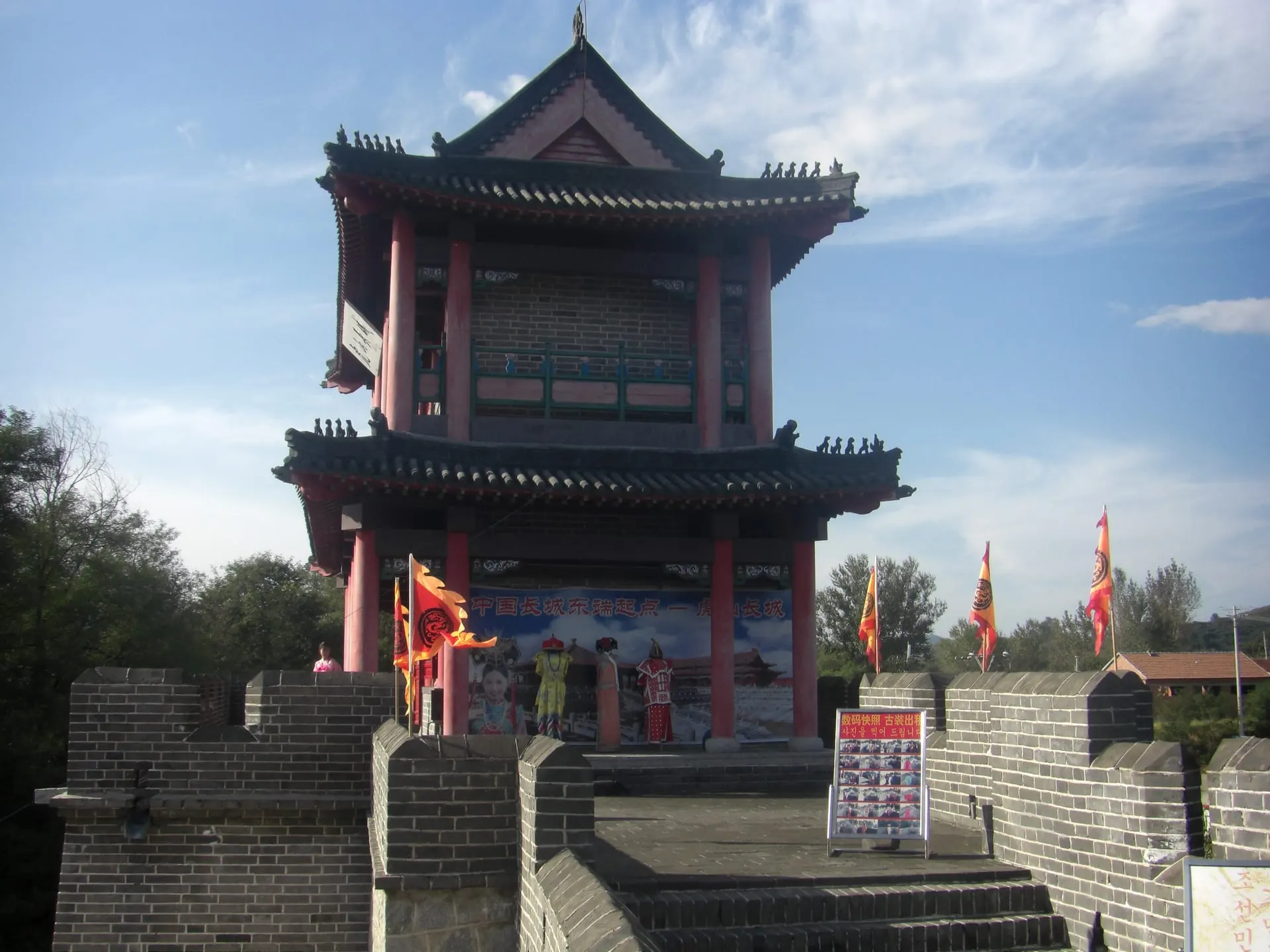
Tiger Mountain Great Wall (虎山长城, Hǔshān Chángchéng)
The easternmost section of the Ming Great Wall, 20 km east of the city. Steep stone steps climb a forested ridge with views of the Yalu River and North Korean farmland across it. ¥60.
Wikimedia Commons · CC-BY-SA
Yalu River Park (鸭绿江公园, Yālù Jiāng Gōngyuán)
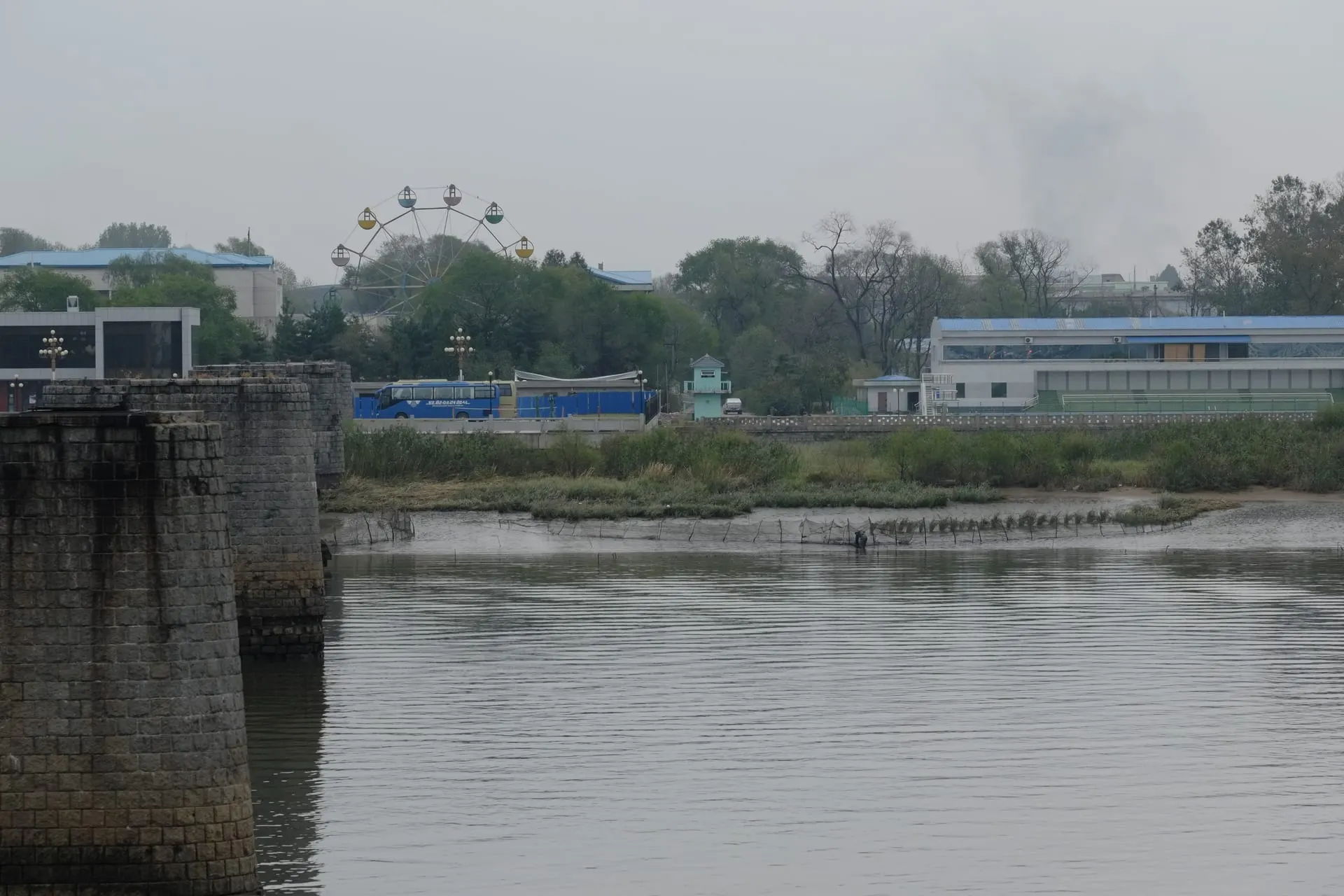
A long riverside promenade with benches, monuments, and direct views of Sinuiju (North Korea's fourth-largest city) on the opposite bank. Free. Best at sunset when the lights come on.
Wikimedia Commons · CC-BY-SA
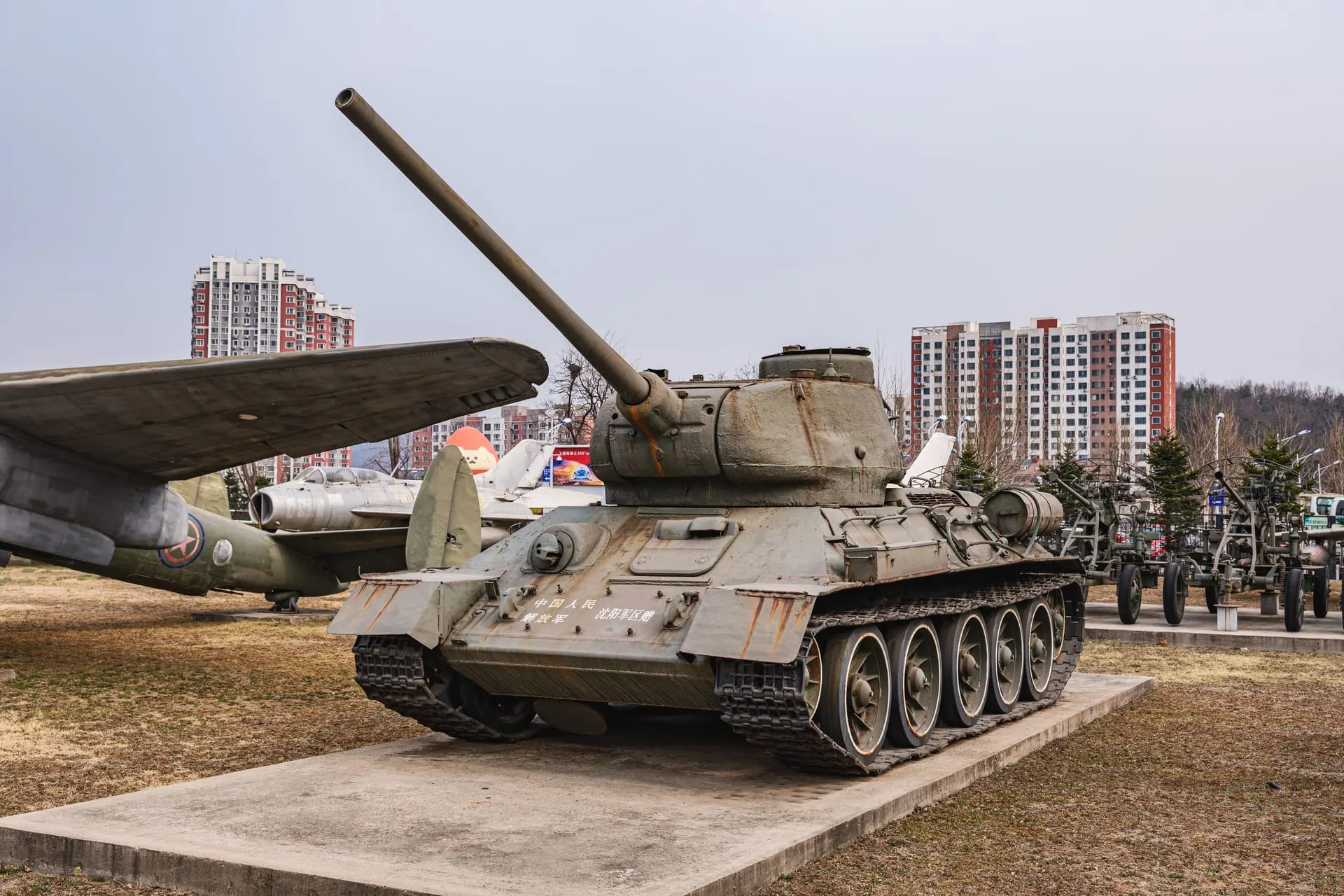
Memorial Hall of the War to Resist US Aggression and Aid Korea (抗美援朝纪念馆, Kàng Měi Yuán Cháo Jìniànguǎn)
China's main Korean War museum, reopened after extensive renovation. Tanks, aircraft, dioramas, and a 53-meter memorial tower. Free, reservation required. The exhibits are entirely from the Chinese/North Korean perspective — fascinating and instructive.
Wikimedia Commons · CC-BY-SA
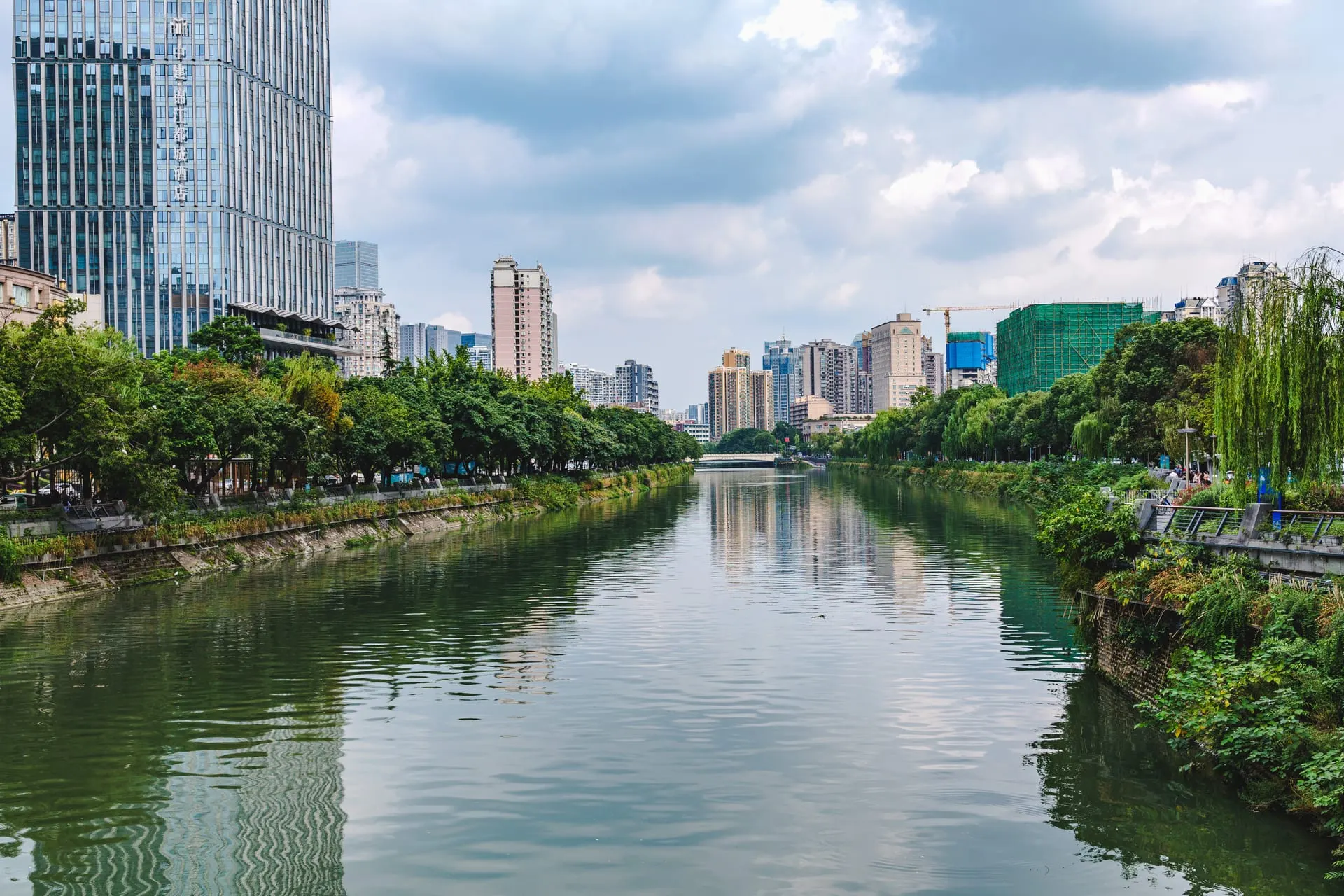
Jinjiang Mountain (锦江山, Jǐnjiāng Shān)
A forested hill park in the city center with pagodas, walking trails, a small zoo, and a pavilion at the summit with a panoramic view of Dandong and the Yalu River bend. Free. Popular with morning exercisers.
Wikimedia Commons · CC-BY-SA
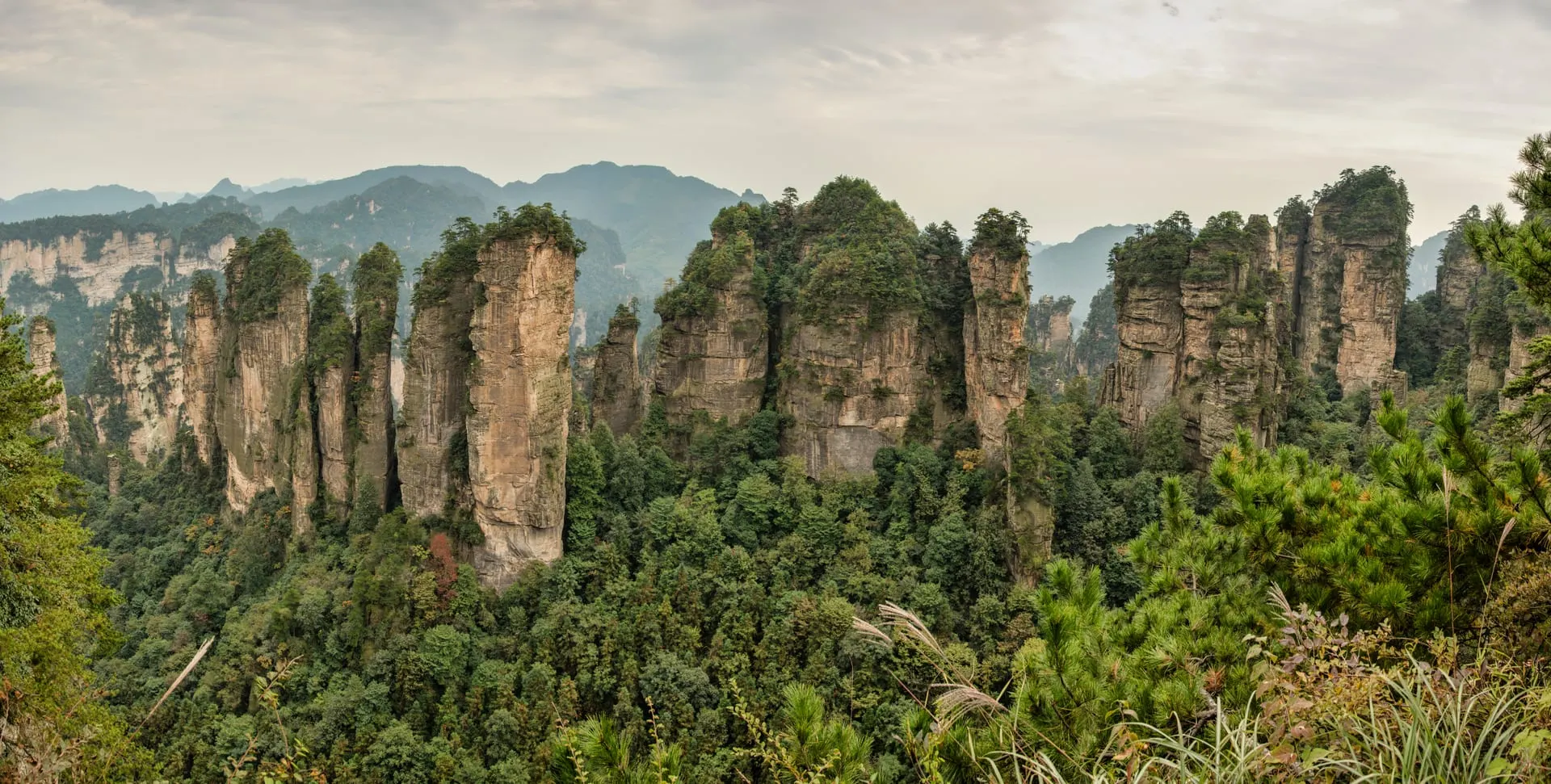
China-North Korea Friendship Bridge (中朝友谊桥, Zhōng Cháo Yǒuyì Qiáo)
The functional bridge alongside the Broken Bridge — still used for rail and limited road traffic between China and North Korea. You cannot walk on it, but it is visible from the Broken Bridge and the riverside park.
Wikimedia Commons · CC-BY-SA
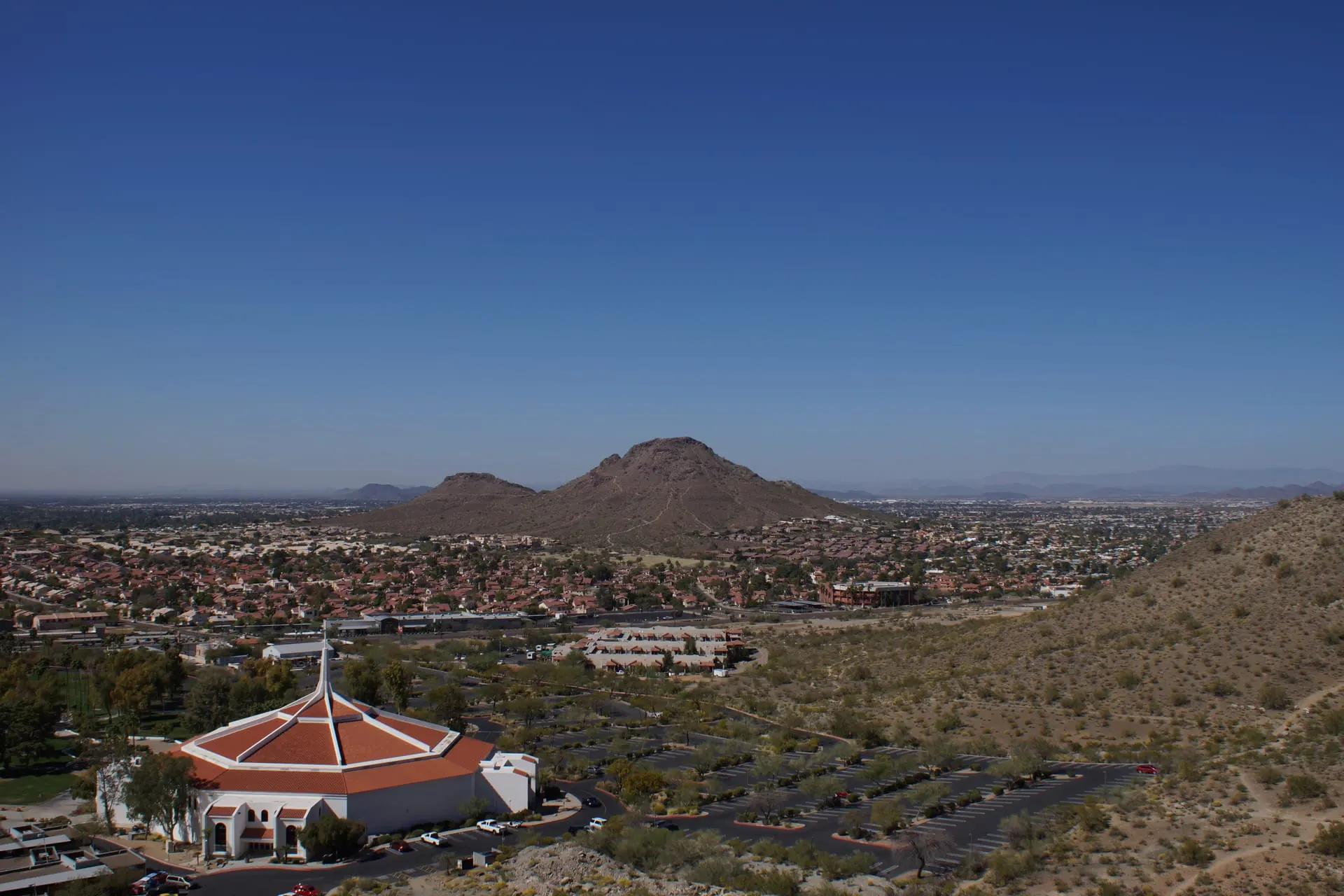
Fenghuang Mountain (凤凰山, Fènghuáng Shān)
A dramatic granite mountain 50 km northwest of Dandong with sheer cliffs, Taoist temples, glass walkways bolted to the rock face, and via ferrata-style sections. ¥80. A serious half-day hike — bring gloves for the chain-assisted sections.
Wikimedia Commons · CC-BY-SA
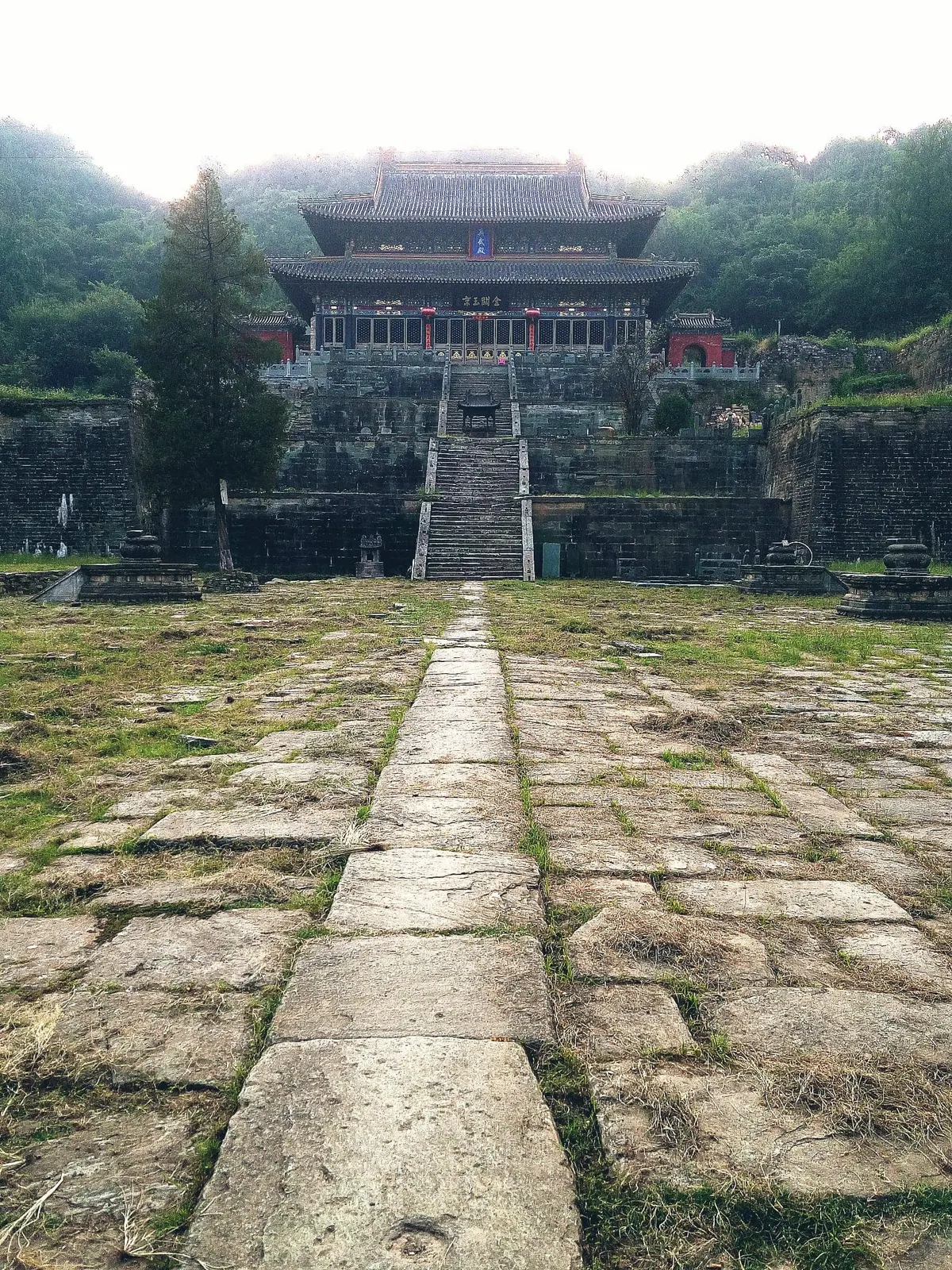
Wulong Mountain Hot Springs (五龙山温泉, Wǔlóng Shān Wēnquán)
Natural hot spring resort 25 km north of the city in the Wulong Mountain scenic area. Outdoor pools with mountain views, indoor bathing halls, ¥80-120 for the public area.
Wikimedia Commons · CC-BY-SA
STAY
Where to stay in Dandong
Pick a base that matches the trip you want — imperial-central for sightseeing, hutong belt for character, Chaoyang for nightlife, or Qianmen for budget.
Broken Bridge & Riverfront
The tourist core — bridges, boat docks, river views, and North Korean restaurants
#broken-bridge-riverfrontRailway Station Area
Convenient transport hub with budget chain hotels and the bus station for Tiger Mountain
#railway-station-areaJinjiang Mountain District
Quieter residential area with the city park, morning exercisers, and hilltop border views
#jinjiang-mountainLiuwei Road Korean Enclave
Ethnic Korean neighborhood with barbecue restaurants, bakeries, and the Pyongyang Koryo Restaurant
#liuwei-road-korean
ITINERARIES
Sample itineraries from Dandong
Three ready-made routes, from a 1-day imperial sprint to a 5-day deep dive. Copy the day-by-day plan and adapt to your own pace.
- 1 DAY
Dandong in One Day
A high-speed border blitz: the Broken Bridge, a Yalu River boat tour, North Korean lunch, the Korean War Memorial Hall, and a sunset riverfront walk.
- transit stops
- short trips from Shenyang
- efficient travelers
- Day 01
Morning
Broken Bridge (¥30) at 08:00 when it opens — walk to the terminus and photograph Sinuiju. Follow with a Yalu River extended boat tour (¥100-120, 1 hour) for close approach to the North Korean shore.
Afternoon
Lunch at Pyongyang Koryo Restaurant (¥80-120) for cold noodles and barbecue. Memorial Hall of the War to Resist US Aggression and Aid Korea (free, 2 hours, book ahead).
Evening
Climb Jinjiang Mountain (free, 30 min) for the border panorama. Walk the Yalu River Park promenade at dusk. Dinner at a riverfront seafood restaurant (¥100-150). End with the night view of dark Sinuiju across the river.
- 2 DAYS
Dandong in Two Days
Day one covers the city-center border sights; day two adds the Tiger Mountain Great Wall, Korean neighborhood exploration, and hot springs.
- weekend trips
- first-time visitors
- border and history focus
- Day 01
Morning
Broken Bridge (¥30) at opening + Yalu River boat tour (¥80-120).
Afternoon
North Korean lunch. Memorial Hall (free, 2 hours). Jinjiang Mountain climb at sunset.
Evening
Yalu River Park promenade. Riverfront seafood dinner (¥100-150). Night walk to see the dark Sinuiju skyline.
- Day 02
Morning
Early start to Tiger Mountain Great Wall (¥60) — take Bus 213 or DiDi, arrive by 08:00. Climb the wall (1.5-2 hours), visit the "One Step Across" marker.
Afternoon
Return to city. Explore Liuwei Road Korean enclave — Korean bakeries, shops selling North Korean stamps and ginseng. Late afternoon: Wulong Mountain Hot Springs (¥80-120).
Evening
Second dinner at a different North Korean restaurant, or casual seafood at open-air riverfront stalls.
- 3 DAYS
Dandong in Three Days
Two days of border sights plus a third day for Fenghuang Mountain hiking or the Sinuiju day trip into North Korea.
- long weekends
- outdoor enthusiasts
- deep border exploration
- Day 01
Morning
Broken Bridge (¥30) at opening + Yalu River boat tour (¥80-120).
Afternoon
North Korean lunch. Memorial Hall (free, 2 hours). Jinjiang Mountain climb.
Evening
Riverfront promenade. Seafood dinner.
- Day 02
Morning
Tiger Mountain Great Wall (¥60) early morning climb.
Afternoon
Korean enclave exploration, souvenir shopping near the Broken Bridge. Wulong Mountain Hot Springs (¥80-120).
Evening
North Korean restaurant dinner. Riverfront night walk.
- Day 03
Morning
Option A: Fenghuang Mountain (¥80) — HSR to Fengcheng East (15 min, ¥20-30), taxi to the mountain, half-day hike with via ferrata and glass walkways. Option B: Sinuiju day trip (¥600-900, book 3+ days ahead) — escorted tour into North Korea.
Afternoon
Continue Option A or B. Return to Dandong by late afternoon.
Evening
Farewell dinner at a riverfront restaurant. Final walk along the Yalu.
BUDGET
What a Dandong trip costs
Per-person, per-day costs across three spending tiers. Excludes international flights and visa fees.
| Line item | Backpacker | Mid-range | Luxury |
|---|---|---|---|
| Budget hotel / hostel dorm | $8 | $30 | $70 |
| Local restaurant meal | $3 | $8 | $20 |
| North Korean restaurant (full dinner) | $12 | $25 | $50 |
| Attraction tickets (per site) | $5 | $8 | $15 |
| Boat tour (Yalu River) | $7 | $12 | $17 |
| Local transportation (daily) | $2 | $5 | $12 |
| Sinuiju day trip (tour package) | $85 | $100 | $130 |
| Total per day | $122 | $188 | $314 |
$ USD per person per day, before international flights and visas. Last verified: Q3 2026.
STAY SAFE
Emergency contacts in Dandong
Save these three numbers before you board the plane. China uses different hotlines than most countries — there's no 911.
- POLICE
110
- AMBULANCE
120
- FIRE
119
- TOURIST HOTLINE
12301
- ENGLISH-SPEAKING ER
Dandong Central Hospital (丹东市中心医院) — limited English; for serious emergencies evacuate to Shenyang (1.5h by HSR)
Problems travelers hit in Dandong
- Why is my Alipay not working?You linked a foreign Visa or Mastercard to Alipay but every transaction is rejected at the merchant.
- My China visa was denied — what now?Your L visa application was refused at the Chinese consulate and your trip is in 2–4 weeks.
- My passport was lost or stolen in China — what do I do?Your passport is gone (theft or loss) and you're in mainland China without travel documents.
- Why can't I book on 12306 with my foreign card?You tried to book a high-speed rail ticket on 12306.cn and your foreign Visa/Mastercard is rejected at checkout.
- Why is my VPN not working in China?You arrived in China, opened your VPN, and it will not connect at all or connects but no traffic loads.
- Why can't I book a Tibet trip on my own?You try to book Lhasa flights and hotels yourself but the booking fails, or you're turned away at the Lhasa airport without a permit.
Book activities in Dandong
These are licensed tour operators and booking platforms we've vetted independently. Booking through these links may earn us a commission — see our affiliate disclosure. This never affects our editorial recommendations or the price you pay.
Frequently asked questions
Is Dandong worth visiting for foreign tourists?
How close can I get to North Korea from Dandong?
Is it safe to visit Dandong given the North Korea situation?
Can I cross into North Korea from Dandong?
How many days do I need in Dandong?
What is the best time of year to visit Dandong?
Show all 20 FAQs
How do I get from Dandong to the Tiger Mountain Great Wall?
Do the North Korean restaurants in Dandong actually serve North Korean food?
What should I pack for Dandong?
Can I take photos of North Korea from Dandong?
Is Dandong family-friendly?
What is the difference between the Broken Bridge and the Friendship Bridge?
Is English spoken in Dandong?
Can I visit Dandong as a day trip from Shenyang or Dalian?
What is the North Korean souvenir situation in Dandong?
What is the single best thing to do in Dandong?
What is the Korean War Memorial Hall and is it worth visiting?
What is Fenghuang Mountain and why is it famous?
What is the Korean ethnic minority culture in Dandong?
How does Dandong compare to other Chinese border cities?
References

Related guides & destinations
Guide
How We Research 2026: NihaoVisit’s Methodology for China Travel Information
How NihaoVisit sources, verifies, and maintains 700+ pages of China travel information — our source hierarchy, fact-checking process, update
Guide
Fact-Checking Log 2026: Verified China Travel Information — NihaoVisit
A public log of fact-checking verification passes on NihaoVisit, showing what was verified, when, and against which sources — covering visa
Guide
Best Time to Visit China 2026: Month-by-Month Weather, Crowds, and Prices
The best time to visit most of China is April–May and September–October. Winter (Dec–Feb) is cold but cheap; summer (Jun–Aug) is hot and cro
Guide
VPN for China 2026: Which VPNs Work, eSIM Alternatives, and the Complete Pre-Trip Checklist
Most Western apps and websites are blocked in mainland China. A reliable VPN is essential for Google, Gmail, WhatsApp, Instagram, and most n
Guide
China SIM Card and eSIM Guide 2026: Stay Connected Without WeChat
A Chinese SIM or eSIM lets you use mobile data, maps, and ride-hailing without WiFi. Here is how to get one, the cost, and which provider to
Guide
Solo Female Travel in China 2026: Safety, Tips, and Real Experiences
China is one of the safer destinations for solo female travelers. Petty theft is rare, violent crime against tourists is extremely uncommon,