Fenghuang
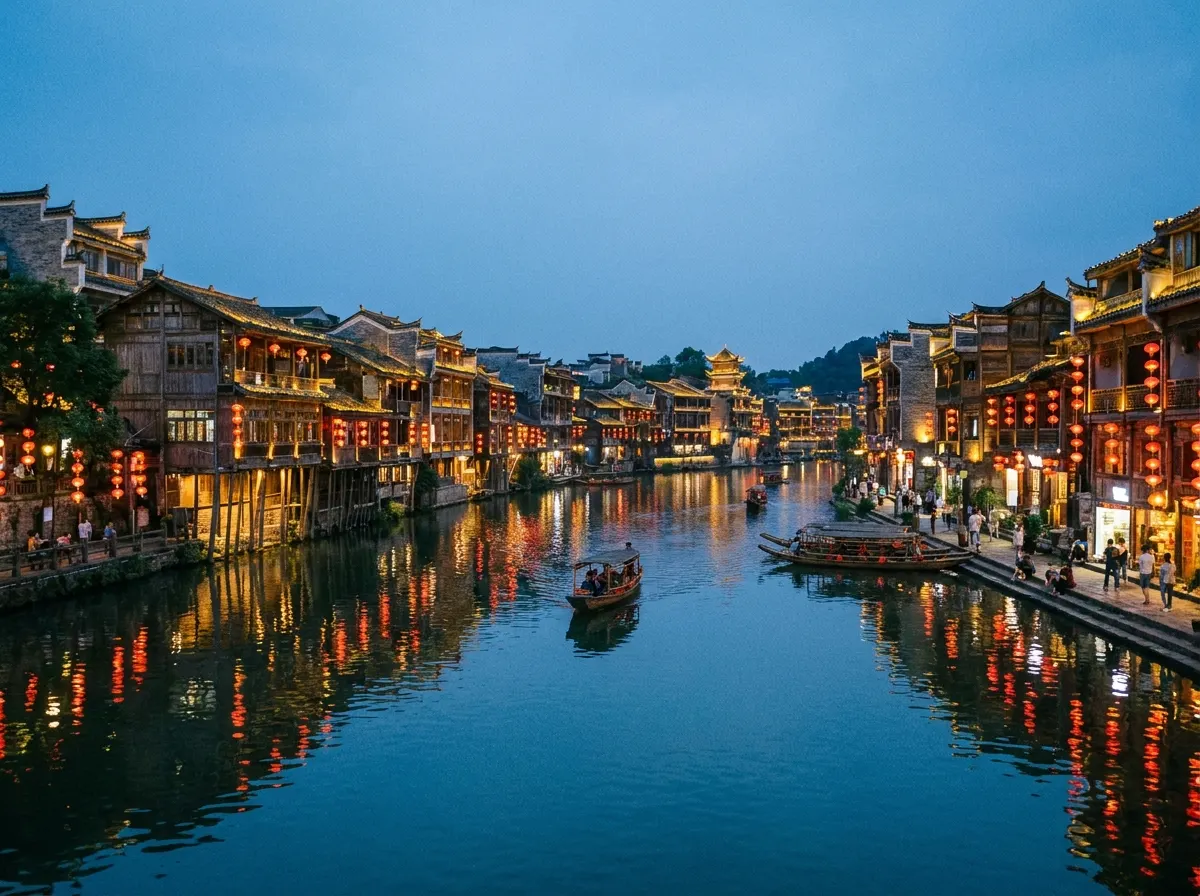
Fenghuang (凤凰古城, Fènghuáng Gǔchéng) is an ancient town in western Hunan province, built along both banks of the Tuo River (沱江, Tuó Jiāng) and backed by green mountains. Its name means "Phoenix," and its signature image — rows of wooden diaojiaolou (吊脚楼) stilt houses cantilevered over the river, connected by stone bridges, lit up at dusk with red lanterns — is one of the most recognizable travel photographs in China. Fenghuang is extremely popular with domestic tourists and can be crowded, especially on weekends and holidays, but the town earns its fame: the Qing-dynasty architecture is largely authentic, the setting is dramatic, and the surrounding Miao minority villages offer genuine cultural encounters. Fenghuang is best experienced at dawn (before the tour groups arrive) and at dusk (when the lanterns reflect on the water). Two days is the minimum; three days lets you explore the countryside. Budget roughly ¥150-250 per day for mid-range comfort. As of June 2026, Fenghuang charges a ¥148 entry fee for the core ancient town area, valid for three days. The honest downside: Fenghuang is one of China's most commercialized ancient towns — expect souvenir shops, photo-costume rentals, and selfie sticks. The magic is real, but you have to look past the commerce to find it. Fenghuang also works as a slow two-day stop rather than a rushed day trip, with overnight stays in stilted guesthouses along the Tuo River that turn the experience from a quick look into a place you actually inhabit.
Why Fenghuang in 2026.
A riverside ancient town in western Hunan with Qing-dynasty stilt houses, misty mountain backdrops, and Miao minority culture — one of the most photographed places in China.
Quick Answer
Fenghuang (凤凰古城, Fènghuáng Gǔchéng) is an ancient town in western Hunan province, built along both banks of the Tuo River (沱江, Tuó Jiāng) and backed by green mountains. Its name means "Phoenix," and its signature image — rows of wooden diaojiaolou (吊脚楼) stilt houses cantilevered over the river, connected by stone bridges, lit up at dusk with red lanterns — is one of the most recognizable travel photographs in China. Fenghuang is extremely popular with domestic tourists and can be crowded, especially on weekends and holidays, but the town earns its fame: the Qing-dynasty architecture is largely authentic, the setting is dramatic, and the surrounding Miao minority villages offer genuine cultural encounters. Fenghuang is best experienced at dawn (before the tour groups arrive) and at dusk (when the lanterns reflect on the water). Two days is the minimum; three days lets you explore the countryside. Budget roughly ¥150-250 per day for mid-range comfort. As of June 2026, Fenghuang charges a ¥148 entry fee for the core ancient town area, valid for three days. The honest downside: Fenghuang is one of China's most commercialized ancient towns — expect souvenir shops, photo-costume rentals, and selfie sticks. The magic is real, but you have to look past the commerce to find it. Fenghuang also works as a slow two-day stop rather than a rushed day trip, with overnight stays in stilted guesthouses along the Tuo River that turn the experience from a quick look into a place you actually inhabit.
| Worth visiting | Yes — one of China's most beautiful riverside ancient towns, especially at dawn and dusk when the light and mist create a painterly atmosphere rarely found elsewhere. |
|---|---|
| Recommended days | 2-3 days |
| Best time to visit | March-June and September-November. Avoid July-August (crowded and hot) and Chinese public holidays when the town is mobbed. |
| Daily budget | $30 (backpacker) / $90 (mid-range) / $250+ (luxury) |
| Family friendly | Moderate — the ancient town is walkable and visually engaging for children, but the cobblestone streets are stroller-unfriendly and the town gets extremely crowded on weekends. |
| Solo friendly | Yes — safe, walkable, and photogenic. The riverside guesthouses have excellent solo-diner cafes and bars. |
| Airport | Tongren Fenghuang Airport (TEN) — about 34 km from Fenghuang, with flights from Beijing, Shanghai, Guiyang, and Changsha. Alternatively, fly into Zhangjiajie Hehua Airport (DYG) and take HSR (1 hour) to Fenghuang Ancient Town station. |
| High-speed rail | Yes — Fenghuang Ancient Town station (凤凰古城站) on the Zhangjiajie-Jishou-Huaihua HSR line. Changsha (2h), Zhangjiajie (1h), Huaihua (30 min). |
| Language | Mandarin with local Xiangxi dialect; Miao language spoken in minority villages. English is very rare — essential to have a translation app. |
| Currency | CNY (¥) — Alipay and WeChat Pay widely accepted in the ancient town. Cash useful for village markets and small guesthouses. |
| Time zone | China Standard Time (UTC+8) |
| Last updated | 2026-06-18 |
Want a Fenghuang plan built for you?
Jump to:
Fenghuang is a riverside ancient town in western Hunan — most travelers start at the North Gate Wharf for the classic stilt-house view, then walk the Tuo River banks at dawn and dusk. Beyond the ancient town, Aizhai Bridge is a half-day engineering-marvel detour, and the Nanhua Mountain cable car gives you the panoramic view that frames every Fenghuang photograph.
Why visit Fenghuang? Is it worth the crowds?
Fenghuang is arguably the most beautiful ancient town in China — and it knows it. At dawn, when mist rises from the Tuo River and the diaojiaolou stilt houses emerge from the haze, with red lanterns still glowing from the night before, the town looks like a Song-dynasty scroll painting come to life. At dusk, when the lanterns turn on and their reflections shimmer across the river, the scene is equally magical. These are not exaggerations: Fenghuang at the right time of day is genuinely one of the most photogenic places in China. The trade-off is crowds. Fenghuang receives over 10 million domestic tourists a year, and on weekends and holidays the narrow flagstone streets become a slow-moving river of people. The commercial pressure is intense — every other shopfront sells the same Miao-themed souvenirs, every corner has a photo-costume rental, and the riverside bars pump music until late. If you expect a quiet, undiscovered village, you will be disappointed. If you come for the architecture, the river atmosphere, and the Miao culture — and you are willing to get up early and stay out late to see the town without the crowds — Fenghuang delivers. The town is at its best before 09:00. The tour groups arrive around 09:30-10:00, and the streets fill up until about 17:00 when the day-trippers leave. The hour after sunset is busy with evening strollers, but by 22:00 the streets thin out again. Plan your day around these rhythms: early morning photography walk, mid-day excursion to a Miao village or the South Great Wall, late afternoon rest, evening riverfront walk, repeat.
What is the history of Fenghuang and the diaojiaolou stilt houses?
Fenghuang after dark is one of China's most photographed nightscapes. The lit-up stilted houses along the Tuo River, the reflections, and the bridge silhouettes are the draw.
How to get to Fenghuang: flights, high-speed rail, and bus connections?
Fenghuang is in the mountains of western Hunan, near the Guizhou border, and was historically difficult to reach. As of June 2026, high-speed rail has transformed access. High-speed rail is now the best option. Fenghuang Ancient Town station (凤凰古城站, Fènghuáng Gǔchéng Zhàn) opened in 2021 on the Zhangjiajie-Jishou-Huaihua HSR line. Direct trains serve Changsha (2 hours, ¥150-200 second class), Zhangjiajie West (1 hour, ¥80-110), Huaihua South (30 minutes, ¥40-60), and Guangzhou (4.5 hours, ¥380-450). From the station, it is a 15-minute taxi or bus ride to the ancient town (about 8 km). The shuttle bus costs ¥10; a taxi costs ¥25-35. Tongren Fenghuang Airport (TEN, 铜仁凤凰机场) is 34 km southwest of Fenghuang and serves domestic flights from Beijing (2.5h), Shanghai (2h), Guiyang (1h), Changsha (1h), and Kunming (1.5h). From the airport, a taxi to Fenghuang takes 40 minutes (¥100-130). Alternatively, fly into Zhangjiajie Hehua Airport (DYG), which has more flight options, then take HSR (1 hour) or bus (3 hours, ¥80) to Fenghuang. Bus connections: Fenghuang has a long-distance bus station with routes to Zhangjiajie (3-4 hours, ¥80), Changsha (5-6 hours, ¥120), Huaihua (2 hours, ¥50), and Jishou (1 hour, ¥25). Buses from Jishou run every 30 minutes and are the most frequent connection. If arriving by conventional train at Jishou Railway Station, the bus to Fenghuang takes about 1 hour. Getting around the town itself: Fenghuang's ancient core is entirely pedestrian — no cars, no scooters. The ancient town is compact, roughly 1.5 km from end to end along the river, and everything is walkable. Wear comfortable shoes for the cobblestone streets. A free shuttle bus loops between the ancient town entrances and the visitor center parking lot.
Where to stay in Fenghuang: riverside guesthouses vs. quiet back lanes?
Riverside guesthouses on the north bank of the Tuo River are the well-known Fenghuang experience. Waking up to the river view, watching the mist rise at dawn from your balcony, and seeing the lanterns reflect on the water at night is why you came. Expect to pay ¥200-500 for a riverside room with a balcony, more on weekends and holidays. The trade-offs: noise (the riverfront is busy until late, and many guesthouses have thin walls), dampness (rooms near the water can be humid), and variable quality. The best riverside guesthouses cluster between Hongqiao Bridge and the North Gate Wharf. The back lanes — particularly the area around the Former Residence of Shen Congwen and the streets north of Dongzheng Street — offer quieter, often cheaper accommodation. Guesthouses in restored courtyard homes (¥120-300) give you a more authentic feel without the river-view premium. You sacrifice the balcony view but gain sleep quality and a sense of the town as a lived-in place rather than a tourist strip. Budget hostels: Several youth hostels in the ancient town offer dorm beds at ¥40-70. The Fenghuang Old Town Youth Hostel (凤凰古城青年旅舍) and the Border Town Hostel (边城青年旅舍) near Hongqiao Bridge are the most established. Luxury: Fenghuang does not have international five-star hotels. The top end is boutique guesthouses in restored Qing mansions, with prices from ¥600-1,200. The Fenghuang Tianxia Fenghuang Hotel (天下凤凰大酒店) near the ancient town entrance is the closest thing to a full-service hotel. A practical note: as of June 2026, all hotels and guesthouses in Fenghuang must register foreign guests with the Public Security Bureau. Most established guesthouses can do this, but very small family-run places may struggle. Book through Trip.com with the "accepts foreign guests" filter enabled, or call ahead.
What to eat in Fenghuang: Xiangxi cuisine, Miao specialties, and river fish?
Fenghuang's food is Xiangxi cuisine (湘西菜, Xiāngxī cài) — the mountain cooking of western Hunan, distinct from the Changsha style. The flavors are bold — sour, spicy, smoky — reflecting the region's history of pickling, curing, and smoking as food preservation in a humid mountain climate. The dishes you should try: Xiangxi bacon (湘西腊肉, Xiāngxī làròu). Smoked pork belly, cured with salt and spices then hung over a wood fire for weeks. The result is intensely smoky, savory, and slightly chewy. Sliced thin and stir-fried with garlic shoots, dried chili, and fermented black beans, it is the definitive Xiangxi dish. ¥38-58 per plate. Try it at any restaurant displaying whole smoked pork legs in the window. Sour fish soup (酸汤鱼, suān tāng yú). A Miao specialty: whole river fish poached in a sour broth made from fermented rice, pickled chilies, and sour bamboo shoots, with fresh herbs and ginger. The sourness is bright and refreshing — entirely different from vinegar — and the fish is incredibly tender. ¥68-98 for a whole fish, enough for two people. Blood cake (血粑, xuèbā). A Miao staple made from glutinous rice mixed with pig's blood, steamed into a dark, savory cake, then sliced and fried until the exterior is crisp and the interior is chewy. The flavor is mild — earthy and slightly iron-rich from the blood — and it is usually served with chili dip. An acquired taste, but a genuine local tradition. ¥15-25. Ginger candy (姜糖, jiāng táng). Fenghuang's signature sweet: fresh ginger pounded into a paste, mixed with malt sugar, pulled and stretched by hand into long white ropes, then cut into small pieces and dusted with glutinous rice flour. The candy is warm, sweet, and spicy in equal measure. You will see it being made in shopfronts across the ancient town — the pulling and stretching is a show in itself. ¥10-20 per bag. River shrimp (河虾, hé xiā). Tiny freshwater shrimp from the Tuo River, flash-fried with chili, garlic, and salt until crisp enough to eat whole — shells, heads, and all. ¥35-50 per plate. Best eaten with cold beer on a riverside terrace. Miao sticky rice wine (苗家米酒, Miáojiā mǐjiǔ). A sweet, low-alcohol fermented rice wine served in bamboo cups. Miao hospitality tradition says guests must drink three cups before eating. The wine is mild (about 10-15% alcohol) and refreshing. ¥15-25 per pot. The best eating streets are Hongqiao Middle Road (虹桥中路) — the food street just east of Hongqiao Bridge — and the lanes off Dongzheng Street (东正街). For a more local experience, walk south across Hongqiao Bridge into the newer part of town where family-run restaurants serve the same food at half the ancient-town prices.
What are good 1-day, 2-day, and 3-day itineraries for Fenghuang?
One-day sprint (if you have only a day): Arrive at Fenghuang Ancient Town station by 08:30, taxi to the ancient town (15 minutes). Enter through the South Gate (南门, Nánmén), walk directly to the Tuo River. Photograph the diaojiaolou from the North Gate Wharf while the morning light is still soft (09:00-10:00). Visit the Former Residence of Shen Congwen (30 minutes), then the East Gate Tower for elevated views (20 minutes). Take the Tuo River boat ride (20 minutes). Lunch on Hongqiao Middle Road — order Xiangxi bacon and sour fish soup. Afternoon: walk to Wanshou Palace for the Miao embroidery displays and the riverside architecture photos. Late afternoon: walk the full riverfront loop — south bank from Hongqiao to the wind bridge, cross at the stepping stones (跳岩, tiào yán) if the river is low, return along the north bank. Dinner at a riverside restaurant, then photograph the lantern reflections after dark. Depart by 20:00. This is rushed — Fenghuang deserves more time. Two-day plan (recommended minimum): Day 1 as above but at a human pace. Add a sunset drink at a riverside tea house. Day 2: early morning walk at 06:30 — the town is empty and the mist is at its best, this is when you earn the photos everyone wants. Return to your guesthouse for breakfast. Mid-morning: day trip to Shanjiang Miao Village (30-minute drive, ¥100 entry). Watch the Miao drum and dance performances, visit the embroidery workshop, eat a Miao-style lunch of sticky rice, sour fish, and bamboo-tube chicken. Return to Fenghuang by 15:00. Rest. Evening: try a different riverside restaurant, then walk the south bank — fewer people, different angle on the lanterns. End with ginger candy and a cup of Miao rice wine at a back-lane tea house. Three-day plan: Days 1-2 as above. Day 3: morning visit to the South Great Wall at Dengzhai (45 minutes from Fenghuang, ¥45, 2 hours to walk the restored section and the museum). Return for lunch. Afternoon: explore the back lanes north of Dongzheng Street — the residential part of the ancient town where locals still live, cook, and play mahjong. Visit the Yang Family Ancestral Hall (杨家祠堂, Yángjiā Cítáng, included in the ¥148 pass), a well-preserved Qing-dynasty clan temple. Late afternoon: one more river walk, one more round of photos, a final meal of Xiangxi bacon before departing. The three-day plan lets you experience the town at different times of day — dawn, mid-day, dusk, night — which is the only way to really understand it.
What is the weather like in Fenghuang and when should I visit?
Fenghuang has a humid subtropical mountain climate with four distinct seasons. The town sits at about 300 meters above sea level, so temperatures are slightly cooler than Changsha but the humidity is similar. Spring (March-May): 10-25°C, the best season along with autumn. March is cool and sometimes rainy; April brings warm days, blossoms along the river, and green hills. May is warm and lush — the most photogenic month. Spring rain is common (a light drizzle that adds to the atmosphere), so pack a rain jacket. Summer (June-August): 22-34°C, hot and humid, the peak domestic tourist season. July and August are crowded with Chinese families on summer holiday. The heat is not as punishing as Changsha — the river and the surrounding hills moderate temperatures — but the humidity is high and the crowds are intense. The town is at its least authentic in summer. Early mornings are still beautiful. Autumn (September-November): 12-25°C, the second best season. September is still warm but the crowds thin after the school holiday ends. October is the consensus best month: dry, crisp, clear skies, autumn foliage on the surrounding hills. Mid-Autumn Festival (dates vary) brings moon-viewing and lantern displays along the river. Avoid National Day (October 1-7) — Fenghuang is mobbed. Winter (December-February): 2-10°C, cold and damp, the low season. The town is quiet, accommodation prices drop 30-50%, and you may have the riverfront almost to yourself. Snow is rare but possible — Fenghuang under a light dusting of snow is extraordinarily beautiful. The downside: many guesthouses have limited heating, and the damp cold penetrates. Pack warm layers. The winter mist on the river is the most atmospheric of the year.
What cultural experiences can I have: Miao customs, festivals, and etiquette?
The Miao (苗族, Miáozú) are one of China's 55 officially recognized ethnic minorities, with a population of about 9 million concentrated in Guizhou, Hunan, Yunnan, and Guangxi. Fenghuang sits in the Xiangxi Tujia and Miao Autonomous Prefecture (湘西土家族苗族自治州), and Miao villages in the surrounding hills maintain distinct language, dress, music, and customs. Miao silver jewelry is the most visible cultural marker. Miao women traditionally wear elaborate silver headdresses, neck rings, and bracelets — a family's wealth was historically concentrated in silver, which was portable and could be worn. The silverwork is intricate, with motifs of butterflies (the Miao creation symbol), fish, and flowers. In Fenghuang, you will see Miao women in traditional dress selling silver jewelry along the riverfront — some is handmade, much is machine-made. The genuine handmade pieces are heavier, have slight irregularities, and cost significantly more. Buy from the Miao village workshops (Laodong and Shanjiang) for the best chance of authenticity. Miao festivals: The Miao New Year (苗年, Miáo Nián) is celebrated on different dates in different villages, generally in October or November (lunar calendar). It involves bullfighting, drum dancing, antiphonal singing (call-and-response love songs between young men and women), and feasting. The Sisters' Meal Festival (姊妹节, Zǐmèi Jié) in spring involves young women offering dyed glutinous rice to suitors — a Miao version of courtship. The Lusheng Festival (芦笙节, Lúshēng Jié) features the lusheng, a reed-pipe instrument central to Miao music, with mass dancing and pipe competitions. Etiquette when visiting Miao villages: Accept offered drinks (usually rice wine) — refusal can be seen as rejection of hospitality. The three-cup welcome is standard: you will be offered three small cups of rice wine at the village entrance. You do not need to finish all three, but accept and drink from each. Do not touch Miao silver headdresses without permission. Ask before photographing people, especially elderly women in traditional dress. A small purchase of embroidery or silver from a village workshop supports the local economy. The phrase "niú hǎo" (你好, hello) in Mandarin works; "mengx diaol" is "hello" in some Miao dialects but is not expected from foreign visitors.
What practical information do I need: tickets, money, language, and internet?
Entry tickets: As of June 2026, Fenghuang charges a ¥148 entry fee for the core ancient town scenic area, valid for three days. This includes access to the Former Residence of Shen Congwen, the East Gate Tower, Wanshou Palace, the Yang Family Ancestral Hall, the Tuo River boat ride, and several smaller sites. Children under 1.2 meters, seniors over 70, and people with disabilities enter free. The ticket is checked at entry points to the ancient town core but not within the town — once inside, you can walk freely. Some travelers report that entry checks are inconsistent during off-peak hours (very early morning, late night), but do not count on this. Money: Cash is still useful in Fenghuang — some small guesthouses, village food stalls, and Miao craft vendors prefer or only accept cash. Carry ¥300-500 in small bills. Alipay and WeChat Pay work in most established restaurants, guesthouses, and shops within the ancient town. There are ICBC and Agricultural Bank ATMs near the ancient town entrance. Language: English is extremely rare. Guesthouse owners may know a few words; restaurant staff, boatmen, and village hosts will not. A translation app with offline Chinese (Pleco, Baidu Translate, Microsoft Translator) is essential. Save your guesthouse address, key dish names, and useful phrases in Chinese characters on your phone. Useful phrases: "duōshǎo qián" (多少钱, how much), "wèishēngjiān zài nǎlǐ" (卫生间在哪里, where is the bathroom), "bùyào là" (不要辣, no spice), "wǒ bù dǒng" (我不懂, I don't understand). Internet: Same China restrictions apply — install a VPN before arriving. WiFi is standard in guesthouses but can be slow. A Chinese SIM card with data (¥100-200 for 30 days) gives you the most reliable connectivity. The ancient town has decent 4G coverage; signal can be weak in the surrounding villages. A practical note on photography: The best light is at dawn (06:00-07:30 in summer, 07:00-08:30 in winter) and the hour before sunset. The classic photo spots are: the North Gate Wharf looking east toward Hongqiao Bridge (morning light on the stilt houses), the stepping stones (跳岩, tiào yán) mid-river for a low-angle view of the diaojiaolou, the south bank directly opposite Wanshou Palace for the classic lantern reflection shot, and the hilltop pavilion behind the south bank (a 15-minute climb) for the panoramic town view.
What tips, warnings, and things should I avoid in Fenghuang?
1. THE CROWDS ARE REAL. Fenghuang receives 10+ million visitors a year concentrated in a tiny ancient core. Weekends are busy; Chinese public holidays (Labour Day, National Day, Spring Festival) are overwhelmingly crowded — think shoulder-to-shoulder on the narrow streets, long queues for the boat ride, and restaurants running out of food. Visit on weekdays (Tuesday-Thursday are quietest) and avoid all Chinese public holidays. 2. GET UP EARLY. The single most important piece of advice for Fenghuang: wake up at 06:00. The town between 06:00 and 08:30 is the Fenghuang of the photographs — mist on the river, empty streets, locals washing vegetables on the stone steps, the first light hitting the stilt houses. By 09:30 the tour groups have arrived and the spell is broken. Your best photos and your best memories will come from the early morning. 3. THE BARS ARE LOUD. The south bank of the river, particularly the stretch west of Hongqiao Bridge, has a concentration of bars that play music at high volume until midnight or later. If you are staying in a riverside guesthouse, request a room on the north bank or at the quieter eastern end of town. The music is mostly Chinese pop and covers of 1990s Western hits; it is not a sophisticated bar scene. 4. PHOTO-COSTUME RENTAL IS EVERYWHERE. Dozens of shops rent Miao and traditional Chinese costumes for photos, typically ¥50-100 per hour including makeup and hair styling. It is a massive local industry and you will see tourists in costume posing everywhere. The costumes are generic and not authentic to local Miao styles — treat it as a fun photo opportunity, not a cultural experience. 5. THE RIVER WATER IS NOT CLEAN. The Tuo River looks beautiful in photos but the water quality is moderate at best — do not swim in it. The stepping stones (跳岩) are safe to cross when the river is low (check the water level), but the stones can be slippery when wet. Wear shoes with grip. 6. RESTAURANT SCAMS EXIST. Some riverside restaurants display one menu outside with reasonable prices and a different menu inside with higher prices. Confirm prices when you order. Check the total before paying. This is not universal — most restaurants are honest — but it is common enough to warrant attention. 7. THE ENTRY TICKET IS CONFUSING. The ¥148 ticket is checked at the ancient town entry points, not at individual attractions inside. If you arrive by public bus, you will be directed to the visitor center to buy the ticket. If you arrive by taxi or DiDi, ask to be dropped at the South Gate (南门) where there is a ticket booth. Some guesthouses can pre-arrange tickets — ask when booking. 8. DON'T SKIP THE BACK LANES. Most visitors stay on the two main riverfront streets and miss the residential lanes behind them. Walk north from Dongzheng Street into the grid of small lanes where locals live — laundry hangs from balconies, old men play chess in doorways, and the sense of a real town, rather than a tourist set, is much stronger. 9. AVOID THE SILVER-JEWELRY HARD SELL. Vendors selling "antique" Miao silver jewelry at bargain prices are almost certainly selling machine-made pieces of zinc alloy with a silver wash. Genuine Miao silver is heavy, expensive (¥500+ for a necklace), and sold quietly in village workshops, not aggressively on the street. 10. BRING EARPLUGS. Between the bar music, the early-morning tour groups, and the thin walls of traditional wooden buildings, Fenghuang can be loud. A pair of foam earplugs will improve your sleep significantly.
What are the emergency contacts and health information for Fenghuang?
Police: 110. Ambulance: 120. Fire: 119. Traffic accident: 122. These numbers work from any phone. English-speaking operators are theoretically available but in practice Mandarin is standard. Your guesthouse front desk is your best first call in an emergency — they can translate and coordinate local help. Tourist complaint hotline: 12301 (China National Tourism Administration hotline). Fenghuang also has a local tourism police station (旅游警察, Lǚyóu Jǐngchá) near the ancient town entrance specifically for tourist issues. Medical facilities: Fenghuang People's Hospital (凤凰县人民医院) is the main medical facility, about 2 km from the ancient town. It is a county-level hospital with basic emergency services and limited English. For serious medical issues, transfer to Huaihua (1 hour by car) or Changsha (2.5 hours by HSR) is necessary. Comprehensive travel insurance covering medical evacuation is essential. Tap water is not potable. Bottled water is available everywhere (¥2-3 per bottle). Most guesthouses provide a kettle and complimentary bottled water. Air quality is good — Fenghuang's mountain location and lack of heavy industry mean AQI typically ranges from 30-70, significantly better than major Chinese cities. The mountain air is one of the town's underrated assets. Altitude: Fenghuang is at about 300 meters — no altitude concerns. The surrounding Miao villages are at 500-800 meters.
What is the North Gate Tower and why is it the symbolic heart of Fenghuang?
The North Gate Tower (北门城楼, Běimén Chénglóu) is the architectural and emotional center of Fenghuang — the image most travelers carry home in their heads even if they never learn its name. The tower sits at the waterline where the north bank of the Tuo River meets the ancient city wall, with the river flowing past its base and the stilt houses stretching east toward Hongqiao Bridge. Two red lanterns hang from the upper level, crenellated stone walls frame the river view, and the wooden upper story rises two floors above the wharf below. It is the most photographed single structure in town. The tower was originally built in 1715 during the Kangxi reign of the Qing dynasty, as one of four gate towers in the city wall. Of the four, only the North Gate Tower survives in its original form — the others were destroyed or heavily rebuilt. The structure combines stone (the base and walls), brick (the inner stairwell and upper floor), and timber (the upper level, with carved brackets and a tiled hip-and-gable roof). The defensive function is clear: thick walls, narrow windows on the river side, and a commanding position over both the road and the water. The current restoration dates to the early 2000s and is faithful to the original form, though the wood and tile have been renewed. Below the tower, the North Gate Wharf (北门码头, Běimén Mǎtóu) is where the traditional wooden boat rides begin. In the morning, local women still wash clothes and vegetables on the stone steps leading down to the water — a scene that has changed little in two centuries. The wharf is also the classic Fenghuang photo spot: stand at the river's edge just upstream of the tower, looking east, and you see the stilt houses stretching into the mist with Hongqiao Bridge in the distance, exactly the composition that has defined the town in photographs since the 1980s. At sunset, the same view reverses — the lantern light catches the river and the tower's silhouette is sharpest. Visiting the North Gate Tower is included in the ¥148 town pass. The lower level is open as a small exhibition space with photographs and a few Qing-era artifacts; the upper level is accessible by a narrow internal staircase and offers the elevated view most visitors come for. Spend at least 20 minutes here, longer if you intend to photograph. The best light is morning (soft, low, hitting the east-facing stilt houses) and the hour before sunset. Expect to share the spot with a crowd from about 09:30 onwards — sunrise is the moment you will have it to yourself.
What can I see and do on Hong Bridge and its upper-level tea houses?
Hong Bridge (虹桥, Hóngqiáo), the Rainbow Bridge, is the 600-year-old covered stone-arch bridge that spans the Tuo River just upstream of the central river bend. The bridge is not just a crossing — it is a destination in itself, and arguably the single busiest spot in the ancient town. The lower level is a stone arch carrying foot traffic across the river, with steps at each end. The upper level is a two-story wooden gallery housing shops, tea houses, and small restaurants. The view from the upper level — looking down the river in either direction, with the stilt houses on both banks and the green hills behind — is the single best elevated view of Fenghuang you can get without climbing the hill behind the south bank. The bridge dates to the Ming dynasty, with the current structure rebuilt several times after floods. The name "Rainbow" comes from the shape of the single stone arch — when reflected in calm water, the arch and its reflection form a complete circle, the visual shape of a rainbow. The bridge's defensive function is historical: the upper level was once a guard post and the stone arch was designed to be blocked by a heavy wooden gate in case of attack. Today the upper level is purely commercial, but the architecture is preserved. The tea houses on Hong Bridge's upper level are the most famous in Fenghuang. The most established — Fenghuang Tea House (凤凰茶楼) and a handful of others along the gallery — charge ¥30-60 per pot of local tea (mostly green tea and the regional black tea known as Xiangxi hong). Sitting at a window table looking out over the river is the well-known Fenghuang experience: the tea comes with a small plate of sunflower seeds or candied ginger, the river drifts below, and the wooden creak of the floor underfoot is the same sound visitors have heard here for centuries. The tea houses stay open from mid-morning until about 22:00. Early evening is the prime time — the lanterns on the bridge itself are lit, the reflections are sharp, and the riverfront bars across the way are just beginning to fill. Beneath the bridge, in the stone arch itself, there is usually a row of small stalls selling Miao embroidery, silver trinkets, and wooden combs. The quality is mixed — these are tourist-grade souvenirs, not the genuine village work. If you want real Miao embroidery, visit the Shanjiang or Laodong village workshops instead. The bridge itself is free to cross. The upper-level tea houses and shops do not require any admission; you can walk the full gallery without buying anything, though staff will gently encourage you to sit down. A practical note: Hong Bridge is the bottleneck of the ancient town. At peak hours (11:00-17:00) it can take 10 minutes to cross because of the crowd. The pedestrian flow is bidirectional and the upper level gallery is narrow. If you have mobility issues or are traveling with a stroller, the south bank wind bridge at the western end of town is much less crowded. Photographers: the bridge is best shot from the south bank or from a slow-moving boat. The composition from a boat — passing under the arch with the stilt houses sliding past — is one of the most distinctive Fenghuang images.
Who was Yang Xiong and why does his former residence matter?
Yang Xiong (杨仙, Yáng Xiān, 1900-1957) is the second of the three famous former-residence figures of Fenghuang, alongside Shen Congwen the writer and Xiong Xiling the educator. He is less known internationally than Shen Congwen but locally revered as a Miao-Chinese war hero who rose from poverty to become a decorated general and later a respected public figure. His former residence (杨仙故居, Yáng Xiān Gùjū) sits on a quiet lane off the main tourist route, and is included in the ¥148 town pass. Yang was born into a Tujia family in the rural countryside around Fenghuang, joined the army as a teenager during the chaotic warlord period, and worked his way up through sheer ability to become a general by the time of the Second Sino-Japanese War. He is credited with major roles in several defensive operations in Hunan during the Japanese advance inland, and was wounded multiple times. After 1949 he stayed on the mainland, working in military advisory roles and, later, in regional government. He is now honored as a native son of Fenghuang whose military service preserved the region from foreign invasion. The former residence itself is a modest Qing-dynasty courtyard house, smaller and less visited than the Shen Congwen residence nearby. The layout is the standard three-bay, two-courtyard Tujia form: an entrance hall, a central courtyard with a stone-paved open well, and a rear hall with bedrooms. The exhibition inside focuses on Yang's military career: photographs from the 1930s and 1940s, period uniforms, copies of his correspondence, and a few personal effects including a sword given to him by a fellow officer. Most captions are in Chinese only; a translation app is helpful. The site's real value for visitors is contextual rather than visual. Fenghuang is a town of three celebrated former residents, and seeing Yang Xiong alongside the Shen Congwen and Xiong Xiling residences gives you a much fuller picture of the place than any one alone. Shen gave it literary fame; Xiong gave it an educational legacy; Yang gave it a military and patriotic story. Together they explain why a small western Hunan town produces so many outsized national figures — the combination of mountain remoteness, ethnic diversity, and a centuries-old tradition of literacy and civic service. Allow 30-40 minutes for the residence, more if you read Chinese. The Yang Xiong residence is also a useful alternative to the more crowded Shen Congwen residence. Both are in the same neighborhood, both included in the ¥148 pass, and most tour groups hit Shen first and skip Yang. If you visit in the afternoon, you will often have the place to yourself. The caretaker is usually happy to explain the displays in Mandarin, and there is a small tea room in the courtyard where you can sit for 10-15 minutes between residences. It is one of the quietest, least-touristy stops in the central ancient town.
What is a Miao Silver Workshop visit really like?
A visit to a Miao silver workshop (苗银作坊) in one of the villages around Fenghuang is one of the most hands-on cultural experiences in western Hunan. The Miao have worked silver for over a thousand years, and the workshops are genuine working spaces, not museums.
How do I combine Fenghuang with a Zhangjiajie day trip — is it worth the detour?
Yes — and the HSR connection makes a Zhangjiajie day trip from Fenghuang one of the easiest, highest-value combined excursions in western Hunan. The Fenghuang Ancient Town station to Zhangjiajie West station is exactly one hour on a direct HSR train, with around a dozen departures daily. If you are already in Fenghuang for 2-3 days, dedicating one full day to Zhangjiajie is well worth it; the two places offer completely different experiences that complement each other perfectly. Zhangjiajie (张家界, Zhāngjiājiè) is famous for the surreal vertical sandstone pillars of Wulingyuan Scenic Area (武陵源, Wǔlíngyuán), the inspiration for the floating mountains in the film Avatar. It is the polar opposite of Fenghuang in feel: instead of a dense riverside town, you have vast forested canyons and thousands of stone pillars rising sheer from the valley floor, often wreathed in cloud. A one-day Zhangjiajie visit from Fenghuang cannot possibly cover the entire national park (which needs 3-4 days minimum), but it can show you the most well-known stretch in a single long day. The recommended one-day plan from Fenghuang: take the 07:30 HSR from Fenghuang Ancient Town station to Zhangjiajie West (one hour, ¥80-110 second class). From Zhangjiajie West station, a taxi or shuttle bus (¥20-30, 40 minutes) reaches the Wulingyuan park entrance. Buy the standard Wulingyuan entry ticket (¥225) at the visitor center. Take the park's internal shuttle bus to the Tianzi Mountain (天子山, Tiānzǐ Shān) cable car base, ride up, and walk the ridge trail past the most famous pillar formations (the "Avatar Hallelujah Mountains," as the official signs now call them). Allow about 3 hours for the ridge walk. Take the cable car down, shuttle back to the visitor center, and catch the 17:00 or 18:00 HSR back to Fenghuang. Back by about 20:00, in time for dinner. The Tianzi Mountain section is the right choice for a day trip because it concentrates the best scenery into a small, cable-car-accessible loop. The alternative sections — Yuanjiajie, Yangjiajie, the Golden Whip Stream — are beautiful but each needs its own half-day minimum. Trying to combine two sections in one day means a frantic pace and a lot of shuttle-bus time, with little real walking. The Tianzi ridge walk gives you the well-known pillar views in a 4-5 hour visit that is genuinely satisfying. A common alternative is to visit Tianmen Mountain (天门山, Tiānmén Shān) instead — the famous glass walkway and "Heaven's Gate" arch. Tianmen is closer to Zhangjiajie city (about 30 minutes from the HSR station by taxi) and has a shorter visit (3-4 hours total). The glass walkway is more dramatic for Instagram-style photos, but the natural scenery is less spectacular than Wulingyuan. If you have already seen mountain pillar scenery elsewhere in China and want the engineered experience (glass walkways, the 99-bend road, the longest passenger cable car in the world), Tianmen is the better choice. If you want to see what makes Zhangjiajie unique, choose Wulingyuan. Practical notes for the day trip: book the HSR tickets on 12306 or Trip.com 3-5 days ahead, especially in peak season. Carry your passport — it is required at the Wulingyuan ticket gate. Wear proper hiking shoes with grip; the ridge trail has stone steps and can be slippery when wet. Bring water, snacks, sunscreen, and a rain jacket — mountain weather changes quickly and the summit is often 5-8 degrees cooler than the base. The Tianzi Mountain area is at about 1,200 meters elevation; some visitors feel mild altitude effects, though it is much lower than Lhasa or Kunming. Photography on the ridge is best in the morning when the cloud cover is lighter; by afternoon the pillars often disappear into mist. The day trip costs about ¥500-700 per person including HSR, park entry, cable car, taxi, and a simple lunch.
What is the Shen Congwen literary walking trail and how do I follow it?
Shen Congwen (沈从文, 1902-1988) is the single biggest reason Fenghuang is on the international travel map. His 1934 novella "Border Town" (边城, Biān Chéng) — set in a small ferry town on a river very like Fenghuang — is one of the most translated and taught works of modern Chinese literature. For visitors who arrive knowing the book, walking the Shen Congwen trail turns an ordinary sightseeing day into a literary pilgrimage. For those who arrive without it, the trail is still a beautiful way to see the town through the eyes of its most famous son. The trail has four anchor points, all within the ancient town and all walkable in a single leisurely half-day: 1. The Former Residence of Shen Congwen (沈从文故居) on Zhongying Street. The modest Qing-dynasty courtyard house where Shen was born and lived until age 20. The exhibition inside includes original manuscripts, photographs, and copies of his correspondence with writers like Ba Jin and Lao She. Allow 30-40 minutes. 2. The Tuo River boat ride. Shen's most famous descriptions are of the river itself — the ferrymen, the boats, the women washing on the steps, the mists at dawn. Take the 20-minute traditional boat ride (¥30, included in the ¥148 pass) and read the opening of "Border Town" as you drift. The opening pages describe the river, the small town, and the ferry exactly as you are seeing them. 3. The Yang Family Ancestral Hall (杨家祠堂). Shen's maternal family were Yangs, and the family ancestral hall features in several of his stories. The hall is a beautifully preserved Qing-dynasty clan temple, included in the ¥148 pass. Allow 20 minutes. 4. The Cuiqing Tea House (翠庆茶馆) on a back lane near the Shen Congwen residence. Shen himself was a regular here as a young man, and the tea house still uses the same long wooden benches and copper teapots. A pot of tea costs ¥15-25. Sit, look at the river traffic through the open door, and you understand why Shen kept writing about this place for 50 years. The trail is best walked in the order above, starting from the Former Residence in the late morning, drifting down the river, finishing at the tea house. Total time including the boat ride is about 3 hours. Reading selections from "Border Town" as you walk (the full novella is about 80 pages; the famous opening is about 8 pages) makes the experience much richer. English translations by Jeffrey Kinkley and others are widely available; a PDF is even acceptable. Several Fenghuang guesthouses stock copies for guests. A literary footnote: Shen left Fenghuang at age 20 to join the Nationalist army, then later became one of the leading writers of the May Fourth era. He tried to return to the town repeatedly in his later life but was prevented by the political upheavals of the 1950s-1970s. He died in 1988 in Beijing. His ashes were returned to Fenghuang and are buried in a small grove outside the ancient town, on the hill above the Tuo River — a quiet spot with a view back down to the river he wrote about. The grave site is open to visitors (free, no ticket required) and is a 20-minute walk from the North Gate Wharf, or a short taxi ride. Most international visitors skip it; the literary pilgrims who make the walk tend to find it moving. For visitors who want a more structured literary tour, the Fenghuang County Library and several local independent guides offer "Border Town" themed walks (¥150-300 per person, 2-3 hours). These typically include the four anchor points above plus a few lesser-known spots: the school Shen attended as a boy, the riverside steps where his fictional characters wait for the ferry, and a stop at the small bookshop near the South Gate that stocks Shen's complete works in Chinese and selected translations.
What is Fenghuang's night photography scene and where are the best evening spots?
Fenghuang after dark is one of China's most photographed nightscapes. The lit-up stilted houses along the Tuo River and the bridge silhouettes are the draw.
What is the Tujia connection and how do Tujia villages differ from Miao villages?
Fenghuang sits inside the Xiangxi Tujia and Miao Autonomous Prefecture (湘西土家族苗族自治州), and the surrounding hills are home to both Tujia and Miao villages — two distinct ethnic minorities with different languages, dress, architecture, and customs. Most visitors who go on a "Miao village" day trip actually pass through Tujia country on the way, and many of the cultural elements blur together in the tourist experience. Knowing the differences makes the visit much more rewarding. The Tujia (土家族, Tǔjiāzú) are the larger of the two minorities in western Hunan, with about 9 million people concentrated in Hunan, Hubei, Chongqing, and Guizhou. They are historically a Han-adjacent agricultural people, with a culture closer to mainstream Han Chinese than the more distinctive Miao. Tujia villages tend to be larger, more prosperous, and architecturally closer to standard southern Chinese rural settlements: stone-and-timber houses with tiled roofs, arranged around a courtyard or a public square. Tujia women historically wore plainer dress — a wrapped head-towel (rather than the elaborate silver headdresses of the Miao) and a simple indigo-dyed jacket. Tujia festivals are agricultural and family-centered rather than the public courtship rituals of the Miao. The Miao (苗族, Miáozú), as covered in earlier sections, are the more visually distinctive group. The language is Hmong-Mien, unrelated to Tujia (which is Sino-Tibetan). Miao villages tend to be smaller and more remote, perched higher in the hills. The architecture uses more wood (the Miao are famous carpenters), and the dress — heavy silver, embroidered cloth, elaborate headdresses — is striking even at a distance. Miao villages are the more "touristic" destination because the visual spectacle is greater, but the cultural depth is just as real. Practical differences for visitors: most of the well-known "Miao village" day trips (Shanjiang, Laodong, Dehang) are primarily Miao. The Tujia villages are less visited and harder to reach. If you want a Tujia experience, ask your guesthouse specifically — some families have contacts in Tujia villages and can arrange a more unusual visit. The food is similar between the two groups (both cuisines form the basis of Xiangxi regional cooking), but Miao sticky rice wine is more famous than the Tujia equivalent. The Miao silver workshops are widely advertised; Tujia villages have their own craft traditions (bamboo weaving, wooden carvings, indigo textile dyeing) but these are less commercialized. A word of caution: many tour operators blend the two cultures without distinction, calling any ethnic village a "Miao village." If cultural accuracy matters to you, ask the operator directly which villages you will visit and what the ethnic composition is. The most established Miao villages (Shanjiang) are genuinely Miao. Some "Tujia-Miao Cultural Park" destinations are essentially staged theme parks — entertaining but not authentic. The real encounters happen in the smaller villages that tour buses cannot easily reach, where you will be welcomed into a family home, offered rice wine, and seated at a long wooden table for a meal you will not forget.
Is Aizhai Bridge worth a half-day detour from Fenghuang?
Yes — Aizhai Bridge (矮寨大桥, Ǎizhài Dàqiáo) is the single most spectacular engineering sight within day-trip distance of Fenghuang, and it pairs naturally with a visit to Dehang Miao Village in the same valley. The bridge is roughly 18 km west of the ancient town (about 40 minutes by taxi, ¥80-100 one way), and most travelers combine it with a Dehang village stop for a satisfying half-day excursion. The numbers are genuinely world-class. Aizhai is a suspension bridge spanning the Dehang Grand Canyon (德夯大峡谷) at a deck height of about 355 meters above the river below — when it opened in 2012, it was the highest bridge in the world measured by the distance between deck and the deepest point of the gorge beneath. The main span is 1,176 meters, and the total bridge length including approaches is about 1.2 km. The full expressway crossing runs about 70 km from Jishou to Chadong as part of the G65 Baotou-Maoming expressway through the mountains. From a sightseer's perspective, the more interesting fact is the gorge: it is a sheer, narrow limestone cleft, much deeper than wide, with the bridge deck suspended across it on two slim towers. Looking straight down from the middle of the deck is genuinely vertiginous. The bridge can be experienced three ways. The most popular with day-trippers is the sightseeing walkway — a glass-floored pedestrian path attached to the underside of the bridge deck on the cliff side. You walk out from the canyon wall in a glass-bottomed corridor, with the river directly below your feet, and look back at the bridge tower rising beside you. Tickets for the walkway cost about ¥138 and the walk takes 30-45 minutes. If you have a fear of heights, skip it — the glass floor is real glass, not opaque, and the experience is not for everyone. The walkway is open 08:00-17:30, weather permitting; high winds close it. The second way is to drive across the bridge itself, which is free as part of the expressway. The view from a moving car window is impressive but fleeting — you are across in under a minute. The third way, and the most atmospheric, is to hike the canyon trail that runs along the cliff face beneath the bridge, looking up at the deck from below. The trail is about 3 km round-trip and takes 90 minutes. Start from the Dehang village side; you descend through terraced fields into the canyon, cross the small Dehang River on a plank footbridge, then climb up the opposite cliff face on stone steps to a viewing platform directly below the bridge. From there, the bridge towers soar above you and you get a true sense of the scale. This is the version that photographers prefer because you can capture the full span in a single frame. The trail is free and unmarked but easy to follow; ask locally for "Aizhai qiaoxia" (矮寨桥下, below Aizhai Bridge). The Dehang area itself is worth an hour or two. Dehang (德夯, Déhāng) means "beautiful canyon" in the Miao language, and the village sits at the head of the canyon in a tight valley of stone houses, terraced rice paddies, and waterfalls. It is smaller and less commercialized than the Shanjiang Miao Village most Fenghuang tours use — fewer performances, fewer souvenir stalls, more genuine village life. On weekends you may see Miao villagers doing traditional song-and-dance practice in the village square; on weekdays the place is largely empty. There is a small waterfall (the Dehang Falls, 德夯瀑布) about 2 km upstream that is a pleasant short walk. Lunch in the village: the local restaurants serve Miao sticky rice, sour fish, and bamboo-tube rice (竹筒饭, zhútǒng fàn — sticky rice steamed inside a fresh bamboo tube, then split open at the table). Allow 2-3 hours total for Dehang. A practical note on access: Aizhai Bridge is on the expressway between Jishou and Chadong, which is the main route from western Hunan to the Guizhou border. It is not on the way to anywhere else most tourists are going, so the trip is out-and-back from Fenghuang. A taxi for the half-day (round trip plus waiting at the bridge and Dehang) costs ¥250-350; DiDi is harder to arrange because the bridge and Dehang are in a rural zone outside the standard DiDi service area. Several guesthouses in Fenghuang can arrange a car and driver for the half-day; ask the day before. Allow 4-5 hours for the full Aizhai + Dehang excursion, longer if you do the canyon trail.
What can I see from the Nanhua Mountain cable car and is the pagoda worth the ride?
The Nanhua Mountain Cable Car (南华山索道, Nánhuá Shān Suǒdào) is the easiest way to get the panoramic view of Fenghuang that frames almost every photograph of the town taken from above. The cable car base sits on the south bank of the Tuo River at the western end of the ancient town, a 10-minute walk from Hongqiao Bridge. The ride takes about 10 minutes up the forested slope of Nanhua Mountain (南华山, about 350 meters elevation gain), and the views from the upper station and the trails around it are the single best overview of the Tuo River, the diaojiaolou, Hongqiao Bridge, and the green hills behind the town. The cable car is best taken in clear weather, ideally in the late afternoon. The morning ride gives you the town under mist (which is atmospheric but obscures the layout); the late afternoon ride gives you the angled golden light hitting the river and the stilt houses, which is when the panorama really works as a photograph. Round-trip tickets cost about ¥98 (cable car only, not including the forest park entry which is a separate ¥30). The cable car runs 08:00-17:30 in winter and 08:00-18:00 in summer; check the schedule at your guesthouse because weather and maintenance closures are common in winter. At the upper station, a network of paved trails runs along the ridge for about 2 km in each direction, with viewpoints looking down at the town from multiple angles. The most-photographed vantage point is the main platform just above the upper station, looking northeast across the river at the stilt houses and Hongqiao Bridge. A second platform about 800 meters east along the ridge gives you a different composition, looking back westward along the river with the bridge in the foreground and the town unfolding behind. From here, the layout of Fenghuang — north bank stilt houses, south bank newer buildings, the river bending through both — becomes legible in a way that you cannot appreciate from inside the ancient town itself. The Nanhua Forest Park (南华山森林公园) around the cable car is a small municipal park with old camphor and cedar trees, a few pavilions, and a couple of snack vendors. It is not a wilderness experience — the trails are paved and there is usually a steady stream of domestic tourists — but the trees provide shade and the views justify the trip. Allow 1.5-2 hours for the cable car and the ridge walk. The pagoda you can see from much of Fenghuang, the Wanming Pagoda (万名塔, Wànmíng Tǎ), is a separate sight and is on the north bank of the Tuo River near the North Gate Wharf, not on Nanhua Mountain itself. It is a slender seven-story brick-and-timber pagoda about 22 meters tall, originally built during the Qing dynasty and rebuilt in its current form in 2001. The pagoda sits on a small platform at the waterline and is one of the classic Fenghuang photo elements — it appears in the middle distance of many of the stilt-house river shots. It is most striking in daytime when its red-and-white coloring contrasts with the river and the green hills behind, and at night when it is illuminated and reflected in the water. Access to the pagoda is free and it is open all hours. You cannot climb it. Treat it as a photo subject rather than a destination — the best viewpoint for the pagoda is from the south bank of the river, looking north, with the stilt houses on either side. The pagoda pairs naturally with a North Gate Wharf and Hongqiao Bridge visit, and is on the way between the two. Combining the two: cable car up Nanhua in the late afternoon (allow 1.5 hours including the ride and ridge walk), back down to the river in time for sunset at the pagoda (about 30 minutes to walk from the cable car base to the pagoda viewpoint on the south bank), then dinner and the lantern-lit river walk. This is one of the best single-day sequences in Fenghuang and is what most photography-focused visitors aim for. The pagoda is a quieter sight at night than the bridges and stilt houses, and you can usually have the riverside viewpoint to yourself after about 21:30.
Top attractions
Tuo River and Hongqiao Bridge (沱江/虹桥, Tuó Jiāng/Hóng Qiáo)
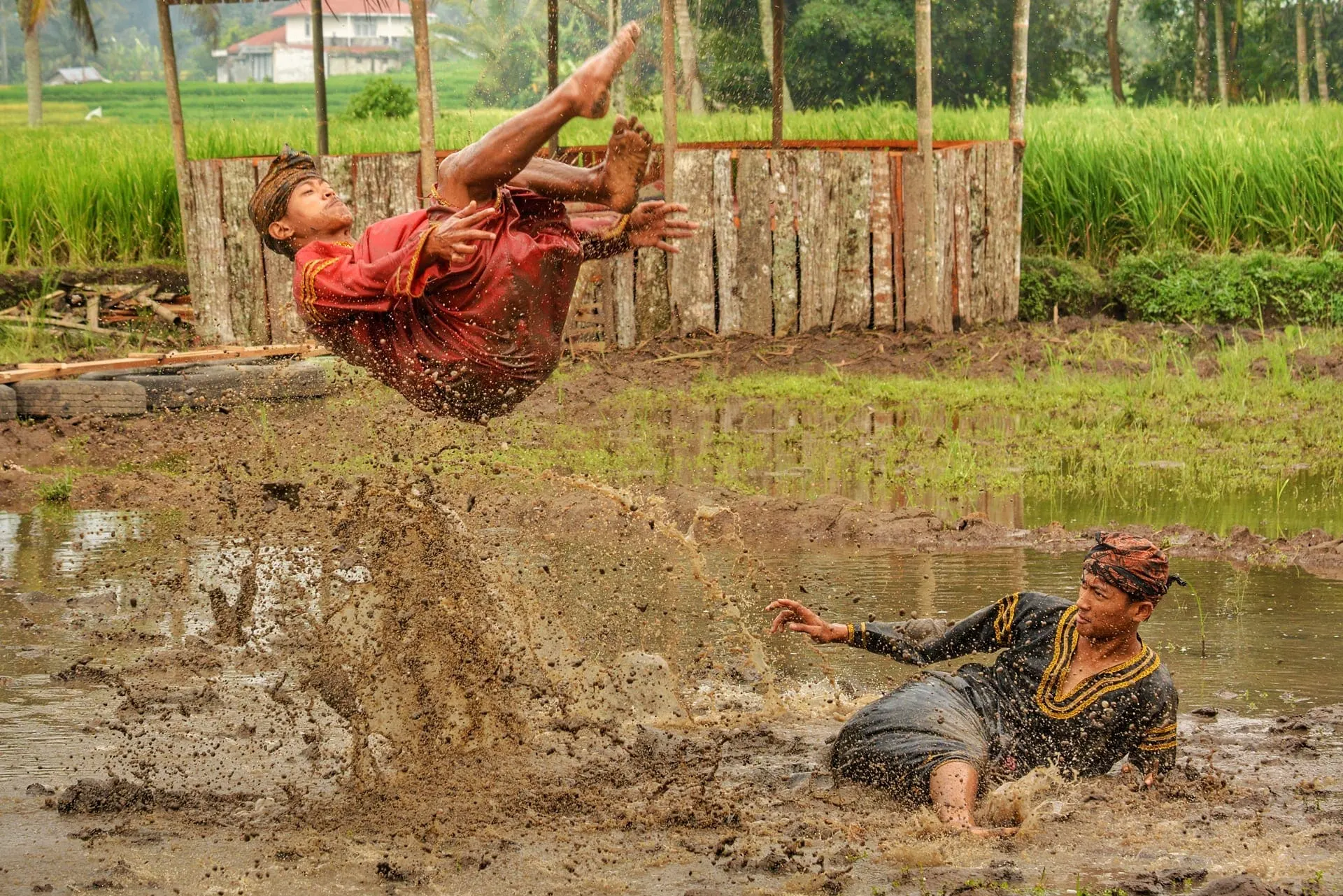
The heart of Fenghuang. The Tuo River cuts through the ancient town, lined with diaojiaolou stilt houses on both banks. Hongqiao (Rainbow Bridge) is the 600-year-old covered stone bridge spanning the river — it houses shops and tea houses on its upper level. The riverfront is at its most beautiful at dawn (mist on the water, empty streets) and dusk (red lanterns reflecting in the river).
Wikimedia Commons · CC-BY-SA
Former Residence of Shen Congwen (沈从文故居, Shěn Cóngwén Gùjū)
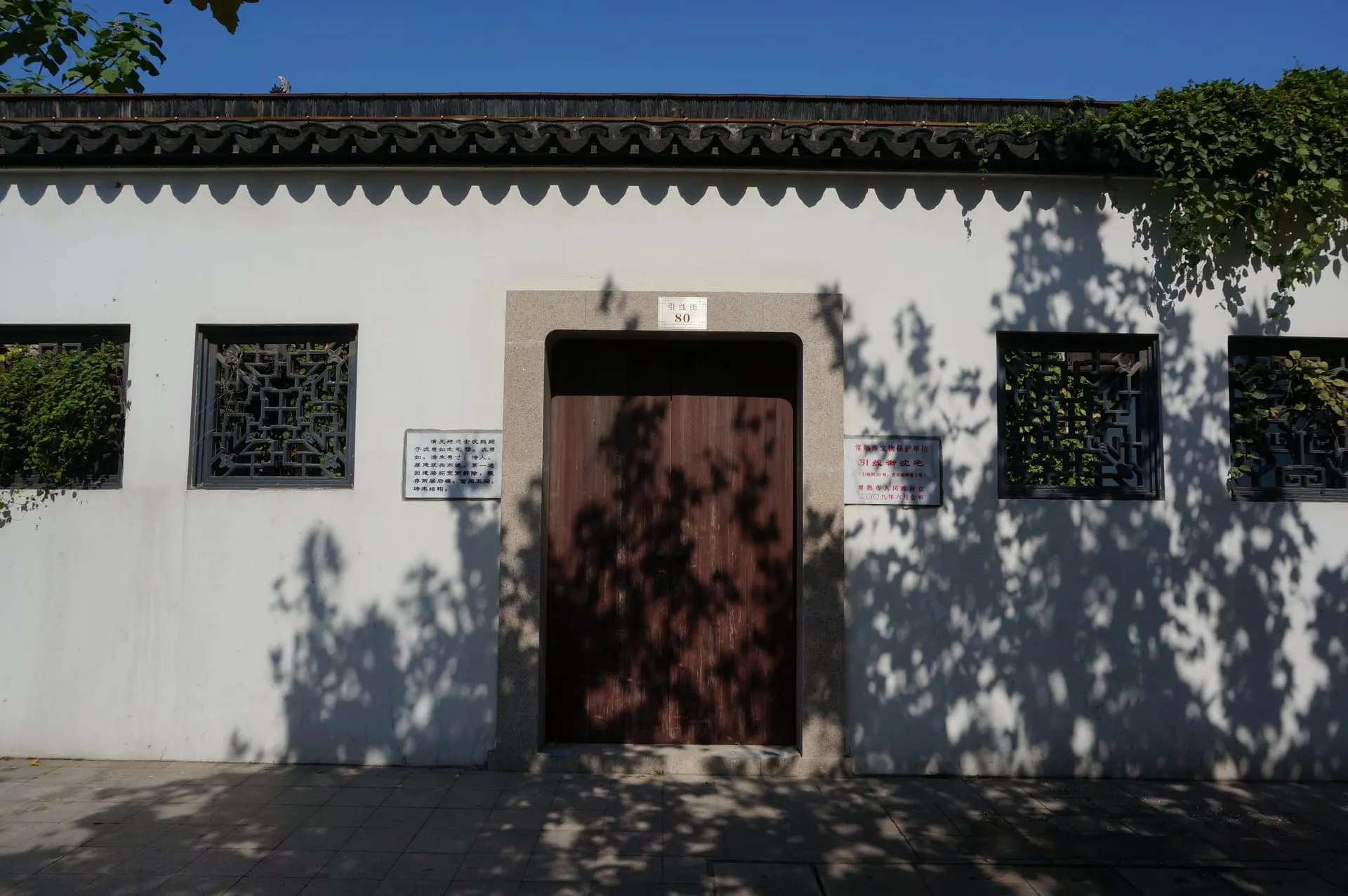
The childhood home of Shen Congwen (1902-1988), one of China's most celebrated 20th-century writers and the man who put Fenghuang on the literary map. A modest Qing-dynasty courtyard house with original furniture, manuscripts, and photographs. Shen's novel "Border Town" (边城, Biān Chéng) immortalized the landscape and people of western Hunan. ¥30, included in the ¥148 town pass.
Wikimedia Commons · CC-BY-SA
East Gate Tower (东门城楼, Dōngmén Chénglóu)
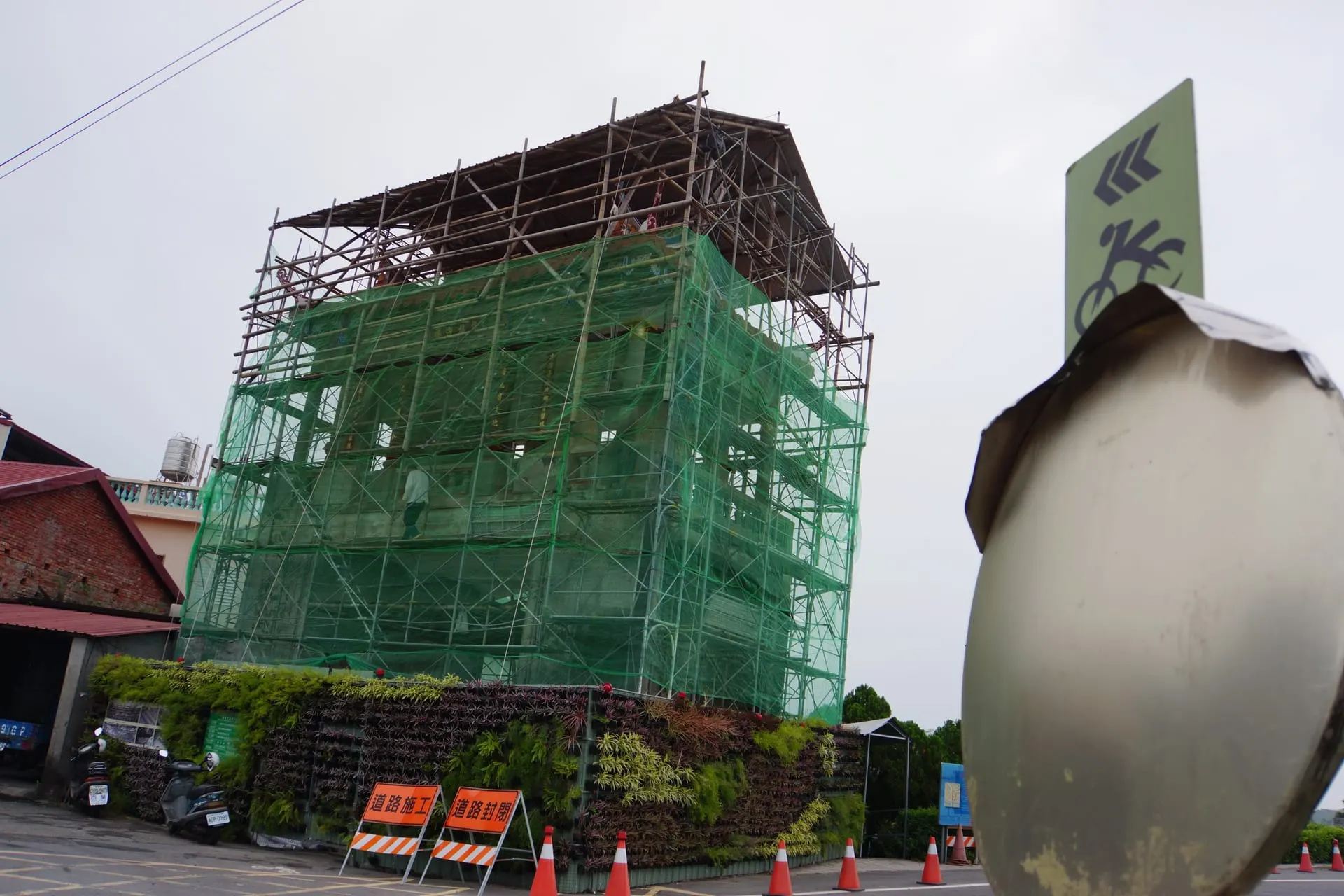
The best-preserved of Fenghuang's four original Ming-dynasty city gates, built in 1715 during the Kangxi reign. The two-story tower offers elevated views over the ancient town rooftops and the river. The gate itself is a popular photo spot — the twin red lanterns and crenellated walls frame the river beautifully. Included in the ¥148 town pass.
Wikimedia Commons · CC-BY-SA
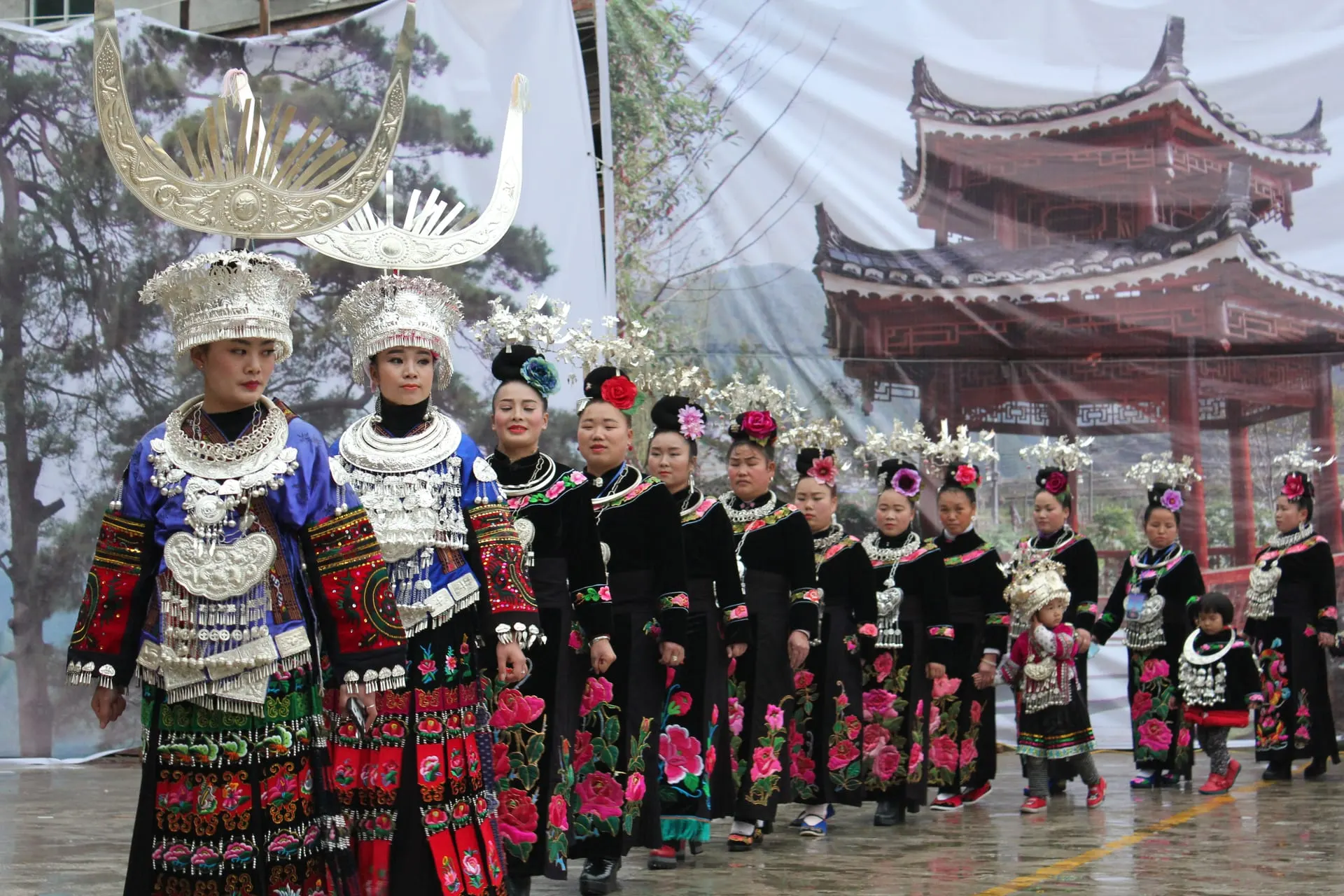
Miao Village Cultural Shows (苗寨文化表演, Miáozhài Wénhuà Biǎoyǎn)
Several Miao minority villages in the hills around Fenghuang — including Laodong (老洞), Shanjiang (山江), and Dehang (德夯) — welcome visitors with drum performances, Miao embroidery demonstrations, silver jewelry workshops, and traditional meals. Be selective: some villages are authentic, others are heavily staged. Shanjiang Miao Village (¥100) is the most established and offers a good balance of authenticity and accessibility. The Miao New Year (late October or November, lunar calendar) is the best time for genuine celebrations.
Wikimedia Commons · CC-BY-SA
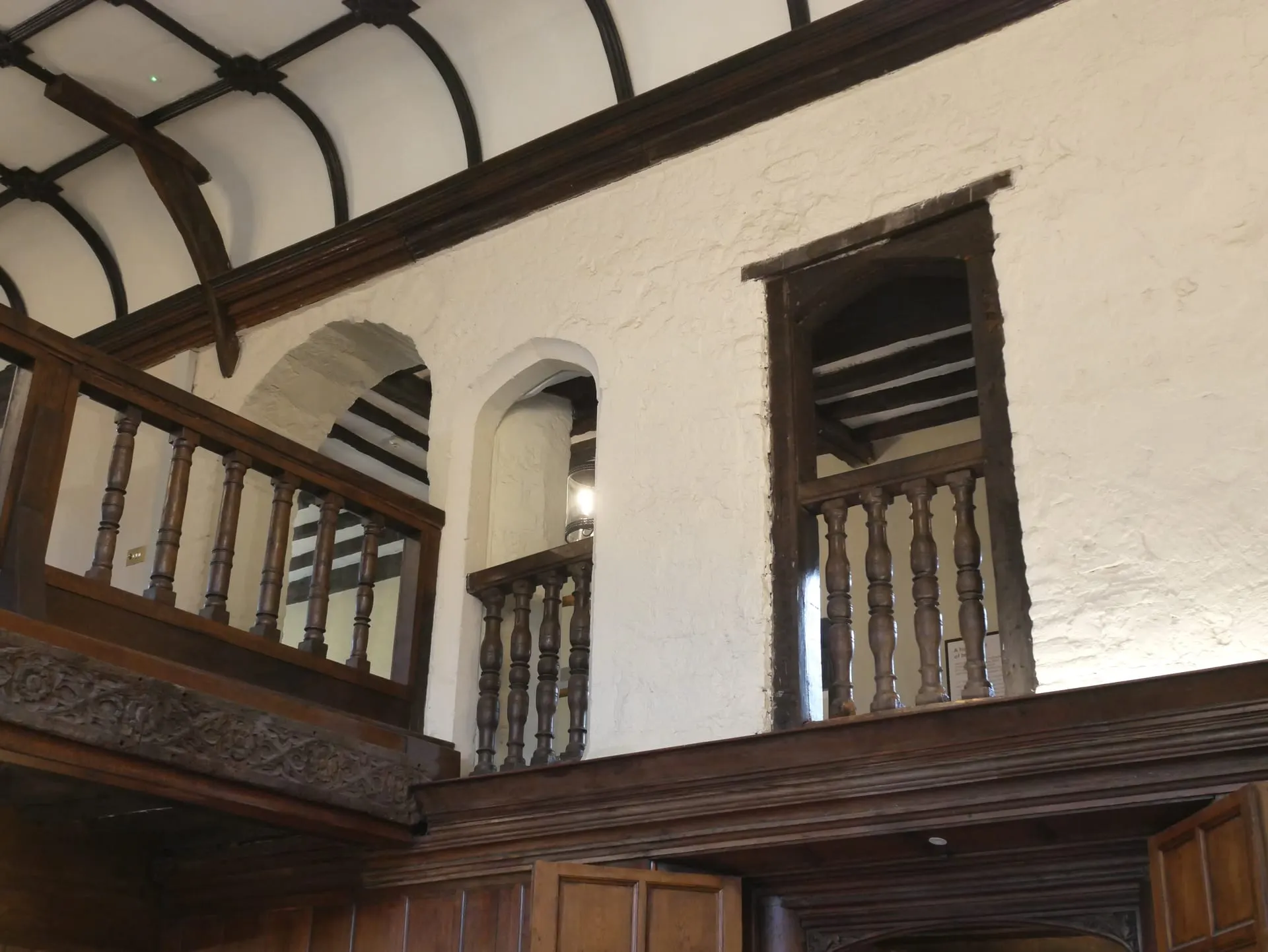
South Great Wall (南方长城, Nánfāng Chángchéng)
A 190-km Ming-dynasty defensive wall built in 1554 to separate Miao territories from Han settlement areas. Less famous than the northern Great Wall but historically significant — it reflects the long tension between the Ming state and the Miao people. About 15 km from Fenghuang. The restored section at Dengzhai (登寨) is the most accessible. ¥45.
Wikimedia Commons · CC-BY-SA
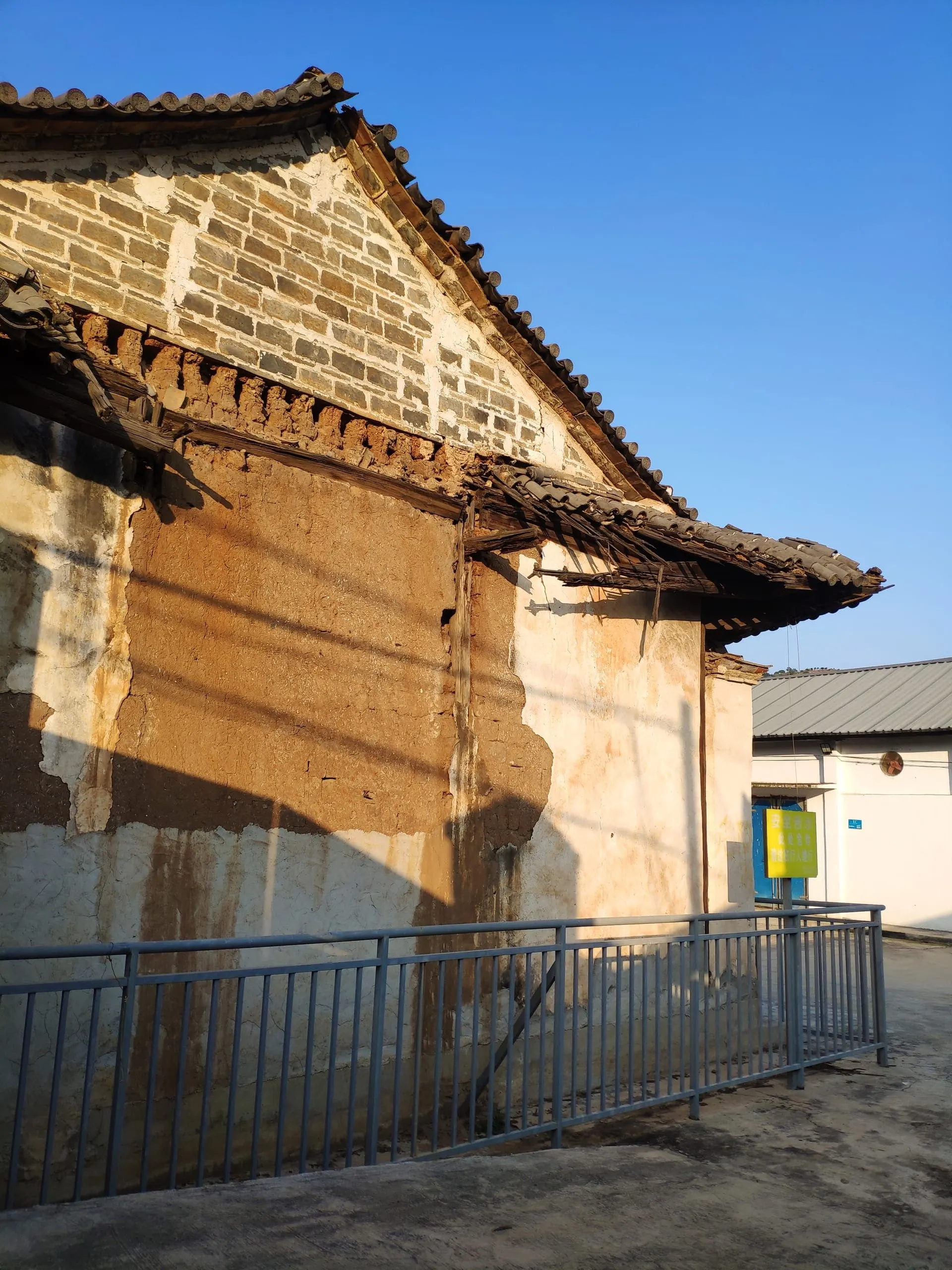
Wanshou Palace (万寿宫, Wànshòu Gōng)
A Qing-dynasty Jiangxi guildhall complex on the north bank of the Tuo River, with carved wooden beams, a courtyard theater stage, and a small museum of Miao embroidery. The riverside facade is one of the most photographed architectural compositions in Fenghuang. ¥25, included in the ¥148 pass.
Wikimedia Commons · CC-BY-SA
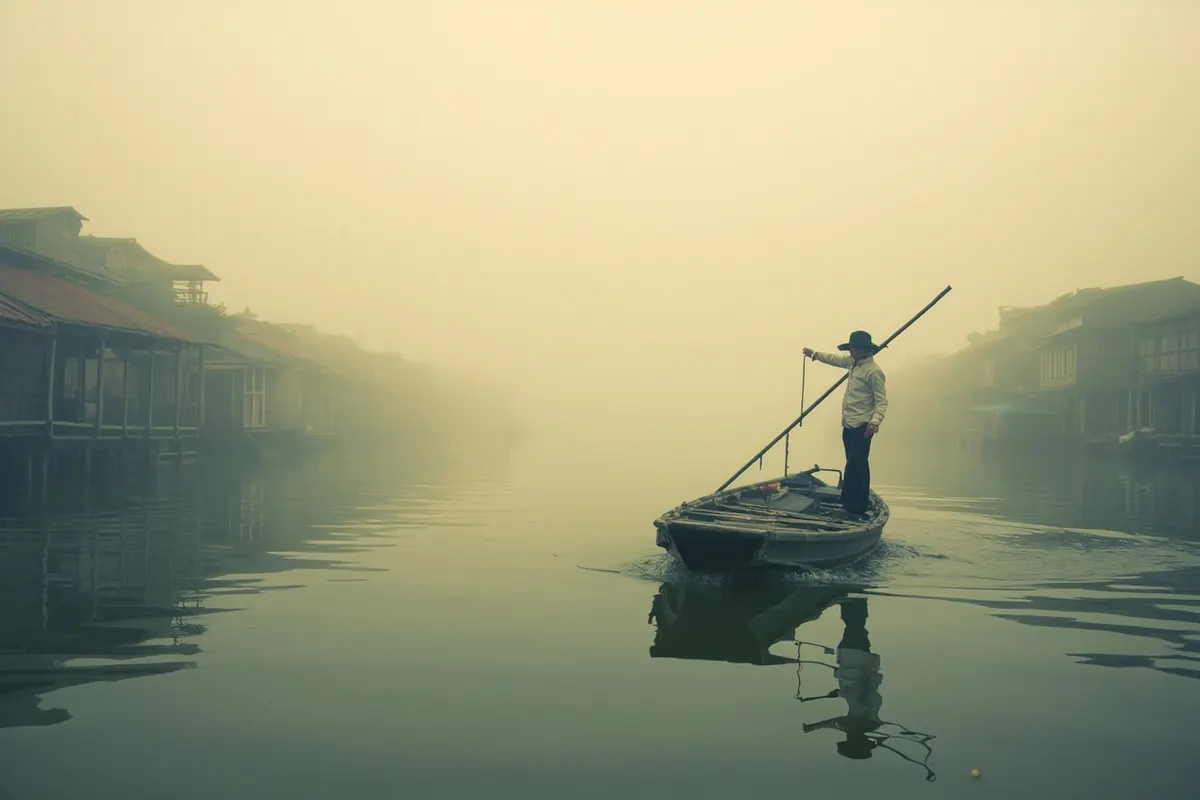
Tuo River Boat Ride (沱江泛舟, Tuó Jiāng Fànzhōu)
Traditional wooden boats poled by local boatmen along the Tuo River through the ancient town. The 20-minute ride passes under Hongqiao Bridge, past the stilt houses, and offers the best perspective on the diaojiaolou architecture. ¥30 for a shared boat (included in the ¥148 pass). Early morning rides are the most atmospheric — mist on the water, no crowds, only the sound of the pole dipping into the river.
Wikimedia Commons · CC-BY-SA
STAY
Where to stay in Fenghuang
Pick a base that matches the trip you want — imperial-central for sightseeing, hutong belt for character, Chaoyang for nightlife, or Qianmen for budget.
Ancient Town Core
The riverside historic center — diaojiaolou stilt houses, Hongqiao Bridge, and the main attractions
#ancient-town-coreHongqiao Area
The area around Rainbow Bridge with the best restaurants, food streets, and evening energy
#hongqiao-areaNew Town (South)
Modern Fenghuang south of the ancient town — cheaper restaurants, supermarkets, ATMs, and the bus station
#new-townRiverside North Bank
The quieter stretch east of Hongqiao with residential lanes, guesthouses, and back-street tea houses
#riverside-northVillage Outskirts
Miao villages in the hills within 30-60 minutes — Shanjiang, Laodong, and Dehang for cultural encounters
#village-outskirts
ITINERARIES
Sample itineraries from Fenghuang
Three ready-made routes, from a 1-day imperial sprint to a 5-day deep dive. Copy the day-by-day plan and adapt to your own pace.
- 1 DAY
One-Day Fenghuang Highlights
A packed single-day visit covering the essential riverfront sights, one museum, the boat ride, and the best photo spots at both dawn and dusk. Only possible if you arrive very early and leave late — staying overnight in a nearby town.
- Transit visitors
- Day-trippers from Zhangjiajie
- Tight schedules
- Day 01
Morning
Arrive by 07:30, enter the ancient town. Dawn walk along the Tuo River — photograph the stilt houses from the North Gate Wharf. Cross the stepping stones. Visit Shen Congwen's Former Residence (30 min). Walk to Hongqiao Bridge for the elevated river view.
Afternoon
Visit East Gate Tower and Wanshou Palace. Take the Tuo River boat ride. Lunch on Hongqiao Middle Road — order Xiangxi bacon and sour fish soup. Walk the south bank for the classic lantern-reflection viewpoint.
Evening
Dinner at a riverside restaurant. Photograph the lanterns after dark from the south bank. Walk the full riverfront loop one final time. Depart by 20:00 (last shuttle to HSR station at 21:00).
- 2 DAYS
Two-Day Fenghuang Experience (Recommended)
The ideal Fenghuang visit: two nights lets you experience dawn, dusk, and night, plus a half-day excursion to a Miao village. This is the minimum for a satisfying visit.
- First-time visitors
- Photographers
- Culture seekers
- Weekend trips
- Day 01
Morning
Arrive by late morning, check into your riverside guesthouse. Lunch on Hongqiao Middle Road. Afternoon: explore the ancient town core — Shen Congwen residence, East Gate Tower, Wanshou Palace, Yang Family Ancestral Hall. Walk the north bank, cross the stepping stones, walk the south bank.
Afternoon
Rest at your guesthouse during the mid-afternoon peak-crowd period. Late afternoon: take the Tuo River boat ride when the light softens. Position yourself on the south bank opposite Wanshou Palace for sunset photos.
Evening
Dinner at a riverside restaurant. Walk the town after dark — the lanterns, the reflections, the night market stalls near Hongqiao. End with ginger candy and Miao rice wine at a back-lane tea house.
- Day 02
Morning
Wake at 06:00 for the dawn river walk — this is when Fenghuang is at its best. Empty streets, mist on the water, lanterns still glowing. Photograph everything. Return for breakfast at your guesthouse. Mid-morning: taxi to Shanjiang Miao Village (30 min). Watch drum and dance performances, visit the embroidery workshop, eat a Miao-style lunch.
Afternoon
Return to Fenghuang by 14:00. Explore the back lanes north of Dongzheng Street — the residential Fenghuang most visitors miss. Visit a tea house. One more river walk. Depart in the late afternoon or stay a second night.
Evening
If staying a second night, try a different restaurant, take one more lantern-lit walk, and enjoy the town after the day-trippers have left. The late-evening Fenghuang is quieter and more atmospheric than the mid-evening version.
- 3 DAYS
Three-Day Fenghuang Deep Dive
Three days adds the South Great Wall, a second Miao village or countryside exploration, and a fully relaxed pace with time to read Shen Congwen by the river and soak in the atmosphere at all times of day.
- Slow travelers
- History enthusiasts
- Photographers
- Cultural deep dives
- Day 01
Morning
Arrive by late morning, check into guesthouse. Lunch. Afternoon: explore the ancient town core — all the included attractions on the ¥148 pass (Shen Congwen residence, East Gate Tower, Wanshou Palace, Yang Family Ancestral Hall). Take the Tuo River boat ride. Walk both riverbanks.
Afternoon
Mid-afternoon rest. Late afternoon: position yourself for sunset photos from the south bank opposite Wanshou Palace — this is the classic shot. Bring a tripod if you have one.
Evening
Dinner on Hongqiao Middle Road. Walk the lantern-lit riverfront. Try a back-lane tea house for ginger tea and Miao rice wine.
- Day 02
Morning
Dawn walk at 06:00 — empty town, mist, the best hour of your visit. Breakfast. Mid-morning: taxi to Shanjiang Miao Village for drum dancing, embroidery, and Miao lunch.
Afternoon
Return by 14:00. Afternoon: visit the South Great Wall at Dengzhai (45 min from Fenghuang). Walk the restored Ming-dynasty wall section (about 2 hours), visit the small museum on Miao-Han frontier history.
Evening
Return to Fenghuang. Dinner at a quieter back-lane restaurant away from the riverfront — better food, lower prices. Evening walk on whichever riverbank you have spent less time on.
- Day 03
Morning
Final dawn walk (06:00) — one more round of photos, one more chance to see the town at its best. Breakfast. Visit any attractions you missed. Buy ginger candy, embroidery, and vacuum-packed Xiangxi bacon as souvenirs.
Afternoon
Read a chapter of Shen Congwen's "Border Town" by the river — the book that made Fenghuang famous. Walk the back lanes one more time. Lunch of Xiangxi bacon one last time.
Evening
Depart by late afternoon or early evening. If you have a late train or flight, one final riverfront walk at dusk — the lanterns come on, the reflections shimmer, and you understand why Shen Congwen wrote about this place for his entire life.
BUDGET
What a Fenghuang trip costs
Per-person, per-day costs across three spending tiers. Excludes international flights and visa fees.
| Line item | Backpacker | Mid-range | Luxury |
|---|---|---|---|
| Accommodation (per night) | $10 | $40 | $120 |
| Entry ticket (3-day pass) | $21 | $21 | $21 |
| Meals (per day) | $12 | $25 | $60 |
| Local transport (per day) | $3 | $8 | $20 |
| Boat ride (if not in pass) | $4 | $4 | $4 |
| Miao village day trip | $15 | $40 | $80 |
| South Great Wall + transport | $10 | $20 | $35 |
| Souvenirs (ginger candy, embroidery) | $5 | $20 | $60 |
| Total per day | $80 | $178 | $400 |
$ USD per person per day, before international flights and visas. Last verified: Q3 2026.
STAY SAFE
Emergency contacts in Fenghuang
Save these three numbers before you board the plane. China uses different hotlines than most countries — there's no 911.
- POLICE
110
- AMBULANCE
120
- FIRE
119
- TOURIST HOTLINE
12301 (China National Tourism Administration hotline)
- ENGLISH-SPEAKING ER
Fenghuang People's Hospital (凤凰县人民医院) — basic services only. For serious conditions, transfer to Huaihua or Changsha is essential.
Problems travelers hit in Fenghuang
- Why is my Alipay not working?You linked a foreign Visa or Mastercard to Alipay but every transaction is rejected at the merchant.
- My China visa was denied — what now?Your L visa application was refused at the Chinese consulate and your trip is in 2–4 weeks.
- My passport was lost or stolen in China — what do I do?Your passport is gone (theft or loss) and you're in mainland China without travel documents.
- Why can't I book on 12306 with my foreign card?You tried to book a high-speed rail ticket on 12306.cn and your foreign Visa/Mastercard is rejected at checkout.
- Why is my VPN not working in China?You arrived in China, opened your VPN, and it will not connect at all or connects but no traffic loads.
- Why can't I book a Tibet trip on my own?You try to book Lhasa flights and hotels yourself but the booking fails, or you're turned away at the Lhasa airport without a permit.
Book activities in Fenghuang
These are licensed tour operators and booking platforms we've vetted independently. Booking through these links may earn us a commission — see our affiliate disclosure. This never affects our editorial recommendations or the price you pay.
Frequently asked questions
Is Fenghuang worth visiting given how crowded and commercialized it is?
How many days do I need in Fenghuang?
How do I avoid the crowds in Fenghuang?
What is the Fenghuang entry ticket and can I avoid paying it?
How do I get from Fenghuang Ancient Town HSR station to the town?
Can I visit Miao villages independently or do I need a tour?
Show all 20 FAQs
Is Fenghuang suitable for elderly travelers or those with mobility issues?
What should I wear in Fenghuang?
Is Fenghuang family-friendly?
Can I combine Fenghuang with Zhangjiajie?
What is the single best photo spot in Fenghuang?
How safe is Fenghuang for solo female travelers?
What is the difference between the north bank and south bank of the Tuo River?
Do I need a visa for Fenghuang?
What should I buy as souvenirs in Fenghuang?
What is the best time of day to photograph Fenghuang?
Can I cross the Tuo River on the stepping stones and is it safe?
Is Fenghuang accessible by wheelchair or for travelers with mobility issues?
What is blood duck (血鸭, xuèyā) and should I try it?
How do I get from Fenghuang to the South Great Wall and is it worth the trip?
References

Related guides & destinations
Guide
How We Research 2026: NihaoVisit’s Methodology for China Travel Information
How NihaoVisit sources, verifies, and maintains 700+ pages of China travel information — our source hierarchy, fact-checking process, update
Guide
Fact-Checking Log 2026: Verified China Travel Information — NihaoVisit
A public log of fact-checking verification passes on NihaoVisit, showing what was verified, when, and against which sources — covering visa
Guide
Best Time to Visit China 2026: Month-by-Month Weather, Crowds, and Prices
The best time to visit most of China is April–May and September–October. Winter (Dec–Feb) is cold but cheap; summer (Jun–Aug) is hot and cro
Guide
VPN for China 2026: Which VPNs Work, eSIM Alternatives, and the Complete Pre-Trip Checklist
Most Western apps and websites are blocked in mainland China. A reliable VPN is essential for Google, Gmail, WhatsApp, Instagram, and most n
Guide
China SIM Card and eSIM Guide 2026: Stay Connected Without WeChat
A Chinese SIM or eSIM lets you use mobile data, maps, and ride-hailing without WiFi. Here is how to get one, the cost, and which provider to
Guide
Solo Female Travel in China 2026: Safety, Tips, and Real Experiences
China is one of the safer destinations for solo female travelers. Petty theft is rare, violent crime against tourists is extremely uncommon,