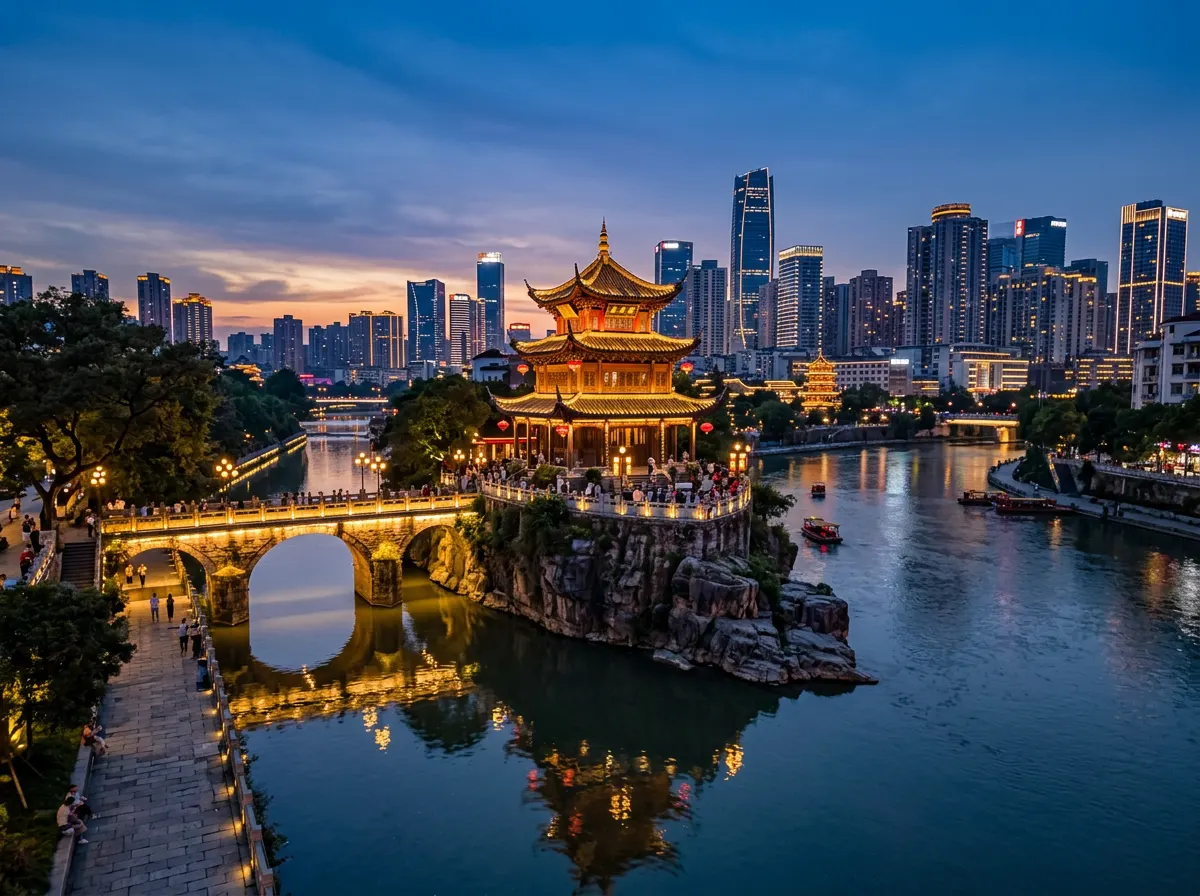
Guiyang
Guiyang is the capital of Guizhou Province, a 5-million-population city at 1,100 m elevation in southwest China. It is famous as China's 'summer capital' (避暑之都) — average July temperatures are only 22-25°C, making it a major escape from the heat of eastern China. The city is the gateway to Huangguoshu Waterfall (one of Asia's largest), the Kaili Miao villages, the Xiaoqikong scenic area, and the massive Qingyan Ancient Town. The local Miao and Buyi ethnic minority cultures are vibrant and well-preserved. Plan 2-3 days for Guiyang, plus 2-3 days for Huangguoshu and the Kaili region. Best from May to October. Fly into Guiyang Longdongbao International Airport (KWE).
Why Guiyang in 2026.
Capital of Guizhou Province, a high-altitude city in southwest China famed as the country's 'summer capital' for its cool climate, and the gateway to the dramatic karst landscapes of Huangguoshu Waterfall, the Miao and Buyi ethnic villages, and the world's largest contiguous karst region.
Quick Answer
Guiyang is the capital of Guizhou Province, a 5-million-population city at 1,100 m elevation in southwest China. It is famous as China's 'summer capital' (避暑之都) — average July temperatures are only 22-25°C, making it a major escape from the heat of eastern China. The city is the gateway to Huangguoshu Waterfall (one of Asia's largest), the Kaili Miao villages, the Xiaoqikong scenic area, and the massive Qingyan Ancient Town. The local Miao and Buyi ethnic minority cultures are vibrant and well-preserved. Plan 2-3 days for Guiyang, plus 2-3 days for Huangguoshu and the Kaili region. Best from May to October. Fly into Guiyang Longdongbao International Airport (KWE).
| Best time to visit | May to October; July-August for the cool summer climate |
|---|---|
| Daily budget | $30 (backpacker) / $85 (mid-range) / $230+ (luxury) |
| Language | Mandarin; Guizhou dialects (often mutually intelligible) |
| Currency | CNY (¥) — Alipay/WeChat Pay universal |
| Time zone | China Standard Time (UTC+8) |
| Last updated | 2026-06-14 |
Want a Guiyang plan built for you?
Why visit Guiyang?
Guiyang is one of the most underestimated destinations in China. While tourists crowd into Guilin, Yangshuo, and Zhangjiajie for karst landscapes, the same geological phenomena exist on a much larger scale in Guizhou — and Guizhou remains relatively uncrowded. Guiyang itself is a leafy, high-altitude city of 5 million, with summer temperatures that hover around 22-25°C while Shanghai, Wuhan, and Chongqing swelter at 35-40°C. The phrase "避暑之都" (bìshǔ zhī dū, "summer capital") is a formal designation granted by the Chinese government to Guiyang for this very reason. More importantly, Guiyang is the gateway to a region of extraordinary natural and cultural diversity. The South China Karst World Heritage site covers 175,000 km² across Guizhou, Yunnan, Guangxi, and Chongqing — the largest contiguous karst area in the world. Within a 2-3 hour drive of Guiyang are some of the most spectacular waterfalls, gorges, and underground cave systems on earth. The Huangguoshu Waterfall alone is 77.8 m tall and 101 m wide; the surrounding scenic area includes 18 additional waterfalls, each photogenic, and a 134-m-long natural water-curtain cave behind the main falls where you can walk. Culturally, Guizhou is home to the Miao, Dong, Buyi, Tujia, Yi, and Shui ethnic minorities — among the most vibrant and well-preserved traditional cultures in China. The Miao (Hmong) are particularly visible: their silver headdresses, batik-dyed indigo clothing, and stilted wooden longhouse villages are unlike anything in eastern China. The Xijiang Miao Village, 200 km from Guiyang, is the world's largest Miao settlement with 1,200+ traditional houses. The Long Skirt Miao of Leishan, the Short Skirt Miao of Danzhai, and the Gejia subgroup (a putative Miao sub-group famous for batik) all have villages within an hour of Kaili. Guiyang is also one of China's most livable cities by some measures. The city has invested heavily in parks, public transit, and a metro that opened in 2017. It is also a major data center hub, hosting Apple iCloud data centers and a growing cluster of tech companies. The 2023 China International Big Data Industry Expo is held here. The combination of cool climate, clean air (despite the karst), great food, and lower cost of living has made Guiyang a popular destination for "summer retreat" (避暑) travel from Shanghai, Guangzhou, and Chongqing.
What is the history of Guiyang: From Yelang kingdom to modern provincial capital?
The Guiyang region has been inhabited for at least 50,000 years (the Paleolithic Yanhuidong site). The Yelang (夜郎) Kingdom, a loose tribal confederation that existed from at least the 3rd century BCE, was based in western Guizhou. The Chinese Han dynasty attempted to subdue Yelang in 135 BCE; the famous retort "Is Yelang as big as the Han?" (夜郎自大, Yelang believed itself larger than the Han) gave rise to a Chinese idiom about provincial self-importance. Yelang was eventually absorbed into the Han Empire and then successive Chinese dynasties. Guiyang was founded as a military garrison in 111 BCE under the Han dynasty, and the city's name (meaning "sunny plateau") reflects its position on a sunny south-facing slope. Through the Tang, Song, and Yuan dynasties, Guiyang remained a frontier settlement, populated largely by non-Han ethnic groups. The Ming dynasty (1368-1644) brought large-scale Han Chinese settlement, and the city walls, the Jiaxiu Pavilion, and many of the temples still standing date from this period. The Qing dynasty made Guiyang the capital of Guizhou Province in 1683, and the city grew into a major regional center. In the 20th century, Guiyang was a key supply base during the Long March (1934-1935) and a major industrial city during the Sino-Japanese War, with many factories relocated here from coastal China. The modern city retains a layered history: the Qing-era walled center, the 1930s-1940s industrial districts, and the high-rise modern downtown. The recent transformation — metro, data centers, wine and coffee industries, summer tourism — has been rapid. The local economy today is driven by big data, advanced manufacturing, tobacco (Guizhou is China's second-largest tobacco-producing province), and tourism.
What is the geography and climate of Guiyang: a cool, high-altitude plateau?
Guiyang sits on the Guizhou Plateau at an elevation of approximately 1,100 m, surrounded by mountains and cut by deep karst valleys. The city is built on a series of ridges and small basins, with the Nanming River running through the center. Karst topography dominates — limestone caves, sinkholes, tiankengs (giant dolines), and underground rivers are everywhere. The climate is subtropical highland monsoon: cool, wet summers, mild winters, and a long rainy season from April to October. The single most important thing to know about Guiyang's climate: **summers are cool**. The average July high is 28°C, with many days in the low 20s; the average January low is 2-4°C. Snow is rare but possible. Rainfall is heavy — about 1,100-1,200 mm/year, mostly in summer, often as long gentle drizzles. The combination of elevation, low latitude, and persistent cloud cover gives Guiyang its mild summer climate, and the city is filled with summer visitors from the hot eastern and central cities. Bring a light jacket even in July, and rain gear. The karst environment creates unique agricultural products. Guizhou produces more than 60% of China's mature vinegar, and 贵州茅台 (Moutai) — the famous baijiu liquor — comes from nearby Renhuai. The province is also China's largest producer of chili peppers (used in Guizhou's famously sour-and-spicy cuisine), tea (Maojian, Duyun Maojian), and the herb known as "Bazhen" for traditional medicine. The cool, wet climate also supports an emerging wine and coffee industry in the highlands.
How to get to Guiyang
The main gateway is Guiyang Longdongbao International Airport (KWE), 11 km southeast of the city center, with direct flights to Beijing (2.5 hours), Shanghai (2.5 hours), Guangzhou (2 hours), Shenzhen (2 hours), Chengdu (1.5 hours), Kunming (1 hour), and most major Asian cities. International connections include Bangkok, Singapore, Kuala Lumpur, and Seoul. The airport has a metro station (Line 2) and a frequent airport bus (¥10) to the city center. Guiyang is one of the major high-speed rail hubs of southwest China. From Guangzhou, HSR takes 4.5 hours; from Kunming, 2.5 hours; from Chengdu, 3 hours; from Chongqing, 2.5 hours; from Changsha, 3 hours. Guiyang North Station (贵阳北站) is the main HSR station, connected to the metro. Guiyang Station (贵阳站) handles older conventional trains, including the famous Shanghai-Kunming "slow train" through Guizhou. For Huangguoshu Waterfall, take the Guiyang-Anshun HSR from Guiyang North to Anshun West (30 minutes, ¥50), then a 30-minute taxi to the waterfall entrance. The HSR has made Huangguoshu a popular day trip. For Kaili and the Miao villages, take the HSR to Kaili South (35 minutes, ¥75), then hire a car for the day. For Libo and Xiaoqikong, take the HSR to Libo (1.5 hours, ¥120), then a 30-minute bus.
Where to stay and the best neighborhoods
Guiyang has 3-4 useful base neighborhoods for travelers. The most central is Nanming District (南明区), the old city around the Jiaxiu Pavilion and the Nanming River. It's walking distance to most central attractions, with the densest restaurant and nightlife scene. International chain hotels (Sofitel, Sheraton, Hilton) are all present here, with rooms from ¥500-1,200/night. Mid-range Chinese-brand hotels (Jinjiang, Hanting, Atour) cost ¥250-450/night. Budget hostels (Ming Hostel, Guiyang International Youth Hostel) are ¥80-150/night. The new downtown in Guanshanhu District (观山湖区) is 15-20 minutes north of the old city, built around the municipal government, the convention center, and the international exhibition area. The hotels are newer and slightly cheaper. The Guizhou Provincial Museum is here. It's a good choice for business travelers, less so for cultural travelers who want to be near the old city. Yunyan District (云岩区) is the central business district, with Qianling Mountain Park and most of the university area. The vibe is local-Guiyang, with a strong food scene. Huaguoyuan (花果园) is a megablock of high-rises — the largest single urban development in China by some measures — with a chaotic mix of street food, malls, and residential life. Photogenic but not for the faint of heart. For the wine country, boutique hotels and B&Bs have opened in the Huaxi district south of the city. For Miao cultural trips, Kaili has a range of hotels from ¥200-600/night, and the Xijiang Miao Village has a cluster of stilted-wood B&Bs in the ¥300-800/night range. The Xijiang B&Bs are a highlight of the trip. A neighborhood-by-neighborhood quick guide: - **Nanming District (南明区)**: Old city, Jiaxiu Pavilion, restaurants, nightlife. Best for first-time visitors. - **Yunyan District (云岩区)**: Central business district, Qianling Mountain, local food. Best for business travelers. - **Guanshanhu District (观山湖区)**: New downtown, museums, conference. Best for business and conferences. - **Huaxi District (花溪区)**: University area, Tianhe Pool, wine country. Best for families and nature. - **Kaili and Xijiang**: Miao cultural area, 200 km east. Best for ethnic cultural trips.
What are the top attractions in Guiyang: karst, water, and Miao culture?
Huangguoshu Waterfall (黄果树瀑布) is the headline attraction. The waterfall is 77.8 m tall and 101 m wide, plunging off a cliff on the Baishui River. The scenic area, 130 km from Guiyang, includes 18 waterfalls in a 450 km² zone, the most famous being the main Huangguoshu, the 134-m-wide Water-Curtain Cave (水帘洞) where you can walk behind the falls, and the more compact but equally beautiful Doupotang Waterfall (陡坡塘). The Doupotang is the wider, lower waterfall used in the closing credits of the TV adaptation of Journey to the West. The scenic area has a sightseeing bus and well-maintained paths; plan 4-5 hours. The HSR connection to Anshun makes it a feasible day trip, but an overnight in Anshun or at the waterfall hotel is more relaxed. Qingyan Ancient Town (青岩古镇) is the easiest day trip from Guiyang, 30 km south. A Ming-era walled town founded in 1378, it has well-preserved stone streets, four fortified gates, and a number of active temples (Buddhist, Taoist, and Christian — the town has a 19th-century Catholic church). The town is famous for two foods: 玫瑰糖 (méiguī táng, rose sugar candy, made by hand) and 状元蹄 (zhuàngyuán tí, "top scholar's trotters," a sweet-and-savory braised pork knuckle). Allow 3-4 hours. A taxi round trip from Guiyang is ¥300-400; the public bus (¥5) takes 90 minutes each way. Jiaxiu Pavilion (甲秀楼) is the symbol of Guiyang, a 400-year-old Ming-era pavilion on a rocky islet in the Nanming River. It's free, it's 5 minutes from the central hotels, and it's beautiful at night when the river lights up. The surrounding riverfront park is one of the best places in Guiyang for an evening walk. Qianling Mountain Park (黔灵山公园) is the city's green lung, a 4,300-hectare park in the center of Guiyang. It has 1,500+ free-roaming macaque monkeys (do not feed them; they bite), a 1,600-year-old Hongfu Temple, a zoo, and hiking trails. The summit is 1,300 m and offers panoramic views of Guiyang. ¥5 entry. Allow 3-4 hours, half a day for the full hike. For the Miao villages, Xijiang Qianhu Miao Village (西江千户苗寨, "Thousand-Household Miao Village of Xijiang") is the most visited. 200 km from Guiyang, it is the world's largest Miao settlement, with 1,200+ traditional stilted wooden houses clinging to two river-valley slopes. The village has a museum, a nightly performance of Miao dance and song, and many B&Bs. The entrance fee is ¥90, with a sightseeing bus. Allow at least one night to see the village after the day-trippers leave and the lights come on — the night view of the 1,200 wooden houses is one of the most striking in China. The smaller, more authentic villages — Leishan, Langde, and Dali — are within an hour of Kaili. Xiaoqikong (小七孔, "Small Seven Arches") is the second great karst scenic area, part of the same South China Karst World Heritage site as Huangguoshu. A 7-arch Qing-era stone bridge over emerald water is the icon, surrounded by 68-level waterfalls, ancient trees, and a 1.2 km-long water-curtain walk. The site is 250 km from Guiyang, near Libo on the Guangxi border. The day trip is long (5-6 hours one way); better to spend 1-2 nights in Libo or Sandu.
What local food should I try in Guiyang: sour, spicy, and full of chili?
Guizhou cuisine (黔菜) is one of China's eight great culinary traditions, famous for its sour-and-spicy (酸辣) flavor profile and heavy use of chili peppers. Guizhou is China's second-largest chili-producing province, and the local chilies are among the most aromatic in the country (different from Sichuan's numbing or Hunan's pure heat). The signature flavor is a fermented chili paste called 糟辣椒 (zāo làjiāo), used as a base for stir-fries and dipping sauces. The most well-known Guizhou dish is 酸汤鱼 (suāntāng yú, "sour soup fish"). A fermented tomato and rice-stock sour soup is brought to a boil, and a whole fresh fish is poached in it at the table. Served with a dipping sauce of garlic, cilantro, and 糟辣椒. The dish originated in the Miao and Dong communities; the version served in Guiyang is the most famous. A few classic restaurants: - **老凯俚酸汤鱼 (Lǎo Kǎilí Suāntāng Yú)**: The most famous chain, with multiple locations in the old city. ¥80-150 per person. - **亮欢寨酸汤鱼 (Liànghuān Zhài)**: A second respected chain, slightly upscale. Good for tasting menus. - **新大新豆米火锅 (Xīn Dàxīn Dòumǐ Huǒguō)**: A unique Guiyang hot pot made with mashed green soybeans. Surprisingly light and savory. ¥60-100 per person. Other Guizhou specialties worth trying: - **肠旺面 (cháng wàng miàn)**: Guiyang's signature breakfast noodle — chewy wheat noodles in a chili-oil broth with pig intestine (肠) and pig blood (旺), topped with crispy soybean crumbs and scallions. Eaten at breakfast stalls; ¥15-25. - **丝娃娃 (sī wáwá)**: Guiyang's "silk baby" — thin rice crepes used to wrap julienned vegetables, served with a sour-and-spicy dipping sauce. ¥20-30 per person. A classic lunch. - **花溪牛肉粉 (Huāxī niúròu fěn)**: Sour-spicy beef noodle soup from Huaxi district, a Guiyang breakfast classic. ¥15-25. - **青岩猪蹄 (Qīngyán zhūtí)**: The Qingyan braised pork knuckle. Sweet-savory-spicy, often eaten cold. ¥30-50. - **折耳根 (zhé ěr gēn, Houttuynia)**: A controversial herb that grows wild in Guizhou; locals eat the root raw with chili. It has a distinctive fishy-minty taste. Try once — you'll either love it or refuse it ever again. The night market scene in Guiyang is excellent. The most famous is 青云路夜市 (Qīngyún Lù Night Market), with hundreds of stalls serving Guizhou street food, plus beer, music, and a young local crowd. The 二七路小吃街 (Èrqī Lù Snack Street) is another good option. The Huaguoyuan area has a more modern, neon-lit night market experience.
What is a good 1- to 3-day itinerary for Guiyang?
**1-Day Itinerary — Guiyang City Highlights (Sunday pace)** Morning: 8:30 AM start at the Guizhou Provincial Museum (free, 2-3 hours). The Miao Silver collection and karst geology hall are highlights. Walk 15 minutes to the Jiaxiu Pavilion for a 9:30 AM photo, then continue to the 翠微园 (Cuiwei Garden) and the Nanming River. Late morning visit the Hongfu Temple and Qianling Mountain Park (¥5, 2-3 hours with the macaques). Lunch: 12:30 PM lunch at 老凯俚酸汤鱼 for 酸汤鱼. ¥80-100 per person. Afternoon: 2:30 PM taxi to Qingyan Ancient Town (40 min, ¥300 round trip). Spend 2-3 hours walking the stone streets, visiting the temples, tasting 玫瑰糖 and 状元蹄. Optional: rent a bicycle to circle the town walls. Evening: Return to the city by 5:30 PM. Walk the Nanming River at sunset. Dinner at the 青云路夜市 for 丝娃娃, 肠旺面, and 烤鱼 (grilled fish). **2-Day Itinerary — Guiyang + Huangguoshu** Day 1: As above. Day 2: Take the 7:30 AM HSR from Guiyang North to Anshun West (30 min, ¥50). Taxi to Huangguoshu Waterfall (30 min, ¥80). Spend 4-5 hours: main waterfall, Water-Curtain Cave, Doupotang, and the smaller falls. Lunch at the on-site restaurant. Return to Guiyang by 6 PM, or stay overnight in Anshun for an early return the next day. Alternative: visit the 龙宫 (Dragon Palace) cave system nearby, an underground karst boat ride that is part of the same UNESCO site. **3-Day Itinerary — Guiyang + Huangguoshu + Kaili Miao Villages** Days 1-2: As above. Day 3: Take the 7:30 AM HSR from Guiyang North to Kaili South (35 min, ¥75). Hire a car for the day (¥400-500) and visit: the 朗德上寨 (Langde Shangzhai) Miao village (¥50, more authentic than Xijiang), the 西江千户苗寨 (Xijiang Thousand-Household Miao Village, ¥90) with its dramatic wooden longhouses, and the 大利侗寨 (Dali Dong Village) if time allows. Lunch in Xijiang — try 酸汤鱼, 糯米糍, and the Miao rice wine. Watch the 6 PM Miao dance performance. Return to Kaili by 7 PM and take the 8 PM HSR back to Guiyang. Alternative: spend the night in Xijiang (¥300-800 stilted-wood B&B) and see the village at sunset, sunrise, and after the day-trippers have left — this is the recommended way.
What practical information do inbound travelers need?
**Visas.** Guiyang follows China's standard visa policy. As of 2026, citizens of 38+ countries (most of EU, UK, Australia, New Zealand, South Korea, Japan, Malaysia, Singapore, Thailand) can enter China visa-free for 30 days. US and Canadian citizens need a tourist (L) visa. No special permit is needed for Guizhou. The province is open to foreign tourists; you can visit all the Miao villages, the karst parks, and the museums without restriction. **Money and payments.** Alipay and WeChat Pay cover 95% of city transactions, including the Miao villages, the night markets, and most restaurants. Foreign credit cards are accepted in international hotels and large restaurants only. The simplest path: use the Alipay Tour Pass (foreign credit card top-up) or get a Chinese bank card at a major bank. ATMs at Bank of China, ICBC, and China Merchants Bank accept international cards. Cash (CNY) is useful as backup. The Miao villages and rural areas are mostly cashless, but some stalls will accept cash. **Language.** Mandarin is the official language. The local Guiyang dialect is mutually intelligible with standard Mandarin, though rapid. English is not widely spoken outside international hotels and large restaurants. The Guizhou Provincial Museum, Huangguoshu, and the major scenic areas have English captions. Download Pleco and Google Translate (offline Chinese pack) before arrival. For Miao cultural trips, consider hiring a guide who can also speak basic Miao or Dong. **Customs for visiting Miao and Dong villages.** The Miao and Dong are distinct ethnic groups with their own languages, dress, and customs. Visitors to villages should: - **Ask before photographing people in traditional dress**, especially elderly women and during ceremonies. Many will accept ¥10-20 for a posed photo. - **Do not touch ceremonial silver headdresses** without permission. Miao silver is family heirloom and has spiritual significance. - **Accept rice wine (酒) when offered** at a long-table banquet (长桌宴, chángzhuō yàn). Toasting is part of the welcome. A common Miao toast is "Dry!" (干, gān), and refusal is impolite. - **Bring small gifts for village homestays** if staying overnight: fruit, tea, or small souvenirs. The villages are not formal destinations; the welcome is personal. - **Dress modestly when entering a Miao home** or village shrine. The Miao have a strong tradition of ancestor worship. **Transport within Guiyang.** Guiyang has 3 metro lines. Line 1 (north-south) and Line 2 (east-west) cross at the central Lincheng West Road station. The metro is the easiest way to move around the city. Buses are extensive but not English-marked. Taxis (¥10 flag fall) and DiDi work with Alipay. The airport is on Line 2. A taxi from the airport to the city center is ¥40-60. **Best time to visit.** May to October. June-August for the famous cool summer climate, and the rice-terrace flooding in June is one of China's most photogenic events. The Miao New Year (苗年, Miáonián) is celebrated in late October or early November — a 10-day festival with bullfighting, horse racing, and traditional music. The Dong Water-Splashing Festival is in August. Winter (December-February) is mild and damp, with fewer tourists. The waterfalls are fullest in July-September, when rainfall is heaviest.
What are the most frequently asked questions?
Inbound travelers most often ask about reaching the Miao villages and pairing Guiyang with Guilin or Kunming. The most useful next steps: book the Huangguoshu day tour in advance (most sell out on weekends), spend at least one night in Xijiang Miao Village rather than rushing it, and consider the autumn Miao New Year festival for a cultural highlight. Combine with Kunming (2.5 hours HSR), Guilin (3.5 hours HSR), or Chengdu (3 hours HSR) for a longer southwest China trip.
What is there beyond the Miao: Dong villages, Fanjingshan, and ethnic minority Guizhou?
The Miao are the most visible ethnic minority in Guizhou, but the province is also home to the Dong, Buyi, Tujia, Yi, Shui, and Zhuang minorities, each with distinct languages, customs, and architectural traditions. A deeper Guizhou trip takes in the diversity of these cultures, most of which are concentrated in the southeastern mountain region between Guiyang and the Hunan border. The Dong people (侗族) are the second-largest minority in Guizhou, with about 2 million people. They are famous for three things: their wooden architecture (the famous 风雨桥, "wind-rain bridges" covered wooden bridges), their 鼓楼 (drum towers, multi-story wooden pagodas in every village), and their 侗族大歌 (Dong Grand Song, polyphonic choral singing recognized by UNESCO as Intangible Cultural Heritage in 2009). The most accessible Dong villages are the Zhaoxing Dong Village (肇兴侗寨, China's largest Dong settlement, 6 hours drive from Guiyang), the 高增侗寨 (Gaozeng Dong Village), and several smaller villages in the Liping area. The Dong villages have a different aesthetic from the Miao: the buildings are wooden, the villages are built around drum towers, and the women's clothing is dark blue with silver accents (less elaborate than Miao silver). The Dong Grand Song performances — where a village chorus sings in polyphonic harmony without instruments — are one of the most moving cultural experiences in China. The Buyi people (布依族) are the third-largest Guizhou minority, with about 2.5 million people concentrated in the southern Qianxinan Buyei and Miao Autonomous Prefecture. The Buyi villages are known for stone houses, indigo-dyed cloth, and the 浪哨 (làngshào, Buyi courtship singing festivals). The Wanfenglin (万峰林, "Ten Thousand Peaks Forest") in Xingyi is a Buyi cultural area with dramatic karst landscape, a 2.5-hour drive from Guiyang via HSR to Xingyi. For a Buddhist-mountain experience, Fanjingshan (梵净山, "Brahma Pure Land Mountain") in northeastern Guizhou is one of China's five sacred Buddhist mountains, with a 2,572 m peak reachable by cable car and hiking trails. The mountain is a UNESCO World Heritage site (2018) for its biodiversity and Buddhist heritage. The most striking feature is the 蘑菇石 (Mushroom Rock), a 1-billion-year-old stone formation, and the 红云金顶 (Red Cloud Golden Summit), two peaks connected by a bridge. Fanjingshan is 4-5 hours drive from Guiyang, or 1.5 hours from Tongren airport. The mountain is a popular 1-2 day trip, often combined with the Miao villages of the Qiandongnan prefecture. For the ultimate Guizhou cultural-immersion trip, plan 7-10 days: 2 days Guiyang, 1 day Huangguoshu, 2 days Kaili / Miao villages (with overnight in Xijiang), 1 day Fanjingshan, 1 day Zhaoxing Dong Village, 1 day Rongjiang (Sanjiang Dong area), 1 day Xingyi / Wanfenglin Buyi. The trip covers the three major minorities (Miao, Dong, Buyi) and the two most scenic natural areas (Huangguoshu, Fanjingshan). The trip can be done by HSR and chartered cars; public transit is limited in the mountain villages.
What is Guizhou cuisine in depth: sour, spicy, and surprising?
Guizhou cuisine is one of China's most underrated regional cuisines, with a flavor profile that is distinct from the better-known Sichuan and Hunan cuisines. The signature is the 酸 (sour) taste, which comes from fermented tomato-rice stocks, fermented chili pastes, and pickled vegetables. The 辣 (spicy) is from 糟辣椒 (zāo làjiāo, fermented chili paste) and fresh chilies, with a more aromatic, fragrant heat than the numbing Sichuan peppercorn or the pure heat of Hunan chilies. The third flavor is 鲜 (xiān, umami / fresh), from the abundant mushrooms, herbs, and fermented ingredients of the mountainous southwest. The most distinctive ingredient is 折耳根 (zhé ěr gēn, Houttuynia cordata, also called "fish mint" or "chameleon plant"). The root has a strong, divisive flavor — described as a mix of fish, mint, and earth — and is a defining element of Guizhou cuisine. It is eaten raw with chili dip, in cold salads, in 丝娃娃 (sīwáwá) wraps, and in 肠旺面 (chángwàng miàn) broth. Most visitors either love it or refuse to eat it again; locals eat it daily. Other Guizhou ingredients to look for: - **花椒 (huājiāo)**: Guizhou's own Sichuan peppercorn, with a more fragrant, less numbing flavor than Sichuan. The 顶坛花椒 (Dingtan peppercorn) from the North Guizhou river valleys is among the most prized in China. - **朝天椒 (cháotiān jiāo)**: "Facing-the-sky" small red chilies, intensely hot and aromatic. Guizhou is China's largest producer. - **糟辣椒 (zāo làjiāo)**: The signature fermented chili paste, made by fermenting chopped chilies with salt, ginger, garlic, and rice wine. Every Guizhou household has a jar. - **酸汤 (suāntāng)**: The fermented sour soup used as a base for 酸汤鱼 (sour soup fish) and 酸汤粉 (sour soup noodles). Made by fermenting tomatoes, rice, and spices for 3-5 days. - **鱼腥草 (yúxīng cǎo)**: Another name for 折耳根, the Houttuynia plant. - **苦荞 (kǔqiáo)**: Tartary buckwheat, grown in the high-altitude Guizhou mountains. Used in noodles, breads, and teas. Has a distinctive bitter, nutty flavor. - **刺梨 (cìlí)**: Rosa roxburghii, a wild rose berry that grows in the Guizhou mountains. Extremely high in vitamin C (5,000+ mg per 100g, more than 50x the orange). Made into 刺梨汁 (cìlí zhī, prickly pear juice), a popular local beverage with a tart, sweet flavor. Most Guizhou supermarkets carry bottled 刺梨汁. Guizhou is also China's largest producer of 茅台酒 (Moutai), the famous baijiu (Chinese white spirit) from Renhuai, 4 hours north of Guiyang. The 茅台镇 (Moutai town) is a major tourist site, with the Kweichow Moutai Distillery tour and a 茅台酒文化博物馆 (Moutai Culture Museum). A standard Moutai tasting is ¥50-200, with bottles ranging from ¥300 (entry-level) to ¥30,000+ (vintage 15-year). The 习酒 (Xijiu) and 珍酒 (Zhenjiu) are other major Guizhou baijiu brands, more accessible than Moutai. For a Guizhou food tour, focus on these dishes: 酸汤鱼, 丝娃娃, 肠旺面, 牛肉粉, 豆腐圆子 (tofu balls), 糯米饭 (sticky rice), 酸汤粉, 凉拌折耳根 (cold Houttuynia salad), and 刺梨汁 for drinks. The night markets are essential: 青云路, 二七路, and 鸿通城 are the most famous. For a sit-down meal, 老凯俚酸汤鱼 is the most famous chain; 亮欢寨 is more upscale.
What is the South China Karst: the geology and biodiversity of Guizhou?
The South China Karst (中国南方喀斯特) is a UNESCO World Heritage site covering 175,000 km² across Guizhou, Yunnan, Guangxi, and Chongqing. It is the world's largest contiguous karst region and the most biologically diverse. The karst landscape was formed over 250 million years through the dissolution of limestone and dolomite bedrock, creating a unique terrain of sinkholes (tiankengs, "天坑"), underground rivers, natural bridges, deep gorges, conical hills (fenglin), tower hills (fengcong), and cave systems. The Guizhou portions of the South China Karst include some of the most spectacular features on earth: the Huangguoshu Waterfall, the Xiaoqikong scenic area, the Zhijin Cave system (one of the world's longest, 12+ km), the 织金洞 (Zhijin Cave, the most decorated), the 双河洞 (Shuanghe Cave, 200+ km of passages, one of the world's longest), and the 万峰林 (Wanfenglin, "Ten Thousand Peaks Forest") in Xingyi. The biodiversity of the Guizhou karst is extraordinary. The unique microclimates created by the topography support many endemic species, including the Guizhou golden monkey (Rhinopithecus brelichi, found only in Fanjingshan), the Guizhou snub-nosed monkey, the black muntjac, and the Chinese giant salamander. The Fanjingshan and Leigongshan mountains are biodiversity hotspots, with over 4,000 plant species including several species of dawn redwood (Metasequoia) and dove tree (Davidia involucrata). The karst forests are some of the most botanically rich temperate forests in the world. For the adventure traveler, the Guizhou karst offers world-class caving, rock climbing, hiking, and kayaking. The most popular caving destinations are: the 织金洞 (Zhijin Cave) near Anshun, the most decorated cave in China; the 双河洞 (Shuanghe Cave) in Suiyang, the longest cave in Asia; the 龙宫 (Dragon Palace) near Anshun, an underground boat ride through 20+ km of cave passages; and the 万峰林 (Wanfenglin) in Xingyi, where the Buyi villages nestle in a forest of 20,000+ karst peaks. Rock climbing is well-developed in the 安顺 (Anshun) area, with over 200 sport routes. The 马岭河峡谷 (Maling River Canyon) in Xingyi is one of China's best whitewater kayaking destinations. The South China Karst was inscribed as a UNESCO World Heritage site in two phases: Phase 1 in 2007 (covering the Yunnan Shilin Stone Forest, the Libo Xiaoqikong in Guizhou, and the Guilin Karst in Guangxi), and Phase 2 in 2014 (adding the Jinfoshan Karst in Chongqing, the Huanjiang Karst in Guangxi, and the Shibing Karst in Guizhou). The Guizhou portions are the most diverse and the least visited. The most photogenic sites are at dawn and dusk, when the mist settles in the valleys and the peaks emerge in golden light. For travelers who want a karst-focused trip, the 7-10 day Guizhou karst route is: 1 day Guiyang, 1 day Huangguoshu + Dragon Palace, 1 day Zhijin Cave, 1 day Xingyi Wanfenglin, 1 day Maling River Canyon, 1 day Libo Xiaoqikong, 1 day Fanjingshan. Add 2-3 days for the Miao villages and a more relaxed pace. The route can be done by HSR and chartered cars, with public transport limited in the karst mountain areas.
What are Chinese big data, climate, and the "Cool Guiyang" effect?
Guiyang is one of China's three major data center hubs, alongside Inner Mongolia's Hohhot and Guizhou's broader Gui-An region. The combination of cool climate, abundant hydropower, low electricity costs, and government incentives has made Guiyang a magnet for cloud computing and AI companies. Apple's iCloud data center in Guiyang (operational since 2018) is one of the company's largest data centers outside the United States. The Alibaba Cloud, Tencent Cloud, Huawei Cloud, and China Mobile data centers are also based in or near Guiyang. The 贵阳大数据交易所 (Guiyang Big Data Exchange) and the 中国国际大数据产业博览会 (China International Big Data Industry Expo, or "Big Data Expo") are major industry events. The "Cool Guiyang" effect is a deliberate brand strategy. The 避暑之都 ("summer capital") designation was granted by the Chinese government in 2007, formalizing the city's reputation as China's most popular summer retreat. The municipal government has actively promoted "summer economy" (避暑经济) initiatives, including discounted summer hotel rates (up to 50% off peak summer rates), free admission to parks and museums for summer visitors, and special summer tourism packages. The result: in July-August, the city's population grows by 30-50% as visitors from Shanghai, Guangzhou, Chongqing, and other hot cities come to escape the heat. The summer tourism industry in Guiyang is now worth ¥50+ billion annually. The city has hundreds of "summer hotel" (避暑酒店) and "summer apartment" (避暑公寓) developments catering to long-stay summer visitors, typically Chinese retirees and middle-class families. The typical summer stay is 2-4 weeks. The summer visitors bring significant economic benefit to the local economy: hotels, restaurants, transportation, day trips, and souvenirs all see increased revenue. The 2017 and 2018 Big Data Expo brought 40,000+ visitors and over 100,000 attendees, making it one of China's largest tech conferences. The cool climate also supports a growing wine and coffee industry. Guizhou's high-altitude coffee (mainly arabica) is grown in the 兴义 (Xingyi) and 晴隆 (Qinglong) areas of southwestern Guizhou, with a distinctive flavor profile of chocolate, nuts, and a slight acidity. The 兴义 (Xingyi) coffee is sold throughout the province and exported. The wine industry is smaller than the more famous Ningxia, but the Guizhou climate also supports grape cultivation, with boutique wineries in the Guiyang suburbs. The 刺梨 (cìlí, Rosa roxburghii) industry is more distinctive: Guizhou is the only major production area in China, and the berry is processed into juice, jam, candy, and supplements. The 刺梨产业 (cìlí chǎnyè) is a multi-billion-yuan industry with significant government support. For travelers, the practical implications of the cool climate and big-data industry are: (1) July-August hotel rates are often higher than spring and autumn (the summer is the high season), but the weather is more comfortable for outdoor sightseeing; (2) the data center tours are not generally open to the public, but the Apple facility has a small visitor center; (3) the 观山湖区 (Guanshanhu) area, where the data center cluster is, is a modern, walkable district with a different feel from the old city; and (4) the cool weather means travelers don't need a heavy summer wardrobe, but rain gear is essential.
What are Miao silver craft and textile arts in depth?
The Miao (Hmong) people of Guizhou are well-known for two material art forms: silver jewelry and batik-dyed indigo textile. Both are central to Miao identity, ceremonial life, and the bride price tradition. The villages of the Qiandongnan Miao and Dong Autonomous Prefecture are the heartland of both crafts, and the studios in the larger villages (Xijiang, Langde, Leishan) are open to visitors. Miao silver is famous throughout China and is one of the most distinctive ethnic minority art forms. The Miao are sometimes called "the silver nation" (银族) because of the quantity and quality of their silver work. A traditional full Miao silver headdress can weigh 10-15 kg, with multiple pieces — a phoenix crown (凤冠), horn-style headdress (角饰), chest plate (胸牌), comb (梳), and numerous smaller pieces. The most elaborate pieces are reserved for the 苗年 (Miao New Year) festival, weddings, and other major ceremonies. A complete traditional set can cost ¥50,000-300,000 and is often passed down as a family heirloom. The silver-crafting tradition is centered in the 大方 (Dafang) and 雷山 (Leishan) areas, with several master silver smiths in the larger villages. The craft involves hand-forging the silver over a charcoal fire, hammering, drawing, weaving, and engraving — all without modern tools. A single piece can take weeks or months. The most famous silver pieces are: 蝴蝶妈妈 (Butterfly Mother, the Miao creation goddess, often depicted in elaborate headdresses), 凤凰 (Phoenix, the auspicious bird, the most common headdress motif), 龙 (Dragon, often depicted on chest plates and combs), and 鱼 (Fish, symbol of fertility). The patterns are rich in Miao mythological and historical content, with the headdresses telling the story of the Miao ancestors' migration from central China. Miao batik (蜡染, làrǎn) is the second major textile art. The process involves drawing patterns on white cotton cloth with a copper knife dipped in hot wax, then dyeing the cloth in indigo. The wax resists the dye, creating the characteristic white-on-blue pattern. The most famous Miao batik is the 蜡染古歌 (batik ancient song) motif, with stylized birds, fish, butterflies, and geometric patterns. The Leishan and Congjiang areas are the most famous for batik. The cloth is used for women's jackets, baby carriers (the famous 背带, bēidài, with elaborate batik patterns), bed covers, and wall hangings. A traditional Miao baby carrier can cost ¥1,000-5,000, and the most elaborate batik panels can be ¥10,000+. The Miao embroidery (刺绣, cìxiù) is the third major textile art, with 苗绣 (Miáoxiù) recognized as a national intangible cultural heritage. The embroidery uses silk thread on indigo-dyed cotton, with elaborate geometric and figurative patterns. The most famous embroiderers are in the 施洞 (Shidong) and 雷山 (Leishan) areas. A traditional Miao woman's jacket can take 1-2 years to embroider, and the most elaborate pieces can cost ¥10,000-50,000. The Miao embroidery is now being commercialized as a luxury fashion element, with collaborations with high-end Chinese fashion designers. For travelers interested in the Miao material culture, the most rewarding experiences are: visiting the Xijiang Miao Museum (¥90 entry to Xijiang includes the museum), the Leishan Miao Embroidery Museum (¥30), the Congjiang Batik Museum (¥30), and the 大方 (Dafang) silver workshops. Most villages have small studios where visitors can watch the crafts being made, ask questions, and purchase pieces. A 2-3 day Miao material culture tour covers: Day 1 Xijiang (Miao silver and embroidery), Day 2 Congjiang (batik), Day 3 Leishan (master silver smiths and embroidery villages). The most authentic purchases are from the village studios, but quality and authenticity vary; the larger studios with multiple generations of master craftsmen are the most reliable.
What practical Chinese tips and cultural etiquette should I know for Guizhou?
Traveling in Guizhou is generally easier than in much of China for non-Mandarin speakers. Two reasons help: Guizhou is a low-touristed region, so local Chinese are generally curious and patient with foreigners, and the cool climate, relaxed pace, and strong local food culture make it more forgiving than the megacities. That said, knowing a few basic Chinese phrases and observing some cultural etiquette will greatly enhance the experience. The most useful Chinese phrases for Guizhou travel: 你好 (nǐhǎo, "hello"); 谢谢 (xièxiè, "thank you"); 请问 (qǐngwèn, "excuse me"); 这个多少钱 (zhège duōshǎo qián, "how much is this?"); 我要去___ (wǒ yào qù ___, "I want to go to ___"); 不要辣 (búyào là, "no spicy"); 洗手间在哪里 (xǐshǒujiān zài nǎlǐ, "where is the bathroom?"); 支付宝 (zhīfùbào, "Alipay") or 微信支付 (wēixìn zhīfù, "WeChat Pay"); 好吃 (hǎochī, "delicious"); 好漂亮 (hǎo piàoliang, "so beautiful"). Pronunciation matters less than the attempt; locals will appreciate any effort. The 折耳根 (zhé ěr gēn, Houttuynia) is a divisive ingredient. It is a defining element of Guizhou cuisine but most visitors find its fishy-minty flavor unusual. The polite way to handle it is to: (1) try it once, (2) if you don't like it, say "我吃不惯" (wǒ chī bù guàn, "I'm not used to eating it"), (3) if you do like it, you've entered a small club. The dish is served in many local restaurants, often as a cold salad or in 丝娃娃. Don't make faces or refuse too dramatically; the locals love it. Cultural etiquette: (1) Always accept tea (茶) when offered. (2) Don't stick your chopsticks vertically in a bowl of rice (resembles funeral incense). (3) Don't tap your bowl with chopsticks (beggar's gesture). (4) The host or elder is served first; the youngest person pours tea. (5) When taking photos in Miao or Dong villages, ask first and offer to pay a small fee (¥10-30). (6) Don't touch the silver headdresses or ceremonial objects without permission. (7) When visiting a temple, dress modestly and ask before photographing the deities. (8) In a Miao long-table banquet (长桌宴), accept the rice wine toast with "干" (gān, "bottoms up"); refusing is impolite. (9) Don't use your phone during a Miao or Dong song performance; the performers are sharing something precious. (10) Don't litter; the Miao villages are pristine and littering is a serious offense. For travelers who want to learn more, the 贵州大学 (Guizhou University) and the 贵州民族大学 (Guizhou Minzu University) both have cultural research centers that occasionally host public lectures on Miao and Dong culture. The 贵州省博物馆 (Guizhou Provincial Museum) has a strong cultural section and a small library. The 多彩贵州 (Colorful Guizhou) cultural brand is a useful umbrella for the various cultural tourism initiatives in the province. For language learners, the Miao and Dong languages are unrelated to Mandarin and have no standard romanization; basic phrases are best learned from the village elders or from a hired guide. The local Mandarin is the best bet for general communication; the Guiyang dialect is closer to standard Mandarin than the Miao or Dong languages, and the Miao languages (Hmong, Hmu) are mutually unintelligible with Mandarin.
What outdoor activities can I do in Guizhou: karst hiking, caving, and adventure?
Guizhou is one of China's most exciting adventure destinations, with karst terrain, deep gorges, underground rivers, and a growing network of adventure tourism operators. The most popular activities are karst hiking, caving, rock climbing, kayaking, and whitewater rafting. Karst hiking is the most accessible. The best areas are: the 斗篷山 (Doupeng Mountain, 1,962 m) in the Dushan area, with several days of trails through primary karst forest; the 雷公山 (Leigong Mountain, 2,178 m) in the Leishan area, with the famous "thousand household" hike through 12 Miao villages; the 梵净山 (Fanjingshan) covered separately; and the 荔波 (Libo) area, with the 樟江 (Zhang River) karst gorge. A 2-5 day karst hike with a guide is one of the most rewarding Guizhou experiences. The most popular multi-day hike is the 4-day 雷公山穿越 (Leigong Mountain Traverse), with overnight stays in Miao villages. Local guides cost ¥300-500/day, with all-inclusive packages ¥1,500-3,000 per person for the 4-day trek. Caving in Guizhou is world-class. The 织金洞 (Zhijin Cave, ¥120) near Anshun is the most decorated cave in China, with 12+ km of passages and an 8-story-high main chamber. The 双河洞 (Shuanghe Cave) in Suiyang is one of the world's longest caves at 200+ km and has an on-site cave-resort hotel. The 龙宫 (Dragon Palace, ¥150) near Anshun is an underground boat ride through 20+ km of cave passages. The 燕子洞 (Swallow Cave) in the Libo area is famous for the thousands of swallows that nest in the cave mouth. Most of the major caves have well-maintained paths, lighting, and English guides, and a 2-3 hour visit is feasible for most travelers. For serious cavers, the 贵州省山地资源研究所 (Guizhou Mountain Resources Research Institute) runs 3-7 day expeditions to the more remote caves, with a guide team of French-trained cavers. Rock climbing is well-developed in the Anshun area, with over 200 sport routes at the 黄果树 (Huangguoshu) cliff and the 格凸河 (Getou River) area. The limestone provides excellent friction and the routes range from 5.6 to 5.13 in difficulty. The 安顺攀岩俱乐部 (Anshun Climbing Club) operates guided trips for ¥500-1,000 per day, with all gear provided. The 黄果树 cliff has a particularly dramatic setting, with the 134-m Water-Curtain Cave behind the falls visible from the climb. The 紫云格凸河 (Getou River) climbing area is a quieter, more remote option with 50+ routes. Kayaking and whitewater rafting are popular on the Maling River (马岭河) in Xingyi and the 樟江 (Zhang River) in Libo. The Maling River is one of China's best whitewater destinations, with 50+ named rapids over a 13-km stretch. The 荔波樟江 (Libo Zhang River) is gentler, with Class II-III rapids through karst gorges, suitable for beginners. A half-day guided trip costs ¥300-500 per person, including gear and instruction. The 牂牁江 (Zangke River) in the western part of Guizhou is another good option, with Class III rapids and dramatic cliff scenery. For mountain biking, the 贵阳-花溪 (Guiyang-Huaxi) bike trail is a 30-km paved path along the Huaxi River, popular with locals and accessible from central Guiyang. Bike rental is ¥50-100/day. The more challenging 黔灵山 (Qianling Mountain) trail is a 5-km loop with significant elevation gain. The 黄果树瀑布 (Huangguoshu) area has a 20-km loop trail that passes all the major waterfalls. For road biking, the 24 Hairpin Curves (二十四道拐) near Xingyi is a 4-km stretch of the historic Burma Road with 24 switchbacks; the climb is a Chinese cycling classic. For travelers interested in a multi-activity Guizhou adventure, the 7-day Guizhou Adventure Tour covers: Day 1 Guiyang (orientation, Guizhou Museum), Day 2 Huangguoshu + Dragon Palace, Day 3 Zhijin Cave, Day 4 Libo (Xiaoqikong + Zhang River kayak), Day 5 Maling River (whitewater rafting), Day 6 Leigong Mountain (Miao village hike), Day 7 Fanjingshan. The tour is most rewarding in May-June and September-October, when the weather is mild and the karst scenery is at its best.
What is the Guiyang arts scene: modern art, music, and the 1905-style creative parks?
While Guiyang is not a major center for Chinese contemporary art (compared to Beijing's 798 Art District, Shanghai's M50, or Chengdu's Blue Roof), the city has a small but growing creative scene. The cool climate, the slower pace, and the lower cost of living have attracted young Chinese artists and designers, and several former industrial sites have been converted to creative spaces. The most notable creative space is the 贵阳方舟戏台 (Guiyang Fangzhou Theater), a former warehouse in the Nanming district converted to a 500-seat black-box theater for experimental music, dance, and theater. The theater hosts regular performances by local and touring artists and is the heart of the contemporary performing arts scene. The 贵阳中天美术馆 (Guiyang Zhongtian Art Museum) is a 5,000 m² private museum with rotating exhibitions of contemporary Chinese art. The 贵州省美术馆 (Guizhou Provincial Art Museum) is a free, state-run museum with a collection of Miao and Dong ethnic art, modern Chinese art, and contemporary Guizhou artists. The 贵阳大剧院 (Guiyang Grand Theater) is a 2,000-seat theater that hosts regular performances of Chinese opera, classical music, dance, and contemporary theater. The theater is one of the most active cultural venues in the city. The 贵阳音乐厅 (Guiyang Concert Hall) is a 1,000-seat concert hall, the home of the Guizhou Symphony Orchestra. The orchestra performs regular classical and contemporary concerts, with tickets from ¥30-200. The Guizhou Provincial Song and Dance Troupe performs Miao and Dong folk music and dance, with regular public performances. The 贵阳观山湖区 (Guanshanhu District) is the modern downtown, built around the 2010s development, with the Guizhou Provincial Museum, the Guiyang International Conference Center, and the newer art galleries. The 贵阳花溪 (Huaxi) area is the university and creative district, with the Guizhou University and the Guizhou Normal University, the Huaxi Park, and a slowly growing café and design scene. The 花溪牛肉粉 (Huaxi beef noodles) is the local breakfast classic. The live music scene in Guiyang is small but active. The 贵阳星光 (Xingguang, "Starlight") Live House is a 300-person venue for rock, jazz, and folk music, with regular performances by Chinese and international touring artists. The 贵阳灯笼 (Lantern) Live House is a smaller 150-person venue for indie and experimental music. The 花溪 (Huaxi) area has a few smaller venues, often associated with the Guizhou University music programs. The most popular music festivals in Guihou are the 草莓音乐节 (Strawberry Music Festival, in spring) and the 迷笛音乐节 (Midi Music Festival, in autumn), both held at the 花溪公园 (Huaxi Park) or the 贵阳奥林匹克体育中心 (Guiyang Olympic Sports Center). For art-focused travelers, the most rewarding time to visit is during the 贵阳国际山地音乐节 (Guiyang International Mountain Music Festival, in July-August), a 2-week celebration of ethnic music from Guizhou and the world, with performances in the Miao and Dong villages as well as in the city. The festival is one of China's most distinctive music events, blending classical Chinese opera, Miao and Dong folk music, and contemporary Chinese and international music. The festival is a great way to experience the cultural diversity of Guizhou. For travelers interested in the contemporary Guizhou art scene, the recommended itinerary is: Day 1 贵州省博物馆 + 贵州省美术馆 (Miao and Dong ethnic art). Day 2 贵阳方舟戏台 (a performance) + 贵阳中天美术馆 (contemporary art). Day 3 贵阳大剧院 (a performance). For a more immersive art trip, combine with a 3-day Miao village tour for the ethnic art and craft. For travelers interested in contemporary Chinese music, the live music scene is more active in nearby Chengdu (3 hours HSR) or Kunming (2.5 hours HSR); Guiyang is best for the ethnic and folk music tradition.
What is Guiyang for the food traveler: a deep culinary guide?
Guiyang food is the soul of the city, and a deep culinary exploration is one of the best ways to experience the local culture. The Guizhou cuisine is one of China's most underrated regional cuisines, with a distinct flavor profile that combines sour, spicy, and umami in a way that no other Chinese cuisine does. The 10 most essential Guiyang dishes (in order of must-try): (1) 酸汤鱼 (sour soup fish), the signature, a whole fish poached in a fermented tomato-rice sour soup; (2) 丝娃娃 (silk baby), thin rice crepes with julienned vegetables and a sour-spicy dipping sauce; (3) 肠旺面 (intestine-and-blood noodles), the chewy wheat noodles in a chili-oil broth with pork intestine and pig blood; (4) 花溪牛肉粉 (Huaxi beef rice noodles), the local breakfast classic from Huaxi district; (5) 辣子鸡 (làzǐjī, chili chicken), Guiyang-style with 折耳根 and lots of chilies; (6) 糯米饭 (nuòmǐfàn, sticky rice), a hearty snack with cured meat, peanuts, and pickles; (7) 豆腐圆子 (tofu balls), fried tofu pockets filled with meat and spices; (8) 折耳根 (Houttuynia), the controversial root, served cold with chili dip; (9) 玫瑰糖 (méiguī táng, rose sugar candy), from Qingyan Ancient Town; (10) 清补凉 (qingbuliang, "cool supplement soup"), the local summer cooler. Beyond these 10, the Guizhou cuisine has dozens of other distinctive dishes. The most rewarding lesser-known dishes: (1) 酸汤粉 (suāntāng fěn, sour soup noodles), the breakfast alternative to 牛肉粉; (2) 糟辣脆皮鱼 (zāo là cuìpí yú, crispy fish in fermented chili sauce), a signature of the 老凯俚 chain; (3) 泡椒板筋 (pàojiāo bǎnjīn,泡椒 pig tendon), a Guiyang street food classic; (4) 折耳根拌香肠 (Houttuynia with sausage), the most aggressive use of 折耳根; (5) 烤鱼 (grilled fish), often served with 折耳根 and sour soup; (6) 凉拌米豆腐 (liángbàn mǐdòufu, cold rice tofu salad), a 折耳根 classic; (7) 蕨粑 (jué bā, fern cake), a wild plant from the mountains, served with cured meat; (8) 盐菜肉 (yáncài ròu, cured vegetable with pork), a traditional preserved meat and vegetable dish; (9) 血豆腐 (xiě dòufu, "blood tofu"), pig blood mixed with tofu and spices, smoked; (10) 罐罐鸡 (guànguàn jī, jar chicken), a slow-cooked chicken in a small clay pot. The drinks are also distinctive. The most important Guizhou beverages: (1) 刺梨汁 (cìlí zhī, prickly pear juice), the local favorite, a tart, sweet, vitamin-C-rich juice; (2) 茅台酒 (Moutai), the famous baijiu from Renhuai, the most prestigious of Chinese spirits; (3) 习酒 (Xijiu), another major Guizhou baijiu brand; (4) 苞谷酒 (bāogǔ jiǔ, corn wine), the local home-brewed baijiu, often served in Miao villages; (5) 山兰酒 (shānlán jiǔ, mountain orchid wine), a Li ethnic specialty (in Hainan, but also in southern Guizhou); (6) 都匀毛尖 (Duyun Maojian, a famous green tea from Duyun); (7) 湄潭翠芽 (Meitan Cuiya, another famous Guizhou green tea); (8) 凉茶 (liángchá, herbal cooling tea), a traditional Guizhou herbal tea. The night markets are essential to the Guiyang food experience. The most famous are: (1) 青云路夜市 (Qingyun Road Night Market), the largest, with hundreds of stalls and a vibrant atmosphere; (2) 二七路小吃街 (Èrqī Lù Snack Street), a more traditional street food area; (3) 鸿通城夜市 (Hongtongcheng Night Market), in the Huaguoyuan area, more modern and neon-lit; (4) 兴关路夜市 (Xingguān Lù Night Market), a smaller local favorite. Most stalls are halal (the city has a large Hui population), and the prices are low (¥10-30 per dish, ¥30-80 per person for a full meal). For a deep Guiyang food experience, the recommended itinerary is: Day 1 老凯俚酸汤鱼 (lunch, 酸汤鱼) → 鸿通城夜市 (dinner, street food tour) → 刺梨汁 (drink at a tea house). Day 2 花溪牛肉粉 (breakfast) → 老凯俚酸汤鱼 (or 亮欢寨) (lunch, classic Guizhou banquet) → 达德书院 (Dade Academy, a historic tea house) → 青云路夜市 (dinner). Day 3 肠旺面 (breakfast at a street stall) → 迎宾路 (Yingbin Road, where many classic Guizhou restaurants are) for lunch → 折耳根 tasting at a local market. For a 1-day Guiyang food tour (the most rewarding 1-day activity in the city): breakfast at a 肠旺面 stall, morning 刺梨汁 at a tea house, lunch 酸汤鱼 at 老凯俚, afternoon 丝娃娃 at a street stall, dinner 烤鱼 at a night market. For travelers who want to learn Guizhou cooking, the 贵州烹饪 (Guizhou Culinary) school and the 贵阳厨艺学校 (Guiyang Culinary School) both offer short courses in Guizhou cuisine, with English-language options in peak season. The 黔菜文化博物馆 (Guizhou Cuisine Cultural Museum, ¥30) has a comprehensive overview of the regional cuisine with photo exhibits and a small restaurant. For food souvenirs, the 辣椒酱 (chili paste), 糟辣椒 (zāo làjiāo, fermented chili paste), 刺梨汁 (cìlí zhī), 牛肉干 (niúròu gān, beef jerky), and 都匀毛尖 (Duyun Maojian tea) are the most distinctive and transportable.
Top attractions
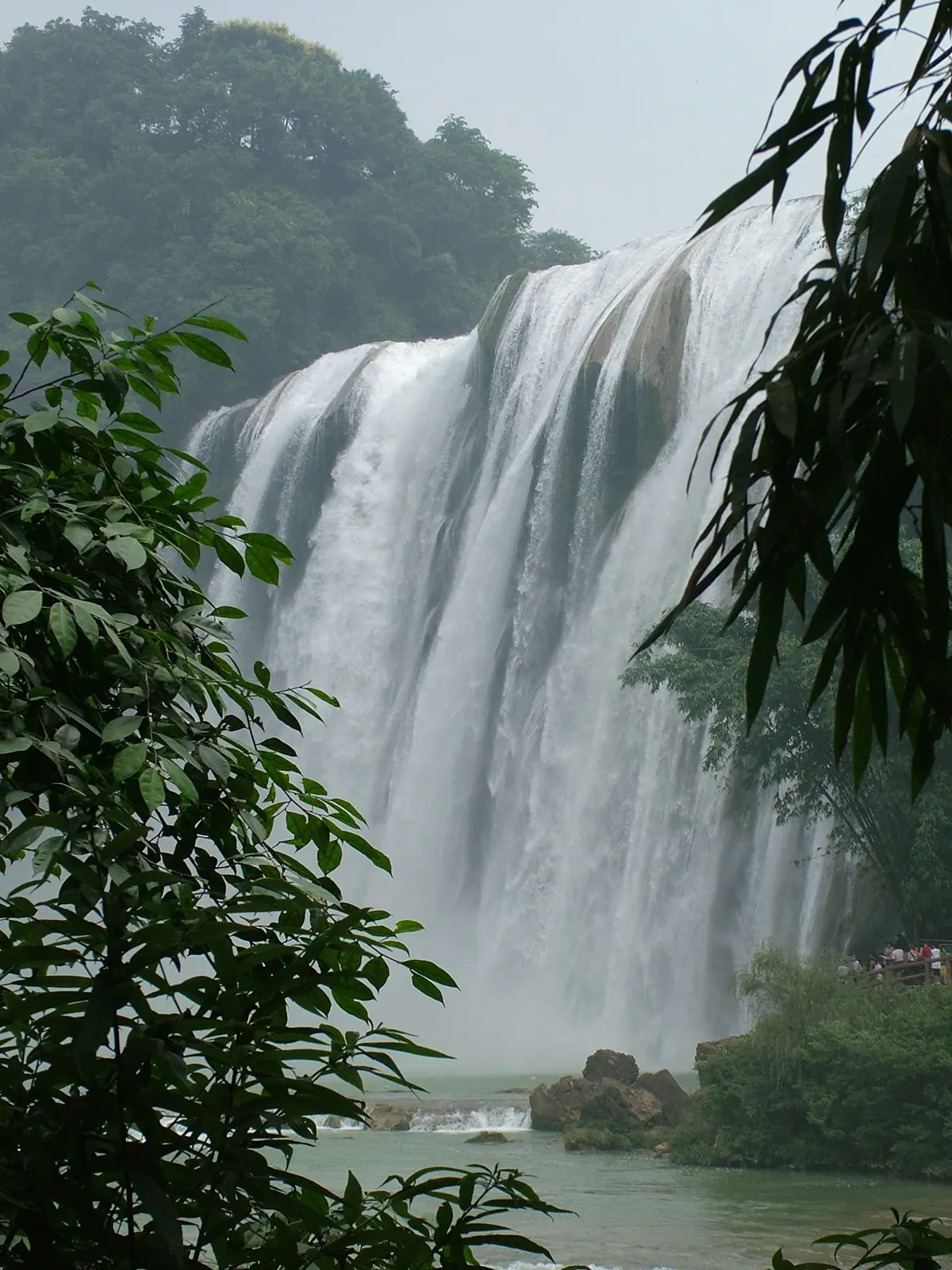
Huangguoshu Waterfall (黄果树瀑布)
One of Asia's largest waterfalls, 77.8 m tall and 101 m wide, on the Baishui River. UNESCO-recognized as part of the South China Karst World Heritage site. The scenic area includes 18 waterfalls in a 450 km² zone. 130 km from Guiyang, 1.5 hours by HSR. ¥160 entry + ¥50 sightseeing bus.
Wikimedia Commons · CC-BY-SA
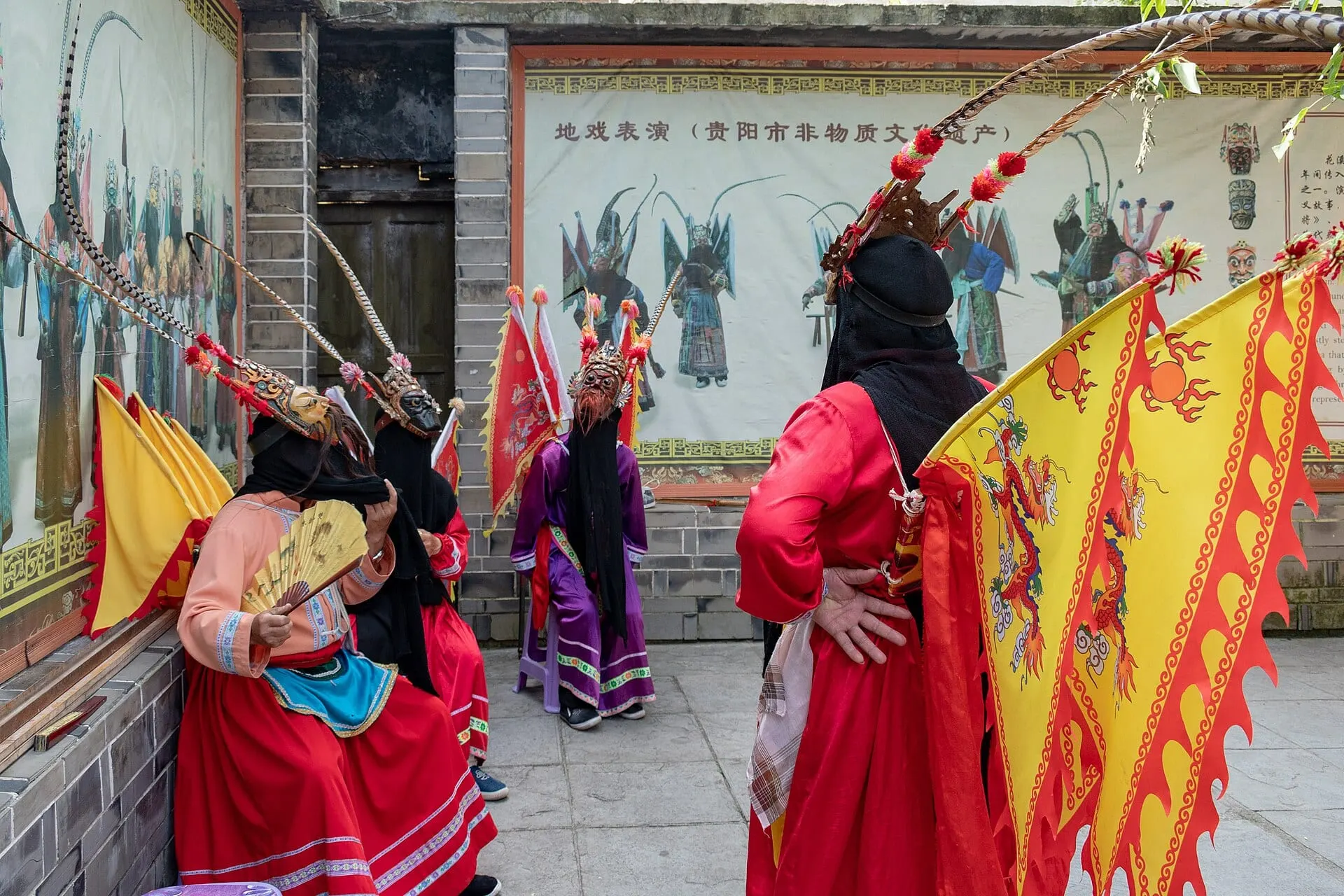
Qingyan Ancient Town (青岩古镇)
640-year-old Ming-era walled town 30 km south of Guiyang, with stone streets, fortified gates, and well-preserved temple complexes. Famous for its 玫瑰糖 (rose sugar candy) and 状元蹄 (zhuangyuan ti, "top scholar's trotters"). ¥10 entry.
Wikimedia Commons · CC-BY-SA
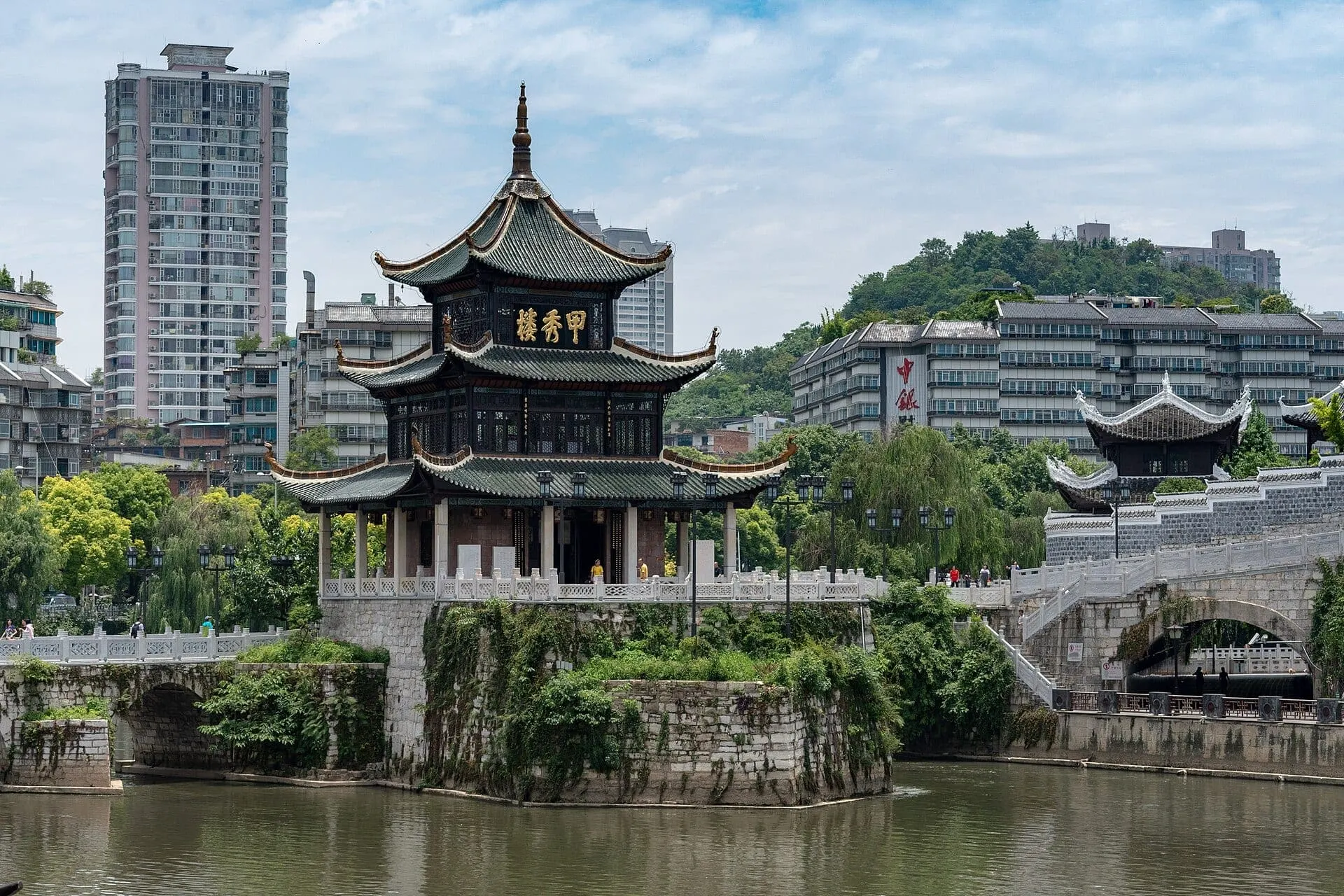
Jiaxiu Pavilion (甲秀楼)
A 400-year-old Ming-era riverside pavilion on the Nanming River, the symbol of Guiyang. Free. Beautiful at night when lit up. Walking distance from the city center.
Wikimedia Commons · CC-BY-SA
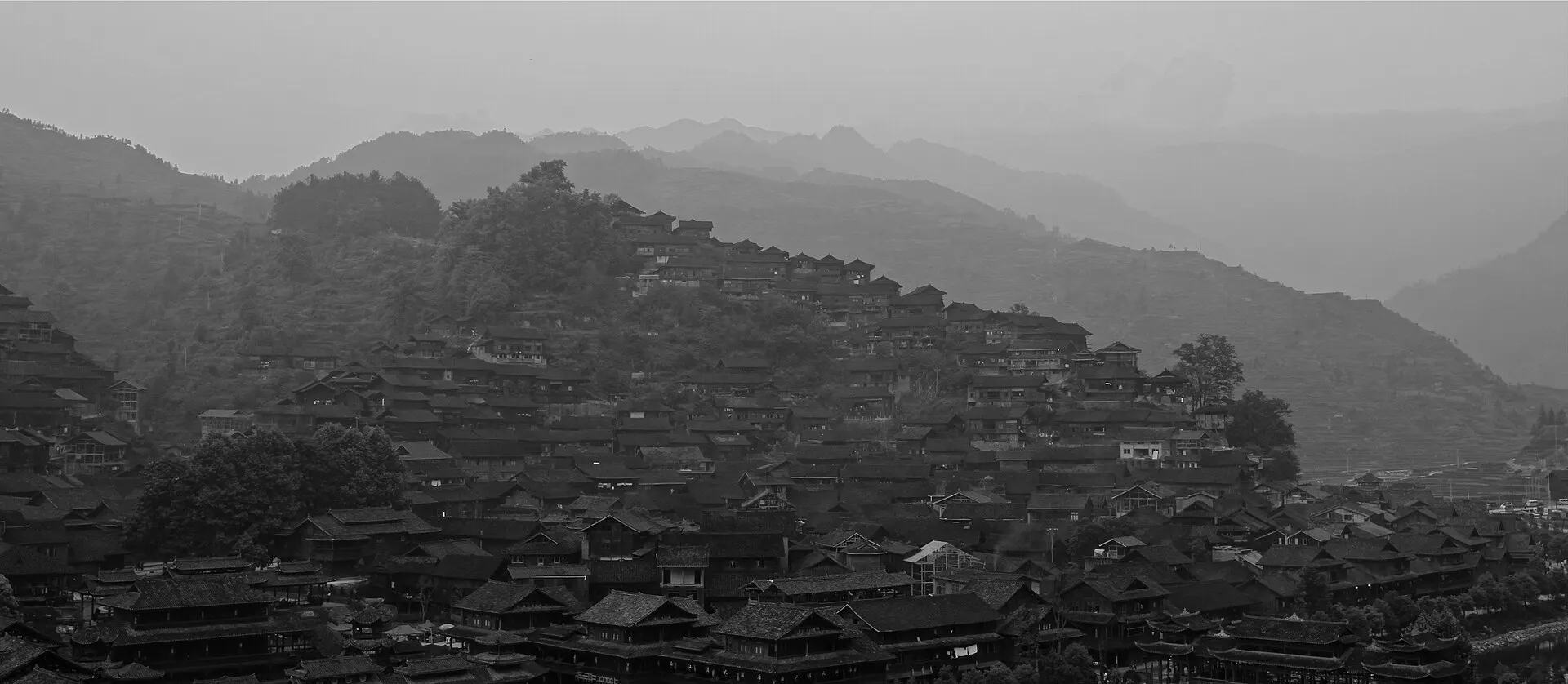
Kaili and the Miao Villages (西江千户苗寨)
Xijiang Miao Village, the world's largest Miao settlement with 1,200+ stilted wooden houses, is 200 km from Guiyang. The Long Skirt Miao, Short Skirt Miao, and Black Miao subgroups all have villages within an hour of Kaili. ¥90 entry to Xijiang.
Wikimedia Commons · CC-BY-SA
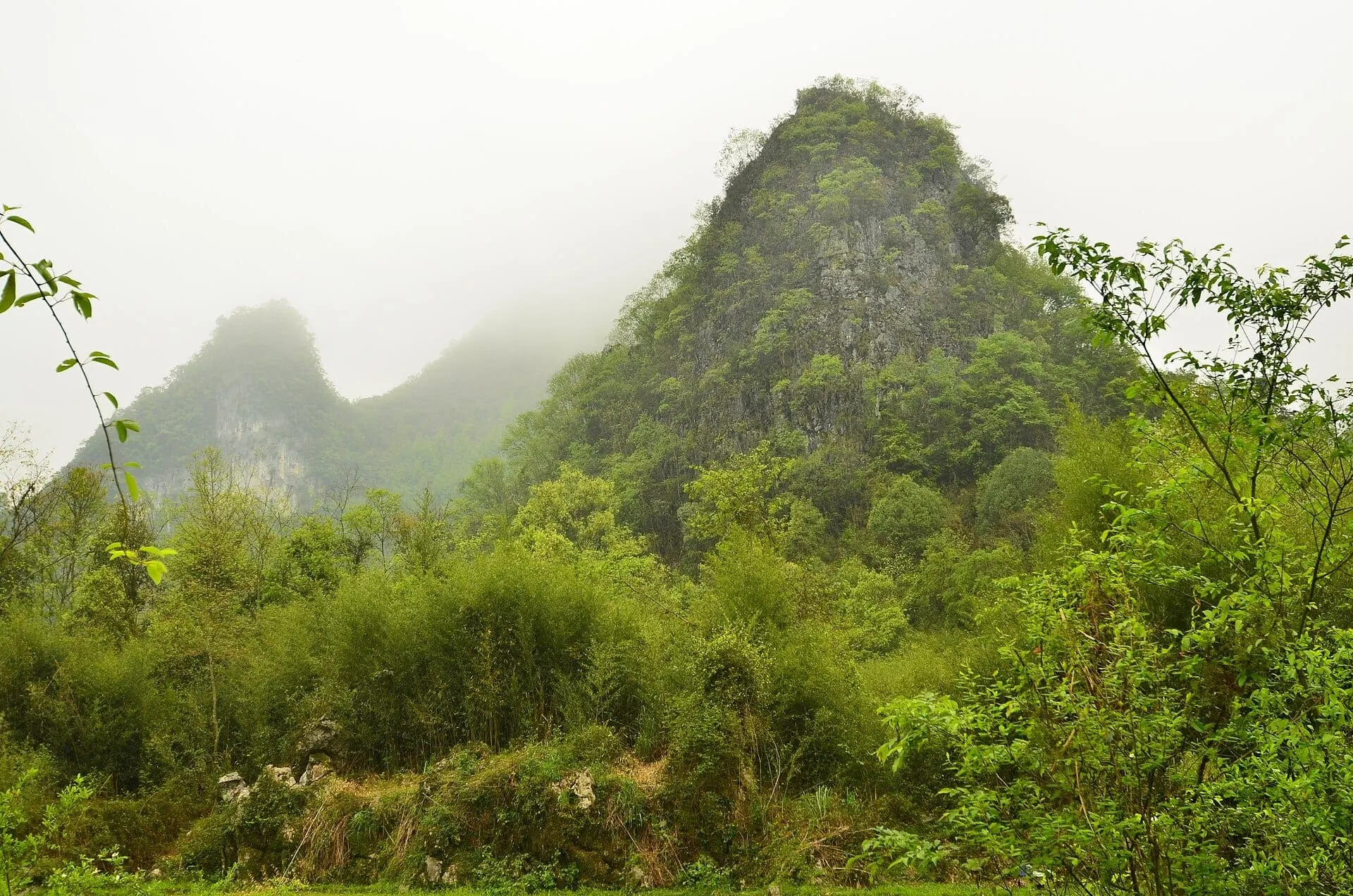
Xiaoqikong Scenic Area (小七孔)
A 7-arch Qing-era stone bridge over emerald water, surrounded by 68-level waterfalls and ancient trees. Part of the South China Karst World Heritage site. 250 km from Guiyang, near Libo. ¥110 entry + ¥40 bus.
Wikimedia Commons · CC-BY-SA
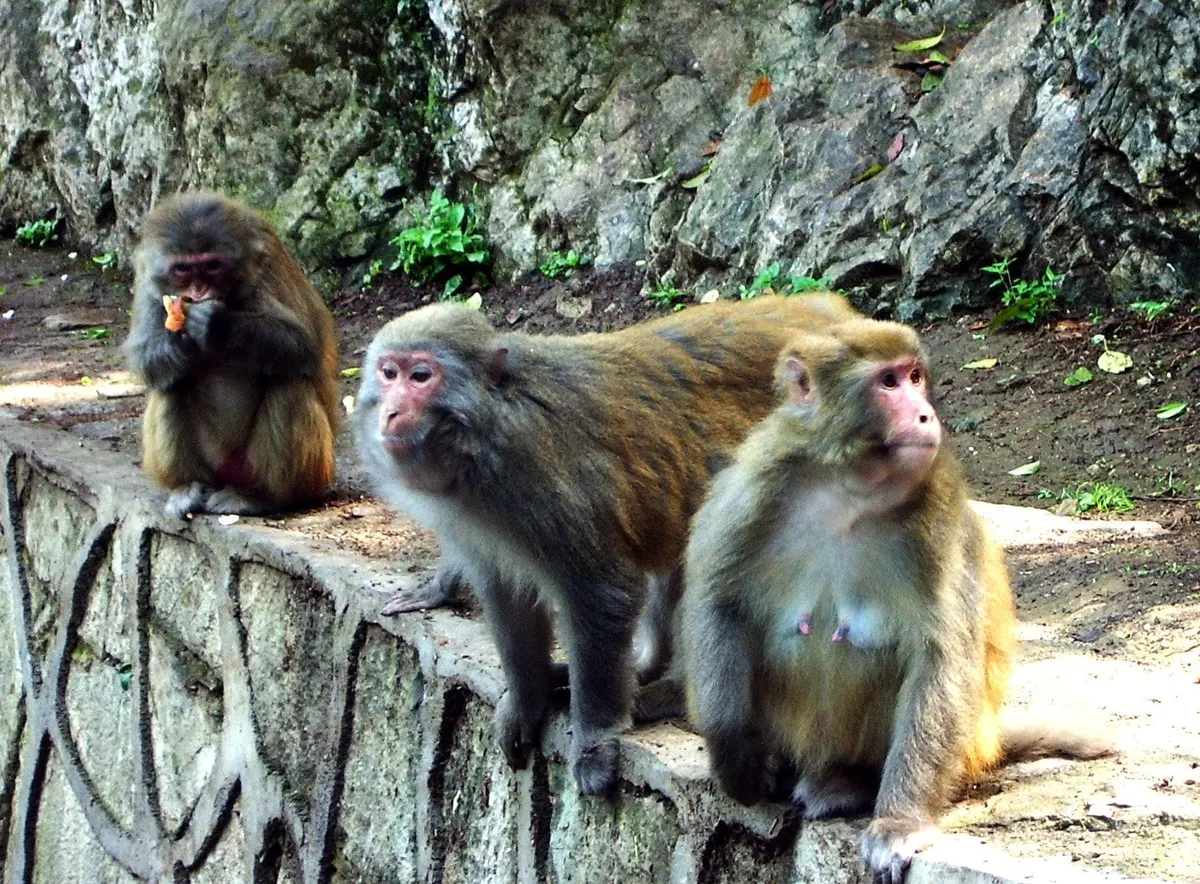
Qianling Mountain Park (黔灵山公园)
A 4,300-hectare urban park in central Guiyang with macaque monkeys, the 1,600-year-old Hongfu Temple, a zoo, and hiking trails to the summit. ¥5 entry. Half-day activity.
Wikimedia Commons · CC-BY-SA
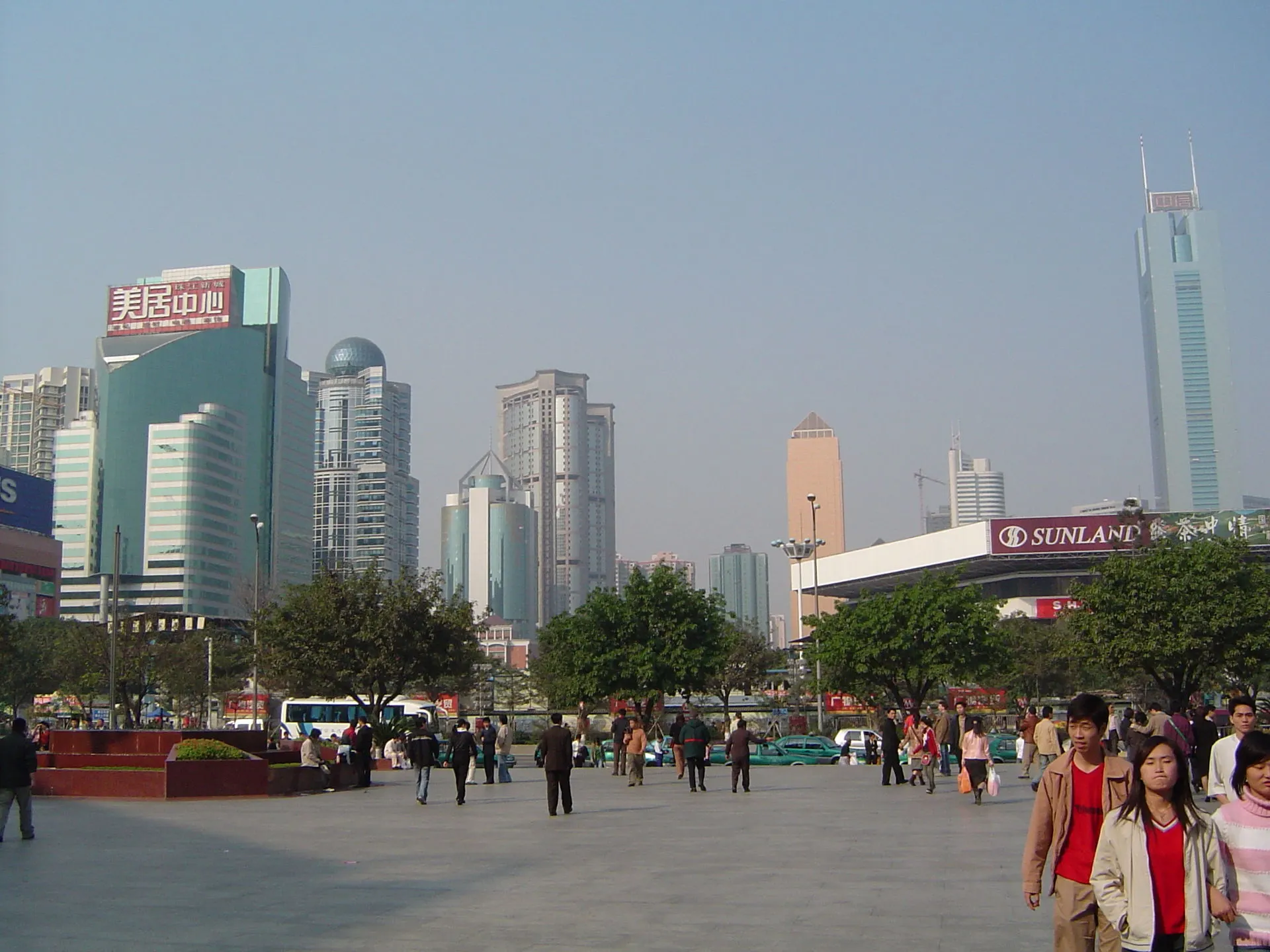
Tianhe Pool / Yelang Valley (天河潭 / 花溪夜郎谷)
Tianhe Pool is a karst cave and waterfall scenic area 25 km from Guiyang. Yelang Valley, by the same artist (Song Peilun), is a striking sculpture garden inspired by ancient Yelang culture. ¥60 / ¥20.
Wikimedia Commons · CC-BY-SA
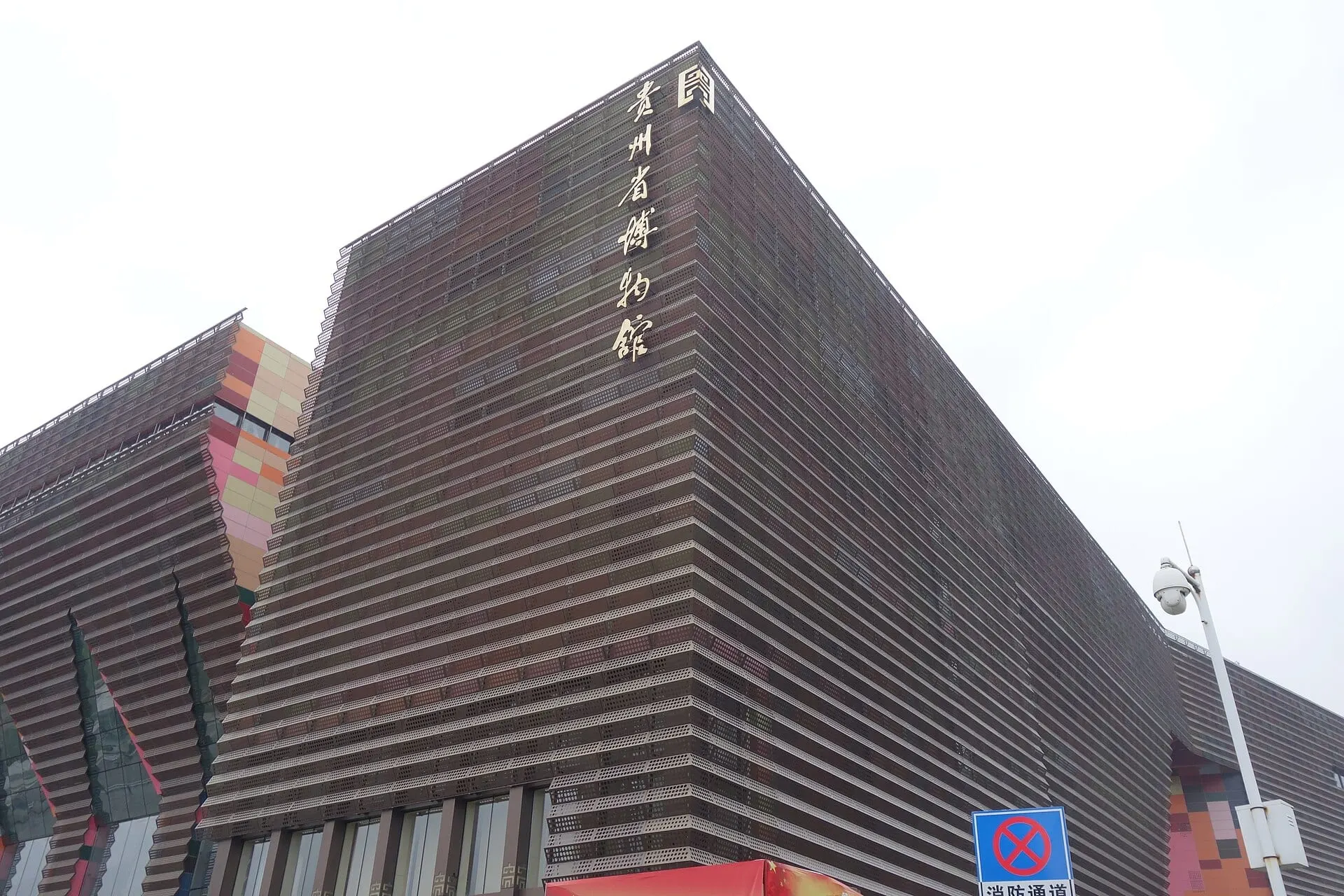
Guizhou Provincial Museum (贵州省博物馆)
Free provincial museum in Guiyang with strong Miao, Dong, and Buyi ethnic minority exhibits, a karst geology hall, and the famous "Miao Silver" collection. Allow 2-3 hours.
Wikimedia Commons · CC-BY-SA
STAY
Where to stay in Guiyang
Pick a base that matches the trip you want — imperial-central for sightseeing, hutong belt for character, Chaoyang for nightlife, or Qianmen for budget.
Nanming (南明)
Old city core with Jiaxiu Pavilion, Nanming River, the best restaurants, and nightlife
#nanmingYunyan (云岩)
Central business district with Qianling Mountain Park, universities, and a strong local food scene
#yunyanGuanshanhu (观山湖)
Modern new downtown with the provincial museum, convention centre, and data-centre cluster
#guanshanhuHuaxi (花溪)
Southern university district with Tianhe Pool, wine country B&Bs, and the famous Huaxi beef noodles
#huaxi
ITINERARIES
Sample itineraries from Guiyang
Three ready-made routes, from a 1-day imperial sprint to a 5-day deep dive. Copy the day-by-day plan and adapt to your own pace.
- 1 DAY
Guiyang City Highlights
A one-day sweep of central Guiyang: Jiaxiu Pavilion, Qianling Mountain, Qingyan Ancient Town, and the night market.
- Transit travellers
- Business stopovers
- First-time Guizhou visitors
- Day 01
Morning
Jiaxiu Pavilion (甲秀楼) — 30 min photo stop at the Ming pavilion. Then Qianling Mountain Park (黔灵山公园, ¥5) — 2-3 hours: hike to Hongfu Temple, watch macaques (do not feed them).
Afternoon
Taxi to Qingyan Ancient Town (30 min, ¥150 round trip) — walk the stone streets, visit Ming fortified gates and temples, try rose sugar candy (玫瑰糖) and zhuangyuan trotters (状元蹄). Lunch at a town restaurant.
Evening
Return to the city. Dinner at Qingyun Road Night Market (青云路夜市) for siwawa (丝娃娃), changwang mian (肠旺面), and grilled fish. Walk the Nanming River at night.
- 2 DAYS
Guiyang + Huangguoshu Waterfall
Add a full day at Huangguoshu Waterfall — the main reason most travellers come to Guizhou.
- Waterfall enthusiasts
- Nature photographers
- Weekend breaks
- Day 01
Morning
Jiaxiu Pavilion, Qianling Mountain Park (2-3 hours).
Afternoon
Guizhou Provincial Museum (2 hours, free). Lunch: sour soup fish at Laokaili (老凯俚酸汤鱼).
Evening
Qingyun Road Night Market for siwawa and grilled fish. Walk the Nanming River at sunset.
- Day 02
Morning
7:30 AM HSR from Guiyang North to Anshun West (30 min, ¥50). Taxi to Huangguoshu scenic area (30 min, ¥80). Entry ¥160 + ¥50 sightseeing bus.
Afternoon
Spend 4-5 hours: main Huangguoshu fall, the Water-Curtain Cave behind the falls (水帘洞), Doupotang Waterfall. Lunch at the on-site restaurant.
Evening
Return to Guiyang by 6 PM. Final dinner: try changwang mian and cili juice. If you have energy, visit the Jiaxiu Pavilion lit up at night.
- 3 DAYS
Guiyang + Huangguoshu + Kaili Miao Villages
The classic Guizhou trio: city, waterfall, and an overnight in the world's largest Miao village.
- Cultural travellers
- Photographers
- First-time Guizhou explorers
- Day 01
Morning
Jiaxiu Pavilion, Qianling Mountain Park, Guizhou Provincial Museum.
Afternoon
Lunch at Laokaili (sour soup fish). Taxi to Qingyan Ancient Town (2-3 hours).
Evening
Qingyun Road Night Market. Pack an overnight bag for Day 3.
- Day 02
Morning
7:30 AM HSR to Anshun West. Full day at Huangguoshu Waterfall — main falls, Water-Curtain Cave, Doupotang. Lunch at the scenic area.
Afternoon
Continue exploring the waterfall complex. The best light for photos is mid-afternoon.
Evening
Return to Guiyang by 6 PM. Light dinner, early night.
- Day 03
Morning
7:30 AM HSR from Guiyang North to Kaili South (35 min, ¥75). Hire car (¥400-500). Visit Langde Shangzhai Miao village (朗德上寨, ¥50) — more authentic than Xijiang.
Afternoon
Continue to Xijiang Qianhu Miao Village (西江千户苗寨, ¥90). Walk the wooden longhouse slopes, visit the Miao museum. Late lunch: sour soup fish and sticky rice in the village.
Evening
6 PM Miao song-and-dance performance. Long-table banquet (长桌宴) with rice wine toasts. Stay overnight in a stilted-wood B&B (¥300-800) — the 1,200 houses lit up at night is one of China's most striking views. Return to Guiyang the next morning.
BUDGET
What a Guiyang trip costs
Per-person, per-day costs across three spending tiers. Excludes international flights and visa fees.
| Line item | Backpacker | Mid-range | Luxury |
|---|---|---|---|
| Hostel bed (per night) | $8 | $25 | $70 |
| Mid-range hotel / 5-star (per night) | $25 | $60 | $150 |
| Local meal — noodles, siwawa (per person) | $2 | $5 | $15 |
| Fancy dinner — sour soup fish banquet (per person) | $12 | $20 | $60 |
| Metro / bus ride | $0.5 | $1 | $5 |
| DiDi across town | $3 | $5 | $10 |
| Qianling Mountain Park (¥5) | $1 | $1 | $1 |
| Qingyan Ancient Town (¥10) | $2 | $2 | $2 |
| Huangguoshu day trip (HSR + entry + bus) | $50 | $65 | $150 |
| Xijiang Miao Village (entry + B&B + meals) | $50 | $90 | $180 |
| Daily total (excluding accommodation) | $25 | $50 | $130 |
| Total per day | $178.5 | $324 | $773 |
$ USD per person per day, before international flights and visas. Last verified: Q3 2026.
STAY SAFE
Emergency contacts in Guiyang
Save these three numbers before you board the plane. China uses different hotlines than most countries — there's no 911.
- POLICE
110
- AMBULANCE
120
- FIRE
119
- TOURIST HOTLINE
12301
- ENGLISH-SPEAKING ER
Guizhou Provincial People's Hospital (贵州省人民医院) — 83 Zhongshan East Road, Nanming District, +86 851 8592 2114
Problems travelers hit in Guiyang
- Why is my Alipay not working?You linked a foreign Visa or Mastercard to Alipay but every transaction is rejected at the merchant.
- My China visa was denied — what now?Your L visa application was refused at the Chinese consulate and your trip is in 2–4 weeks.
- My passport was lost or stolen in China — what do I do?Your passport is gone (theft or loss) and you're in mainland China without travel documents.
- Why can't I book on 12306 with my foreign card?You tried to book a high-speed rail ticket on 12306.cn and your foreign Visa/Mastercard is rejected at checkout.
- Why is my VPN not working in China?You arrived in China, opened your VPN, and it will not connect at all or connects but no traffic loads.
- Why can't I book a Tibet trip on my own?You try to book Lhasa flights and hotels yourself but the booking fails, or you're turned away at the Lhasa airport without a permit.
Book activities in Guiyang
These are licensed tour operators and booking platforms we've vetted independently. Booking through these links may earn us a commission — see our affiliate disclosure. This never affects our editorial recommendations or the price you pay.
Frequently asked questions
How many days do I need in Guiyang?
Is Guiyang really cooler in summer than other Chinese cities?
Do I need a Chinese visa to visit Guizhou?
What is the best time of year to visit Guiyang?
What is the Miao ethnic group and is the cultural trip worth it?
Is Guiyang safe for tourists?
Show all 20 FAQs
Can I visit the Miao villages as a day trip from Guiyang?
How do I get to Huangguoshu Waterfall from Guiyang?
What is Guiyang food like? Is it very spicy?
How can I pay in Guiyang without Alipay or WeChat Pay?
Are the Miao village entrance fees and performances worth it?
What should I pack for Guiyang in summer vs winter?
How does Guiyang compare to Guilin for karst scenery?
What is the Miao New Year festival and when is it?
What is 刺梨汁 and where can I try it?
What is the difference between the Miao subgroups in Guizhou?
When is the best time to visit Guiyang?
How do I get from Longdongbao Airport to Guiyang city?
What is the must-try street food in Guiyang?
Can I do a day trip to Huangguoshu Waterfall from Guiyang?
References

Related guides & destinations
Guide
How We Research 2026: NihaoVisit’s Methodology for China Travel Information
How NihaoVisit sources, verifies, and maintains 700+ pages of China travel information — our source hierarchy, fact-checking process, update
Guide
Fact-Checking Log 2026: Verified China Travel Information — NihaoVisit
A public log of fact-checking verification passes on NihaoVisit, showing what was verified, when, and against which sources — covering visa
Guide
Best Time to Visit China 2026: Month-by-Month Weather, Crowds, and Prices
The best time to visit most of China is April–May and September–October. Winter (Dec–Feb) is cold but cheap; summer (Jun–Aug) is hot and cro
Guide
VPN for China 2026: Which VPNs Work, eSIM Alternatives, and the Complete Pre-Trip Checklist
Most Western apps and websites are blocked in mainland China. A reliable VPN is essential for Google, Gmail, WhatsApp, Instagram, and most n
Guide
China SIM Card and eSIM Guide 2026: Stay Connected Without WeChat
A Chinese SIM or eSIM lets you use mobile data, maps, and ride-hailing without WiFi. Here is how to get one, the cost, and which provider to
Guide
Solo Female Travel in China 2026: Safety, Tips, and Real Experiences
China is one of the safer destinations for solo female travelers. Petty theft is rare, violent crime against tourists is extremely uncommon,