Harbin
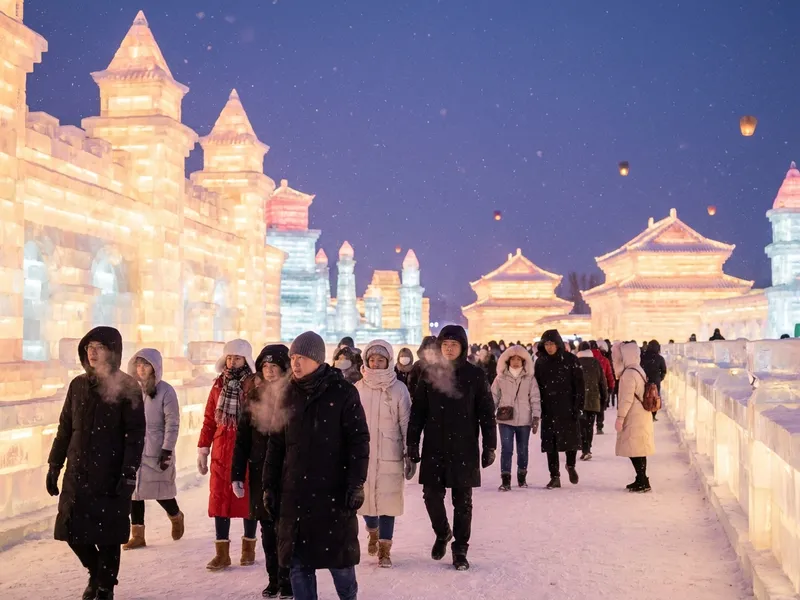
Harbin (哈尔滨, Hā'ěrbīn) is China's most atmospheric winter city and one of its most distinctive year-round. Built by Russian railway engineers in 1898, it still wears its Eastern European heritage in the form of onion domes, borscht, red sausage, and the cobblestoned Central Street. From late December through February the city becomes an open-air art gallery of ice — the Ice and Snow World alone covers 600,000 square metres of illuminated ice sculptures and draws more than ten million visitors in a single season. Three days covers the winter highlights comfortably; four lets you add the Siberian Tiger Park, Sun Island, and a Volga Manor day. Summer brings a milder, greener city and the Harbin Summer Music Festival. The city is safe, Alipay and WeChat Pay accept foreign cards, and most Western passport holders enter visa-free for up to 30 days. Prepare for extreme cold: insulated boots, a down parka rated to minus 25°C, hand warmers, and thermal base layers are not optional.
Why Harbin in 2026.
China's Ice City and Russian-built northern capital. A frozen fantasy of illuminated ice palaces in January, Russian Baroque cathedrals, dumplings that warm you from the inside, and the coldest winters on the China travel map.
Quick Answer
Harbin (哈尔滨, Hā'ěrbīn) is China's most atmospheric winter city and one of its most distinctive year-round. Built by Russian railway engineers in 1898, it still wears its Eastern European heritage in the form of onion domes, borscht, red sausage, and the cobblestoned Central Street. From late December through February the city becomes an open-air art gallery of ice — the Ice and Snow World alone covers 600,000 square metres of illuminated ice sculptures and draws more than ten million visitors in a single season. Three days covers the winter highlights comfortably; four lets you add the Siberian Tiger Park, Sun Island, and a Volga Manor day. Summer brings a milder, greener city and the Harbin Summer Music Festival. The city is safe, Alipay and WeChat Pay accept foreign cards, and most Western passport holders enter visa-free for up to 30 days. Prepare for extreme cold: insulated boots, a down parka rated to minus 25°C, hand warmers, and thermal base layers are not optional.
| Best time to visit | December 20 – February 20 (Ice Festival), or June – August (mild summer) |
|---|---|
| Daily budget | $55 (backpacker) / $130 (mid-range) / $380+ (luxury) |
| Language | Mandarin (Dongbei dialect); Russian and English understood in tourist zones |
| Currency | CNY (¥) — Alipay and WeChat Pay accept foreign Visa/Mastercard as of 2024 |
| Time zone | China Standard Time (UTC+8) |
| Last updated | 2026-06-15 |
Want a Harbin plan built for you?
Why is Harbin called Russia's Chinese daughter and the capital of ice festivals?
Harbin (哈尔滨, Hā’ěrbīn) is unlike anywhere else in China. A city of ten million on the banks of the Songhua River in Heilongjiang province, it was founded by Russian railway engineers in 1898 and built by waves of Russian, Jewish, Polish, German, and Japanese immigrants until the 1950s. The result is a northern Chinese metropolis that wears its Eastern European heritage openly: onion-domed Orthodox churches, cobblestone pedestrian streets, borscht on the menu, smoked garlic sausage sold at every corner shop, and apartment blocks that could sit in Saint Petersburg. The Russian word for ‘Harbin’ is never used, but the city’s silhouette, palate, and architecture could be mistaken for a Siberian provincial capital. The city is most famous for its winters. From mid-December until the end of February, Harbin hosts what is effectively two overlapping festivals — the Harbin Ice Festival (哈尔滨冰雪节), one of the world’s four largest winter festivals alongside Sapporo’s Snow Festival, Quebec’s Winter Carnival, and Norway’s Ski Festival; and the Heilongjiang Ice and Snow World, a 600,000-square-metre illuminated ice sculpture park that draws more than ten million visitors in a single season. Temperatures during the festival routinely drop below minus 25°C, occasionally below minus 35°C. The cold is the point: without it the ice does not hold, the snow does not sparkle, and the spectacle that defines Harbin to the rest of the world does not exist. The festival has grown every year since the 1990s and is now the single biggest tourism draw on the Chinese winter calendar, ahead of Sapporo, Beijing’s ice rinks, and the Inner Mongolia grasslands festivals. But Harbin is not only a winter city. Summers are warm, sometimes hot (July highs of 28–30°C), the Songhua River is full of pleasure boats, the Sun Island park is green and shaded, and the Harbin Summer Music Festival fills July with classical concerts in parks and conservatories. Spring (April–May) and autumn (September–October) are short but beautiful, with cherry blossoms along the river and golden birches across the city’s parks. The summer festival is also well established: it has run annually since 1958, was briefly interrupted during the Cultural Revolution, and now draws more than 200,000 visitors to a dozen venues across the city over a three-week run. For the inbound traveler, Harbin is a high-reward destination if you plan for the cold. The metro has English signage, the airport is modern, Alipay and WeChat Pay accept foreign Visa and Mastercard cards as of 2024, and the visa-free policy launched in late 2024 lets most Western passport holders stay 30 days without a visa. What Harbin demands is preparation: real winter clothing, realistic time budgets for outdoor walking in extreme cold, and the willingness to spend most of your daylight hours inside heated shopping centres, museums, and restaurants between outdoor excursions. The architecture rewards a slower pace — Central Street is best walked twice, once at dusk and once after dark — and the festival crowds peak during Chinese New Year, when most of the country is on holiday. Travel in mid-December or mid-February to see the festival at its atmospheric best without the worst crowds. A final point worth flagging: Harbin’s image in China is one of cold, hospitality, borscht, vodka, and the festival. The Dongbei culture (which Harbin shares with Shenyang, Changchun, and Dalian) values directness, humour, and warmth — visitors who laugh off the cold and accept a baijiu toast are welcomed; visitors who are stiff or rude are politely puzzled. Plan to spend at least three days. Plan for sub-zero temperatures. Plan for an experience you will remember for the rest of your life.
What is the history of Harbin: From Fishing Village to Railway Capital?
Harbin before 1898 was a small fishing and trading village on the Songhua River, known to Manchu hunters as a stopping point on the route to the Amur. The city as it exists today was an artefact of one of the great infrastructure projects of the nineteenth century — the Chinese Eastern Railway (中东铁路), a 2,500-km shortcut through Manchuria built by Imperial Russia between 1898 and 1903 to connect the Trans-Siberian Railway to Vladivostok without passing through Manchurian territory under Chinese control. The railway was negotiated under the 1896 Li-Lobanov Treaty following the Sino-Japanese War and gave Russia a 60-year concession to operate a railway across Manchuria. The Russian engineers needed a hub city for the railway's southern junction. They picked the Songhua crossing, built a station, and laid out a city on a Russian grid plan with wide boulevards, onion-domed churches, and timber buildings in the Russian style. Within ten years Harbin had grown from a hamlet into a city of 100,000, with Russian as its lingua franca and a substantial population of Jewish merchants fleeing pogroms further west. By 1913 it was the largest Russian city outside the Russian Empire, with a population approaching 200,000. The Russian Revolution of 1917 sent another wave of White Russian refugees — officers, merchants, and artists — and Harbin briefly became known as 'the Paris of the East' for its opera, ballet, and cafe culture. The city had its own Russian-language newspapers, its own school system, and even a small Russian navy presence on the Songhua. The Japanese occupation of Manchuria (1931–1945) changed everything. Following the Mukden Incident of September 1931, Japan occupied Manchuria and established the puppet state of Manchukuo in 1932. Harbin became the capital of Manchukuo's economic and military-industrial complex, home to the notorious Unit 731 biological warfare research facility on the outskirts, and a major hub of heavy industry for the Japanese war effort. The Russian population shrank as White Russians emigrated to Australia, the United States, and Shanghai; the Jewish community, which had numbered up to 25,000 in the 1920s, was reduced to a few thousand by 1941. After the Soviet liberation in August 1945 and the Chinese civil war, the city passed to the new People's Republic of China in 1949. The remaining Russian and Jewish populations emigrated between 1950 and 1962 — most to Israel, Australia, and the United States — and many of the Russian-era buildings were repurposed as factories, warehouses, or workers' housing. The Harbin Ice Festival began in 1963 as a small local lantern display on Zhaolin Park and grew steadily through the 1980s and 1990s, when the Ice and Snow World on the Songhua Riverbank was launched in 1999. Today the festival generates an estimated ¥100 billion in annual tourism revenue and is the single biggest draw on the Chinese winter tourism calendar. The city's population has stabilised around ten million, of whom perhaps 10,000 still claim Russian or mixed Russian-Chinese heritage — and the architecture, the food, the soft-drink brand Harbin Beer (founded 1900), and the festival all remain. A subtle but important point: Harbin's modern identity is built almost entirely on these three layers — Russian, Japanese, and Soviet — overlaid on a Manchu and Han Chinese substrate. The Russian layer is the most visible and the most marketed. The Japanese layer is harder to find but still present in the industrial zones and the railway infrastructure. The Soviet layer is in the trolleybuses, the workers' housing, and the Brutalist apartment blocks built in the 1960s and 1970s. Understanding all three layers makes a visit to Harbin much more rewarding than treating it as just 'the ice city'.
What is the geography and climate of Harbin, and when should I visit?
Harbin sits in the Songhua River valley in southwest Heilongjiang province, roughly 450 km north of Vladivostok across the Russian border. The terrain is flat to gently rolling, the soil is fertile black earth, and the surrounding region is one of China's great grain belts — the largest commercial soybean and corn producing area in the country. Elevation in the city centre is around 150 metres. The Songhua flows north through the city and is frozen solid from late November to mid-March; in summer it is wide, slow, and lined with parks and swimming beaches. The river is a defining feature of the city: every winter thousands of tonnes of ice blocks are cut from it for the Ice and Snow World festival, and every summer the riverfront promenade fills with strollers, dancers, and amateur opera singers. The climate is the dominant fact of any Harbin trip. It is a humid continental climate of the most extreme kind. Winter (December–February) is brutally cold: the daily mean in January is minus 19°C, average overnight lows run minus 24 to minus 28°C, and during cold waves the temperature can plunge below minus 35°C. Snow lies from late October to early April, with an annual snowfall around 30 cm and persistent sub-zero temperatures for four to five months. The lowest temperature ever recorded in Harbin was minus 41.4°C in January 1970. Summer (June–August) is the mirror image — warm and humid, with July highs averaging 28°C and occasional 35°C days. Spring and autumn are short transition seasons with rapid temperature swings. Spring dust storms from the Gobi can reduce visibility in April. The climate has shaped everything about the city — its architecture (low-rise, sturdy, with deep eaves to shed snow), its cuisine (hearty, pickled, fatty, with strong liquors and warming spices), its festivals (the Ice Festival began as a response to the cold, not a marketing campaign), and its mental outlook (the Dongbei stoicism that visitors encounter). Understanding the climate is essential to enjoying the city. The two travel windows: *Winter festival (20 December – 20 February)*: The headline reason to visit. The Ice and Snow World, the Sun Island Snow Sculpture Expo, Zhaolin Park lantern festival, ice swimming on the Songhua, the Yabuli ski season, and Snow Town all operate. Peak crowds are Chinese New Year (late January / early February) when hotels triple in price — book 4–6 weeks ahead for that week. The coldest, quietest, and most atmospheric time is mid-December before CNY, and mid-February after CNY when the festival is still running but the crowds thin. *Summer (June – August)*: Mild to hot, green, and lively with the Harbin Summer Music Festival in July. Sun Island is at its best, the Songhua is open for river cruises and swimming, and the architectural sights (Central Street, St Sophia, Volga Manor) are far more pleasant without the cold. A good alternative for travellers who dread the cold. Shoulder seasons (late March to May, September to mid-November) are quiet, with reduced festival activity but lower hotel prices and reasonable sightseeing weather. Avoid Chinese National Day (1–7 October) when domestic tourism peaks. The autumn colours in late September and early October are spectacular — the birches and larches turn gold across the city's parks and the Songhua Riverbank is one of the most photographed autumn scenes in northeast China.
How to Get There: Air, Train, and Overland
Most international visitors arrive by air at Harbin Taiping International Airport (HRB), a modern hub 33 km east of the city centre. HRB connects to most major Chinese cities (Beijing 2 hours, Shanghai 3 hours, Guangzhou 4.5 hours) and a growing list of international destinations including Vladivostok, Khabarovsk, Seoul, Tokyo, Bangkok, Singapore, and a handful of Russian Far East cities. Direct flights from Europe and North America are rare — most travellers connect through Beijing, Shanghai, or Guangzhou. The airport has two terminals: T2 is the main international and domestic terminal, T1 handles some domestic flights. Both terminals share a single arrivals level. From HRB to the city centre, you have three options: the airport express bus (¥20, 60 minutes to Central Street), a metered taxi (¥120–150, 45 minutes depending on traffic), or DiDi. The metro does not yet reach the airport, although an extension is under construction. The official airport taxi rank is on the arrivals level; avoid touts offering rides inside the terminal. The airport bus stops at several downtown hotels including the Shangri-La and the JW Marriott — check the route map at the information desk on arrival. In winter, allow extra time for traffic delays caused by snow. Harbin has four mainline railway stations. Harbin Station (哈尔滨站) is the central hub, served by high-speed G and D trains from Beijing (8 hours, ¥550 second class), Shanghai (12 hours, ¥900), Dalian (5 hours), and Shenyang (3 hours). The station is a beautifully restored Russian-era building with a modern HSR terminal added behind it — one of the more photogenic train stations in China. Harbin West Station (哈尔滨西站) handles additional high-speed services including the Beijing–Harbin HSR (4.5 hours via the Beijing–Shenyang and Harbin–Dalian high-speed lines). Harbin East Station is for conventional trains to eastern Heilongjiang and the Russian border. Harbin North Station serves the Beijing–Harbin HSR. The Beijing–Harbin high-speed line, completed in 2021, is one of China's great railway achievements — it crosses the winter climate gradient from the dry North China Plain through Hebei and Liaoning into the frozen northeast in 4.5 hours, with trains running at 300 km/h through temperatures as low as minus 40°C. Second-class seats cost ¥550, first class ¥880, business class ¥1,750. Sleeper trains are no longer recommended for any major city pair — the HSR is faster, cheaper, and far more comfortable. For travellers coming overland from Russia: there is no road crossing at Harbin — passenger trains from Vladivostok (12 hours), Khabarovsk (8 hours), and Blagoveshchensk (via Heihe, 1 hour) are the main options. Note that a Chinese visa must be arranged in advance; you cannot cross with the visa-free entry from the Russian side in most cases, and Russian visas are required for onward travel into Russia. The Suifenhe–Grodekovo crossing is the most practical for travellers wanting to combine a Harbin trip with a Russian Far East visit. For regional connections, regular high-speed trains run from Harbin to Yabuli (2.5 hours), Mudanjiang (1.5 hours), and Qiqihar (1.5 hours). Long-distance buses to Snow Town leave from the Nangang bus station daily in winter but are slow (5–6 hours) and not recommended over private car or minivan transfers. The most efficient way to reach Snow Town is via a 2-day, 1-night minivan tour from Harbin (¥1,500–2,000 per person including transport, accommodation, and meals), or a private driver arranged through your hotel.
How do I get around Harbin: Metro, Bus, Taxi, and DiDi?
Harbin's metro is small but useful. Three lines: Line 1 (the north–south backbone, connects Harbin Station, Central Street area, the Ice and Snow World, and the Heilongjiang Provincial Museum); Line 2 (east–west across the city); Line 3 (the newer loop). All signs are in Mandarin and English, fares are flat ¥2–5, and trains run 6:00–22:30. The most useful stops for visitors are St Sophia (索菲亚教堂), Central Street (中央大街), and Ice and Snow World (冰雪大世界). A fourth line is under construction and expected to open in 2027, connecting the airport to the metro network. Buses are extensive but English signage is rare and the system is hard for non-Mandarin speakers. The trolleybus network is well-known — vintage Czechoslovak-built cars still run on several routes, a relic of the city's 1950s Chinese–Soviet industrial cooperation. The trolleybuses were imported from Prague and Bratislava in the 1950s and remain in service today, painted in green and yellow. Riding one is a small tourist attraction in itself. Bus fares are ¥1–2; trolleybus fares are ¥1–2 exact change. Taxis are metered and cheap. Flagfall is ¥10 for the first 3 km, then ¥2.3/km. Most drivers do not speak English; have your destination written in Chinese characters. DiDi (China's Uber) accepts foreign phone numbers and is the easiest option — the in-app translator handles driver chat and payment is through the app. Avoid unmarked taxis outside the train station and tourist sites; always use the official rank or DiDi. A 10-minute taxi ride within the city centre typically costs ¥15–25. Cashless payment is universal in Harbin. Alipay and WeChat Pay both accept foreign Visa and Mastercard cards as of 2024 — bind the card in the app, top up the in-app balance, and scan merchant QR codes like a local. Cash (CNY) is still accepted everywhere and useful for taxis, street food, and small shops. ATMs at ICBC, Bank of China, and China Construction Bank accept foreign cards but typically limit withdrawals to ¥2,500 per transaction. Most taxi drivers now accept QR code payment through the dashboard-mounted sticker. Walking in winter requires serious gear (see the cold weather section below) but the central tourist areas — Central Street, St Sophia Square, the Songhua Riverbank — are pedestrian-friendly and flat. Most major hotels are within a 15-minute walk of Central Street, and the entire festival area can be covered on foot if you plan warm-up breaks at the cafes and shopping centres along the way. The streets are well cleared of snow by 7 am, but watch for black ice in shaded areas. Bike share (Meituan yellow, HelloRide blue) is available in summer but not in winter.
Where should I stay in Harbin?
Harbin's accommodation is concentrated in five practical neighborhoods, each with a different feel. Choosing where to stay depends on what you want to do most — sightseeing, food, nightlife, or festival access. **Daoli District (道里区) — Central Street area**: The historic core and the most convenient base for first-time visitors. Walking distance to Central Street, St Sophia, Zhaolin Park, the Songhua Riverbank, and the Ice and Snow World shuttle. Hotels range from luxury (Harbin Fortune Plaza, Sofitel Harbin) to mid-range (Home Inn, Hanting, Jinjiang Inn) and backpacker hostels around Central Street. The area is flat, walkable, and well-served by Metro Line 1 and the trolleybus network. Daoli is also where most of the Russian heritage architecture is concentrated, so you will wake up each morning in the middle of a 1900s photograph. **Nangang District (南岗区)**: The modern city centre, with the Provincial Museum, the Harbin Institute of Technology area, and the main shopping streets (Zhongyang, Guogeli). Hotels include the JW Marriott Harbin, Shangri-La Harbin, and a cluster of mid-range business hotels around the train station. Less atmospheric than Daoli but more convenient for train arrivals. The shopping is better here — the Guogeli pedestrian street is the local equivalent of Beijing's Wangfujing. **Daowai District (道外区)**: The old Chinese merchant quarter south of the Songhua. Traditional Chinese architecture, fewer foreign tourists, and the famous Zhang Baopu (张包铺) and Lao Changchun (老昌春) restaurants. Stay here for an atmospheric, off-the-beaten-path Harbin experience. The hotels are smaller and cheaper than in Daoli, and the food scene is more authentically local. The downside is that you will need a taxi to reach the festival attractions. **Songbei District (松北区)**: The new development across the river, home to the Ice and Snow World and the Sun Island scenic area. The Wanda Harbin complex has a cluster of mid-range to luxury hotels, including a Marriott and a Hilton. Best for festival-only itineraries — you can walk to the Ice and Snow World and back without negotiating the cold Songhua bridge crossings. The area is brand new and lacks the historic character of Daoli, but the hotels are modern and the restaurants are international. **Heilongjiang University / Xufu Road area**: A budget cluster of hostels and small hotels popular with Chinese student travellers. Closest to the zoo, the Botanical Garden, and the Siberian Tiger Park shuttle bus. The neighbourhood is not especially atmospheric but the prices are 30–50% below the central areas. Best for backpackers on extended stays who want to save money and don't mind a 15-minute metro ride to the centre. For luxury, the Shangri-La Harbin (in the central train station district) and the JW Marriott are top tier. The Shangri-La has the better location for sightseeing; the JW Marriott has the better rooms. For mid-range, the Home Inn and Hanting chains are reliable and central, with rooms from ¥250–400 per night. For backpackers, the Harbin International Youth Hostel near Central Street has dorm beds from ¥80 and private rooms from ¥200. Book festival weeks 4–6 weeks in advance; shoulder season can usually be booked the same week. One note on hotels in winter: ask about heating. Most mid-range and above Chinese hotels have central heating that keeps rooms at a comfortable 22–24°C — but some older budget hotels rely on individual air-conditioning units that struggle in extreme cold. Central heating is a basic service in Harbin and not a luxury, so don't accept a room that is not properly heated.
What are the top attractions in Harbin?
**Ice and Snow World (冰雪大世界)**: The world's largest ice theme park. Held each winter on the north bank of the Songhua River, it covers more than 600,000 square metres with massive illuminated palaces, slides, towers, and figures carved from blocks cut from the frozen river. The signature attractions are the 40-metre main ice pagoda, the 320-metre ice slide, and an annual themed area (recent themes have included 'Crown of the North', 'East of Eden', and 'Kingdom of Ice and Snow'). Tickets cost ¥298–328 in 2026; buy online at least 3 days ahead. Open 11:00–22:00; the lighting show at 18:00 is the highlight. Allow 4–5 hours. The construction process is itself an attraction: from late November, hundreds of workers cut ice blocks from the Songhua, transport them by tractor to the site, and stack them into the planned structures using only water as mortar. The water freezes within hours at sub-zero temperatures, and the structures grow over six to eight weeks until the festival opens on or around 20 December. Each year the park is rebuilt from scratch with a new theme, making every visit unique. **Central Street (中央大街 / Zhongyang Dajie)**: A 1.4-km pedestrian street paved with cobblestones imported from Russia in the 1920s, lined with 71 protected buildings in Baroque, Art Nouveau, Renaissance Revival, and modernist styles. The most famous buildings include the former Moderne Hotel, the Education Bookstore (a former Jewish-owned emporium), and the Qiulin food emporium — the spiritual home of Harbin red sausage. Walk it once at dusk and once at night. The street is closed to traffic and lit with warm sodium lights at night; in winter the ice sculptures and snow lanterns add to the spectacle. The cobblestones themselves are a marvel: roughly 18 million stones, each about 18 cm long, set in patterns that include a remarkable Russian imperial double-headed eagle mosaic near the intersection with Zhongxian Street. The paving has been continuously restored since the 1920s. Famous Harbin brands with their original storefronts on Central Street include Qiulin (sausage and bread), Madieer (ice cream), Huamei (sausage), and the Russian Restaurant. **St Sophia Cathedral (圣索菲亚教堂)**: A 1907 Russian Orthodox church designed by I.V. Podlevsky and built by Ukrainian stonemasons. The largest Orthodox church in the Far East at the time of its construction, with seating for 2,000. Converted to a warehouse during the Cultural Revolution and reopened as a Harbin Architectural Art Museum in 1997. Today it hosts rotating exhibitions on Harbin's Russian heritage and an outdoor concert series in summer. The green dome, red-brick walls, and white trim are the city's most photographed sight. ¥20 entry. The cathedral is no longer a working church but the building itself remains the most visible Russian-era religious structure in China. The interior has been restored with photographs and scale models showing the original Orthodox iconography and the timber roof structure. Outside, the small square in front of the cathedral hosts concerts in summer and a small Christmas market in December. **Siberian Tiger Park (东北虎林园)**: A 1,440,000-square-metre park holding several hundred pure Siberian (Amur) tigers — the world's largest pedigree population. Visitors drive through the enclosures in caged safari buses and can feed the tigers live chickens (¥100 per chicken) through a hatch. Ethical concerns about the small enclosure sizes and the feeding programme are real; the park counters that it is also the world's most successful tiger breeding facility and that the wild population is functionally extinct in China. Take Metro Line 2 to Longta or a taxi (¥80, 40 minutes from Central Street). Allow 2–3 hours. The park also breeds Siberian lynx, white lions, and a small number of Bengal tigers. A dedicated breeding area is off-limits to visitors but visible from a small museum on site. The park's veterinarians and geneticists have published influential work on Amur tiger conservation and contributed to reintroduction programs in the Russian Far East. **Sun Island (太阳岛风景区)**: A 38-square-kilometre riverside park across the Songhua from Central Street. In summer it is green and pleasant, with gardens, a Russia-themed theme park, and a small Russian Village. In winter it hosts the Sun Island International Snow Sculpture Art Expo, with monumental snow carvings at scale — recent exhibits have included full-size replicas of Greek temples and 30-metre pagodas. ¥30 entry in winter, free in summer. The snow sculpture expo runs from mid-December to late February and is technically separate from the Ice and Snow World — it focuses on artistic snow carving rather than illuminated ice architecture. The sculptors are largely from the Harbin University snow sculpture programme and Russian and Canadian guest artists. A combined Ice and Snow World + Sun Island ticket is available at a discount from the official WeChat mini-program. **Heilongjiang Provincial Museum (黑龙江省博物馆)**: A free regional museum with three sections — natural history, the Bohai Kingdom (698–926 CE), and the Russian colonial period. The Danwei Cultural Relics Hall includes one of China's most important collections of Jin dynasty gold. Take Metro Line 1 to Heilongjiang Provincial Museum station. Allow 2 hours. **Volga Manor (伏尔加庄园)**: A 600,000-sq-metre Russian-themed resort 30 km from the city. Reconstructed wooden Russian buildings (a Petrovskaya church replica, a Pushkin Gallery, a small wooden Orthodox chapel), restaurants serving Russian cuisine, and year-round activities including ice swimming in winter. ¥150 entry, ¥280–400 with a meal and activities. Taxi ¥120 one way, or the No. 340 tourist bus from Central Street. **Jewish heritage sites**: Harbin had the largest Jewish community in East Asia in the early 20th century — at its peak around 25,000 people. The old Jewish quarter around Tongjiang Street and the former Jewish cemetery are still visitable; the synagogue at 162 Tongjiang Street has been preserved. The Jewish Museum in the former Japanese consulate (a small display) is worth 30 minutes. A walking tour is the best way to take in the heritage sites: start at St Sophia, walk north to the old Russian consulate area, west along Tongjiang Street to the synagogue, south to the Jewish cemetery on Huangshan Road, and back to Central Street. Allow 3 hours with stops; some buildings are private and viewable only from outside.
What local food should I try in Harbin?
Harbin's cuisine is a hybrid. The base is Dongbei (northeastern Chinese) cooking — hearty, wheat-based, sour-and-sweet, with heavy use of pickled vegetables and dumplings. On top of that sits a thick Russian layer, brought by the railway engineers and intensified by the Jewish and Eastern European refugees. The result is the most distinctive regional cuisine in China north of the Yangtze. Even familiar Dongbei dishes in Harbin tend to be richer, more meaty, and more sour than their southern counterparts — the climate demands it. **Harbin red sausage (哈尔滨红肠)**: The signature food. A garlicky, smoked pork-and-beef sausage in a wrinkled red casing, made locally since 1900 by Qiulin (秋林) and Churin (秋林·秋林食品). The original Lithuanian recipe has been adapted over a century. Sold by the half-kilo at any supermarket, the Qiulin flagship on Central Street is the spiritual home. Eat cold with bread and beer, or fry slices into fried rice. Other classic sausage brands include Hongchang, Huamei, and the modern Grain Rain. **Russian bread (列巴 / lièba)**: The round, dense sourdough loaf originally brought by Russian railway workers. Qiulin still bakes the original recipe in wood-fired ovens. Eat sliced with butter, jam, or sausage. Also try the Russian-style rye (黑列巴) which is dense and slightly sour. The Qiulin bakery on Central Street has a viewing window into the wood-fired ovens and you can buy a fresh loaf for ¥10–15. **Borscht (苏伯汤 / sūbótāng)**: The Russian beet soup, served in nearly every mid-range Harbin restaurant. The local version is slightly thinner and sweeter than the Russian original, often with beef and cabbage. The Dongbei adaptation called 'subei tang' is sometimes made with pork instead of beef. The bright magenta colour is a giveaway. **Dumplings (饺子 / jiǎozi)**: Dongbei dumplings are the largest and most varied in China. The Harbin versions include sauerkraut and pork (酸菜猪肉), leek and egg (韭菜鸡蛋), and the famous 'three fresh' (三鲜) with shrimp, pork, and chives. The dumpling chain Lao Changchun (老昌春) has been a Central Street institution since 1929. Also try pelmeni (the Russian version) at any Russian restaurant. **Guo bao rou (锅包肉)**: Sweet-and-sour pork — golden-fried pork slices in a sticky, sweet, vinegar-bright sauce. The dish originated in Harbin in the 1920s as a Russian adaptation of sweet-and-sour meat. The local version is more sour than the Beijing version. Found at every mid-range restaurant; the Lao Changchun version is canonical. **Ice cream (马迭尔冰棍 / Mǎdié'ěr bīnggùn)**: The Madieer brand, founded 1906 on Central Street by a Russian-Jewish businessman, still sells its classic milk-and-cream popsicle from the original shop. Eat one in the snow at minus 25°C — it does not melt because the milk fat freezes harder than water. Other flavours: strawberry, chocolate, red bean. The shop is one of the most photographed spots on Central Street and queues can be 30+ minutes in festival weeks. **Russian restaurants**: For a sit-down Russian meal, head to the Russian Restaurant (华梅西餐厅) on Central Street (Borscht, Chicken Kiev, beef Stroganoff, pelmeni), or Port Café (波特曼西餐厅) for a slightly more modern take. Volga Manor has the best Russian buffet in the area. Expect to pay ¥150–300 per person for a full Russian meal with several dishes and a beer. **Hot pot and lamb skewers**: Dongbei-style lamb skewers (羊肉串) and the regional copper hotpot (铜锅涮肉, served with sesame paste dipping sauce) are winter staples. The Hutong hotpot chain and the local Madieer Lamb King are reliable. The skewers in Harbin are larger and more garlicky than in southern China — the lamb is fattier and the cumin rub is heavier. **Local beer**: Harbin Beer (哈尔滨啤酒), founded 1900 by a Russian-Polish brewer and now owned by AB InBev, is the city's namesake drink. Available everywhere in bottles and draft. The local craft beer scene has grown rapidly; try the Harbin Brewery Museum on Central Street for the history, and the Panda Brewpub for modern craft. The Harbin Brewery Museum offers ¥30 tastings and a 30-minute history tour. **Baijiu and vodka**: Dongbei culture is famously fond of baijiu (the local grain liquor, often 56% alcohol) and Russian-style vodka is widely available. If invited to a Dongbei banquet, expect frequent toasts; pace yourself, drink slowly, and don't try to match the table. The traditional toast is '干杯' (gānbēi, bottoms up), but you can ask for '随意' (suíyì, as you wish) to slow the pace. **Where to eat by budget**: - Backpacker (under ¥80 per meal): Madieer ice cream + a sausage bun from any street vendor; Lao Changchun for dumplings and guo bao rou; any noodle shop near Central Street. - Mid-range (¥80–200): Russian Restaurant for a full Russian meal; the JW Marriott's Chinese restaurant for refined Dongbei cuisine; Volga Manor for the Russian buffet (¥200–280 with transport). - Luxury (¥200+): Shangri-La's Songhua Club for modern Chinese; Port Café for an upscale Russian menu; the Heilongjiang Club inside the Shangri-La for traditional banquet Dongbei.
What is a good 1- to 3-day itinerary for Harbin?
**One Day in Harbin (the winter sprint)**: Start at 9:00 am with St Sophia Cathedral (the morning light is best for photos). Walk west to Central Street and spend 2 hours strolling, sampling red sausage at Qiulin, eating a Madieer popsicle, and admiring the architecture. Lunch at the Russian Restaurant on Central Street — borscht, pelmeni, beef Stroganoff. Take the metro or a taxi to the Songhua Riverbank and walk to the Ice and Snow World, entering at 15:00 (to catch the lighting show at 18:00). Spend 4 hours there: walk the ice palaces, ride the slides, photograph the main pagoda, watch the lighting ceremony. End with a hotpot dinner near your hotel. **Three-Day Classic Winter Itinerary**: *Day 1 — The Ice Festival Introduction.* St Sophia at 9:00 am, Central Street walk, lunch on Central Street (Russian Restaurant), afternoon at the Heilongjiang Provincial Museum or the Russian-Jewish heritage walk. Evening at the Ice and Snow World (15:00–21:00). Dinner at the hotel area. *Day 2 — Snow and Nature.* Morning at Sun Island Snow Sculpture Expo (entry 8:00, the sculptures are at their best in morning light). Lunch at Sun Island or back in the city. Afternoon at the Siberian Tiger Park (allow 3 hours including travel). Dinner at a hotpot restaurant. *Day 3 — Russian Heritage and Departure.* Morning at Volga Manor (allow 4–5 hours including travel), lunch on site. Afternoon back in the city — if time permits, the Jewish heritage walk, the Jewish cemetery, and the Qiulin bakery on Central Street. Evening Harbin beer dinner. **Three-Day Summer Itinerary**: *Day 1 — Russian heritage.* St Sophia, Central Street, lunch at the Russian Restaurant, afternoon at the Harbin Summer Music Festival (a free outdoor concert if your dates align). Evening stroll along the Songhua Riverbank. *Day 2 — Sun Island.* Full day at Sun Island, including the Russia-in-Harbin Theme Park, the boat ride, and lunch at the on-site Russian buffet. *Day 3 — Provincial Museum and Day Trip.* Morning at the Heilongjiang Provincial Museum. Afternoon at Volga Manor or a river cruise. Evening farewell dinner at the JW Marriott or a local restaurant. **Five-Day Deep Dive** adds the Siberian Tiger Park, a half-day at the Yabuli Ski Resort in winter (or a Yabuli hike in summer), the Jewish heritage walk with a guide, a classical concert at the Harbin Conservatory (one of China's oldest music schools, founded 1920), and a full Russian banquet at the Port Café. Day 5 can be a Snow Town overnight (book a 2-day minivan tour) or a day trip to Jingpo Lake. **Seven-Day Grand Tour** includes everything above plus Wudalianchi (2-day volcanic landscape trip), a Russian border crossing at Suifenhe or Heihe (requires a Russian visa), and a day exploring the Harbin Institute of Technology campus and the surrounding university district. This is the itinerary for travellers who want to see everything the region has to offer and do not mind a packed schedule.
What practical information do I need for Harbin: Visa, Money, Connectivity, Language, and Cold Weather Gear?
**Visa-free entry**: As of late 2024, citizens of 38+ countries (including the US, UK, Canada, Australia, most of the EU, Japan, South Korea) can enter China visa-free for up to 30 days. Confirm the current status with the nearest Chinese consulate before booking. For longer stays, the M (tourist) visa requires an invitation letter. **Money**: CNY (¥) is the only legal tender. ¥100 ≈ US$14 in mid-2026. Both Alipay and WeChat Pay accept foreign Visa and Mastercard cards as of 2024 — bind the card in the app, top up the in-app balance, and scan merchant QR codes. Cash is still useful for taxis, street food, and small shops. ATMs at ICBC, Bank of China, and China Construction Bank accept foreign cards but limit withdrawals to ¥2,500–3,000 per transaction. Tipping is not customary and may be refused. **SIM and WiFi**: Buy a local SIM at the airport (China Mobile, China Unicom — bring passport) for ¥100–200/month with 30+ GB of data. China uses no Google, no Facebook, no Instagram, no WhatsApp, no X. Use a VPN before arrival (Astrill, ExpressVPN, NordVPN) to stay connected. Most hotels and cafes have free WiFi but a personal SIM is more reliable. **Language**: Mandarin is the lingua franca; the local Dongbei accent is strong and immediately recognisable. English is spoken at mid-range and above hotels, top-tier restaurants, and the major attractions. Outside the central tourist zones, English is rare — bring a translation app (Pleco for Android, Microsoft Translator for iOS). Useful phrases: 你好 (nǐhǎo, hello), 谢谢 (xièxie, thank you), 多少钱 (duōshǎo qián, how much), 冷不冷 (lěng bu lěng, is it cold? — a popular greeting). **Cold weather gear — the critical section**: Harbin in January is colder than Moscow, Helsinki, or Sapporo. Treating it as 'winter' rather than 'extreme cold' is the single most common mistake foreign visitors make. *Essential clothing checklist*: - Insulated parka with a real down fill (800–900 fill power, not a fashion jacket). The North Face, Canada Goose, Bosideng, and Uniqlo Ultra Warm Down all work. Rated to at least -25°C. - Insulated snow pants (ski pants). Critical — jeans and trousers alone will not keep you warm at -30°C. - Waterproof winter boots rated to -30°C with felt or wool liners (Sorel, Baffin, Kamik, Bosideng, or any Chinese military-surplus shop on Central Street). - Wool or synthetic thermal base layers (top and bottom). Avoid cotton. - Fleece or wool mid-layer. - Insulated gloves or mittens (mittens are warmer). Bring spares. - Wool or synthetic socks — at least three pairs. Cotton socks will freeze. - Balaclava or face mask (ski mask). Frostbite on exposed skin in -30°C wind happens within 10 minutes. - Insulated hat that covers the ears. - Hand and toe warmers (chemical heat packs). Available at any convenience store on Central Street for ¥1–2 each. Carry 4–6 per day. - Lip balm and heavy moisturiser. The air is extremely dry and cold. *Behavioural tips*: Do not stand still for long periods outdoors. Keep moving. Take hot tea breaks every 60–90 minutes in any heated cafe or shopping centre. Keep your phone in an inside pocket — lithium batteries die fast in extreme cold and Apple iPhones shut down around -15°C. Camera batteries also drain fast; carry spares in an inside pocket. *Frostbite warning signs*: white or waxy patches on nose, ears, cheeks, or fingers. Get indoors immediately and warm gradually with warm (not hot) water. Do not rub the affected area.
What are the best day trips from Harbin: Yabuli, Snow Town, and Volga Manor?
Harbin's surroundings make it a base for some of China's most distinctive day and overnight trips. **Yabuli Ski Resort (亚布力滑雪场)**: China's largest and best-equipped ski resort, 2.5 hours east of Harbin by high-speed train (¥130) or car (¥800 round trip). Host of the 1996 Asian Winter Games. Three mountains, 46+ pistes across beginner to advanced, night skiing, and the famous 5.4-km toboggan run. Equipment rental ¥200–400 per day; a 2-hour group lesson ¥400; lift tickets ¥400–700. In summer the resort is green and pleasant for hiking and escape-from-heat trips. **Snow Town / China Snow Village (中国雪乡)**: A mountain village 280 km southeast of Harbin in Heilongjiang's Hailin county. Famous for its heavy snowfall and the mushroom-shaped snow caps that form on every roof after months of accumulation. Day-trip from Harbin is rushed — allow 12 hours of driving round trip with minimal time on site. The recommended way is an overnight in a heated farmhouse (¥400–800 per night including dinner and breakfast) which lets you experience the village at night under the lantern lights and in the early morning with fresh snow. Travel time: 5 hours each way. Most visitors book a 2-day, 1-night minivan tour from Harbin (¥1,500–2,000 per person including transport, accommodation, and meals). The village is heavily touristed and not 'undiscovered' — the mushroom snow caps are partly maintained by spraying snow on the roofs — but it remains visually extraordinary. **Volga Manor (伏尔加庄园)**: A 600,000-sq-metre Russian-themed resort on the Ashihe River, 30 km from the city centre. Reconstructed wooden Russian buildings, a Petrovskaya church replica, the Pushkin Gallery, restaurants serving Russian cuisine, and year-round activities. In winter: ice swimming, snow sculpture displays, sleigh rides. In summer: gardens, boat rides, an outdoor classical concert series. Taxi ¥120 one way from Central Street, or take the No. 340 tourist bus. **Wudalianchi (五大连池)**: A UNESCO volcanic landscape 400 km north of Harbin — five connected volcanic lakes, lava flows, and mineral springs. A full-day trip (4 hours each way by car) or 2-day overnight. Best in summer or autumn. **Jingpo Lake (镜泊湖)**: A 90-square-km volcanic lake 4 hours southeast of Harbin. The Diaoshuilou waterfall is the highlight. 2-day overnight trip is standard. **Russian border crossings**: Harbin is close to the Russian border but the only practical crossings for foreign tourists are the Suifenhe crossing to Ussuriysk (3.5 hours by train) and the Heihe crossing to Blagoveshchensk (6 hours by train). Note that a separate Russian visa is required for either, and crossing is not available on a 30-day Chinese visa-free stay unless you have a multi-entry Chinese visa or the Russian visa is arranged in advance.
What cultural etiquette and practical tips should I know for winter travel?
Harbin is more laid-back than Beijing or Shanghai. The Dongbei culture values directness, hospitality, and a sense of humour — visitors who laugh off a misunderstanding will do better than visitors who are stiff. A few specific points to know: **Photography restrictions**: Avoid photographing military personnel, police, the airport, or government buildings. The Siberian Tiger Park and the Ice and Snow World both allow photography but ask before photographing tigers through the bus windows at close range. Do not photograph the Jewish cemetery without permission from the caretakers. **Ice festival crowds**: The Ice and Snow World sells out by mid-afternoon on weekends and during Chinese New Year. Buy tickets online (Trip.com, Klook, or the official WeChat mini-program) at least 3 days in advance for weekday visits, 7 days ahead for weekends. The 18:00 lighting show is the most photographed moment — arrive by 16:00 to be inside before the crowds peak. **Dress codes**: Modest clothing is required at the Orthodox churches (covered shoulders, long trousers). At the Ice and Snow World, ski goggles or sunglasses are essential — glare from the ice in sunlight can cause snow blindness within an hour. **Queueing**: Chinese queuing etiquette is less rigid than in Japan or the West but generally orderly. Push too hard at the Ice and Snow World's slides and you will be shouted at by the staff. Let elderly people and children cut in line — this is the cultural norm and you will earn goodwill. **Tipping**: Not customary in Harbin. The few exceptions: high-end restaurants and hotel porters will accept 5–10% tips in CNY. Taxi tips are not expected. **Health**: The cold is the main health concern. Frostbite prevention is essential. The cold also aggravates asthma and cardiovascular conditions — consult a doctor before travel if you have either. Air quality in winter is moderate (AQI 80–120); sensitive visitors should carry an N95 mask. Tap water is not potable; bottled water is cheap and everywhere. The Harbin First Hospital and the Heilongjiang Provincial Hospital have English-speaking services. **Safety**: Harbin is one of the safest big cities in China. Violent crime against foreigners is rare. Petty theft is uncommon. The main scams to watch for: unlicensed taxis at the airport (always use the official taxi rank or DiDi), overcharging of unmarked snacks in tourist areas (check the menu price first), and the 'tea ceremony' scam (young women inviting solo male travelers to a tea house with a multi-thousand-yuan bill — politely decline and walk away). **Cultural tip — drinking culture**: Dongbei drinking culture is famously enthusiastic. If a local invites you to drink Baijiu (the local grain liquor) at dinner, a polite refusal is fine; an acceptance may lead to many rounds. The Russian-style vodka is also popular and slightly easier on the palate. If you accept, drink slowly and don't try to match the table — they have been training for this since childhood. **Russian heritage trail**: A suggested walking route for the historically inclined: Start at St Sophia Cathedral → walk north to the old Russian consulate area → west along Tongjiang Street to the synagogue (162 Tongjiang) → south to the Jewish cemetery on Huangshan Road → west to the Jewish Museum in the former Japanese consulate → south to Central Street. Allow 3–4 hours with stops; some buildings are private and viewable only from the outside.
What is the Harbin Summer Music Festival and is summer worth visiting?
Most travellers associate Harbin with ice and snow, but the city has a second, greener season that is arguably more liveable and nearly as rewarding. The Harbin Summer Music Festival (哈尔滨之夏音乐会) is the oldest continuous music festival in China. It began in 1958, was interrupted only during the Cultural Revolution, and now runs for three weeks every July across a dozen venues including the Harbin Concert Hall, the Harbin Grand Theatre, Sun Island park, and outdoor stages along the Songhua River. The festival programmes symphony orchestras, chamber ensembles, choral works, jazz, folk music, and a strong Russian classical tradition — reflecting the city's conservatory roots. In 2026 the festival celebrates its 65th anniversary, and the programme usually includes visiting orchestras from Moscow, Saint Petersburg, Seoul, and Tokyo alongside China's top ensembles. Many daytime concerts in the parks are free; evening ticketed events at the Grand Theatre range from ¥100 to ¥800. The Grand Theatre itself is reason enough for a summer visit. Designed by the Dutch architect Ma Yansong and opened in 2015, the building sits on a wetland peninsula where the Songhua River splits. Its twin curved white aluminium shells are meant to evoke the flow of water and the softness of snow. The larger hall seats 1,600 and the smaller chamber hall seats 400; both have excellent acoustics. Even without attending a concert, the building is open for tours and the rooftop viewing platform offers one of the best panoramas of the river and the city skyline. Combine a morning tour of the theatre with an afternoon at the nearby Harbin Polarland aquarium or a river cruise. Summer weather in Harbin is genuinely pleasant by Chinese standards. July highs average 28°C and humidity is moderate compared to Shanghai or Guangzhou. The long days — sunset after 19:00 in June and July — mean extended evenings for walking. The Songhua River comes alive: beaches reopen, paddle boats and small cruise boats operate, and locals swim, fish, and dance on the embankments every evening. The famous Harbin beer gardens open along the river, serving draft Harbin Beer and grilled lamb skewers at long outdoor tables. The city's parks — Stalin Park along the river, Zhaolin Park, Sun Island, and the Botanical Garden — are green and shaded. Sun Island in particular is a different place in summer: instead of snow sculptures, it offers lawns, a Russian village, the Sun Island Beach, and boat rides across the river from the ferry terminal near Central Street. A summer itinerary looks quite different from a winter one. Day one can cover St Sophia Cathedral and Central Street in the morning (the architecture is easier to appreciate without gloves), the Heilongjiang Provincial Museum in the afternoon, and an evening beer garden on the Songhua embankment. Day two is Sun Island: take the ferry from the riverfront (¥10), spend the morning in the Russian Village, have lunch at the island's Russian buffet, and relax on the beach or in the shade. Day three can be Volga Manor, which runs a summer programme of outdoor concerts, boat rides on the Ashihe River, and garden tours. Yabuli Ski Resort transforms into a hiking and mountain-biking destination in summer, with cooler temperatures than the city and forest trails. The trade-offs are clear. You will not see the Ice and Snow World or the snow sculptures — those close in early March and reopen in mid-December. You will not experience the extreme cold or the illuminated ice palaces. But you will see a side of Harbin that most international visitors miss: a liveable, musical, green city with long evenings, outdoor dining, and a relaxed pace. Hotel prices in July are roughly 40% lower than during the Ice Festival, and the crowds are smaller. For travellers who are curious about Harbin's Russian heritage but do not want to brave minus 30°C, summer is the better choice. For photographers, summer offers clearer air, better light, and the chance to shoot the architecture and riverfront without the logistical challenges of winter gear.
What should photographers know about shooting Harbin in winter?
Harbin is one of the most photogenic winter cities on earth, but the extreme cold turns every photography decision into an equipment and safety calculation. The rewards are extraordinary: ice palaces glowing in blue and amber, steam rising from the Songhua at sunrise, snow-laden Russian rooftops, and the surreal sight of crowds eating ice cream at minus 25°C. With the right preparation, you can come away with images that are impossible to replicate anywhere else. **Gear and cold protection**: Cameras work in extreme cold, but batteries do not. Lithium-ion batteries lose capacity rapidly below minus 10°C and may fail entirely below minus 20°C. Carry at least two spare batteries per camera body and keep them in an inside jacket pocket, close to your body. Do not leave spare batteries in an outside camera bag. Cold metal surfaces will stick to bare skin, so cover all camera contact points with tape or use a silicon camera skin. Touchscreens become sluggish; assign physical buttons for critical controls. Lenses fog when moving from cold outdoors into heated interiors — seal the camera in a zip-lock bag before entering a warm building and let it warm gradually for 30 minutes to prevent condensation inside the lens and sensor. **Best locations and timing**: The Ice and Snow World is the obvious headline. The best light is the blue hour, roughly 30 minutes after sunset, when the ice structures are internally illuminated and the sky still holds colour. Arrive by 15:30 to scout compositions before the 18:00 lighting ceremony. The main pagoda, the ice slide, and the bridges over frozen canals are the classic shots. For a different angle, walk to the far eastern edge of the park where the crowds thin and you can frame entire palaces without people. Sun Island is best in the early morning, when the snow sculptures are side-lit and the snow is undisturbed by footprints. Central Street photographs beautifully at dusk and after dark — the sodium streetlights, the snow on the cobblestones, and the lit facades create a warm-cold colour contrast. St Sophia Cathedral is best shot from the small square to the south after dark, when the green dome is floodlit against the black sky. **Human and cultural subjects**: The ice swimmers on the Songhua make compelling documentary images. The best spot is near the Flood Control Monument, where swimmers enter the water through a cut hole every morning from 07:00. Ask permission before photographing individuals close up; most are friendly and will pose if you are respectful. The queues for Madieer ice cream on Central Street capture the city's attitude to cold. Inside the Russian Restaurant or the Qiulin bakery, the wood-fired ovens and sausage displays offer rich detail shots. For portraits, the area around the Heilongjiang Provincial Museum and the old Russian consulate has fewer tourists and more authentic street life. **Practical workflow**: Plan short, focused shooting sessions of 60–90 minutes followed by warm-up breaks in a cafe or hotel lobby. Carry hand-warmer packs and keep one inside each glove. Wear thin liner gloves under heavy mittens so you can operate camera controls without exposing your fingers. A headlamp is useful for adjusting settings in the dark. Tripods are permitted in the Ice and Snow World but can be awkward on icy ground; a small carbon-fibre travel tripod is better than a heavy model. Drones are strictly regulated near the airport, the river, and the city centre — register with local authorities if you plan to fly. **Post-processing note**: Snow and ice scenes often fool camera meters into underexposure. Shoot in RAW and check the histogram — you will usually need to overexpose by 0.7 to 1.3 stops to retain detail in the snow. The orange sodium lights on Central Street create a strong colour cast that is easiest to correct in post. The illuminated ice structures contain a wide dynamic range; bracketing exposures will help if you plan to blend images. With preparation and patience, Harbin delivers some of the most distinctive winter photography in Asia.
What should I know about Harbin's Russian and Jewish heritage?
Harbin's identity was shaped by two diasporas that arrived in quick succession: Russian railway workers and refugees after 1898, and Jewish refugees fleeing pogroms in the Russian Empire and later the Bolshevik Revolution. By 1913 the city was the largest Russian settlement outside the Russian Empire, with Russian-language newspapers, schools, churches, and a thriving cafe culture. The Chinese Eastern Railway administration was based in Harbin, and the city was effectively run as a Russian concession until the 1920s. The Jewish community peaked at around 25,000 people in the 1920s, making it the largest Jewish community in East Asia at the time. Today the most visible survivals are architectural. St Sophia Cathedral is the best-known, but dozens of Russian Orthodox, Catholic, and Protestant churches remain scattered through Daoli and Nangang districts. The old Russian consulate building near the Songhua riverbank, the Harbin Railway Station with its Russian neoclassical facade, and the timber houses of the former Russian Quarter all give the city its distinctive look. Several of the older apartment blocks on Hongjun Street and Jianshe Street retain original Art Nouveau plasterwork and stained glass. The Jewish heritage is more fragmentary but still present. The former synagogue at 162 Tongjiang Street has been preserved and now houses a small museum and concert space. The old Jewish cemetery on Huangshan Road contains more than 500 graves, including those of the city's best-known merchants, musicians, and the Kadoorie family who later moved to Shanghai and Hong Kong. The Harbin Jewish Museum in the former Japanese consulate building displays photographs, household objects, and documents from the community's heyday. A guided heritage walk is the best way to understand the layers: start at St Sophia, follow Tongjiang Street to the synagogue, continue to the cemetery, and return via Central Street. The food is the most everyday survival. Harbin red sausage, Russian bread, borscht, and the city's sweet-sour pork all descend from recipes brought by Russian and Jewish residents. The Qiulin company, founded by a Russian-Jewish entrepreneur in 1900, still dominates the sausage and bread market. Madieer ice cream began as a Russian dairy business. Even the local taste for strong, dark bread and pickled vegetables reflects the Eastern European influence. For visitors, the easiest way to engage with this heritage is to eat it: a breakfast of lieba bread and red sausage, a lunch of borscht and pelmeni, and an afternoon Madieer popsicle on Central Street. A final note on interpretation: Harbin's Russian and Jewish heritage is marketed heavily for tourism, sometimes in simplified ways. The reality was more complex — the Russian community included aristocrats, railway workers, White Army officers, and merchants; the Jewish community included Ashkenazi refugees from many parts of Eastern Europe as well as Sephardic traders from Baghdad and Bombay. Both communities faced displacement after 1949 and most left China by the early 1960s. Treating the heritage with curiosity and respect, rather than as a costume, leads to a much richer visit.
What is a realistic budget for a Harbin trip?
Harbin is more affordable than Beijing or Shanghai, but the Ice Festival season drives prices up sharply and the extreme cold requires some gear spending that visitors in milder climates do not face. A realistic budget depends on when you visit, how cold-tolerant you are, and whether you buy winter clothing at home or in Harbin. **Getting there**: Flights from Beijing or Shanghai to Harbin Taiping Airport cost ¥400–1,200 depending on season. The Beijing–Harbin HSR is ¥550 second class and takes 4.5–8 hours depending on the service. If you already have winter gear, flights are often faster and cheaper than the train during peak season. Airport to city centre is ¥20 by airport bus or ¥120–150 by taxi. **Accommodation**: Shoulder-season rates are low. A clean mid-range hotel near Central Street costs ¥250–400 per night in November or March. During the Ice Festival (late December to mid-February) the same room rises to ¥500–900, and luxury hotels like the Shangri-La or JW Marriott can exceed ¥1,500. Hostel dorm beds are ¥80–150 in shoulder season and ¥150–250 in peak season. Book festival dates 4–6 weeks ahead. **Food**: Harbin is cheap to eat well. A street breakfast of jianbing or a sausage bun costs ¥10–20. A bowl of dumplings at Lao Changchun costs ¥30–50. A mid-range Russian meal on Central Street is ¥150–250 per person. A hotpot dinner for two is ¥150–300. Harbin Beer is ¥8–15 per bottle. Even at the Ice and Snow World, food courts offer noodles and snacks for ¥40–80. Budget ¥100–200 per day for food if you mix street food and sit-down meals. **Attractions and activities**: Ice and Snow World tickets are ¥298–328 in 2026. Sun Island Snow Sculpture Expo is ¥30. St Sophia Cathedral is ¥20. The Siberian Tiger Park is ¥100–130 including the safari bus. Volga Manor is ¥150–280 depending on inclusions. Yabuli Ski Resort lift tickets are ¥400–700 plus rental. A Snow Town overnight tour is ¥1,500–2,000 per person. A realistic 3-day winter itinerary spends ¥800–1,500 on attractions and activities. **Cold-weather gear**: If you arrive unprepared, budget ¥500–1,500 for winter clothing in Harbin. Decent down jackets are available at Bosideng and local markets for ¥400–800; waterproof snow pants ¥150–300; warm boots ¥200–500; hat, gloves, and balaclava ¥100–200. Quality varies — bring base layers from home if possible. Hand warmer packs are cheap at ¥1–2 each but add up if you use 4–6 per day. **Sample totals**: A backpacker can manage Harbin for ¥400–600 per day in shoulder season or ¥700–1,000 per day during the festival, excluding flights. A mid-range traveller should budget ¥1,000–1,800 per day in festival season including accommodation, meals, transport, and one major attraction. A luxury trip starts at ¥3,000 per day. For a 4-day winter festival visit, ¥5,000–9,000 per person excluding flights is realistic; summer visits are roughly 30% cheaper.
Top attractions
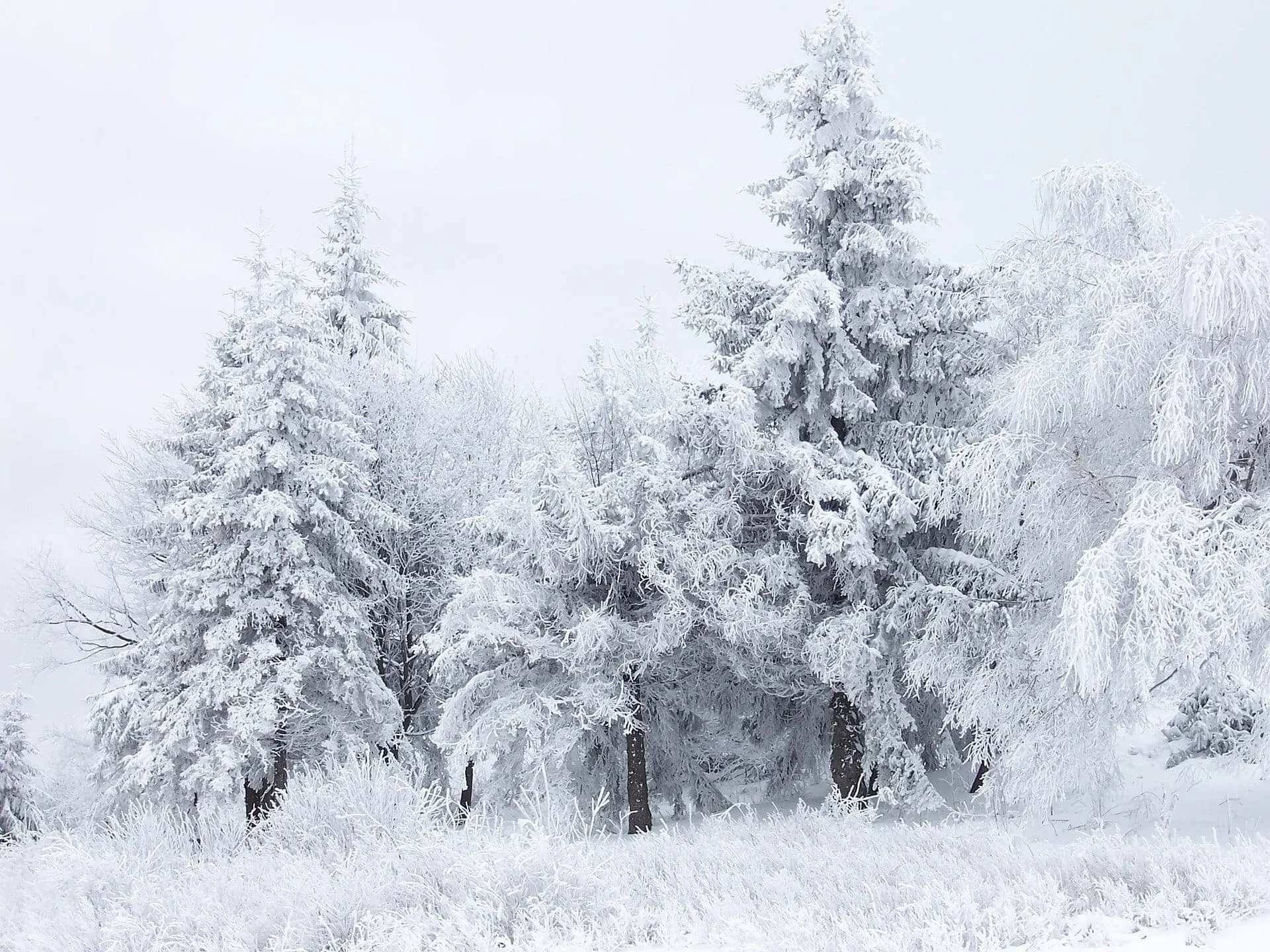
Ice and Snow World (冰雪大世界)
The world's largest ice sculpture festival. Held annually from late December to late February on the north bank of the Songhua River. Massive illuminated palaces, slides, and towers built from blocks cut from the river. Open 11:00–22:00; allow 3–5 hours. Tickets sell out online days in advance.
Wikimedia Commons · CC-BY-SA
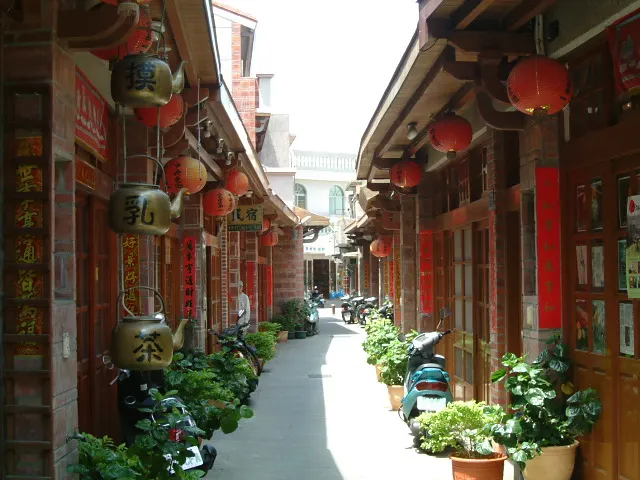
Central Street (中央大街 / ZHongyang Dajie)
A 1.4-km pedestrian street paved with cobblestones imported from Russia in the 1920s. Lined with Russian Baroque, Art Nouveau, and Renaissance Revival buildings. The social heart of Harbin since 1900. Best walked at dusk and again after dark when the lights come on.
Wikimedia Commons · CC-BY-SA
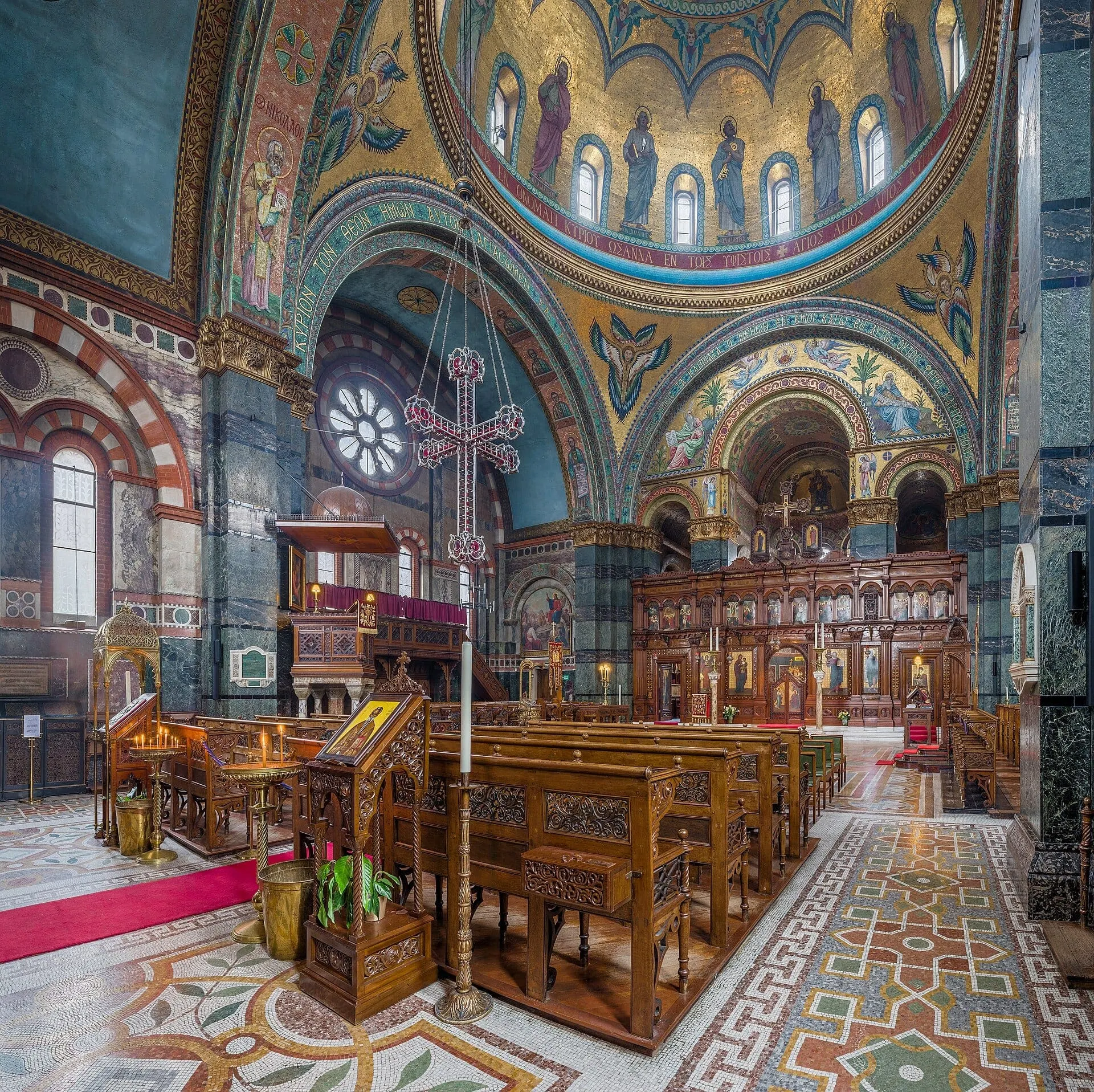
St. Sophia Cathedral (圣索菲亚教堂)
A 1907 Russian Orthodox church — the largest of its kind in the Far East. Converted to a museum and concert hall after 1959. The green onion dome and red-brick walls are Harbin's most photographed icon. Small but evocative, especially lit up at night.
Wikimedia Commons · CC-BY-SA
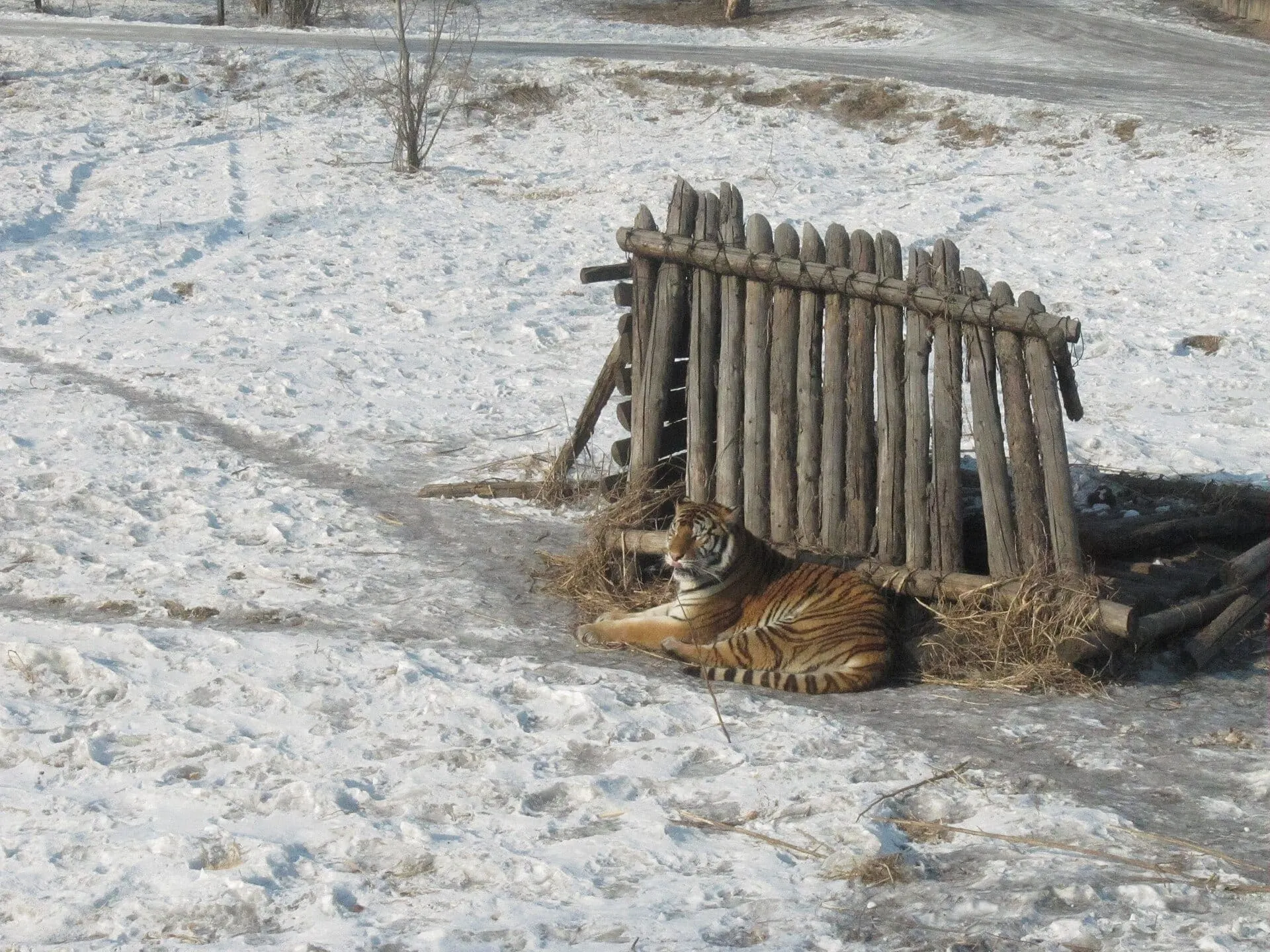
Siberian Tiger Park (东北虎林园)
A 1,440,000-sq-metre park on the northern outskirts holding several hundred pure Siberian (Amur) tigers. Visitors view the animals from caged safari buses that drive through the enclosures. Ethical concerns exist, but the park is also one of the world's most important tiger breeding facilities.
Wikimedia Commons · CC-BY-SA

Sun Island (太阳岛风景区)
A scenic riverside park across the Songhua from Central Street. Hosts the Sun Island International Snow Sculpture Art Expo (December–February) with monumental snow carvings. In summer it becomes a green riverside resort with gardens and the Russia-in-Harbin Theme Park.
Wikimedia Commons · CC-BY-SA
Harbin Volga Manor (伏尔加庄园)
A 600,000-sq-metre Russian-themed resort 30 km from the city centre on the Ashihe River. Reconstructed wooden Russian buildings, a Petrovskaya church replica, restaurants serving Russian cuisine, and year-round activities. Half-day or full-day visit.
Wikimedia Commons · CC-BY-SA
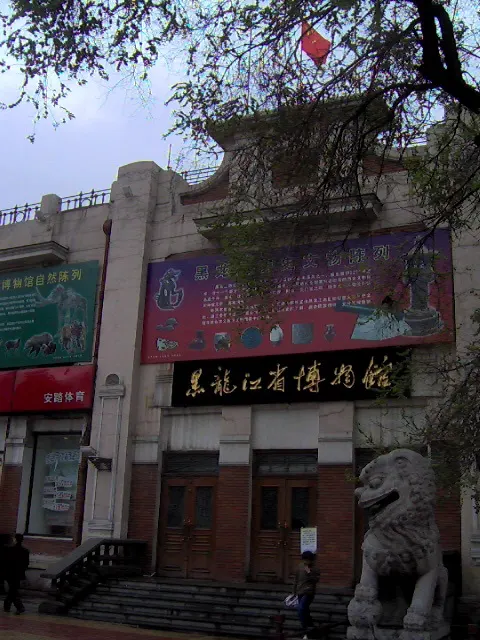
Heilongjiang Provincial Museum (黑龙江省博物馆)
The regional museum covering Heilongjiang's natural history, the Bohai Kingdom, and the Russian colonial period. The Danwei Cultural Relics Hall houses a stunning collection of 13th-century Jin dynasty gold. Free entry with passport.
Wikimedia Commons · CC-BY-SA
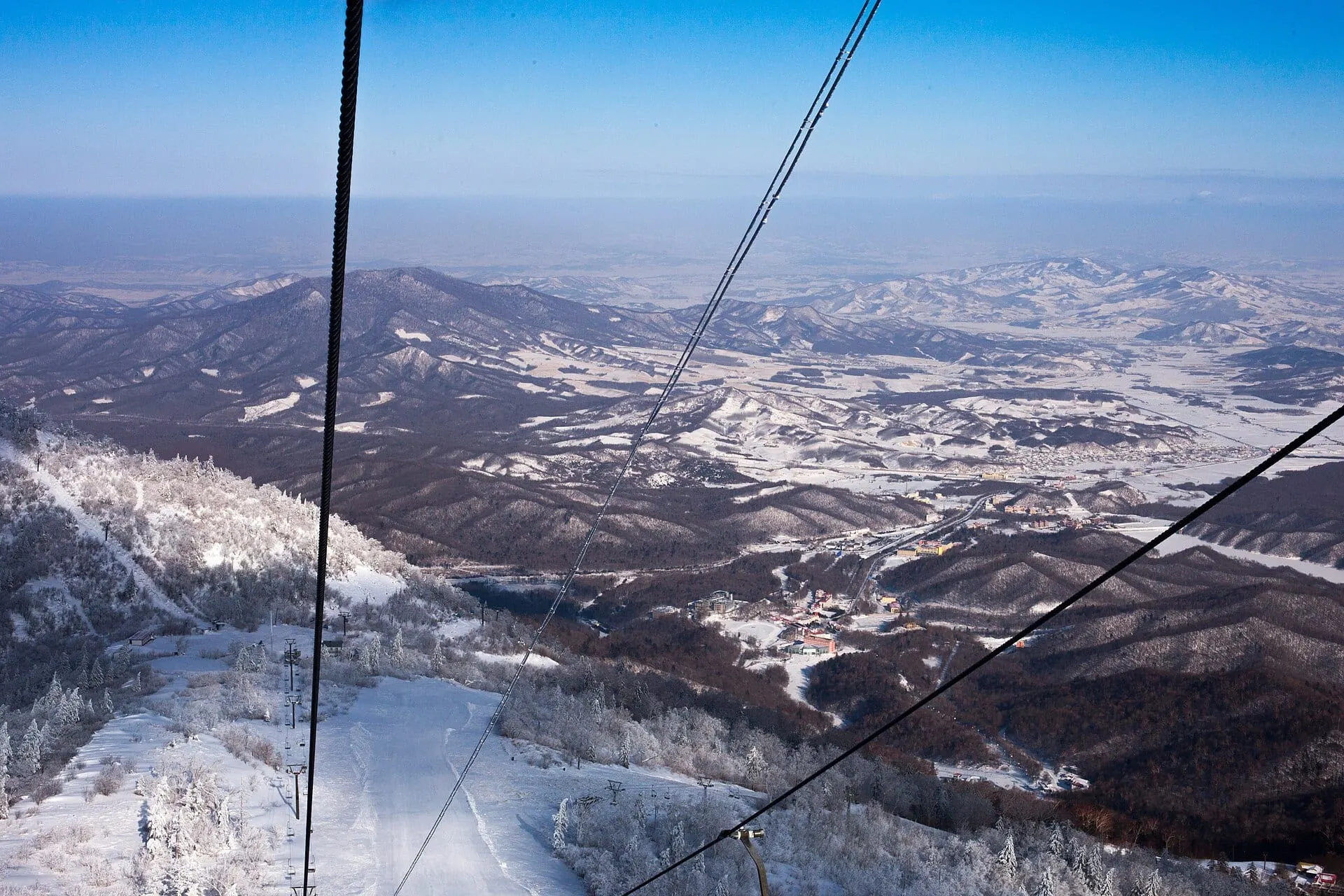
Yabuli Ski Resort (亚布力滑雪场)
China's largest and best-equipped ski resort, 2.5 hours east of Harbin by high-speed train or car. Host of the 1996 Asian Winter Games and the 2009 World University Games. 46+ pistes across three mountains, night skiing, and the 5.4-km toboggan run.
Wikimedia Commons · CC-BY-SA
Snow Town (中国雪乡 / Zhongguo Xuexiang)
A mountain village 280 km southeast of Harbin famous for its heavy snowfall and mushroom-shaped snow caps on every roof. Day-trip is rushed — overnight in a heated farmhouse is the only real way to experience it. Three hours each way by road.
Wikimedia Commons · CC-BY-SA
Songhua River Ice Swimming (冬泳)
A uniquely Harbin spectacle. From November through March, hardy locals cut holes in the frozen Songhua River and swim in water around 4°C. Best viewed on the central Songhua Riverbank near the Flood Control Monument. The annual Harbin Ice Swimming Festival is held in January.
Wikimedia Commons · CC-BY-SA
Harbin Red Sausage (哈尔滨红肠)
The city's signature food. A garlicky, smoked pork-and-beef sausage in a wrinkled red casing — the local adaptation of Lithuanian and Russian recipes. Try at the flagship Qiulin (秋林) shop on Central Street, the Laochangcheng street market, or any market stall.
Wikimedia Commons · CC-BY-SA
Jiaozi (Guo Bao Rou / 锅包肉)
Sweet-and-sour pork is Harbin's other classic — golden-fried pork slices in a sticky, sweet, vinegar-bright sauce. Look for it at local restaurants like Lao Chang Chun (老昌春), Zhang Bao Pu, or the canteen at any decent mid-range hotel. Best eaten with rice.
Wikimedia Commons · CC-BY-SA
STAY
Where to stay in Harbin
Pick a base that matches the trip you want — imperial-central for sightseeing, hutong belt for character, Chaoyang for nightlife, or Qianmen for budget.
Daoli / Central Street
The historic core — walk to Central Street, St. Sophia, the Songhua Riverbank, and the Ice and Snow World shuttle
#daoliNangang District
Modern city centre with the Provincial Museum, the JW Marriott, shopping streets, and the main HSR station
#nangangDaowai District
Old Chinese merchant quarter with traditional architecture, the best local food scene, and fewer foreign tourists
#daowaiSongbei District
New development across the river — closest to Ice and Snow World and Sun Island with modern resort hotels
#songbei
ITINERARIES
Sample itineraries from Harbin
Three ready-made routes, from a 1-day imperial sprint to a 5-day deep dive. Copy the day-by-day plan and adapt to your own pace.
- 1 DAY
Harbin in a Day (Winter)
A sprint covering St. Sophia, Central Street, and the Ice and Snow World with red sausage and Madieer ice cream.
- Short winter stopovers
- Beijing weekend escapes
- First-time ice festival visitors
- Day 01
Morning
Start at St. Sophia Cathedral at 9am (morning light is best for photos). Walk Central Street from end to end — stop at Qiulin for red sausage, eat a Madieer popsicle, admire the Baroque facades. Coffee in a Russian-era building.
Afternoon
Walk to the Songhua Riverbank. Watch the ice swimmers near the Flood Control Monument. Take the shuttle to the Ice and Snow World, entering at 15:00 to catch daylight and stay for the 18:00 lighting ceremony.
Evening
Spend 4–5 hours at the Ice and Snow World — ice palaces, slides, the main pagoda, the lighting show. Hotpot dinner near the hotel.
- 2 DAYS
Harbin Winter Weekend
The Ice Festival highlights plus Sun Island snow sculptures and the Siberian Tiger Park.
- Weekend travellers
- Photographers
- Families
- Day 01
Morning
St. Sophia Cathedral, Central Street walk, Qiulin sausage and Madieer ice cream. Coffee in a restored building.
Afternoon
Songhua Riverbank — ice swimming, ice slides, snow activities on the frozen river. Lunch at the Russian Restaurant on Central Street (borscht, pelmeni, beef Stroganoff).
Evening
Ice and Snow World from 15:00 to 21:00 — catch the lighting ceremony at 18:00. Hotpot dinner near Central Street.
- Day 02
Morning
Sun Island Snow Sculpture Art Expo (arrive at 8:00 for morning light on the snow). Walk the monumental sculptures — full-size replicas of temples and pagodas carved from snow.
Afternoon
Siberian Tiger Park (allow 2–3 hours). Take the caged safari bus through the enclosures. Watch the feeding if ethically comfortable — the Amur tiger conservation role is genuine.
Evening
Dinner at Port Café for upscale Russian cuisine. Final walk of Central Street lit up at night.
- 3 DAYS
Harbin Explorer (Winter)
The full winter experience: Ice Festival, Sun Island, Tiger Park, Volga Manor, and a Russian heritage deep dive.
- First-time Harbin visitors
- Culture and photography enthusiasts
- Russian heritage buffs
- Day 01
Morning
St. Sophia Cathedral, Central Street, Qiulin flagship. Jewish heritage walk — synagogue on Tongjiang Street, Jewish Museum, Jewish cemetery.
Afternoon
Songhua Riverbank — ice swimming, river activities. Russian Restaurant lunch. Heilongjiang Provincial Museum.
Evening
Ice and Snow World from 15:00 to 21:00. Lighting ceremony at 18:00. Hotpot dinner.
- Day 02
Morning
Sun Island Snow Sculpture Art Expo at 8:00. Walk the snow-carved pagodas and temples in morning light.
Afternoon
Siberian Tiger Park (2–3 hours). Afternoon tea or beer at a Central Street cafe to warm up.
Evening
Volga Manor evening visit — lit wooden churches, Russian buffet dinner, sleigh rides if snow conditions permit.
- Day 03
Morning
Day trip to Yabuli Ski Resort (2.5 hours by HSR, ¥130 each way). Morning skiing or snowboarding lesson. Or: Snow Town overnight trip extension.
Afternoon
Return to Harbin by late afternoon. Last walk along the frozen Songhua. Pick up vacuum-packed red sausage as souvenirs.
Evening
Farewell Russian dinner at Port Café. Final night walk along Central Street — the cobblestones, the sodium lights, the ice sculptures — the definitive Harbin memory.
BUDGET
What a Harbin trip costs
Per-person, per-day costs across three spending tiers. Excludes international flights and visa fees.
| Line item | Backpacker | Mid-range | Luxury |
|---|---|---|---|
| Budget Guesthouse / Hostel Dorm | $10 | $25 | $50 |
| Mid-range Hotel (3-4 star) | $35 | $70 | $125 |
| Luxury / 5-star Hotel | $80 | $150 | $280 |
| Local Meal (per person) | $3 | $7 | $14 |
| Mid-range Restaurant Meal | $12 | $22 | $42 |
| Local Transport (daily) | $3 | $8 | $22 |
| Attraction Entry Fees (daily avg) | $10 | $25 | $50 |
| Daily Total (per person) | $35 | $110 | $350 |
| Total per day | $188 | $417 | $933 |
$ USD per person per day, before international flights and visas. Last verified: Q3 2026.
STAY SAFE
Emergency contacts in Harbin
Save these three numbers before you board the plane. China uses different hotlines than most countries — there's no 911.
- POLICE
110
- AMBULANCE
120
- FIRE
119
- TOURIST HOTLINE
12301
- ENGLISH-SPEAKING ER
Harbin First Hospital (哈尔滨市第一医院) — international ward with English-speaking staff; Heilongjiang Provincial Hospital also accepts foreign patients
Problems travelers hit in Harbin
- Why is my Alipay not working?You linked a foreign Visa or Mastercard to Alipay but every transaction is rejected at the merchant.
- My China visa was denied — what now?Your L visa application was refused at the Chinese consulate and your trip is in 2–4 weeks.
- My passport was lost or stolen in China — what do I do?Your passport is gone (theft or loss) and you're in mainland China without travel documents.
- Why can't I book on 12306 with my foreign card?You tried to book a high-speed rail ticket on 12306.cn and your foreign Visa/Mastercard is rejected at checkout.
- Why is my VPN not working in China?You arrived in China, opened your VPN, and it will not connect at all or connects but no traffic loads.
- Why can't I book a Tibet trip on my own?You try to book Lhasa flights and hotels yourself but the booking fails, or you're turned away at the Lhasa airport without a permit.
Compare Harbin with
Book activities in Harbin
These are licensed tour operators and booking platforms we've vetted independently. Booking through these links may earn us a commission — see our affiliate disclosure. This never affects our editorial recommendations or the price you pay.
Frequently asked questions
Do I need a visa to visit Harbin as a US, UK, or EU citizen?
How many days do I need in Harbin?
When is the Harbin Ice Festival, exactly?
How do I get from Harbin Taiping Airport (HRB) to the city centre?
What payment methods work in Harbin?
Is Harbin safe for foreign tourists?
Show all 30 FAQs
How cold does it really get in Harbin?
What should I wear in Harbin in winter?
Is the Ice and Snow World worth it?
Are the Siberian Tiger Park ethical concerns valid?
Sun Island or Ice and Snow World — which is better?
Is a summer visit to Harbin viable?
Can I do Yabuli Ski Resort as a day trip?
Is an overnight trip to Snow Town (Xuexiang) worth it?
What Russian food should I try in Harbin?
Where should I buy Harbin red sausage?
What is the architecture on Central Street?
How is internet and VPN in Harbin?
Is there a tipping culture in Harbin?
Can I exchange currency at the airport or in the city?
Can I cross into Russia from Harbin on the visa-free entry?
What should I pack for a winter trip to Harbin?
When is the Harbin International Ice and Snow Sculpture Festival?
How do I get from Taiping Airport to Harbin city?
How cold does Harbin get in winter and how should I dress?
What is the Saint Sophia Cathedral and why visit?
What is Central Street (Zhongyang Dajie) known for?
What is Harbin red sausage and where do I try it?
Is Harbin worth visiting outside winter?
How do I get to the Siberian Tiger Park and is it worth visiting?
References

Related guides & destinations
Guide
China in December 2026: Winter Arrives, Harbin Ice Festival Begins, and the Cheapest Month
December is winter in earnest for the north, the start of the Harbin Ice Festival season, and the cheapest month of the year for most of Chi
Guide
How We Research 2026: NihaoVisit’s Methodology for China Travel Information
How NihaoVisit sources, verifies, and maintains 700+ pages of China travel information — our source hierarchy, fact-checking process, update
Guide
Fact-Checking Log 2026: Verified China Travel Information — NihaoVisit
A public log of fact-checking verification passes on NihaoVisit, showing what was verified, when, and against which sources — covering visa
Guide
Best Time to Visit China 2026: Month-by-Month Weather, Crowds, and Prices
The best time to visit most of China is April–May and September–October. Winter (Dec–Feb) is cold but cheap; summer (Jun–Aug) is hot and cro
Guide
VPN for China 2026: Which VPNs Work, eSIM Alternatives, and the Complete Pre-Trip Checklist
Most Western apps and websites are blocked in mainland China. A reliable VPN is essential for Google, Gmail, WhatsApp, Instagram, and most n
Guide
China SIM Card and eSIM Guide 2026: Stay Connected Without WeChat
A Chinese SIM or eSIM lets you use mobile data, maps, and ride-hailing without WiFi. Here is how to get one, the cost, and which provider to