Haikou
Haikou is the capital of Hainan Province, a 2.5-million-population port city on the tropical north coast of China's only island province. It is the more authentic, less-touristed alternative to Sanya for travelers who want to experience a real Chinese tropical city rather than a Russian-dominant resort enclave. The city features the Qilou arcade streets of the old town (similar to Singapore's shophouses), the Leiqiong volcanic crater park, the Wugong Temple, and the Hainan Museum. The climate is tropical monsoon: hot, humid, and warm year-round. Plan 2-3 days for Haikou, plus 2-3 days for the broader Hainan island loop. Best from November to April (avoid typhoon season June-October). Fly into Haikou Meilan International Airport (HAK).
Why Haikou in 2026.
Capital of Hainan Province on the tropical north coast of China's only island province, with a balmy year-round climate, white-sand beaches, volcanic crater parks, and easy access to the Sanya resort region to the south. Haikou is the more authentic, less-crowded alternative to Sanya for travelers who want a real Chinese tropical city rather than a resort enclave.
Quick Answer
Haikou is the capital of Hainan Province, a 2.5-million-population port city on the tropical north coast of China's only island province. It is the more authentic, less-touristed alternative to Sanya for travelers who want to experience a real Chinese tropical city rather than a Russian-dominant resort enclave. The city features the Qilou arcade streets of the old town (similar to Singapore's shophouses), the Leiqiong volcanic crater park, the Wugong Temple, and the Hainan Museum. The climate is tropical monsoon: hot, humid, and warm year-round. Plan 2-3 days for Haikou, plus 2-3 days for the broader Hainan island loop. Best from November to April (avoid typhoon season June-October). Fly into Haikou Meilan International Airport (HAK).
| Best time to visit | November to April; avoid June-October typhoon season |
|---|---|
| Daily budget | $30 (backpacker) / $90 (mid-range) / $280+ (luxury) |
| Language | Mandarin; Hainanese (Qionghua) dialect, Cantonese widely understood |
| Currency | CNY (¥) — Alipay/WeChat Pay universal |
| Time zone | China Standard Time (UTC+8) |
| Last updated | 2026-06-14 |
Want a Haikou plan built for you?
Why visit Haikou?
Haikou is the most authentic, least-touristed capital of any Chinese province, and the more interesting entry point for Hainan compared to Sanya. Sanya is a 5-star beach resort that, in peak season (December-February), feels half-Russian and half-Chinese luxury tourist. Haikou is a real Chinese tropical city — a port, a regional capital, a 2.5-million-population municipality with its own food culture, history, and pace. The climate is tropical year-round (averages 22-28°C), the beaches are real (not just resort pools), and the cost is 30-50% lower than Sanya. Hainan is China's only tropical island province, and the smallest. The island is roughly the size of Taiwan but with 10 million people, divided into a more developed south (Sanya, with the resort beaches) and a more authentic north (Haikou, with the port, the history, and the local culture). The island has its own dialect (Hainanese, also called Qionghua), its own cuisine (lighter and more tropical than mainland Chinese food, with an emphasis on seafood, chicken, and tropical fruits), and a distinct Li and Miao ethnic minority population, especially in the central mountainous region. For the active traveler, Haikou is the gateway to a full Hainan island loop. The Hainan Island Loop Railway (海南环岛铁路) circles the entire island, with stops at the beach resorts, the Li and Miao mountain villages in the center, the eastern surf town of Wanning, and the southern resort city of Sanya. Most travelers spend 2-3 days in Haikou, 2-3 days in Sanya, and 1-2 days in the Wuzhishan / central mountain area. Hainan also has one of China's most generous visa-free policies. The island has a separate "visa-free entry" arrangement for over 60 countries, allowing 144-hour (6-day) visa-free transit stays or 30-day visa-free visits for many passport holders, as of 2026. This makes Hainan one of the easiest destinations in China for short visits.
What is the history of Haikou: Maritime crossroads and exile island?
Hainan has been inhabited for at least 6,000 years by the Li people (one of China's oldest ethnic minorities, ethnically Tai-Kadai and linguistically related to Thai and Lao). The Han Chinese first reached the island in the Han dynasty (2nd century BCE), and the famous general Ma Yuan established a garrison on the island in 43 CE. The Ma'an Ridge (马鞍岭) and Ma Yuan Temple in Haikou commemorate his expedition. For most of Chinese history, Hainan was a remote frontier and a place of exile. Many of China's most famous literati and officials were banished to Hainan at various points, including the Song-dynasty prime minister Li Gang, the Ming official Hai Rui (a paragon of incorruptibility), and the Tang-dynasty official Li Deyu. The Wugong Temple in northern Haikou honors five such officials, and the 谪宦 (zhéhuàn) tradition — "the exiled officials of Hainan" — is a major part of Hainanese identity. The Li people maintained their traditional communities primarily in the central mountains, and Hainan was formally incorporated as a province of China in 1988. The modern history of Haikou begins in 1849, when the Qilou (骑楼) arcade streets were built by overseas Chinese returning from Southeast Asia. The arcades were modeled on the shophouses of Singapore, Penang, and Bangkok, with covered walkways, European Baroque and Renaissance facades, and tropical adaptations. The Qilou are now a national historic monument and the cultural heart of Haikou. In the 20th century, Hainan was a frontline of the Sino-Japanese War. The Japanese occupied the island from 1939 to 1945, and the Haikou area saw significant fighting. After 1949, Hainan was administered as part of Guangdong Province and then as a separate province in 1988. The 2010s brought the Boao Forum for Asia (the "Asian Davos" held in Boao, 100 km from Haikou) and rapid tourism development. Today Haikou is a major Free Trade Zone (FTZ), with relaxed customs for foreign travelers and reduced import duties on certain goods. The COVID-19 pandemic had a major impact on Hainan tourism (the island was closed to most foreign visitors from 2020 to 2023), and the post-pandemic recovery has been a focus of provincial government investment. Hainan is positioning itself as a "free trade port" by 2030, with simplified visa procedures, duty-free shopping, and a 10% individual income tax cap for skilled foreign workers.
What is the geography and climate of Haikou: tropical monsoon island?
Hainan is China's second-largest island (after Taiwan), 35,400 km², separated from the mainland by the 30-km-wide Qiongzhou Strait. The island is mountainous in the center, with the Wuzhi Mountain (五指山, "Five Finger Mountain") reaching 1,867 m. The coast is a mix of sandy beaches, mangrove wetlands, and coral reefs. Haikou sits on the flat northern coastal plain, with the Nandu River (南渡江) running through it. The climate is tropical monsoon, with two distinct seasons: a dry season (November-April) and a wet season (May-October). The dry season has the best weather: 18-26°C, low humidity, and almost no rain. The wet season is hot (28-35°C), humid, and rainy, with 70% of the annual rainfall concentrated in the May-October period. **Typhoon season** is from June to October, with 3-6 named typhoons typically affecting Hainan each year. Most typhoons bring heavy rain and wind to the north coast (where Haikou is) and the eastern coast; the south coast (Sanya) is somewhat shielded by the central mountains. Typhoons in Haikou generally cause 1-3 days of disruption; rarely is the airport closed for more than 24 hours. The tropical climate supports lush vegetation: coconut palms, banana trees, mango trees, papaya, and coffee. Hainan is China's largest producer of coconut, mango, and coffee, and the largest rubber producer. The local cuisine is tropical, with abundant seafood, chicken (the famous 文昌鸡 Wenchang chicken, from Wenchang city east of Haikou), and tropical fruits. The Hainanese rice noodle soup (海南粉) is the local breakfast classic. Despite the tropical location, Hainan has historically been vulnerable to typhoons and tropical storms, and the 2014 super-typhoon Rammasun caused significant damage. The provincial government has invested heavily in typhoon-resistant infrastructure, and the building code is among the strictest in China. Travelers should still follow local news and typhoon warnings during the June-October period.
How to get to Haikou
The main gateway is Haikou Meilan International Airport (HAK), 25 km southeast of the city center, with direct flights to Beijing (3.5 hours), Shanghai (3 hours), Guangzhou (1.5 hours), Shenzhen (1.5 hours), Chengdu (2.5 hours), Kunming (2 hours), and most major Asian cities. International connections include Bangkok, Singapore, Kuala Lumpur, Seoul, Tokyo, and several Russian cities. Domestic connections to Hong Kong, Macau, and Taipei also operate (in peak winter season). A taxi from the airport to the city center is ¥80-100; the airport express bus (¥25) takes 40 minutes. A new high-speed rail link connects the airport to the city center (15 minutes, ¥10). Haikou is connected to the mainland by the Hainan Island Loop Railway (海南环岛高铁), with the HSR crossing the Qiongzhou Strait via a ferry train (a unique engineering feat — trains are loaded onto a ferry at the southern Guangdong port of Zhanjiang, ferried across the strait, and unloaded at Haikou). Total time from Guangzhou to Haikou is about 10 hours; from Shenzhen, 9 hours. The ferry-train ride is 1 hour, with the train and ferry riding together. For the Sanya connection, the HSR takes 1.5 hours and runs every 20-30 minutes. The Hainan Island Loop runs both directions, with stops at Wanning (1 hour east of Haikou), Lingshui (1.5 hours), and Sanya (2 hours). For the central mountain area (Wuzhishan), a slower regular-speed train takes 2-3 hours from Haikou. For the overland crossing from mainland China, the 徐闻港 (Xuwen Port) in southern Guangdong is the new ferry terminal, with high-speed ferries to Haikou's Xinhai Port (1 hour, ¥45 for foot passengers, ¥415 for a small car). The old 海安港 (Hai'an Port) is also still in operation. The total crossing time from Xuwen to Haikou is about 2 hours including waiting.
Where to stay and the best neighborhoods
Haikou has 3-4 useful base neighborhoods. The most central is Longhua District (龙华区), with the Qilou Old Street, the Hainan Museum, and the city's main shopping area. International chain hotels (Ritz-Carlton, Westin, Sheraton, Hilton) are all present here, with rooms from ¥500-1,200/night. Mid-range Chinese-brand hotels (Jinjiang, Hanting, Atour) cost ¥250-450/night. Budget hostels (Haikou International Youth Hostel, the Qilou area) are ¥80-150/night. Qiongshan District (琼山区) is the older part of Haikou, with the Wugong Temple, the Hairui Tomb, and the traditional Hainanese culture. It's a 20-30 minute drive from the Qilou area but feels like a different city — more local, with a stronger Hainanese identity. Hotels are cheaper. Xiuying District (秀英区) is the western district, with Holiday Beach, the volcanic crater park, and the Haikou West Port. It's the most relaxed area, with a few beachfront hotels. The Westin Haikou and the Renaissance Haikou are here. Xiuying is the best base for beach-focused trips and the volcanic park. For a more resort-like experience, the eastern Haikou Bay area has the Haikou Bay No. 1 High-end Coastal Tourism Area, with several 5-star hotels facing the Qiongzhou Strait. The atmosphere is more resort than city. A neighborhood-by-neighborhood quick guide: - **Longhua District (龙华区)**: Qilou Old Street, museums, shopping. Best for first-time visitors. - **Qiongshan District (琼山区)**: Old Haikou, Wugong Temple, Hairui Tomb, local culture. Best for cultural travelers. - **Xiuying District (秀英区)**: West Haikou, Holiday Beach, volcanic park, port. Best for beach and nature. - **Haikou Bay (海口湾)**: Eastern coastal tourism area, 5-star hotels. Best for resort-style stays. - **Boao (100 km east)**: Home of the Boao Forum, beach resort. Best for a side trip.
What are the top attractions in Haikou: Qilou, volcanic craters, and tropical beaches?
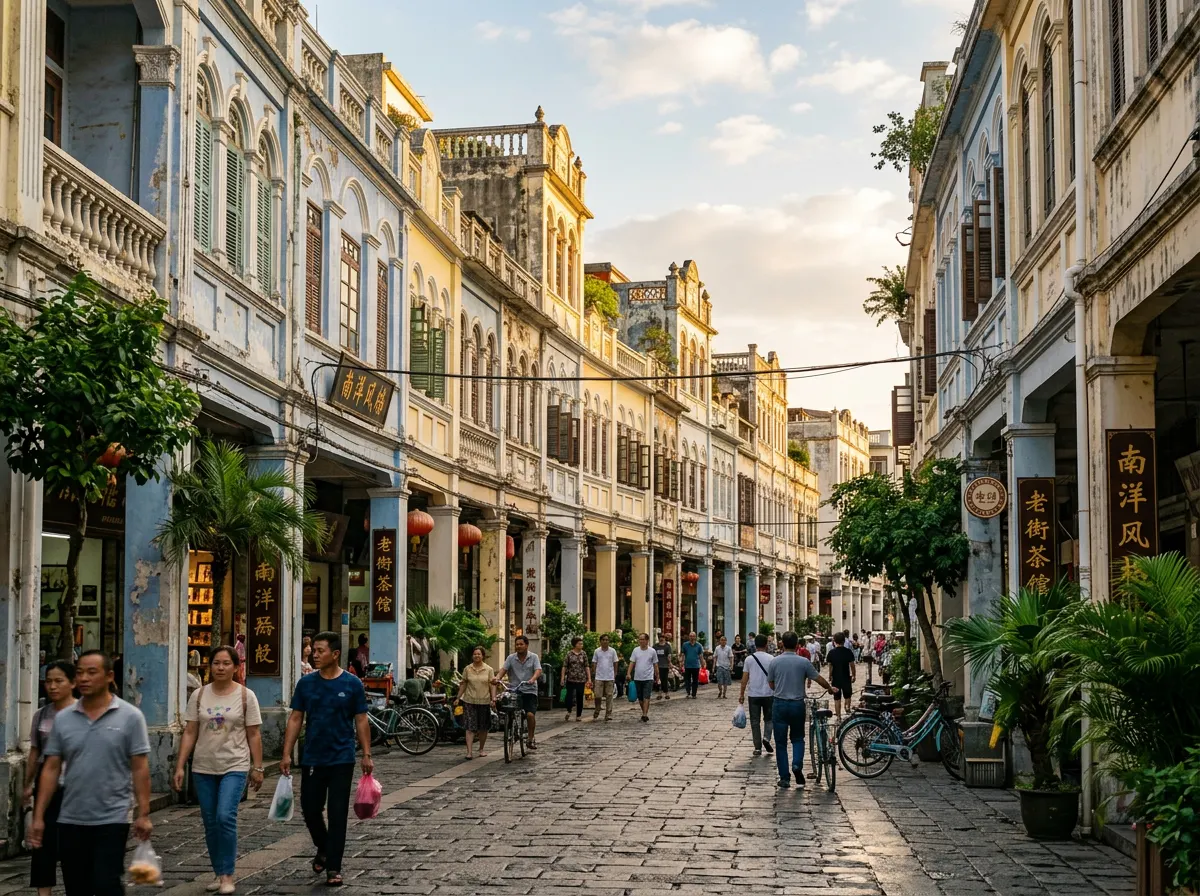
The Qilou Arcade Streets (骑楼老街) are the cultural heart of Haikou, a 600-m stretch of 19th-century European-style arcade buildings. The Qilou were built by overseas Hainanese returning from Singapore, Penang, and Bangkok, and modeled on the shophouses of those cities. The arcades have covered walkways to shield pedestrians from the tropical sun and rain, with decorative facades in Baroque, Renaissance, and tropical Chinese styles. The oldest is from 1849. The street has a vibrant mix of tea houses, herbal medicine shops, Hainanese food stalls, and small museums. The most famous is the 钟楼 (Clock Tower), a 1929 European-style clock tower at the south end of the street. The Qilou are free to walk; the small museums are ¥10-20 each. Allow 2-3 hours. The Leiqiong Volcanic Cluster Geopark (雷琼火山群) is the most dramatic natural attraction near Haikou, a UNESCO Global Geopark of 40+ volcanic craters and lava tunnels. The park is 15 km southwest of the city, easily reached by taxi (¥60-80) or the tourist bus. The main crater, 马鞍岭 (Mǎ'ānlǐng, "Horse Saddle Ridge"), is 90 m deep and can be climbed via a 30-minute stairway. The view from the rim is striking, with the green tropical vegetation contrasting with the dark volcanic rock. The park also has a 1,000-year-old basalt temple complex, the 冼夫人庙 (Lady Xian Temple, dedicated to a 6th-century local heroine), and several lava tunnels. Allow 3-4 hours. ¥60 entry. The Wugong Temple (五公祠) is a 1,000-year-old temple complex in northern Haikou, dedicated to five Tang and Song dynasty officials who were exiled to Hainan. The temple is surrounded by a beautiful tropical garden and the famous "Haihong Qiu" (海洪丘, "Sea Flooding Hill"), a natural cooling spot where sea breezes combine with the underground spring water to create a refreshingly cool microclimate. The temple has a small museum about the exiled officials. ¥22 entry. Allow 1.5-2 hours. For beaches, the Holiday Beach (假日海滩) is the most accessible city beach, a 6-km stretch of public beach in western Haikou, with palm trees, water sports (jet ski, parasailing, banana boat), and a seafood street. The beach is well-maintained but can be crowded on weekends. Free entry; water sports ¥50-200. The Xixiu Beach (西秀海滩) is smaller and quieter, popular with locals for sunset. The Tannan Bay Mangrove Wetland (潭南湾红树林) is a protected mangrove wetland 30 km from Haikou, with walking boardwalks through the mangrove forest, kayaking, and migratory bird viewing. ¥40 entry. Half-day activity. The Hainan Museum (海南省博物馆) is a free provincial museum covering Hainan's history from the Han dynasty to the present, with strong Li and Miao ethnic minority exhibits, a maritime Silk Road gallery, and a famous Danzhou kiln porcelain collection. Allow 2-3 hours. The museum is in the Guoxing Avenue area of Haikou. The Hairui Tomb (海瑞墓) is the tomb of Hai Rui, a 16th-century Ming-dynasty official famous for his incorruptibility, the model for the famous line "Hai Hairui" (海瑞) in Mao Zedong's 1944 speech. The tomb complex is small but atmospheric, with a beautiful tropical garden. ¥15 entry. For day trips from Haikou, the Wenchang city area (60 km east) is home to the Wenchang Space Launch Center, where the Long March 5, 7, and 8 rockets are launched. Public viewing is available for select launches. The Wenchang 椰林 (coconut forest) is also a 100,000-hectare coconut plantation, the largest in China.
What local food should I try in Haikou: Hainanese chicken, seafood, and tropical fruits?
Hainanese cuisine (琼菜) is one of China's most distinctive regional cuisines, with light flavors, an emphasis on seafood and chicken, and tropical fruits. The signature dish is 文昌鸡 (Wénchāng jī, "Wenchang chicken"), a poached free-range chicken from Wenchang city, served with ginger-scallion sauce and a side of chicken-fat rice. The chicken is boiled and then chilled, and the texture is unusually tender. The dish is the foundation of the international Hainanese chicken rice, which was carried to Singapore, Malaysia, and beyond by overseas Hainanese in the 19th and 20th centuries. Other Hainanese specialties: - **海南粉 (Hǎinán fěn, Hainan rice noodles)**: The local breakfast — soft rice noodles in a light seafood broth, topped with peanuts, dried shrimp, and pickled vegetables. ¥15-25 per bowl. - **清补凉 (Qīngbǔliáng)**: A Hainan dessert soup with coconut milk, red beans, peanuts, sago, lotus seeds, longan, and ice. The local summer cooler, served in every restaurant. ¥10-20. - **椰子鸡 (yēzi jī, coconut chicken)**: A whole chicken poached in fresh coconut water with coconut meat, served with dipping sauce. The broth is sweet and light. - **东山羊 (dōngshān yáng, Dongshan goat)**: A Hainan specialty from the Dongshan area of Wenchang, braised goat meat with ginger and herbs. - **海鲜 (hǎixiān, seafood)**: Hainan's tropical waters produce abundant grouper, lobster, crab, mantis shrimp, and shellfish. The seafood is fresh and cheap. - **热带水果 (tropical fruits)**: Mango, papaya, dragon fruit, passion fruit, pineapple, banana, coconut, mangosteen, rambutan, and durian. Hainan is the Chinese mainland's main source of tropical fruits. For street food, the best night market in Haikou is 板桥海鲜市场 (Banqiao Seafood Market) in the Longhua area, where you can pick your own live seafood and have it cooked at one of the surrounding restaurants (¥50-150 per person for a full meal). The 金水门 (Jinshui Gate) night market is another good option. For a fine-dining Hainanese experience, the 海南人家 (Hǎinán Rénjiā) chain has multiple locations and serves classic Hainanese banquet food. The 龙昆南 (Lóngkūn Nán) area in southern Haikou has a high concentration of mid-range Hainanese restaurants. For upscale seafood, the 皇马 (Huángmǎ) and 金水门 (Jinshui Gate) restaurants are well-regarded. A few classic Haikou restaurants: - **海南人家 (Hǎinán Rénjiā)**: Classic Hainanese banquet food. Multiple locations. ¥100-300 per person. - **文昌邓记 (Wénchāng Dèngjì)**: Wenchang chicken specialist. Authentic and well-regarded. ¥80-150 per person. - **板桥海鲜 (Bǎnqiáo Hǎixiān)**: Pick-your-own seafood market with adjacent restaurants. ¥100-200 per person. - **椰岛海景 (Yēdǎo Hǎijǐng)**: Beachfront seafood restaurant in the Holiday Beach area. ¥100-200 per person.
What is a good 1- to 3-day itinerary for Haikou?
**1-Day Itinerary — Haikou City Highlights (Sunday pace)** Morning: 8:30 AM start at the Qilou Old Street (2-3 hours). Walk the arcades, visit the small museums (Clock Tower, the 邱氏宗祠 Qiu Ancestral Hall, the 海南华侨博物馆 Hainan Overseas Chinese Museum), and try a Hainanese breakfast at one of the small stalls (海南粉). Lunch: 12 PM lunch at 板桥海鲜 or a Hainanese restaurant. Try 文昌鸡 and 清补凉. Afternoon: 2 PM taxi to the Leiqiong Volcanic Cluster Geopark (40 min, ¥60). Climb the Ma'anling main crater (30 min), visit the lava tunnels and the Lady Xian Temple. Return by 5 PM. Evening: 6 PM dinner at a seafood restaurant in the Longhua area. Try 椰子鸡 (coconut chicken) and the tropical fruits. End the night at a tea house in the Qilou area. **2-Day Itinerary — Haikou + Wugong Temple + Holiday Beach** Day 1: As above. Day 2: Morning at the Wugong Temple (2 hours, ¥22) and the adjacent 海瑞墓 (Hairui Tomb, ¥15). Lunch in the Qiongshan area for 东山羊 (Dongshan goat) or a traditional Hainanese meal. Afternoon at the Holiday Beach (water sports, swimming, sunset). Dinner at a beachfront seafood restaurant. **3-Day Itinerary — Haikou + Wenchang Day Trip** Days 1-2: As above. Day 3: Day trip to Wenchang city (60 km east, 1-hour drive). Visit the 文昌孔庙 (Wenchang Confucian Temple, ¥15), the 椰林 (coconut forest) at 100,000 hectares (the largest in China), the 铜鼓岭 (Tongguling) mountain overlooking the sea, and the moon-bay beach. Lunch in Wenchang for the original 文昌鸡. Return to Haikou by 6 PM. For those interested in space, the Wenchang Space Launch Center is also in this area; check the launch schedule at http://www.cmse.gov.cn/ for public viewing opportunities. For an extended trip, combine with 2-3 days in Sanya (1.5 hours HSR south), 1-2 days in Wuzhishan (3 hours by train to the central mountains, with the Li and Miao ethnic villages), and 1-2 days in Wanning (1 hour east, the surf town). The classic 7-day Hainan circuit is: 2 days Haikou, 1 day Wanning, 3 days Sanya, 1 day Wuzhishan. Add an extra day in Boao for the Boao Forum and Asia Bay.
What practical information do inbound travelers need?
**Visas.** Hainan has one of China's most generous visa-free policies. As of 2026, citizens of 60+ countries can visit Hainan visa-free for 30 days under the Hainan-specific visa-free policy. This includes most of EU, UK, Australia, New Zealand, South Korea, Japan, Malaysia, Singapore, Thailand, Canada (since 2024), and several other countries. The visa-free policy is independent of the broader China visa-free policy and applies specifically to Hainan island. Travelers must enter and exit via Haikou or Sanya airports, and the policy covers tourism, business, and family visits. US citizens still need a tourist (L) visa; the standard 30-day visa is sufficient for a Hainan visit. **Money and payments.** Alipay and WeChat Pay cover 95% of city transactions. The Alipay Tour Pass allows foreign credit card top-up. International credit cards are accepted in international hotels, large restaurants, and the duty-free shopping centers. ATMs at Bank of China, ICBC, and China Merchants Bank accept international cards. Cash is useful for the night markets and small vendors. Hainan is one of China's duty-free shopping zones, with reduced or zero import duty on certain goods (cosmetics, watches, electronics, alcohol). **Language.** Mandarin is the official language. The local Hainanese dialect (Qionghua) is mutually unintelligible with Mandarin and related to the Min languages. Most Hainan residents are bilingual in Mandarin and Hainanese, with Mandarin used in business and education. Cantonese is widely understood because of the large Cantonese-speaking tourist and business community. English is not widely spoken outside international hotels and large restaurants. The museums and major attractions have English captions. Download Pleco and Google Translate (offline Chinese pack) before arrival. The Li and Miao ethnic minority villages in the central mountains have their own languages. **Typhoon and beach safety.** Hainan is in typhoon season from June to October. The main typhoon months are July-September, with 3-6 named storms typically affecting the island each year. During a typhoon, expect heavy rain, strong winds, and possible flooding. The provincial government issues typhoon warnings (红色预警 red warning is the highest), and travelers should follow local news. The Hainan Meteorological Bureau website has real-time updates. Beach safety: Hainan's beaches are real (with riptides and rough surf), not resort pools. Swim only at patrolled beaches with lifeguards (most public beaches have them in season). Watch for red flags (no swimming), yellow flags (caution), and green flags (safe). The Haikou public beaches have lifeguards in season. **Customs for visiting Li and Miao villages.** The Li and Miao are the indigenous ethnic minorities of Hainan, concentrated in the central mountain area (Wuzhishan, Qiongzhong, Baisha). The Li are the more numerous (about 1.4 million in Hainan), with their own language (Hlai, Tai-Kadai family), traditional woven clothing, and a strong tattooing tradition (older women, now mostly elderly). The Miao (Hmong) are a smaller group in Hainan. Visitors to villages should: - **Ask before photographing people**, especially elderly women with traditional tattoos. Most will accept ¥20-30 for a posed photo. - **Do not touch the traditional woven clothing** without permission. The Li weaving is intricate and valued. - **Try the local rice wine (biān, 山兰酒) when offered**. The Li are known for hospitality, and refusal is impolite. - **Bring small gifts** (fruit, tea) if staying overnight in a village homestay. **Transport within Haikou.** Haikou has a clean, modern metro with 2 lines. Line 1 (east-west) and Line 2 (north-south) cross at the central Haikou Bay station. The metro is the easiest way to move around the city. Buses are extensive but not English-marked. Taxis (¥10 flag fall) and DiDi work with Alipay. The airport is on Line 2. A taxi from the airport to the city center is ¥80-100; the airport express bus is ¥25. For beach access, the Holiday Beach and Xixiu Beach are accessible by bus or taxi. **Best time to visit.** November to April, with December-February the peak season. The dry season (November-April) has the best weather: 18-26°C, low humidity, and almost no rain. The wet season (May-October) is hot, humid, and rainy, with typhoons in July-September. **Avoid June-October** for the most reliable weather. The Hainan International Tourism Island festival is in November; the Boao Forum is in March.
What are the most frequently asked questions?
Most inbound travelers ask: whether to stay in Haikou or Sanya, how to handle typhoon season, what to do in the city, how to combine with Sanya, and whether the beaches are good. The most useful next steps: book a Hainan Island Loop trip with 2-3 days in each major city, plan around the dry season (November-April) for reliable weather, and reserve a Wenchang or Wuzhishan day trip for the cultural and natural highlights. The visa-free policy makes Hainan one of the easiest destinations in China for short visits.
What is there beyond Haikou: Sanya, Wuzhishan, and the Hainan island loop?
Haikou is the gateway to the rest of Hainan, and a complete Hainan trip covers 4-5 distinct regions. The Hainan Island Loop HSR (海南环岛高铁) circles the entire island in a figure-8, with stops at all the major destinations. The loop takes 4-5 hours end-to-end (528 km of track), and most travelers use it as a transit between cities. Sanya (三亚) is the resort city, 1.5 hours south of Haikou by HSR, with the famous Yalong Bay (亚龙湾, "Asia's most beautiful bay"), the Dadonghai (大东海, "Big East Sea") city beach, the Haitang Bay (海棠湾, the new luxury resort area), and the Tianya Haijiao (天涯海角, "Edge of Sky, Rim of Sea," the well-known Hainan landmark). Sanya has 5-star hotels from international chains (Marriott, Hilton, Ritz-Carlton, Mandarin Oriental), 4-5 star domestic options, and budget hotels starting at ¥300. The beaches are real and good, with white sand and clear water. The most popular family-friendly attraction is the Wuzhizhou Island (蜈支洲岛, "Wuzhizhou Coral Island"), a 1.5 km² coral island with glass-bottom boats, snorkeling, and diving. The Nanshan Buddhist Temple (南山寺) is a 1,000+ year old temple complex with a 108-m Guanyin statue, one of the world's tallest. The Yalong Bay Tropical Paradise Forest Park is a movie set used in the famous Chinese film "If You Are the One." Plan 2-3 days in Sanya. The downside: Sanya is 30-50% more expensive than Haikou, and the high season (December-February) brings heavy Russian and Chinese domestic tourism, making it crowded and expensive. Wuzhishan (五指山, "Five Finger Mountain") is in the central mountainous region, 2-3 hours by train from Haikou. The area is the heartland of the Li and Miao ethnic minority cultures, with traditional villages, the 1,867-m Wuzhi Mountain peak, and the tropical rainforest of the Hainan Tropical Rainforest National Park (a UNESCO World Heritage site). The Li and Miao villages — including the Baishui Ling (白水岭) and Yahu (呀呼) villages — offer cultural immersion, traditional woven clothing, and the famous 竹竿舞 (zhúgān wǔ, "bamboo pole dance"). The Wuzhishan area is cooler (averages 22-25°C year-round) and a popular summer escape. The Li ethnic food is distinct from Han Chinese cuisine, with an emphasis on 山兰酒 (shānlán jiǔ, a sweet rice wine) and 竹筒饭 (zhútǒng fàn, bamboo-tube rice). Plan 1-2 days. Wanning (万宁) is 1 hour east of Haikou by HSR, the surf town of Hainan with the famous Riyue Bay (日月湾, "Sun-Moon Bay") and Shimei Bay (石梅湾). The waves are consistent year-round, and Riyue Bay has hosted international surf competitions. The Xinglong Tropical Botanical Garden (兴隆热带植物园) is a 1,000-hectare garden with 3,000+ tropical plant species, including coffee, cocoa, and vanilla. The Wanning coffee is one of Hainan's most distinctive products. Plan 1 day. Boao (博鳌) is 100 km east of Haikou (1.5 hours by car), home of the Boao Forum for Asia (the "Asian Davos" held in March each year). The town is on the Wanquan River and the South China Sea, with a long crescent beach, Asia'n Bay, and the Yuedao (玉带滩, "Jade Belt Beach"), a 2-km sandbar separating the river from the sea. The Boao Buddhist Temple is a 1,000+ year-old temple. Plan 1 day. For a complete 7-day Hainan circuit: 2 days Haikou, 1 day Wanning, 3 days Sanya, 1 day Wuzhishan. The route can be done entirely by HSR, with chartered cars for the Wuzhishan mountain areas. For a beach-intensive trip, spend 4-5 days in Sanya and 1-2 days in Haikou. For a cultural trip, spend 2-3 days in Wuzhishan and 1-2 days in Haikou.
What is Hainan duty-free shopping and the free trade zone?
Hainan has been designated a Free Trade Zone (FTZ, 自由贸易试验区) since 2018 and is on track to become a Free Trade Port (自由贸易港) by 2030, with simplified customs procedures, duty-free shopping, and reduced taxes. For travelers, the practical impact is the duty-free shopping — Hainan is the only province in mainland China with a comprehensive duty-free retail program. The Hainan duty-free program allows every traveler leaving the island to purchase up to ¥100,000 (about $14,000) of duty-free goods per year, with no individual item limit. The categories include: cosmetics and skincare (most popular, with brands like Estée Lauder, La Mer, SK-II, Chanel, Dior at 20-30% below Hong Kong prices), watches and jewelry (Rolex, Omega, Cartier, Tiffany, all at competitive prices), apparel and accessories (Bottega Veneta, Gucci, Prada, Hermès at 10-25% below mainland prices), alcohol (cognac, whisky, wine at 30-50% below mainland prices), and electronics (Apple, Sony, Bose at 10-20% below mainland prices). The duty-free shops are concentrated in two locations: the Haikou Meilan Duty-Free City (海口美兰免税城), in the airport area, and the Sanya International Duty-Free City (三亚国际免税城), the largest single duty-free complex in the world (70,000 m², 300+ brands). Smaller duty-free shops are in the other major Hainan cities. The Sanya duty-free is the most popular tourist destination in its own right, with restaurants, designer stores, and entertainment. Travelers can shop on arrival (goods held at the airport for departure pickup) or at the airport on departure. For the alcohol category, the 2-bottle limit per person is the standard rule, but the price savings on high-end cognac (Hennessy, Remy Martin, Martell) and whisky (Macallan, Johnnie Walker Blue) are significant. The cosmetics and skincare category is the most popular with Chinese tourists, with brands like Estée Lauder Advanced Night Repair and La Mer moisturizers saving 30-40% versus Hong Kong prices. Most brands have dedicated counters with English-speaking staff and price lists in CNY. Beyond the duty-free program, the Hainan Free Trade Port is gradually reducing import tariffs on certain goods and simplifying customs procedures. The 2025-2030 rollout is expected to bring: 0% import tariffs on a wide range of consumer goods, simplified visas for skilled foreign workers, full foreign ownership in many industries, and a 10% individual income tax cap for foreign workers (vs the standard 25%+). For travelers, the FTZ means more duty-free, more international retail, and a more international feel in the major cities.
What are Hainan tea, coffee, and tropical agriculture?
Hainan is one of China's most important tropical agricultural regions, with products ranging from rubber and coconut to coffee, tea, mango, and tropical fruits. The tropical climate and varied topography — from coastal plains to central mountain forests — support an unusual diversity of crops for a Chinese province. The most famous Hainan tea is 红茶 (hóngchá, "red tea" = black tea in Western terminology), particularly the 五指山红茶 (Wuzhishan Red Tea) and 白沙绿茶 (Baisha Green Tea) from the central mountains. The Wuzhishan tea is grown at 600-1,200 m elevation in the Wuzhishan and Qiongzhong prefectures, with a distinctive malty, sweet flavor from the high-altitude growing conditions. The Baisha Green Tea is grown in the western part of the central mountains, with a clean, vegetal flavor. Both teas are protected by Geographic Indication (GI) status. The Hainan tea harvest is from March to November, with the highest-quality teas coming from the spring harvest. The Hainan Tea Museum (海南茶叶博物馆) in the Wuzhishan area has a good overview. Hainan is China's largest producer of coffee, mainly arabica grown in the high-altitude mountains of the southwest (Xingyi, Wuzhishan, Qiongzhong). The coffee was first planted in 1898 by overseas Chinese returning from Indonesia, and the Hainan coffee industry has a 120+ year history. The two main varieties are 兴隆咖啡 (Xinglong Coffee) from the Xinglong area and 万宁咖啡 (Wanning Coffee) from the Wanning area. The flavor profile is distinctive: medium body, balanced acidity, and notes of chocolate, nuts, and a slight earthiness. The 兴隆热带植物园 (Xinglong Tropical Botanical Garden) in Wanning has a coffee tour and tasting (¥50). The 福山咖啡 (Fushan Coffee) in the Chengmai area is another well-known variety. Hainan coffee is sold in supermarkets and dedicated coffee shops throughout the province. Coconut (椰子, yēzi) is the well-known Hainan crop, with the Wenchang area producing over 60% of China's coconut supply. The Wenchang coconut is large, sweet, and used fresh, in desserts, and for 椰子鸡 (yēzi jī, coconut chicken hot pot) and 椰子水 (yēzi shuǐ, fresh coconut water). The Wenchang coconut industry is one of Hainan's most important agricultural sectors, with the Wenchang Coconut Festival held annually in July. The Hainan Coconut Museum (¥30) in Wenchang covers the history and processing of the crop. Mango (芒果) is another Hainan specialty, with the 昌江芒果 (Changjiang Mango) from the Changjiang area of western Hainan considered the best in China. The mango is grown in the dry valleys of western Hainan, with a sweet, aromatic flavor and a smooth texture. The season is May-August, with the peak in June-July. Other tropical fruits grown in Hainan include: papaya, dragon fruit, passion fruit, pineapple, banana, mangosteen, rambutan, durian, and jackfruit. The 海南热带水果 (Hainan tropical fruits) are a major part of the local diet and a popular souvenir. The best place to try a wide range is the 鸿港市场 (Honggang Market) in Haikou, where vendors sell fresh and dried tropical fruits. Other notable Hainan agricultural products include: rubber (China's largest producer), pepper (Hainan pepper is among the most aromatic in China, with a distinctive Hainan Huo-jiao variety), betel nut (槟榔, bīngláng, chewed as a stimulant, the consumption is traditional in Hunan and Hainan), cashew nuts, and tropical flowers (orchids, heliconia, bird of paradise). The 海南热带农业 (Hainan tropical agriculture) industry is one of the province's largest economic sectors, with significant government investment in modern farming techniques, organic certification, and export markets.
What are Hainan ethnic minorities: the Li and Miao cultural heritage?
Hainan is home to two main ethnic minority groups, the Li (黎族) and the Miao (苗族), with a smaller Yao (瑶族) population. The Li are the more numerous (about 1.4 million in Hainan) and have the longest history on the island, while the Miao and Yao are more recent arrivals from the mainland. The ethnic minority cultures are concentrated in the central mountainous region — Qiongzhong, Baisha, Lingshui, and Wuzhishan — and are most visible in the rural villages and the cultural festivals. The Li people are one of China's oldest ethnic groups, with archaeological evidence of Li habitation in Hainan dating back at least 6,000 years. The Li are ethnically Tai-Kadai (related to the Thai, Lao, and Zhuang peoples), with their own language (Hlai, with several distinct dialects), traditional clothing (woven from cotton and tree bark, with elaborate geometric patterns), and a strong tattooing tradition. Older Li women, especially in the central mountain villages, have elaborate facial and hand tattoos, traditionally applied as part of the coming-of-age ceremony. The tattoo tradition is now rare among younger Li women, and the tattooed women — most of whom are elderly — are living relics of an ancient cultural practice. The Li live in thatched-roofed wooden stilt houses (船型屋, "boat-shaped houses") that resemble overturned boats, an architectural style unique to Hainan. The Li are also famous for their weaving, with the 黎锦 (Lí jǐn, "Li brocade") — a traditional woven cloth with geometric patterns — listed as a UNESCO Intangible Cultural Heritage in 2009. The weaving is done on a traditional backstrap loom, with the patterns passed down from mother to daughter. The most elaborate pieces take months to complete. The Li Brocade Museum (¥30) in the Baisha area has a collection and a working demonstration. The 海南黎族 (Hainan Li) villages are the most authentic places to see the traditional culture, with the 白沙黎族 (Baisha Li) and 琼中黎族苗族自治县 (Qiongzhong Li and Miao Autonomous County) being the most visited. The Miao (苗族, Hmong) in Hainan are a small group (about 60,000) but culturally distinct from the mainland Miao. The Hainan Miao are concentrated in the Qiongzhong and Baisha areas, with their own language (Hmong, but with a different dialect from Guizhou Miao), silver jewelry tradition, and bamboo-strip clothing. The Hainan Miao are sometimes called 苗族 (Miáozú) or 白苗 (báimiáo, "White Miao") for their traditional white clothing. The Miao villages are smaller and less visited than the Li villages. The Li and Miao festivals are the most important cultural events. The 黎族三月三 (Li "Three-Three" Festival) on the 3rd day of the 3rd lunar month (typically late March or early April) is the biggest Li festival, with traditional song-and-dance, bamboo-pole dance, bullfighting, archery, and a romantic meeting between young men and women. The 苗族四月八 (Miao "Four-Eight" Festival) on the 8th day of the 4th lunar month is the Miao equivalent. The 黎族苗族丰收节 (Li and Miao Harvest Festival) is held in October in some villages. The most accessible festivals are in the official ethnic villages (黎苗风情村) in Qiongzhong and Baisha. For travelers interested in Li and Miao culture, the most rewarding experiences are: visiting the 黎族苗族传统村寨 (traditional Li and Miao villages) in Qiongzhong and Baisha, attending one of the major festivals, the 黎锦 (Li brocade) weaving demonstrations in Baisha, the 黎族纹身 (Li tattooing) cultural experience in the smaller villages, and the bamboo-pole dance at any Li festival. A 2-3 day side trip from Haikou to the Qiongzhong area is the best way to experience the culture. The Hainan Museum in Haikou has a strong Li and Miao cultural section, with traditional costumes, weaving, and ceremonial objects. Allow 2-3 days for the cultural trip, plus extra time during the major festivals.
What are Hainan's natural wonders: tropical rainforest, coral reefs, and volcanic geology?
Hainan is one of China's most biodiverse provinces, with a tropical climate, varied topography, and a complex geological history. The island is home to several remarkable natural areas, from the tropical rainforests of the central mountains to the coral reefs off the southern coast. The Hainan Tropical Rainforest National Park (海南热带雨林国家公园) is the most important natural area, covering 4,269 km² across the central mountain spine of the island. The park was established in 2019 and is one of China's first national park pilots, equivalent in status to the Yellowstone or Yosemite of the United States. The park includes 5 separate units: the Wuzhishan, Jianfengling, Yingge, Bawangling, and Limu Mountain areas. The park protects the largest contiguous tropical rainforest in China, with 3,000+ plant species including the unique Hainan golden-haired monkey (海南长臂猿, Hainan gibbon, one of the world's rarest primates, with only 30+ individuals), the Hainan black gibbon, the Hainan partridge, and the Chinese giant salamander. The park is a UNESCO Biosphere Reserve and a candidate for future World Heritage inscription. The most visited unit is the Wuzhishan (五指山, "Five Finger Mountain") area, with the 1,867-m main peak and several hiking trails. The peak can be reached by a 4-km cable car, with a 30-minute walk to the summit. The views are dramatic, with the entire island visible on a clear day. The ¥60 entry includes the cable car. The nearby Wuzhi Mountain Waterfall (5 km from the cable car base) is a 200-m cascade in the rainforest. The Wuzhishan is most atmospheric in summer (when the rainforest is lush and the temperatures are cooler than the coast) and in autumn. The Jianfengling (尖峰岭) area in the southwest is the other major unit, with the 1,412-m main peak and the largest area of primary tropical rainforest in China. The area has several hiking trails through the rainforest, with opportunities to see the Hainan gibbon, the rhesus macaque, and the Indian bison (野牛). The ¥50 entry is worth it for the rainforest experience. The area is most popular with Chinese eco-tourists and is well-maintained. The coral reefs of the South China Sea are another major natural attraction. The most accessible reefs are off the coast of Sanya and Wanning, with the Wuzhizhou Island (蜈支洲岛, "Wuzhizhou Coral Island") near Sanya being the most popular. The island has glass-bottom boats, snorkeling, and diving. The reefs are not as extensive as the Great Barrier Reef or the Red Sea, but they support a rich marine life including tropical fish, sea turtles, manta rays, and the occasional whale shark. The Wuzhizhou Island tour (¥138 including the boat) is one of Sanya's most popular day trips. Other reef snorkeling and diving sites include Yalong Bay, Dadonghai, and the small offshore islands near Lingshui. The volcanic geology of northern Hainan is another distinctive feature. The Leiqiong Volcanic Cluster Geopark (covered in the attractions section) is the most visible expression, with 40+ volcanic craters and lava tunnels. The most dramatic craters are the 仙人井 (Xianren Well) and the 双池岭 (Shuangchi Ridge) craters, both in the Leiqiong area. The volcanic activity dates from the Quaternary period (1 million years ago), and the lava flows have created a distinctive landscape of dark volcanic rock and fertile red soil. The volcanic craters are also a major source of the local 火山荔枝 (volcanic lychee), a unique variety of lychee grown in the mineral-rich volcanic soil. For nature-focused travelers, the 5-7 day Hainan nature route covers: Day 1 Haikou Leiqiong Volcanic Cluster, Day 2 Wuzhishan, Day 3 Jianfengling, Day 4 Sanya (Wuzhizhou Island, Yalong Bay), Day 5 Sanya (Nanshan Temple, beach), Day 6 Wanning (Xinglong Tropical Botanical Garden, Riyue Bay). The route is most rewarding in summer (June-August) for the rainforest and water activities, and in autumn (September-November) for cooler weather and fewer crowds. A bird-watching extension to Bawangling or Yingge adds 2-3 days for the chance to see the Hainan partridge and other rare species.
What is the Hainan culinary deep dive: tropical flavors, fresh seafood, and the coconut-chicken tradition?
Hainanese cuisine stands apart from the better-known Chinese regional traditions like Sichuan, Cantonese, and Shandong. It reflects the island's tropical climate, abundant seafood, and the cultural influences of the Li, Miao, and overseas Hainanese communities. The cuisine is light, fresh, and emphasizes the natural flavors of the ingredients, with a minimum of heavy sauces or spices. The signature dish is 文昌鸡 (Wenchang chicken), a poached free-range chicken from the Wenchang area east of Haikou. The chicken is boiled, then immediately chilled in ice water, which tightens the skin and makes the meat especially tender. The chicken is served with a dipping sauce of ginger and scallion, and accompanied by 鸡油饭 (chicken-fat rice, rice cooked in the chicken broth with chicken fat for flavor). The dish is the foundation of the international Hainanese chicken rice, which was carried to Singapore, Malaysia, and beyond by overseas Hainanese in the 19th and 20th centuries. The Hainanese chicken rice of Singapore is descended from this dish, though the Singapore version has been modified with chili sauce and cucumber. The 文昌鸡 of Wenchang is the most authentic; the Hainanese diaspora still travels back to Hainan to taste the original. The 椰子鸡 (coconut chicken) is another signature, a hot pot where a whole chicken is poached in fresh coconut water with coconut meat, served with a dipping sauce of soy sauce and small limes. The broth is sweet, light, and intensely coconut-flavored. The dish is served in dedicated 椰子鸡 restaurants throughout the island, and the most famous chain is the 嗲嗲椰子鸡 (Diadia Coconut Chicken). A typical serving is ¥150-300 for 2-4 people. The dish is most popular in winter (December-February), when the warm, sweet broth is a comfort food. The seafood of Hainan is exceptional, thanks to the tropical South China Sea. The most prized fish are 石斑鱼 (grouper, often served steamed with ginger and scallion), 多宝鱼 (turbot), 苏眉 (humphead wrasse, an expensive reef fish), and 海胆 (sea urchin, often served raw or in congee). The most prized shellfish are 和乐蟹 (Hele crab, a Hainan specialty with creamy roe), 琵琶虾 (mantis shrimp), and 鲍鱼 (abalone). The 海鲜 (seafood) restaurants are everywhere, with the most authentic being the 板桥海鲜市场 (Banqiao Seafood Market) in Haikou, where customers pick their own live seafood and have it cooked at one of the surrounding restaurants. A full seafood meal for 2-4 people is ¥200-500. The tropical fruits of Hainan are a highlight of any visit. The most prized are: 芒果 (mango, with 昌江芒果 from Changjiang considered the best), 荔枝 (lychee, with 火山荔枝 from the volcanic area a unique variety), 山竹 (mangosteen, the "queen of fruits," in season May-August), 红毛丹 (rambutan, the "hairy lychee," in season June-September), 榴莲 (durian, the "king of fruits," in season May-September), 菠萝蜜 (jackfruit, the world's largest tree fruit), and 椰子 (coconut, fresh, available year-round). The 海口水果市场 (Haikou Fruit Market) and 板桥水果市场 (Banqiao Fruit Market) are the best places to buy fresh and dried tropical fruits. The most popular dried fruit is 芒果干 (dried mango), a great souvenir. For street food, the 海南粉 (Hainan rice noodles) is the local breakfast, a soft rice noodle in a light seafood broth, topped with peanuts, dried shrimp, and pickled vegetables. The 清补凉 (qingbuliang, "cool supplement soup") is the local summer cooler, a sweet soup of coconut milk, red beans, peanuts, sago, lotus seeds, longan, and ice. The 鸡屎藤粑仔 (jishiteng baozai) is a unique Hainan dessert made from the 鸡屎藤 (Paederia foetida, a plant with a distinctive "chicken-droppings" smell) and glutinous rice flour, served in a sweet syrup. The name is unappetizing but the flavor is mild and pleasant. For a deeper food experience, the 清澜港海鲜 (Qinglangang Seafood) in Wenchang is one of Hainan's most famous seafood destinations, with 50+ restaurants along the fishing port. The 南山素斋 (Nanshan Vegetarian Cuisine) in Sanya is a famous vegetarian restaurant at the Nanshan Buddhist Temple, with elaborate Buddhist vegetarian banquet cuisine. The 鹿回头 (Luhuitou) night market in Sanya is a great street food destination. The 春园 (Chunyuan) seafood plaza in Sanya is the equivalent of Banqiao in Haikou, with pick-your-own seafood and adjacent restaurants.
What Hainan cultural etiquette, language, and practical travel insights should I know?
Hainan is one of the easier Chinese provinces for foreign travelers. The tropical climate is welcoming, the locals are friendly, and the visa-free policy (60+ countries) makes it one of the most accessible destinations in China. That said, knowing a few local tips will help. Language: The local Hainanese dialect (Qionghua) is mutually unintelligible with Mandarin. Most Hainan residents are bilingual in Mandarin and Hainanese, with Mandarin used in business and education. Cantonese is widely understood because of the large Cantonese-speaking tourist community. English is not widely spoken outside international hotels, large restaurants, and the major tourist sites. The Hainan Museum, the Qilou Old Street, and the major attractions have English captions. The Haikou metro is bilingual in Mandarin and English. The most useful Chinese phrases: 你好 (nǐhǎo, hello); 谢谢 (xièxiè, thank you); 这个多少钱 (zhège duōshǎo qián, how much is this?); 我要去___ (wǒ yào qù ___, I want to go to ___); 不要辣 (búyào là, no spicy); 洗手间在哪里 (xǐshǒujiān zài nǎlǐ, where is the bathroom?); 支付宝 (zhīfùbào, Alipay); 微信支付 (wēixìn zhīfù, WeChat Pay); 好吃 (hǎochī, delicious); 干杯 (gānbēi, cheers). The Hainanese food is mild and not spicy; the local drinks are tropical fruit juices and 椰子水 (fresh coconut water). Money: Alipay and WeChat Pay are universal. The Alipay Tour Pass works for foreign credit cards. International credit cards are accepted in international hotels, large restaurants, and the duty-free shops. Bank of China, ICBC, and China Merchants Bank ATMs accept international cards. Cash is recommended as backup. The 5-star hotels in Haikou and Sanya accept credit cards. The duty-free shopping at the Sanya International Duty-Free City and the Haikou Meilan Duty-Free City accepts credit cards and has the best prices on cosmetics, watches, and alcohol. Cultural insights: (1) The 海南粉 (Hainan rice noodles) is the local breakfast — try them at 老机场粉店 or 博鳌粉店. (2) The 文昌鸡 is the signature chicken; the most famous restaurant is in Wenchang. (3) The 椰子鸡 is the local hot pot; try it at 嗲嗲椰子鸡. (4) The seafood is best at the 板桥海鲜市场. (5) The tropical fruits are abundant; buy them at the 鸿港市场. (6) The 兴隆咖啡 (Xinglong coffee) is the local specialty. (7) The 温泉 (hot springs) are popular in winter; the 兴隆温泉 is the most famous. (8) The 博鳌 (Boao) Asia Forum is in March; the area is busy then. (9) The Hainan Free Trade Zone means more international brands and restaurants in Haikou and Sanya. (10) The local culture is relaxed — pace is slower than the mainland, and the climate is warm year-round. For travelers considering a longer Hainan trip, the 7-day Hainan circuit is: 2 days Haikou, 1 day Wanning, 3 days Sanya, 1 day Wuzhishan. The 10-day circuit adds 2 days at the Hainan Tropical Rainforest National Park and 1 day in Qiongzhong for the Li and Miao villages. The 14-day grand circuit adds 2 days in Lingshui (south coast beaches), 1 day at the Wenchang Space Launch Center (for a launch viewing), and 1 day at Boao. All of these can be done by HSR + chartered cars, with public transit available for the major cities. For first-time Hainan visitors, the 5-day classic route is: 2 days Haikou (Qilou, volcanic park, Holiday Beach), 1 day Wanning (Riyue Bay surf, Xinglong coffee), 2 days Sanya (Yalong Bay, Wuzhizhou Island). For a more beach-focused trip, spend 4-5 days in Sanya and 1-2 days in Haikou. For a more cultural trip, spend 2-3 days in Wuzhishan and 2 days in Haikou. For a complete Hainan experience, the 7-10 day circuit covers the major highlights. For typhoon season (June-October), the practical advice: follow local news carefully, especially the Hainan Meteorological Bureau (http://www.hnmb.gov.cn/) and the typhoon warning levels (blue, yellow, orange, red). Red is the highest. During a typhoon, expect heavy rain, strong winds, and possible flooding. Most hotels, restaurants, and tourist sites remain open, but transportation may be disrupted. The Hainan government is well-prepared for typhoons, and the building code is among the strictest in China. Most typhoons cause 1-3 days of disruption; rarely is the airport closed for more than 24 hours. The best advice: avoid the June-October period for the most reliable weather, and have flexible travel plans if visiting in shoulder months.
What are Hainan festivals, seasonal events, and the tropical rhythm?
Hainan has a rich calendar of festivals and seasonal events that celebrate the tropical climate, the maritime heritage, the Li and Miao ethnic cultures, and the modern international character of the Free Trade Zone. The most important are the Li and Miao festivals, the Boao Asia Forum, the Hainan International Tourism Island Festival, and the various sports and cultural events. The most important Li festival is the 黎族三月三 (Li "Three-Three" Festival) on the 3rd day of the 3rd lunar month (typically late March or early April), the biggest Li cultural event of the year. The festival is celebrated in the Qiongzhong, Baisha, and Lingshui Li and Miao Autonomous Counties, with the largest celebrations in Qiongzhong and Baisha. The festival includes traditional song-and-dance, bamboo-pole dance, bullfighting, archery, and a romantic meeting between young men and women. The 黎族苗族 (Li and Miao) people wear their most elaborate traditional costumes for the festival, and the bamboo-pole dance, the long-table banquet, and the rice wine toasts are highlights. The festival is one of the most authentic ethnic cultural experiences in China. The 苗族四月八 (Miao "Four-Eight" Festival) on the 8th day of the 4th lunar month is the Miao equivalent of the Li "Three-Three" Festival, with traditional Miao song, dance, and silver-jewelry display. The festival is celebrated in the smaller Miao villages of the Qiongzhong area. The 黎族苗族丰收节 (Li and Miao Harvest Festival) is held in October in some villages, celebrating the rice and tropical fruit harvest. The 博鳌亚洲论坛 (Boao Forum for Asia, BFA) is the most important international event in Hainan, held in late March each year in Boao, a 100-km drive east of Haikou. The forum is sometimes called the "Asian Davos" and brings together heads of state, business leaders, and policy experts from across Asia and beyond. The forum is the largest regular gathering of Asian leaders, with 2,000+ delegates. The main venue is the Boao Forum for Asia Permanent Site, with a striking modern design by the Japanese architect Arata Isozaki. The forum is open to accredited delegates only, but the Boao Asia Bay area is open year-round, and the Boao town has a small museum about the forum. The 海南岛欢乐节 (Hainan International Tourism Island Festival) is the largest tourism event of the year, held in November with a month of cultural performances, food festivals, and special tourism packages throughout the island. The festival is the official opening of the winter tourism season, with discounted hotel rates and special offers. The festival is the best time to visit for travelers who want to experience Hainan's tourism industry at its most active. The 万宁国际冲浪节 (Wanning International Surfing Festival) is held in November-December each year, the largest surfing event in China, with international surfing competitions at the Riyue Bay and Shimei Bay. The festival is the best time to visit for surfers, with consistent waves and a vibrant atmosphere. The 三亚国际音乐节 (Sanya International Music Festival) is a multi-day music festival held in January, with international electronic music, pop, and traditional Chinese music. The festival is the largest music event in Hainan, with 50,000+ attendees. Seasonal highlights: (1) Spring (March-April): The Li "Three-Three" Festival, the Boao Forum, the mango season begins, the temperatures are warm and pleasant (20-28°C). The peak tourism season begins. (2) Summer (May-September): Hot and humid (28-35°C), typhoon season; the tropical fruits are at their best; the Wuzhishan mountain area is cooler; the beaches are crowded in July-August. Avoid the peak of typhoon season (July-September) for the most reliable weather. (3) Autumn (October-November): The Hainan International Tourism Island Festival, the Wanning International Surfing Festival, the most comfortable weather (20-28°C), the low humidity, the clear skies. The peak tourism season begins in late November. (4) Winter (December-February): The peak tourism season; the weather is warm and dry (18-26°C); the beaches are crowded; the prices are highest; the Boao Asia Bay is at its best; the Li-Miao mountain villages are warm; the hot springs are popular. The Chinese New Year (late January-February) brings the highest domestic tourism volume. For travelers planning a trip, the most rewarding times are: (1) Mid-March to early May for the spring festivals, the Boao Forum, the mango season, and the warm but not hot weather. (2) Mid-October to mid-November for the autumn festivals, the most comfortable weather, and the lower prices before the peak winter season. (3) Early December to mid-January for the peak winter season with the most reliable weather, the Boao area at its best, and the wide range of activities. Avoid the June-September typhoon season unless specifically interested in the summer experience; the Chinese New Year (late January-February) for the most crowded and expensive experience; and the August peak summer for the hottest and most humid conditions.
Top attractions
Qilou Arcade Streets (骑楼老街)
A 600-m stretch of 19th-century European-style arcade buildings in central Haikou, similar to Singapore's shophouses, with covered walkways and decorative facades. The oldest is from 1849. A vibrant mix of tea houses, herbal medicine shops, and Hainanese food stalls. Free to walk; some museums ¥10-20.
Wikimedia Commons · CC-BY-SA
Leiqiong Volcanic Cluster Geopark (雷琼火山群)
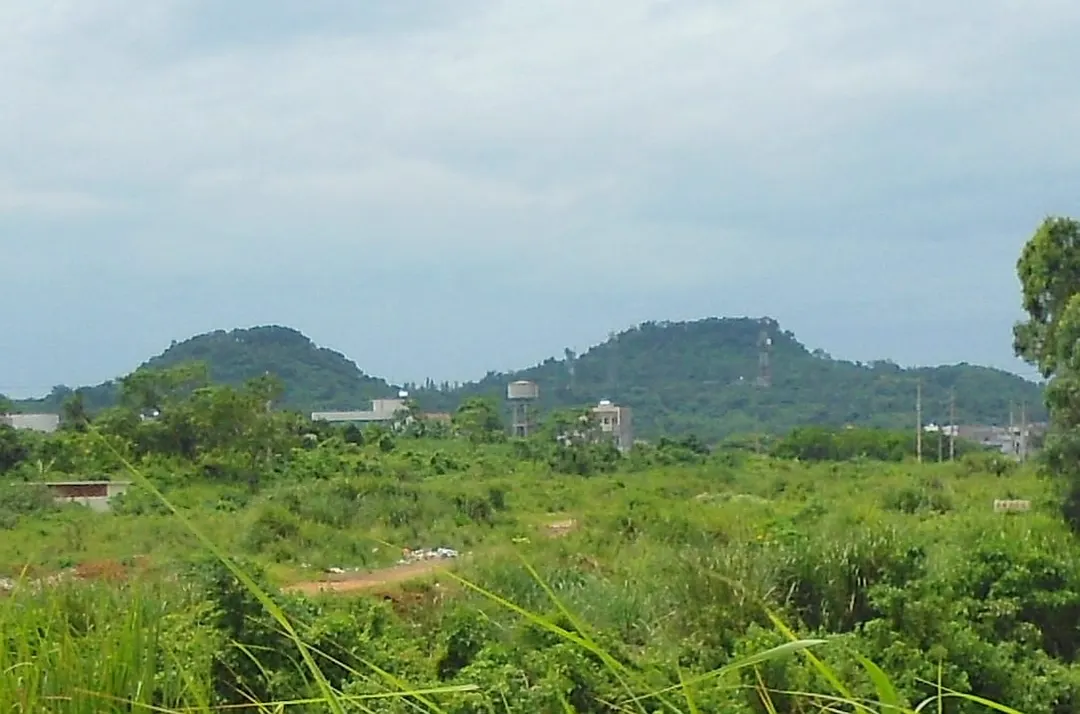
A UNESCO Global Geopark of 40+ volcanic craters and lava tunnels, 15 km southwest of Haikou. The main crater is 90 m deep and can be climbed. ¥60 entry. Combine with the Guangxi Seven-Lord Temple (a 1,000-year-old Lingnan-style temple complex).
Wikimedia Commons · CC-BY-SA
Wugong Temple (五公祠)
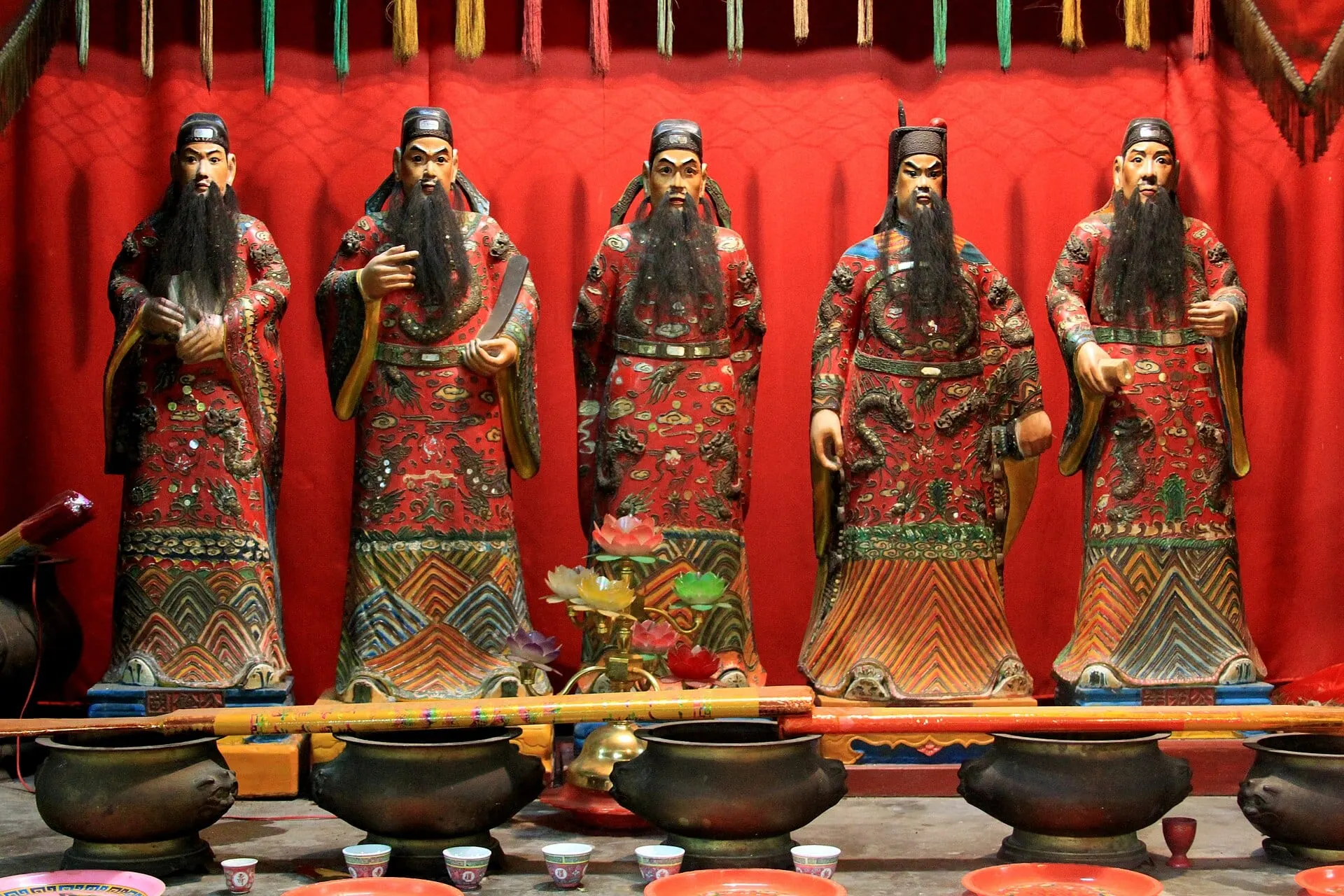
A 1,000-year-old temple complex in northern Haikou dedicated to five Tang and Song dynasty officials who were exiled to Hainan. Surrounded by beautiful tropical gardens, with the famous "Haihong Qiu" (Sea Flooding Hill) cooling spot. ¥22 entry.
Wikimedia Commons · CC-BY-SA
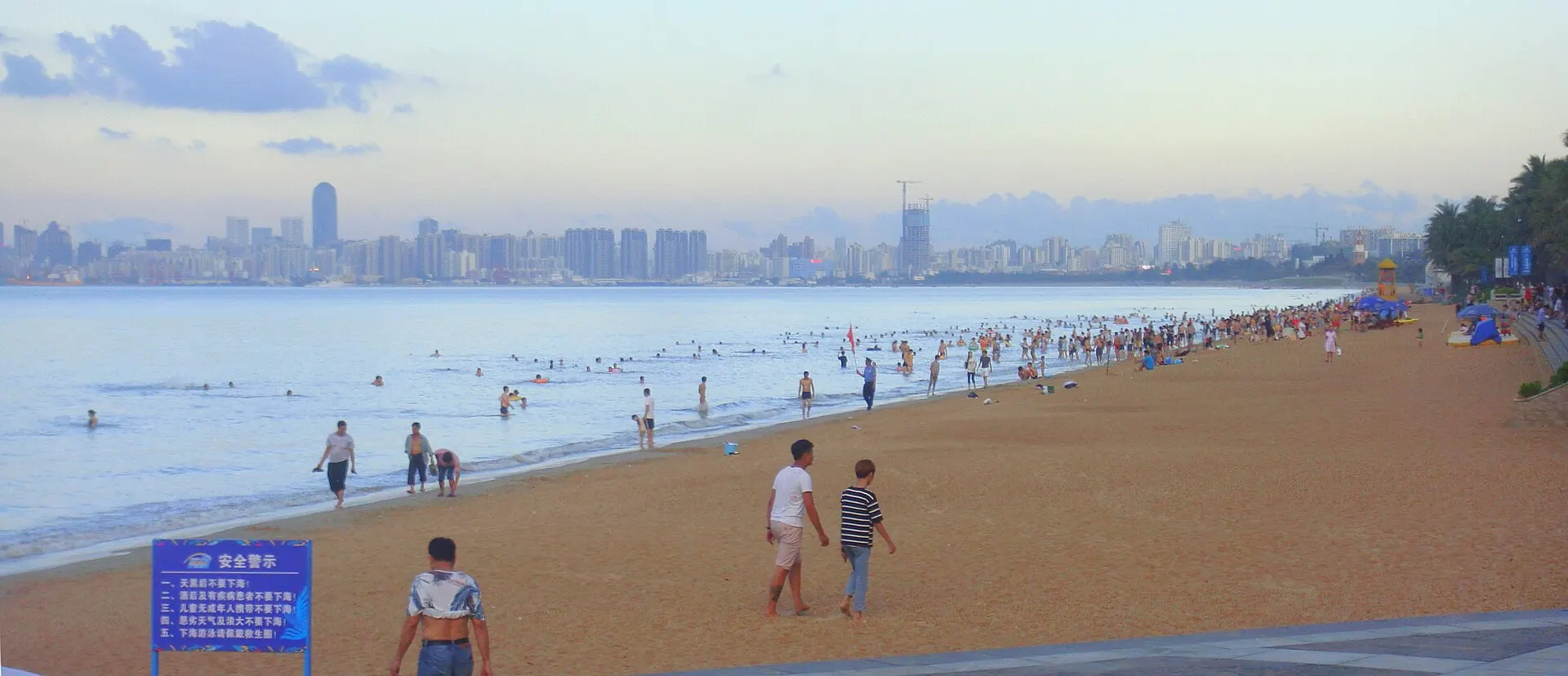
Holiday Beach (假日海滩)
A 6-km stretch of public beach in western Haikou, with palm trees, water sports, and a seafood street. The most accessible city beach. Free; water sports ¥50-200.
Wikimedia Commons · CC-BY-SA
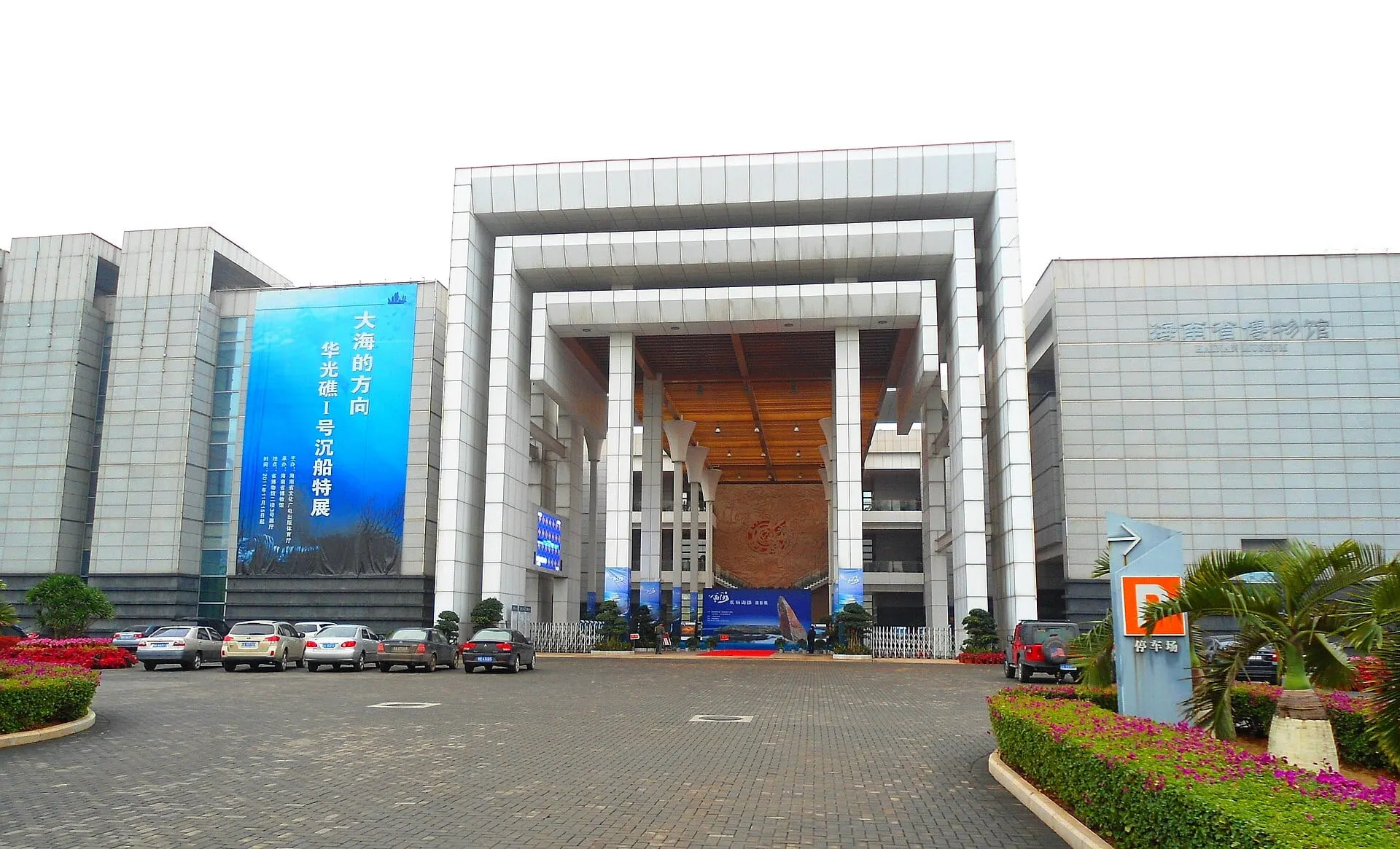
Hainan Museum (海南省博物馆)
Free provincial museum covering Hainan's history from the Han dynasty to the present, with strong Li and Miao ethnic minority exhibits, a maritime Silk Road gallery, and a famous Danzhou kiln porcelain collection. Allow 2-3 hours.
Wikimedia Commons · CC-BY-SA

Tannan Bay Mangrove Wetland (潭南湾红树林)
A protected mangrove wetland 30 km from Haikou, with walking boardwalks through the mangrove forest, kayaking, and migratory bird viewing. ¥40 entry. Half-day activity.
Wikimedia Commons · CC-BY-SA
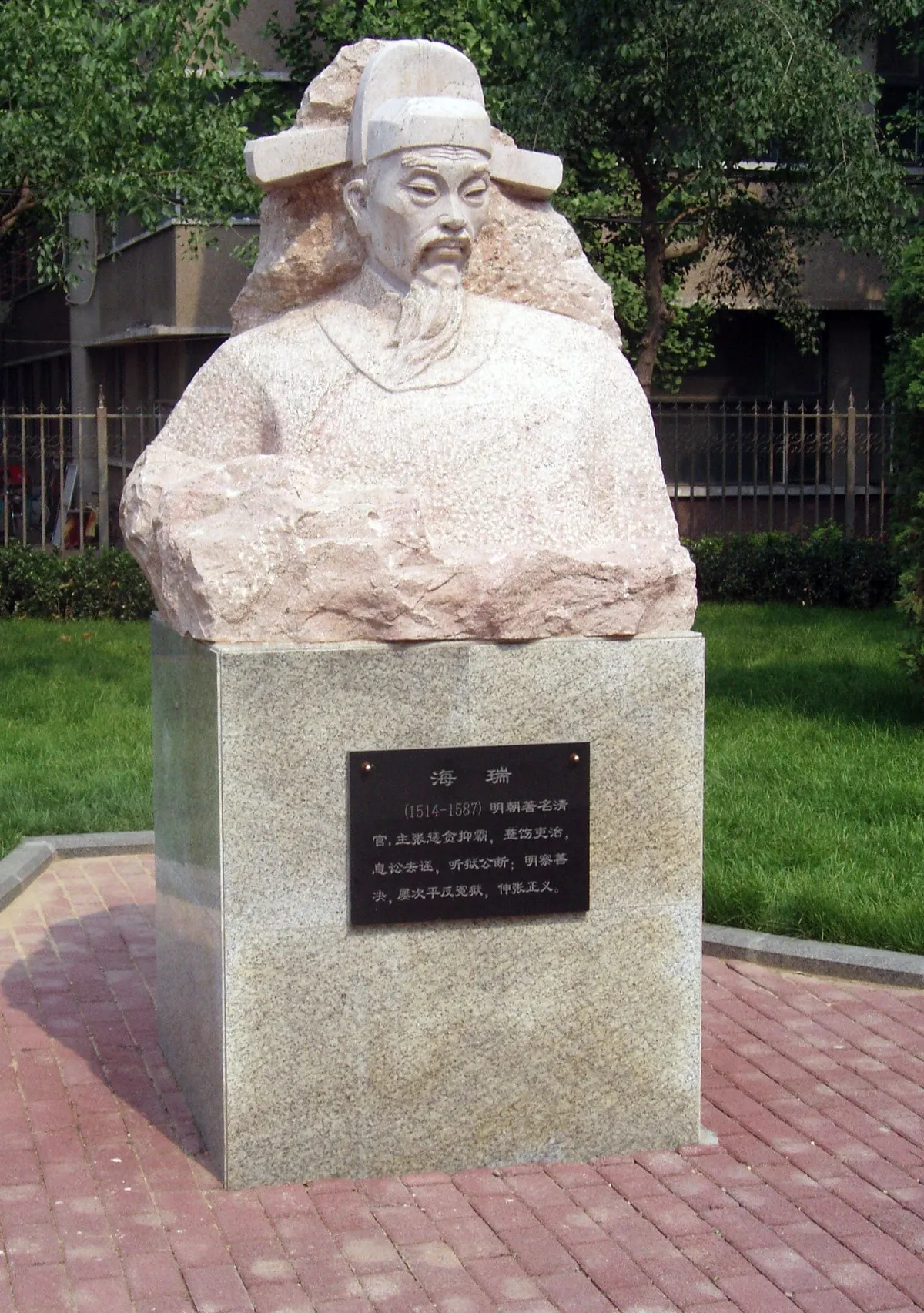
Hairui Tomb (海瑞墓)
The tomb of Hairui, a 16th-century Ming-dynasty official famous for his incorruptibility, the model for the famous line "Hai Hairui" in Mao Zedong's poetry. ¥15 entry.
Wikimedia Commons · CC-BY-SA
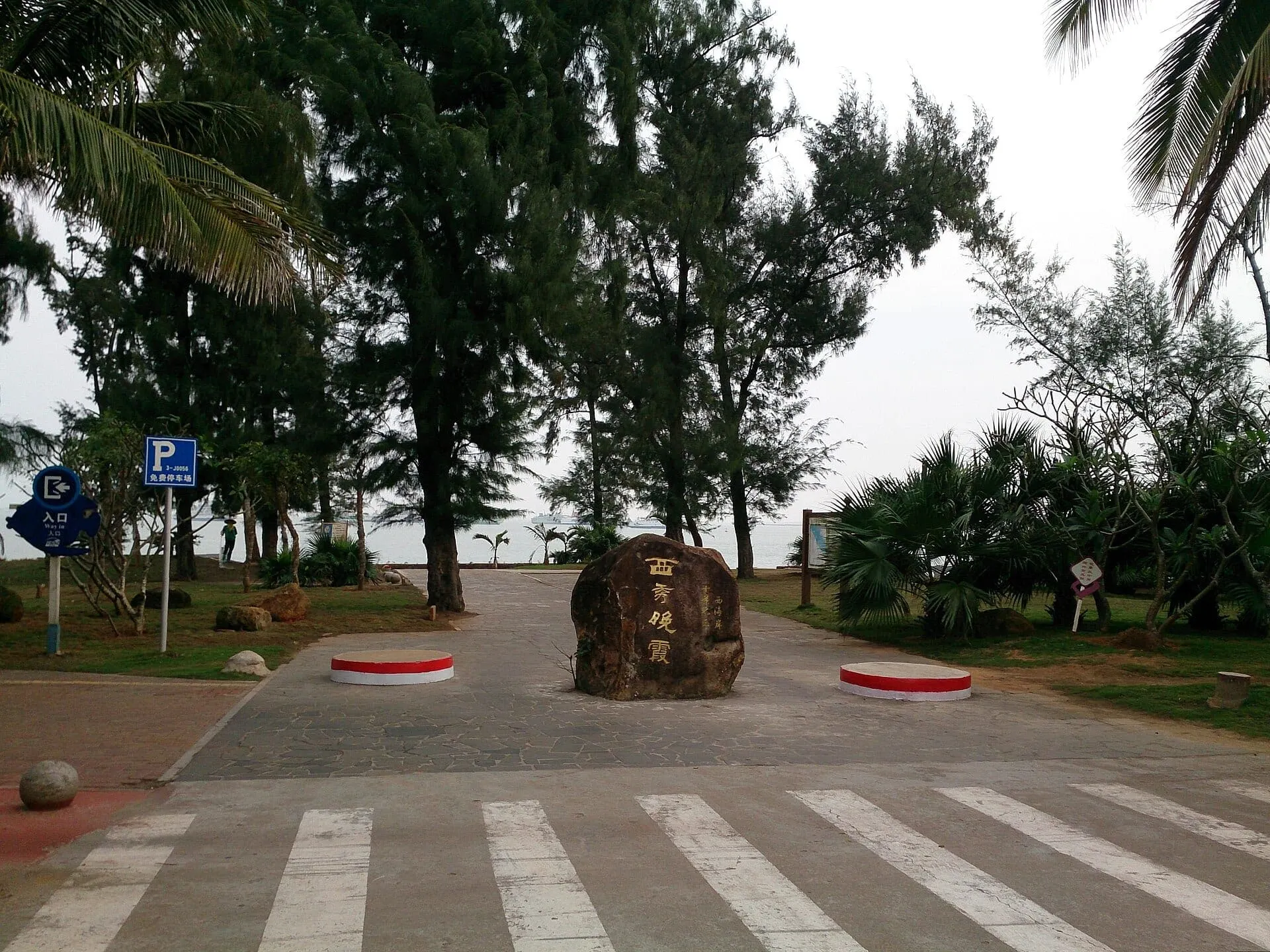
Xixiu Beach Park (西秀海滩公园)
A smaller, quieter alternative to Holiday Beach, popular with locals for swimming and sunset. Free.
Wikimedia Commons · CC-BY-SA
STAY
Where to stay in Haikou
Pick a base that matches the trip you want — imperial-central for sightseeing, hutong belt for character, Chaoyang for nightlife, or Qianmen for budget.
Longhua (龙华)
Central district with Qilou Old Street, Hainan Museum, and the city's best shopping and dining
#longhuaQiongshan (琼山)
Old Haikou with Wugong Temple, Hairui Tomb, and a strong Hainanese local identity
#qiongshanXiuying (秀英)
Western beach district with Holiday Beach, the volcanic crater park, and resort hotels
#xiuyingHaikou Bay (海口湾)
Eastern coastal strip with 5-star beachfront resorts and views across the Qiongzhou Strait
#haikou-bay
ITINERARIES
Sample itineraries from Haikou
Three ready-made routes, from a 1-day imperial sprint to a 5-day deep dive. Copy the day-by-day plan and adapt to your own pace.
- 1 DAY
Haikou City Highlights
A one-day sweep of Haikou's best: Qilou Old Street, the volcanic park, and a seafood dinner.
- Transit travellers
- Business stopovers
- First-time Hainan visitors
- Day 01
Morning
Qilou Old Street (2-3 hours) — walk the 600 m arcade, visit the small museums, try Hainan rice noodles (海南粉) for breakfast at a street stall.
Afternoon
Taxi to Leiqiong Volcanic Cluster Geopark (40 min, ¥60 entry) — climb the Ma'anling crater rim, explore lava tunnels, visit Lady Xian Temple.
Evening
Dinner at Banqiao Seafood Market — pick live seafood and have it cooked on the spot. End with qingbuliang (清补凉) dessert soup.
- 2 DAYS
Haikou + Wugong Temple + Beaches
Two days adding the historical temples, Hairui Tomb, and a relaxed beach afternoon.
- Weekend breaks
- Culture + beach combo seekers
- Families
- Day 01
Morning
Qilou Old Street (3 hours). Hainan chicken rice breakfast.
Afternoon
Volcanic park (3-4 hours). Return by 4 PM. Hainan Museum if time allows (free, 2 hours).
Evening
Seafood dinner at a beachfront restaurant on Holiday Beach. Sunset swim.
- Day 02
Morning
Wugong Temple (五公祠, 2 hours, ¥22) and Hairui Tomb (海瑞墓, 45 min, ¥15) in Qiongshan District.
Afternoon
Holiday Beach or Xixiu Beach — swimming, jet ski, beach volleyball. Lunch at a coconut-chicken hot pot restaurant (椰子鸡).
Evening
Duty-free shopping at Haikou Meilan Duty-Free City near the airport. Depart or overnight.
- 3 DAYS
Haikou + Wenchang Day Trip
Three days adding a day trip to Wenchang for coconut forests, the original Wenchang chicken, and space-launch views.
- Food travellers
- Space enthusiasts
- Nature lovers
- Day 01
Morning
Qilou Old Street (3 hours). Breakfast: Hainan rice noodles.
Afternoon
Volcanic park (3-4 hours). Hainan Museum if time.
Evening
Banqiao Seafood Market dinner. Night walk along Haikou Bay.
- Day 02
Morning
Wugong Temple (2 hours) and Hairui Tomb (45 min).
Afternoon
Holiday Beach — afternoon at the beach. Coconut chicken hot pot lunch.
Evening
Jinshui Gate night market for street food and tropical fruit. Duty-free browsing.
- Day 03
Morning
Drive to Wenchang (60 km east, 1 hour). Visit Wenchang Confucian Temple (¥15), walk through the 100,000-hectare coconut forest. Lunch: original Wenchang chicken at a local restaurant.
Afternoon
Tongguling (铜鼓岭) mountain for panoramic sea views. If a launch is scheduled, visit the Wenchang Space Launch Center viewing area (check http://www.cmse.gov.cn/). Moon-bay beach for a final swim.
Evening
Return to Haikou by 6 PM. Final dinner: try Dongshan goat (东山羊) or Hele crab (和乐蟹).
BUDGET
What a Haikou trip costs
Per-person, per-day costs across three spending tiers. Excludes international flights and visa fees.
| Line item | Backpacker | Mid-range | Luxury |
|---|---|---|---|
| Hostel bed (per night) | $10 | $30 | $80 |
| Mid-range hotel / 5-star resort (per night) | $30 | $70 | $180 |
| Local meal — Hainan noodles, Wenchang chicken (per person) | $3 | $8 | $25 |
| Fancy seafood dinner (per person) | $15 | $30 | $80 |
| Metro / bus ride | $0.5 | $1 | $5 |
| DiDi across town | $3 | $5 | $10 |
| Volcanic park entry (¥60) | $8 | $8 | $10 |
| Wugong Temple (¥22) + Hairui Tomb (¥15) | $5 | $5 | $5 |
| Wenchang day trip (car + lunch + entries) | $50 | $80 | $180 |
| Coconut chicken hot pot (per person) | $10 | $20 | $40 |
| Daily total (excluding accommodation) | $30 | $55 | $140 |
| Total per day | $164.5 | $312 | $755 |
$ USD per person per day, before international flights and visas. Last verified: Q3 2026.
STAY SAFE
Emergency contacts in Haikou
Save these three numbers before you board the plane. China uses different hotlines than most countries — there's no 911.
- POLICE
110
- AMBULANCE
120
- FIRE
119
- TOURIST HOTLINE
12301
- ENGLISH-SPEAKING ER
First Affiliated Hospital of Hainan Medical University (海南医学院第一附属医院) — 31 Longhua Road, +86 898 6677 3791
Problems travelers hit in Haikou
- Why is my Alipay not working?You linked a foreign Visa or Mastercard to Alipay but every transaction is rejected at the merchant.
- My China visa was denied — what now?Your L visa application was refused at the Chinese consulate and your trip is in 2–4 weeks.
- My passport was lost or stolen in China — what do I do?Your passport is gone (theft or loss) and you're in mainland China without travel documents.
- Why can't I book on 12306 with my foreign card?You tried to book a high-speed rail ticket on 12306.cn and your foreign Visa/Mastercard is rejected at checkout.
- Why is my VPN not working in China?You arrived in China, opened your VPN, and it will not connect at all or connects but no traffic loads.
- Why can't I book a Tibet trip on my own?You try to book Lhasa flights and hotels yourself but the booking fails, or you're turned away at the Lhasa airport without a permit.
Book activities in Haikou
These are licensed tour operators and booking platforms we've vetted independently. Booking through these links may earn us a commission — see our affiliate disclosure. This never affects our editorial recommendations or the price you pay.
Frequently asked questions
How many days do I need in Haikou?
Is Haikou or Sanya better for a Hainan trip?
What is typhoon season in Hainan and should I avoid it?
Do I need a Chinese visa to visit Hainan?
Are Hainan beaches safe for swimming?
What is the best time of year to visit Hainan?
Show all 20 FAQs
Is Haikou safe for tourists?
How do I get from Haikou to Sanya?
What is the Qilou Old Street and is it worth visiting?
How can I pay in Haikou without Alipay or WeChat Pay?
What are the best side trips from Haikou?
What should I pack for Haikou in summer vs winter?
What is the Hainan Free Trade Zone and how does it affect travelers?
What is the best 7-day Hainan itinerary?
When is the best time to visit Haikou?
How do I get from Haikou to Sanya?
What is the Qilou Old Street and why visit?
What is the must-try Hainan food in Haikou?
Is Haikou or Sanya the better base for a Hainan trip?
How does Hainan's duty-free shopping work?
References

Related guides & destinations
Guide
How We Research 2026: NihaoVisit’s Methodology for China Travel Information
How NihaoVisit sources, verifies, and maintains 700+ pages of China travel information — our source hierarchy, fact-checking process, update
Guide
Fact-Checking Log 2026: Verified China Travel Information — NihaoVisit
A public log of fact-checking verification passes on NihaoVisit, showing what was verified, when, and against which sources — covering visa
Guide
Best Time to Visit China 2026: Month-by-Month Weather, Crowds, and Prices
The best time to visit most of China is April–May and September–October. Winter (Dec–Feb) is cold but cheap; summer (Jun–Aug) is hot and cro
Guide
VPN for China 2026: Which VPNs Work, eSIM Alternatives, and the Complete Pre-Trip Checklist
Most Western apps and websites are blocked in mainland China. A reliable VPN is essential for Google, Gmail, WhatsApp, Instagram, and most n
Guide
China SIM Card and eSIM Guide 2026: Stay Connected Without WeChat
A Chinese SIM or eSIM lets you use mobile data, maps, and ride-hailing without WiFi. Here is how to get one, the cost, and which provider to
Guide
Solo Female Travel in China 2026: Safety, Tips, and Real Experiences
China is one of the safer destinations for solo female travelers. Petty theft is rare, violent crime against tourists is extremely uncommon,