Hohhot
Hohhot (呼和浩特, Hūhéhàotè, 'Blue City' in Mongolian) is the capital of Inner Mongolia and a city where Tibetan Buddhism meets steppe culture. The 16th-century Dazhao Temple (大召寺, ¥35) anchors the old city, and the Inner Mongolia Museum (free) holds one of China's best dinosaur fossil collections. Beyond the city, Gegentala Grassland (格根塔拉草原) offers yurt stays and horse riding about 150 km north. High-speed rail from Beijing takes 2.5 hours. Budget travellers can manage on ¥50 per day; mid-range runs about ¥150. Best visited July through September, when the grasslands are green. Hohhot also works as a base for the Genghis Khan Mausoleum complex in nearby Ordos, and travelers with two or three extra days can combine the grasslands, Hohhot, and Ordos into a tight Inner Mongolia loop.
Why Hohhot in 2026.
Inner Mongolia's capital and gateway to the grasslands. Tibetan Buddhist temples, Mongolian hotpot, and yurt stays 150 km from the city centre.
Quick Answer
Hohhot (呼和浩特, Hūhéhàotè, 'Blue City' in Mongolian) is the capital of Inner Mongolia and a city where Tibetan Buddhism meets steppe culture. The 16th-century Dazhao Temple (大召寺, ¥35) anchors the old city, and the Inner Mongolia Museum (free) holds one of China's best dinosaur fossil collections. Beyond the city, Gegentala Grassland (格根塔拉草原) offers yurt stays and horse riding about 150 km north. High-speed rail from Beijing takes 2.5 hours. Budget travellers can manage on ¥50 per day; mid-range runs about ¥150. Best visited July through September, when the grasslands are green. Hohhot also works as a base for the Genghis Khan Mausoleum complex in nearby Ordos, and travelers with two or three extra days can combine the grasslands, Hohhot, and Ordos into a tight Inner Mongolia loop.
| Worth visiting | Hohhot delivers a mix of Tibetan Buddhism, Mongolian food culture, and grassland landscapes that no other Chinese provincial capital offers. It is not Xi'an or Beijing — the draw is quieter temples, lamb-heavy cuisine, and wide-open steppe just a couple of hours away. |
|---|---|
| Recommended days | 2-3 days: one day for the city temples and museum, one day for a grassland excursion, and a third if you want to slow down. |
| Best time to visit | July to September for green grasslands and warm weather (25-30°C); avoid winter unless you specifically want frozen-steppe photography and -20°C temple courtyards |
| Daily budget | $50 (backpacker) / $150 (mid-range) / $350+ (luxury) |
| Family friendly | Yes, the dinosaur fossils at the museum keep children engaged, and grassland yurt stays are a novel family experience. The city itself is flat and walkable. |
| Solo friendly | Yes, temples and the museum are easy solo, and grassland tours pair you with groups. English is scarce, so a translation app matters more here than in Beijing. |
| Airport | Hohhot Baita International Airport (HET), 15 km east of the city centre, ¥50-70 by taxi |
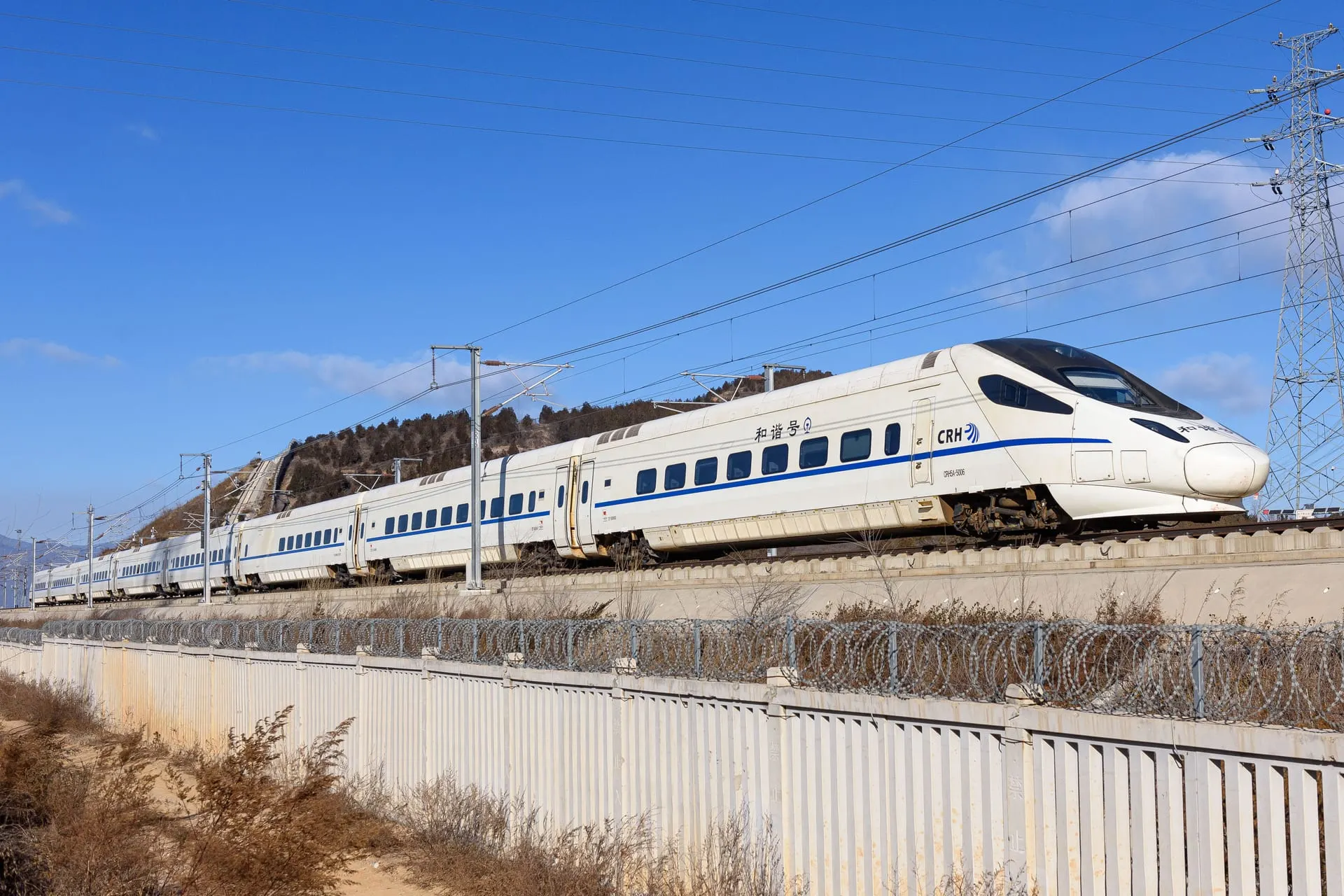
| High-speed rail | Beijing North to Hohhot East in 2.5 hours, ¥200-280; also connects to Baotou (1 hour) and Datong (2 hours) |
| Language | Mandarin; Mongolian also spoken in some districts and on the grasslands |
| Currency | CNY (¥) — Alipay and WeChat Pay accept foreign Visa/Mastercard |
| Time zone | China Standard Time (UTC+8) |
| Last updated | 2026-07-14 |
Want a Hohhot plan built for you?
Jump to:
Is Hohhot worth visiting?·History of Hohhot·Geography and climate·How to get to Hohhot·How to get around·Where to stay·Local food·Itinerary·Monthly weather·Practical information·Tips and warnings·Emergency contacts·Larger China itinerary·Dazhao Temple·Inner Mongolia Museum·Grassland yurt stay·Wang Zhaojun and Zhaojun Tomb·Five Pagoda Temple explained·Xilituzhao Temple·Naadam festival·Genghis Khan Mausoleum day trip·Sai Shang Old Street·Hohhot as a four-season destination·Great Mosque and Muslim Quarter·Mongolian culture beyond the temples
Is Hohhot worth visiting?
Hohhot is worth 2-3 days if you want Tibetan Buddhism without the Tibet permit and grassland culture without a multi-day expedition. The temples are compact, the museum is strong, and the food is a sharp break from standard Chinese fare — lamb dominates, dairy shows up in unexpected places, and the milk tea is salty, not sweet. I found the city quieter and less polished than I expected, which worked in its favour. You are not fighting tour-bus crowds at Dazhao the way you do at Lama Temple in Beijing. The downside: the grasslands are genuinely far (2-3 hours by car), and the city itself has no single show-stopping monument. Hohhot is a slow-burn destination, not a checklist city.
What is the history of Hohhot?
Hohhot was founded in 1581 by Altan Khan, the Mongol ruler who unified southern Inner Mongolia and built the city as a political and religious centre. The name means "Blue City" in Mongolian, a reference to the sky and to Mongol cosmology, not the colour of any building. Altan Khan invited Tibetan Buddhist lamas to establish monasteries, starting with Dazhao Temple in 1580, and the city grew as a trading hub between Mongol nomads and Chinese farmers. The Qing dynasty later built the garrison city of Suiyuan (绥远城) 2.5 km northeast in 1739, and the two settlements merged into modern Hohhot. The city was a key stop on the Tea Road (茶叶之路) carrying brick tea from Fujian to Siberia, and merchants from Shanxi, Gansu, and Hui Muslim communities built the commercial districts that still shape the old city today. Under Japanese occupation (1937-1945) the city was the capital of the puppet Mengjiang state. After 1949 it became the capital of the Inner Mongolia Autonomous Region. The population today is roughly 3.5 million, with Han Chinese the majority and ethnic Mongols about 12%.
What is the geography and climate of Hohhot?
Hohhot sits at 1,050 metres above sea level on the Tumote Plain (土默特平原), between the Daqing Mountains (大青山) to the north and the Yellow River to the south. The terrain is semi-arid steppe — flat, open, and windy. Summers are warm (25-30°C during the day) but short, lasting roughly June through August. Winters are punishing: December through February temperatures drop to -15°C at night and often hit -25°C during cold snaps, with dry, biting wind straight off the Mongolian plateau. Spring brings dust storms from the Gobi Desert in March and April — carry goggles if you visit then; I learned this the hard way. Autumn (September-October) is crisp and clear, the most comfortable season after summer. Rainfall is concentrated in July and August, roughly 400 mm per year. The high altitude means strong UV year-round, and the dry air dehydrates faster than you expect — lip balm and a water bottle are essential, no matter the season.
How do I get to Hohhot?
Hohhot Baita International Airport (HET) handles domestic flights from Beijing (1.5 hours, ¥400-800), Shanghai (3 hours, ¥600-1,200), and Guangzhou (3.5 hours). International connections are limited — most foreign visitors fly into Beijing and take high-speed rail. Hohhot East Station connects to Beijing North Station in 2.5 hours on G-class trains (¥200-280 as of June 2026), with roughly 20 daily departures. From Baotou the HSR takes 1 hour (¥50-80), and from Datong it is about 2 hours. The older Hohhot Station handles slower K-trains, including the overnight service from Beijing (8-10 hours, cheaper but not recommended unless you want the sleeper experience). Book tickets on the 12306 app or via Trip.com. Taxis from the airport to the city centre take 30 minutes (¥50-70); from Hohhot East Station it is about 20 minutes (¥25-35). Metro Line 1 connects the east high-speed station to the city centre for ¥3-5.
How do I get around Hohhot?
Hohhot Metro has two lines: Line 1 (east-west, connects Hohhot East Station to the city centre and Xilituzhao) and Line 2 (north-south). Fares are ¥2-6, stations have English signage. The metro is clean and underused — I rarely saw a full carriage even at rush hour. Buses cover the whole city for ¥1-2 but are Chinese-only. DiDi is cheap (¥10-25 for most intra-city trips) and links to foreign cards. Taxis start at ¥8 for 3 km. For the grasslands, you need a car: hire a driver for the day (¥400-600 round-trip to Gegentala, including waiting time) or join a group tour (¥200-350 per person). Hotels can arrange either. I recommend a driver over a tour bus — the grassland experience is about solitude and space, and a busload of 40 people defeats the purpose. Walking covers the temple district (Dazhao, Xilituzhao, Five Pagoda) within a compact 2 km radius.
Where should I stay in Hohhot?
Four areas work for different budgets. (1) Old City / Dazhao area: closest to the temples, the Muslim Quarter, and the best food streets. Mid-range hotels like Atour and Ji Hotel run ¥250-400 per night. This is the best base for first-timers. (2) City centre / Xinhua Square (新华广场): the commercial core with more hotel choice, including the Shangri-La (¥800-1,200) for luxury travellers and the Hohhot Hotel (¥300-500) for mid-range. Metro Line 1 connects to the old city in 10 minutes. (3) Near Hohhot East Station: convenient for late arrivals or early HSR departures but culturally dead — avoid unless transit is your only priority. (4) Gegentala Grassland yurts: basic traditional yurts (¥150-300 per night) or upgraded tourist yurts with heaters and en-suite bathrooms (¥400-800). The upgraded ones are worth it in any season except July-August, when the basic felt yurts are comfortable. Yurt stays include breakfast and sometimes dinner. Book through your hotel or a local travel agency, not a generic OTA.
What local food should I try in Hohhot?
Hohhot food is Mongolian-influenced and heavy on lamb, dairy, and wheat — a sharp departure from the rice-and-soy-sauce baseline of central China. The defining dish is hand-grabbed mutton (手扒肉, shǒubā ròu): lamb boiled with salt and nothing else, torn off the bone by hand, eaten with a small dish of leek-flower sauce. Mongolian hotpot (涮羊肉, shuànyángròu) is thinner-sliced and meat-focused, with less variety than Sichuan or Beijing hotpot but better lamb. Milk tea (奶茶, nǎichá) is the everyday drink: salty, made with brick tea and milk, often with a pat of butter and a spoonful of fried millet floating on top. It is an acquired taste — do not expect chai. Mongolian cheese (奶豆腐, nǎidòufu) is dry, crumbly, and slightly sour, closer to feta than to Western cheese; it is eaten as a snack or shaved into tea. Other staples: shaomai (稍麦, shāomài) are larger and meatier than the Cantonese version, stuffed with lamb and onion, served with black vinegar — a Hohhot breakfast classic at ¥15-25 for a steamer of eight. Grilled lamb skewers (烤羊肉串, kǎo yángròu chuàn, ¥3-5 each) fill the Muslim Quarter streets after dark. For the adventurous: fermented mare's milk (马奶酒, mǎnǎijiǔ) is mildly alcoholic and sour, available at grassland yurt camps. The best food street is Tongdao South Street (通道南街) in the Muslim Quarter. Budget ¥40-80 for a full meal.
What is a good Hohhot itinerary?
Day 1 — City Temples. Morning: Dazhao Temple (arrive 08:30, allow 2 hours). Walk 10 minutes to Xilituzhao Temple (1 hour). Lunch: shaomai and lamb skewers near the temple district. Afternoon: Five Pagoda Temple (1 hour), then the Inner Mongolia Museum (3 hours, closes 17:00 — go to the museum last because it is air-conditioned and you will appreciate the break). Evening: Muslim Quarter food crawl. Day 2 — Grasslands. Leave Hohhot at 08:00 by hired car. Arrive Gegentala Grassland by 11:00. Horse riding (1-2 hours), Mongolian wrestling demonstration, lunch in a yurt (hand-grabbed mutton, milk tea). Return to Hohhot by 18:00, or stay overnight for the bonfire. Day 3 (optional) — Zhaojun Tomb in the morning (1.5 hours), Suiyuan City Wall, and a slow wander through the old city's back lanes. If you are heading west to Baotou or south to Datong, Hohhot works as a 2-night stop.
What is the monthly weather in Hohhot?
January: high -5°C, low -19°C, 2 rainy days. February: high 0°C, low -15°C, 2 rainy days. March: high 8°C, low -7°C, 3 rainy days — dust storms possible. April: high 17°C, low 1°C, 3 rainy days — dust storms likely. May: high 24°C, low 8°C, 5 rainy days — first comfortable month. June: high 28°C, low 14°C, 8 rainy days — grasslands green. July: high 30°C, low 17°C, 12 rainy days — peak grassland season. August: high 28°C, low 15°C, 11 rainy days — still green. September: high 22°C, low 8°C, 7 rainy days — best city weather. October: high 14°C, low 0°C, 4 rainy days — cold snaps begin. November: high 3°C, low -9°C, 2 rainy days. December: high -4°C, low -17°C, 2 rainy days.
What practical information do I need?
Visa: standard Chinese tourist visa (L) required for most nationalities; the 144-hour transit policy does not cover Hohhot. Money: Alipay and WeChat Pay are widely accepted in the city; link a foreign card before arrival. Carry ¥200-300 in cash for temple donation boxes, small food stalls, and grassland vendors. Connectivity: buy a Chinese SIM at the airport or use an eSIM with a China-compatible plan (Airalo, Nomad, Holafly). A VPN installed before arrival is essential — China blocks Google, WhatsApp, Instagram, and most Western sites. I found the Hohhot airport SIM desk reliable (China Unicom counter, 08:00-20:00). Language: English is rare outside international hotels and the museum. Download Baidu Translate or Google Translate with the Chinese offline pack. A printed hotel address card in Chinese characters is useful for taxis. Power: standard Chinese sockets (Type A/C/I, 220V). Bring a universal adapter.
What tips and warnings should I know for Hohhot?
Watch for overpriced "Mongolian cultural performances" that grassland camps upsell at ¥200-300 per person — they are formulaic banquet shows, not authentic ceremonies. Ask what is included in your yurt price before booking; some operators charge separately for the bonfire, the wrestling show, and even the horse-tying demonstration. The grassland horse rides are led by a handler walking beside you; if you want to gallop solo, you need to specifically request it and you will pay more (¥150-200 per hour vs ¥80-100 for led rides). I also saw riders handed horses with worn saddles — check the tack before mounting, especially the girth strap. In the city, pickpocketing is rare but keep your phone close in the Muslim Quarter at night when the alleys get packed. Winter visitors: the temples look starkly beautiful in snow, but the marble courtyards turn into ice rinks, and most temple toilets are unheated squat latrines. Spring dust storms can reduce visibility to 100 metres and coat everything in fine grit — check the AQI and pack goggles and an N95 mask. The Gegentala Grassland is not the Hulunbuir you see in Inner Mongolia tourism posters; that is 2,000 km northeast near the Russian border. Gegentala is high steppe — vast and impressive, but the grass is short and patchy by August. Go in July for the greenest grass.
What are the emergency contacts in Hohhot?
Police: 110. Ambulance: 120. Fire: 119. Traffic accident: 122. Hohhot Public Security Bureau Foreign Affairs: +86-471-669-9263. The nearest international-standard hospital is the Inner Mongolia People's Hospital (内蒙古自治区人民医院), which has a limited English-speaking desk. For serious emergencies, medical evacuation to Beijing is the most practical option. Your embassy in Beijing (not Hohhot) handles consular assistance. Save the embassy emergency number before travelling.
How does Hohhot fit into a larger China itinerary?
Most guidebooks treat Inner Mongolia as an afterthought, wedged between Beijing and Xi'an on a north-south loop. The better route is west-east: Beijing → Hohhot (2.5h HSR) → Baotou (1h HSR) → Datong (2h HSR, for the Yungang Grottoes and Hanging Temple) → Beijing. This is a 6-8 day loop that pairs grassland culture with UNESCO Buddhist cave art and avoids backtracking. Hohhot also works as a 2-night detour from Beijing before continuing to Xi'an or heading into the Gobi. If you are riding the Trans-Mongolian Railway, Hohhot is a logical stop — the train from Beijing to Ulaanbaatar passes through, and breaking the journey here is smarter than powering through 30 hours straight. The city is not a destination in its own right for most visitors, but it fills a gap that no other Chinese city fills: Tibetan Buddhism, Mongolian food, and steppe access reachable on a half-day train from the capital.
What makes Dazhao Temple different from other Chinese temples?
Dazhao Temple (大召寺) is a Gelugpa Tibetan Buddhist monastery built in 1580 under Altan Khan, and it feels nothing like a Han Chinese Buddhist temple. The architecture fuses Tibetan, Mongol, and Han styles: whitewashed walls, gilded roof ornaments, and prayer wheels line the outer courtyard. The interior centrepiece is a 2.5-metre silver statue of Sakyamuni, cast during the temple's founding and still the most venerated object in the hall. The dragon-carved pillars flanking the main altar are a Mongol-specific motif absent from Tibetan monasteries further west. Monks chant in Tibetan, and the air inside smells of yak-butter lamps and sandalwood incense — thicker and smokier than the light joss-stick scent of Han temples. I visited on a Tuesday morning in July 2025 and shared the main hall with perhaps 12 other people, half of them Mongol pilgrims doing full-body prostrations across the wooden floor. The atmosphere is devotional, not touristic. Entry is ¥35 as of June 2026. Photography inside the main hall is prohibited; you can photograph the courtyards and exterior. The temple is most atmospheric early morning (08:00-09:30) when the butter lamps are freshly lit and the monk chanting echoes through the halls. A small but excellent gift shop near the exit sells monk-made butter lamps and Tibetan-style thangka prints (¥50-200).
Why does the Inner Mongolia Museum matter?
The Inner Mongolia Museum (内蒙古博物院) is the strongest provincial museum in northern China outside Beijing, and the dinosaur hall alone justifies the visit. The signature fossil is a complete Platybelodon, a shovel-tusked elephant relative from the Miocene, displayed in a glass case that lets you walk around the entire skeleton. The Gobi Desert fossil beds have produced some of the best Cretaceous-era specimens in the world, and the museum shows them off with genuinely good English signage. The second floor covers Genghis Khan and the Mongol Empire, with period weapons, saddles, and silk-road trade goods; the third floor is ethnographic — Mongolian costumes, yurt models, traditional musical instruments, and a display on Mongolian throat singing (呼麦, hūmài). Entry is free with a reservation on the official WeChat mini-program (your hotel can help). Allow 3 hours minimum. I spent 3.5 hours and skipped the temporary exhibition hall. The museum closes at 17:00 and stops admissions at 16:00 — do not arrive late. Air conditioning is strong in summer, which makes this a strategic afternoon stop. The museum shop sells decent dinosaur model kits (¥80-150) and Inner Mongolia photographic books (¥60-120).
Is a grassland yurt stay worth it?
A Gegentala yurt stay is a basic overnight experience on semi-arid grassland 150 km from Hohhot, not a luxury eco-lodge on the Mongolian steppe. The standard felt yurt (蒙古包, měnggǔ bāo) has a concrete floor, thin mattresses, no en-suite bathroom, and no heating beyond a small coal stove that runs out by 2 AM. In July, this is charming; in September, it is cold. Upgraded tourist yurts (¥400-800) have heaters, proper beds, and attached bathrooms — these are worth the premium in any month except July-August. The evening bonfire and Mongolian singing are tourist routines, not authentic ceremonies, but they are enjoyable if you accept them as entertainment. The real value of a yurt stay is the morning: waking up at 05:30, walking onto the grassland before the day-trip buses arrive, and seeing the steppe in flat, silent dawn light with no one around. That hour alone made the whole trip worthwhile for me. Book the yurt through a Hohhot hotel concierge (they have direct relationships with the better camps) rather than an OTAs. Confirm these specifics before booking: does the price include dinner and breakfast? Is there a bathroom? Is the stove/heater functional? Is horse riding included or extra? What is the refund policy if the weather turns? Spring dust storms and summer thunderstorms can cancel grassland trips with no notice. A back-up plan in the city is sensible.
Who was Wang Zhaojun and why does her tomb matter?
Wang Zhaojun (王昭君, c. 52 BC – c. 19 BC) is one of the most famous women in Chinese history, and her story explains why a Han dynasty princess has a 33-metre earthen tomb on the outskirts of Hohhot. She was a lady-in-waiting at Emperor Yuan of Han's court in Chang'an, and according to the legend recorded in the Hou Hanshu, the emperor decided to marry her off to Huhanye Chanyu, the Xiongnu chieftain who controlled the Mongolian steppe in 33 BC, as part of a peace-and-alliance policy known as heqin (和亲). When the moment came for the envoy to present her to the emperor before departure, Zhaojun refused to bribe the court painter to flatter her portrait — and the painter darkened her face in revenge. The emperor, who had been choosing women based on the portraits alone, picked her by accident, only to be stunned when he saw her face for the first time and realised what he had given away. The phrase "沉鱼落雁" — "sinking fish and descending goose," one of the four great idioms describing classical Chinese beauty — is most commonly attached to Zhaojun. The historical importance of her marriage goes beyond the legend. The Xiongnu-Han alliance held for roughly 60 years, the longest stretch of steppe-imperial peace in the Han dynasty, and brought Silk Road trade through the Mongolian plateau to the western regions. Zhaojun bore Huhanye Chanyu several children, and her descendants became an influential clan on both sides of the frontier. Mongol historians still claim her as a figure who helped fuse Han and steppe cultures, and Inner Mongolia today treats her as a regional cultural heroine. The tomb itself — Zhaojun Tomb (昭君墓), sometimes called Qingzhao in older sources — is a 33-metre-high earthen mound about 9 km south of Hohhot city centre, ringed by a park with peony gardens, a small museum, and souvenir stalls. It is not an excavated archaeological site; the tomb is a cenotaph, and no one is sure whether it actually contains her remains or whether her body was buried in Mongolia. The mound is symbolic. What makes the visit worthwhile is the museum: it does a credible job of presenting the historical context in both Chinese and English, including Xiongnu bronze artefacts, photographs of related burial sites in Mongolia, and a sobering exhibit on the conditions of the Xiongnu-Han frontier. I found the audio guide slightly out of date but adequate; the English signage is acceptable. The peony gardens are the draw in late May and early June, when they bloom in red, pink, and white — a uniquely Chinese reason to time a Hohhot visit. Entry is ¥55 as of June 2026. Allow 1.5 hours. The site is reachable by bus 1 or a ¥25-35 DiDi from the old city. Combine it with the Inner Mongolia Museum on day 1 if you are interested in the Han dynasty frontier history. Do not expect dramatic monumentality — this is a quiet, slightly melancholy site, and the experience depends on your appetite for Han dynasty history rather than visual spectacle. The view from the top of the mound on a clear day, looking out across the Tumote Plain toward the Daqing Mountains, is the single best thing about the visit.
What makes the Five Pagoda Temple (Wuta Si) architecturally unique?
The Five Pagoda Temple (五塔寺) is a small complex 2 km north of central Hohhot, built in the Yongzheng era of the Qing dynasty, modeled on a Bodh Gaya stupa.
What is special about Xilituzhao Temple?
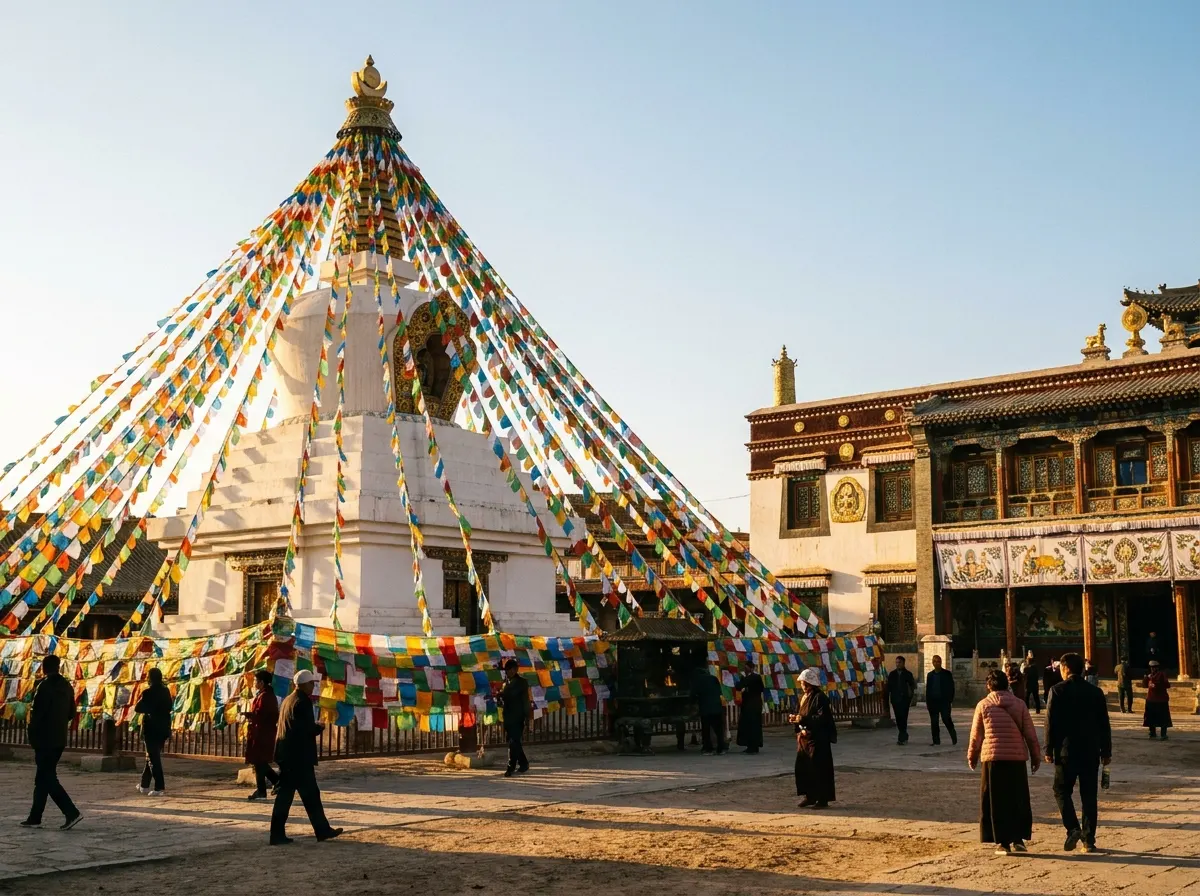
Xilituzhao Temple (席力图召, Xílìtú Zhào) is the largest Buddhist temple in Hohhot by grounds, and the one I found most rewarding after Dazhao. The name means "Throne of the Viceroy" in Mongolian — it was the seat of a Living Buddha appointed to govern the Gelugpa (Yellow Hat) Buddhist affairs across Inner Mongolia under the Qing dynasty, subordinate to the Dalai Lama's authority. It dates from 1585, five years after Dazhao, and was established as a sister temple to oversee the broader Mongol Buddhist community. The architectural highlight is the white Tibetan-style stupa in the central courtyard — a tall, tapering, square-based chorten with the classical 13-tiered design representing the 13 stages to enlightenment, topped with a sun-and-moon finial. It is one of the most photogenic Buddhist structures in Hohhot and a striking contrast to the more Han-style halls around it. The Ming-dynasty main assembly hall (大经堂, Dàjīngtáng) houses a large bronze Buddha and rows of prayer cushions where monks gather for services in the morning and afternoon. The interior is darker and quieter than Dazhao's, with thicker incense smoke and a more meditative feel. What I appreciated about Xilituzhao was the pace. Dazhao is the well-known stop, and it shows — the visitor traffic is heavier, the souvenir stalls are larger, and the courtyards are often crowded with tour groups in peak season. Xilituzhao gets perhaps 20% of the foot traffic of Dazhao despite being only a 10-minute walk away, and the result is a calmer experience. I sat in the courtyard for 45 minutes on a weekday morning, watching three elderly Mongol pilgrims slowly circumambulate the stupa with prayer beads. There were no tour guides, no microphones, no English-language tour group chatter — just the prayer wheel turning, the wind in the courtyard trees, and the distant sound of monks chanting in the assembly hall. The temple also hosts an active monastic community, and you can sometimes see morning prayers in session — the best time to visit is between 08:00 and 10:00 when the monks gather for chanting. The English signage is minimal but adequate; the key painted panels and the stupa are self-explanatory. Photography is permitted in the courtyards but not inside the main hall. Entry is ¥30 as of June 2026. Allow 1 to 1.5 hours. The temple is on the western edge of the old city, a 15-minute walk from Dazhao and 5 minutes from the Five Pagoda Temple. Combine all three in a single morning: Dazhao (08:00), Xilituzhao (10:00), Five Pagoda (11:00), then lunch in the Muslim Quarter nearby. This is the most efficient Hohhot temple loop and what I would recommend as the default first-day schedule.
When and how should I see the Naadam festival in Inner Mongolia?
The Naadam festival (那达慕, Nàdámù, meaning "games" in Mongolian) is the signature cultural event of Inner Mongolia, and Hohhot is one of the places where it is celebrated most accessibly to foreign visitors. It is held annually in summer, with the main provincial celebration in Hohhot in mid-July and local-level events running across Inner Mongolia from late June through August. The Hohhot Naadam typically runs for one to two weeks in mid-July, anchored on the Genghis Khan Mausoleum area in Ordos 3 hours south and at multiple venues in Hohhot itself. The "three manly games" (男儿三艺, nán'ér sān yì) that define Naadam are wrestling (搏克, bókè), horse racing, and archery. The wrestling matches are the most photogenic: 256 wrestlers enter the main tournament at the provincial level, dressed in traditional leather vests and shorts with elaborate beadwork on their boots. The matches are short — a few seconds — and end with one wrestler throwing the other down. Winners advance to the next round and at the end the champion is awarded a ceremonial title. Horse racing at Naadam involves 5-30 km races on the open steppe, with jockeys as young as 6 years old (a tradition some Mongolian groups are now reconsidering). Archery is the third leg, with traditional composite bows fired at targets 20-30 metres away. Beyond the sports, Naadam includes a traditional market, food stalls serving hand-grabbed mutton and milk tea, performances of Mongolian long-song (长调, chángdiào) and throat singing (呼麦, hūmài), and a closing awards ceremony with elaborate horse-and-rider processions. The atmosphere is festive and authentic — these are not performances for tourists, they are the regional championships, and Mongolians from across Inner Mongolia travel to attend. The Hohhot provincial Naadam is held at the Hasuhai Naadam Park (哈素海那达慕) or similar large outdoor venues, with tickets typically ¥100-200 for foreign visitors. The Genghis Khan Mausoleum Naadam near Ordos is larger and more atmospheric (it is the official provincial championship venue in some years) but requires a 3-hour drive south of Hohhot. The experience is best with some language help — a translation app to read the schedule boards is helpful, and a guide who can explain the wrestling rules adds value. Most Hohhot hotels can arrange tickets and transport during Naadam week. If your Hohhot trip is flexible, scheduling around Naadam is the single best move you can make. The grasslands are at peak greenness in mid-July, the weather is reliable, and the festival gives you something genuinely local to attend rather than a packaged tourist show. Book hotels early — Hohhot and Ordos fill up during Naadam week.
Is the Genghis Khan Mausoleum worth the trip from Hohhot?
The Genghis Khan Mausoleum (成吉思汗陵, Chéngjísīhán Líng) is in Ordos (鄂尔多斯), about 350 km south of Hohhot, or roughly 3.5 hours by car or 1.5 hours by HSR (transferring at Baotou). It is one of the most-visited tourist sites in Inner Mongolia, and it is also a site where honest expectations matter: the mausoleum is a cenotaph (an empty tomb), not a burial chamber. Genghis Khan's actual burial site is unknown — the Mongols kept it secret on his death in 1227 and have never revealed its location. The mausoleum in Ordos was built in the 1950s as a memorial to house his relics (a few ceremonial objects and personal effects) and to serve as a pilgrimage site. So why visit? First, the architecture. The mausoleum complex, completed in 1954 and renovated since, blends traditional Mongolian yurt design with Soviet-era monumentality — three large yurt-shaped halls connected by covered walkways, decorated with blue-and-gold Mongolian motifs. It is striking, and unlike anything else in Hohhot or Baotou. Second, the ceremonies. The mausoleum is staffed by hereditary Darkhad guards who maintain a daily ritual of offering fermented mare's milk and airag (马奶酒) to the spirit of Genghis Khan — the only such continuous ritual in the world. Visitors can observe the morning and afternoon ceremonies. Third, the surrounding park is large and well-maintained, with a Genghis Khan statue, exhibition halls, and a good museum of Mongol Empire history. The honest case against visiting: 3.5 hours of travel for what is, fundamentally, an empty tomb and a museum. If you are short on time in Hohhot, the Inner Mongolia Museum covers Genghis Khan in greater depth for free. If you are a Genghis Khan obsessive — and there are many — the mausoleum is worth the trip. If you are a casual visitor, the Genghis Khan exhibits in the Hohhot museum are sufficient. My recommendation: combine the mausoleum with a Baotou day trip or an extension to your Hohhot itinerary. The HSR to Ordos is fast; you can do Hohhot → mausoleum → Baotou → Hohhot in a long day, with the mausoleum in the morning, lunch in Ordos, and the Wudangzhao Lamasery outside Baotou in the afternoon. Or overnight in Ordos — it is a planned, modern city with good hotels and the mausoleum is floodlit at night, a memorable sight. Entry is ¥90 as of June 2026. Allow 2-3 hours for the mausoleum, ceremonies, and museum. The HSR Hohhot East → Ordos runs 6+ times daily at ¥80-110. The mausoleum is a 30-minute taxi from Ordos Station. Or you can join a tour from Hohhot; day-trip buses run during peak season for ¥300-500 including transport and lunch.
What is Sai Shang Old Street and is it worth visiting?
Sai Shang Old Street (塞上老街) is a restored quarter in central Hohhot that tries to recreate the look of a Qing-dynasty frontier trading street. The result is a bit of a theme park, but the architecture is genuinely attractive and the snack stalls are good.
How does Hohhot change across the four seasons?
Hohhot is a four-season city in a way that most Chinese capitals are not. The seasonal cycle shapes both what you can do outdoors and what the grasslands and deserts look like at the moment of your visit.
What should I know about the Daqing Mountains north of Hohhot?
The Daqing Mountains (大青山, Dàqīng Shān, "Great Green Mountains") form the northern skyline of Hohhot, rising to roughly 2,000 metres above the Tumote Plain and creating the visual signature of the city. They are not the dramatic mountain range of, say, the Canadian Rockies or the southern Chinese ranges, but they are the geographic reason Hohhot exists: the Tumote Plain below them is fertile, watered by mountain runoff, and historically defensible. They are also Inner Mongolia's most accessible alpine landscape for foreign visitors, with several day-trip and overnight options from the city centre. The mountain range runs roughly east-west for 200 km north of Hohhot, with the central section directly visible from the city on a clear day. The foothills are covered in grassland and low scrub; the upper slopes are pine and birch forest, and the highest peaks are bare rock. The climate at 1,500 metres is several degrees cooler than Hohhot city, which makes them a summer escape for residents — many Hohhot locals have weekend cabins or camping spots in the foothills. In winter the mountains are skiable, with several small resorts that operate from December through February. The most accessible day trip is to Baita Mountain (白塔山, Báitǎ Shān), a 1,500-metre peak about 30 minutes north of the city by car, with a chairlift, hiking trails, and views across the Tumote Plain back toward Hohhot. The chairlift (¥80 round-trip) takes about 20 minutes to the top, where there is a small temple, a viewing platform, and a tea house. The trail back down takes 1.5-2 hours and is moderate difficulty. Baita is a popular weekend spot for Hohhot residents and gets crowded on summer Saturdays. The combination of chairlift up and walk down is satisfying and gives a sense of the range. Further afield, the Qingshan National Forest Park (青山国家森林公园) is a larger protected area in the central Daqing range, about 60 km north of Hohhot. It has more serious hiking — multi-hour trails through pine forest to alpine meadows, and views on clear days extending 50 km across the plain. Most of the trails are unmarked and unmaintained, so a guide is necessary unless you are an experienced hiker. Local travel agencies offer one-day hiking trips to Qingshan for ¥300-500 including transport, guide, and lunch. In winter, the Daqing slopes host several small ski resorts — Yinshan Ski Resort (银山滑雪场) is the largest, with night skiing, equipment rental, and beginner slopes. It is about 40 minutes from the city by car (¥150-200 DiDi round-trip). Lift tickets are ¥150-250 for a full day, with equipment rental extra. The skiing is fine for beginners and intermediates but not challenging enough for advanced skiers. The mountains also have religious significance. There are several Buddhist and Daoist temples tucked into the foothills that are popular pilgrimage sites for Hohhot residents but rarely visited by foreign tourists. The most accessible is the Da Ci'en Temple (大慈恩寺), about 25 km north, a Tibetan Buddhist monastery with a spectacular mountain backdrop. My honest assessment: the Daqing Mountains are a worthwhile day trip if you are spending 3+ days in Hohhot, but they are not a destination in their own right. If you have 2 days in Hohhot, the grasslands should come before the mountains — the grassland experience is more unique to Inner Mongolia. If you have 3 days, add a Daqing day after the grassland. The mountains look most spectacular in September and October when the foliage turns and the air is clearest.
What is Xilamuren Grassland and how does it compare to Gegentala?
Xilamuren Grassland (希拉穆仁草原, Xīlāmùrén Cǎoyuán, "Siramuren Grassland") is the closest major grassland to Hohhot at about 90 km north (1.5 hours by car) — roughly half the drive of Gegentala. It is also more developed commercially and less atmospheric, which is the trade-off foreign visitors need to understand before deciding where to go. The question most travellers ask is: should I go to Xilamuren or Gegentala? Xilamuren's selling point is convenience. The shorter drive means it works as a half-day or full-day trip from Hohhot without an overnight stay, and the yurt camps at Xilamuren are more developed — most have hot water, attached bathrooms, and reliable electricity. The grassland itself is at a higher elevation than Gegentala, with rolling hills rather than the flat steppe, and the grass tends to stay greener later in the season. The camps have been operating since the 1990s and the infrastructure is mature. The trade-off is authenticity. Xilamuren has been overrun by mass-market Mongolian tourism since the early 2000s, and the camps have shifted from family-run operations to corporate chains. The performances are formulaic banquet-show style — loud, scripted, with limited genuine cultural content. The yurt camps are clustered close together, and you can see other camps' bonfires from your own yurt. The horse riding is more commercialised and the tack is sometimes poorly maintained. It works as an accessible intro to the grassland experience, but it does not have the solitude or the sense of stepping into open steppe that Gegentala preserves. My honest comparison, having been to both: - Drive time: Xilamuren (1.5 hours), Gegentala (2.5-3 hours) - Atmosphere: Gegentala is significantly more atmospheric — wider steppe, fewer camps, more solitude, more authentic performances - Yurt quality: roughly equal at the same price point - Horse riding: Gegentala is better — more open space, less crowded tracks, slightly better-maintained horses - Cultural authenticity: Gegentala is clearly better — the performances are less scripted, the food is more traditional, the herders are more prominent - Convenience: Xilamuren wins — shorter drive, more reliable infrastructure, easier day trip For a first Hohhot visit on 2-3 days, I recommend Gegentala if you can spare the drive and are prepared for a longer day. The extra 90 minutes of driving each way is worth the atmospheric difference. Xilamuren is a better second-choice option for travellers with limited time, families with young children who cannot tolerate a long car ride, or anyone prioritising convenience over atmosphere. Costs are roughly comparable: ¥400-600 for a private car round-trip to either, ¥200-350 for a group tour. Yurt stays at both are ¥150-300 for basic and ¥400-800 for upgraded tourist yurts. Horse riding at both is ¥80-150 per hour. The all-inclusive package (yurt, meals, horse riding, performances, bonfire) runs ¥500-900 per person at either grassland, depending on yurt quality and the package inclusions. One additional consideration: Huitengxile Grassland (辉腾锡勒, Huīténgxīlè) near Ulanqab is the third option. It is the most scenically striking of the three, with wind turbines on the surrounding ridges, wildflower meadows in summer, and a higher-elevation climate. The trade-off is that it is harder to reach — about 135 km east of Hohhot, requiring 2.5-3 hours of driving — and the yurt camps there are less developed than either Gegentala or Xilamuren. For travellers who prioritise landscape over convenience, Huitengxile is the best of the three.
How should I plan a photography-focused trip to Hohhot?
Hohhot is an underrated photography destination. The grassland and desert landscapes to the north and west are obvious, but the city itself is worth a day with a camera: the Tibetan Buddhist temples, the Hui mosque quarter, and the Daqing Mountain foothills.
How does Hohhot differ from Baotou and other Inner Mongolia cities?
Inner Mongolia is a vast autonomous region — 1.18 million square kilometres, 3,000 km east-to-west, with major cities scattered across the steppe and bordering provinces. Hohhot is the capital, but it is not the only city foreign visitors consider, and the comparison is worth understanding before you commit to a Hohhot-only itinerary. The most common comparison is Hohhot vs Baotou (包头), the region's industrial centre, 150 km west on the HSR. Baotou is famous for two things: rare-earth mining (it produces about 80% of the world's heavy rare earths, which has made it a US-China strategic issue) and steel production (the Baotou Steel plant is one of China's largest). The city itself is modern, planned, and largely uninteresting to visitors — wide streets, Soviet-era architecture, and little preserved heritage. The reason to visit Baotou is the Wudangzhao Lamasery (五当召, Wǔdāngzhào), 70 km northeast of the city, a large Tibetan Buddhist monastery complex built in 1749 and sometimes called "the Little Potala Palace" for its architecture and mountain setting. If you are interested in Tibetan Buddhist monastery culture and can spare a Baotou day trip from Hohhot, Wudangzhao is the second-most significant Tibetan Buddhist site in Inner Mongolia after Dazhao. The HSR between Hohhot and Baotou takes 1 hour and runs 30+ times daily at ¥50-80. Ordos (鄂尔多斯), 350 km south of Hohhot, is the third major Inner Mongolia city. It is a planned modern city built since 2001, with a population of about 2 million, and it is famous for the Genghis Khan Mausoleum (covered elsewhere in this guide) and for its wealth — Ordos's per-capita GDP rivals Shenzhen's, driven by coal mining. The city is a striking example of contemporary Chinese urban planning: wide boulevards, futuristic civic architecture (the Ordos Museum and Library are notable), and not a lot of traditional character. Foreign visitors come to Ordos for the mausoleum and to see the modern city; otherwise there is little to detain them. The HSR between Hohhot and Ordos takes 1.5 hours. Further afield, three more Inner Mongolia cities occasionally come up in foreign visitor itineraries: Hailar (海拉尔) is the regional centre of the Hulunbuir Grassland in northeastern Inner Mongolia, 2,000 km from Hohhot by road or 2 hours by air. The grassland here is the most spectacular in China — vast, with birch and larch forest along the rivers, and the grass staying green throughout summer. Hailar itself is a small, cold city, and it works as a base for 3-5 days of grassland and forest exploration. The combination of Hailar + Erguna Wetland + Manzhouli (the Russian border town) is one of China's great underrated trips, but it requires serious time. Manzhouli (满洲里), on the Russian border near Hailar, is a Russian-influenced border town with onion-domed churches, Russian restaurants, and the largest land port of entry between China and Russia. It is a quirky destination, very different from anywhere else in China, and worth visiting if you are already in the Hulunbuir region. The Trans-Mongolian Railway stops here. Chifeng (赤峰) is a city in southeastern Inner Mongolia with strong dinosaur-fossil heritage — the Chifeng Museum is comparable in quality to the Inner Mongolia Museum in Hohhot for palaeontology, and the surrounding region has multiple paleontology field sites. Chifeng is also a base for the Hexigten Global Geopark, which has volcanic formations similar to Arxan. It is less touristy than Hohhot and significantly less accessible. For a Hohhot-focused trip, the practical implication is that Baotou works as a half-day or day-trip extension from Hohhot (Wudangzhao), Ordos works as a longer day-trip or overnight (Genghis Khan Mausoleum), and the other Inner Mongolia cities are separate trips that require flights to reach. The standard 2-3 day Hohhot itinerary does not need to include any of them — Hohhot itself has enough to fill 3 days — but if you have 5-7 days, adding Baotou or Ordos enriches the trip considerably. My honest recommendation for travellers with limited time: skip Baotou unless Wudangzhao specifically interests you, since Baotou the city is industrial and unrewarding. Include Ordos if Genghis Khan is a draw and you have a full day to spare. Plan a separate Hulunbuir trip if you have 5+ days and want the more dramatic grassland scenery — Hailar + Manzhouli + Erguna is one of China's best multi-day trips but requires flying from Beijing or Hohhot.
What is the Hohhot Baita Airport experience for foreign visitors?
Hohhot Baita International Airport (HET) is the city's main airport, about 15 km east of the city center, with flights from Beijing (1.5h), Shanghai (2.5h), and Xi'an (1.5h), plus a growing number of international routes to Mongolia and Russia.
What is the Great Mosque and how does Hohhot's Muslim Quarter compare to Xi'an's?
The Great Mosque of Hohhot (清真大寺, Qīngzhēn Dàsì, literally "Pure and True Great Temple") anchors the city's Muslim Quarter in the Huimin District (回民区) southwest of the old city. Built in 1723 during the Yongzheng reign of the Qing dynasty, it is one of the largest and oldest mosques in Inner Mongolia and a striking contrast to the city's Tibetan Buddhist monuments. Foreign visitors often arrive in Hohhot expecting a city defined by lamas and grasslands, then discover a working Hui Muslim neighbourhood where the call to prayer still happens five times a day, where elderly men in white skullcaps drink tea in alleyway teahouses, and where lamb skewers (羊肉串, yángròu chuàn, ¥3-5 each) smoke over charcoal grills until well past midnight. The mosque itself follows the traditional Chinese-Islamic courtyard plan rather than the domed Middle Eastern style: a series of gate-pavilions, prayer halls arranged along a central axis, and an octagonal minaret tower rising about 15 metres. The interior prayer hall is wide, simply decorated with Arabic calligraphy rather than figurative art (consistent with Islamic tradition), and can hold a few hundred worshippers. Entry is free, but visitors should ask before entering the prayer hall — non-Muslims are usually welcome to look from the doorway but not to walk into the carpeted worship space during prayer times. The best visit is outside of the five daily prayer times, particularly mid-morning on a weekday when the courtyard is quiet and a caretaker is often available to answer questions. How does Hohhot's Muslim Quarter compare to Xi'an's? Xi'an is the reference point for most foreign visitors to China, with a 60,000-strong Hui community, a much larger 742-year-old Great Mosque, and a sprawling food street running from the Drum Tower to the Great Mosque north gate. Hohhot's Muslim Quarter is significantly smaller and less polished — the streets are narrower, the food stalls are more local and less geared to tourists, and the architecture is mid-20th-century rather than preserved Qing. But it has its own character. The Hui community in Hohhot is older than the Tibetan Buddhist one — Muslim merchants arrived on the Tea Road (茶叶之路) carrying brick tea from Fujian and Hubei up through Hohhot to Siberia, and they have been here since the Yuan dynasty in the 13th century. The food is consequently more authentic to daily Hui life: thick, hand-pulled noodles in lamb broth, sesame-coated flatbread just out of the clay oven, hand-grabbed mutton served on tin plates, and salty milk tea brewed in copper pots. Prices are local prices — a full meal for ¥30-50 per person, not the ¥80-150 tourist markup in Xi'an. The defining street for food is Tongdao South Street (通道南街), running south from the Great Mosque. It is lined with kebab stalls, naan bakeries, and small lamb-and-noodle restaurants, and it stays busy until 23:00 most nights. The skewers in Hohhot are noticeably better than in central China — the lamb is local steppe lamb, raised on grass and finished on grain, with a cleaner and gamier flavour than feedlot lamb from elsewhere in the country. Most stalls offer cumin-and-chilli seasoning as default and Sichuan peppercorn on request. The grilled flatbreads (烤馕, kǎo náng, ¥5-10) are baked in clay tandoor-style ovens and pair well with skewers. Beyond the food, the Muslim Quarter is also where you can buy practical everyday items: thick winter coats (the local winters at -20°C demand serious outerwear), felt-lined Mongolian boots (蒙古靴, měnggǔ xuē, ¥150-400), and thick wool blankets. These are not souvenirs in the tourist-shop sense — they are things locals actually use — but they make good warm, durable purchases for anyone heading further north or into winter. The honest assessment: Hohhot's Muslim Quarter is not a must-see monument. It is, however, the most atmospheric part of the city after the temples, and skipping it means missing the food that Hohhot is genuinely famous for. Plan a 90-minute evening visit around sunset, walk the alleys, eat skewers and flatbread standing up, and drink salty milk tea in a basic teahouse where the average customer is a 60-year-old Hui grandfather rather than a tour bus. This is the version of Hohhot I remember most clearly after the trip.
What should I know about Mongolian culture beyond the temples in Hohhot?
Most foreign visitors to Hohhot arrive knowing two things about Inner Mongolia: yurts on grasslands and Tibetan Buddhist temples. They leave realising that the region is culturally denser than that, and that Hohhot in particular is the best place in China to absorb Mongolian heritage without crossing into Mongolia itself. The key elements are the Eight Banners legacy, the herding-camp experience, the music and throat singing tradition, the dairy and meat foodways, and the Naadam festival calendar — most of which I have covered elsewhere in this guide but which deserve a single consolidated overview. The Eight Banners (八旗, Bāqí) were the military-administrative system that the Manchu Qing dynasty inherited from the Manchu-Mongol alliance of the 17th century, and they shaped Hohhot's social geography until 1911. Hohhot was organised into separate Mongol Banners (the Tumote Banner, the Hohhot Banner) and a Chinese garrison town (Suiyuan, 绥远城, 1739), each with their own appointed officials, walled enclosures, and trade privileges. The Suiyuan City Wall partially restored in central Hohhot is the most visible surviving trace of this system. For visitors, the takeaway is that Hohhot's two historic centres — the Tibetan Buddhist old city around Dazhao and the Qing garrison city around Xinhua Square — were, until the early 20th century, two distinct towns with two distinct populations and economies. Their gradual merger into a single modern city explains the layout of the urban core today. The herding-camp experience (Da'erhan, 达儿罕 in Chinese transliteration of the Mongolian term) is the closest a Hohhot visitor can get to authentic Mongolian nomadic life. While the major grassland sites (Gegentala, Xilamuren, Huitengxile) are heavily touristic with banquet-show-style performances, smaller Da'erhan camps are still family-run, with two or three generations of herders working together across summer. These are not advertised on English-language booking platforms, but any Hohhot hotel concierge can put you in touch with one. The experience is rustic: you sleep in a real working herder's ger (yurt), help with morning livestock chores if you want (milking mares, moving sheep between pastures), eat meals with the family, and ride horses on the open steppe in the afternoon. Prices are typically ¥300-500 per person per night including all meals. This is a different product from the ¥400-800 tourist yurts at Gegentala — less polished, more authentic, and far better for travellers who want to understand Mongolian culture rather than photograph it. The dairy-and-meat foodways are another strand of Mongolian identity visible in Hohhot daily. Milk tea (奶茶, salty), hand-grabbed mutton (手扒肉), Mongolian cheese curds (奶豆腐), fermented mare's milk (马奶酒), butter-fried millet in the tea, dried beef jerky (风干牛肉) — these are not exotic specialties for Hohhot residents, they are everyday food. The Hui Muslim Quarter reflects Han-influenced Mongolian cuisine; the dedicated Mongolian restaurants in the city (look for Mongolian-script signage) reflect a slightly different and more dairy-heavy tradition. The Mongolian Boot (蒙古靴) is another cultural marker — the upturned toe, heavy felt lining, and leather-embroidered upper are recognisable across Hohhot and on the grasslands, and they are practical winter footwear for the -20°C steppe, not just souvenirs. Throat singing (呼麦, hūmài) is the signature musical tradition. The technique involves producing two pitches simultaneously — a low fundamental drone and a high whistle-like overtone — by tightly controlled use of the throat, tongue, and mouth cavity. The Mongolian version is recognisable from the soundtrack of films like The Eagle Huntress and from Tuva-Siberia recordings; the Inner Mongolian style is slightly less guttural and more melodic. Live performances happen at the major grassland camps during bonfire evenings and at dedicated shows in Hohhot; the Inner Mongolia Museum has a permanent exhibit on the technique with recorded examples. Throat singing is on UNESCO's Representative List of the Intangible Cultural Heritage of Humanity (2010, jointly listed with Tuva). It is worth attending one performance during a Hohhot trip even if the grassland camps disappoint — hearing a real throat singer live is one of those travel moments that stays with you. The practical question of when to visit to catch the most cultural activity has a clear answer: mid-July, when the Naadam festival (covered in detail earlier) anchors the regional calendar. Naadam 2026 runs roughly July 11-15 in Hohhot and Ordos, with the "three manly games" — wrestling (搏克), horse racing, and archery — at multiple venues, free or low-cost entry for the provincial events, and ¥100-200 ticketed main-event shows. The festival also pulls together long-song (长调, chángdiào) performances, traditional costumes, and the kind of crowd where Mongolians from across the autonomous region gather. If your Hohhot dates are flexible, schedule around mid-July. If not, the grasslands are still the most immersive cultural experience, and a weekday evening at a small Mongolian restaurant in Hohhot city is a worthwhile substitute. A few additional cultural landmarks round out the picture. The Yili Grassland (伊利草原) is a free, smaller grassland site about 30 km north of Hohhot, branded by the Inner Mongolia Yili Industrial Group (the dairy conglomerate) and used as a demonstration farm and visitor experience. It is less wild than Gegentala but is a useful half-day option if you only have a morning spare, and it has good horses, basic yurts, and reliable road access. The site works as a taster before committing to the longer Gegentala drive. The Xiongnu golden crown (匈奴金冠) on display at the Inner Mongolia Museum deserves a callout for any visitor interested in the deeper layer of steppe history beneath the Mongol Empire. The crown was excavated from a Xiongnu noble's tomb in the 1970s in Ordos, dates to the late Warring States period (roughly 2,000 years ago), and is shaped like an eagle with a turban band — gold and turquoise, with subtle granulation work. It is the signature artefact of the museum and a reminder that Inner Mongolia's nomadic heritage predates Genghis Khan by more than a millennium. The Xiongnu confederation, not the Mongols, was the dominant steppe power that Wang Zhaojun was married into (covered earlier in this guide). Long winters are themselves a cultural marker. December through February in Hohhot sees temperatures of -15°C at night and -25°C during cold snaps, and the city has developed a winter culture that the rest of China does not share: indoor hotpot season begins in October and runs until April, the temples fill with worshippers burning incense against the cold, and the grasslands empty except for herders and their livestock. Locals layer cashmere (the region produces much of China's cashmere), sheepskin coats, and thick felt Mongolian boots, and the inner rooms of restaurants and hotels stay warm with central heating that runs from November through March. For foreign visitors, the winter experience is harsh but visually memorable — snow-frosted temple courtyards at Dazhao, breath-clouding hotpot dinners, and the surreal quiet of the city under a foot of snow. Finally, the question of whether to learn any Mongolian before visiting is worth addressing. Mandarin is the working language of Hohhot, and you can navigate the city without a single Mongolian word. But knowing three terms transforms the trip: "сайн байна уу" (sain baina uu, "hello"), "баярлалаа" (bayarlalaa, "thank you"), and "маш сайн" (mash sain, "very good") are universally appreciated, particularly on the grasslands and in Mongolian restaurants in the city. The Mongolian script (traditional vertical script) is also visible on signs throughout Hohhot — it is the co-official script of the Inner Mongolia Autonomous Region and appears alongside Chinese on temples, government buildings, and street signs. Recognising the script helps you tell at a glance which cultural layer you are looking at.
What should travelers know about Hohhot's role in Inner Mongolia's economy, education, and modern development?
Hohhot is, in practical terms, the political, economic, and cultural capital of Inner Mongolia, even though the region spans an enormous area (1.18 million square kilometers) and most of the territory is sparsely populated grassland and desert. The city has roughly 2.9 million residents in its built-up area (2024 estimate), making it a mid-sized city by Chinese standards but the largest urban center for over 1,500 km in any direction across the northern grasslands. This combination of compact urban scale and vast regional reach shapes the travel experience in ways that are not immediately obvious. The economic base of Hohhot is a mix of traditional industries (animal husbandry, dairy, cashmere processing) and modern industries (rare earths mining, IT services, renewable energy). The city is the headquarters of Yili Group, China's largest dairy company, and Inner Mongolia has been the primary beneficiary of China's dairy modernization push over the past two decades. The cashmere industry is also significant: Hohhot is one of the world's largest cashmere processing centers, and the annual Inner Mongolia Cashmere Fair in late summer is one of the largest cashmere trade events globally. For visitors, the most visible economic impact is the proliferation of high-quality cashmere products at competitive prices, both in tourist shops and in dedicated cashmere markets like the Daqing Road Cashmere Street. The education sector is another distinctive feature. Hohhot is home to Inner Mongolia University (内蒙古大学, founded 1957), Inner Mongolia Normal University, and several other regional universities. The student population is significant (roughly 200,000 across the city's universities) and gives Hohhot a more youthful, energetic feel than its size would suggest. The Inner Mongolia University Museum has one of the better regional collections of Mongolian and northern Chinese cultural artifacts, including dinosaur fossils from the region's Cretaceous deposits. The modern development trajectory of Hohhot is tied to China's broader Belt and Road Initiative and to the development of the Mongolia-Russia-China economic corridor. The city is the southern terminus of several planned and existing rail and road links to Mongolia and Russia, and the cross-border trade through Erenhot (二连浩特, the major border crossing to Mongolia) has grown significantly in recent years. For visitors, this development is most visible in the modernization of Hohhot's airport, the expansion of the HSR network, and the construction of new commercial and residential districts in the southern part of the city. The grassland tourism that Hohhot serves as a gateway to is one of the most distinctive travel experiences in northern China, and the city's role as a base is significant. The closest accessible grasslands (the Gegentala and Xilitu Muren grassland resorts) are 1-2 hours by road and offer the standard Mongolian grassland experience: yurt accommodation, horse riding, archery, traditional music and dance, and the consumption of hand-pulled mutton and mare's milk. The farther grasslands (Hulunbuir, the most spectacular in all of China) are 1,500-2,000 km to the northeast and require either a flight or a multi-day overland drive. The Hohhot grassland tourism industry is well-developed but also somewhat commercialized, and visitors should be aware that the closer grasslands are essentially day-trip operations rather than authentic nomadic experiences.
Can I visit the desert near Hohhot, and how does it compare to the grasslands?
Yes — the Kubuqi Desert (库布其沙漠) lies south of Hohhot across the Yellow River, and Resonant Sand Bay (响沙湾, Xiǎngshāwān) is the most developed desert resort within reach. It sits in the Dalad Banner of the Ordos region, and the usual approach is to travel from Hohhot toward Baotou or Ordos and then transfer to the resort by road, so most visitors treat it as a full-day or overnight trip rather than a quick detour. Where the grasslands north of Hohhot are green steppe, the Kubuqi is genuine sand desert — rolling dunes, camel caravans, sand-boarding, dune buggies, and a cableway that carries visitors over the sand into the resort area. The name "Resonant Sand" refers to the humming or booming sound the dunes make when dry sand slides down the slopes, a natural phenomenon shared by a small number of "singing sand" deserts around the world. For travellers deciding between the two, the grasslands are the more culturally Mongolian experience — yurts, horses, and herding — while the desert is the more dramatic landscape. If you have a single extra day and want scenery, the desert delivers a bigger visual payoff; if you want Mongolian culture, choose the grassland. Combining both is possible on a longer Inner Mongolia loop that pairs Hohhot's grasslands with a night in the Ordos-region desert. Check current entry, cableway, and activity prices before you go, because the resort sells activities individually and the total adds up quickly. The best months are late spring through early autumn; summer daytime sand temperatures are extreme, so plan dune activities for early morning or late afternoon and carry water, sun protection, and something to keep grit out of your camera.
How do I cross into Mongolia from the Hohhot region?
The main land crossing between Inner Mongolia and the country of Mongolia is at Erenhot (二连浩特, also romanised Erlian), a border city north of Hohhot on the route to Ulaanbaatar. Erenhot faces the Mongolian town of Zamyn-Üüd across the frontier and is the busiest rail and road port between China and Mongolia. The Trans-Mongolian Railway — the branch of the Trans-Siberian network that links Beijing, Hohhot, Ulaanbaatar, and ultimately Russia — passes through here, and Erenhot is where trains undergo a bogie change: China uses standard-gauge track while Mongolia and Russia use a wider Russian gauge, so railway carriages are lifted and their wheel-sets swapped at the border, a process that adds several hours to the crossing. Erenhot is also known for dinosaurs. The surrounding Erlian Basin is one of Asia's richest dinosaur fossil regions, and the city has embraced that identity with a dinosaur-themed gateway spanning the road and a fossil museum and geopark on its outskirts. For most foreign visitors, the practical point is that Hohhot works as a staging city for an overland Mongolia trip: you can break the long Beijing–Ulaanbaatar journey here, see the grasslands and temples, and continue north. Crossing into Mongolia requires the correct visa or visa-free status for your nationality — confirm the current rules with the Mongolian embassy before travelling, because they change — and the crossing itself is not a casual walk-up affair. Most travellers use a through train or an organised transfer rather than crossing on foot, and you should allow a full day for the border formalities and the gauge change.
Is Inner Mongolian cashmere worth buying in Hohhot?
Inner Mongolia is one of the world's major cashmere producers, and Hohhot is a reasonable place to buy it. The region's goats yield fine cashmere fibre, and two of China's best-known cashmere brands — Erdos (鄂尔多斯, also spelled Ordos) and King Deer (鹿王) — are Inner Mongolian companies, so the material is a genuine regional product rather than a tourist gimmick. In Hohhot you'll find cashmere scarves, sweaters, shawls, and blankets in department stores, brand outlets, and shops near the Dazhao temple district and along the city's cashmere retail streets. Quality and price vary widely: reputable brand outlets charge more but stand behind the fibre content, while cheap market stalls may blend cashmere with wool or synthetic fibres without saying so. If authenticity matters, buy from a branded store, ask for the fibre-content label, and be sceptical of "pure cashmere" sold at a fraction of the brand price. Beyond cashmere, Hohhot's other regional buys include Mongolian-style silver jewellery, leather goods, dried-dairy snacks, and Mongolian boots and felt products. The Muslim Quarter and the areas around the main temples are the easiest places to browse a range of these in a single walk. As with any tourist-facing shopping in China, light bargaining is normal at market stalls but not at fixed-price brand outlets, and paying by Alipay or WeChat Pay is straightforward everywhere. For travellers heading further into the cold north — or simply visiting Hohhot in winter — a good cashmere layer is a practical purchase as much as a souvenir.
Top attractions
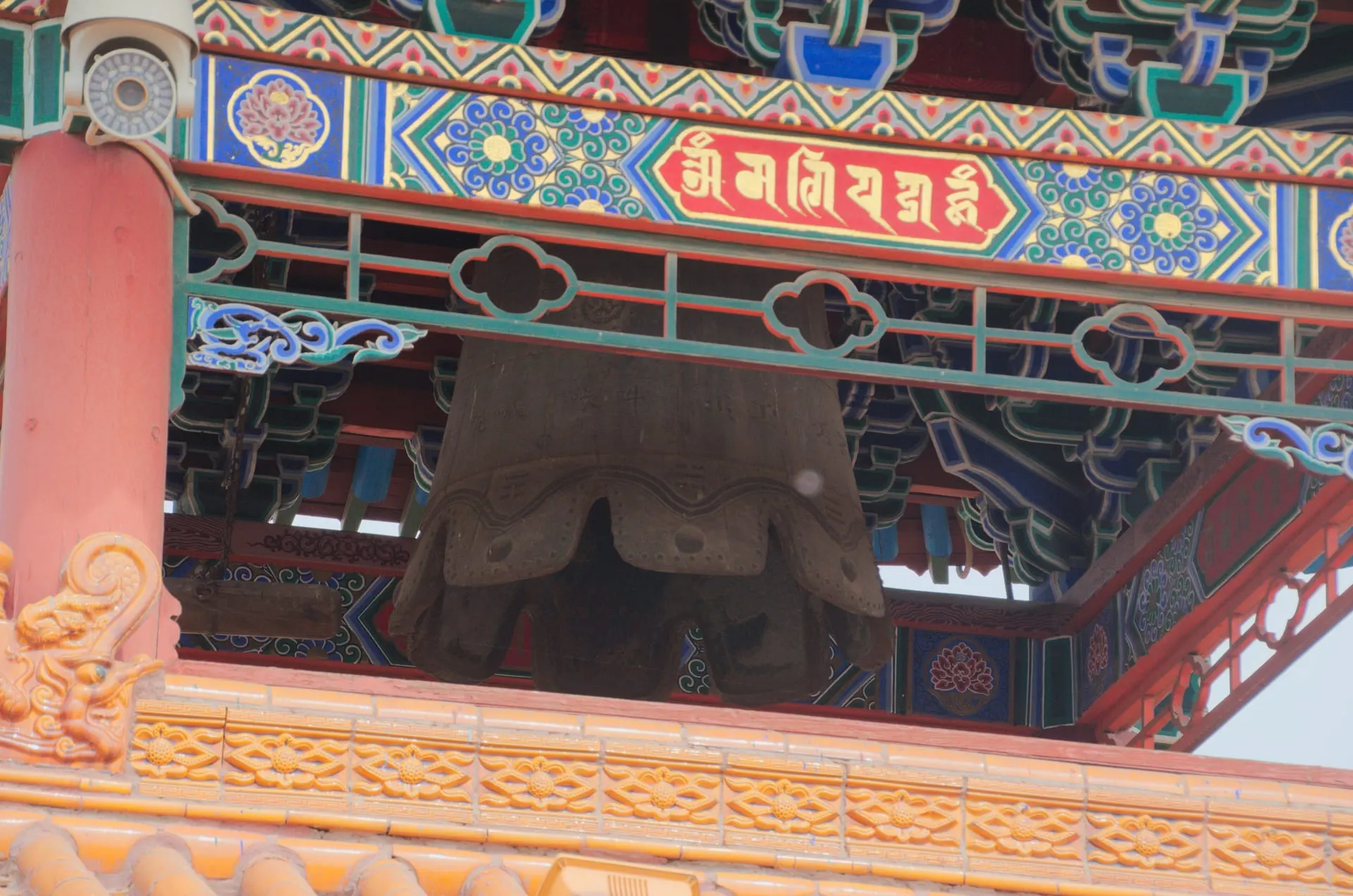
Dazhao Temple (大召寺, Dàzhào Sì)
16th-century Tibetan Buddhist temple, the city's spiritual centre. Silver Buddha statue, dragon-carved pillars, and Mongol-Tibetan fusion architecture. ¥35 as of June 2026. Allow 2 hours.
Wikimedia Commons · CC-BY-SA
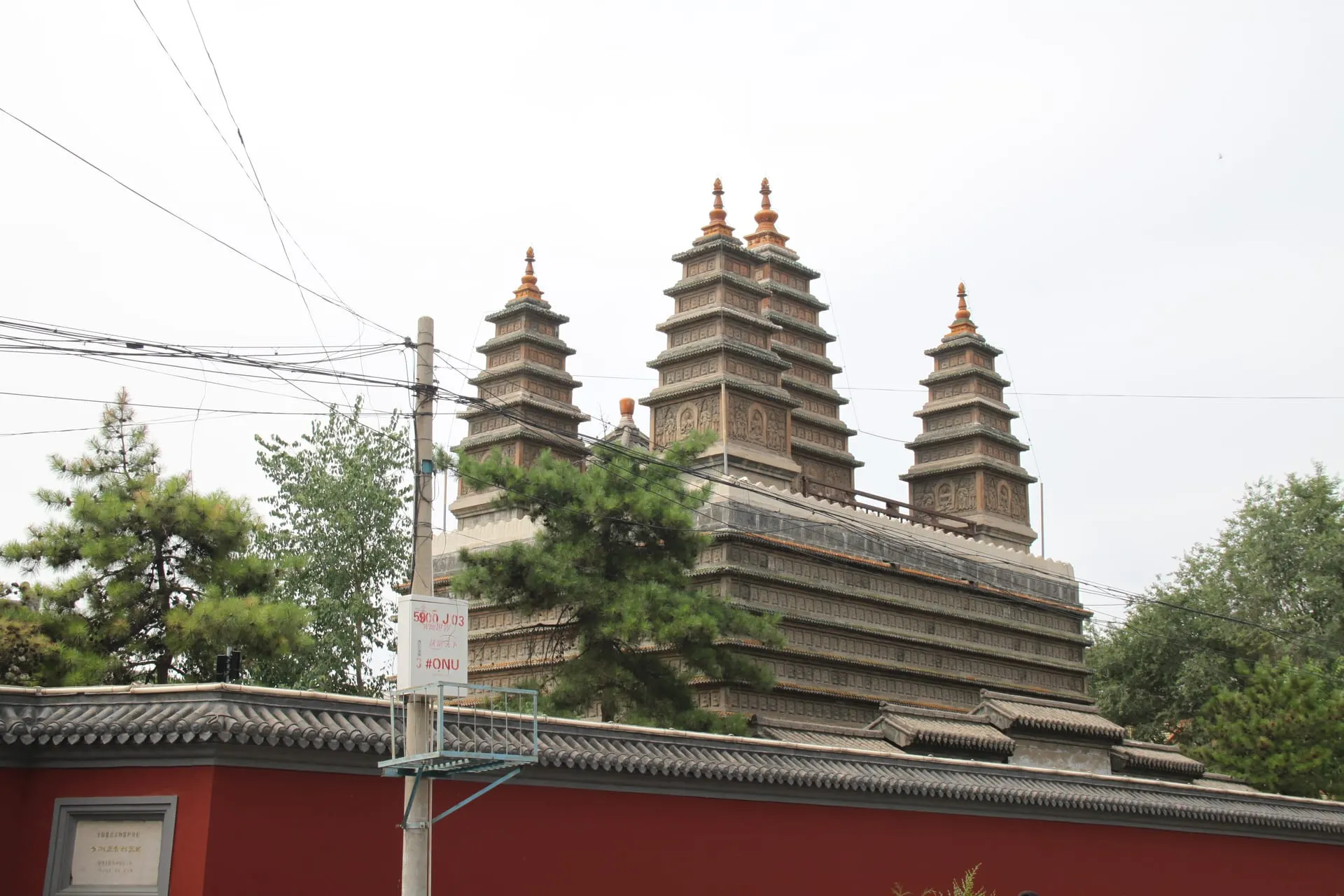
Five Pagoda Temple (五塔寺, Wǔtǎ Sì)
Indian-style brick pagoda with 1,560 carved Buddha reliefs across its five spires. Built 1727. The Mongolian star chart carved into the rear wall is the only one of its kind. ¥35. Allow 1-1.5 hours.
Wikimedia Commons · CC-BY-SA
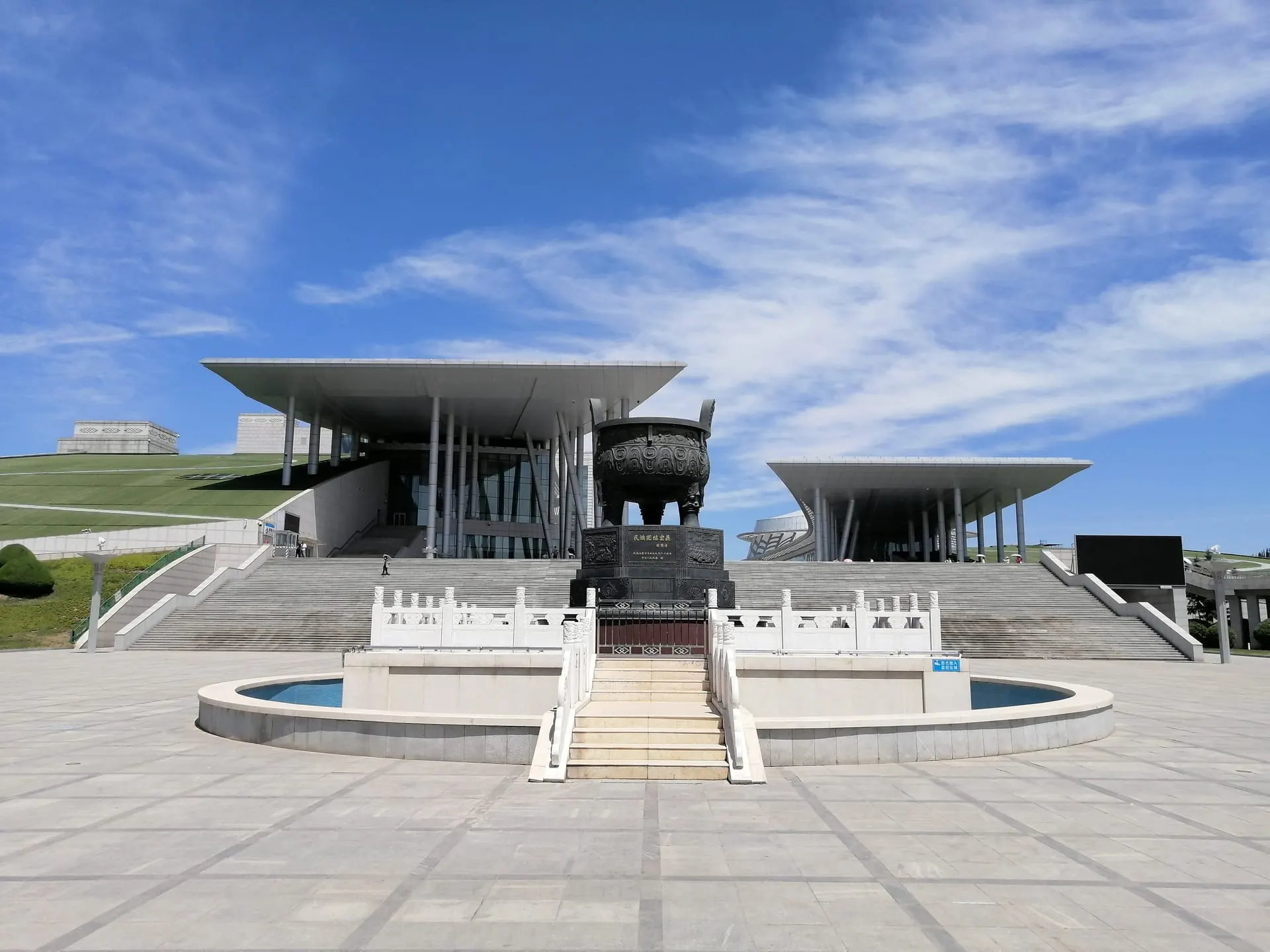
Inner Mongolia Museum (内蒙古博物院)
Dinosaur fossils (including a complete Platybelodon), Genghis Khan exhibits, and Mongolian ethnographic galleries across four floors. Free entry, reservations via WeChat mini-program. Allow 3 hours.
Wikimedia Commons · CC-BY-SA
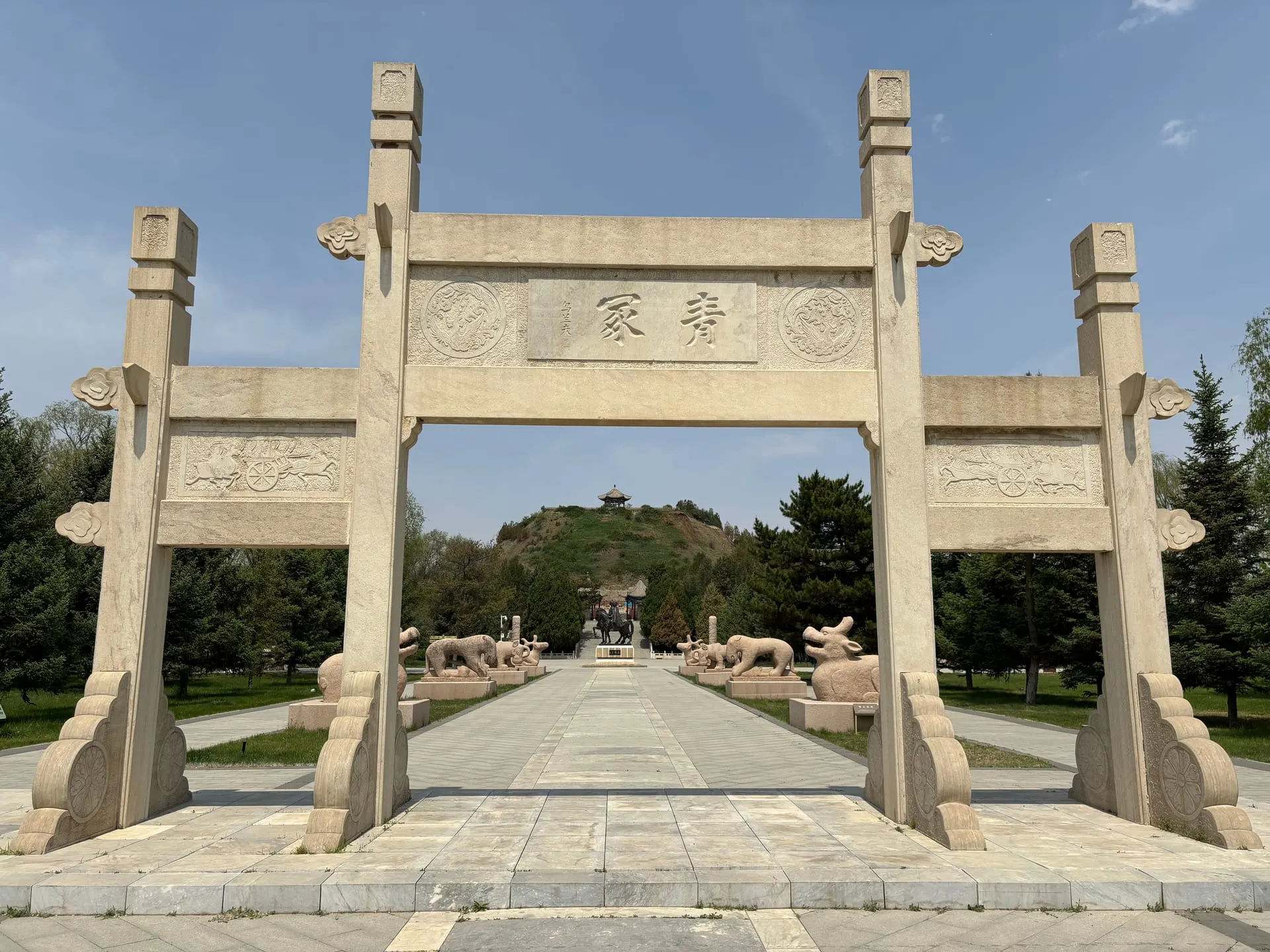
Zhaojun Tomb (昭君墓, Zhāojūn Mù)
Tomb of Wang Zhaojun, a Han dynasty princess sent to marry a Xiongnu chieftain in 33 BC. The 33-metre earthen mound is surrounded by a park with peony gardens. ¥55. Allow 1.5 hours.
Wikimedia Commons · CC-BY-SA
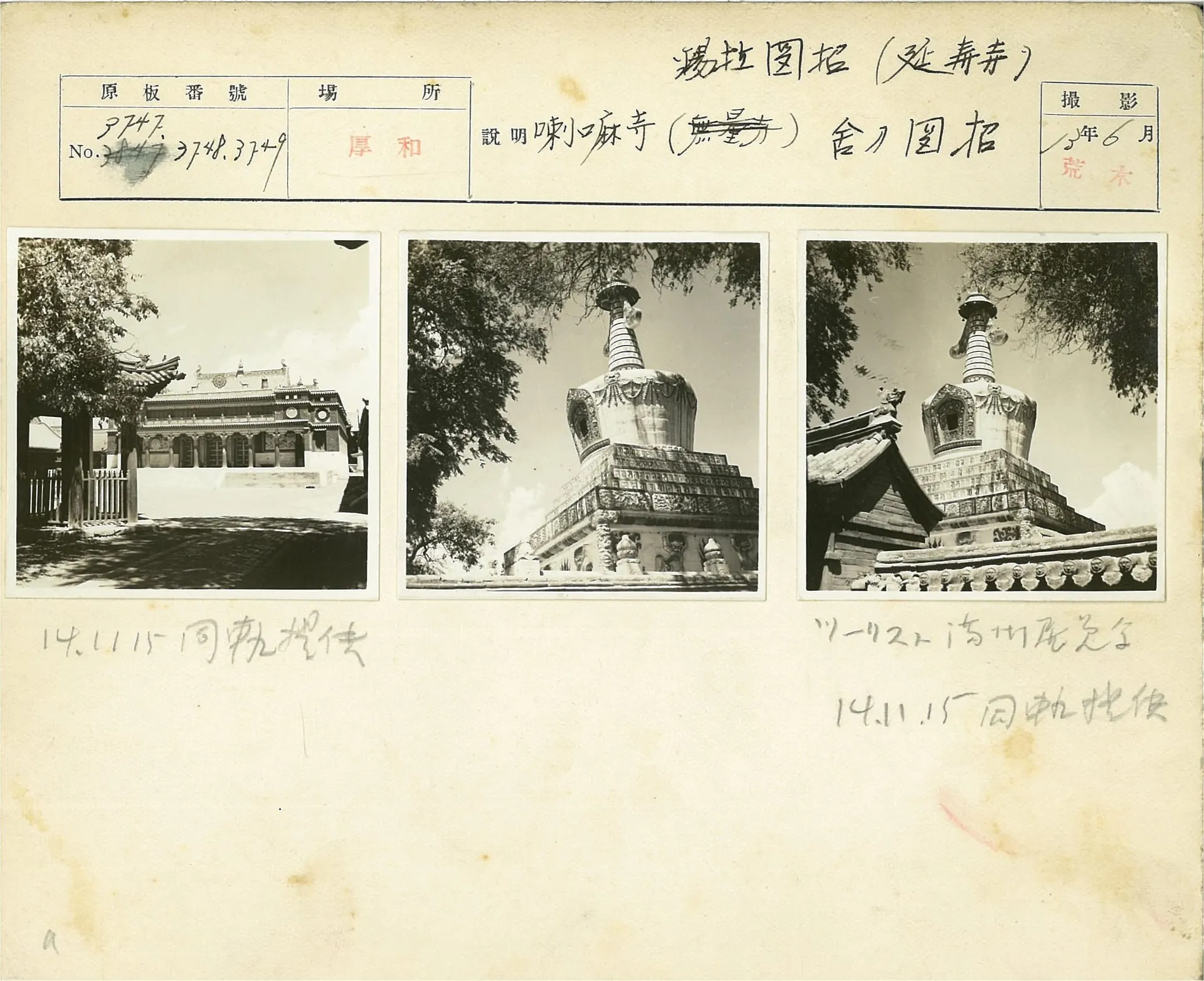
Xilituzhao Temple (席力图召, Xílìtú Zhào)
The largest Buddhist temple in Hohhot by grounds, with a distinctive Tibetan-style white stupa and a Ming-dynasty assembly hall. Quieter and less touristy than Dazhao. ¥30. Allow 1-1.5 hours.
Wikimedia Commons · CC-BY-SA
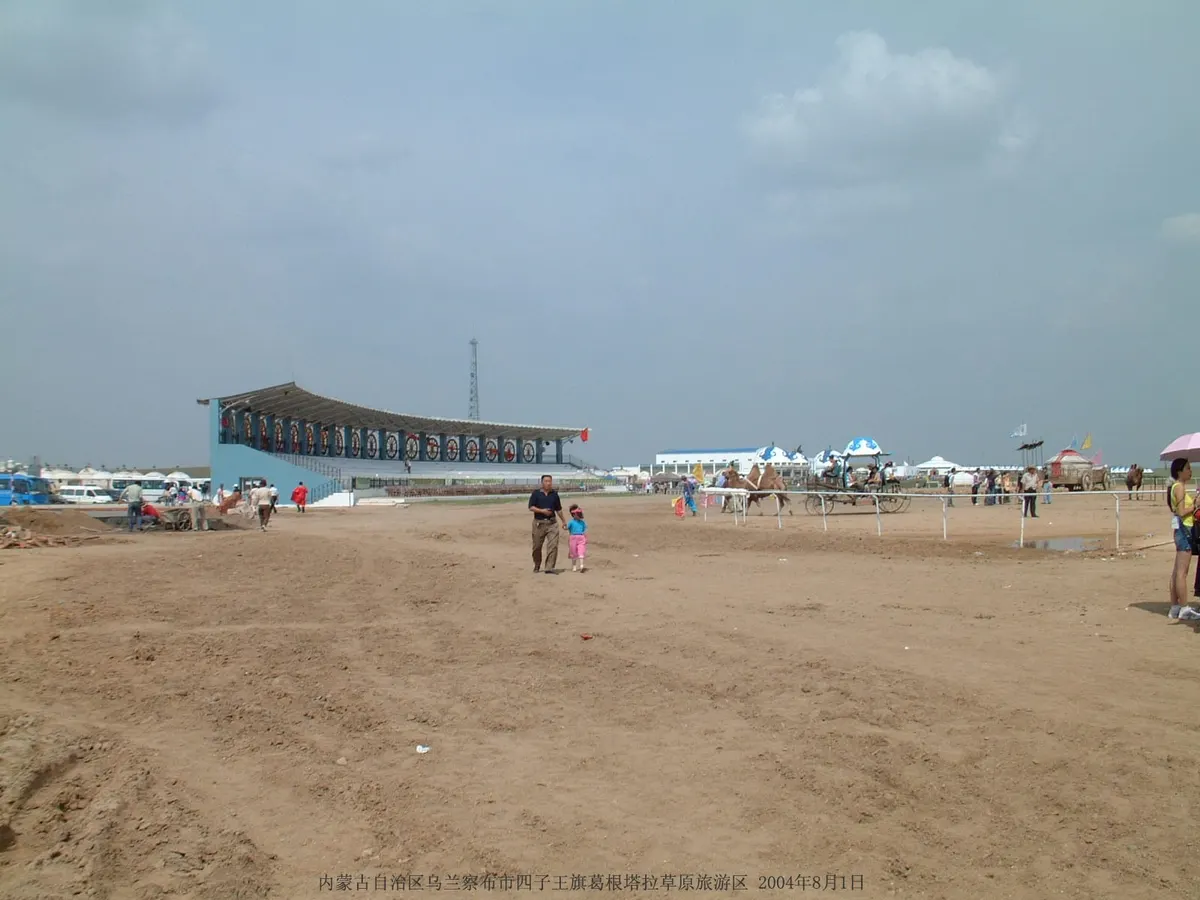
Gegentala Grassland (格根塔拉草原, Gégēntǎlā Cǎoyuán)
Expansive Inner Mongolian steppe 150 km north of Hohhot. Yurt stays, horse riding (¥80-150 per hour), Mongolian wrestling shows, and bonfire nights. Best June-September when grass is green. Allow a full day or overnight.
Wikimedia Commons · CC-BY-SA
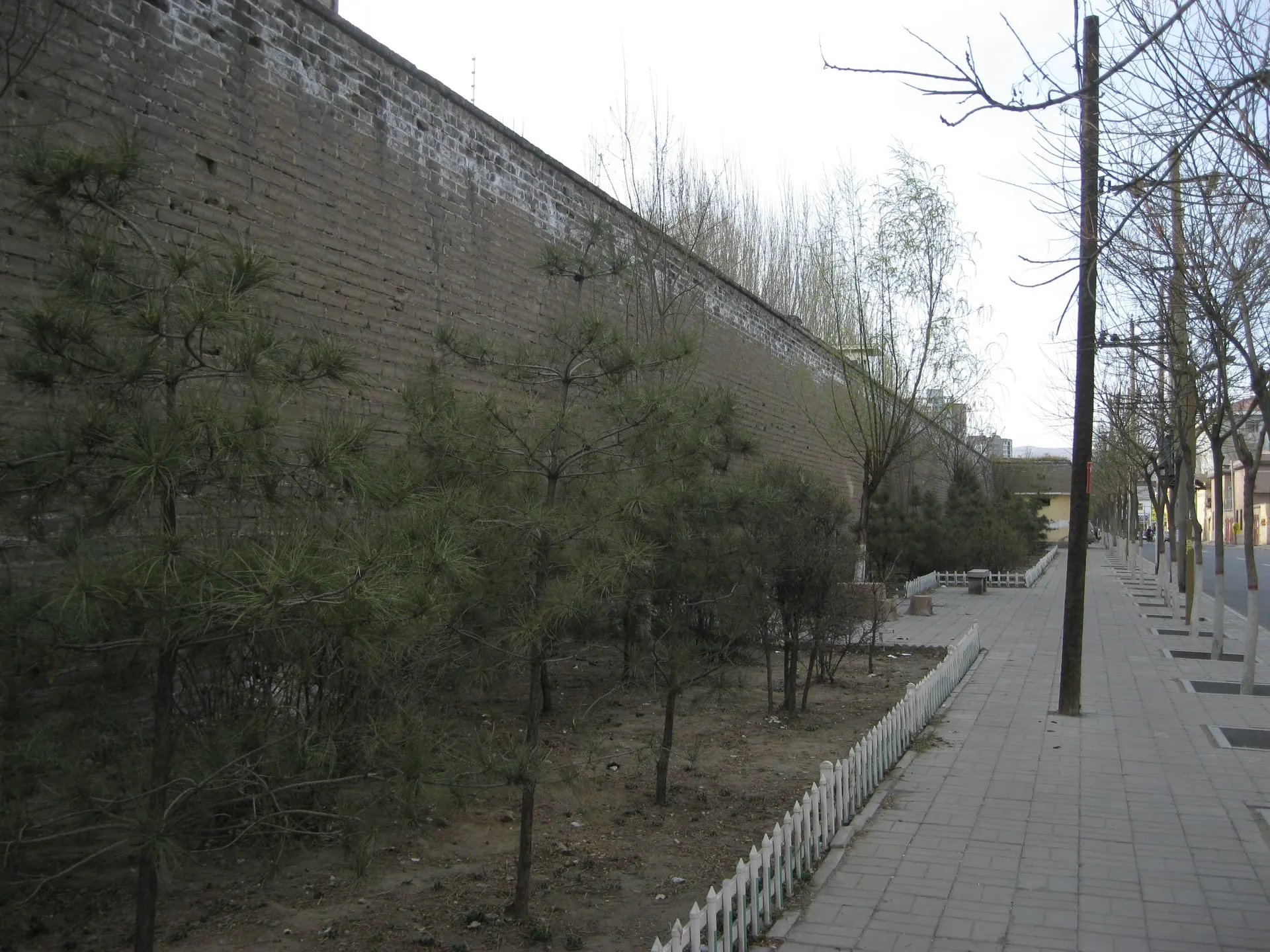
Suiyuan City Wall (绥远城, Suíyuǎn Chéng)
Qing-dynasty garrison city wall, partially restored. Smaller and less grand than Xi'an walls, but offers a quiet elevated walk with views of the old and new city. Free. Allow 45 minutes.
Wikimedia Commons · CC-BY-SA
Hohhot Old City Muslim Quarter (回民区, Huímín Qū)
The city's Muslim neighbourhood centred on the Great Mosque (built 1693). Lamb skewers, naan bread, and milk-tea stalls line the streets. Not as large as Xi'an's, but genuinely local. Free to wander, food ¥5-30 per item.
Wikimedia Commons · CC-BY-SA
STAY
Where to stay in Hohhot
Pick a base that matches the trip you want — imperial-central for sightseeing, hutong belt for character, Chaoyang for nightlife, or Qianmen for budget.
Old City / Dazhao Temple area (大召/旧城)
The spiritual core — Tibetan Buddhist temples, the Muslim Quarter food streets, and the city's most atmospheric lanes within a walkable 2 km radius.
#old-city-dazhaoXinhua Square / City Centre (新华广场)
Commercial hub with the Shangri-La, department stores, and Metro Line 1 access. Clean, modern, but less character than the old city.
#xinhua-squareHohhot East Station area (呼和浩特东站周边)
HSR transit zone — chain hotels for late arrivals and early Beijing trains. Culturally dead; fine for one night.
#hohhot-eastGegentala Grassland (格根塔拉草原)
Not a city neighbourhood — the grassland 150 km north with yurt camps, horse riding, and the steppe experience. Overnight stays recommended.
#gegentala
ITINERARIES
Sample itineraries from Hohhot
Three ready-made routes, from a 1-day imperial sprint to a 5-day deep dive. Copy the day-by-day plan and adapt to your own pace.
- 1 DAY
Hohhot in One Day
A compact temple-and-museum sprint — Dazhao at dawn, the dinosaur fossils, and a lamb-heavy dinner in the Muslim Quarter.
- transit stopovers
- Beijing weekend trips
- solo travellers on a tight schedule
- Day 01
Morning
Dazhao Temple at 08:00 (¥35, 2 hours) while butter lamps are freshly lit. Walk to Xilituzhao Temple (¥30, 1 hour). Five Pagoda Temple (¥35, 1 hour).
Afternoon
Shaomai lunch near the temple district (¥15–25). Inner Mongolia Museum (free, booked ahead, 3 hours) — dinosaurs, Genghis Khan, Mongolian culture.
Evening
Muslim Quarter food crawl along Tongdao South Street — lamb skewers, naan bread, milk tea. Walk the old-city lanes after dark.
- 2 DAYS
Hohhot in Two Days
City temples and museum on day one, then a full grassland day trip — yurt lunch, horse riding, and the steppe horizon.
- nature lovers
- photographers
- families with children
- couples
- Day 01
Morning
Dazhao Temple at 08:00. Xilituzhao Temple. Five Pagoda Temple.
Afternoon
Inner Mongolia Museum (3 hours). Zhaojun Tomb if time allows (¥55, 1.5 hours, south of the city).
Evening
Muslim Quarter food crawl — hand-grabbed mutton, grilled skewers, salty milk tea. Walk the old city.
- Day 02
Morning
Depart 08:00 by hired car to Gegentala Grassland (2–2.5 hours). Arrive 10:30–11:00. Horse riding (1–2 hours, ¥80–150).
Afternoon
Yurt lunch — hand-grabbed mutton, milk tea, Mongolian cheese. Wrestling demonstration. Walk the open steppe.
Evening
Return to Hohhot by 18:00 (day trip) or stay for the bonfire and overnight in a tourist yurt (¥400–800 with heater and bathroom).
- 3 DAYS
Hohhot in Three Days (City + Grassland + Baotou)
Temples and museum, a grassland overnight, and a day trip to Baotou for the Wudangzhao Lamasery — full Inner Mongolia coverage.
- thorough travellers
- Buddhist culture enthusiasts
- travellers heading west toward the Gobi
- Day 01
Morning
Dazhao Temple at 08:00. Xilituzhao and Five Pagoda temples. Walk the old-city lanes.
Afternoon
Inner Mongolia Museum (3 hours). Shaomai lunch near the temple district.
Evening
Muslim Quarter food crawl. Mongolian hotpot for dinner (¥60–100). Pack for grassland overnight.
- Day 02
Morning
Depart 08:00 to Gegentala Grassland. Horse riding, steppe walk.
Afternoon
Yurt lunch. Afternoon free to explore the grassland — walk to a distant ridge for solitude and photographs.
Evening
Bonfire and Mongolian singing at the camp. Overnight in a tourist yurt (book the upgraded version with heater).
- Day 03
Morning
Dawn walk on the grassland before the day-trip buses arrive (05:30 — the best hour). Return to Hohhot by 10:00. HSR to Baotou (1 hour, ¥50–80).
Afternoon
Taxi to Wudangzhao Lamasery (70 km from Baotou, 1 hour). Explore the "Little Potala Palace" temple complex (¥60, 2 hours). Return to Hohhot or onward travel from Baotou.
Evening
Return to Hohhot by HSR. Final dinner in the Muslim Quarter or near Hohhot East Station. Depart.
BUDGET
What a Hohhot trip costs
Per-person, per-day costs across three spending tiers. Excludes international flights and visa fees.
| Line item | Backpacker | Mid-range | Luxury |
|---|---|---|---|
| Hostel dorm bed (per night) | $10 | $0 | $0 |
| Budget hotel (per night) | $0 | $25 | $0 |
| International hotel (per night) | $0 | $0 | $120 |
| Street-food meal (skewers, shaomai, naan) | $3 | $5 | $8 |
| Mid-range restaurant meal (hotpot, hand-grabbed mutton) | $0 | $12 | $25 |
| Metro / bus (single ride) | $0.5 | $0.5 | $0.5 |
| DiDi ride (city core, ~5 km) | $0 | $3 | $3 |
| Temple entry (average ticket) | $5 | $5 | $5 |
| Grassland day trip (car + horse riding) | $40 | $60 | $100 |
| SIM card (30 days, 30 GB) | $15 | $15 | $15 |
| Daily total excl. accommodation (city day) | $18 | $35 | $55 |
| Total per day | $91.5 | $160.5 | $331.5 |
$ USD per person per day, before international flights and visas. Last verified: Q3 2026.
STAY SAFE
Emergency contacts in Hohhot
Save these three numbers before you board the plane. China uses different hotlines than most countries — there's no 911.
- POLICE
110
- AMBULANCE
120
- FIRE
119
- TOURIST HOTLINE
12301
- ENGLISH-SPEAKING ER
Inner Mongolia People's Hospital (内蒙古自治区人民医院), +86 471 6620 000, 20 Zhaowuda Road, Saihan District — limited English-speaking desk; for serious emergencies, medical evacuation to Beijing is recommended
Problems travelers hit in Hohhot
- Why is my Alipay not working?You linked a foreign Visa or Mastercard to Alipay but every transaction is rejected at the merchant.
- My China visa was denied — what now?Your L visa application was refused at the Chinese consulate and your trip is in 2–4 weeks.
- My passport was lost or stolen in China — what do I do?Your passport is gone (theft or loss) and you're in mainland China without travel documents.
- Why can't I book on 12306 with my foreign card?You tried to book a high-speed rail ticket on 12306.cn and your foreign Visa/Mastercard is rejected at checkout.
- Why is my VPN not working in China?You arrived in China, opened your VPN, and it will not connect at all or connects but no traffic loads.
- Why can't I book a Tibet trip on my own?You try to book Lhasa flights and hotels yourself but the booking fails, or you're turned away at the Lhasa airport without a permit.
Book activities in Hohhot
These are licensed tour operators and booking platforms we've vetted independently. Booking through these links may earn us a commission — see our affiliate disclosure. This never affects our editorial recommendations or the price you pay.
Frequently asked questions
How many days do I need in Hohhot?
What is the best time to visit Hohhot?
Can I visit the grasslands as a day trip from Hohhot?
Do I need a special permit to visit Inner Mongolia?
Is Hohhot safe?
Can I use Alipay and WeChat Pay in Hohhot?
Show all 25 FAQs
What is the best grassland near Hohhot?
Do they speak English in Hohhot?
How cold does it get in winter?
What is Mongolian milk tea — is it like bubble tea?
Can I see Genghis Khan sites in Hohhot?
What is the best temple in Hohhot?
How do I get from Beijing to Hohhot?
What food is unique to Hohhot that I cannot find elsewhere in China?
Is Hohhot a good city for vegetarians?
How do I book a train ticket from Hohhot to Baotou?
Are there any scams to watch out for in Hohhot?
What should I buy as a souvenir in Hohhot?
Is Hohhot family-friendly?
Can I visit Hohhot and Datong in one trip?
Can I visit a desert from Hohhot?
How do I get from Hohhot to Mongolia?
Is cashmere from Hohhot genuine?
What is the difference between Inner Mongolia and Mongolia?
Will I feel the altitude in Hohhot?
References

Related guides & destinations
Guide
How We Research 2026: NihaoVisit’s Methodology for China Travel Information
How NihaoVisit sources, verifies, and maintains 700+ pages of China travel information — our source hierarchy, fact-checking process, update
Guide
Fact-Checking Log 2026: Verified China Travel Information — NihaoVisit
A public log of fact-checking verification passes on NihaoVisit, showing what was verified, when, and against which sources — covering visa
Guide
Best Time to Visit China 2026: Month-by-Month Weather, Crowds, and Prices
The best time to visit most of China is April–May and September–October. Winter (Dec–Feb) is cold but cheap; summer (Jun–Aug) is hot and cro
Guide
VPN for China 2026: Which VPNs Work, eSIM Alternatives, and the Complete Pre-Trip Checklist
Most Western apps and websites are blocked in mainland China. A reliable VPN is essential for Google, Gmail, WhatsApp, Instagram, and most n
Guide
China SIM Card and eSIM Guide 2026: Stay Connected Without WeChat
A Chinese SIM or eSIM lets you use mobile data, maps, and ride-hailing without WiFi. Here is how to get one, the cost, and which provider to
Guide
Solo Female Travel in China 2026: Safety, Tips, and Real Experiences
China is one of the safer destinations for solo female travelers. Petty theft is rare, violent crime against tourists is extremely uncommon,