Jingdezhen
Jingdezhen (景德镇, Jǐngdézhèn) in northeastern Jiangxi province is the most important ceramic city in world history. For over a thousand years — from the Song dynasty (960-1279) through the Qing (1644-1912) — Jingdezhen's kilns produced the finest porcelain on earth, supplying the imperial court, the scholar-official class, and the export trade that gave China its name in porcelain: "china." The city's blue-and-white wares (青花瓷, qīnghuā cí) defined global luxury for centuries, shipped along the Maritime Silk Road to Persia, Europe, and Southeast Asia. Today Jingdezhen is a fascinating hybrid: an ancient craft city that has reinvented itself as a global center for contemporary ceramics. The old imperial kiln sites, the Ancient Kiln Folk Customs Museum with its working wood-fired dragon kilns, and the Taoxichuan Art Center — a converted 1950s ceramic factory that is now a world-class gallery, workshop, and cafe complex — make Jingdezhen a genuinely unique destination. The best part: you can make pottery yourself. Dozens of workshops offer half-day and full-day pottery classes for absolute beginners, and the experience of throwing a bowl in the city where porcelain was perfected is one of the most memorable things you can do in China. Jingdezhen deserves 2-3 days. Budget roughly ¥100-270 per day for mid-range comfort. The honest downside: Jingdezhen is not a conventionally beautiful city — the urban fabric is a jumble of ceramic warehouses, dusty kiln workshops, and modern apartment blocks. The magic is in the workshops, the kilns, the museum galleries, and the hands-on experiences, not in the streetscape.
Why Jingdezhen in 2026.
The world's porcelain capital for over 1,000 years — tour imperial kilns, throw pottery with master craftsmen, and explore a city where ceramics are woven into every street, meal, and building.
Quick Answer
Jingdezhen (景德镇, Jǐngdézhèn) in northeastern Jiangxi province is the most important ceramic city in world history. For over a thousand years — from the Song dynasty (960-1279) through the Qing (1644-1912) — Jingdezhen's kilns produced the finest porcelain on earth, supplying the imperial court, the scholar-official class, and the export trade that gave China its name in porcelain: "china." The city's blue-and-white wares (青花瓷, qīnghuā cí) defined global luxury for centuries, shipped along the Maritime Silk Road to Persia, Europe, and Southeast Asia. Today Jingdezhen is a fascinating hybrid: an ancient craft city that has reinvented itself as a global center for contemporary ceramics. The old imperial kiln sites, the Ancient Kiln Folk Customs Museum with its working wood-fired dragon kilns, and the Taoxichuan Art Center — a converted 1950s ceramic factory that is now a world-class gallery, workshop, and cafe complex — make Jingdezhen a genuinely unique destination. The best part: you can make pottery yourself. Dozens of workshops offer half-day and full-day pottery classes for absolute beginners, and the experience of throwing a bowl in the city where porcelain was perfected is one of the most memorable things you can do in China. Jingdezhen deserves 2-3 days. Budget roughly ¥100-270 per day for mid-range comfort. The honest downside: Jingdezhen is not a conventionally beautiful city — the urban fabric is a jumble of ceramic warehouses, dusty kiln workshops, and modern apartment blocks. The magic is in the workshops, the kilns, the museum galleries, and the hands-on experiences, not in the streetscape.
| Worth visiting | Absolutely, if you have any interest in craft, art, or history — making pottery in the porcelain capital is a one-of-a-kind China experience. |
|---|---|
| Recommended days | 2-3 days |
| Best time to visit | March-May and September-November. Summers are hot and humid (30-38°C). Avoid Chinese public holidays when domestic tourism spikes. |
| Daily budget | $35 (backpacker) / $100 (mid-range) / $270+ (luxury) |
| Family friendly | Yes — pottery-making workshops are excellent for children aged 5+, and the Taoxichuan Art Center has wide open spaces. The kiln museums are engaging for all ages. |
| Solo friendly | Yes — compact, safe, and the pottery workshop culture is naturally solo-friendly. Excellent for a creative, hands-on travel experience. |
| Airport | Jingdezhen Luojia Airport (JDZ) — domestic flights from Beijing (2h), Shanghai (1.5h), Guangzhou (2h), Shenzhen (2h). About 8 km from the city center. |
| High-speed rail | Yes — Jingdezhen North station (景德镇北站). Nanchang (1h), Hangzhou (2.5h), Shanghai (4.5h), Wuhan (2.5h), Huangshan (1h). |
| Language | Mandarin with local Gan dialect (赣语). English is rare outside the Taoxichuan Art Center and international-oriented ceramic studios. |
| Currency | CNY (¥) — Alipay and WeChat Pay accepted everywhere in the city center. Cash useful for small village workshops. |
| Time zone | China Standard Time (UTC+8) |
| Last updated | 2026-06-18 |
Want a Jingdezhen plan built for you?
Jump to:
Imperial Kiln Museum·Ancient Kiln Folk Customs·Taoxichuan·Sanbao·Pottery Workshops·Getting There·Where to Stay·Food·Itineraries·Weather·Shopping for Ceramics·Tips·Emergency Contacts·Blue-and-White Porcelain·Dragon Kilns·Saturday Creative Market·Glazes·Collecting·FAQ
Why visit Jingdezhen? Is it worth going for non-artists?
Jingdezhen is not a typical tourist city. It has no dramatic skyline, no ancient city wall, no famous natural scenery. What it has is something rarer: a living, breathing thousand-year craft tradition that you can touch, watch, and participate in. The experience of visiting Jingdezhen is fundamentally different from sightseeing — it is about understanding a material and the civilization that built itself around it. Three reasons to go, even if you have never thought about pottery: First, the Imperial Kiln Museum is one of the best small museums in China, with genuinely world-class curation and an architectural design that is itself worth the trip. Second, the Ancient Kiln Folk Customs Museum lets you watch master craftsmen work through every stage of porcelain-making — it is mesmerizing, meditative, and gives you a completely new appreciation for every ceramic object you will ever encounter. Third, and most importantly, you can make pottery yourself. The hands-on experience of centering clay on a wheel in the city where porcelain was invented is something you cannot replicate anywhere else. The honest downside: Jingdezhen is not beautiful in a conventional sense. The city is a working manufacturing center — dusty, functional, scattered with ceramic supply shops and kiln workshops. The tourist infrastructure is developing but not polished. English is rare. This is a city for travelers who care more about substance than surface, and who are willing to meet a place on its own terms.
What is the history of Jingdezhen: how did a small town become the porcelain capital of the world?
Jingdezhen's ceramic history stretches back to the Han dynasty (206 BCE-220 CE), but the city's rise to global dominance began in the Song dynasty (960-1279). In 1004, Emperor Zhenzong was so impressed by the local porcelain that he ordered the town to supply the imperial court and renamed it Jingdezhen (景德镇) after his reign title Jingde (景德, "bright virtue"). For the next 900 years, Jingdezhen was the imperial kiln site — the only official source of porcelain for the emperor, his court, and the vast Chinese bureaucracy. The city's secret weapon was kaolin (高岭土, gāolǐngtǔ), a white clay discovered in the hills around Gaoling Mountain northeast of Jingdezhen. Kaolin, combined with petuntse (瓷石, císhí — porcelain stone), produces true hard-paste porcelain: white, translucent, strong, and capable of being fired at extremely high temperatures (1,300°C+). This material advantage, combined with centuries of accumulated technical knowledge and an imperial mandate, made Jingdezhen porcelain the finest in the world. Jingdezhen's blue-and-white porcelain (青花瓷, qīnghuā cí) defined the city's golden age during the Yuan (1271-1368) and Ming (1368-1644) dynasties. The cobalt for the blue pigment came from Persia (modern Iran), traded along the Silk Road, and the resulting wares were exported back along the Maritime Silk Road to the Middle East, East Africa, and eventually Europe. By the 17th century, Jingdezhen was the world's first industrial city — a manufacturing center of perhaps a million people organized around division of labor so specialized that a single bowl might pass through 70 different hands before completion. The city declined with the fall of the Qing dynasty in 1912 and nearly collapsed during the wars of the 20th century. The state-owned factories of the Mao era kept production alive but at the cost of artistry. Jingdezhen's renaissance began in the 2000s with the opening of the Sanbao International Ceramics Village, the establishment of the Ceramics University, and the influx of young Chinese and international artists drawn to the city's unparalleled ceramic infrastructure and history.
How to get to Jingdezhen: flights, high-speed rail, and bus connections?
Jingdezhen is in northeastern Jiangxi province, accessible by air and high-speed rail. Jingdezhen Luojia Airport (JDZ) is about 8 km west of the city center. Domestic flights serve Beijing (2 hours, ¥600-1,200), Shanghai (1.5 hours, ¥400-800), Guangzhou (2 hours, ¥500-1,000), Shenzhen (2 hours, ¥500-1,000), and Chengdu (2.5 hours). From the airport, a taxi or DiDi to the city center takes 15-20 minutes (¥20-30). The airport bus (¥10) runs to the city center. International flights are limited — most foreign visitors fly into Shanghai or Beijing and connect domestically. High-speed rail is the most convenient option for most domestic connections. Jingdezhen North station (景德镇北站, Jǐngdézhèn Běi Zhàn) opened in 2017 and serves G- and D-class trains to Nanchang (1 hour, ¥80-110), Hangzhou (2.5 hours, ¥180-240), Shanghai (4.5 hours, ¥300-380), Wuhan (2.5 hours, ¥180-240), Huangshan (1 hour, ¥80-110), and Xiamen (3.5 hours, ¥250-320). The station is about 6 km north of the city center — a 15-minute taxi ride (¥15-20) or city bus (¥2). Getting around Jingdezhen: The city is spread out along the Chang River (昌江, Chāng Jiāng), with the main attractions scattered across several kilometers. The city bus system (¥1-2) covers most routes but is slow and Chinese-only. DiDi is the most practical option for visitors — rides within the city core cost ¥10-25. Taxis are plentiful and the flagfall is ¥7 for the first 2 km. To reach Sanbao (10 km southeast) or Yaoli (50 km northeast), DiDi or a hired taxi is the best option — expect ¥30-50 to Sanbao, ¥120-180 round-trip to Yaoli. There is no metro.
Where to stay in Jingdezhen: ceramic-themed hotels, old town guesthouses, and Sanbao studios?
Jingdezhen's accommodation scene has improved significantly in recent years, driven by the creative economy. The best areas to stay: Taoxichuan / city center area: The most convenient base, within walking distance of Taoxichuan Art Center and close to restaurants, shops, and transport. Mid-range chain hotels (Jinjiang Inn, Ji Hotel, Atour) run ¥200-400 per night. The Taoxichuan International Youth Hostel (陶溪川国际青年旅舍) has dorm beds from ¥60 and a lively common area popular with young Chinese ceramic artists. The area has several boutique hotels in converted factory buildings with ceramic-themed decor — the Taoxichuan Art Hotel (陶溪川艺术酒店) is the best of these, from ¥500. Old town area (near the Imperial Kiln Museum): Narrow lanes, older buildings, and a more traditional feel. Small guesthouses in renovated courtyard homes (¥150-300) give a sense of the pre-industrial city. The Old Town International Youth Hostel is here with dorm beds from ¥50. This area is walking distance to the Imperial Kiln Museum and the Ancient Kiln Folk Customs Museum. Sanbao Ceramics Village: For a more immersive experience, several artist studios and guesthouses in the Sanbao valley offer rooms in beautiful, quiet settings surrounded by bamboo and tea terraces. The Sanbao Ceramic Art Institute has simple but charming guest rooms (¥200-400). This is the best option if you are taking a multi-day workshop or want to be surrounded by the ceramic community. The trade-off: you are 10-15 km from the city center and need a DiDi for everything. Luxury: Jingdezhen does not have international luxury hotels. The top end is the Taoxichuan Art Hotel (from ¥800 for suites) and a handful of high-end boutique guesthouses in restored historic buildings. For a full-service luxury experience, add Jingdezhen to a trip that includes Hangzhou or Shanghai.
Where can I make pottery in Jingdezhen? Best workshops and classes for beginners?
Making pottery in Jingdezhen is the must-do activity — and you do not need any experience. Dozens of studios offer classes for absolute beginners, ranging from a quick 1-hour wheel-throwing session to multi-day immersion programs. The best beginner-friendly options as of June 2026: Taoxichuan Ceramic Art Avenue (陶溪川陶瓷艺术大道): Inside the Taoxichuan complex, several studios offer walk-in pottery classes. The Sculpting Workshop (塑形坊) is the most established — ¥128 for a 1.5-hour wheel-throwing session, including clay, instruction, and one finished piece (you choose the glaze color; they fire it and ship it to you for an additional ¥30-50). English instruction is limited but the teachers are patient and the hands-on nature of pottery means you can follow along by watching. Book in the morning for the same day, or reserve via WeChat a day ahead. Ancient Kiln Folk Customs Museum: The museum offers a 1-hour pottery experience (¥80-120) where you can try throwing on a wheel under the guidance of one of the museum's master potters. This is the most atmospheric option — you are working in a reconstructed Ming-dynasty workshop with a master who has been throwing pots for decades. Language barrier is high, but the master will physically guide your hands. An extraordinary experience. Sanbao Ceramic Art Institute (三宝国际陶艺院): The most serious option for those who want more than a taster session. Half-day workshops (¥300-500) cover wheel-throwing, hand-building, and basic glazing techniques. Full multi-day programs (3-7 days, ¥1,500-4,000 including accommodation) are available for those who want to develop real skills. The institute has hosted international artists for 25+ years and has the best English-language instruction in Jingdezhen. Private studio classes: Young Jingdezhen ceramic artists, many of them graduates of the Jingdezhen Ceramic Institute (景德镇陶瓷大学), offer private classes through their studios. These are typically ¥150-250 for 2 hours of one-on-one instruction. Your guesthouse can recommend artists who work with foreign visitors. The quality varies — ask to see the artist's own work before booking. Practical tips: Wear clothes you do not mind getting clay on. Remove rings and watches. Trim your fingernails (long nails catch on the clay). The finished piece needs 1-2 weeks for drying, bisque firing, glazing, and glaze firing — you cannot take it home the same day. Studios will ship the finished piece domestically (¥20-50) or internationally (¥80-200). Plan your class for your first day so the piece can be fired and shipped before you leave China, or arrange international shipping.
What to eat in Jingdezhen: Jiangxi cuisine, ceramic-themed dishes, and local specialties?
Jingdezhen's food is Jiangxi cuisine (赣菜, Gàn cài) with local ceramic-town twists. Jiangxi food is less famous than neighboring Hunan or Anhui cuisines, but it has a distinct character: moderate spice, heavy use of fermented and pickled ingredients, and an emphasis on fresh mountain and river produce. Jingdezhen cold rice noodles (景德镇凉粉, Jǐngdézhèn liángfěn). The city's signature snack: wide, slippery rice noodles served cold with chili oil, black vinegar, crushed peanuts, pickled vegetables, and chopped cilantro. ¥8-15. Sold at breakfast stalls and street carts across the city. Refreshing in summer, addictive year-round. Porcelain chicken (瓷泥煨鸡, cíní wēi jī). A whole chicken wrapped in clay and slow-baked in a kiln — essentially the same technique as the kiln firing of porcelain, applied to food. The clay crust traps moisture, producing incredibly tender, aromatic meat. The dish was supposedly invented by Qing-dynasty kiln workers who used the residual heat of cooling kilns to cook their meals. ¥88-138 for a whole chicken, feeds 3-4 people. Order at traditional restaurants near the Ancient Kiln Museum. Bitter rice cake (苦珠糕, kǔ zhū gāo). A gelatinous cake made from the starch of the bitter oak acorn, a traditional mountain food of northeastern Jiangxi. The flavor is subtle — earthy, slightly nutty, faintly bitter — and the texture is smooth and silky. Usually served with a savory chili-soy dipping sauce. An acquired taste but unquestionably local. ¥15-25. River fish stew (昌江鱼汤, Chāng Jiāng yú tāng). Fresh fish from the Chang River, simmered with ginger, scallions, tofu, and a touch of chili in a clear, light broth. The fish varies by season — silver carp, grass carp, and local river perch are most common. ¥48-78 for a pot, enough for two. Yanshui ba (碱水粑, jiǎnshuǐ bā). A dense, chewy rice cake made with alkaline water (碱水, jiǎnshuǐ — traditionally made by filtering water through wood ash), sliced thin and stir-fried with pork, garlic shoots, and chili. The alkaline treatment gives the rice cake a distinctive springy texture and a subtle mineral flavor. A Jingdezhen breakfast staple. ¥12-20. The best eating areas: the streets around Taoxichuan have the most foreigner-friendly restaurants, including a few with picture menus. For authentic local food, the area around Renmin Square (人民广场) in the city center has clusters of family-run Jiangxi restaurants. The Porcelain Avenue food street (瓷都大道美食街) near the Ceramics Museum has a concentration of mid-range restaurants. For street food, the night market near the Jingdezhen Ceramic Institute campus is the best — young, cheap, and full of energy.
What are good 1-day, 2-day, and 3-day itineraries for Jingdezhen?
One-day sprint: Start at the Imperial Kiln Museum at 09:00 (opens 09:00, ¥60, 2 hours). The morning light through the vaulted brick ceilings is beautiful. Walk to the Ancient Kiln Folk Customs Museum (12:00, ¥95, 2.5 hours including the pottery demonstration). Watch the master throwers, painters, and kiln masters at work. Try the 1-hour pottery experience if time allows. Lunch near the museum — order porcelain chicken if you can find a restaurant that serves it. Afternoon: Taoxichuan Art Center (2-3 hours), gallery-hopping and browsing the ceramic shops. If it is a Saturday, the creative market is the highlight. Dinner at a Taoxichuan restaurant. A packed day that covers the three essential Jingdezhen experiences: museum, living craft, and contemporary ceramics. Two-day plan (recommended): Day 1 as above. Day 2: morning pottery class — either at Taoxichuan (¥128 for 1.5 hours) or the Ancient Kiln Museum (¥100 for 1 hour). This is the experience that makes Jingdezhen special. Late morning: China Ceramics Museum (free, 2 hours) for the full historical sweep of Chinese ceramics. Lunch of cold rice noodles. Afternoon: either Sanbao Ceramics Village (30-minute DiDi, free to explore, 2-3 hours walking through studios, galleries, and bamboo groves) or Hutian Ancient Kiln Site (if you prefer archaeology over art). Evening: Taoxichuan for dinner, craft beer at one of the bar-restaurants in the converted factory buildings, and more gallery-hopping. Three-day plan: Days 1-2 as above. Day 3: full-day excursion to Yaoli Ancient Town (1 hour by DiDi or bus, ¥80 entry for town and scenic area). Walk the ancient stone lanes, cross the covered bridge, visit the kaolin clay mining sites in the surrounding hills. Lunch in Yaoli of local mountain vegetables, river fish, and cured ham. Return to Jingdezhen by late afternoon. If interested in deeper pottery learning, replace the Yaoli day trip with a full-day workshop at Sanbao Ceramic Art Institute (¥500-800). Final evening: shop for ceramics to take home — Taoxichuan has the best range, from ¥20 tea cups to ¥10,000+ gallery pieces.
What is the weather like in Jingdezhen and when should I visit?
Jingdezhen has a humid subtropical climate with four distinct seasons. The city sits in a river valley surrounded by low mountains, which traps humidity in summer. Spring (March-May): 12-27°C, the best season alongside autumn. March can be cool and rainy; April brings warm days, green hills, and blossoming trees. May is warm and lush — excellent for walking in Sanbao and Yaoli. Occasional heavy rain. Summer (June-September): 24-38°C, hot, humid, and long. July and August are punishing — daytime highs of 35-38°C with high humidity. The kiln workshops and some museums are not air-conditioned. Plan indoor, air-conditioned activities (Ceramics Museum, Imperial Kiln Museum) in the midday heat. The advantage of summer: the Taoxichuan Saturday market is at its most vibrant, and the city's creative energy peaks. Autumn (October-November): 12-25°C, the best season. October is the consensus best month — dry, crisp, clear skies, autumn foliage in the surrounding hills. The International Ceramics Fair (景德镇国际陶瓷博览会, dates vary, usually October) brings exhibitions, auctions, and visiting artists from around the world. Avoid National Day (October 1-7) when domestic tourism spikes. Winter (December-February): 1-10°C, cold and damp. There is no central heating in many older buildings — guesthouses use space heaters and electric blankets. The kiln workshops are cold. On the positive side: the museums are empty, the guesthouses are cheap, and the winter light is flattering for photography. If you can handle the cold, winter is an atmospheric, low-crowd season.
How do I buy ceramics in Jingdezhen: what to look for and how to avoid fakes?
Buying ceramics in Jingdezhen is half the reason to visit, but the range — from ¥10 factory mugs to ¥100,000 artist pieces — is overwhelming. Here is how to navigate it. Taoxichuan Ceramic Art Avenue (inside the Taoxichuan complex) has the best-curated shopping. The ground-floor shops sell work by established Jingdezhen artists and studios — these are original, signed pieces, typically ¥200-2,000 for a tea cup or small vase, ¥1,000-10,000+ for larger works. These are genuine, high-quality, contemporary ceramics. The Saturday Creative Market (周六创意集市, 14:00-21:00) in the Taoxichuan plaza is where young artists and students from the Ceramic Institute sell their work directly — prices are lower (¥50-300 for small pieces), the atmosphere is festive, and you are buying directly from the maker. This is the best shopping experience in Jingdezhen. The shops around the Imperial Kiln Museum and Ancient Kiln Museum sell both genuine studio work and mass-produced reproductions. The reproductions are not "fakes" — they are honestly made ceramic pieces in traditional styles — but they are not handmade by master artists. A ¥30 "blue-and-white" tea cup at a museum gift shop is a factory piece; a ¥300 cup with the artist's signature and a studio stamp is likely genuine studio work. Ask "shì shǒugōng de ma?" (是手工的吗? — Is it handmade?). The answer will usually be honest. The ceramic supply streets — particularly Lianshe North Road (莲社北路) and the area around the Ceramic Institute — sell raw materials, tools, and kiln supplies, with some studio showrooms mixed in. These are the least touristy shopping areas and some of the best. You can buy a handmade tea cup for ¥50-100 from a working potter who is surprised to see a foreign face. What to buy: Jingdezhen's contemporary strength is tea ware (茶具, chájù) — gaiwans, tea cups, fairness pitchers, tea trays — and the quality-to-price ratio is extraordinary. A handmade Jingdezhen gaiwan that would cost US$80-150 in the West costs ¥100-300 here. Small vases, bowls, and decorative plates are also excellent value. Large pieces (vases over 30 cm, dinner sets) are harder to transport but can be shipped. Practical tips: Always ask about shipping — most studios and Taoxichuan shops can arrange domestic and international shipping (¥50-200 for international). Pack small, delicate pieces in your carry-on luggage wrapped in clothes. Check airline rules for ceramic knives or sharp-edged pieces. Bargaining is acceptable at the Saturday Creative Market and in small studios (10-20% discount is reasonable), but not in established galleries with marked prices. Pay by Alipay, WeChat, or cash; credit cards are rarely accepted in studios.
What practical information do I need: language, money, internet, and getting around?
Language: English is rare in Jingdezhen, even compared to other Chinese cities of similar size. The Taoxichuan Art Center has some English signage and a few English-speaking staff. The Imperial Kiln Museum and China Ceramics Museum have good English labels. Outside these venues — in restaurants, taxis, shops, and workshops — expect zero English. A translation app (Pleco, Baidu Translate) with offline Chinese is essential. Save your hotel address, key ceramic terms, and useful phrases in Chinese characters. Useful Chinese phrases for Jingdezhen: "wǒ xiǎng xué zuò táocí" (我想学做陶瓷 — I want to learn to make pottery), "yǒu táocí kè ma?" (有陶瓷课吗? — Do you have pottery classes?), "zhège shì shǒugōng de ma?" (这个是手工的吗? — Is this handmade?), "kěyǐ jì dào guówài ma?" (可以寄到国外吗? — Can you ship this internationally?), "duōshǎo qián?" (多少钱? — How much?). Money: Alipay and WeChat Pay are widely accepted in the city center, Taoxichuan, museums, and larger restaurants. Carry ¥300-500 in cash for small studios, village workshops, street food, and rural restaurants around Yaoli and Sanbao. ATMs at ICBC and Bank of China branches on Zhushan Road accept foreign cards. Internet: Standard China restrictions — install and test a VPN before arriving. WiFi is standard in hotels and guesthouses but can be slow in Sanbao and Yaoli. A Chinese SIM card (¥100-200 for 30 days) gives the most reliable coverage. 4G coverage is good in the city and patchy in the mountain valleys around Sanbao and Yaoli. Getting around: DiDi is the most practical option — rides within the city cost ¥10-25 and the app accepts foreign phone numbers. Metered taxis (flagfall ¥7) are ubiquitous but rarely have English-speaking drivers. City buses (¥1-2, routes 1, 3, 16, 28, 33 cover most tourist destinations) are slow and Chinese-only. For Sanbao and Yaoli, DiDi or a hired taxi for the day (¥300-400 for 8 hours) is the best option.
What tips, warnings, and things should I avoid in Jingdezhen?
1. BOOK YOUR POTTERY CLASS EARLY. The best workshops, especially at Taoxichuan and Sanbao, fill up. Book at least a day ahead via WeChat or through your guesthouse. Saturday classes at Taoxichuan are particularly popular — book by Thursday. 2. SHIPPING CERAMICS TAKES TIME. If you make pottery, the piece needs 1-2 weeks for drying, bisque firing, glazing, and glaze firing. You cannot take it home the same day. Plan your class for early in your China trip so the studio can ship the finished piece before you leave the country. International shipping from Jingdezhen is reliable — the studios ship ceramics every day — but it takes 2-4 weeks. Factor this into your timeline. 3. SUMMER HEAT IS INTENSE. Jingdezhen is a furnace in July and August. Many workshops and kiln sites are not air-conditioned. The pottery-making experience is significantly less enjoyable when you are sweating onto the clay. Visit in spring or autumn if possible. 4. NOT EVERYTHING IS HANDMADE. The shops around the Imperial Kiln Museum and the Ancient Kiln Museum sell both genuine studio pottery and mass-produced factory pieces. The museum gift shops in particular stock factory blue-and-white that looks convincing. A ¥50 "hand-painted" vase is almost certainly transfer-printed. If the price seems too good to be true for handmade work, it is. 5. THE CITY IS NOT WALKABLE. Jingdezhen's attractions are scattered across 10-15 km. You cannot walk from the Imperial Kiln Museum to Sanbao to Yaoli. DiDi and taxis are essential. Plan your days by geographic cluster: one day for the city-center museums, one day for Sanbao/Taoxichuan (southeast), one day for Yaoli (northeast). 6. KAOLIN CLAY MINES ARE CLOSED. The original Gaoling Mountain kaolin mines are largely exhausted and the mining areas are restricted. You cannot visit the historic mining pits that gave Jingdezhen its clay. The Yaoli scenic area shows some former mining sites, but access is limited to designated viewpoints. 7. AVOID THE PORCELAIN MARKETS AT THE TRAIN STATION. The stalls around Jingdezhen North station sell low-quality, mass-produced ceramics at inflated tourist prices. The same pieces cost half as much at Taoxichuan or in the ceramic supply streets. 8. THE ANCIENT KILN MUSEUM CAN BE CROWDED. The museum is a major stop for Chinese tour groups, which arrive in waves from about 10:00. Arrive at opening (09:00) for the quietest experience. The pottery demonstrations run continuously throughout the day, so you will see them whenever you visit. 9. RESPECT WORKING STUDIOS. Sanbao is a working artists' village, not a theme park. Many studios are private workspaces. Do not enter unless invited or unless the studio is clearly open to visitors (signage, open doors, a visible gallery space). Ask before photographing artists at work. 10. TAKE A CERAMICS CLASS EVEN IF YOU THINK YOU WON'T ENJOY IT. I cannot emphasize this enough. The experience of centering clay on a wheel, feeling it respond to your hands, and creating something — however lopsided — in a city where potters have done exactly this for a thousand years is profoundly satisfying. Even a 1-hour session is worth it. You will look at every ceramic object you encounter for the rest of your life with different eyes.
What are the emergency contacts and health information for Jingdezhen?
Police: 110. Ambulance: 120. Fire: 119. Traffic accident: 122. These numbers work from any phone. English-speaking operators are theoretically available but Mandarin is standard. Your hotel front desk is your best first call in any emergency. Tourist complaint hotline: 12301 (China National Tourism Administration). Medical facilities: Jingdezhen People's Hospital (景德镇市人民医院) on Cidu Avenue is the main medical facility with emergency services. It is a prefecture-level hospital — adequate for basic medical issues but limited for serious conditions. English-speaking staff are very rare. For serious medical emergencies, transfer to Nanchang (1 hour by HSR) or Shanghai is necessary. Comprehensive travel insurance covering medical evacuation is essential. Tap water is not potable. Bottled water is widely available (¥2-3 per bottle). Most hotels and guesthouses provide a kettle and complimentary bottled water. Air quality in Jingdezhen is fair — the city has some ceramic industry, but the scale is far smaller than heavy industrial cities. AQI typically ranges from 50-90. Better than Beijing or Xi'an, worse than the coastal cities. The mountain air around Sanbao and Yaoli is noticeably cleaner than the city center.
What is blue-and-white porcelain and why is Jingdezhen synonymous with it?
When most people think of Chinese porcelain, they picture a white bowl or vase painted in cobalt blue — chrysanthemums, dragons, landscapes, calligraphy. That style is blue-and-white (青花瓷, qīnghuā cí), and Jingdezhen invented it, perfected it, and exported it to the world. The technique is deceptively simple: design painted in cobalt oxide on a white porcelain body, covered with a clear glaze, and fired at high temperature in a single firing. The cobalt transforms from grey-black powder to brilliant blue under the heat. Done well, the blue is luminous, the white is pure, and the relationship between the two is harmonious. Done badly — underfired, overpainted, or with poor cobalt — the result is muddy, grey, or blurred. The difference between imperial-quality and commercial-quality is enormous, and Jingdezhen masters have spent a thousand years refining every variable. The cobalt came from Persia. In the Yuan dynasty (1271-1368), when the Mongol Empire connected East and West, cobalt ore was imported along the Silk Road from modern-day Iran. The ore, called sumali qing (苏麻离青) or Mohammedan blue, contained manganese and iron in proportions that produced a distinctive blue with subtle black speckling and a slight greenish halo where the cobalt bled into the glaze. Yuan dynasty blue-and-white is the most sought-after style by collectors — bold, painterly, and dramatic. Ming dynasty blue-and-white refined the style. Under the Yongle (1403-1424) and Xuande (1426-1435) emperors, the imperial kilns in Jingdezhen produced wares with thinner bodies, purer whites, more controlled blues, and increasingly elaborate designs. The famous Xuande blue-and-white, with its deep sapphire blue and crisp white, is considered the apex of the tradition. Pieces from this period are in every major museum collection in the world — the British Museum, the Metropolitan, the Palace Museum in Beijing, the Topkapi Palace in Istanbul. By the Qing dynasty, the imperial kilns in Jingdezhen were producing blue-and-white at an industrial scale — millions of pieces, organized into 72 specialized workshops (作, zuō) under the imperial factory administration. The designs became more codified: dragons, phoenixes, lotus, peonies, the eight Buddhist treasures, scenes from literature. The export market boomed — Dutch East India Company ships carried Jingdezhen blue-and-white to Europe, where it became the first global luxury product, prized in royal courts from Versailles to the Topkapi. Today, blue-and-white remains Jingdezhen's signature style. The classic designs are still produced in vast quantities for the Chinese domestic market and for export, alongside contemporary reinterpretations by studio artists who treat blue-and-white as a living tradition rather than a museum piece. When you visit, you will see blue-and-white everywhere — in shop windows, in studios, on the ceramics you will inevitably bring home. The honest takeaway: blue-and-white is not just Jingdezhen's style. It is the visual language of Chinese porcelain, and Jingdezhen owns it. To understand Chinese ceramics is to understand blue-and-white, and to understand blue-and-white is to visit the place where it was born. A note on terminology: Chinese-language sources distinguish between several types of blue-and-white that English collapses. "Qinghua" (青花) is the standard term for blue-and-white porcelain with underglaze cobalt. "Doucai" (斗彩) is a Ming dynasty technique where blue-and-white outlines are filled in with overglaze enamels after the initial firing, producing pieces with both underglaze blue and overglaze polychrome. "Jingcai" (景泰蓝) is cloisonné enamel, not porcelain, and is unrelated. When you are buying or reading about Jingdezhen ceramics, the distinction between qinghua, doucai, and famille rose matters — these are three distinct technical traditions, even though all three often appear together in museum displays of Chinese porcelain. A short historical note on the cobalt supply: the Ming dynasty imperial kilns ran short of high-quality Persian cobalt in the mid-15th century, partly because of political instability along the overland Silk Road. The court turned to domestic cobalt sources in Yunnan and later to a mixed cobalt called "buzi qing" (浙料) that produced a different, more muted blue. The Yongle and Xuande period pieces (early 15th century) with deep, saturated cobalt from Persian sources are the most prized; the Chenghua and later Ming pieces with domestic cobalt are typically paler and softer. This is a connoisseur's distinction, but it illustrates how geopolitical events hundreds of miles away shaped the look of the porcelain in your hand.
What are dragon kilns and how did traditional Jingdezhen kilns shape what we now call china?
The kiln is the heart of Jingdezhen. Without the kilns, the porcelain could not exist — and the kilns of Jingdezhen were engineering marvels that took centuries to perfect. The earliest Jingdezhen kilns were simple dragon kilns (龙窑, lóngyáo) — long, slope-built chambers that exploited natural draft to push flame up a hillside. A dragon kiln at Hutian, the oldest excavated site, was over 60 meters long, climbing a gentle hill at about a 15-degree angle. The firebox at the bottom created a draft that pulled flame and heat up through the kiln, with temperatures varying by position: hottest near the firebox, coolest near the chimney. Potters learned to place fine wares in the cooler upper sections and sturdier wares in the hot zones. The next major innovation was the gourd kiln (葫芦窑, húlu yáo), also called egg-shaped kiln. Built into a hillside or as a free-standing dome, the gourd kiln achieved more uniform temperatures than the long dragon kiln. A double-chambered version — firebox below, main chamber above, connected by a narrow waist — was the standard imperial kiln design by the Ming dynasty. The famous Jingdezhen gourd kilns could fire larger pieces and achieve more consistent results than the older dragon kilns. The mantou kiln (馒头窑, mántóu yáo) was the third major form — a dome-shaped kiln resembling a steamed bun. Mantou kilns gave the finest control over firing atmosphere (oxidizing versus reducing) and were favored for the most demanding glazes. The Qing dynasty imperial kilns in Jingdezhen were mostly mantou kilns. The firing process itself was an art form. A single wood-firing of a large imperial kiln took 24-30 hours, consumed 200+ cubic meters of pine and oak, and required a team of 20-30 specialists working in shifts. The master burner (把桩, bǎ zhuāng) monitored temperature by eye, using small iron-oxide-stained samples called "witness cones" (火标, huǒ biāo) that bent at specific temperatures. A mistake — too hot, too cool, too much reduction, too little — could ruin tens of thousands of pieces in a single firing. The pressure on these craftsmen was extraordinary. The atmosphere inside the kiln mattered as much as the temperature. Reducing atmosphere (oxygen-starved flame) turned iron-containing glazes blue-green, as in celadon and qingbai. Oxidizing atmosphere (oxygen-rich flame) kept iron glazes yellow-brown, as in the russet iron glazes. Cobalt blue underglaze was unaffected by atmosphere but interacted subtly with the surrounding glaze. Achieving the desired effects required a feel for the kiln that took decades to develop. After firing, the kiln was opened and the pieces sorted. Only perfect pieces were sent to the imperial palace in Beijing. Imperfect pieces — slightly warped, with tiny glaze flaws, off-color — were supposed to be smashed and buried. The Imperial Kiln Museum has excavated huge pits of these discarded imperial shards, each fragment a small masterpiece. To see them is to understand the standard the imperial craftsmen were held to. Today, dragon kilns and gourd kilns still operate in Jingdezhen, but only for demonstrations and for firing traditional wares for collectors and museums. Most contemporary Jingdezhen production uses gas or electric kilns — cleaner, more controllable, more efficient. The wood-fired dragon kiln at the Ancient Kiln Folk Customs Museum is fired for demonstrations several times a year, and watching it is a privilege. The smell of burning pine, the heat, the patience, the skill — these are the elements that made Jingdezhen porcelain possible, and they are not entirely gone. A short note on the environmental costs. The traditional wood-firing of a single large imperial kiln consumed something like 200-300 cubic meters of pine and oak, which is a non-trivial environmental cost. Contemporary Jingdezhen has largely transitioned away from wood-firing for everyday production, and the working dragon kilns and gourd kilns that still operate use sustainable forestry sources or run only for demonstrations. The shift to gas and electric kilns in the late 20th century was driven partly by economics and partly by environmental regulation, and it allowed Jingdezhen to maintain its role as a major ceramic production center without the deforestation that would have accompanied continued reliance on wood. Visitors who arrive with romantic notions of the wood-firing tradition should know that the modern gas and electric kilns produce porcelain of equal or higher quality, and that the traditional kilns are preserved as cultural heritage rather than as ongoing production infrastructure. For visitors who want to see a kiln firing in action: the Ancient Kiln Folk Customs Museum holds demonstration firings several times a year, typically in spring and autumn. The schedule is irregular and depends on weather and staff availability. Check with your guesthouse or the Taoxichuan visitor center when you arrive to see if a firing is scheduled during your visit. If it is, do not miss it. The 24-hour process is too long to watch in full, but the loading of the kiln, the lighting of the firebox, and the opening of the kiln to reveal the cooled pieces are all scheduled moments that visitors can attend.
What is the Taoxichuan Saturday Creative Market and how should I approach it as a visitor?
If there is one experience in Jingdezhen that perfectly captures the city's modern revival, it is the Taoxichuan Saturday Creative Market (周六创意集市, Zhōuliù Chuàngyì Jíshì). Every Saturday from 14:00 to 21:00, the central plaza of the Taoxichuan Art Center fills with hundreds of young ceramic artists selling work directly from the studio. It is part craft fair, part street party, part art exhibition — and it is the most enjoyable shopping experience in Jingdezhen. Who sells: The market is officially organized by the Jingdezhen Ceramic Institute and Taoxichuan management, and the stalls are reserved for students, graduates, and young professional artists under about 35. Most sellers work in studios in Sanbao, the Ceramic Institute district, or in rented workshops across the city. Many are graduates of Jingdezhen Ceramic University, one of the most prestigious ceramic arts programs in China. The standard is high — these are not amateurs making souvenirs. The work ranges from strictly traditional blue-and-white tea ware to wildly contemporary sculptural ceramics. What you find: A typical Saturday market has 200-400 stalls. Tea cups (¥30-150), gaiwans (¥80-300), small vases (¥50-500), sculptural pieces (¥100-2,000), jewelry with ceramic elements (¥30-100), incense holders, oil drop bowls, celadon ware, jun ware, contemporary sculptural miniatures, and the occasional one-off museum-quality piece. The range is staggering. Most pieces are signed and dated; many come with artist cards explaining the work. How to approach it: First, walk the full market before buying anything. The market sprawls across several connected courtyards, and the quality varies by section. Spend 30-45 minutes browsing the whole thing so you understand the range. Second, talk to the artists. Most speak some English, and even if they do not, the conversation is part of the experience. Ask about their technique, their training, what inspires them. The artists are usually young, enthusiastic, and delighted to meet foreign visitors. Third, watch for handmade versus mold-made. The artists at the Saturday market are all making their own work, but techniques vary — some throw everything by hand, others use slip casting for multiples. Both are legitimate, but they are priced differently. Mold-made pieces are typically ¥30-80; hand-thrown pieces start at ¥80-150 for a small cup. Practical tips: Bring cash (¥300-500 is reasonable for a serious shopping trip) and Alipay or WeChat Pay. Many young artists prefer mobile payment. Bargaining is acceptable but not aggressive — 10-20% off is reasonable for a multi-piece purchase; do not haggle over single ¥50 items. Plan to spend at least 2-3 hours. The market peaks between 16:00 and 20:00, when the crowds are largest and the atmosphere is most festive. Food and drink stalls open as well, so you do not need to leave for dinner. Shipping: Most sellers can ship internationally, but it is cheaper and faster to ask your guesthouse to consolidate purchases and arrange shipping at the end of your trip. Taoxichuan has a central packing and shipping service that handles ceramics daily. Plan ahead: international shipping takes 2-4 weeks and costs ¥50-200 per piece depending on size. What makes the Saturday market special is not just the ceramics — it is the energy. Hundreds of young artists, thousands of visitors, the smell of street food, live music from small stages, the red-brick factory buildings glowing in the late afternoon light. It is one of the most genuinely pleasant things to do in Jingdezhen, and it is the reason to time your visit for a Saturday if you possibly can. Friday evenings have a smaller version of the same market, with maybe 50-80 stalls. Worth attending if you are in town on Friday, but Saturday is the real event.
How do I tell the difference between celadon, qingbai, sancai, and other Jingdezhen glazes?
Chinese ceramics have a vocabulary of glazes that can be overwhelming for visitors. Walking through the China Ceramics Museum or the Taoxichuan galleries, you will encounter a dozen terms: celadon, qingbai, jun, ge, guan, ru, ding, jian, sancai, famille rose, famille verte, copper-red. Here is a practical guide to the glazes you will actually encounter in Jingdezhen. Celadon (青瓷, qīngcí). The oldest of the famous Chinese glazes, celadon is a pale blue-green achieved by reducing iron in a high-fired glaze. The color is sometimes described as the color of the sky after rain, or the color of jade. Celadon is not specifically a Jingdezhen tradition — the most famous celadons come from Longquan in Zhejiang — but Jingdezhen produced celadon throughout its history and contemporary Jingdezhen celadon is among the finest. Look for the warm, soft green-blue and the slightly oily surface. Qingbai (青白瓷). Literally "bluish-white," qingbai is Jingdezhen's signature Song dynasty style. The body is white porcelain, the glaze has a faint blue tint, and the carving or molding under the glaze creates shadow patterns that look like water. The Hutian Ancient Kiln Site is most famous for qingbai — much of the excavated material is qingbai shards. Qingbai was the foundation on which Yuan dynasty blue-and-white was built. If you see a pale, ghostly porcelain with carved lotus petals or fish, it is probably qingbai. Blue-and-white (青花, qīnghuā). Already covered in detail elsewhere, but worth repeating: cobalt blue underglaze on white porcelain body, covered with clear glaze. The defining Jingdezhen style for 700 years. Copper-red (釉里红, yòulǐhóng). The most technically demanding underglaze technique: copper oxide painted on porcelain, then fired in a strictly controlled reducing atmosphere. Too much oxygen and the copper burns out to grey; too little and it stays green. The firing window is narrow, and successful copper-red is rare and precious. Ming dynasty copper-red is among the most expensive ceramics in the world. Contemporary Jingdezhen artists still work in copper-red, and a fine piece costs ¥3,000-20,000. Sancai (三彩, sān cái). Literally "three colors," sancai is the Tang dynasty (618-907) lead-glazed earthenware tradition using amber, green, and cream (or sometimes blue) glazes. Sancai is not specifically Jingdezhen — it was produced across north China, particularly at the imperial kilns at Xi'an — but Jingdezhen ceramics studios occasionally produce sancai-style work. Sancai is lower-fired than porcelain and has a softer, warmer feel. Famille rose (粉彩, fěncǎi). Also called "fencai," this Qing dynasty palette uses opaque overglaze enamels in pink, rose, green, yellow, and other colors, painted on top of an already-fired glaze and then refired at a lower temperature. The pink is the signature color — a soft rose made from colloidal gold. Famille rose was the height of Qing imperial taste, and the Qianlong period pieces in this style are technically extraordinary. Jingdezhen still produces famille rose, though it is less fashionable among contemporary studio artists than blue-and-white or monochrome glazes. Jun ware (钧瓷, jūncí). A rare, prized glaze with a thick, opalescent quality and dramatic color splashes — sometimes called "sky in the sunset." Jun is a northern tradition, from Henan province, but Jingdezhen artists sometimes work in jun-inspired glazes. Jun is high-fired and unpredictable; each piece is unique. How to tell them apart at the market: Hold the piece to the light. Porcelain (qingbai, blue-and-white, copper-red) is translucent when thin — light passes through a thin cup wall. Earthenware (sancai) is opaque. Run your finger across the glaze. Smooth, glassy, fused to the body = high-fired porcelain. Soft, slightly chalky = low-fired glaze. Look at the base. The foot ring of fine porcelain is unglazed and shows the pure white body; this is the mark of quality. Family rose and overglaze enamels feel slightly raised above the body; underglaze (blue-and-white, copper-red) is smooth under the clear glaze. The practical advice: do not try to memorize all of these. Pick two or three you like and learn them well. Buy what speaks to you. The name on the label is less important than the feeling of holding a beautifully made object.
What should ceramics collectors know before buying in Jingdezhen?
Jingdezhen is one of the world's great ceramic cities, and serious collectors come from Japan, Korea, Taiwan, Europe, and North America to buy directly from studios. If you are a collector — or want to approach Jingdezhen with a collector's eye — here is what you need to know. First, understand the price tiers. Jingdezhen ceramics exist on a spectrum from ¥10 factory pieces to ¥1,000,000 museum-quality work. The tiers, in broad strokes: ¥10-100: Factory blue-and-white, mass-produced in the industrial districts. Honest, functional, often attractive, but not handmade. Sold in airport shops, train station stalls, and tourist markets. ¥100-500: Studio ceramics from working potters. Mostly young artists, recent graduates, journeymen. Handmade, often excellent, occasionally inspired. The sweet spot for visitors who want quality without investment-grade prices. ¥500-5,000: Established studio work. Named artists with galleries, exhibition history, sometimes university teaching positions. This is where serious collecting begins. Buy from the artist's studio, from a Taoxichuan gallery representing the artist, or from the Saturday market if you can identify the better sellers. ¥5,000-50,000: Master-level contemporary work. Senior artists, often with museum exhibitions and international reputations. The work is extraordinary, the prices reflect this, and buying is best done through the gallery rather than direct. Taoxichuan has several galleries that show work at this level. ¥50,000+: Investment-grade contemporary ceramics or museum-quality antique-style reproductions. For serious collectors working with established galleries or auction houses. Second, provenance matters. A signed piece by a known artist with documentation (artist's card, certificate, gallery invoice) is worth more than an unsigned piece of similar quality. Save the documentation. Photograph the artist with the piece. Get a written receipt that includes the artist's name, the piece title, the materials, and the firing date. Third, beware of fake antique claims. There are studios in Jingdezhen that specialize in reproductions of Ming and Qing imperial porcelain — honest about being reproductions, but occasionally misrepresented by sellers as genuine antiques. Genuine antique Jingdezhen porcelain from any imperial period (Song, Yuan, Ming, Qing) is essentially unobtainable on the open market — it is in museums or in locked private collections. If a seller claims to have a "Ming dynasty" bowl for ¥500, it is a reproduction. The high-end antique market operates through Christie's, Sotheby's, and Poly Auction, not at street markets. Fourth, learn to read the base. The bottom of a Chinese ceramic piece tells a story: a six-character reign mark (大清乾隆年製, "made in the Qianlong reign of the Great Qing") in underglaze blue is the most common format, used during the Qing. Song and Yuan pieces generally have no mark. Ming pieces often have four or six-character reign marks in underglaze blue. The mark itself is not proof of authenticity — reproduction marks are common — but the style and quality of the mark can help date the piece. If you are serious about collecting antique Chinese ceramics, study references like "Chinese Ceramics: A History" by He Li or the museum collections online. Fifth, know the customs rules for your home country. Many countries allow personal ceramic imports duty-free up to a value threshold, and the threshold varies. The US allows $800 per person duty-free; the EU allows €430; Japan allows ¥200,000. Above these thresholds, you may owe import duty. Antique ceramics (typically defined as over 100 years old) sometimes face additional restrictions, especially in the US where some categories require permits. Modern studio ceramics are usually the easiest to import. Sixth, build relationships. The most rewarding aspect of collecting Jingdezhen ceramics is the long-term relationship with an artist. If you find an artist whose work you love, buy a piece on your first visit, exchange contact information, and follow their work over the years. Many Jingdezhen artists have WeChat accounts and post new work regularly. A piece you bought for ¥500 from a young artist may appreciate significantly as their career develops. For visitors who are not collectors: do not let the collector perspective intimidate you. Most of what is wonderful about Jingdezhen is accessible at any budget. A ¥150 handmade tea cup from a Saturday market stall will give you the same daily joy as a ¥50,000 gallery piece. The difference is in rarity and resale value, not in beauty. Buy what you can afford and what speaks to you. That is the only rule that matters. Seventh, document your trip. Take photographs of the artists you meet, the studios you visit, the kilns you see fired. Keep the artist cards, the receipts, the notes about where and when you bought each piece. Five or ten years from now, these records will be invaluable — both for the personal memory and for any future resale or donation. A piece with clear provenance, documented acquisition history, and a connection to a specific studio and date is worth materially more than the same piece bought anonymously. The Jingdezhen ceramics world is small enough that provenance travels with the piece if you keep good records. Finally, a note on fakes and forgeries of contemporary work. As Jingdezhen artists gain international recognition, there is a growing market in forgeries of their work — particularly for blue-and-white in classic styles, where the visual language is widely understood and a talented forger can produce convincing copies. Buy directly from the artist whenever possible, from the artist's recognized gallery, or from a reputable dealer. Be wary of online platforms where Jingdezhen ceramics are sold at unusually low prices by sellers without studio or gallery connections. The Saturday market is reliable because you meet the maker in person; the Taoxichuan galleries are reliable because they represent the artists directly; large e-commerce platforms require more caution.
Top attractions

Imperial Kiln Museum (御窑博物院, Yùyáo Bówùyuàn)
Built directly over the Ming and Qing imperial kiln site where porcelain was fired exclusively for the emperor. The museum's architecture is striking — vaulted brick forms inspired by traditional kiln shapes. The exhibits show the evolution of Jingdezhen porcelain from the Song dynasty onward, with shards from the imperial kiln (only perfect pieces were sent to Beijing; everything else was smashed and buried). Exceptionally well-curated with English signage. ¥60 as of June 2026.
Wikimedia Commons · CC-BY-SA
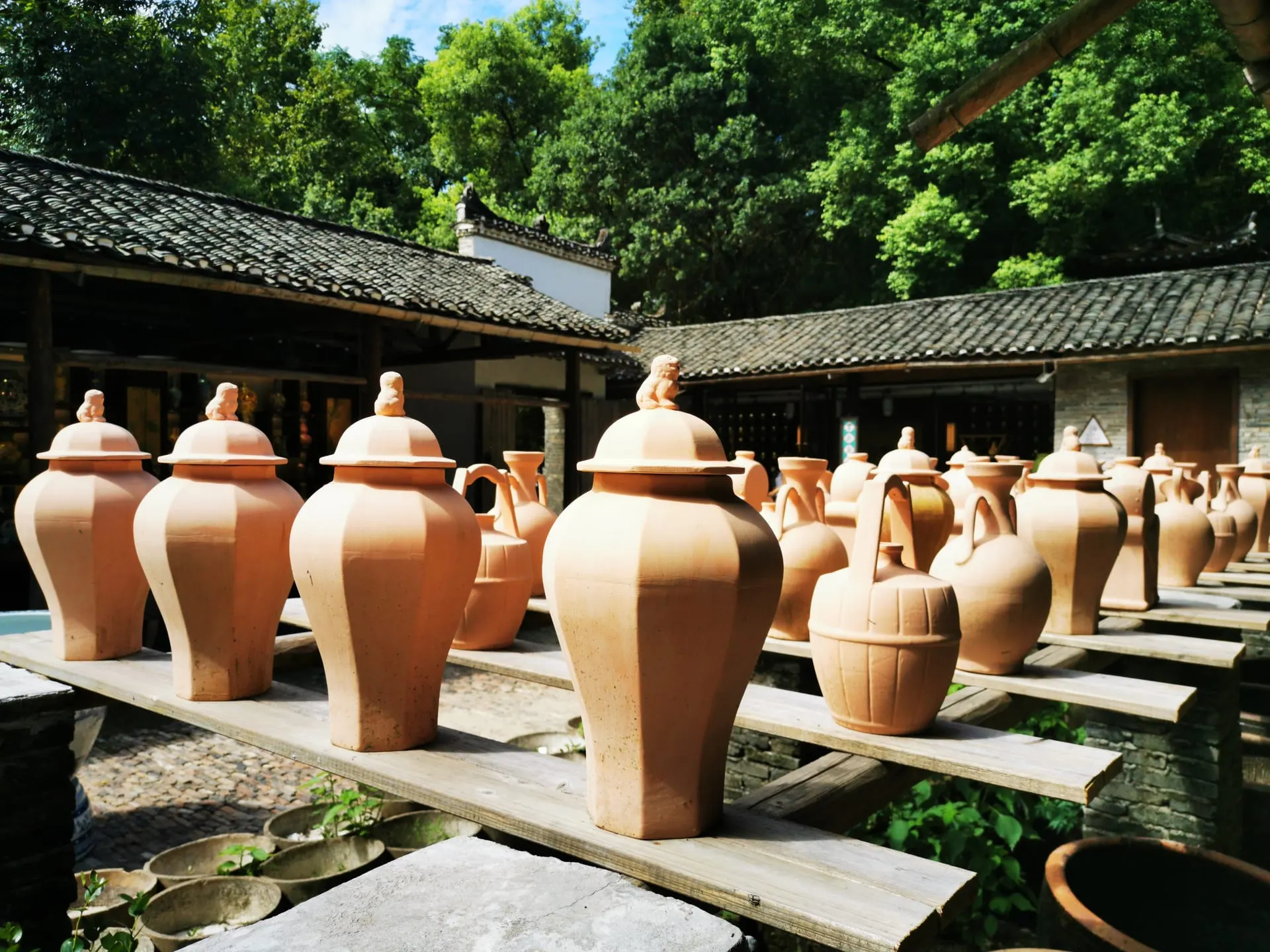
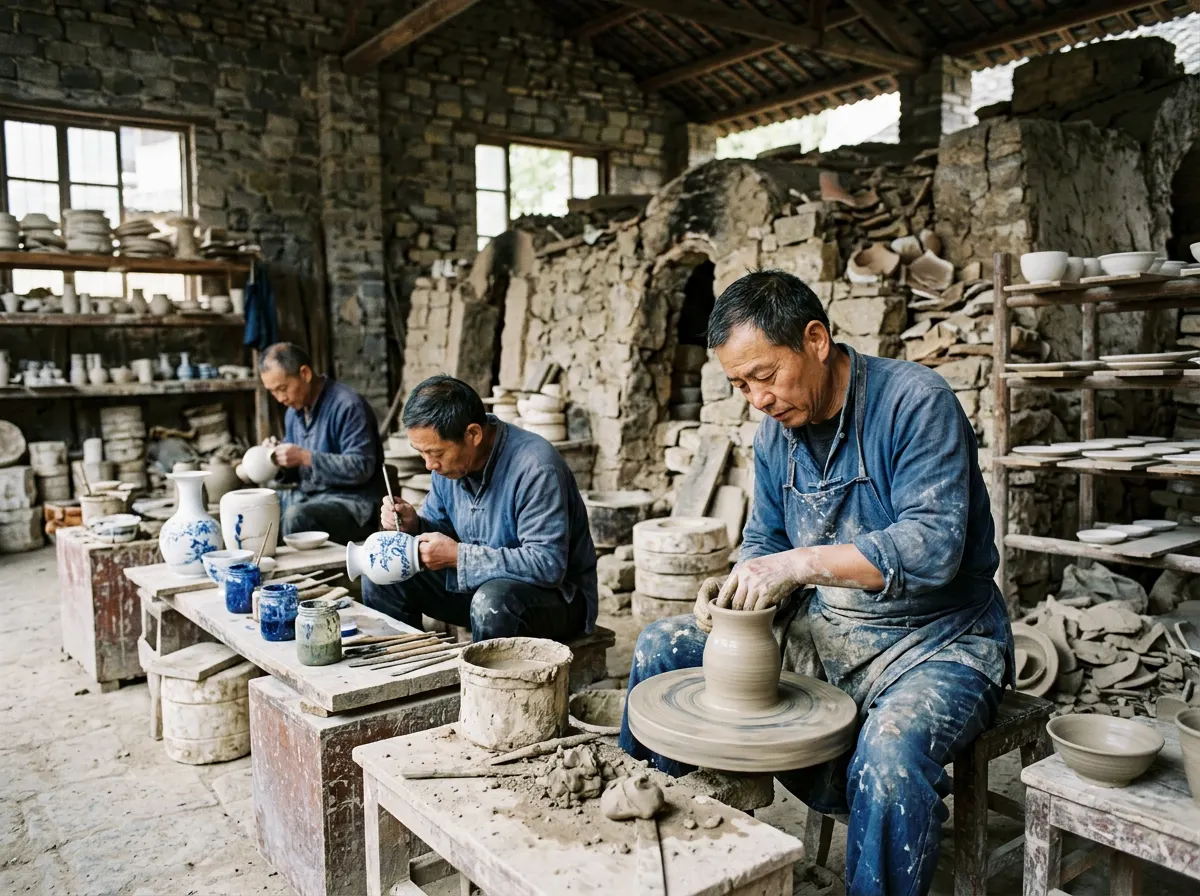
Ancient Kiln Folk Customs Museum (古窑民俗博览区, Gǔyáo Mínsú Bólǎnqū)
A living museum where master craftsmen demonstrate every stage of traditional porcelain-making — clay preparation, throwing, trimming, underglaze painting, glazing, and wood-firing — in reconstructed Ming and Qing workshop buildings. The highlight is the wood-fired dragon kiln (龙窑, lóngyáo) and the gourd-shaped kiln (葫芦窑, húlu yáo), still fired for demonstrations. The master potters here are genuine artists, many with 40+ years of experience. ¥95.
Wikimedia Commons · CC-BY-SA
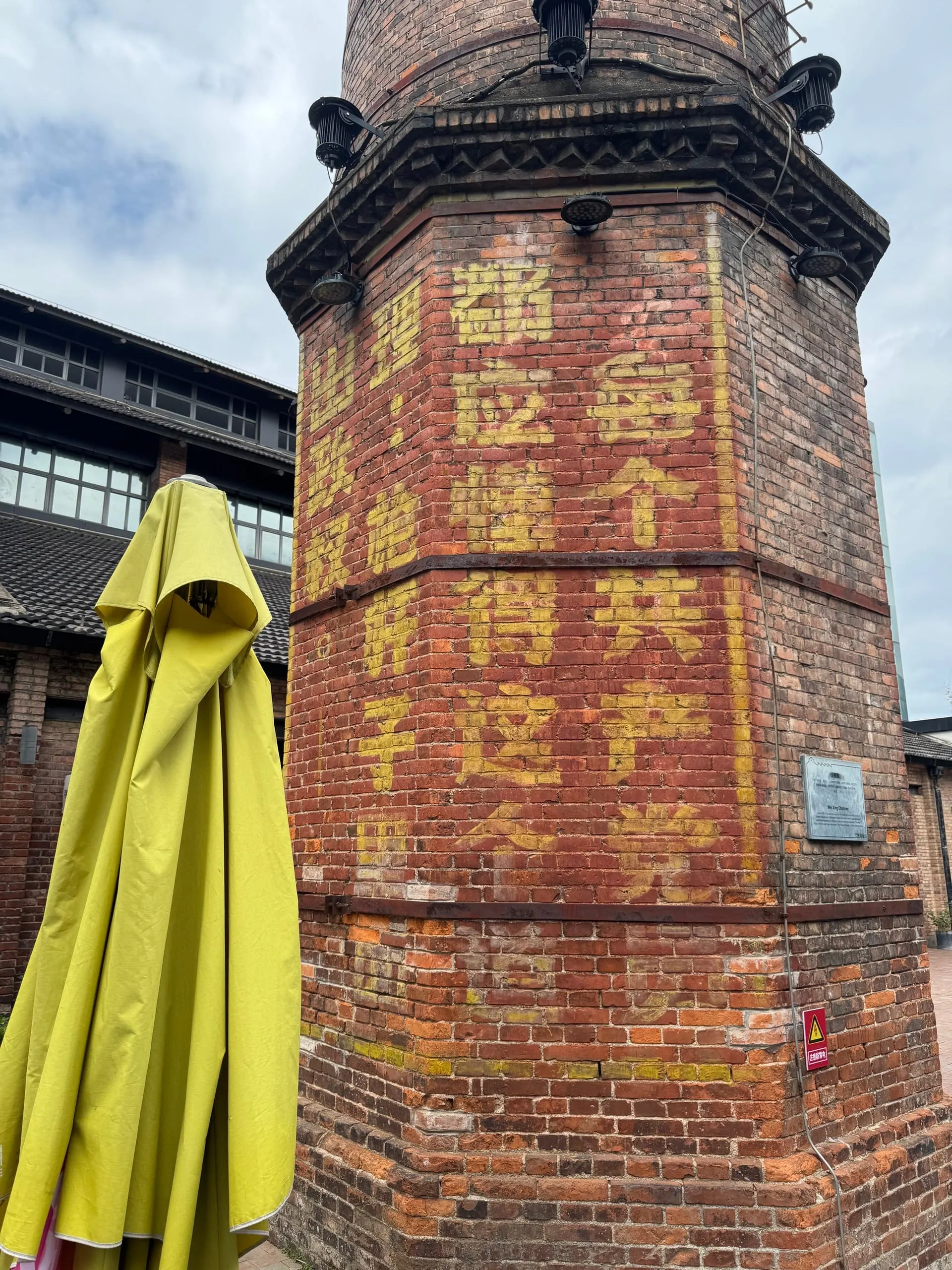
Taoxichuan Art Center (陶溪川文创街区, Táoxīchuān Wénchuàng Jiēqū)
A former state-owned ceramic machinery factory (the Yuzhou Porcelain Factory, built 1958) transformed into Jingdezhen's creative hub: galleries, artist studios, ceramic shops, cafes, craft beer bars, and a weekend creative market. The red-brick factory buildings with sawtooth roofs have been beautifully preserved. Free entry; individual galleries and workshops charge separately. The Saturday creative market (周六创意集市) is the best time to visit.
Wikimedia Commons · CC-BY-SA
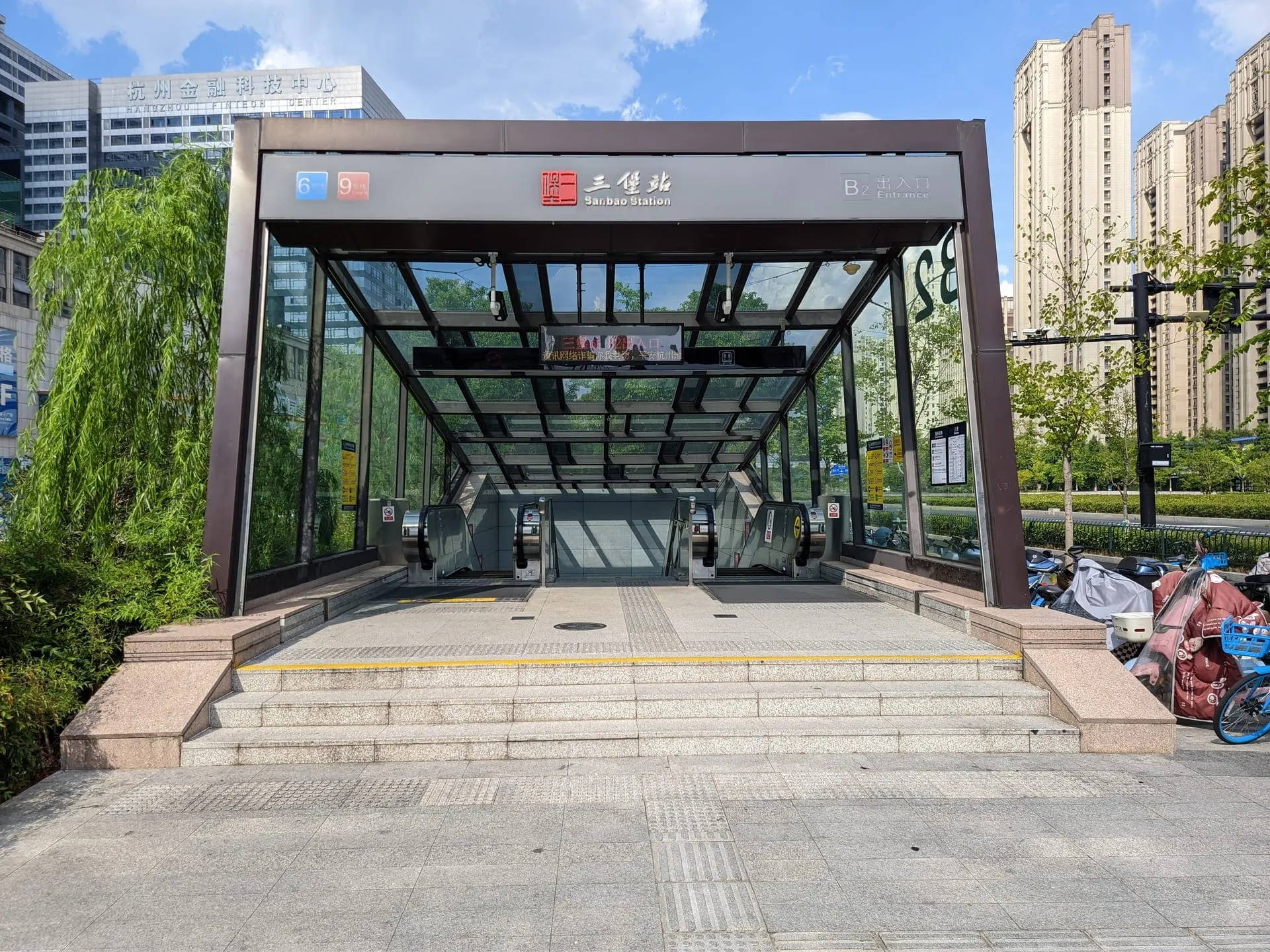
Sanbao International Ceramics Village (三宝国际陶艺村, Sānbǎo Guójì Táoyì Cūn)
A scenic valley about 10 km southeast of the city center, home to dozens of artist studios, kilns, and galleries set among bamboo groves and tea terraces. Founded in the 1990s by ceramic artist Jackson Li as an international residency program, Sanbao now hosts artists from around the world. The architecture mixes traditional Jiangxi farmhouses with contemporary studio spaces. Free to walk around; individual studio visits by invitation or arrangement. The Sanbao Ceramic Art Institute offers multi-day workshops.
Wikimedia Commons · CC-BY-SA
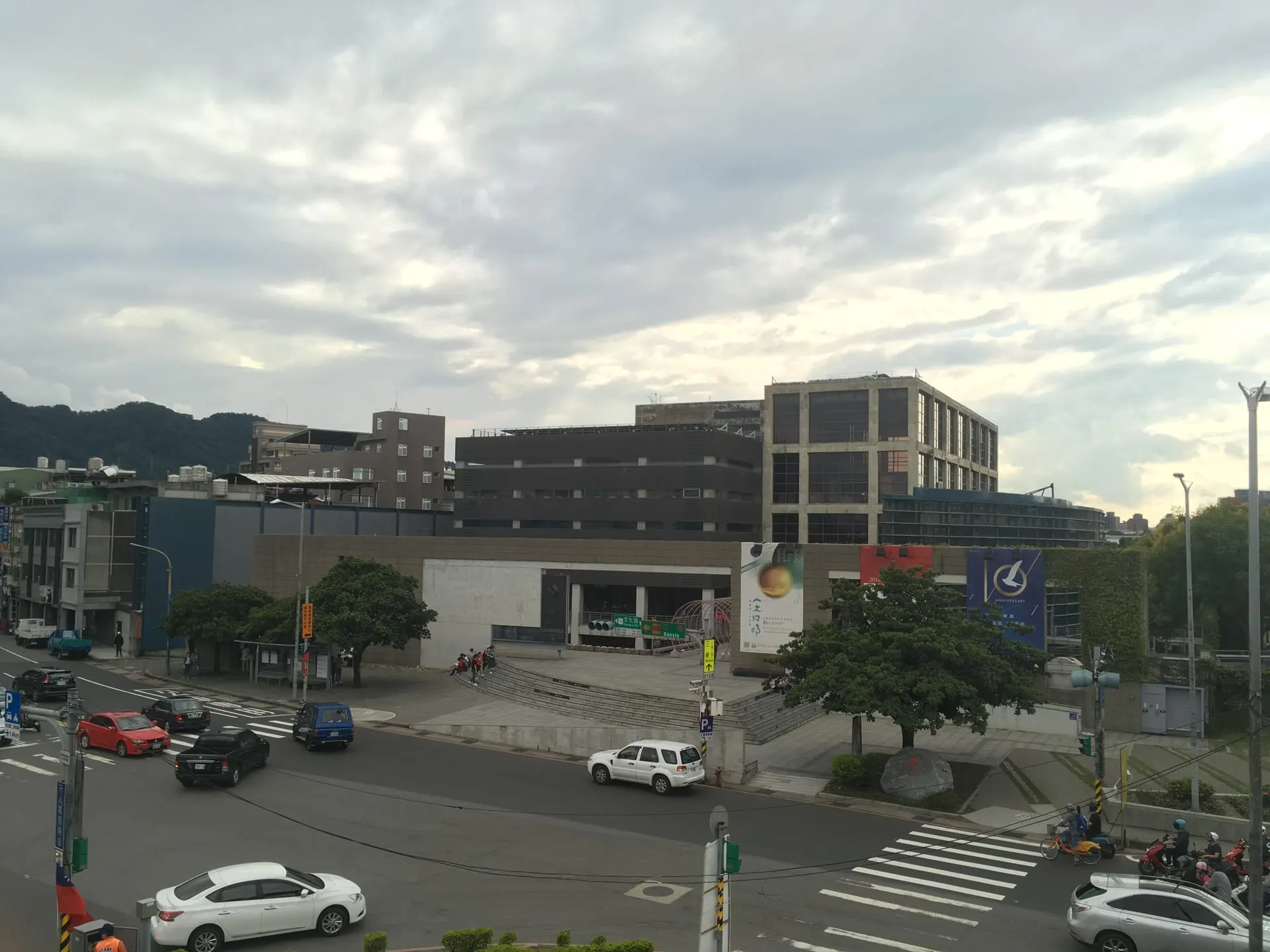
China Ceramics Museum (中国陶瓷博物馆, Zhōngguó Táocí Bówùguǎn)
China's largest ceramics museum, with over 30,000 pieces spanning 2,000 years of Chinese ceramic history. The collection traces the full evolution of Jingdezhen porcelain — celadon (青瓷, qīngcí), qingbai ware (青白瓷), blue-and-white (青花, qīnghuā), copper-red (釉里红, yòulǐhóng), famille rose (粉彩, fěncǎi) — with masterpieces from every dynasty. Modern Jingdezhen artists are also well-represented. Free entry; allow 2-3 hours.
Wikimedia Commons · CC-BY-SA
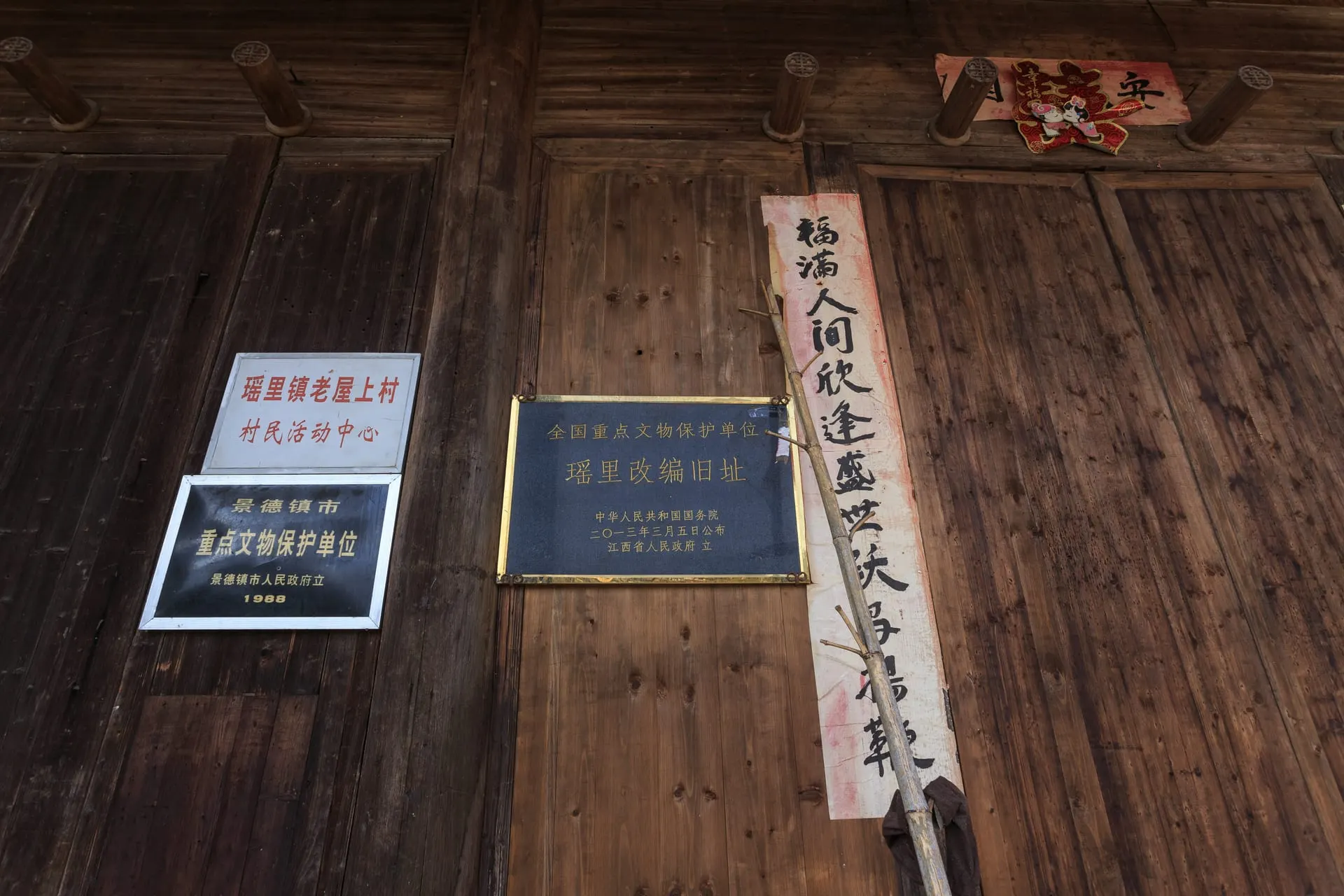
Yaoli Ancient Town (瑶里古镇, Yáolǐ Gǔzhèn)
A well-preserved ancient town about 50 km northeast of Jingdezhen, dating to the Western Han dynasty (206 BCE). Yaoli was historically important as a source of kaolin clay (高岭土, gāolǐngtǔ) — the essential ingredient in true porcelain — and the surrounding hills were mined for centuries. The town has Ming and Qing houses, stone-paved lanes, a covered bridge, and a beautiful river setting. Less commercialized than Fenghuang or Wuzhen. ¥80 for the town and surrounding scenic area. A full-day trip from Jingdezhen (1 hour by bus or taxi).
Wikimedia Commons · CC-BY-SA
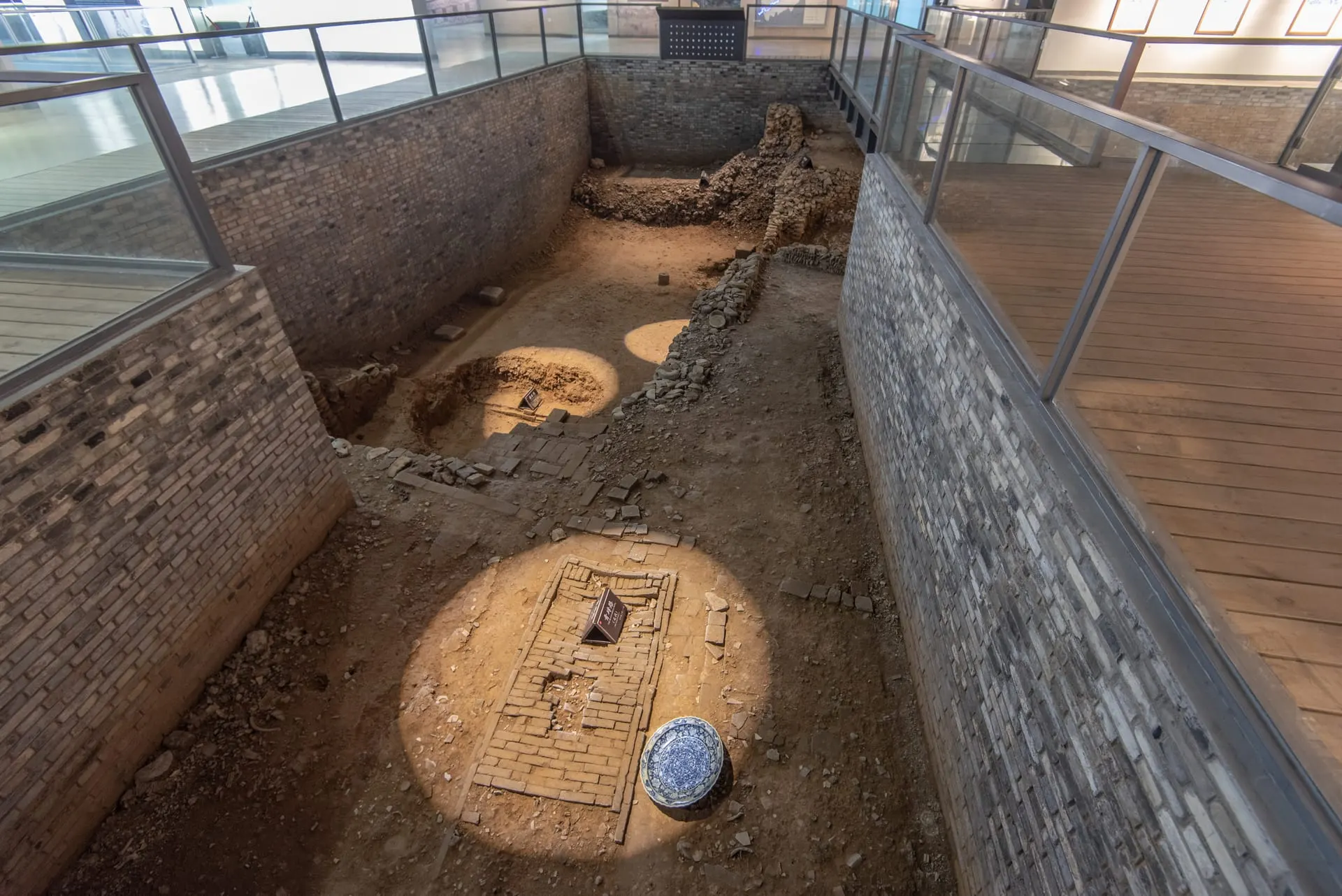
Hutian Ancient Kiln Site (湖田古窑址, Hútián Gǔyáo Zhǐ)
The excavated ruins of a Song and Yuan dynasty kiln complex that operated from the 10th to 14th centuries. Hutian was one of Jingdezhen's most important early production centers, famous for its qingbai (bluish-white) porcelain. The site includes kiln foundations, workshop floors, and piles of excavated shards that illustrate the evolution of Jingdezhen techniques. A smaller, quieter alternative to the Ancient Kiln Museum for those interested in the archaeology. ¥30. About 4 km southeast of the city center.
Wikimedia Commons · CC-BY-SA
STAY
Where to stay in Jingdezhen
Pick a base that matches the trip you want — imperial-central for sightseeing, hutong belt for character, Chaoyang for nightlife, or Qianmen for budget.
Taoxichuan / City Center
The creative hub in a converted 1950s ceramic factory — galleries, studios, shops, cafes, bars, and the Saturday Creative Market
#taoxichuanOld Town / Imperial Kiln Area
Historic lanes, the Imperial Kiln Museum, small guesthouses, and traditional ceramic supply shops
#old-townSanbao Ceramics Valley
A scenic valley 10 km southeast with international artist studios, bamboo groves, tea terraces, and the Ceramic Art Institute
#sanbaoCeramic Institute / East City
The area around Jingdezhen Ceramic University with student studios, cheap restaurants, the China Ceramics Museum, and the Hutian kiln site
#ceramic-instituteYaoli Ancient Town
A well-preserved Ming-Qing town 50 km northeast — stone lanes, covered bridges, kaolin mining heritage, and mountain scenery
#yaoli
ITINERARIES
Sample itineraries from Jingdezhen
Three ready-made routes, from a 1-day imperial sprint to a 5-day deep dive. Copy the day-by-day plan and adapt to your own pace.
- 1 DAY
One-Day Jingdezhen Essentials
A packed day covering the Imperial Kiln Museum, the Ancient Kiln Folk Customs Museum with a pottery class, and Taoxichuan. Best on a Saturday for the creative market.
- Transit visitors
- Weekend trips from Shanghai/Hangzhou/Nanchang
- Tight schedules
- Day 01
Morning
Start at the Imperial Kiln Museum at 09:00 (¥60, 2 hours). The morning light through the vaulted brick architecture is beautiful. Then taxi to the Ancient Kiln Folk Customs Museum (arrive by 11:30). Watch the master demonstrations — throwing, painting, glazing — and try the 1-hour pottery wheel experience (¥100).
Afternoon
Lunch near the museum. Afternoon: Taoxichuan Art Center (2-3 hours). If Saturday, the Creative Market (opens 14:00) is the highlight — browse young artists' stalls, buy ceramics, enjoy the atmosphere. If a weekday, explore the permanent galleries and ceramic shops.
Evening
Dinner at one of Taoxichuan's converted-factory restaurants. Craft beer at a bar in the complex. One more gallery walk after dark — the red-brick factory buildings are beautifully lit.
- 2 DAYS
Two-Day Jingdezhen Immersion (Recommended)
The ideal Jingdezhen visit: museums, pottery-making, Sanbao Ceramics Village, and the Saturday market if timing aligns. This covers the essential craft, history, and contemporary art dimensions.
- First-time visitors
- Art and craft enthusiasts
- Weekend trips
- Culture seekers
- Day 01
Morning
Imperial Kiln Museum (09:00-11:00, ¥60). Then DiDi to the Ancient Kiln Folk Customs Museum (11:30-14:00, ¥95) — watch the master demonstrations and try the pottery wheel experience (¥100 for 1 hour).
Afternoon
Late lunch. Afternoon: China Ceramics Museum (free, 15:00-17:00) for the full sweep of Chinese ceramic history. 30,000+ pieces, excellent English labels, and a calm, air-conditioned space.
Evening
Dinner near Renmin Square for authentic Jiangxi food — order porcelain chicken (瓷泥煨鸡, pre-order if possible). Walk through the city center. If it's a Saturday evening, Taoxichuan for the creative market and bar scene.
- Day 02
Morning
If it's a Saturday and you missed the market on Day 1, start at Taoxichuan. Otherwise: pottery class at a Taoxichuan studio (¥128 for 1.5 hours, book the day before) — this is the hands-on experience that makes Jingdezhen special. Then shop the Taoxichuan ceramic galleries for tea ware and small pieces.
Afternoon
Lunch of Jingdezhen cold rice noodles (景德镇凉粉). Afternoon: DiDi to Sanbao Ceramics Village (30 min, ¥30-50). Walk the valley — visit open studios, see artists at work, photograph the bamboo groves and tea terraces. Visit the Sanbao Ceramic Art Institute gallery. Tea at a valley tea house.
Evening
Return to the city. Dinner at a family-run restaurant on the Ceramic Institute food street — cheap, authentic, and full of student energy. Buy a few last ceramic pieces. Depart or stay a second night.
- 3 DAYS
Three-Day Jingdezhen Deep Dive with Yaoli
Three days adds the historic mining town of Yaoli, a more relaxed pottery class, or deeper exploration of Sanbao. Perfect for those who want to fully absorb the ceramic culture.
- Slow travelers
- Ceramics enthusiasts
- History buffs
- Photographers
- Day 01
Morning
Imperial Kiln Museum (09:00-11:00). DiDi to Ancient Kiln Folk Customs Museum (11:30-14:00) for master demonstrations and pottery wheel experience.
Afternoon
Lunch. China Ceramics Museum (15:00-17:00) for the historical collection. Late afternoon: browse the ceramic supply streets — Lianshe North Road — for the working-potter side of Jingdezhen.
Evening
Taoxichuan for dinner and evening gallery walk. If Saturday, the Creative Market.
- Day 02
Morning
Pottery class at Taoxichuan or Sanbao (book ahead). Then Taoxichuan gallery shopping — buy tea ware, small vases, studio pieces.
Afternoon
DiDi to Sanbao Ceramics Village (30 min). Walk the valley, visit studios, tea at a bamboo-grove tea house. If interested, arrange a longer studio visit or artist conversation (through your guesthouse).
Evening
Dinner near the Ceramic Institute — student restaurants, cheap and authentic. Night market snacks (cold rice noodles, yanshui ba).
- Day 03
Morning
Full-day excursion to Yaoli Ancient Town (1 hour by DiDi, ¥80 entry). Walk the Ming-Qing stone lanes, cross the covered bridge, visit the kaolin mining museum. Lunch in Yaoli: mountain vegetables, river fish, cured ham.
Afternoon
Explore the Yaoli scenic area — the surrounding hills have hiking trails, waterfalls, and former kaolin mining sites. Return to Jingdezhen by late afternoon.
Evening
Final evening in Jingdezhen. One more walk through Taoxichuan, one more gallery, one more cold beer. Pack your ceramics carefully for travel.
BUDGET
What a Jingdezhen trip costs
Per-person, per-day costs across three spending tiers. Excludes international flights and visa fees.
| Line item | Backpacker | Mid-range | Luxury |
|---|---|---|---|
| Accommodation (per night) | $8 | $40 | $120 |
| Museum tickets (Imperial Kiln + Ancient Kiln) | $22 | $22 | $22 |
| Pottery class (1.5 hours) | $18 | $18 | $35 |
| Meals (per day) | $10 | $25 | $60 |
| Local transport (DiDi/taxi, per day) | $5 | $12 | $25 |
| Yaoli day trip (transport + entry) | $25 | $45 | $80 |
| Ceramics shopping (small pieces) | $10 | $40 | $150 |
| Shipping pottery home (international) | $15 | $25 | $30 |
| Total per day | $113 | $227 | $522 |
$ USD per person per day, before international flights and visas. Last verified: Q3 2026.
STAY SAFE
Emergency contacts in Jingdezhen
Save these three numbers before you board the plane. China uses different hotlines than most countries — there's no 911.
- POLICE
110
- AMBULANCE
120
- FIRE
119
- TOURIST HOTLINE
12301 (China National Tourism Administration hotline)
- ENGLISH-SPEAKING ER
Jingdezhen People's Hospital (景德镇市人民医院) — basic emergency services only. For serious conditions, transfer to Nanchang (1h by HSR) or Shanghai is essential.
Problems travelers hit in Jingdezhen
- Why is my Alipay not working?You linked a foreign Visa or Mastercard to Alipay but every transaction is rejected at the merchant.
- My China visa was denied — what now?Your L visa application was refused at the Chinese consulate and your trip is in 2–4 weeks.
- My passport was lost or stolen in China — what do I do?Your passport is gone (theft or loss) and you're in mainland China without travel documents.
- Why can't I book on 12306 with my foreign card?You tried to book a high-speed rail ticket on 12306.cn and your foreign Visa/Mastercard is rejected at checkout.
- Why is my VPN not working in China?You arrived in China, opened your VPN, and it will not connect at all or connects but no traffic loads.
- Why can't I book a Tibet trip on my own?You try to book Lhasa flights and hotels yourself but the booking fails, or you're turned away at the Lhasa airport without a permit.
Book activities in Jingdezhen
These are licensed tour operators and booking platforms we've vetted independently. Booking through these links may earn us a commission — see our affiliate disclosure. This never affects our editorial recommendations or the price you pay.
Frequently asked questions
Is Jingdezhen worth visiting if I have no interest in pottery?
How much does a pottery class cost in Jingdezhen?
Can I take my pottery home the same day?
What is the difference between the Imperial Kiln Museum and the Ancient Kiln Folk Customs Museum?
How do I get to Sanbao Ceramics Village?
Is Jingdezhen's ceramics market better on Saturdays?
Show all 20 FAQs
Can I visit the original kaolin clay mines?
What is the best souvenir to buy in Jingdezhen?
How does Jingdezhen compare to other craft cities like Yixing?
Is Jingdezhen family-friendly?
Can I combine Jingdezhen with Huangshan or Wuyuan?
How do I recognize genuine handmade Jingdezhen porcelain?
What English-language resources exist about Jingdezhen ceramics?
Is Jingdezhen safe for solo travelers?
Do I need to book museum tickets in advance?
What is a dragon kiln and can I see one being fired?
Is Jingdezhen worth visiting in winter?
What is the Sanbao Ceramic Art Institute and how do I take a workshop there?
Can I visit Jingdezhen on a day trip from Huangshan?
What is the difference between porcelain and pottery?
References

Related guides & destinations
Guide
How We Research 2026: NihaoVisit’s Methodology for China Travel Information
How NihaoVisit sources, verifies, and maintains 700+ pages of China travel information — our source hierarchy, fact-checking process, update
Guide
Fact-Checking Log 2026: Verified China Travel Information — NihaoVisit
A public log of fact-checking verification passes on NihaoVisit, showing what was verified, when, and against which sources — covering visa
Guide
Best Time to Visit China 2026: Month-by-Month Weather, Crowds, and Prices
The best time to visit most of China is April–May and September–October. Winter (Dec–Feb) is cold but cheap; summer (Jun–Aug) is hot and cro
Guide
VPN for China 2026: Which VPNs Work, eSIM Alternatives, and the Complete Pre-Trip Checklist
Most Western apps and websites are blocked in mainland China. A reliable VPN is essential for Google, Gmail, WhatsApp, Instagram, and most n
Guide
China SIM Card and eSIM Guide 2026: Stay Connected Without WeChat
A Chinese SIM or eSIM lets you use mobile data, maps, and ride-hailing without WiFi. Here is how to get one, the cost, and which provider to
Guide
Solo Female Travel in China 2026: Safety, Tips, and Real Experiences
China is one of the safer destinations for solo female travelers. Petty theft is rare, violent crime against tourists is extremely uncommon,