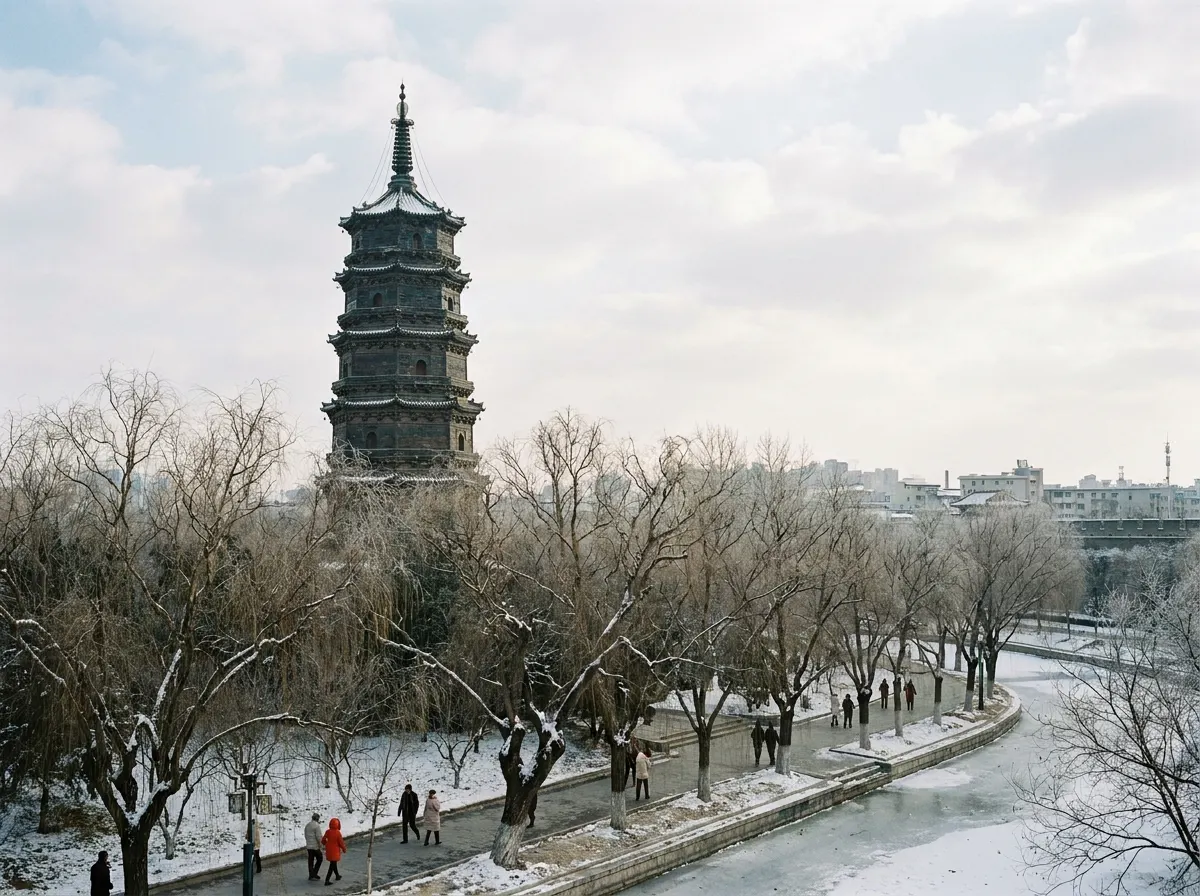
Kaifeng
Kaifeng was the capital of the Northern Song dynasty (960-1127 AD) and one of the world's largest cities of its time, with a population of over 1 million. The Millennium City Park (清明上河园) is a Song-dynasty theme park built around the famous Qingming Shanghe Tu painting, with live performances, traditional architecture, and interactive workshops. Kaifeng's night market (鼓楼夜市) has been running for 1,000+ years. Plan 1-2 days. Easy high-speed rail from Zhengzhou (20 minutes) or Xi'an (3 hours).
Why Kaifeng in 2026.
Capital of the Song dynasty. The Millennium City Park recreates Song-era China, with night markets that have run for 1,000+ years.
Quick Answer
Kaifeng was the capital of the Northern Song dynasty (960-1127 AD) and one of the world's largest cities of its time, with a population of over 1 million. The Millennium City Park (清明上河园) is a Song-dynasty theme park built around the famous Qingming Shanghe Tu painting, with live performances, traditional architecture, and interactive workshops. Kaifeng's night market (鼓楼夜市) has been running for 1,000+ years. Plan 1-2 days. Easy high-speed rail from Zhengzhou (20 minutes) or Xi'an (3 hours).
| Best time to visit | April-May and September-October; lantern festival in February is special |
|---|---|
| Daily budget | $40 (backpacker) / $90 (mid-range) / $220+ (luxury) |
| Language | Mandarin (Henan dialect; English limited outside hotels) |
| Currency | CNY (¥) — Alipay/WeChat Pay in most shops |
| Time zone | China Standard Time (UTC+8) |
| Last updated | 2026-06-16 |
Want a Kaifeng plan built for you?
What is the Millennium City Park?
Millennium City Park (清明上河园) is a 600-acre Song-dynasty theme park built around the famous Qingming Shanghe Tu scroll (1080 AD, often called "China's Mona Lisa"). The park has 50+ live performances daily, including Song-era street vendors, imperial guards, traditional archery, and water puppet shows. Entry costs roughly ¥120 (about $17, re-check before booking). Plan 4-5 hours to see most shows. The park is busy but well-organized. The Rainbow Bridge (虹桥) offers the best photo spot and matches the painting's most famous scene.
Is Kaifeng worth a day trip from Zhengzhou?
Kaifeng ranks among the best day trips from Zhengzhou, the Henan provincial capital. High-speed rail covers the route in 20-30 minutes, with 50+ daily trains priced roughly ¥18-30 (about $2.50-4). The Millennium City Park anchors most visits; pair it with the Iron Pagoda and the Gulou Night Market for a full day. To go deeper, stay 1-2 nights and add the Dragon Pavilion and Xiangguo Temple. The route is easy and rewards travelers who want Song-dynasty history without the Xi'an crowds.
What is the best Kaifeng food?
Kaifeng is famous for its soup dumplings (灌汤包, guantang bao) and a night market tradition that has run for over 1,000 years. Must-try items include First Floor Soup Dumplings (第一楼灌汤包, founded 1922 and the most famous brand), the city's signature peanut cake (花生糕), mutton soup (羊肉汤), grilled night market kebabs, and twisted fried dough (麻花). The Gulou Night Market (鼓楼夜市) holds 700+ stalls and stays open until 11 PM. Prices run ¥5-30 per dish, and cash is handy for small vendors.
How do I get from Xi'an to Kaifeng?
High-speed rail from Xi'an North to Kaifeng North takes about 2.5 hours with 20+ daily trains at about ¥250-300, with 20+ daily trains at about ¥250-300 ($35-42). From Beijing the trip is about 3 hours on a G-train, and from Shanghai around 4 hours. From Luoyang the run is about 1 hour. Most long-distance services route through Zhengzhou, which sits 20 minutes from Kaifeng by high-speed rail. Buy tickets a few days ahead during holidays and Golden Week, when services sell out.
Is Kaifeng family-friendly?
Kaifeng works very well for families. The Millennium City Park runs interactive workshops (calligraphy, paper cutting, traditional toys) and 50+ daily performances that engage children of all ages. The night market is a consistent kid favorite, with manageable crowds and cheap snacks. The Iron Pagoda and Dragon Pavilion add educational stops. Kaifeng is much smaller and less crowded than Zhengzhou or Beijing, which makes it easier to navigate with kids and limits walking fatigue.
When is the best time to visit Kaifeng?
April-May and September-October offer the most comfortable weather, with mild temperatures and lower humidity. The Lantern Festival in February (dates vary with the lunar calendar) is special, with elaborate displays across the city and a lively night market atmosphere. Summer (June-August) gets hot and humid, while winter (December-February) is cold but uncrowded. Avoid Golden Week (early October) and the Spring Festival travel rush, when domestic tourists flood the city.
Why was Kaifeng so important in Chinese history?
Kaifeng served as the capital of the Northern Song dynasty (960-1127 AD) and was one of the largest cities in the world during the 11th century, with a population exceeding one million. It was a center of commerce, printing, ceramics, and government, and hosted a famous Jewish community that settled there along the Silk Road. The city fell to the Jurchen Jin in 1127 and later suffered Yellow River floods that buried earlier layers. Today, Kaifeng preserves its Song-era identity through cultural parks, food traditions, and reconstructed architecture.
Can I combine Kaifeng with Luoyang and Zhengzhou?
A 3-4 day Henan loop covering Zhengzhou, Kaifeng, and Luoyang is a popular alternative to a Xi'an-only trip. Kaifeng and Luoyang sit about 1 hour apart by high-speed rail and complement each other as former Song and Tang dynasty capitals. Start in Zhengzhou (a major hub), spend a day in Kaifeng for the Song-era sites and night market, then move to Luoyang for the Longmen Grottoes and the White Horse Temple. The loop is well-connected by rail and easy to book on short notice.
How much does a Kaifeng trip cost?
Kaifeng is one of the most affordable ancient-capital destinations in China. Mid-range travelers can manage on roughly $60-90 per day, including a decent hotel, three meals, and entry tickets. Backpackers can get by on $30-45 per day using hostels, street food, and free attractions. Luxury travelers should budget around $180-250 per day for top-tier hotels, private guides, and dinner banquets. Entry tickets for the major sites total about ¥255 (around $35), and high-speed rail from Zhengzhou costs roughly $3 each way.
Was Kaifeng really the largest city in the world during the Northern Song?
Yes, Kaifeng was the largest city in the world between roughly 960 and 1127 AD during the Northern Song dynasty, with an estimated population of 600,000 to one million. Contemporary Arab, Persian, and European travelers described it as larger and richer than any Western or Middle Eastern capital of the era. The city sat on the Grand Canal and the Yellow River, making it the natural hub for shipping grain, silk, porcelain, and printed books across the empire. By the 11th century Kaifeng had wards dedicated to bookstores, restaurants, and entertainment, a fire brigade, public toilets, and even the world's first government-issued paper currency (jiaozi). Modern historians such as Robert Hartwell and Jacques Gernet have confirmed the population estimates using tax registers, imperial census data, and Song-era gazetteers. The scale, density, and commercial sophistication of Song Kaifeng outpaced every contemporary city and shaped how later Chinese capitals were planned.
What happened to the Jewish community that lived in Kaifeng?
A small but durable Jewish community settled in Kaifeng along the Silk Road, likely during the late Tang or early Song dynasty, and survived for roughly 800 years before largely assimilating in the 19th century. The community built a synagogue (Qingzhen Si) in the 12th century on a lane in the old city, and a famous iron-blue stele dated 1489 AD records the names of Jewish ancestors, the Torah, and Confucian filial piety side by side. The synagogue was destroyed by Yellow River floods in 1642 and again in 1851, and the last known rabbi died in the early 1800s. About 200 to 500 descendants still identify as Jewish and live in Kaifeng today, with some holding Israeli passports and observing Hanukkah and Rosh Hashanah at the memorial hall. Visitors can see the synagogue ruins on a quiet side street, view the 1489 stele at the Kaifeng Museum, and walk a small heritage trail that explains the synagogue, the kosher butchery, the women's scripture hall, and the cemetery locations outside the old walls.
Why is the Iron Pagoda made of brick and not iron?
The Iron Pagoda (铁塔) is built entirely of specially fired glazed bricks, not metal, and earned its name from the dark brown and iron-blue glaze that resembles cast iron in late-afternoon light. Construction began in 1049 AD under Emperor Renzong of the Northern Song, and the pagoda rises 56 meters across 13 stories on the outskirts of the old Song imperial precinct. The bricks interlock with mortise-and-tenon joints rather than mortar, which is why the structure survived 17 major earthquakes, the Mongol siege of 1234, Japanese shelling in 1938, and centuries of Yellow River flooding. The pagoda leans less than half a degree from true vertical, which makes it one of the most stable medieval towers in Asia. Inside, a tight spiral staircase climbs to upper viewing platforms, and the surrounding park contains a Buddhist brick-carving gallery displaying dozens of Song-era relief tiles excavated from the foundation. The Iron Pagoda is Kaifeng's tallest historic structure and the city's most well-known single landmark.
What is the Kaifeng water banquet?
The Kaifeng water banquet (开封水席) is a traditional 24-dish dinner that traces its roots to imperial court cuisine of the Northern Song dynasty and is still served across the old city in family-run restaurants. Every course, from the cold starters to the final sweet soup, uses soup, stock, or broth as the primary cooking medium, which is why the meal is called a "water" banquet. The 24 dishes are served in two waves: cold appetizers and hot main courses, all eaten with flatbread to soak up the broth. Signature plates include carp in sweet-and-sour sauce, shredded tofu in broth, stuffed glutinous rice balls, braised mushrooms, and a closing almond-flavored dessert. The most famous historic restaurant is the First Floor (第一楼) chain, and a full banquet for two runs roughly ¥150-260 depending on portion size. Order the meal a day ahead, and allow 2-3 hours, because the kitchen sends dishes slowly to let diners linger and chat.
Why is Gulou Night Market famous in Kaifeng?
Gulou Night Market (鼓楼夜市) is the oldest continuously operating night market in China, with a documented history of more than 1,000 years reaching back to the Northern Song capital. The market surrounds the rebuilt Drum Tower at the center of the old city and fills surrounding lanes after sunset with 700 to 1,000 food and craft stalls. Signature items include First Floor soup dumplings, Huang family almond tea, deep-fried sugar cakes, mutton skewers, sesame seed paste noodles, fried tofu puffs stuffed with chili, and the city's famous peanut cake. Stalls are organized by dish type, with separate zones for kebabs, dumplings, sweets, fried snacks, and drinks, and most vendors are descendants of Song-era trades. Prices run ¥5-30 per plate, mobile payment is widely accepted, and the market stays open until about 11 PM most nights. The market is a free, walkable cultural experience and remains Kaifeng's single most essential evening activity.
Can I walk the old city wall in Kaifeng?
Yes, Kaifeng has a fully restored 14-kilometer Ming-Qing city wall that circles the old city and is open to pedestrians and cyclists for a small entry fee of roughly ¥50. The wall is 8 to 12 meters tall and 6 to 10 meters wide at the top, with restored gate towers at Daliangmen, Songmen, Beimen, and Xiaonanmen. The full loop takes 4 to 5 hours on foot, 2 hours by rented tandem bike, and 1 hour by golf-cart tour. From the ramparts you can see the Song-era Drum Tower, the modern skyline, the Iron Pagoda in the distance, and the patchwork of lakes and ponds that mark old Yellow River channels. The wall looks its best at sunset, when the Song gate towers glow orange and the night market fires up below. Wall entry is included in some city attraction passes, and bikes rent for ¥40-60 per hour near Daliangmen.
Is the Henan Museum worth a day trip from Kaifeng?
The Henan Museum in Zhengzhou, about 30 minutes by high-speed rail from Kaifeng North Station, is one of China's best regional museums and a popular day trip. The museum holds more than 170,000 artifacts across eight exhibition halls, with standout pieces including the Jiahu bone flute (around 7,000 BC), the Fu Hao owl-shaped bronze zun, Tang sancai tomb figures, Song-dynasty Ru and Jun porcelain, and the white-glazed lotus vase from the Liao dynasty. The Song porcelain galleries are especially relevant for Kaifeng visitors, since many of the pieces were made for the Northern Song court. The museum is free with a reservation booked through the official WeChat mini-program, and an English audio guide rents for ¥20. Plan 3-4 hours to see the main halls, and combine the visit with lunch in the nearby Zhengdong CBD for a relaxed half-day break from the Kaifeng tourist trail.
What are the three Kaifeng dishes I should not miss?
Kaifeng has three must-try dishes: soup dumplings (guantang bao), the city's signature with scalding-hot broth; bucket-braised chicken (tongzi ji); and carp baked on fried noodles (liyu bei mian), the city's most famous banquet dish. Second, bucket chicken (桶子鸡) is a cold poached chicken marinated in a five-spice master broth, pressed under weights in a wooden bucket for a day, and sliced thin; the Huang family recipe is the historic standard and pairs with sesame seed noodles. Third, almond tea (杏仁茶) is a hot, sweet, almond-flavored pudding served in small bowls at night market stalls and the old Drum Tower teahouses, and it doubles as a digestif after a heavy banquet. All three dishes together cost under ¥80 and are the clearest edible shortcut to the Northern Song court kitchen.
How did the Yellow River shape Kaifeng's history?
The Yellow River has flooded Kaifeng more than 300 times in recorded history, and the modern city sits on top of six overlapping ancient urban layers buried under silt from earlier flood events. The most catastrophic flood occurred in 1642, when Ming forces deliberately breached the dikes to drown rebel armies, killing roughly 300,000 residents and burying the old Song and Ming centers under 6-8 meters of mud. An 1855 course change moved the Yellow River north to its present channel, sparing Kaifeng from further destruction but leaving the city sitting on a perched, drained aquifer. Today, drill cores and archaeological trenches in the old city reveal Song, Jin, Yuan, Ming, and Qing strata stacked on top of one another, a vertical timeline unmatched anywhere in China. The Yellow River Embankment Scenic Area, the Iron Pagoda Park lake, and the Song-Yuan-Ming layered excavation near the Drum Tower are the easiest places to see this layered history above ground.
What is the Qingming scroll and why does it matter for Kaifeng?
Along the River During the Qingming Festival (清明上河图) is a 5-meter-long handscroll painted by Zhang Zeduan around 1080-1100 AD that depicts daily life in Song-dynasty Bianjing, the old name for Kaifeng. The scroll shows roughly 800 people, 60 animals, 30 buildings, and 20 boats in a continuous scene of the city's markets, bridges, teahouses, and canal wharves. The painting is considered one of the most important works of Chinese art and is held at the Palace Museum in Beijing, but full-size digital projections and a permanent replica are shown in the Kaifeng Museum. The Millennium City Park is built around the geography of the scroll, and the Rainbow Bridge inside the park recreates the painting's most famous scene. Visiting both the painting (in person in Beijing, or in replica in Kaifeng) and the Millennium City Park offers a direct line into how Song Kaifeng actually looked, traded, and ate 1,000 years ago.
When is the best season to visit Kaifeng?
Spring (April to May) and autumn (September to October) are the best seasons in Kaifeng, with mild temperatures, low rainfall, and the chrysanthemum festival in late autumn. Winter (December to February) is cold and dry but uncrowded, and the Lantern Festival in late January or February lights up the Drum Tower and the Iron Pagoda Park with elaborate themed displays. Summer (June to August) is hot and humid, with temperatures often above 35 C, and many outdoor performances at Millennium City Park are scaled back. Avoid the Golden Week national holidays in early May and early October, when domestic tourism peaks, hotel rates triple, and trains sell out. For photographers, October has the cleanest light, while April has the best combination of mild weather and Song-era street performances inside Millennium City Park.
How do I reach Kaifeng by high-speed rail?
Kaifeng North Station (开封北站) on the Beijing-Kowloon high-speed line has frequent trains from Zhengzhou (20 min), Luoyang (1 hr), Beijing (3 hr), Shanghai (4 hr), and Xi'an (3½ hr). A second, older station, Kaifeng Station (开封站), handles slower conventional trains and is closer to the Drum Tower, but most travelers should use Kaifeng North. Book tickets on the official 12306 app or website, or use Trip.com for an English interface, and reserve a few days ahead during Golden Week, the Spring Festival travel rush, and the Qingming holiday. Taxis from Kaifeng North to the city center cost roughly ¥30-40 and take 20 minutes; the city also has a small metro Line 1 that connects Kaifeng North to Gulou Square in about 25 minutes for ¥3.
What is the Xisi Night Market and how is it different from Gulou?
Xisi Night Market (西司夜市) is a smaller, more local market on the west side of the old city, favored by residents for its grilled skewers, buckwheat noodles, and quieter atmosphere. It is famous for its mutton soup stalls, hand-pulled noodles with sesame paste, fried sesame seed twists, and lamb-stuffed flatbreads that the Gulou market has largely lost. The market is also where to find Kaifeng's best breakfast dumplings in the early morning hours, when vendors switch from dinner dishes to steamed soup dumplings and congee. Most travelers visit Gulou first and then add Xisi on a second evening to compare the two atmospheres, since the Xisi stalls are more authentic, less English-friendly, and roughly 20 percent cheaper. Both markets are free, cash and Alipay are accepted, and Xisi is a 10-minute taxi ride west of Gulou Square.
Why did the Song dynasty build its capital at Kaifeng?
The Song dynasty founder Zhao Kuangyin (Emperor Taizu) chose Kaifeng as his capital in 960 AD because it sat at the junction of the Grand Canal and the Yellow River. The Grand Canal, completed under the Sui dynasty in the early 7th century, linked Kaifeng to Hangzhou, Suzhou, Yangzhou, and the rice-producing Yangtze region, and the city was the natural hub for collecting southern grain and shipping it north to the steppe frontier. Kaifeng also had a 200-year track record as the capital of the Later Liang, Later Jin, Later Han, and Later Zhou dynasties, which gave it functional palaces, garrisons, and an experienced bureaucracy. Northern Song Kaifeng grew to a million residents under this logistics advantage, hosted the world's first printed newspaper, paper currency, and standing navy, and remained the largest city on earth until the Jurchen Jin captured it in 1127.
Did Marco Polo really pass through Kaifeng?
Most modern historians believe Marco Polo did not personally visit Kaifeng, despite his descriptions of the city of "Quinsai" (which usually refers to Hangzhou) and "Kinsai" in The Travels. The Travels contains almost no specific details about Kaifeng, the Yellow River flood of 1127, or the Song-Jin transition that would have been central to a real visitor's account. However, Arab, Persian, and European travelers did describe Song Kaifeng in detail during the 12th and 13th centuries, including the Moroccan geographer al-Idrisi, the Jewish traveler Benjamin of Tudela, and the Flemish friar William of Rubruck, all of whom confirm the city's size and wealth. The Marco Polo legend adds romance but no historical anchor, and travelers today will find more reliable Song-era context in the Kaifeng Museum, the Henan Museum, and the modern city walls than in 13th-century Italian travel writing.
What is Xiangguo Temple famous for?
Xiangguo Temple (相国寺) is a 1,400-year-old Northern Song Buddhist temple in the heart of the old city and has been rebuilt multiple times after Yellow River floods. The temple is most famous for housing a Qing-dynasty thousand-hand, thousand-eye Guanyin (观音) statue carved from a single ginkgo log, a 5-meter-tall wooden icon that is one of the most photographed Buddhist statues in China. The temple's signature dish is the vegetarian noodle bowl (素面) served at the small monastic restaurant inside the grounds, and the original Song-era market surrounding the temple has become the Xiangguo Market, a popular antiques and snack street. Entry is ¥40, the grounds are open from 8 AM to 5 PM, and an English audio guide rents for ¥20. Allow 1.5 to 2 hours for a full visit, and combine it with a walk through the nearby Gulou Square to round out a half-day in the old city.
What is the Dragon Pavilion at Kaifeng?
Dragon Pavilion (龙亭) sits on a raised terrace above a long rectangular lake and is Kaifeng's most well-known landmark, built on the foundations of the Northern Song imperial palace. The 36-meter-tall pavilion is reached by climbing 72 stone steps and offers the most dramatic panoramic view of the lake, the old city wall, and the modern skyline. The grounds also contain a long imperial avenue lined with stone statues, an ice-cream-and-snack street, and a small museum of Qing-era artifacts. Entry is ¥55, and the lake in front of the pavilion is famous for the annual Chrysanthemum Festival in late October and early November, when the city hosts the National Chrysanthemum Exhibition and the lake is ringed with thousands of themed blooms. The site is best paired with the Iron Pagoda and the Kaifeng Museum for a slow-paced half-day in the old city.
How do I take a day trip from Kaifeng to Luoyang?
A day trip from Kaifeng to Luoyang takes about 1 hour each way on a G-class high-speed train, with more than 30 daily departures from Kaifeng North to Luoyang Longmen Station priced at ¥60-90. The signature Luoyang attraction is the Longmen Grottoes, a UNESCO World Heritage site of more than 100,000 Buddhist statues carved into limestone cliffs above the Yi River, which can be explored in 2-3 hours. Most travelers pair the Grottoes with the White Horse Temple (the first Buddhist temple in China) and a lunch of Luoyang's signature beef soup and pan-fried dumplings. Trains run from early morning until about 9 PM, so a comfortable day trip starts at 7:30 AM and returns by 8:30 PM. Book round-trip tickets in advance on the 12306 app and reserve Longmen Grottoes entry on the official site to skip the ticket line.
What is the best area to stay in Kaifeng?
The Gulou Square (鼓楼广场) area is the best base for first-time visitors, with walking access to the night market, the Drum Tower, and most Song-dynasty sights within a compact radius. Mid-range hotels in the ¥250-450 per night range cluster within a 10-minute walk of Gulou, including chains like Atour, Ji, and Hanting, as well as a few boutique Song-themed properties. Backpackers can find dorm beds for ¥60-90 in hostels near the train station, and luxury travelers should consider the New Century Grand Hotel, the Zhongzhou International Hotel, and the new Millennium City Park themed resort. Avoid staying near Kaifeng North Station unless arriving late, since the area is 20 minutes from the historic sites and lacks restaurants.
Why is the Song dynasty considered a commercial revolution?
The Northern Song dynasty is widely considered to have produced the world's first commercial revolution, and Kaifeng was the engine of that change. By 1100 AD the city hosted the world's first government-issued paper currency (jiaozi), the first standing professional fire brigade, the first bonded warehouses, the first printed newspaper (the Kaiyuan Dibao), the first urban food-delivery networks, and the first restaurants licensed to serve a la carte menus. Song merchants invented marine insurance, futures contracts, and the joint-stock partnership, and the Song state built the world's largest standing navy and a postal system that could move a letter 400 km in 24 hours. Scholars estimate the Song economy was the largest in the world in 1100 AD, accounting for roughly 30 percent of global GDP, and Kaifeng was its commercial capital. Modern visitors see echoes of that economy in the surviving food culture, the night-market tradition, and the street performers at Millennium City Park, all of which still rely on commerce that originated in the Song capital.
What are the best souvenirs from Kaifeng?
The best edible souvenirs from Kaifeng are the city's peanut cake (花生糕), sesame seed twists (麻花), fermented bean curd, and vacuum-packed bucket chicken, all of which come in gift boxes and travel well. The most popular non-edible souvenir is a Song-dynasty ceramic replica from the small workshops near the Millennium City Park, where artisans make celadon, Ru-ware-inspired, and Jun-ware items. The Drum Tower antique market near Gulou has an unpredictable mix of vintage teacups, paper cuttings, embroidered shoes, and reproduction Song paintings; bargaining is expected and you should aim for 30-50 percent of the first price. Bookstores near Henan University sell Song-dynasty history titles in both Chinese and English, and a small but growing number of stalls in the Gulou market sell reproduction Song currency, ancient-style tea cakes, and replica Qingming scroll prints. Plan to spend ¥80-200 per person on souvenirs, more if you buy celadon pottery.
Is Kaifeng walkable for tourists?
Yes, Kaifeng is one of the most walkable historic cities in China, and most of the main tourist sites sit inside a compact 4-square-kilometer rectangle of the old city. The Millennium City Park, the Drum Tower, the Gulou Night Market, the Xiangguo Temple, and the Dragon Pavilion are all reachable on foot within 15 to 25 minutes of one another, and the city has invested in pedestrian-only streets around the Gulou and the Xiangguo Market. The Iron Pagoda Park and the city wall walks are easier by bike, taxi, or short Di ride, but the historic core itself is flat, well-signed, and easy to cover in 1-2 days without public transport. Sidewalks are generally clean, traffic is moderate, and English signage is reasonable at the Millennium City Park, the city wall, and the major hotels. Allow 12,000 to 15,000 steps per day for an active sightseeing pace, and a pair of comfortable walking shoes is essential.
What is the Kaifeng Museum and what does it hold?
The Kaifeng Museum (开封博物馆) is the city's main municipal museum and sits in a modern building near the city hall on the western edge of the old city. The permanent collection covers Song-dynasty ceramics, Ming and Qing imperial artifacts, the famous 1489 Jewish stele documenting the Kaifeng Jewish community, Song-era coins, and a large-scale replica of the Qingming scroll. The museum is free with a reservation booked through the official WeChat mini-program, and an English audio guide rents for ¥20. Plan 2 hours for the main galleries and another 30 minutes for the temporary exhibitions, which often focus on Northern Song trade, Kaifeng Jewish heritage, or Yellow River archaeology. The museum is a 10-minute taxi ride from Gulou Square and pairs well with a visit to the Xiangguo Temple across the old city.
How is Kaifeng different from Luoyang for a Song vs Tang trip?
Kaifeng and Luoyang are the two ancient capitals of Henan and complement each other as former Song and Tang dynasty capitals, but they feel like very different places to visit. Kaifeng is flat, water-themed, and centered on the Grand Canal, the Drum Tower night market, and the Millennium City Park's crowd-pleasing Song performances. Luoyang is set in a hilly basin at the Longmen Grottoes, anchored by UNESCO World Heritage Buddhist cave art, the White Horse Temple, and the annual Peony Festival in April. Most travelers combine the two in a 3-4 day loop, with Kaifeng for food, markets, and Song atmosphere, and Luoyang for caves, history, and a slower temple pace. Both connect to Zhengzhou by 20-60 minute high-speed trains, and the easiest loop is Zhengzhou → Kaifeng → Luoyang → Zhengzhou, which avoids backtracking and lets you fly out of Zhengzhou Xinzheng airport at the end.
What languages are spoken in Kaifeng?
Mandarin Chinese is the universal language in Kaifeng, with the local dialect being the Zhongyuan Mandarin variant of Henan, which is closer to standard Mandarin than Cantonese or Wu. English is spoken in the major hotels, the Millennium City Park ticket office, the high-speed rail stations, and a few tourist-facing restaurants, but is rare elsewhere. Translation apps such as Google Translate, Baidu Translate, and Apple Translate (with offline Chinese downloaded) work well in restaurants and taxis, and most stall holders in the Gulou and Xisi night markets are patient with smartphone translation. Useful Mandarin phrases for Kaifeng include "灌汤包" (guantang bao, soup dumplings), "多少钱" (duoshao qian, how much), and "不要辣" (buyao la, no chili). For travelers who read Chinese characters, Kaifeng's street signs use traditional simplified characters and the public transport system is bilingual Chinese-English.
Top attractions
Iron Pagoda (铁塔)
An 11th-century Northern Song brick pagoda faced with brown glazed tiles that give it an iron-like sheen — the best-preserved Song-dynasty pagoda in China. 55 metres, 13 storeys. ¥40.
Dragon Pavilion (龙亭)
The imperial palace site of the Northern Song dynasty, rebuilt as a Qing-era pavilion on a platform overlooking a lake. The park around it is a local gathering spot. ¥50.
Millennium City Park (清明上河园)
A large-scale recreation of the Northern Song capital based on the famous Qingming Shanghe Tu scroll painting. Song-dynasty street life, performances, and period-costumed staff. ¥120.
Kaifeng Night Market (开封夜市)
One of China's most famous night markets, concentrated along Gulou Street and Shudian Street. Hundreds of stalls serving Henan street food under lantern light from dusk past midnight.
Xiangguo Temple (相国寺)
A royal Buddhist temple founded in 555 CE that was the national temple of the Northern Song. The Octagonal Arhat Hall with its 500 gilded luohan statues is the highlight.
Kaifeng City Wall (开封城墙)
A restored section of the Song, Jin, and Ming city walls — the second-longest surviving ancient city wall in China after Nanjing. Walk or cycle on top.
Kaifeng Museum (开封博物馆)
A modern municipal museum with excellent Northern Song exhibits, including ceramics, paintings, and a scale model of the 11th-century capital. Free, well-signed in Chinese and English.
Shanshaan-Gansu Guild Hall (山陕甘会馆)
An 18th-century merchants' guildhall with the most extravagant brick-carving and wood-carving in Henan — dragons, phoenixes, and narrative scenes covering every surface. ¥25.
STAY
Where to stay in Kaifeng
Pick a base that matches the trip you want — imperial-central for sightseeing, hutong belt for character, Chaoyang for nightlife, or Qianmen for budget.
Kaifeng Old City (Drum Tower area)
The historic core with the night market, Drum Tower, and courtyard restaurants within walking distance
#old-cityDragon Pavilion Lake area
Song palace site, lake views, and the Iron Pagoda park in the northeast
#dragon-pavilionMillennium City Park area
Western old city by the theme park, quieter hotels and scenic lake views
#millennium-park
ITINERARIES
Sample itineraries from Kaifeng
Three ready-made routes, from a 1-day imperial sprint to a 5-day deep dive. Copy the day-by-day plan and adapt to your own pace.
- 1 DAY
Kaifeng Song Dynasty Day
Millennium City Park in the morning for performances, Iron Pagoda at golden hour, then the Gulou Night Market for the full Song-dynasty evening.
- Day-trippers from Zhengzhou
- First-time visitors
- Families
- Day 01
Morning
Millennium City Park (8:30 AM-12:30 PM, ¥120) — catch the Rainbow Bridge opening ceremony, Song Imperial Street parade, and water puppet show
Afternoon
Iron Pagoda Park (1-2 hours, ¥40) — climb the spiral staircase, visit the brick-carving gallery, best photos at 3:30 PM
Evening
Gulou Night Market (6 PM-10 PM) — soup dumplings, mutton skewers, peanut cake, almond tea; finish at a Drum Tower teahouse
- 2 DAYS
Kaifeng Deep History Weekend
A full Song-dynasty immersion: Millennium City Park, temples, pagodas, both night markets, and the Jewish heritage trail.
- History lovers
- Food travelers
- Weekend getaways
- Day 01
Morning
Millennium City Park (4-5 hours) — full performance circuit
Afternoon
Dragon Pavilion (1.5 hours, ¥55) + city wall walk at Daliangmen (1 hour, ¥50)
Evening
Gulou Night Market food crawl (soup dumplings → mutton skewers → almond tea → peanut cake)
- Day 02
Morning
Xiangguo Temple (1.5 hours, ¥40) — thousand-hand Guanyin, monastic vegetarian noodles for lunch
Afternoon
Kaifeng Museum (2 hours, free) + Jewish heritage lane walk (Nanjiaojing Hutong)
Evening
Xisi Night Market — more local, less touristy, famous mutton soup stalls
- 3 DAYS
Henan Triangle: Kaifeng + Luoyang + Zhengzhou
Kaifeng's Song dynasty immersion, then HSR to Luoyang for the Longmen Grottoes and White Horse Temple, returning via Zhengzhou's Henan Museum.
- Henan first-timers
- Culture circuit travelers
- Extended China trips
- Day 01
Morning
Kaifeng: Millennium City Park (8:30 AM-1 PM)
Afternoon
Iron Pagoda + Dragon Pavilion
Evening
Gulou Night Market + Drum Tower light show
- Day 02
Morning
HSR Kaifeng North to Luoyang Longmen (1 hour, ¥70) — Longmen Grottoes (3-4 hours, ¥90)
Afternoon
White Horse Temple (1.5 hours, ¥35)
Evening
Luoyang Water Banquet dinner at Zhenqingtang, Old Town night walk
- Day 03
Morning
Luoyang Museum (2 hours, free) or peony garden (April)
Afternoon
HSR Luoyang to Zhengzhou (40 min, ¥50) — Henan Museum (3-4 hours, free)
Evening
Zhengzhou dinner, fly out from Zhengzhou Xinzheng Airport or HSR onward
BUDGET
What a Kaifeng trip costs
Per-person, per-day costs across three spending tiers. Excludes international flights and visa fees.
| Line item | Backpacker | Mid-range | Luxury |
|---|---|---|---|
| Accommodation (per night) | $15 | $60 | $200 |
| Meals (3 per day) | $10 | $25 | $70 |
| Local transport | $5 | $12 | $35 |
| Top attraction (Millennium City Park, Iron Pagoda) | $25 | $35 | $50 |
| Daily essentials | $5 | $10 | $30 |
| Total per day | $60 | $142 | $385 |
$ USD per person per day, before international flights and visas. Last verified: Q3 2026.
STAY SAFE
Emergency contacts in Kaifeng
Save these three numbers before you board the plane. China uses different hotlines than most countries — there's no 911.
- POLICE
110
- AMBULANCE
120
- FIRE
119
- TOURIST HOTLINE
12301
- ENGLISH-SPEAKING ER
Henan Provincial People's Hospital (河南省人民医院) in Zhengzhou, 30 min by HSR, 24h emergency with English-speaking staff, +86 371 6558 0014
Problems travelers hit in Kaifeng
- Why is my Alipay not working?You linked a foreign Visa or Mastercard to Alipay but every transaction is rejected at the merchant.
- My China visa was denied — what now?Your L visa application was refused at the Chinese consulate and your trip is in 2–4 weeks.
- My passport was lost or stolen in China — what do I do?Your passport is gone (theft or loss) and you're in mainland China without travel documents.
- Why can't I book on 12306 with my foreign card?You tried to book a high-speed rail ticket on 12306.cn and your foreign Visa/Mastercard is rejected at checkout.
- Why is my VPN not working in China?You arrived in China, opened your VPN, and it will not connect at all or connects but no traffic loads.
- Why can't I book a Tibet trip on my own?You try to book Lhasa flights and hotels yourself but the booking fails, or you're turned away at the Lhasa airport without a permit.
Book activities in Kaifeng
These are licensed tour operators and booking platforms we've vetted independently. Booking through these links may earn us a commission — see our affiliate disclosure. This never affects our editorial recommendations or the price you pay.
Frequently asked questions
How much time do I need in Kaifeng?
What is the best time to see the Millennium City Park?
Can I do Kaifeng and Luoyang in one trip?
Do I need a guide for Kaifeng?
Is Kaifeng safe?
Are the entry tickets for Kaifeng attractions included in any pass?
Show all 36 FAQs
Does Kaifeng have a Jewish heritage site?
Can I use Alipay and WeChat Pay in Kaifeng?
Where should I stay in Kaifeng?
What is the Iron Pagoda made of?
How do I buy high-speed rail tickets to Kaifeng?
Are English-language tours available in Kaifeng?
What are the must-see performances at Millennium City Park?
What makes the Dragon Pavilion a worth visiting in Kaifeng?
What is the history of Kaifeng's Jewish community, and can I visit any sites today?
How has the Iron Pagoda survived 1,000 years of floods, earthquakes, and wars?
What are the highlights of Xiangguo Temple and what should I look for?
What is the single best Kaifeng street food crawl?
What makes Kaifeng's night market culture different from other Chinese night markets?
How do I combine Kaifeng, Zhengzhou, and Luoyang in a 3-4 day trip?
What key Northern Song dynasty history should I know before visiting Kaifeng?
What is the Kaifeng Chrysanthemum Festival and when should I go?
Is Kaifeng worth visiting in winter?
What is a realistic 2-day Kaifeng budget, item by item?
Is the Yellow River Scenic Area near Kaifeng worth visiting?
Is Kaifeng accessible for vegetarian travelers?
What is a Kaifeng water banquet, and which restaurant serves the best one?
Does Kaifeng have any evening cultural shows beyond the Millennium City Park?
What are the best Kaifeng breakfast foods and where can I find them?
How do I book tickets to see the Qingming Shanghe Tu original scroll?
What temple etiquette should foreign visitors follow in Kaifeng?
How do I use DiDi and public transit to get around Kaifeng?
What is the Qingming Riverside Landscape Garden and how is it different from the Millennium City Park?
What should I wear and pack for a trip to Kaifeng by season?
How do I combine Kaifeng with a day trip to the Shaolin Temple?
What are the best photo spots and times of day in Kaifeng?
References

Related guides & destinations
Guide
How We Research 2026: NihaoVisit’s Methodology for China Travel Information
How NihaoVisit sources, verifies, and maintains 700+ pages of China travel information — our source hierarchy, fact-checking process, update
Guide
Fact-Checking Log 2026: Verified China Travel Information — NihaoVisit
A public log of fact-checking verification passes on NihaoVisit, showing what was verified, when, and against which sources — covering visa
Guide
Best Time to Visit China 2026: Month-by-Month Weather, Crowds, and Prices
The best time to visit most of China is April–May and September–October. Winter (Dec–Feb) is cold but cheap; summer (Jun–Aug) is hot and cro
Guide
VPN for China 2026: Which VPNs Work, eSIM Alternatives, and the Complete Pre-Trip Checklist
Most Western apps and websites are blocked in mainland China. A reliable VPN is essential for Google, Gmail, WhatsApp, Instagram, and most n
Guide
China SIM Card and eSIM Guide 2026: Stay Connected Without WeChat
A Chinese SIM or eSIM lets you use mobile data, maps, and ride-hailing without WiFi. Here is how to get one, the cost, and which provider to
Guide
Solo Female Travel in China 2026: Safety, Tips, and Real Experiences
China is one of the safer destinations for solo female travelers. Petty theft is rare, violent crime against tourists is extremely uncommon,