Langmusi
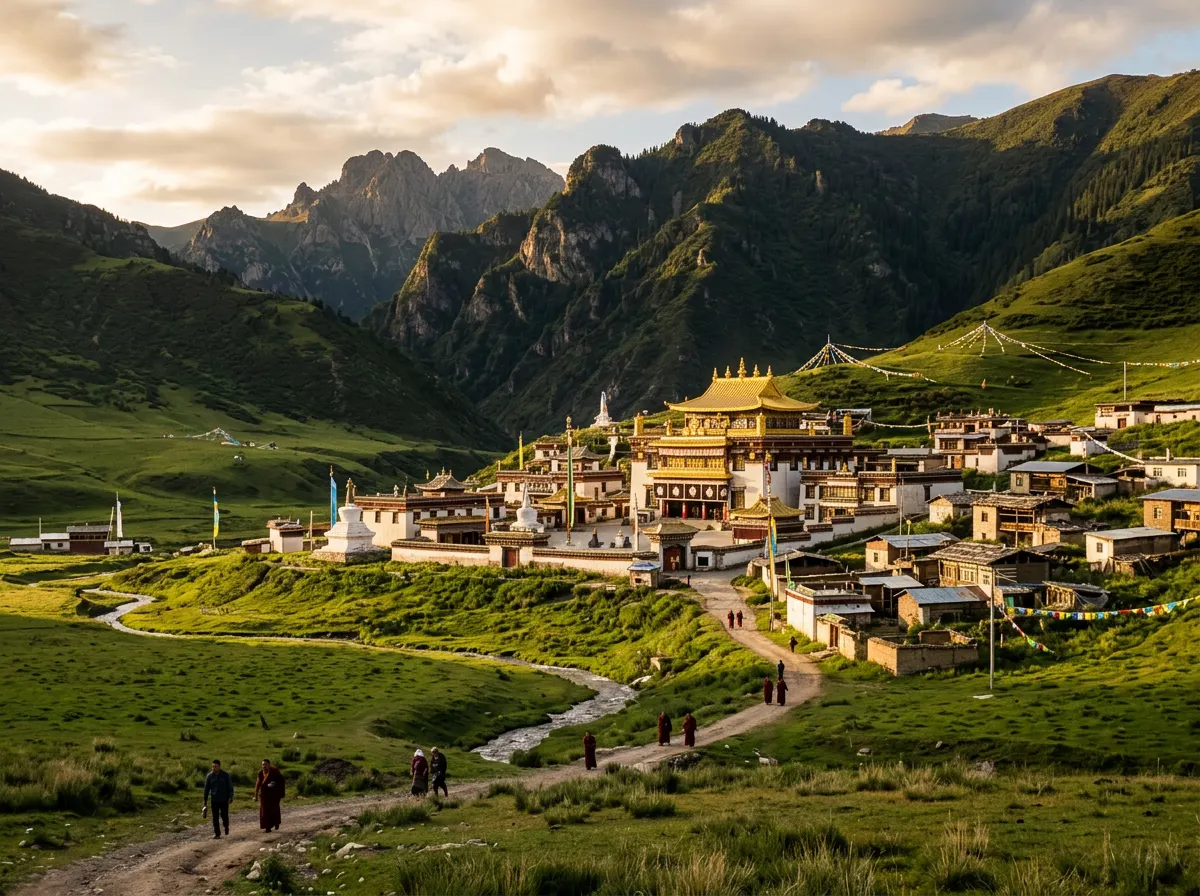
Langmusi (郎木寺, Lángmù Sì) is not one town but two — a Tibetan settlement straddling the Bailong River (白龙江, Báilóng Jiāng), with the northern half in Gansu province and the southern half in Sichuan. It sits at 3,300 meters above sea level in a narrow valley surrounded by rocky peaks and alpine meadows, and at first sight — whitewashed Tibetan houses, golden monastery roofs, a stream running through the center, and mountains rising steeply on both sides — it can look startlingly like an Alpine village dropped into the eastern Tibetan Plateau. The name means "Fairy's Temple," from a rock formation on the hillside that locals say resembles a celestial being. Two Gelugpa monasteries face each other across the valley: Kirti Monastery (格尔底寺, Gé'ěrdǐ Sì) on the Sichuan side, founded in 1413 and one of the oldest Gelugpa institutions in Amdo, and Sertri Monastery (赛赤寺, Sàichì Sì) on the Gansu side, founded in 1748, with a sky burial site on the ridge behind it. Between them, the town is a single main street of guesthouses, noodle shops, and horseback tour operators. The surrounding valley holds a deep limestone canyon (the "Namo Gorge" or 纳摩峡谷, Nàmó Xiágǔ), alpine meadows, and trails that lead to viewpoints over both monasteries. Two days is enough for the essentials; budget roughly ¥100-200 per day for mid-range comfort. Langmusi rewards the kind of traveler who wants to sit on a guesthouse rooftop, drink yak butter tea, and watch the light change on the mountains — it is a place for stillness, not sightseeing efficiency.
Why Langmusi in 2026.
A Tibetan Buddhist town split in two by a river and a provincial border — Gansu's monastery on one bank, Sichuan's on the other, and a canyon that locals call a miniature Switzerland.
Quick Answer
Langmusi (郎木寺, Lángmù Sì) is not one town but two — a Tibetan settlement straddling the Bailong River (白龙江, Báilóng Jiāng), with the northern half in Gansu province and the southern half in Sichuan. It sits at 3,300 meters above sea level in a narrow valley surrounded by rocky peaks and alpine meadows, and at first sight — whitewashed Tibetan houses, golden monastery roofs, a stream running through the center, and mountains rising steeply on both sides — it can look startlingly like an Alpine village dropped into the eastern Tibetan Plateau. The name means "Fairy's Temple," from a rock formation on the hillside that locals say resembles a celestial being. Two Gelugpa monasteries face each other across the valley: Kirti Monastery (格尔底寺, Gé'ěrdǐ Sì) on the Sichuan side, founded in 1413 and one of the oldest Gelugpa institutions in Amdo, and Sertri Monastery (赛赤寺, Sàichì Sì) on the Gansu side, founded in 1748, with a sky burial site on the ridge behind it. Between them, the town is a single main street of guesthouses, noodle shops, and horseback tour operators. The surrounding valley holds a deep limestone canyon (the "Namo Gorge" or 纳摩峡谷, Nàmó Xiágǔ), alpine meadows, and trails that lead to viewpoints over both monasteries. Two days is enough for the essentials; budget roughly ¥100-200 per day for mid-range comfort. Langmusi rewards the kind of traveler who wants to sit on a guesthouse rooftop, drink yak butter tea, and watch the light change on the mountains — it is a place for stillness, not sightseeing efficiency.
| Worth visiting | Yes, if you want a quiet Tibetan town with two monasteries, a striking canyon, and the surreal experience of crossing between Gansu and Sichuan on foot in two minutes |
|---|---|
| Recommended days | 2-3 days |
| Best time to visit | June-September (green valley, wildflowers, warm days) and October (dry, golden light, empty trails) |
| Daily budget | $25 (backpacker) / $80 (mid-range) / $200+ (luxury) |
| Family friendly | Moderate — the canyon walk and monasteries are engaging for older children, but the altitude (3,300m) and very basic medical facilities are real concerns for young kids |
| Solo friendly | Yes — safe, walkable, and a classic stop on the Gansu-Sichuan overland route where every guesthouse is full of solo travelers swapping bus tips |
| Airport | No airport. Nearest is Jiuzhai Huanglong Airport (JZH), about 3 hours by car, or Lanzhou Zhongchuan (LHW), about 5.5 hours |
| High-speed rail | No. The nearest station is Lanzhou West, about 5.5 hours by bus and car. A railway to Hezuo is under construction as of June 2026 but still years from completion |
| Language | Tibetan (Amdo dialect) and Mandarin; English is virtually nonexistent — bring a translation app and learn "Tashi Delek" (扎西德勒) |
| Currency | CNY (¥) — cash-heavy; mobile payment works at mid-range hotels but small restaurants and monastery ticket offices prefer cash |
| Time zone | China Standard Time (UTC+8) |
| Last updated | 2026-06-18 |
Want a Langmusi plan built for you?
Jump to:
Kirti Monastery·Sertri Monastery·Namo Gorge·Getting There·Where to Stay·Food·Itineraries·Weather·Tips & Warnings·Emergency Contacts·Sangke Grassland & Sky Burial·Horse Race Festival·Nearby Towns·Monastic Daily Rhythm·Photography Tips·FAQ
Why visit Langmusi? What makes this small town special?
Langmusi is the kind of place that is hard to justify in a bullet-point itinerary but easy to fall in love with once you arrive. It has no marquee sight, no UNESCO listing, and no single attraction that would make a traveler cross China to see. What it has is an atmosphere — the quiet of a Tibetan valley town at 3,300 meters, the sound of monastery horns echoing at dawn, the sight of prayer flags snapping in the mountain wind, and the strange, pleasing peculiarity of walking between two provinces in two minutes. The three reasons to come, ranked: the dual-monastery dynamic, the Namo Gorge, and the experience of small-town Tibetan life at an unhurried pace. The two monasteries — Kirti on the Sichuan side and Sertri on the Gansu side — face each other across the valley, and visiting both in a single day gives you a real sense of the variation within Tibetan Buddhist practice. Kirti is older, quieter, more intimate. Sertri is grander, more golden, more visited by domestic tour groups. Together they tell a more complete story than either would alone. The Namo Gorge is a genuine surprise — you walk behind Kirti Monastery, follow the stream, and suddenly the valley walls close in to form a limestone canyon hung with prayer flags, the river rushing over smooth white rocks, the air cooling as you enter the shade. It feels a world away from the dusty main street of town, and the high meadow at the end of the trail is one of the most peaceful spots on the Gansu-Sichuan route. The honest downside: Langmusi at 3,300 meters is high enough to cause real altitude problems for arrivals from sea level. The town's infrastructure is basic and getting more basic by the year — guesthouses that looked charming in 2018 photos are now visibly worn, and maintenance is not a strong suit anywhere. The food is limited to yak noodles, momo, and Hui lamb skewers; after two days you will be ready for something else. The town is also in an earthquake zone and has been shaken multiple times in recent decades — the 2017 Jiuzhaigou earthquake caused damage here, and you can see cracked walls and abandoned buildings. And in winter, Langmusi essentially shuts down — most guesthouses close, the canyon trail ices over, and the temperature drops below -20°C at night. If you come between November and March, call ahead to confirm anything is open.
What is the history of Langmusi: two monasteries, two provinces, one town?
Langmusi's identity as a dual town is not an administrative accident — it reflects the deeper history of the Amdo Tibetan region, where monasteries rather than provinces traditionally defined political and cultural boundaries. Kirti Monastery (格尔底寺, Gé'ěrdǐ Sì), on the Sichuan side, is the elder sibling. Founded in 1413 by a disciple of Tsongkhapa (the founder of the Gelugpa school), it is one of the oldest Gelugpa monasteries in the entire Amdo region and historically controlled a vast network of subsidiary temples and grazing territories across northern Sichuan. For centuries, Kirti was the religious and economic center of the region, and the town that grew around it — what we now call the Sichuan side of Langmusi — was essentially a monastic settlement. Sertri Monastery (赛赤寺, Sàichì Sì), on the Gansu side, was founded in 1748 by a different Gelugpa lineage. It grew rapidly through the 18th and 19th centuries, benefiting from patronage by local Mongol and Tibetan chieftains, and eventually rivaled Kirti in size and influence. The two monasteries coexisted, competed gently, and between them shaped the culture of the valley. The Bailong River that divides the town also marked the traditional boundary between the two monastic territories — a boundary that, when the modern provincial borders were drawn in the 1950s, became the official line between Gansu and Sichuan. Both monasteries were devastated during the Cultural Revolution. Reconstruction began in the 1980s and continues today. The golden roofs you see on both sides are mostly post-1980 restorations, but the monastic communities are genuine — roughly 300-400 monks at Kirti and 500-600 at Sertri as of 2026 — and the traditions of debate, chanting, and religious study are practiced daily. A note on the sky burial: both monasteries maintain sky burial sites (天葬台, tiānzàng tái) on the ridges above their respective halves of town. Sertri's is the more visible and the more visited by curious tourists. Sky burial (known in Tibetan as jhator) is the traditional Tibetan funerary practice in which the deceased's body is dismembered and offered to vultures. It is a sacred ritual rooted in Buddhist beliefs about the impermanence of the body and compassion for all beings. The sites are sacred ground. Do not approach them. Do not photograph them. Do not treat them as a tourist attraction. The ridge paths that lead toward the sky burial areas are accessible for general hiking and viewpoints, but the burial platforms themselves are off-limits, and monks will enforce this. I have seen foreign tourists try to photograph a sky burial in progress, and the anger it provokes is entirely justified. Don't be that person.
How to get to Langmusi: the long approach from all directions
Langmusi is genuinely remote. It sits roughly equidistant from Lanzhou (5.5 hours north), Chengdu (8-9 hours south), and Xining (7 hours northwest), on a two-lane road that crosses high mountain passes. Getting here requires planning and patience. From Lanzhou (兰州): The most common approach. Take a bus from Lanzhou South Bus Station to Hezuo (合作, 2.5 hours, ¥60-70), then transfer to a bus from Hezuo to Langmusi (3 hours, ¥50-60). Buses from Lanzhou to Hezuo run frequently (every 40-60 minutes, 07:00-16:00). From Hezuo to Langmusi, buses are less frequent — roughly 3-4 per day as of June 2026, with the last departure around 14:00. If you miss the connection, you can stay overnight in Hezuo (which has its own worthwhile Tibetan monastery, Milarepa Tower 米拉日巴佛阁, Mǐlārìbā Fógé) and continue the next morning. A private car from Lanzhou to Langmusi costs ¥800-1,000 (5-5.5 hours). From Xiahe (夏河): The overland connection that most travelers take. A direct bus runs in summer (June-October), taking about 4 hours (¥60-70, 1-2 departures per day — confirm the schedule at Xiahe bus station the day before). In winter, you must change at Hezuo: Xiahe to Hezuo (2 hours, ¥35), then Hezuo to Langmusi (3 hours, ¥50-60). A shared or private car from Xiahe to Langmusi costs ¥400-600 (3.5-4 hours) if you can find other travelers to split with. From Chengdu (成都): The southern approach. Take a bus from Chengdu Chadianzi Bus Station (成都茶店子客运站) to Songpan (松潘, 6-7 hours, ¥130-150), stay overnight in Songpan (a charming old garrison town worth a day itself), then take a bus from Songpan to Langmusi (4 hours, ¥70-80). Alternatively, bus from Chengdu to Zoige (若尔盖, 8-9 hours, ¥180-200), then a short bus from Zoige to Langmusi (1.5 hours, ¥30-40). This route climbs rapidly — Chengdu is at 500 meters, Langmusi at 3,300 — and altitude sickness is a serious concern. Break the journey at Songpan (2,850 meters) for at least one night to acclimatize. From Jiuzhaigou (九寨沟): Many travelers combine Langmusi with Jiuzhaigou. The distance is about 220 km but the road is mountainous and slow. A bus from Jiuzhaigou to Langmusi takes about 5-6 hours with a change at Chuanzhusi (川主寺). A private car costs ¥600-800 (4-5 hours). A crucial note: bus schedules on these routes are informal and seasonal. In summer (July-September), more buses run. In winter (November-March), some routes stop entirely. Always confirm with your departing bus station the day before travel. Your guesthouse owner can usually call the station for you. The roads are subject to summer landslides and winter ice — build buffer time into your itinerary.
What are the two monasteries actually like to visit?
Visiting both monasteries in one day is the standard Langmusi experience, and doing them back to back reveals the contrasts. Kirti Monastery (¥30 as of June 2026) is the quieter, more lived-in experience. The monastery complex is smaller than Sertri, with five main halls arranged around courtyards where monks sit in the sun and debate in the afternoon. The morning chanting (roughly 06:00-07:00, times vary by season) is open to respectful visitors — sit at the back of the hall, do not speak, do not photograph, and just listen. The sound of 200-300 monks chanting in unison, the deep horns (dungchen) vibrating through the stone walls at dawn, is something you will not forget. The monastery is less restored than Sertri, which I find appealing — the worn prayer halls, the faded tangkas, the cracked stone steps feel more honest. The Namo Gorge trailhead is behind the main hall; you pay the ¥30 entrance to Kirti and it covers the gorge trail as well. Sertri Monastery (¥30 as of June 2026), on the Gansu side, is the showpiece. The golden roofs are brighter, the halls are larger, the restoration is more complete. It is also busier — domestic tour groups roll through in the morning, and the atmosphere is more of a tourist site than Kirti. The ridge behind Sertri is the main draw: a 30-40 minute uphill walk on a dirt path brings you to a panoramic viewpoint over the entire valley. Both monasteries, the river, the canyon, and the surrounding peaks are laid out below you. The path continues toward the sky burial site — stop at the viewpoint, do not proceed further. The morning (07:00-09:00) is the best time to climb, both for the light and because the air is cooler. Practical notes: Both monasteries require modest dress — long pants, covered shoulders. Photography inside the halls is prohibited at both. Outside the halls, photography is fine. The monks are generally tolerant of visitors but do not appreciate being treated as photo subjects without permission. The standard greeting is Tashi Delek (扎西德勒), accompanied by a slight bow with palms together. Both monasteries are most active in the early morning (chanting) and mid-afternoon (debate, roughly 14:00-16:00). The midday lull (11:00-14:00) is quiet — use it for the gorge walk or lunch. Buying tickets: both monasteries have ticket booths at their main gates. Kirti's is on the south side of the river (Sichuan side) and Sertri's is on the north (Gansu side). The tickets are separate — ¥30 each. There is no combined ticket. Cash is preferred at both ticket booths, though Sertri's booth sometimes accepts WeChat Pay.
What is the Namo Gorge hike like?
The Namo Gorge (纳摩峡谷, Nàmó Xiágǔ) trail is the best natural attraction in Langmusi and a genuine surprise for first-time visitors who expect only monasteries and dusty streets. The trail begins behind Kirti Monastery's main hall. Follow the stream upstream — you will see prayer flags crossing the water and Tibetan pilgrims walking ahead of you. The first section is a gentle valley walk with grassy banks on both sides, yaks grazing, and the monastery buildings receding behind you. After about 1 km, the valley narrows into a proper limestone gorge. The rock walls rise 30-50 meters on both sides, the stream tumbles over smooth white boulders, and prayer flags are strung from wall to wall across the gap. The air cools noticeably as you enter the shade of the gorge. About 2 km from the monastery, you reach the Bailong River source (白龙江源头) — a spring gushing from the base of a rock wall, the water clear and ice-cold. Tibetan pilgrims stop here to drink, wash, and offer small donations. It is a sacred spot, and the water is safe to drink (it emerges directly from the limestone aquifer). Fill your bottle. Beyond the spring, the trail climbs out of the gorge onto a high meadow — an alpine bowl ringed by rocky peaks, with yaks grazing on the slopes and the sound of the stream fading behind you. This is as far as most visitors go, and it is enough: the meadow is beautiful, quiet, and a perfect picnic spot. The full hike from monastery to meadow and back is about 6 km (3.7 miles) round trip and takes 2-3 hours at an unhurried pace. The trail is easy to follow — there is really only one direction — but the altitude (3,300 meters at the start, higher as you climb) makes it feel harder than the distance suggests. Bring water, sunscreen, and a snack. For more ambitious hikers, the trail continues beyond the meadow toward a high pass and eventually connects to the grasslands south of town, but wayfinding becomes difficult and the altitude becomes significant. If you want a longer hike, hire a local guide through your guesthouse (¥200-300 for a half-day). The gorge is accessible year-round in theory but can be icy and treacherous from November to March. The stream crossings (small stone hops, no bridges) become slippery. Summer (June-September) is the best season — the wildflowers in the meadow are at their peak in July.
Where to stay in Langmusi: from Tibetan guesthouses to horse-trek camps
Langmusi's accommodation is concentrated along the single main street that runs north-south through town, with a few guesthouses on the side lanes. The standard is basic across the board — adjust your expectations downward from even Xiahe, and significantly downward from any Chinese city. The backpacker tier: dorm beds at ¥40-60 per night. The Langmusi Tibetan Horse Trekking Guesthouse (郎木寺藏地青旅) is the social center of the backpacker scene — dorms, private rooms, a common area where travelers swap stories and organize shared cars, and the best English-language information in town. The Langmusi International Youth Hostel (郎木寺国际青年旅舍) on the Sichuan side is the other main backpacker option, with slightly better facilities but less social atmosphere. The mid-range tier: ¥120-250 per night. Tibetan-style guesthouses like the Langmusi Tibetan Family Hotel (郎木寺藏家客栈) offer rooms with Tibetan carpets, wood-burning stoves in winter, and private bathrooms. Hot water is electric and generally reliable. The Langmusi Holiday Hotel (郎木寺假日酒店) on the Gansu side is the most comfortable option in town for the price — clean, warm, with decent WiFi and an on-site restaurant. Book through Trip.com for the English interface; these places rarely appear on Booking.com or Agoda. The premium tier: the Langmusi International Hotel (郎木寺国际大酒店) at the north end of town has rooms from ¥300-500. It is the only hotel in Langmusi that approaches chain-hotel standards — reliable hot water, heating that works, a proper lobby. It is also charmless. For something more atmospheric, the Tibetan Horse Trekking Camp (藏地马帮营地), about 2 km outside town toward the grasslands, offers basic but comfortable Tibetan-style accommodation with horse-trek packages (¥400-800 per night including meals and a half-day ride). The crucial warning: at 3,300 meters, cold is a real factor. From October through April, nighttime temperatures drop below freezing. Make sure your room has heating — electric blankets are standard, but central heating is not. Wood-burning stoves (in the Tibetan-style guesthouses) are the most effective heating, but the guesthouse staff needs to stoke them, and they may go out overnight. If you are visiting in winter (November-March), confirm the heating situation when booking. Many guesthouses close entirely from December to February — call or message ahead. Altitude note: Langmusi at 3,300 meters is significantly higher than Xiahe (2,900m) and most people feel the difference. Sleeping at altitude is harder than walking at altitude — you may wake up gasping or with a headache. This is normal but unpleasant. Hydrate aggressively, avoid alcohol the first night, and consider acclimatizing at Xiahe or Songpan before arriving.
What is the food like in Langmusi?
The food in Langmusi is standard Amdo Tibetan fare, with a small Hui Muslim presence and essentially no international options. You will eat momo, yak noodles, and lamb skewers, and you will eat them repeatedly. The best restaurants are on the main street between the two monasteries, roughly in the middle of town where the Sichuan and Gansu sides meet. Tibetan Kitchen (藏餐馆, Zàngcān Guǎn) on the Sichuan side is the best all-around option — yak momo (藏包, ¥25-30), yak noodle soup (牦牛肉面, ¥20-25), stir-fried yak with peppers (牦牛肉炒青椒, ¥35-45), and decent butter tea (¥10). The menu has pictures. The owner speaks some English (rare in Langmusi) and is a good source of local travel information. ¥30-60 per person. Himalaya Cafe (喜马拉雅咖啡, Xǐmǎlāyǎ Kāfēi), a few doors down, is the traveler hub — yak burgers (actually quite good, ¥35-40), Tibetan-style pizza (a stuffed flatbread with yak meat and cheese, ¥40-50), and the only espresso-based coffee in Langmusi (¥25-35). The rooftop terrace has a view of Sertri Monastery's golden roofs and is the best place in town to spend an afternoon. WiFi is decent. This is where you will meet other travelers and plan onward transport. For Hui Muslim food, the lamb skewer stalls (羊肉串, yángròu chuàn) that set up on the main street in the evening are excellent — ¥3-5 per skewer, grilled over charcoal, seasoned with cumin and chili. The Lanzhou noodle shop (兰州拉面, Lánzhōu Lāmiàn) near the border bridge does a reliable bowl of hand-pulled noodles with lamb for ¥15-20 — the best value meal in Langmusi. Yak yogurt (酸奶, suānnǎi) is the local specialty, sold from small shops and street vendors for ¥8-12 a bowl. It is thick, sour, and topped with sugar — a Tibetan breakfast staple. The shop next to Kirti Monastery's main gate sells the best yogurt in town, made fresh each morning by a Tibetan family. The honest downside: the menu here is narrower than in Xiahe. There are perhaps 6-7 restaurants of note in the entire town, and they all serve essentially the same food. By day three, you will crave variety. There is no fresh produce to speak of — vegetables are limited to potatoes, carrots, and cabbage. Vegetarians will struggle; the only reliably vegetarian options are tsampa (roasted barley dough), plain momo (confirm no meat), and the noodle shop's egg-and-tomato noodles (西红柿鸡蛋面, xīhóngshì jīdàn miàn, ¥12-15). Bring snacks from Lanzhou or Chengdu if you are staying more than two days.
What are good itineraries for Langmusi?
Two days is the sweet spot for Langmusi. The town is small, and while you can spend a third day relaxing or doing a longer hike, two full days covers the essentials. Two-day plan: Day 1 — Start at Kirti Monastery for the morning chanting (arrive by 06:00, sit quietly in the back). After chanting, explore the monastery grounds and halls. By 09:00, begin the Namo Gorge hike — walk at a relaxed pace, spend time at the river source, have a picnic in the high meadow, and return by midday. Lunch at Himalaya Cafe. Afternoon: rest, acclimate, read on the rooftop. Late afternoon: walk across the border bridge to the Gansu side, climb Sertri Monastery for the afternoon debate (14:00-16:00) and the panoramic view. Evening: lamb skewers on the main street. Day 2: Climb the ridge behind Sertri Monastery at sunrise for the best panoramic view of the valley. Descend, breakfast at the guesthouse. Morning: explore the small lanes of the Sichuan side, visit the artisan shops (a few sell Tibetan jewelry, tangkas, and carpets — prices are lower than in Lhasa or Xiahe for comparable quality). Afternoon: optional horse trek into the surrounding hills (¥200-400 for a half-day, arranged through the Tibetan Horse Trekking Guesthouse). Evening: final meal at Tibetan Kitchen or Himalaya Cafe, prepare for onward travel. One-day transit stop: If you are passing through en route from Xiahe to Zoige or Jiuzhaigou, prioritize Kirti Monastery and the Namo Gorge in the morning, lunch at Himalaya Cafe, then Sertri Monastery and the ridge viewpoint in the afternoon. This is a full day but doable. Three-day deep immersion: Days 1-2 as above. Day 3: full-day horse trek to a remote nomad camp (¥400-600, arranged through the Tibetan Horse Trekking Guesthouse) or a longer hike into the surrounding alpine valleys. Alternatively, use Day 3 as a travel day to Zoige (1.5 hours by bus, famous for its high-altitude wetlands and the First Bend of the Yellow River) or to Xiahe northbound.
What should I know about the altitude and weather in Langmusi?
Langmusi is at 3,300 meters (10,800 feet) and the altitude is the single most important practical consideration for visiting. This is not an altitude where most people become seriously ill, but it is an altitude where almost everyone feels something — headaches, shortness of breath, fatigue, poor sleep, and a suppressed appetite are all normal on the first day. Altitude sickness prevention: Acclimatize before arriving. If you are coming from Chengdu (500m), spend at least one night at Songpan (2,850m) or two nights to be safe. If you are coming from Lanzhou (1,500m), spend a night at Xiahe (2,900m) before continuing to Langmusi. Drink water constantly — aim for 3-4 liters per day at this altitude. Avoid alcohol the first night. Ibuprofen helps with the altitude headache. Acetazolamide (Diamox) is available at pharmacies in Lanzhou and Chengdu but not reliably in Langmusi — start taking it 24 hours before ascent if you are prone to altitude sickness. The weather is high-altitude continental: cold winters, mild summers, intense sun year-round, and a short growing season. Summer (June-September): daytime 15-22°C, overnight 3-8°C. Rain is common in July and August — afternoon thunderstorms are a daily pattern. The valley is green and the wildflowers peak in July. This is the best window for hiking. October: daytime 8-15°C, overnight -5 to 2°C. Dry, crisp, golden light. The best month for photography and solitude. November-March: daytime -5 to 5°C, overnight -15 to -25°C. The town is mostly closed. Travel is possible but uncomfortable and unreliable. April-May: thaw, mud, unpredictable weather. Shoulder season with few visitors. The sun at 3,300 meters is intense — the UV index is consistently very high. Sunscreen, sunglasses, and a hat are essential year-round. Sunburn happens fast here. I learned this the hard way on my first visit — an hour on the Sertri ridge without sunscreen left my face red for three days.
What practical tips, warnings, and cultural advice do I need for Langmusi?
1. THE ALTITUDE IS THE MAIN CONCERN. At 3,300 meters, every activity is harder. The Namo Gorge hike is easy by normal standards but will leave you breathing hard. Take your time, drink water, and do not be embarrassed to stop and rest. The first night's sleep is usually poor — you wake up gasping, which is a normal altitude response and not dangerous on its own, but disconcerting. 2. WINTER TRAVEL IS NOT ADVISED. From November through March, most guesthouses and restaurants close. The remaining ones may not have running water because pipes freeze. The road to Hezuo can close after snow. If you want a winter Tibetan monastery experience, Xiahe is a better choice — it is lower, larger, and has more year-round infrastructure. 3. SKY BURIALS ARE NOT A TOURIST ATTRACTION. I will say this as clearly as possible: do not approach, photograph, or gawk at the sky burial sites. These are sacred funerary grounds. Monks and local families will be angry, and they are right to be. The ridge paths offer views of the valley without approaching the burial platforms. Stay on the paths. 4. CASH IS KING. Both monastery ticket offices prefer cash. Small restaurants, street stalls, and handicraft sellers often cannot process foreign mobile payments. Bring ¥500-800 in cash for a 2-3 day stay. ATMs exist on the main street but occasionally run out of cash, especially on weekends. 5. THE TOWN SHUTS DOWN EARLY. By 20:30-21:00, restaurants are closing and the streets are dark. There is no nightlife. Plan your dinner accordingly. Himalaya Cafe and the lamb skewer stalls are the last to close, usually by 21:30. 6. INTERNET IS SLOW. WiFi at guesthouses is present but often barely functional. Mobile data is better — China Mobile has the best coverage in Langmusi, China Unicom is patchy. Your VPN needs to be installed and tested before arriving because the slow connection makes troubleshooting nearly impossible. 7. HORSE TREKKING QUALITY VARIES. The horse treks offered by guesthouses range from excellent (the Tibetan Horse Trekking Guesthouse is the most reliable operator) to disappointing (horses in poor condition, guides who do not actually speak enough Mandarin or English to communicate). Ask other travelers for recent recommendations. Check the condition of the horses before committing — a healthy horse should have visible ribs but not protruding hip bones. 8. THE FOOD IS REPETITIVE. After two days of yak and momo, you will want something else. There is no other option. Bring snacks from your previous stop. Instant noodles from the small shops on the main street are the emergency backup. 9. TOILETS ARE BASIC. Squat toilets, no toilet paper provided, no soap. Carry your own supplies. Hotel bathrooms are better but still basic by Western standards. 10. THE EARTHQUAKE RISK IS REAL. Langmusi sits in a seismically active zone near the Longmenshan fault system. The 2017 Jiuzhaigou earthquake (magnitude 7.0) caused damage here. The 2008 Wenchuan earthquake (magnitude 8.0) was felt strongly. There is no earthquake early warning system accessible to visitors. If the ground starts shaking, move away from buildings and toward open space. This is a low-probability but high-consequence risk — be aware, not alarmed.
How does Langmusi fit into a larger China itinerary?
Langmusi is a classic stop on the Gansu-Sichuan Tibetan overland route, one of the most rewarding road journeys in western China. The standard southbound route: Lanzhou → Xiahe (2-3 nights) → Langmusi (2 nights) → Zoige (若尔盖, Ruò'ěrgài, 1 night for the wetlands) → Songpan (松潘, 1 night for the old town) → Jiuzhaigou (九寨沟, 2-3 nights) or Chengdu (2-3 nights). This route takes 10-14 days and covers the full cultural and ecological spectrum from Hui Muslim Linxia to Tibetan monastic Xiahe to the high-altitude Zoige wetlands to the Jiuzhaigou lakes. Langmusi works as a 2-night pause between Xiahe and Zoige/Songpan. It is quieter than Xiahe, more scenic in terms of the immediate surrounding landscape, and less visited. If you only have time for one Tibetan monastery town on the Gansu-Sichuan route, choose Xiahe — Labrang is grander and more significant. If you have time for two, Langmusi provides the contrast: smaller, more intimate, and with the canyon hike that Xiahe lacks. Langmusi also connects well to Jiuzhaigou via Zoige and Chuanzhusi (川主寺). The Langmusi-Jiuzhaigou leg is about 5-6 hours by bus with a change at Chuanzhusi. A private car (¥800-1,000) cuts this to 4-5 hours. The route crosses the Zoige Marshes (若尔盖湿地, Ruò'ěrgài Shīdì), one of the world's largest high-altitude wetlands, and the landscape is extraordinary — endless grassland, meandering rivers, distant snow peaks. Langmusi is not a first-time China destination. It is too remote, the infrastructure is too basic, and the cultural context requires some understanding of Tibetan Buddhism to fully appreciate. It is a perfect third-trip or fourth-trip destination — the kind of place you find yourself in after you have seen the major sites and you want to understand the China that exists at its geographic and cultural edges.
What is horse trekking in Langmusi actually like?
Horse trekking is Langmusi's signature outdoor activity, and the town has a small industry built around it. The Tibetan Horse Trekking Guesthouse (藏地马帮) is the most established operator and the one most travelers use. Treks range from a 2-hour ride in the valley (¥150-200 per person) to multi-day expeditions into the surrounding grasslands with overnight stays at nomad camps (¥600-1,200 per day including food, tent, and guide). The horses are Tibetan ponies — smaller than Western riding horses but sturdy, sure-footed at altitude, and well-adapted to the terrain. The saddles are Tibetan-style, which sit higher and feel different from English or Western saddles. If you have riding experience, you will adjust quickly. If you do not, the guides will lead your horse on a rope, and the experience is more of a pony ride than a trek. The terrain is high-altitude grassland and rolling hills, with wide-open views of the surrounding peaks. You ride past yak herds, nomad encampments (black yak-hair tents, Tibetan mastiffs barking as you approach), and carpets of wildflowers in July. The guides are local Tibetans who have spent their lives on horseback; their English is minimal but their competence is high. The honest assessment: the 2-hour treks are pleasant but not transformative — you ride in a loop near town and the scenery is similar to what you can walk to. The half-day and full-day treks (¥300-600) go deeper into the grasslands and are worth the money if you enjoy riding. The multi-day treks are for committed horse people — the saddles become uncomfortable after a full day, the altitude makes sleeping in a tent hard, and the food is basic (tsampa, dried yak meat, instant noodles). I did a two-day trek in 2019 and by the end of day two, I was sore, sunburned, and very happy. Practical notes: Book treks at least a day in advance. Wear long pants and closed shoes — the stirrups and brush will tear up shorts and sandals. Bring sunscreen, water, and a rain jacket (afternoon storms are common in summer). Weight limits apply — if you are over 100 kg, check with the operator. The horses are small and cannot carry very heavy riders comfortably. Tipping the guide is not expected but appreciated — ¥50-100 for a day trek is generous.
What is the Sangke grassland sky burial site and other sacred sites around Langmusi?
Beyond the two main monasteries and the Namo Gorge, the wider valley around Langmusi holds a number of lesser-known sacred sites that round out the picture of Amdo Tibetan religious life. The most significant of these is the sky burial platform on the Sangke grasslands (桑科草原, Sāngkē Cǎoyuán), roughly 10 kilometers north of town across the open meadow. Sangke is one of the Gannan region's most important pasturelands and one of the most respected sky burial sites in Amdo — older in continuous use than the platforms behind either Sertri or Kirti, and the place local Tibetan families preferentially choose when they can. The sky burial practice itself is worth understanding before you walk anywhere near a site. In Tibetan, the ritual is called jhator (བྱ་གཏོར་), literally meaning "giving alms to the birds." The body is carried to the platform at dawn, dismembered by a rogyapa (body-breaker, traditionally a marginalized caste), and offered to the vultures that gather on the surrounding cliffs. In Tibetan Buddhist cosmology, the generosity of feeding one's body to other sentient beings is considered among the highest forms of dana (giving), and the rapid disappearance of the body by the birds is read as a sign of moral merit and spiritual liberation. Photographs of any of this — the platform, the vultures, the body, the family in attendance — are absolutely forbidden. So is the presence of tourists on the days a burial is taking place. The platform is sacred, the surrounding ridge is sacred, and the air itself is considered to carry the weight of the ritual. Treat it accordingly. The Sangke plateau itself, away from the burial platform, is a different experience — a broad, undulating grassland crossed by the road to Xiahe, dotted in summer with nomad tents and yak herds. In July the grass is knee-high and the wildflowers are astonishing: yellow daisies, purple asters, white anemones, and at the right moment a kind of pale blue poppy that grows only above 3,000 meters. There is no formal tourist infrastructure here. You walk out from town across the meadow (about 90 minutes to the burial-area ridge) or arrange a half-day horse trek with one of the guesthouses (¥300-400, including the guide who knows which paths to take). Bring water, sunscreen, and a windbreaker. The plateau is exposed and the wind is real. Closer to town, on the Gansu side, the Niangma mountain (念姆山, Niànmǔ Shān) rises directly behind Sertri Monastery and forms the eastern wall of the valley. Niangma is considered a sacred mountain by the local Tibetans — circumambulation of its base, called a kora (སྐོར་སྐུར་), is a regular devotional practice for monks and pilgrims, and the lower circuit takes about 30 minutes on foot. The upper kora, climbing onto the shoulder of the mountain and circling the summit, takes 3-4 hours and is rarely attempted by visitors. The path behind Sertri that climbs toward the sky burial viewpoint is the beginning of the lower Niangma kora — so when you do that climb for the panorama, you are also walking a small part of an old pilgrimage circuit. Just south of the Sichuan side, accessible by a 45-minute walk from the back of Kirti Monastery or a short motorcycle ride (¥30-50), there is a small hermitage (闭关房, bìguān fáng, a meditation retreat hut) where one or two monks spend 108-day silent retreats practicing a form of Vajrayana visualization. These retreats are traditionally undertaken in solitude and silence, and the huts are closed to visitors. You will see them from the outside as low stone buildings with whitewashed walls and small windows. The tradition of long-term solitary retreat is one of the most distinctive features of Tibetan Buddhist practice, and seeing the hut is a reminder that the monasteries here are not tourist sites — they are functioning institutions of religious life.
What is the August horse race festival and what other festivals bring Langmusi to life?
Langmusi's biggest annual event is the Gannan Tibetan Horse Race Festival (甘南藏族自治州香浪节, Gānnán Zàngzú Zìzhìzhōu Xiānglàng Jié), known locally as the Xianglang Festival. It falls in early to mid-August each year on the 15th of the sixth lunar month. For three to four days the town's population roughly triples as Tibetan families from across Gannan prefecture descend on the grasslands around Langmusi to camp, race horses, sing, dance, picnic, and renew social ties. The atmosphere transforms Langmusi from a sleepy off-season town into something closer to a county fair in scale and energy, but with all the visual richness of Tibetan dress and custom. The horse racing itself takes place on the flat open ground north of the Sertri Monastery ridge — a stretch of meadow that, for the rest of the year, is just pasture. Riders are local Tibetan herders, mostly teenage boys on stocky Tibetan ponies, racing bareback over distances of 1 to 5 kilometers. The races are not professional — there are no starting gates, no betting, no prize money beyond a few hundred yuan and a khata (ceremonial scarf) for the winners. What you see is a centuries-old rural sport still being practiced as it always was. The horses are brushed to a high gloss and decorated with red tassels; the riders wear their finest traditional clothing, often the chubas (heavy wool robes) of their own clan, and the field is surrounded by pickup trucks, motorbikes, and crowds of families sitting on the grass drinking butter tea and eating tsampa. Alongside the racing, the festival includes Tibetan opera performances (藏戏, zàngxì) — masked, danced, sung drama performed by amateur troupes from the surrounding villages, often running for two or three hours each evening on a makeshift stage. The plots draw on Buddhist Jataka tales and historical legends; the language is Tibetan; the music is loud, repetitive, and accompanied by drums and cymbals. You do not need to understand the words to enjoy the spectacle. There is also Tibetan pop (very popular in Gannan and increasingly mixed with mainland Chinese influences), traditional Tibetan dance performances by troupes from nearby counties, and a small market of handicrafts — saddles, silver jewelry, turquoise, wooden bowls — that goes up along the main street. The accommodation impact is significant: the festival weekend is the one time of year when every guesthouse in Langmusi fills up, and prices roughly double. Book at least two weeks in advance if you want to attend. The camping option is also worth considering — many travelers set up a tent on the edge of the festival meadow (¥20-30 to pitch with a local family, or free on the public land). The atmosphere of camping among Tibetan families on a high meadow in August is something you will not forget, but bring a proper four-season tent: the temperature drops to near freezing overnight at 3,300 meters, even in summer. The other major festivals worth knowing about: Losar (ལོ་གསར་, Tibetan New Year) falls in February or early March by the Tibetan lunar calendar (in 2026 it was February 18-20). Visiting Langmusi for Losar is logistically difficult — winter cold, ice on the roads, few open guesthouses — but if you can manage it, the monasteries' Losar rituals are extraordinary. Monks perform cham dances (masked ritual dances, 羌姆, qiāngmǔ) in the monastery courtyards over three days, with elaborate brocade costumes, wooden masks representing protective deities, and long horns. The dates move with the lunar calendar so confirm with your guesthouse before traveling. Outside of Losar and the horse race festival, the monthly prayer days on the 8th, 15th, and 30th of each lunar month bring smaller ceremonies — butter lamp offerings, group chanting, brief cham dances at one of the monasteries. These are accessible year-round and a good reason to plan your visit around the lunar calendar if you are flexible.
How do I travel between Langmusi and the nearby towns of Hezuo, Xiahe, and Zoige?
Langmusi sits at the intersection of three regional routes: north to Hezuo and Lanzhou, east to Xiahe and the Labrang Monastery complex, and south across the Gannan grasslands to Zoige and the Jiuzhaigou road. Bus schedules are seasonal, the roads are slow, and altitude shifts are real. To Hezuo (合作, Hézuò), the capital of Gannan Tibetan Autonomous Prefecture and the nearest proper city with an airport: the distance is about 180 kilometers and the drive takes roughly 3 hours by bus or private car. The road climbs through alpine meadows and across a 3,600-meter pass before dropping into Hezuo at 2,900 meters. Buses depart from Langmusi's small bus station (on the main street, easy to walk to from any guesthouse) at 07:30, 09:30, and 13:30 in summer (June-September); in winter there are usually only two departures, 08:00 and 13:00, and the afternoon bus sometimes cancels in heavy snow. The fare is ¥50-60. Hezuo itself is worth a stopover if you have half a day: the Milarepa Tower (米拉日巴佛阁, Mǐlārìbā Fógé) is a striking nine-story Tibetan Buddhist structure built in the late 1990s, the largest of its kind in China, with interior chapels on each floor dedicated to different stages of Milarepa's life and teachings. Entry is ¥20 and the visit takes 90 minutes. The Hezuo airport (合作机场, also called Gannan Airport, code GNA) is 25 minutes north of the city and has flights to Lanzhou, Chengdu, and a few other cities. For travelers who find the overland journey too long or too uncomfortable, flying into Gannan and taking a 1.5-hour taxi to Langmusi (¥350-450 for the car) is a workable shortcut, but the flight schedule is limited — usually one or two rotations per day to Lanzhou. To Xiahe (夏河, Xiàhé), the home of Labrang Monastery and the most-visited Tibetan town in Gansu: the direct bus is one of the prettiest rides in the region. The distance is 230 kilometers and takes 4-4.5 hours, climbing over a 3,500-meter pass before dropping into the Sangke grasslands and rolling east through the upper Tao River valley to Xiahe. The direct bus runs only in summer (June-October), once or twice per day, usually leaving Langmusi at 08:00 and arriving in Xiahe around 12:30. Fare is ¥60-70. In winter the direct bus is suspended and you must route through Hezuo (Langmusi to Hezuo, change, Hezuo to Xiahe, 2 hours) — total 6-7 hours and ¥100 in fares. A private car from Langmusi to Xiahe costs ¥500-700 and takes 3.5-4 hours; this is the option most foreign travelers take because the flexibility of stopping at viewpoints along the Sangke grasslands is worth the premium. Many travelers bypass Labrang by skipping Xiahe — and they miss the most impressive monastery complex in Amdo. If you have three days, do Xiahe then Langmusi in that order: Labrang for the cultural scale, then Langmusi for the quiet. To Zoige (若尔盖, Ruò'ěrgài), the northern Sichuan grasslands town that is the gateway to Jiuzhaigou: the distance is about 130 kilometers but the road crosses open high-altitude wetland, and the drive takes 3-3.5 hours by bus. Buses are infrequent — usually one or two per day in summer, sometimes none in winter — and they depart from the Langmusi bus station in the morning only. Fare is ¥50-60. The route is one of the most scenic in the region: after leaving Langmusi you cross the Gansu-Sichuan provincial line again (south this time) and enter the Zoige Marshes (若尔盖湿地, Ruò'ěrgài Shīdì), one of the largest high-altitude peatland systems in the world and a critical habitat for the endangered black-necked crane. In June the marshes are a sea of grass; in September they turn gold under wide skies. Zoige itself is a small, cold, fairly charmless county town that exists mainly as a waystation. Most travelers stop only long enough to eat lunch and catch the onward bus to Jiuzhaigou (another 4-5 hours, ¥80-100, two or three daily in summer) or to Chuanzhusi (川主寺, 2 hours, ¥40), the Jiuzhaigou area's transport hub. If you want to break the journey, there is one decent mid-range hotel in Zoige town (the Zoige Hotel, ¥180-280) and several basic guesthouses. The marshes themselves are the draw — not the town. One route that foreign travelers rarely take but locals use: west from Langmusi toward Aba (阿坝, Ābà) in northern Sichuan. This is the road toward the Kirti Monastery's parent institution — the great Kirti Monastery of Aba, which is a major center of Tibetan Buddhism and was the site of significant self-immolation protests in the late 2000s and early 2010s. The road is rough, the buses are very infrequent, and the political sensitivity of the area means foreign visitors have historically needed permits to travel on this route. As of 2026 the permit situation is fluid; check with your guesthouse owner or the Xiahe Tourism Bureau before attempting this leg. Most foreign travelers will not need or want to go this way.
What is the daily rhythm of monastic life in Langmusi: chanting, kora, and monk debate?
The two monasteries at Langmusi are not museum sites — they are functioning religious institutions with a daily rhythm of prayer, study, debate, and ritual that has continued, with interruptions, for centuries. Knowing the rhythm transforms a monastery visit from sightseeing into a glimpse of Tibetan Buddhist monastic life. The schedule below is based on the standard practice at both Kirti and Sertri, with slight seasonal adjustments. The day begins before dawn. At roughly 04:30 in summer and 06:00 in winter, the resident monks wake in their dormitories and gather in the main assembly hall for the morning chanting session (早课, zǎokè). This is the famous session that visitors are sometimes permitted to attend, and it is genuinely one of the most powerful sensory experiences available in Langmusi. Several hundred monks sit in two facing rows on low cushions, chanting sutras in Tibetan from memory in a low, sonorous, rhythmic chorus that the deep-throated long horns (dungchen, དུང་ཆེན་) punctuate every few minutes. The sound fills the hall, reverberates off the stone walls, and can be heard echoing down the valley. The chanting runs for 60-90 minutes. Visitors are welcome at Kirti's morning session — sit at the very back of the hall, remove your hat, do not speak, do not take photos inside the hall, and do not walk across the front of the seated monks. The schedule is roughly 06:00-07:30 in summer (June-August) and 06:30-08:00 in shoulder seasons. There is no admission fee for the morning chanting — it is part of the monastery's life, not a tourist event. Sertri's morning session is also occasionally open to visitors but is generally more crowded with domestic tour groups. Breakfast follows chanting, then the morning's main activity is study or assigned work. Monks aged roughly 7 to 18 are in the monastery school, learning to read classical Tibetan, memorize sutras, and study Buddhist philosophy. Monks aged 18 and above attend more advanced teachings, debate practice, or philosophical commentary. The afternoon's central event is the monk debate (辩经, biànjīng) — a distinctive Tibetan Buddhist pedagogical practice in which two monks engage in a structured verbal exchange on a point of doctrine. The format: one monk sits, the other stands. The standing monk makes a point, claps his hands loudly, and stamps his foot for emphasis, then waits for the seated monk's response. The debate can be fast, technical, and surprisingly loud — the hand-clap and foot-stamp are not theatrical flourishes but functional parts of the rhythm that signal transitions and emphasize key syllogisms. The logic being practiced is the pramanavarttika tradition, a rigorous Indian Buddhist epistemology that uses formal debate to internalize doctrine. Watching it requires no knowledge of the philosophy — it is striking on its own as a piece of embodied intellectual practice. The debate session runs roughly 14:00 to 16:00 daily at both monasteries, in the main courtyard when weather permits. At Kirti, the courtyard is to the right of the main hall; at Sertri, it is behind the assembly hall. Visitors are welcome to watch but should keep a respectful distance, walk around the debate circle rather than through it, and absolutely not photograph individual monks' faces up close without explicit permission. The standard tourist mistake is to treat the debate as performance; it is not, and the monks notice. Stand back, observe, be quiet, and the experience will be richer for it. Evening activities begin with a second chanting session (晚课, wǎnkè) at roughly 18:00-19:30, again open to visitors at the back of the hall. After evening chanting, the day's main activity is reading and individual study. Younger monks may have a tutorial; senior monks will spend the evening on their own practice. Lights out is around 22:00 in summer, 21:00 in winter. The monastery's day, from 04:30 wake-up to 22:00 sleep, is shorter than a working day in town but considerably more disciplined. The other daily ritual worth knowing about is the kora (སྐོར་སྐུར་, circumambulation) — the practice of walking clockwise around a sacred object while reciting mantras or prayers. The most accessible kora in Langmusi is the lower Niangma kora I mentioned earlier — a 30-minute walk around the base of the Niangma ridge, starting and ending at the back of Sertri Monastery. Pilgrims do it at any time of day, often carrying prayer wheels (转经筒, zhuànjīng tǒng) in their right hands, which they spin with each step. Visitors are welcome to walk the kora themselves — go clockwise, do not point your feet toward the monastery or the mountain when sitting to rest, and let pilgrims pass you rather than walking against their flow. A second, longer kora is the Kirti kora, which circles Kirti Monastery and includes the lower path through the Namo Gorge — this takes about 90 minutes and is a beautiful way to combine a contemplative practice with a hike. Knowing this rhythm lets you plan a visit around the most rewarding moments. Arrive at the monastery at dawn for chanting, return after breakfast for the late-morning quiet, watch debate at 14:00, and walk the kora at sunset. Tour groups arrive between 09:00 and 11:00 and depart by 14:00 — visiting outside those hours gives you a much more authentic experience of the monastery's actual life.
What are the best photography locations and times in Langmusi?
Langmusi is one of the more photogenic small towns in western China, with the unusual advantage that the best vantage points are within easy walking distance and the best light happens twice a day. The light quality at 3,300 meters is different from lower elevations — thinner air, sharper shadows, faster transitions, more saturated colors at sunrise and sunset. Photographers with even a basic kit can get strong images here. The single best shot in Langmusi is the panoramic view from the Sertri ridge. From the top of the dirt path behind Sertri Monastery (30-40 minutes of climbing from the monastery courtyard), the entire valley is laid out below you: Sertri's golden roofs to your left, Kirti's white buildings across the river, the limestone canyon mouth opening behind Kirti, the Bailong River snaking through the meadow, and the rocky peaks of the Gansu-Sichuan border ringing the valley. The shot works best at sunrise (around 06:00 in summer, 07:30 in October) when the east-facing monastery walls catch the first direct sun and the valley floor is still in shadow. Bring a wide-angle lens (24mm or wider on full frame, or the wide end of a kit zoom), and shoot both horizontally for the panorama and vertically for a strong single-image composition. A tripod is helpful but not essential at sunrise in summer — there is enough light by 06:30 to hand-hold at f/8 and 1/250. The second strongest location is the Namo Gorge trail itself, especially the section about 1.5 km from the monastery where the gorge narrows and prayer flags are strung between the rock walls. The light here is best in late morning (10:00-11:00) when the sun climbs high enough to throw a shaft of light down the gorge. Photograph from the trail looking upstream, with the prayer flags crossing the upper third of the frame and the white limestone walls glowing behind them. A polarizing filter helps here — it cuts the glare on the wet rocks and deepens the sky visible above the gorge walls. The river source spring (2 km up the trail) is a different kind of subject: shoot it tight, with the spring water emerging from the rock wall and prayer scarves draped over the stones beside it. The detail shots work better than the wide views at this location. For monastery detail and interior work, both monasteries allow outside photography but prohibit interior flash and tripod use in the prayer halls. The best interior shots are at Kirti during the late-afternoon light, when the sun comes through the high windows and rakes across the painted columns and the seated monks in the side aisles. Sertri's golden roofs photograph best from across the valley in the late afternoon — stand on the Sichuan side near the Kirti gate and shoot east toward Sertri with a 70-200mm zoom to compress the roofline. The Bailong River border bridge is the third classic Langmusi shot. The bridge itself is unremarkable — a plain concrete span — but the contrast of the whitewashed Tibetan houses, the green river, and the rocky valley walls behind works as a documentary frame. Shoot from the Gansu side looking south, with the Sichuan town and mountains in the background. Early morning, around 07:30, has the best light on the Sichuan-side buildings. The lamb skewer stalls on the main street in the evening (around 19:00-20:00 in summer) are a strong people-and-culture shot — the smoke, the charcoal, the vendors, the crowd. Ask before pointing your lens at any individual face, and a small purchase (¥10-20 of skewers) is a natural way to engage. Practical notes: the UV is intense at altitude and a UV filter on every lens is cheap insurance against the harsh sunlight. Batteries drain fast in cold weather — bring twice as many as you think you need if visiting in shoulder seasons, and keep spares in an inner pocket close to your body. Memory cards fill quickly with RAW files; 64GB minimum for a serious photographer on a 2-3 day stay. The wind on the Sertri ridge is strong enough to knock over a tripod — weigh it down with a small bag of stones. And finally: the monastery interiors are places of worship, not studios. The rules — no flash, no tripod in the prayer halls, no photographs of monks in active prayer or debate — exist for a reason. Follow them, and you will find the monks and monastery staff welcoming to photography in the permitted settings.
Top attractions
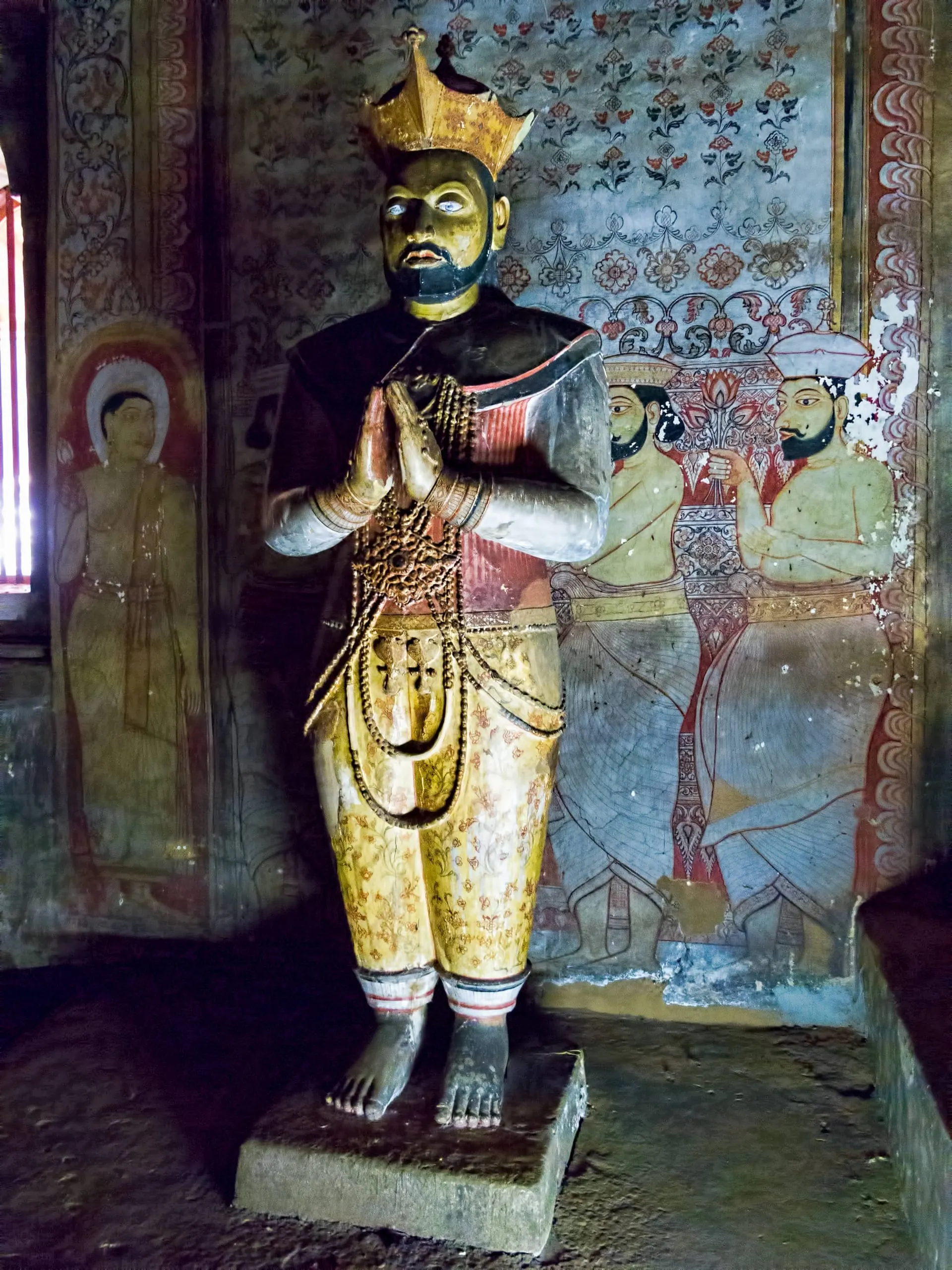
Kirti Monastery (格尔底寺, Gé'ěrdǐ Sì) — Sichuan side
The older of the two monasteries, founded in 1413. Five prayer halls, a golden chorten, and a quieter, more intimate atmosphere than Sertri across the river. Active monk community. ¥30 entrance as of June 2026. The morning chanting (around 06:00-07:00) is haunting — deep-throated, sonorous, echoing off the valley walls.
Wikimedia Commons · CC-BY-SA
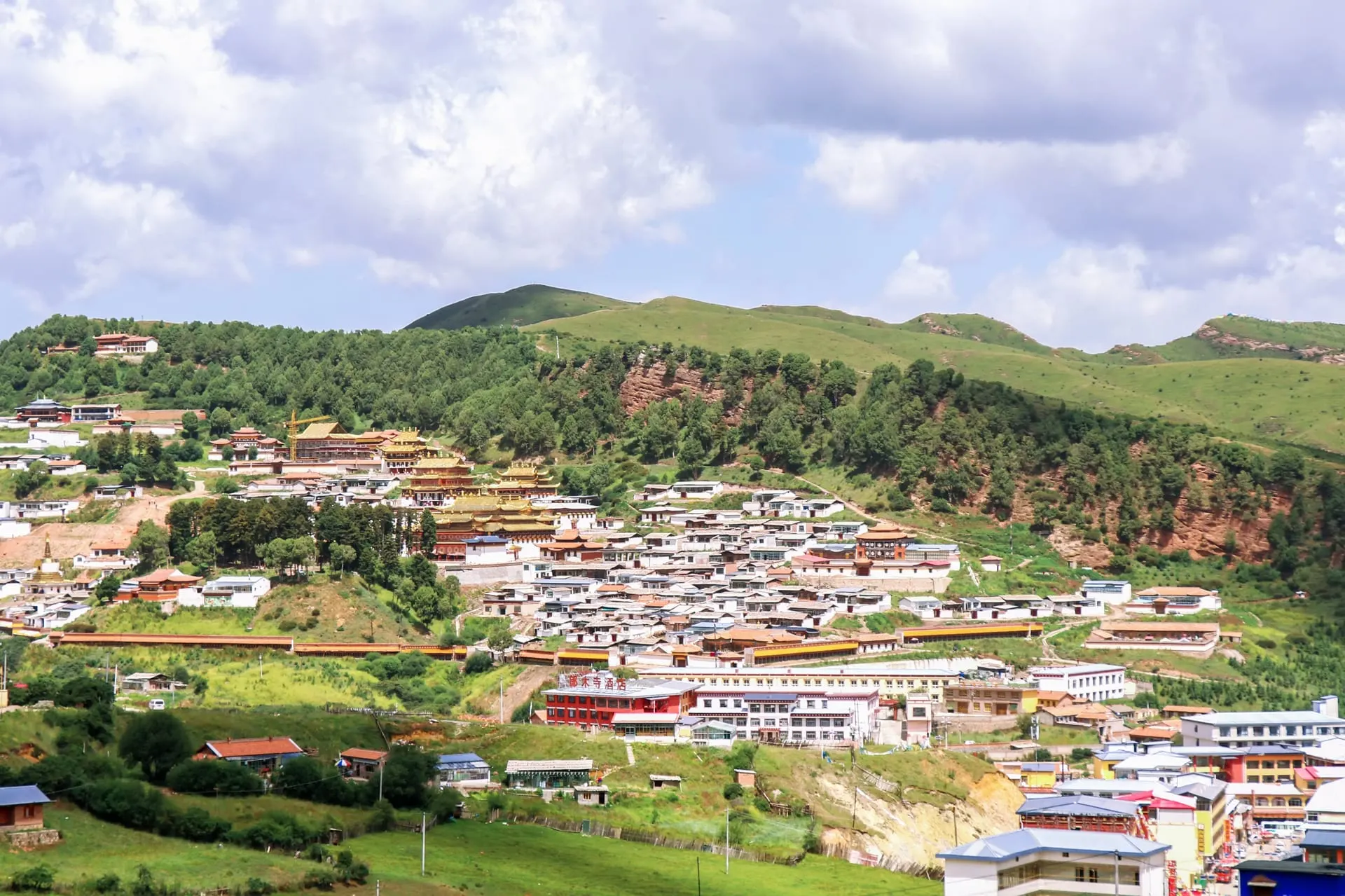
Sertri Monastery (赛赤寺, Sàichì Sì) — Gansu side
Founded 1748, larger and grander than Kirti, with sweeping golden roofs visible from across the valley. The sky burial site is on the ridge directly behind the monastery — access is restricted and photography is absolutely prohibited, but the climb to the ridge (even without approaching the burial site) gives the best panoramic view of Langmusi. ¥30 entrance as of June 2026.
Wikimedia Commons · CC-BY-SA
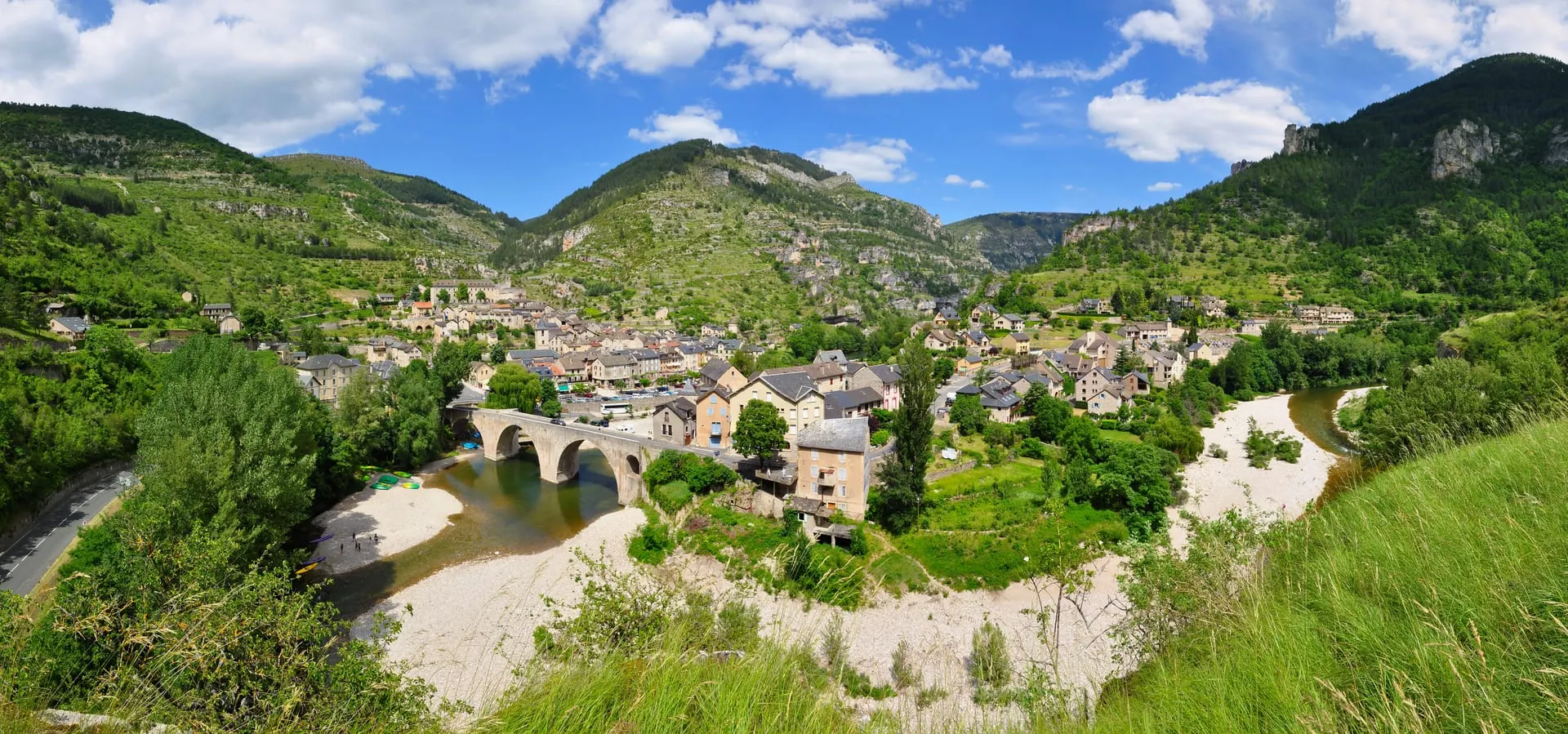
Namo Gorge (纳摩峡谷, Nàmó Xiágǔ)
A limestone canyon behind Kirti Monastery, cut by the Bailong River. The trail follows the stream through narrow rock walls, past prayer flags strung across the gorge, to a high meadow where yaks graze against a backdrop of jagged peaks. ¥30 additional ticket (included with Kirti Monastery entrance as of June 2026). The full trail is about 6 km round trip (2-3 hours). Easy walking; bring water because the altitude makes everything harder.
Wikimedia Commons · CC-BY-SA

Sky Burial Viewpoint (天葬台观景点, Tiānzàng Tái Guāndiǎn)
Behind Sertri Monastery. The sky burial site itself is off-limits and photographing it is both illegal and deeply disrespectful. But the ridge path leading up to the area offers the single best view of Langmusi — both monasteries, the valley, the river, and the surrounding peaks in one panorama. The climb takes 30-40 minutes from Sertri Monastery. Go in the early morning for the best light and to avoid the thin air heating up. Free to access the general ridge area.
Wikimedia Commons · CC-BY-SA
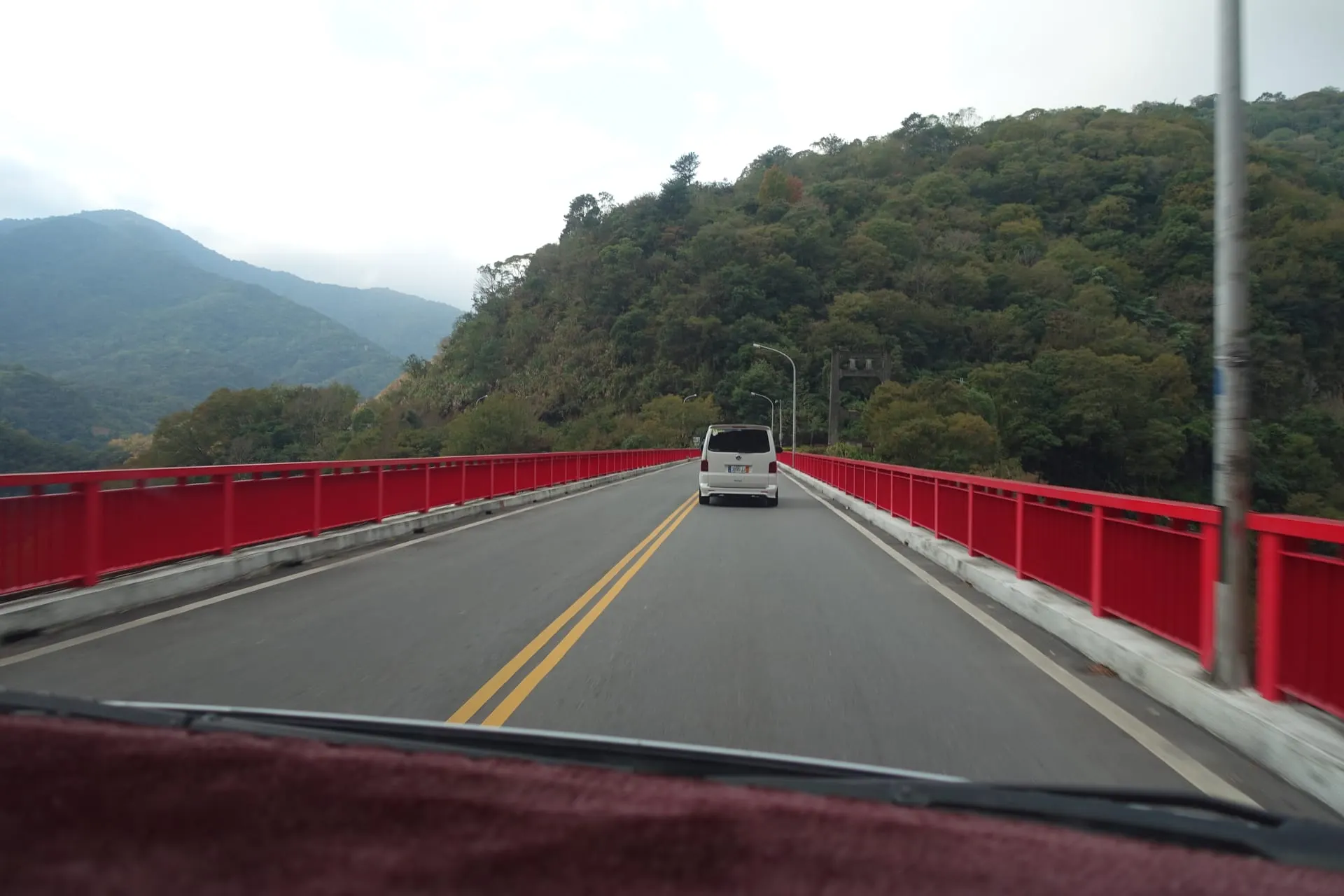
The Provincial Border Bridge (省界桥, Shěngjiè Qiáo)
A small bridge over the Bailong River in the center of town marks the Gansu-Sichuan border. Walk across it and you change provinces. It is entirely undramatic — a concrete span you could miss if you were not looking — but the symbolism of standing on a provincial line in a town that Tibetans simply call one place is worth the 30-second detour. Free. Good photo op if you want to say you stood in two provinces at once.
Wikimedia Commons · CC-BY-SA
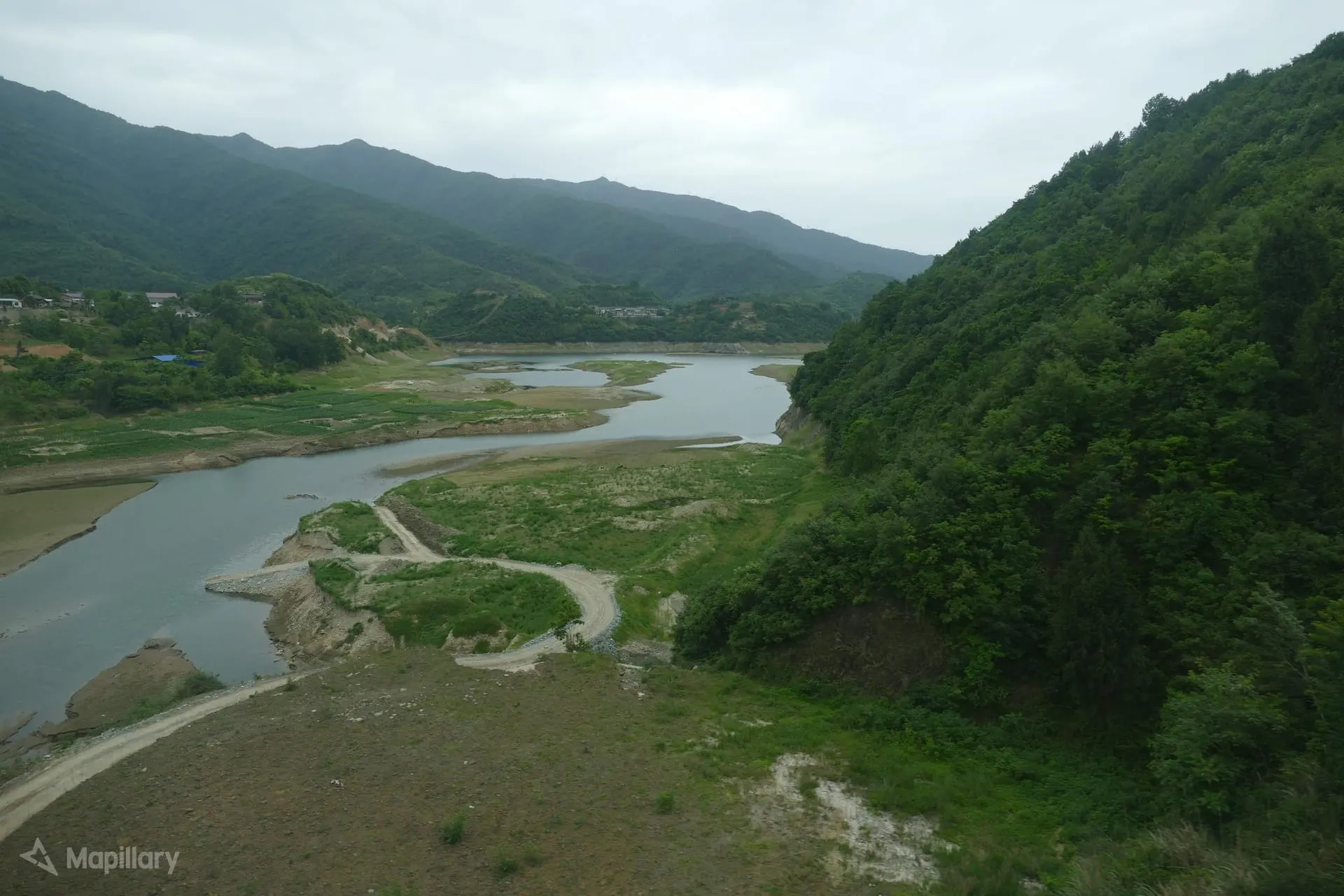
Bailong River Source (白龙江源头, Báilóng Jiāng Yuántóu)
The headwaters of the Bailong River emerge from a spring inside the Namo Gorge, about 2 km up the trail from Kirti Monastery. The water is crystal-clear and ice-cold year-round. Tibetan pilgrims stop here to splash water on their faces and fill bottles — the spring is considered sacred. On a hot July day at 3,300 meters, the cold spring water is the best drink you will have in Langmusi.
Wikimedia Commons · CC-BY-SA
STAY
Where to stay in Langmusi
Pick a base that matches the trip you want — imperial-central for sightseeing, hutong belt for character, Chaoyang for nightlife, or Qianmen for budget.
Sichuan Side (四川侧)
South of the river — Kirti Monastery, Namo Gorge trailhead, backpacker guesthouses, and the older, quieter half of town
#sichuan-sideGansu Side (甘肃侧)
North of the river — Sertri Monastery, the ridge viewpoint, larger hotels, and the slightly more developed half of town
#gansu-sideTown Center (镇中心)
The middle stretch of the main street around the border bridge — restaurants, shops, and the evening lamb skewer stalls
#town-centerNamo Gorge (纳摩峡谷)
The limestone canyon south of Kirti Monastery — stream, prayer flags, and the high alpine meadow at trail's end
#namo-gorge
ITINERARIES
Sample itineraries from Langmusi
Three ready-made routes, from a 1-day imperial sprint to a 5-day deep dive. Copy the day-by-day plan and adapt to your own pace.
- 1 DAY
Langmusi in One Day — Dual Monasteries & Gorge
A full day covering both monasteries and the Namo Gorge hike. Best for transit stops on the Gansu-Sichuan route.
- Transit travelers
- Quick cultural visit
- Hikers
- Day 01
Morning
Kirti Monastery morning chanting (06:00). Explore Kirti halls. Namo Gorge hike to the high meadow and back (3 hours).
Afternoon
Lunch at Himalaya Cafe. Cross the border bridge. Sertri Monastery visit and ridge climb for the panoramic view.
Evening
Sunset on the Sertri ridge if you time it right. Lamb skewers on the main street. Walk between the two provinces one more time.
- 2 DAYS
Langmusi in Two Days — The Classic Experience
The standard Langmusi visit — monasteries at dawn and dusk, the gorge hike, and time to absorb the atmosphere.
- First-time visitors
- Cultural travelers
- Photography
- Day 01
Morning
Kirti Monastery morning chanting (06:00). Explore monastery grounds. Namo Gorge hike (leave by 09:00, return by 12:00).
Afternoon
Lunch at Himalaya Cafe. Rest and acclimate. Late afternoon: Sertri Monastery, afternoon debate (14:00-16:00), ridge climb.
Evening
Sunset from the Sertri ridge. Lamb skewers on the main street. Rooftop at Himalaya Cafe for a nightcap.
- Day 02
Morning
Sunrise climb of Sertri ridge for the morning light on the valley. Explore Sichuan side lanes and artisan shops.
Afternoon
Optional: half-day horse trek into the grasslands. Or: revisit Kirti Monastery at a quieter time, walk the gorge again.
Evening
Dinner at Tibetan Kitchen. Prepare for onward travel to Xiahe, Zoige, or Songpan.
- 3 DAYS
Langmusi in Three Days — Deep Immersion
Add a full-day horse trek or longer hike to the two-day plan. For travelers who want to really sink into the rhythm of the valley.
- Horse riding enthusiasts
- Deep cultural immersion
- Slow travelers
- Day 01
Morning
Kirti Monastery morning chanting. Explore halls. Namo Gorge hike.
Afternoon
Lunch at Himalaya Cafe. Rest. Afternoon: Sertri Monastery and ridge.
Evening
Lamb skewers. Rooftop evening.
- Day 02
Morning
Sunrise ridge. Explore Sichuan side lanes. Visit artisan shops.
Afternoon
Half-day horse trek (or rest and enjoy the cafe rooftop).
Evening
Dinner at Tibetan Kitchen.
- Day 03
Morning
Full-day horse trek to a remote nomad camp, or a long hike into the surrounding alpine valleys.
Afternoon
Continue trek or hike. Return by late afternoon.
Evening
Final meal at your favorite spot. Pack for onward travel.
BUDGET
What a Langmusi trip costs
Per-person, per-day costs across three spending tiers. Excludes international flights and visa fees.
| Line item | Backpacker | Mid-range | Luxury |
|---|---|---|---|
| Dorm bed (backpacker guesthouse) | $7 | $0 | $0 |
| Budget private room | $0 | $20 | $0 |
| Mid-range hotel | $0 | $0 | $55 |
| Luxury hotel / trek camp | $0 | $0 | $120 |
| Monastery entrance (one) | $5 | $5 | $5 |
| Meal (local restaurant) | $4 | $8 | $15 |
| Half-day horse trek | $0 | $50 | $70 |
| Daily total estimate | $25 | $80 | $200 |
| Total per day | $41 | $163 | $465 |
$ USD per person per day, before international flights and visas. Last verified: Q3 2026.
STAY SAFE
Emergency contacts in Langmusi
Save these three numbers before you board the plane. China uses different hotlines than most countries — there's no 911.
- POLICE
110
- AMBULANCE
120
- FIRE
119
- TOURIST HOTLINE
0941-7121128 (Xiahe County Tourism Bureau — Langmusi falls under Xiahe jurisdiction on the Gansu side)
- ENGLISH-SPEAKING ER
Nearest: Lanzhou University Second Hospital (兰州大学第二医院), about 5.5 hours away. Luqu County Hospital (碌曲县医院, 1.5 hours) for basic care. No international-standard medical facilities within 5 hours.
Problems travelers hit in Langmusi
- Why is my Alipay not working?You linked a foreign Visa or Mastercard to Alipay but every transaction is rejected at the merchant.
- My China visa was denied — what now?Your L visa application was refused at the Chinese consulate and your trip is in 2–4 weeks.
- My passport was lost or stolen in China — what do I do?Your passport is gone (theft or loss) and you're in mainland China without travel documents.
- Why can't I book on 12306 with my foreign card?You tried to book a high-speed rail ticket on 12306.cn and your foreign Visa/Mastercard is rejected at checkout.
- Why is my VPN not working in China?You arrived in China, opened your VPN, and it will not connect at all or connects but no traffic loads.
- Why can't I book a Tibet trip on my own?You try to book Lhasa flights and hotels yourself but the booking fails, or you're turned away at the Lhasa airport without a permit.
Book activities in Langmusi
These are licensed tour operators and booking platforms we've vetted independently. Booking through these links may earn us a commission — see our affiliate disclosure. This never affects our editorial recommendations or the price you pay.
Frequently asked questions
Is Langmusi worth visiting?
How high is Langmusi and will I get altitude sickness?
How do I get to Langmusi?
Which is better — Kirti Monastery or Sertri Monastery?
What is the Namo Gorge hike like?
Can I see a sky burial in Langmusi?
Show all 20 FAQs
What is the weather like in Langmusi?
Where should I stay in Langmusi?
What is the food like?
How many days do I need in Langmusi?
Is Langmusi safe?
Do I need a VPN in Langmusi?
Can I use Alipay or WeChat Pay in Langmusi?
What is the difference between the Gansu side and the Sichuan side?
Can I visit Langmusi in winter?
What is the best time to visit Langmusi?
How do I get to Langmusi?
Is Langmusi worth visiting if I have already been to Labrang (Xiahe)?
What are the Tibetan festivals worth timing a visit for?
How long should I plan for Langmusi?
References

Related guides & destinations
Guide
How We Research 2026: NihaoVisit’s Methodology for China Travel Information
How NihaoVisit sources, verifies, and maintains 700+ pages of China travel information — our source hierarchy, fact-checking process, update
Guide
Fact-Checking Log 2026: Verified China Travel Information — NihaoVisit
A public log of fact-checking verification passes on NihaoVisit, showing what was verified, when, and against which sources — covering visa
Guide
Best Time to Visit China 2026: Month-by-Month Weather, Crowds, and Prices
The best time to visit most of China is April–May and September–October. Winter (Dec–Feb) is cold but cheap; summer (Jun–Aug) is hot and cro
Guide
VPN for China 2026: Which VPNs Work, eSIM Alternatives, and the Complete Pre-Trip Checklist
Most Western apps and websites are blocked in mainland China. A reliable VPN is essential for Google, Gmail, WhatsApp, Instagram, and most n
Guide
China SIM Card and eSIM Guide 2026: Stay Connected Without WeChat
A Chinese SIM or eSIM lets you use mobile data, maps, and ride-hailing without WiFi. Here is how to get one, the cost, and which provider to
Guide
Solo Female Travel in China 2026: Safety, Tips, and Real Experiences
China is one of the safer destinations for solo female travelers. Petty theft is rare, violent crime against tourists is extremely uncommon,