Lanzhou
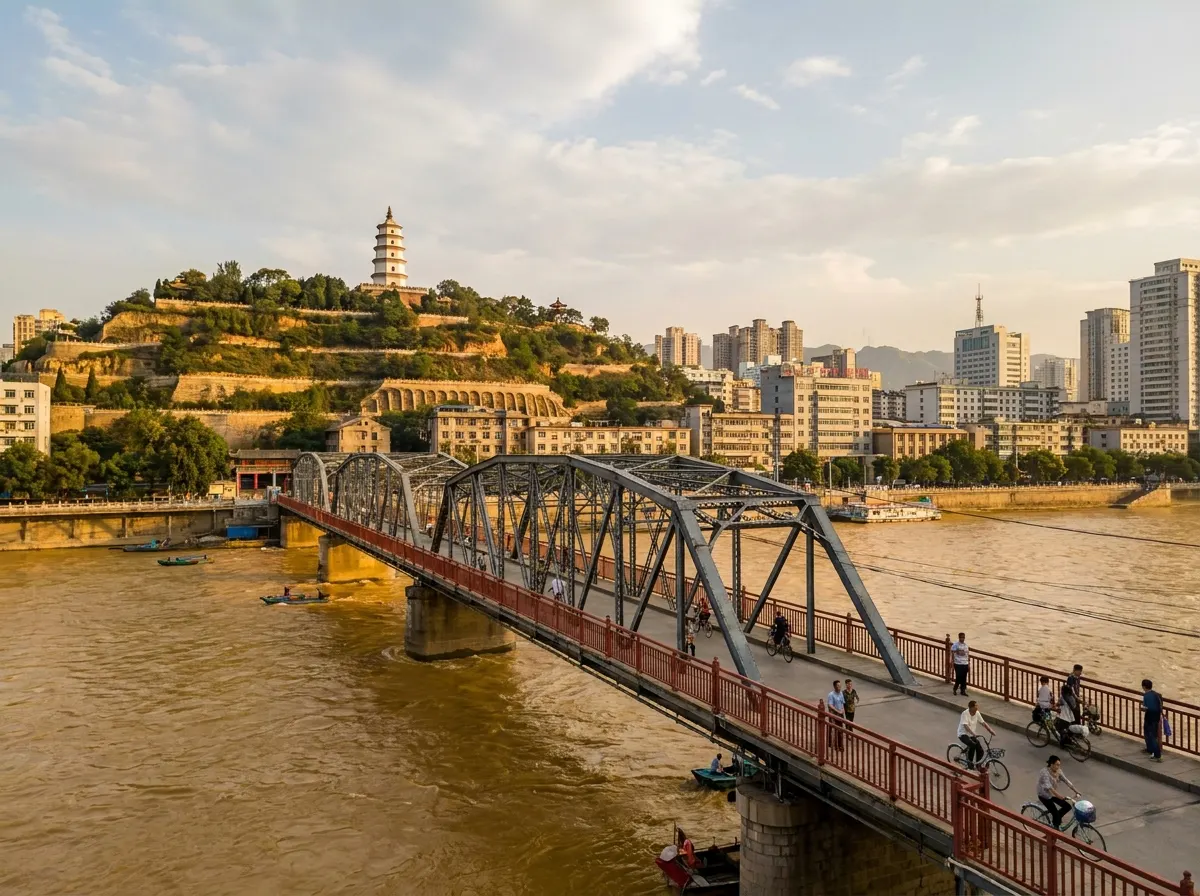
Lanzhou (兰州, Lánzhōu) is the capital of Gansu province and the natural gateway to the Hexi Corridor, the narrow passage between the Tibetan Plateau and the Gobi Desert that carried the Silk Road west for 2,000 years. The city straddles the Yellow River, which cuts a valley through the surrounding loess hills, and its defining landmarks — Zhongshan Bridge (1907), White Pagoda Mountain (free), and the Gansu Provincial Museum (free, home to the famous Flying Horse of Gansu bronze) — sit along or above the river. Lanzhou beef noodles (兰州牛肉面, ¥15-25) are the city's culinary export, eaten at breakfast and lunch across the country. High-speed rail connects Lanzhou to Xi'an (3 hours) and Xining (1 hour). Budget travellers can manage on ¥40 per day; mid-range runs about ¥120.
Why Lanzhou in 2026.
Gansu's provincial capital on the Yellow River. Beef noodles, the Flying Horse of Gansu, and Silk Road history at the edge of the Tibetan Plateau.
Quick Answer
Lanzhou (兰州, Lánzhōu) is the capital of Gansu province and the natural gateway to the Hexi Corridor, the narrow passage between the Tibetan Plateau and the Gobi Desert that carried the Silk Road west for 2,000 years. The city straddles the Yellow River, which cuts a valley through the surrounding loess hills, and its defining landmarks — Zhongshan Bridge (1907), White Pagoda Mountain (free), and the Gansu Provincial Museum (free, home to the famous Flying Horse of Gansu bronze) — sit along or above the river. Lanzhou beef noodles (兰州牛肉面, ¥15-25) are the city's culinary export, eaten at breakfast and lunch across the country. High-speed rail connects Lanzhou to Xi'an (3 hours) and Xining (1 hour). Budget travellers can manage on ¥40 per day; mid-range runs about ¥120.
| Worth visiting | Lanzhou is more of a transit city than a destination, but it rewards 1-2 days with one of China's best provincial museums, a genuinely atmospheric riverside, and the country's definitive noodle breakfast. If you are heading west into the Hexi Corridor (Zhangye, Jiayuguan, Dunhuang), Lanzhou is the logical starting point. |
|---|---|
| Recommended days | 1-2 days. One full day covers the museum and the Yellow River scenic strip. A second day lets you add White Pagoda Mountain, Five Springs Mountain, or a day trip to the Bingling Temple Grottoes. |
| Best time to visit | May-October. July-August can be hot (30-35°C). May and September-October offer the best balance of mild weather and clear skies. |
| Daily budget | $40 (backpacker) / $120 (mid-range) / $280+ (luxury) |
| Family friendly | Moderate. The museum's bronze works and Silk Road exhibits interest older children. The riverside parks and cable car to White Pagoda Mountain are family-accessible. The Bingling Temple day trip (boat ride + caves) works for families with children aged 8+. |
| Solo friendly | Yes. The museum, riverside, and food streets are straightforward solo. English is scarce, so a translation app is essential. |
| Airport | Lanzhou Zhongchuan International Airport (LHW), 70 km north of the city, ¥180-220 by taxi or ¥20 by airport express train (40 min) |
| High-speed rail | Xi'an North to Lanzhou West in 3 hours (¥180-260); Xining to Lanzhou West in 1 hour (¥50-80); Urumqi to Lanzhou West in 10 hours (¥500-700) |
| Language | Mandarin; the local dialect is Lanzhou-Ningxia Mandarin (兰银官话), close to standard Mandarin |
| Currency | CNY (¥) — Alipay and WeChat Pay accept foreign Visa/Mastercard |
| Time zone | China Standard Time (UTC+8) |
| Last updated | 2026-07-14 |
Want a Lanzhou plan built for you?
Jump to:
Is Lanzhou worth visiting?·History·Geography & Climate·Getting There·Getting Around·Where to Stay·Local Food·Itinerary·Monthly Weather·Practical Info·Tips & Warnings·Emergency Contacts·Larger Itinerary·Flying Horse of Gansu·Beef Noodles·Bingling Temple·Xiahe & Labrang·Street Food·Silk Road Significance·Provincial Museum Highlights·White Pagoda Mountain Walk·Hui Muslim Quarter·Binhai Road Viewpoints·Other Day Trips·Silk Road Comparison·Yellow River Geology·Lanzhou University·Local Crafts·Yellow River Photography·Modern Yellow River·Han Dynasty Wall·Books & Films·Photography Permits
Is Lanzhou worth visiting?
Lanzhou divides travellers cleanly. If you expect Xi'an-level monuments, you will be disappointed — the city has no UNESCO site in its urban core, no ancient city wall, and no imperial tomb. If you arrive expecting a gritty, working Yellow River city with one outstanding museum and the definitive bowl of beef noodles, Lanzhou delivers. I spent two days here and found the museum alone worth the stop, the riverside walk surprisingly pleasant at dusk, and the noodle breakfast a daily ritual I still think about. The city is a transit hub first, but it is a transit hub with a personality. Whether it is worth a dedicated detour depends on your route: if you are already heading west into the Hexi Corridor or south to Xiahe, add a day. If you are on a tight Beijing-Xi'an-Chengdu loop, skip it. Lanzhou does not pretend to be more than it is, which I respect.
What is the history of Lanzhou?
Lanzhou's name means "Orchid Prefecture," but the city's significance comes from geography, not flowers. It sits at the narrowest point of the Yellow River valley where the river cuts through the Longzhong loess plateau, making it the natural crossing point and the eastern gate of the Hexi Corridor. For 2,000 years, every Silk Road caravan, every military expedition to Central Asia, and every Buddhist monk travelling from India to China passed through or near Lanzhou. The Han dynasty fortified the crossing in the 2nd century BC under Emperor Wu, building the first garrison city. The Tang dynasty used Lanzhou as a forward base against the Tibetan Empire. The Northern Song lost and regained it repeatedly in border wars with the Tangut Western Xia. Under the Ming and Qing, Lanzhou was a regional administrative centre and a key tax-collection post on the Yellow River. The 1907 Zhongshan Bridge was the first permanent iron bridge across the entire Yellow River, funded by a Qing-dynasty official and built by the German firm Telge & Schroeter — the steel trusses were shipped from Germany, carried overland by mule, and riveted on site. During the Second Sino-Japanese War, Lanzhou became a supply-route hub for Soviet military aid trucked in from Xinjiang. The city industrialised heavily after 1949 and now houses roughly 4.4 million people, with petrochemicals, machinery, and noodles as its three main products.
What is the geography and climate of Lanzhou?
Lanzhou sits in a narrow east-west valley at 1,520 metres above sea level, squeezed between loess plateaus to the north and south. The Yellow River bisects the city, flowing west to east in this section — one of the few places where the Yellow River flows between two deserts on a constrained course. The climate is semi-arid continental: hot summers (30-35°C in July), cold dry winters (-5 to -10°C in January), and only about 330 mm of rain per year, mostly in July and August. The valley traps air pollution, and winter inversions can produce some of the worst air quality in northern China — an N95 mask is worth packing November through February. Spring brings dust from the Gobi. The elevation means the sun feels stronger than the temperature suggests; sunscreen and sunglasses are year-round gear. The upside of the dry climate: the skies over the Yellow River at sunset can be spectacular, with the loess hills turning gold and the river catching the colour.
How do I get to Lanzhou?
Lanzhou Zhongchuan International Airport (LHW) is 70 km north of the city — one of the more inconvenient airport-to-city distances in China. The airport express train (中川机场城际铁路) covers the route in 40 minutes for ¥20; it departs roughly every 30 minutes and arrives at Lanzhou West Station. A taxi takes 1 hour and costs ¥180-220. The airport handles domestic flights from Beijing (2 hours, ¥600-1,200), Shanghai (3 hours), Xi'an (1 hour), and Urumqi (2.5 hours). Internationally, LHW has direct flights from Bangkok, Kuala Lumpur, and a handful of Central Asian cities, but most foreign visitors arrive by high-speed rail. Lanzhou West Station connects to Xi'an North (3 hours, ¥180-260, 30+ daily trains), Xining (1 hour, ¥50-80), Zhangye (3 hours), Jiayuguan (4.5 hours), and Urumqi (10 hours). Book HSR tickets on the 12306 app or Trip.com. The city has two main HSR stations: Lanzhou West (兰州西站) for most long-distance services, and Lanzhou Station (兰州站) closer to the city centre for some conventional trains. Taxis from Lanzhou West to the city centre take 20 minutes (¥25-35). Metro Line 1 connects Lanzhou West to the central Xiguan area in 15 minutes (¥3-5).
How do I get around Lanzhou?
Lanzhou Metro has two lines. Line 1 (east-west) is the useful one: it connects Lanzhou West Station to the city centre (Xiguan stop for Zhongshan Bridge and White Pagoda Mountain), runs along the main commercial corridor, and reaches the eastern university district. Fares are ¥2-6; stations have English signage. Line 2 opened in 2023 and covers the northern bank. Buses (¥1-2) cover the whole city but are Chinese-only and slow. DiDi works reliably (¥10-25 for most trips), links to foreign cards, and eliminates the language barrier. Taxis start at ¥10 for 3 km. The city centre — the museum, Zhongshan Bridge, White Pagoda Mountain, and the Waterwheel Garden — are all within a 4 km strip along the river. It is walkable if the weather cooperates, but the summer heat and winter cold make DiDi the default for most of the year. For the Bingling Temple Grottoes day trip, you need a car or a tour. A private driver for the day costs ¥600-800, including the 2.5-hour drive to the Liujiaxia Reservoir, the boat across the reservoir, and the wait time. Group tours run ¥300-400 per person. Book through your hotel.
Where should I stay in Lanzhou?
Three areas cover most needs. (1) Chengguan District / Xiguan (城关区/西关): the city centre, walking distance to Zhongshan Bridge, White Pagoda Mountain, and the Yellow River promenade. Mid-range chains (Atour, Ji Hotel, Hanting) run ¥200-400 per night. This is the best base for first-timers. (2) Near Lanzhou West Station (兰州西站): convenient for late HSR arrivals or early departures. Hotels here are newer and slightly cheaper (¥180-350 mid-range) but the area is culturally flat. Stay here only if transit timing demands it. (3) Anning District (安宁区): the university district west of the city centre, with a younger, cheaper food scene and access to the western section of the river park. Mid-range hotels run ¥150-300. Good for budget travellers and long stays. The Crowne Plaza (¥600-900) and the Wanda Vista (¥700-1,100) are the luxury options, both near the city centre.
What local food should I try in Lanzhou?
Lanzhou beef noodles (兰州牛肉面, Lánzhōu niúròu miàn) are the city's culinary identity and the single best reason to eat here. A proper bowl costs ¥15-25 as of June 2026 and consists of hand-pulled wheat noodles in a clear beef-and-spice broth, topped with sliced beef, radish, fresh coriander, chopped scallions, and a spoonful of chili oil. The noodles are pulled to order in one of eight thicknesses — "二细" (èr xì, medium-thin) is the standard request; "毛细" (máo xì, hair-thin) is for noodle purists; "大宽" (dà kuān, wide belt noodles) is the most dramatic. The dish is eaten at breakfast and lunch; most shops close by 14:00 because the broth loses its clarity by afternoon. Beyond noodles: fermented glutinous rice (甜醅, tián pēi), a sweet, slightly alcoholic barley ferment served cold — refreshing on a hot day at ¥5-8. Niang pi (酿皮, cold skin noodles), thick wheat-starch noodles in sesame paste, vinegar, and chili oil, ¥8-12. Yellow River carp (黄河鲤鱼), braised in soy sauce at riverside restaurants, ¥60-120 for a whole fish. Lamb kebabs (羊肉串, ¥3-5 each) in the night market district near Zhengning Road (正宁路). The famous beef noodle shops include Mazilu (马子禄, the historic brand, ¥18-25), Wumule (吾穆勒, local favourite), and Ande (安得, newer but excellent). I ate at Mazilu and the noodles were flawless, but the dining room was a fluorescent-lit cafeteria — do not expect atmosphere. A local told me Wumule has the better broth, and after trying both I agree.
What is a good Lanzhou itinerary?
Day 1 — City Core. Morning: Gansu Provincial Museum (3 hours, arrive by 08:30). Lunch: beef noodles at Mazilu or Wumule (¥15-25). Afternoon: walk the Yellow River promenade from the Mother Sculpture to Zhongshan Bridge (1.5 km, 30 minutes on foot, more if you stop for photos). Cross Zhongshan Bridge, then cable car or stairs up White Pagoda Mountain for sunset river views. Evening: Muslim Quarter street food on Zhengning Road (正宁路夜市) — lamb skewers, niang pi, tián pēi. Day 2 (optional) — Bingling Temple Grottoes day trip. Leave at 07:30, return by 18:00. Full day, but the 27-metre Maitreya Buddha and the 1,600-year-old cave murals justify the effort. If you skip Bingling, spend the morning at Five Springs Mountain (2-3 hours) and the afternoon at the Waterwheel Garden and the Beef Noodle Museum.
What is the monthly weather in Lanzhou?
January: high 2°C, low -10°C, 1 rainy day. February: high 7°C, low -6°C, 2 rainy days. March: high 14°C, low -1°C, 3 rainy days — dust possible. April: high 21°C, low 6°C, 5 rainy days. May: high 26°C, low 11°C, 8 rainy days — best month. June: high 29°C, low 15°C, 9 rainy days. July: high 32°C, low 18°C, 11 rainy days — hottest month. August: high 30°C, low 17°C, 10 rainy days. September: high 24°C, low 12°C, 9 rainy days — best autumn month. October: high 18°C, low 4°C, 5 rainy days — clear skies, cold nights. November: high 9°C, low -3°C, 2 rainy days. December: high 3°C, low -9°C, 1 rainy day.
What practical information do I need?
Visa: standard Chinese tourist visa required. Lanzhou is not covered by the 144-hour transit policy. Money: Alipay and WeChat Pay are near-universal in the city; link a foreign card before arrival. Carry ¥150-200 in cash for smaller noodle shops, street stalls, and temple donation boxes. Connectivity: pick up a Chinese SIM at the airport (China Unicom counter, roughly ¥100 for a 7-day data plan) or use an eSIM. A VPN installed before you leave home is essential — the Great Firewall blocks everything Western. I found the Lanzhou airport SIM desk less English-friendly than Beijing's; have your passport ready and expect a 15-minute sign-up. Language: English is minimal. The Gansu Provincial Museum has English signage on the main exhibits. Hotels and train stations have basic English. Everything else — noodle shops, taxi drivers, street stalls — is Chinese-only. A printed hotel card in Chinese and a translation app with offline Chinese downloaded are non-negotiable. Power: 220V, Type A/C/I sockets.
What tips and warnings should I know for Lanzhou?
Lanzhou has genuine issues that most guidebooks soften. First, the air quality can be punishing from November through February — I checked the AQI in December on a research trip and it hit 280, firmly in the "hazardous" range. An N95 mask makes the difference between a tolerable day and a lung-burning one. Second, the beef noodle ritual is strict: the best shops open at 06:00 and close by 14:00. If you show up at 16:00 expecting the definitive bowl, you will eat subpar noodles at a tourist shop that keeps broth simmering all day. Get up early. Third, the Bingling Temple day trip depends on water levels at the Liujiaxia Reservoir — if the reservoir is low (common in April-May before the snowmelt), the boat trip takes longer and the cave approach stairs are partially submerged. Call ahead or ask your hotel to check conditions before committing a full day. Fourth, the Zhongchuan Airport is genuinely far: the express train is reliable, but the last departure from the city is around 22:00. If you have an early-morning flight, book an airport hotel. Fifth, Lanzhou taxi drivers have a reputation for refusing short fares during rush hour — use DiDi, which locks in the price and destination. On a positive note, pickpocketing is rarer than in Xi'an or Chengdu, and the riverside is well-patrolled and safe at night.
What are the emergency contacts in Lanzhou?
Police: 110. Ambulance: 120. Fire: 119. Traffic accident: 122. Lanzhou Public Security Bureau Foreign Affairs: +86-931-871-8300. The best hospital for foreigners is the Gansu Provincial People's Hospital (甘肃省人民医院), which has a basic English-speaking international clinic. For serious medical emergencies, evacuation to Beijing or Shanghai is the practical route. Your country's embassy in Beijing handles consular support; there is no consulate in Lanzhou.
How does Lanzhou fit into a larger China itinerary?
Lanzhou is the eastern anchor of the Hexi Corridor route, a 1,000-km string of Silk Road cities running northwest from Lanzhou to Dunhuang. The classic 7-10 day Gansu corridor itinerary: Xi'an → Lanzhou (1-2 nights) → Zhangye (1 night, rainbow-coloured Danxia landforms) → Jiayuguan (1 night, Ming-dynasty fortress at the Great Wall's western end) → Dunhuang (2-3 nights, Mogao Caves and Singing Sand Dunes) → fly out or return to Xi'an by HSR. Lanzhou also connects to the Tibetan cultural region: Xiahe (夏河, Labrang Monastery, one of Tibetan Buddhism's six great monasteries) is 4 hours south by car. Xining (1 hour HSR) is the jump-off for Qinghai Lake. For travellers doing a Beijing-Xi'an-Chengdu triangle, Lanzhou is a detour. For anyone heading west into the Silk Road proper, Lanzhou is the unavoidable and worthwhile starting point.
What is the Flying Horse of Gansu and why does it matter?
The Flying Horse of Gansu (铜奔马, Tóng Bēn Mǎ, literally "Bronze Galloping Horse") is a 34.5 cm-tall Eastern Han dynasty (25-220 AD) bronze statue of a horse in full gallop, balanced on one hoof atop a flying swallow. Discovered in 1969 in a Han-dynasty tomb in Wuwei, about 270 km northwest of Lanzhou, it became the logo of China Tourism and is arguably the most reproduced single artifact in the country. The horse's pose defies physics — all four hooves are off the ground, the body tilted forward, the tail streaming horizontally, and the single hind hoof rests on a bird — and the engineering of the weight distribution is precise enough that the statue has never tipped over. It is displayed in the Gansu Provincial Museum in Lanzhou in a dedicated room with 360-degree viewing. The statue is smaller than most visitors expect; the impact comes from the craftsmanship of the casting and the 1,800-year-old bronze patina. The museum also holds the original excavation photographs and a replica of the tomb chamber. The Flying Horse is the single most compelling reason to visit the Gansu Provincial Museum, but the Silk Road textile gallery and the Neolithic painted pottery hall (with Majiayao-culture urns from 3,000 BC) are strong secondary draws.
Why are Lanzhou beef noodles a breakfast food?
Authentic Lanzhou beef noodles are a morning dish because the defining element — the clear beef broth — must be made fresh from beef bones, spices, and water, simmered for 5-6 hours starting around midnight. By 14:00, the broth has been reheated too many times and loses its clarity, at which point serious shops close. This is not a flexible custom; it is a quality-control mechanism that the city enforces through customer demand. The noodle-pulling itself is its own craft. A skilled lamian master (拉面师傅) can hand-pull a lump of dough into 256 strands of uniform thickness in under two minutes, working at a wooden counter visible from the street. The eight standard thicknesses range from "毛细" (hair-thin, 1 mm) to "大宽" (belt-wide, 3 cm). The default order is "二细" (medium-thin). The full bowl includes: hand-pulled noodles, clear beef broth, thinly sliced beef, sliced white radish, fresh coriander, chopped scallions, and a ladle of chili oil — the chili is fragrance-forward, not aggressively hot. A bowl costs ¥15-25 as of June 2026. Extras: an egg (加鸡蛋, ¥2), extra beef (加肉, ¥8-12), or a side of pickled cabbage (小菜, ¥2-3). The best shops have queues out the door by 07:30. You eat fast — a bowl takes 10 minutes — and you leave. This is fuel, not a leisurely brunch.
What makes the Bingling Temple Grottoes worth the day trip from Lanzhou?
Bingling Temple (炳灵寺石窟) is a UNESCO-listed Buddhist cave complex carved into the vertical sandstone cliffs of a side canyon off the Yellow River, roughly 80 km southwest of Lanzhou. The site contains 183 caves with 694 stone statues and 82 clay sculptures spanning the Western Qin (385-431 AD) through the Ming dynasty — a continuous 1,500-year artistic sequence. The highlight is Cave 169, a natural limestone cavern 30 metres above the river that contains China's earliest precisely dated Buddhist cave art, with an inscription reading "first year of Jianhong" (420 AD). The 27-metre seated Maitreya Buddha, carved into the cliff face above the river, is the largest statue on site and visible from the approach boat. Reaching Bingling requires a 2.5-hour combination of driving to the Liujiaxia Reservoir dam and a speedboat or ferry across the reservoir (40-60 minutes). The boat ride itself is part of the experience: you cross a massive reservoir flanked by loess and sandstone cliffs that shift from beige to rust-red as you approach the canyon. Most guidebooks describe Bingling as "remote," but the reservoir boat landings are well-developed and the site gets domestic tour groups. Visit on a weekday to minimise crowds. Entry is ¥50, plus ¥80-120 for the boat (prices fluctuate with the season). The grottoes are smaller and less visually overwhelming than Dunhuang's Mogao Caves, but the canyon setting — water, sandstone, and 1,600-year-old Buddhas carved into the cliffs — has an atmosphere that Mogao's desert location cannot match. If you are heading to Dunhuang anyway, Bingling is optional. If Dunhuang is not on your route, Bingling gives you a Silk Road Buddhist cave experience from Lanzhou in a single day.
Is Lanzhou worth a day trip to Xiahe and Labrang Monastery?
Xiahe (夏河) and its Labrang Monastery (拉卜楞寺, Lābǔléng Sì) sit 4 hours south of Lanzhou by car in the Gannan Tibetan Autonomous Prefecture. Labrang is one of the six great monasteries of the Gelugpa school of Tibetan Buddhism, a sprawling complex of white-walled halls, golden roofs, and a 3-km kora (pilgrim circumambulation path) lined with prayer wheels. The monastery houses roughly 1,500 monks and a printing press that still produces scriptures using hand-carved woodblocks. A day trip from Lanzhou is technically possible — leave at 06:00, arrive by 10:00, explore for 4 hours, and return by 20:00 — but it makes for a 14-hour day with 8 hours of driving. I recommend an overnight instead: leave Lanzhou in the morning, spend the afternoon and the kora at Labrang, stay overnight in Xiahe (several Tibetan-run guesthouses, ¥120-250 per night), and return to Lanzhou the next morning. The altitude at Xiahe is 2,900 metres, enough to cause mild altitude symptoms if you have come straight from sea level. Acclimatise with a day in Lanzhou (1,520 m) first. Labrang entry is ¥40. The monastery is most atmospheric at dawn, when monks perform morning chants and pilgrims walk the kora in the thin high-altitude light. If you have time, pair Xiahe with a visit to the Sangke Grasslands (桑科草原, 15 km from Xiahe), a high-altitude meadow with Tibetan nomad camps and yak-herding families. The Xiahe detour transforms Lanzhou from a Silk Road transit stop into a gateway to the Tibetan plateau.
What are the best Lanzhou street food streets?
Zhengning Road Night Market (正宁路夜市) is the main food street, running roughly 400 metres through the Muslim Quarter. It fires up around 18:00 and stays open until midnight. The staples: lamb skewers (羊肉串, ¥3-5 each) grilled over charcoal, cumin-heavy and smoky. Niang pi (酿皮, ¥8-12), the cold wheat-starch noodles in sesame-tahini sauce. Fermented glutinous rice (甜醅, tián pēi, ¥5-8), served cold and spooned from large ceramic vats. Yellow River carp grilled whole (¥40-60 per fish). Milk-egg fermented rice wine (牛奶鸡蛋醪糟, niúnǎi jīdàn láozāo, ¥10-15), a hot, sweet, slightly alcoholic night-market dessert drink that is a Lanzhou winter speciality. Grilled lamb offal skewers (烤羊杂, ¥3-5) for the adventurous. For daytime food, the area around Zhongshan Bridge has Muslim-operated lamb-noodle shops, and the alleys west of Xiguan intersection hold small breakfast stalls selling soy milk, fried dough, and the early-morning beef noodles that the tourist masses miss. The Zhengning Road market is a working local market, not a curated tourist attraction — it is crowded, noisy, and smoky from charcoal grills, and the pavement is greasy. I loved it. Bring cash in small notes and your translation app.
What is the Silk Road significance of Lanzhou?
Lanzhou is one of those cities that does not appear in Silk Road guidebooks as a destination, yet the route is unimaginable without it. The Silk Road did not begin in Xi'an. It began in Chang'an (Xi'an), then crossed the Yellow River at Lanzhou, and only then turned west into the Hexi Corridor toward Dunhuang and Central Asia. The city's role was that of a gateway: every camel caravan loaded at the western terminus had to cross the Yellow River somewhere, and the narrowest, safest crossing was the one at Lanzhou. The name "Lanzhou" is a contraction of an older Tang-dynasty garrison name; the city's earliest recorded function was as a ferry and ford point on the Yellow River, not as a settlement. From the Han dynasty (2nd century BC) onward, when Emperor Wu dispatched Zhang Qian westward to secure alliances against the Xiongnu, the Lanzhou crossing became the strategic linchpin of China's western frontier. Han armies provisioned here before heading into the Hexi Corridor; Tang generals staged here before campaigning against the Tibetan Empire and the Western Turks; Ming and Qing tax caravans paused here to record cargoes of tea, silk, and rhubarb headed for Xinjiang. The visible evidence of this role is sparse in the modern city. The Gansu Provincial Museum holds the most concentrated collection of Silk Road artifacts in northwest China — Sogdian merchant letters on paper, Persian silver coins found in Tang tombs along the corridor, Buddhist sculpture fragments from cave temples in the Hexi region, and the famous Silk Road textile gallery with silk fragments woven in Central Asian motifs recovered from a 4th-century tomb. The geography is the real museum: stand on Zhongshan Bridge at dawn, look down at the muddy Yellow River, and you are looking at the river that every Silk Road traveller had to cross. The 1907 bridge, with its German steel trusses shipped overland from Tianjin, marks the spot where pontoon bridges, sheepskin rafts, and ice-ferry crossings served the route for 2,000 years. Modern Lanzhou is not a Silk Road city the way Dunhuang is, but it is the eastern anchor of the corridor and the place where the route physically began.
What can I see at the Gansu Provincial Museum beyond the Flying Horse?
The Flying Horse of Gansu dominates the museum's reputation, and rightly so, but a serious visit takes at least three hours and the rest of the collection is not filler. The museum is laid out in two main buildings on the western side of the city, both free with a WeChat reservation, and the second building (opened 2015) is the modern purpose-built one most visitors will spend their time in. The Silk Road gallery runs along the upper floor and is the museum's other headline exhibit. It contains painted clay tomb figures from the Wei-Jin period (220-420 AD), many of them in vivid red, green, and ochre pigments that have survived 1,800 years underground. A long case of Sogdian merchant goods — gold headdress fragments, silver belt buckles, inlaid bronze mirrors, and a glass perfume bottle of unmistakable Roman-Egyptian origin recovered from a tomb near Jiuquan — gives the visitor a tactile sense of how far Silk Road trade reached. The Buddhist art hall contains standing and seated Buddhas carved in sandstone from the Hexi corridor cave temples (Mogao, Maijishan, Bingling), covering roughly 1,000 years of stylistic evolution from the Indian-derived early forms to the fully sinicised Tang-dynasty style. The Neolithic painted pottery gallery is the surprise highlight for many visitors. The Majiayao culture (3,300-2,000 BC), centred in what is now Gansu and eastern Qinghai, produced earthenware urns and bowls painted in mineral pigments with abstract spiral and wave patterns. The museum holds hundreds of them, and the most striking examples — large painted funerary urns with handles shaped like human figures — are a visual link between the Neolithic Yellow River cultures and the Bronze Age art of the Shang. The Dinosaur Hall, tucked into the eastern wing, contains fossilised skeletons from the Early Cretaceous Yujingzi Basin in western Gansu, including a complete Huanghetitan ruyangensis sauropod. For visitors with limited time, the museum's recommended route is: Flying Horse room (15 minutes), Silk Road gallery (45 minutes), Buddhist art (30 minutes), Neolithic pottery (30 minutes), Dinosaur Hall (15 minutes), and a coffee in the museum's small lobby. The museum gift shop sells licensed Flying Horse replicas (¥80-200) and a small selection of English-language Silk Road books.
How do I plan a White Pagoda Mountain and riverside walk?
The walk from the Yellow River Mother Sculpture to the top of White Pagoda Mountain and back is the single best half-day in Lanzhou, and it costs almost nothing. The route is roughly 4 km out-and-back, mostly flat along the river, with a short climb (or cable car) at the end. Start at the Yellow River Mother Sculpture (黄河母亲雕塑) in the southern riverside park, about 20 minutes' walk east of Zhongshan Bridge. The sculpture itself, a reclining mother cradling a child, is more a civic symbol than a great work of art, but the riverfront park around it is the cleanest stretch of the promenade and the best spot to watch the sunset colour the loess hills. From the sculpture, walk west along the south bank path. The promenade is a paved, lamp-lit riverside walkway that runs 4 km along the Yellow River's south bank, with bench-lined sections, exercise stations, and small tea stalls. Local retirees practise tai chi along this path in the early morning; couples and families walk it after dinner. Plan 45-60 minutes for the full east-to-west walk, longer if you stop for photos. At the western end of the south bank path, you reach Zhongshan Bridge. Cross the bridge on foot — it is pedestrian-only since 2011 — and the north bank begins. From the north end of the bridge, a stone staircase leads uphill into White Pagoda Mountain Park (白塔山公园). The stairs are free and the climb is 15-20 minutes (some sections are steep). Alternatively, the cable car (索道) leaves from a station a few hundred metres north of the bridge and costs ¥45 round-trip (¥25 one-way). The cable car is worth it for the views; the stairs are worth it for the forested park atmosphere. The summit of White Pagoda Mountain holds the Yuan-dynasty white pagoda (白塔), rebuilt in the 1450s after the original Mongol-era structure collapsed. The pagoda is closed to visitors but the surrounding platform gives a 360-degree view: the Yellow River curving west to east below, Zhongshan Bridge in the foreground, the city's smog-blanketed high-rises in the middle distance, and the loess hills framing the valley. Sunset here is genuinely good. The descent via the same route takes 30-45 minutes. A shortcut: after visiting the pagoda, take the cable car down (¥25 one-way) and walk back across the bridge to the south bank. Total time: 3 hours including transit.
What is the Hui Muslim quarter in Lanzhou?
Lanzhou has a substantial Hui (回族) population, estimated at roughly 100,000 people, concentrated in a long, narrow district running along the river through the city centre. The Hui are ethnically Chinese-speaking Muslims, descendants of Arab, Persian, and Central Asian merchants who settled along the Silk Road from the Tang dynasty onward, intermarried with Han Chinese, and adopted Chinese language and dress while retaining Islamic practice. The Lanzhou Hui quarter is not a single walled district the way Xi'an's Muslim Quarter is, but a series of overlapping neighbourhoods and food streets, the most famous of which is the area around Xiguan (西关) and the Zhengning Road night market. The cultural markers are: halal (清真, qīngzhēn) restaurants and butcher shops (look for the green Arabic-style signs), mosques (the largest is the Xiguan Mosque on Xiguan Cross, dating to the Ming dynasty, with a green dome and a courtyard that is open to visitors outside prayer times), and a strong street-food culture that overlaps with the broader Lanzhou food scene. The Hui contribution to Lanzhou cuisine is decisive: beef noodles, lamb skewers, niang pi, and the night-market desserts are all Hui-origin foods. The Hui also operate most of the city's halal restaurants, the largest beef noodle chains, and a number of the more atmospheric mid-range restaurants near the river. A walking tour of the Hui quarter can be done in 2-3 hours. Start at the Xiguan Mosque (free entry, modest dress required, no entry during Friday noon prayer), walk east along the alleys towards the river, stop at a small halal beef noodle shop for a working-class bowl (¥12-15, half the price of the famous brands and frequently better), continue to the Zhengning Road night market as it opens around 18:00, and finish with milk-egg fermented rice wine at one of the night-market stalls. A word of etiquette: do not bring pork products into halal restaurants, do not photograph worshippers at prayer, and remember that the area is a working neighbourhood, not a tourist attraction — most people you see are not performing for visitors. The Hui community is devout and conservative; the women you see in headscarves are typically observing religious practice, not making a fashion statement.
What are the best viewpoints along Binhai Road?
Binhai Road (滨河路) is the formal name for the riverside road that runs along the south bank of the Yellow River through the city centre. The full road stretches roughly 20 km, but the section most useful to visitors is the 4 km between the Yellow River Mother Sculpture (in the east) and the Waterwheel Garden (in the west). Along this stretch are several worthwhile stops and viewpoints, each with a different character. (1) Yellow River Mother Sculpture Park (黄河母亲雕塑, eastern end): the riverside park around the 1986 sculpture, the best spot for sunset photos of the river and the loess hills. Free, 24-hour access. (2) The Waterwheel Garden (水车园, western end): the reconstructed Ming-dynasty irrigation waterwheels, with a riverside path that gives an unobstructed view of the river and the waterwheels in operation. ¥20 entry, 08:00-18:00. (3) The Zhongshan Bridge viewpoint (middle of the strip): the most-photographed angle in Lanzhou, looking south across the bridge at the city skyline with the Yellow River and the bridge as foreground. Best at dusk when the bridge lights come on. (4) The Riverside Promenade (between the Mother Sculpture and the bridge): a continuous 2 km pedestrian path with shaded benches, street-food stalls, and the city's main riverside people-watching. Free, busy from 16:00 onwards. (5) The Binhai Road Pedestrian Bridge (footbridge near the museum): an underused elevated viewpoint that gives a different angle on the river, the city, and the loess hills to the north. Free, open 24 hours. (6) The east end of the river park near Anning Bridge: a quieter, less-touristed stretch with a series of small pavilions and a riverside teahouse, popular with locals. The whole Binhai Road strip is best walked rather than driven, and it is one of the few areas in Lanzhou where English signage appears. The walk takes 90-120 minutes at a leisurely pace with photo stops. Bring water in summer — the riverside path has limited shade, and the river valley heat can hit 35°C by mid-afternoon.
What day trips from Lanzhou go beyond Bingling and Xiahe?
Most guidebooks cover Bingling Temple and Xiahe/Labrang, but several other worthwhile day-trip targets sit within 2-3 hours of Lanzhou and reward travellers with extra days. (1) Liujiaxia Reservoir (刘家峡水库, 1.5 hours west, on the way to Bingling): the reservoir is a striking turquoise-green lake in the middle of the loess plateau, and the dam itself is one of China's largest hydroelectric facilities, completed in 1969. Boat trips on the reservoir cost ¥80-150 and run 1-2 hours. The water colour, surrounded by brown hills, is the visual highlight. (2) Tulugou National Forest Park (吐鲁沟国家森林公园, 2.5 hours west): a protected alpine canyon with Tibetan-style forest, waterfalls, and quiet hiking trails. Best May-October. Entry ¥80, plus an electric shuttle bus for the 15 km approach road. The park gets few foreign visitors. (3) Bingling Temple is covered elsewhere in this guide. (4) The Yellow River Stone Forest (黄河石林, 5 hours north, near Baiyin): a UNESCO-listed geopark of yellow sandstone pillars formed by water and wind erosion, best explored by jeep, donkey cart, and a Yellow River boat ride through the canyon. It is a full-day commitment each way, but the landscape is genuinely otherworldly. The site is part of a Silk Road cultural route and features as a filming location for several Chinese films. (5) Gannan Grasslands (甘南草原, 4-6 hours south): the high-altitude Tibetan and Amdo grasslands that stretch from Xiahe to the Qinghai border. The Maqu and Luqu sections are the most scenic, with yaks, prayer-flag-strewn passes, and Tibetan nomad camps. Best June-September. (6) Linxia (临夏, 2 hours southwest): a Hui Muslim cultural centre with several large mosques and a lively bazaar. Less famous than the Xi'an Muslim Quarter, but the food is excellent and the area is more authentically Hui. (7) Maijishan Caves (麦积山石窟, 4 hours southeast, in Tianshui): the "Maijishan" grottoes, with cliffside Buddhist sculpture rivaling Mogao in scope. Combined with a high-speed rail trip, this can be a long day trip. Most of these are not realistic as a single-day excursion unless you start very early; the smarter pattern is to use one of them as a long day trip and combine Lanzhou with a 2-night stop in a satellite town.
How does Lanzhou compare to Xi'an and Dunhuang for a Silk Road visitor?
A common question from first-time Silk Road visitors is whether to skip Lanzhou, or whether to spend more time in Xi'an or Dunhuang instead. The honest answer is that the three cities serve different functions and are not interchangeable. Xi'an is the imperial starting point. It has the most concentrated collection of historical monuments (the City Wall, the Terracotta Warriors, the Big Wild Goose Pagoda, the Muslim Quarter), the best tourist infrastructure, and the largest international airport. Two to three full days is the standard recommendation. Dunhuang is the well-known Silk Road endpoint. It has the UNESCO Mogao Caves (the single most important Buddhist cave art site in China), the Singing Sand Dunes, and Crescent Lake, and the desert atmosphere is unlike anywhere else in the country. Two to three days. Lanzhou is the corridor itself. It has fewer marquee monuments than the other two cities but a real Yellow River city character, the definitive bowl of beef noodles, the Gansu Provincial Museum with the Flying Horse, and the geographic function of the eastern corridor gate. One to two days is the standard. If you have to choose two of the three, skip Lanzhou if your time is tight. If you have to choose one, choose Dunhuang. But the cities are not really competing — they are sequential stops on a single route. The optimal Silk Road itinerary from eastern China is: Xi'an (2 nights) → Lanzhou (1-2 nights, with optional Bingling or Xiahe detours) → Dunhuang (2-3 nights) → return east via HSR or fly out. Trying to do all three in less than 7 days usually means skipping the things that make each one special. Lanzhou is also the only one of the three with a working urban river running through the city centre. Xi'an's historic centre is inland, and Dunhuang is in the desert. Lanzhou's relationship with the Yellow River is the closest of the three to a Shanghai-style "city-on-a-river" experience, although the surrounding terrain (loess hills, semi-arid, very different from the Yangtze delta) makes the comparison a stretch. For a first-time visitor, the practical difference is that Lanzhou can be done in a single full day and still feel complete, while Xi'an and Dunhuang each reward 2-3 days. The Lanzhou advantage over both is that the food is exceptional, the museum is free, and the city is significantly less crowded. A final practical note: Lanzhou is also considerably cheaper than Xi'an for hotels, food, and incidentals, with mid-range rooms around ¥200-400 versus ¥400-700 in Xi'an. Travellers on a budget often extend Lanzhou by an extra night for this reason alone, using the savings to fund a longer stay in pricier Dunhuang or to add a Bingling Temple day trip that would otherwise be tight.
What is the geology of the Yellow River valley at Lanzhou?
The Lanzhou stretch of the Yellow River is one of the most geologically unusual in the river's 5,464 km course. The river here runs east-to-west (unusual — the Yellow River generally flows west-to-east), and the surrounding geology is loess: fine, wind-blown sediment piled up over the past 2.5 million years into a 300-metre-thick blanket that defines the landscape of north-central China. The loess plateau is one of the most erosion-prone surfaces on earth, and Lanzhou sits in a valley carved into it by the river over roughly 1.5 million years. The valley walls are pale yellow (the colour that gives the Yellow River its name), and during dust storms the air turns the same colour. The river itself at Lanzhou is mid-brown, not the heavy silt-yellow of the lower reaches near Zhengzhou, because the heaviest silt load is dropped upstream at the Loess Plateau's southern edge. For visitors with an interest in geology, the most interesting short excursion is to the south bank's loess cliff exposures, visible from Binhai Road near the Waterwheel Garden. The cliff face shows clear stratification of loess layers, with occasional buried palaeosol (ancient soil) horizons that mark wetter climatic periods. Geologists date the loess sequence at Lanzhou to roughly 1.5 million years old at the base, providing one of the longest continuous terrestrial climate records on earth. The Lanzhou loess is also why the air is so dusty in spring: the Gobi desert lies 400 km to the northwest, and strong northwesterly winds lift fine sediment from the exposed plateau surfaces and deposit it across the city. The practical effect is that March and April in Lanzhou can be visibly dusty, with a thin yellow film accumulating on cars, windows, and laundry within hours. Sensitive visitors should plan Lanzhou for May or September-October. A small but excellent regional geology museum is on the campus of Lanzhou University, in the Anning District. It is free, has limited English signage, and requires some translation app work, but for visitors with even a passing interest in Chinese geology it is an unusual window into one of the most studied loess sequences in the world.
What is the Lanzhou University campus like, and is it worth visiting?
Lanzhou University (兰州大学, Lánzhōu Dàxué) is one of China's older and more respected research universities, founded in 1909 as a provincial college and re-established under its current name in 1946. It is consistently ranked in the country's top 30 universities and is particularly strong in geography, atmospheric sciences, and the natural sciences — fields that benefit from the university's proximity to the Loess Plateau, the Tibetan Plateau, and the Qilian Mountains. The main campus is in the Anning District, west of the city centre, and covers roughly 200 hectares. It is a green, walkable campus with mature trees, an artificial lake, several traditional-style halls, and a notable Geology Museum in the Science Building. The campus is open to the public during the day. The reasons a foreign visitor might want to visit are: (1) the Geology Museum, which is small but well-curated, with samples of the Lanzhou loess, regional mineral specimens, and a display on the Cretaceous dinosaur fossils found in western Gansu. English signage is limited but the visual material is striking. (2) The campus itself, as a slice of contemporary Chinese academic life — undergraduates streaming between classes, the cafeteria, the library, and the small teahouses on the campus perimeter. (3) The university's proximity to Anning's cheap and youthful food scene, with student-price noodle shops and Hui Muslim restaurants clustered around the east gate. The campus is 30 minutes from the city centre by metro (Anning Road station, Line 1) and is best combined with a half-day in the western Anning District. A practical reason to visit: if you arrive in Lanzhou on a weekday and the Gansu Provincial Museum is closed (it is closed on Mondays), the university is a reasonable substitute for a half-day. Note: visitors are asked to register at the main gate with a passport. The campus closes to outside visitors during exam periods (typically late June and late December); avoid these weeks.
What are the local craft and souvenir traditions in Lanzhou?
Lanzhou is not a major craft city on the order of Jingdezhen (porcelain) or Suzhou (silk), but it has a handful of distinctive local traditions worth knowing about. The most accessible is the beef noodle souvenir industry: shop windows in the city centre sell dried noodle bundles, vacuum-packed beef noodle bowls, and bottled chili oil branded with the major noodle shop names. A pack of dried Lanzhou noodles plus a small jar of chili oil makes a lightweight souvenir (¥30-50 total). The Lanzhou Beef Noodle Museum, a small museum near the city centre, sells the widest selection. The more interesting local craft is the Hui embroidery (回族刺绣) tradition, a textile craft distinct from Han Chinese embroidery and influenced by Islamic geometric and floral motifs. Hui women produce cushion covers, table runners, and headscarves in brightly coloured silks, often with hand-embroidered borders. The best places to see it are small Hui-run shops in the Muslim Quarter near Xiguan, and the occasional market stall at Zhengning Road. Prices range from ¥50 for a small embroidered item to ¥500+ for a large cushion cover. Another distinctive Gansu craft is the painted clay sculpture (彩陶) reproducing Neolithic Majiayao-culture pottery, sold in the museum gift shop and in several small craft shops in the city centre. A small replica urn costs ¥80-200. The third tradition worth noting is the medicinal material market: Gansu is one of China's largest producers of traditional Chinese medicine herbs (TCM), and the city has a large wholesale herb market in the Chengguan District. The Anning TCM market is the best for visitors, with hundreds of stalls selling ginseng, wolfberry, angelica, and dozens of dried herbs in 100g portions. It is not for casual browsing if you are unfamiliar with TCM, but the visual is striking and the prices are low. The market is open daily from 08:00 to 17:00, and most stalls accept cash only.
What is the best time of day to photograph the Yellow River at Lanzhou?
Light and atmospheric conditions on the Yellow River at Lanzhou are highly variable, and the time of day matters more than the time of year for photography. The two best windows are: (1) dawn, roughly 30 minutes before sunrise to 30 minutes after, in clear weather. The light at this hour is golden-orange, the air is at its calmest (least dust in suspension), and the river often carries a thin mist. The loess hills to the north of the river catch the first rays of sun and turn a deep gold. The south bank's Mother Sculpture Park and the Zhongshan Bridge north end are both good vantage points. The downside is that dawn in Lanzhou is also when the air quality is at its worst in winter (temperature inversion), so plan dawn shoots for May-October only. (2) dusk, the hour before and the hour after sunset. The Yellow River valley at dusk is when the loess hills across the river turn deep amber, the city lights come on, and Zhongshan Bridge is illuminated. The west bank of the river (looking east at the city skyline) is the most photogenic angle. The best months for dusk photography are September and October, when the air is dry and clear, the temperatures are cool, and the sky has a quality of light that photographers in the rest of China travel to capture. The worst months for any photography in Lanzhou are January-February (low light, heavy air pollution, dead vegetation) and the worst hour is midday in summer, when the sun is directly overhead, the air shimmers with heat haze, and the river looks flat and grey. A practical recommendation: schedule the museum visit for midday, when the harsh light is least useful, and reserve the early morning and late afternoon for the river and the bridge. The cable car up White Pagoda Mountain closes at 18:00 in winter and 19:00 in summer, so plan the descent accordingly if you are staying for sunset.
What should I know about the Yellow River's role in modern Lanzhou?
The Yellow River is not just a scenic feature of Lanzhou; it is the city's reason for existing and remains a working waterway. The river supplies Lanzhou's drinking water (treated at the Xigu waterworks, west of the city), irrigates the surrounding agricultural land, and provides cooling water for the petrochemical and machinery industries that drive the local economy. The river is also a working transport route for short stretches: small ferries and tourist boats operate on the Liujiaxia Reservoir west of the city, and historically the sheepskin raft (羊皮筏子) was used to ferry passengers and light cargo across the river at Lanzhou. The sheepskin rafts are no longer used for transport but can be seen (and occasionally ridden for a fee) near the Yellow River Mother Sculpture, where they are maintained as a cultural display. The most important modern development along the Lanzhou stretch of the river is the long-running water quality improvement programme. The Yellow River at Lanzhou is classified as Class III (suitable for drinking with treatment, fishing, and industrial use) as of recent monitoring, an improvement from Class IV or worse in the 1990s. The visible water in the city is mid-brown, the colour of suspended sediment rather than industrial pollution, but visitors should not swim in it; the currents are strong and the cold, silty water has dangerous undertows. The river has occasional algal blooms in late summer. The Lanzhou government has invested in riverside parks and promenade improvements over the past two decades, and the riverside walkway is now continuous for roughly 20 km along the south bank, a significant amenity. Flood risk is the main long-term concern: the Yellow River's floodplain at Lanzhou is narrow, and a major flood (the largest in modern record was in 1904, before the modern engineering works) would have serious consequences. The upstream dams (Liujiaxia and others) provide flood control, but a 1-in-100-year flood remains a planning concern. For visitors, the practical implications are minor: the river is a beautiful, working, sometimes brown ribbon running through a city that depends on it, and the riverside is the city's most pleasant public space.
What is the Silk Road Han dynasty Great Wall remnant at Lanzhou?
A frequently overlooked historical site in Lanzhou is the Han dynasty rammed-earth wall remnant (汉长城遗址) on the southern outskirts of the city, near the modern Anning District. This is not the Ming Great Wall (which ends at Jiayuguan, 4.5 hours west of Lanzhou by HSR) but an earlier, less well-preserved earthwork built by the Han dynasty in the 2nd century BC to protect the Yellow River crossing and the eastern approach to the Hexi Corridor. The wall is not a single continuous monument; it survives as a series of low (1-3 metres), eroded rammed-earth ridges running across the loess plateau south of the city. The most accessible remnant for visitors is a short section near the Anning District's southern edge, signposted (in Chinese) from the Anning Road. Visiting requires a DiDi or taxi ride (the site is not on any metro line) and some walking on rough ground. There is no entry fee and no visitor centre. The reason to visit is the cultural rather than the visual: this is one of the oldest standing man-made structures in the Lanzhou region, and the layered loess cross-section exposed by erosion shows the rammed-earth construction technique clearly. A few low information panels in Chinese give context. Combine the wall with a visit to the Lanzhou University campus (in the same district) and a noodle lunch in the Anning District for a half-day's outing. For visitors planning a longer Silk Road history excursion, the Jiayuguan end of the Ming Great Wall (4.5 hours west by HSR) is the visually more impressive option, but the Lanzhou Han wall has the appeal of being essentially tourist-free. A word of caution: the site is not regularly patrolled, the path is uneven, and there is no shade. Plan the visit for the morning in cooler months. Bring water and a translation app; almost no English signage exists.
What are the best books and films to read or watch before visiting Lanzhou?
Lanzhou rarely appears as a setting in Western films or novels, but a small body of pre-visit reading and watching enriches the experience. On the historical and Silk Road side, the classic is Peter Hopkirk's "The Great Game" (1990), which covers the 19th-century British-Russian intelligence rivalry in Central Asia; the chapters on the approaches to Chinese Turkestan via the Hexi Corridor are directly relevant. A more recent and accessible book is "The Silk Road: A New History" by Valerie Hansen (2012), which uses documentary evidence to argue that the Silk Road was less about long-distance caravan trade and more about regional exchange; Lanzhou features in several of the case studies. For the museum, "China: A History" by John Keay (2009) gives a strong general framework, and the museum's gift shop carries a small selection of Silk Road art books in English. On the food side, "On the Noodle Road" by Jen Lin-Liu (2009) follows the author's journey from Beijing to Rome in search of noodle traditions; the chapters on the Lanzhou and Xinjiang stretches are particularly good. The book is out of print but available second-hand. For films, the most relevant contemporary Chinese film is "The Story of Qiu Ju" (1992) by Zhang Yimou, which is set in a rural Shaanxi village rather than Lanzhou but captures the loess-plateau landscape and rural Chinese bureaucratic culture that travellers will encounter on any Lanzhou day trip. A more recent and directly relevant film is "Paths of the Soul" (2015) by Zhang Yimou, which follows a Tibetan Buddhist pilgrimage from a village in the Gannan Tibetan Autonomous Prefecture (south of Lanzhou) to Lhasa. The film is silent and visually stunning, and it provides an excellent introduction to the Tibetan cultural region that Lanzhou is the gateway to. A third film worth mentioning is the Chinese TV series "The Longest Day in Chang'an" (长安十二时辰, 2019), a Tang-dynasty thriller set in Chang'an (Xi'an). While the show is filmed in Hengdian rather than on real Tang-era sites, it is visually accurate and gives a sense of the Tang-dynasty Silk Road starting point that Lanzhou was the western continuation of. None of these are essential, but any of them deepens the experience of Lanzhou, particularly the Silk Road sections of the museum and the Bingling Temple day trip. A final recommendation, if you prefer podcasts: the BBC series "The Forum" has an episode on the Silk Road's central role in the diffusion of Buddhism that uses Bingling Temple and Mogao as case studies, and it pairs well with reading the Hansen book on a long flight. For a single short evening of pre-trip viewing, "Paths of the Soul" is the strongest choice.
What are the photography permits and restrictions for Lanzhou museums and caves?
Most Lanzhou attractions are photographable without restrictions, but a small number of sites have rules that catch foreign visitors out. At the Gansu Provincial Museum, photography for personal use is allowed throughout the museum, including the Flying Horse room, but flash photography is prohibited (the low light is the standard museum concession to conservation, and the museum staff will stop you if you forget). Tripods, selfie sticks, and commercial video shoots require advance written permission from the museum administration, which is not granted to walk-in visitors. At Bingling Temple Grottoes, photography of the cave murals is strictly prohibited — this is a long-standing rule designed to protect the 1,600-year-old pigment, and the on-site guards enforce it actively. The exterior of the site, the cliff face, the 27-metre Maitreya Buddha, and the surrounding canyon are all photographable; only the interior cave paintings and the smaller statues inside the caves are off-limits. At the White Pagoda and Zhongshan Bridge, there are no photography restrictions. At mosques in the Hui quarter, including the Xiguan Mosque, photography of the interior during prayer times is forbidden; outside prayer times, photography of the courtyard and exterior is usually permitted, but you should ask before photographing worshippers. The general rule in Chinese religious and historical sites is: ask before photographing people, never photograph military installations, and respect clearly posted signs. Drone use over Lanzhou's central area is restricted and effectively requires military or government permission; the city's military-adjacent infrastructure and the river valley's air traffic make casual drone flights likely to attract attention. Outside the city (the loess plateau, the Bingling canyon approach, the Xiahe grasslands), drone use is more relaxed but still subject to flight-altitude and no-fly-zone rules. For most foreign visitors, the practical rule is: use a phone or small camera, avoid flash in museums and caves, and you will be fine. The Gansu Provincial Museum has a small dedicated photography room for the Flying Horse where tripods and slow-shutter photography of the statue itself is allowed; ask at the front desk for access.
Can I see the Zhangye Rainbow Mountains from Lanzhou?
Yes, but not as a comfortable single day trip — the Zhangye Danxia landforms are about three hours west of Lanzhou by high-speed rail and are better done as an overnight. Zhangye (张掖) sits along the Hexi Corridor, and its main draw is the Zhangye National Geopark, where layered sandstone and mineral deposits have weathered into striped hills banded in red, orange, yellow, and cream. These "rainbow mountains" are a form of Danxia landform — a distinctively Chinese red-bed landscape — and the colours are most vivid in soft light and after rain, so early morning and late afternoon are the best viewing windows. The geopark has several boardwalk viewing platforms linked by shuttle bus, and a couple of hours is enough to see the highlights. Zhangye also has the Giant Buddha Temple, home to one of China's largest reclining Buddha statues, and the Mati Si (Horse Hoof) grottoes carved into cliffs south of the city. For Silk Road travellers, Zhangye is a natural stop on the westward route from Lanzhou toward Jiayuguan and Dunhuang, so most people don't make a special round trip from Lanzhou — they fold it into the corridor itinerary. If you only have Lanzhou as a base and want to see the rainbow mountains, take a morning train to Zhangye, stay one night, visit the geopark at sunset and again at sunrise, and return the next day. Frequent high-speed trains connect Lanzhou West and Zhangye West stations; book on the 12306 app or Trip.com. The Danxia colours are heavily photographed and heavily edited online, so set expectations accordingly — the hills are genuinely striped and striking, but the saturated postcard versions are enhanced.
Why is Lanzhou an important transport and industrial hub?
Lanzhou is the transport pivot of northwest China, the point where rail lines from the east, west, and south converge before the country narrows into the Hexi Corridor. For more than a century it has been the gateway between China's densely populated heartland and the vast, thinly populated northwest, and the modern rail network reflects that role: lines run east to Xi'an and Zhengzhou, south toward Chengdu and Chongqing, west along the Silk Road toward Xinjiang, and southwest toward Xining and the Tibetan Plateau. The Lanzhou–Xinjiang high-speed railway, which runs from Lanzhou across Gansu and Qinghai to Ürümqi, was the first high-speed line built in China's northwest and one of the first to cross long stretches of windy desert and high plateau, requiring wind barriers along the most exposed sections. This connectivity is the main reason Lanzhou functions as the logical base for a Hexi Corridor or Silk Road itinerary. On the industrial side, Lanzhou grew rapidly after 1949 into a centre for petrochemicals, heavy machinery, and processing industries, drawn by its position on the Yellow River and its rail links. That industrial base is part of why the city feels more workmanlike than scenic, and it contributes to the valley's winter air-quality problems. In recent years the Lanzhou New Area (兰州新区), a state-level development zone north of the city, has been built out to relieve pressure on the cramped river valley and to attract new industry and logistics. For visitors, the takeaway is practical: Lanzhou is somewhere you pass through and connect onward from as much as somewhere you linger, and its transport strengths are its single biggest asset for a traveller planning a wider northwest China route.
What folk traditions and festivals is Lanzhou known for?
Lanzhou's best-known folk tradition is the Taiping Drum (太平鼓, Tàipíng gǔ), a large barrel drum carried on a strap and played in vigorous, choreographed group performances. The drums are heavy and the performance is athletic — rows of drummers swing, lift, and strike the instruments in unison, often as part of Spring Festival and Lantern Festival celebrations across Lanzhou and rural Gansu. The Taiping drum dance is recognised as part of China's intangible cultural heritage and is the most distinctive local performance a visitor might catch, though it's tied to the festival calendar rather than staged nightly for tourists. The richest time to see folk culture is the Lunar New Year period (late January or February), when temple fairs, lantern displays, and drum troupes fill public spaces — although this is also the coldest and, in the valley, the most polluted season. Beyond the drums, Lanzhou's cultural identity is bound up with the Yellow River: the city markets itself around Yellow River culture, and the riverside is dotted with sculpture, the Waterwheel Garden's reconstructed irrigation wheels, and displays of the traditional sheepskin rafts (羊皮筏子) that once ferried people and goods across the water. The Gansu Provincial Museum anchors the historical side of the city's culture with its Silk Road and Neolithic collections. For a traveller who can't align a visit with the New Year festivals, the everyday cultural experience of Lanzhou is really the food and the river — the beef-noodle breakfast ritual and an evening walk along the Yellow River promenade capture the city's character better than any single monument or staged performance.
Top attractions
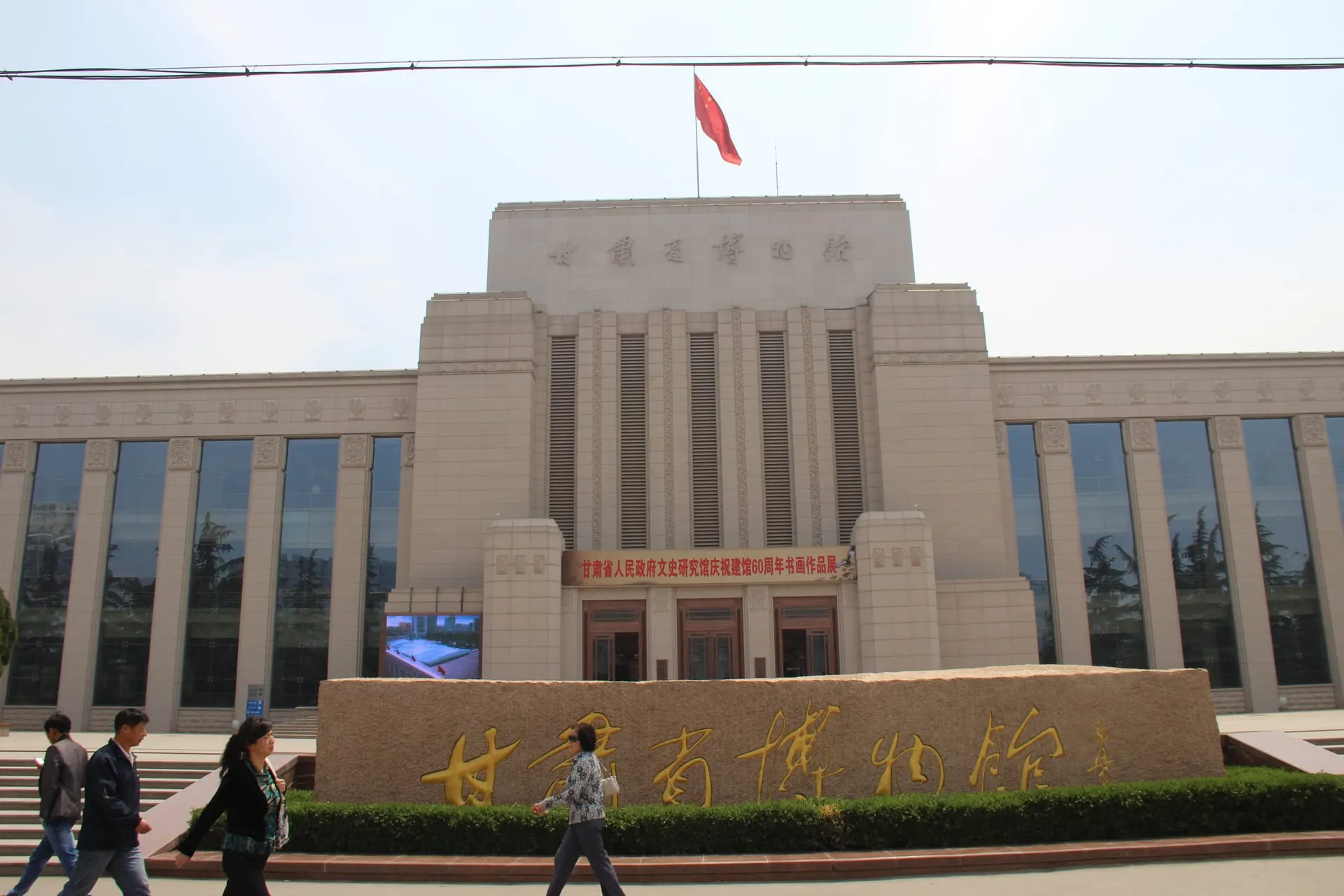
Gansu Provincial Museum (甘肃省博物馆)
Home of the Flying Horse of Gansu (铜奔马), a Eastern Han bronze considered China's most famous single artifact. Silk Road textiles, Neolithic pottery, and Buddhist cave art round out the collection. Free with WeChat reservation. Allow 3 hours.
Wikimedia Commons · CC-BY-SA
Zhongshan Bridge (中山桥, Zhōngshān Qiáo)
The first iron bridge across the Yellow River, built in 1907 by a German engineering firm. Painted battleship grey, now pedestrian-only, and lit at night. Free. The riverbank promenade on both sides is the city's social centre. Allow 30 minutes.
Wikimedia Commons · CC-BY-SA
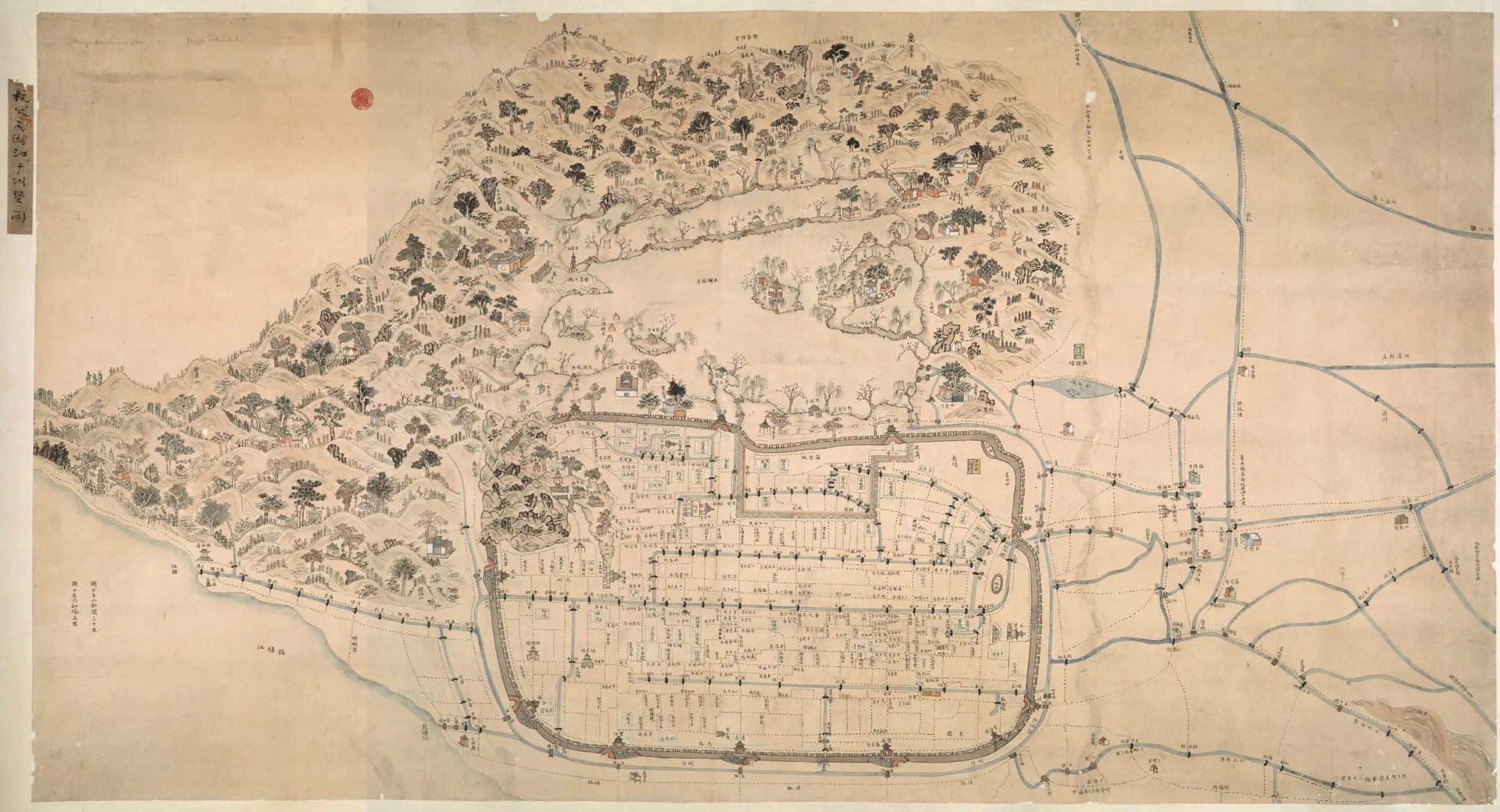
White Pagoda Mountain (白塔山, Báitǎ Shān)
A hill north of the Yellow River crowned by a Yuan-dynasty white pagoda (rebuilt in 1450s). Panoramic views of the city, the river, and the bridge from the summit. Cable car ¥45 round-trip, stairs are free. Allow 1.5-2 hours.
Wikimedia Commons · CC-BY-SA
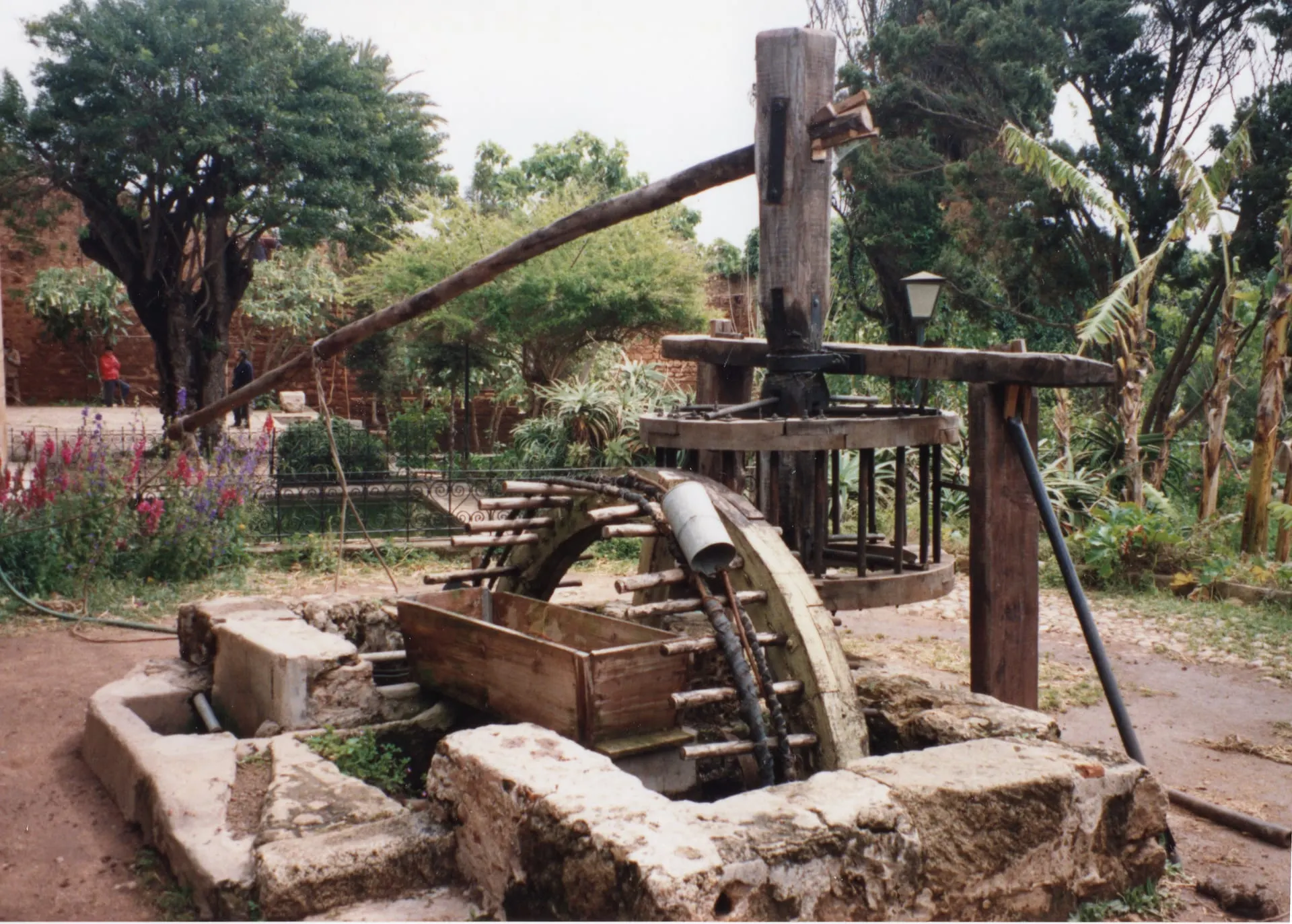
Waterwheel Garden (水车园, Shuǐchē Yuán)
A riverside park with reconstructed Ming-dynasty Yellow River irrigation waterwheels, some 12 metres in diameter. Demonstrates pre-modern irrigation engineering. ¥20. Allow 45 minutes.
Wikimedia Commons · CC-BY-SA
Five Springs Mountain (五泉山, Wǔquán Shān)
A wooded park on the south edge of the city with Buddhist and Taoist temples fed by five natural springs. The cliffside temples date to the Ming dynasty. Good half-day escape from the city centre. ¥10. Allow 2-3 hours.
Wikimedia Commons · CC-BY-SA
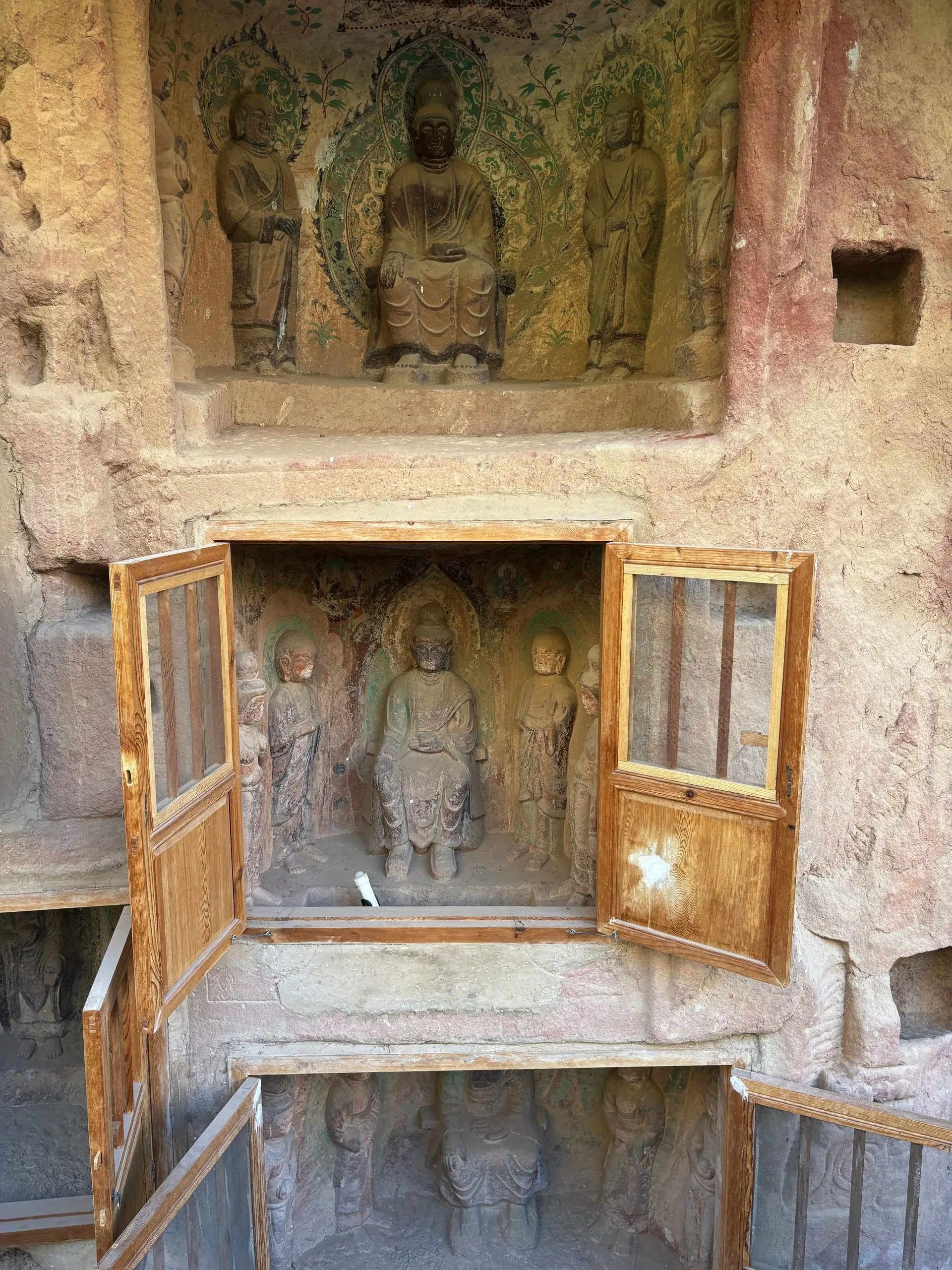
Bingling Temple Grottoes (炳灵寺石窟)
UNESCO-listed Buddhist cave complex carved into cliffs above the Yellow River reservoir, with statues dating from 420 AD (Western Qin dynasty). The 27-metre seated Maitreya Buddha is the largest. 2.5 hours from Lanzhou by car and boat. ¥50 entry + ¥80-120 boat. Allow a full day.
Wikimedia Commons · CC-BY-SA
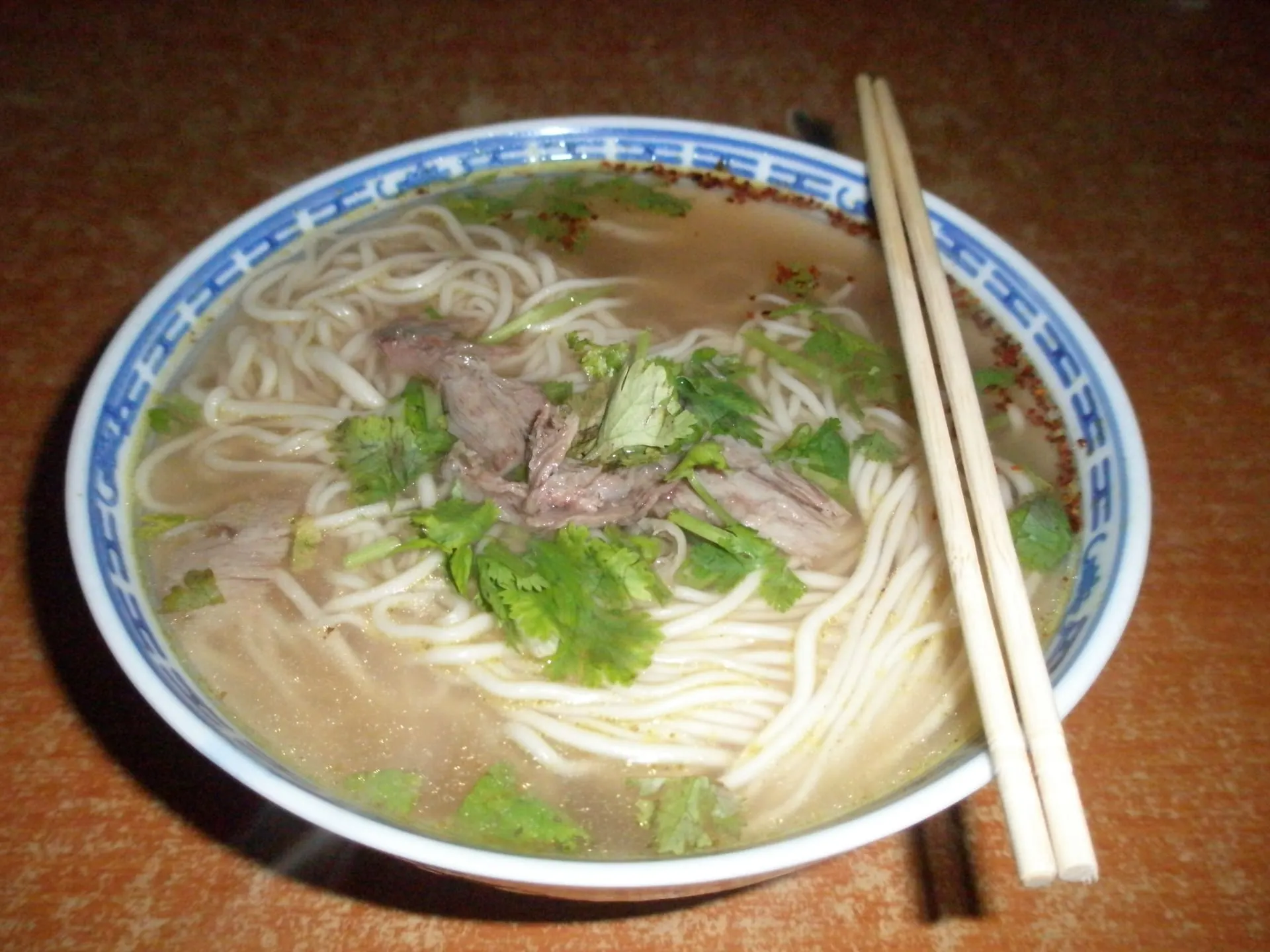
Lanzhou Beef Noodle Museum (兰州牛肉面博物馆)
A small, quirky museum dedicated to the history and technique of Lanzhou beef noodles, with displays on noodle-pulling styles and the dish's Silk Road origins. Free or ¥10. Allow 30-45 minutes.
Wikimedia Commons · CC-BY-SA
Yellow River Mother Sculpture (黄河母亲雕塑)
A famous riverside statue of a mother and child, installed in 1986 and considered Lanzhou's civic symbol. More significant as a cultural landmark than as art, but the riverfront park around it is the best spot to watch the sunset over the Yellow River. Free. Allow 20 minutes.
Wikimedia Commons · CC-BY-SA
STAY
Where to stay in Lanzhou
Pick a base that matches the trip you want — imperial-central for sightseeing, hutong belt for character, Chaoyang for nightlife, or Qianmen for budget.
Chengguan / Xiguan (城关区/西关)
City centre — walking distance to Zhongshan Bridge, White Pagoda Mountain, and the Yellow River promenade; best base for first-timers
#chengguan-xiguanNear Lanzhou West Station (兰州西站)
Convenient for late HSR arrivals or early Silk Road departures — newer, slightly cheaper hotels but culturally flat
#lanzhou-westAnning District (安宁区)
University district west of the centre — younger vibe, cheaper food scene, and access to the quieter western section of the river park
#anning
ITINERARIES
Sample itineraries from Lanzhou
Three ready-made routes, from a 1-day imperial sprint to a 5-day deep dive. Copy the day-by-day plan and adapt to your own pace.
- 1 DAY
Lanzhou in a Day: Museum, Bridge & Noodles
The essential Lanzhou sampler — China's most famous bronze horse, the historic Yellow River bridge, and the definitive bowl of hand-pulled beef noodles.
- Transit travelers
- Silk Road stopover
- First-time visitors
- Day 01
Morning
Gansu Provincial Museum (3 hours, free) — arrive by 8:30 AM, focus on the Flying Horse of Gansu and Silk Road textiles
Afternoon
Beef noodle lunch at Mazilu (马子禄, ¥18–25), then walk the Yellow River promenade from the Mother Sculpture to Zhongshan Bridge; cable car up White Pagoda Mountain for sunset views
Evening
Zhengning Road Night Market — lamb skewers (¥3–5), niang pi cold noodles (¥8–12), and milk-egg fermented rice wine (¥10–15)
- 2 DAYS
Two Days: City Core + Bingling Grottoes
Pair Lanzhou's urban highlights with a full-day excursion to the 1,600-year-old Buddhist cave complex on the Yellow River reservoir.
- History enthusiasts
- Buddhist art travelers
- Weekend visitors
- Day 01
Morning
Gansu Provincial Museum (3 hours) — Flying Horse, Neolithic pottery, Silk Road galleries
Afternoon
Zhongshan Bridge, White Pagoda Mountain, and Waterwheel Garden — the riverside cluster, all walkable
Evening
Beef noodles for dinner at Wumule (吾穆勒) before it closes, then a night walk along the illuminated Zhongshan Bridge
- Day 02
Morning
Depart 7:30 AM for Bingling Temple Grottoes — 2.5-hour drive to Liujiaxia Reservoir, then 40-minute boat across the reservoir to the cave cliffs
Afternoon
Explore Caves 169 (earliest dated Buddhist cave art in China, 420 AD) and the 27-metre Maitreya Buddha; lunch at the site
Evening
Return to Lanzhou by 6 PM; dinner at a Hui Muslim restaurant in the Muslim Quarter near Xiguan
- 3 DAYS
Three Days: Lanzhou + Labrang Monastery Detour
Use Lanzhou as the launchpad for the Tibetan plateau — one day in the city, then an overnight trip to one of Tibetan Buddhism's holiest sites.
- Tibetan culture seekers
- Silk Road + plateau combo
- Photography travelers
- Day 01
Morning
Gansu Provincial Museum (3 hours) — the essential primer on Gansu history
Afternoon
Zhongshan Bridge, White Pagoda Mountain, Waterwheel Garden, and the Yellow River promenade
Evening
Zhengning Road Night Market — full street-food dinner; pack an overnight bag for tomorrow
- Day 02
Morning
6 AM departure by hired car to Xiahe (4 hours, 250 km south) — climb through the loess hills to the Tibetan plateau at 2,900 m
Afternoon
Labrang Monastery (拉卜楞寺, ¥40) — walk the 3 km kora (pilgrim path) lined with prayer wheels, visit the Assembly Hall and printing press
Evening
Overnight in Xiahe at a Tibetan-run guesthouse (¥120–250); dinner of yak momo (dumplings) and butter tea
- Day 03
Morning
Dawn kora walk at Labrang — monks chanting, pilgrims spinning wheels in the thin morning light; optional visit to Sangke Grasslands (桑科草原, 15 km)
Afternoon
Drive back to Lanzhou (4 hours), arriving by late afternoon; farewell beef noodle dinner near the station
Evening
Evening HSR departure to Xi'an (3 hours) or Xining (1 hour)
BUDGET
What a Lanzhou trip costs
Per-person, per-day costs across three spending tiers. Excludes international flights and visa fees.
| Line item | Backpacker | Mid-range | Luxury |
|---|---|---|---|
| Budget hotel/hostel (per night) | $15 | $35 | $100 |
| Meals (per day) | $10 | $25 | $55 |
| Local transport (per day) | $4 | $12 | $30 |
| Attractions (per day) | $5 | $15 | $40 |
| Day tours / private driver | $0 | $40 | $100 |
| Daily total (per person) | $34 | $127 | $325 |
| Total per day | $68 | $254 | $650 |
$ USD per person per day, before international flights and visas. Last verified: Q3 2026.
STAY SAFE
Emergency contacts in Lanzhou
Save these three numbers before you board the plane. China uses different hotlines than most countries — there's no 911.
- POLICE
110
- AMBULANCE
120
- FIRE
119
- TOURIST HOTLINE
0931-8825000 (Gansu Tourism Bureau)
- ENGLISH-SPEAKING ER
Gansu Provincial People's Hospital (甘肃省人民医院), 204 Donggang West Road — basic English-speaking international clinic; for serious emergencies evacuation to Beijing is the practical route
Problems travelers hit in Lanzhou
- Why is my Alipay not working?You linked a foreign Visa or Mastercard to Alipay but every transaction is rejected at the merchant.
- My China visa was denied — what now?Your L visa application was refused at the Chinese consulate and your trip is in 2–4 weeks.
- My passport was lost or stolen in China — what do I do?Your passport is gone (theft or loss) and you're in mainland China without travel documents.
- Why can't I book on 12306 with my foreign card?You tried to book a high-speed rail ticket on 12306.cn and your foreign Visa/Mastercard is rejected at checkout.
- Why is my VPN not working in China?You arrived in China, opened your VPN, and it will not connect at all or connects but no traffic loads.
- Why can't I book a Tibet trip on my own?You try to book Lhasa flights and hotels yourself but the booking fails, or you're turned away at the Lhasa airport without a permit.
Book activities in Lanzhou
These are licensed tour operators and booking platforms we've vetted independently. Booking through these links may earn us a commission — see our affiliate disclosure. This never affects our editorial recommendations or the price you pay.
Frequently asked questions
How many days do I need in Lanzhou?
What is the best beef noodle shop in Lanzhou?
Is Lanzhou safe?
Can I use Alipay and WeChat Pay in Lanzhou?
How do I get from Xi'an to Lanzhou?
What is the Flying Horse of Gansu, and can I see it?
Show all 25 FAQs
Do I need to book the Gansu Provincial Museum in advance?
What time do Lanzhou beef noodle shops close?
How do I get to the Bingling Temple Grottoes?
What is the altitude of Lanzhou, and will I get altitude sickness?
Is Lanzhou a good base for exploring the Hexi Corridor?
What is unique about Lanzhou food besides beef noodles?
Can I visit Xiahe and Labrang Monastery from Lanzhou?
What are the best day trips from Lanzhou?
Is English spoken in Lanzhou?
What is the weather like in Lanzhou in summer?
Is Lanzhou worth visiting in winter?
How do I buy high-speed rail tickets from Lanzhou?
What makes the Zhongshan Bridge historically important?
Is Lanzhou good for vegetarians?
Can I visit the Zhangye Rainbow Mountains from Lanzhou?
Is Lanzhou a good hub for northwest China?
Is tap water safe to drink in Lanzhou?
What are Lanzhou's sheepskin rafts?
How do I get to Labrang Monastery by public transport?
References

Related guides & destinations
Guide
How We Research 2026: NihaoVisit’s Methodology for China Travel Information
How NihaoVisit sources, verifies, and maintains 700+ pages of China travel information — our source hierarchy, fact-checking process, update
Guide
Fact-Checking Log 2026: Verified China Travel Information — NihaoVisit
A public log of fact-checking verification passes on NihaoVisit, showing what was verified, when, and against which sources — covering visa
Guide
Best Time to Visit China 2026: Month-by-Month Weather, Crowds, and Prices
The best time to visit most of China is April–May and September–October. Winter (Dec–Feb) is cold but cheap; summer (Jun–Aug) is hot and cro
Guide
VPN for China 2026: Which VPNs Work, eSIM Alternatives, and the Complete Pre-Trip Checklist
Most Western apps and websites are blocked in mainland China. A reliable VPN is essential for Google, Gmail, WhatsApp, Instagram, and most n
Guide
China SIM Card and eSIM Guide 2026: Stay Connected Without WeChat
A Chinese SIM or eSIM lets you use mobile data, maps, and ride-hailing without WiFi. Here is how to get one, the cost, and which provider to
Guide
Solo Female Travel in China 2026: Safety, Tips, and Real Experiences
China is one of the safer destinations for solo female travelers. Petty theft is rare, violent crime against tourists is extremely uncommon,