Guangzhou · art museum
Guangdong Museum of Art (广东美术馆, Guǎngdōng Měishùguǎn)
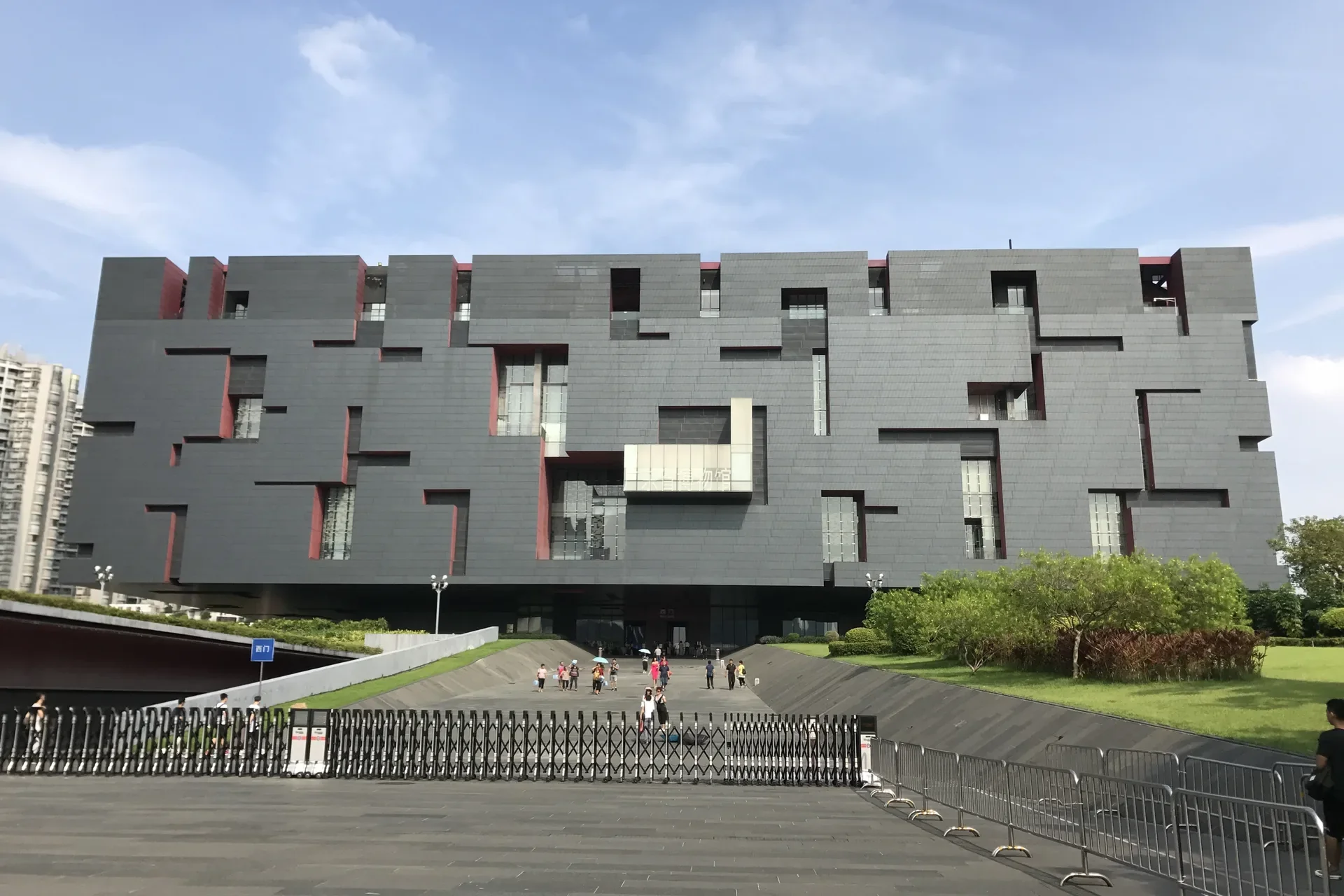
"Founded in 1997 and reopened in 2024 after a four-year, 84,000-sqm rebuild, the Guangdong Museum of Art anchors Ersha Island as the main public venue for 20th- and 21st-century Chinese art in South China. The permanent collection emphasizes Lingnan School painters, Guangdong modern art, and overseas Chinese artists — a regional focus you won't get at the national museums in Beijing. Entry is free with valid ID, and it's one of the few large art museums in Guangzhou with reliable English labeling.".
Last updated:
Quick Answer
Is Guangdong Museum of Art worth visiting?
Guangzhou’s flagship modern-art museum holds ~16,000 pieces across three floors on Ersha Island. Plan 2–3 hours, combine with Pearl River walk.
Quick facts
| Category | art |
|---|---|
| Ticket | Free with valid passport (as of 2026); some special exhibitions charge RMB 20–80 (verify at ticket counter) |
| Hours | Tuesday–Sunday 09:30–17:00, last entry 16:30; closed Mondays (verify) |
| Recommended duration | 2–3 hours for the permanent collection plus one temporary show |
| Best time to visit | Weekday mornings right after opening (10:00–11:30) — weekend afternoons get tour-bus crowds from Foshan and Shenzhen. November through March has the best light through the glass-walled atrium. |
| How to get there | Metro Line 5 to Tanwei (谭畔) Station Exit B, then 15-min walk across Ersha Island; or Line 6 to Donghu (东湖) Exit A plus 10-min walk. DiDi from Tianhe CBD runs RMB 25–35 and takes ~20 minutes off-peak (verify current fares). |
| English signage | yes |
Why visit
Skip it if you've already done UCCA Edge or Power Station of Art in Shanghai — but for travelers who care about how Guangdong's reform-era art scene actually looked on the ground, this is the only museum in China dedicated specifically to Lingnan-region modernism. The 2024 rebuild added a riverside sculpture park and a dedicated floor for overseas Chinese artists (think Chen Cheng-po, Li Mei-shu, Cheong Soo Pieng), which is a genuinely unusual curatorial niche you won't find in the Palace Museum or NAMOC. The neighborhood is also the point: Ersha Island has trees, decent coffee, and the Guangdong Museum of Natural History 10 minutes away, so it slots into a low-effort half-day without a subway transfer.
Collection highlights
- Lingnan School paintings gallery (Gao Jianfu, Xu Beihong, Guan Liang) on Floor 2
- Overseas Chinese Artists Hall — Chen Cheng-po, Li Mei-shu, Cheong Soo Pieng rotation
- Guangdong Modern Art Wing with reform-era works from the 1985 New Wave movement
- Riverside sculpture garden on the south terrace (free access)
- Reopening 2024 contemporary acquisitions floor — 300+ new pieces added since the rebuild
- Rotating Block B special exhibition hall (entry fee may apply)
Tips
- Bring your physical passport — the ID scan at entry rejects photocopies and digital IDs at the gate.
- The free English audio guide is via WeChat mini-program only; download it before entering since museum Wi-Fi requires a Chinese phone number.
- Skip Block B's temporary exhibitions unless you read Chinese — translations are usually wall-text only.
- Photography without flash is allowed in permanent galleries but banned in most special exhibitions; staff enforce this.
- Combine with lunch at Ersha Island's casual cafes (Yuexiu district side) — the museum restaurant is overpriced and closes at 14:30.
Frequently asked questions
How much does it cost to enter the Guangdong Museum of Art?
Entry to the permanent collection is free with a valid passport as of 2026. Special exhibitions in Block B typically run RMB 20–80; verify on-site or check the official site before visiting.
What are the opening hours?
Tuesday through Sunday, 09:30 to 17:00, with last admission at 16:30. The museum is closed every Monday for maintenance (verify current schedule).
Which metro station is closest?
Tanwei Station on Line 5 (Exit B) is the standard access — about a 15-minute walk across Ersha Island. Line 6 Donghu Station Exit A is a 10-minute walk and slightly less crowded at rush hour.
How long should I spend at the museum?
2 to 3 hours covers the permanent collection on three floors plus the riverside sculpture garden. Add another hour for a Block B special exhibition.
Does the museum have English signage and labels?
Yes — wall text in the permanent galleries is bilingual, and most major works have English object labels. The English audio guide runs on WeChat only.
Can I take photos inside?
Photography without flash is allowed in the permanent galleries and the riverside sculpture garden. Block B special exhibitions usually prohibit all photography; staff enforce this at the door.
Is the museum accessible for wheelchairs and strollers?
Yes — the 2024 rebuild has step-free access throughout, elevators on all three floors, and accessible restrooms. Loan wheelchairs are available at the information desk with a passport deposit.
What is the museum best known for?
The Lingnan School painting collection and the overseas Chinese artists hall — two curatorial niches you won't find at the national museums in Beijing. The collection is around 16,000 pieces.
When was the museum rebuilt?
The original museum opened in 1997; it closed in 2020 for a major rebuild and reopened in mid-2024 with a new 84,000-square-meter main hall and a riverside sculpture garden.
Is there a cafe or restaurant inside?
There is a small museum cafe on Floor 1 but it closes at 14:30 and is overpriced. Better food is 10 minutes away on foot on Ersha Island — try the cafes on Yufeng Road or walk toward Yuexiu Park.