Nanchang
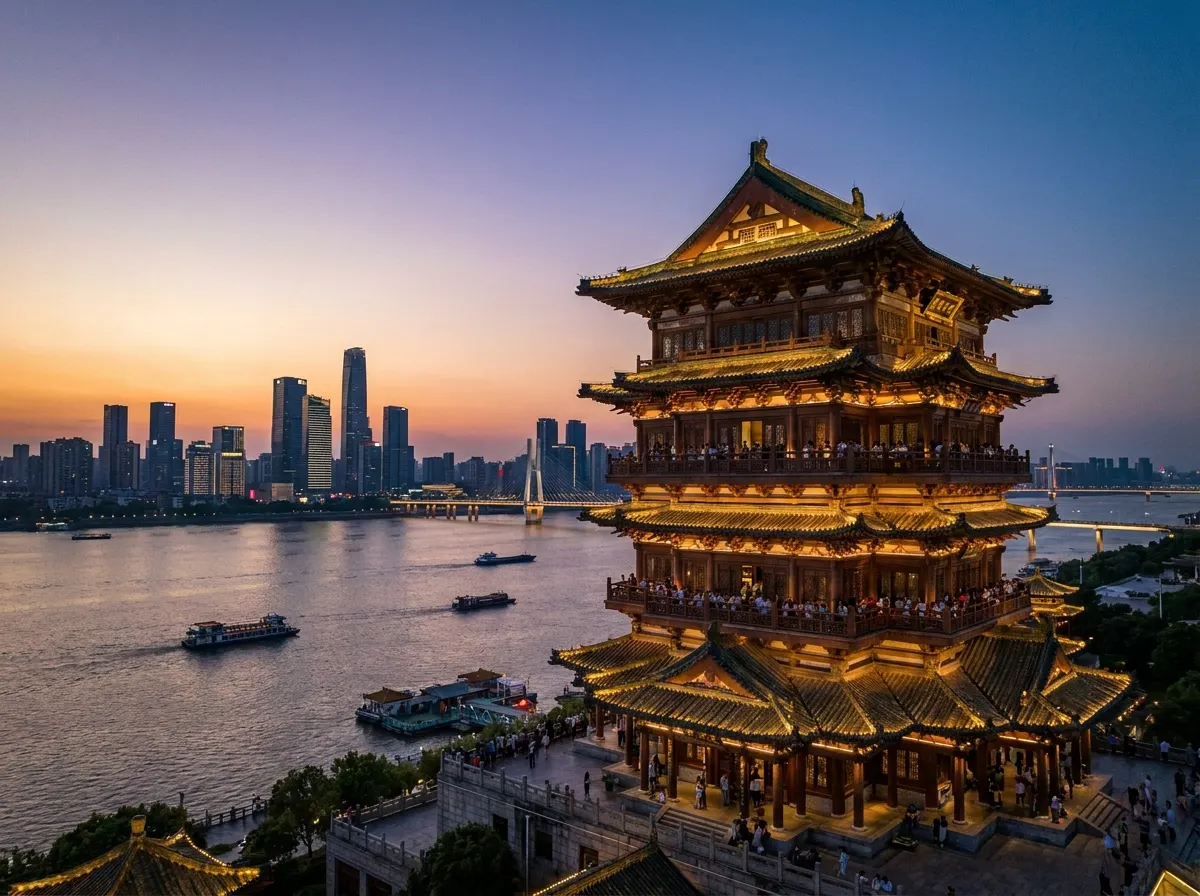
A provincial capital on the Gan River in Jiangxi where the 1927 August 1 Uprising is commemorated, the Tengwang Pavilion lights up the riverfront every evening, and the vast Poyang Lake draws migratory birds by the hundreds of thousands from November to March. Nanchang works as a 2-day stop between Wuhan and the Fujian coast, with Jingdezhen (the porcelain capital) a 2-hour high-speed train away. Avoid July and August — the city is one of China's legendary "Four Furnaces" and summer temperatures regularly hit 38°C. Nanchang also works as a base for exploring the surrounding Jiangxi countryside, with Mount Lu (1 hour by HSR), Jingdezhen (2 hours), and the southern Jiangxi Hakka round-house villages all reachable as day trips.
Why Nanchang in 2026.
Nanchang (南昌, Nánchāng) is the capital of Jiangxi province and the city where the Chinese leadership of the time launched its first military action in 1927 — the August 1 Uprising that marks the founding of the People's Liberation Army. Modern Nanchang is an industrial provincial capital of roughly 6.5 million people with a rebuilt Tang-dynasty pavilion on the Gan River, one of China's largest freshwater lakes 90 minutes north, and the world porcelain capital of Jingdezhen within day-trip distance. The city is known in Chinese historical memory as a 'Hero City' (英雄城, Yīngxióng Chéng), but for foreign visitors, its best offerings are the Tengwang Pavilion at golden hour and the Poyang Lake bird migration.
Quick Answer
A provincial capital on the Gan River in Jiangxi where the 1927 August 1 Uprising is commemorated, the Tengwang Pavilion lights up the riverfront every evening, and the vast Poyang Lake draws migratory birds by the hundreds of thousands from November to March. Nanchang works as a 2-day stop between Wuhan and the Fujian coast, with Jingdezhen (the porcelain capital) a 2-hour high-speed train away. Avoid July and August — the city is one of China's legendary "Four Furnaces" and summer temperatures regularly hit 38°C. Nanchang also works as a base for exploring the surrounding Jiangxi countryside, with Mount Lu (1 hour by HSR), Jingdezhen (2 hours), and the southern Jiangxi Hakka round-house villages all reachable as day trips.
| Worth visiting | Yes, for visitors interested in modern history, birdwatchers heading to Poyang Lake, and travellers using Jingdezhen as an excuse to stop. As a general-interest tourist city, Nanchang is thin compared to Wuhan, Changsha, or Hangzhou. |
|---|---|
| Recommended days | 2 days (city + Poyang Lake birding, or city + Jingdezhen day trip) |
| Best time to visit | March to May and October to November. Spring temperatures are mild (15-25°C) with some rain. October-November is the sweet spot: dry, sunny, and 18-26°C. November brings the first migratory birds to Poyang Lake. Avoid July-August due to brutal heat. |
| Daily budget | $35 (backpacker) / $90 (mid-range) / $220+ (luxury) |
| Family friendly | Moderate. The Star of Nanchang ferris wheel and People's Park are child-friendly. The August 1 Uprising Museum is more meaningful for adults. Jiangxi Provincial Museum has interactive exhibits that work for older children. |
| Solo friendly | High. The metro is easy to navigate, costs are low, and the historical sites require no group context to appreciate. |
| Airport | Nanchang Changbei International Airport (KHN), 28 km north of the city. Airport shuttle buses connect to the centre in about 50 minutes for ¥15-20. |
| High-speed rail | Nanchang West Station (南昌西站) is the main HSR hub. Wuhan in 2 hours, Changsha in 1.5 hours, Hangzhou in 3 hours, Jingdezhen in 2 hours. |
| Language | Mandarin is the lingua franca. The local Gan dialect (赣语, Gànyǔ) is widely spoken among locals but you will not need to understand it. English signage exists at the airport, high-speed rail stations, and metro, but is rare in restaurants and taxis. |
| Currency | CNY (¥) — Alipay and WeChat Pay accept foreign Visa/Mastercard |
| Time zone | China Standard Time (UTC+8) |
| Last updated | 2026-06-18 |
Want a Nanchang plan built for you?
Jump to:
Tengwang Pavilion·August 1 Uprising Museum·Poyang Lake Birdwatching·Bayi Square·Jiangxi Provincial Museum·Jingdezhen Day Trip·Lushan Day Trip·Star of Nanchang·Shengjin Pagoda & Food Street·Bada Shanren Memorial Hall·Getting There·Getting Around·Where to Stay·Where to Eat·1/2/3-Day Itineraries·Monthly Weather·Practical Information·Tips & Warnings·Emergency Contacts·Itinerary Connections·HSR Hub Role·Sugarcane & Local Crafts·Wang Bo's Preface·August 1 Uprising History·Honggutan New District·FAQ
Why visit Nanchang?
Nanchang is not a city that foreigners plan trips around. There is no Great Wall, no Bund, no karst peaks. What it has is a rebuilt but undeniably beautiful riverside pavilion, a museum that tells the origin story of the PLA, and proximity to Poyang Lake — one of the great birdwatching sites on the planet. It also sits on the high-speed rail line between Wuhan and the Fujian coast, which means it can be visited without a detour. When I walked through the August 1 Uprising Museum on a quiet Tuesday morning in November, the building was nearly empty, the English audio guide was crisp, and the narrative — however one-sided — conveyed the improbable audacity of a handful of Communists starting an armed rebellion from a hotel lobby. That experience, honest about its ideology and unexpectedly well-presented, was more engaging than I had anticipated. For general-interest travellers, Nanchang makes sense as a 1-2 day stop embedded in a longer route. Wuhan, Jingdezhen, the Fujian tulou (round earthen houses), and the Huangshan (Yellow Mountain) scenic area are all within a half-day train radius. If you are already crossing Jiangxi, Nanchang slots in without adding travel pain. The single strongest reason to come is birdwatching at Poyang Lake — if you are in China between November and March and care about birds, Nanchang should be on your list. Full stop.
What is the history of Nanchang?
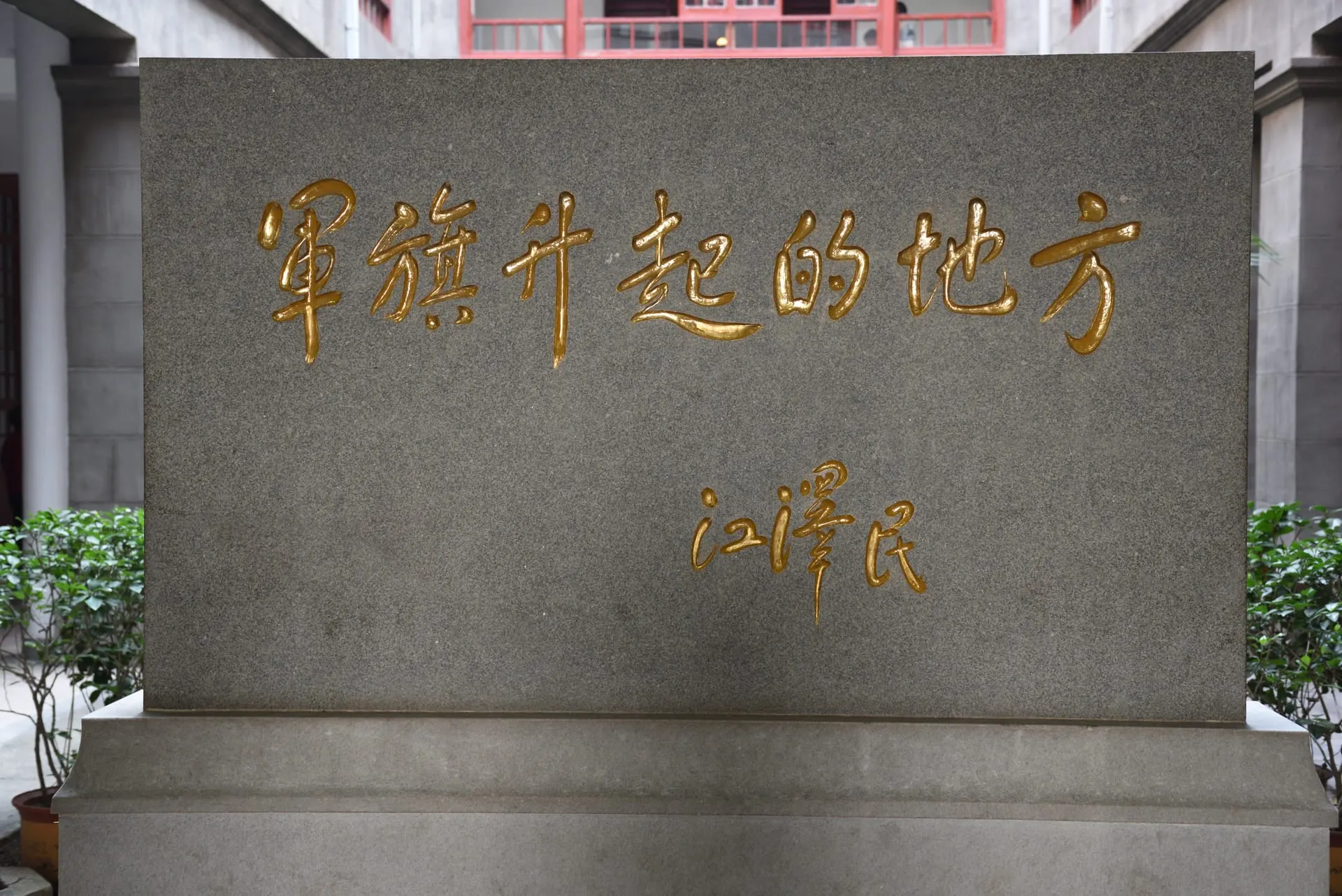
Nanchang was founded as a walled city in 201 BCE during the Western Han dynasty, originally named Yuzhang (豫章). Its strategic position on the Gan River — the main north-south artery of Jiangxi — made it a regional military and administrative centre for two millennia. The city's first moment of national cultural importance came in 653 CE when Li Yuanying, a younger brother of the Tang Emperor Taizong, built the Tengwang Pavilion (滕王阁) as a private mansion overlooking the Gan River. The pavilion entered the Chinese literary canon in 675 CE when the young poet Wang Bo (王勃) composed the prose-poem "Preface to the Pavilion of Prince Teng" (滕王阁序, Téngwáng Gé Xù) at a banquet there, producing one of the most memorised texts in Chinese education. The pavilion has been destroyed and rebuilt 29 times across 1,400 years — the current version is reinforced concrete from 1989, which is a truth that sits uneasily with some visitors but reflects the building's relationship with Chinese historical identity: the idea of the pavilion matters more than the physical structure. Nanchang's second historical pivot — and the one that defines it in official PRC historiography — came on August 1, 1927. With the Nationalist-Communist alliance in collapse, Communist leaders Zhou Enlai (周恩来), He Long (贺龙), Ye Ting (叶挺), Zhu De (朱德), and Liu Bocheng (刘伯承) led roughly 20,000 troops in an armed uprising that seized the city for several days before being forced to retreat south. The uprising failed militarily, but August 1, 1927 is retrospectively marked as the founding date of the People's Liberation Army, and Nanchang is officially remembered as the "cradle of the army" (军旗升起的地方). The Jiangxi Grand Hotel where the uprising was planned is now the August 1 Uprising Memorial Museum, and the city's main square, Bayi Square (八一广场), commemorates the date. After 1949 Nanchang industrialised rapidly — aircraft manufacturing (Hongdu Aviation), automobile production (Jiangling Motors), and pharmaceuticals are the main industries. The city has roughly 6.5 million residents today, and the Honggutan (红谷滩) new district on the west bank of the Gan River, with its cluster of glass office towers, signals the city's ambition, though occupancy rates are reportedly lower than the skyline suggests.
What is the geography and climate of Nanchang?
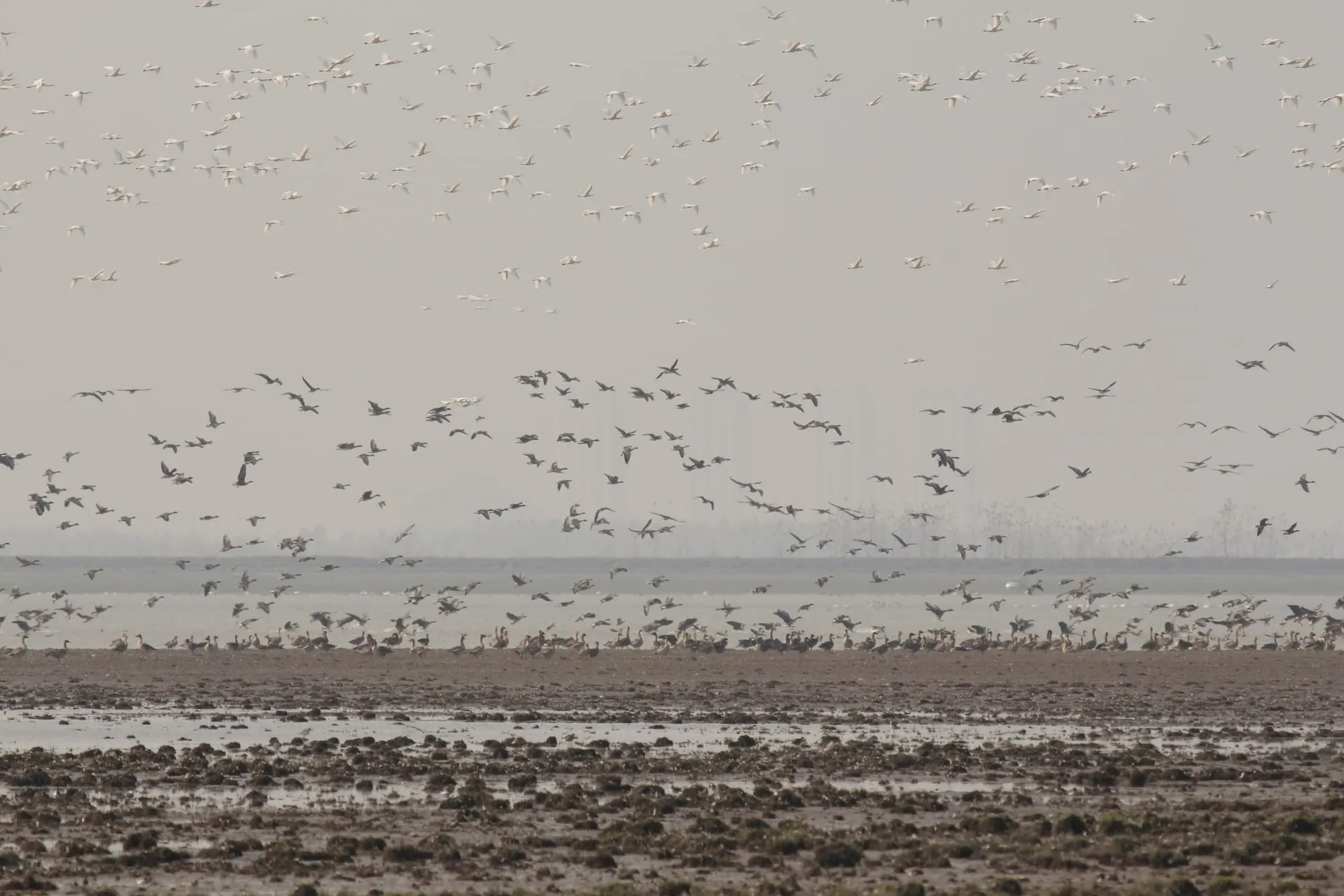
Nanchang sits on the floodplain of the Gan River (赣江, Gàn Jiāng) in north-central Jiangxi province, roughly 300 km west of the Fujian coast and 350 km south of Wuhan. The Gan River flows north into Poyang Lake, which in turn drains into the Yangtze. The terrain is flat to gently rolling, with low hills rising 20-50 km west of the city. Poyang Lake, 90 minutes north, is one of the most ecologically significant freshwater bodies in East Asia — its size fluctuates dramatically between summer flood stage (up to 4,000 km²) and winter dry season (as low as 1,000 km²), and the exposed mudflats in winter provide critical feeding grounds for migratory birds. The climate is Nanchang's least attractive feature. It is humid subtropical and sits in one of China's hottest summer corridors — the city is traditionally listed among the "Four Furnaces" (四大火炉) of China alongside Wuhan, Nanjing, and Chongqing. July and August daily highs are 35-39°C with humidity above 75%. The 2022 heatwave pushed temperatures past 40°C. Walking outdoors between 11 a.m. and 4 p.m. in summer is genuinely unpleasant, and I say that as someone who has visited in August. Winter is cold and damp, with January averages of 3-10°C, grey skies, and occasional freezing rain. Snow is rare. The best windows are March through May (spring, some rain but pleasant temperatures) and October through November (autumn, dry, sunny, 18-26°C). November is the single best month — clear skies, comfortable walking weather, and the first migratory birds arriving at Poyang Lake.
How to get there
Nanchang Changbei International Airport (IATA: KHN) is 28 km north of the city centre. It is a secondary Chinese airport — domestic flights connect to Beijing (2.5h), Shanghai (1.5h), Guangzhou (1.5h), Shenzhen (1.5h), and Chengdu (2.5h). International routes are limited: Bangkok, Seoul, and Singapore have direct flights as of mid-2026. The airport shuttle buses (Lines 1-4) connect to the city centre in 50 minutes for ¥15-20. A taxi to the city centre costs roughly ¥80-100 and takes 40-50 minutes. DiDi operates from the airport. The main high-speed rail station is Nanchang West (南昌西站), on the west bank of the Gan River in the Honggutan district. High-speed trains serve Wuhan (2 hours, second class ¥100), Changsha South (1.5 hours, ¥80), Hangzhou East (3 hours, ¥170), Shanghai Hongqiao (4 hours, ¥250), Jingdezhen North (2 hours, ¥80), and Fuzhou (3 hours, ¥150). Nanchang Station (南昌站) in the old city centre handles slower conventional trains and some D-series services. For Poyang Lake, take a train from Nanchang to Yongxiu (永修, 30 minutes) and then a taxi or local bus to the Wucheng birdwatching area (another 40-50 minutes). For Jingdezhen, high-speed trains run every 30-60 minutes from Nanchang West, taking 2 hours.
How to get around
Nanchang's metro has four operating lines (1, 2, 3, and 4) covering the main urban districts, with Line 2 connecting Nanchang West Station to the city centre. Tickets are ¥2-6. Station signage includes English and pinyin. The metro is the most reliable way to move between the old city (east bank) and the newer Honggutan district (west bank). City buses are extensive but confusing for non-Chinese speakers — all route information is in Chinese characters. Fares are ¥1-2. DiDi is the practical option for most visitors: a trip across the central city costs ¥15-25. Taxis start at ¥8 for the first 2 km. Foreigners should use DiDi rather than street-hailing — the fare is fixed in the app and there is no negotiation. For day trips to Poyang Lake, hiring a car with driver for the day costs roughly ¥600-800. The Wucheng birdwatching area is best explored with a local guide (arranged through hotels or birding tour operators, ¥300-500 for a half-day). For Jingdezhen, the high-speed train is straightforward — take Line 2 to Nanchang West, then a 2-hour train, then a short taxi to the ceramic sites.
What are the top attractions in Nanchang?
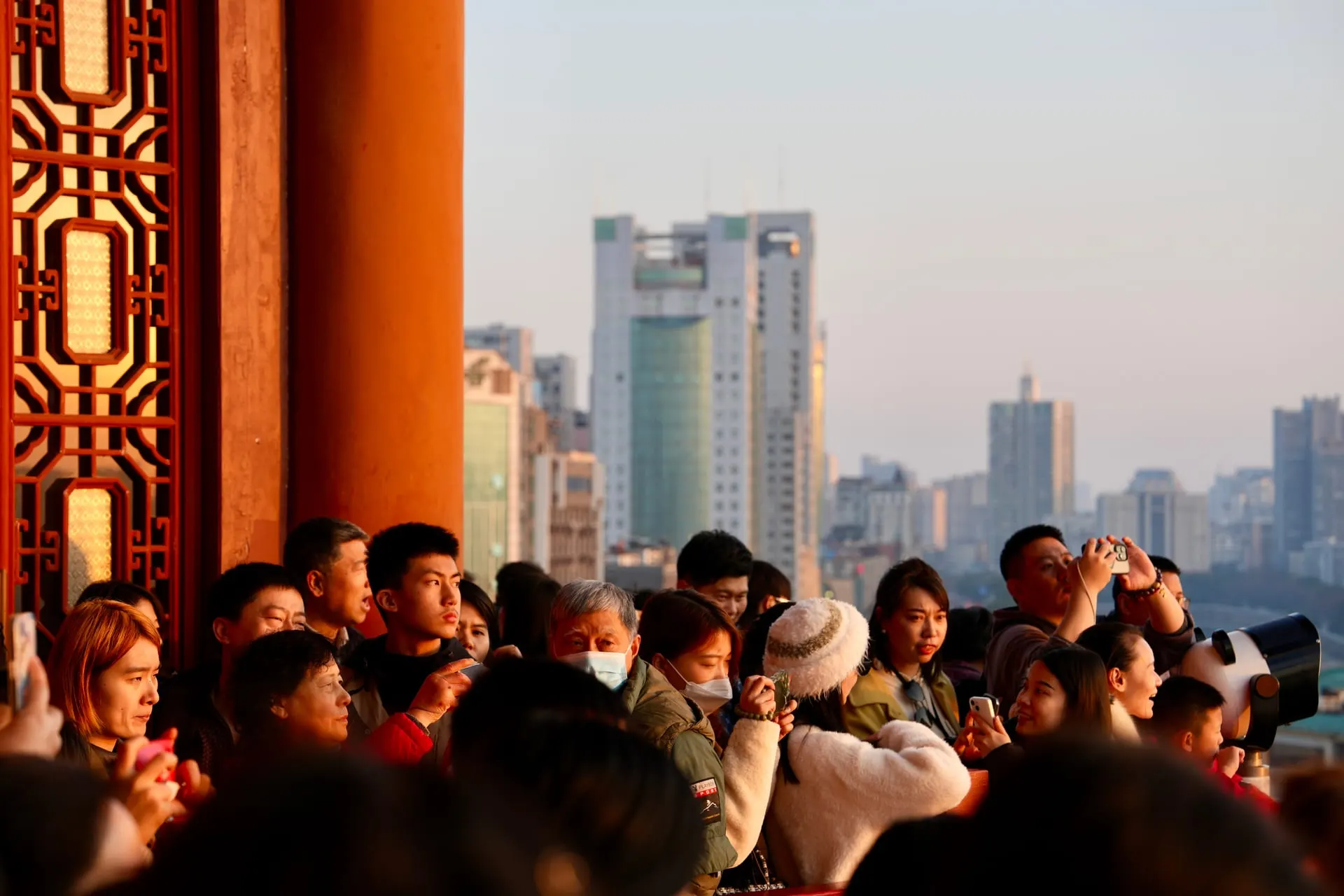
1. Tengwang Pavilion (滕王阁) — The city's visual anchor and the one thing every visitor should see. Go in the late afternoon, read Wang Bo's "Preface" on the ground-floor display (English translation available), climb to the top floor for the river view, and stay on the plaza as the pavilion and bridge light up after sunset. Inside, the exhibits on Jiangxi's literary and porcelain history are secondary to the architecture and setting. Entry ¥50. Budget 2 hours. 2. Poyang Lake (鄱阳湖) — The seasonal draw. From November to March, the Wucheng area hosts hundreds of thousands of Siberian cranes, white-naped cranes, and Oriental white storks. The best months are December and January. A local guide is strongly recommended — the birds are spread across a wide area of mudflats and channels, and a good guide knows where the main flocks are feeding on any given day. Summer visits to the lake are far less rewarding; the water levels are high, the birds are gone, and the heat is punishing. 3. August 1 Uprising Memorial Museum — Better than most Communist-history museums in China, partly because the story of a failed hotel-room uprising has inherent drama. The preserved meeting rooms, period photographs, and English audio guide make it accessible to foreign visitors with no prior knowledge of PLA history. Free entry. Budget 2 hours. 4. Jiangxi Provincial Museum — The newly built complex on the Gan River west bank houses an excellent Shang-dynasty bronze collection, the gold and jade artifacts from the 2015 excavation of the Han-dynasty Haihun Marquis tomb (one of the most important archaeological discoveries in China in the last decade), and a full floor on Jingdezhen porcelain. Free entry. English labelling is present but incomplete. Budget 2-3 hours. 5. Jingdezhen (day trip) — Two hours east by HSR, the world porcelain capital offers the Ceramics Museum (free), the ancient kiln sites (¥95), the Taoxichuan creative district, and the Sculpture Porcelain Market where you can buy handcrafted cups, bowls, and teapots directly from studio artists for ¥30-200. This is the best day trip from Nanchang and arguably the single most interesting thing in Jiangxi province. 6. Star of Nanchang Ferris Wheel — A 160-metre wheel with climate-controlled gondolas and a good skyline view. Best at dusk. The adjacent riverside promenade is a pleasant walking area. 7. Shengjin Pagoda and Food Street — The pagoda is modest, but the pedestrian food street at its base is the best place in Nanchang to eat ban fen (rice noodles) and wa guan tang (clay-pot soup) in one sitting. Evening visits only — the daytime is quiet. 8. Bada Shanren Memorial Hall — A quiet, contemplative site for visitors interested in Chinese ink painting. The garden compound and studio convey a sense of the artist's reclusive life after the Ming dynasty's fall. Not worth the trip for visitors with no interest in painting.
Where to stay
Nanchang's hotel landscape is split between the old city on the east bank of the Gan River and the new Honggutan district on the west bank. The old city (Donghu and Xihu districts) around Bayi Square has the densest concentration of budget and mid-range hotels, easy access to most historical attractions, and proximity to the Shengjin Pagoda food street. This is the best area for first-time visitors who want walkable access to the Tengwang Pavilion and the August 1 Uprising Museum. The Honggutan (红谷滩) district on the west bank is the modern business centre — wider streets, taller buildings, better international hotels, and less local character. The Shangri-La (¥800-1,600/night) and the Crowne Plaza (¥600-1,200/night) are here, both in riverfront towers with views across to the old city. Mid-range chains: Atour (亚朵) and James Joyce Coffetel (喆啡) have multiple locations on both banks at ¥280-450/night. Budget hotels (Hanting, GreenTree Inn, 7 Days Inn) run ¥120-200/night and are clustered around the railway station area and Bayi Square. Near Nanchang West Station, several chain hotels cater to transit passengers — convenient for early trains but isolated from the city's attractions and restaurants. The Nanchang University area in the eastern suburbs has the cheapest rooms (¥80-150/night) and the most youthful food scene. Warning: some budget hotels near the old railway station do not accept foreigners due to local registration restrictions — confirm by phone or booking app message before arriving.
What to eat in Nanchang
Nanchang's food is Jiangxi cuisine (赣菜, Gàn Cài), which is one of China's least-known regional cooking traditions — and one of its spiciest. The Jiangxi approach to chilli is more direct than Sichuan's numbing complexity or Hunan's sour heat: it is a clean, sharp, dry heat that hits fast and fades. The signature Nanchang dish is ban fen (南昌拌粉, Nánchāng bàn fěn), mixed rice noodles served cold or room-temperature with chilli oil, pickled vegetables, crushed peanuts, soy sauce, and spring onions. It is the city's breakfast staple — you will see locals eating bowls of it at 7 a.m. from street-side stalls. A bowl costs ¥5-10 as of mid-2026. The best ban fen shops are nameless operations identified by the queue. The second essential is wa guan tang (瓦罐汤), literally "clay-pot soup." Small ceramic pots are filled with pork ribs, chicken, lotus root, or Chinese yam, sealed, and slow-cooked in a large clay urn for 4-6 hours. The resulting broth is clear, deeply savoury, and restorative. A pot costs ¥8-20 depending on ingredients. Ban fen + wa guan tang is the canonical Nanchang meal. Other Jiangxi dishes to seek out: Jiangxi-style spicy fish (赣味水煮鱼) — fresh river fish poached in chilli broth with fermented soybeans; Poyang Lake hairy crab (鄱阳湖大闸蟹, Póyáng Hú dà zhá xiè), in season from September through November, smaller and cheaper than the famous Yangcheng Lake crabs but excellent; and hui guo rou (回锅肉, twice-cooked pork) made the Jiangxi way with extra dried chilli and fermented black beans. Lei cha (擂茶, pounded tea) — a Hakka speciality of ground tea leaves, sesame, peanuts, and herbs pounded into a paste and whisked into a savoury broth — is found in the southern districts near the Fujian border but increasingly in Nanchang's tea houses. The Shengjin Pagoda food street is the best single location for sampling the city's food in one evening. The streets around Nanchang University in the eastern suburbs are the best area for cheap, authentic student-priced versions of local dishes. For upscale Jiangxi dining, the restaurants along the Gan River promenade in Honggutan offer river views and English picture menus at ¥100-200 per person.
What are good 1, 2, and 3-day itineraries for Nanchang?
One day (transit stop): Morning at the Tengwang Pavilion (arrive by 9 a.m. to avoid tour groups), walk the riverside promenade to the August 1 Uprising Museum (2 hours), lunch of ban fen and wa guan tang near Shengjin Pagoda, afternoon at Jiangxi Provincial Museum (2-3 hours). Evening ride on the Star of Nanchang ferris wheel at sunset, dinner at the Shengjin Pagoda food street. Two days (standard visit): Day 1 as above. Day 2 options depend on season and interest. Winter (November-March): Poyang Lake birdwatching day trip — train to Yongxiu, taxi to Wucheng, 3-4 hours of birding with a local guide, return to Nanchang by evening. The rest of the year: Jingdezhen day trip — morning HSR to Jingdezhen, the Ceramics Museum and ancient kiln sites, lunch, the Sculpture Porcelain Market, return to Nanchang by 6 p.m. Three days: Day 1 and Day 2 (Jingdezhen) as above. Day 3 morning at Bada Shanren Memorial Hall, then a slower afternoon revisiting the Jiangxi Provincial Museum's Haihun Marquis tomb exhibit or the Tengwang Pavilion at a different time of day. Consider a walk across the Bayi Bridge (八一大桥) — the pedestrian path offers a different angle on the river and pavilion. If Poyang Lake is in season, a second day on the lake exploring different birdwatching spots (the Nanjishan wetland reserve, 南矶山, is an alternative to Wucheng) is more rewarding than a third city day.
What is the monthly weather in Nanchang?
January: 3-9°C, grey, damp, occasional icy rain. Warm layers and a waterproof jacket needed. February: 5-12°C, still grey but with more dry days. March: 9-17°C, spring begins, cherry and plum blossoms appear. Rain increases from mid-month. April: 15-23°C, pleasant temperatures but frequent showers. One of the better months despite the rain. May: 20-28°C, warming rapidly, humidity rising. Still comfortable in early May, increasingly sticky by month-end. June: 24-32°C, hot and wet, the plum rain (梅雨, méiyǔ) season brings persistent drizzle. July: 28-38°C, brutal — the "Four Furnaces" title is earned. Humidity above 75%. Outdoor activities should be confined to early morning and evening. August: 27-39°C, similar to July, with occasional typhoon-driven downpours. September: 23-32°C, still hot but the intensity begins to ease late in the month. October: 17-27°C, the reprieve. Dry, sunny, and genuinely pleasant. November: 10-19°C, the best month. Clear skies, comfortable walking temperatures, migratory birds arrive at Poyang Lake. December: 4-12°C, cold and damp but manageable with a warm coat. The holiday quiet before January.
What practical information do I need for Nanchang?
Visa: As of mid-2026, China's unilateral visa-free entry covers 50+ nationalities for stays of up to 30 days. Nanchang is not a 144-hour transit city — you need a full visa or visa-free eligibility, not a transit exemption. Money: Alipay and WeChat Pay dominate, and international cards can now be linked to both apps. Cash is useful at street food stalls and small markets. Carry ¥200-300 in cash for the Shengjin Pagoda food street and morning noodle stalls. Bank of China ATMs accepting foreign cards are at the airport, near Bayi Square, and in the Honggutan financial district. Connectivity: A Chinese SIM from China Unicom (¥100/month for data) is available at the airport and at China Unicom shops citywide. Bring your passport. Hotel WiFi is reliable in mid-range and above hotels. A VPN is necessary for Google, WhatsApp, Instagram, and Gmail. Install and test it before departure. Language: English is uncommon. The airport, Shangri-La and Crowne Plaza front desks, and high-speed rail station information desks have English speakers. Restaurants, taxis, and smaller hotels operate in Chinese. Download Pleco and a translation app, and carry a screenshot of your hotel address in Chinese.
What tips and warnings should I know for Nanchang?
1. Do not visit in July or August. This is not a soft recommendation — the combination of 38°C temperatures and 75%+ humidity makes outdoor sightseeing physically miserable. I've been in Nanchang in August and I regretted the timing. If summer is your only window, plan indoor activities (museums, Jingdezhen studios) between 11 a.m. and 4 p.m. and do Tengwang Pavilion at 8 a.m. when it opens. 2. The Tengwang Pavilion is a 1989 reinforced-concrete reconstruction, which disappoints some visitors expecting a Tang-dynasty original. Set expectations accordingly: it is an interpretation, not a relic. The interior exhibits and the riverfront setting justify the visit, but it will not feel ancient. 3. Poyang Lake birdwatching is seasonal. If you arrive between April and October expecting Siberian cranes, you will find an empty lake. Plan for November through March, ideally December-January. 4. Nanchang's tap water is not potable. Buy bottled water (¥2-3) and carry it — summer dehydration is a real risk. 5. The Honggutan new district skyline is impressive from a distance but feels empty at street level. Many of the glass towers have low occupancy, and the promised restaurant and retail scene has not fully materialised. Stay in the old city for atmosphere; visit Honggutan for the museum and river views. 6. Counter-intuitive advice: Jingdezhen, not Nanchang, may be the main reason to get off the train in Jiangxi. If you have limited time, consider routing directly to Jingdezhen and using Nanchang only as a transit point. The porcelain workshops, the ancient kiln sites, and the Taoxichuan creative district offer a more distinctive experience than Nanchang's sights. 7. The August 1 Uprising Museum presents a one-sided historical narrative — as all Communist-history museums in China do. The English audio guide is well-produced but does not acknowledge, for example, that the uprising failed and that most of the participants were killed or captured. Take it as a curated presentation rather than balanced history. 8. Ban fen is a breakfast food. Shops open at 6-7 a.m. and the best ones sell out by 9 a.m. Set an early alarm for this one.
What are the emergency contacts in Nanchang?
Police: 110. Ambulance: 120. Fire: 119. Tourist complaint hotline: 12301. The First Affiliated Hospital of Nanchang University (南昌大学第一附属医院) has an international department. Address: 17 Yongwaizheng Street, Donghu District, Nanchang. Phone: +86 791 8869 2748. The Second Affiliated Hospital on Minde Road in the city centre is a reliable alternative with some English-speaking staff. For pharmacy needs, the chain Laobaixing (老百姓大药房) has locations throughout the city — bring a translation of your medication name or the generic chemical name.
How Nanchang fits into a larger China itinerary
Nanchang works as a stop on several logical China routes. The Wuhan-Fujian corridor: fly into Wuhan (3 days for the Hubei Provincial Museum, Yellow Crane Tower, and the former foreign concession area), take a 2-hour HSR to Nanchang (1-2 days, depending on Poyang Lake season), continue east to the Fujian tulou round earthen houses (via Nanchang-Fuzhou HSR, 3 hours) or to the Wuyi Mountain tea region. The Yangtze River route: Shanghai-Hangzhou-Nanchang-Wuhan-Chongqing, with Nanchang as the inland anchor between the coast and the Yangtze upstream cities. The southeast ceramics-and-tea route: Shanghai-Hangzhou-Jingdezhen-Nanchang-Wuyishan-Xiamen, a theme-driven route for visitors interested in Chinese material culture. For a short Jiangxi-only trip: Nanchang (1-2 days) + Jingdezhen (2 days) + the Huangshan mountain scenic area just over the Anhui border (2 days). Nanchang also makes sense as an inexpensive alternative to Wuhan on the Beijing-to-Hong Kong high-speed rail corridor — it adds about 2 hours to the journey compared with the direct Wuhan routing, but hotel prices are 40-50% lower. If your itinerary is Beijing-Xi'an-Shanghai-Guilin, Nanchang is a detour without a compelling reason. Its value is as a connector city on north-south and east-west routes through central China, not as a destination to fly into for its own sake.
What is Bayi Square and why does it matter to the city?
Bayi Square (八一广场) is the symbolic heart of modern Nanchang — the site of the 1927 August 1 Uprising, marked as the founding event of China's modern military.
Is Mount Lu (Lushan) worth a day trip from Nanchang?
Yes — Lushan (庐山, Lúshān) is one of the great Chinese mountains, a UNESCO World Heritage site since 1996, and roughly one hour north of Nanchang by high-speed rail. The combination of easy access and extraordinary scenery makes it the most rewarding single-day escape from the city for visitors with a second free day. The train from Nanchang West to Lushan Station (庐山站) takes about 50 minutes on G-class services, with a second-class fare around ¥65-80. From Lushan Station, the main scenic area is another 30-40 minutes by tourist bus or taxi, ascending the winding road that crosses the Hanpo Pass and enters the mountain's summit plateau. The mountain itself is roughly 1,474 metres at its highest point, and the summit area is a long, narrow ridge of cool, forested country with historic villas, dramatic cliffs, and a string of famous viewpoints. The single most photographed spot is the Three Steps (三叠泉, Sāndié Quán) — a waterfall that drops 155 metres in three cascading steps through a steep gorge. The walk down (and back up) takes about 90 minutes and is moderately strenuous. The other classic stops include the Guling town (牯岭, Gǔlǐng) hill-station, a 19th-century European-style resort town that was a summer retreat for missionaries and Chinese officials; the White Deer Grotto Academy (白鹿洞书院, Báilùdòng Shūyuàn), one of the four great academies of imperial China; the Dragon Head Cliff (龙首崖), a vertical drop of several hundred metres; and the Ruqin Lake (如琴湖, Rúqín Hú), a small alpine lake shaped like a guqin zither, with a walking path around its shore. Foreign visitors will find Lushan far more developed for tourism than Nanchang itself — there is English signage at the main viewpoints, the buses run on a posted schedule, and the walking paths are well maintained. The honest caveats: Lushan in winter can be cold and misty (the famous "Lushan cloud sea" is a winter phenomenon and dramatic when it appears, but means you may not see the actual peaks); the summer weekends are crowded with domestic tourists; and the mountain is best visited on a clear day, so check the weather forecast the night before. If you have two days in Nanchang, the choice is between Jingdezhen and Lushan — Jingdezhen for culture and shopping, Lushan for scenery and a genuine mountain experience. I would lean Lushan for most travellers, but neither is the wrong answer.
What is the Haihun Marquis tomb exhibit and why is it famous?
The Haihun Marquis tomb exhibit is the single most important archaeological display in Jiangxi province and one of the major finds in Chinese archaeology of the last decade. The tomb belongs to Liu He (刘贺, Liú Hè, 92-59 BCE), a grandson of the Han Emperor Wu, who ruled as emperor of China for a mere 27 days in 74 BCE before being deposed by his aunt, the powerful Grand Empress Dowager Shangguan, and demoted to the title of "Marquis of Haihun" (海昏侯). He was sent to govern a corner of Jiangxi and died there a few decades later, in relative obscurity. In 2011 a watchman called a national hotline to report villagers digging for treasure in a hillside near Nanchang, and a 2015 excavation uncovered a tomb complex of staggering richness — the largest, best-preserved Western Han tomb ever found in China south of the Yangtze. The tomb had been looted in ancient times, but the main burial chamber was found sealed and intact, containing more than 10,000 artifacts: gold cakes and ingots, jade bi discs, bronze vessels, lacquerware, a 5-kilogram pile of golden horses, and a remarkable collection of inscribed bamboo strips and wooden tablets. The find re-wrote early Han history — the bamboo strips preserved in the tomb include administrative records, medical prescriptions, and a copy of the Confucian "Analects" that is hundreds of years older than any previously known version, including passages that are not in the standard text. The exhibit occupies an entire floor of the Jiangxi Provincial Museum, with the tomb's original chariot, the gold cakes stacked in lacquered boxes, and a recreation of the burial chamber. The gold and jade are extraordinary; the bronze vessels are beautiful; the "bamboo slips" gallery is genuinely moving for visitors interested in early Chinese intellectual history. For foreign visitors, the labelling is in English and the gallery is well laid out. Plan 1.5-2 hours for the Haihun Marquis floor alone. The exhibit is free with museum entry. If you visit Jiangxi Provincial Museum and have time for only one floor, this is the one. The find is recent enough that the academic literature is still being written — English-language coverage of Liu He has increased sharply since 2016, and the museum is a useful one-stop introduction.
Is the Jingdezhen day trip really the best thing to do from Nanchang?
Honestly, for many visitors, yes. Jingdezhen (景德镇, Jǐngdézhèn) is the world's porcelain capital — the city that supplied the imperial court of every Chinese dynasty from the Yuan to the Qing, and remains the centre of Chinese ceramic art and production today. Two hours east of Nanchang by high-speed rail, it is one of the most rewarding day trips in central China, and a better cultural destination than Nanchang itself for visitors who care about art, craft, or shopping. The day starts with the 8 a.m. HSR from Nanchang West to Jingdezhen North, arriving by 10 a.m. From the station, a 15-minute taxi (¥15-20) reaches the historic city centre. The single best museum is the Jingdezhen Ceramics Museum (中国陶瓷博物馆), a large modern building with 3,000 years of Chinese porcelain history arranged chronologically, from Neolithic painted pottery through Song-dynasty celadon, Ming blue-and-white, and Qing famille rose. The collection is dense, well-lit, and free. The labels are partly in English; the visual quality of the pieces does most of the talking. Plan 2 hours. From the museum, a 20-minute taxi ride reaches the ancient kiln site (古窑, Gǔ Yáo), an open-air museum with rebuilt wood-fired kilns from the Ming and Qing dynasties, working potters, and demonstrations of the traditional firing process. Entry is around ¥95. The site is genuinely interesting — the dragon kilns (long, climbing wood-firing structures) are unique to Jingdezhen, and the on-site masters will explain how a single firing can take 24 hours and produce several thousand pieces. Lunch should be a Jingdezhen claypot rice or one of the local noodle shops in the surrounding lanes — a meal costs ¥20-40 per person. In the afternoon, head to the Taoxichuan (陶溪川) creative district, a former state-owned porcelain factory complex converted into a warren of artist studios, indie galleries, craft shops, and a Saturday market. The atmosphere is the most stylish in Jiangxi, with young ceramic artists selling one-of-a-kind cups, bowls, and teapots. Prices are higher than the working market, but the pieces are original. Finally, stop at the Sculpture Porcelain Market (雕塑瓷厂) for the practical souvenir shopping: hand-painted cups for ¥30-80, porcelain tea sets for ¥80-200, and the more elaborate "imperial" pieces for ¥500-1,500. You can ship purchases home from the in-market shipping counters. The return HSR leaves Jingdezhen North every 30-60 minutes in the late afternoon, arriving Nanchang West by 7 p.m. The honest admission: Jingdezhen is more interesting than Nanchang for the cultural traveller, and if you have only one full day to spend in Jiangxi, this is the day to spend it on. The downside is the early start and the long return — by 7 p.m. you will have done 11 hours of cultural sightseeing. Bring water, comfortable shoes, and skip the third museum on the route if energy is running low.
What is the role of Nanchang in China's high-speed rail network?
Nanchang is a mid-tier HSR hub, useful for transfers to Jingdezhen, Mount Lu, and southern Jiangxi. HSR connects Nanchang to Shanghai (3h), Wuhan (2h), and Changsha (1.5h).
What is Nanchang white sugarcane and where can I try it?
Nanchang's most distinctive local product — and the one edible thing the city is specifically known for — is its white sugarcane (甘蔗, gānzhè). Jiangxi is one of China's main sugarcane-growing provinces, and Nanchang's climate and Gan River floodplain produce a particular variety that is pale yellow-green, very sweet, low-fibre, and chewable to the core. It is sold from October through March in two forms: whole canes, cut into 30-cm sections and sold by street vendors for ¥3-5 per section, and pre-pressed juice for ¥5-8 per cup. The vendors are easy to spot — they set up small hand-cranked or electric press machines on the pavement, and the juice is pressed to order. The flavour is clean, grassy, and far sweeter than the brown sugarcane common in tropical Asia. It is the local equivalent of fresh-squeezed orange juice elsewhere, and locals consume it as a daily snack from late autumn through winter. Foreign visitors will find sugarcane juice an easy and pleasant introduction to Nanchang street food — it is sweet, cold, hydrating, and almost impossible to dislike. The whole canes are more of an adventure: vendors will peel them on a small hand-cranked machine so the soft inner cane is exposed, and you chew the pulp and spit the fibre into a bin. This is a common sight on Nanchang's winter streets, but it is socially and visually unfamiliar to most Western visitors. Whole canes are best tried in a setting where other people are doing it — the food street around Shengjin Pagoda, the night market near Bayi Square, or any of the pedestrian shopping streets. Beyond sugarcane, Nanchang has a small but real local-craft scene worth exploring. The Jiangxi porcelain tradition is the best-known, but the city also has a minor tradition of brass-ware (the old "copper craft" workshops around the city centre, increasingly rare), bamboo weaving, and silk embroidery. The Jiangxi Provincial Museum has a small gift shop with locally-made craft items; the Taoxichuan creative district in Jingdezhen, 2 hours by HSR, is the major shopping destination for porcelain. The honest admission: Nanchang is not a shopping city in the way that Shanghai, Beijing, or even Hangzhou is. Most visitors will leave with a few bags of tea from Poyang Lake tea region, a piece of porcelain from Jingdezhen, and an indelible memory of the sugarcane juice.
What is the Nanchang Uprising of 1927 and where can I learn about it?
The Nanchang Uprising (南昌起义) of August 1, 1927 is the founding event commemorated by China's military, and "August 1" (八一) is the date marked as its birthday. The uprising was launched on August 1, 1927 by units of the National Revolutionary Army under Zhou Enlai, He Long, Ye Ting, and Zhu De. The battle in Nanchang lasted only a few hours on the morning of August 1 — the rebel forces took the city and held it for three days before withdrawing south toward Guangdong under heavy pressure. The uprising itself was a tactical failure — most of the participating forces were dispersed or destroyed within months — but it became the symbolic founding moment of the forces that became China's modern military. Every August 1, military bases across China hold ceremonies, and Nanchang is the city most closely associated with the event. Two sites anchor the story for visitors. The August 1 Uprising Memorial Museum (南昌八一起义纪念馆, Nánchāng Bāyī Qǐyì Jìniànguǎn) sits at 258 Zhongshan Road in the old city, on the site of the former Jiangxi Hotel where the uprising指挥部 (command post) was located. The museum was originally built in 1956 and substantially expanded in 2007; it covers roughly 5,000 square metres of exhibition space and traces the uprising from its political context through the battle itself and into the long march period that followed. The displays include original weapons, hand-copied documents from the planning phase, the personal effects of the principal commanders, and a detailed battle map. The audio guide is in Mandarin only, but English captions cover the major panels and the introductory film is subtitled. Allow two to three hours for a complete visit. Across the road from the museum stands Bayi Square (八一广场, Bāyī Guǎngchǎng), the city's central civic space and the site where the original uprising was first publicly proclaimed. The square was rebuilt in 1977 around a 45-metre-tall monument — the Bayi Memorial Tower — that depicts the uprising's principal commanders in bas-relief and bears the inscription "八一南昌起义纪念塔" in Mao Zedong's calligraphy. The square is most atmospheric at dusk, when the tower is illuminated and the surrounding fountains are lit; on August 1 each year, a public ceremony is held here with a flag-raising at sunrise and military band performances through the day. The square is free and open at all hours and is one of three or four locations in the city that any foreign visitor will pass through incidentally; the Bayi Square metro station on Line 1 and Line 2 is named for it. Beyond the museum and the square, two other sites reward a deeper visit. The former headquarters of He Long (贺龙指挥部旧址) is a small preserved building on Jiefang Road where He Long planned the attack; it houses a focused exhibit on He Long's military career and is usually uncrowded. The Honggucheng Church (弘道堂, formerly the Jiangxi Provincial Church, near Bayi Square) was one of the buildings commandeered during the uprising; it survived and now holds the Jiangxi Provincial Christian Council and a small museum on the church's role in the uprising. Both are free and within walking distance of the main museum. The honest framing for foreign visitors: Nanchang's August 1 sites are not as visually impressive as the revolutionary heritage sites in Yan'an or Jinggangshan, but they are the canonical origin point and worth a half-day. Combine the museum and square with a morning, then move on to the Tengwang Pavilion or the Jiangxi Provincial Museum in the afternoon. There is no entry fee for any of the sites mentioned.
What is the Ganjiang River and how does it shape Nanchang?
The Gan River (赣江, Gàn Jiāng) is the main river that runs through Nanchang and the largest tributary of the Poyang Lake system. It enters the city from the south, bends west through the old town centre, then exits north toward Poyang Lake, and on it, toward the Yangtze. The river is roughly 500 metres wide at the city centre, and the two bridges — the Bayi Bridge (八一桥) and the Nanchang Bridge (南昌大桥) — are the main crossings between the older western bank and the newer eastern districts. There is also a third, more modern crossing south of the city centre — the Nanchang Xiangjiang Bridge — which carries the bulk of the north-south highway traffic and is the bridge you will see if you arrive in Nanchang by car from the south. Practically every part of Nanchang's geography and identity is shaped by the river, and a one-hour walk along either bank will give you more insight into the city's daily life than any museum. The river's role in Nanchang's history is long. The city was founded at this point on the Gan River in 201 BC during the Han dynasty as a frontier administrative garrison; the river was the highway that connected the new territory to the Yangtze and the imperial centre in the north. For the next 2,200 years the Gan remained the city's lifeline: barges carried Jiangxi rice, tea, porcelain, and timber down to Poyang Lake and onward to the Yangtze, and salt and northern goods came upriver in return. Nanchang was a major river port and trading hub through the Ming and Qing dynasties, and the old town's east-west street grid still follows the river's bend rather than the cardinal directions. The river's modern role is more mixed. Barges still ply the lower reaches, but the highway and rail networks have taken most long-distance freight; the bridges carry car and bus traffic across instead of the river carrying goods along. The river today functions more as a civic amenity — the eight-kilometre Xiangjiang Park (象江公园) and the Yangming Park greenways on the eastern bank are popular with joggers, tai chi groups, and evening strollers, and the riverside restaurants on both banks fill up after dark. The river has been the site of Nanchang's two worst modern floods — 1998 and 2020 — both of which submerged large parts of the older districts and led to substantial reconstruction of the levees. The 1998 flood was the worst in 50 years and prompted the city to raise and reinforce the levee system along both banks; the 2020 flood was comparable in extent and prompted a new round of levee work. The 1998 event was a generational disaster in Jiangxi: more than 4 million people were displaced across the province, the equivalent of an entire Switzerland thrown out of their homes for two months, and the provincial economy contracted that quarter. The 2020 flood was less catastrophic but still affected more than 5 million people province-wide and prompted the central government to commit to a 30-year Poyang Lake basin management plan that will eventually reduce flood risk through upstream reservoir capacity and wetland restoration. For visitors, the practical implication is that the riverside promenade in some sections is above-grade, with ramps up to elevated paths; this can be disorienting on a casual walk but is well-signed. The sections most affected by post-flood reconstruction are the older ones near the central Bayi Bridge, where the levee was raised by approximately 1.5 metres in 2021-2022. New sections of the levee are at a lower elevation and walkable directly from the adjacent street level. The cycle of flood and reconstruction is part of why Nanchang's older architecture has not survived as well as comparable cities further inland — the old warehouses along the western bank, the traditional ferry landings, and several pre-1949 residential blocks near the central market were lost in the 1998 event and never rebuilt. The river is also a typhoon buffer: in summer, when typhoon-driven storms push water up the Yangtze, the Gan rises and the city's drainage system can be overwhelmed within 24 hours. Foreign visitors are unlikely to encounter a flood in person but should be aware that July and August are the wettest months and that weather-related travel delays in and out of Nanchang are most common during this window. For visitors, the practical implication is that the riverside promenade in some sections is above-grade, with ramps up to elevated paths; this can be disorienting on a casual walk but is well-signed. Three crossing points are most useful for visitors. The Bayi Bridge, in the centre, is the most scenic — it crosses directly over the central axis of the city and connects Bayi Square on the east bank with the Tengwang Pavilion area on the west bank. Walking across the Bayi Bridge at sunset takes about 15 minutes and is the single best free activity in Nanchang. The Nanchang Bridge, two kilometres north, is a longer and less scenic crossing but useful for reaching the railway station. The Nanchang Yangtze River Bridge (南昌长江大桥), 30 km north of the city, carries the Beijing-Kowloon railway across the Yangtze and is a major landmark but not a casual walking destination. Two river cruises are available at the eastern waterfront near the Wanda Plaza: a one-hour daytime loop and a two-hour evening dinner cruise. The daytime loop is a pleasant if unremarkable way to see the city from the water; the evening cruise is mostly a restaurant experience with a view. Both are worth doing once if you have an evening to spare, and neither is essential. The river is also the source of Nanchang's nickname "Hero City on the Gan River" (英雄城, Yīngxióng Chéng), a reference to the 1927 uprising. The nickname is everywhere — on bus stops, hotel signs, and government buildings — and visitors will see it within the first hour.
What is the climate of Nanchang and when is the best time to visit?
Nanchang has a humid subtropical climate with four distinct seasons, a long hot summer, a mild spring and autumn, and a short cool winter. The city is at roughly the same latitude as Atlanta or Lisbon and has a similar temperature range, but the humidity is consistently higher than at those comparisons. For most foreign visitors, the best time to visit is the autumn shoulder, from mid-September through mid-November, when daytime temperatures are 18-26°C, humidity drops to comfortable levels, and the skies are reliably clear. This is also the local festival season (Mid-Autumn, National Day Golden Week, the autumn harvest) and the time when the city's parks and riverside greenways are at their most photogenic. Spring (March through May) is the second-best window, with similar temperatures to autumn but more variable weather — a March trip can be 12°C and rainy or 26°C and sunny. The plum and cherry blossoms in Nanchang's parks and the Xiangshan scenic area peak in late March, which is a strong draw for photographers. Summer (June through August) is hot, humid, and crowded with domestic tourists on school holidays. Daytime temperatures of 33-38°C with humidity above 75% make sightseeing physically demanding; many Western visitors find the heat oppressive even with air conditioning indoors. If summer is the only option, plan around air-conditioned indoor time in the morning and early evening outdoor time; the midday hours are best spent in a museum, mall, or restaurant. July is the peak heat month and the peak typhoon risk along the Yangtze coast; August is also wet but slightly cooler. Winter (December through February) is short and mild, with daytime temperatures of 6-12°C and occasional drops near freezing at night. Snow is rare but not unknown — when it does snow in Nanchang it usually melts within hours. The short winter is genuinely pleasant for visitors who do not mind the grey skies: hotels are cheap, the sugarcane vendors are out (October through March), and the riverside parks are uncrowded. The Chinese New Year public holiday (late January or early February) collapses Nanchang into a quiet week where many shops and restaurants close and the night market shrinks. Plan around this if visiting in winter. The Poyang Lake flooding pattern interacts with Nanchang's climate in one important way for visitors: in high-water years (roughly half of recent summers), the wetlands north of the city are flooded from May through September, and migratory bird viewing is best from November through March. In low-water years the wetlands are accessible by foot in winter. For a foreign visitor planning a 3-4 day trip, the optimal window is late September to early November. For a week or longer, the same window works well, and the city's indoor museums and restaurants are good backup for the inevitable rainy day. There is no truly bad time to visit Nanchang — the climate is workable in every season — but the autumn shoulder is the clear first choice.
What are the best day-trip options from Nanchang beyond Jingdezhen and Lushan?
Most visitors to Nanchang know about the two obvious day trips — Jingdezhen for porcelain and Mount Lu for scenery — but Jiangxi has several less-crowded options worth a half-day or full-day outing. The five below are sorted roughly by distance from Nanchang. Lushan Jianxiu Zhai (庐山简寂寨) is a Taoist temple complex on the eastern flank of Mount Lu, less visited than the main scenic area but more atmospheric, with 1,500 years of Taoist history and a working monastery. Allow 4-5 hours including the drive; pair it with the main Mount Lu scenic area for a full day. Tengwang Pavilion Day Trip to Nanchang's outlying pavilions: three of the four famous Jiangxi pavilions ( Tengwang Pavilion, Baling Pavilion, Poyang Pavilion) are within an hour of the city and most foreign visitors do not realise they exist. Baling Pavilion (八景台) in Yichun is the easiest add-on to a Mount Lu day and offers the same kind of riverside pavilion view as Tengwang but with virtually no other tourists. Meiling Scenic Area (梅岭风景区) is a half-hour drive west of the city centre and is Nanchang's local mountain escape — forested hills, walking paths, a Taoist temple complex at the top, and small farm-to-table restaurants in the valley. It is what Nanchang residents do on a weekend, and the trails are busy on Saturday and Sunday mornings. The Nanchang section of the Yangtze Poyang Lake wetlands north of the city offers a winter birding experience that is one of the best in East Asia. The Poyang Lake Nature Reserve (鄱阳湖自然保护区) is a 30-40 minute drive from the city centre; in winter (November through February) it hosts hundreds of thousands of migratory cranes, geese, and swans, including the endangered Siberian crane. The reserve has limited infrastructure for foreign visitors — a small visitor centre with English signage, a few viewing hides, and a 2-kilometre loop trail — but the birding is world-class and uncrowded except on Chinese public holidays. Bring binoculars and a telephoto lens; the entry fee is ¥30. The Jiangxi countryside in general rewards a half-day tour: the rice paddies, water buffalo, and small villages south of the city are the same kind of rural scenery that drew generations of Chinese landscape painters, and a 90-minute drive south toward Nanchang Airport brings you into rolling farmland that is almost empty of foreign tourists. A half-day guided countryside tour can be arranged through any hotel concierge for ¥400-600 per car. The honest assessment: most foreign visitors to Nanchang will only have time for one day trip and Jingdezhen is the obvious choice. Mount Lu is the runner-up for nature lovers and the porcelain town is the better pick for craft-curious travellers. But for repeat visitors or anyone with an extra day, the wetlands in winter, the countryside in spring, and Meiling in autumn are all under-visited and high-reward.
What is the role of high-speed rail in Nanchang and what are the practical tips for using it?
Nanchang's position on China's high-speed rail network has transformed the city's role in Jiangxi province and the wider Yangtze region over the past fifteen years. The Nanchang West Railway Station (南昌西站, Nánchāng Xī Zhàn), opened in 2013, is the city's HSR hub and handles the bulk of long-distance G and D trains; the older Nanchang Railway Station (南昌站) in the city centre handles slower conventional trains and a smaller number of HSR services. The Nanchang West station is 12 km west of the city centre, connected by Metro Line 2 (40 minutes to the central station) and several bus routes. Allow at least 90 minutes from a central hotel to the West station, including walking and metro time. The most useful HSR connections from Nanchang are: Jingdezhen (2 hours east, ¥110-180, 12-15 daily services), Nanchang to Wuhan (2 hours west, ¥260-330, 25 daily services), Nanchang to Shanghai Hongqiao (3.5 hours east, ¥370-450, 15 daily services), Nanchang to Hangzhou East (3 hours east, ¥350-420, 12 daily services), Nanchang to Changsha South (2 hours west, ¥250-320, 18 daily services), Nanchang to Guangzhou South (4 hours south, ¥520-620, 8 daily services), and Nanchang to Jiujiang (40 minutes north, ¥50-70, 30 daily services). The Jingdezhen and Jiujiang connections are the most useful for visitors; the others matter mainly for travellers extending into or out of Nanchang on longer itineraries. Booking HSR tickets is straightforward via the 12306 website or app (China Railway's official platform), Trip.com (Chinese-language but foreigner-friendly), or any hotel concierge. Foreign passports are accepted as ID at the station; print your ticket or pull it up in the Trip.com app before arriving. The 12306 app requires Chinese payment methods; Trip.com accepts international cards but charges a small booking fee (¥10-30). For same-day travel, the station ticket office sells standing-room tickets and can sometimes shift you to an earlier service. Practical tips: arrive at the station 45-60 minutes before departure for security and ID check, especially during the spring festival and golden week travel windows. The station has luggage storage for ¥20 per piece per day, useful if you have a hotel checkout but an evening train. The on-station dining is poor; eat before you arrive or buy a boxed meal on the train. The seats are comfortable and the ride is smooth; for journeys under 4 hours the HSR is unambiguously better than flying once you account for airport transit time. For Nanchang in particular, the HSR is what makes a single-day Jingdezhen trip practical: leave the city at 8 am, spend 4-5 hours in Jingdezhen, return by 8 pm. Without the HSR this would require an overnight stay. The catch: the West station is far from most central attractions, so plan the day carefully. The single best practice is to leave the city centre by 7:30 am — earlier than feels necessary — because the 30-minute metro ride plus 30 minutes for security and ID check adds up quickly. Returning, plan to be back at the station 30 minutes before your train; tickets sell out at peak times and missing a train by 5 minutes can mean a 2-hour wait for the next one.
Top attractions
Tengwang Pavilion (滕王阁, Téngwáng Gé)
One of China's four great ancient towers, originally built in 653 CE by a Tang prince. The current structure dates from 1989 — a reinforced concrete rebuild in Tang-Song style housing exhibits on Jiangxi's cultural history. The riverside location on the Gan River makes it the city's definitive photo spot, especially at sunset. Entry is ¥50 as of June 2026.
Wikimedia Commons · CC-BY-SA
August 1 Uprising Memorial Museum (八一起义纪念馆)
The site where Zhou Enlai, He Long, and other leaders of the uprising launched an armed uprising on August 1, 1927 — the event that marks the founding of the PLA. The museum occupies the original Jiangxi Grand Hotel building where the uprising was planned. Free entry. English audio guides available for a ¥100 deposit.
Wikimedia Commons · CC-BY-SA
Poyang Lake (鄱阳湖, Póyáng Hú)
China's largest freshwater lake, roughly 90 minutes north of Nanchang. From November through March, the lake hosts hundreds of thousands of migratory birds — Siberian cranes, white-naped cranes, storks, and swans among them. The Wucheng (吴城) birdwatching area, a historic town on the lake's western edge, is the best access point. Summer water levels are high and the birdlife is sparse. Hire a local guide for the best viewing spots.
Wikimedia Commons · CC-BY-SA
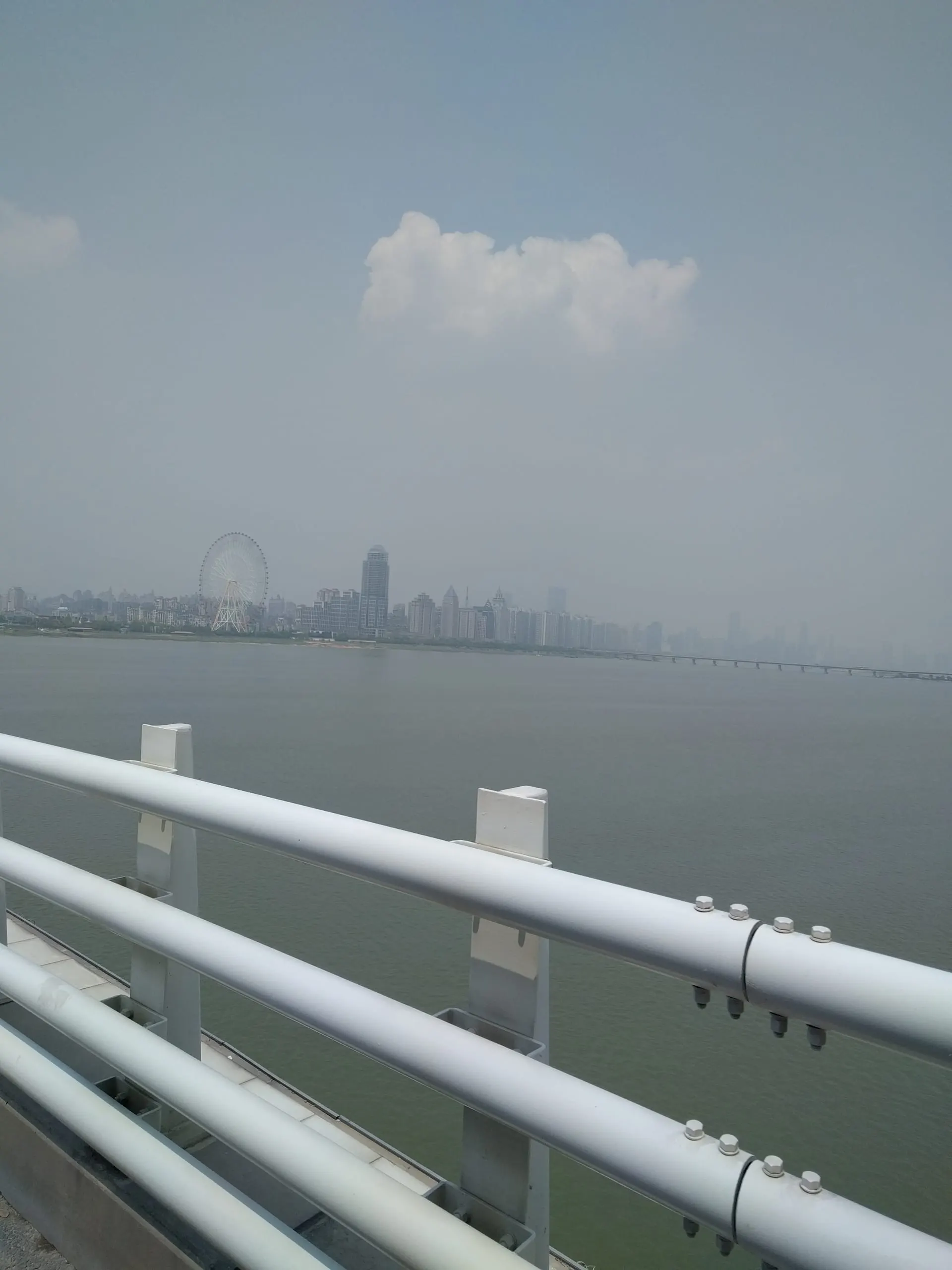
Star of Nanchang (南昌之星)
A 160-metre ferris wheel on the west bank of the Gan River, opened in 2006 and once the tallest in the world. The 30-minute rotation offers a panoramic view of the river, the Honggutan new district skyline, and — on clear days — the distant西山 mountains. Entry is ¥50. The gondolas are air-conditioned, which matters greatly in summer.
Wikimedia Commons · CC-BY-SA
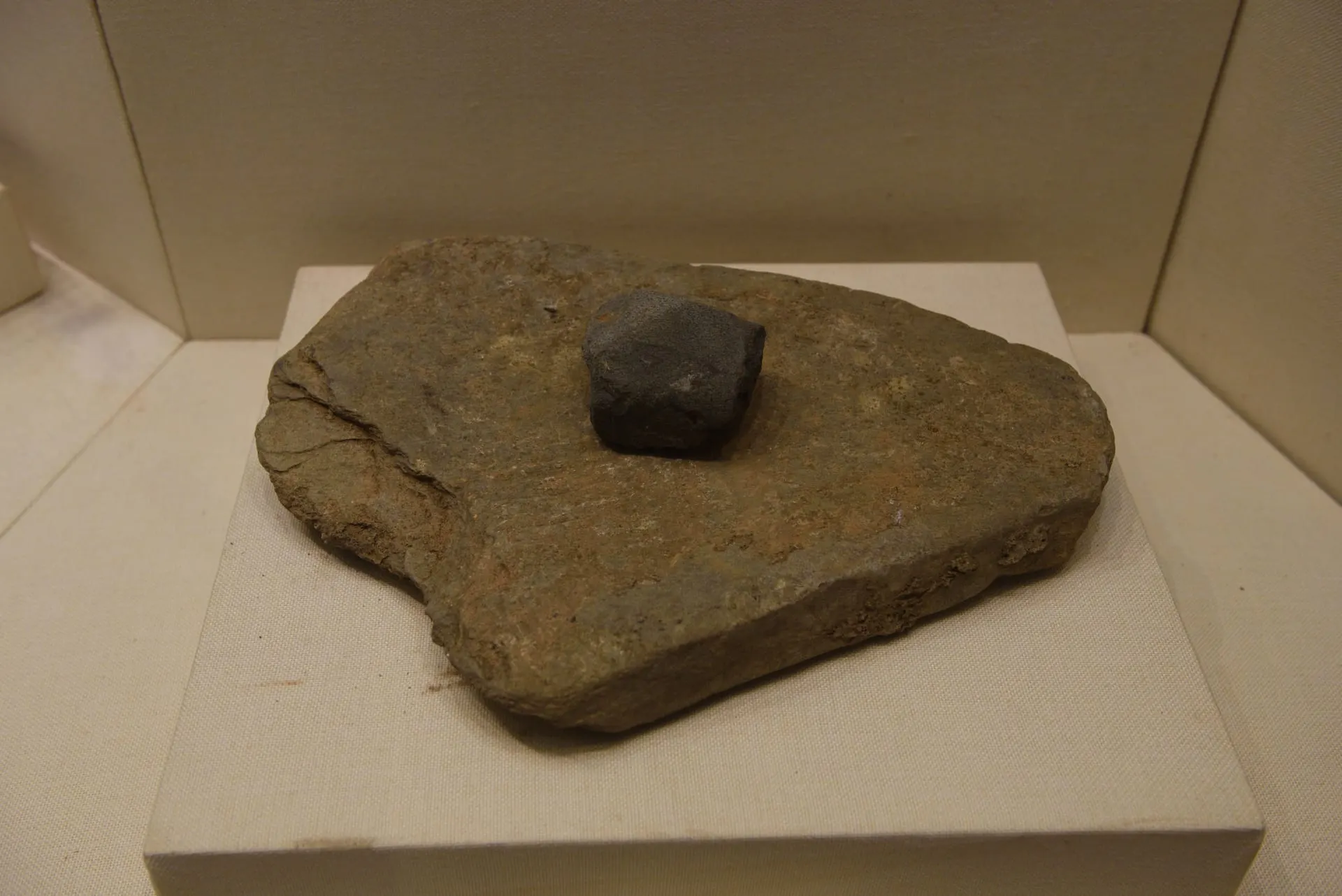
Jiangxi Provincial Museum (江西省博物馆)
A recently built museum complex on the Gan River west bank with three floors covering Jiangxi history from the Shang dynasty bronzes through the Jingdezhen porcelain era to the modern revolution. The Shang-dynasty bronze tiger and the Haihun Marquis tomb gold artifacts are the star exhibits. Free entry. English labelling is present in the main galleries. Budget 2-3 hours.
Wikimedia Commons · CC-BY-SA
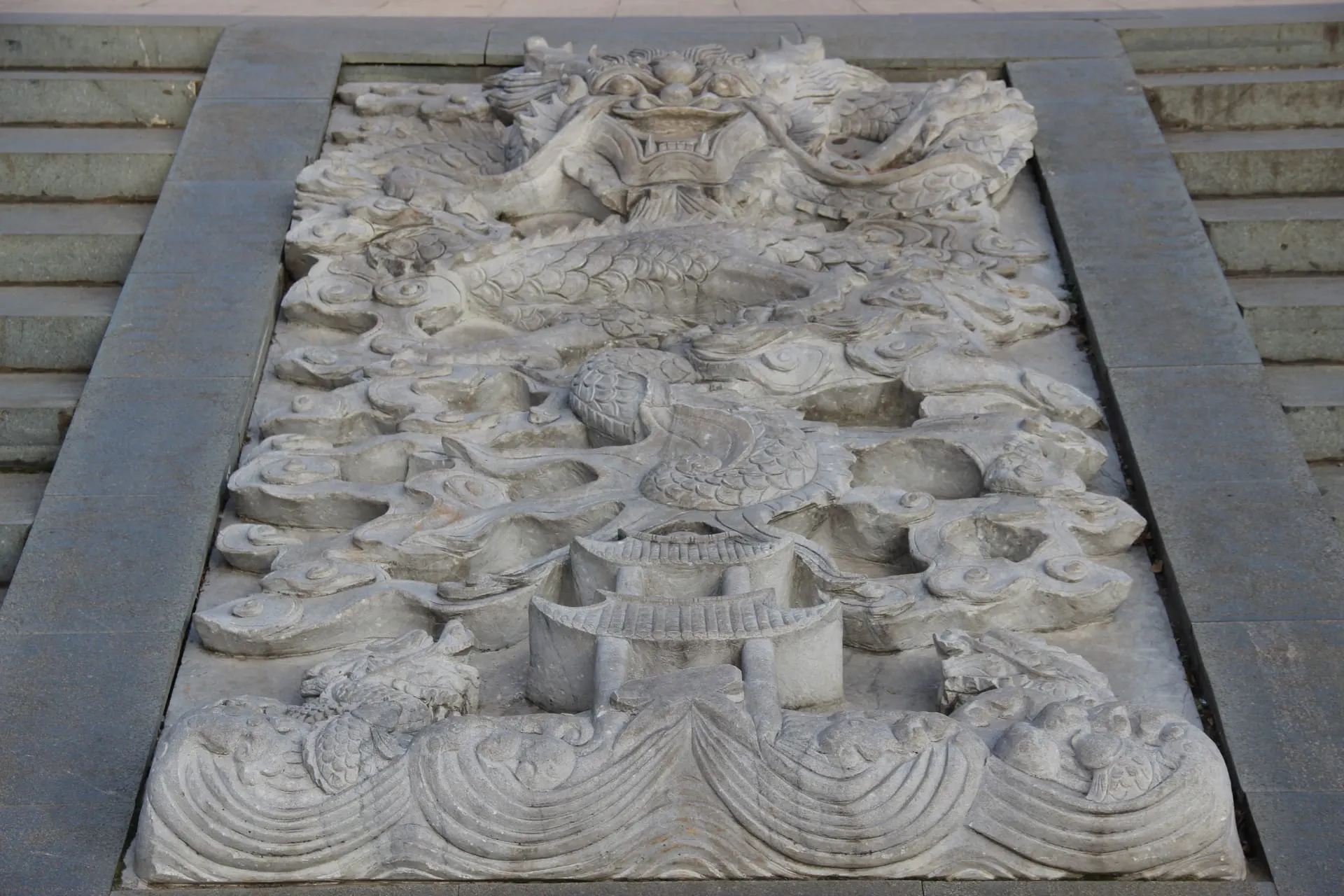
Shengjin Pagoda (绳金塔)
A Tang-dynasty pagoda rebuilt during the Qing period, standing seven storeys tall in the old city centre. The pagoda itself is modest, but the surrounding food street (绳金塔美食街) — a pedestrian lane lined with Jiangxi snack stalls and restaurants — is the real draw. Visit in the evening when the pagoda is illuminated and the food street fills up. The pagoda entry is ¥20.
Wikimedia Commons · CC-BY-SA
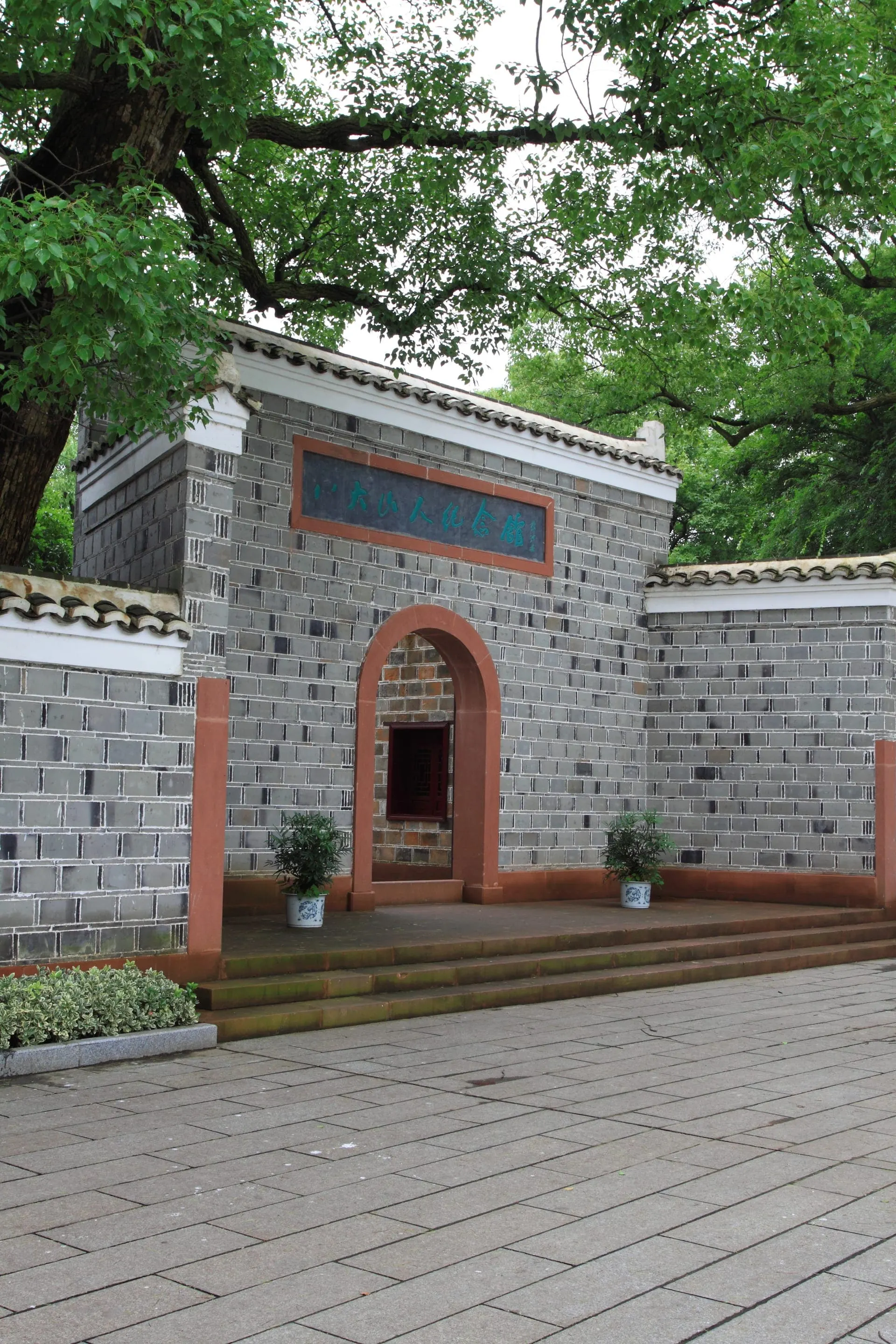
Bada Shanren Memorial Hall (八大山人纪念馆)
The former residence and studio of Zhu Da (朱耷, 1626-1705), a Ming prince who became a Chan Buddhist monk and one of China's most distinctive ink painters. His bird-and-flower paintings — with their glowering, expressive brushwork — influenced generations of Chinese artists. The memorial hall sits inside a quiet garden compound in the southern suburbs. Entry is ¥20.
Wikimedia Commons · CC-BY-SA
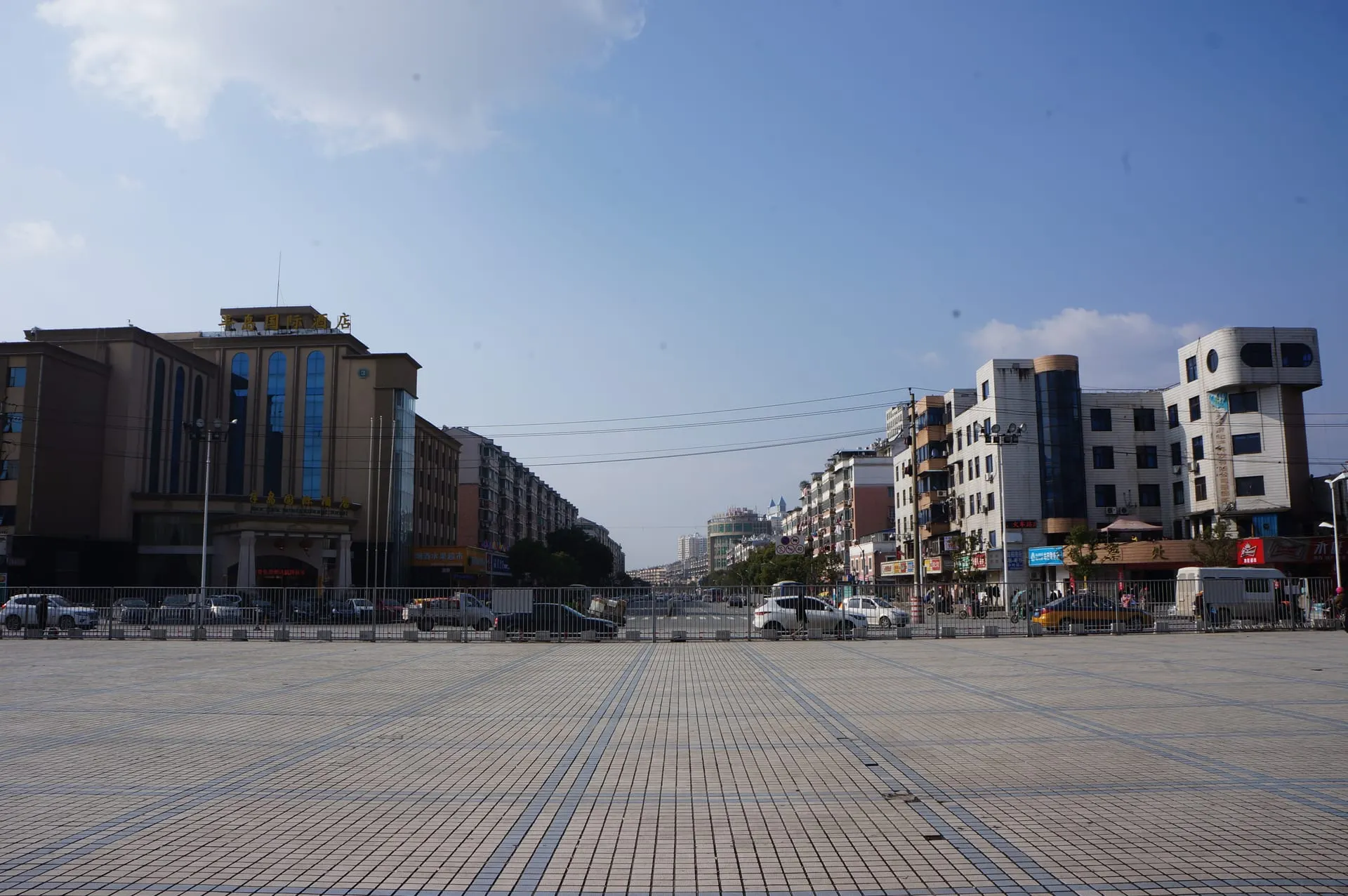
Jingdezhen (景德镇, Jǐngdézhèn)
The world porcelain capital, 2 hours east of Nanchang by high-speed rail. The Jingdezhen Ceramics Museum, the ancient kiln sites (古窑, Gǔ Yáo), and the Taoxichuan (陶溪川) creative district in a converted factory complex make a dense, rewarding day trip. Pick up hand-painted teacups for ¥30-80 at the Sculpture Porcelain Market (雕塑瓷厂).
Wikimedia Commons · CC-BY-SA
STAY
Where to stay in Nanchang
Pick a base that matches the trip you want — imperial-central for sightseeing, hutong belt for character, Chaoyang for nightlife, or Qianmen for budget.
Bayi Square / Old City (八一广场/东湖区)
Central district with the Tengwang Pavilion, August 1 Uprising Museum, and the densest food streets — best base for first-timers.
#bayi-squareHonggutan New District (红谷滩新区)
Modern west-bank business district with glass towers, the Jiangxi Provincial Museum, and international hotels. Clean but corporate.
#honggutanShengjin Pagoda area (绳金塔周边)
Old-city neighbourhood around the Tang-era pagoda with the city's best food street — ban fen and wa guan tang in one evening.
#shengjin-pagodaNanchang West Station area (南昌西站周边)
HSR transit zone with chain hotels for early trains. Functional, not atmospheric — fine for one night.
#nanchang-west
ITINERARIES
Sample itineraries from Nanchang
Three ready-made routes, from a 1-day imperial sprint to a 5-day deep dive. Copy the day-by-day plan and adapt to your own pace.
- 1 DAY
Nanchang in One Day
A compact city sprint — Tengwang Pavilion, revolutionary history, and a ban fen breakfast with wa guan tang.
- transit stopovers
- HSR layovers
- solo travellers on a tight schedule
- Day 01
Morning
Ban fen breakfast near Shengjin Pagoda (arrive by 07:30 — best stalls sell out by 09:00). Tengwang Pavilion (¥50, 2 hours) before the tour groups.
Afternoon
August 1 Uprising Museum (free, 2 hours). Lunch near Bayi Square. Jiangxi Provincial Museum (free, 2 hours).
Evening
Star of Nanchang ferris wheel at dusk (¥50). Dinner crawl at Shengjin Pagoda food street — clay-pot soup, grilled skewers, local beer.
- 2 DAYS
Nanchang in Two Days (City + Jingdezhen or Poyang Lake)
One city day plus a choice day trip — Jingdezhen porcelain capital (any season) or Poyang Lake birdwatching (winter only).
- culture enthusiasts
- birdwatchers (winter)
- ceramics lovers
- couples
- Day 01
Morning
Ban fen breakfast. Tengwang Pavilion at opening (08:00). August 1 Uprising Museum (2 hours).
Afternoon
Jiangxi Provincial Museum (2–3 hours). Lunch at a Gan-cuisine restaurant near Shengjin Pagoda.
Evening
Shengjin Pagoda food street crawl. Star of Nanchang ferris wheel at night. Walk the Gan River promenade.
- Day 02
Morning
Option A (any season): HSR to Jingdezhen (2 hours, ¥80). Ceramics Museum, ancient kiln sites, Taoxichuan creative district. Option B (Nov–Mar): train to Yongxiu, taxi to Wucheng for Poyang Lake birding with a local guide.
Afternoon
Jingdezhen: Sculpture Porcelain Market for handcrafted cups and teapots (¥30–200). Poyang Lake: continue birdwatching — Siberian cranes and storks on the mudflats.
Evening
Jingdezhen: return HSR to Nanchang by 19:00. Poyang Lake: return by car to Nanchang by 18:00. Dinner near the hotel.
- 3 DAYS
Nanchang in Three Days (Full Jiangxi Sampler)
Two city days plus Jingdezhen and Poyang Lake — cover Nanchang, the porcelain capital, and China's greatest freshwater bird spectacle.
- thorough travellers
- photography enthusiasts
- families with older children
- Day 01
Morning
Ban fen breakfast. Tengwang Pavilion. August 1 Uprising Museum.
Afternoon
Jiangxi Provincial Museum. Bada Shanren Memorial Hall (¥20, 1 hour) in the southern suburbs.
Evening
Shengjin Pagoda food street. Star of Nanchang ferris wheel at night.
- Day 02
Morning
Early HSR to Jingdezhen (depart 08:00). Ceramics Museum and ancient kiln sites (¥95).
Afternoon
Taoxichuan creative district. Sculpture Porcelain Market for souvenir shopping. HSR back to Nanchang by 18:00.
Evening
Dinner near Bayi Square. Walk the lit-up riverfront promenade.
- Day 03
Morning
Train to Yongxiu (30 min), taxi to Wucheng. Morning birdwatching at Poyang Lake with a local guide (¥300–500 half-day, Nov–Mar only).
Afternoon
Continue birding or return to Nanchang. If not birding season, revisit a favourite food spot or explore the lanes around Bayi Square.
Evening
Final Jiangxi dinner — ban fen and wa guan tang for the road. Depart.
BUDGET
What a Nanchang trip costs
Per-person, per-day costs across three spending tiers. Excludes international flights and visa fees.
| Line item | Backpacker | Mid-range | Luxury |
|---|---|---|---|
| Hostel dorm bed (per night) | $8 | $0 | $0 |
| Budget hotel (per night) | $0 | $25 | $0 |
| International hotel (per night) | $0 | $0 | $100 |
| Street-food meal (ban fen, skewers) | $2 | $4 | $6 |
| Mid-range restaurant meal | $0 | $8 | $18 |
| Metro / bus (single ride) | $0.5 | $0.5 | $0.5 |
| DiDi ride (city core, ~5 km) | $0 | $3 | $3 |
| Attraction entry (average ticket) | $3 | $5 | $7 |
| SIM card (30 days, 30 GB) | $15 | $15 | $15 |
| Daily total excl. accommodation | $15 | $30 | $50 |
| Total per day | $43.5 | $90.5 | $199.5 |
$ USD per person per day, before international flights and visas. Last verified: Q3 2026.
STAY SAFE
Emergency contacts in Nanchang
Save these three numbers before you board the plane. China uses different hotlines than most countries — there's no 911.
- POLICE
110
- AMBULANCE
120
- FIRE
119
- TOURIST HOTLINE
12301
- ENGLISH-SPEAKING ER
First Affiliated Hospital of Nanchang University (南昌大学第一附属医院), +86 791 8869 2748, 17 Yongwaizheng Street, Donghu District — international department with some English-speaking staff
Problems travelers hit in Nanchang
- Why is my Alipay not working?You linked a foreign Visa or Mastercard to Alipay but every transaction is rejected at the merchant.
- My China visa was denied — what now?Your L visa application was refused at the Chinese consulate and your trip is in 2–4 weeks.
- My passport was lost or stolen in China — what do I do?Your passport is gone (theft or loss) and you're in mainland China without travel documents.
- Why can't I book on 12306 with my foreign card?You tried to book a high-speed rail ticket on 12306.cn and your foreign Visa/Mastercard is rejected at checkout.
- Why is my VPN not working in China?You arrived in China, opened your VPN, and it will not connect at all or connects but no traffic loads.
- Why can't I book a Tibet trip on my own?You try to book Lhasa flights and hotels yourself but the booking fails, or you're turned away at the Lhasa airport without a permit.
Book activities in Nanchang
These are licensed tour operators and booking platforms we've vetted independently. Booking through these links may earn us a commission — see our affiliate disclosure. This never affects our editorial recommendations or the price you pay.
Frequently asked questions
Is Nanchang worth visiting?
How many days do I need in Nanchang?
What is the best time to visit Nanchang?
Is the Tengwang Pavilion the original Tang-dynasty building?
How do I visit Poyang Lake for birdwatching?
How do I get from Nanchang to Jingdezhen?
Show all 21 FAQs
What local food should I try in Nanchang?
Is English spoken in Nanchang?
Is Nanchang safe for tourists?
How do I get from Nanchang airport to the city?
What is the August 1 Uprising and why is it important?
What is Nanchang's weather like in summer?
Should I visit Jingdezhen as a day trip from Nanchang?
What is the Jiangxi Provincial Museum like?
Where should I stay in Nanchang?
How does Nanchang compare to Wuhan?
What is Bayi Square and is it worth visiting?
Is Mount Lu (Lushan) really a one-hour train from Nanchang?
What was found in the Haihun Marquis tomb?
What does Nanchang look like in late autumn and winter?
What local snack should I try first in Nanchang?
References

Related guides & destinations
Guide
How We Research 2026: NihaoVisit’s Methodology for China Travel Information
How NihaoVisit sources, verifies, and maintains 700+ pages of China travel information — our source hierarchy, fact-checking process, update
Guide
Fact-Checking Log 2026: Verified China Travel Information — NihaoVisit
A public log of fact-checking verification passes on NihaoVisit, showing what was verified, when, and against which sources — covering visa
Guide
Best Time to Visit China 2026: Month-by-Month Weather, Crowds, and Prices
The best time to visit most of China is April–May and September–October. Winter (Dec–Feb) is cold but cheap; summer (Jun–Aug) is hot and cro
Guide
VPN for China 2026: Which VPNs Work, eSIM Alternatives, and the Complete Pre-Trip Checklist
Most Western apps and websites are blocked in mainland China. A reliable VPN is essential for Google, Gmail, WhatsApp, Instagram, and most n
Guide
China SIM Card and eSIM Guide 2026: Stay Connected Without WeChat
A Chinese SIM or eSIM lets you use mobile data, maps, and ride-hailing without WiFi. Here is how to get one, the cost, and which provider to
Guide
Solo Female Travel in China 2026: Safety, Tips, and Real Experiences
China is one of the safer destinations for solo female travelers. Petty theft is rare, violent crime against tourists is extremely uncommon,