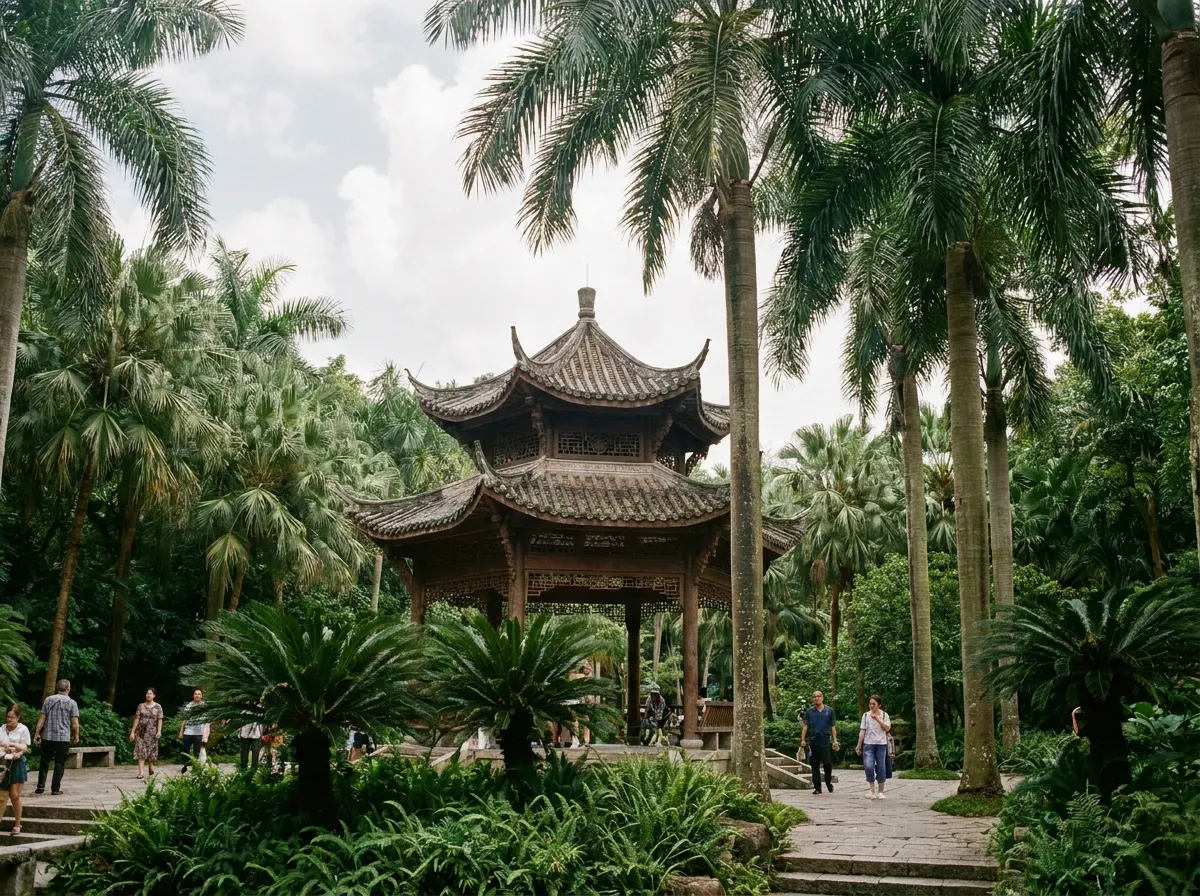
Nanning
A subtropical provincial capital in southern Guangxi where tropical foliage shades wide avenues, the Detian Waterfall thunders across the Vietnam border 200 km west, and the local noodle specialty laoyou fen (老友粉, sour-spicy rice noodles) anchors one of China's more understated regional food scenes. Nanning makes sense as a 2-day transit stop between Guilin and Hanoi rather than a standalone destination. Nanning also works as a winter escape from northern China — January and February average 12-18°C, and the city's tree-lined streets and night markets are busy when Beijing is frozen.
Why Nanning in 2026.
Nanning (南宁, Nánníng) is the capital of Guangxi and the largest Chinese city within striking distance of Vietnam. Known as the Green City (绿城, Lǜ Chéng) for its tropical canopy cover, it serves as a functional gateway to Southeast Asian overland routes and a base for the spectacular Detian Waterfall on the China-Vietnam border. The city itself is more liveable than postcard-worthy — wide boulevards, a sprawling urban mountain park, and a street-food scene dominated by the sour-spicy noodle dish laoyou fen that Nanning claims as its own invention.
Quick Answer
A subtropical provincial capital in southern Guangxi where tropical foliage shades wide avenues, the Detian Waterfall thunders across the Vietnam border 200 km west, and the local noodle specialty laoyou fen (老友粉, sour-spicy rice noodles) anchors one of China's more understated regional food scenes. Nanning makes sense as a 2-day transit stop between Guilin and Hanoi rather than a standalone destination. Nanning also works as a winter escape from northern China — January and February average 12-18°C, and the city's tree-lined streets and night markets are busy when Beijing is frozen.
| Worth visiting | Yes, if you are already travelling between Guilin and Vietnam, or if the Detian Waterfall is on your list. As a standalone flight-in destination, Nanning is a harder sell than Guilin or Kunming. |
|---|---|
| Recommended days | 2 days (city + Detian Waterfall day trip) |
| Best time to visit | October to March. Temperatures are comfortable (18-26°C), humidity drops, and rain is infrequent. April through September is hot, humid, and wet, with July-August temperatures reaching 37°C. |
| Daily budget | $35 (backpacker) / $100 (mid-range) / $250+ (luxury) |
| Family friendly | Moderate. Qingxiu Mountain has kid-friendly paths and picnic areas, but the city's attractions lean adult. The Guangxi Science and Technology Museum is a reliable indoor option for children. |
| Solo friendly | High. The metro is straightforward, costs are low, and the street-food culture makes eating alone feel natural. |
| Airport | Nanning Wuxu International Airport (NNG), 32 km southwest of the city centre. Metro Line 1 extension reaches the airport in about 50 minutes. |
| High-speed rail | Nanning East Station (南宁东站) is the main hub. Guilin in 2.5 hours, Guangzhou in 3.5 hours, Kunming in 4 hours. A Nanning-Hanoi railway is under construction. |
| Language | Mandarin and Cantonese are both common. The local Zhuang language (壮语, Zhuàngyǔ) is spoken by the indigenous Zhuang population but you will not encounter it as a visitor. English signage exists at the airport, metro, and major hotels but is sparse elsewhere. |
| Currency | CNY (¥) — Alipay and WeChat Pay accept foreign Visa/Mastercard |
| Time zone | China Standard Time (UTC+8) |
| Last updated | 2026-07-14 |
Want a Nanning plan built for you?
Why visit Nanning?
Nanning is not going to top many China bucket lists, and that is the honest truth. Beijing has the Forbidden City, Shanghai has the skyline, Guilin has the karst peaks — Nanning has a big park, a good museum, and proximity to a waterfall four hours away. That said, the city fills a specific and useful niche. It is the last Chinese provincial capital before Vietnam, the logical overland stop for anyone connecting Guilin, Kunming, and Hanoi, and the access point for the genuinely impressive Detian Waterfall. When I walked through Qingxiu Mountain on a weekday morning in February, the park was nearly empty, the tropical foliage was dripping with mist, and the view from the pagoda stretched across a forest canopy that made the city feel much farther away than it was. That moment — a quiet green mountain inside a provincial capital — is probably Nanning at its best. The city also rewards food-focused visitors. The sour-spicy rice noodle dish laoyou fen (老友粉, literally "old friend noodles") was invented here, and the street-food culture along Zhongshan Road and the surrounding alleys is serious and affordable. Nanning is not a destination that demands a week. It is a city that works well as a 48-hour stop: one day for Qingxiu Mountain and the night market, one day for the waterfall day trip. If you are crossing from China into Vietnam overland, it is the most sensible final Chinese city to stock up, eat well, and rest before the border. Jump to: History | Geography & Climate | Getting There | Getting Around | Top Attractions | Where to Stay | What to Eat | Itineraries | Monthly Weather | Practical Info | Tips & Warnings | Emergencies | Southern China Loop | ASEAN & CAEXPO | Zhuang Culture | Green City | Food Deep Dive | Day Trips | Science Museum | Photo Spots | Regional Flavours | Ancient Sites & Border | Cultural Calendar
What is the history of Nanning?
Nanning has existed as an administrative settlement since the Eastern Jin dynasty (317-420 CE), when it was established as Jinxing Commandery. Its name changed to Nanning — literally "southern tranquility" — in 1324 during the Yuan dynasty, reflecting its role as a frontier garrison on the southern edge of the Chinese empire. For most of its history, Nanning was a secondary town overshadowed by Guilin, the traditional provincial capital of Guangxi. Its fortunes shifted in the 20th century. In 1912, the Republican government briefly transferred the provincial capital from Guilin to Nanning, though it moved back to Guilin in 1936 and finally to Nanning in 1950 under the new PRC administration. The modern version of the city was shaped by two forces: the Sino-Vietnamese relationship and the Western Development Strategy. During the Vietnam War, Nanning functioned as a rear support base for North Vietnam, with goods, advisers, and logistics flowing south through the city. The 1979 Sino-Vietnamese border war temporarily severed those ties, but after diplomatic relations normalised in 1991, Nanning positioned itself as the primary Chinese hub for ASEAN trade. The China-ASEAN Expo, launched in 2004, gave the city a permanent annual international event and spurred major infrastructure investment — the new airport terminal, the high-speed rail hub, and the expanded metro all trace their budgets to the ASEAN pivot. Today Nanning has roughly 8 million residents in the metropolitan area and a GDP of about ¥620 billion, making it one of the smaller provincial capitals economically but one with a defined — if niche — international identity.
What is the geography and climate of Nanning?
Nanning sits in a river basin at roughly 80 metres above sea level, surrounded by low green hills that give the city its nickname, the Green City (绿城, Lǜ Chéng). The Yong River (邕江, Yōng Jiāng), a tributary of the Pearl River system, curves through the city from west to east, and the urban core stretches along both banks. The wider Guangxi landscape is classic karst country — limestone peaks, caves, and underground rivers are common within an hour of the city. The climate is subtropical monsoon: hot, humid, and rain-soaked from April through September, then mild and relatively dry from October through March. Summer daytime highs regularly hit 33-37°C with humidity above 80%. The city receives roughly 1,300 mm of rain annually, with June through August accounting for more than half of it. January is the coolest month (average 13°C), July the hottest (average 28°C, with highs often exceeding 35°C). The single best weather window is late October through early December, when daytime temperatures sit at 22-26°C, the humidity breaks, and the sky clears enough to see the surrounding hills. March is also pleasant but can be damp. If you are here in July or August, plan outdoor activities for before 10 a.m. or after 4 p.m. — the midday sun is punishing.
How to get there
Nanning Wuxu International Airport (IATA: NNG) is about 32 km southwest of the city centre. It handles domestic flights from every major Chinese city and a modest but growing set of international routes — Bangkok, Kuala Lumpur, Singapore, Seoul, and Ho Chi Minh City have direct connections as of mid-2026. Metro Line 1 reaches the airport in roughly 50 minutes for ¥7. A taxi from the airport into the city centre costs roughly ¥100-130 and takes 40-60 minutes depending on traffic. The airport bus (Lines 1-4) is cheaper at ¥20 but slower. Nanning East Station (南宁东站) is the high-speed rail hub. Trains run frequently to Guilin (2.5 hours, second class ¥110), Guangzhou South (3.5 hours, ¥170), Kunming South (4 hours, ¥180), and Shenzhen North (4.5 hours, ¥220). There is also a slower overnight train to Hanoi — or rather, to the border. You take a domestic train from Nanning to Pingxiang (凭祥), a border town 3 hours away, cross into Vietnam on foot via the Youyi Guan (Friendship Pass, 友谊关), and pick up transport to Hanoi on the Vietnamese side. The whole crossing takes 6-8 hours depending on wait times. A direct high-speed rail link from Nanning to Hanoi is under construction but has no confirmed completion date. For the bus to Hanoi: direct sleeper buses depart from Nanning Langdong Bus Station and reach Hanoi in roughly 8 hours for ¥200-250. This is the simplest overland option.
How to get around
Nanning's metro system has five operating lines (1, 2, 3, 4, and 5) covering the central districts, with tickets at ¥2-7 depending on distance. Foreign bank cards work at metro ticket machines. The metro is clean, air-conditioned, and rarely crowded by Chinese standards — a relief in summer. City buses are extensive but slow, with routes labelled in Chinese only. Fares are ¥1-2. DiDi (the Chinese Uber equivalent) is widely available and affordable: a trip across the central city costs ¥15-30. Taxis start at ¥9 for the first 2 km. The old-fashioned three-wheeled bengbeng (蹦蹦) vehicles still operate in some districts — avoid them, as they are unregulated and overcharge foreigners openly. For the Detian Waterfall day trip, organised tours from Nanning hotels and hostels are the easiest option and cost roughly ¥300-400 including transport and entry ticket. Self-driving is possible with a recognised Chinese driving licence (foreign licences are not valid), but the roads are winding and poorly signed in English. An electric scooter is a popular local option, but rental companies require Chinese-language paperwork.
What are the top attractions in Nanning?
1. Qingxiu Mountain (青秀山) — The city's best attraction by some distance. The park covers 13 km² of forested hills with tropical gardens, a Ming-dynasty pagoda, a 1,300-year-old temple, and a bonsai garden. Entry is ¥20. The electric shuttle is ¥5 per segment and worth every jiao — walking the full park in summer would be a form of self-punishment. Budget 3-4 hours. 2. Detian Waterfall (德天瀑布) — A genuinely spectacular sight. The waterfall spans about 200 metres across the Guichun River, with the Chinese cascade on one side and the smaller Vietnamese Bản Giốc falls on the other. You can take a bamboo raft to the base of the falls for ¥30. The best months are May through October when water volume peaks, though this is also the rainy, hot season. Entry is ¥80. The 4-hour drive from Nanning is the main friction point. 3. Guangxi Museum of Nationalities (广西民族博物馆) — A well-curated museum that covers the 12 officially recognised ethnic groups of Guangxi. The Zhuang bronze drum collection is outstanding, and the architectural models of Dong drum towers and Yao longhouses are informative. Free entry. Plan 2 hours. 4. Nanhu Lake Park — The best central-city green space, with a wide lake surrounded by tropical gardens and a jogging path. Free and open all day. Best at sunrise or sunset. 5. Zhongshan Road Night Market — The epicentre of Nanning's food scene. Opens around 5 p.m. and runs until 2 a.m. The luosifen (螺蛳粉, river snail rice noodles) stalls near the northern entrance are the most celebrated. 6. Yangmei Ancient Town — A 1,000-year-old river town 36 km from the city. Stone lanes, Ming-dynasty courtyard houses, and a handful of old temples. It is quieter and less commercialised than comparable ancient towns in eastern China, but also less impressive architecturally. The river fish lunch (¥40-80 per person) is the main reason to make the trip. 7. Guangxi Science and Technology Museum — A good indoor option for families or a rainy afternoon. The planetarium and karst geology exhibits are the highlights. Label-heavy in Chinese. 8. Nanhu Bridge at night — Not an official attraction, but the illuminated bridge reflected in the lake with the skyline behind it is the best free photo spot in the city.
Where to stay
Nanning has a compact hotel geography. The Qingxiu District (青秀区) east of Minzu Avenue is the modern commercial centre, with the city's best hotels, shopping malls, and international restaurants. The MixC (万象城) shopping complex anchors the area, and the Wanda Realm (¥600-1,200/night) and Marriott (¥700-1,500/night) are the top-end picks south of the convention centre. Mid-range chains like Atour (亚朵, ¥300-500/night) and Hanting (汉庭, ¥180-280/night) sit on the side streets. The area around Nanning East Station is convenient for early high-speed rail departures but feels sterile and hotel-heavy. The Chaoyang Square (朝阳广场) area west of the Yong River is the older commercial centre, denser and grittier, with budget hotels at ¥100-200/night and proximity to the Zhongshan Road Night Market. This is the best area for street-food access and a more local feel, but English is almost non-existent. For a mid-range pick, the GreenTree Inn near Nanhu Lake (¥220-350/night) offers lake views and a central location at a fair price. I've found that the Qingxiu District offers the least friction for a first visit — English-speaking front desks, reliable WiFi, and easy DiDi pickups outweigh the higher price. Across all categories, expect to pay ¥100-200 for a basic clean room, ¥250-500 for a comfortable mid-range hotel, and ¥700+ for an international brand.
What to eat in Nanning
Nanning's food scene is anchored by laoyou fen (老友粉, lǎoyǒu fěn), a sour-spicy rice noodle dish that is the city's culinary signature. The story goes that a teahouse owner invented it in the 1930s for a sick regular customer — adding fermented bamboo shoots, chilli, black vinegar, garlic, and pork to a noodle soup to "cure a cold." The result is aggressively sour, fragrant, and spicy, with the fermented bamboo shoots providing a pungency that divides first-timers instantly. A bowl costs ¥10-18 as of June 2026. The best-known shop is Shujie Laoyou Fen (舒记老友粉) on Zhongshan Road, open since 1949. The second essential Nanning dish is luosifen (螺蛳粉, luósīfěn), river snail rice noodles — though this dish is more associated with Liuzhou, a city 250 km north, Nanning's version is slightly milder and widely available at the Zhongshan Road night market. The broth is made from river snails and pork bones, simmered for 8-12 hours, and served with rice noodles, sour bamboo shoots, peanuts, fried tofu skin, and chilli oil. A bowl costs ¥12-20. It smells much stronger than it tastes — the fermented bamboo shoots produce an aroma that some visitors compare to strong cheese. Lemon duck (柠檬鸭, níngméng yā) is a local speciality involving duck braised with pickled lemons, ginger, and chilli. The sour-citrus note cuts through the duck fat in a way that feels distinctly southern Chinese. Guilin rice noodles (桂林米粉, Guìlín mǐfěn) are also common here. For street snacks, try zongzi (粽子, sticky rice dumplings wrapped in bamboo leaves, ¥5-8), grilled oysters with garlic (蒜蓉烤生蚝, ¥10-15 for a plate of six), and the tropical fruit sold from carts throughout the city — mango (芒果, mángguǒ), lychee (荔枝, lìzhī), dragon fruit (火龙果, huǒlóngguǒ), and durian (榴莲, liúlián) are all grown in Guangxi and sold at prices well below what you would pay in Beijing or Shanghai. Warning: durian is banned from hotels, metro trains, and most indoor public spaces. The signs will be in Chinese, but the image of a durian with a red X through it is universal.
What are good 1, 2, and 3-day itineraries for Nanning?
One day (transit stop): Morning at Qingxiu Mountain (enter by 8:30 a.m. to beat the heat). Lunch at Shujie Laoyou Fen on Zhongshan Road. Afternoon at the Guangxi Museum of Nationalities (2 hours). Evening walk around Nanhu Lake, dinner at the Zhongshan Road Night Market. This covers the city's three best experiences in a single day. Two days (the standard visit): Day 1 as above. Day 2: Detian Waterfall day trip — depart Nanning by 7 a.m., arrive at the waterfall by 11 a.m., spend 2-3 hours on site, return to Nanning by 6 p.m. Evening dinner near Chaoyang Square. The waterfall day is long (8-9 hours round trip) but worthwhile. Three days: Days 1-2 as above. Day 3 morning at Yangmei Ancient Town (depart 8 a.m., return by 1 p.m.). Afternoon: Nanning Zoo or the Science Museum depending on interest. Evening: a final sweep of Zhongshan Road for anything you missed. If a third day feels like it is stretching the city's offerings thin, that is a fair assessment — Nanning does not have three full days of distinct attractions. Consider using the third day to take the train to Guilin (2.5 hours) or start the overland journey to Hanoi.
What is the monthly weather in Nanning?
January: 10-17°C, overcast, occasional drizzle. Light jacket weather. February: 11-19°C, still grey but with more dry days. March: 15-23°C, spring begins, cherry blossoms in Qingxiu Mountain. Some rain. April: 19-28°C, hot and humid, rain increases sharply. May: 23-32°C, hot, humid, heavy downpours common. June: 25-34°C, very hot and wet — the worst month for outdoor comfort. July: 26-37°C, extreme heat and humidity, rain continues. August: 25-36°C, similar to July, typhoon tail effects possible. September: 24-33°C, still hot but rain begins to taper late in the month. October: 20-29°C, the sweet spot begins. Pleasant temperatures, reduced rain, clear skies. November: 15-25°C, the best month overall. Dry, sunny, comfortable. December: 10-19°C, cooler but still pleasant, low rainfall. The November window is as close to perfect as Nanning gets.
What practical information do I need for Nanning?
Visa: As of mid-2026, China's unilateral visa-free entry for 50+ nationalities covers stays of up to 30 days, including Nanning. Check the latest list at your local Chinese embassy website. If you are crossing overland into Vietnam, you will need a Vietnamese visa or e-visa — the Vietnamese e-visa (eV) portal processes applications in 3-5 working days and costs US$25. You cannot get a Vietnamese visa at the Youyi Guan (Friendship Pass) border crossing; arrange it before arriving. Money: Alipay and WeChat Pay dominate. International Visa and Mastercard can now be linked to both apps. Cash is still accepted at street stalls and markets, and you should carry ¥200-300 in small notes for the night market and small restaurants. ATMs accepting foreign cards are located at the airport, major Bank of China branches, and inside the MixC mall. Connectivity: A Chinese SIM from China Unicom or China Mobile costs roughly ¥100 for a month of data and can be bought at the airport on arrival. Bring your passport — it is required for SIM registration. Most hotels and cafes offer free WiFi. A VPN is necessary to access Google, WhatsApp, Instagram, and Gmail; install and test it before you leave home. Language: English is not widely spoken outside the airport and top hotels. Download Pleco (for Chinese characters) and a translation app before arriving. A screenshot of your hotel address in Chinese characters will be the single most useful thing on your phone for taxi and DiDi rides.
What tips and warnings should I know for Nanning?
1. Zhongshan Road Night Market is at its best between 7 p.m. and 10 p.m. Go earlier and stalls are still setting up; go later and some of the better-known vendors sell out. 2. Bring diarrhoea medication. Guangxi street food is not inherently unsafe, but the combination of chilli oil, unfamiliar bacteria, and tropical heat can unsettle a stomach not used to it. Imodium (loperamide) is available at Chinese pharmacies under the name 易蒙停 (yì méng tíng). 3. Qingxiu Mountain on a summer weekend is a different experience from Qingxiu Mountain on a winter weekday. The former involves crowds, noise, and a long queue for the shuttle bus. Visit on a weekday morning if your schedule allows. 4. The Detian Waterfall day trip is roughly 8-9 hours round trip — four hours each way by road. The drive is not scenic (highway with industrial views), and the minivan tours can be cramped. Splurge on a private car if your budget allows (roughly ¥1,200 for the day). 5. Do not attempt the Vietnam land border crossing without arranging your Vietnamese visa in advance. The Youyi Guan checkpoint will turn you back, and the nearest Vietnamese consulate is back in Nanning (a 3-hour drive). I have watched a traveller make this mistake and lose a full day. 6. The durian ban in hotels and on public transport is serious — fines of ¥200-500 are enforced. 7. Tap water is not potable. Buy bottled water (Nongfu Spring or Wahaha, ¥2-3 per bottle) and refill with a filter if you carry one. 8. Counter-intuitive advice: the best Nanning experience may be the one where you spend the least time in Nanning. The city works best as a comfortable base for a waterfall trip and a food stop between Guilin and Hanoi, not as a destination in its own right. Setting expectations accordingly will improve your trip.
What are the emergency contacts in Nanning?
Police: 110. Ambulance/Fire: 120. Tourist complaint hotline: 12301. The First Affiliated Hospital of Guangxi Medical University (广西医科大学第一附属医院) has an international department and English-speaking staff. Address: 6 Shuangyong Road, Nanning. Phone: +86 771 535 0888. The Vietnamese Consulate in Nanning (for visa issues) is at 55 Jinhu Road, Qingxiu District. Phone: +86 771 551 0560. Open weekdays 8:30-11:30 a.m. and 2:30-5:30 p.m.
How Nanning fits into a larger China itinerary
Nanning makes the most sense as part of a southern China + Vietnam route. A logical two-week itinerary: fly into Guilin, spend 3 days in Guilin and Yangshuo, take the HSR to Nanning (2.5h), spend 2 days in Nanning (one for Qingxiu Mountain, one for Detian Waterfall), then take the bus or train to the border and continue to Hanoi (1 day of travel, then 3-4 days in northern Vietnam). In the reverse direction, fly into Hanoi, travel north to Nanning, then continue to Guilin, Kunming, or Guangzhou by high-speed rail. Nanning also pairs well with a longer Guangxi loop: Guilin-Yangshuo to the north, the Longsheng rice terraces, Liuzhou (for the original luosifen), then Nanning as the southern anchor before exiting to Vietnam. If Southeast Asia is not part of your plan, Nanning is harder to justify. Kunming offers more cultural variety, Guilin offers better scenery, and Guangzhou offers better food. Nanning's value proposition is entirely its position: it is the best Chinese city within a day of the Vietnam border.
How does Nanning function as China's gateway to ASEAN?
Nanning has been branded China's Gateway to ASEAN (中国-东盟) for the better part of two decades, and the label is more than tourism marketing — it is the city's actual economic identity. The China-ASEAN Expo (中国-东盟博览会, CAEXPO) has been held in Nanning every September since 2004, drawing heads of state, trade delegations, and buyers from across Southeast Asia. The convention centre next to the Minzu Square metro station is purpose-built for the event, and for one week each autumn, the city fills with Vietnamese, Thai, Indonesian, and Malaysian business groups alongside the expected Chinese officials. Even outside CAEXPO week, the ASEAN orientation is visible. The consular corps is unusually large for a Chinese second-tier city — Vietnam, Laos, Thailand, Cambodia, and Myanmar all maintain consulates in Nanning, primarily to facilitate cross-border trade. Vietnamese signs and menus are not uncommon in hotels and restaurants near the convention centre, and the currency exchange counters in the airport and the MixC mall offer Vietnamese dong alongside US dollars. The China-Vietnam cross-border trade volume through Guangxi's land ports now exceeds US$20 billion annually, and Nanning hosts the trade-finance, logistics, and legal infrastructure that supports it. For the traveller, this ASEAN orientation is more atmospheric than functional — you will not visit a Vietnamese consulate unless you have paperwork problems, and the CAEXPO week in September is best avoided by tourists because hotel prices spike and the city centre becomes crowded. But the practical benefit shows up at the border. The Pingxiang and Youyi Guan crossings, both reachable by train from Nanning, are among the smoothest land border crossings in mainland Southeast Asia, and the staff at both sides deal with foreign tourists regularly. If you are crossing overland, the route from Nanning to Hanoi is one of the most-used in the region. The annual CAEXPO is also the best time of year to see modern Nanning at its most self-confident, and if your schedule happens to align with it, the opening-day parade is a worthwhile spectacle. For a city of its size, Nanning also punches above its weight in international education and youth exchange. Guangxi University and Guangxi Normal University host significant numbers of ASEAN students, particularly Vietnamese, Thai, and Indonesian, and the city's university district has a younger, more international feel than you would expect. Several of the central-city coffee shops and bars around Guangxi University cater to this community, and a traveller looking for a more cosmopolitan take on Nanning will find it there. English, however, does not improve — the ASEAN students speak to each other in their own languages and to locals in Mandarin, and the everyday lingua franca remains the southern Guangxi variant of Mandarin. The most concrete ASEAN traveller benefit is the direct flight network. Nanning Wuxu International Airport now runs direct services to Bangkok, Kuala Lumpur, Singapore, Seoul, and Ho Chi Minh City, with Manila and Jakarta routes under negotiation. For a traveller entering China from Southeast Asia — or continuing onward into China from a Hanoi trip — Nanning is often the simplest and cheapest air entry point, bypassing the larger and more crowded gateways of Guangzhou, Shanghai, or Hong Kong.
What Zhuang minority culture can I experience in Nanning?
The Zhuang (壮族, Zhuàngzú) are China's largest ethnic minority, with a population of roughly 18 million concentrated in Guangxi. Nanning sits in the heart of Zhuang country, and although the city itself is heavily Han-Chinese in its day-to-day texture, the cultural substrate is unmistakably Zhuang. The language is the most obvious marker. Zhuang (壮语, Zhuàngyǔ) belongs to the Tai-Kadai language family, related to Thai and Lao, and although almost all urban Zhuang speak Mandarin as their first or second language, you will hear Zhuang phrases and song fragments in markets, in older neighbourhoods, and during folk performances. The Guangxi Museum of Nationalities does the best job of explaining the broader ethnic mosaic, with 12 officially recognised Guangxi ethnic groups covered, but for Zhuang-specific depth, the best places are the Sanjie Liangxiang (三街两巷) historic district in the old city and the folk performances in Qingxiu Mountain during the Zhuang March 3rd Festival (壮族三月三). The March 3rd Festival falls on the third day of the third lunar month (usually early April in the Gregorian calendar) and is Guangxi's biggest cultural celebration. Locals dress in embroidered indigo clothing, the women wear silver headdresses that can weigh several kilograms, and there are communal song-and-dance gatherings called liu hao (刘三姐-style antiphonal singing, named after the legendary Zhuang folk singer). The festival is a public holiday in Guangxi but not elsewhere in China, so Nanning in early April feels different from the rest of the country. Travellers are welcome at the public performances in Qingxiu Mountain and People's Park. The Zhuang cuisine is another layer worth exploring. Sour bamboo shoots (酸笋, suān sǔn) — the same ingredient that gives luosifen its controversial aroma — are a Zhuang staple, and the cuisine leans heavily on fermentation, sour broths, and preserved meats. The five-coloured sticky rice (五色糯米饭, wǔsè nuòmǐ fàn) is a Zhuang ceremonial dish: sticky rice dyed purple, yellow, white, black, and red using plants, served at festivals and on special occasions. It is gluten-free, mildly flavoured, and visually striking. You can buy it at the Sanjie Liangxiang market on weekends and at folk events. Zhuang indigo dyeing (壮族蓝靛染) is a living craft tradition; the indigo-dyed cloth used for traditional clothing is made in villages west of Nanning, and small workshops in Yangmei Ancient Town and the Bama region sell scarves and table runners for ¥30-80. Bronze drums (铜鼓, tónggǔ) are the most distinctive Zhuang artefact — large, flat, circular drums cast in bronze with elaborate frog-and-sun motifs on the surface. They date back over 2,000 years, were used in ceremonies and warfare, and today are still played in Zhuang villages for important events. The Guangxi Museum of Nationalities has the best collection. If you have time to leave the city, the Bama longevity villages (巴马, Bāmǎ) are roughly 4 hours northwest of Nanning and offer a deeper immersion in Zhuang rural life, with homestay options, rice-terrace walks, and the famous crystal-clear underground rivers that locals credit with their unusual longevity. The Bama Yao Autonomous County has a population where an unusually high proportion of residents live past 90, and the area has become a health-tourism destination for Chinese retirees. The science is debated, the water is genuinely clear, and the setting is spectacular.
Why is Nanning called the Green City, and what green spaces are worth visiting?
Nanning's nickname — 绿城, Lǜ Chéng, the Green City — is the single most repeated tourism slogan in the city, and unlike many Chinese city nicknames, it is supported by measurable facts. Nanning has roughly 40% tree canopy cover across its built-up area, an unusually high ratio for a Chinese city of its size, and the figure climbs above 50% in the older districts. The nickname dates back to the 1970s and 1980s when the city undertook a concerted afforestation campaign as part of a national push for urban greening; decades of consistent policy have produced a city where mature banyan, flame tree, and kapok trees form continuous canopies over the major avenues. Minzu Avenue (民族大道, Mínzú Dàdào), the central north-south axis, is the showcase — a 7-kilometre boulevard lined with tropical hardwoods that arch over the road and turn the whole street into a green tunnel. The effect is particularly striking in summer when the canopy is full and the tropical heat is muted by shade. The November window, when temperatures drop and the air clears, is when the green-city identity is most photogenic. Qingxiu Mountain is the green-space centrepiece, but the city has a wider network of parks worth knowing about. Nanhu Lake Park (南湖公园) is the central-city lake, with a 7 km perimeter path popular with joggers and tai chi practitioners, free entry, and the best skyline reflections at sunset. People's Park (人民公园, Rénmín Gōngyuán) near Chaoyang Square is the older downtown park, with a small hill, a traditional teahouse, and a morning dancing-and-tai-chi culture that is worth watching for 30 minutes before continuing your day. The Guangxi Botanical Garden (广西药用植物园, Guǎngxī Yàoyòng Zhíwùyuán) is a quieter, more specialised option — a large medicinal-plant garden with over 3,000 species, free entry, and very few foreign visitors. It is north of the city centre, near the medical university, and a good half-day detour for anyone with botanical interest. The Xinglong Tropical Forest Park (兴隆热带森林) in the eastern suburbs is another option, with rainforest-style trails and a small primate rescue centre. For runners, the Yong River Greenway (邕江绿道) is a riverside path running along both banks of the Yong River, roughly 30 km in total length, with separate lanes for cyclists and pedestrians. It is the most popular exercise route in the city and is busy from 5 a.m. to 9 a.m. with locals doing their morning walk. The early-morning riverside walk is the single most atmospheric Nanning experience for a traveller who can adjust to the schedule — the air is cooler, the city is just waking up, and the river light is at its best.
What is the story behind Nanning's street food culture?
Nanning's street food scene is dominated by three cuisines — local Nanning, Liuzhou-influenced, and Cantonese — and the boundaries between them blur along the Zhongshan Road corridor. The Zhongshan Road Night Market (中山路夜市) is the epicentre, running roughly 1.5 km from Chaoyang Square south toward the Yong River, with hundreds of stalls setting up in the late afternoon and operating until around 2 a.m. The peak hour is between 7 p.m. and 10 p.m., when the lane becomes a slow-moving crowd and the smell of grilled garlic, fermented bamboo shoots, and river snails hangs heavy in the warm air. The defining stalls sell luosifen (river snail rice noodles), laoyou fen (sour-spicy noodles), grilled oysters with garlic (蒜蓉烤生蚝, ¥10-15 for six), lemon duck (柠檬鸭), and tropical fruit plates. A full crawl of the night market can easily absorb ¥60-100 per person for a memorable dinner spread. The Shujie Laoyou Fen (舒记老友粉) shop on Zhongshan Road is the single most famous food destination in Nanning. It has been operating since 1949 and is the most cited source for the origin story of laoyou fen: a teahouse owner in the 1930s cooked a bowl of sour-spicy noodles for a regular customer who was feeling ill, and the dish — rice noodles in a broth of fermented bamboo shoots, black vinegar, chilli, garlic, and pork — became the city's signature. The shop today is utilitarian: a small dining room, an open kitchen, and queue that stretches out the door from 6 p.m. A bowl is ¥12-18. The broth is genuinely sour and aggressively flavoured, and the first time you eat it, the fermented bamboo shoot aroma is striking. Whether you love it or hate it, the dish tells you something honest about southern Chinese food. The city has roughly 30 laoyou fen shops of note, and a culinary traveller could spend two days sampling them and notice the regional variation — northern Nanning shops lean more sour, southern shops more spicy, and the old-town shops around Sanjie Liangxiang use heavier pork. Beyond Zhongshan Road, the Nanning food geography is worth knowing. The old town (Sanjie Liangxiang, 三街两巷) has the most traditional teahouses and snack shops, including several that have operated for multiple generations. Chaoyang Square is the late-night budget-food zone, with small restaurants that stay open past midnight. The MixC mall food court in Qingxiu District is the upscale option, with both Chinese and international chains for travellers who want a break from street food. The Ant Stew Street (蚂蚁炖品) chain specialises in slow-cooked herbal soups, a Cantonese-influenced tradition that is a Nanning comfort food, and a small bowl costs ¥15-30. For a single sit-down dinner, the lemon duck restaurants in the Chaoyang Square area are the local pick — the dish, a duck braised with pickled lemons, ginger, and chilli, has a sharp citrus note that cuts the fat in a way that is distinctly southern Chinese. Pricing is reasonable: a half duck for two is ¥80-120. A few practical notes on the food scene. Hygiene at the night market is variable — most stalls use disposable bowls and chopsticks, and the cooking surfaces are visible, but the stomachs of visitors unaccustomed to the combination of chilli oil, unfamiliar bacteria, and tropical heat can be unsettled. Carry diarrhoea medication. Tap water is not potable — use bottled water for everything including brushing teeth if you are cautious. Cash is still useful at the smallest stalls, although Alipay and WeChat Pay are accepted at almost every stall along the main stretch of Zhongshan Road. The durian ban in hotels, the metro, and most indoor public spaces is strictly enforced — fines of ¥200-500 apply, and the warning signs showing a durian with a red X are unambiguous. Mango, lychee, dragon fruit, and longan are all grown in Guangxi and sold at prices that are roughly half what you would pay in Beijing or Shanghai; a kilogram of mango in season is ¥8-15. The fruit season runs May through August, which is also the worst weather window, so plan accordingly. For a traveller who enjoys food as the main reason to visit a city, Nanning is genuinely underrated — the local noodle tradition, the fermented flavours, and the freshness of the tropical produce combine into one of southern China's more distinctive regional food scenes.
What day trips can I take from Nanning besides Detian Waterfall?
Detian Waterfall is the headline day trip, but Nanning has other worthy options: Yangmei Ancient Town, the Bama longevity villages, and the Tongling Grand Canyon.
What is the Guangxi Science and Technology Museum worth visiting?
The Guangxi Science and Technology Museum (广西科技馆, Guǎngxī Kējì Guǎn) is the city's best indoor attraction and the most reliable option for a rainy afternoon or a family with children. It sits inside the Qingxiu Mountain scenic area, accessed from a separate entrance on Minzu Avenue, and is one of the larger provincial science museums in southern China. The exhibits are organised across several themed halls covering basic science, robotics, space, and Guangxi-specific natural history. The planetarium (¥20 extra for a show) is the headline feature — a 30-minute projection on a 20-metre dome covering the southern Chinese night sky, with narration in Mandarin and a short English audio option on request. The robotics hall has interactive humanoid-robot demonstrations that draw the biggest crowds, and the Guangxi karst-geology section is genuinely informative, with walk-through cave replicas and a hands-on mineralogy display. The science of the Detian Waterfall and the broader Pearl River system gets a dedicated exhibit, which is a useful primer before the actual day trip. The audience skews toward Chinese-speaking families with children aged 6-14, and most signage is in Chinese with English captions on the major exhibits. The hands-on sections — optics, electromagnetism, mechanical engineering — work for non-Chinese speakers because the interactives are self-explanatory. The entry fee is ¥30 for adults, ¥15 for children, and free for kids under 1.2 metres. The museum is closed on Mondays, and the busiest time is Saturday morning — go on a weekday for a calmer visit. Allow 2-3 hours. Across the road, the Guangxi Planning Exhibition Hall (广西规划展览馆) is a smaller, less interactive museum that focuses on the province's urban-development plans, and is worth 45 minutes if you have time and are interested in how Guangxi is positioning itself for ASEAN trade and infrastructure growth. Together, the two museums make a useful rainy-day pairing for a traveller who has already done Qingxiu Mountain. The Nanning Zoo (南宁动物园) is another good option for families, with a giant panda enclosure, a Southeast Asian tropical animal section, and a surprisingly large primate collection. The facility is older than the modern Shanghai or Beijing zoos and some enclosures feel dated, but the panda viewing area is the most popular and the tropical-bird house is genuinely impressive. Entry is ¥50, and plan 2-3 hours. The zoo is in the western suburbs, roughly 30 minutes by DiDi from the city centre, and combines well with a half-day at Qingxiu Mountain for families with younger children.
What are the best photo spots in Nanning for travellers?
Nanning is not a city that photographographers usually plan around, but it has a handful of locations that reward a camera. The most reliable sunrise spot is the north end of Qingxiu Mountain, looking east across the canopy toward the Yong River and the central skyline. On a clear November morning, the mist sits in the river valley and the tropical trees are lit gold — the kind of shot that captures the Green City identity in a single frame. The pagoda at the summit is the obvious composition, but the lower garden paths, with the bonsai section in the foreground, give a more layered image. A weekday morning (before 8:30 a.m.) is essential to avoid crowds in the popular compositions. The Nanhu Bridge at night is the most photogenic urban composition. The bridge is illuminated in warm yellow light and reflected in the lake, with the central Nanning skyline behind it. The best vantage point is from the south-eastern lakeshore path, with a 24-70mm lens. Blue hour — 20-30 minutes after sunset — is the magic window. The composition is more interesting than it sounds, and the shot has become an unofficial symbol of modern Nanning. For street photography, the Zhongshan Road Night Market between 7 and 9 p.m. is the obvious choice, but the resulting shots tend to be similar: a single stall framed by a crowd. A more interesting approach is the Sanjie Liangxiang (三街两巷) old-town district, which has been restored as a heritage zone with traditional architecture, hanging lanterns, and small craft shops. The late afternoon light in the narrow lanes is soft and warm, and the combination of restored Qing-dynasty facades and modern visitors gives a layered scene. The Sanjie Liangxiang area is also where the most photogenic teahouses and small noodle shops are located. For landscape and waterfall photography, Detian is the obvious draw, and the best shots are from the viewing platforms on the Chinese side looking west across the falls to the Vietnamese karst. Mid-afternoon light (2-4 p.m.) is when the sun hits the falls from the right angle, and the bamboo raft trips to the base of the falls give a unique low-angle composition. A 70-200mm lens is more useful than a wide-angle here. A drone is strictly regulated within the scenic area — registration with the local tourism office is required, and flight is restricted near the border with Vietnam. For the greenest, most tropical-feeling compositions, the Guangxi Medicinal Plant Garden (a 20-minute drive north of the city centre) has dense rainforest-style plantings that feel far more tropical than central Nanning. The Yangmei Ancient Town stone lanes, especially in the early morning before tour groups arrive, give a different set of compositions: a 50mm prime lens, the grey stone textures, a farmer with a bicycle, and the river light in the distance. For a non-standard Nanning shot, the Guangxi Sports Centre in the Wuxiang new district is a worthwhile late-afternoon subject — the modern stadium architecture against a tropical sky is an interesting counterpoint to the historic photos most visitors take.
What Guangxi regional flavours and signature ingredients should travellers try in Nanning?
Nanning sits in a part of southern China where Cantonese, Zhuang, and Yunnanese food traditions meet, and the resulting regional cuisine is more layered than a single signature dish suggests. The most important local ingredient — and the one that makes Guangxi food distinctive — is fermented sour bamboo shoot (酸笋, suān sǔn), the same pungent additive that gives luosifen (螺蛳粉) its controversial aroma. In Nanning the shoot is used more broadly than in Liuzhou: it goes into laoyou fen, into river-fish hotpots in Yangmei Ancient Town, and into the home-cooked braised pork that the Zhuang villages west of the city serve with sticky rice. The sourness, sharper and more aggressive than Thai or Vietnamese sour notes, is a defining regional signature. Travellers who dislike the smell in luosifen often find it more tolerable in cooked dishes, where the heat softens the edge. A second important ingredient is pickled lemon (柠檬, níngméng), the basis of the lemon duck (柠檬鸭, níngméng yā) dish. Guangxi pickles lemons with salt and aged rice, and the resulting preserved fruit has a bright citrus acidity that cuts through rich duck fat in a way that is rare in Chinese cooking. Lemon duck is served at most Nanning banquet restaurants and at dedicated shops around Chaoyang Square, where a half duck for two runs ¥80-120. The dish pairs well with rice and with cold beer, and it is one of the safest recommendations for a traveller who wants to taste something local without diving headfirst into fermented bamboo shoots. Other citrus-driven regional dishes include lemon-fish hotpot (柠檬鱼), lemon chicken feet (柠檬凤爪, popular as a beer snack), and lemon-rice noodles (柠檬粉), a milder Nanning alternative to laoyou fen that uses pickled lemon instead of fermented bamboo shoots for its sour note. The third regional pillar is tropical fruit. Guangxi is one of China's biggest mango-producing provinces, and in summer (May to August) the city fills with hand carts selling the local Tainong variety at ¥8-15 per kilogram — roughly half what you would pay in Beijing or Shanghai. Lychee (荔枝, lìzhī) and longan (龙眼, lóngyǎn) are grown in the hills south of the city, and the season is short (June-July) but intense. Dragon fruit (火龙果, huǒlóngguǒ) is a Bama-region specialty and is sold year-round in supermarkets. Durian (榴莲, liúlián) grows in the southern part of the province and is sold in season at the night market, but travellers should be aware of the strict ban on bringing durian into hotels, the metro, and most indoor public spaces — fines of ¥200-500 are enforced. A subtler fruit note is waxberry (杨梅, yángméi), which appears briefly in May and is eaten fresh or soaked in baijiu as a digestif. The waxberry harvest at Guangxi orchards is a low-key local event in late spring. Finally, for travellers willing to leave the city, the Bama longevity villages (巴马, Bāmǎ) — 4 hours northwest of Nanning — offer two more regional signatures: pigeon pea (木豆, mùdòu) and blood-glutinous rice wine (血糯酒, xiēnuò jiǔ). The pigeon pea is a high-protein legume that grows throughout the karst valleys of western Guangxi and is served as a side dish in Bama homestays, usually stir-fried with garlic and dried chillies. The blood rice wine is fermented using black sticky rice and pig-blood yeast starter, producing a deep-red, slightly sweet drink that locals credit with contributing to Bama's unusual concentration of centenarians. The wine is rustic, the setting is spectacular, and the science of longevity in Bama is genuinely debated — the water is unusually alkaline and the air is unusually clean, and both factors have measurable effects. A day trip from Nanning is not practical (the road is 4 hours each way), but Bama works well as an overnight stop on a longer Guangxi loop, with cave homestays (洞穴民宿, dòngxué mínsù) and crystal-clear underground rivers as the main draws. Together, the regional flavours of Nanning — sour bamboo shoots, pickled lemon, tropical fruit, and Bama's longevity pantry — make the city one of the more interesting food destinations in southern China, even if it sits in the shadow of Liuzhou and Guilin for general recognition.
What ancient sites, caves, and border landmarks can a traveller visit from Nanning?
Nanning is the natural hub for several of Guangxi's most important archaeological and historical sites. A traveller willing to plan a day or two outside the city can reach layers of human history from the stone age to the Sino-Vietnamese frontier. The oldest is the Zengpiyan Cave (甑皮岩, Zèngpíyán) site, located on the outskirts of Guilin but connected to Nanning by the 2.5-hour high-speed rail link. The cave contains pottery fragments dated to roughly 12,000 years ago, making it one of the oldest ceramic sites in the world and a key reference point for the Neolithic transition in southern China. The on-site museum is small and the displays are in Chinese, but the cave itself is open to visitors and the geological setting — a limestone overhang with a clear underground stream — is worth the detour. The museum pairs well with a half-day in Guilin if you are already taking the HSR between the two cities. Closer to Nanning, the Yangmei Ancient Town (扬美古镇) is the most accessible historical site. The town sits on the You River about 36 km west of the city and was a thriving river port during the Ming and Qing dynasties, when it handled grain shipments, salt, and trade between Guangxi and the South China Sea. The stone-paved lanes, Qing-dynasty courtyard houses, and a handful of family temples survive in good condition, and the pace of the town — slow, agrarian, almost completely bypassed by mass tourism — is the main reason to visit. Local river-fish restaurants line the main street, and a lunch of fresh carp cooked with fermented bamboo shoots is the standard meal. A half-day trip from Nanning (depart 8 a.m., return by 1 p.m.) is enough, and a DiDi ride one-way runs ¥80-120. The town is small enough that a guided tour is unnecessary, but the signage is in Chinese only and the local guide associations can arrange an English-speaking guide for ¥200-300 if requested a day in advance. For a deeper historical dive, the Friendship Pass (友谊关, Yǒuyì Guān) — also known as Youyi Guan — is the most historically charged border crossing in mainland Southeast Asia. The pass is located in Pingxiang (凭祥), a border town 3 hours by train southwest of Nanning, and has been a frontier post since the Han dynasty. The current fortification dates from the late Qing, and the brick gate towers and stone-paved approach road are remarkably well preserved. The pass is more than a tourist site: it is a working international border, and the Chinese side handles a significant share of the China-Vietnam land trade — more than US$20 billion annually passes through Guangxi's land ports. The cross-border train from Nanning to Pingxiang (3 hours, second class ¥60) terminates near the pass, and visitors can walk through the gate into Vietnam after clearing immigration. Allow a full day for the crossing if you are continuing onward to Hanoi. For travellers who are not crossing the border, the pass itself, the on-site museum of Sino-Vietnamese relations, and the view across to the Vietnamese highlands are still well worth the train ride. The museum has some English signage and covers the Vietnam War years, when Nanning served as a rear logistics base for North Vietnam. Further afield, the Bama Yao Autonomous County (巴马瑶族自治县) — 4 hours northwest of Nanning by road — combines archaeology, rural culture, and natural scenery. The area is famous for the high proportion of residents who live past 90, a phenomenon attributed variously to the alkaline water, the clean air, the simple diet, and the rural pace of life. The science is contested but the lifestyle is genuine: the Yao minority villages around Bama maintain traditional rice-farming, indigo dyeing, and river-fishing practices, and the homestay options (including cave homestays, 洞穴民宿, set in converted karst caves with modern bathrooms) allow for genuine immersion. The Bama Crystal Underground River (巴马水晶宫, Bāmǎ Shuǐjīng Gōng) is the most-visited natural site in the county, with a 600-metre cave route through chambers of white calcite formations lit to highlight their translucence. The formations are geologically young (the cave is still growing) and the visitor route is well maintained. A Bama overnight from Nanning is the most ambitious day trip on the Guangxi menu, and most travellers pair it with a stop in the Tongling Grand Canyon (通灵大峡谷), a 2-hour drive further west, where a 168-metre waterfall plunges into a narrow slot canyon. The canyon walk is steep and slippery in the wet season but spectacular in the dry months of November and December. Finally, for a gentler half-day outing, the Wu River cruise (邕江夜游) from Nanning itself is a 90-minute boat trip along the Yong River through the central city, with the illuminated bridges and the skyline lit at night. The boats depart from the Chaoyang Wharf (朝阳码头) near Chaoyang Square at 7:30 p.m. and 9 p.m. nightly, and tickets are ¥80-120 depending on the boat class. The cruise is touristy but atmospheric, and the view of the Nanhu Bridge from the water is the best in the city. For a longer river experience, multi-day cruises on the upper Yong and into the Zuo River valley near Baise (百色) — roughly 4 hours west of Nanning by HSR — combine karst scenery, Zhuang village stops, and a slower pace that contrasts with the city. The Baise route is under-touristed and the boats are basic, but the experience is authentic. Together, these ancient sites, border landmarks, and river routes make Nanning a useful base for travellers interested in Guangxi's deeper history, even if the city itself feels more functional than postcard-worthy. The headline draw remains the Detian Waterfall on the Vietnam border — Asia's largest transnational waterfall at 200 metres wide and 70 metres drop — and the day trip from Nanning is the single best reason to stop in the city rather than bypass it on the way to Guilin or Hanoi.
What is the cultural calendar of Nanning, and when do the biggest festivals take place?
Nanning's cultural calendar has two tracks: the shared Chinese holidays (Spring Festival, National Day, Mid-Autumn) and a regional Guangxi cycle anchored by the Zhuang March 3rd Festival, the ASEAN Expo week, and smaller temple fairs. For a traveller planning a visit, the local cycle is the more interesting one to plan around, because the city's distinctive character shows up most clearly at events that the rest of China does not celebrate. The Spring Festival (Chinese New Year) in late January or early February is the largest holiday nationally, and Nanning slows down considerably for a week. Many shops and restaurants close, the night market is shorter, and domestic tourists flood the city. The Detian Waterfall day trip is essentially impossible during the public holiday week because the road is jammed. The upside is the street-level festival atmosphere: red lanterns across the older districts, the Sanjie Liangxiang old town decorated with paper cuttings, and fireworks after dark. Most Western travellers do not plan around Chinese New Year because transport and hotels book up weeks in advance, but if you do, plan to spend the first three days of the holiday in the city and avoid any road trips. The Zhuang March 3rd Festival (壮族三月三, Zhuàngzú Sān Yuè Sān) is the headline local event and falls on the third day of the third lunar month, usually in late March or early April in the Gregorian calendar. It is a public holiday in Guangxi (and only in Guangxi) and is the biggest cultural celebration of the year. The date for 2026 is March 22, and the festival extends over a long weekend. The programme includes antiphonal singing competitions (Liu Sanjie-style, named after the legendary Zhuang folk singer Liu Hejie), traditional dance in embroidered indigo clothing, bronze drum performances, and the preparation of five-coloured sticky rice (五色糯米饭) in markets across the city. The biggest public gathering is at Qingxiu Mountain, where Zhuang and Yao minority troupes perform in the open-air amphitheatre throughout the day. People's Park in the older downtown also runs a smaller version. Travellers are welcome at all the public events, and the festival is the single best time of year to see Zhuang cultural traditions that have otherwise retreated to rural villages. Book hotels two to three weeks in advance — the festival is a domestic tourism draw, and the mid-range hotels in Qingxiu District sell out first. In September, the China-ASEAN Expo (中国-东盟博览会, CAEXPO) takes over the city. Held annually since 2004 in the Nanning International Convention and Exhibition Center, CAEXPO is a five-day trade fair that brings heads of state, business delegations, and trade delegations from across Southeast Asia. The opening day includes a parade through the city centre, and the convention area near Minzu Square metro station is closed to casual visitors for the duration. For most travellers, CAEXPO week is best avoided — hotel prices spike by 30-50%, the convention area is crowded, and the routine tourist attractions are busier than usual. The one exception is the cultural programme: ASEAN food stalls, music performances, and handicraft exhibitions are set up in the public squares around the convention centre, and the atmosphere is more festive than functional. If your travel dates happen to align with CAEXPO (typically the second or third week of September), book hotels well in advance and accept that the city will be busier than usual. The dates for 2026 are September 17-21. Mid-Autumn Festival (中秋节, Zhōngqiū Jié) in September or early October is a smaller but locally significant event, marked by mooncakes, lantern displays, and family gatherings. The Sanjie Liangxiang old-town district sets up a lantern festival in the week leading up to the holiday, and the Guangxi Museum of Nationalities hosts a free family-day programme on the holiday itself. The National Day Golden Week (October 1-7) is the other major holiday, and Nanning sees a domestic tourism surge similar to Spring Festival. The Detian Waterfall is essentially inaccessible during Golden Week because the road from Nanning to Daxin County becomes a parking lot on the first and last days of the holiday. Plan to be in the city (or out of the region) during this week. The winter months (November through February) are when Nanning is at its most liveable and most photogenic. The November window — the city's best weather month — coincides with the late-autumn cultural calendar and is the best time to see the Green City identity at its strongest. The Yong River Greenway sees more joggers and cyclists in November than at any other time of year, and the early-morning riverside walk is the most atmospheric Nanning experience for any traveller who can wake before 7 a.m. The Christmas and Western New Year holidays are not public holidays in China, and the city is quiet through late December and early January, with the exception of the Western New Year countdown events at the international hotels in Qingxiu District. The Marriott and Wanda Realm run ticketed galas (¥300-800 per person) on December 31, and the MixC mall has a small outdoor stage. These are pleasant but not particularly distinctive. The single most underrated time to visit Nanning is the week between Christmas and Chinese New Year (early January to mid-February depending on the lunar calendar) — the weather is mild, the crowds are thin, the mango and lychee are out of season but everything else is in full swing, and the city has a relaxed, post-holiday feel that is rare in Chinese provincial capitals. If you are choosing when to visit, the November window or the early-January week offer the best balance of weather, price, and crowd levels for a foreign traveller focused on the city itself rather than a specific festival.
Can I reach the coast and beaches from Nanning?
Yes — the beach city of Beihai (北海) on the Gulf of Tonkin is one of the easiest coastal escapes from Nanning, reachable in a couple of hours by high-speed rail. Beihai sits on Guangxi's short southern coastline, and its headline attraction is Silver Beach (银滩, Yíntān), a long, flat stretch of fine pale sand that gives the beach its name. Beihai also has a well-preserved old street of arcade shophouses from its 19th-century treaty-port days, and it is the jumping-off point for Weizhou Island (涠洲岛, Wéizhōu Dǎo), a volcanic island in the gulf reached by ferry from Beihai. Weizhou is the largest and youngest volcanic island in China, with sea cliffs, a historic Catholic church built by French missionaries, coral-fringed bays, and a slower pace than the mainland resorts. Ferries to Weizhou can be suspended in rough weather or during the summer typhoon season, so check sailings and book ahead, especially on holidays when the island caps visitor numbers. For a traveller using Nanning as a base, Beihai adds a very different texture to a Guangxi trip — tropical coast and seafood rather than karst, noodles, and border towns. The best months mirror Nanning's: autumn through early spring is comfortable and drier, while summer is hot, wet, and typhoon-prone. Frequent high-speed trains connect Nanning to Beihai; book on the 12306 app or Trip.com, and allow a full day or, better, an overnight if you want to include Weizhou Island rather than just Silver Beach.
What is the Battle of Kunlun Pass site near Nanning?
Kunlun Pass (昆仑关, Kūnlún Guān) is a mountain pass northeast of Nanning that was the scene of one of the major battles of the Second Sino-Japanese War. In the winter of 1939–1940, Chinese forces fought to retake the strategically important pass from Japanese troops who had advanced inland after landing on the Guangxi coast; the Battle of Kunlun Pass was a hard-fought and costly Chinese victory and is remembered as a significant engagement of the war in southern China. Today the site is a memorial park, with a commemorative archway, a monument, and a museum recounting the battle and honouring the soldiers who died there. It sits in the hills off the route between Nanning and Liuzhou, and it makes a modest but meaningful half-day trip for travellers interested in modern Chinese history rather than another temple or park. The surrounding terrain — steep, forested ridges commanding the road north — makes clear why the pass was worth fighting over. Signage at the memorial is primarily in Chinese, so a translation app helps, and the site sees mostly domestic visitors on educational outings rather than foreign tourists. For most travellers Kunlun Pass is a secondary sight rather than a reason in itself to come to Nanning, but for anyone tracing the history of the war in China's southwest, it is the most significant historical battlefield within easy reach of the city.
Is there karst cave scenery close to Nanning?
Yes — Guangxi is classic karst country, and you don't have to travel all the way to Guilin to see limestone caves from Nanning. The best-known cave attraction near the city is Yiling Rock (伊岭岩, Yīlǐng Yán), a karst cave in the Wuming district north of Nanning, set among sugarcane fields and Zhuang villages. The cave is a developed show cave, with lit walkways threading past stalactites, stalagmites, and flowstone formations, and it is often paired with Zhuang minority cultural performances at the site, reflecting the strongly Zhuang character of the surrounding countryside. It makes a straightforward half-day trip from the city and is a gentler, less crowded alternative to the famous caves further north around Guilin. Beyond Yiling, the hills and river valleys around Nanning hold the same limestone geology that produces Guangxi's spectacular scenery — the fuller expression of it is at Guilin and Yangshuo, about two and a half hours north by high-speed rail, where the karst peaks rise straight out of the Li River. For nature closer to Nanning, Daming Mountain (大明山) north of the city offers cloud-forest ridges and cooler air at elevation, a popular local hiking and summer-escape destination. Between Yiling's cave, Daming Mountain's ridges, and the Zhuang villages of Wuming, a traveller with an extra day can get a real taste of the Guangxi countryside without committing to the longer trip to Guilin. As with most sights around Nanning, signage leans Chinese-only, and a hired car or organised tour is the simplest way to reach the rural attractions.
Top attractions
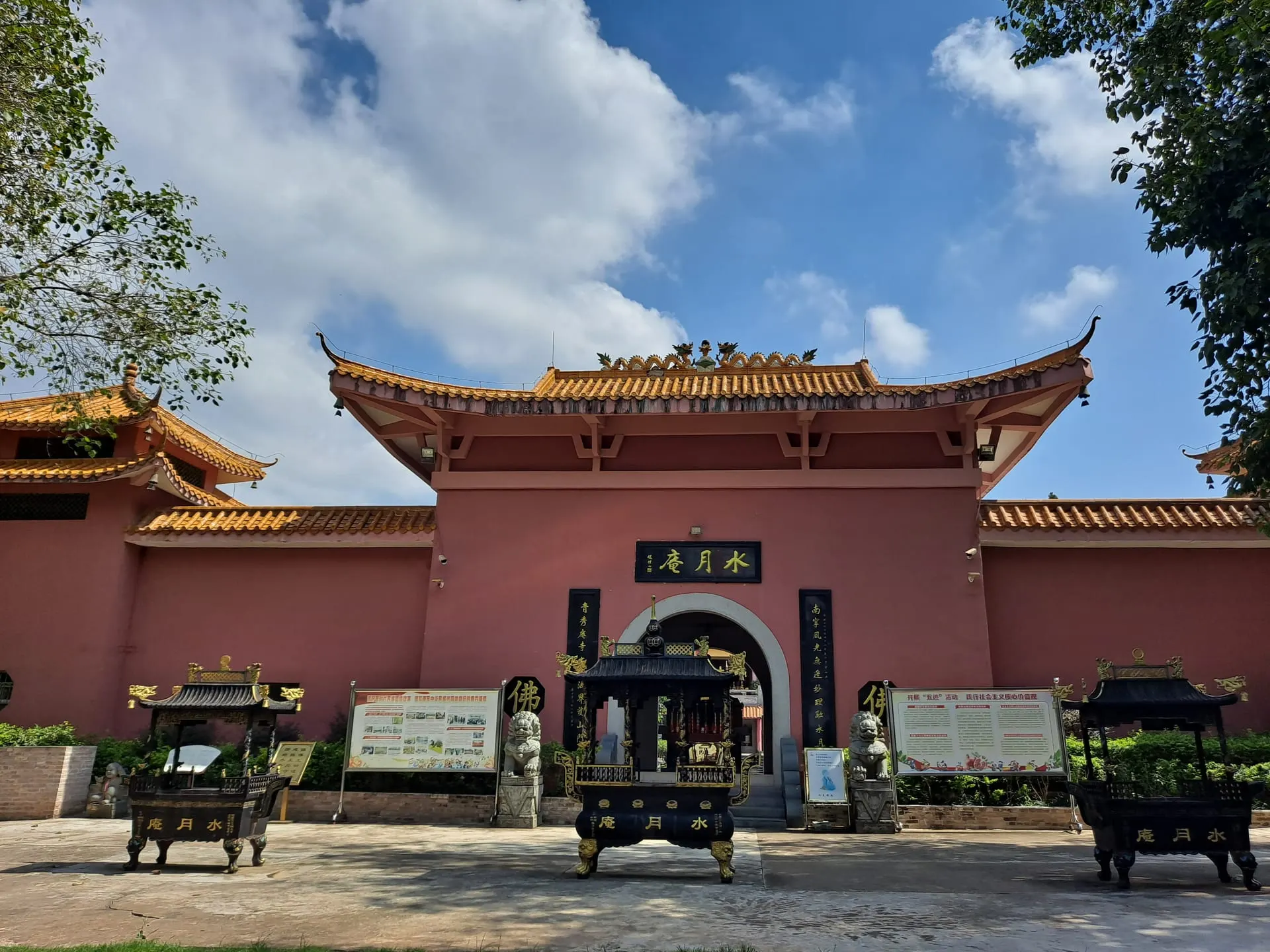
Qingxiu Mountain (青秀山, Qīngxiù Shān)
A 13 km² urban scenic park on the northern edge of the city, with tropical gardens, a Ming-dynasty pagoda, Buddhist temples, and walking trails through mature forest. The park is large enough that an electric shuttle bus (¥5 per segment) is almost essential. Budget 3-4 hours.
Wikimedia Commons · CC-BY-SA
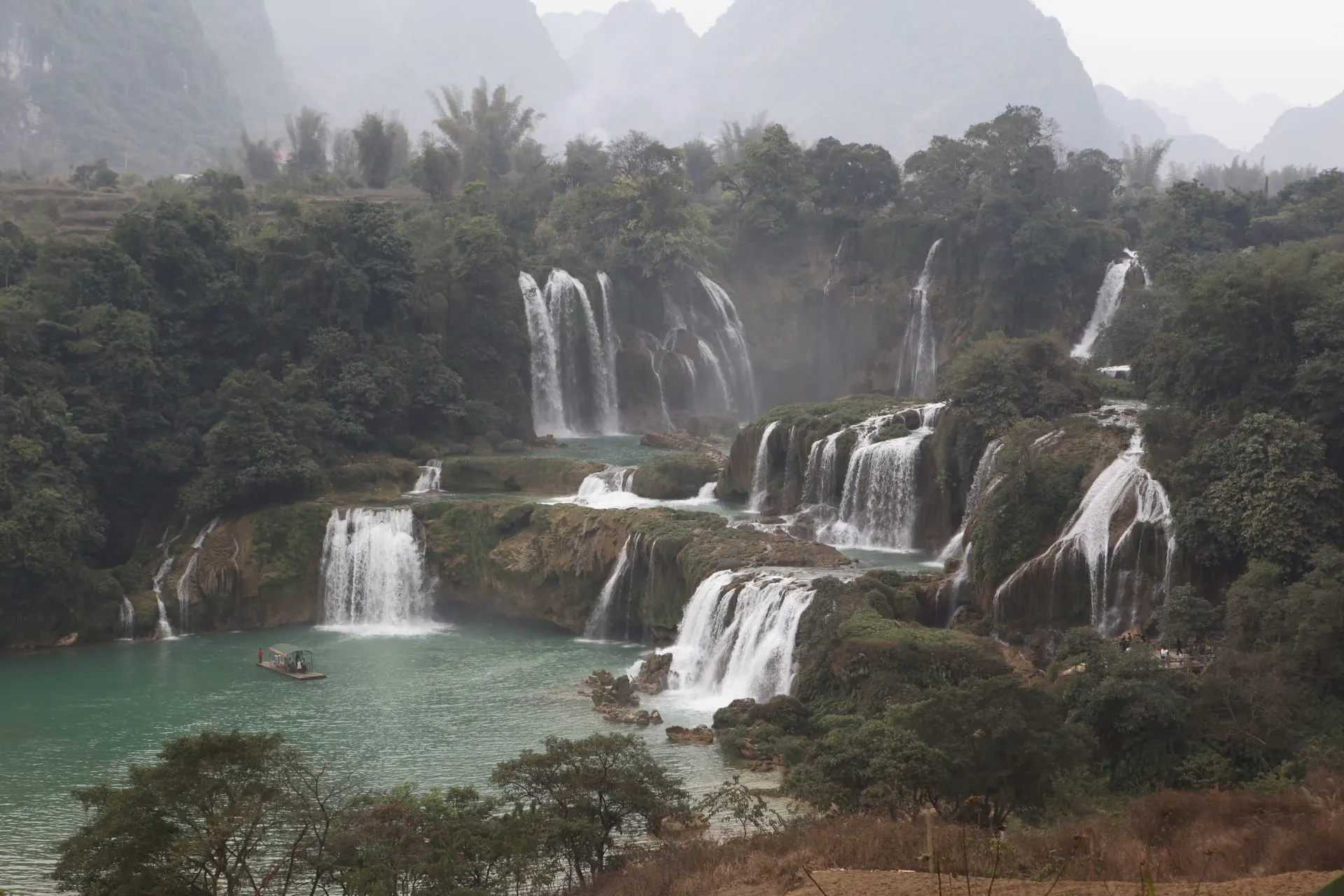
Detian Waterfall (德天瀑布, Détiān Pùbù)
Asia's largest transnational waterfall, straddling the China-Vietnam border 200 km west of Nanning. The waterfall spans roughly 200 metres across and drops 70 metres in three tiers. Vietnamese vendors paddle bamboo rafts up to the Chinese side selling coffee and snacks. Entry is ¥80 as of June 2026. A full day trip from Nanning.
Wikimedia Commons · CC-BY-SA
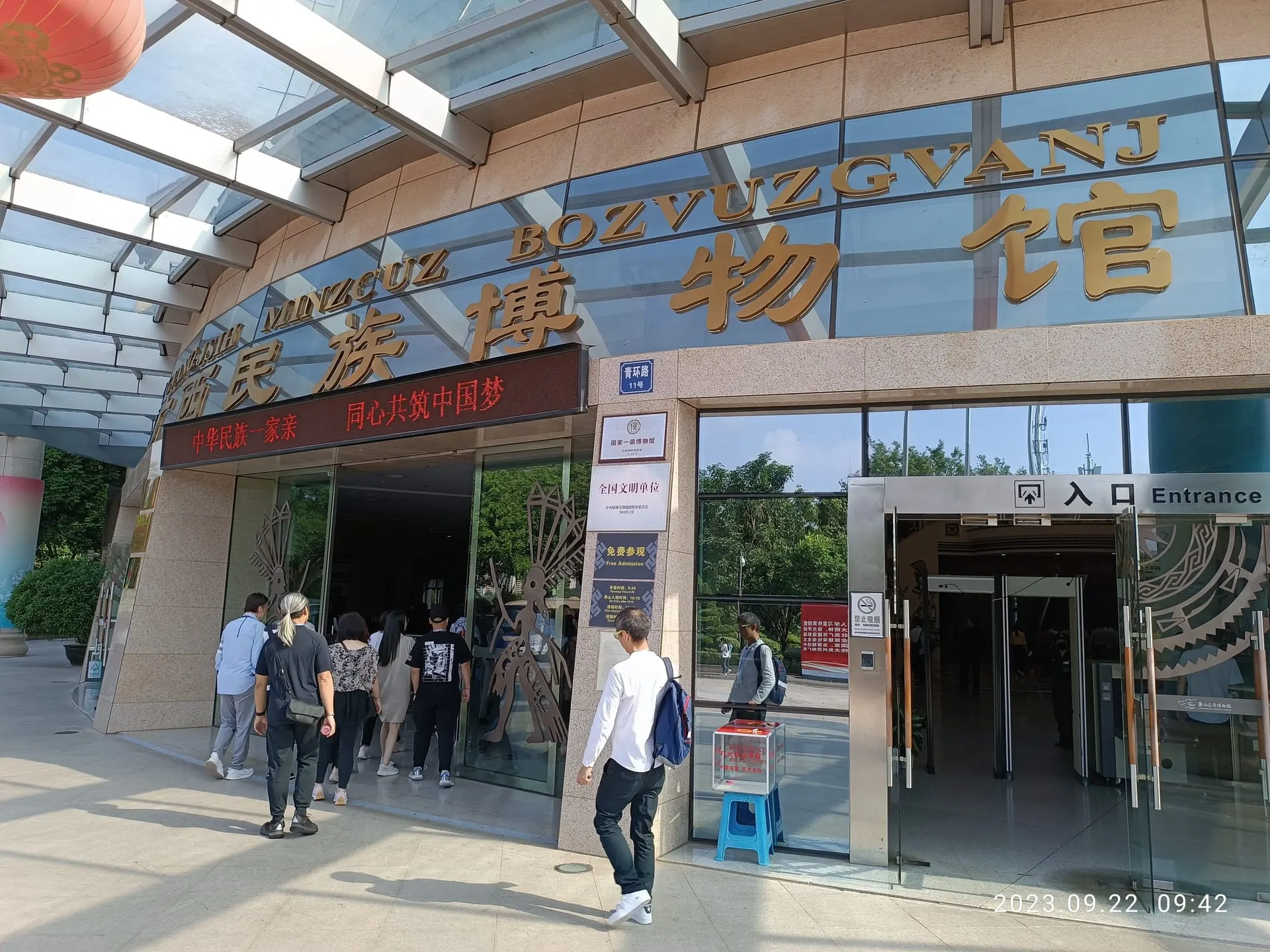
Guangxi Museum of Nationalities (广西民族博物馆)
The best museum in the city for understanding Guangxi's ethnic mosaic. Exhibits cover the Zhuang, Yao, Miao, Dong, and Jing peoples with well-presented textiles, musical instruments, bronze drums, and architectural models. Free entry. English labelling is inconsistent but improving.
Wikimedia Commons · CC-BY-SA
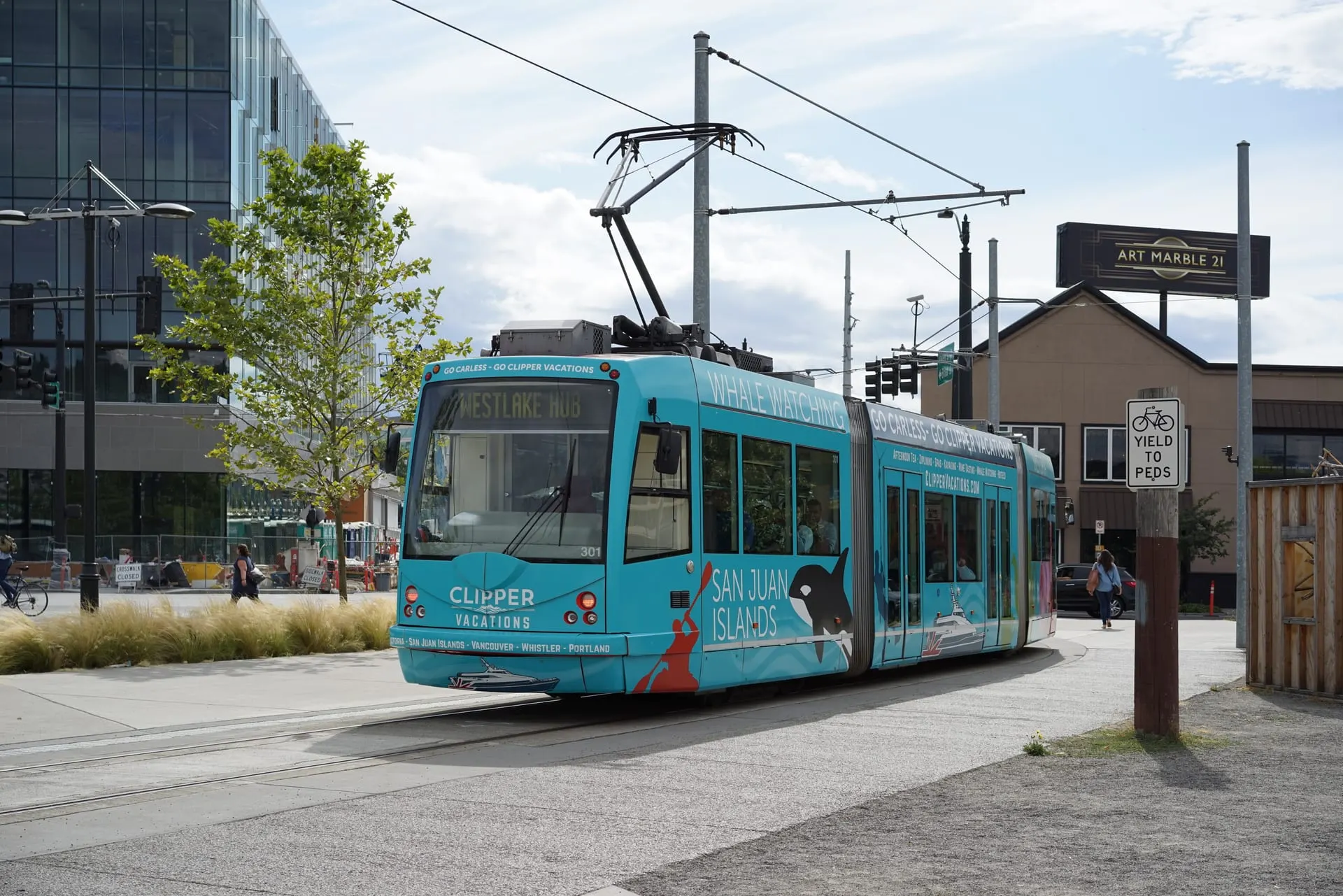
Nanhu Lake Park (南湖公园)
A large central-city lake with boardwalks, tropical gardens, and a 7 km perimeter path popular with joggers and families. The lake reflects the surrounding high-rises at sunset. Free entry. Best visited in the early morning or late afternoon.
Wikimedia Commons · CC-BY-SA
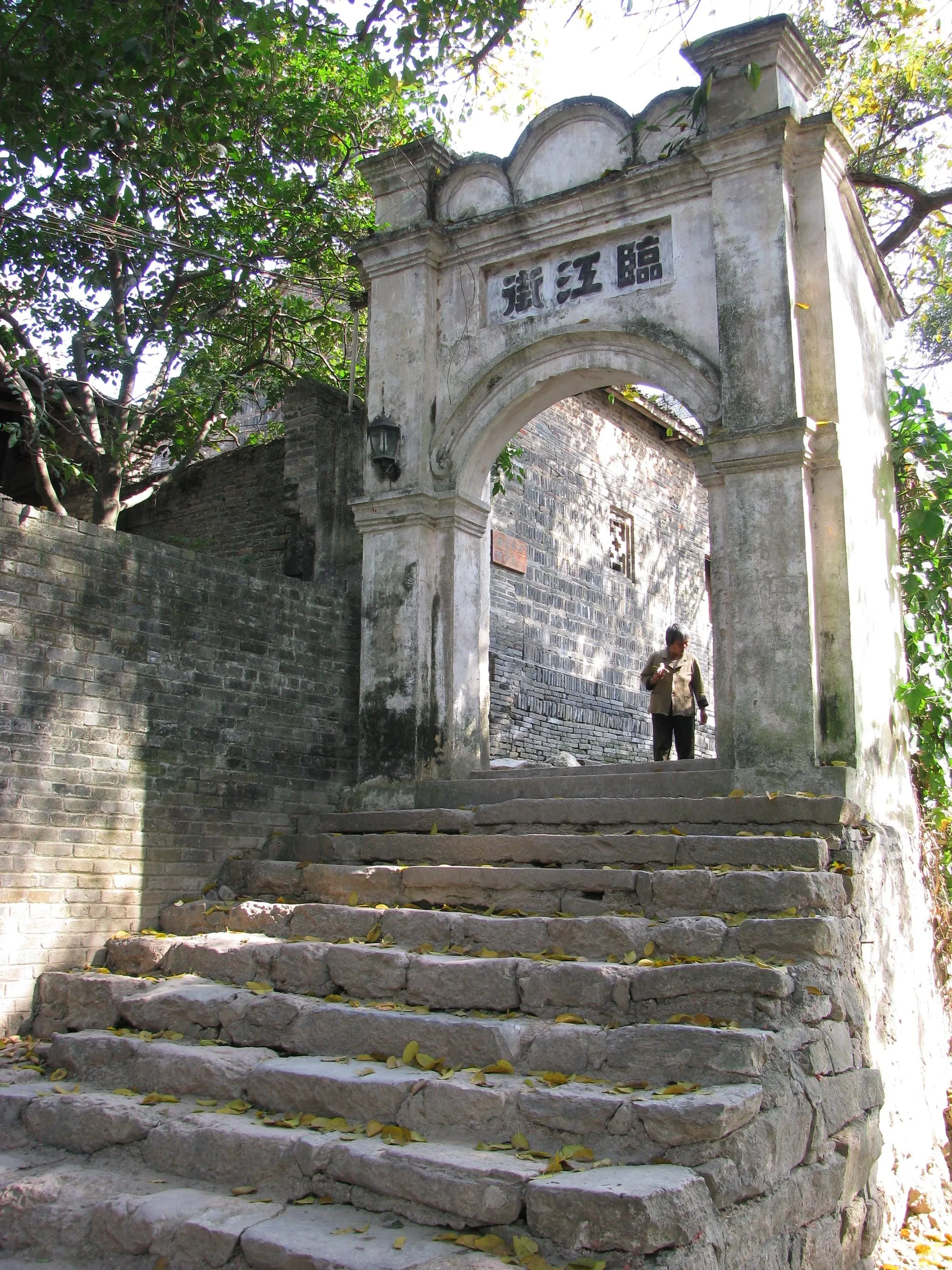
Yangmei Ancient Town (扬美古镇)
A Ming- and Qing-dynasty river town 36 km west of Nanning, built along the You River. Stone-paved lanes, old courtyard houses, and a slow pace that contrasts sharply with the city. Few foreign visitors make it here. Local river fish dishes are the draw for lunch.
Wikimedia Commons · CC-BY-SA
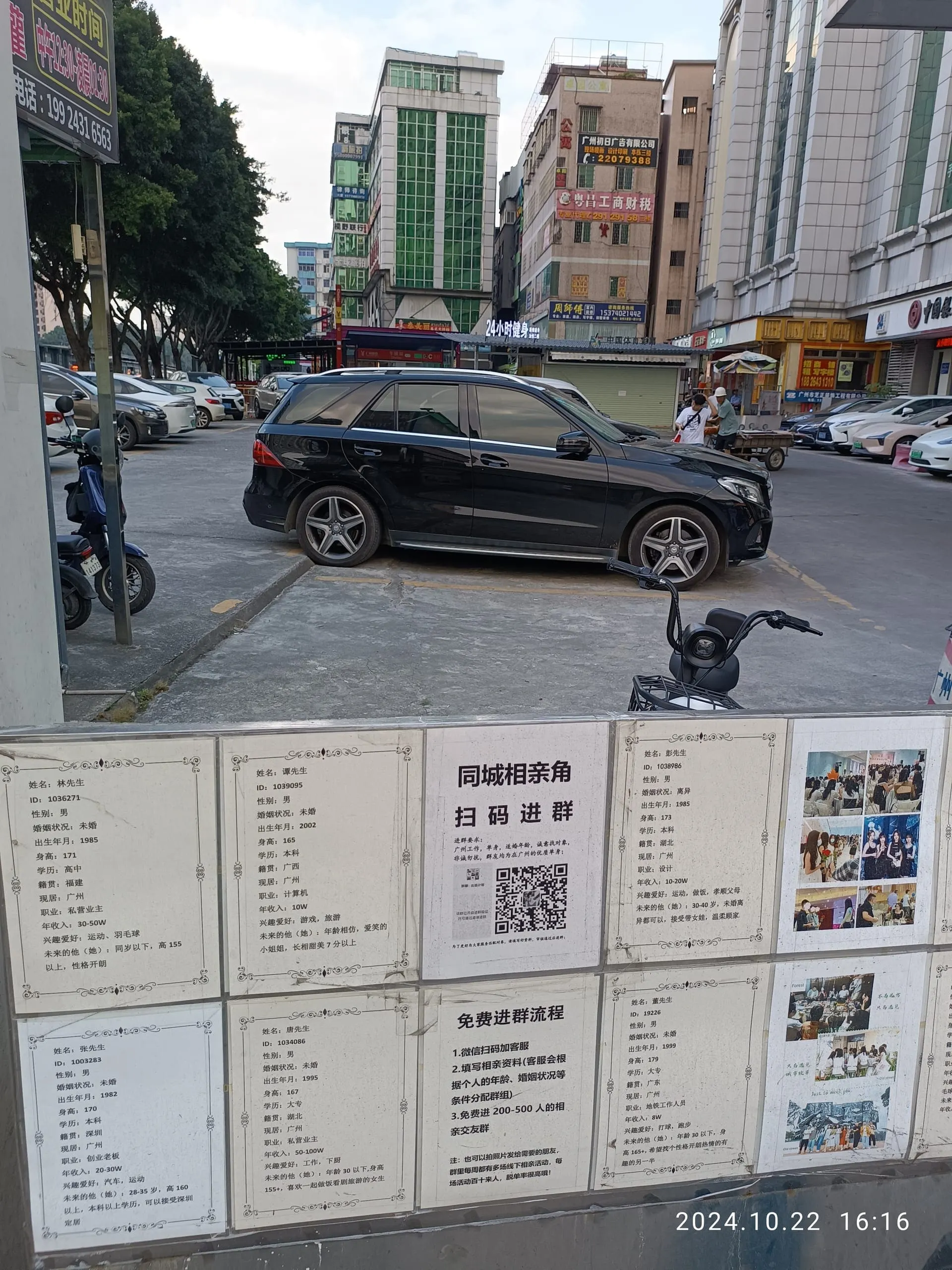
Zhongshan Road Night Market (中山路夜市)
Nanning's definitive food street, running from late afternoon until around 2 a.m. The stalls specialise in luosifen (river snail rice noodles), barbecue skewers, grilled oysters with garlic, tropical fruits, and the city's signature laoyou fen. Prices run ¥6-30 per dish.
Wikimedia Commons · CC-BY-SA
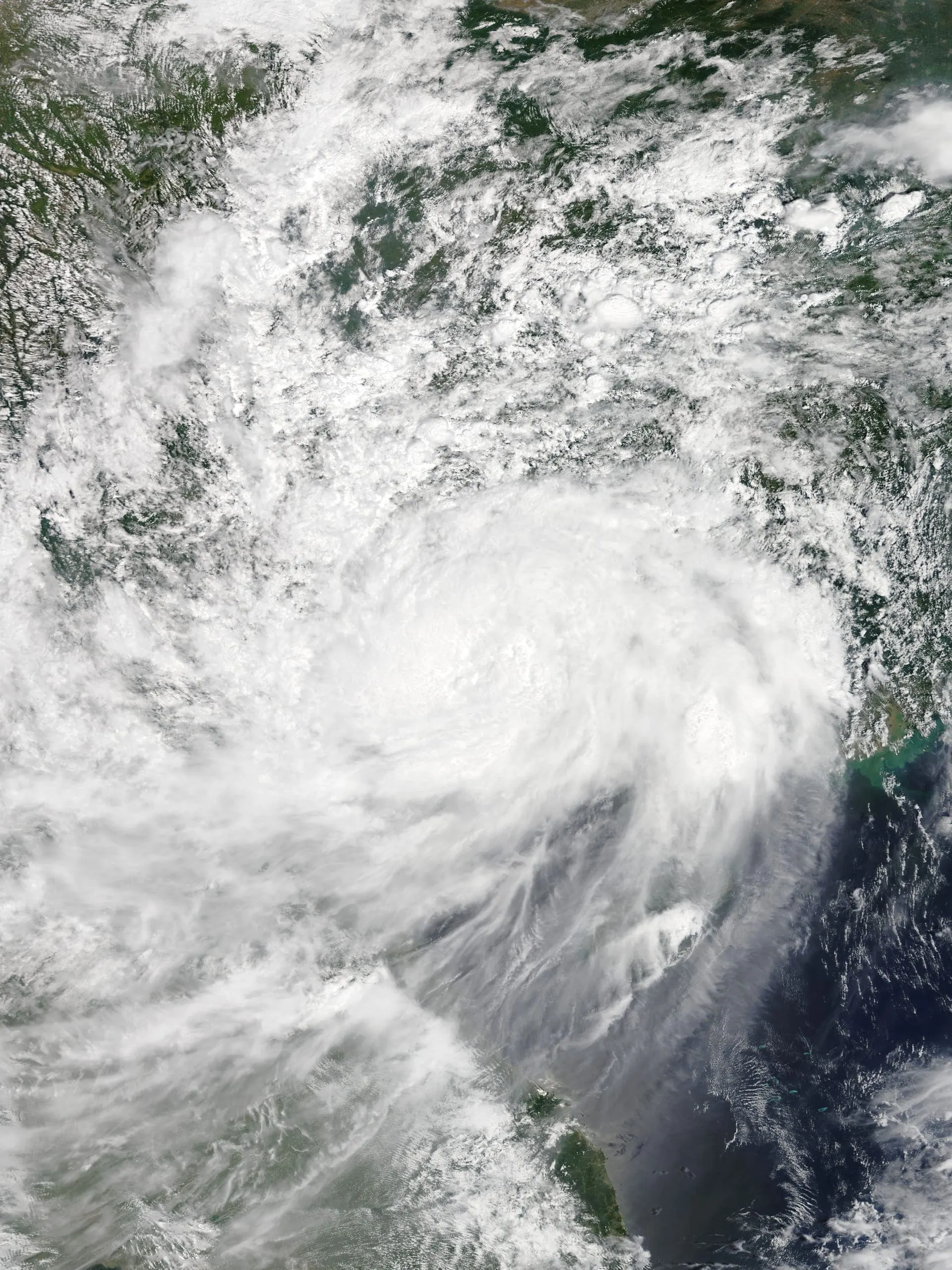
Guangxi Science and Technology Museum
An interactive science museum with planetarium shows, robotics exhibits, and a decent section on Guangxi's karst geology. More oriented toward Chinese-speaking families but the hands-on exhibits are self-explanatory. Entry is ¥30.
Wikimedia Commons · CC-BY-SA
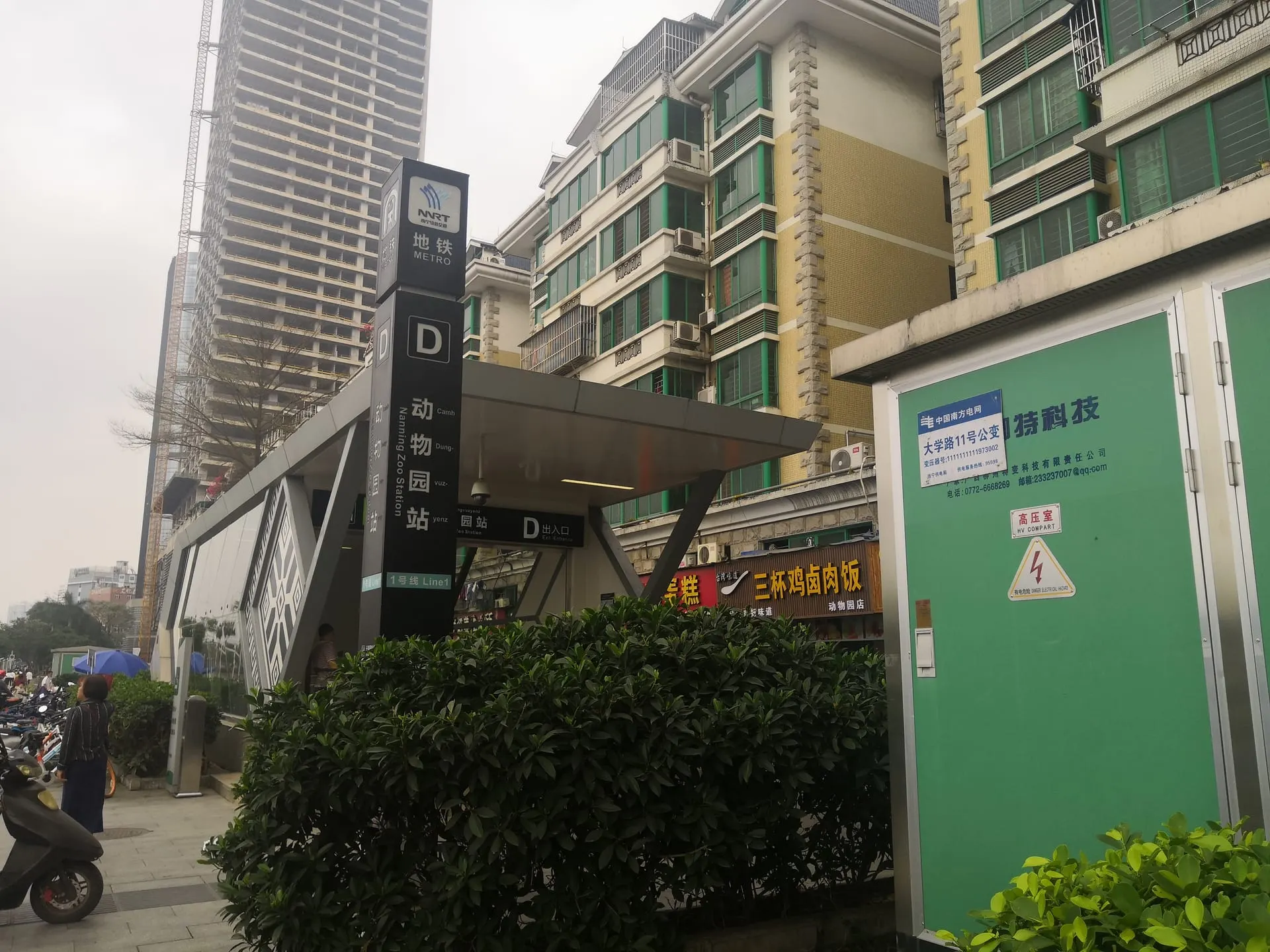
Nanning Zoo (南宁动物园)
A 40-hectare zoo in the western suburbs, with a giant panda enclosure, a Southeast Asian tropical animal section, and a surprisingly large primate collection. The facility is older and some enclosures feel dated. Entry is ¥50. Plan 2-3 hours.
Wikimedia Commons · CC-BY-SA
STAY
Where to stay in Nanning
Pick a base that matches the trip you want — imperial-central for sightseeing, hutong belt for character, Chaoyang for nightlife, or Qianmen for budget.
Qingxiu (青秀)
Modern commercial centre with MixC mall, international hotels, and Qingxiu Mountain at its doorstep
#qingxiuChaoyang Square (朝阳广场)
Older commercial core west of the Yong River, gritty and local, with Zhongshan Road Night Market
#chaoyangNanhu Lake (南湖)
Central lake district with jogging paths, mid-range hotels, and easy access to the museum
#nanhuLangdong (埌东)
Eastern business district near the HSR station, sterile but convenient for early departures
#langdong
ITINERARIES
Sample itineraries from Nanning
Three ready-made routes, from a 1-day imperial sprint to a 5-day deep dive. Copy the day-by-day plan and adapt to your own pace.
- 1 DAY
Nanning Transit Stop
The essential one-day Nanning experience: Qingxiu Mountain, laoyou fen, and the night market.
- Transit travellers
- Guilin-to-Hanoi stopovers
- One-day layovers
- Day 01
Morning
Qingxiu Mountain (enter by 8:30 AM to beat the heat) — take the electric shuttle (¥5 per segment) to the Ming pagoda, Buddhist temples, and bonsai garden. Budget 3-4 hours.
Afternoon
Lunch at Shujie Laoyou Fen (舒记老友粉) on Zhongshan Road — try the signature sour-spicy noodles (¥10-18). Guangxi Museum of Nationalities (2 hours, free) for Zhuang bronze drums.
Evening
Zhongshan Road Night Market from 7 PM — luosifen (river snail noodles), grilled oysters with garlic, tropical fruit. Walk Nanhu Lake for the illuminated skyline reflection.
- 2 DAYS
Nanning + Detian Waterfall
Add the spectacular Detian Waterfall day trip — the main reason many travellers come to Nanning.
- Waterfall enthusiasts
- Nature photographers
- Weekend trips
- Day 01
Morning
Qingxiu Mountain (3-4 hours).
Afternoon
Guangxi Museum of Nationalities (2 hours). Late lunch: laoyou fen.
Evening
Zhongshan Road Night Market. Sunset walk around Nanhu Lake.
- Day 02
Morning
Detian Waterfall day trip — depart Nanning by 7 AM (book through hotel or Ctrip, ¥300-400 including transport and entry). Arrive by 11 AM.
Afternoon
Explore the waterfall (2-3 hours) — bamboo raft to the base (¥30), walk the viewing platforms on both sides. Vietnamese vendors paddle up selling coffee and snacks.
Evening
Return to Nanning by 6 PM. Dinner near Chaoyang Square — try lemon duck (柠檬鸭) at a local restaurant.
- 3 DAYS
Nanning to Vietnam Overland
Three days using Nanning as the launchpad for the overland journey into Vietnam via Youyi Guan.
- Overland travellers
- SE Asia backpackers
- Border-crossing adventurers
- Day 01
Morning
Qingxiu Mountain (3-4 hours).
Afternoon
Guangxi Museum of Nationalities. Late lunch: laoyou fen on Zhongshan Road.
Evening
Night market crawl. Stock up on supplies for the Vietnam journey.
- Day 02
Morning
Detian Waterfall day trip (full day, 8-9 hours round trip).
Afternoon
Continue at the waterfall — the best light is mid-afternoon when the sun hits the falls from the west.
Evening
Return by 6 PM. Final Nanning dinner — try a lemon duck and luosifen combo.
- Day 03
Morning
Yangmei Ancient Town (扬美古镇) — depart 8 AM, return by 1 PM. Stone lanes, Ming courtyard houses, river-fish lunch (¥40-80).
Afternoon
Afternoon: take the train to Pingxiang (3 hours) or sleeper bus to Hanoi (8 hours, ¥200-250 from Langdong Bus Station). Ensure Vietnamese e-visa is arranged before departure.
Evening
Border crossing at Youyi Guan (Friendship Pass, open until ~6 PM Chinese time). Continue to Hanoi.
BUDGET
What a Nanning trip costs
Per-person, per-day costs across three spending tiers. Excludes international flights and visa fees.
| Line item | Backpacker | Mid-range | Luxury |
|---|---|---|---|
| Hostel bed (per night) | $8 | $25 | $70 |
| Mid-range hotel / 5-star (per night) | $25 | $60 | $150 |
| Local meal — laoyou fen, luosifen (per person) | $2 | $5 | $15 |
| Fancy dinner — lemon duck, seafood (per person) | $10 | $20 | $60 |
| Metro ride | $0.5 | $1 | $5 |
| DiDi across town | $3 | $5 | $10 |
| Qingxiu Mountain (¥20) + shuttle | $3 | $5 | $8 |
| Guangxi Museum of Nationalities (free) | $0 | $0 | $0 |
| Detian Waterfall day trip (tour + entry) | $45 | $55 | $170 |
| Yangmei Ancient Town (taxi + lunch) | $20 | $30 | $70 |
| Daily total (excluding accommodation) | $25 | $50 | $140 |
| Total per day | $141.5 | $256 | $698 |
$ USD per person per day, before international flights and visas. Last verified: Q3 2026.
STAY SAFE
Emergency contacts in Nanning
Save these three numbers before you board the plane. China uses different hotlines than most countries — there's no 911.
- POLICE
110
- AMBULANCE
120
- FIRE
119
- TOURIST HOTLINE
12301
- ENGLISH-SPEAKING ER
First Affiliated Hospital of Guangxi Medical University (广西医科大学第一附属医院) — 6 Shuangyong Road, +86 771 535 0888
Problems travelers hit in Nanning
- Why is my Alipay not working?You linked a foreign Visa or Mastercard to Alipay but every transaction is rejected at the merchant.
- My China visa was denied — what now?Your L visa application was refused at the Chinese consulate and your trip is in 2–4 weeks.
- My passport was lost or stolen in China — what do I do?Your passport is gone (theft or loss) and you're in mainland China without travel documents.
- Why can't I book on 12306 with my foreign card?You tried to book a high-speed rail ticket on 12306.cn and your foreign Visa/Mastercard is rejected at checkout.
- Why is my VPN not working in China?You arrived in China, opened your VPN, and it will not connect at all or connects but no traffic loads.
- Why can't I book a Tibet trip on my own?You try to book Lhasa flights and hotels yourself but the booking fails, or you're turned away at the Lhasa airport without a permit.
Book activities in Nanning
These are licensed tour operators and booking platforms we've vetted independently. Booking through these links may earn us a commission — see our affiliate disclosure. This never affects our editorial recommendations or the price you pay.
Frequently asked questions
Is Nanning worth visiting?
How many days do I need in Nanning?
What is the best time to visit Nanning?
How do I get from Nanning to Hanoi?
Is the Detian Waterfall day trip worth 8 hours of driving?
What is laoyou fen and where should I eat it?
Show all 26 FAQs
Can I use English in Nanning?
Is Nanning safe for tourists?
What is luosifen and why does it smell?
How do I get from Nanning airport to the city?
What should I know about crossing the Vietnam border at Youyi Guan?
What are the best hotels in Nanning?
Can I visit Detian Waterfall independently or should I book a tour?
Is Nanning good for families with children?
What is the Guangxi Museum of Nationalities like?
How does Nanning compare to Guilin?
Is Nanning really called the Green City?
What is the China-ASEAN Expo and should I visit during it?
What Zhuang minority experiences are available in the city?
What day trips work if I have already done Detian Waterfall?
Is the Zhongshan Road Night Market safe and clean?
Can I get to a beach from Nanning?
What is Weizhou Island?
Is there a WWII battlefield near Nanning?
Can I see karst caves near Nanning without going to Guilin?
Do I need to worry about mosquitoes in Nanning?
References
- Guangxi Museum of Nationalities — official site
- Nanning Wuxu International Airport — flight information
- China Railway 12306 — train schedules
- Detian Waterfall scenic area — visitor information
- China National Tourism Administration — Guangxi travel guide
- Wikipedia: Beihai, Guangxi
- Wikipedia: Weizhou Island
- Wikipedia: Battle of Kunlun Pass

Related guides & destinations
Guide
How We Research 2026: NihaoVisit’s Methodology for China Travel Information
How NihaoVisit sources, verifies, and maintains 700+ pages of China travel information — our source hierarchy, fact-checking process, update
Guide
Fact-Checking Log 2026: Verified China Travel Information — NihaoVisit
A public log of fact-checking verification passes on NihaoVisit, showing what was verified, when, and against which sources — covering visa
Guide
Best Time to Visit China 2026: Month-by-Month Weather, Crowds, and Prices
The best time to visit most of China is April–May and September–October. Winter (Dec–Feb) is cold but cheap; summer (Jun–Aug) is hot and cro
Guide
VPN for China 2026: Which VPNs Work, eSIM Alternatives, and the Complete Pre-Trip Checklist
Most Western apps and websites are blocked in mainland China. A reliable VPN is essential for Google, Gmail, WhatsApp, Instagram, and most n
Guide
China SIM Card and eSIM Guide 2026: Stay Connected Without WeChat
A Chinese SIM or eSIM lets you use mobile data, maps, and ride-hailing without WiFi. Here is how to get one, the cost, and which provider to
Guide
Solo Female Travel in China 2026: Safety, Tips, and Real Experiences
China is one of the safer destinations for solo female travelers. Petty theft is rare, violent crime against tourists is extremely uncommon,