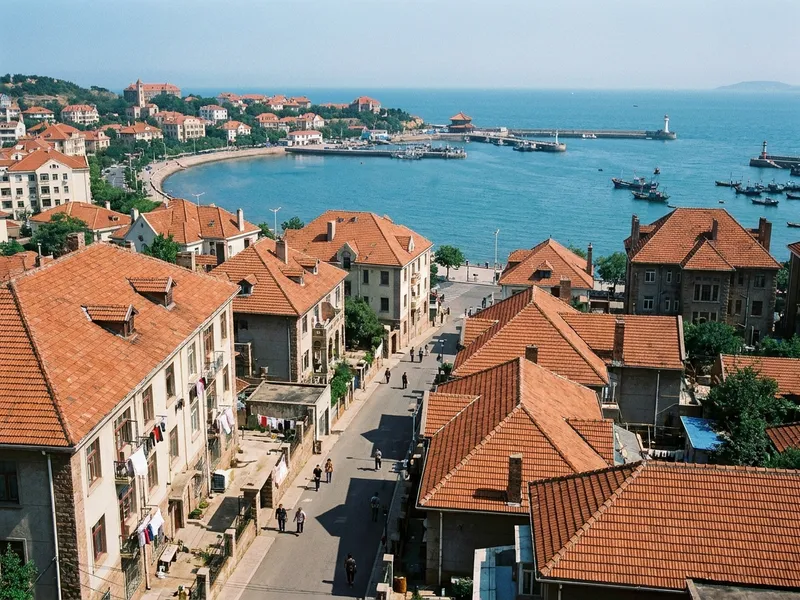
Qingdao
Qingdao sits on the western shore of the Shandong Peninsula on the Yellow Sea, 700 km east of Beijing and a 4-hour high-speed rail journey. The citys identity was forged by a 17-year German colonial occupation from 1898 to 1914, which left behind a remarkable concentration of German Jugendstil and Baroque architecture in the Old Town, the Tsingtao Brewery (still Chinas most famous beer), and the Jiao Zhou German-era prison and governor residence. The city is also the gateway to Laoshan, the 1,133-meter coastal mountain sacred to Taoism and one of Chinas great mountain destinations, with 200+ ancient Taoist temples and the famous Laoshan Green Tea. The Eight Great Passes (Ba Da Guan) is a 6-km coastal scenic reserve with 8 named promontories and beaches, including the famous No. 2 Beach (Shi Lao Ren). The annual Qingdao International Beer Festival in August is Asias largest beer event. Most travelers visit on a 3-4 day stopover from Beijing, easily reached by HSR; visa-free entry of 30 days applies to most Western passports.
Why Qingdao in 2026.
Qingdao is a port city on the Shandong Peninsula famous for its German colonial old town, the Tsingtao Brewery (founded 1903 by German settlers), the sacred Taoist Laoshan mountain, the Eight Great Passes coastal scenery, sandy beaches, seafood restaurants, and the annual Qingdao International Beer Festival.
Quick Answer
Qingdao sits on the western shore of the Shandong Peninsula on the Yellow Sea, 700 km east of Beijing and a 4-hour high-speed rail journey. The citys identity was forged by a 17-year German colonial occupation from 1898 to 1914, which left behind a remarkable concentration of German Jugendstil and Baroque architecture in the Old Town, the Tsingtao Brewery (still Chinas most famous beer), and the Jiao Zhou German-era prison and governor residence. The city is also the gateway to Laoshan, the 1,133-meter coastal mountain sacred to Taoism and one of Chinas great mountain destinations, with 200+ ancient Taoist temples and the famous Laoshan Green Tea. The Eight Great Passes (Ba Da Guan) is a 6-km coastal scenic reserve with 8 named promontories and beaches, including the famous No. 2 Beach (Shi Lao Ren). The annual Qingdao International Beer Festival in August is Asias largest beer event. Most travelers visit on a 3-4 day stopover from Beijing, easily reached by HSR; visa-free entry of 30 days applies to most Western passports.
| Best time to visit | May-June and September-October for mild weather and the Tsingtao beer season; August for the Qingdao International Beer Festival (but expect crowds); avoid late January to mid-February (Spring Festival) and early October (Golden Week) |
|---|---|
| Daily budget | $250 (backpacker) / $700 (mid-range) / $2500+ (luxury) |
| Language | Mandarin (Putonghua) with the local Qingdao dialect among older residents; English is widely spoken in hotels, the Old Town, Tsingtao Brewery, and Laoshan tourist areas |
| Currency | CNY (¥); Visa, Mastercard, and American Express accepted at hotels, malls, and most restaurants via Alipay and WeChat Pay Tour Card |
| Time zone | China Standard Time (UTC+8), no daylight saving time |
| Last updated | 2026-06-14 |
Want a Qingdao plan built for you?
What is Qingdao: Why Qingdao Deserves a Visit?
Qingdao is one of Chinas most distinctive coastal cities, sitting on the western shore of the Shandong Peninsula on the Yellow Sea and facing Korea across the water. The citys identity was forged by a 17-year German colonial occupation from 1898 to 1914, which left behind a remarkable concentration of German Jugendstil and Baroque architecture in the Old Town and gave the world Tsingtao Beer, Chinas most famous export brew. Most visitors know Qingdao for two images: the red-tiled German facades lining the cobblestone streets of the Old Town, and the sandy beaches and forested headlands of the Eight Great Passes coastal reserve. Both images are well-deserving of the hype. But Qingdao is far more than a colonial postcard. It is a working port of 50+ million tons a year, the host of the worlds largest ship-to-ship oil terminal, the home of the Sifly Sifang and Haier corporations, and the gateway to Laoshan — the 1,133-meter coastal mountain sacred to Taoism and one of Chinas great mountain destinations. For independent travelers, Qingdao offers something Beijing cannot: a slower coastal pace, German colonial architecture preserved almost intact, the finest beer in China, a 200+ temple Taoist mountain within an hours drive, the largest beer festival in Asia, and a working seafood culture anchored by clams, oysters, scallops, and crabs from the Yellow Sea. Three to four days is the ideal length of stay — one day for the German Old Town and Tsingtao Brewery, a second for the Eight Great Passes and the beaches, a third for Laoshan, and an optional fourth for the Beer Festival in August or for the additional heritage sites.
What is the history of Qingdao: From Fishing Village to German Colony to Modern Port?
Qingdao began as a small fishing village called Jiao Ao at the mouth of the Jiao Zhou River. Its recorded history reaches back to the Eastern Zhou dynasty (770-256 BC), when it was part of the Qi states maritime frontier. The Qingshan (Green Island) fortress, now known as the Zhanqiao Pier area, served as a coastal defense post for the Qi, Han, and Tang dynasties. The citys modern history pivots in 1891, when the Qing governor Zhang Yanfan built the Zhanqiao Pier and established Jiaoao as a coastal defense base. Two years later, Germany forced the Qing government to sign the Treaty of Kiautschou in 1898, ceding a 112-square-kilometer concession around Jiaoao Bay to Germany for a 99-year lease. The Germans invested massively in the new colony: they built a modern port, a European-style city with sewage and electricity, the Tsingtao Brewery (1903), the Jiao Zhou Governor Residence, and the German Street (Yishan Road) with restored Jugendstil facades. Japan captured Qingdao in 1914 during World War I and held it until 1922, when it was returned to China. The Japanese occupation resumed from 1937 to 1945 during the Second Sino-Japanese War. After 1949 the city industrialized rapidly under the Communists, becoming a major shipbuilding and textile center. The 2008 Beijing Olympics brought international attention when Qingdao hosted the Olympic sailing regatta in Fushan Bay, and the 2018 Shanghai Cooperation Organization summit was held here. Today Qingdao is one of Chinas wealthiest cities by GDP per capita, the headquarters of Haier and Hisense, and a UNESCO City of Film (2017).
What is the geography and climate of Qingdao, and when should I visit?
Qingdao sits on the western shore of the Shandong Peninsula on the Yellow Sea, 700 km east of Beijing and 600 km north of Shanghai. The municipality covers 11,282 square kilometers, although the urban core clusters along Jiaozhou Bay and the Eight Great Passes coastline. The terrain is unusually varied for a Chinese coastal city: the Laoshan range rises to 1,133 meters in the east, the Zhongshan Hill and Taiping Hill rise to 200+ meters in the city center, and the western and northern coasts are a mix of sandy beaches, rocky headlands, and shallow bays. The citys highest natural point is the Jufeng Peak of Laoshan at 1,133 meters. The coastline stretches 730 km in total, with over 40 named beaches. Qingdao has a temperate monsoon climate with four distinct seasons and is on the same latitude as Madrid, Naples, and New York. Summers (June-August) are warm and humid but moderated by the Yellow Sea, with average July highs of 28°C and lows of 22°C; this is the peak tourist season and the time of the Beer Festival. Winters (December-February) are mild by northern Chinese standards, with January averaging daytime highs of 3°C and nighttime lows of -2°C; snow is possible but rarely accumulates. Spring (March-May) is short and cool, with the East Asian dust storms affecting air quality in late March and April. Autumn (September-November) is the best season by a wide margin: warm dry days, cool nights, the autumn foliage, and the Tsingtao Beer Festival season winding down. The best months are May-June and September-October, with the caveat that August brings enormous domestic crowds for the Beer Festival; the first week of October (National Day Golden Week) is similarly busy.
How to Get There: Flights, Trains, and the Beijing-Qingdao HSR
Qingdao Jiaodong International Airport (TAO) is 39 km northwest of the city center in the Jiaodong Economic Zone and is one of Chinas newest major airports, opened in 2021. The airport handles 25+ million passengers a year with direct flights to London Heathrow, Frankfurt, Sydney, Melbourne, Tokyo Narita, Tokyo Haneda, Seoul Incheon, Singapore Changi, Bangkok, and Kuala Lumpur, plus a dense domestic network including daily flights to Beijing, Shanghai, Guangzhou, Shenzhen, Hong Kong, Chengdu, Kunming, Xian, and Wuhan. The airport is connected to the city center by a metro extension (line 8) and a 60-minute airport shuttle bus service; a taxi to central Qingdao takes 60-75 minutes and costs ¥150-200. For many international travelers, however, the Beijing-Qingdao HSR is the most popular entry route. The Beijing-Qingdao HSR connects Beijing South Railway Station directly to Qingdao North Railway Station and Qingdao Railway Station (the central station on metro line 3), with journey times of 4 hours from Beijing South and frequent service every 10-30 minutes during peak hours. Second-class tickets cost ¥314, first-class ¥503, business class ¥1,047. The HSR runs from 6am to 10pm, with up to 50 daily services. From Shanghai, the HSR takes 6 hours 30 minutes and costs ¥450 second class (faster via Jinan, 5 hours total). From Jinan, the HSR takes 1 hour 30 minutes and costs ¥120 second class. Qingdao has four main railway stations: Qingdao Railway Station (central, on metro line 3, in the heart of the city), Qingdao North Railway Station (the largest HSR hub, on metro line 8, in the Licang District), Qingdao West Railway Station (in the Huangdao District, serving high-speed services), and Qingdao East Railway Station (mostly conventional rail). Within the city, the metro has 8 operational lines and 150+ stations covering the main attractions. The German Old Town is on Line 3 at Qingdao Station, the Eight Great Passes on Line 3 at Huiquan Square Station, and Laoshan on Line 11 plus bus 304.
How do I get around Qingdao: Metro, Taxi, DiDi, and Bike Share?
Qingdao has a modern, well-organized public transport system. The metro is the workhorse: 8 lines, 150+ stations, ¥2-9 per ride depending on distance, English and Chinese signage, and clean air-conditioned cars. The metro runs from roughly 6am to 11pm, with frequencies of 3-7 minutes during peak hours and 8-12 minutes at off-peak times. A reloadable Qingdao Tong transportation card can be bought at any station for ¥20 (refundable deposit) and works on the metro, buses, the tourist ferries, and the city bike share. Taxis in Qingdao are metered and reasonable; flag-fall is ¥11 for the first 3 km and ¥2.5 per additional km (¥3.5 at night), and an average cross-city ride costs ¥30-60. DiDi operates throughout the city and is the safest and most foreigner-friendly option; the English-language app works smoothly, fares are typically 10-20% lower than taxi meters, and the GPS tracking means you cannot be overcharged. Always insist on the meter or use DiDi; unmarked cabs at the railway stations and the Old Town occasionally overcharge tourists. Qingdao is one of the best Chinese cities for cycling: the flat coastal terrain around the Eight Great Passes, the dedicated 6-km coastal bike path, and the greenways through Zhongshan Park and Taiping Hill all reward two wheels. Bike share is available through Meituan Bike and HelloRide (¥1.5 per 30 minutes via the WeChat app). For day trips to Laoshan, tourist coaches depart from the Qingdao Tourism Distribution Center (¥60-100 round-trip) or you can hire a private driver for ¥500-700 per day. The Huangdao District (across the bay) is now connected by the Qingdao Jiaozhou Bay Subsea Tunnel (¥10 one way for cars, free for cyclists) and the Jiaozhou Bay Bridge (one of the worlds longest sea bridges at 36.5 km).
Where should I stay in Qingdao?
Qingdaos accommodation is concentrated in four areas, each with a distinct character. The German Old Town area (Yishan Road and Minjiang Road) is the most atmospheric and the best for first-time visitors. Boutique hotels in restored German colonial buildings cluster here: the Princess Hostel Qingdao (¥120, in a restored 1903 German villa), the Qingdao Housing International Hotel (¥600), the Holiday Inn Qingdao City Center (¥500), and the luxurious Shangri-La Hotel Qingdao (¥1,500) are all within walking distance of the Zhanqiao Pier, the St. Michaels Cathedral, and the Tsingtao Brewery. Mid-range options include the Ibis Qingdao Ningxia Road (¥300), the Hanting Express Qingdao Zhanqiao (¥350), and the Qingdao Kaiyue Hostel (¥200). The Eight Great Passes area east of the Old Town is the scenic beach district, with international beachfront resorts. The Crowne Plaza Qingdao (¥900), the Le Meridien Qingdao (¥1,100), the Hilton Qingdao Golden Beach (¥1,000), and the Grand Regency Hotel (¥1,200) are all on or near the No. 2 Beach. The Huangdao District across the Jiaozhou Bay is the modern skyline, with the Marriott Qingdao Huangdao (¥900), the Renaissance Qingdao (¥800), and the Howard Johnson Qingdao (¥600). For backpackers, the Qingdao International Youth Hostel (¥60-120 per bed) in the Old Town and the Lazy Cat Hostel (¥80-150) near the Eight Great Passes are the best options. Book at least 2 weeks ahead during the Spring Festival, Golden Week, and the August Beer Festival. Whatever you choose, request a sea-view room if available — they cost ¥100-200 more but transform the stay.
What are the top attractions in Qingdao?
Qingdaos signature attraction is the German Old Town, a 2-square-kilometer preserved district of German colonial architecture from 1898-1914, with over 200 protected heritage buildings including the Gothic St. Michaels Cathedral, the Baroque Governor Residence, the German-era Jiao Zhou Prison, and the German Street (Yishan Road) with restored Jugendstil facades. Free to enter; many buildings house museums, cafes, and craft shops. The Tsingtao Brewery, founded in 1903 by Anglo-German Brewery GmbH under the German colonial administration, is Chinas most famous beer and the citys defining product. The brewery is open to visitors with a museum of beer history, the original German-era brewing hall, and a tasting room. Entry ¥60 includes a glass of fresh beer. The Eight Great Passes (Ba Da Guan) is a 6-km protected coastal scenic reserve in eastern Qingdao with 8 named promontories and beaches, including the famous No. 2 Beach (Shi Lao Ren, the most photographed beach in China), the Huilan Pavilion (the No. 1 Pass), and the Taiping Hill overlook. Best explored by bike along the dedicated coastal path. Laoshan Mountain, 40 km east of central Qingdao, is a 1,133-meter coastal mountain range sacred to Taoism and home to 200+ ancient Taoist temples. Famous for the Taiqing Palace (the largest Taoist temple complex on the Chinese coast), the Jufeng Peak (the highest summit), and the Laoshan Green Tea. Cable car to the summit ¥80-160. Other standouts include Zhanqiao Pier (a 440-meter-long pier extending into Jiaozhou Bay with the Huilan Pavilion at the end, free), the May Fourth Square (a modern civic plaza with the 30-meter-tall Monument to the Wind), the Qingdao Underwater World (a modern aquarium in the No. 1 Beach area, ¥150), and the Badaguan Scenic Area (a historic residential district in the Eight Great Passes area featuring 200+ villas in 8 different national styles, often called the Worlds Architecture Expo).
What local food should I try in Qingdao?
Qingdao cuisine is a coastal sub-tradition of Shandong cooking, one of the eight great traditions of Chinese cuisine. It emphasizes fresh seafood, natural flavor, and a lighter hand than Sichuan or Hunan. Qingdao cuisine specifically, known as Lu cai, is characterized by fresh Yellow Sea seafood (clams, oysters, scallops, crabs, prawns, sea cucumbers, abalone), light seasoning with ginger, scallion, and garlic, and an emphasis on braising and quick-frying. The most famous local dish is spicy stir-fried clams (chao ge zi), served in dozens of street-side restaurants along the Yunxiao Road Food Street; the clams are cooked with garlic, ginger, soy sauce, and Sichuan peppercorns. Other classics include braised sea cucumber with green onions (lu shen shao cong), steamed prawns with garlic (qing zheng da xia), braised mackerel with fermented soybeans (kao qing yu), seafood dumplings (yu xian jiao), and the Qingdao-style chicken with green onions. For street food, Yunxiao Road Food Street and the Taidong Pedestrian Street have dumpling stalls, scallion pancake shops, the famous Wangjie Shaokao (BBQ) stalls, and dozens of seafood restaurants. The local restaurant scene has a handful of standouts: the Chuange Fish Dumplings (founded 1925, the most famous seafood dumpling restaurant), the Kaihai Hongdao Seafood City (a casual seafood hall with market pricing), the Longmen Lou (a refined Lu cai restaurant in the Old Town), the Beer Street restaurants around the Tsingtao Brewery, and the Hotel Equatorial (for formal seafood buffets). The Tsingtao Brewery Beer Museum includes a tasting room with fresh-from-the-vat beer and a beer-themed restaurant; the local craft brewery scene includes the Lanshan Brewery and the Slow Boat Brewery taproom.
What is a good 1- to 3-day itinerary for Qingdao?
One Day in Qingdao: Start at the Zhanqiao Pier at sunrise to watch the Huilan Pavilion glow in the dawn light, then walk south along Minjiang Road to the St. Michaels Cathedral (¥0) for the German Gothic exterior. Continue to the Tsingtao Brewery (¥60) for the brewing hall tour and the tasting room. Lunch at Chuange Fish Dumplings (founded 1925) for seafood dumplings and braised sea cucumber. In the afternoon, take a taxi to the Eight Great Passes area for a bike ride along the 6-km coastal path, stopping at the Huilan Pavilion (No. 1 Pass), the No. 2 Beach, and the Princess Tower. End the day at the German Old Town for dinner at Longmen Lou (Lu cai) and a walk along the lit-up Yishan Road. Three Days in Qingdao: Day 1 as above. Day 2: Take a taxi or metro line 11 to Laoshan Mountain for a full-day Taoist mountain excursion. Start at the Taiqing Palace (the largest Taoist temple complex on the Chinese coast), then take the cable car to the Jufeng Peak (¥80-160) for panoramic views of the Yellow Sea. Have lunch at a Taoist temple vegetarian restaurant. In the afternoon, visit the Laoshan Green Tea plantations and the Laoshan Mineral Water springs. Return to central Qingdao by 5pm and have dinner at Beer Street near the Tsingtao Brewery. Day 3: Spend the morning at the Badaguan Scenic Area and the Eight Great Passes villa district for the 200+ villas in 8 different national styles. Have lunch at the Yunxiao Road Food Street for spicy stir-fried clams and seafood dumplings. In the afternoon, visit the May Fourth Square for the modern skyline and the Qingdao Center. End the day at the Qingdao Beer Festival in August (the largest beer festival in Asia, free entry; ¥30-50 per beer), or attend a spring or autumn sailing regatta if you time it right. Optional Day 4: Visit the Jimo Ancient City (an old Song-dynasty walled town 40 km west of central Qingdao) for the Ming-era architecture, or take a boat cruise around the Jiaozhou Bay to see the worlds largest ship-to-ship oil terminal.
What practical information do I need for Qingdao: Visa, Money, Connectivity, and Language?
Visa: Most Western passport holders (US, UK, EU, Australia, Canada, Japan, South Korea, New Zealand, Singapore) can visit China visa-free for up to 30 days. Qingdao is covered under the same policy. China also offers 240-hour visa-free transit through Qingdao Jiaodong Airport or other major airports if you are continuing to a third country. Check the latest rules with your nearest Chinese consulate before booking. Money and Payment: The currency is the Chinese Yuan Renminbi (CNY, ¥), with an exchange rate of roughly ¥7.2 to US$1. Cash works everywhere. Alipay and WeChat Pay both accept foreign Visa, Mastercard, and American Express cards via the Tour Card feature — set this up before arrival through the Alipay app. WeChat Pay works similarly. Most mid-range and luxury hotels, restaurants, and shops accept both. The Yunxiao Road Food Street stalls and some seafood restaurants are cash-only. ATMs are widespread and accept foreign cards; ICBC, Bank of China, and 7-Eleven ATMs all work. SIM Cards and Connectivity: Buy a China Unicom or China Mobile tourist SIM at the airport arrivals hall for ¥80-150 with 10-30 GB of data valid for 7-30 days. eSIM is supported on most modern iPhones and Androids. Public Wi-Fi is patchy; hotel Wi-Fi is reliable. A VPN is needed to access Google, Gmail, Facebook, Instagram, YouTube, and Western news sites — install and test yours before arrival. Language: Standard Mandarin (Putonghua) is the official language and is understood everywhere. The local Qingdao dialect is a variant of Jiaoliao Mandarin with a distinctive singsong quality. English is widely spoken in hotels, the Old Town, Tsingtao Brewery, and the major tourist sites; elsewhere it is less common than in Shanghai or Beijing. Keep a translation app on your phone. Electricity and Plugs: 220V, 50Hz, with Type A, C, and I plugs. Bring a universal adapter. Time zone is China Standard Time (UTC+8), with no daylight saving time. Tap water is not drinkable.
What are the best day trips from Qingdao?
Qingdaos location on the Shandong Peninsula makes it an ideal base for several rewarding day trips. The most popular is Laoshan Mountain, 40 km east of central Qingdao — a 1,133-meter coastal mountain range sacred to Taoism and home to 200+ ancient Taoist temples. A full day covers the Taiqing Palace, the Jufeng Peak cable car, the Laoshan Green Tea plantations, and the Laoshan Mineral Water springs. Tours from ¥300 with transport and guide; independent travel via metro line 11 plus bus 304 is cheaper (¥80 round trip). Yantai, 200 km north, is the Shandong Peninsulas other major port, famous for the Changyu Wine Culture Museum (China's first winery, founded 1892), the Penglai Pavilion (the mythical location of the Eight Immortals crossing the sea), and the Yangma Island beach resort. Weihai, 300 km northeast, is a smaller port with the Liugong Island National Forest Park and the 甲午中日战争纪念馆 (Museum of the Sino-Japanese War of 1894-1895). Jinan, the capital of Shandong Province, is 400 km west and famous for its 72 springs (including the UNESCO-listed Baotu Spring) and Daming Lake. For travelers with more time, a day trip to Beijing by HSR takes 4 hours and opens the Forbidden City, the Temple of Heaven, the Great Wall, and the hutongs. Shanghai is 6 hours by HSR. Nanjing is 5 hours by HSR. Weifang, 250 km west, is the home of the Weifang International Kite Festival (held in April) and the Shihu Garden. Penglai, 200 km north on the Bohai Strait, is the mythical location of the Eight Immortals crossing the sea, with the Penglai Pavilion (one of Chinas four famous pavilions) and the Three Immortals Mountain. For families, the Qingdao Fantawild Dreamland theme park in the Huangdao District is a major amusement park with roller coasters, water rides, and the Fantawild Animation Museum.
What cultural etiquette and practical tips should I know?
Qingdao is one of the easiest Chinese cities in which to navigate cultural differences. As a long-standing port city with strong German, Japanese, and Korean influences, it is cosmopolitan and tolerant. A few practical pointers help visitors blend in. Tipping is not customary in restaurants or taxis; some high-end restaurants add a 10-15% service charge. Round up the fare or hand the driver the small change if you want to acknowledge good service, but do not insist. Chopsticks should never be stuck vertically into a bowl of rice — this is associated with funeral incense. Use the serving chopsticks or the reverse end of your own to take food from shared plates. Smoking is restricted indoors and at tourist sites but still common on the street; most restaurants have smoking sections. The legal drinking age is 18; Qingdao is the beer capital of China and Tsingtao is on tap everywhere. Bargaining is expected at the Yunxiao Road Food Street and the seafood market stalls but not in restaurants or shops with fixed prices; Tsingtao Brewery merchandise prices are generally fixed. When entering a temple, cross the threshold with one foot only (not both), avoid pointing at the Buddha statues, and ask before photographing worshippers. The Laoshan Taoist temples (Taiqing Palace, Shangqing Palace, Chaoyang Temple) have functioning Taoist communities; visitors are welcome at services and the morning chanting. Personal space is closer than in the West, especially in markets and on the metro, but staring is not considered rude. Qingdaos Beer Festival halls expect audience interaction — heckling, singing, and applauding are all part of the experience. Finally, always carry your passport: hotels must register foreign guests with the local police within 24 hours of check-in, and you may need to show your passport when buying train tickets, entering certain museums, or registering for a SIM card.
Top attractions
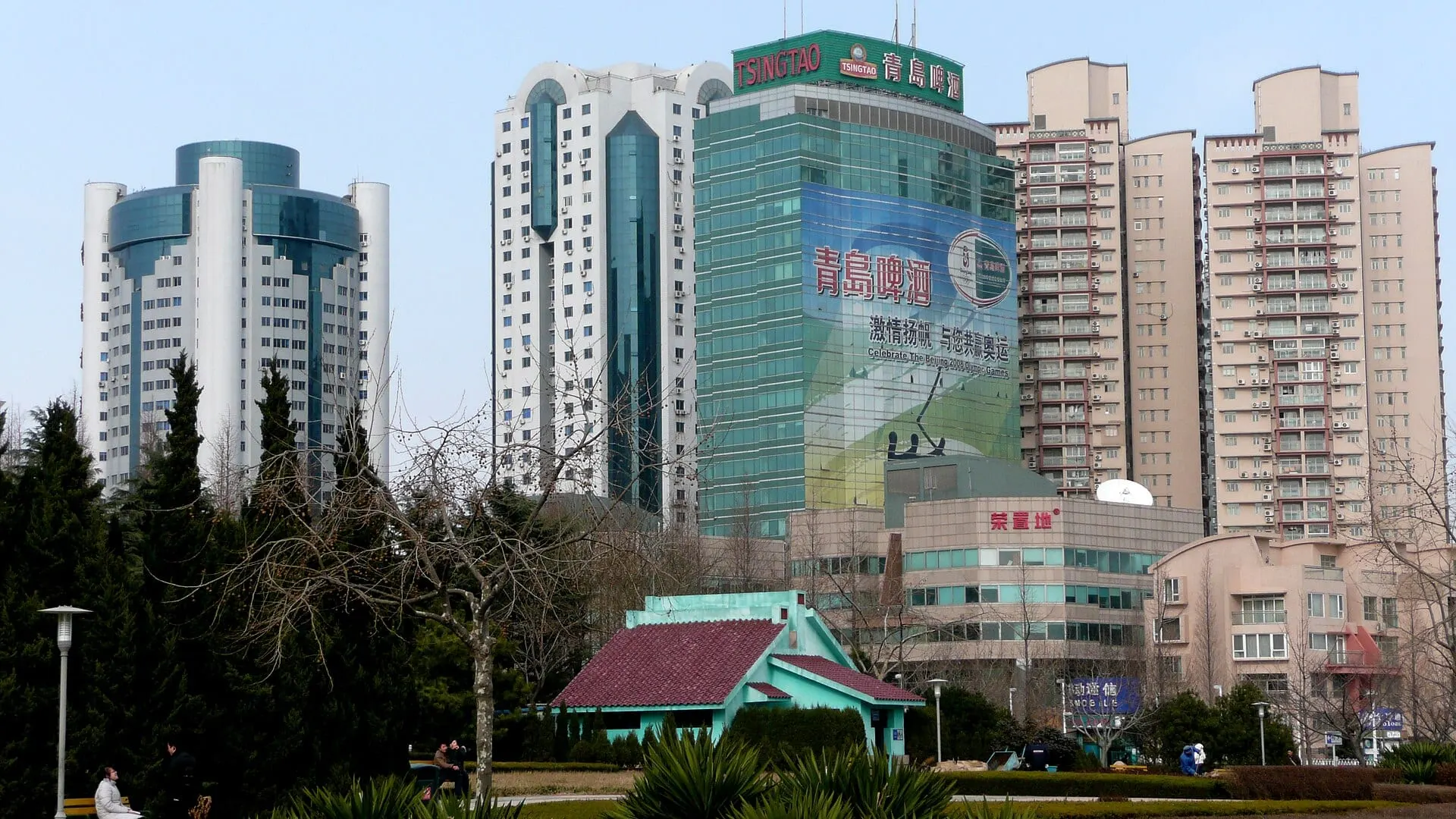
Tsingtao Brewery (Qingdao Beer)
Founded in 1903 by Anglo-German Brewery GmbH under the German colonial administration, Tsingtao is Chinas most famous beer and the citys defining product. The brewery is open to visitors with a museum of beer history, the original German-era brewing hall, and a tasting room. Entry ¥60 includes a glass of fresh beer.
Wikimedia Commons · CC-BY-SA
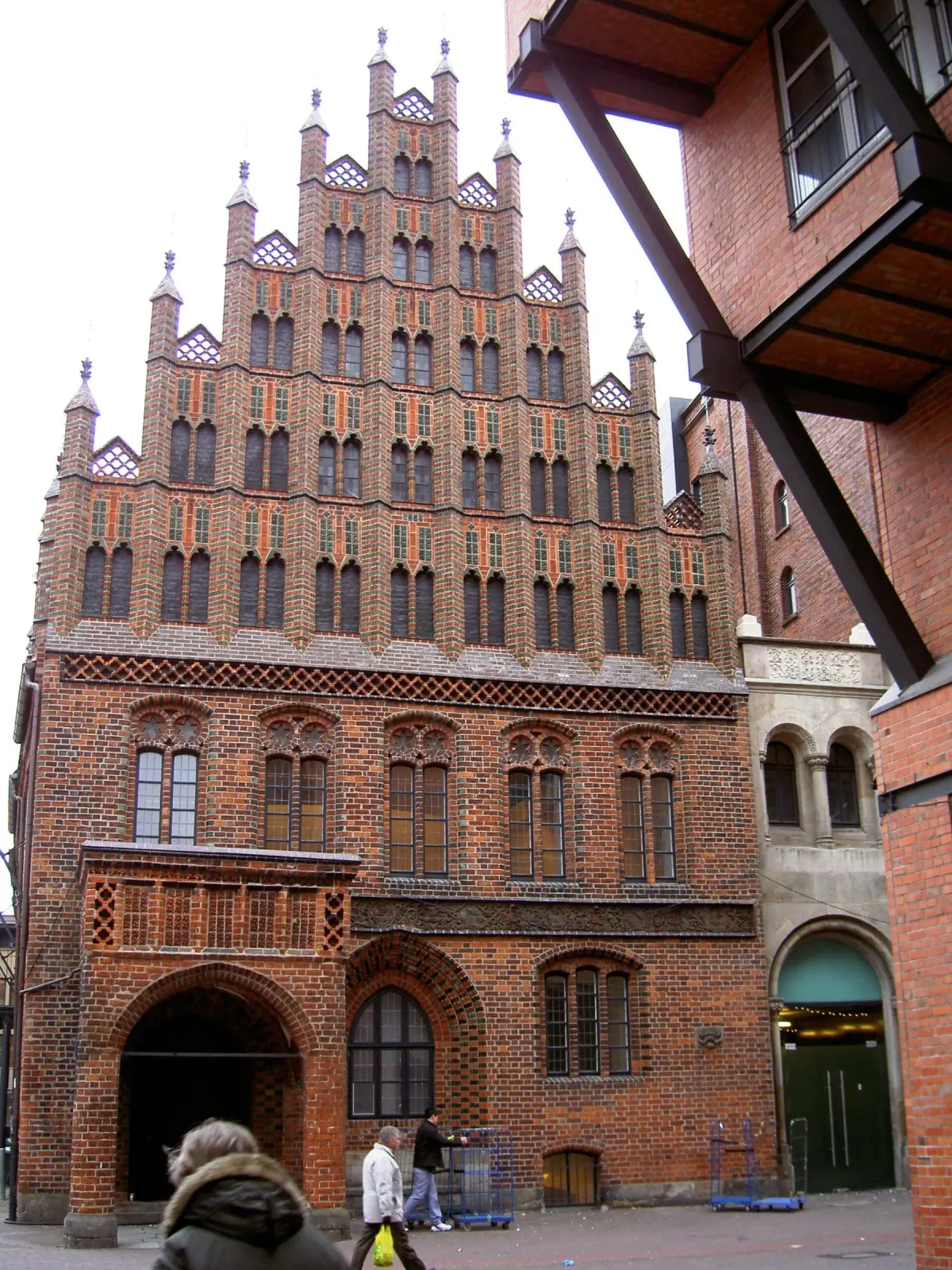
German Old Town (Old Qingdao)
A 2-square-kilometer preserved district of German colonial architecture from 1898-1914, with over 200 protected heritage buildings including the Gothic St. Michaels Cathedral, the Baroque Governor Residence, the German-era Jiao Zhou Prison, and the German Street (Yishan Road) with restored Jugendstil facades. Free to enter; many buildings house museums, cafes, and craft shops.
Wikimedia Commons · CC-BY-SA
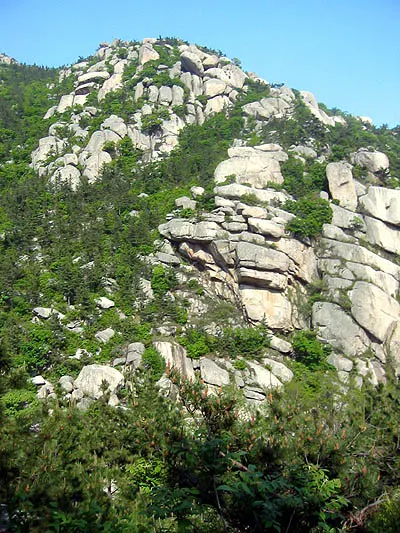
Laoshan Mountain (Lao Shan)
A 1,133-meter coastal mountain range 40 km east of central Qingdao, sacred to Taoism and home to 200+ ancient Taoist temples. Famous for the Taiqing Palace (the largest Taoist temple complex on the Chinese coast), the Jufeng Peak (the highest summit), and the Laoshan Green Tea. Cable car to the summit ¥80-160. Full day for the highlights.
Wikimedia Commons · CC-BY-SA

Eight Great Passes (Ba Da Guan)
A 6-km protected coastal scenic reserve in eastern Qingdao with 8 named promontories and beaches, including the famous No. 2 Beach (Shi Lao Ren, the most photographed beach in China), the Huilan Pavilion (the No. 1 Pass), and the Taiping Hill overlook. Best explored by bike along the dedicated coastal path.
Wikimedia Commons · CC-BY-SA
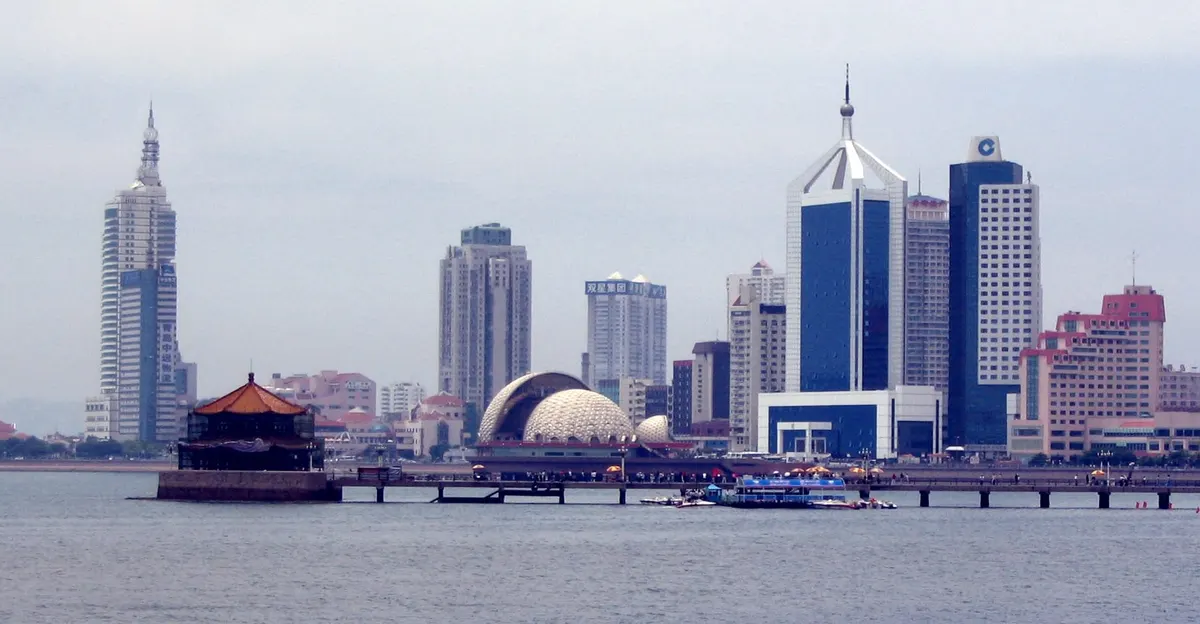
Zhanqiao Pier (Zhan Qiao)
A 440-meter-long pier extending into Jiaozhou Bay, built in 1891 by the Qing governor Zhang Yanfan as the citys first pier. Famous for the Huilan Pavilion (Hui Lan Ge) at the end of the pier, an octagonal Chinese pavilion that is the citys defining landmark. Free to enter; best at sunset when the light catches the bay.
Wikimedia Commons · CC-BY-SA
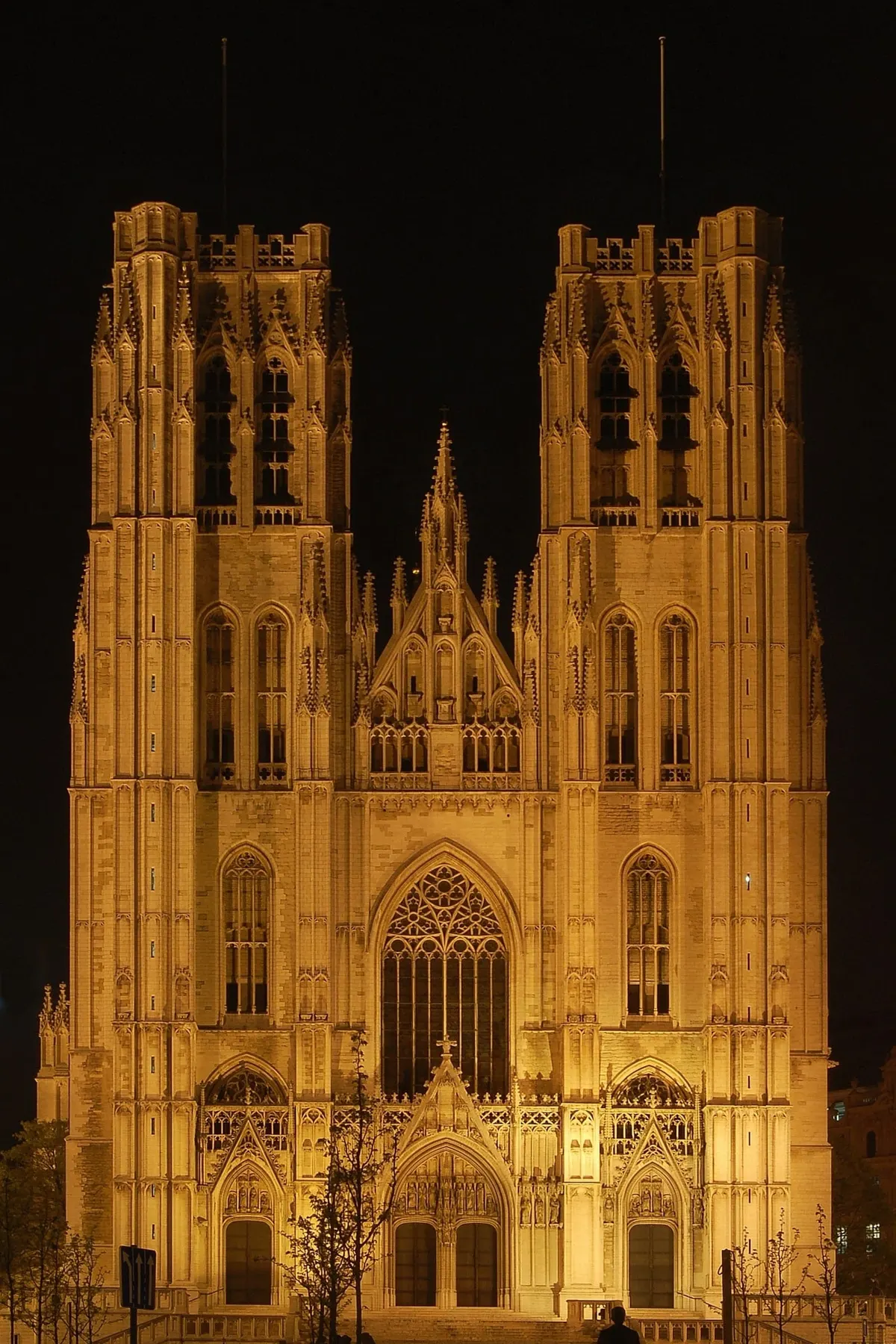
St. Michaels Cathedral (Qingdao Cathedral)
A Roman Catholic cathedral built in 1932-1934 in German Gothic Revival style, with twin 60-meter spires and stained-glass windows imported from Germany. Mass is held in Chinese and English; the cathedral is open to visitors daily. Free entry; donations welcome.
Wikimedia Commons · CC-BY-SA
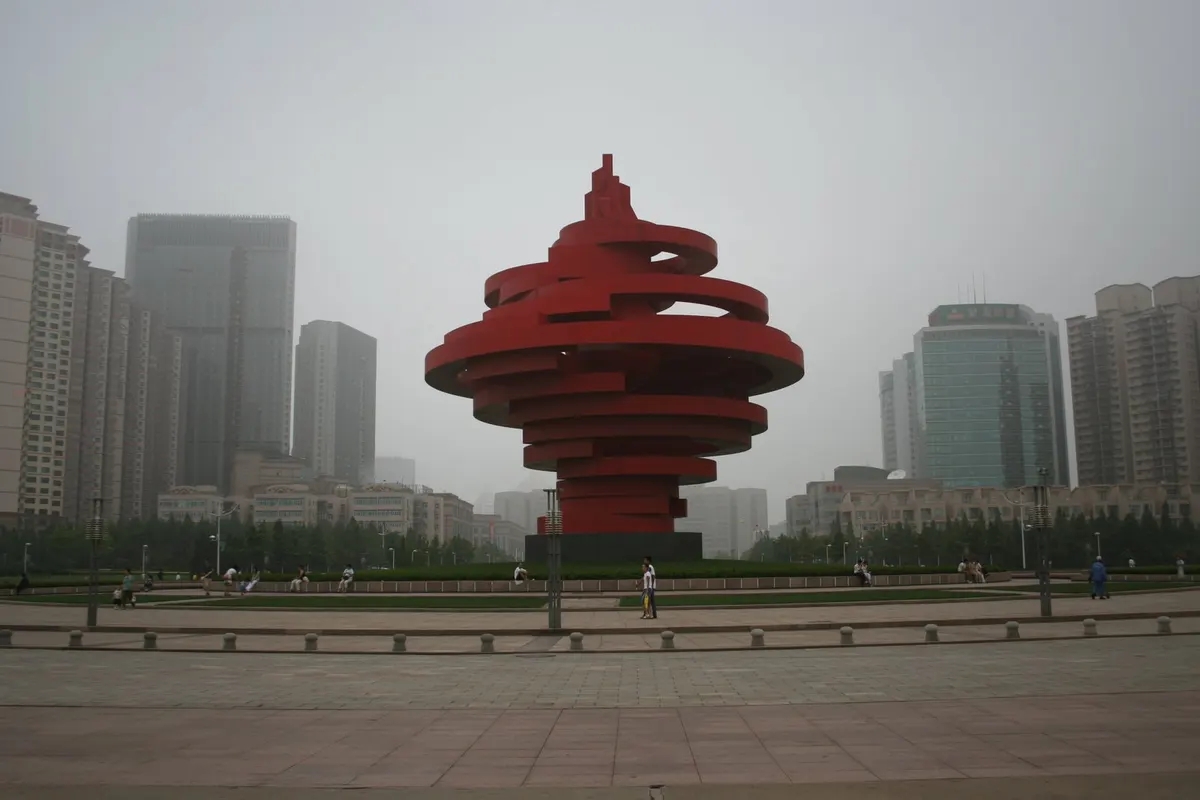
May Fourth Square (Wu Si Guang Chang)
A modern civic plaza in central Qingdao named for the May Fourth Movement of 1919, with the 30-meter-tall Monument to the Wind (May Wind) sculpture by Qingdao sculptor Huang Yongyu. Surrounded by the modern skyline of the central business district and the 270-meter Qingdao Center. Free.
Wikimedia Commons · CC-BY-SA
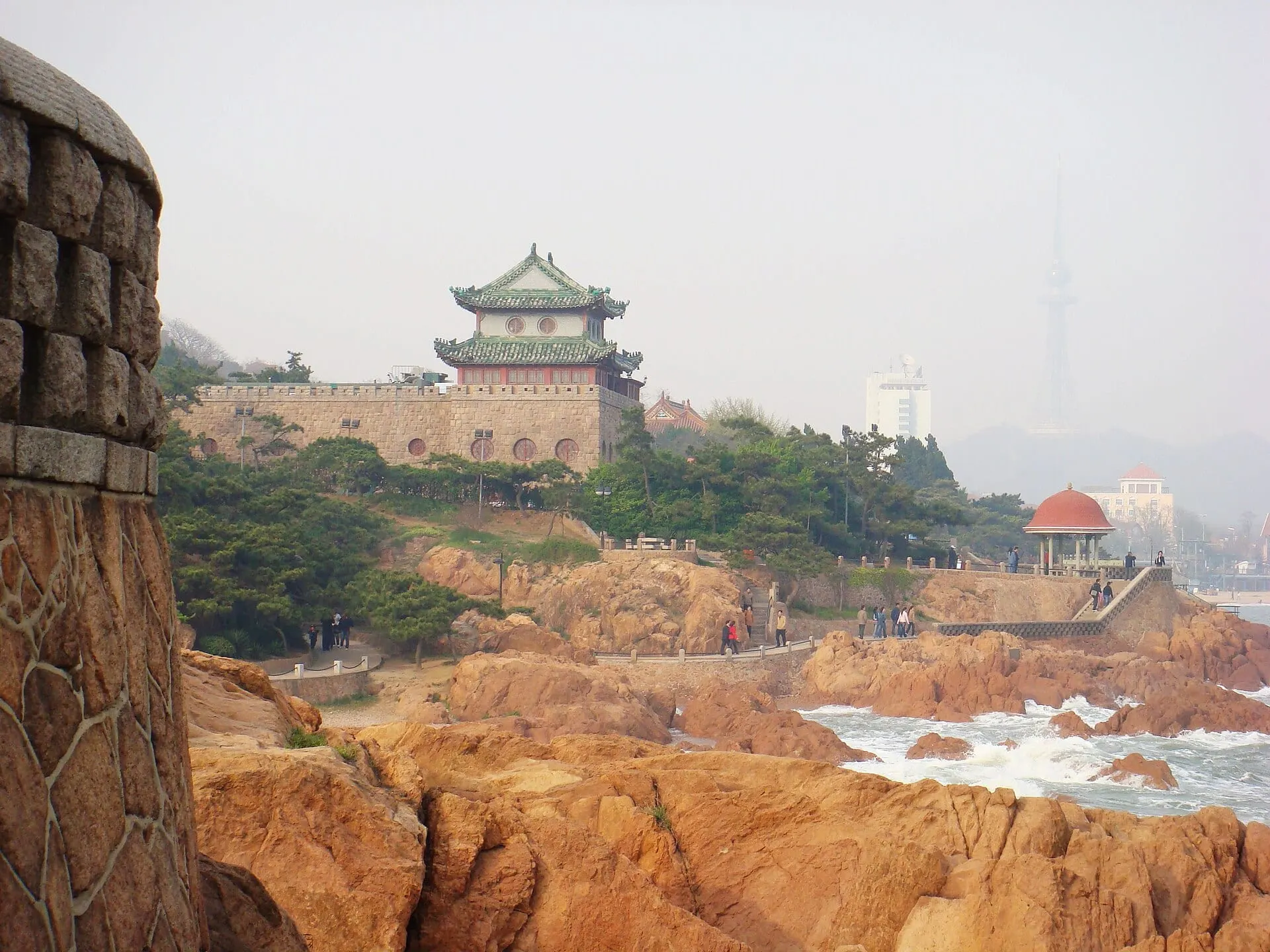
Qingdao Underwater World
A modern aquarium in the No. 1 Beach area, with 100+ species of marine life including whale sharks, sea turtles, and a 90-meter underwater viewing tunnel. Also features dolphin and sea lion shows. Entry ¥150; popular with families.
Wikimedia Commons · CC-BY-SA

Qingdao Beer Festival (Guoji Pijiu Jie)
The largest beer festival in Asia, held annually in late August in the western Shuangyuan Park, with 10+ days of beer tastings, German beer halls, international food vendors, live music, and a parade. Free entry; beer tokens ¥30-50 per glass; expect crowds of 2+ million.
Wikimedia Commons · CC-BY-SA
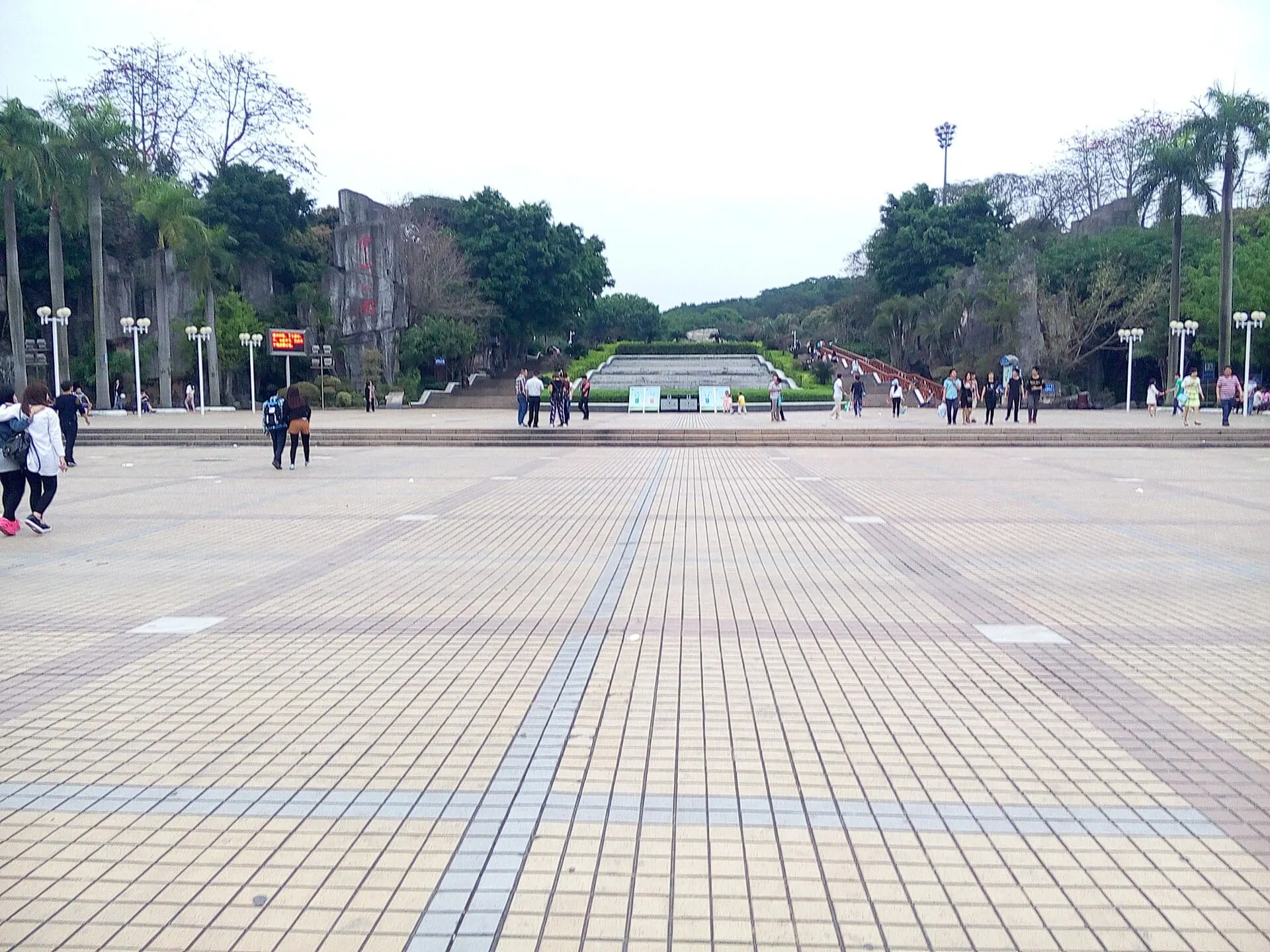
Zhongshan Park (Zhongshan Gongyuan)
A 75-hectare urban park at the foot of Taiping Hill, founded in 1903 by the German colonial administration as the Bismarck Park. Famous for the Cherry Blossom Avenue (2 km of cherry trees planted during the Japanese occupation 1914-1922), the Chrysanthemum Festival in autumn, and the Taiping Hill cable car to the summit. Entry ¥10.
Wikimedia Commons · CC-BY-SA
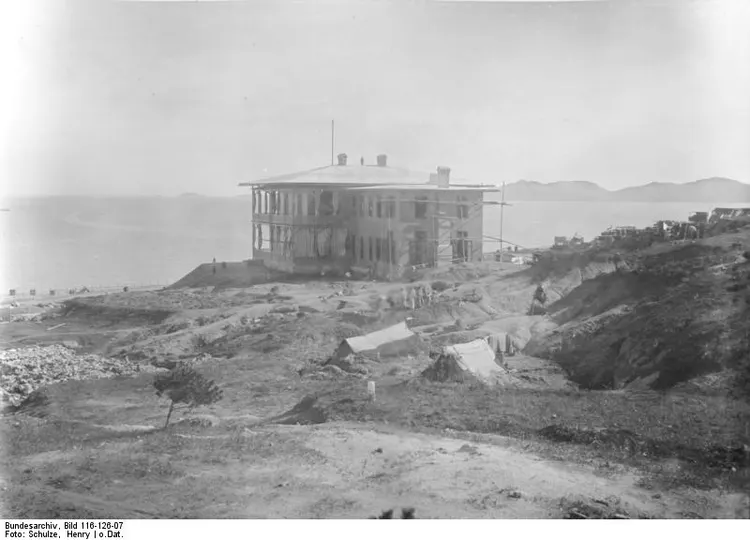
Jiaozhou Governor Residence (Guan Fu)
The 19th-century German Governor Residence and administrative center of the Kiautschou Bay concession (1898-1914), now a museum of German colonial history with original furnishings, archives, and a restored colonial garden. Entry ¥20; combined ticket with the German Prison ¥40.
Wikimedia Commons · CC-BY-SA
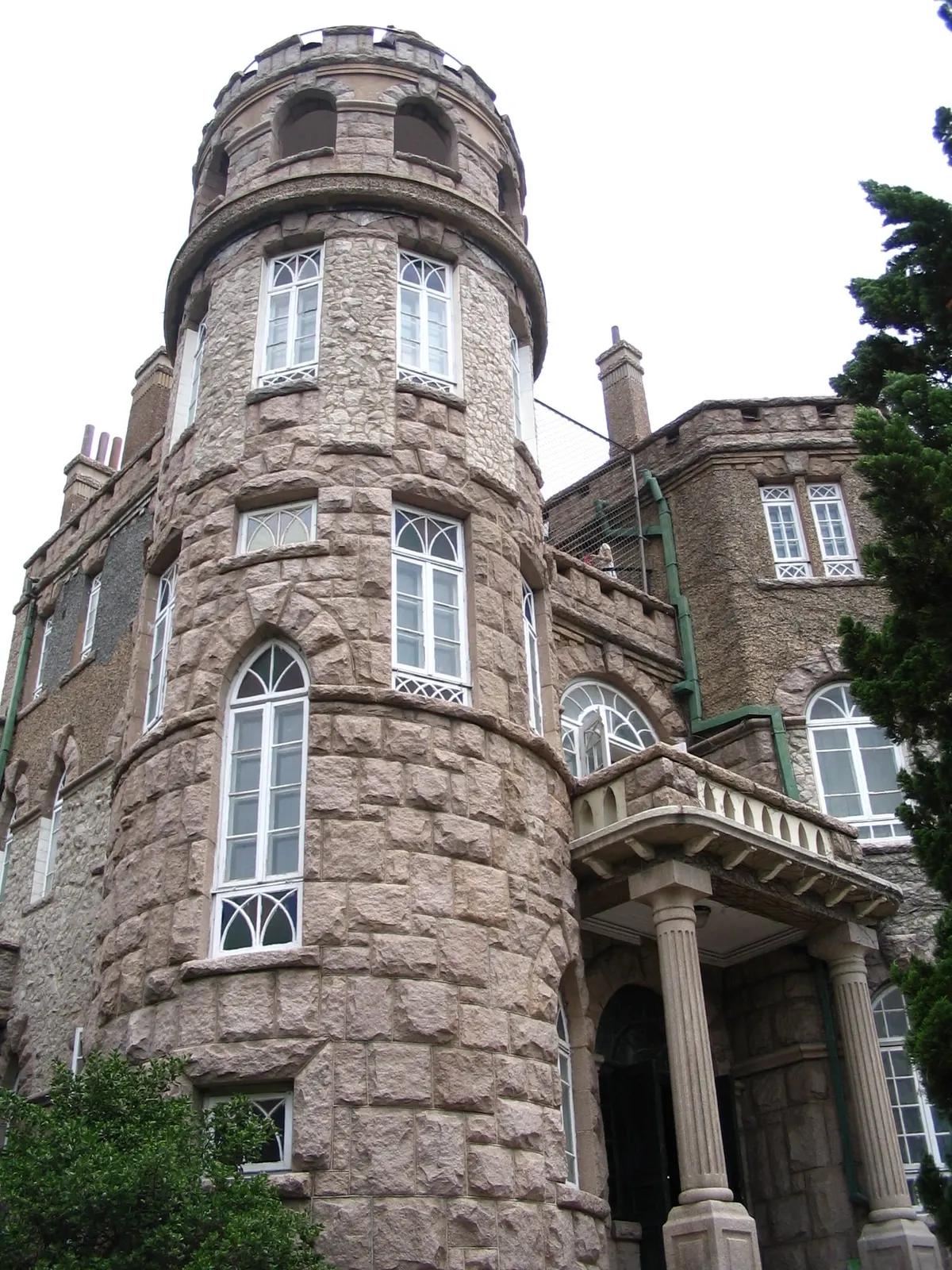
Badaguan Scenic Area
A historic residential district in the Eight Great Passes area featuring 200+ villas built in 8 different national styles in the 1930s (British, French, German, Italian, Spanish, Russian, Japanese, and Chinese). Often called the Worlds Architecture Expo. Best explored by bike or on foot; free to enter.
Wikimedia Commons · CC-BY-SA
STAY
Where to stay in Qingdao
Pick a base that matches the trip you want — imperial-central for sightseeing, hutong belt for character, Chaoyang for nightlife, or Qianmen for budget.
German Old Town / Shinan
Cobblestone streets, colonial architecture, the Tsingtao Brewery, and Zhanqiao Pier — the most atmospheric base
#old-townEight Great Passes / Badaguan
Coastal villa district with beaches, the Huandao cycling path, and 1930s mansions in eight national styles
#badaguanMay Fourth Square / CBD
Modern skyline, shopping malls, the Olympic Sailing Center, and waterfront promenades
#may-fourthHuangdao District
Across the bay with Golden Beach, resort hotels, and the Jiaozhou Bay Bridge views
#huangdaoLaoshan Foothills
Quiet area near the sacred mountain with hot spring resorts, tea plantations, and hiking access
#laoshan
ITINERARIES
Sample itineraries from Qingdao
Three ready-made routes, from a 1-day imperial sprint to a 5-day deep dive. Copy the day-by-day plan and adapt to your own pace.
- 1 DAY
Qingdao in a Day
A focused day covering the German Old Town, Tsingtao Brewery, Zhanqiao Pier, and a seafood feast.
- Short stopovers
- Business travellers
- Beijing weekend escapes
- Day 01
Morning
Start at Zhanqiao Pier at sunrise for the Huilan Pavilion in dawn light. Walk north to St. Michael's Cathedral (free), then east along Hubei Road to the Governor's Residence (¥20). Continue to Yishan Road (German Street) for Jugendstil facades and a coffee in a restored 1905 building.
Afternoon
Tour the Tsingtao Brewery Museum (¥60, allow 90 minutes). Walk the original 1903 brewing hall and finish with a fresh-from-the-vat pour in the tasting room. Lunch on Beer Street (Pijiu Jie) — grilled oysters and fresh Tsingtao.
Evening
Take a taxi to the Eight Great Passes for sunset. Walk the coastal path to No. 2 Beach. Dinner on Yunxiao Road Food Street — spicy stir-fried clams, garlic prawns, and seafood dumplings.
- 2 DAYS
Qingdao Weekend
The Old Town, the brewery, and a full day hiking sacred Laoshan Mountain.
- Weekend travellers
- Hikers
- Culture and nature combo
- Day 01
Morning
Zhanqiao Pier, St. Michael's Cathedral, the Governor's Residence, Yishan Road (German Street). Coffee at a restored Jugendstil cafe.
Afternoon
Tsingtao Brewery Museum and tasting. Lunch on Beer Street. Afternoon bike ride along the Eight Great Passes coastal path — rent a bike near No. 2 Beach (¥20/hour).
Evening
Yunxiao Road Food Street for the full Qingdao seafood experience. Walk the lit Old Town lanes after dinner.
- Day 02
Morning
Early start for Laoshan Mountain — take Metro Line 11 plus bus 304, or a tourist coach (¥60–100 round-trip). Visit the Taiqing Palace, the largest Taoist temple on the Chinese coast.
Afternoon
Cable car to Jufeng Peak (¥80–160) for panoramic Yellow Sea views. Visit a Laoshan Green Tea farmhouse for a tasting.
Evening
Return to central Qingdao by early evening. Farewell dinner at Chuange Fish Dumplings (founded 1925).
- 3 DAYS
Qingdao Explorer
The full Qingdao experience: Old Town, Laoshan, beaches, Badaguan villas, and the Beer Festival (if August) or Penglai day trip.
- First-time Shandong visitors
- Food and beer enthusiasts
- Photographers
- Day 01
Morning
Zhanqiao Pier at sunrise, St. Michael's Cathedral, Governor's Residence, Yishan Road walk. Coffee in a German-era building.
Afternoon
Tsingtao Brewery Museum and Beer Street lunch. Afternoon cycling the Eight Great Passes coastal path and exploring the Badaguan villa district.
Evening
Yunxiao Road Food Street for spicy clams, BBQ squid, and fresh Tsingtao. Walk May Fourth Square lit up after dark.
- Day 02
Morning
Full-day Laoshan Mountain — Taiqing Palace, Jufeng Peak cable car, Longtan Waterfall. Tea tasting at a Laoshan farmhouse.
Afternoon
Continue exploring Laoshan's hiking trails. Lunch at a Taoist temple vegetarian restaurant.
Evening
Return to the city. Dinner at Kaihai Hongdao Seafood City — market-style pick-your-own seafood.
- Day 03
Morning
Day trip to Penglai Pavilion (1h15min HSR to Penglai Station, ¥80). Walk the cliff-top pavilion complex with Bohai Sea views.
Afternoon
Return to Qingdao by mid-afternoon. Visit the Qingdao Underwater World or relax at No. 2 Beach.
Evening
Farewell dinner at Longmen Lou, Qingdao's most refined Lu cai restaurant. Final walk along the Zhanqiao Pier at night.
BUDGET
What a Qingdao trip costs
Per-person, per-day costs across three spending tiers. Excludes international flights and visa fees.
| Line item | Backpacker | Mid-range | Luxury |
|---|---|---|---|
| Budget Guesthouse / Hostel Dorm | $10 | $25 | $50 |
| Mid-range Hotel (3-4 star) | $35 | $60 | $120 |
| Luxury / 5-star Hotel | $80 | $140 | $250 |
| Local Meal (per person) | $4 | $8 | $15 |
| Mid-range Restaurant Meal | $12 | $22 | $45 |
| Local Transport (daily) | $4 | $10 | $25 |
| Attraction Entry Fees (daily avg) | $10 | $20 | $40 |
| Daily Total (per person) | $35 | $100 | $300 |
| Total per day | $190 | $385 | $845 |
$ USD per person per day, before international flights and visas. Last verified: Q3 2026.
STAY SAFE
Emergency contacts in Qingdao
Save these three numbers before you board the plane. China uses different hotlines than most countries — there's no 911.
- POLICE
110
- AMBULANCE
120
- FIRE
119
- TOURIST HOTLINE
12301
- ENGLISH-SPEAKING ER
Qingdao Municipal Hospital East Campus (青岛市立医院东院) — VIP international ward with English-speaking staff; Zhongshan Hospital Qingdao also accepts foreign patients
Problems travelers hit in Qingdao
- Why is my Alipay not working?You linked a foreign Visa or Mastercard to Alipay but every transaction is rejected at the merchant.
- My China visa was denied — what now?Your L visa application was refused at the Chinese consulate and your trip is in 2–4 weeks.
- My passport was lost or stolen in China — what do I do?Your passport is gone (theft or loss) and you're in mainland China without travel documents.
- Why can't I book on 12306 with my foreign card?You tried to book a high-speed rail ticket on 12306.cn and your foreign Visa/Mastercard is rejected at checkout.
- Why is my VPN not working in China?You arrived in China, opened your VPN, and it will not connect at all or connects but no traffic loads.
- Why can't I book a Tibet trip on my own?You try to book Lhasa flights and hotels yourself but the booking fails, or you're turned away at the Lhasa airport without a permit.
Book activities in Qingdao
These are licensed tour operators and booking platforms we've vetted independently. Booking through these links may earn us a commission — see our affiliate disclosure. This never affects our editorial recommendations or the price you pay.
Frequently asked questions
Do I need a visa to visit Qingdao?
How many days do I need in Qingdao?
When is the best time to visit Qingdao?
How do I get from Beijing to Qingdao?
How do I pay for things without a Chinese bank account?
Is Qingdao safe for tourists?
Show all 48 FAQs
What is the best local food in Qingdao?
What is Tsingtao Beer and how is it made?
How does Qingdao compare to Dalian for tourism?
Is Laoshan Mountain worth a day trip?
Where should I stay in Qingdao?
How much does a trip to Qingdao cost?
Can I visit Qingdao on a cruise stop?
What is Laoshan Green Tea?
Is Qingdao worth visiting with kids?
What is the Qingdao Beer Festival?
Can I see Qingdao in winter?
What is the Eight Great Passes (Ba Da Guan)?
What is the best time of year to visit Qingdao?
How do I get from Qingdao Jiaodong International Airport to the city center?
What is the Tsingtao Brewery Museum and is it worth visiting?
What is the Badaguan Scenic Area and why should I visit?
Can I do a day trip to Mount Lao (Laoshan) from Qingdao?
What is the must-try food in Qingdao?
Is Qingdao worth visiting in winter?
Which are the best beaches in Qingdao, ranked?
What is the best walking route for Qingdao's German colonial architecture?
Where are the best seafood streets and night markets in Qingdao?
What is there to see at May Fourth Square and the Olympic Sailing Center?
How do I hike Laoshan Mountain — what are the best trails and routes?
What is a good family itinerary for Qingdao with children?
How do I get from Qingdao to other Shandong cities?
Is there a ferry from Qingdao to Dalian or South Korea?
How English-friendly is Qingdao for foreign travelers?
What should I pack for a Qingdao trip?
What are the best photo spots in Qingdao?
How do I get a SIM card and set up internet access in Qingdao?
Is it safe to swim at Qingdao's beaches?
What is Qingdao's craft beer and nightlife scene beyond the Tsingtao Brewery?
What does the Tsingtao Brewery Museum tour include, and is it worth the entry fee?
What is Little Qingdao Island and how do I visit it with Zhanqiao Pier?
What is the best day trip to Penglai from Qingdao?
What are the main Taoist temples on Laoshan and how do I visit them?
Where is the best coffee and cafe culture in Qingdao?
What are the best seafood restaurants in Qingdao by budget tier?
Does Qingdao have a winter ice festival or winter-specific attractions?
What is the best way to explore the Governor's Mansion and German colonial architecture in depth?
What should I do in Qingdao on a rainy day?
References

Written by
NihaoVisit Editorial