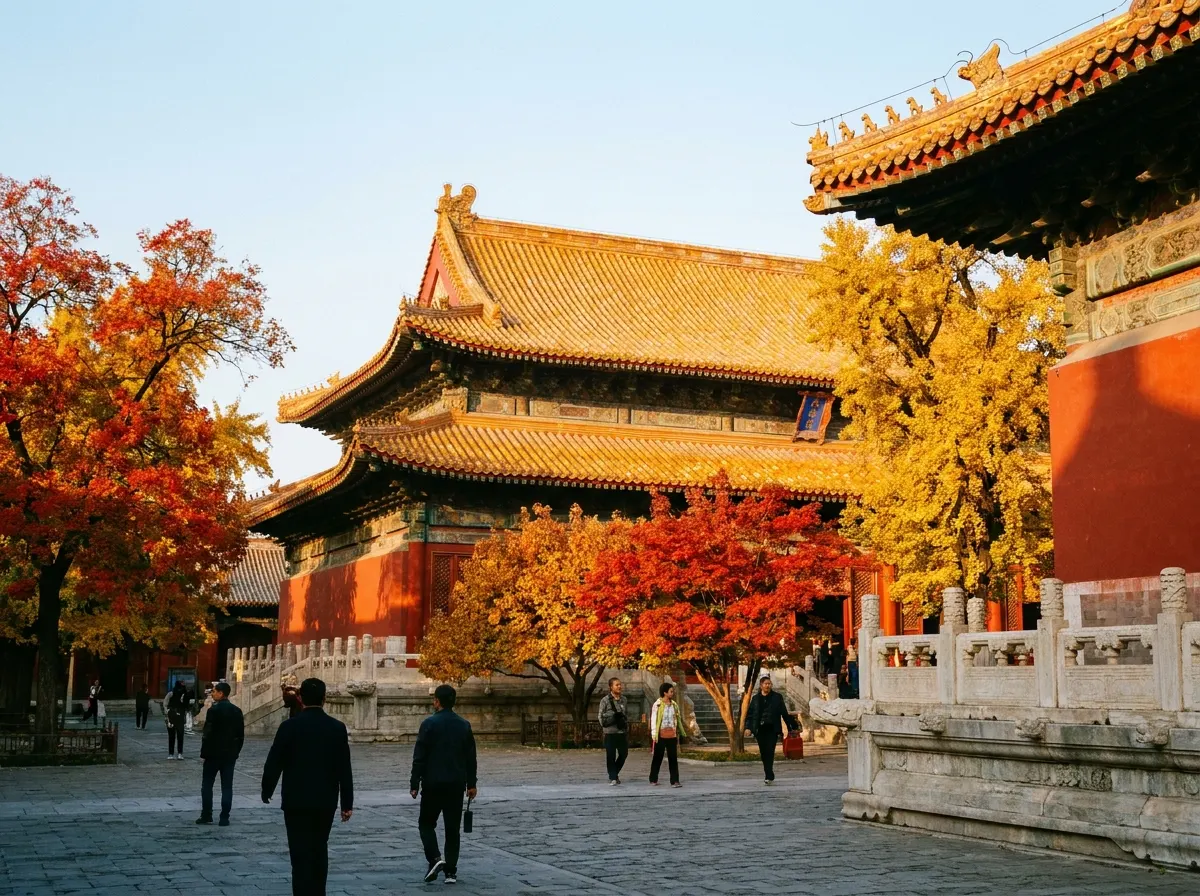
Qufu
Qufu (曲阜, Qūfù) is a city of 650,000 in southwestern Shandong province whose entire identity is defined by one man: Confucius (孔子, Kǒngzǐ), born here in 551 BCE. The city is home to the three Confucian sites — the Temple of Confucius (孔庙, Kǒng Miào), the Kong Family Mansion (孔府, Kǒng Fǔ), and the Cemetery of Confucius (孔林, Kǒng Lín) — collectively a UNESCO World Heritage site since 1994. The Temple is the second-largest ancient building complex in China after the Forbidden City, with 466 halls, pavilions, and gates spread across 16 hectares. The Cemetery is the world's largest family graveyard, containing the tombs of Confucius and more than 100,000 of his descendants over 2,500 years. The Mansion was the home of Confucius's direct descendants — the oldest continuously documented family line in the world, now in its 83rd generation — who lived here as feudal aristocrats until the 1930s. Qufu is not a city you visit for nightlife, food, or urban energy. It is a city you visit to stand in the places where one of history's most consequential thinkers was born, taught, and was buried — and to understand why, in 2026, his ideas still structure Chinese social life, government rhetoric, and interpersonal ethics. One full day covers the three main sites. Budget roughly ¥200-400 per day for mid-range comfort. The city is 2 hours from Beijing by HSR and works as a day trip or an overnight.
Why Qufu in 2026.
Confucius's hometown — three UNESCO-listed sites (Temple, Cemetery, Family Mansion) in a small Shandong city where the Kong family has lived for 2,500 years and the world's most influential philosopher still shapes daily life. Best visited April-October for mild weather; summer is hot and crowded.
Quick Answer
Qufu (曲阜, Qūfù) is a city of 650,000 in southwestern Shandong province whose entire identity is defined by one man: Confucius (孔子, Kǒngzǐ), born here in 551 BCE. The city is home to the three Confucian sites — the Temple of Confucius (孔庙, Kǒng Miào), the Kong Family Mansion (孔府, Kǒng Fǔ), and the Cemetery of Confucius (孔林, Kǒng Lín) — collectively a UNESCO World Heritage site since 1994. The Temple is the second-largest ancient building complex in China after the Forbidden City, with 466 halls, pavilions, and gates spread across 16 hectares. The Cemetery is the world's largest family graveyard, containing the tombs of Confucius and more than 100,000 of his descendants over 2,500 years. The Mansion was the home of Confucius's direct descendants — the oldest continuously documented family line in the world, now in its 83rd generation — who lived here as feudal aristocrats until the 1930s. Qufu is not a city you visit for nightlife, food, or urban energy. It is a city you visit to stand in the places where one of history's most consequential thinkers was born, taught, and was buried — and to understand why, in 2026, his ideas still structure Chinese social life, government rhetoric, and interpersonal ethics. One full day covers the three main sites. Budget roughly ¥200-400 per day for mid-range comfort. The city is 2 hours from Beijing by HSR and works as a day trip or an overnight.
| Worth visiting | Yes, if you want to understand the philosophical foundation of Chinese civilization. The Temple alone — 466 buildings, 2,000+ stone stelae, a forest of ancient cypresses — is worth the trip. The Cemetery, with its 100,000+ tombs in a 200-hectare forest, is unlike anything else in China. |
|---|---|
| Recommended days | 1-2 days |
| Best time to visit | April-May and September-October (comfortable temperatures, manageable crowds). The Confucius Birthday Ceremony on September 28 is the city's biggest event. Avoid National Day (October 1-7 — extremely crowded) and Chinese New Year (many sites have reduced hours) |
| Daily budget | $30 (backpacker) / $80 (mid-range) / $200+ (luxury) |
| Family friendly | Yes — the sites are flat, paved, and walkable. The Temple's courtyards and the Cemetery's forest paths work for children of any age. The philosophical content will be lost on young children but the spaces are pleasant |
| Solo friendly | Yes — compact, safe, well-signed (Chinese and English at major sites), and the HSR station connects directly to Beijing and Shanghai |
| Airport | Jining Qufu Airport (JNG) — small domestic airport 80 km west with flights from Beijing, Shanghai, Guangzhou. Jinan Yaoqiang International Airport (TNA) is 160 km north (2 hours by car or HSR) with more flights |
| High-speed rail | Yes — Qufu East Station (曲阜东站) on the Beijing-Shanghai HSR line: Beijing (2h), Jinan (30 min), Nanjing (2h), Shanghai (3.5h). This is one of the most accessible small cities in China |
| Language | Mandarin with Shandong dialect. English signage at the three Confucian sites is good. English spoken by tour guides but rare in restaurants and hotels outside the main tourist area |
| Currency | CNY (¥) — Alipay and WeChat Pay work throughout the city. Cash useful for small vendors and the Cemetery's electric cart |
| Time zone | China Standard Time (UTC+8) |
| Last updated | 2026-06-18 |
Want a Qufu plan built for you?
Jump to:
Why Visit·Who Was Confucius·The Three Sites·Getting There·Getting Around·Itineraries·Confucius Birthday·Where to Stay·Food·Practical Tips·Qufu vs Other Historical Cities·Emergency Contacts·Day Trips Beyond Qufu·Calligraphy and Stelae·When to Visit·FAQ
Why visit Qufu? Is a small Shandong city worth the trip?
Qufu is one of the most historically significant small cities in the world, and I say that without exaggeration. Confucius (孔子, Kǒngzǐ, 551-479 BCE) was born here, taught here, died here, and is buried here. His ideas — on ethics, governance, family, education, and social harmony — have shaped Chinese civilization for 2,500 years and continue to structure Chinese social life, political rhetoric, and interpersonal ethics in 2026. The Chinese government's current emphasis on "harmony" (和谐, héxié), "rule of virtue" (德治, dézhì), and social stability is, at root, Confucian. Visiting Qufu is visiting the source code of Chinese culture. The three UNESCO sites — the Temple, the Mansion, and the Cemetery — form a complete picture of Confucianism as a lived tradition rather than an abstract philosophy. The Temple shows how the state appropriated Confucius: emperors from the Han through the Qing came here to pay homage, leaving behind stone stelae, inscribed plaques, and architectural expansions that turned a teacher's home into an imperial-scale complex. The Mansion shows how Confucius's descendants lived as a hereditary aristocracy for 2,000 years — the oldest continuously documented family line in the world, now in its 83rd generation. The Cemetery shows how the family endures: 200 hectares of forest, 100,000+ tombs, burials continuing today. Qufu is not a beautiful city in a conventional sense. It is a small Shandong county-level city — functional, a little dusty, with the usual Chinese small-city landscape of six-story apartment blocks, electric scooters, and noodle shops. The magic is entirely within the three UNESCO sites, which are compact, contiguous, and walkable. Qufu is a destination for visitors who want to understand China at its philosophical root rather than experience China at its most photogenic. The honest downside: Qufu is a one-note destination. The three Confucian sites are the only significant attractions. The city's food is standard Shandong fare — solid but unremarkable. There is no nightlife, no shopping, no urban energy. If you are not interested in Confucius, Qufu has nothing for you. But if you are — and I think anyone traveling in China should be — Qufu is essential.
Who was Confucius, and why does he still matter in 2026?
Confucius (孔子, Kǒngzǐ, 551-479 BCE) was born in the state of Lu (鲁国) — modern Shandong — during the Spring and Autumn period, an era of political fragmentation and warfare. He was a teacher, not a conqueror; a moral philosopher, not a prophet. His project was to restore social order through ethical self-cultivation rather than law or force. The core of his teaching is deceptively simple: if individuals cultivate virtue (德, dé), families will be harmonious, states will be well-governed, and the world will be at peace. His key concepts, in rough order of importance: REN (仁, rén) — usually translated as "benevolence" or "humaneness," but better understood as the capacity to treat others with the same care you would want for yourself. Confucius defined it as "not doing to others what you would not want done to you" (己所不欲,勿施于人) — the Silver Rule, formulated five centuries before Jesus articulated the Golden Rule. Ren is the central Confucian virtue and the foundation of all ethical behavior. LI (礼, lǐ) — ritual, propriety, the proper way to conduct yourself in any situation. Li is not empty formality; it is the external expression of internal ren. Bowing to your elders, observing mourning rites, addressing people by their correct titles — these are practices that cultivate the inner virtues they represent. XIAO (孝, xiào) — filial piety, the obligation of children to respect, obey, and care for their parents. This is the foundation of the Confucian family and, by extension, the Confucian state (the emperor was conceived as the father of the nation). Xiao remains one of the most powerful social forces in contemporary China. JUNZI (君子, jūnzǐ) — the "gentleman" or "exemplary person," the ideal toward which self-cultivation aims. The junzi is not defined by birth but by conduct: he is learned, principled, modest, and committed to the welfare of others. Confucius's project was to create junzi who would serve as officials and reform society through moral example. Confucius's influence was not immediate. He died thinking he had failed — his political advice was rejected by the rulers of his day, and his disciples scattered. But his students compiled his teachings into the Analects (论语, Lúnyǔ), and over the following centuries, Confucianism became the official ideology of the Chinese state. From the Han dynasty (206 BCE-220 CE) through the Qing (1644-1912), the imperial examination system tested candidates on the Confucian classics, and the entire Chinese bureaucracy was staffed by men who had spent their youth memorizing Confucius. The 20th century was hard on Confucius. The May Fourth Movement (1919) blamed Confucianism for China's weakness. The Communist revolution (1949) initially rejected Confucius as feudal ideology. The Cultural Revolution (1966-1976) saw Red Guards desecrate his tomb and smash his statues. But the pendulum swung back: since the 1990s, the Chinese government has embraced Confucius as a symbol of Chinese cultural identity, establishing Confucius Institutes worldwide, restoring his temple, and promoting Confucian values of harmony and social stability. In 2026, Confucius is officially celebrated and genuinely influential — his ideas about family, education, and social obligation are woven into the fabric of Chinese life in ways that most Chinese people do not even recognize as "Confucian."
How do you get to Qufu?
Qufu is one of the most accessible small cities in China, thanks to its position on the Beijing-Shanghai high-speed rail line. BY HIGH-SPEED RAIL (best option): Qufu East Station (曲阜东站, Qūfù Dōng Zhàn) is on the Beijing-Shanghai HSR main line, about 8 km southeast of the city center. Direct G-class trains serve: Beijing South (2 hours, ¥240-310 second class), Jinan (30 minutes, ¥60-80), Nanjing South (2 hours, ¥220-280), Shanghai Hongqiao (3.5 hours, ¥370-480), and intermediate stops. The station is modern, with English signage and taxi/bus connections to the city center. From Qufu East Station to the Confucian sites: bus K01 (¥2, 30 minutes) runs to the Temple area, or a taxi costs ¥20-30 (15 minutes). Trains run roughly every 30 minutes from Beijing during the day; book on 12306 or Trip.com 1-3 days ahead. BY AIR: The nearest airport is Jining Qufu Airport (JNG), about 80 km west of Qufu. It is a small domestic airport with flights from Beijing (1.5h, ¥400-800), Shanghai (1.5h, ¥500-900), and Guangzhou (2.5h, ¥700-1,200). From the airport, a bus or taxi takes about 1.5 hours to Qufu (¥60-100 by taxi). Jinan Yaoqiang International Airport (TNA) is larger, 160 km north (2 hours by car or HSR from Jinan to Qufu East, 30 min). Most visitors arrive by HSR from Beijing or Jinan rather than flying directly to Qufu. BY BUS: Buses from Jinan (2 hours, ¥40-50), Tai'an (1 hour, ¥25-30 — Qufu is near Mount Tai, 泰山), and other Shandong cities arrive at the Qufu Bus Station on the city's west side. Buses are frequent but slower and less comfortable than the HSR. Qufu works as a day trip from Beijing (2 hours each way by HSR — leave Beijing at 07:00, arrive Qufu at 09:00, visit the three sites 09:00-17:00, train back at 18:00, arrive Beijing 20:00). It also works as an overnight stop between Beijing and Shanghai (stop in Qufu for one night, continue south the next day). The combined Qufu + Mount Tai (泰山) trip is a classic 2-3 day Shandong itinerary: 1 day Qufu, 1-2 days Mount Tai in nearby Tai'an (20 minutes by HSR from Qufu East).
How do you get around Qufu?
Qufu is a compact city and the three Confucian sites are within walking distance of each other — the Temple and the Mansion are adjacent (they share a wall), and the Cemetery is 1.5 km north of the Temple (a 20-minute walk or a 5-minute taxi/rickshaw ride). Walking is the primary mode for exploring the sites. The Temple alone is 16 hectares — walking its full length from the main gate to the rear hall takes 30-40 minutes at a relaxed pace, longer if you are reading plaques and photographing. The Mansion is directly east of the Temple and takes 1-1.5 hours to explore. The Cemetery is 1.5 km north: walk up Gulou Street (鼓楼街) past the Drum Tower and through the old city gate, or take a pedicab (三轮车, sānlúnchē, ¥10-15, negotiate before getting in) or a taxi (¥10). Inside the Cemetery (200 hectares), an electric cart (¥20, 30-minute circuit) runs a loop past the main tombs — Confucius, his son, his grandson, and the Ming-dynasty memorial arch. The cart is useful for orientation on a first visit; you can also walk the main path (about 2 km from the entrance to Confucius's tomb and back) in 45-60 minutes. Taxis are available with flagfall of ¥8 for the first 2 km. They are useful for the Qufu East Station ↔ city center trip (¥20-30) but unnecessary within the city. DiDi operates in Qufu and is more reliable than hailing taxis on the street. The city bus system (¥1-2) connects the HSR station, the bus station, and the Confucian sites. Bus K01 runs from Qufu East Station to the Temple area. Buses are Chinese-only in announcements and signage. Pedicabs (rickshaws) are everywhere around the tourist area. Drivers are persistent and will approach you. A ride within the city center costs ¥10-15; agree on the price before getting in. Pedicab drivers speak no English and will try to take you to souvenir shops where they earn commission — be clear about your destination and firm about not stopping.
What are the three Confucian sites, and how should you visit them?
The three Confucian sites — Temple (孔庙), Mansion (孔府), Cemetery (孔林) — are sold as a combined ticket (¥140 as of June 2026) and should be visited in that order: Temple, then Mansion, then Cemetery. Here is what each site is, and how to approach it. THE TEMPLE OF CONFUCIUS (孔庙, Kǒng Miào). The temple was built on the site of Confucius's home, which was converted into a shrine shortly after his death in 479 BCE. Over 2,000 years, it grew from a three-room house into 466 buildings across 16 hectares — the second-largest ancient building complex in China after the Forbidden City. The temple's layout is a south-to-north axis: you enter through a series of gates, each with historical and symbolic significance, cross courtyards with ancient cypresses (some over 1,000 years old), pass forests of stone stelae recording imperial visits, and arrive finally at the Hall of Great Achievement (大成殿). The key things to see in the Temple: - The Lingxing Gate (棂星门), the main entrance — a Ming-dynasty stone gate with carved clouds and dragons. - The Thirteen Stele Pavilions (十三碑亭) — 13 pavilions housing 53 stone stelae erected by emperors from the Tang through Qing dynasties, each recording an imperial visit or honor. The stelae are carried on the backs of bixi (赑屃) — turtle-like mythological creatures believed to bear heavy loads. Rubbing the bixi's head is said to bring good luck; generations of hands have polished the stone smooth. - The Apricot Platform (杏坛, Xìng Tán) — a pavilion marking the spot where Confucius supposedly taught his disciples under an apricot tree. The platform is a Song-dynasty structure rebuilt in the Ming; the tree is a symbolic replacement. - The Hall of Great Achievement (大成殿) — the climax. 28 carved stone dragon columns front the hall, each column a single piece of stone with a dragon coiling in high relief. The columns are covered with red fabric during imperial visits (the emperor's artisans could not compete). Inside, a shrine to Confucius with spirit tablets for his disciples. The scale is imperial — the hall is comparable to the Forbidden City's Hall of Supreme Harmony — and the message is clear: Confucius was treated as an emperor in all but title. Allow 2-3 hours for the Temple. The Confucius Museum (孔子博物馆, ¥40, 1.5 hours) is 2 km south of the Temple and provides excellent context — visit it BEFORE the Temple if possible, to understand what you are seeing. THE KONG FAMILY MANSION (孔府, Kǒng Fǔ). Directly east of the Temple, the Mansion was the residence of the Yansheng Dukes (衍圣公) — Confucius's direct male-line descendants, who were granted hereditary noble titles from the Song dynasty (1055 CE) through the Republic (1935). The Mansion is a 480-room complex of courtyards arranged along three axes: the eastern axis for official business (reception halls, administrative offices), the central axis for family life (living quarters, studies, kitchens), and the western axis for leisure (gardens, pavilions, a small theater). The Mansion is a time capsule of Chinese aristocratic domestic life. The front halls are formal — carved screens, official seals, imperial gifts — while the rear courtyards are intimate, with family shrines, women's quarters, and a kitchen that could prepare banquets for 700 guests (the Kong family entertained on an imperial scale). The rear garden has a famous "five-cypress embracing a locust tree" (五柏抱槐) — five cypress trees that have grown together around a locust, a botanical curiosity that the family interpreted as a symbol of harmony. Allow 1-1.5 hours. The last Yansheng Duke, Kong Decheng (孔德成), fled to Taiwan in 1949. He returned to Qufu as a tourist in the 1990s, walking through his ancestral home as a visitor. His descendants now live in Taiwan and the United States. The 83rd-generation descendant, Kong Chuichang (孔垂长), is the current head of the family and visits Qufu for the annual Confucius Birthday Ceremony. THE CEMETERY OF CONFUCIUS (孔林, Kǒng Lín). One kilometer north of the Temple, the Cemetery is a 200-hectare forest — ancient cypresses, oaks, and pines — containing over 100,000 tombs of Confucius's descendants across 2,500 years. It is the largest family graveyard in the world and is still active: Kong descendants are buried here today, their funerals processed through the same gate their ancestors used. Confucius's tomb is in the northern section, a 1.5 km walk or electric-cart ride from the entrance. The tomb itself is modest — a grass-covered mound behind a Ming-dynasty stone tablet, surrounded by a low wall. To the east is the tomb of his son Kong Li (孔鲤), and to the south the tomb of his grandson Kong Ji (孔伋, also known as Zisi 子思, credited with writing the Doctrine of the Mean). The layout follows the "holding the son and carrying the grandson" (携子抱孙) burial pattern. The tombs are modest because Confucian virtue values restraint — the contrast with the grandeur of the Temple is intentional and moving. Walking the Cemetery's main path, past the stone animals (a pair of mythical qilin, a pair of guardian lions) and the Ming memorial arch, through the forest of ancient trees and stone tablets, is the most atmospheric experience in Qufu. The electric cart (¥20) is convenient but skims the surface — walking, even if only the 2 km from the entrance to Confucius's tomb and back, gives you a sense of the scale and silence of the place. Allow 1-2 hours.
What is the Confucius Birthday Ceremony, and when should you visit?
The Confucius Birthday Ceremony (孔子诞辰纪念, Kǒngzǐ Dànchén Jìniàn) on September 28 is Qufu's biggest annual event, and it transforms the city from a quiet historical destination into a stage for state-sponsored cultural spectacle. The ceremony dates back to the Han dynasty but the modern version was revived in the 1980s and has grown into a major event attended by government officials, Kong family descendants, scholars, and thousands of spectators. The main ceremony takes place in the Temple of Confucius, in the courtyard before the Hall of Great Achievement. The format is a reconstructed Ming-dynasty ritual: dancers in red robes perform the "Eight-Row Dance" (八佾舞, Bāyì Wǔ — originally a ceremony reserved for the emperor, but Confucius was posthumously elevated to imperial status), musicians play on ancient bronze bells and stone chimes, and officials offer sacrifices of grain, silk, and incense. The ceremony is simultaneously a tourist attraction, a cultural preservation exercise, and a political statement — the Chinese government's embrace of Confucius as a symbol of Chinese cultural identity is on full display. Visiting during the birthday ceremony is a double-edged experience. On the positive side: the ceremony is genuinely impressive, the city is energized, and you see Qufu at its most culturally alive. On the negative side: the city is packed — hotels book out weeks ahead, the Temple is crowded, and the quiet, contemplative atmosphere that makes Qufu special is replaced by a festival crush. If your priority is experiencing the sites peacefully, avoid September 26-30. If your priority is seeing Confucianism as a living cultural and political force, the birthday ceremony is the best possible time to visit. The ceremony is free to watch but you need to arrive early (by 07:00) for a good viewing position. The Temple opens earlier than usual on ceremony day. English interpretation is not provided — the ceremony is in classical Chinese and is largely visual for foreign spectators. Other annual events: the Qingming Festival (清明, early April) brings Kong descendants to the Cemetery for ancestral tomb-sweeping. The Confucius Culture Festival (late September-early October) includes academic conferences, calligraphy exhibitions, and cultural performances alongside the birthday ceremony. The Teacher's Day (教师节, September 10) in China is explicitly linked to Confucius as the "First Teacher" (先师, xiānshī).
What are good itineraries for Qufu?
ONE-DAY ITINERARY (the standard approach): Arrive Qufu East Station by 09:00 (the 07:00 HSR from Beijing arrives at 09:00). Taxi to the Confucius Museum (孔子博物馆, ¥40, 1.5 hours) — start here for context that will enrich everything you see afterward. By 11:00, walk or taxi (10 minutes) to the Temple of Confucius. Enter through the Lingxing Gate and walk the full south-to-north axis: the stelae pavilions, the Apricot Platform, the Hall of Great Achievement (2-2.5 hours). Lunch at a restaurant near the Temple — the Kong Family Cuisine (孔府菜) restaurants on Gulou Street serve the dishes once prepared for the Yansheng Dukes (¥60-100 per person). After lunch, enter the Kong Family Mansion (directly east of the Temple, 1-1.5 hours). Walk through the official halls to the family quarters and the rear garden. By 15:00, head to the Cemetery. Walk or take a pedicab (¥10-15, 5 minutes) up Gulou Street. Enter the Cemetery, take the electric cart or walk to Confucius's tomb (1-1.5 hours). The late afternoon light through the cypress trees is beautiful. By 17:00, taxi back to Qufu East Station. The 18:00 HSR arrives Beijing at 20:00. This is a full day — 09:00 to 17:00 — and covers all three sites with context. TWO-DAY ITINERARY (more relaxed, plus Mount Tai): Day 1 as above, but stay overnight in Qufu. The Qufu International Youth Hostel (¥150-300) and the Queli Hotel (阙里宾舍, ¥400-700) are near the Temple. Dinner at a local restaurant — try the Shandong-style braised chicken (德州扒鸡, Dézhōu pájī, ¥50-70 for a whole bird). Evening: walk the old city wall and the Drum Tower area — the tourist crowds thin after 17:00 and the old quarter is genuinely pleasant. Day 2: Morning — revisit any of the three sites you want to see more slowly, or visit Yan Temple (颜庙, ¥50, 1 hour) for a quieter Confucian experience. Late morning: HSR to Tai'an (泰安, 20 minutes, ¥30-40) for Mount Tai (泰山). Mount Tai is China's most sacred mountain — emperors climbed it to perform the Fengshan sacrifice (封禅), and the sunrise from the summit is one of China's classic experiences. The mountain deserves its own day or two. The combined Qufu + Mount Tai itinerary is one of the best 2-3 day cultural experiences in China: Confucius's hometown and China's holiest mountain, 20 minutes apart by HSR. HALF-DAY SPRINT: If you only have 4-5 hours (passing through on the Beijing-Shanghai HSR), prioritize the Temple and the Cemetery. Enter the Temple at the Lingxing Gate, walk the axis to the Hall of Great Achievement (1.5 hours at pace), then taxi to the Cemetery and take the electric cart to Confucius's tomb (45 minutes). Skip the Mansion and the Museum. This is rushed but covers the two essential sites.
Where should you stay in Qufu?
Qufu's accommodation clusters around the old city, within walking distance of the three Confucian sites. The city is small enough that any hotel in the old city area is convenient. LUXURY: The JW Marriott Qufu (曲阜鲁能JW万豪酒店, ¥800-1,500/night) is the city's top hotel, opened in 2019, directly adjacent to the Temple. The architecture is a modern interpretation of traditional Confucian courtyard design — grey brick, wood screens, water features — and the location cannot be beaten. English-speaking staff, excellent breakfast buffet (¥158), and a courtyard bar. The hotel incorporates sections of the old city wall into its design. Book 1-2 weeks ahead. MID-RANGE: The Queli Hotel (阙里宾舍, ¥400-700/night) is the classic choice — a state-run hotel built in the 1980s on a site adjacent to the Temple, with traditional courtyard architecture and a restaurant serving Kong Family Cuisine. The rooms are comfortable but dated; the location and atmosphere compensate. The Confucius Mansion Hotel (孔府饭店, ¥300-500) is a smaller, family-run hotel in a converted traditional courtyard 5 minutes from the Temple. BUDGET: The Qufu International Youth Hostel (曲阜国际青年旅舍, ¥60-100/dorm bed, ¥150-300/private room) is in a converted traditional building near the Drum Tower, with a courtyard, English-speaking staff, and bike rental. It is the standard backpacker choice and the best budget option. Several smaller guesthouses in the old city lanes offer rooms from ¥120-200 — these are basic (Chinese-style hard beds, variable hot water, no English) but authentic. WHAT TO KNOW: Qufu is a small city and hotel standards are lower than in Beijing or Shanghai at equivalent price points. Hot water is generally reliable but can be inconsistent in budget guesthouses. English is rare outside the JW Marriott and the youth hostel. The area around the Temple is quiet after 21:00 — this is not a city with nightlife. Book 2-4 weeks ahead for the Confucius Birthday period (late September) and National Day (October 1-7).
What should you eat in Qufu?
Qufu's food scene is defined by Kong Family Cuisine (孔府菜, Kǒngfǔ Cài) — the dishes developed by the chefs of the Kong family mansion over centuries of entertaining emperors, officials, and scholars. It is one of China's most refined culinary traditions, emphasizing presentation, balance, and symbolic meaning over aggressive flavors. It is the opposite of Sichuan or Hunan food: subtle, elegant, and built for banquets. KONG FAMILY CUISINE ESSENTIALS: Kong Family tofu (孔府豆腐, Kǒngfǔ dòufu, ¥38-58). Soft tofu braised in a light chicken-and-soy broth with shiitake mushrooms, bamboo shoots, and a touch of Shaoxing wine. The dish is said to have been Confucius's favorite — he was a man of modest tastes — and it remains the signature dish of the Kong family kitchen. Poached chicken with ginger-scallion sauce (孔府白切鸡, Kǒngfǔ báiqiē jī, ¥48-68). Free-range chicken poached until the meat is silky, served cold with a dipping sauce of ginger, scallion, and soy. The chicken is traditionally raised in the Kong family's agricultural estates. "First-Class Tofu" (一品豆腐, Yīpǐn Dòufu, ¥58-88). A banquet dish: a block of soft tofu is hollowed out, filled with a mixture of minced shrimp, chicken, and mushroom, then steamed and served in a delicate broth. The name refers to the highest rank in the imperial bureaucracy — the dish was served to visiting officials of the first rank. Braised sea cucumber with scallions (葱烧海参, Cōng Shāo Hǎishēn, ¥128-188). Shandong's most famous luxury dish, adopted by the Kong family kitchen. Sea cucumbers are braised until tender in a sauce of scallions, soy, and Shaoxing wine. Expensive and an acquired texture — sea cucumber is gelatinous and slippery — but a classic of the regional cuisine. Steamed flower buns (花馍, huāmó, ¥18-28 for an assortment). Shandong is famous for its wheat-based staples — the province is China's wheat belt — and the Kong family kitchen's steamed buns are shaped into flowers, animals, and auspicious symbols, dyed with vegetable colors. They are more beautiful than delicious, but they are the visual signature of Kong Family Cuisine. WHERE TO EAT: The Queli Hotel restaurant (阙里宾舍餐厅) serves the most authentic Kong Family Cuisine in a traditional setting adjacent to the Temple — a banquet for two costs ¥200-400. The Kong Family Mansion Restaurant (孔府家宴, ¥80-150/person) near the Drum Tower serves a simpler, more affordable version. The restaurants on Gulou Street (鼓楼街) are tourist-oriented but convenient — the food is decent, the prices are reasonable (¥50-100/person), and the locations are steps from the Temple. For everyday eating: Shandong street food includes jianbing (煎饼, savory crepes with egg and scallion, ¥8-12), steamed buns (包子, ¥2-3), and Shandong-style pulled noodles (拉面, lāmiàn, ¥12-18). The area around the Drum Tower has the best concentration of casual restaurants. The honest food assessment: Qufu is not a food destination. The Kong Family Cuisine is historically significant and worth trying for cultural context, but it is refined banquet food, not soul-stirring street food. Eat well enough to fuel your sightseeing, try the Kong Family tofu and the poached chicken, and save your serious Shandong eating for Qingdao or Jinan.
What practical tips do you need for Qufu?
1. THE COMBINED TICKET IS THE ONLY TICKET. As of June 2026, the Temple, Mansion, and Cemetery are sold as a single combined ticket for ¥140. You cannot buy individual tickets for the three sites. The ticket is valid for one entry to each site. Buy at the ticket office near the Temple's main entrance or via the official WeChat mini-program "曲阜三孔" (Chinese only). The ticket office opens at 07:30; the sites open at 08:00. 2. VISIT THE MUSEUM FIRST. The Confucius Museum (孔子博物馆, ¥40, 1.5 hours) is 2 km south of the Temple and provides the historical, philosophical, and architectural context that the ancient sites assume you already have. The Temple's signage tells you what a building is but not why it matters — the museum fills that gap. Visit the museum in the morning before the Temple. 3. THE TEMPLE DESERVES MORE TIME THAN YOU THINK. Many visitors rush through the Temple in 1 hour on the way to the Hall of Great Achievement. The Temple is a 2,000-year accumulation of architecture, calligraphy, and political symbolism that rewards slow exploration. The stone stelae in the Thirteen Pavilions record the history of imperial China's relationship with Confucius — each stele is a political document in stone. The ancient cypresses (some 1,000+ years old) are living artifacts. The subsidiary halls and pavilions have carved beams, inscribed plaques, and details that the main axis does not. Allow 2-3 hours. 4. THE CEMETERY IS BEST ON FOOT. The electric cart (¥20) is convenient but skims the surface. Walking the 2 km from the entrance to Confucius's tomb and back — through the forest of ancient trees, past the stone animals and the Ming memorial arch, with the tombs stretching away in all directions — gives you a sense of the scale and silence that the cart cannot provide. The cart is useful if you have limited time or mobility issues, but walking is the better experience. 5. HIRE A GUIDE OR USE AN AUDIO GUIDE. The three sites are dense with historical and cultural references that are not obvious from the physical remains alone. An English-speaking guide (¥300-500/day, arranged through the ticket office or your hotel) provides the context that transforms a walk through old buildings into a walk through Chinese intellectual history. The audio guide (¥30, available at the Temple entrance in English) is a cheaper alternative. Without either, you are looking at beautiful old buildings with no idea what they mean. 6. BE PREPARED FOR SOUVENIR AGGRESSION. The area around the Temple entrance is thick with vendors selling Confucius-themed souvenirs, calligraphy, and "Kong Family Wine" (孔府家酒). The pedicab drivers are persistent and will try to take you to souvenir shops where they earn commission. Be firm about your destination and do not stop at shops unless you want to. The souvenir quality is generally low — mass-produced trinkets with a Confucius sticker. The calligraphy (brush-written scrolls of Confucian sayings) is more authentic but requires Chinese literacy to evaluate. 7. QUFU IS NOT A NIGHTLIFE CITY. The streets around the Temple empty out after 18:00 when the sites close. The restaurants on Gulou Street stay open until 21:00-22:00. There are no bars, no clubs, no evening entertainment. If you are staying overnight, bring a book or plan for an early bedtime. The old city walls and the Drum Tower are atmospheric for an evening walk. 8. THE CONFUCIUS BIRTHDAY PERIOD IS CHAOTIC AND SPECIAL. September 26-30 brings crowds, elevated hotel prices, and a festival atmosphere. If you want quiet contemplation, avoid it. If you want to see Confucianism as a living cultural and political force, it is the best possible time to visit. The ceremony on September 28 is free and public — arrive by 07:00 for a good viewing position. 9. QUFU IS SMALL ENOUGH THAT YOU WILL BE NOTICED. Qufu is not on the standard foreign-tourist circuit. Western visitors are uncommon enough that you will attract attention — stares, requests for photos, children pointing. It is curiosity, not hostility. A smile and a "nǐ hǎo" (你好, hello) usually defuses any awkwardness. 10. COMBINE QUFU WITH MOUNT TAI. Mount Tai (泰山, Tài Shān) in nearby Tai'an is China's most sacred mountain — emperors climbed it for 2,000 years to perform the Fengshan sacrifice, and the sunrise from the summit is one of China's classic travel experiences. Tai'an is 20 minutes from Qufu by HSR. The combined Qufu + Mount Tai itinerary — 1 day Confucius, 1-2 days Mount Tai — is one of the best cultural experiences in China. See our Mount Tai guide for details.
How does Qufu compare to other Chinese historical cities?
Qufu occupies a specific niche in Chinese historical tourism, and understanding how it compares to other cities helps you decide whether it belongs on your itinerary. QUFU VS. XI'AN (西安): Xi'an is imperial China — the Terracotta Army, the city walls, the Tang-dynasty pagodas, the Muslim Quarter. It is grand, spectacular, and designed to overwhelm. Qufu is philosophical China — a teacher's home, his descendants' mansion, his family graveyard. It is modest, contemplative, and designed to make you think rather than gape. Xi'an is the better first-time China destination; Qufu is the better second- or third-time destination, when you are ready to go deeper than the imperial spectacle. QUFU VS. NANJING (南京): Nanjing is a political and tragic city — the Ming tombs, the Republican capital, the Nanjing Massacre Memorial. Qufu is a philosophical and family city — the origin of the ideas that underpin Chinese civilization. Nanjing is a city you visit to understand modern Chinese history; Qufu is a city you visit to understand the deep roots of Chinese culture. QUFU VS. PINGYAO (平遥): Pingyao is a preserved Ming-Qing merchant city — city walls, bank museums, courtyard houses. It is about commerce and urban form. Qufu is about philosophy and family lineage. Pingyao is more photogenic and more fun (the old town is full of restaurants, bars, and shops). Qufu is more intellectually significant. Both are small cities that can be seen in 1-2 days. QUFU VS. KAIFENG (开封): Kaifeng is a Song-dynasty imperial capital with reconstructed monuments and a theme-park energy. Qufu is a living site with genuine 2,000-year continuity. Kaifeng is more entertaining; Qufu is more authentic. QUFU'S UNIQUE STRENGTH: No other city in China — and few in the world — lets you trace a single family line and a single philosophical tradition over 2,500 years in three contiguous sites. The Temple, the Mansion, and the Cemetery form a complete narrative: the teacher, his descendants, and their final rest. That narrative density, in a compact walkable area, is what makes Qufu worth the trip.
What are the emergency contacts and health information for Qufu?
Police: 110. Ambulance: 120. Fire: 119. Qufu Tourism Complaint Hotline: 0537-4414002 (Mandarin, office hours). Medical facilities: The Qufu People's Hospital (曲阜市人民医院) is the main medical facility, located in the city center about 3 km from the Confucian sites. It is a county-level hospital with emergency, basic surgical, and inpatient capability. Staff speak Mandarin only. For serious medical emergencies, patients are transferred to Jinan (济南, the Shandong provincial capital, 30 minutes by HSR from Qufu East) — the Qilu Hospital of Shandong University (山东大学齐鲁医院, 0531-82169114) is one of Shandong's best hospitals and has some English-speaking staff. The nearest international-standard hospital with Western-trained doctors is in Beijing (2 hours by HSR). Tap water is not potable. Bottled water is ¥2-3 and available everywhere. Most hotels provide complimentary bottled water and a kettle. Qufu is a safe city with very low crime rates. The main risks are the standard ones for Chinese small-city travel: traffic (electric scooters are silent and come from unexpected angles — be alert when crossing streets), pickpocketing (rare but possible in the crowded areas around the Temple entrance during peak tourist periods), and food safety (stick to busy restaurants with high turnover). The pedicab drivers are persistent but not dangerous. Qufu is safe to walk at any hour, though the streets are quiet after 21:00.
What else is near Qufu? Day trips beyond the three sites
Travelers with a second day or a car often ask what surrounds Qufu. The immediate region — the old state of Lu (鲁国) — is dense with sites tied to Confucius, his disciples, and the mythological founders of Chinese civilization. Most are uncrowded, poorly signed in English, and reward a traveler who has done some homework. None are essential, but several are genuinely worth the detour if you are already in Qufu. ZOUCHENG — MENCIUS'S HOMETOWN (邹城, Zōuchéng). 20 minutes south of Qufu by high-speed rail (¥15-25) or 40 minutes by road, Zoucheng is the birthplace of Mencius (孟子, Mèngzǐ, 372-289 BCE) — Confucius's most important successor, the thinker who developed Confucianism into a full political philosophy and argued that human nature is fundamentally good. Mencius is to Confucius what Paul is to Jesus: the systematizer who turned a teacher's sayings into a movement. Zoucheng mirrors Qufu on a smaller scale: a Temple of Mencius (孟庙, Mèng Miào, ¥40), a Mencius Family Mansion (孟府, ¥40 combined), and a Mencius Forest cemetery (孟林). The Mencius Temple is intimate and beautiful — fewer crowds, ancient cypresses, and a quieter, more contemplative atmosphere than Qufu. Allow 2-3 hours. Zoucheng sees almost no foreign tourists; English signage is minimal. The combined Qufu + Zoucheng trip — the two sages of Confucianism, 20 minutes apart — is a rich one-day or relaxed two-day philosophical itinerary for travelers who want more than the headline sites. SHAQIU — THE TOMB OF SHAOHAO (少昊陵, Shàohào Líng). 8 km east of Qufu, this is the legendary tomb of Shaohao, the mythological Yellow Emperor's son and one of the Five Emperors of Chinese antiquity. Whether Shaohao was a real person is beside the point — the site has been a place of ritual for over 2,000 years, and the tomb itself is a pyramid-shaped earthen mound faced with stone, unique in China and faintly Mesopotamian in silhouette. ¥30, 1 hour. Reachable by taxi from Qufu (¥30-40 one way, 15 minutes) or by bus. Almost no foreign visitors and limited English signage, but the pyramid tomb is visually striking and the site is uncrowded. THE LU STATE CAPITAL SITE (鲁国故城, Lǔguó Gùchéng). The archaeological remains of the capital of the state of Lu — the city Confucius actually lived in — lie under and around modern Qufu. Sections of the ancient city wall have been exposed and preserved as a park on the eastern edge of town. There is little to "see" in a conventional sense — earthen ramparts and foundation traces — but standing on a 2,500-year-old wall that Confucius walked past gives the city a deeper temporal layer. Free, open dawn to dusk. ZHOU TEMPLE AND THE DUKE OF ZHOU (周公庙, Zhōugōng Miào). The Duke of Zhou (周公, Zhōu Gōng) was the legendary founder of the state of Lu and the cultural hero Confucius most admired — Confucius said late in life, "I am declining; it has been a long time since I dreamed of the Duke of Zhou" (甚矣吾衰也,久矣吾不复梦见周公). His temple in the northeastern corner of old Qufu is small, quiet, and free. For travelers interested in the intellectual lineage that produced Confucius, the Duke of Zhou Temple completes the picture — the sage and the sage's hero, both worshipped in the same small city. PRACTICAL GUIDANCE FOR DAY TRIPS: Zoucheng is the only peripheral site that is a genuine destination in itself and easy to reach by HSR. Shaohao Tomb and the Duke of Zhou Temple are short taxi rides from the Qufu city center and can be combined into a half-day circuit if you have a car or are willing to use pedicabs (¥15-25 per ride). The Lu State wall is walkable from the Temple. None of these sites have English audio guides or guide services — bring a translation app and a little patience. For most visitors, the three main Confucian sites plus Mount Tai remain the priority, and the peripheral sites are for those with extra time and a deeper interest in the Confucian and mythological landscape of ancient Lu.
Is Qufu worth visiting for calligraphy and stele lovers?
A lesser-known reason to visit Qufu is its calligraphy. The Temple of Confucius and its surrounding sites hold one of the densest concentrations of historic stone inscriptions in China — over 2,000 stelae and carved tablets spanning the Han dynasty through the late Qing, inscribed by emperors, high officials, and celebrated calligraphers. For travelers interested in Chinese calligraphy, seal script, or the history of the written word, Qufu is a peerless open-air archive. Even visitors with no calligraphy background will notice the variety of scripts on display: the formal clerical script (隶书, lìshū) of the Han stelae, the disciplined regular script (楷书, kǎishū) of the Tang and Song, the flowing cursive (草书, cǎoshū) on memorial tablets. The most important individual stelae are in and around the Thirteen Stele Pavilions of the Temple, where imperial visits were recorded in stone. The largest, raised by the Kangxi Emperor in 1684, stands over six meters tall and was transported from a distant quarry by a workforce of hundreds — the logistics of moving a single block of stone across Shandong in the 17th century are themselves a marvel. Each imperial stele is a political document: the text records which emperor came, what honors were conferred on Confucius, and why the state chose to align itself with his legacy. Reading them in sequence is a compressed history of how the imperial state used Confucius to legitimize itself. The Han Stone Relics Hall (汉画像石馆, Hàn Huàxiàngshí Guǎn), a short walk north of the Temple, houses carved stone slabs from Han-dynasty tombs in the region. These are not calligraphy but relief carvings — scenes of mythology, daily life, feasting, and the cosmos as imagined 2,000 years ago. They are among the finest Han-dynasty stone carvings anywhere in China and are chronically overlooked by foreign visitors who focus only on the three Confucian sites. ¥30, allow one hour; the carvings are labeled in Chinese with limited English. For travelers who want to take calligraphy home: the authentic options are hand-brushed scrolls of Confucian sayings sold by working calligraphers near the Drum Tower, not the mass-produced printed scrolls in the souvenir stalls. Prices for a genuine brushed scroll range from ¥80 to ¥500 depending on the calligrapher's reputation and the size; bargain respectfully, and accept that without Chinese literacy you are buying on faith. Avoid the "Kong Family Wine" (孔府家酒) and the resin Confucius busts — these are generic products with a Qufu label. The single best calligraphy souvenir is a copy of the Analects (论语) in a bilingual edition from the Confucius Museum shop (¥30-60), which you can actually read on the train home. A practical note on access: the stelae are exposed to the weather and the lighting in the pavilions is often dim, so morning visits when the sun is low but bright give the best visibility for reading the carved characters. Bring a small flashlight or use your phone light for the deeper pavilions. Photography is permitted but flash is discouraged on the oldest and most fragile stelae. The stone is genuinely ancient — touching it lightly is usually tolerated, but leaning on or climbing the stelae is strictly forbidden and will draw an immediate rebuke from the attendants.
When should you visit Qufu, and what is the weather like?
Qufu sits on the North China Plain in southwestern Shandong, with a continental climate of cold dry winters and hot humid summers. The best windows for a visit are spring (April-May) and autumn (September-October), when temperatures are mild and the cypresses in the Temple and Cemetery are at their most atmospheric. These are also the busiest periods, so the tradeoff is weather versus crowds. SPRING (April-May): Daytime temperatures of 15-25°C, low rainfall, and clear skies. The Temple courtyards are pleasant to walk in, and the Cemetery forest is fresh and green. April brings the Qingming Festival, when Kong descendants and visitors come for tomb-sweeping at the Cemetery — a genuinely moving sight, with families burning incense and paper offerings at 2,000-year-old graves. Book accommodation ahead for the Qingming long weekend. Late spring can be dusty, as Shandong is prone to spring dust storms blown in from the north and west. SUMMER (June-August): Hot (30-35°C), humid, and wet, with most of the year's rain falling in July and August. The Temple courtyards are largely unshaded, so midday visits are uncomfortably hot; start at 08:00 when the sites open and finish before noon, then resume after 15:00. Summer is also domestic peak travel season, with families on school holiday filling the sites, especially July and early August. The Cemetery forest offers the best shade in Qufu and is the most pleasant summer site. Bring water, a hat, and sunscreen — there is little shelter in the Temple. AUTUMN (September-October): The best season. Temperatures of 15-25°C, low humidity, clear skies, and the cypresses take on a deeper green. Late September brings the Confucius Birthday Ceremony (September 28) and the Confucius Culture Festival — spectacular but extremely crowded, with hotels booking out weeks ahead and prices doubling. If you want the ceremony, book a month ahead and accept the crowds; if you want quiet, avoid September 26 to October 7 entirely (the National Day holiday from October 1-7 is the busiest week of the year at every Chinese tourist site, Qufu included). Mid-October to late October, after the holiday crush, is arguably the single best time to visit. WINTER (December-February): Cold (down to -5°C at night, 2-8°C by day), dry, and quiet. The sites are nearly empty of tourists, hotels drop to their lowest prices, and the bare cypresses against grey stone have a stark, austere beauty. The downside is the cold — the Temple courtyards are open and wind-exposed, and the stone buildings offer no warmth. Dress in warm layers, bring gloves, and plan indoor breaks at the Confucius Museum and the Han Stone Relics Hall. Snow is occasional and transforms the Cemetery into something unforgettable. Winter is the choice for travelers who prioritize solitude and low prices over comfort. AVOID: the National Day holiday (October 1-7) and the first three days of the Spring Festival, when the sites are at maximum capacity and the experience is degraded. Also avoid the immediate days around the Confucius Birthday (September 26-30) unless the ceremony is your specific reason for visiting. A simple rule of thumb for planning: if your priority is comfort and good weather, aim for mid-October or mid-to-late April; if your priority is seeing the Confucius Birthday Ceremony, late September (booked well ahead); if your priority is solitude and low cost, any winter month. The sites are open year-round and the combined ticket price does not change by season, so the only variables are weather, crowds, and price. Build in a buffer day if you are connecting Qufu to Mount Tai, since weather on the mountain is more variable than in the city and a summit sunrise attempt may need a retry. Whatever season you choose, the three Confucian sites reward a slow pace; budget more time than the guidebooks suggest, especially for the Temple and the Cemetery, where the meaning is in the detail rather than the spectacle. A final reminder: Qufu rewards reading before arrival, so skim a short biography of Confucius or a few chapters of the Analects on the train in. The sites will mean far more if you arrive already knowing who the Kong family were and why emperors came to honor a teacher who never held real power in his own lifetime.
Top attractions
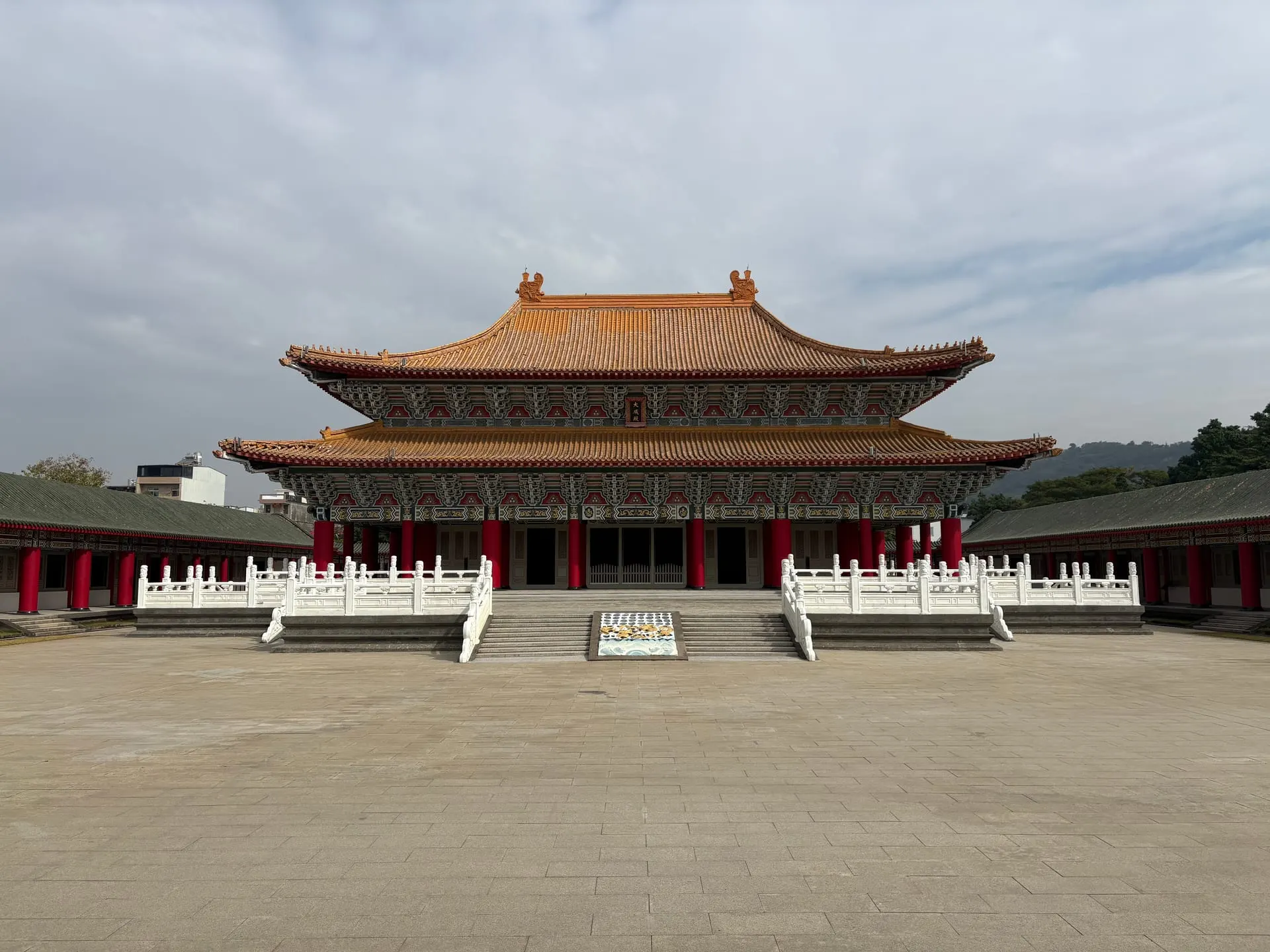
Temple of Confucius (孔庙, Kǒng Miào)
The second-largest ancient building complex in China (after the Forbidden City), built on the site of Confucius's home. The temple grew over 2,000 years from a three-room house into 466 halls, pavilions, and gates across 16 hectares. The Hall of Great Achievement (大成殿, Dàchéng Diàn) is the centerpiece — a massive double-eaved hall with 28 carved dragon columns, rivaling the Forbidden City's Hall of Supreme Harmony. The forest of stone stelae (2,000+ tablets) records imperial visits and honors across dynasties. ¥140 combined ticket with the Mansion and Cemetery.
Wikimedia Commons · CC-BY-SA
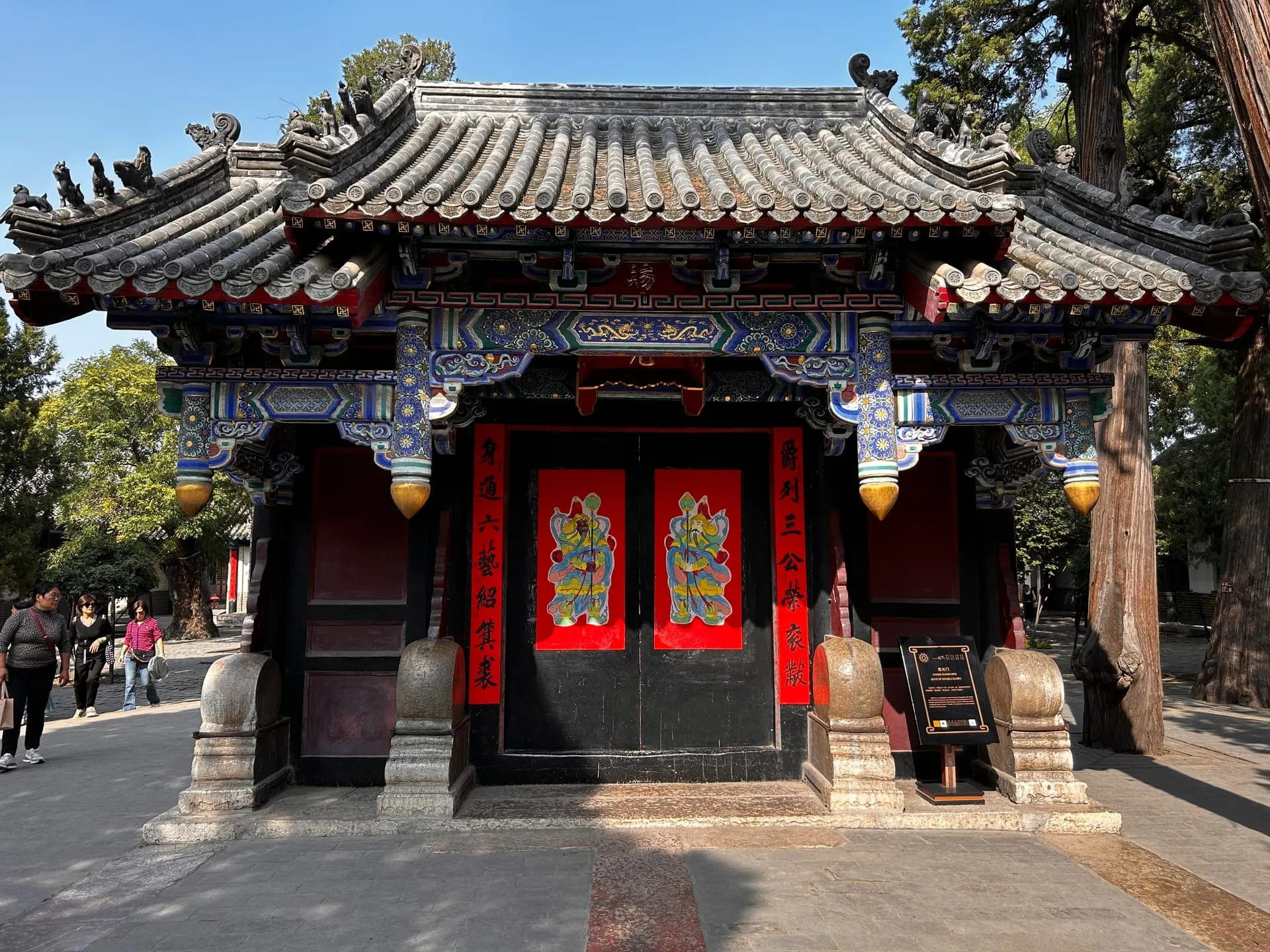
Kong Family Mansion (孔府, Kǒng Fǔ)
The residence of Confucius's direct descendants — the Yansheng Dukes (衍圣公) — who lived here as hereditary aristocrats from the Song dynasty through the Republican era. The mansion is a 480-room complex of courtyards, reception halls, family quarters, and gardens, representing the lifestyle of China's oldest continuously documented family line (now in its 83rd generation). The last duke fled to Taiwan in 1949; his descendants returned as tourists in the 1990s. ¥140 combined ticket.
Wikimedia Commons · CC-BY-SA
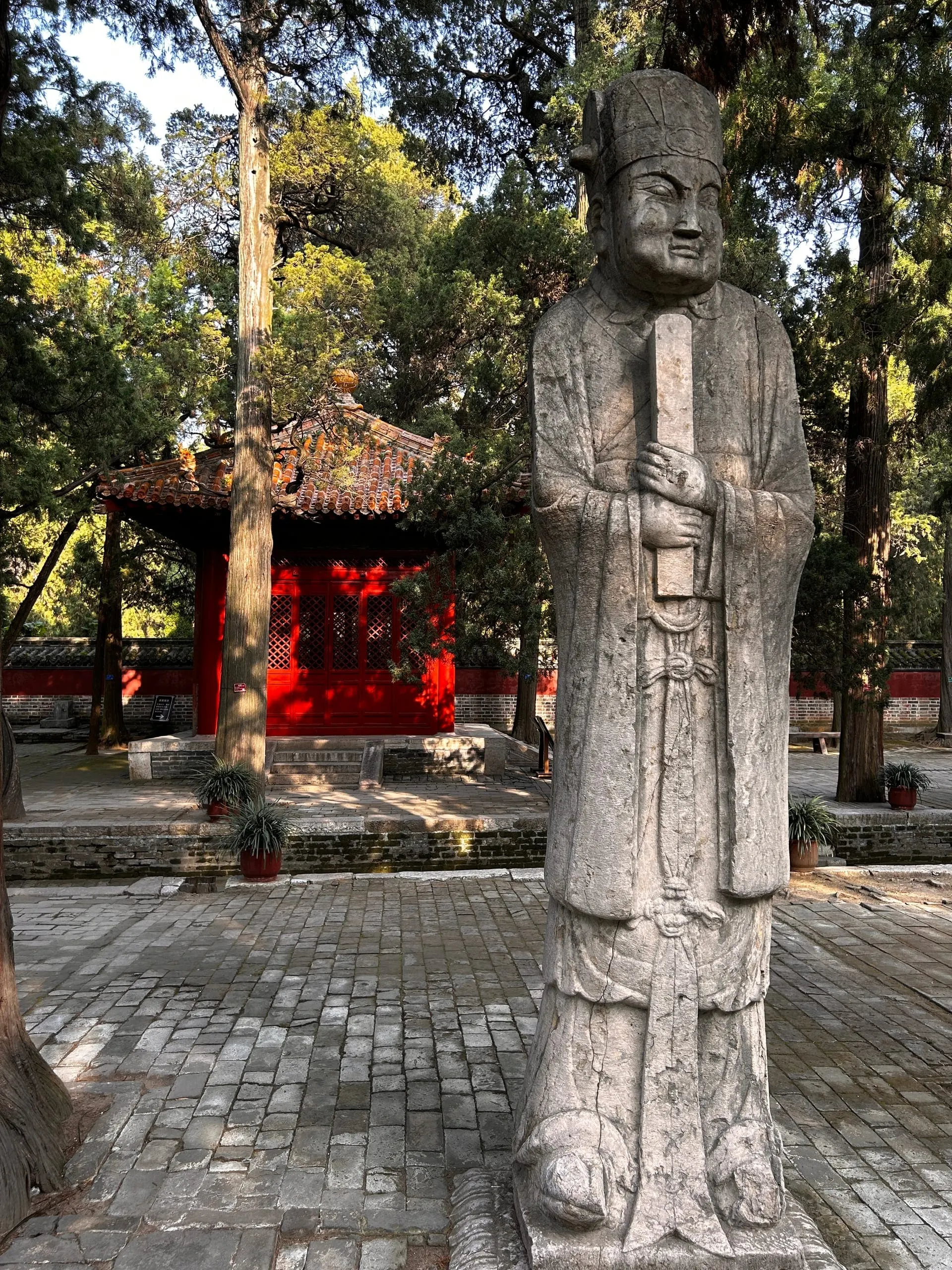
Cemetery of Confucius (孔林, Kǒng Lín)
The world's largest family graveyard — 200 hectares of forest containing the tombs of Confucius, his son Kong Li, his grandson Kong Ji (Zisi), and over 100,000 of their descendants across 2,500 years. Confucius's tomb is a simple grass-covered mound with a Ming-dynasty stone tablet, surrounded by ancient cypresses. The cemetery is still active — Kong descendants are buried here today. An electric cart (¥20) circles the main paths. The scale — 200 hectares, 2,500 years, 100,000+ tombs — is hard to process.
Wikimedia Commons · CC-BY-SA
Hall of Great Achievement (大成殿, Dàchéng Diàn)
The temple's main hall — a massive double-eaved structure with 28 carved stone dragon columns, yellow-glazed roof tiles (imperial privilege), and a central shrine to Confucius flanked by his four closest disciples and twelve later followers. The hall was rebuilt in 1724 after a lightning fire and is the most impressive single building in Qufu. The dragon columns are the highlight — each column has a dragon coiling around it in high relief, carved from a single piece of stone.
Wikimedia Commons · CC-BY-SA
Confucius's Tomb (孔子墓, Kǒngzǐ Mù)
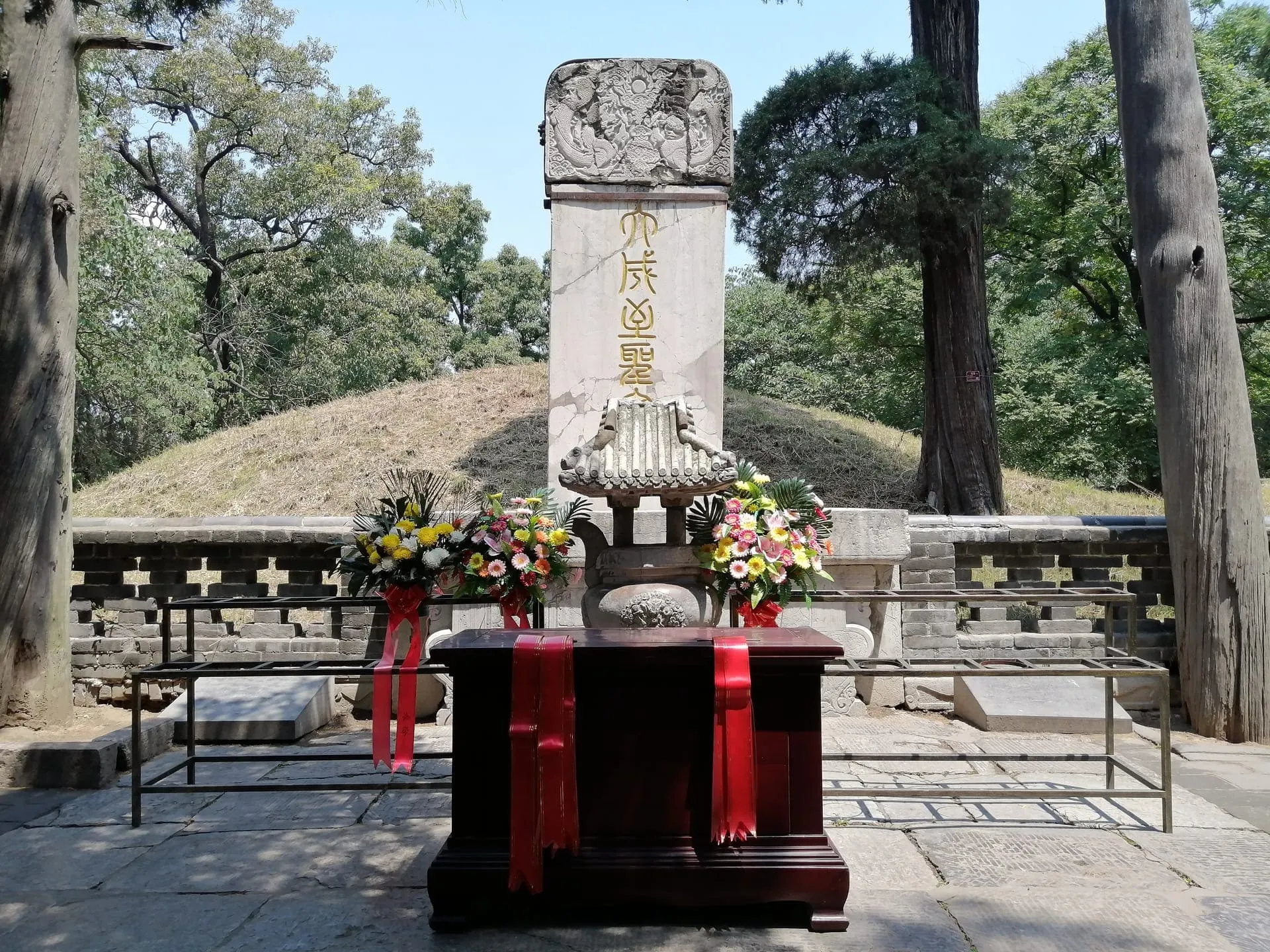
A simple grass-covered mound in the Cemetery's northern section, marked by a Ming-dynasty stone tablet reading "Tomb of the Great Sage and First Teacher" (大成至圣文宣王墓). The tomb of Confucius's son Kong Li (孔鲤墓) is to the east, and his grandson Kong Ji (孔伋墓) to the south — the layout follows the "holding the son and carrying the grandson" (携子抱孙) pattern. The tombs are modest, which is the point: Confucian virtue is in restraint, not ostentation.
Wikimedia Commons · CC-BY-SA
Confucius Research Institute & Museum (孔子研究院/孔子博物馆)
A modern museum (opened 2019) dedicated to Confucius's life, philosophy, and legacy. The exhibits cover Confucius's biography, the development of Confucianism across dynasties, and its influence on East Asian culture. More accessible for foreign visitors than the temple alone — the English interpretation provides context that the ancient sites assume you already have. ¥40 as of June 2026. Allow 1.5-2 hours. Best visited BEFORE the temple, to understand what you are looking at.
Wikimedia Commons · CC-BY-SA
Yan Temple (颜庙, Yán Miào)
A smaller, quieter temple dedicated to Yan Hui (颜回), Confucius's favorite disciple, located a 10-minute walk from the Temple of Confucius. Yan Hui died young (age 32) and poor, and was celebrated by Confucius for his virtue and love of learning despite poverty. The temple has a peaceful courtyard with ancient cypresses and a fraction of the main temple's crowds. ¥50. Worth an hour for the contrast with the grandeur of the main temple.
Wikimedia Commons · CC-BY-SA
STAY
Where to stay in Qufu
Pick a base that matches the trip you want — imperial-central for sightseeing, hutong belt for character, Chaoyang for nightlife, or Qianmen for budget.
Old City / Temple Area (明故城)
The historic core — Temple, Mansion, Drum Tower, old city wall, and the main concentration of hotels and restaurants
#old-city-temple-areaGulou Street (鼓楼街)
Main tourist street connecting the Temple to the Cemetery — restaurants, souvenir shops, pedicabs
#gulou-streetCemetery Area (孔林周边)
North of the old city — the Cemetery's 200-hectare forest, quieter, fewer tourists outside the entrance
#cemetery-areaQufu East Station Area (曲阜东站)
HSR station district 8 km southeast — modern, functional, chain hotels for transit stays, no tourist appeal
#qufu-east-station-area
ITINERARIES
Sample itineraries from Qufu
Three ready-made routes, from a 1-day imperial sprint to a 5-day deep dive. Copy the day-by-day plan and adapt to your own pace.
- 1 DAY
Qufu Day Trip from Beijing
A full day covering all three Confucian sites with museum context. The 07:00 HSR from Beijing arrives at 09:00; the 18:00 HSR returns by 20:00.
- Beijing-based travelers
- Those on the Beijing-Shanghai HSR corridor
- Travelers with limited time who still want the full Qufu experience
- Day 01
Morning
HSR Beijing South → Qufu East (07:00-09:00). Taxi to Confucius Museum (09:15-10:45, ¥40, 1.5 hours). Context is everything — start here.
Afternoon
Temple of Confucius (11:00-13:30, 2.5 hours). Lunch at Queli Hotel or Gulou Street restaurant (13:30-14:30, ¥60-100). Kong Family Mansion (14:30-16:00, 1.5 hours). Cemetery of Confucius (16:00-17:00, 1 hour — electric cart recommended to save time).
Evening
Taxi to Qufu East Station (17:15-17:30). HSR Qufu East → Beijing South (18:00-20:00). Long day, but you have walked through 2,500 years of Chinese philosophy.
- 2 DAYS
2-Day Qufu + Mount Tai Cultural Immersion
The classic Shandong cultural itinerary: Confucius's hometown on Day 1, China's holiest mountain on Day 2. Two UNESCO sites, 20 minutes apart by HSR.
- Culture and history enthusiasts
- Those who want the complete Shandong philosophical and spiritual experience
- Hikers who also care about intellectual history
- Day 01
Morning
Arrive Qufu East by 09:00. Confucius Museum (1.5 hours). Temple of Confucius (2.5 hours).
Afternoon
Lunch (Kong Family Cuisine). Kong Family Mansion (1.5 hours). Cemetery of Confucius (1.5 hours — walk, do not take the cart, the late afternoon light through the cypresses is beautiful).
Evening
Check into Qufu hotel. Dinner at a local Shandong restaurant. Walk the old city wall and Drum Tower area at dusk. The tourist crowds are gone and the old quarter is peaceful.
- Day 02
Morning
HSR Qufu East → Tai'an (20 min, ¥30-40, multiple morning departures). Mount Tai: take the bus from the mountain base to the Mid-Heaven Gate (中天门, 30 min), then cable car to the South Heaven Gate (南天门, 10 min), or climb the full 6,660-step staircase (4-6 hours).
Afternoon
Explore the summit — the Azure Clouds Temple (碧霞祠), the Jade Emperor Peak (玉皇顶, 1,545m), the inscribed cliffs. The summit is a museum of Chinese calligraphy carved into rock. Descend by cable car and bus.
Evening
HSR Tai'an → Beijing or continue south to Nanjing/Shanghai. You have visited the philosophical and spiritual heart of Chinese civilization.
- 1 DAY
Beijing-Shanghai HSR Stopover (Half-Day)
A half-day stop on the Beijing-Shanghai HSR line. Prioritize the Temple and Cemetery, skip the Mansion and Museum. Efficient but rushed.
- HSR travelers between Beijing and Shanghai
- Those with 4-5 hours to spare
- Travelers who want a taste of Qufu without the full commitment
- Day 01
Morning
HSR from Beijing South (depart 07:00-08:00, arrive Qufu East 09:00-10:00) or from Shanghai Hongqiao (depart 06:00-07:00, arrive Qufu East 09:30-10:30). Taxi to Temple of Confucius.
Afternoon
Temple of Confucius (1.5 hours at pace — focus on the Hall of Great Achievement and the stelae pavilions). Lunch near the Temple (30 min). Cemetery of Confucius (1 hour — electric cart to Confucius's tomb and back). Taxi to Qufu East Station.
Evening
Continue HSR journey to Beijing (2h) or Shanghai (3.5h). You have seen the essential sites. The Mansion and Museum will be waiting for your next trip.
BUDGET
What a Qufu trip costs
Per-person, per-day costs across three spending tiers. Excludes international flights and visa fees.
| Line item | Backpacker | Mid-range | Luxury |
|---|---|---|---|
| Combined ticket (Temple + Mansion + Cemetery) | $20 | $20 | $20 |
| Confucius Museum | $6 | $6 | $6 |
| Yan Temple (optional) | $0 | $7 | $7 |
| HSR round trip (Beijing ↔ Qufu) | $68 | $88 | $88 |
| Accommodation (per night) | $14 | $56 | $140 |
| Meals (per day) | $10 | $22 | $56 |
| English audio guide (Temple) | $0 | $4 | $4 |
| Electric cart (Cemetery) | $0 | $3 | $3 |
| Total per day | $118 | $206 | $324 |
$ USD per person per day, before international flights and visas. Last verified: Q3 2026.
STAY SAFE
Emergency contacts in Qufu
Save these three numbers before you board the plane. China uses different hotlines than most countries — there's no 911.
- POLICE
110
- AMBULANCE
120
- FIRE
119
- TOURIST HOTLINE
0537-4414002 (Qufu Tourism Complaint Hotline)
- ENGLISH-SPEAKING ER
0531-82169114 (Qilu Hospital of Shandong University, Jinan — 30 min by HSR, some English-speaking staff)
Problems travelers hit in Qufu
- Why is my Alipay not working?You linked a foreign Visa or Mastercard to Alipay but every transaction is rejected at the merchant.
- My China visa was denied — what now?Your L visa application was refused at the Chinese consulate and your trip is in 2–4 weeks.
- My passport was lost or stolen in China — what do I do?Your passport is gone (theft or loss) and you're in mainland China without travel documents.
- Why can't I book on 12306 with my foreign card?You tried to book a high-speed rail ticket on 12306.cn and your foreign Visa/Mastercard is rejected at checkout.
- Why is my VPN not working in China?You arrived in China, opened your VPN, and it will not connect at all or connects but no traffic loads.
- Why can't I book a Tibet trip on my own?You try to book Lhasa flights and hotels yourself but the booking fails, or you're turned away at the Lhasa airport without a permit.
Book activities in Qufu
These are licensed tour operators and booking platforms we've vetted independently. Booking through these links may earn us a commission — see our affiliate disclosure. This never affects our editorial recommendations or the price you pay.
Frequently asked questions
Is Qufu worth visiting for someone who does not know much about Confucius?
Can Qufu be done as a day trip from Beijing?
How much time do I need for the three Confucian sites?
What is the best way to get to Qufu from Beijing or Shanghai?
What is the combined ticket and what does it cover?
Is there an English audio guide or tour guide available?
Show all 22 FAQs
Can I visit Qufu and Mount Tai in one trip?
When is the Confucius Birthday Ceremony?
Is Qufu suitable for children?
What is Kong Family Cuisine and should I try it?
What is the oldest continuously documented family line in the world?
Were Qufu's Confucian sites damaged in the 20th century?
Do people still live in the Kong Family Mansion?
Is Qufu a good place to buy Confucius-related souvenirs?
How do I dress for visiting the Confucian sites?
What is the Confucius Family Mansion and why is it important?
What is the Yan Temple and the Confucius Cemetery?
How do you reach Qufu and what are the practical logistics?
What is the Confucian cuisine and what should I try?
Is Qufu worth a visit for travelers who do not speak Chinese?
How does Qufu compare to other Confucian sites in China?
Is Qufu suitable for older travelers or those with limited mobility?
References

Related guides & destinations
Guide
How We Research 2026: NihaoVisit’s Methodology for China Travel Information
How NihaoVisit sources, verifies, and maintains 700+ pages of China travel information — our source hierarchy, fact-checking process, update
Guide
Fact-Checking Log 2026: Verified China Travel Information — NihaoVisit
A public log of fact-checking verification passes on NihaoVisit, showing what was verified, when, and against which sources — covering visa
Guide
Best Time to Visit China 2026: Month-by-Month Weather, Crowds, and Prices
The best time to visit most of China is April–May and September–October. Winter (Dec–Feb) is cold but cheap; summer (Jun–Aug) is hot and cro
Guide
VPN for China 2026: Which VPNs Work, eSIM Alternatives, and the Complete Pre-Trip Checklist
Most Western apps and websites are blocked in mainland China. A reliable VPN is essential for Google, Gmail, WhatsApp, Instagram, and most n
Guide
China SIM Card and eSIM Guide 2026: Stay Connected Without WeChat
A Chinese SIM or eSIM lets you use mobile data, maps, and ride-hailing without WiFi. Here is how to get one, the cost, and which provider to
Guide
Solo Female Travel in China 2026: Safety, Tips, and Real Experiences
China is one of the safer destinations for solo female travelers. Petty theft is rare, violent crime against tourists is extremely uncommon,