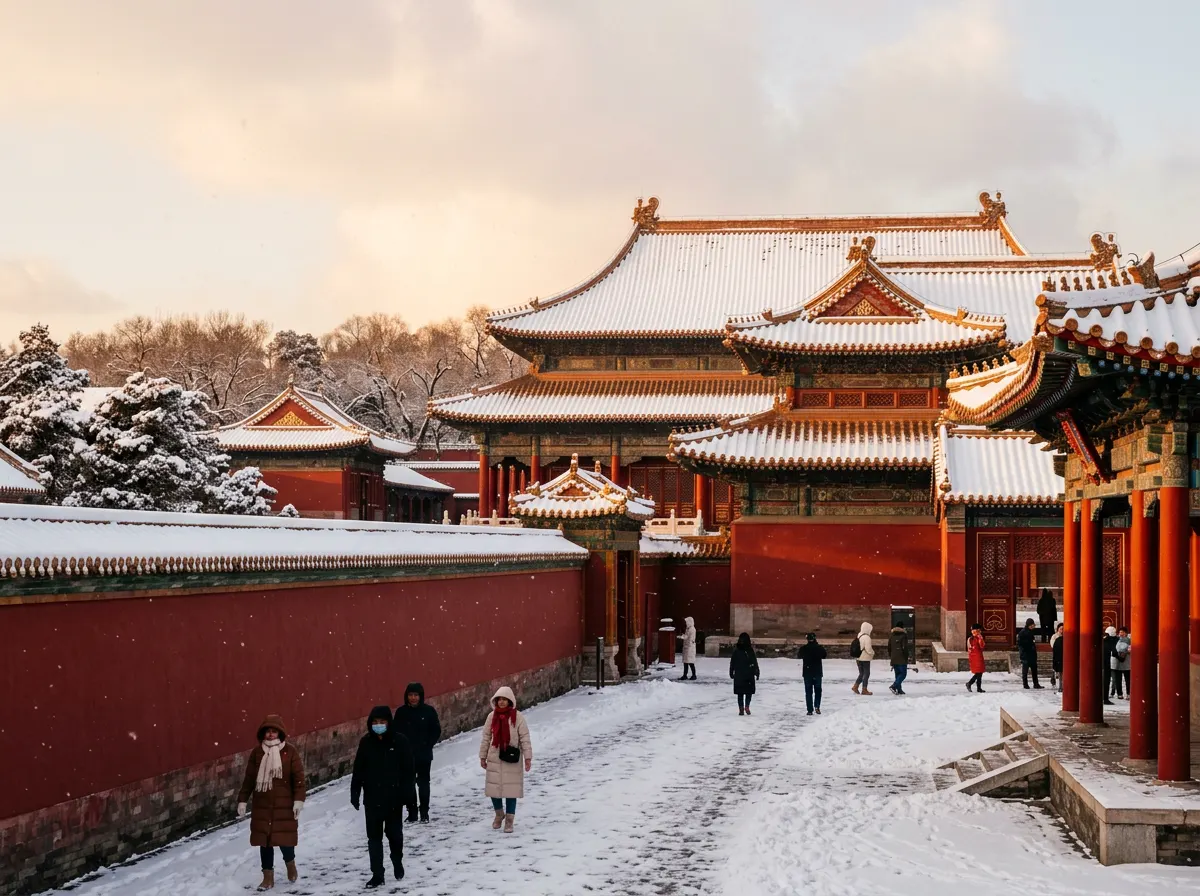
Shenyang
Shenyang is the capital of Liaoning Province, a 7-million-population city in northeast China (historically known as Manchuria). It is the most historically significant city in the northeast, the birthplace of the Qing dynasty (the Mukden Palace is the only imperial palace complex outside Beijing), and the industrial heart of China's old heavy-industry belt. The city features the Mukden Palace (UNESCO), the Qing Zhao Tombs (UNESCO), the Beiling Park (one of China's largest imperial parks), and the 9.18 Historical Museum, commemorating the Mukden Incident that triggered the Japanese invasion of Manchuria. The climate is cold-temperate with extreme winters (-20 to -30°C in January) and warm summers. Plan 2-3 days for Shenyang, plus 1-2 days for Dalian (3 hours by HSR on the coast). Best from May to October; winter visits are possible but require serious cold-weather preparation. Fly into Shenyang Taoxian International Airport (SHE).
Why Shenyang in 2026.
Capital of Liaoning Province in northeast China, the former imperial capital of the Manchu Qing dynasty (the Mukden Palace, UNESCO World Heritage site), and the industrial heart of the old Manchurian heavy-industry belt. Shenyang is a cold, hearty city with deep Manchu heritage, an emerging arts and music scene, and easy access to the DPRK border region and the Changbai Mountain nature reserve.
Quick Answer
Shenyang is the capital of Liaoning Province, a 7-million-population city in northeast China (historically known as Manchuria). It is the most historically significant city in the northeast, the birthplace of the Qing dynasty (the Mukden Palace is the only imperial palace complex outside Beijing), and the industrial heart of China's old heavy-industry belt. The city features the Mukden Palace (UNESCO), the Qing Zhao Tombs (UNESCO), the Beiling Park (one of China's largest imperial parks), and the 9.18 Historical Museum, commemorating the Mukden Incident that triggered the Japanese invasion of Manchuria. The climate is cold-temperate with extreme winters (-20 to -30°C in January) and warm summers. Plan 2-3 days for Shenyang, plus 1-2 days for Dalian (3 hours by HSR on the coast). Best from May to October; winter visits are possible but require serious cold-weather preparation. Fly into Shenyang Taoxian International Airport (SHE).
| Best time to visit | May to October; September-October for autumn colors; winter (Dec-Feb) for snow and ice festivals |
|---|---|
| Daily budget | $30 (backpacker) / $80 (mid-range) / $220+ (luxury) |
| Language | Mandarin; Northeast (Dongbei) Mandarin, considered the standard accent in China |
| Currency | CNY (¥) — Alipay/WeChat Pay universal |
| Time zone | China Standard Time (UTC+8) |
| Last updated | 2026-06-14 |
Want a Shenyang plan built for you?
Why visit Shenyang?
Shenyang is the most historically significant city in northeast China and the gateway to Manchuria. The vast region around it was the Manchu homeland and the industrial heart of early-20th-century China. The city has three UNESCO World Heritage sites within its boundaries (the Mukden Palace, the Qing Zhao Tombs, and the Qing Fu Tombs are part of the Imperial Tombs of the Ming and Qing Dynasties), making it one of the most heritage-dense provincial capitals in China after Beijing. For travelers interested in the Qing dynasty, Shenyang is essential. The Mukden Palace is the imperial palace built by the Manchu founders of the Qing before they conquered Beijing in 1644. The palace has a distinct Manchu-Tibetan-Mongolian architectural style different from the Forbidden City. The two Qing imperial tombs (Zhao and Fu) outside the city are among the most atmospheric of the Qing mausoleums, surrounded by pine forests and traditional stone statuary. For travelers interested in 20th-century history, Shenyang is the site of the Mukden Incident (1931) — the staged Japanese sabotage that triggered the invasion of Manchuria and the 15-year Japanese occupation of northeast China. The 9.18 Historical Museum is one of China's most powerful war museums. The Marshal Zhang's Mansion is a fascinating record of the warlord era. The Liaoning Provincial Museum has one of China's best collections of calligraphy, painting, and bronze artifacts. Shenyang is also a city of unexpected modern energy. The 1905 Cultural and Creative Park (a former industrial factory converted to galleries, cafes, and live music venues) is the heart of the city's emerging arts scene. The Shenyang Conservatory and the Liaoning Ballet are world-class. The local 东北 (Dongbei, "Northeast") Mandarin is considered the standard Mandarin accent in China — clear, neutral, and easy to understand. The local food is hearty, with dumplings, lamb skewers, sauerkraut, and 锅包肉 (guōbāo ròu, "pot-wrapped meat") as the signature dishes. The 洗浴 (xǐyù, bathhouse) culture is famous throughout China for its elaborate, multi-hour bathing and entertainment complexes. For the active traveler, Shenyang is the gateway to Dalian (3 hours HSR east, the Bohai Sea coast), the Changbai Mountain nature reserve (5 hours east, the Chinese-North Korean border), the Yalu River (the Chinese-North Korean border), and Harbin (3 hours north, the famous Ice and Snow Festival).
What is the history of Shenyang: From Manchu capital to industrial powerhouse to modern northeast hub?
Shenyang was historically known as Mukden (盛京, "flourishing capital," or 奉天, "by the mandate of heaven"). The region was the homeland of the Jurchen (later Manchu) people, who founded the Jin dynasty (1115-1234) that ruled northern China before the Mongol conquest. In 1625, the Jurchen chieftain Nurhaci (the founder of the Later Jin dynasty, posthumously renamed the Qing) established his capital at Mukden, and his son Hong Taiji completed the Mukden Palace. The Manchu conquest of Beijing in 1644 was led from Mukden, and the city remained the secondary capital of the Qing dynasty throughout its 268-year reign (1644-1912). Five Qing emperors made state visits to the Mukden Palace; the last was Puyi in 1931. The 19th century brought turmoil. Shenyang was occupied by Russian, then Japanese forces during the Boxer Rebellion (1900), and the Russo-Japanese War (1904-1905) was largely fought in Manchuria. After the fall of the Qing in 1912, the city came under the control of the warlord Zhang Zuolin ("the Old Marshal"), and after his assassination in 1928, his son Zhang Xueliang ("the Young Marshal"), who later played a crucial role in the 1936 Xi'an Incident. The Japanese staged the Mukden Incident on September 18, 1931, a false-flag operation that triggered the invasion of Manchuria. The Japanese puppet state of Manchukuo was established with its capital in Changchun (then called Hsinking), and Shenyang became a major industrial base of the Japanese empire. After 1949, Shenyang was a center of the Soviet-aided industrial development, and the city became the heart of China's heavy industry — metallurgy, machine tools, aircraft, and chemicals. The Shenyang Aircraft Corporation produced China's first jet fighters. The city's industrial workforce was largely Russian-trained in the 1950s, and Shenyang's apartment blocks, heating systems, and food culture (particularly the Russian-influenced 锅包肉, "pot-wrapped meat," and the elaborate bathhouses) bear the Soviet stamp. The decline of state-owned heavy industry in the 1990s-2000s hit Shenyang hard, and the city has been working to diversify into high-tech, services, and tourism. Today Shenyang is a 7-million-population city, the capital of Liaoning Province, and a major center of the northeast China economic zone. The city is home to major manufacturers (BMW's Chinese production base is in Shenyang), a growing tech sector, and a vibrant arts scene centered on the 1905 Cultural and Creative Park. The city is also a major transportation hub for the northeast, with HSR connections to Beijing (4-5 hours), Dalian (3 hours), Harbin (3 hours), and Changchun (1.5 hours).
What is the geography and climate of Shenyang: extreme cold-temperate continental?
Shenyang sits on the Liao River plain in southern Manchuria, at about 50 m elevation. The terrain is mostly flat, with low hills to the east and north. The city has a humid continental climate, with extreme seasonal variation. The annual average temperature is 8°C, but the range is dramatic: average January temperatures of -11°C, with daily lows regularly reaching -20 to -30°C, and average July temperatures of 25°C, with daily highs of 30-35°C. Snow cover is reliable from late November through March. Annual rainfall is about 700 mm, concentrated in June-August. The cold winter is the defining feature of Shenyang life and travel. From mid-November to mid-March, temperatures regularly drop below -15°C at night, and the wind chill can bring it down to -30°C. The city has a centralized heating system (集中供暖) that turns on in early November and off in late March, with radiators in every building (including the metro, malls, and restaurants). The heating is dry, and the air indoors is often quite dry. Winters are sunny and dry, with little precipitation. The rivers and lakes freeze solid from December to March, and ice-skating and ice-fishing are common. Summer is the most pleasant time to visit, with warm (but not hot) weather, long days, and the famous 1905 Cultural and Creative Park in full swing. Spring (March-May) is the windy season, with dust storms from the Gobi possible in April. Autumn (September-October) is spectacular, with the Manchurian forests turning gold and red, and the weather crisp and clear. The cold-temperate climate supports Manchurian hardwood forests to the east (toward Changbai Mountain) and the agricultural heartland of the Liao River basin, famous for its rice, corn, sorghum, and the Liaoning grape (used in China's 2nd-largest wine industry, after Shandong). The local cuisine is hearty, with emphasis on preserved vegetables (酸菜, suāncài, "sauerkraut"), dumplings, lamb, and the heavy, oil-rich dishes that built up body fat in winter.
How to get to Shenyang
The main gateway is Shenyang Taoxian International Airport (SHE), 20 km south of the city center, with direct flights to Beijing (1.5 hours), Shanghai (2.5 hours), Guangzhou (3.5 hours), Shenzhen (3.5 hours), Chengdu (3.5 hours), Xi'an (2.5 hours), and most major Asian cities. International connections include Seoul (1.5 hours), Tokyo (3.5 hours), Bangkok (5 hours), and several Russian cities. A taxi from the airport to the city center is ¥80-100; the airport express bus (¥20) takes 40 minutes. A new airport metro line is planned. Shenyang is a major HSR hub. From Beijing, HSR takes 4-5 hours (the world's longest HSR journey at the time of opening); from Dalian, 1.5-3 hours (depending on the train); from Harbin, 3 hours; from Changchun, 1.5 hours; from Dandong (the North Korean border), 1.5 hours. The Shenyang North Station (沈阳北站) is the main HSR station, connected to the metro. Shenyang Station (沈阳站) handles older conventional trains and some HSR. The city has 4-5 major railway stations, all connected to the metro. For the Mukden Palace and central city, take the metro Line 1 to Huaiyuanmen Station (怀远门, 5 minutes walk to the palace). For the Beiling Park (Qing Zhao Tombs), take Line 2 to Beiling Station (北陵). For the 9.18 Historical Museum, take Line 1 to Linzheng Station (临政). The metro is the easiest way to move around the city.
Where to stay and the best neighborhoods
Shenyang has 3-4 useful base neighborhoods. The most central is Shenhe District (沈河区), with the Mukden Palace, the Zhongjie shopping street, and the city's main business area. International chain hotels (Shangri-La, Marriott, Kempinski, Sheraton) are all present here, with rooms from ¥500-1,200/night. Mid-range Chinese-brand hotels (Jinjiang, Hanting, Atour) cost ¥250-450/night. Budget hostels (Shenyang International Youth Hostel, the Mukden Palace area) are ¥80-150/night. Heping District (和平区) is the central business district, with the Marshal Zhang's Mansion, the Liaoning Provincial Museum, and the 1905 Cultural and Creative Park. It's the more modern, walkable area, with the strongest food and arts scene. Hotels are slightly more expensive than Shenhe. Huanggu District (皇姑区) is the northern district, with the Beiling Park (Qing Zhao Tombs) and the main university area. Quieter and more residential. Hotels are cheaper. For a more resort-like experience, the eastern Dongling District (东陵区) has a few hot spring resorts (温泉) and the Qing Fu Tombs. The 热高 (Regao) hot spring resort and the 沈阳绿地铂瑞 (Green Land Primus) are options. The northern Xinmin area has the famous 东北亚滑雪场 (Northeast Asia Ski Resort) for winter sports. A neighborhood-by-neighborhood quick guide: - **Shenhe District (沈河区)**: Mukden Palace, Zhongjie, shopping. Best for first-time visitors. - **Heping District (和平区)**: CBD, Marshal Zhang's Mansion, 1905 arts scene. Best for business and culture. - **Huanggu District (皇姑区)**: Beiling Park, universities. Best for quieter stays. - **Dongling District (东陵区)**: Qing Fu Tombs, hot springs. Best for resort stays. - **Tiexi District (铁西区)**: Industrial area, 1905 Cultural and Creative Park, BMW plant tour. Best for industrial tourism.
What are the top attractions in Shenyang: palaces, tombs, and the Mukden Incident?
The Mukden Palace (沈阳故宫) is the headline attraction, a UNESCO World Heritage site and the only imperial palace complex outside Beijing. Built between 1625 and 1636 by Nurhaci and Hong Taiji, the palace covers 60,000 m² with 300+ buildings in a distinct Manchu-Tibetan-Mongolian architectural style. The most notable halls are the Chongzheng Hall (the main throne hall, with a distinctive octagonal shape and a dragon-tile roof), the Phoenix Tower, and the Qingning Palace (the imperial bedchamber). The palace is smaller than the Forbidden City but more concentrated, and many of the original Qing-era artifacts are on display. ¥60 entry. Allow 2-3 hours. Combine with the adjacent Zhongjie (Imperial Walking Street) for a half-day. The Qing Zhao Tombs (清昭陵 / Beiling Park) are the mausoleum of Hong Taiji, the second Qing emperor. The complex is the best-preserved of the Qing imperial tombs outside Beijing, with a 600-m spirit way lined with stone animals, two stone turtles, and several pavilions. The tomb is surrounded by Beiling Park, one of China's largest imperial parks at 3.3 million m², with a lake, a pagoda, and a 19th-century imperial garden. ¥40 tomb + ¥6 park entry. Allow 2-3 hours for the tomb, half a day for the park. The park is most beautiful in autumn (mid-October) with the Manchurian hardwoods turning gold and red. The Qing Fu Tombs (清福陵 / Dongling Park) are the mausoleum of Nurhaci, the founder of the Qing dynasty. Smaller and more atmospheric than the Zhao Tombs, set in a hilly pine forest, with a 108-step spirit way climbing to the tomb. ¥40 entry. Allow 1.5-2 hours. Best in early morning for the mist over the pines. The 9.18 Historical Museum (九一八历史博物馆) is the most important 20th-century site in Shenyang, commemorating the Mukden Incident of September 18, 1931, when the Japanese staged a sabotage operation on a section of the Japanese-owned South Manchuria Railway near Shenyang, using it as a pretext for the invasion of Manchuria. The museum is built on the original site of the incident, with a striking 18-meter-high stone calendar monument (the date September 18 is inscribed). The exhibits cover the 1931-1945 Japanese occupation, the Chinese resistance, and the post-war trials. Free entry. Allow 2-3 hours. The captions are in English and the museum is one of China's most powerful war memorials. The Marshal Zhang's Mansion (张氏帅府) is the 1916-1931 residence of Zhang Zuolin and his son Zhang Xueliang, the "Young Marshal" who controlled Manchuria in the 1920s-30s. The complex has 4 buildings in a fascinating mix of Chinese, Japanese, and European architectural styles — including a stone-built Romanesque mansion, a Chinese-style garden, and a Japanese-influenced administrative building. The exhibits cover the warlord era, the Young Marshal's role in the 1936 Xi'an Incident (when he detained Chiang Kai-shek to force a united front against Japan), and his later years in Taiwan. ¥60 entry. Allow 2 hours. The Liaoning Provincial Museum (辽宁省博物馆) is one of China's best provincial museums, with a focus on calligraphy, painting, and bronze artifacts. The collection includes Tang-dynasty and Song-dynasty paintings, the famous 簪花仕女图 (Court Ladies Adorning Their Hair with Flowers) attributed to Zhou Fang, and a stunning collection of oracle bones. Free entry. Allow 2-3 hours. The museum is in the central business district. The 1905 Cultural and Creative Park is a former industrial factory converted to a cultural and creative hub, with galleries, cafes, design studios, and live music venues. The complex is the heart of Shenyang's emerging arts scene and a great place to spend an afternoon. The Shenyang Conservatory is nearby, and free classical-music concerts are common. Free entry. For day trips from Shenyang, the Qipanshan International Forest Park (棋盘山) is a popular weekend destination 30 km east, with hiking, the 沈阳植物园 (Shenyang Botanical Garden), and the Shenyang Expo Garden. The Benxi Water Cave (本溪水洞) is a 4-hour drive southeast, one of the world's longest water-filled caves (5,800 m). The 鞍山千山 (Qianshan Mountain) is a Buddhist mountain 2 hours south.
What local food should I try in Shenyang: hearty Dongbei (northeast) cuisine?
Dongbei (northeast) cuisine is hearty, with emphasis on preserved vegetables, dumplings, lamb, and the heavy, oil-rich dishes that built up body fat in winter. The cuisine is sometimes called "manchurian" or "northeastern" in English, and it is one of China's most distinctive regional cuisines. The signature ingredients are 酸菜 (suāncài, fermented Chinese cabbage, similar to German sauerkraut), 粉条 (fěntiáo, glass noodles from mung bean or sweet potato starch), and 猪肉 (pork, especially belly and trotters). The most well-known Dongbei dish is 锅包肉 (guōbāo ròu, "pot-wrapped meat"), a sweet-and-sour pork cutlet that originated in Harbin in the early 20th century, with a Russian-influenced flavor profile. The pork is sliced, battered, deep-fried, and then tossed in a sweet-and-sour sauce with ginger, scallion, and garlic. The dish is crispy, sticky, and intensely flavored. Another signature is 猪肉炖粉条 (zhūròu dùn fěntiáo), a slow-braised pork and glass noodle stew, the original "pork and noodles" comfort food of the northeast. The 酸菜白肉 (suāncài báiròu, "sauerkraut and pork belly") is another classic, a hearty stew of fermented cabbage and thinly sliced pork belly. For dumplings, Shenyang is one of China's most famous dumpling cities. The most famous dumpling chain is 喜家德 (Xǐjiādé), founded in Harbin and now national. The 鹿鸣春 (Lùmíngchūn) restaurant in Shenyang is a famous historic restaurant known for its 饺子 (dumplings) in 30+ flavors, including the unique 锅塌饺子 (guōtā jiǎozi, "pan-fried crispy dumplings") and 灌汤饺 (guàntāng jiǎo, "soup-filled dumplings"). The 老边饺子 (Lǎobiān Jiǎozi) is another historic Shenyang dumpling chain, founded in 1829. For lamb, the 沈阳老四季 (Lǎosìjì) chain is famous for its 羊杂汤 (yángzátāng, lamb offal soup) and 烧鸡 (shāojī, roast chicken). The 原味斋 (Yuánwèizhāi) chain specializes in 烤羊腿 (roast lamb leg) and 烤全羊 (whole roast lamb). For a local treat, try 马家烧麦 (Mǎjiā shāomài), a 100+ year-old shop in the Heping district specializing in 烧麦 (shāomài, steamed lamb dumplings, similar to Mongolian buuz). For a sweet, the 沙琪玛 (shāqímǎ, sachima), a Manchu honey-pastry with a stringy texture, is a Shenyang specialty. The local yogurt is thick and rich, similar to Russian-style smetana. The local beer is 雪花 (Xuěhuā, "Snowflake"), one of China's largest beer brands, founded in Shenyang in 1957. For the famous 洗浴 (xǐyù, bathhouse) culture, the 沈阳洗浴中心 (Shenyang Bath Centers) are a destination in their own right. A typical visit lasts 3-6 hours and includes: a sauna, multiple hot and cold pools, a steam room, a scrub and massage, a haircut, a meal in the on-site restaurant, and even a dormitory for overnight stays. The most famous complexes are the 沈阳清河半岛温泉 (Qinghe Peninsular Hot Spring), the 沈阳绿洲温泉 (Green Land Hot Spring), and the 沈阳温泉酒店 (Shenyang Hot Spring Hotel). Prices range from ¥100-300 per person for the basic package. The bathhouse culture is one of the most distinctive aspects of Shenyang life and worth experiencing at least once. A few classic Shenyang restaurants: - **鹿鸣春 (Lùmíngchūn)**: Historic restaurant, classic Dongbei banquet food and famous dumplings. ¥100-300 per person for a tasting menu. - **老边饺子 (Lǎobiān Jiǎozi)**: Historic dumpling chain, founded 1829. Multiple locations. ¥80-150 per person. - **喜家德 (Xǐjiādé)**: Famous dumpling chain, transparent kitchen. ¥60-100 per person. - **原味斋 (Yuánwèizhāi)**: Roast lamb specialist. Multiple locations. ¥100-200 per person. - **沈阳老四季 (Lǎosìjì)**: Local lamb soup chain. ¥30-50 per person.
What is a good 1- to 3-day itinerary for Shenyang?
**1-Day Itinerary — Shenyang City Highlights (Sunday pace)** Morning: 8:30 AM start at the Mukden Palace (2-3 hours, ¥60). Walk the Chongzheng Hall, Phoenix Tower, and the Qingning Palace. Walk out to the adjacent Zhongjie shopping street (1 hour). Stop for 烧麦 (shāomài) at 马家烧麦 or dumplings at 老边饺子. Lunch: 12 PM lunch at a local Dongbei restaurant. Try 锅包肉, 猪肉炖粉条, and 酸菜白肉. Afternoon: 2 PM taxi to Beiling Park (Qing Zhao Tombs, 30 min, ¥40). Walk the 600-m spirit way, visit the tomb, and walk through the park. Allow 2-3 hours. Evening: 6 PM visit the 1905 Cultural and Creative Park. Dinner at one of the in-park restaurants or a nearby Dongbei restaurant. Try 烤串 (kǎochuàn, lamb skewers) at a local joint. End the night at a tea house or a bar in the Heping district. **2-Day Itinerary — Shenyang + Mukden Incident + Marshal Zhang** Day 1: As above. Day 2: Morning at the Marshal Zhang's Mansion (2 hours, ¥60), then a walk through the Heping district. Lunch in the Heping area for 锅包肉 at a local restaurant. Afternoon at the 9.18 Historical Museum (2-3 hours, free), then the Liaoning Provincial Museum (2 hours, free). Dinner at 鹿鸣春 for classic Dongbei banquet food. **3-Day Itinerary — Shenyang + Dalian Day Trip** Days 1-2: As above. Day 3: Take the 7 AM HSR from Shenyang North to Dalian (3 hours, ¥250). Spend the day in Dalian: the Xinghai Square (Asia's largest city square), the 老虎滩 (Laohutan) Ocean Park, the Russian Street, and the 滨海路 (Binhai Road) coastal drive. Lunch at a Dalian seafood restaurant. Take the 6 PM HSR back to Shenyang (3 hours, arriving 9 PM). Alternative: spend the night in Dalian (¥300-800 hotels) for a more relaxed coastal experience. For an extended trip, combine with 2-3 days in Dalian, 1-2 days in Harbin (3 hours HSR north, the famous Ice and Snow Festival in winter), 1-2 days in Changchun (1.5 hours HSR northeast, the Puppet Manchukuo Imperial Palace), or 1-2 days in Dandong (1.5 hours HSR southeast, the Chinese-North Korean border city). The classic 7-day Northeast circuit is 2 days Shenyang, 1 day Changchun, 2 days Harbin, 1 day Dalian, 1 day Dandong.
What practical information do inbound travelers need?
**Visas.** As of 2026, citizens of 38+ countries (most of EU, UK, Australia, New Zealand, South Korea, Japan, Malaysia, Singapore, Thailand) can enter China visa-free for 30 days. US and Canadian citizens need a tourist (L) visa. Liaoning is an open destination — no special permit is needed for Shenyang, Dalian, or the Changbai Mountain nature reserve. Travel to the North Korean border is restricted; the Dandong city area is open, but the Friendship Bridge and the North Korean side require a special permit, and most travelers view the border from the Chinese side only. The Changbai Mountain reserve is open; the North Korean side of the mountain is restricted. **Money and payments.** Alipay and WeChat Pay cover 95% of city transactions. The Alipay Tour Pass allows foreign credit card top-up. International credit cards are accepted in international hotels and large restaurants. ATMs at Bank of China, ICBC, and China Merchants Bank accept international cards. Cash is useful for the night markets and small vendors. The 1905 Cultural and Creative Park area is mostly cashless; the smaller restaurants and street vendors are increasingly so. **Language.** Mandarin is the official language, and the local Northeast (Dongbei) Mandarin is considered the standard Mandarin accent in China — clear, neutral, and easy to understand. This makes Shenyang one of the easiest Chinese cities for non-Mandarin speakers. English is not widely spoken outside international hotels and large restaurants. The museums and major attractions have English captions. Download Pleco and Google Translate (offline Chinese pack) before arrival. The local Shenyang dialect is the same as standard Mandarin, with a distinct accent. **Northeast winter travel tips.** The Shenyang winter (mid-November to mid-March) is one of the coldest in China, with daily lows of -15 to -25°C and wind chill down to -30°C. The cold is dry, not damp. Travelers considering a winter visit should prepare seriously: - **Clothing**: a heavy-duty down jacket (rated to -30°C or lower), thermal underwear (top and bottom), waterproof insulated boots (rated to -30°C), wool socks, a fur-lined hat, insulated gloves, a face mask or balaclava for windy days, and a heavy scarf. - **Skin protection**: high-SPF moisturizer (the dry winter air cracks skin), lip balm, hand cream. The wind and cold cause chapping within hours. - **Electronics**: phone and camera batteries drain quickly in the cold. Carry a power bank, keep devices in inner pockets, and avoid leaving them outside. - **Heating**: the centralized heating in all buildings (hotels, malls, restaurants, metro) is intense and dry. Bring moisturizer and lip balm. Layer for outdoor cold, single layers for indoor warmth (the temperature difference is 30-40°C). - **Outdoor activities**: ice-skating, ice-fishing, hot springs, and the Harbin Ice and Snow Festival (3 hours north) are all popular winter activities. Bundle up. - **Snow and ice**: the sidewalks and streets are kept clear of snow, but ice is common. Wear insulated, non-slip boots. **Transport within Shenyang.** Shenyang has a clean, modern metro with 6 lines. Line 1 (east-west) and Line 2 (north-south) cross at the central Qingnian Street station. The metro is the easiest way to move around the city. Buses are extensive but not English-marked. Taxis (¥10 flag fall) and DiDi work with Alipay. The airport is on a planned airport line; the main HSR station is on Lines 1 and 2. A taxi from the airport to the city center is ¥80-100; the airport express bus is ¥20. **Best time to visit.** May to October, with September-October the best months for autumn colors. The Mukden Palace, Beiling Park, and the 1905 Cultural and Creative Park are all in their best light in autumn. Summer (June-August) is the most pleasant for outdoor activities. Winter (November-March) is cold (-15 to -30°C) but offers the most authentic local experience and is the season for the famous Shenyang Ice and Snow Festival (smaller than Harbin's, but still impressive) and the hot spring resorts. Spring (March-April) is the windy season, with dust storms from the Gobi possible in April.
What are the most frequently asked questions?
Most inbound travelers ask about winter cold, city highlights, combining Shenyang with Harbin or Dalian, the Mukden Palace, and the local food. The most useful next steps: book a Mukden Palace + Beiling Park day for the highlights, plan around the autumn colors (September-October) for the best experience, reserve a hot spring / bathhouse visit for a unique cultural experience, and consider a 2-3 day side trip to Dalian or Harbin. The Mukden Palace is a must-see for Qing history buffs; the 9.18 Museum is essential for understanding 20th-century Chinese history.
What is there beyond Shenyang: Dalian, Harbin, and the Northeast triangle?
Shenyang is the southern anchor of the Northeast China tourism triangle, with Dalian to the southeast on the coast and Harbin to the north. The three cities are connected by fast HSR (Dalian 1.5-3 hours, Harbin 3 hours) and form the classic Northeast China circuit. Dalian (大连) is a 3-million-population port city on the Bohai Sea, with a strong Russian and Japanese heritage, a beautiful waterfront, and one of China's best climates. The city is one of China's "summer resort" destinations, with cool ocean breezes in summer and mild winters. The most notable sites are: the 老虎滩 (Laohutan, "Old Tiger Beach") Ocean Park, with aquariums, marine shows, and a bird garden; the 星海广场 (Xinghai Square, "Star Sea Square"), the largest city square in Asia at 1.76 million m²; the 滨海路 (Binhai Road, the 40-km coastal road with dramatic cliffs and ocean views); the 俄罗斯风情街 (Russian Street) with 19th-century Russian buildings; the 中山广场 (Zhongshan Square) with Japanese-era architecture; the 金石滩 (Jinshitan, "Golden Pebble Beach") national tourism resort, with 50 km of coastline; and the 棒棰岛 (Bangchui Island), a small island with a beach and a former state guest house. The Dalian seafood is excellent (yellow croaker, mantis shrimp, sea urchin, abalone). The Xinghai Bay Bridge is the longest cross-sea bridge in northern China. Plan 2-3 days in Dalian. The city is most popular in summer (June-August) for beach activities; spring and autumn are quieter and more pleasant. Harbin (哈尔滨) is 3 hours north of Shenyang by HSR, the capital of Heilongjiang Province and the largest city in northeast China. Harbin is famous for three things: the 哈尔滨冰雪大世界 (Harbin Ice and Snow Festival, January-February, the world's largest ice festival, with sculptures of buildings, animals, and figures carved from massive ice blocks and lit at night); the 圣索菲亚教堂 (Saint Sophia Cathedral, a 1907 Russian Orthodox church converted to a museum); and the 中央大街 (Central Avenue, a 1.4-km pedestrian street of 19th-century European buildings). The winter is extreme (-25 to -35°C in January) but the Ice Festival, the snow sculptures, and the Russian food (Russian bread, borscht, pelmeni) make it a unique experience. The summer is pleasant (20-25°C) and the city has a strong summer tourism season for the Sun Island, the Siberian Tiger Park, and the Volga Manor (a Russian-themed cultural park). Plan 2-3 days in Harbin, with a focus on the Ice Festival in winter. Changchun (长春) is 1.5 hours northeast of Shenyang by HSR, the capital of Jilin Province and a major industrial city. The most notable site is the 伪满皇宫 (Puppet Manchukuo Imperial Palace, ¥80), the residence of Puyi, the last Qing emperor, from 1932 to 1945 as the puppet emperor of Japanese-controlled Manchukuo. The complex has 20+ buildings in a mix of Chinese, Japanese, and European styles. Changchun is also home to the 长影 (Changchun Film Studio), one of China's oldest film studios, with a museum (¥50). The Jingyuetan (净月潭, "Clear Moon Pool") national forest park is a 96-km² forest with skiing in winter. Plan 1-2 days in Changchun. Dandong (丹东) is 1.5 hours southeast of Shenyang by HSR, the largest city on the Chinese-North Korean border. The Yalu River (鸭绿江) is the boundary, with the Friendship Bridge (断桥, "Broken Bridge") connecting to the North Korean city of Sinuiju. The view from the Chinese side is striking, with the North Korean side visible across the river. The 抗美援朝纪念馆 (Korean War Memorial) is one of China's most comprehensive war museums. The 鸭绿江公园 (Yalu River Park) has walking paths along the river with views into North Korea. The Dandong local food is heavy on seafood (yellow croaker, crab, sea cucumber) and the Korean influence is visible (Korean restaurants, Korean-style cold noodles). Plan 1 day in Dandong as a side trip from Shenyang. For a complete Northeast China trip, plan 7-10 days: 2 days Shenyang, 1 day Dandong, 1-2 days Changchun, 2-3 days Harbin, 2 days Dalian. The route can be done entirely by HSR, with the exception of the Yalu River side trips which require taxis. For a winter-focused trip (December-February), spend 3-4 days in Harbin for the Ice Festival, 1-2 days in Shenyang for the cold-weather experience, and 1-2 days in Dalian for the milder coastal climate.
What is Manchu culture and the Qing legacy in modern Shenyang?
The Manchu people (满族) are one of China's 56 recognized ethnic groups, with a population of about 10.4 million nationwide. The Manchu are the founders of the Qing dynasty (1644-1912), the last imperial dynasty of China, and the largest non-Han ethnic group to ever rule China. The Manchu homeland was the region around Shenyang and the Changbai Mountains, and the Manchu language, customs, and cultural identity were preserved in Shenyang through the 19th century. Today, the Manchu in Shenyang are largely assimilated into the Han Chinese majority, with only a few hundred native speakers of the Manchu language remaining, mostly elderly. But the cultural legacy is very visible in the city's architecture, food, and the Manchu cultural institutions. The Manchu language (满语, Mǎnyǔ) is a Tungusic language related to Manchu-Tungus languages of Siberia. The Manchu script was created in the 16th century by order of Nurhaci, based on the Mongolian script. The Manchu language was the official language of the Qing dynasty until the 18th century, and many Qing-era official documents are written in both Manchu and Chinese. The Manchu language is now critically endangered, with only a few hundred native speakers, mostly in the Xinbin and Xiuyan areas of Liaoning. The Manchu language is preserved in the Mukden Palace inscriptions, the Qing imperial edicts, and a small number of Manchu communities in the Northeast. The Liaoning University and the Shenyang Normal University have Manchu language and culture research centers. The Manchu cultural institutions in Shenyang include: the 沈阳故宫博物院 (Shenyang Palace Museum), with major exhibits on Manchu court life, the Eight Banners system, and the imperial court; the 满族民俗博物馆 (Manchu Folk Customs Museum), with displays on Manchu daily life, clothing, food, and customs; the 新宾赫图阿拉城 (Hetu Ala, the birthplace of the Qing dynasty, 2.5 hours east of Shenyang, the site of Nurhaci's original capital and now a major Manchu cultural heritage site); the 抚顺赫图阿拉城 (Fushun Hetu Ala, the same site); and the 伊尔根觉罗 (Ergen Gioro) Manchu Cultural Center, with Manchu dance, music, and language classes. The annual Manchu Cultural Festival is held in Xinbin in late August, with traditional Manchu dance, music, food, and the 颁金节 (Bānjīn jié, "Festival of the Surname," celebrating the Manchu adoption of surnames in 1635). The Manchu cuisine is distinctive and is preserved in some Shenyang restaurants. The most famous dishes include: 白肉血肠 (báiròu xiěcháng, "white meat and blood sausage," boiled pork belly served with coagulated pig blood sausage, with garlic-soy dipping sauce); 酸菜 (suāncài, the fermented Chinese cabbage, used in many Manchu dishes); 萨其马 (sāqímǎ, the Manchu honey-pastry, now a standard Chinese sweet); 八碟八碗 (bādié bāwǎn, "eight plates and eight bowls," the traditional Manchu banquet with 16 courses); 驴打滚 (lǘdǎgǔn, "rolling donkey," a Manchu sweet roll with red bean paste and soybean flour); 豌豆黄 (wāndòu huáng, "yellow pea cake," a sweet made from yellow peas); and 凉糕 (liánggāo, "cool cake," a sweet rice cake with red bean paste). The Manchu-style banquet (满族席, Mǎnzú xí) is still served at some Shenyang restaurants, including the 鹿鸣春 (Lùmíngchūn) and 御膳 (Yùshàn) chains. The Manchu influence on broader Chinese culture is significant. The 旗袍 (qípáo, "banner gown," the form-fitting dress) is a Manchu garment adopted by Han women in the 1920s and now an international fashion symbol. The 火锅 (huǒguō, hot pot) is a Manchu invention, originally developed by the Manchu soldiers in the field. The 八旗 (Bāqí, "Eight Banners") system, the Manchu social-military organization, gave its name to the modern 八旗子弟 (bāqízǐdì, "descendants of the Eight Banners," a Chinese idiom for privileged youths). The Manchu style of court music, dance, and ritual is preserved in the Shenyang Palace Museum and the 沈阳音乐学院 (Shenyang Conservatory of Music). For travelers interested in Manchu culture, the 3-day Manchu Heritage Route is: Day 1 Shenyang (Mukden Palace, Manchu Folk Customs Museum), Day 2 Xinbin (Hetu Ala, birthplace of the Qing, 2.5 hours east), Day 3 Fushun (the 萨尔浒 Sā'ěrhǔ site of the 1619 battle where Nurhaci defeated the Ming). The route requires a private car or group tour.
What is Dongbei winter culture: ice festivals and hot springs?
Dongbei (northeast China) in winter is one of the most distinctive travel experiences in China, with extreme cold, deep snow, hot springs, ice and snow festivals, and a unique set of winter activities. The region is China's "deep freeze" (深冻) zone, with the lowest winter temperatures outside of the Tibetan Plateau. The Dongbei winter is a 4-month affair from late November to mid-March, with temperatures regularly dropping below -20°C in Shenyang and -30°C in Harbin. The most famous Dongbei winter attraction is the 哈尔滨冰雪大世界 (Harbin Ice and Snow World, January-February), the world's largest ice and snow festival, held annually since 1999. The festival features massive ice sculptures — buildings, animals, mythological figures, replica landmarks — carved from ice blocks harvested from the frozen Songhua River. The sculptures are lit at night with colored LED lights, creating a magical winter wonderland. The festival is held in a 600,000 m² park on the north bank of the Songhua River, with a separate section for snow sculptures (the 太阳岛雪博会, Sun Island Snow Expo). The festival is a major tourist event, with 1+ million visitors annually. Most visitors spend 2-3 hours in the evening, when the sculptures are most photogenic. Admission is ¥300-500 per person, depending on the day and time. The Shenyang Ice and Snow Festival is smaller than Harbin's but still impressive, with ice and snow sculptures, ice-skating, and winter sports at the Qipanshan International Forest Park and the 东北亚滑雪场 (Northeast Asia Ski Resort). The festival is held in late December to February, with the main venue at the Qipanshan ski area. Admission is ¥100-200, with ski passes additional. The Dongbei hot spring (温泉, wēnquán) culture is one of the most distinctive aspects of the region. The Dongbei has over 100 hot spring resorts, with the most famous in the 鞍山 (Anshan), 本溪 (Benxi), 营口 (Yingkou), and 丹东 (Dandong) areas. The hot springs are typically mineral-rich (sulphur, sodium, calcium) with temperatures of 60-90°C. The most famous resorts include: 鞍山汤岗子温泉 (Anshan Tanggangzi Hot Spring), one of China's oldest, with a 1,200-year history; 营口熊岳温泉 (Yingkou Xiongyue Hot Spring), a modern resort complex with multiple pools; 本溪汤沟温泉 (Benxi Tanggou Hot Spring), a quiet forest setting; and 沈阳清河半岛温泉 (Shenyang Qinghe Peninsular Hot Spring), the largest in Shenyang. A typical visit costs ¥100-300 per person for a half-day to full-day package, including the pools, sauna, scrub, and sometimes a meal. Most resorts have hotels for overnight stays (¥300-800/night). Other Dongbei winter activities include: ice-skating on the frozen rivers and lakes, ice-fishing (a deep hole is cut in the ice and bait is lowered; the catch is cooked on the spot), snowmobiling, dog-sledding, and cross-country skiing. The best places for these activities are: 哈尔滨 (Harbin) for the most variety, 漠河 (Mohe) for the "China's North Pole" experience (the northernmost point of China, with extreme cold and views of the aurora borealis in the right conditions), and 长白山 (Changbai Mountain, on the Chinese-North Korean border) for the mountain winter sports. For winter travel in Dongbei, the cold is the main consideration. The dry cold is easier to dress for than the damp cold of southern China, but the temperatures are extreme. Recommended winter gear (covered in detail in the Practical Information section): heavy-duty down jacket (rated to -30°C or lower), thermal underwear, waterproof insulated boots, fur-lined hat, insulated gloves, face mask or balaclava, heavy scarf, high-SPF moisturizer, and lip balm. Most indoor spaces (hotels, malls, restaurants, metro) are heated to 22-25°C with low humidity, so layered clothing is essential. The contrast between the cold outdoor air and the dry warm indoor air is striking.
What is Manchu-Han fusion, Qing imperial cuisine, and the Dongbei food scene?
The Qing imperial cuisine (满汉全席, mǎnhàn quánxí, "Manchu-Han Imperial Feast") is one of the most legendary culinary traditions in Chinese history. Shenyang, the secondary capital of the Qing dynasty, is one of the most authentic places to experience it. The Manchu-Han Imperial Feast was a 108-200 course banquet that combined the best of Manchu imperial cuisine (heavy, hearty, with game and mountain ingredients) and Han Chinese imperial cuisine (refined, with delicate flavors and rare ingredients from across the empire). The feast was served only at the most important state occasions, including imperial weddings, enthronement ceremonies, and visits by foreign dignitaries. The original 108-course version was created for the Qing emperor Kangxi's 66th birthday in 1713; the 200-course version was created for the Qianlong emperor's 50th birthday in 1780. The Manchu-Han Imperial Feast is preserved in some Shenyang restaurants, most famously the 鹿鸣春 (Lùmíngchūn, "Deer-Cry Spring") and 御膳 (Yùshàn, "Imperial Cuisine") chains. A full Imperial Feast (108 courses) costs ¥5,000-30,000 per person and is impractical for most travelers, but a smaller tasting menu (12-20 courses) costs ¥500-1,500 per person and gives a good introduction. The most important courses include: 燕窝 (yànwō, bird's nest soup), 鲍鱼 (bàoyú, abalone), 海参 (hǎishēn, sea cucumber), 鱼翅 (yúchì, shark fin), 熊掌 (xióngzhǎng, bear paw, no longer legal but historical), 鹿筋 (lùjīn, deer tendon), 猴头菇 (hóutóugū, monkey head mushroom), 烤全羊 (roast whole lamb, a Manchu specialty), 满洲饽饽 (Mǎnzhōu bōbo, Manchu steamed buns), and 萨其马 (sāqímǎ, the Manchu honey pastry). The modern Dongbei food scene in Shenyang is one of the most distinctive in China. The city has thousands of small, family-run restaurants serving the classics, plus a few mid-range chains (老四季, 原味斋, 鹿鸣春) and the few Imperial Feast restaurants. The city is also home to one of China's most important culinary schools, the 辽宁烹饪高等专科学校 (Liaoning Culinary College), which trains chefs for the regional restaurants. The Dongbei cuisine is recognized as one of China's 10 great regional cuisines in the official classification. The 1905 Cultural and Creative Park (1905文化创意园) is the heart of the modern Shenyang food scene, with several independent restaurants and cafes that reinterpret traditional Dongbei dishes in a contemporary way. The 1905 area is also the city's art and music scene, with live music venues, galleries, and design studios. The atmosphere is young, creative, and unpretentious. The 中街 (Zhongjie) and 太清宫 (Taiqinggong) night market areas are the most traditional street food scenes, with hundreds of stalls serving 烤串 (kǎochuàn, lamb skewers), 烤冷面 (kǎolěngmiàn, grilled cold noodles, a Shenyang specialty), 麻辣烫 (málàtàng, spicy soup with skewers), 鸡架 (jījià, chicken frames, a Dongbei specialty), and 锅包肉 (guōbāo ròu) by the plate. The 中街 is also the most famous commercial street in Shenyang, with the city's oldest shops, modern malls, and a 380-year history. For the serious food traveler, the 3-day Dongbei food tour is: Day 1 The classics (锅包肉, 猪肉炖粉条, 酸菜白肉 at a mid-range restaurant), Day 2 The night markets (中街, 太原街, and 1905 area), Day 3 The Imperial Feast (a 12-course tasting at 鹿鸣春, plus a visit to the 1905 area). A cooking class at the Liaoning Culinary College or at one of the 1905 studios is a great add-on for the hands-on traveler. The city is also a major beer city, with the 雪花啤酒 (Snowflake Beer) brewery (one of China's largest, founded 1957 in Shenyang) and a growing craft beer scene. The 沈阳啤酒节 (Shenyang Beer Festival) is held in August. For travelers who want a quieter culinary experience, the 沈阳小南教堂 (Shenyang Little South Church) area has a slowly reviving café and bakery scene, with several European-style patisseries serving French and Italian desserts. The 1905 area has the most contemporary, design-forward food scene. The 中街 has the most traditional street food. For a guided food tour, the 沈阳美食之旅 (Shenyang Food Tour) operates small-group walks through the central food scene, with English-speaking guides.
What is Shenyang's industrial heritage and the 1905 cultural transformation?
Shenyang's modern identity is inseparable from its industrial history. The city was the heart of China's heavy industry in the 20th century, and the decline of state-owned industry in the 1990s-2000s transformed the cityscape and the social fabric. The remnants of that industrial past are now being preserved and repurposed, with several former industrial sites converted to cultural and creative spaces. The most famous example is the 1905 Cultural and Creative Park, a former Shenyang Arsenal (沈阳兵工厂) factory from the early 20th century that has been transformed into the city's most dynamic cultural and creative space. The 1905 Cultural and Creative Park (1905文化创意园) is named after the original 沈阳兵工厂 (Shenyang Arsenal), established in 1905 as part of the late-Qing Self-Strengthening Movement. The original factory produced rifles, machine guns, and other weapons for the Chinese military, and was one of the most important Chinese military-industrial sites in the first half of the 20th century. The factory was expanded under the Japanese occupation (1931-1945) and again under the Soviet-aided industrialization of the 1950s. After the decline of state-owned industry in the 1990s-2000s, the original factory buildings were abandoned. In the 2010s, the site was converted to a cultural and creative park, with the original red-brick industrial buildings preserved and the interior spaces converted to galleries, design studios, cafés, restaurants, and live music venues. The park opened in 2013 and is now the heart of Shenyang's emerging arts and music scene. The 1905 Park is a 2-hectare complex of 7 original industrial buildings, with a main exhibition hall, a black-box theater, a craft market, a small bookstore, and several independent restaurants. The park hosts regular art exhibitions, design fairs, music performances, and literary events. The atmosphere is young, creative, and unpretentious — a sharp contrast to the conservative feel of much of the rest of Shenyang. The 1905 Park is the most photogenic example of Shenyang's industrial-heritage revival. The 铁西区 (Tiexi District) is the larger industrial heritage area of Shenyang, formerly home to 30+ major state-owned factories. The 铁西广场 (Tiexi Square) and the 中国工业博物馆 (China Industrial Museum, ¥30) are the main cultural attractions. The museum is on the site of the former 沈阳铸造厂 (Shenyang Foundry), one of China's largest iron foundries, and has exhibits on the history of Chinese industry, the Soviet-aided industrialization, the major factories of Tiexi, and the decline of state-owned industry in the 1990s-2000s. The Tiexi area is a 30-minute drive from central Shenyang and is a useful half-day trip for travelers interested in 20th-century Chinese history. The 沈阳机床集团 (Shenyang Machine Tool Co.) and the 沈阳飞机工业集团 (Shenyang Aircraft Corporation, SAC) are the two most important modern industrial enterprises of Shenyang. The machine tool company is one of the world's largest producers of metal-cutting machine tools, and the aircraft company produces the J-15 and J-31 fighter jets. The BMW-Shenyang plant (opened 2022) is the company's largest single plant worldwide and produces the BMW 5-series for the Chinese market. Plant tours are not generally open to the public, but the BMW plant has a small visitor center and the SAC has a small aviation museum (¥30). The 中国工业博物馆 is the best place to see the industrial heritage in a single visit. For travelers interested in 20th-century Chinese history and the rise of Chinese industry, the Shenyang industrial heritage route is: Day 1 1905 Park (morning) + Tiexi District (afternoon) + China Industrial Museum. Day 2 Mukden Palace + 9.18 Historical Museum (the two sites are connected by the Japanese invasion and industrial development themes). Day 3 Marshal Zhang's Mansion (the 1920s-30s warlord era) + Liaoning Provincial Museum. The 3-day route is one of the best ways to understand 20th-century Chinese history through the lens of a single city.
What practical Shenyang travel tips should I know: language, money, and local insights?
Shenyang is a moderately easy Chinese city to navigate, with a clean metro, a friendly local population, and a generally safe environment. The local Mandarin is standard, which is a major advantage. That said, knowing some local tips will enhance the experience. Language: The local Shenyang dialect is standard Mandarin, with only a slight Dongbei (northeast) accent. Most Shenyang residents speak standard Mandarin, with the local 东北话 (Dōngběi huà, "Northeast dialect") reserved for casual conversation. The Northeast dialect is the most well-known regional Mandarin variant in China, considered the clearest and most standard. English is not widely spoken outside international hotels, large restaurants, and the major tourist sites. The Mukden Palace, the 9.18 Museum, the Liaoning Provincial Museum, and the major attractions have English captions. The Shenyang metro is bilingual in Mandarin and English. The most useful Chinese phrases: 你好 (nǐhǎo, hello); 谢谢 (xièxiè, thank you); 这个多少钱 (zhège duōshǎo qián, how much is this?); 我要去___ (wǒ yào qù ___, I want to go to ___); 不要辣 (búyào là, no spicy); 洗手间在哪里 (xǐshǒujiān zài nǎlǐ, where is the bathroom?); 支付宝 (zhīfùbào, Alipay); 微信支付 (wēixìn zhīfù, WeChat Pay); 好吃 (hǎochī, delicious); 干杯 (gānbēi, cheers). The local food is hearty and a little oily; the 锅包肉 is sweet-and-sour; the 酸菜 is fermented cabbage; the 饺子 (dumplings) are the local specialty. The local 雪花啤酒 (Snowflake Beer) is the most common drink. Money: Alipay and WeChat Pay are universal. The Alipay Tour Pass works for foreign credit cards. International credit cards are accepted in international hotels, large restaurants, and the major stores. Bank of China, ICBC, and China Merchants Bank ATMs accept international cards. Cash is recommended as backup. The 5-star hotels in Shenhe and Heping accept credit cards. The 1-2 star hotels and hostels are mostly cashless but accept cash. The 1905 Cultural and Creative Park area has several independent restaurants that accept cash and mobile payment. Cultural insights: (1) The 锅包肉 is the signature dish — try it at any Dongbei restaurant. (2) The 猪肉炖粉条 is the classic comfort food. (3) The 饺子 (dumplings) are the local specialty; 老边饺子 is the most famous chain. (4) The 烤串 (lamb skewers) are the local street food; 太原街 and 中街 are the most famous spots. (5) The 雪花啤酒 (Snowflake Beer) is the local brew. (6) The 洗浴 (bathhouse) is a must-try cultural experience; 沈阳清河半岛温泉 is the most famous complex. (7) The Mukden Palace is a must-see for Qing history buffs. (8) The 9.18 Museum is essential for 20th-century history. (9) The Beiling Park is best in autumn (mid-October) for the gold and red Manchurian hardwoods. (10) The local culture is friendly, direct, and humorous — the Dongbei character is known for warmth and hospitality. For travelers considering a longer Northeast trip, the 7-day Northeast circuit is: 2 days Shenyang, 1 day Dandong, 1 day Changchun, 2 days Harbin, 1 day Dalian. The 10-day circuit adds 2 days in Jilin (for the雾凇 wùsōng frost-covered trees, in winter) and 1 day in Yanji (for Korean culture and food). The 14-day grand circuit adds 2 days in Mohe (China's North Pole, in winter) and 2 days in Changbai Mountain (on the Chinese-North Korean border). All of these can be done by HSR + chartered cars, with public transit available for the major cities. For first-time Shenyang visitors, the 3-day classic route is: 1 day Mukden Palace + Zhongjie, 1 day Beiling Park (Qing Zhao Tombs) + 1905 Cultural and Creative Park, 1 day Marshal Zhang's Mansion + 9.18 Museum + Liaoning Provincial Museum. For a more focused trip, the 2-day highlights route is: 1 day Mukden Palace + Beiling Park, 1 day 9.18 Museum + 1905 Park. For a winter-focused trip, the 3-day winter route adds: 1 day at a hot spring complex (¥300-500 for the day), 1 day at the Qipanshan ski area, and 1 day at the Shenyang Ice and Snow Festival (December-February). For winter travel, the practical advice: layer heavily (heavy-duty down jacket, thermal underwear, insulated boots, fur-lined hat, insulated gloves, face mask), moisturize (high-SPF moisturizer, lip balm), bring a power bank (cold drains phone batteries), avoid prolonged outdoor exposure in extreme cold, follow local news for weather warnings, and enjoy the bathhouse complexes (the most reliable way to warm up after outdoor activities). The dry cold is easier to dress for than the damp cold of southern China, but the temperatures are extreme. Most indoor spaces (hotels, malls, restaurants, metro) are heated to 22-25°C with low humidity, so layered clothing is essential. The contrast between the cold outdoor air and the dry warm indoor air is striking.
What are Shenyang festivals, seasonal events, and the Dongbei winter culture?
Shenyang has a rich calendar of festivals and seasonal events that reflect the city's Manchu, Qing, industrial, and modern identity. The most important are the 颁金节 (Bānjīn jié, Manchu Surname Festival), the 沈阳冰雪节 (Shenyang Ice and Snow Festival), the 沈阳国际啤酒节 (Shenyang International Beer Festival), and the modern music and cultural events. The 颁金节 (Bānjīn jié, "Festival of the Surname") is the most important Manchu cultural event, held on the 13th day of the 10th lunar month (typically late October or early November). The festival commemorates the 1635 decision by Hong Taiji to replace the Manchu clan names with Chinese-style surnames, completing the Manchu adoption of Chinese-style governance. The festival is celebrated at the Manchu cultural villages in Xinbin and Benxi, with the largest celebration in Xinbin (2.5 hours east of Shenyang). The festival includes traditional Manchu dance, music, the 萨其马 (sāqímǎ) and 驴打滚 (lǘdǎgǔn) sweets, and the 满族八碟八碗 (Manchu Eight Plates and Eight Bowls) banquet. The festival is the most important Manchu cultural event in China. The 沈阳冰雪节 (Shenyang Ice and Snow Festival) is the largest winter event in Shenyang, held in late December to February. The festival is smaller than Harbin's Ice and Snow World but still impressive, with ice and snow sculptures, ice-skating, and winter sports at the Qipanshan International Forest Park and the 东北亚滑雪场 (Northeast Asia Ski Resort). The festival is the most important winter event in Liaoning, with 1+ million visitors annually. The Qipanshan ski area has 10+ ski runs for all levels, with night skiing in the high season. The festival is the best time to visit for winter sports enthusiasts. The 沈阳国际啤酒节 (Shenyang International Beer Festival) is held in August, a 2-week celebration of beer and food centered on the 雪花啤酒 (Snowflake Beer) brewery. The festival is the largest beer event in northeast China, with 100+ breweries from China and abroad, German and Czech-style beer halls, and food pairings. The festival is the best time to visit for beer lovers, with the Snowflake Beer tour as a highlight. The 沈阳音乐厅 (Shenyang Concert Hall) and the 辽宁大剧院 (Liaoning Grand Theater) host regular performances of classical music, Chinese opera, and dance. The Shenyang Conservatory of Music and the Liaoning Ballet are internationally respected institutions, with the Liaoning Ballet School being one of China's most prestigious. The 沈阳国际打击乐节 (Shenyang International Percussion Festival) is held in June, with concerts and master classes by international percussion artists. The festival is one of the largest percussion events in Asia. Seasonal highlights: (1) Spring (March-May): The plum blossoms at Beiling Park bloom in April; the temperatures are mild and pleasant (10-22°C); the dust storms from the Gobi are possible in April; the cherry blossoms at the Qing Zhao Tombs are a late-April highlight. Avoid the dusty, windy days of late March-April. (2) Summer (June-August): Warm and pleasant (22-32°C), the most comfortable season for outdoor activities; the Shenyang International Beer Festival in August; the Beiling Park is most lush. The 沈阳国际马拉松 (Shenyang International Marathon) is held in September (technically late summer/early autumn). (3) Autumn (September-October): The most beautiful season; the Manchurian hardwoods in Beiling Park turn gold and red in mid-October; the temperatures are crisp and clear (5-20°C); the 颁金节 is in late October. The autumn colors typically peak in mid-October and last about 2 weeks. (4) Winter (December-February): Cold and dry (-15 to -25°C); the Shenyang Ice and Snow Festival; the hot spring resorts are popular; the Chinese New Year (late January-February) is the most important family event; the snow on the Beiling Park pines is beautiful. The winter is the most authentic local experience and the most festive season. For travelers planning a trip, the most rewarding times are: (1) Mid-September to mid-October for the autumn colors at Beiling Park and the mild weather. (2) Late December to early February for the Ice and Snow Festival, the hot spring experience, and the authentic winter experience. (3) Late May to mid-June for the most pleasant weather and the most outdoor activities. Avoid the March-April wind and dust season unless specifically interested; the July-August peak summer is hot but manageable; the Chinese New Year (late January-February) for the most crowded and expensive experience.
Top attractions
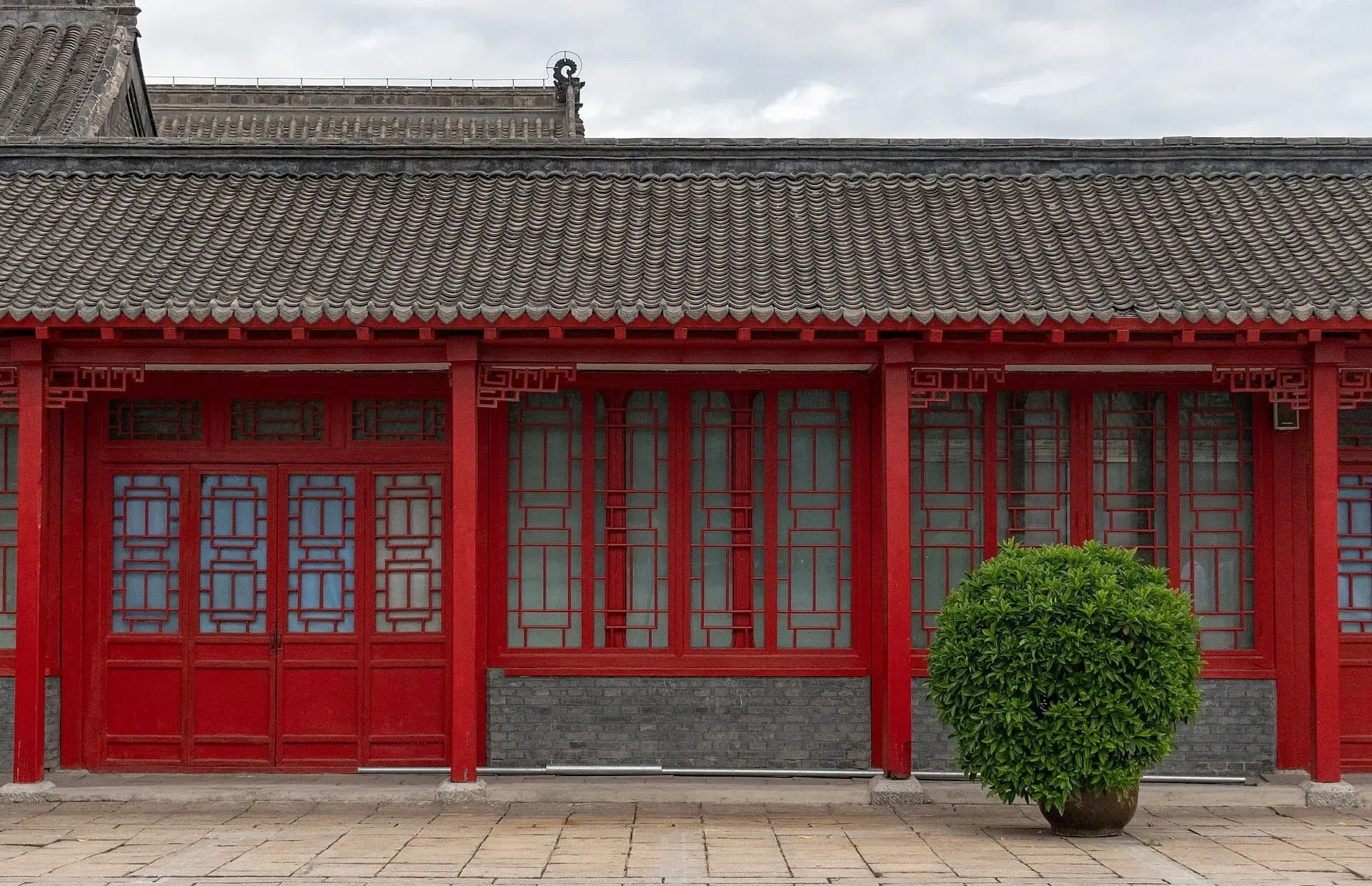
Mukden Palace / Shenyang Imperial Palace (沈阳故宫)
The imperial palace of the early Qing dynasty (1625-1912), built by Nurhaci and Hong Taiji before the Qing moved the capital to Beijing. UNESCO World Heritage site. Smaller than the Forbidden City but with distinct Manchu and Mongolian architectural elements. ¥60 entry.
Wikimedia Commons · CC-BY-SA
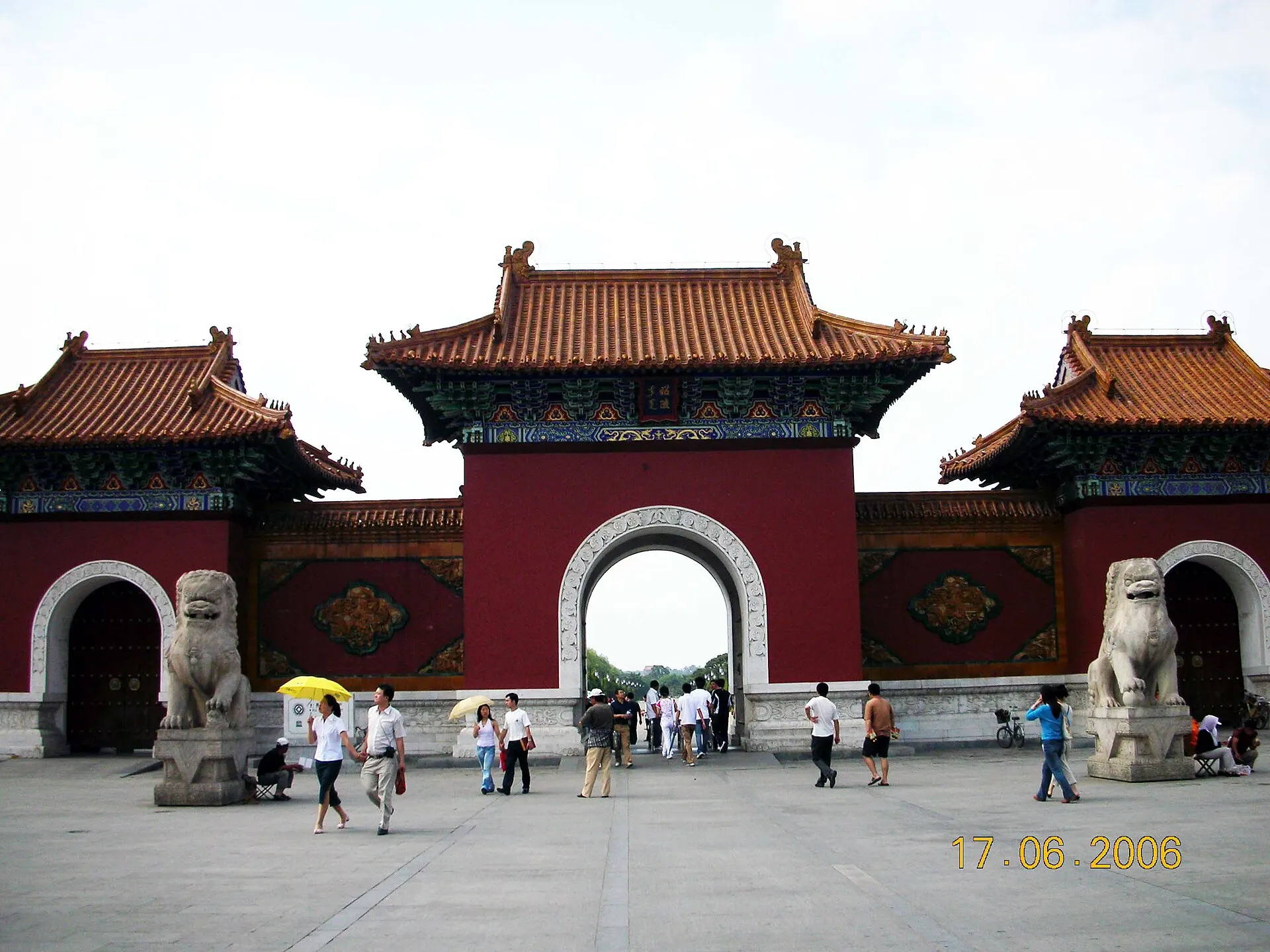
Qing Zhao Tombs (清昭陵 / 北陵公园)
The mausoleum of Hong Taiji, the second Qing emperor and founder of the Qing dynasty proper. UNESCO World Heritage site (as part of the Imperial Tombs of the Ming and Qing Dynasties). Surrounded by Beiling Park, one of China's largest imperial parks. ¥40 palace + ¥6 park.
Wikimedia Commons · CC-BY-SA
Qing Fu Tombs (清福陵 / 东陵公园)
The mausoleum of Nurhaci, founder of the Later Jin dynasty and grandfather of Hong Taiji. Smaller and more atmospheric than the Zhao Tombs, set in a hilly pine forest. ¥40 entry.
Wikimedia Commons · CC-BY-SA
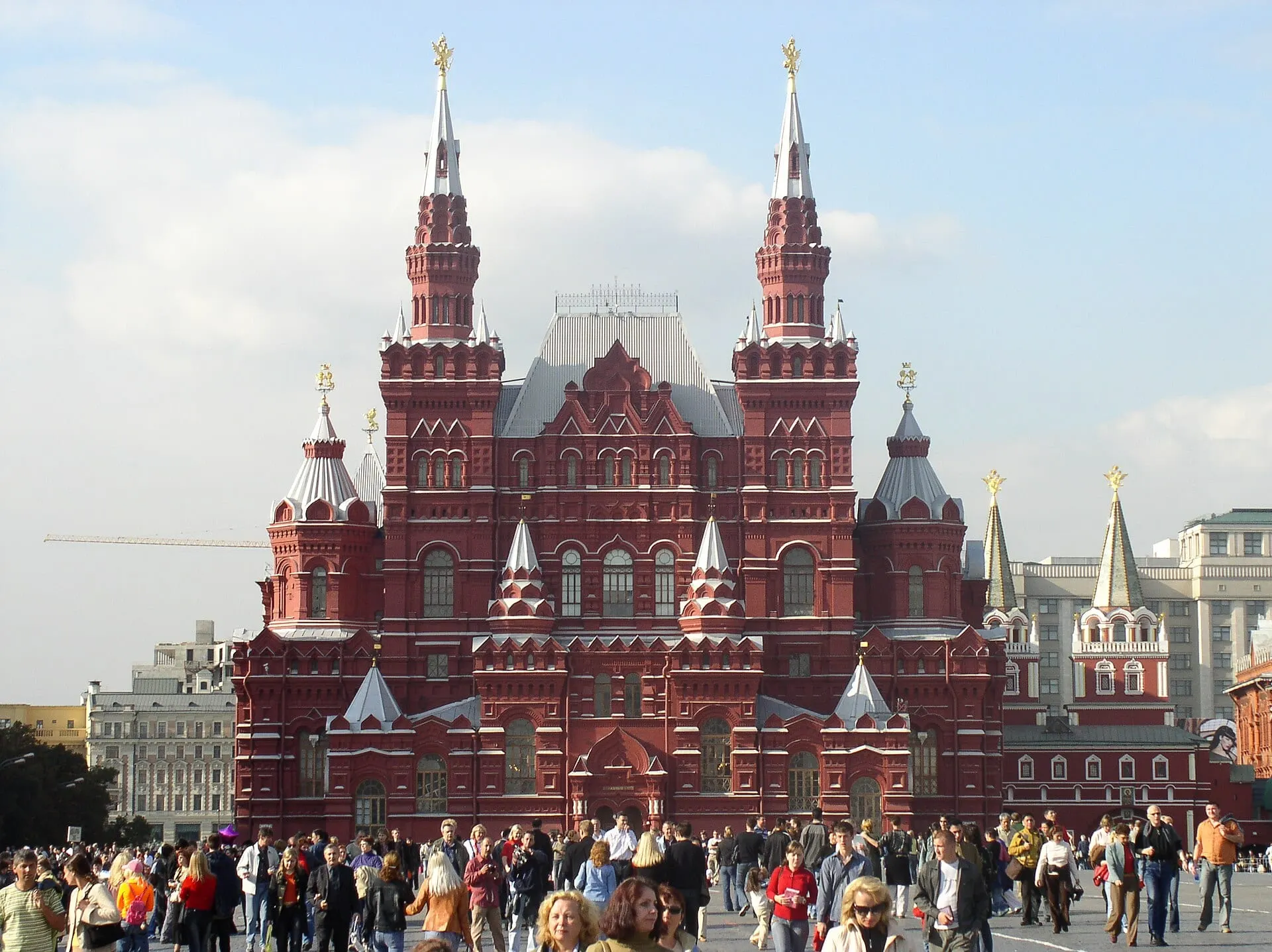
9.18 Historical Museum (九一八历史博物馆)
Free museum on the site of the 1931 Mukden Incident, where the Japanese Kwantung Army staged a sabotage operation as a pretext for invading Manchuria. Powerful and moving, with strong English captions. Allow 2-3 hours.
Wikimedia Commons · CC-BY-SA
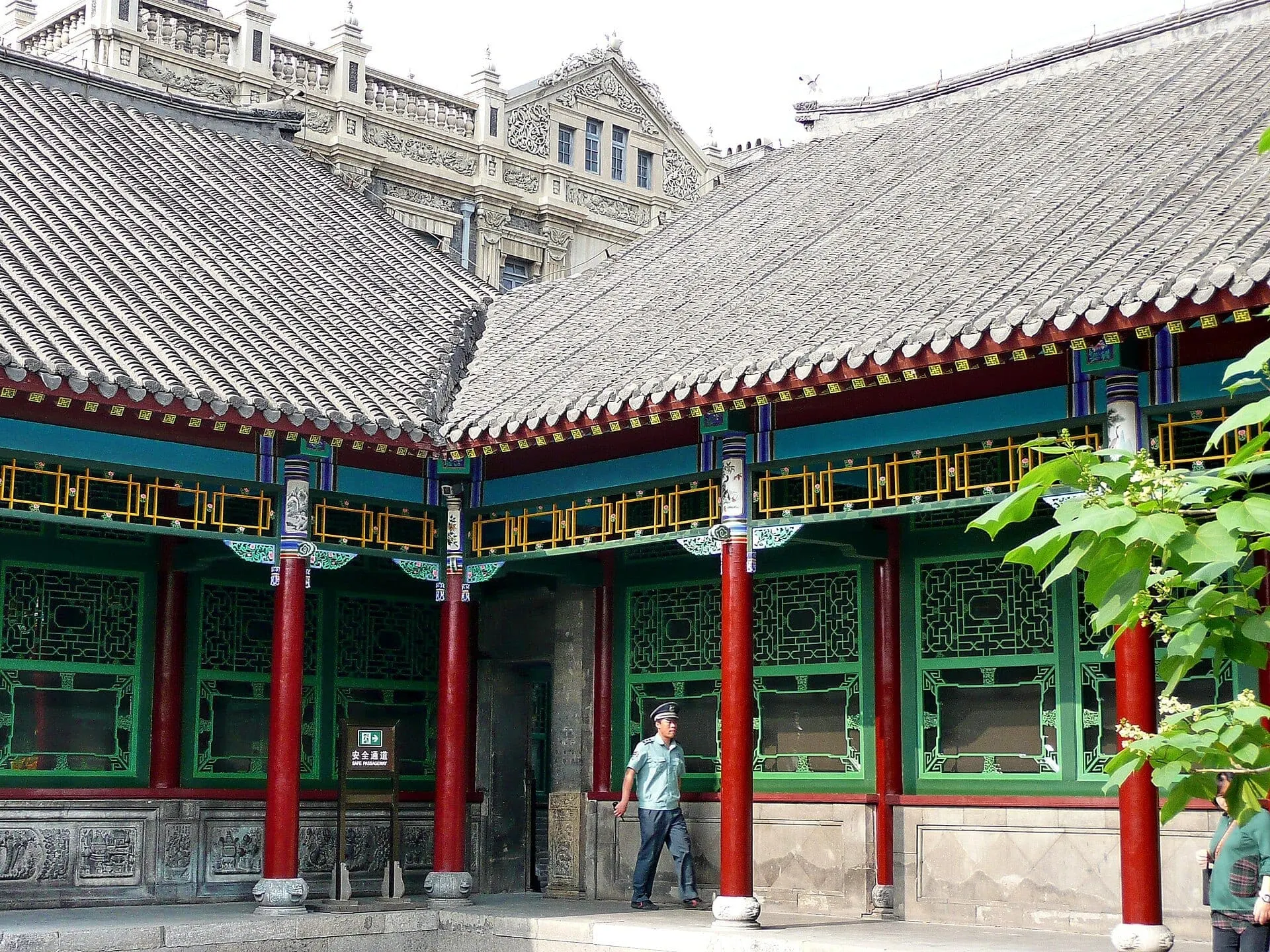
Marshal Zhang's Mansion (张氏帅府)
The 1916-1931 residence of Zhang Zuolin and his son Zhang Xueliang, the "Young Marshal" who controlled Manchuria in the 1920s-30s. A fascinating mix of Chinese, Japanese, and European architectural styles. ¥60 entry.
Wikimedia Commons · CC-BY-SA
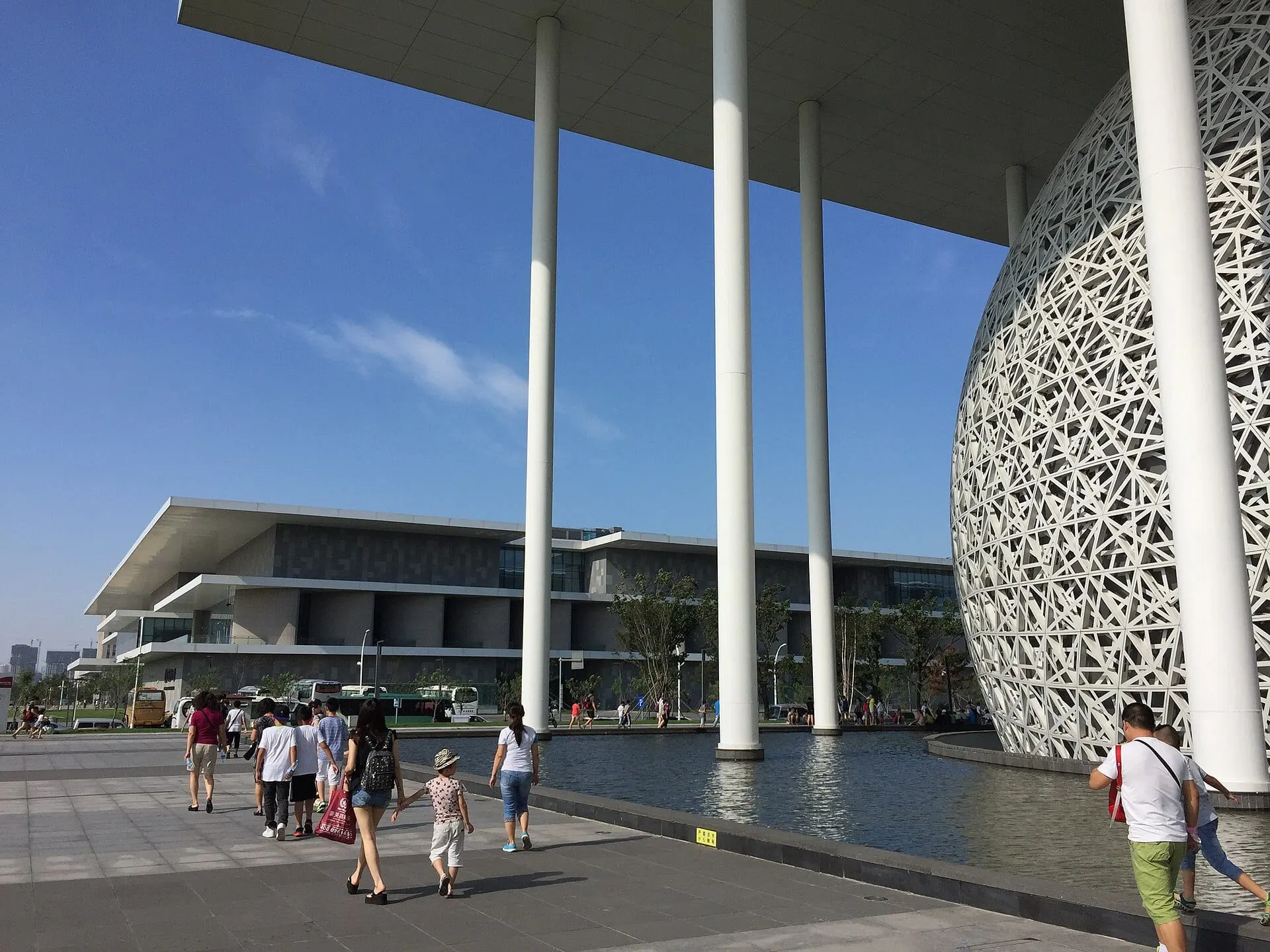
Liaoning Provincial Museum (辽宁省博物馆)
Free provincial museum with one of China's best collections of calligraphy, painting, and bronze artifacts. Allow 2-3 hours.
Wikimedia Commons · CC-BY-SA
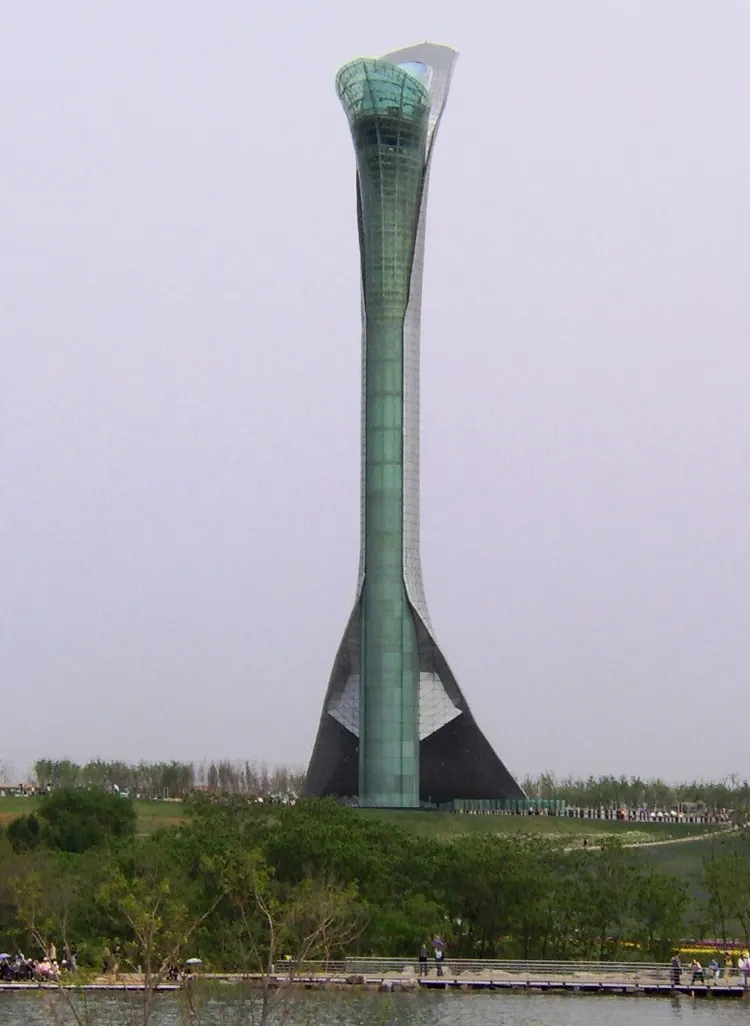
Shenyang Botanical Garden (沈阳植物园)
A 2,000-hectare botanical garden in the eastern suburbs, with extensive plant collections and the Shenyang International Garden (a permanent expo site from the 2006 International Horticultural Exposition). ¥50 entry.
Wikimedia Commons · CC-BY-SA
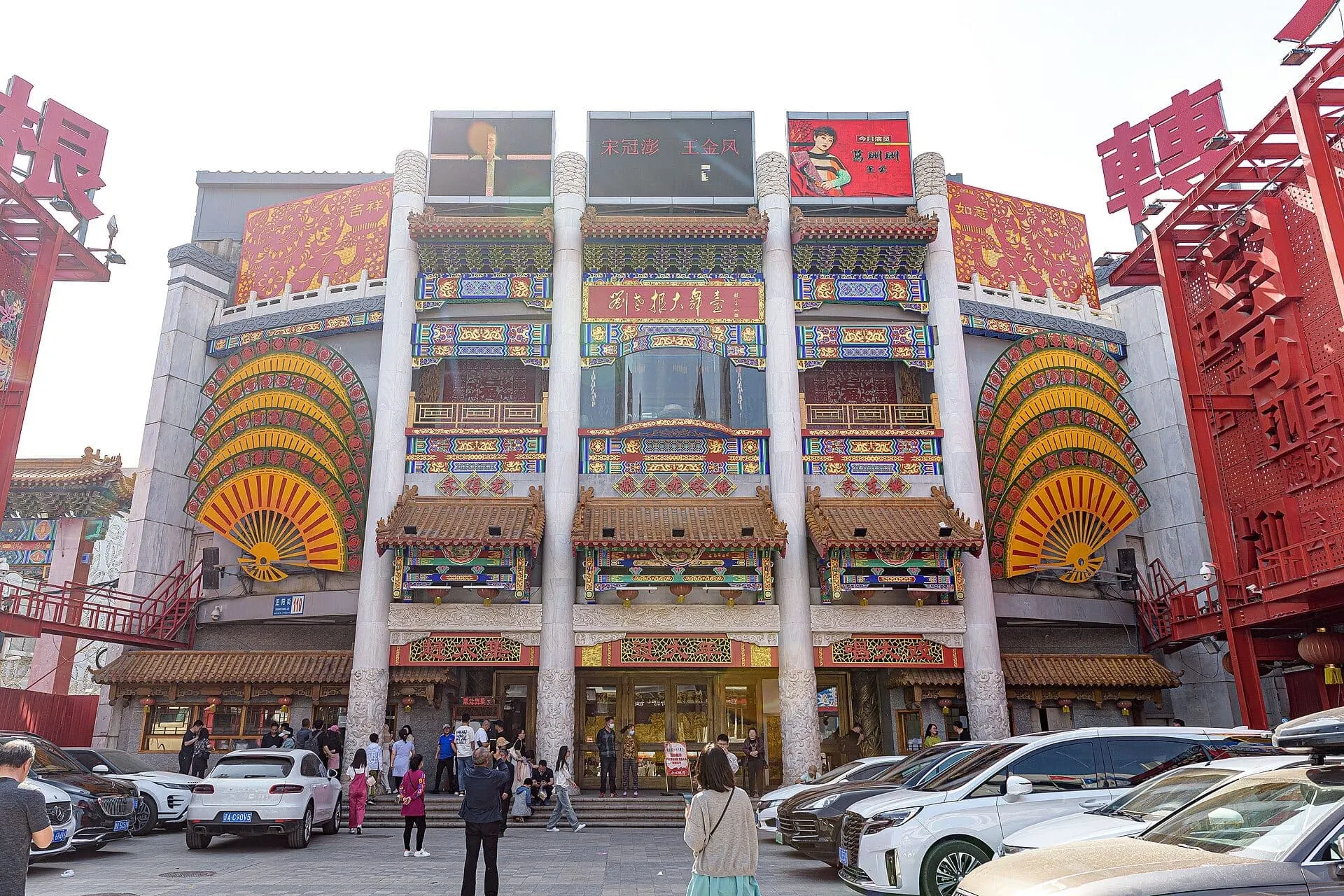
Zhongjie / Imperial Walking Street (中街)
A 380-year-old commercial street in central Shenyang, China's first pedestrian shopping street after 1949. Lined with traditional shops, modern malls, and Shenyang snack stalls. Free to walk.
Wikimedia Commons · CC-BY-SA
STAY
Where to stay in Shenyang
Pick a base that matches the trip you want — imperial-central for sightseeing, hutong belt for character, Chaoyang for nightlife, or Qianmen for budget.
Shenhe District (沈河区)
Mukden Palace, Zhongjie shopping street, and the historic core — best for first-time visitors
#shenheHeping District (和平区)
CBD, Marshal Zhang's Mansion, 1905 Cultural Park, and the best dining and arts scene
#hepingHuanggu District (皇姑区)
Beiling Park (Qing Zhao Tombs), universities, and quieter residential stays
#huangguDongling District (东陵区)
Qing Fu Tombs, hot spring resorts, and Qipanshan ski area — best for resort stays
#dongling
ITINERARIES
Sample itineraries from Shenyang
Three ready-made routes, from a 1-day imperial sprint to a 5-day deep dive. Copy the day-by-day plan and adapt to your own pace.
- 1 DAY
Shenyang City Highlights
Hit the Mukden Palace, Beiling Park, and the 1905 Cultural Park in one packed day, ending with Dongbei dinner and the Zhongjie walking street.
- First-time visitors
- Short layovers
- Qing history buffs
- Day 01
Morning
Mukden Palace (3 hours, ¥60) — explore the Chongzheng Hall, Phoenix Tower, and Qingning Palace, then walk the adjacent Zhongjie shopping street
Afternoon
Beiling Park and Qing Zhao Tombs (2-3 hours, ¥46) — walk the 600m spirit way and climb the tomb mound
Evening
1905 Cultural Park for galleries and live music, dinner of guobaorou and dumplings at a Dongbei restaurant near Heping
- 2 DAYS
Shenyang Imperial & Warlord History
Two days covering Qing imperial heritage, the Mukden Incident, and the warlord era, with a Beiling Park autumn walk or winter hot spring add-on.
- History enthusiasts
- 20th-century China buffs
- Couples
- Day 01
Morning
Mukden Palace (3 hours) + Zhongjie stroll
Afternoon
Beiling Park & Qing Zhao Tombs (2-3 hours)
Evening
Dinner at Lumingchun (鹿鸣春) for classic Dongbei banquet food, then the 1905 Cultural Park
- Day 02
Morning
Marshal Zhang's Mansion (2 hours, ¥60) — explore the Chinese-Japanese-European architectural fusion
Afternoon
9.18 Historical Museum (2-3 hours, free) + Liaoning Provincial Museum (2 hours, free)
Evening
Zhongjie night walk, lamb skewers and Snowflake beer at a local kaochuan joint
- 3 DAYS
Shenyang Deep Dive + Dalian Day Trip
Two days in Shenyang for the full imperial, warlord, and arts circuit, then a day trip to coastal Dalian by high-speed rail.
- Extended stays
- Northeast China explorers
- Families
- Day 01
Morning
Mukden Palace (3 hours)
Afternoon
Beiling Park (2-3 hours)
Evening
1905 Cultural Park + Heping district dinner
- Day 02
Morning
Marshal Zhang's Mansion (2 hours)
Afternoon
9.18 Museum (2-3 hours) + Liaoning Provincial Museum (2 hours)
Evening
Hot spring resort experience at Qinghe Peninsula (3-4 hours, ¥200-400)
- Day 03
Morning
7:00 AM HSR from Shenyang North to Dalian (2 hours, ¥250) — morning at Xinghai Square and Binhai Road coastal drive
Afternoon
Laohutan Ocean Park or Russian Street, seafood lunch, afternoon HSR back to Shenyang (arrive by 7 PM)
Evening
Late dinner at Zhongjie night market or a final bowl of knife-cut noodles
BUDGET
What a Shenyang trip costs
Per-person, per-day costs across three spending tiers. Excludes international flights and visa fees.
| Line item | Backpacker | Mid-range | Luxury |
|---|---|---|---|
| Budget Guesthouse / Hostel Dorm | $10 | $0 | $0 |
| Mid-range Hotel (3-4 star) | $0 | $50 | $0 |
| Luxury / 5-star Hotel | $0 | $0 | $120 |
| Local Meal (per person) | $4 | $8 | $15 |
| Mid-range Restaurant Meal | $0 | $15 | $30 |
| Local Transport (daily) | $3 | $8 | $15 |
| Attraction Entry Fees (daily avg) | $10 | $20 | $40 |
| Daily Total (per person) | $30 | $80 | $220 |
| Total per day | $57 | $181 | $440 |
$ USD per person per day, before international flights and visas. Last verified: Q3 2026.
STAY SAFE
Emergency contacts in Shenyang
Save these three numbers before you board the plane. China uses different hotlines than most countries — there's no 911.
- POLICE
110
- AMBULANCE
120
- FIRE
119
- TOURIST HOTLINE
12301
- ENGLISH-SPEAKING ER
Shengjing Hospital of China Medical University (中国医科大学附属盛京医院), 24h emergency, some English-speaking staff, +86 24 96615
Problems travelers hit in Shenyang
- Why is my Alipay not working?You linked a foreign Visa or Mastercard to Alipay but every transaction is rejected at the merchant.
- My China visa was denied — what now?Your L visa application was refused at the Chinese consulate and your trip is in 2–4 weeks.
- My passport was lost or stolen in China — what do I do?Your passport is gone (theft or loss) and you're in mainland China without travel documents.
- Why can't I book on 12306 with my foreign card?You tried to book a high-speed rail ticket on 12306.cn and your foreign Visa/Mastercard is rejected at checkout.
- Why is my VPN not working in China?You arrived in China, opened your VPN, and it will not connect at all or connects but no traffic loads.
- Why can't I book a Tibet trip on my own?You try to book Lhasa flights and hotels yourself but the booking fails, or you're turned away at the Lhasa airport without a permit.
Book activities in Shenyang
These are licensed tour operators and booking platforms we've vetted independently. Booking through these links may earn us a commission — see our affiliate disclosure. This never affects our editorial recommendations or the price you pay.
Frequently asked questions
How many days do I need in Shenyang?
How cold does it get in Shenyang in winter?
Do I need a Chinese visa to visit Liaoning?
What is the best time of year to visit Shenyang?
Is the Mukden Palace worth visiting if I have already been to the Forbidden City?
What is the 9.18 Historical Museum and is it worth a visit?
Show all 20 FAQs
Is Shenyang safe for tourists?
How do I get from Shenyang to Dalian?
What is the bathhouse culture in Shenyang?
How can I pay in Shenyang without Alipay or WeChat Pay?
What should I pack for Shenyang in summer vs winter?
What is 锅包肉 (guōbāo ròu, "pot-wrapped meat")?
Can I visit the North Korean border from Shenyang?
What is the best 7-day Northeast China itinerary that includes Shenyang?
When is the best time to visit Shenyang?
How do I get from Taoxian Airport to Shenyang city?
What is the Shenyang Imperial Palace and how does it compare to Beijing's?
What is the must-try food in Shenyang?
Is the September 18th History Museum worth visiting?
Is Shenyang a good base for exploring northeast China?
References

Related guides & destinations
Guide
How We Research 2026: NihaoVisit’s Methodology for China Travel Information
How NihaoVisit sources, verifies, and maintains 700+ pages of China travel information — our source hierarchy, fact-checking process, update
Guide
Fact-Checking Log 2026: Verified China Travel Information — NihaoVisit
A public log of fact-checking verification passes on NihaoVisit, showing what was verified, when, and against which sources — covering visa
Guide
Best Time to Visit China 2026: Month-by-Month Weather, Crowds, and Prices
The best time to visit most of China is April–May and September–October. Winter (Dec–Feb) is cold but cheap; summer (Jun–Aug) is hot and cro
Guide
VPN for China 2026: Which VPNs Work, eSIM Alternatives, and the Complete Pre-Trip Checklist
Most Western apps and websites are blocked in mainland China. A reliable VPN is essential for Google, Gmail, WhatsApp, Instagram, and most n
Guide
China SIM Card and eSIM Guide 2026: Stay Connected Without WeChat
A Chinese SIM or eSIM lets you use mobile data, maps, and ride-hailing without WiFi. Here is how to get one, the cost, and which provider to
Guide
Solo Female Travel in China 2026: Safety, Tips, and Real Experiences
China is one of the safer destinations for solo female travelers. Petty theft is rare, violent crime against tourists is extremely uncommon,