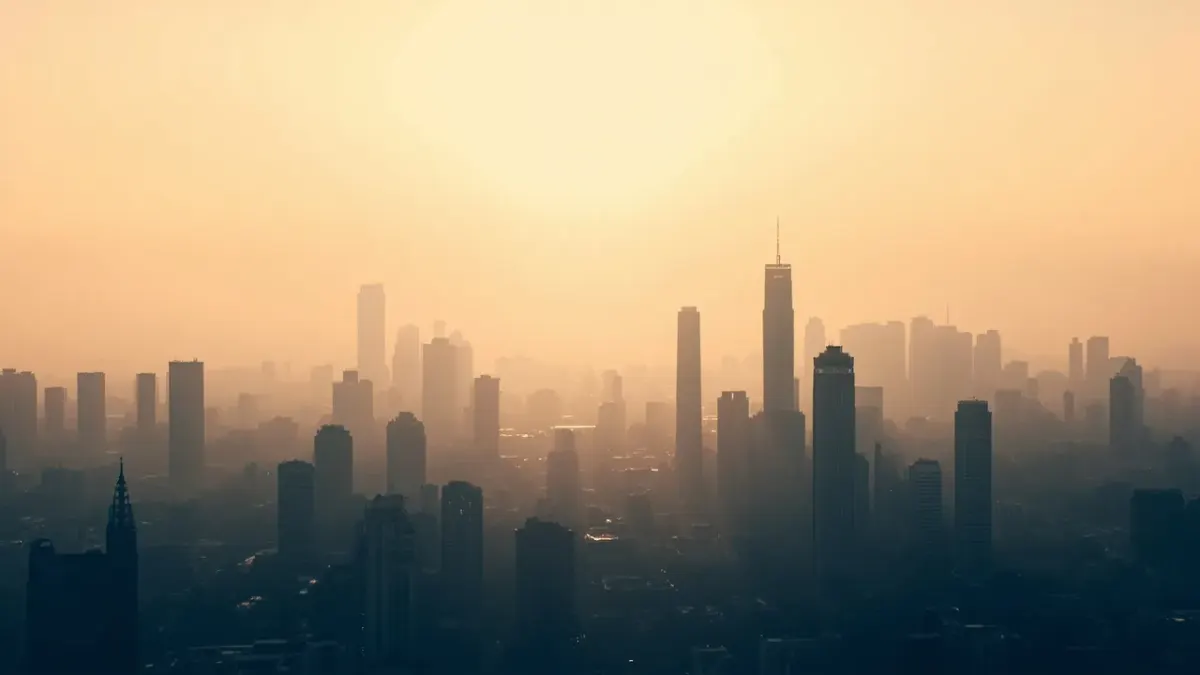
Taiyuan
Taiyuan (太原, Tàiyuán) is the capital of Shanxi province, a city of 5.3 million sitting at 800 meters elevation on the loess plateau of northern China. It is one of China's oldest continuously inhabited cities — founded around 500 BCE as the capital of the state of Zhao — and was for centuries the strategic military gate between the Central Plains and the steppe. Most foreign travelers know Taiyuan only as the HSR interchange for Pingyao (平遥), the UNESCO-walled Ming-Qing banking town 40 minutes south, and the city's reputation as China's coal capital (coal accounts for over 60% of Shanxi's GDP) does not help its tourist appeal. But Taiyuan rewards a day or two of attention: the Jinci Temple (晋祠, Jìncí), 25 km southwest of the center, is a 1,000-year-old temple complex with Northern Song dynasty (960-1127 CE) wooden architecture and a set of 43 life-sized painted clay maidens that are among the finest surviving examples of Song sculpture anywhere. The Twin Pagodas (双塔, Shuāng Tǎ) — two 13-story Ming-dynasty brick pagodas — are the city's symbol and a remarkable climb. Shanxi noodle culture is among China's richest, and Taiyuan is the best city in the province to eat it. The honest downsides are serious: Taiyuan's air quality fluctuates between mediocre and terrible — coal dust, steel-mill emissions, and the topographic bowl effect trap particulates. The winters are cold and grey (average January high: 2°C). The city itself has been aggressively modernized, with wide boulevards, Soviet-style apartment blocks, and a skyline of glass towers that look identical to two dozen other Chinese provincial capitals. This is not a pretty city. But if you are passing through on the Pingyao-Datong corridor, or if you care about Song-dynasty art, Taiyuan deserves a day. Budget ¥100-200 per day for mid-range travel. 1-2 days is enough.
Why Taiyuan in 2026.
Shanxi's coal-capital province seat, with 2,500 years of walled-city history — the Jinci Temple's Song-dynasty sculptures, Twin Pagodas, and noodle culture dominate a city that most travelers only pass through on the way to Pingyao.
Quick Answer
Taiyuan (太原, Tàiyuán) is the capital of Shanxi province, a city of 5.3 million sitting at 800 meters elevation on the loess plateau of northern China. It is one of China's oldest continuously inhabited cities — founded around 500 BCE as the capital of the state of Zhao — and was for centuries the strategic military gate between the Central Plains and the steppe. Most foreign travelers know Taiyuan only as the HSR interchange for Pingyao (平遥), the UNESCO-walled Ming-Qing banking town 40 minutes south, and the city's reputation as China's coal capital (coal accounts for over 60% of Shanxi's GDP) does not help its tourist appeal. But Taiyuan rewards a day or two of attention: the Jinci Temple (晋祠, Jìncí), 25 km southwest of the center, is a 1,000-year-old temple complex with Northern Song dynasty (960-1127 CE) wooden architecture and a set of 43 life-sized painted clay maidens that are among the finest surviving examples of Song sculpture anywhere. The Twin Pagodas (双塔, Shuāng Tǎ) — two 13-story Ming-dynasty brick pagodas — are the city's symbol and a remarkable climb. Shanxi noodle culture is among China's richest, and Taiyuan is the best city in the province to eat it. The honest downsides are serious: Taiyuan's air quality fluctuates between mediocre and terrible — coal dust, steel-mill emissions, and the topographic bowl effect trap particulates. The winters are cold and grey (average January high: 2°C). The city itself has been aggressively modernized, with wide boulevards, Soviet-style apartment blocks, and a skyline of glass towers that look identical to two dozen other Chinese provincial capitals. This is not a pretty city. But if you are passing through on the Pingyao-Datong corridor, or if you care about Song-dynasty art, Taiyuan deserves a day. Budget ¥100-200 per day for mid-range travel. 1-2 days is enough.
| Worth visiting | Yes, for Jinci Temple alone — the Northern Song sculptures are world-class. Otherwise a functional transit hub for Pingyao and Datong. |
|---|---|
| Recommended days | 1-2 days |
| Best time to visit | April-May and September-October (avoid November-February — cold, polluted, and coal-heating AQI spikes) |
| Daily budget | $25 (backpacker) / $85 (mid-range) / $200+ (luxury) |
| Family friendly | Moderate — Jinci Temple and the Twin Pagodas work for all ages, but the air quality is a concern for children |
| Solo friendly | Yes — safe, cheap, good HSR connections, and the noodle culture is perfect for solo eating |
| Airport | Taiyuan Wusu International Airport (TYN) — 15 km southeast, connected by Airport Bus (¥15, 40 min) and DiDi (¥50-70, 30 min) |
| High-speed rail | Yes — Beijing (2.5h), Xi'an (3h), Pingyao (40 min), Datong (2h), Zhengzhou (3h), Shijiazhuang (1.5h) |
| Language | Mandarin with Jin dialect (晋语); English is rare even at major hotels — a translation app is essential |
| Currency | CNY (¥) — Alipay and WeChat Pay accept foreign Visa/Mastercard |
| Time zone | China Standard Time (UTC+8) |
| Last updated | 2026-06-18 |
Want a Taiyuan plan built for you?
Jump to:
Jinci Temple·Twin Pagodas·Shanxi Museum·Shanxi Noodles·Getting Around·Where to Stay·Pingyao Day Trip·Itineraries·Weather·Tips & Warnings·Emergency Contacts·Why It Is Called Dragon City·Coal Museum of China·Loud Mountain Day Trip·Fen River and Yingze Park West·Fenjiu Liquor and Shanxi Merchant Heritage·Shuangsi Linsi Temple·FAQ
Why visit Taiyuan? Is the coal capital worth a stop?
Let's be honest: Taiyuan is not a tourist city. It is a provincial capital built on coal, steel, and heavy industry, with some of the worst air quality in northern China and a skyline of concrete towers that could belong to any of a dozen other Chinese cities. Most foreign travelers pass through Taiyuan's HSR station en route to Pingyao (40 minutes south) or Datong (2 hours north) and never step outside. But Taiyuan has Jinci Temple. And Jinci Temple is a legitimate, top-tier cultural site — a 1,000-year-old temple complex with Northern Song dynasty wooden architecture that predates most of Europe's great cathedrals, a set of 43 painted clay life-sized maidens from the 11th century that are among the finest surviving examples of Song sculpture anywhere in the world, and ancient cypress trees (some over 3,000 years old) growing around a spring that has been flowing since before the Zhou dynasty. The Hall of the Holy Mother (圣母殿, Shèngmǔ Diàn), built 1023-1032 CE, is a masterpiece of Song timber-frame construction with upward-curving eaves supported by wooden brackets so intricate they look like lace. Beyond Jinci: the Shanxi Museum is one of China's best provincial history museums. The Twin Pagodas are a genuine climbable Ming monument. And Taiyuan's noodle culture is the real deal — Shanxi is one of China's great wheat provinces, and the variety of hand-made noodles (刀削面, dāoxiāomiàn; 猫耳朵, māoěrduo; 剔尖, tījiān) is staggering. The honest bottom line: if you are going to Pingyao anyway — and you should, because Pingyao is the best-preserved walled Ming-Qing city in China — add one day in Taiyuan for Jinci Temple and Shanxi noodles. If you are not going to Pingyao, Taiyuan is not a standalone destination. It works as a 1-2 day transit stop on a Shanxi itinerary.
What is the history of Taiyuan: from Zhao capital to coal colossus?
Taiyuan was founded around 497 BCE as the capital of the state of Zhao (赵国) during the Spring and Autumn and Warring States periods. Its name means 'Great Plain' (太原, from 太 'great' + 原 'plain'), referring to the Fen River valley where the city sits. It has been a strategic military city for most of its 2,500-year history — the gate between the agricultural Central Plains and the nomadic steppe, repeatedly besieged, sacked, and rebuilt. The Tang dynasty (618-907 CE) was founded by Li Yuan, who began his rebellion against the Sui dynasty from Taiyuan. The Tang emperors considered Taiyuan their 'dragon-raising city' (龙兴之城, Lóng Xīng zhī Chéng) and endowed it with temples, including the expansion of Jinci. The Northern Song (960-1127) left Taiyuan's greatest artistic legacy: the Hall of the Holy Mother and the painted clay maidens at Jinci, commissioned in the 1020s and 1030s and astonishingly well-preserved. The Ming dynasty (1368-1644) rebuilt the city walls — nine miles of rammed earth and brick with eight gates — and constructed the Twin Pagodas. Ming-Qing Taiyuan was also the headquarters city of the Shanxi merchant banks (晋商票号, Jìnshāng piàohào), the financial network that dominated Chinese banking from the 18th through the early 20th century. The Shanxi merchants' wealth funded temple construction, opera, and the courtyard mansions you see today at Pingyao and the Qiao family compound. The 20th century was hard on Taiyuan. The city's walls were demolished in the 1950s. Heavy industry — coal mining, steel production, and chemicals — transformed it into one of China's most polluted cities. The coal boom enriched Shanxi but left a legacy of environmental damage that the province is still trying to address. The Taiyuan of 2026 is a cleaner, greener city than the Taiyuan of 2006 — air quality has improved significantly since the peak — but it is still a coal city: the economy, the politics, and the physical fabric of the place are shaped by mining.
What makes Jinci Temple special — and how do I get there?
Jinci Temple (晋祠, Jìncí) is 25 km southwest of central Taiyuan and is, without qualification, one of China's great temple complexes. It was founded in the 5th century BCE as an ancestral shrine to Prince Shuyu of Tang, expanded through successive dynasties, and reached its current form during the Northern Song. The highlight is the Hall of the Holy Mother (圣母殿, Shèngmǔ Diàn), built between 1023 and 1032 CE. It is a five-bay hall with a double-eave roof supported by an elaborate system of wooden brackets (斗拱, dǒugǒng) — the Song dynasty was the golden age of Chinese timber-frame architecture, and this hall is one of the finest surviving examples. Inside, 43 life-sized painted clay sculptures of court maidens line the walls, each with a distinct facial expression, posture, and personality. The maidens are the most celebrated set of Song-dynasty sculptural portraits in existence — the level of individual characterization is extraordinary for 11th-century religious art. Beyond the hall: the 'Never-Old Spring' (难老泉, Nánlǎo Quán) bubbles up from the ground in a stone-rimmed pool, feeding a network of channels that irrigate the temple grounds. Cypress trees planted during the Zhou dynasty (1046-256 BCE) — over 3,000 years ago — still stand, gnarled and living. The 'Flying Bridge over the Fish Pond' (鱼沼飞梁, Yúzhǎo Fēiliáng) is a unique Song-dynasty cruciform bridge, the only surviving example of its type in China. Logistics: ¥80 entry as of June 2026. Take bus 308, 804, or 856 from the city center (¥2, about 1 hour). A DiDi costs ¥50-70 each way (35-45 minutes). The temple grounds are large — allow 2.5-3 hours. Go in the morning, ideally on a weekday. The best light for photography is mid-morning when the sun hits the Hall of the Holy Mother's southern facade. English signage is limited; download a guide or hire a local guide at the entrance (¥150-200).
How to get to Taiyuan: flights, high-speed rail, and connections
Taiyuan Wusu International Airport (TYN) is about 15 km southeast of the city center. It handles domestic flights to all major Chinese cities plus limited international connections from Bangkok, Seoul, and Tokyo. The airport is small and functional. Airport buses (¥15) run to the city center (Wuyi Square area) in about 40 minutes. A DiDi or taxi costs ¥50-70 and takes 30 minutes. High-speed rail is the standard way to arrive. Taiyuan South (太原南站, Tàiyuán Nán Zhàn) is the main HSR station, about 12 km south of the center, well-connected to the city by bus and DiDi. Direct G-class trains connect to Beijing West (2.5 hours, ¥180-260 second class), Xi'an North (3 hours, ¥175-250), Pingyao Ancient City (40 minutes, ¥25-35), Datong South (2 hours, ¥95-140), Shijiazhuang (1.5 hours, ¥70-100), and Zhengzhou (3 hours, ¥150-215). Taiyuan Station (太原站) in the city center handles slower D-class and K/T trains. For the classic Shanxi loop: fly into Taiyuan, HSR to Pingyao (40 min), HSR to Datong (2h from Taiyuan or 2.5h from Pingyao via Taiyuan), fly out of Datong — or reverse. Beijing is close enough that many travelers treat Taiyuan as a side trip from the capital.
How to get around Taiyuan: bus, DiDi, and the one useful metro line
Taiyuan's metro system is embryonic. As of June 2026, only Line 1 is operational, running north-south through the city center. It connects Taiyuan Station to the southern suburbs but does not reach Taiyuan South HSR station or the airport. Fares are ¥2-5. Pay with Alipay's transport QR. Buses are the workhorse and cost ¥2 flat. Key routes for visitors: Bus 308, 804, and 856 to Jinci Temple (1 hour from the city center); Bus 1, 611, 822 around the city center; Bus 55 and 201 to the Twin Pagodas. Routes and announcements are Chinese-only, which makes buses challenging. Use Baidu Maps or Amap (高德地图) for route planning — Google Maps is unreliable in China. DiDi is the easiest option. A ride within the city center costs ¥8-18; to Jinci Temple is ¥50-70 each way; to Taiyuan South Station is ¥30-45. Taxis are everywhere (flagfall ¥8 for 3 km, then ¥1.6 per km) but language is a barrier — have your destination in Chinese characters. Shared bikes (Hello blue are the most common) cost ¥1.5 per 30 minutes. Taiyuan is flat and the wide boulevards are theoretically bikeable, but traffic is aggressive and dedicated bike lanes are inconsistent. Most visitors walking the city center (Liuxiang, Yingze Park, Chongshan Monastery) will find it manageable on foot. The distances are reasonable and the grid layout is straightforward.
What are the top attractions in Taiyuan, ranked and described?
1. Jinci Temple (晋祠). ¥80. The essential Taiyuan experience, detailed above. Allow 3 hours. The Hall of the Holy Mother, the 43 clay maidens, the Never-Old Spring, the Zhou-dynasty cypresses. A top-tier Chinese cultural site that gets a fraction of the visitors it deserves because it is in Taiyuan, not Beijing. Go in the morning on a weekday. 2. Shanxi Museum (山西博物院). Free, reservation via WeChat. Housed in a dramatic bronze-ding-shaped building. The permanent galleries cover Shanxi from the Neolithic through the Qing dynasty: Shang and Zhou ritual bronzes (Shanxi was a major bronze-casting center), Northern Wei and Northern Qi Buddhist sculpture, the Shanxi merchant banking exhibits, and the Jin dynasty opera figurines. The Buddhist sculpture gallery alone justifies the visit. Allow 2 hours. Closed Mondays. 3. Twin Pagodas (双塔寺). ¥30. Two 54-meter Ming-dynasty brick pagodas built in 1608. The older pagoda, the Xuanwen Pagoda (宣文塔), can be climbed via an internal spiral staircase — 13 floors of narrow, worn brick steps to a platform with 360-degree views over Taiyuan. The climb is steep and the staircase is tight, but the view from the top is the best urban panorama in the city. The temple courtyard has a small museum of Shanxi stele inscriptions. Allow 1-1.5 hours. 4. Chongshan Monastery (崇善寺). Free. A quiet Ming-dynasty temple in the city center with towering statues of Guanyin (the Thousand-Armed Avalokiteshvara), Manjusri, and Samantabhadra in a dim, incense-filled hall. The statues are monumental and well-executed. The temple is under-visited — you may be the only foreign visitor there. A good 30-minute city-center stop. 5. Yingze Park (迎泽公园). Free. Taiyuan's Central Park, built around Yingze Lake with boating, pavilions, flower gardens, and a morning exercise scene that is worth waking up early for — tai chi groups, sword-dancers, kite-flyers, and choral singers all doing their thing simultaneously. The park is at its best from 06:00-08:00. Free. 6. Mengshan Giant Buddha (蒙山大佛). ¥70. A 63-meter Northern Qi (551 CE) Buddha carved into a cliff. Rediscovered in the 1980s after being lost for centuries — its head had fallen off and the body was covered by vegetation. The head was reconstructed in 2008, which makes the site slightly less powerful than an untouched original, but the sheer scale (larger than the Leshan Buddha's seated height) is impressive. 20 km southwest, about 40 minutes by DiDi (¥60-80). 7. Liuxiang Food Street (柳巷). Free. The commercial heart of Taiyuan with a dense concentration of noodle shops, snack stalls, and Shanxi restaurants. The name ('Willow Lane') dates to the Ming dynasty, though the current streetscape is modern. Best from 17:00 onward when the food stalls open. Try dāoxiāomiàn (刀削面, knife-cut noodles, ¥12-18) and yóugāo (油糕, fried glutinous rice cakes filled with red bean paste, ¥8-12).
Where to stay in Taiyuan: neighborhoods and typical prices
The Liuxiang / Yingze District area is the best base — you are walking distance from Liuxiang Food Street, Yingze Park, and the Shanxi Museum, with bus connections to Jinci. Mid-range hotels include Atour Hotel Taiyuan (¥250-380), Ji Hotel Liuxiang (¥200-320), and Holiday Inn Taiyuan (¥350-500). The Kempinski Taiyuan (¥700-1,000) is the luxury pick with excellent breakfast and English-speaking staff. Near Taiyuan South Station, budget chains cluster for HSR convenience: Hanting, 7 Days Inn, GreenTree Inn (¥120-200). This area is functional and charmless — fine for a late arrival or early departure, not a base for exploring. The Shanxi University area in the south of the city has student-priced hotels (¥120-200) and cheap restaurants, but it is far from Jinci (about 45 minutes by bus/DiDi) and the city-center sights. For backpackers: the Taiyuan International Youth Hostel near Liuxiang has dorm beds at ¥40-55. Budget hotels in the ¥100-150 range are widely available across the city.
What to eat in Taiyuan: Shanxi noodles and the wheat-belt kitchen
Shanxi (山西) is one of China's great wheat provinces, and its noodle culture is among the most diverse in the country. Shanxi cuisine (晋菜, Jìn cài) is northern Chinese cooking at its most honest — wheat, lamb, vinegar, fermented grains, and root vegetables. It is not spicy. It is savory, salty, and occasionally tangy from the province's famous aged vinegar (陈醋, chéncù). The noodles you must eat: Dāoxiāomiàn (刀削面, knife-cut noodles). The well-known Shanxi noodle. A cook holds a block of wheat dough on one shoulder and shaves thin, irregular strips directly into a pot of boiling water with a curved blade. The result is a noodle that is thick in the center, thin and ruffled at the edges — chewy and tender simultaneously. Served in a simple broth with lamb, scallions, and chili oil. ¥12-18. Taiyuan's best dāoxiāomiàn shops are clustered around Liuxiang: look for shops with the name 刀削面 and a long local queue. Māoěrduo (猫耳朵, cat's ear noodles). Small ear-shaped pasta made by pressing dough against a textured surface with the thumb, creating ridges that hold sauce beautifully. Stir-fried with egg, tomato, and greens or served in broth. ¥15-22. Tījiān (剔尖, tip-picked noodles). A batter-dough is spread on a board and 'tipped' into boiling water with a chopstick in rapid strokes, creating irregular, slightly thicker-than-spaghetti noodles. Served with meat sauce (炸酱, zhájiàng) or lamb soup. ¥12-18. Yóugāo (油糕, fried glutinous rice cakes). Glutinous millet dough stuffed with red bean paste (or sometimes jujube paste), formed into flat cakes or balls, and deep-fried. Crispy exterior, chewy-sweet interior. ¥8-12. Sold from street stalls and small shops. Shanxi aged vinegar (山西老陈醋, Shānxī lǎochéncù). This is not table vinegar — it is a dark, complex, slightly smoky aged vinegar made from sorghum, barley, and peas, fermented for years in earthenware jars. It is one of China's four famous vinegars (alongside Zhenjiang, Sichuan Baoning, and Fujian Yongchun) and the one most central to northern Chinese cooking. Every noodle shop has a vinegar pot on the table — use it liberally. The best vinegar comes from Qingxu County (清徐), 40 km south of Taiyuan, and bottles are sold at every supermarket and souvenir shop (¥15-50 depending on age). For vegetarians: Shanxi noodles can be meat-free by ordering 'sù' (素) versions. The phrase 'wǒ chī sù' (我吃素) is essential. Lent-friendly Buddhist restaurants near Chongshan Monastery serve vegetarian set meals (¥30-50).
How to do a Pingyao day trip from Taiyuan?
Pingyao (平遥, Píngyáo) is the best-preserved walled Ming-Qing city in China, a UNESCO World Heritage site, and a 40-minute HSR ride from Taiyuan South Station (¥25-35). Its intact city walls (6.4 km, built 1370), its flagstone streets, its courtyard banks and merchant houses, and its atmosphere of frozen-in-time northern Chinese urban life make it one of the most photogenic places in China. It is genuinely special. It is also genuinely touristy — the main streets are packed with souvenir shops, the restaurants charge tourist prices, and the crowds on weekends and holidays are intense. A day trip is tight but doable. Catch the 07:30 HSR from Taiyuan South to Pingyao Ancient City station (平遥古城站, Píngyáo Gǔchéng Zhàn) — not Pingyao station, which is the conventional-rail station further from the old city. From the HSR station, take bus 108 (¥1, 15 minutes) or a taxi (¥15) to the Lower West Gate (下西门) of the walled city. Inside: walk the city walls (¥125 combined ticket covers walls and 20+ sites), visit the Rishengchang Draft Bank (日升昌票号, Rìshēngchāng Piàohào) — China's first bank, founded 1823 — and the Pingyao County Yamen (县衙, the Ming-Qing magistrate's office). Lunch: Pingyao beef (平遥牛肉, ¥45-68), a local specialty of air-dried, sliced braised beef. Afternoon: explore the quieter back lanes, visit the Temple of the City God (城隍庙, Chénghuáng Miào), and photograph the Ming-Qing streetscape. Catch an 18:00 HSR back to Taiyuan. The one-day ticket is rushed. If you can spare two days (sleeping in Pingyao), do it — the old city at night, when the day-trippers are gone and the lanterns light the flagstones, is the best Pingyao experience.
What are good 1-day and 2-day itineraries for Taiyuan?
A one-day Taiyuan itinerary should start at Jinci Temple at 7:30 AM. Midday: DiDi back to the city, lunch of dāoxiāomiàn on Liuxiang Street (¥12-18). Afternoon: Shanxi Museum (free, 2 hours — book ahead). Late afternoon: Twin Pagodas (¥30, climb for the city view). Evening: Liuxiang Food Street for more noodles, yóugāo, and aged vinegar shopping. Two-day plan: Day 1 as above. Day 2: Pingyao day trip as detailed above — 07:30 HSR to Pingyao, full day in the walled city, 18:00 HSR back. Evening in Taiyuan: farewell noodle dinner near Liuxiang. If you have 3 days, add Datong (大同) — the Yungang Grottoes (云冈石窟, Yúngāng Shíkū), a UNESCO site with 51,000 Buddhist statues carved into cliff faces during the 5th century, are 2 hours from Taiyuan by HSR. Datong also has the Hanging Monastery (悬空寺, Xuánkōng Sì), a temple built into a sheer cliff face. The Taiyuan-Pingyao-Datong triangle is the classic Shanxi itinerary.
What is the monthly weather and the best time to visit Taiyuan?
January: -11 to 2°C. Bitter cold, grey skies, AQI often 200+. The worst month. Hotels are cheapest but outdoor sightseeing is punishing. February: -8 to 5°C. Still cold, marginally brighter. Spring Festival temple fairs at Chongshan Monastery and Jinci. March: -2 to 12°C. Thaw begins. Dust storms possible from the Gobi (sand blows across the loess plateau). Air quality variable. April: 5 to 20°C. The first comfortable month. Apricot and peach blossoms. Jinci Temple's gardens are green. Good for all sights. May: 11 to 26°C. Warm, mostly dry, the second-best month. Labour Day week (first 7 days) brings domestic crowds — avoid it. June: 16 to 30°C. Summer begins. Dry heat — Taiyuan is less humid than southern China. Manageable for sightseeing. July: 20 to 32°C. Hot, occasional thunderstorms. The rainiest month (about 100 mm). Jinci Temple is at its greenest. August: 18 to 30°C. Hot but tapering. Late August is pleasant. The Mengshan Buddha area has shade and cooler mountain air. September: 11 to 24°C. The relief month. Dry, crisp, clear — the best month for Jinci photography. Cool mornings. October: 4 to 17°C. Autumn colors at Jinci. The second week of October is ideal — after National Day crowds, before the cold. The best overall month for Taiyuan. November: -3 to 8°C. Cold returns. Coal heating begins and AQI climbs. The last tolerable month for outdoor sightseeing. December: -10 to 3°C. Winter grey, coal pollution. Lowest hotel prices. The Twin Pagodas in snow is photogenic if you can tolerate the cold.
What practical information do I need: visa, money, internet, and language?
Visa-free entry: As of June 2026, citizens of 45+ countries can enter China visa-free for up to 30 days. Confirm eligibility with the nearest Chinese consulate. Money: CNY (¥). ¥100 ≈ US$14 as of June 2026. Alipay and WeChat Pay work in Taiyuan — link a foreign Visa/Mastercard before you travel. Cash is useful for street noodle stalls, small temple donations, and local buses. ATMs at ICBC and Bank of China accept foreign cards. Carry ¥200-300 in cash. Internet and VPN: The Great Firewall blocks Google, Facebook, Instagram, WhatsApp, YouTube, X, and most Western sites. Install and test a VPN before arriving. A Chinese SIM from the airport (¥100-200 for 30 days, 30-50 GB) is reliable. eSIMs from Airalo provide data but no phone number. Language: Mandarin is universal. The local Jin dialect (晋语, Jìn yǔ) is linguistically distinct from standard Mandarin — it is one of the few Chinese dialect groups that linguists classify as a separate language — but everyone also speaks standard Putonghua. English is rare, even at the Kempinski. A translation app (Pleco, Baidu Translate, Microsoft Translator) is non-negotiable. Save your hotel address and Jinci Temple destination in Chinese characters. Useful phrases: nǐ hǎo (你好, hello), xièxie (谢谢, thank you), duōshǎo qián (多少钱, how much), wǒ yào yī wǎn dāoxiāomiàn (我要一碗刀削面, I'd like a bowl of knife-cut noodles).
What tips, warnings, and things should I avoid in Taiyuan?
1. AIR QUALITY IS VARIABLE AND CAN BE BAD. Taiyuan's AQI ranges from 60 (good, after rain) to 250+ (hazardous, winter inversions). Check aqicn.org daily. November-February are the worst months due to coal heating. Carry N95 masks. Sensitive travelers should avoid Taiyuan entirely in December-January. 2. JINCI TEMPLE REQUIRES TRANSPORT PLANNING. It is 25 km from the city center, buses take an hour, and English signage at the temple is limited. A DiDi (¥50-70 each way) is the most reliable option. Arrange your return DiDi in advance or ask your outbound driver to wait (negotiate a round-trip fare). At the temple, download a guide or hire a local guide (¥150-200) if you want the historical context — the sculptures are beautiful without explanation, but their significance deepens enormously with it. 3. TAIYUAN IS NOT A WALKING CITY. The sights are spread out — Jinci is 25 km southwest, the Twin Pagodas are southeast, the museum is west of the center, and Liuxiang is central. You will need buses or DiDi between them. Plan your logistics. 4. SHANXI'S AGED VINEGAR IS ADDICTIVE BUT STRONG. The vinegar at noodle shops is intensely dark, complex, and acidic. Start with a small pour. A bottle of Qingxu aged vinegar (¥25-50 for a good one) makes an excellent souvenir. 5. ENGLISH IS ALMOST NON-EXISTENT. Taiyuan sees very few foreign tourists. Hotel front desks at international chains speak some English; everywhere else assumes Mandarin. Have a translation app and your destinations in Chinese characters. 6. WINTER IS COLD AND GREY. Taiyuan is at 800 meters elevation with a semi-arid continental climate. Winter days are typically below freezing and the sky is a flat grey from coal pollution. The spring scenery at Jinci is worth waiting for. If you come in winter, the Shanxi Museum is your best (indoor) friend. 7. DO NOT SKIP JINCI TEMPLE FOR PINGYAO. The most common Taiyuan mistake is arriving at the HSR station and immediately taking a train to Pingyao without visiting Jinci. Pingyao is wonderful but it is a walled city — China has several of those (albeit none as complete). The Song-dynasty sculptures at Jinci are unique. Prioritize Jinci.
What are the emergency contacts and health information for Taiyuan?
Police: 110. Ambulance: 120. Fire: 119. Traffic accident: 122. Your hotel front desk is your best first call in any emergency — they can translate and coordinate. International hospital: Shanxi Provincial People's Hospital (山西省人民医院) in the city center has some English-speaking staff. The First Hospital of Shanxi Medical University (山西医科大学第一医院) is the province's top-ranked hospital. For serious medical emergencies, consider medical evacuation to Beijing (2.5 hours by HSR). Comprehensive travel insurance covering medical evacuation is essential. Tap water is not potable. Bottled water costs ¥2-3 per bottle. Most hotels provide complimentary bottled water and a kettle. Air quality: See warnings above. Check aqicn.org daily. Carry N95 masks from November to February. The coal dust is the main pollutant — the particulate is fine and penetrates deeply. Sensitive visitors should avoid outdoor activity on high-AQI days.
Why is Taiyuan called Dragon City, and what is the 2,400-year story?
Taiyuan has carried the nickname 'Dragon City' (龙城, Lóng Chéng) for over a thousand years. The moniker is a load-bearing piece of local identity — you see it on license plates, hotel names, restaurant signs, and the robes of officials at the Spring Festival temple fair. Two separate legends explain the name, and both contain genuine history. The first dragon is the Tang dynasty. Li Yuan (李渊), the founder of the Tang dynasty and grandfather of the more famous Tang Taizong, was the Duke of Tang and governor of Taiyuan in 617 CE when he launched his rebellion against the collapsing Sui dynasty. The rebellion succeeded; Li Yuan took the throne in 618 and founded what would become one of China's greatest dynasties (618-907 CE). Taiyuan was the 'dragon-raising city' (龙兴之城, Lóng Xīng zhī Chéng) — the place where the Tang imperial dragon was born. The Tang emperors lavished patronage on Taiyuan, endowing Jinci Temple and granting it tax-exempt status. A memorial stele at Jinci still records the imperial visits. The second dragon is older and more local. The Spring and Autumn period state of Jin (晋, Jìn), centered on the Taiyuan basin, had a pre-Tang history of powerful aristocratic families. Taiyuan sat at the strategic hinge between the Central Plains and the steppe, and its lords repeatedly shaped dynastic succession in northern China. The Northern Han kingdom (951-979 CE), the last of the Ten Kingdoms, used Taiyuan as its capital. When the Song dynasty finally extinguished the Northern Han in 979, the conquering Song emperor reportedly razed the Taiyuan city walls — the curse, attributed to local folklore, was that Taiyuan produced dragons, so the walls had to be torn down. The story is probably apocryphal, but Song Taiyuan was indeed politically subordinated for decades afterward. For travelers, the Dragon City nickname has practical implications. It signals the depth of Taiyuan's history — this is a 2,400-year-old city, not a late-imperial regional capital like some provincial cities. It explains the density of Tang and Song remains in the area (Jinci, the Twin Pagodas' Ming-era predecessor, the Tang-era stone Buddhist sculptures scattered across the western hills). And it primes you to read the city differently: the central plaza statues, the Liuxiang lanterns, the temple fair performances in February are all playing on a story that starts in the 6th century BCE and runs continuously to the present. If you ask a Taiyuan local what makes their city special, the answer — after the noodles — will be the dragon.
Is the Coal Museum of China worth visiting, and what is the story of Taiyuan as the ancient coal capital?
The China Coal Museum (中国煤炭博物馆, Zhōngguó Méitàn Bówùguǎn), in Taiyuan's Wanbailin District across the Fen River from the city center, is one of the most genuinely surprising sights in northern China. It is the only museum of its kind in the country, opened in 1983, and the experience goes well beyond dusty display cases. Visitors are kitted out with hard hats and descended in a mining cage 50 meters below ground into a simulated coal seam, where they can walk through reconstructed galleries past coal-cutting machines, conveyor belts, and the props of a mid-20th-century working pit. It is the closest most tourists will get to understanding what Shanxi's economy actually looks like — and why the air looks the way it does. Above ground, the museum traces the human use of coal in China from the Han dynasty (when Shanxi coal was already being mined) through the modern industrial era. The galleries include reconstructions of ancient mine shafts, a small but well-curated geology section, and an exhibit on the 'Shanxi model' of state-owned coal enterprise that dominated the Chinese energy economy from the 1950s to the 2000s. Allow 2-3 hours. There is a basic English translation, and the simulated underground mine is genuinely interesting even if the surface galleries can feel a little dated. The Coal Museum is a 15-minute DiDi from Liuxiang (¥15-20) and admission is roughly ¥60. The deeper story the museum tells is Taiyuan's 2,500-year relationship with coal. The area's coal seams were known to the Qin and Han dynasties; surface outcrops were burned for fuel, for lime production, and for the smelting of early iron. By the Tang dynasty, Taiyuan's iron and steel industry — fueled by local coal — was already producing tools, weapons, and ritual bronzes of national significance. Song-dynasty Taiyuan was one of the most important metallurgical centers in China, and the merchant banks that would later make Pingyao famous (the Jinshang, 晋商) grew up first as commodity traders moving coal, iron, and grain along the Fen River valley. In the 20th century, Taiyuan became the administrative and transport heart of the national coal economy. Shanxi province today produces roughly a quarter of all coal mined in China, and Taiyuan sits on the rail, road, and power-grid infrastructure that moves it east to the coastal industrial belt. The city is also home to one of China's largest state-owned coal conglomerates — the Shanxi Coking Coal Group, with headquarters visible from the South HSR station. The economic centrality of coal explains the heavy-truck traffic on the ring roads, the coal-dust film on the older buildings, the visually distinct warehouses and rail yards along the southern approach to the city, and the way the provincial government talks about 'clean coal' and 'coal-electricity-aluminum integration' as if they were slogans from a different era (which, in a sense, they are). The Coal Museum is the place to put the rest of Taiyuan's air quality, traffic, and gritty industrial character into a single coherent narrative. Even if you only have one day in Taiyuan, it is worth the half-day detour if you have any curiosity about the country that built its modern economy on a black rock.
What is Loud Mountain (Juewei Shan) and how do I plan a half-day trip?
Loud Mountain (崛围山, Juéwéi Shān) is the most beautiful natural area within an hour of Taiyuan and a half-day escape the city badly needs. It sits 20 km northwest of the city center, rises to about 1,400 meters, and is named for the poet Li He (李贺) of the early Tang dynasty, who is said to have composed verses here while living as a recluse. The mountain has two main draws: the multi-tiered Lamaist temple complex of Bǎoyīng Sì (宝焰寺), and a hilltop viewing platform with arguably the best panoramic view of the Taiyuan basin and the Fen River valley. The temple was originally built in the Tang dynasty, rebuilt several times, and reached its current form during the Qing. What you see today is a complex of about 60 monks' quarters, a main hall with a 4-meter bronze Maitreya, and a sequence of ascending platforms that culminate in a small White Dagoba. The most famous building is the Flying Peak Pavilion (飞云阁), perched on a rocky outcrop and visible from the road. The walk up from the entrance gate to the highest temple is a steady 30-40 minute climb with about 400 steps, and it is not strenuous. Most of the route is shaded by cypress and pine. Wear comfortable shoes and bring a layer — even in summer the summit is several degrees cooler than the city. Logistics: take bus 12 or a DiDi from the city center (¥60-80 each way, 50-60 minutes), or rent a shared bike and ride up if you are confident on Chinese roads. The road is well-paved and has a separate bike lane for the first 8 km. Admission is ¥35 as of mid-2026. The temple grounds are quiet on weekday mornings and crowded on weekends. Allow half a day — 3 hours at the site, 2 hours of transit. There is a simple vegetarian restaurant on the temple grounds (¥30-50 for a set meal) that is genuinely good and worth supporting. The temple's monks grow much of what they serve. The more interesting pilgrimage from Loud Mountain, for the ambitious, is the little-known Jinyang Spring (晋阳泉, Jìnyáng Quán), a mineral spring that emerges from the mountain's lower slopes and feeds a small protected wetland. The spring water is cold, clean, and slightly mineral. Locals fill bottles here. It is a 20-minute walk downhill from the main temple gate — follow the painted signs marked '泉' (spring) — and an underrated half-hour detour. If you are a hiker rather than a temple tourist, the upper slopes have several marked trails of 2-4 hours that climb to secondary peaks. The best light for photography is mid-morning when the basin's haze has not yet built up; on clear autumn days you can see the Taiyuan skyline and, beyond it, the Taihang Mountains to the east.
What is the Fen River, and what is there to see along the west bank?
The Fen River (汾河, Fén Hé) is the mother waterway of Shanxi — a 716-kilometer Yellow River tributary. It flows from the mountains of northern Shanxi south through the Taiyuan basin, past Linfen and Yuncheng, and into the Yellow River at Hukou Waterfall. It is to Shanxi what the Yellow River is to the North China Plain, and Taiyuan sits on its eastern bank. For most of the 20th century, the river was treated as an industrial drain: heavily polluted, dammed for irrigation, and largely inaccessible to the public. The 2010s saw a ¥30 billion-plus municipal program — the 'Fen River Park' (汾河公园) project — that rebuilt the riverbanks on both sides as continuous public green space. The transformation is real and the riverside is now one of Taiyuan's most pleasant urban resources. The east-bank Fen River Park runs from Yingze Park in the north to the southern suburbs and is best accessed from the city center. It is flat, well-paved, and used in the morning by joggers, tai chi groups, and amateur choral singers. Evening is more family-oriented, with strollers and food stalls. The 'Yingze Park West' (迎泽西大街, Yíngzé Xī Dàjiē) area on the western bank is less polished but more interesting to a visitor. It is the location of the China Coal Museum, the Shanxi Science and Technology Museum, and a string of Soviet-era industrial buildings that have been partially repurposed as galleries and cafes. The west bank feels like a different city from the Liuxiang commercial core: wider streets, more brutalist architecture, fewer pedestrians, and a heavier-handed 2010s redevelopment aesthetic. For travelers, the practical point is that the Fen River is a useful orientation landmark. The city center sits on the east bank; Jinci Temple is 25 km southwest along the Fen River valley (it sits in the Fen's floodplain, in fact); the Mengshan Giant Buddha is 20 km further southwest up a tributary valley. The Shanxi Museum is on the west bank, as is the Coal Museum. The Shanxi University main campus occupies a long stretch of the east bank south of Yingze Park. The southern suburbs, including Taiyuan South HSR station, sit on the eastern edge of the Fen's broader floodplain. The river also helps explain the city. Taiyuan was founded where it was founded because the Fen River valley is the most agriculturally productive corridor in northern Shanxi — flat, irrigated, frost-protected, with deep loess soils to either side. The same geography that made the basin productive in the Bronze Age has supported a continuous urban civilization for 2,400 years. The 5.3 million people of modern Taiyuan, the coal trucks on the ring road, the Tang-era steles, the 1,000-year-old Jinci cypresses — they are all anchored to this stretch of river. A 2-hour walk along the Fen River Park on a clear morning is a quiet, underrated way to feel the shape of the city without the noise of the central streets.
What is Fenjiu liquor, and how is Shanxi merchant heritage visible in modern Taiyuan?
Fenjiu (汾酒, Fén Jiǔ) is one of China's oldest and most respected distilled spirits, and the defining liquor of Shanxi province. It is a sorghum-based baijiu, clear rather than the more famous milky-white Maotai or Wuliangye, with a clean, slightly sweet, faintly bitter flavor profile that distillers compare to gin or vodka with a much longer finish. The brand claims 1,500 years of continuous production — making it one of the oldest distilled liquors in the world — and is named for the Fen River (汾, Fén), whose valley is its production heartland. The distillery is in Fenyang (汾阳, Fényáng), 130 km southwest of Taiyuan, but Taiyuan is where you taste it and where you buy it. The Shanxi merchant guildhall (山西会馆, Shānxī Huìguǎn) in the city center has a small Fenjiu museum; specialty shops on Liuxiang and in the Yingze area sell bottles at city prices rather than tourist prices; and most Shanxi restaurants worth visiting will offer a Fenjiu flight alongside the noodles. For visitors, the more interesting point is the Jinshang (晋商, Jìnshāng) — the Shanxi merchant culture that Fenjiu helped finance. The Jinshang were a network of trading and banking families from southern Shanxi (the Fen River valley towns of Pingyao, Qiao, and Yuci) who dominated Chinese long-distance commerce from the Ming dynasty through the early 20th century. Their heyday was the 19th century, when Shanxi merchant banks (晋商票号, Jìnshāng piàohào) effectively ran China's inter-regional money transfer system — a century before modern Chinese banks existed. The Rishengchang Draft Bank in Pingyao, founded 1823, is the oldest and most famous of these institutions. Its successor organizations became the Industrial and Commercial Bank of China, one of the world's largest banks. The visible traces of Jinshang heritage in Taiyuan are subtle but present. The Shanxi Museum has a substantial gallery devoted to merchant banking — copper cash, abacus ledgers, draft bills, the merchant guilds' secret codes, the elaborate courtyard houses where merchant families lived. The temple architecture in the surrounding counties (Jinci, the Twin Pagodas, Chongshan Monastery) was substantially funded by merchant donations. Even the city's tofu culture (太原豆腐干, Tàiyuán dòufu gān — pressed, smoked, and dried tofu that is a Shanxi specialty and a Jinshang-era travel snack) is, in the local telling, a product of merchant culture: Shanxi merchants needed a high-protein, shelf-stable, easily transportable food for their caravans, and the pressed-tofu technique was perfected in response. The practical bottom line: if you have an evening in Taiyuan, do a small Jinshang-themed walk. Start with dinner at a Shanxi restaurant that serves Fenjiu (look for '老汾酒' or '原浆汾酒' on the menu — these are undiluted and considerably stronger than the standard bottlings). Then a Fenjiu flight at a specialty shop on Liuxiang (¥80-200 for a set of three to five 30ml pours). Then the Shanxi Museum the next morning — give the merchant banking gallery the hour it deserves, and the rest of Taiyuan's history starts to make sense. The museum gift shop also sells well-priced Fenjiu in a sealed gift box, which is a much better souvenir than the cheapest tier of bottle sold at the airport.
What is the Shuangsi Linsi (Temple of Double Ancestors), and where can I see Ming-era Shanxi in the city center?
The Shuangsi Linsi (双塔寺, Shuāngsì Línsī) — literally 'Twin Ancestors Forest Temple,' but rendered in English as the 'Temple of Double Ancestors' — is the temple complex that surrounds the Twin Pagodas in southeastern Taiyuan. It is the single most Ming-era piece of architecture in the city center, the tallest brick pagoda pair in China, and the only major site in Taiyuan where you can climb a 400-year-old pagoda interior and walk out onto a 13th-floor balcony with a view in every direction. The story of the two pagodas is unusual. They were not built as a pair. The older one, the Xuanwen Pagoda (宣文塔, Xuānwén Tǎ), was built in 1608 by a Buddhist monk named Miaofeng, who raised the 54-meter brick structure in just over a year. The other, called the Yongzuo Pagoda (永祚寺塔), was added decades later by a second monk to balance the composition. Both are entirely brick — no wooden structural elements — and they have survived the 1622 earthquake, the 1864 fire that destroyed the rest of the old city, and the 20th century's complete demolition of the surrounding city wall. The temple grounds are smaller and quieter than Jinci. The highlight, beyond the pagodas themselves, is the calligraphy gallery in the side halls, which holds a fine collection of Ming and Qing stele rubbings and a small but genuine group of late-Ming Buddhist stone sculptures. The peony garden behind the main hall blooms spectacularly in May and is one of the most photogenic moments of the Taiyuan year. Admission is ¥30 as of mid-2026. Allow 1.5-2 hours. Combine with a morning at the Shanxi Museum (15-minute DiDi between them) and you have a perfect half-day. The practical view from the top of the Xuanwen Pagoda is the surprise. The climb is 13 stories of a narrow spiral brick staircase — no elevator, no railing in places, and the worn brick treads are uneven. The staircase is not for anyone with mobility issues or a serious fear of heights. The reward is the most sweeping 360-degree view in Taiyuan: the Fen River valley to the west, the central skyline with the new glass towers of Yingze, the southern suburbs stretching toward the HSR station, the long ridge of the eastern hills, and on a clear day the low silhouette of the Taihang range on the horizon. The light is best in the late afternoon when the sun is in the west; the morning is better for photographing the pagodas from below. The whole visit is one of the most rewarding ¥30 you will spend in northern China, and the location is convenient enough — the temple is on the city's south-eastern metro corridor and a 15-minute DiDi from Liuxiang — that it should be a default stop on any Taiyuan itinerary, not an optional extra.
What is Tounao, and what should I eat for breakfast in Taiyuan?
Tounao (头脑, Tóunǎo) — literally 'head brain' — is the most distinctive breakfast dish in Taiyuan, and almost entirely unknown outside Shanxi province. It is a hot, thick soup served for breakfast, made from mutton, lamb broth, lotus root, Chinese yam (山药, shānyào), astragalus root (黄芪, huángqí), rice wine, and the defining ingredient: a fermented wheat-malt concentrate called 醪糟 (láozāo). The result is a savory, slightly sweet, herbal, faintly alcoholic porridge that smells like nothing else in Chinese cuisine and tastes even more unusual. It is served in a deep bowl, often with a small dish of pickled mustard greens (腌韭菜, yān jiǔcài) on the side. The traditional accompaniment is a long, thin, deep-fried dough cake called yóu mó (油帽 or 帽盒子, màohézi), which is torn into pieces and dipped into the soup. Tounao is a winter food. It is rich, hot, and medicinal in intent — the lamb and astragalus are believed to warm the body, and the traditional Chinese medicine framing is explicit. Most Tounao restaurants in Taiyuan close for the summer (May to September) and reopen in October, when the first cold mornings send Shanxi grandfathers out for the warming soup. The standard price is ¥20-35 per bowl, depending on portion size. The classic Tounao shops are clustered in the old city, especially around the Liuxiang area and the old Drum Tower (鼓楼, Gǔlóu) district. The most famous shop in the city is 'Qingyuan Tang' (清源堂), a 100-year-old establishment with the original signboard, the original tiled stove, and a daily queue of locals. Order by pointing — the menu is short. Most visitors either love Tounao at first taste or struggle with it; few are neutral. The deeper logic of Taiyuan's breakfast culture is that Shanxi cuisine evolved in a cold, dry, agricultural region where the winter cold is sharp and the farming day begins at dawn. Tounao is a pre-dawn preparation that gives the body several hours of slow-releasing heat. Other typical Taiyuan breakfasts: 过油肉 (guò yóu ròu, fried pork slices in a vinegar sauce — a Shanxi lunch and dinner dish but served in a smaller portion at breakfast); 太原豆腐干 (Tàiyuán dòufu gān, the pressed, smoked tofu, served cold with chili oil and eaten with a sesame flatbread); 莜面 (yóu miàn, oat noodles, a northern Shanxi specialty served in the morning with a sour-vegetable dip); and 羊肉饺子 (yángròu jiǎozi, lamb dumplings, the Shanxi dumplings are unusually delicate — the dough is paper-thin and the filling is unspiced, served with a Shanxi aged vinegar dip). All of these are available at breakfast for ¥10-25 at the old city's small restaurants. For a foreign visitor, the practical advice is simple: if you are in Taiyuan in October-April, set aside one morning for a Tounao breakfast. Go to a place that has a long local queue. Order one bowl, share it if you are uncertain, and pair it with the fried dough cake. It is a unique regional dish that you cannot get anywhere else in China, and trying it is part of understanding what Shanxi cuisine actually is. If you are in Taiyuan in the summer, Tounao shops are closed — go for a noodle breakfast instead (the same shops serve dāoxiāomiàn and māoěrduo from opening to 11:00), and save the Tounao for a winter visit.
Is the Mengshan Giant Buddha worth the long ride, and how should I plan a visit?
The Mengshan Giant Buddha (蒙山大佛, Méngshān Dàfó) is the single most underestimated sight in greater Taiyuan. It is a half-day trip most travelers skip because it is 20 km southwest of the city in a direction most visitors do not go. It is worth a focused half-day. The Buddha is carved into a cliff face above a tributary of the Fen River, 63 meters tall (slightly larger than the Leshan Buddha's seated height), and was originally sculpted during the Northern Qi dynasty in 551 CE — making it more than 1,470 years old and roughly contemporary with the earliest Yungang Grottoes caves near Datong. The Mengshan Buddha is, in fact, considered one of the earliest large-scale cliff Buddhas in China and an important precursor to the Leshan and Longmen carvings that came a century later. The Buddha's history is dramatic. The original Northern Qi sculpture was lost for centuries — its head had fallen off in an earthquake (probably the 1303 Hongdong earthquake that devastated the southern Shanxi plain), and the body was buried under landslide debris and overgrown by vegetation. A local shepherd named Li Juncai rediscovered the body in the 1980s. A 2007-2008 restoration project reconstructed the head, raised the body on a new platform, and built the access paths, the approach road, and the small but well-curated museum on site. The restored head is a 12-meter, 8-ton replica of the original Ming-dynasty replacement that had been added and then lost. The result is technically a reconstruction, but the body is original Northern Qi stone, and the scale is genuinely impressive in person. Logistics: take a DiDi from the city center (¥60-80, 40-50 minutes) or bus 5 from Yingze Park (¥5, about 1 hour). There is no HSR or metro. Admission is ¥70 as of mid-2026, and the small museum is included. The climb from the entrance gate to the Buddha platform is a steady 15-20 minute uphill walk with about 300 steps — there is also a shuttle car for those who prefer not to walk (¥10 extra). The site is best visited in the morning when the eastern light hits the Buddha's face. Allow 2-3 hours for the round trip plus 1-1.5 hours on site. The temple complex on the upper slopes has a vegetarian restaurant, several small tea stalls, and a peaceful cypress forest that makes the whole site feel miles from Taiyuan's industrial sprawl. The reason the Mengshan Buddha is worth prioritizing over the Shanxi Museum on a short Taiyuan stay is that the Mengshan Buddha is the only place you can directly stand in front of a 1,500-year-old monumental Buddhist sculpture. Jinci has the Song-dynastic clay maidens (a different kind of mastery); the Shanxi Museum has small Northern Wei and Northern Qi stone sculptures in glass cases. The Mengshan Buddha is the place to feel the actual size, the actual patina, the actual silence of a pre-Tang Chinese monumental Buddha. The site is also a quiet argument for the depth of Taiyuan's Buddhist past: at its Northern Qi and Tang heyday, the Taiyuan basin had more than 200 major Buddhist temples and was one of the great centers of Chinese Buddhism. The Mengshan Buddha is the most photogenic surviving relic of that era, and skipping it on a 1-2 day Taiyuan stay is a real loss. Plan the half-day for an early-morning departure to beat any bus-tour crowds and to catch the light.
What are the seasonal visitor patterns in Taiyuan, and when should I avoid the crowds?
Taiyuan's visitor distribution is unusually polarized by season, driven by two things: the climate, which makes winter genuinely uncomfortable, and the Chinese school-holiday calendar, which sends the domestic market into predictable peaks. Foreign visitors, who form a tiny fraction of Taiyuan's total tourist numbers, can avoid almost all of the crowds by understanding the rhythm. The high-season weeks, in order of severity: Spring Festival (the Lunar New Year week, usually late January or February) — Taiyuan empties out as the migrant workers who built the city return to their home provinces, but the major temples (Jinci, Chongshan Monastery, the Twin Pagodas) have festival fairs that are genuinely interesting and free; the domestic-tourist crowd is replaced by a local-religious crowd. May 1-7 (Labour Day holiday) — the worst week for crowds at the major sights, especially Jinci. October 1-7 (National Day holiday) — same problem at Pingyao, with every Chinese tour bus in the country pouring into the walled city. The Spring Festival temple fairs at Jinci are the most atmospheric visit, but expect the temple to be 4-5x its normal crowds. The shoulder seasons — April (minus the Labour Day week), late May, June, September, late October — are the best windows. The weather is comfortable, the crowds are normal (i.e., sparse by Chinese standards), the autumn colors at Jinci are spectacular, and the hotels are at standard rates. Most foreign travelers should target late September or early-to-mid October: 4-17°C, dry, clear, AQI below 100 on most days, and the Jinci cypresses turning gold. The Mengshan Buddha is at its best in October light. The low season — November through February — is the worst weather (cold, grey, AQI 150-250) but the lowest prices, the fewest crowds, and the most atmospheric Chinese winter experience. If you are willing to bundle up and carry an N95 mask, late November and early December are a perfectly defensible time to visit. The Shanxi Museum and the Coal Museum are indoor and unaffected by weather. The Twin Pagodas in snow are beautiful. The Shanxi noodle shops are full of locals who want company and conversation. And the winter is the only time you can see the authentic, non-staged Tounao breakfast culture in full swing. For foreign travelers specifically: Taiyuan sees a small but steady stream of Western visitors, almost all of them on the Pingyao-Datong corridor and most of them staying 1-2 nights. The crowds you will encounter at Jinci, even in October, are almost entirely domestic Chinese. The international tourist market in Shanxi is tiny and is not going to change the texture of your visit. The more useful pattern to understand is weekday vs. weekend: weekends (Saturday-Sunday) at Jinci, the Shanxi Museum, and Pingyao are noticeably more crowded than weekdays. If you have flexibility, schedule Jinci and the museum for a weekday morning, save the Twin Pagodas and Liuxiang for the evening, and use the weekend for the Pingyao day trip when the walled city is more lively.
Top attractions
Jinci Temple (晋祠, Jìncí)
Shanxi's most important temple — a sprawling complex with Northern Song wooden halls, the well-known Hall of the Holy Mother (圣母殿), and 43 painted clay maidens from the 11th century. ¥80 as of June 2026. The 'Never-Old Spring' (难老泉) flows through the grounds, feeding ancient cypress trees. Allow 3 hours.
Twin Pagodas (双塔寺, Shuāngtǎ Sì)
Two 13-story Ming-dynasty (1608) brick pagodas, 54 meters tall, rising from a temple courtyard in the southeast of the city. The older pagoda was built by the monk Miaofeng and is adorned with exquisite brick-carved brackets and eaves. You can climb one pagoda (spiral staircase, 13 floors) for a 360-degree view. ¥30 as of June 2026.
Shanxi Museum (山西博物院, Shānxī Bówùyuàn)
One of China's best provincial museums, housed in a striking bronze-ding-shaped building. The Shanxi history galleries cover Neolithic through Qing with outstanding Shang and Zhou bronzes, Northern Wei Buddhist sculpture, and Shanxi merchant culture (晋商, Jìnshāng) exhibits. Free, reservation via WeChat.
Chongshan Monastery (崇善寺, Chóngshàn Sì)
A Ming-dynasty Buddhist temple in the city center with massive statues of Guanyin, Manjusri, and Samantabhadra. The main hall survived a fire in 1864 that destroyed most of the original complex. Quiet, under-visited, and free. ¥0. A good city-center alternative to the suburban Jinci Temple.
Yingze Park (迎泽公园, Yíngzé Gōngyuán)
Taiyuan's main urban park, built around a lake with boating, pavilions, and a morning tai-chi scene that is one of the city's most photogenic daily rituals. Free. The park is named after Yingze Gate, the southern gate of the old city wall (long gone). Best in the early morning.
Mengshan Giant Buddha (蒙山大佛, Méngshān Dàfó)
A 63-meter Northern Qi-dynasty (551 CE) stone Buddha carved into a cliff face 20 km southwest of Taiyuan. Lost for centuries (its head fell off and it was covered by vegetation), it was rediscovered in the 1980s and restored. Larger than the Leshan Buddha's seated height. ¥70. Allow 2-3 hours for the round trip.
Liuxiang Food Street (柳巷, Liǔxiàng)
Taiyuan's main commercial and food street, named after a willow-lined lane from the Ming dynasty. Today it is a 500-meter strip of snack stalls, noodle shops, and Shanxi specialty restaurants. The area around it (Liuxiang Commercial Zone) is the city's shopping and dining core. Best from 17:00 onward.
STAY
Where to stay in Taiyuan
Pick a base that matches the trip you want — imperial-central for sightseeing, hutong belt for character, Chaoyang for nightlife, or Qianmen for budget.
Yingze / Liuxiang District (迎泽/柳巷)
Central commercial core — Liuxiang Food Street, Yingze Park, Chongshan Monastery, and the best hotels
#yingze-liuxiangWanbailin District (万柏林区)
West of the Fen River — Shanxi Museum, Coal Museum, and wide Soviet-style boulevards
#wanbailinTaiyuan South Station Area (太原南站)
HSR hub with budget chain hotels — functional, charmless, convenient for Pingyao departures
#taiyuan-southJinci Area (晋祠镇)
Suburban village around the temple — a few guesthouses, farmland, and the temple itself
#jinci-area
ITINERARIES
Sample itineraries from Taiyuan
Three ready-made routes, from a 1-day imperial sprint to a 5-day deep dive. Copy the day-by-day plan and adapt to your own pace.
- 1 DAY
Taiyuan Transit Stop
The efficient one-day transit stop: Jinci Temple, Shanxi Museum, Twin Pagodas, and Shanxi noodles on Liuxiang.
- Transit passengers
- Pingyao corridor travelers
- Short on time
- Day 01
Morning
Jinci Temple (DiDi 07:30, 3 hours at the temple)
Afternoon
Shanxi Museum (2 hours), Twin Pagodas (climb for city view)
Evening
Liuxiang Food Street — dāoxiāomiàn, māoěrduo, aged vinegar shopping
- 2 DAYS
Taiyuan + Pingyao Two-Day
Jinci Temple and Shanxi noodles on Day 1, Pingyao walled city day trip on Day 2.
- Culture travelers
- Shanxi first-timers
- UNESCO site collectors
- Day 01
Morning
Jinci Temple (08:00-11:00), Hall of the Holy Mother and clay maidens
Afternoon
Shanxi Museum, Twin Pagodas
Evening
Liuxiang Food Street noodle crawl
- Day 02
Morning
07:30 HSR to Pingyao (40 min), city walls, Rishengchang Bank
Afternoon
County Yamen, Temple of City God, back lanes
Evening
Pingyao beef dinner, 18:00 HSR back to Taiyuan
- 5 DAYS
Classic Shanxi Triangle
The essential Shanxi circuit: Taiyuan (Jinci), Pingyao (walled city), and Datong (Yungang Grottoes + Hanging Monastery).
- First-time Shanxi visitors
- UNESCO hunters
- Chinese history buffs
- Day 01
Morning
Arrive Taiyuan, Jinci Temple (3 hours)
Afternoon
Shanxi Museum, Twin Pagodas
Evening
Liuxiang noodle dinner
- Day 02
Morning
HSR to Pingyao (40 min), check into courtyard guesthouse
Afternoon
City walls walk, Rishengchang Bank, Ming-Qing Street
Evening
Pingyao at night — lantern-lit flagstones, Pingyao beef dinner
- Day 03
Morning
Pingyao County Yamen, Temple of City God, back lanes
Afternoon
HSR to Datong via Taiyuan (2.5-3h total)
Evening
Datong dinner — Shanxi lamb and noodle soup
- Day 04
Morning
Yungang Grottoes (3-4 hours, ¥120) — 51,000 Buddhist statues
Afternoon
Huayan Monastery, Nine-Dragon Screen Wall
Evening
Datong old city night walk
- Day 05
Morning
Hanging Monastery (悬空寺, 1.5h from Datong, ¥130)
Afternoon
Return to Datong, fly or HSR out
Evening
Departure
BUDGET
What a Taiyuan trip costs
Per-person, per-day costs across three spending tiers. Excludes international flights and visa fees.
| Line item | Backpacker | Mid-range | Luxury |
|---|---|---|---|
| Accommodation (per night) | $7 | $64 | $120 |
| Meals (per day) | $0 | $24 | $47.5 |
| Local transport (per day) | $3 | $15 | $27.5 |
| Attractions (per day) | $16 | $26 | $35 |
| Pingyao day trip | $10 | $20 | $30 |
| Total per day | $36 | $149 | $260 |
$ USD per person per day, before international flights and visas. Last verified: Q3 2026.
STAY SAFE
Emergency contacts in Taiyuan
Save these three numbers before you board the plane. China uses different hotlines than most countries — there's no 911.
- POLICE
110
- AMBULANCE
120
- FIRE
119
- TOURIST HOTLINE
12301
- ENGLISH-SPEAKING ER
Shanxi Provincial People's Hospital / First Hospital of Shanxi Medical University
Problems travelers hit in Taiyuan
- Why is my Alipay not working?You linked a foreign Visa or Mastercard to Alipay but every transaction is rejected at the merchant.
- My China visa was denied — what now?Your L visa application was refused at the Chinese consulate and your trip is in 2–4 weeks.
- My passport was lost or stolen in China — what do I do?Your passport is gone (theft or loss) and you're in mainland China without travel documents.
- Why can't I book on 12306 with my foreign card?You tried to book a high-speed rail ticket on 12306.cn and your foreign Visa/Mastercard is rejected at checkout.
- Why is my VPN not working in China?You arrived in China, opened your VPN, and it will not connect at all or connects but no traffic loads.
- Why can't I book a Tibet trip on my own?You try to book Lhasa flights and hotels yourself but the booking fails, or you're turned away at the Lhasa airport without a permit.
Book activities in Taiyuan
These are licensed tour operators and booking platforms we've vetted independently. Booking through these links may earn us a commission — see our affiliate disclosure. This never affects our editorial recommendations or the price you pay.
Frequently asked questions
Is Taiyuan worth visiting?
How do I get to Jinci Temple from central Taiyuan?
How many days do I need in Taiyuan?
What makes the Jinci Temple clay maidens so special?
What is Taiyuan's connection to coal?
What is the best Shanxi noodle dish?
Show all 20 FAQs
Can I visit Pingyao from Taiyuan as a day trip?
Is Taiyuan safe for tourists?
What is the best time to visit Taiyuan?
Do I need a guide for Taiyuan?
What is Shanxi aged vinegar and should I buy it?
How far is Datong from Taiyuan and can I do it as a day trip?
What is the single best day in Taiyuan?
Can vegetarians eat well in Taiyuan?
What happened to Taiyuan's old city walls?
Is Taiyuan worth visiting or just a transit stop?
What is the Shanxi Museum and why is it worth visiting?
How do I get around Shanqi from Taiyuan?
What is Shanxi food like?
What is the best time to visit Taiyuan and Shanxi?
References

Related guides & destinations
Guide
How We Research 2026: NihaoVisit’s Methodology for China Travel Information
How NihaoVisit sources, verifies, and maintains 700+ pages of China travel information — our source hierarchy, fact-checking process, update
Guide
Fact-Checking Log 2026: Verified China Travel Information — NihaoVisit
A public log of fact-checking verification passes on NihaoVisit, showing what was verified, when, and against which sources — covering visa
Guide
Best Time to Visit China 2026: Month-by-Month Weather, Crowds, and Prices
The best time to visit most of China is April–May and September–October. Winter (Dec–Feb) is cold but cheap; summer (Jun–Aug) is hot and cro
Guide
VPN for China 2026: Which VPNs Work, eSIM Alternatives, and the Complete Pre-Trip Checklist
Most Western apps and websites are blocked in mainland China. A reliable VPN is essential for Google, Gmail, WhatsApp, Instagram, and most n
Guide
China SIM Card and eSIM Guide 2026: Stay Connected Without WeChat
A Chinese SIM or eSIM lets you use mobile data, maps, and ride-hailing without WiFi. Here is how to get one, the cost, and which provider to
Guide
Solo Female Travel in China 2026: Safety, Tips, and Real Experiences
China is one of the safer destinations for solo female travelers. Petty theft is rare, violent crime against tourists is extremely uncommon,