Tianjin
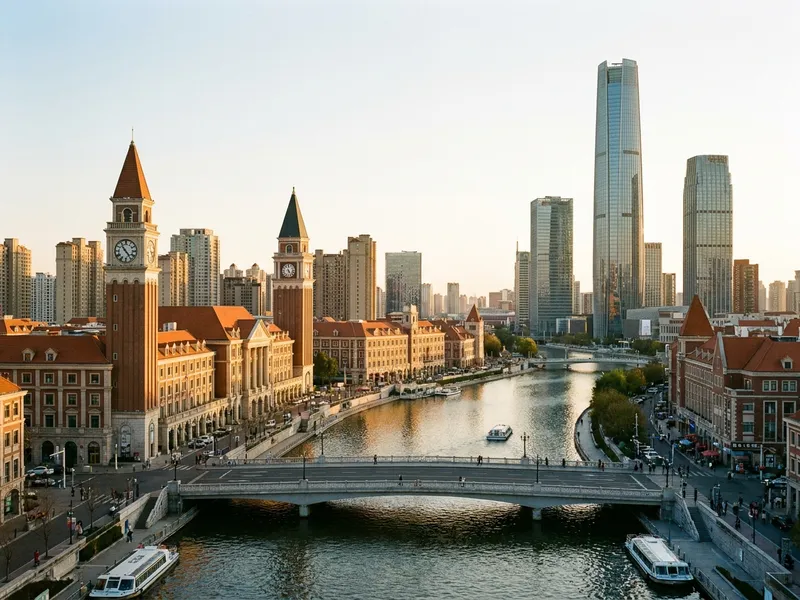
Tianjin sits 137 km southeast of Beijing at the mouth of the Hai River on the Bohai Sea and is Chinas eighth-largest city with 13.6 million residents. The city was reshaped forever by the Boxer Protocol of 1901, which carved its walled Chinese quarter into nine foreign concessions, leaving behind the largest collection of 19th-century European architecture outside Europe and the protected heritage zones of the Five Great Avenues and the Italian Style Town. Most visitors pair Tianjin with a 2-3 day stopover from Beijing on the 30-minute Beijing-Tianjin Intercity HSR; visa-free entry of 30 days applies to most Western passports and 240-hour visa-free transit covers most short connections. Beyond its concession-era streetscape, Tianjin offers the 530-meter CTF Finance Center (the ninth-tallest skyscraper in the world), the bridge-mounted Tianjin Eye, MVRDVs terraced Binhai Library, the Yangliuqing New Year woodblock prints, Mahua Opera crosstalk comedy halls, and a working food culture anchored by jianbing guozi, Four Dishes Soup, and Goubuli baozi.
Why Tianjin in 2026.
Tianjin is a coastal municipality 30 minutes from Beijing by high-speed rail, famous for its 19th-century European concession architecture along the Hai River, the well-known Tianjin Eye Ferris wheel, distinctive breakfast street food like jianbing and guoba, the futuristic Binhai Library, and a layered culinary culture that fuses northern Chinese staples with cosmopolitan flavors.
Quick Answer
Tianjin sits 137 km southeast of Beijing at the mouth of the Hai River on the Bohai Sea and is Chinas eighth-largest city with 13.6 million residents. The city was reshaped forever by the Boxer Protocol of 1901, which carved its walled Chinese quarter into nine foreign concessions, leaving behind the largest collection of 19th-century European architecture outside Europe and the protected heritage zones of the Five Great Avenues and the Italian Style Town. Most visitors pair Tianjin with a 2-3 day stopover from Beijing on the 30-minute Beijing-Tianjin Intercity HSR; visa-free entry of 30 days applies to most Western passports and 240-hour visa-free transit covers most short connections. Beyond its concession-era streetscape, Tianjin offers the 530-meter CTF Finance Center (the ninth-tallest skyscraper in the world), the bridge-mounted Tianjin Eye, MVRDVs terraced Binhai Library, the Yangliuqing New Year woodblock prints, Mahua Opera crosstalk comedy halls, and a working food culture anchored by jianbing guozi, Four Dishes Soup, and Goubuli baozi.
| Best time to visit | April-May and September-October (avoid early October Golden Week and the late-January to mid-February Spring Festival travel rush) |
|---|---|
| Daily budget | $250 (backpacker) / $700 (mid-range) / $2500+ (luxury) |
| Language | Mandarin (Putonghua) with a local Jin dialect among older residents; English signage is common in major hotels, museums, the Five Great Avenues area, and metro stations |
| Currency | CNY (¥); Visa, Mastercard, and American Express accepted at hotels, malls, and most mid-range restaurants via Alipay and WeChat Pay Tour Card |
| Time zone | China Standard Time (UTC+8), no daylight saving time |
| Last updated | 2026-06-14 |
Want a Tianjin plan built for you?
What is Tianjin: Why Tianjin Deserves a Visit?
Tianjin is one of the four direct-controlled municipalities of China and the natural counterpoint to Beijing: a coastal port city of 13.6 million people whose layered architecture, food culture, and pace of life make it the most rewarding day-trip or short stopover in northern China. The city occupies the confluence of the Hai River and the Bohai Sea, 137 km southeast of the capital, and although it sits in Beijings shadow politically, it has preserved an identity entirely its own. Most first-time visitors know Tianjin for two images: the 120-meter Ferris wheel mounted on the Yongle Bridge over the Hai River, and the leafy Five Great Avenues district where 2,000 European-style villas from the 1920s and 1930s still line streets named after Munich, London, and Paris. But Tianjin is far more than a concession-era postcard. It is one of Chinas oldest industrial ports, the birthplace of both Mahua Opera crosstalk comedy and the Goubuli baozi dumpling, the production base for Airbus A320s and CRRC high-speed trains, and home to the futuristic Binhai Library designed by MVRDV. For independent travelers, families, foodies, and architecture buffs alike, Tianjin offers something Beijing cannot: an unhurried, walkable city center where you can breakfast on a jianbing crepe cooked on a 100-year-old street cart, spend the morning in an Italian piazza, the afternoon on a river cruise, and the evening at a crosstalk show, all without crossing more than a few metro stops.
What is the history of Tianjin: From Ming Salt Port to Cosmopolitan Metropolis?
Tianjin takes its name from a Ming-dynasty phrase meaning "the heavenly ford through which the Son of Heaven passes." The citys first recorded mention, in 1404, is as the ferry crossing that shipped grain to the imperial capital at Beijing. For the next four centuries Tianjin grew slowly as a salt port, garrison town, and regional trading hub. Its history pivots in the second half of the 19th century, when the Second Opium War (1856-1860) brought British and French troops to the mouth of the Hai River and forced the Qing government to sign the Convention of Beijing in 1860, opening Tianjin to foreign trade. Between 1860 and 1900, Britain, France, the United States, Germany, Japan, Russia, Italy, Austria-Hungary, and Belgium each established their own concession, importing their own banks, schools, churches, consulates, tram lines, and barracks. By 1900 the foreign concessions occupied roughly one-third of the walled city, making Tianjin the most international port in East Asia. The Boxer Rebellion and the subsequent invasion by the Eight-Nation Alliance in 1900, then the Boxer Protocol of 1901, expanded the foreign presence further. The concessions were progressively returned to Chinese sovereignty between 1924 and 1947, but the architecture remained. The Republican era (1912-1949) was a brief golden age for Tianjin: warlords, financiers, and reformist politicians built lavish residences in the Five Great Avenues, the Peking Opera moved south from Beijing, and crosstalk comedy flourished in the citys teahouses. After 1949 the city industrialized rapidly under the Communists, and the 2008 Beijing Olympics gave Tianjin its first metro line. The 2014 Summer Davos opened the Binhai New Area, and the 2017 opening of the 530-meter CTF Finance Center made Tianjin home to the ninth-tallest building in the world. Today Tianjin is a working port of 30+ million tons a year, a high-tech manufacturing hub, and a heritage tourism destination whose concession-era streetscape is now protected under both national and municipal law.
What is the geography and climate of Tianjin, and when should I visit?
Tianjin municipality covers 11,917 square kilometers, although the urban core clusters along 72 km of the Hai River before it empties into the Bohai Sea at the Tanggu port. The terrain is exceptionally flat — the citys highest natural point is only 1,078 meters above sea level, and the urban core sits at around 5 meters. The Hai River itself is a managed waterway controlled by locks and dams, and the entire riverfront is a protected heritage corridor with continuous public access from the Three Martyrs Bridge in the west to the Tanggu estuary in the east. The climate is humid continental with four distinct seasons and the kind of seasonal swings that catch visitors off guard. Summers (June through August) are hot and humid, with average July highs of 31°C and lows of 22°C, frequent afternoon thunderstorms, and occasional typhoon-influenced rain bands from the Yellow Sea. Winters (December through February) are cold, dry, and overcast, with January averaging daytime highs of 1°C and nighttime lows of -8°C; snow is possible but rarely accumulates. Spring (March-May) is short and windy, with the notorious North China dust storms peaking in late March and early April — a real consideration for visitors with respiratory sensitivities. Autumn (September to early November) is the best season by a wide margin: warm dry days, cool nights, golden light on the concession-era architecture, and the lowest rainfall. The best months are April-May and September-October, with the caveat that the first week of October (National Day Golden Week, October 1-7) brings enormous domestic crowds, hotel price spikes, and traffic gridlock; the late-January to mid-February Spring Festival travel rush is similarly congested. Annual precipitation is around 580 mm, with roughly 80% falling between June and September. Air quality in Tianjin is usually better than Beijings but still subject to winter inversions; check the US Embassy air quality monitor or a Chinese app such as AirVisual before sensitive visits.
How to Get There: Flights, Trains, and the Beijing-Tianjin HSR
Tianjin is one of the easiest major Chinese cities to reach, and most international travelers arrive by air through Beijing Capital (PEK) or Beijing Daxing (PKX) and continue overland by high-speed rail. The Beijing-Tianjin Intercity High-Speed Railway covers 120 km from Beijing South Railway Station to Tianjin Station in as little as 30 minutes, with up to 200 daily services running between 6:30am and 11pm at intervals of 5-15 minutes during peak hours. Second-class tickets cost ¥55, first-class ¥88, and business class ¥174. Tianjin Station sits in the heart of the city on metro lines 2, 3, and 9; from the platform you can reach the Italian Style Town in 20 minutes. For travelers who prefer to fly directly, Tianjin Binhai International Airport (TSN) is 15 km east of the city center and handled roughly 30 million passengers in 2024. The airport has direct flights to London Heathrow, Frankfurt, Tokyo Narita, Tokyo Haneda, Seoul Incheon, Singapore Changi, Sydney, San Francisco, Los Angeles, and Bangkok, plus a dense domestic network including daily flights to Shanghai, Guangzhou, Shenzhen, Hong Kong, Chengdu, and Kunming. A metro extension to the airport opened in 2018, and the journey from downtown takes 45 minutes and costs ¥5. From Shanghai, the Beijing-Shanghai HSR stops at Tianjin South Railway Station, with journey times of 5 hours 30 minutes from Hongqiao and 5 hours 10 minutes from Shanghai. Tianjin has three main railway stations: Tianjin Station (central, on the metro, for Beijing and the coast), Tianjin West Station (for HSR services south to Shanghai and west to Wuhan), and Tianjin North Station (mostly conventional rail). Within the city the metro has 8 operational lines and 230+ stations covering the main attractions; the Italian Style Town is on Line 2, the Five Great Avenues on Line 1, the Tianjin Eye is a 10-minute walk from Yingkoudao Station on Line 2, and the Binhai Library is reached by Line 9 to Taihu Road plus a short taxi.
How do I get around Tianjin: Metro, Taxi, DiDi, and Bike Share?
Tianjin has a modern, easy-to-navigate public transport system. The metro is the workhorse: 8 lines, 230+ stations, ¥2-7 per ride depending on distance, signage in English and Chinese, and the kind of clean, air-conditioned cars that make long-distance sightseeing bearable in the heat of summer or the chill of winter. The metro runs from roughly 6am to 11pm every day, with frequencies of 3-7 minutes during peak hours and 8-12 minutes at off-peak times. A reloadable Tianjin Metro Transportation Card (Yikatong) can be bought at any station for ¥20 (refundable deposit) and saves the queue for single-journey tickets; the same card works on buses and the tourist tram. Taxis in Tianjin are metered and reasonable; flag-fall is ¥11 for the first 3 km and ¥2.5 per additional km (¥3.5 at night), and an average cross-city ride costs ¥30-60. DiDi (Chinese Uber) operates throughout the city and is the safest and most foreigner-friendly option: the English-language app is fully functional, fares are typically 10-20% lower than taxi meters, and the GPS tracking means you cannot be overcharged. Always insist on the meter or use DiDi; unmarked cabs at the airport and major stations occasionally overcharge. Bike share has exploded in Tianjin since 2017, with three operators (Meituan Bike, HelloRide, and Didi Bike) covering most of the central districts. The bikes are dockless, available by scanning a QR code in the Meituan or WeChat apps, and cost ¥1.5 per 30 minutes. The Five Great Avenues and the Italian Style Town are best explored on foot, on a pedicab, or by bike; the Hai River waterfront has a continuous bike-and-pedestrian path. For day trips to the Huangyaguan Great Wall or Yangliuqing, organized tours or a private driver (¥600-1,000 per day through the hotel) are the most practical option.
Where should I stay in Tianjin?
Tianjins accommodation is concentrated in four areas, each with a distinct character. The Binjiang Dao and Xiaobailou area, anchored around the Italian Style Town and the central shopping streets, is the most convenient for first-time visitors. International hotels cluster here: the Tianjin Marriott Hotel National Convention and Exhibition Center (from ¥700 per night), the Hilton Tianjin (¥900), the Shangri-La Tianjin (¥1,100), and the Pan Pacific Tianjin (¥750) are all within walking distance of the Hai River, the Porcelain House, and the central shopping streets. Mid-range options along Heping Road and Nanjing Road include the Holiday Inn Tianjin Riverside (¥500), the Tianjin Culture Hotel (¥400), and the Smart Hotel Plus (¥300). The Five Great Avenues neighborhood to the west is quieter and more atmospheric, with boutique hotels in restored 1930s villas. The Astor Hotel Tianjin, founded in 1863 and rebuilt in its current Beaux-Arts form in 1908, is the citys most famous historical property and still has its original wood-paneled grand staircase and Victorian-style lobby; rooms from ¥1,500 per night. The Hyland Hotel (¥600) and the Tianjin Victoria International Hotel (¥500) are mid-range alternatives in the same neighborhood. The Binhai New Area, home to the Binhai Library and the Smiley Ferris Wheel, has fewer traditional hotels but some of the citys newest, including the Ritz-Carlton Tianjin (¥1,800), the St. Regis Tianjin Binhai (¥1,600), and the Courtyard by Marriott Tianjin Binhai (¥700). For backpackers, hostels cluster around Tianjin University and Nankai University in the Nankai district, with dorm beds from ¥60-120 per night at the Tianjin International Youth Hostel and the YHA Tianjin Hostel. The Olympic Center area south of the river is convenient for the convention center and the Tianjin Museum but lacks dining and nightlife; pick it only if you have a specific reason. Book at least 2 weeks ahead during the Spring Festival (late January to mid-February) and Golden Week (October 1-7), when hotel prices can triple.
What are the top attractions in Tianjin?
Tianjins signature attraction is the Five Great Avenues (Wudadao), a 1.6-square-kilometer grid of six converging avenues lined with more than 2,000 European-style villas built between 1920 and 1930 by Chinese warlords, financiers, and foreign residents. The area is sometimes called the World Architecture Expo because the buildings represent 12 distinct Western architectural styles: British Tudor, French Renaissance, Italian Romanesque, German Gothic, Spanish Andalusian, Norwegian, Japanese, Russian, Greek Revival, Art Deco, and Dutch Colonial. Notable villas include the Porcelain House (covered in 4,000 pieces of antique porcelain and 400 million marble fragments), the Zhang Xueliang Former Residence (where the Young Marshal was held under house arrest by Chiang Kai-shek between 1936 and 1937), the Manchu Princes Mansion (the last Qing princes residence), the Munthe House (home of a Norwegian diplomat), and the former residence of Cao Yu (one of Chinas greatest modern playwrights). A 30-minute pedicab tour costs ¥80-150 and is the most efficient way to see the area; self-guided walking works but takes 3-4 hours. The Italian Style Town is a separate district of 200+ Italian-style buildings from the 1902-1943 Italian Concession, complete with a replica of the Roman Colosseum and the Leaning Tower of Pisa, an Italian piazza with a fountain, gelato shops, trattorias, and a permanent photography exhibition on the Italian Concession at the Liang Qichao Former Residence. Free entry, open 24 hours. Across the river, the Tianjin Eye rises 120 meters above the Yongle Bridge — it is the only ferris wheel in the world built over a river, and the night views of the Hai River skyline from the top are spectacular. Tickets ¥70, queues usually under 20 minutes. For modern architecture, the Binhai Librarys 33,700-square-meter terraced book mountain is one of MVRDVs most photographed works (free but advance booking required), while the Tianjin CTF Finance Center (530 meters) is the ninth-tallest building in the world and has an observation deck on the 78th floor (¥200 entry, recommended at sunset).
What local food should I try in Tianjin?
Tianjin cuisine is a distinct subset of northern Chinese food. It is characterised by sweet-savory flavors, river fish from the Hai and the Bohai, an obsession with street breakfast, and a deep borrow-from-the-concessions tradition of breads, pastries, and Western-style sweets. The most famous local dish is jianbing guozi, a crepe made from mung bean and millet batter, fried on a griddle, smeared with sweet bean sauce and fermented bean curd, topped with egg, scallion, and cilantro, and wrapped around a crispy fried dough stick (you tiao). Nanshi Food Street has 80+ jianbing stalls and is the place to try it — the Old Zhang Jianbing on the corner of Nanshi and Dongma Lu is a frequent favorite, but any stall with a queue is safe. Guoba is a crispy rice crust steamed with vegetables and a savory sauce; mahua are twisted fried dough sticks flavored with sesame, fennel, or brown sugar; douzhi is a fermented mung bean milk with a distinctive sour flavor that even some Beijing visitors find challenging. For sit-down meals, the Four Dishes Soup (sizhou tang) is a local classic: four small dishes (usually braised pork, beans, vermicelli, and eggs) with a shared broth, served at almost every Tianjin restaurant. Other standouts include smoked mandarin fish (weixun lianyu), steamed dumplings (guantang bao) served in individual soup-broth cups, and the cities famous Goubuli baozi — pork-filled steamed buns so labor-intensive that their original 19th-century maker supposedly had no time to greet customers, hence the name dog does not care. The local restaurant scene has a handful of standouts: Goubuli (founded 1858, with branches on Shandong Lu and at the Tianjin Station food court) for traditional baozi, the Hongqimen branch of Tianjin Baozi Shop for xiaolongbao-style pork buns, the renovated 1912 Xinhua Lu food court for the full street-food experience at indoor stalls, and the Italian Style Towns Trattoria Adriatico for Italian food in an authentic piazza setting. Most menus have photo displays and English translations in tourist areas; elsewhere, you will need a translation app. Meal prices are modest by Chinese standards: a jianbing breakfast ¥8-15, a sit-down lunch ¥40-80, and a four-dishes-soup dinner for two ¥120-180.
What is a good 1- to 3-day itinerary for Tianjin?
One Day in Tianjin: Start at the Five Great Avenues, taking a 90-minute pedicab tour that covers the 12 architectural styles and includes a stop at the Porcelain House (¥50 entry). Walk south to the Italian Style Town for lunch at a trattoria in the piazza, then spend the afternoon exploring the Italian streets, the Liang Qichao Former Residence, and the nearby Drum Tower. Cross the Jiefang Bridge in the late afternoon to ride the Tianjin Eye at sunset (¥70), then take a 40-minute Hai River cruise (¥80) when the bridges light up. Dinner at Nanshi Food Street for jianbing, mahua, and Four Dishes Soup. Three Days in Tianjin: Day 1 as above. Day 2: Take metro line 9 east to Tanggu (90 minutes) for the Binhai Library (advance booking required), then continue to the Dongjiang Bay beach for a seafood lunch and views of the Bohai. Return to central Tianjin for the afternoon and explore the Ancient Culture Street for Yangliuqing New Year prints, clay figurines, and mahua. In the evening, ascend the 415-meter Tianjin Radio and Television Tower for panoramic city views (¥60), or attend a Tianjin crosstalk show at the Tianyu Crosstalk House (¥100-200, book 3 days ahead) — Tianjin is the birthplace of this two-man stand-up comedy form and performances last 90 minutes of nonstop wordplay. Day 3: Take a full-day tour to the Huangyaguan Great Wall (¥300-500 with transport and guide, departs 8am from central Tianjin) — the restored Ming section is 2,152 steps with watchtowers at every kilometer and a glass suspension bridge over the gorge. Return to Tianjin by 6pm and spend the evening at the Tianjin Museum (free), then dinner along the Hai River. Optional Day 4: Visit Yangliuqing Ancient Town (15 km west) for the woodblock-print workshops and canal-side lunch; spend the afternoon at the Tianjin Olympic Center Stadium (if a tour is available); end the day at the 530-meter CTF Finance Center observation deck for sunset views of the Bohai Sea.
What practical information do I need for Tianjin: Visa, Money, Connectivity, and Language?
Most Western passport holders can visit Tianjin visa-free for up to 30 days, or for 240 hours (10 days) as part of a visa-free transit from a third country. Eligible countries include the US, UK, EU, Australia, Canada, Japan, South Korea, New Zealand, and Singapore. Tianjin has its own 144-hour visa-free transit zone for cruise ship passengers arriving at the Tianjin International Cruise Home Port. Check the latest rules with your nearest Chinese consulate before booking, as the policy is updated frequently. Money and Payment: The currency is the Chinese Yuan Renminbi (CNY, ¥), with an exchange rate of roughly ¥7.2 to US$1. Cash works everywhere. Alipay and WeChat Pay both accept foreign Visa, Mastercard, and American Express cards via the Tour Card feature — set this up before arrival through the Alipay app (no Chinese bank account required). Many small shops in the Nanshi Food Street and around the Five Great Avenues are still cash-only. ATMs are widespread and accept foreign cards; the 7-Eleven, ICBC, and Bank of China branches in tourist areas give cash advances. SIM Cards and Connectivity: Buy a China Unicom or China Mobile tourist SIM at the airport arrivals hall for ¥80-150 with 10-30 GB of data valid for 7-30 days. eSIM is supported on most modern iPhones and Androids. Public Wi-Fi is patchy; hotel Wi-Fi is reliable. A VPN is needed to access Google, Gmail, Facebook, Instagram, YouTube, and Western news sites — install and test yours before arrival. Language: Standard Mandarin (Putonghua) is the official language and is understood everywhere. The local Tianjin dialect is a variant of Jin Chinese with distinctive vocabulary and intonation; older residents speak it among themselves. English is widely spoken in hotels, museums, and tourist areas but rare elsewhere; keep a translation app (Google Translate, Baidu Translate) on your phone. Electricity and Plugs: 220V, 50Hz, with Type A, C, and I plugs. Bring a universal adapter. Time zone is China Standard Time (UTC+8), with no daylight saving time. Tap water is not drinkable; use bottled or filtered water.
What are the best day trips from Tianjin?
Tianjins location on the Beijing-Tianjin corridor makes it an ideal base for several rewarding day trips. The most popular is the Huangyaguan Great Wall, 120 km north of central Tianjin — a restored Ming-dynasty section with 2,152 steps, watchtowers at every kilometer, and a glass suspension bridge over a gorge. Tours depart at 8am and return by 6pm; budget ¥300-500 per person with transport and guide. Yangliuqing Ancient Town, 15 km west of downtown Tianjin, is the birthplace of the famous Yangliuqing New Year woodblock prints and home to traditional folk kite-making and clay-figure workshops; half-day tours are easy to arrange, and the towns canalside lunch at one of the small noodle shops is memorable. For travelers with more time, a day trip to Beijing by HSR takes 30 minutes and opens the Forbidden City, the Temple of Heaven, the Summer Palace, the hutongs, and the Beijing Opera. The Panshan Scenic Area, 110 km northwest of Tianjin in Ji County, is a forested mountain range with Buddhist and Taoist temples, hot springs, and hiking trails; it has been a retreat for imperial officials for 800 years and is one of Chinas most underrated mountain destinations. The Binhai New Area itself, reached by metro line 9, is a 2,270-square-kilometer coastal district that includes the Binhai Library, the Smiley Ferris Wheel at the TEDA Football Stadium, the Tianjin Haichang Polar Ocean World, the Binhai Aircraft Carrier Theme Park (built around the decommissioned Kiev-class aircraft carrier Minsk), and the Dongjiang Bay beach resort — a full day on the Bohai coast. For wine lovers, the Tianjin Tangu Binhai Wine Chateau offers tastings in a French-style chateau 60 km from the city. Travelers with an extra 2-3 days can continue south by HSR to Cangzhou (home of the Iron Lion, one of Chinas oldest metal castings) or to Jinan (the City of Springs, with Daming Lake and Baotu Spring).
What cultural etiquette and practical tips should I know?
Tianjin is one of the easiest Chinese cities in which to navigate cultural differences. As a long-standing port and foreign concession, it is cosmopolitan, tolerant, and accustomed to outsiders. A few practical pointers help visitors blend in and avoid faux pas. Tipping is not customary in restaurants or taxis; some high-end restaurants add a 10-15% service charge. Round up the fare or hand the driver the small change if you want to acknowledge good service, but do not insist. Chopsticks should never be stuck vertically into a bowl of rice — this is associated with funeral incense. Use the serving chopsticks or the reverse end of your own to take food from shared plates. Smoking is restricted indoors and at tourist sites but still common on the street; many restaurants have smoking sections. The legal drinking age is 18; Tsingtao beer and Yanjing beer (both brewed with Tianjin groundwater) are available everywhere. Bargaining is expected at the Ancient Culture Street and the Yangliuqing woodblock-print stalls but not in restaurants or shops with fixed prices. When entering a temple, cross the threshold with one foot only (not both), avoid pointing at the Buddha statues, and ask before photographing worshippers. The five great concessions left a Christian heritage in Tianjin: there are functioning Catholic cathedrals (the Xikai Cathedral is one of Chinas most beautiful, built in 1913 in French Romanesque style) and Protestant churches; visitors are welcome at services and most weekly concerts. Personal space is closer than in the West, especially in markets and on the metro, but staring is not considered rude. Tianjins crosstalk comedy (xiangsheng) halls expect audience interaction — heckling, laughing loudly, and applauding are all part of the experience. Finally, always carry your passport: hotels must register foreign guests with the local police within 24 hours of check-in, and you may need to show your passport when buying train tickets, entering certain museums, or registering for a SIM card.
What is Tianjin nightlife like and where should I go after dark?
Tianjin's nightlife is more relaxed and intimate than Beijing's sprawling club scene, favoring riverside bars, craft beer taprooms, live comedy theaters, and late-night food streets over mega-clubs. The city comes alive along the Hai River after sunset, when the 19 historic bridges illuminate in shifting colors and the Tianjin Eye glows against the night sky. The Italian Style Town is the natural starting point for an evening out: its cobblestone piazzas, replica Colosseum, and Leaning Tower of Pisa are lit in warm amber, and the outdoor terraces of Trattoria Adriatico, Pizza Bianca, and the Italian Style Town Beer Garden fill with diners until 11pm. For craft beer enthusiasts, the Slow Boat Brewery Taproom near the Five Great Avenues serves Tianjin-brewed IPAs, stouts, and seasonal sours in a converted 1930s villa with original timber beams; pints run ¥40-60. The Panda Brewpub in the Italian Style Town offers a similar local selection with rooftop seating. The Binjiang Dao pedestrian shopping street stays busy until 10pm with street performers, bubble tea shops, and neon-lit storefronts. For something uniquely Tianjin, the crosstalk comedy theaters are the city's most authentic evening entertainment. Tianyu Crosstalk House, Mingliu Crosstalk Club, and the Tianjin Crosstalk Theater host 90-minute shows from 7:30pm most nights; tickets cost ¥100-200 and the atmosphere is raucous, with audiences shouting encouragement and laughing at rapid-fire Mandarin wordplay. Even without understanding every joke, the physical comedy and audience energy are infectious. The Nanshi Food Street operates from 11am to 11pm and transforms into a late-night snacking hub where locals gather for jianbing, grilled squid, and cold beer at plastic tables. For live music, the 13 Club near Nankai University hosts local rock and indie bands, while the Tianjin Grand Theater offers classical concerts and opera in a spectacular lakeside building designed by German architect von Gerkan. Most bars and restaurants close by midnight on weeknights and 1-2am on weekends; Tianjin is not a 24-hour party city, but it offers enough variety for a satisfying evening without the overwhelming scale of Beijing or Shanghai.
What should I buy for souvenirs and where is the best shopping in Tianjin?
Tianjin offers some of the most distinctive souvenirs in northern China, rooted in 600 years of craft traditions and shaped by its concession-era cosmopolitanism. The Ancient Culture Street (Guwenhua Jie) is the best single destination for traditional crafts: Yangliuqing New Year woodblock prints, produced in the nearby town of the same name for over 400 years, depict auspicious scenes of children, deities, and daily life in vivid mineral pigments on handmade paper; a framed print costs ¥80-300 depending on size and age. Clay Zhang (Ni Zhang) figurines are miniature sculptures of opera characters, animals, and folk scenes molded from local river clay and painted in extraordinary detail; small pieces start at ¥50, larger opera figures at ¥200. Tianjin kites, with their distinctive swallow-shaped frames and hand-painted silk panels, have been a local specialty since the Ming dynasty; a basic kite costs ¥30-80, while elaborate framed display pieces run ¥150-400. Mahua twisted dough, sold in vacuum-sealed packages at the Ancient Culture Street and the airport, makes an edible souvenir that stays fresh for weeks; the 18th Street Mahua brand is the most famous, with flavors including sesame, brown sugar, and spicy Sichuan pepper. For concession-era memorabilia, the Five Great Avenues antique shops sell vintage postcards, old maps of the foreign concessions, and reproductions of 1920s travel posters; the small gallery at the Liang Qichao Former Residence has a well-curated selection. The Tianjin Eight Pieces (Tianjin Babaofang) are traditional pastries sold at shops along Heping Road and Nanjing Road: walnut cookies, sesame cakes, date-filled pastries, and osmanthus bean paste cakes, boxed in decorative tins perfect for gifting. Modern shopping centers include the Isetan Department Store on Nanjing Road for Japanese and international brands, the Joy City mall near the Italian Style Town for mid-range fashion, and the Florentia Village outlet mall in the Wuqing district for discounted European luxury brands in a faux-Italian village setting. Bargaining is expected at the Ancient Culture Street and Yangliuqing stalls but not in department stores or fixed-price shops. For the best prices, avoid airport souvenir shops and buy directly from the craftspeople in the Ancient Culture Street workshops.
What makes Tianjin a good destination for family travel with children?
Tianjin is one of the most family-friendly major cities in China, offering a compact, walkable center, a wide range of child-engaging attractions, and a food culture that accommodates picky eaters. The city is small enough that families rarely spend more than 20 minutes in transit between sights, and the metro's clean, air-conditioned cars make summer travel bearable. The Tianjin Eye is the obvious highlight for children: the 120-meter Ferris wheel on the Yongle Bridge offers a gentle, 30-minute ride with panoramic views that captivate kids from age 3 upward; tickets are ¥70 and queues are usually under 20 minutes. The Binhai Library, designed by MVRDV, is a wonderland for children who love books or architecture: the terraced white bookshelves create a playground-like interior where kids can climb, explore, and read; entry is free but requires advance booking online. The Tianjin Haichang Polar Ocean World in the Binhai New Area is a full-scale aquarium with beluga whales, polar bears, penguins, and dolphin shows; it is less crowded than Beijing's aquarium and tickets cost ¥180 for adults, ¥90 for children under 1.4 meters. The Binhai Aircraft Carrier Theme Park, built around the decommissioned Soviet Kiev-class carrier Minsk, lets children explore the flight deck, engine rooms, and crew quarters; it is one of the most unusual military museums in Asia and appeals strongly to children over age 6. The TEDA Football Stadium offers stadium tours on non-match days, and the Tianjin Museum has interactive exhibits on the city's history that engage school-age children. The Five Great Avenues pedicab tours work well with children over 5; the open-air carts and the driver's commentary (often in English) keep younger travelers entertained. For outdoor time, the Tianjin Water Park and People's Park have playgrounds, paddle boats, and open lawns. The Italian Style Town's gelato shops and fountain piazza are natural gathering spots for families. Hotels are generally accommodating: international chains provide cribs, rollaway beds, and children's menus, and the Italian restaurants in the concession area offer familiar pasta and pizza for children who are not ready for jianbing. The Nanshi Food Street has enough variety that even selective eaters find something appealing. For a full family day, combine the Tianjin Eye in the morning, the Italian Style Town for lunch and gelato, the Ancient Culture Street for kite shopping and clay figurines, and the Hai River cruise at sunset.
How accessible is Tianjin for travelers with mobility needs or disabilities?
Tianjin is moderately accessible by Chinese standards, with significant improvements in the past decade but still some challenges for travelers with mobility impairments. The metro system is the most accessible infrastructure: all 230+ stations have elevators from street level to platform, tactile paving for visually impaired passengers, and audible announcements in both Chinese and English. Metro cars have designated wheelchair spaces and priority seating. The challenge is that elevator locations are not always obvious from the street; look for the blue wheelchair symbol or ask station staff, who are generally helpful. Major hotels, especially international chains like Marriott, Hilton, Shangri-La, and the Ritz-Carlton, have wheelchair-accessible rooms with roll-in showers, grab bars, and lowered fixtures; book these rooms in advance as they are limited. The Five Great Avenues, despite their beauty, present the biggest accessibility challenge: the 1920s villas have steps at nearly every entrance, narrow sidewalks with uneven brick paving, and tree roots that buckle the pavement. Pedicab tours can accommodate travelers who can transfer from a wheelchair to the cart seat; discuss this with the driver beforehand. The Italian Style Town is more accessible, with wider, flatter cobblestone streets and many restaurants with ground-floor seating. The Tianjin Eye has wheelchair-accessible gondolas but requires advance notice; call ahead or ask your hotel to book. The Tianjin Museum and the Binhai Library are fully wheelchair accessible with ramps, elevators, and accessible restrooms. The Ancient Culture Street has narrow lanes and steps at temple entrances; the main pedestrian thoroughfare is navigable but side alleys may not be. The Hai River cruise boats have ramped boarding at the Jiefang Bridge dock. For travelers with hearing impairments, English subtitles are rare at crosstalk theaters and museums have limited visual guides. For travelers with visual impairments, the metro's tactile paving is good but street-level wayfinding is minimal. Accessible taxis are not widely available; DiDi has a wheelchair-accessible vehicle option in some districts but booking requires Chinese language ability. The best strategy is to stay in a central international hotel, plan routes around the metro, and book accessible attractions in advance through the hotel concierge.
What should solo travelers know about visiting Tianjin?
Tianjin is an excellent destination for solo travelers, offering a compact, safe city center, English-friendly infrastructure, and a social atmosphere that makes it easy to meet people or enjoy solitude equally. The city is significantly less overwhelming than Beijing for first-time visitors to China: the metro is intuitive, the central attractions cluster within a few square kilometers, and the pace of life is unhurried enough that solo travelers do not feel they are missing out by moving slowly. Safety is not a concern. Violent crime against foreigners is extremely rare, and the central districts are well-lit and busy until late evening. Women traveling alone report feeling comfortable walking at night in the Italian Style Town, Binjiang Dao, and Hai River areas. The main solo-traveler risk is the same as for all visitors: taxi overcharging and occasional food hygiene issues at the cheapest street stalls. Use DiDi instead of hailing cabs, and choose busy stalls with high turnover at the Nanshi Food Street. For accommodation, solo travelers have excellent options across budgets. Hostels near Tianjin University and Nankai University offer dorm beds from ¥60-120 and have common areas where travelers swap tips; the Tianjin International Youth Hostel and YHA Tianjin Hostel are both well-run and English-speaking. Mid-range solo travelers should consider the Smart Hotel Plus or the Tianjin Culture Hotel on Heping Road, where single rooms run ¥250-350 and put you within walking distance of the Five Great Avenues and the metro. The social scene for solo travelers centers on the crosstalk comedy theaters, where shared tables and audience interaction create natural conversation starters, and the craft beer taprooms like Slow Boat Brewery, where the bartenders speak English and the clientele includes expats and international students. The Italian Style Town's outdoor cafes are comfortable for solo dining; a book or phone is perfectly acceptable company. For solo dining, the Nanshi Food Street is ideal: eat standing at a stall, move on to the next, and never feel awkward. Sit-down restaurants are also solo-friendly; Goubuli and the Xinhua Lu food court serve solo diners without fuss. The biggest challenge for solo travelers is the language barrier outside tourist areas. English is common in hotels and museums but rare in local restaurants and shops. Download Baidu Translate or Google Translate (with offline packs) before arrival, and consider carrying a card with your hotel's address in Chinese. The metro's English signage is comprehensive, but bus routes are Chinese-only. For day trips, the Huangyaguan Great Wall and Yangliuqing are easier with a group tour than independently; book through your hotel or a platform like Trip.com, where English-speaking guides are available.
Where are the best photography spots in Tianjin?
Tianjin is one of the most photogenic cities in northern China, offering a rare combination of European architecture, modern skyscrapers, historic riverfront, and atmospheric street life. The golden hour for photography is the hour before sunset, when the low sun illuminates the brick facades of the Five Great Avenues in warm amber and casts long shadows across the tree-lined streets. The intersection of Chongqing Dao and Changde Dao, with its British Tudor villa and overhanging plane trees, is the most photographed corner in the district. The Porcelain House, covered in 4,000 pieces of antique porcelain and 400 million marble fragments, is a macro photographer's dream: every surface glitters with ceramic shards, and the courtyard's porcelain dragon is best shot from the second-floor balcony. The Italian Style Town offers European piazza aesthetics without the European airfare: the replica Colosseum and Leaning Tower of Pisa are obvious subjects, but the more rewarding shots are the narrow lanes at dawn before the crowds arrive, when the ochre and terracotta walls catch the first light. The Tianjin Eye is the city's signature shot, and the best vantage points are from the south bank of the Hai River at Jiefang Bridge (for a straight-on bridge-and-wheel composition) and from the promenade west of the bridge (for a wider skyline shot including the CTF Finance Center). Blue hour, 20-30 minutes after sunset, is the optimal time: the wheel lights up, the river reflects the colors, and the sky holds enough detail to avoid silhouettes. The Hai River itself is a photography subject: the 19 bridges each have distinct characters, from the steel truss Jiefang Bridge (opened 1927, modeled after the Alexander III Bridge in Paris) to the modern glass-and-steel Dagu Bridge. A night cruise offers moving perspectives that are impossible from land. The Binhai Library's terraced white interior is one of the most photographed architectural interiors in China; the best shots are from the ground floor looking up at the spherical lecture hall, or from the upper terraces looking down at the reading crowd. Tripods are officially discouraged but small cameras are welcome; the space is bright enough that high ISO is unnecessary. The CTF Finance Center observation deck on the 78th floor offers the highest vantage point in the city; shoot at sunset for a view that stretches to the Bohai Sea on clear days. For street photography, the Nanshi Food Street at breakfast time (7-9am) captures Tianjin at its most authentic: jianbing vendors flipping crepes, old men drinking douzhi on stools, and the organized chaos of a northern Chinese morning market. The Yangliuqing Ancient Town during the Lunar New Year temple fair offers extraordinary color: red lanterns, woodblock print demonstrations, and folk performers in traditional costume. For drone photographers, Tianjin has strict no-fly zones around the airport, the CTF Finance Center, and the port; fly only in designated areas and register with local authorities.
What is a realistic budget breakdown for a trip to Tianjin?
Tianjin is 20-30% cheaper than Beijing for most travel expenses, making it an economical stopover or standalone destination. A backpacker can manage on ¥250-400 per day: a dorm bed at the Tianjin International Youth Hostel or YHA Tianjin Hostel costs ¥60-120, breakfast of jianbing and soy milk at a street cart is ¥10-15, a metro day pass is not available but individual rides cost ¥2-7, lunch at a noodle shop or food court is ¥25-40, dinner of Four Dishes Soup and rice at a local restaurant is ¥40-60, and attraction tickets (the Tianjin Eye ¥70, the Porcelain House ¥50, the Hai River cruise ¥80) can be spread across days. A mid-range budget of ¥700-1,200 per day covers a 4-star hotel room at the Holiday Inn Tianjin Riverside or the Tianjin Culture Hotel for ¥400-700, a hotel breakfast or local cafe for ¥50-80, metro and DiDi rides for ¥40-60, lunch at a sit-down restaurant for ¥80-120, dinner at Goubuli or an Italian Style Town trattoria for ¥150-250, and one major attraction per day at ¥100-200. The Three-Day Tianjin Tourist Card (¥220, available at the tourist information center at Tianjin Station) covers unlimited metro rides and discounted entry to the Tianjin Eye, the Porcelain House, and the Tianjin Tower; it pays for itself if you visit two or more paid attractions. A luxury budget starts at ¥2,500 per day: the Astor Hotel Tianjin or the Ritz-Carlton Tianjin run ¥1,500-2,000 per night, breakfast at the hotel or a fine-dining brunch is ¥200-300, private car and driver for the day is ¥600-1,000, lunch at a high-end restaurant is ¥300-500, dinner with wine at the St. Regis or an Italian Style Town upscale restaurant is ¥500-800, and a private Hai River cruise or a guided Great Wall day trip adds ¥800-1,500. Food costs are notably low: even at the most famous restaurants, a full meal rarely exceeds ¥200 per person. The Beijing-Tianjin HSR adds ¥55 each way for second class. A Huangyaguan Great Wall day trip costs ¥300-500 with transport and guide. The Binhai Library is free but requires advance booking. The Tianjin Museum and the Italian Style Town are free. Shopping at the Ancient Culture Street is variable: a Yangliuqing print costs ¥80-300, a Clay Zhang figurine ¥50-200, and mahua snacks ¥20-50 per package. A realistic 3-day mid-range trip totals ¥2,500-4,000 per person excluding the HSR from Beijing.
What is crosstalk comedy and how deep does it run in Tianjin culture?
Crosstalk, known in Chinese as xiangsheng, is a two-person comedic dialogue form that originated in Beijing and Tianjin during the late Qing dynasty in the 1860s. Tianjin remains its spiritual home more than 150 years later. The format is deceptively simple: two performers on a bare stage, one playing the straight man (dougen) who sets up the jokes, the other playing the joker (pengen) who delivers the punchlines, wordplay, and physical comedy. The dialogue is performed in rapid-fire Mandarin with heavy use of puns, homophones, historical references, and satirical commentary on social foibles. What makes crosstalk distinct from Western stand-up is its formal structure: each piece follows a traditional progression of introduction, development, and climax, with set pieces that have been refined over generations. The form was brought to Tianjin by Zhu Shaowen, a court performer who fled Beijing during the Boxer Rebellion and established the first Tianjin crosstalk troupe in the city's teahouses. The Republican era (1912-1949) was crosstalk's golden age in Tianjin: the city's teahouses and pleasure quarters were filled with performers who developed the signature Tianjin style, which is faster, more physical, and more audience-interactive than the Beijing variant. The most famous Tianjin crosstalk master was Ma Sanli, whose career spanned from the 1930s to the 2000s and who is still revered as the greatest practitioner of the form. Today, Tianjin has more dedicated crosstalk theaters than any other Chinese city. The Tianyu Crosstalk House, located in a converted Republican-era theater near the Ancient Culture Street, hosts 90-minute shows nightly at 7:30pm; tickets cost ¥100-200 and the intimate space seats only 200 people, creating an atmosphere where the audience's laughter and shouted responses become part of the performance. The Mingliu Crosstalk Club and the Tianjin Crosstalk Theater offer similar programming. The Tianjin Crosstalk Museum, near the Five Great Avenues, traces the history of the form with photographs, costumes, and recordings of legendary performances. For visitors, crosstalk is both entertainment and cultural immersion: even without understanding every linguistic nuance, the physical comedy, the performers' timing, and the audience's energy are universally engaging. Some theaters offer English program notes, but subtitles are rare; the experience is closer to attending an opera in Italian than to watching a subtitled film. The best approach is to read a brief history of the form beforehand, attend with an open mind, and enjoy the atmosphere. Shows typically run 90 minutes without intermission, and most theaters have tea service included in the ticket price. Booking 2-3 days ahead is recommended, especially on weekends.
What is the European architecture walking tour and which buildings should I not miss?
Tianjin's European architecture is not scattered randomly but concentrated in distinct concession-era districts that can be explored in a structured walking tour covering 4-5 hours and approximately 8 kilometers. The logical starting point is the Italian Style Town, the former Italian Concession of 1902-1943, where 200+ Italian-style buildings occupy 28 blocks. Enter from the Marco Polo Square at the north end and work south through the replica Colosseum, the Leaning Tower of Pisa, the Renaissance-style former Italian Consulate (now a museum), and the piazza with its central fountain. The Liang Qichao Former Residence, a two-story Italian villa built in 1914, houses a museum on the reformist scholar's life and a permanent photography exhibition on the Italian Concession. From the Italian Style Town, walk west across the Jiefang Bridge (opened 1927, a steel truss bridge modeled after Paris's Alexander III Bridge) to the Five Great Avenues district, the former British and French concessions. This is the densest concentration of European architecture in China: 2,000 villas in 12 distinct styles across 1.6 square kilometers. The recommended walking route follows Chongqing Dao south from Changde Dao, then turns east along Chengdu Dao, north along Dali Dao, and west along Munan Dao, creating a loop that covers the most significant buildings. Notable stops include the Porcelain House at 72 Chifeng Dao, a French-style mansion from the 1920s entirely covered in antique porcelain and marble fragments; the Zhang Xueliang Former Residence at 78 Chifeng Dao, a Spanish-style villa where the Young Marshal was held under house arrest in 1936-1937; the Munthe House at 12 Munan Dao, a Norwegian-style residence built by a diplomat in 1933; the former residence of Cao Yu at 23 Munan Dao, an Art Deco villa belonging to one of China's greatest modern playwrights; and the Manchu Princes Mansion at 20 Chongqing Dao, the last Qing dynasty prince's residence in British Tudor style. The Astor Hotel Tianjin at 33 Taierzhuang Dao, founded in 1863 and rebuilt in its current Beaux-Arts form in 1908, is worth entering for its original wood-paneled grand staircase and Victorian lobby even if you are not staying. The Xikai Cathedral at 9 Dushan Dao, built in 1913 in French Romanesque style with twin 45-meter towers, is one of China's most beautiful Catholic churches and still holds services. End the walk at the Tianjin Museum or along the Hai River promenade for sunset views of the concession skyline. A pedicab tour of the Five Great Avenues costs ¥80-150 for 30 minutes and is an efficient alternative for travelers with limited time or mobility; the drivers are knowledgeable and often speak basic English. The best light for photography is late afternoon, when the sun illuminates the brick facades from the west.
What is a deep dive into Tianjin cuisine beyond the famous dishes?
Tianjin cuisine is a distinct regional tradition within northern Chinese cooking, shaped by three forces. The salt merchants and grain traders built the city's wealth in the Ming and Qing dynasties; the foreign concessions introduced European breads, pastries, and dairy; and the working-class dockworkers and rivermen needed cheap, filling, portable food. The result is a cuisine that is simultaneously refined and rustic, with a pronounced sweet-savory flavor profile that sets it apart from the saltier, more austere cooking of nearby Beijing. At the foundation is the breakfast culture, which is arguably the most developed in China. Jianbing guozi is the headline act: a crepe of mung bean and millet batter cooked on a circular griddle, spread with sweet bean sauce (tianmianjiang) and fermented bean curd (furu), topped with a cracked egg, scallion, and cilantro, and wrapped around a crispy you tiao dough stick. The Tianjin version is distinct from Beijing's: the batter is thinner and crisper, the sauce sweeter, and the wrapping technique creates a tighter, more portable package. Guoba, a crispy rice crust steamed with vegetables and savory sauce, is another breakfast staple that originated in Tianjin's dockyards; the rice is cooked until the bottom forms a caramelized crust, then broken into pieces and re-steamed with mushrooms, bamboo shoots, and shrimp. Mahua, twisted fried dough sticks flavored with sesame, fennel, or brown sugar, were invented in the 18th century by a Tianjin baker and remain the city's most popular snack; the 18th Street Mahua brand, founded in 1927, still produces them by hand. Douzhi, fermented mung bean milk with a sour, yeasty flavor, is an acquired taste that even some Beijing visitors find challenging; it is traditionally paired with jiaoquan, crispy fried dough rings. For sit-down meals, the Four Dishes Soup (sizhou tang) is the quintessential Tianjin communal dish: four small plates of braised pork, braised beans, vermicelli, and fried eggs, served with a shared pot of savory broth into which diners dip their ingredients. The soup embodies the Tianjin preference for sweet-savory combinations: the pork is braised in soy sauce and rock sugar, the beans in fermented bean curd, the broth enriched with chicken stock and dried shrimp. River fish from the Hai and the Bohai are central to the cuisine: smoked mandarin fish (weixun lianyu) is a cold dish of freshwater fish marinated in soy sauce, rice wine, and spices, then smoked over tea leaves and sugar; it is served as an appetizer at almost every Tianjin banquet. Goubuli baozi, the city's most famous export, are pork-filled steamed buns with 18 precise folds on each dumpling, requiring three minutes of hand-rolling per bun. The original shop, founded in 1858 by a chef named Gao Guiyou, earned its name because Gao was so focused on his work that he ignored customers; goubuli literally means 'dog doesn't care,' a nickname that stuck. The concession era left its mark in the form of Western-style breads and pastries: the Tianjin Eight Pieces (babaofang) include walnut cookies, sesame cakes, and osmanthus bean paste pastries that blend Chinese ingredients with European baking techniques. The city's dairy culture is also unusual for northern China: the former German and Russian concessions established creameries, and Tianjin still produces a distinctive yogurt (laotianjin suannai) that is thicker and tarter than Beijing's. For seafood, the Dongjiang Bay area in Binhai serves fresh Bohai crab, clams, and prawns at prices half those in central Tianjin; the local preparation is simple steaming with ginger and scallion, letting the freshness speak. The best places to experience the full range are the Nanshi Food Street for street food, the 1912 Xinhua Lu food court for the indoor market experience, Goubuli for the historic baozi, and the Italian Style Town for the fusion of Chinese and European flavors.
Top attractions
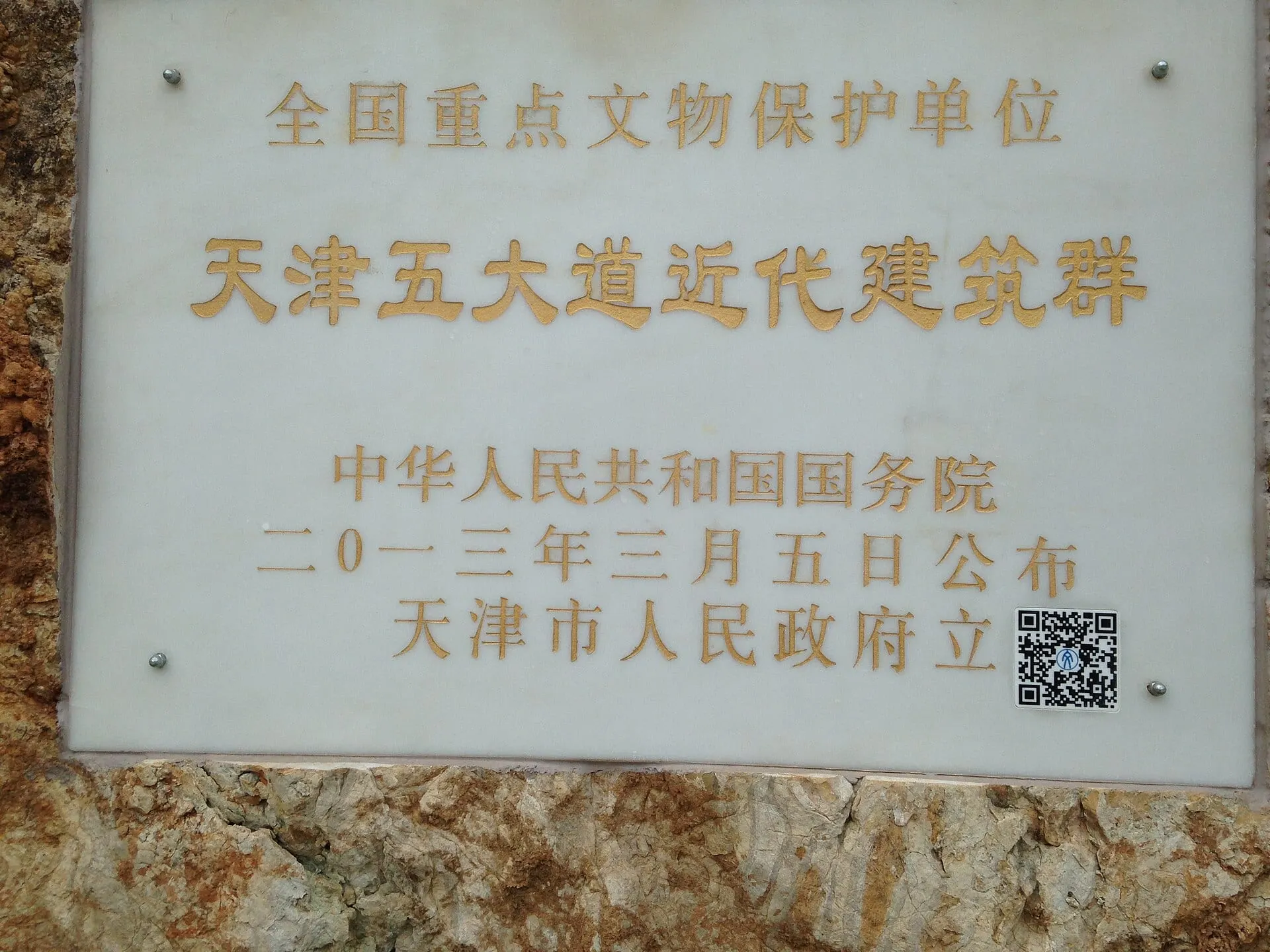
Five Great Avenues (Wudadao)
A 1.6-square-kilometer concession-era district with over 2,000 European-style villas from the 1920s and 1930s, often called the World Architecture Expo for its twelve distinct Western architectural styles from British Tudor to Spanish Andalusian. Best explored on a 90-minute pedicab tour in the late afternoon when the golden light catches the brick facades.
Wikimedia Commons · CC-BY-SA
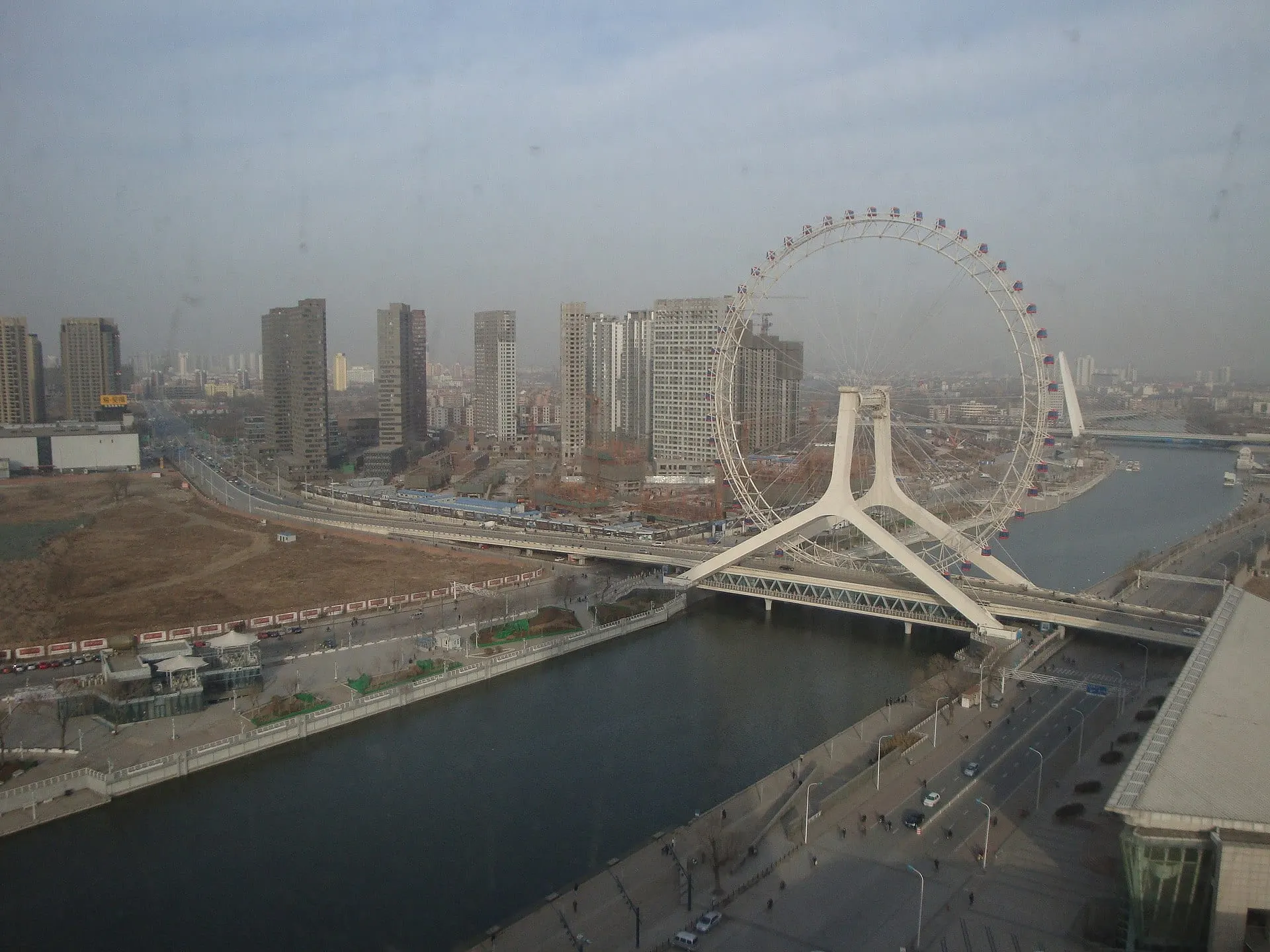
Tianjin Eye (Tianshan Bridge Ferris Wheel)
A 120-meter Ferris wheel mounted on the Yongle Bridge over the Hai River, and the only ferris wheel in the world constructed directly on a bridge. The 30-minute rotation offers panoramic views of the Hai River corridor and the city skyline; rides at sunset and after dark are the most photogenic.
Wikimedia Commons · CC-BY-SA
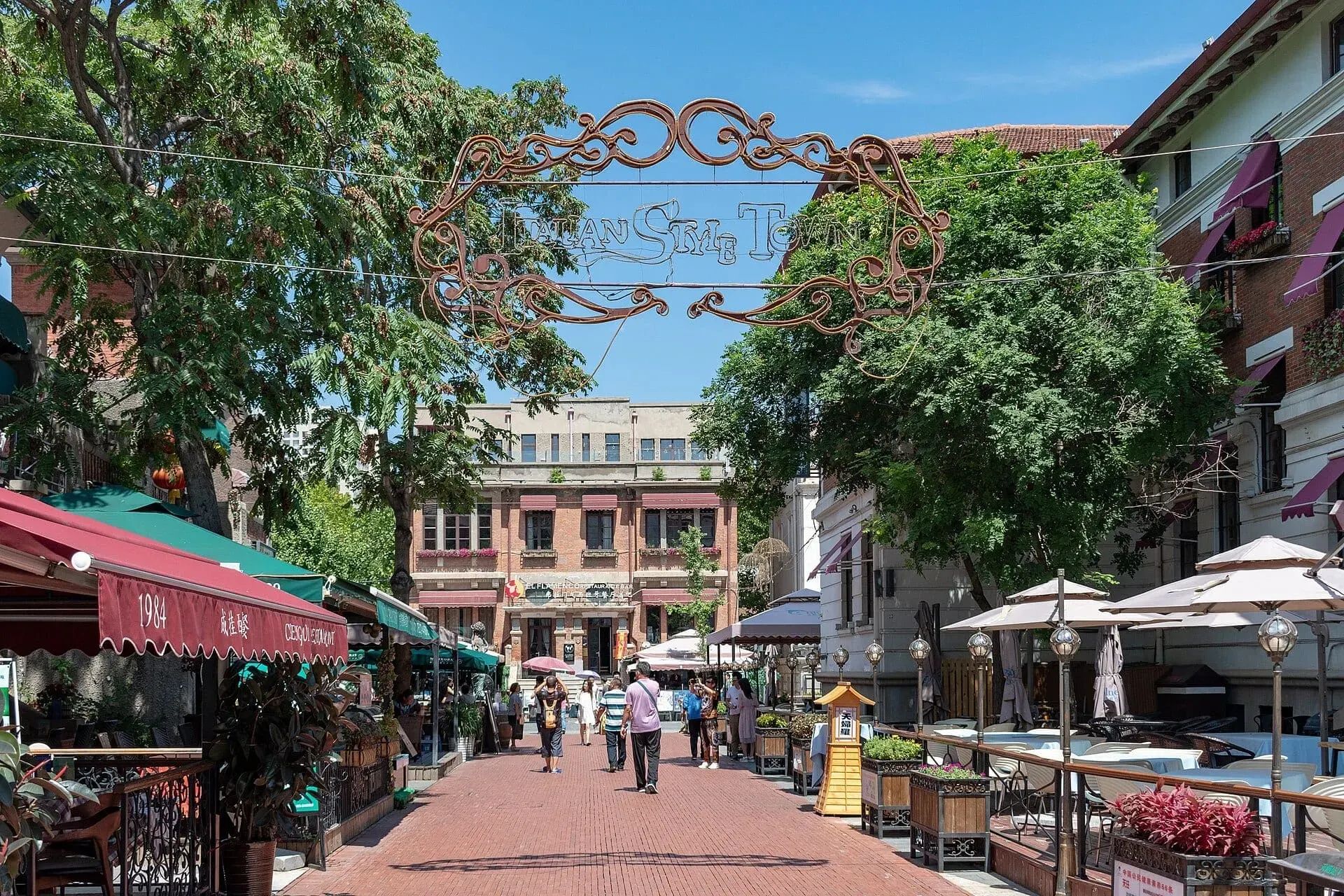
Italian Style Town (Yitao Cheng)
A 28-block heritage district of 200+ Italian-style buildings from the 1902-1943 Italian Concession, with replicas of the Roman Colosseum and the Leaning Tower of Pisa, plus piazzas, fountains, gelato shops, and trattorias. Free to enter and open 24 hours, it is one of the most photographed neighborhoods in northern China.
Wikimedia Commons · CC-BY-SA
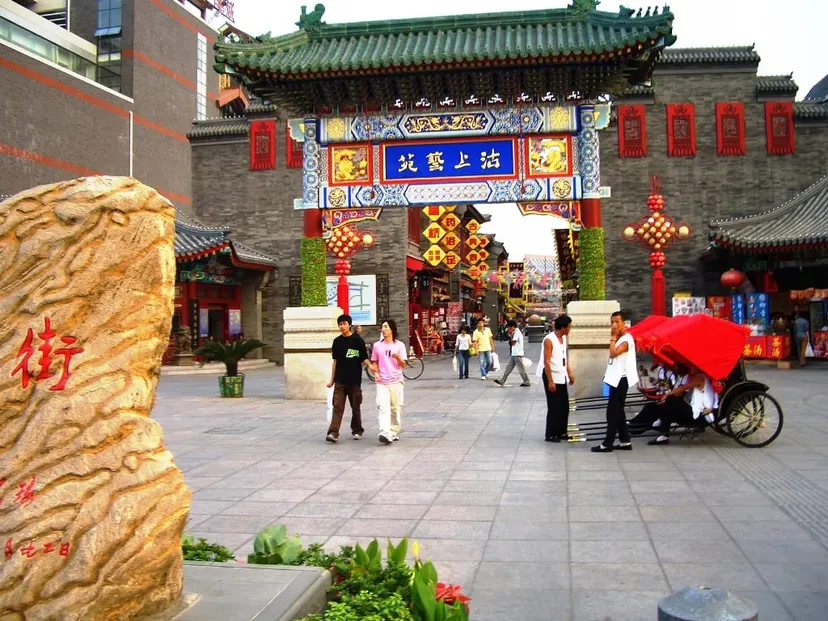
Ancient Culture Street (Guwenhua Jie)
A 580-meter pedestrian street of Qing-dynasty style buildings selling Yangliuqing New Year woodblock prints, Clay Zhang clay figurines, mahua twisted dough, and Tianjin kites, anchored by the rebuilt Drum Tower and the Tianhou Temple. A free open-air museum of northern Chinese folk crafts and snacks.
Wikimedia Commons · CC-BY-SA

Hai River Cruise
A 40-minute boat ride along the Hai River past 19 bridges (including the historic Jiefang Bridge and the Liberation Bridge), the Italian Style Town, and the Porcelain House. Day and night cruises operate; the illuminated night cruise is the most popular. Boats board from the dock beside Jiefang Bridge.
Wikimedia Commons · CC-BY-SA
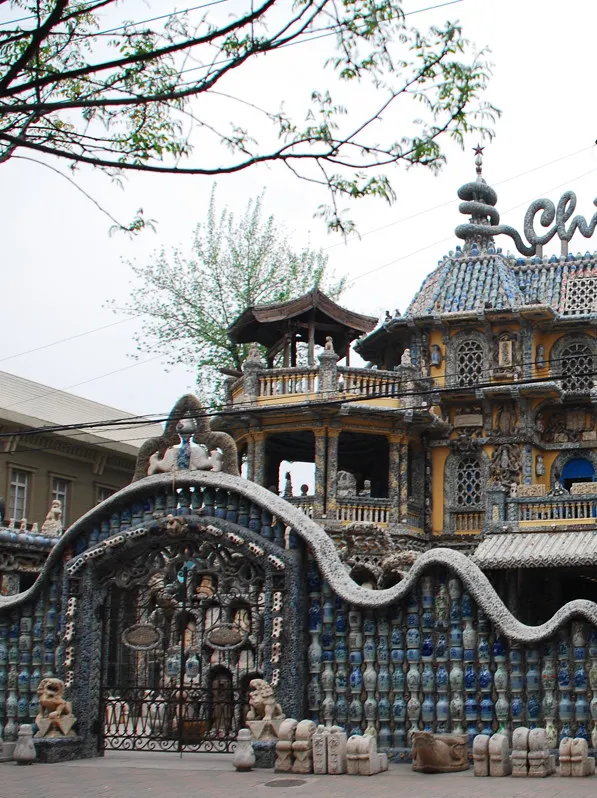
Porcelain House (Cizhou House)
A French-style mansion covered inside and out in over 4,000 pieces of antique porcelain, including Ming and Qing vases, plates, and shards, plus 400 million carved marble fragments. Often called the China House, it is one of Tianjins most unusual architectural landmarks. Entry fee approximately ¥50.
Wikimedia Commons · CC-BY-SA

Nanshi Food Street (Nanshi Shijie)
A 600-meter street packed with 80+ Tianjin snack stalls serving jianbing guozi, mahua twisted dough, fried dough twists, douzhi mung bean juice, and fried tofu. Bustles from 11am to 11pm and is the single best place in Tianjin to sample local breakfast and street food in a single visit.
Wikimedia Commons · CC-BY-SA
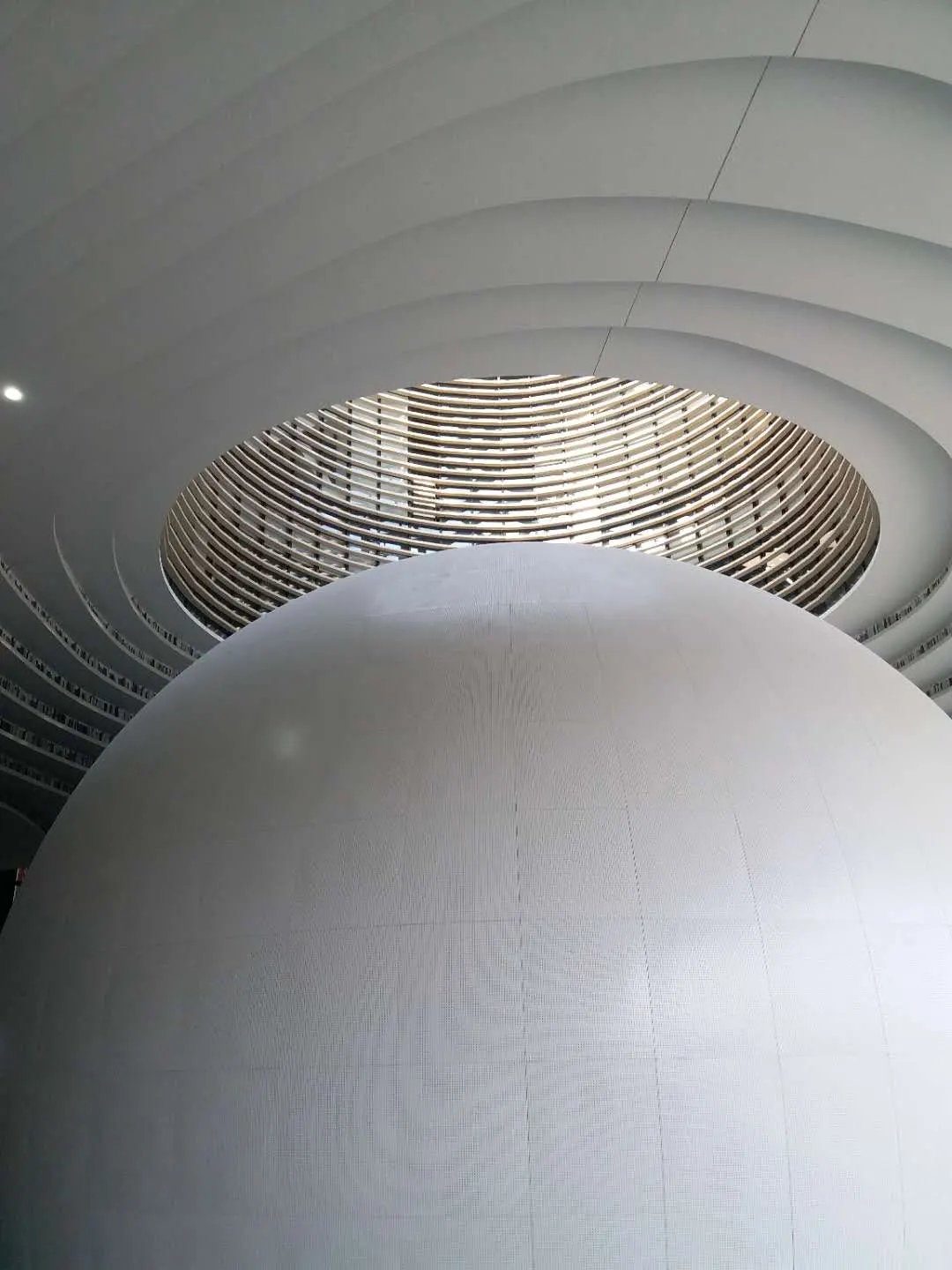
Tianjin Binhai Library
A 33,700-square-meter futuristic public library designed by Dutch firm MVRDV, dominated by a terraced book mountain reading area with rolling white bookshelves. The spherical lecture hall at the center is one of Chinas most photographed interiors. Free admission but requires advance booking.
Wikimedia Commons · CC-BY-SA
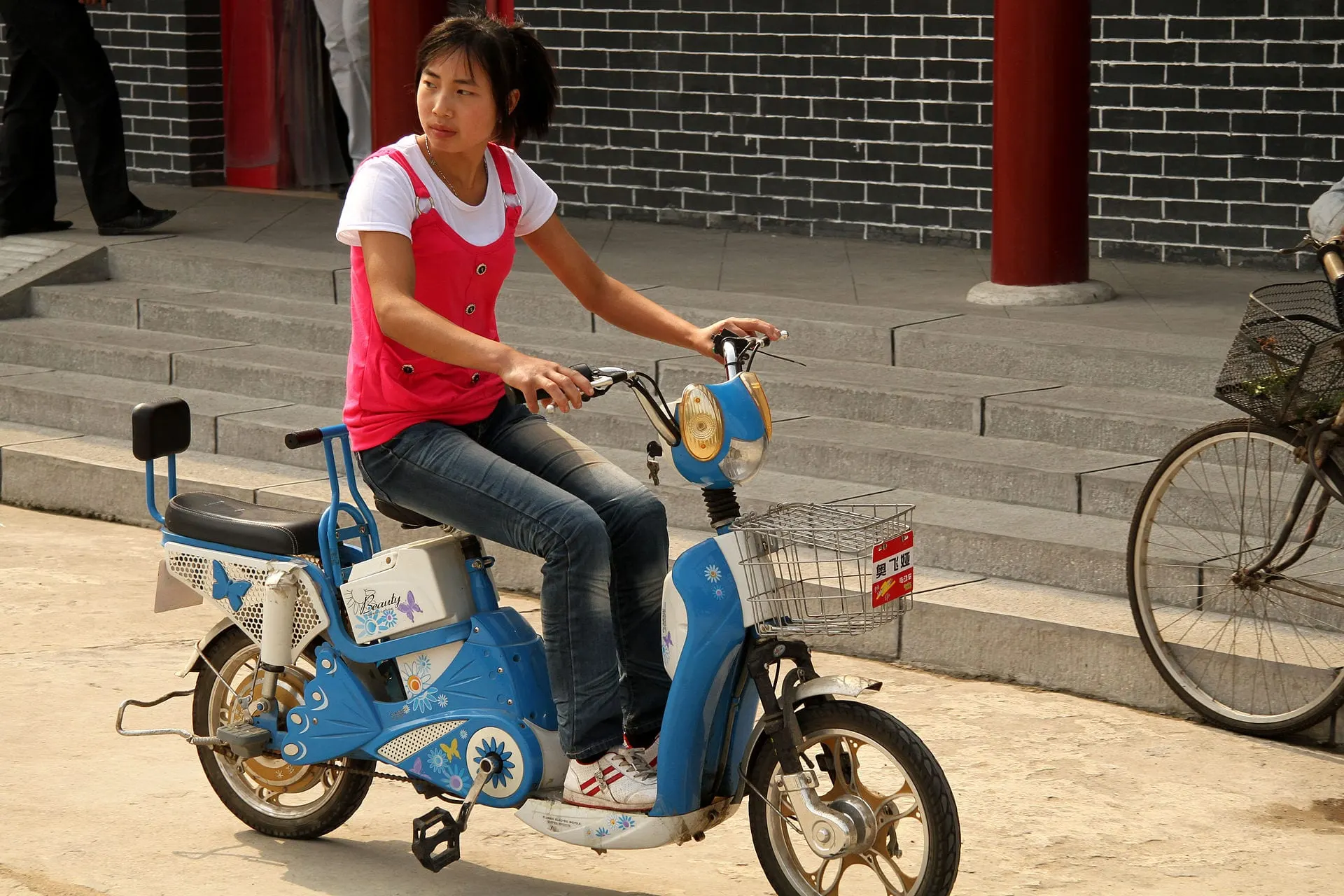
Huangyaguan Great Wall
A restored 42-kilometer Ming-dynasty section about 120 km north of central Tianjin, with 2,152 steps, watchtowers at every kilometer, and a glass suspension bridge over a gorge. Far less crowded than Beijing Mutianyu or Badaling. A full-day trip including transport costs ¥300-500.
Wikimedia Commons · CC-BY-SA
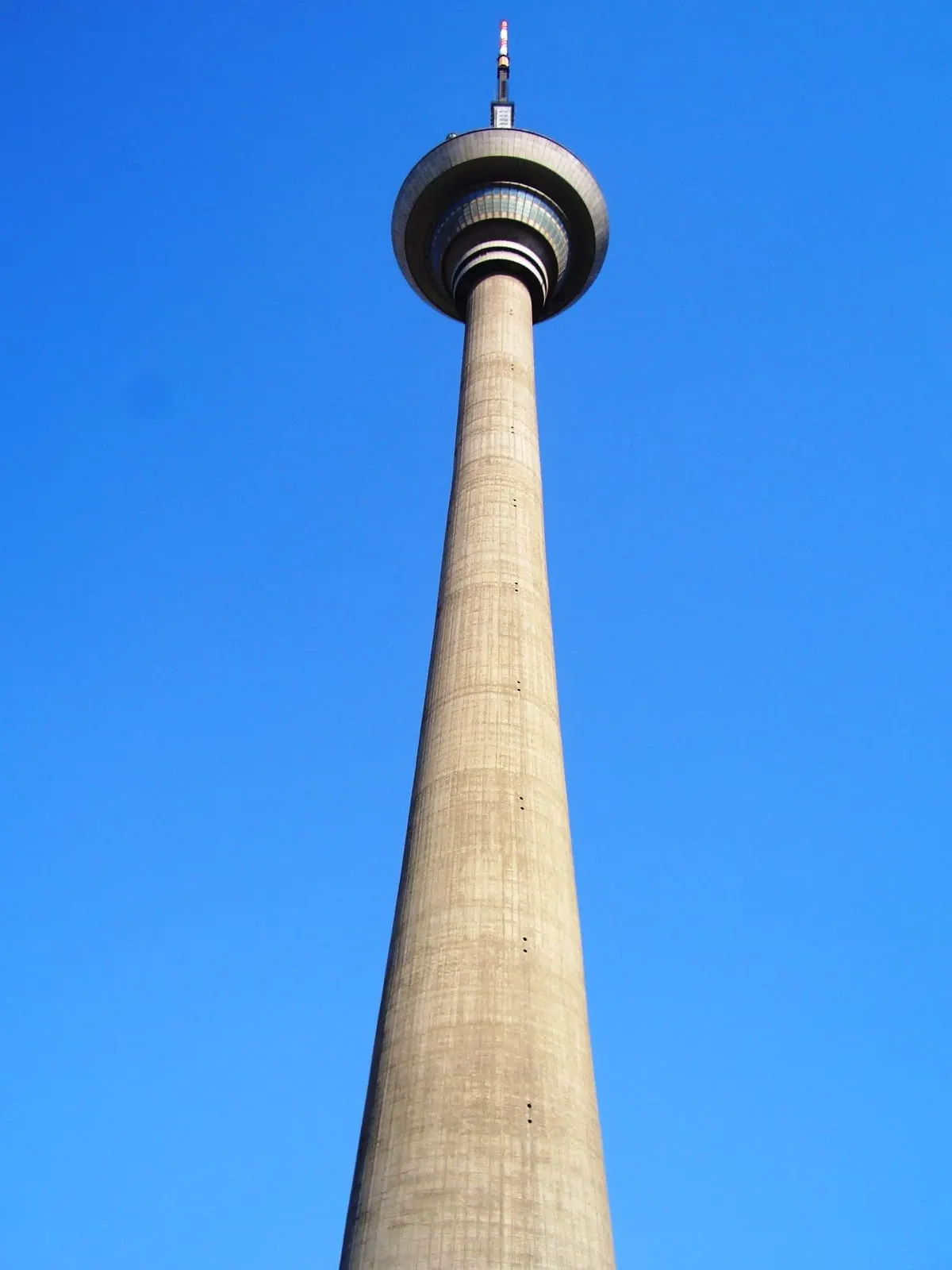
Tianjin Radio and Television Tower
A 415-meter observation tower near the Water Park, with a 253-meter-high revolving restaurant and observation decks offering views of the city and the Bohai Sea on clear days. Cheaper and shorter queues than the CTF Finance Center observation deck.
Wikimedia Commons · CC-BY-SA
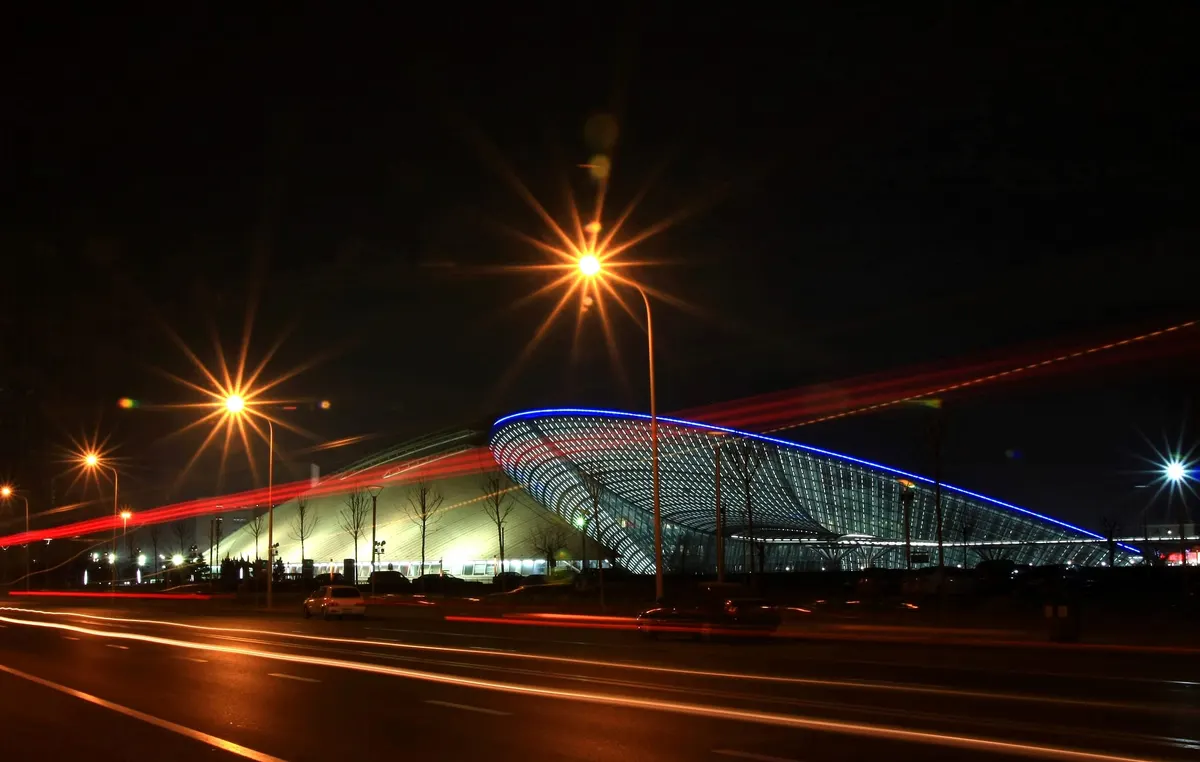
Tianjin Museum
A modern 40,000-square-meter museum on the west bank of the Hai River that walks visitors through Tianjins 600-year history from Ming-dynasty salt merchants through the foreign concessions to modern manufacturing. The sunken garden and reflective pool are designed by Japanese architect Makoto Sei Watanabe. Free admission.
Wikimedia Commons · CC-BY-SA
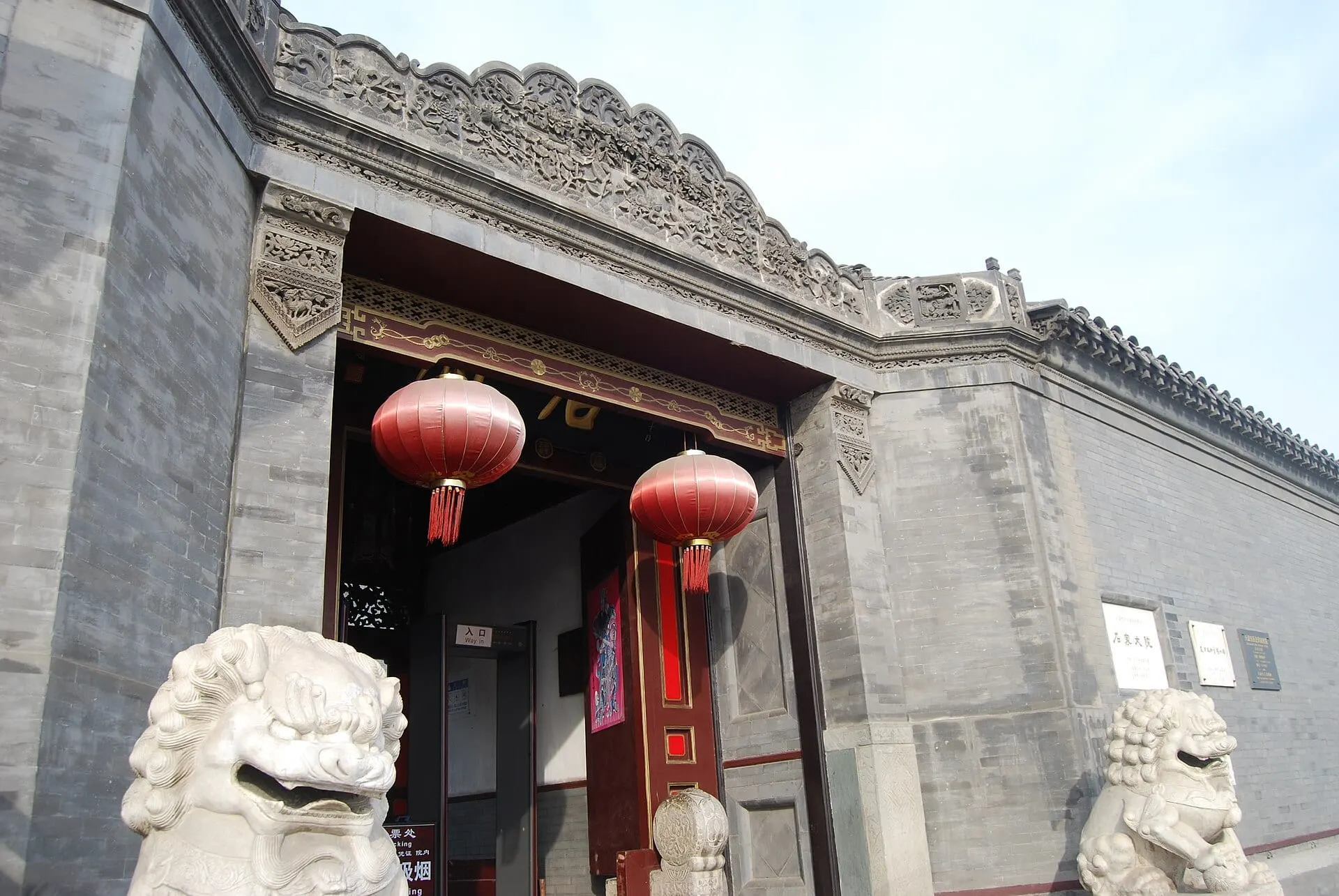
Yangliuqing Ancient Town
A canal-side heritage town 15 km west of downtown Tianjin, birthplace of the famous Yangliuqing New Year woodblock prints and home to traditional folk kite-making and clay-figure workshops. Best visited during the Lunar New Year for the temple fair; quieter but still atmospheric in spring and autumn.
Wikimedia Commons · CC-BY-SA
Problems travelers hit in Tianjin
- Why is my Alipay not working?You linked a foreign Visa or Mastercard to Alipay but every transaction is rejected at the merchant.
- My China visa was denied — what now?Your L visa application was refused at the Chinese consulate and your trip is in 2–4 weeks.
- My passport was lost or stolen in China — what do I do?Your passport is gone (theft or loss) and you're in mainland China without travel documents.
- Why can't I book on 12306 with my foreign card?You tried to book a high-speed rail ticket on 12306.cn and your foreign Visa/Mastercard is rejected at checkout.
- Why is my VPN not working in China?You arrived in China, opened your VPN, and it will not connect at all or connects but no traffic loads.
- Why can't I book a Tibet trip on my own?You try to book Lhasa flights and hotels yourself but the booking fails, or you're turned away at the Lhasa airport without a permit.
Book activities in Tianjin
These are licensed tour operators and booking platforms we've vetted independently. Booking through these links may earn us a commission — see our affiliate disclosure. This never affects our editorial recommendations or the price you pay.
Frequently asked questions
Do I need a visa to visit Tianjin?
How many days do I need in Tianjin?
When is the best time to visit Tianjin?
How do I get from the airport to my hotel?
How do I pay for things without a Chinese bank account?
Is Tianjin safe for tourists?
Show all 35 FAQs
Where is the best local food in Tianjin?
What is the Tianjin Eye and is it worth riding?
How does Tianjin compare to Beijing for tourism?
Can I see the Great Wall from Tianjin?
What is crosstalk comedy and where can I see it?
What is jianbing and why is it so famous?
How do I get from Beijing to Tianjin?
Where should I stay in Tianjin?
How much does a trip to Tianjin cost?
What should I eat in Tianjin?
Is it worth visiting Tianjin on a cruise stop?
What is the best neighborhood for nightlife in Tianjin?
Is Tianjin worth visiting with kids?
Can I visit Tianjin in winter?
What is the best way to experience Tianjin's European architecture?
Where can I find the best jianbing in Tianjin?
What is the Tianjin Eight Pieces and where can I buy them?
How do I book tickets for the crosstalk comedy theaters?
What is the best time of day to photograph the Tianjin Eye?
Can I visit the Binhai Library without booking in advance?
What is the Three-Day Tianjin Tourist Card and is it worth buying?
Where can I find craft beer in Tianjin?
Is the Astor Hotel Tianjin worth visiting even if I am not staying there?
What is the best way to get to the Dongjiang Bay beach from central Tianjin?
How does Tianjin's breakfast culture compare to other Chinese cities?
What is the difference between the Tianjin Eye and the CTF Finance Center observation deck?
Are there any vegetarian or vegan options in Tianjin cuisine?
What is the local Tianjin dialect and will I encounter it?
What should I know about visiting Tianjin during the Lunar New Year?
References

Written by
NihaoVisit Editorial