Tibet (Lhasa and the Plateau)
Tibet is the highest inhabited region on Earth and the most logistically complex destination in China for foreign travelers. A Tibet Travel Permit is required for all foreign visitors — you must apply through a Chinese travel agency (not possible independently), the agency issues a permit that lets you board flights to Lhasa. The standard trip is 7-10 days, with 2 days for acclimatization in Lhasa (3,650m) before higher-altitude excursions. Most travelers fly in via Chengdu, then visit Lhasa (Potala Palace, Jokhang Temple, Sera Monastery) and optionally drive to Everest Base Camp (5,200m, 2-day side trip) or to Namtso Lake (4,718m, day trip). May-October is the only viable season. Altitude sickness is the main health risk and affects most visitors to some degree — Diamox is widely prescribed, hydration is critical, and slow ascent (especially for EBC and Namtso) is essential. The Tibetan Plateau's spiritual culture is profound and accessible even to non-Buddhist visitors: the kora around the Jokhang Temple, the prayer flags on mountain passes, the monastic debates at Sera, and the daily rhythm of pilgrims prostrating at Barkhor all create an atmosphere unlike anywhere else in China.
Why Tibet (Lhasa and the Plateau) in 2026.
The highest region on Earth — average elevation 4,500m. Lhasa's Potala Palace, Jokhang Temple, and Tibetan Buddhism. Requires permits and acclimatization. Travel only May-October, plan for altitude, and book through a registered travel agency.
Quick Answer
Tibet is the highest inhabited region on Earth and the most logistically complex destination in China for foreign travelers. A Tibet Travel Permit is required for all foreign visitors — you must apply through a Chinese travel agency (not possible independently), the agency issues a permit that lets you board flights to Lhasa. The standard trip is 7-10 days, with 2 days for acclimatization in Lhasa (3,650m) before higher-altitude excursions. Most travelers fly in via Chengdu, then visit Lhasa (Potala Palace, Jokhang Temple, Sera Monastery) and optionally drive to Everest Base Camp (5,200m, 2-day side trip) or to Namtso Lake (4,718m, day trip). May-October is the only viable season. Altitude sickness is the main health risk and affects most visitors to some degree — Diamox is widely prescribed, hydration is critical, and slow ascent (especially for EBC and Namtso) is essential. The Tibetan Plateau's spiritual culture is profound and accessible even to non-Buddhist visitors: the kora around the Jokhang Temple, the prayer flags on mountain passes, the monastic debates at Sera, and the daily rhythm of pilgrims prostrating at Barkhor all create an atmosphere unlike anywhere else in China.
| Best time to visit | May-October only (winter is too cold + permits restricted) |
|---|---|
| Daily budget | $100 (backpacker) / $250 (mid-range) / $600+ (luxury) |
| Language | Tibetan, Mandarin (English spoken by guides only) |
| Currency | CNY (¥) — credit cards not widely accepted; bring cash |
| Time zone | China Standard Time (UTC+8) — sunrise is late, sunset is late |
| Last updated | 2026-06-16 |
Want a Tibet (Lhasa and the Plateau) plan built for you?
What makes Tibet different from the rest of China?
Tibet is an autonomous region on the Qinghai–Tibet Plateau — the highest inhabited land on Earth, averaging about 4,500 meters in elevation. Culturally, linguistically, and religiously it is distinct from other regions of China: most Tibetans are Tibetan Buddhists, speak Tibetan (a language unrelated to Mandarin), and follow traditions shaped by centuries of high-altitude life and monastic learning. For travelers, that means a landscape of vast grasslands, snow peaks, and turquoise lakes paired with a living Buddhist culture visible in temples, prayer flags, and pilgrim circuits. It is also the most logistically controlled destination in China for foreign visitors, which shapes every trip.
Do I need a permit to visit Tibet?
Yes. Foreign travelers need a Tibet Travel Permit, and you cannot arrange it independently — it must be obtained through a licensed Chinese travel agency as part of an organized trip, with a guide and fixed transport. Processing typically takes around two to three weeks and requires your passport details and a confirmed itinerary. The permit is checked before you board any flight or train into Tibet, so it must be sorted well before arrival. Rules can tighten around sensitive dates, so build schedule flexibility and confirm current requirements with your agency close to travel.
Is Tibet safe for tourists in 2026?
Yes, within the organized-trip framework all foreign visitors must use. The arrangements are bureaucratic but routine, and the main practical risk is altitude sickness rather than crime or instability. Most travelers feel the altitude for the first two to three days in Lhasa. Drink plenty of water, ascend gradually, avoid alcohol and heavy exertion at first, and carry medication for altitude sickness after medical advice. Anyone with heart or lung conditions should consult a doctor before booking.
How do I handle the altitude?
Acclimatization is the single most important part of a Tibet trip. Lhasa sits at about 3,650 meters, which is high enough to cause symptoms (headache, breathlessness, poor sleep) in most arrivals. Plan two full, low-activity days in Lhasa before going higher, walk slowly, stay hydrated, and eat lightly. Higher excursions — Everest Base Camp near 5,200 meters, Namtso Lake near 4,700 meters — should come only after acclimatizing, and travelers who feel unwell should descend rather than push on. Diamox (acetazolamide) helps some people; discuss it with a doctor beforehand.
What are the must-see sights around Lhasa?
The three essentials are the Potala Palace, the Jokhang Temple, and the Barkhor pilgrim circuit that surrounds it. The Potala — the former winter palace of the Dalai Lamas — is a vast 13th-century-era complex of over a thousand rooms climbing a hillside; visits are timed and advance booking matters. The Jokhang is the holiest temple in Tibetan Buddhism, and walking the Barkhor kora with pilgrims is one of the most authentic experiences in the city. Nearby Sera and Drepung monasteries round out a Lhasa base of three to four days.
Should I go to Everest Base Camp or Namtso Lake?
Both are rewarding side trips beyond Lhasa, and they suit different travelers. The Tibet-side Everest Base Camp offers a famous northern view of the world's highest peak and is a multi-day overland journey with monastery stops along the way. Namtso Lake, one of the highest large salt lakes on Earth, is more accessible as a long day or short overnight trip and is remarkable for its color and scale. Most itineraries have time for one or the other; choose Everest for the mountain ambition, Namtso for an easier, equally spectacular lake.
What cultural etiquette should I observe in Tibet?
Tibet is deeply religious, and respectful behavior matters. Walk kora (pilgrim circuits) clockwise around temples and stupas, remove hats and shoes where required, and never photograph people, monks, or the inside of temples without permission. Refrain from touching religious objects or stepping on religious texts. Dress modestly, keep voices low in monasteries, and avoid politically sensitive conversation. A small offering at temples is welcomed but never required. Tipping guides is appreciated at the end of a trip.
What is the best Tibet itinerary for first-timers?
The standard first-timer itinerary is 7–8 days, structured around acclimatization. Day 1: Arrive in Lhasa (3,650m) by flight or train — do nothing strenuous, just walk slowly and hydrate. Day 2: Light Lhasa orientation — Barkhor Street and the Jokhang Temple exterior, a gentle walk among pilgrims. Day 3: Full sightseeing — Potala Palace (morning, timed entry), Sera Monastery (afternoon debating monks). Day 4: Drepung Monastery (morning), then a free afternoon — by now most people are acclimatized. Day 5: Day trip to Namtso Lake (4,718m, long day, approximately 4–5h drive each way) OR drive toward Gyantse and Shigatse, stopping at Yamdrok Lake (start of the Everest loop). Days 6–8: If doing the Everest extension — Gyantse (Kumbum Stupa), Shigatse (Tashilhunpo Monastery), then overland to Everest Base Camp (5,200m, overnight in tent guesthouses near Rongbuk Monastery), returning to Shigatse and flying out or driving back to Lhasa. If staying in the Lhasa area only, fill days 5–7 with Ganden Monastery, the Norbulingka (summer palace), and a Tibetan meal and cultural evening. This pace prioritizes safety over ambition and lets the altitude work for you rather than against you.
What is the Qinghai–Tibet Railway experience like?
The Qinghai–Tibet Railway, the world's highest train line, runs from Xining (Qinghai province) to Lhasa — roughly 1,956 km and 20–22 hours. It is an experience in itself and a gentler way to ascend than flying, since the train climbs gradually across the Tibetan Plateau, crossing permafrost, passing salt lakes, and offering views of snow peaks, yaks, and the vast empty grasslands of northern Tibet. Most of the route is above 4,000m, and the highest point (Tanggula Pass, 5,072m) is reached on the second day. Cabins range from hard seat (not recommended for a trip this long) to soft sleeper (4-berth compartment, most comfortable). Oxygen outlets are available in sleeper cars. The train still requires your Tibet Travel Permit to board, and your tour operator arranges the ticket — you cannot book it independently as a foreign traveler. Food on board is basic (instant noodles and snacks are a good supplement), and the scenery is best on the second day as the train crosses the plateau. If you take the train in, you still need one to two acclimatization days in Lhasa before higher excursions — the train reduces, but does not eliminate, the altitude adjustment.
How do I find a reliable tour operator for Tibet?
Since all foreign travel in Tibet must be arranged through a licensed Chinese travel agency, choosing the right operator is the single most important decision in planning a Tibet trip. Look for an agency that has been operating Tibet tours for several years, communicates clearly in English about permits and logistics before you commit, provides a detailed day-by-day itinerary with accommodation names and vehicle type, and can explain their permit application process and timeline. Good operators will also advise honestly on feasibility — they should flag if your proposed dates overlap with a closure period or if your fitness level may not match your itinerary. Price comparison matters, but the very cheapest quotes often reflect hidden costs (excluded meals, low-end guesthouses far from the sights, rushed itineraries). Expect to pay a deposit of roughly 30–50 percent to secure permits and bookings, with the balance due before or on arrival. Confirm cancellation and refund terms in writing, as permits are date-specific and non-transferable. Word-of-mouth recommendations on travel forums and recent reviews from travelers of your nationality and travel style are the most reliable way to filter operators.
What is the best time to visit Tibet?
The viable window for Tibet is May through October, when temperatures are tolerable and roads to high-altitude sights are open. Within this window, your priorities determine the best month. May: warming rapidly, wildflowers beginning at lower elevations, mostly dry, fewer crowds — an excellent month for clear mountain views and comfortable travel before the domestic summer rush. June-August: the warmest months (Lhasa days 20-25°C), with the greenest landscape and best road access to remote areas including Everest Base Camp and Mount Kailash, but also the rainy season — afternoon showers are common and can cause road delays, and this is peak domestic tourism with higher prices and larger crowds. September: the rain tapers off, skies clear, days remain warm, and the landscape is still green — arguably the single best month, combining good weather, manageable crowds, and excellent visibility for mountain photography. October: dry, crisp, cold nights but brilliant clear days — arguably the best month for Himalayan views and photography, with fewer crowds than summer, though nights are already freezing and the highest passes begin to see snow by month's end. November: increasingly cold, some high roads begin to close or become unpredictable, but still viable for Lhasa-focused trips with clear, stark skies and very few visitors. November to April is generally too harsh for most travelers — many high roads (including to Everest Base Camp and Namtso) close or become impassable, Lhasa nights fall well below freezing, and permits become harder to obtain. The Shoton Festival (usually August) is the single best cultural event to align with if dates work. For the clearest views of Everest and the Himalaya, late September through October is hard to beat, but October is also the most popular month with international travelers, so book well ahead.
How do I get to Lhasa?
Most foreign travelers reach Lhasa by one of two routes: flight or the Qinghai-Tibet Railway. Flying is faster — direct flights to Lhasa Gonggar Airport (LXA) depart from Chengdu (about 2 hours), Xi'an, Chongqing, Kunming, and several other Chinese gateway cities. Your tour operator books the flight as part of your package, as the Tibet Travel Permit must be presented at check-in. The airport is about 60km (1 hour) from Lhasa city center; your operator arranges the transfer. The Qinghai-Tibet Railway from Xining to Lhasa is the alternative — roughly 1,956 km and 20-22 hours, crossing the Tibetan Plateau at altitudes mostly above 4,000m with spectacular scenery (salt lakes, snow peaks, yaks on the grassland). Soft-sleeper cabins (4-berth compartments, most comfortable) are the recommended option for the journey. The train's gradual ascent is gentler on the body than flying directly to 3,650m, but you still need 1-2 acclimatization days in Lhasa afterward. Train tickets are also booked by your tour operator — you cannot book independently as a foreign traveler. Overland entry from Nepal via the Gyirong border crossing is possible (typically as part of a Kathmandu-to-Lhasa organized tour, about 5-7 days) but requires the same permit and guide arrangements. There is no independent entry into Tibet for foreign travelers by any route — all arrivals require a pre-arranged tour with permit, guide, and transport.
What Tibetan foods should I try?
Tibetan cuisine is hearty, high-calorie, and adapted to life at extreme altitude — it is not a destination-dining cuisine, but trying the staples is a memorable part of the cultural experience. The essentials: Tsampa (糌粑) — roasted highland barley flour, the foundation of the Tibetan diet, typically mixed with butter tea into a dough-like consistency and eaten by hand. Yak butter tea (酥油茶, po cha) — salty, rich, and intensely calorific, made by churning tea with yak butter and salt; it is an acquired taste but central to Tibetan hospitality. Sweet milk tea (cha ngamo) is the gentler, more approachable alternative, served in Lhasa teahouses where locals gather to socialize. Momos — steamed or fried dumplings filled with yak meat, vegetables, or occasionally cheese, and the most accessible Tibetan food for foreign palates; good ones are juicy and flavorful. Thukpa — noodle soup with yak meat or vegetables, a warming staple available in most restaurants. Dried yak meat — chewy, intensely savory, sold as a snack in markets and shops; it travels well and is a good high-protein hiking snack. Shabhaley — deep-fried meat pies, a festival and special-occasion food. Yak yogurt — thick, tangy, and often served with sugar or honey; a popular breakfast item. In Lhasa, restaurants range from traditional Tibetan to Sichuan Chinese and basic Western-style cafés near the Barkhor. For the most authentic Tibetan food experience, seek out a local teahouse (甜茶馆) — these are busy, communal, and serve sweet tea, thukpa, and momos at low prices, frequented almost entirely by locals. Vegetarians can manage with vegetable momos, thukpa, tsampa, and yak yogurt, but options are limited, especially outside Lhasa — communicate your requirements clearly, as the concept of vegetarianism is not widely understood in traditional Tibetan cooking (butter and meat stocks appear in many dishes). Tibetan food is unlikely to be the highlight of your trip, but sharing momos and sweet tea in a Lhasa teahouse surrounded by locals is one of the most genuine experiences the city offers.
What is the Tibet Travel Permit and how does it work?
The Tibet Travel Permit (入藏函, Rùzàng Hán) is the document that controls foreign access to the Tibet Autonomous Region. It is required for all foreign passport holders and must be arranged before you arrive in Tibet. The permit is not issued to individual travelers — it is issued to a licensed Chinese travel agency that has booked a full itinerary for you, including a licensed Tibetan guide, pre-arranged transport, and confirmed accommodation. The agency applies to the Tibet Tourism Bureau on your behalf, providing your passport details, planned itinerary, and dates. Standard processing takes 10-15 working days, though it can take longer during peak season or for politically sensitive periods. You do not personally receive the permit — your guide carries it and presents it at airports, hotels, and checkpoints throughout your trip. The permit covers Lhasa and the immediate Lhasa valley, including Potala Palace, Jokhang Temple, Sera and Drepung monasteries, and the Ganden Monastery day trip. For areas outside Lhasa — Everest Base Camp, Mount Kailash, Namtso Lake, Shigatse, and the Nepal border — you need additional permits that are typically issued by your travel agency on the ground in Tibet. The Alien Travel Permit (外国人旅行证) is required for the "unopened" areas (most of the TAR outside Lhasa), and is obtained by your guide from the Public Security Bureau in Lhasa — usually 1-2 hours, but can take longer. The military permit is required for areas near the Indian border (including Mount Kailash, Ali prefecture) and the Nepal border (including the Gyirong crossing). Some areas — including parts of the TAR close to the Myanmar, Bhutan, and India borders — are completely closed to foreign tourists. Practical implications: book your Tibet trip through a Chinese travel agency that specializes in foreign travel to Tibet at least 1-2 months ahead, longer for peak season (June-September). Budget 1-2 weeks for permit processing time. You must follow the itinerary exactly as approved — your guide cannot deviate from the planned route without re-applying for permits. Independent deviation from your itinerary is a permit violation with serious consequences (deportation, entry bans). The system is restrictive but workable for visitors willing to plan ahead and accept the structured travel format. Your agency should be transparent about all restrictions and applicable fees — ask for a written breakdown of permit costs versus ground costs before booking.
How do you acclimatize to Lhasa altitude (3,650m) and what about higher excursions?
Altitude sickness is the single biggest health risk for Tibet visitors. Lhasa sits at 3,650m — high enough to cause mild symptoms in most visitors, low enough that serious cases are uncommon. Higher excursions — Namtso (4,718m), Everest Base Camp (5,200m), Mount Kailash trek (4,500-5,800m) — push much higher, where altitude sickness becomes a serious risk. For Lhasa acclimatization (Day 1-2): plan two low-key days before doing anything strenuous. Symptoms typically appear 4-12 hours after arrival: headache (most common), fatigue, shortness of breath on exertion, nausea, and disrupted sleep. The mitigation: drink 3-4 liters of water daily, avoid alcohol completely for the first 2-3 days, eat light meals, rest on Day 1, and consider Diamox (acetazolamide, 125 mg twice daily, started the day before arrival — prescription only). Most visitors feel markedly better by Day 3. For higher excursions: never ascend to Namtso, Everest Base Camp, or Mount Kailash without first acclimatizing fully at Lhasa. The standard itinerary for Everest Base Camp is 2 days of acclimatization in Lhasa, then drive over 2 days with an overnight at Shigatse or Gyantse (3,900m) before reaching EBC. The drive to EBC crosses the Pang La Pass (5,050m), where altitude symptoms can return even for acclimatized travelers. Spend 30-60 minutes at the pass rather than hours. At EBC (5,200m), limit your time to 1-2 hours maximum — even acclimatized visitors can develop symptoms at this elevation. Severe altitude sickness — high-altitude pulmonary edema (HAPE) or cerebral edema (HACE) — is rare at Lhasa but more likely above 4,500m. Symptoms: severe shortness of breath at rest, confusion, inability to walk a straight line, coughing up frothy sputum. These are medical emergencies requiring immediate descent. Tibet has limited high-altitude medical facilities — most monasteries and small towns have only a basic clinic. Your travel agency should have evacuation procedures, and serious cases typically fly to Chengdu or Kathmandu for treatment. The Chinese government now requires foreign visitors to Lhasa to undergo a basic health screening (blood pressure, oxygen saturation, heart rate) at the airport upon arrival. Visitors with concerning readings may be required to wait a few days at lower altitude before traveling further.
Top attractions
Potala Palace
1,300-year-old winter palace of the Dalai Lamas. 13-story, 1,000+ rooms. UN World Heritage. ¥200, advance booking required.
Jokhang Temple
Most sacred temple in Tibetan Buddhism, 1,300 years old. The Barkhor kora (pilgrim circuit) circles it. ¥85.
Sera Monastery
One of the great Gelug monastery universities, 600+ years old. Famous for the afternoon debating monks. ¥50.
Everest Base Camp (Tibet side)
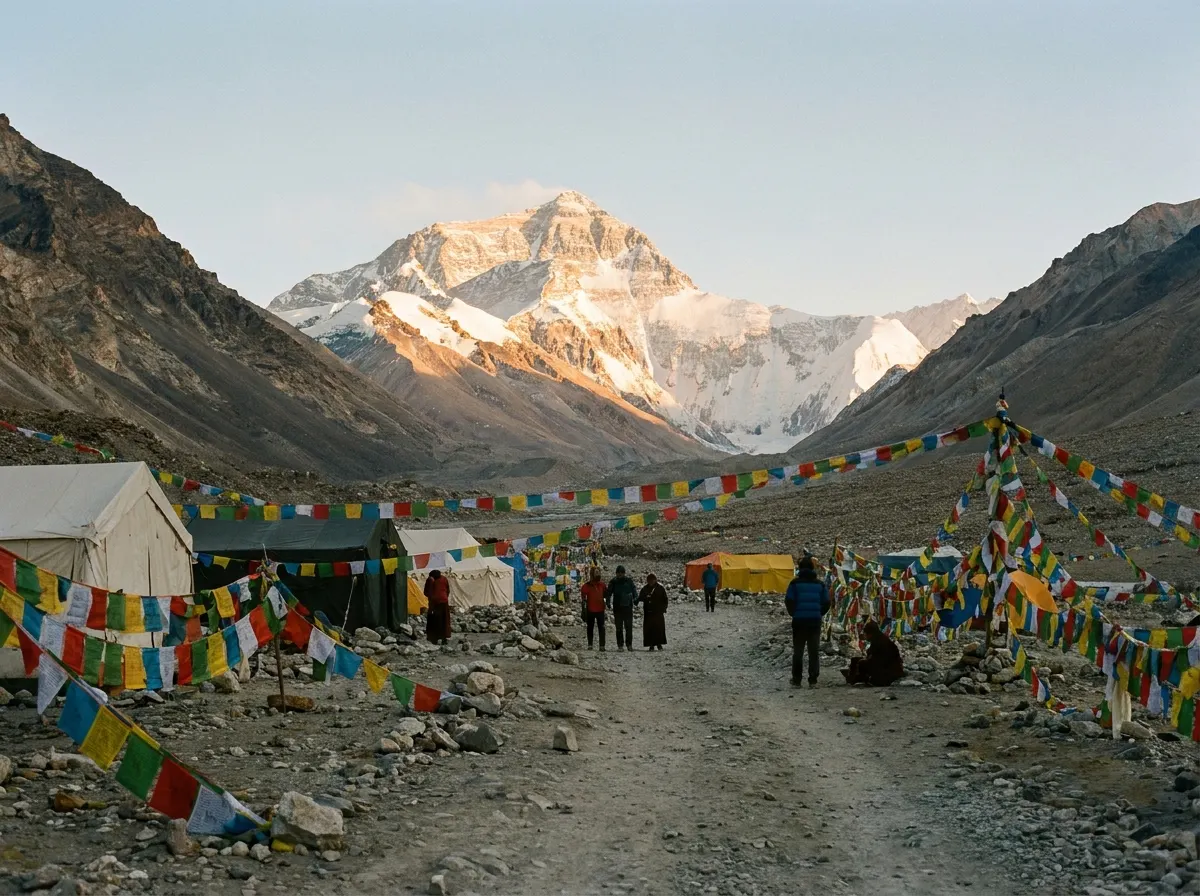
5,200m base camp on the Rongbuk Glacier. 2-day drive from Lhasa. Permit required. Best view of Everest's north face.
Yamdrok Lake (Yamdrok Yumtso)
One of Tibet's three great sacred lakes, a turquoise crescent at 4,441m ringed by snow peaks. The classic viewpoint is the Kambala Pass (4,794m) on the road from Lhasa to Gyantse. About 2.5h drive from Lhasa; often visited en route to Shigatse. ¥60.
Drepung Monastery
Once the world's largest monastery, housing up to 10,000 monks at its peak in the early 20th century. Built in 1416 on a hillside 8 km west of Lhasa. The assembly hall, chapels, and monk quarters cascade down the slope. ¥60. Morning visits are best.
Problems travelers hit in Tibet (Lhasa and the Plateau)
- Why is my Alipay not working?You linked a foreign Visa or Mastercard to Alipay but every transaction is rejected at the merchant.
- My China visa was denied — what now?Your L visa application was refused at the Chinese consulate and your trip is in 2–4 weeks.
- My passport was lost or stolen in China — what do I do?Your passport is gone (theft or loss) and you're in mainland China without travel documents.
- Why can't I book on 12306 with my foreign card?You tried to book a high-speed rail ticket on 12306.cn and your foreign Visa/Mastercard is rejected at checkout.
- Why is my VPN not working in China?You arrived in China, opened your VPN, and it will not connect at all or connects but no traffic loads.
- Why can't I book a Tibet trip on my own?You try to book Lhasa flights and hotels yourself but the booking fails, or you're turned away at the Lhasa airport without a permit.
Frequently asked questions
Can I travel independently in Tibet?
How fit do I need to be for Tibet?
When should I go?
Can I combine Tibet with Nepal?
How many days do I need?
Will I get altitude sickness?
Show all 54 FAQs
Is the Potala Palace worth the crowds?
What should I pack for Tibet?
Can I use my phone and the internet in Tibet?
Is Tibet suitable for families with kids?
How much does a Tibet trip cost?
What is the single biggest mistake travelers make in Tibet?
What is the Potala Palace visit like and how do I book?
What is the Jokhang Temple and Barkhor Street experience?
What is the best strategy for altitude adjustment in Lhasa?
What is the Qinghai–Tibet Railway like for travelers?
What is Namtso Lake and how do I visit?
What is Yamdrok Lake and should I visit?
How do I find a reliable tour operator for Tibet?
Can I visit Everest Base Camp from the Tibet side?
What is the photography etiquette in Tibet?
What is Tibetan food like?
Can solo travelers visit Tibet?
What are the best monasteries beyond Lhasa?
What Tibetan festivals can travelers see?
How early should I book a Tibet trip?
What is the weather like in Tibet month by month?
What should I know about money and payments in Tibet?
Can I combine Tibet with Nepal?
What is the Norbulingka and is it worth visiting?
What are the exact details for visiting the Potala Palace?
What is the Jokhang Temple and Barkhor Street experience like?
What happens at the Sera Monastery debate and when can I see it?
What is Drepung Monastery and why is it significant?
Can I visit Namtso Lake as a day trip from Lhasa?
What is Ganden Monastery and how do I visit?
What Tibetan festivals can travelers see?
What is the best strategy for altitude adjustment in Tibet?
What is the Qinghai-Tibet Railway experience really like?
What permits do I need for Tibet and how do I get them?
How much does a Tibet trip cost?
What should I pack for Tibet?
What is the photography etiquette in Tibetan monasteries?
Can solo travelers visit Tibet?
How do I find a reliable tour operator for Tibet?
Is Tibet suitable for families with children?
What local customs and etiquette should I follow in Tibet?
What is Tibetan tea culture and where should I experience it?
What is the Potala Palace and what should I expect from the visit?
What is the Jokhang Temple and the Barkhor pilgrimage circuit?
What are Sera and Drepung Monasteries and how do they differ?
What is Namtso Lake and how do you visit it from Lhasa?
What is the Everest Base Camp (Tibetan side) and is it worth the trip?
How does Tibet compare to the Tibetan regions in Sichuan, Yunnan, and Qinghai?
References

Related guides & destinations
Guide
China in August 2026: Peak Heat, Typhoons, and Tibet’s Best Weather
August is the hottest month of the year, peak typhoon season on the southeast coast, and the height of summer crowds. The Qingdao Internatio
Guide
How We Research 2026: NihaoVisit’s Methodology for China Travel Information
How NihaoVisit sources, verifies, and maintains 700+ pages of China travel information — our source hierarchy, fact-checking process, update
Guide
Fact-Checking Log 2026: Verified China Travel Information — NihaoVisit
A public log of fact-checking verification passes on NihaoVisit, showing what was verified, when, and against which sources — covering visa
Guide
Best Time to Visit China 2026: Month-by-Month Weather, Crowds, and Prices
The best time to visit most of China is April–May and September–October. Winter (Dec–Feb) is cold but cheap; summer (Jun–Aug) is hot and cro
Guide
VPN for China 2026: Which VPNs Work, eSIM Alternatives, and the Complete Pre-Trip Checklist
Most Western apps and websites are blocked in mainland China. A reliable VPN is essential for Google, Gmail, WhatsApp, Instagram, and most n
Guide
China SIM Card and eSIM Guide 2026: Stay Connected Without WeChat
A Chinese SIM or eSIM lets you use mobile data, maps, and ride-hailing without WiFi. Here is how to get one, the cost, and which provider to