Vũ Di Sơn
[VI placeholder] Wuyishan — TL;DR bằng vi sẽ được bổ sung.
Why Vũ Di Sơn in 2026.
[VI placeholder] Wuyishan — Tóm tắt bằng vi sẽ được bổ sung.
Quick Answer
[VI placeholder] Wuyishan — TL;DR bằng vi sẽ được bổ sung.
| Worth visiting | Yes, without hesitation — the Nine-Bend River raft ride alone justifies the trip, and the combination of dramatic Danxia scenery, world-class tea culture, and UNESCO heritage makes Wuyishan one of China's essential natural destinations. |
|---|---|
| Recommended days | 2-3 days |
| Best time to visit | March-May and September-November. Spring brings green tea-picking season and moderate temperatures. Autumn is dry and clear. Avoid July-August (hot, crowded, afternoon thunderstorms) and Chinese public holidays. |
| Daily budget | $40 (backpacker) / $120 (mid-range) / $320+ (luxury) |
| Family friendly | Yes — the bamboo raft ride is suitable for all ages, the scenic area shuttle buses make navigation easy, and the tea plantations are engaging. Some hiking trails are steep and unsuitable for young children. |
| Solo friendly | Yes — excellent for solo travelers. The scenic area is well-organized with shuttle buses, the raft ride groups solo travelers together, and the tea culture is naturally solo-friendly. |
| Airport | Wuyishan Airport (WUS) — domestic flights from Beijing (2.5h), Shanghai (1.5h), Xiamen (1h), Guangzhou (2h). About 7 km from the resort area. |
| High-speed rail | Yes — Wuyishan North station (武夷山北站) and Wuyishan East station (武夷山东站). Fuzhou (1h), Xiamen (2.5h), Shanghai (3h), Hangzhou (2h). |
| Language | Mandarin with Northern Min dialect (闽北话). English is rare outside major hotels and the scenic area visitor center. |
| Currency | CNY (¥) — Alipay and WeChat Pay accepted in the resort area and major restaurants. Cash useful for tea shops and village markets. |
| Time zone | China Standard Time (UTC+8) |
| Last updated | 2026-06-18 |
Want a Vũ Di Sơn plan built for you?
Top attractions
Wuyishan Scenic Area & Nine-Bend River (武夷山风景区/九曲溪, Wǔyí Shān Fēngjǐngqū/Jiǔ Qū Xī)
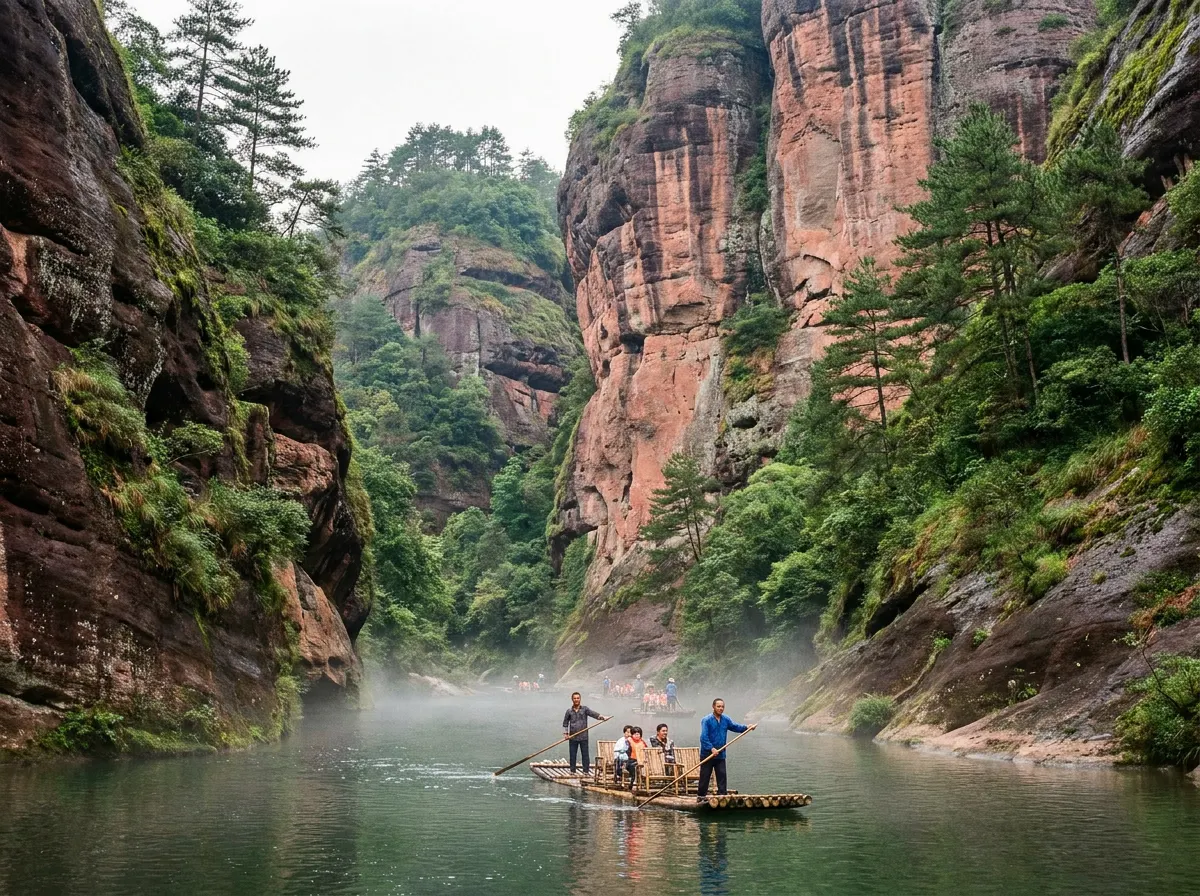
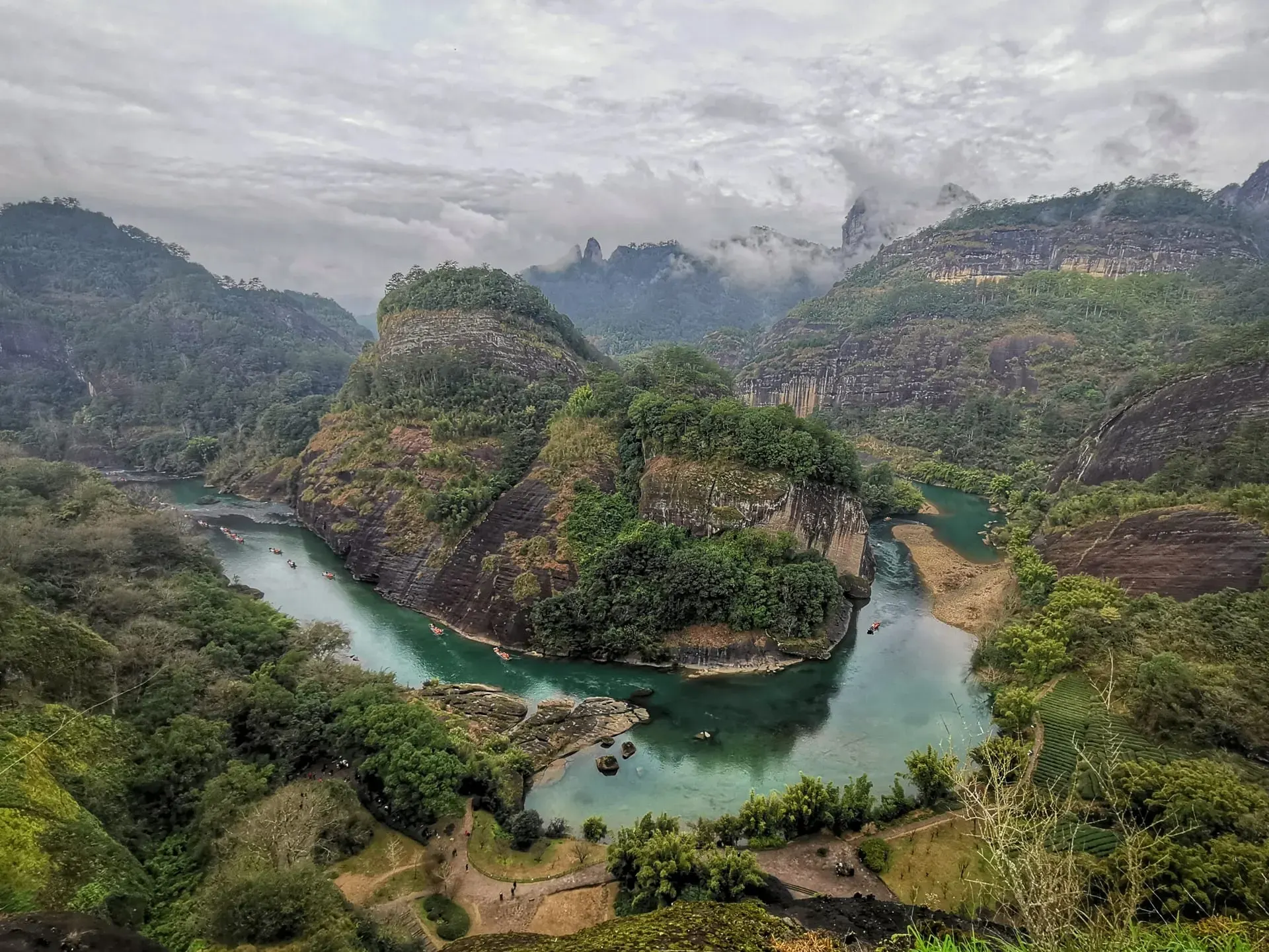
The core of Wuyishan: 70 square kilometers of Danxia peaks, gorges, and the winding Nine-Bend River. The 1.5-hour bamboo raft ride (¥130) drifts 9.5 km through the heart of the scenery — sheer red cliffs, ancient hanging coffins visible in rock crevices, 3,000-year-old boat-shaped coffins, and inscriptions carved into the cliff faces. Tianyou Peak (天游峰, Tiānyóu Fēng, 408 m) is the signature climb: 848 stone steps to a panoramic view of the Nine-Bend River snaking through the mountains. Scenic area entry: ¥140 (1-day) or ¥150 (3-day) as of June 2026.
Wikimedia Commons · CC-BY-SA
Da Hong Pao Tea Trees (大红袍母树, Dà Hóng Páo Mǔ Shù)
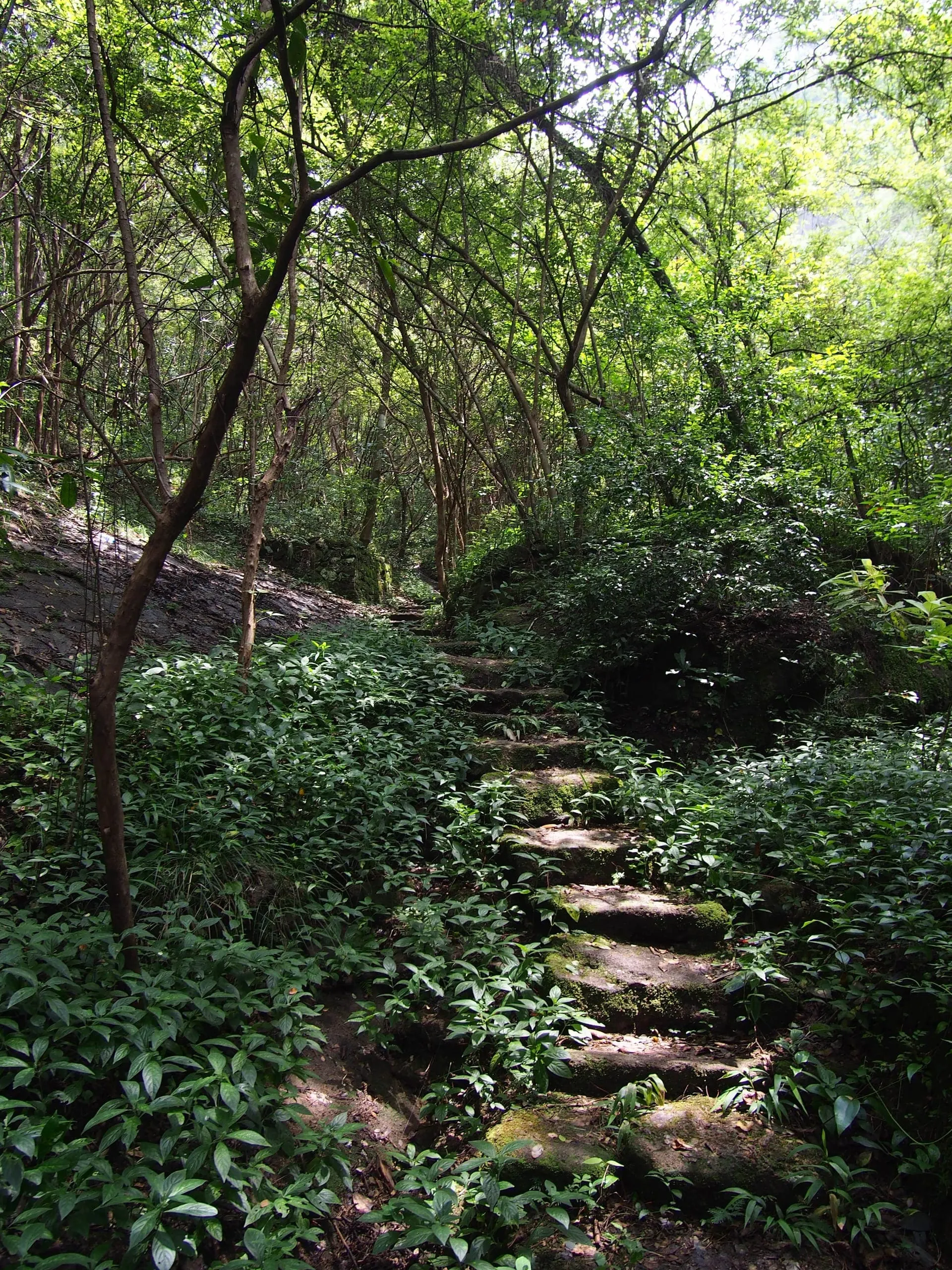
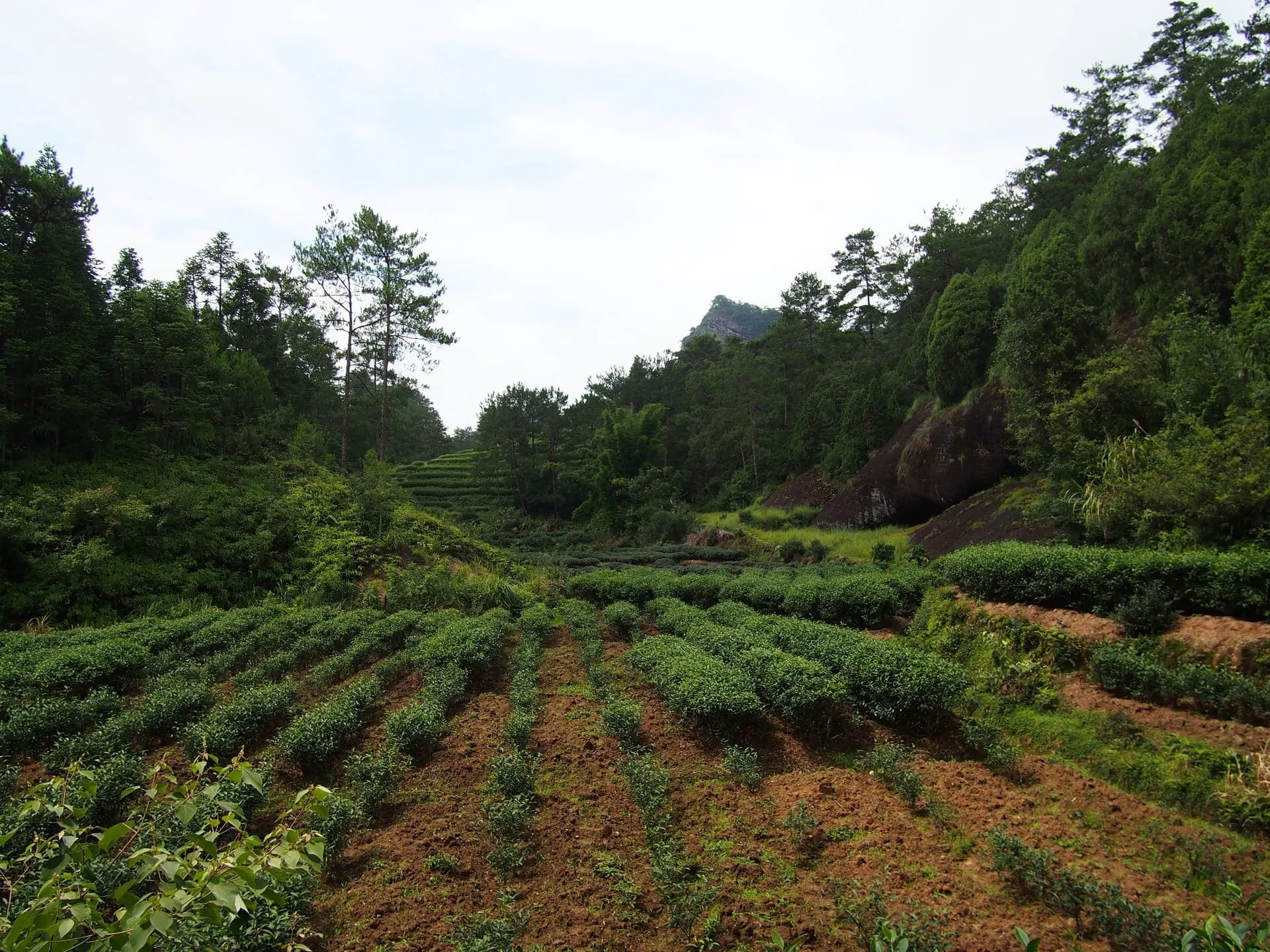
Six original Da Hong Pao tea bushes growing from a crack in a vertical cliff face, 340 meters above the valley floor. These bushes are over 350 years old and are the mother plants from which all Da Hong Pao tea originates. The last harvest from these original trees was in 2005 — the 20 grams produced sold for ¥208,000 (about US$28,000). The trees are now protected and no longer harvested. The walk to the viewing platform passes through the Da Hong Pao Valley (大红袍谷), lined with tea terraces growing descendants of the original plants. Free with scenic area entry. Allow 1 hour for the walk from the shuttle bus stop.
Wikimedia Commons · CC-BY-SA
Wuyi Palace (武夷宫, Wǔyí Gōng)
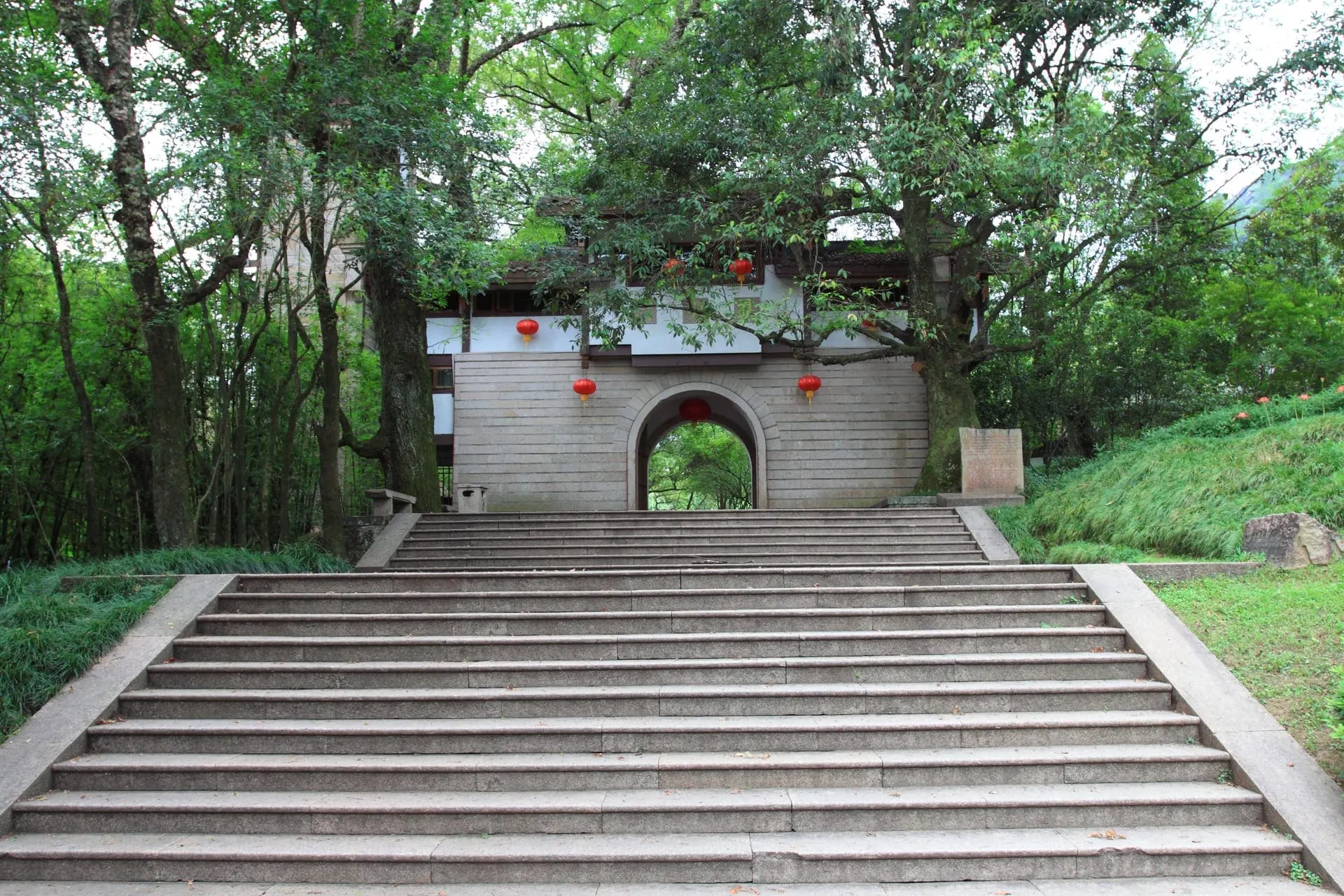
A Song-dynasty Taoist temple complex at the foot of Dawang Peak (大王峰, Dàwáng Fēng), the most prominent mountain at the entrance to the scenic area. Built in the 7th century and expanded during the Song dynasty, it was a major center of Taoist worship and scholarship. The current buildings are Ming-Qing reconstructions. The complex includes the Wuyishan Museum (武夷山博物馆) with exhibits on the area's geology, ecology, tea history, and the mysterious hanging coffins of the ancient Min-Yue people. ¥20 for the museum, temple grounds free.
Wikimedia Commons · CC-BY-SA
Shuilian Cave (水帘洞, Shuǐlián Dòng)
A vast natural rock shelter — 100 meters high and 100 meters wide — with a waterfall cascading over the overhang like a curtain of water beads (hence the name "Water Curtain Cave"). The cave contains ancient stone inscriptions and a small temple. The walk to the cave passes through tea plantations and bamboo groves. The waterfall is most impressive after rain; in dry periods it can be a trickle. Free with scenic area entry. Allow 1.5 hours for the walk from the shuttle bus stop.
Wikimedia Commons · CC-BY-SA

Xiamei Ancient Village (下梅古村, Xiàméi Gǔ Cūn)
A well-preserved Ming-Qing village about 8 km from the Wuyishan resort area, historically important as a tea-trading center on the ancient Tea Horse Road (茶马古道, Chá Mǎ Gǔdào). Xiamei's prosperity was built on the export of Wuyi rock tea to Russia and Europe in the 18th and 19th centuries. The village has cobblestone streets, canal-side granaries, merchant mansions with elaborate wood carvings, and a working tea-processing workshop. Less touristy than the scenic area. ¥60. Allow 2-3 hours. Bus or taxi from the resort area (20 minutes).
Wikimedia Commons · CC-BY-SA
Wuyishan Tea Museum (武夷山茶博物馆, Wǔyí Shān Chá Bówùguǎn)
A modern museum in the resort area covering the full history and culture of Wuyi tea — from the Song-dynasty tribute tea system (when Wuyi tea was pressed into dragon-and-phoenix cakes for the imperial court) through the Ming-dynasty shift to loose-leaf oolong to the 18th-century export trade that introduced "Bohea" tea to Europe. Exhibits cover tea cultivation, processing, varieties (Da Hong Pao, Rou Gui, Shui Xian, Tie Luo Han), and the gongfu tea ceremony (工夫茶, gōngfū chá). Good English signage. ¥40. Allow 1-1.5 hours. Combine with a tea-tasting session in the museum tea house.
Wikimedia Commons · CC-BY-SA
Qinglong Waterfall (青龙瀑布, Qīnglóng Pùbù)
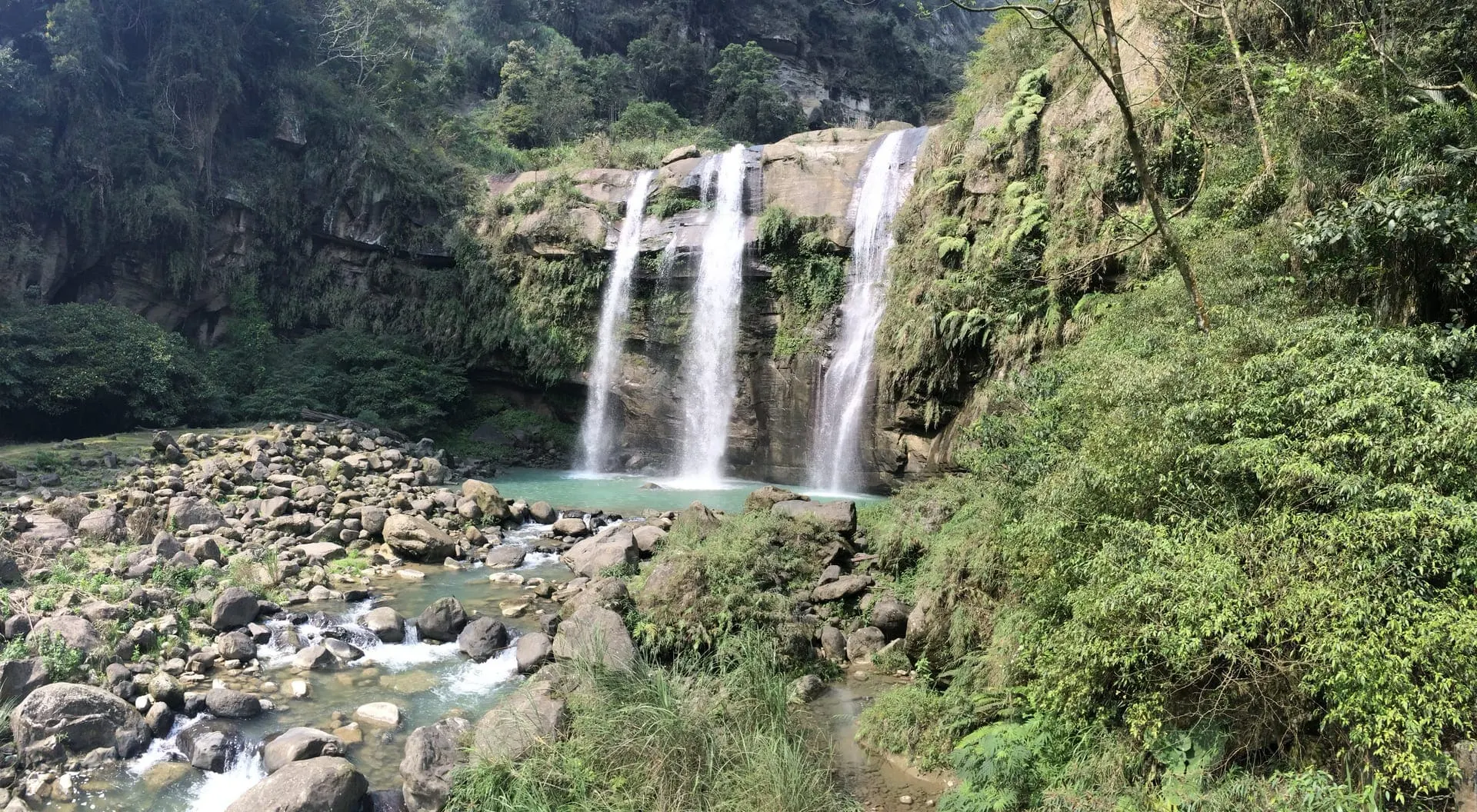
A 100-meter waterfall in the Wuyishan National Nature Reserve, about 20 km from the resort area. The waterfall plunges down a red sandstone cliff into a deep pool surrounded by primary forest. The hike to the waterfall (about 40 minutes each way) passes through subtropical rainforest with ancient trees, ferns, and the possibility of spotting Wuyishan's wildlife — the area is home to rare species including the South China tiger (extremely rare, almost certainly not visible) and the Wuyi mountain pit viper. ¥60. Allow 2-3 hours including the hike. Accessible by taxi from the resort area.
Wikimedia Commons · CC-BY-SA
STAY
Where to stay in Vũ Di Sơn
Pick a base that matches the trip you want — imperial-central for sightseeing, hutong belt for character, Chaoyang for nightlife, or Qianmen for budget.
Sangu Resort Area
The main tourist hub at the scenic area entrance — hotels, restaurants, tea shops, and the Impression Da Hong Pao theater
#resort-areaWuyishan Scenic Area
The 70 sq km UNESCO core — Nine-Bend River, Tianyou Peak, Da Hong Pao Valley, Shuilian Cave, and Wuyi Palace
#scenic-areaXiamei Ancient Village
Ming-Qing tea-trading village 8 km away — cobblestone streets, merchant mansions, and working tea workshops
#xiameiNational Nature Reserve
The wilder, less-visited side of Wuyishan — Qinglong Waterfall, primary forest, rare wildlife, and mountain trails
#nature-reserveTea Valleys & Plantations
The valleys radiating from the scenic area — terraced tea gardens, family-run tea factories, and the source of Wuyi yancha
#tea-valleys
ITINERARIES
Sample itineraries from Vũ Di Sơn
Three ready-made routes, from a 1-day imperial sprint to a 5-day deep dive. Copy the day-by-day plan and adapt to your own pace.
- 1 DAY
One-Day Wuyishan Essentials
A packed day covering the bamboo raft ride, Tianyou Peak, the Da Hong Pao mother trees, and a tea tasting. Physically demanding — start early.
- Day-trippers from Fuzhou
- Transit visitors
- Tight schedules
- Day 01
Morning
Arrive at scenic area entrance by 07:15. Take the first shuttle bus to the Nine-Bend River put-in point. Board the first raft (07:30-08:00, ¥130, 1.5 hours) — morning light, mist, fewest people. After the raft ride, walk to Wuyi Palace (20 min) to see the temple and museum (¥20, 45 min).
Afternoon
Lunch in the resort area — tea-smoked duck, braised bamboo shoots. Afternoon: shuttle bus to Tianyou Peak trailhead (12:30). Climb to the summit (848 steps, 45-60 min up). Panoramic photos of the Nine-Bend River from the top. Descend by 14:30. Shuttle bus to Da Hong Pao Valley — walk to the mother trees viewing platform (30 min each way, 15 min at the platform).
Evening
Return to the resort area by 16:30. Tea tasting at a Dawangfeng Road tea shop (1 hour, ¥50-100). Dinner of mountain mushroom hotpot and Nine-Bend River fish. Depart by 19:00.
- 2 DAYS
Two-Day Wuyishan Experience (Recommended)
The ideal visit: raft ride, Tianyou Peak, Da Hong Pao, Shuilian Cave, the Tea Museum, a proper tea tasting, and the Impression Da Hong Pao show. Two nights gives you time for all dimensions of Wuyishan.
- First-time visitors
- Tea enthusiasts
- Nature lovers
- Weekend trips
- Day 01
Morning
Scenic area entry (¥150 3-day pass). First raft departure (08:00, ¥130, 1.5 hours). Walk to Wuyi Palace and Wuyishan Museum (10:00-11:00).
Afternoon
Lunch. Tianyou Peak climb (12:30-14:30). Da Hong Pao Valley walk (15:00-16:00) — mother trees viewing platform, tea terraces. Return to resort area by 17:00.
Evening
Dinner. Impression Da Hong Pao show (¥198-298, 70 minutes, usually 19:30 or 20:00 start). Walk back through the resort area — tea shops are open late.
- Day 02
Morning
Shuilian Cave walk (08:00-09:30, 1.5 hours round-trip) — waterfall curtain, ancient inscriptions, tea terraces. Then Wuyishan Tea Museum (¥40, 10:00-11:00) for the tea history and culture exhibits.
Afternoon
Proper gongfu tea tasting at a reputable shop on Dawangfeng Road (11:30-13:00, ¥50-200 depending on teas). Taste Da Hong Pao, Rou Gui, Shui Xian side by side. Lunch. Afternoon: half-day trip to Xiamei Ancient Village (¥60, 20 min by DiDi). Walk the cobblestone streets, visit the merchant mansions, see the tea-processing workshop. Return by 16:30.
Evening
Final dinner. Buy tea to take home — Da Hong Pao, Rou Gui, or Shui Xian from the shop where you tasted. Pack carefully for travel.
- 3 DAYS
Three-Day Wuyishan Deep Dive
Three days adds Qinglong Waterfall in the National Nature Reserve, a second tea-tasting session, and a more relaxed pace with time to revisit favorite spots.
- Slow travelers
- Tea connoisseurs
- Hikers
- Photographers
- Day 01
Morning
First raft departure (08:00, ¥130). Wuyi Palace and Wuyishan Museum (10:00-11:00).
Afternoon
Lunch. Tianyou Peak climb (12:30-14:30). Da Hong Pao Valley walk (15:00-16:00).
Evening
Dinner. Impression Da Hong Pao show (¥198-298). Evening walk in the resort area.
- Day 02
Morning
Shuilian Cave walk (08:00-09:30). Wuyishan Tea Museum (¥40, 10:00-11:00).
Afternoon
Gongfu tea tasting (11:30-13:00) — compare Da Hong Pao, Rou Gui, Shui Xian, Tie Luo Han. Lunch. Xiamei Ancient Village (14:00-16:30, ¥60) — cobblestone streets, merchant mansions, tea workshop.
Evening
Dinner at a back-street family restaurant — the ones with Chinese-only menus. Second tea-tasting session if desired — focus on a single variety to understand its nuances.
- Day 03
Morning
DiDi to Qinglong Waterfall in the National Nature Reserve (08:00, 40 min, ¥60 entry). Hike to the 100-meter falls through primary forest (2-3 hours round-trip). The waterfall and forest are a wilder, less-managed Wuyishan experience.
Afternoon
Return to the resort area by 13:00. Lunch. Free afternoon: revisit a favorite viewpoint, do a final tea tasting, buy tea and souvenirs. Or, if energy allows, hike the Wuyishan Tea Trail (4-5 hours, guide required, ¥300-500) — a trail connecting tea plantations and ancient villages.
Evening
Final dinner — Nine-Bend River fish one more time. Depart by evening HSR or stay a third night. Pack tea carefully in carry-on luggage.
BUDGET
What a Vũ Di Sơn trip costs
Per-person, per-day costs across three spending tiers. Excludes international flights and visa fees.
| Line item | Backpacker | Mid-range | Luxury |
|---|---|---|---|
| Accommodation (per night) | $8 | $40 | $150 |
| Scenic area entry (3-day pass) | $21 | $21 | $21 |
| Nine-Bend River raft ride | $18 | $18 | $18 |
| Meals (per day) | $10 | $25 | $60 |
| Local transport (per day) | $3 | $10 | $25 |
| Tea tasting (1 session) | $7 | $15 | $30 |
| Impression Da Hong Pao show | $28 | $35 | $42 |
| Xiamei Ancient Village (entry + transport) | $12 | $18 | $30 |
| Qinglong Waterfall (entry + transport) | $15 | $22 | $40 |
| Total per day | $122 | $204 | $416 |
$ USD per person per day, before international flights and visas. Last verified: Q3 2026.
STAY SAFE
Emergency contacts in Vũ Di Sơn
Save these three numbers before you board the plane. China uses different hotlines than most countries — there's no 911.
- POLICE
110
- AMBULANCE
120
- FIRE
119
- TOURIST HOTLINE
12301 (China National Tourism Administration hotline). The scenic area also has a tourism police post at the main entrance.
- ENGLISH-SPEAKING ER
Wuyishan Municipal Hospital (武夷山市立医院) — basic emergency services only. For serious conditions, transfer to Fuzhou (1h HSR) or Xiamen (2.5h HSR) is essential.
Problems travelers hit in Vũ Di Sơn
- Why is my Alipay not working?You linked a foreign Visa or Mastercard to Alipay but every transaction is rejected at the merchant.
- My China visa was denied — what now?Your L visa application was refused at the Chinese consulate and your trip is in 2–4 weeks.
- My passport was lost or stolen in China — what do I do?Your passport is gone (theft or loss) and you're in mainland China without travel documents.
- Why can't I book on 12306 with my foreign card?You tried to book a high-speed rail ticket on 12306.cn and your foreign Visa/Mastercard is rejected at checkout.
- Why is my VPN not working in China?You arrived in China, opened your VPN, and it will not connect at all or connects but no traffic loads.
- Why can't I book a Tibet trip on my own?You try to book Lhasa flights and hotels yourself but the booking fails, or you're turned away at the Lhasa airport without a permit.
Book activities in Vũ Di Sơn
These are licensed tour operators and booking platforms we've vetted independently. Booking through these links may earn us a commission — see our affiliate disclosure. This never affects our editorial recommendations or the price you pay.
References

Related guides & destinations
Guide
How We Research 2026: NihaoVisit’s Methodology for China Travel Information
How NihaoVisit sources, verifies, and maintains 700+ pages of China travel information — our source hierarchy, fact-checking process, update
Guide
Fact-Checking Log 2026: Verified China Travel Information — NihaoVisit
A public log of fact-checking verification passes on NihaoVisit, showing what was verified, when, and against which sources — covering visa
Guide
Best Time to Visit China 2026: Month-by-Month Weather, Crowds, and Prices
The best time to visit most of China is April–May and September–October. Winter (Dec–Feb) is cold but cheap; summer (Jun–Aug) is hot and cro
Guide
VPN for China 2026: Which VPNs Work, eSIM Alternatives, and the Complete Pre-Trip Checklist
Most Western apps and websites are blocked in mainland China. A reliable VPN is essential for Google, Gmail, WhatsApp, Instagram, and most n
Guide
China SIM Card and eSIM Guide 2026: Stay Connected Without WeChat
A Chinese SIM or eSIM lets you use mobile data, maps, and ride-hailing without WiFi. Here is how to get one, the cost, and which provider to
Guide
Solo Female Travel in China 2026: Safety, Tips, and Real Experiences
China is one of the safer destinations for solo female travelers. Petty theft is rare, violent crime against tourists is extremely uncommon,