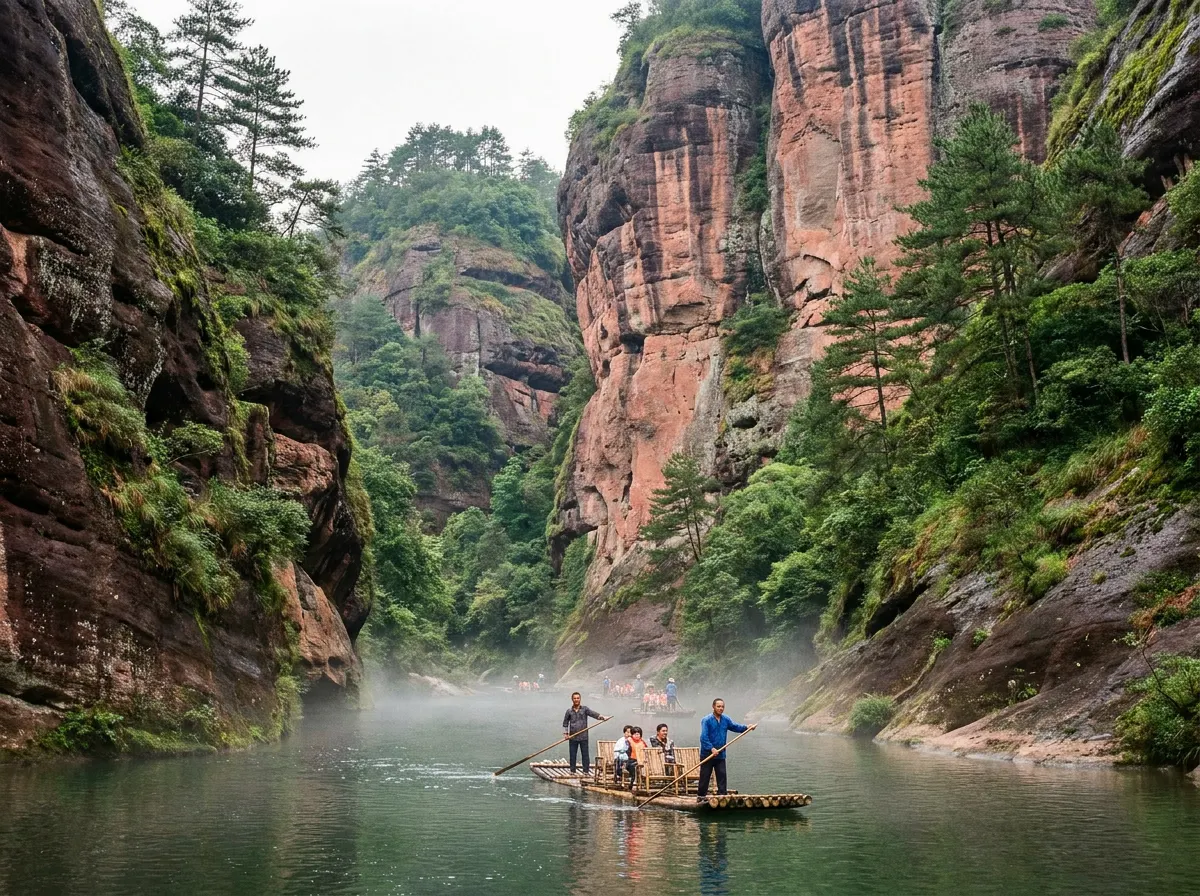
Wuyishan
Wuyishan (武夷山, Wǔyí Shān) in northern Fujian province is one of China's most extraordinary landscapes — a UNESCO World Heritage site recognized for both its cultural and natural significance, a dual designation held by only a handful of places worldwide. The Wuyi Mountains are a classic Danxia landform: red sandstone cliffs eroded into fantastical shapes, a sinuous turquoise river winding through deep gorges, and mist-shrouded peaks that have inspired Chinese poets and painters for millennia. The landscape is the birthplace of oolong tea (乌龙茶, wūlóng chá) — specifically the legendary Da Hong Pao (大红袍, Dà Hóng Páo, \"Big Red Robe\"), a rock tea (岩茶, yán chá) grown in the mineral-rich crevices of the Wuyi cliffs that is among the most expensive and sought-after teas in the world. The Nine-Bend River (九曲溪, Jiǔ Qū Xī) raft ride — 9.5 kilometers on a bamboo raft poled by two boatmen through the heart of the scenic area, past sheer cliffs, hanging coffins, and ancient inscriptions — is one of the best outdoor experiences in China. Wuyishan deserves 2-3 days for the scenic area and tea culture. Budget roughly ¥120-320 per day for mid-range comfort. The honest downside: Wuyishan is expensive by Chinese scenic-area standards (entry ¥140 plus ¥130 for the raft ride as of June 2026), the weather can be uncooperative (rain and mist are common, though the mist adds atmosphere), and the site is heavily regulated — you cannot hike most peaks independently and must follow designated routes with timed entry. Wuyishan is also one of the great centers of Chinese rock tea (岩茶, yán chá), and a serious tea drinker can spend an entire week here moving from one tea shop to the next without ever stepping into a scenic-area bus. Wuyishan also rewards travelers who slow down for the scenic-area buses and the long river walks, not just the tea shops. The Three-Tier River (三层溪) and the less-visited southern valleys give a much fuller sense of the landscape than the standard one-day Northern-Slope loop most visitors do.
Why Wuyishan in 2026.
UNESCO World Heritage site in northern Fujian — sacred mountains, the Nine-Bend River, ancient rock tea, and the birthplace of Da Hong Pao, the world's most expensive oolong tea.
Quick Answer
Wuyishan (武夷山, Wǔyí Shān) in northern Fujian province is one of China's most extraordinary landscapes — a UNESCO World Heritage site recognized for both its cultural and natural significance, a dual designation held by only a handful of places worldwide. The Wuyi Mountains are a classic Danxia landform: red sandstone cliffs eroded into fantastical shapes, a sinuous turquoise river winding through deep gorges, and mist-shrouded peaks that have inspired Chinese poets and painters for millennia. The landscape is the birthplace of oolong tea (乌龙茶, wūlóng chá) — specifically the legendary Da Hong Pao (大红袍, Dà Hóng Páo, \"Big Red Robe\"), a rock tea (岩茶, yán chá) grown in the mineral-rich crevices of the Wuyi cliffs that is among the most expensive and sought-after teas in the world. The Nine-Bend River (九曲溪, Jiǔ Qū Xī) raft ride — 9.5 kilometers on a bamboo raft poled by two boatmen through the heart of the scenic area, past sheer cliffs, hanging coffins, and ancient inscriptions — is one of the best outdoor experiences in China. Wuyishan deserves 2-3 days for the scenic area and tea culture. Budget roughly ¥120-320 per day for mid-range comfort. The honest downside: Wuyishan is expensive by Chinese scenic-area standards (entry ¥140 plus ¥130 for the raft ride as of June 2026), the weather can be uncooperative (rain and mist are common, though the mist adds atmosphere), and the site is heavily regulated — you cannot hike most peaks independently and must follow designated routes with timed entry. Wuyishan is also one of the great centers of Chinese rock tea (岩茶, yán chá), and a serious tea drinker can spend an entire week here moving from one tea shop to the next without ever stepping into a scenic-area bus. Wuyishan also rewards travelers who slow down for the scenic-area buses and the long river walks, not just the tea shops. The Three-Tier River (三层溪) and the less-visited southern valleys give a much fuller sense of the landscape than the standard one-day Northern-Slope loop most visitors do.
| Worth visiting | Yes, without hesitation — the Nine-Bend River raft ride alone justifies the trip, and the combination of dramatic Danxia scenery, world-class tea culture, and UNESCO heritage makes Wuyishan one of China's essential natural destinations. |
|---|---|
| Recommended days | 2-3 days |
| Best time to visit | March-May and September-November. Spring brings green tea-picking season and moderate temperatures. Autumn is dry and clear. Avoid July-August (hot, crowded, afternoon thunderstorms) and Chinese public holidays. |
| Daily budget | $40 (backpacker) / $120 (mid-range) / $320+ (luxury) |
| Family friendly | Yes — the bamboo raft ride is suitable for all ages, the scenic area shuttle buses make navigation easy, and the tea plantations are engaging. Some hiking trails are steep and unsuitable for young children. |
| Solo friendly | Yes — excellent for solo travelers. The scenic area is well-organized with shuttle buses, the raft ride groups solo travelers together, and the tea culture is naturally solo-friendly. |
| Airport | Wuyishan Airport (WUS) — domestic flights from Beijing (2.5h), Shanghai (1.5h), Xiamen (1h), Guangzhou (2h). About 7 km from the resort area. |
| High-speed rail | Yes — Wuyishan North station (武夷山北站) and Wuyishan East station (武夷山东站). Fuzhou (1h), Xiamen (2.5h), Shanghai (3h), Hangzhou (2h). |
| Language | Mandarin with Northern Min dialect (闽北话). English is rare outside major hotels and the scenic area visitor center. |
| Currency | CNY (¥) — Alipay and WeChat Pay accepted in the resort area and major restaurants. Cash useful for tea shops and village markets. |
| Time zone | China Standard Time (UTC+8) |
| Last updated | 2026-06-18 |
Want a Wuyishan plan built for you?
Jump to:
Nine-Bend River Raft·Tianyou Peak·Da Hong Pao Tea·Tea Culture·Getting There·Where to Stay·Food·Itineraries·Weather·Tips·Emergency Contacts·Climbing Tianyou Peak·Xiamei Village·Gongfu Tea Ceremony·Biodiversity & Reserve·Rock Tea Culture·FAQ
Why visit Wuyishan? Is it worth the cost and effort?
Wuyishan is one of China's most extraordinary landscapes and a UNESCO World Heritage site for both cultural and natural values. The Danxia landforms — red sandstone cliffs, pinnacles, and gorges carved by water over 100 million years — are among the finest examples of this geological formation anywhere, and the Nine-Bend River, winding through the mountains in serpentine curves, is the scenic heart of the area. The bamboo raft ride along it is one of the most memorable outdoor experiences in China. The cultural value is in the tea. Wuyishan is the birthplace of oolong tea, specifically yancha (岩茶, "rock tea"), grown in the mineral-rich crevices of the Wuyi cliffs. The terroir — the unique combination of red sandstone soil, mist, humidity, and altitude — produces teas of extraordinary complexity: floral, mineral, roasted, with a lingering sweetness called yanyun (岩韵, "rock rhyme") that tea connoisseurs spend lifetimes learning to appreciate. The original Da Hong Pao mother trees, still growing from a cliff face 340 meters up, are the holy grail of Chinese tea culture. The tea shops in the resort area, the tea plantations in the valleys, and the gongfu tea ceremony demonstrations are as much a reason to visit as the scenery. The honest downside: Wuyishan is expensive. The scenic area entry (¥140-150), the raft ride (¥130), and additional attractions add up. The weather can be uncooperative — mist and rain are common, and while the mist adds atmosphere, it can obscure the famous views. The scenic area is heavily regulated: you cannot hike most peaks independently, must follow designated routes, and must take shuttle buses between trailheads. This preserves the environment but frustrates independent hikers. And the resort area — a purpose-built tourist town of hotels, tea shops, and restaurants at the scenic area entrance — is functional rather than charming. Wuyishan is not a place you visit for the town; you visit for the mountains, the river, and the tea.
What is the Nine-Bend River bamboo raft ride and why is it the highlight?
The Nine-Bend River (九曲溪, Jiǔ Qū Xī) bamboo raft ride is the essential Wuyishan experience and one of the best outdoor activities in China. The river winds 9.5 kilometers through the heart of the Wuyi Mountains, making nine dramatic bends — hence the name — past sheer red cliffs, through narrow gorges, and under peaks that have been celebrated in Chinese poetry and painting for over a thousand years. The rafts are traditional bamboo platforms — six to eight long, thick bamboo poles lashed together, with simple wooden chairs fixed on top. Each raft carries six passengers and two boatmen (one at the bow, one at the stern) who pole the raft through the shallows and steer through the rapids. The ride takes about 1.5 hours, drifting downstream from the Ninth Bend (the uppermost) to the First Bend near Wuyi Palace. The river is mostly calm — gentle riffles, occasional small rapids — and the rafts are stable. You do not get seriously wet, though your feet may get splashed. What you see along the way: the sheer red cliffs of the Wuyi Mountains rising directly from the river, their faces scarred with ancient inscriptions carved by poets and officials over the centuries. Hanging coffins (悬棺, xuánguān) — boat-shaped wooden coffins placed in natural rock crevices high on the cliff faces by the ancient Min-Yue people 3,000-3,800 years ago, their purpose and placement method still not fully understood. The peaks of the Wuyi range appearing and disappearing as the river bends — Dawang Peak (大王峰), Yunü Peak (玉女峰, the "Jade Maiden"), and Tianyou Peak (天游峰) all visible from the river at different points. Kingfishers darting over the water, egrets fishing in the shallows, and the deep green of the subtropical forest on both banks. The boatmen provide commentary in Chinese — they have a set of well-rehearsed jokes, folk tales, and descriptions of the peaks, some of them bawdy. Even without understanding the words, their tone and timing are entertaining. Some boatmen will sing local folk songs if tipped (¥20-50 per raft). Practical details as of June 2026: ¥130 per person, book at least 1-2 days ahead during peak seasons (summer, holidays, weekends) through the scenic area ticket office or your hotel. Rafts depart from the Ninth Bend put-in point (reachable by scenic area shuttle bus) from about 07:30 to 15:30, with departures every 15-30 minutes. Morning rides (07:30-09:30) have the best light and the fewest crowds. The rafts do not operate in heavy rain or when the river is in flood — check conditions the day before. Wear a hat and sunscreen (there is no shade on the raft), shoes you do not mind getting slightly wet, and bring water. Cameras are fine but bring a waterproof bag — splashes are possible.
What is Da Hong Pao tea and why is Wuyishan the birthplace of oolong?
Da Hong Pao (大红袍, Dà Hóng Páo, "Big Red Robe") is the most famous oolong tea in the world — top-grade Da Hong Pao can sell for ¥10,000-50,000 per kilogram. The legend: during the Ming dynasty, a scholar traveling to Beijing for the imperial examinations fell ill near Wuyishan. Monks at a local temple gave him tea made from leaves of a cliff-side tea bush, and he recovered. He passed the exams with top honors (earning the "big red robe" of a high official), returned to Wuyishan, and draped his red robe over the tea bushes in gratitude — giving the tea its name. The original mother trees — six bushes growing from a crack in a vertical cliff face, accessible only by a narrow path — are the most famous tea plants in the world. They are over 350 years old, and the last harvest from them (in 2005, producing 20 grams) sold for ¥208,000. The trees are now protected and no longer harvested, but thousands of bushes propagated from cuttings of the originals grow in the surrounding valleys. All commercially available Da Hong Pao today is from these descendants — the taste is similar, and even these "descendant" teas are among the finest oolongs produced. What makes Wuyi tea special is the terroir. The red sandstone cliffs of the Wuyi Mountains weather into a mineral-rich, fast-draining soil that stresses the tea plants — the stress concentrates flavor compounds in the leaves. The climate — mist, humidity, warm days and cool nights, dappled sunlight filtered through the gorge walls — creates slow, even growth that develops complexity. The result is yancha (岩茶, "rock tea"): oolong teas with a distinctive mineral character, roasted notes (from the charcoal-firing process), floral and fruity aromas, and the famous yanyun (岩韵, "rock rhyme") — a lingering, sweet, mineral aftertaste that is the hallmark of genuine Wuyi yancha. The main Wuyi oolong varieties: Da Hong Pao (大红袍, the king — rich, roasted, complex), Rou Gui (肉桂, "cinnamon" — spicy, aromatic, with a distinct cinnamon note), Shui Xian (水仙, "narcissus" — floral, creamy, the most accessible for beginners), Tie Luo Han (铁罗汉, "Iron Arhat" — dark, medicinal, the strongest), and Bai Ji Guan (白鸡冠, "White Cockscomb" — light, delicate, the rarest). Where to experience Wuyi tea: The walk to the Da Hong Pao mother trees (free with scenic area entry) takes you through the tea valley where descendants of the original bushes grow. The Wuyishan Tea Museum (¥40) covers the full history and has a tea house for tastings. The tea shops in the resort area — particularly along Dawangfeng Road (大王峰路) and in the Sangu Tea Market (三姑茶市) — offer free tastings (with the expectation that you will buy if you taste extensively). The best experience is a tea-tasting session at a reputable shop: sit at a gongfu tea table, watch the proprietor brew multiple infusions of different teas in tiny clay pots, and learn to taste the differences between varieties. A good session lasts 1-2 hours and costs ¥50-200 depending on the teas tasted (often waived if you buy tea).
How to get to Wuyishan: flights, high-speed rail, and connections from Xiamen and Fuzhou?
Wuyishan is in northern Fujian province, near the Jiangxi border, and is accessible by air and high-speed rail. By air: Wuyishan Airport (WUS) is about 7 km from the resort area. Domestic flights serve Beijing (2.5 hours, ¥800-1,500), Shanghai (1.5 hours, ¥500-1,000), Xiamen (1 hour, ¥400-800), Guangzhou (2 hours, ¥600-1,200), and Shenzhen (1.5 hours). From the airport, a taxi to the resort area takes 10 minutes (¥15-20). The airport is small and flight schedules are limited — book well ahead, especially during tea-picking season (April-May) and autumn (October-November). By high-speed rail: Wuyishan has two HSR stations. Wuyishan North station (武夷山北站, Wǔyí Shān Běi Zhàn) is about 12 km north of the resort area — taxi takes 20 minutes (¥30-40), or bus route 7 (¥3, 30 minutes). Wuyishan East station (武夷山东站) is about 20 km east — taxi takes 30 minutes (¥50-60). Direct trains serve Fuzhou (1 hour, ¥90-130), Xiamen (2.5 hours, ¥180-240), Shanghai (3 hours, ¥220-280), Hangzhou (2 hours, ¥150-200), and Nanchang (1.5 hours, ¥110-150). Getting around Wuyishan: The scenic area operates a network of shuttle buses (included in the scenic area entry ticket) connecting the main entrance, trailheads, the Nine-Bend River put-in point, and major sights. Buses run every 10-20 minutes from about 07:00 to 17:30. Within the resort area (hotels, restaurants, tea shops), everything is walkable — the area is compact, about 2 km end to end. Taxis and DiDi are available for trips outside the resort area (Xiamei Village, Qinglong Waterfall, the HSR stations). There is no metro.
Where to stay in Wuyishan: resort area, tea village guesthouses, or near the scenic entrance?
The Wuyishan Resort Area (武夷山度假区, Wǔyí Shān Dùjià Qū) — also called Sangu Resort (三姑度假区) — is the purpose-built tourist town at the entrance to the scenic area. It is the most convenient base: walking distance to the scenic area entrance, shuttle bus stops, restaurants, and tea shops. Mid-range hotels cluster here — Ji Hotel (¥250-400), Atour (¥300-500), Jinjiang Inn (¥180-280). Several larger resort hotels with pools and spa facilities (¥500-1,200) cater to the domestic leisure market. The area is functional and slightly soulless — concrete hotels, wide streets, tea shops — but convenient. For a more atmospheric stay: Several tea-themed guesthouses in the area around Dawangfeng Road and in the lanes behind the main street offer rooms in traditional Fujian courtyard-style buildings with tea-tasting rooms, small gardens, and a quieter atmosphere. These are typically ¥200-400 per night. The Wuyishan Tea Lodge (武夷山茶居) and the Old Tea House Inn (老茶馆客栈) are two established options. The owners are usually tea enthusiasts who will happily brew tea for guests. Xiamei Ancient Village (8 km from the resort area) has a few guesthouses in restored Ming-Qing merchant houses. These are the most atmospheric option — stone-paved courtyards, carved wooden beams, and the quiet of an ancient village — but you are removed from the scenic area and will need a DiDi or taxi for everything. ¥150-350 per night. For backpackers: Several youth hostels in the resort area offer dorm beds at ¥50-80. The Wuyishan International Youth Hostel (武夷山国际青年旅舍) near Dawangfeng Road is the most established, with a common area popular with Chinese and international travelers. Luxury: The Wuyishan Impression Da Hong Pao Resort (武夷山印象大红袍山庄) near the Impression Da Hong Pao theater is the top option, with villas, a spa, and mountain views, from ¥1,200. The Wuyishan Wyndham (温德姆) is the only international-brand hotel, from ¥800.
What to eat in Wuyishan: Fujian mountain cuisine, tea-infused dishes, and local specialties?
Wuyishan's food is northern Fujian mountain cuisine (闽北菜, Mǐnběi cài) — hearty, savory, and distinct from the seafood-focused southern Fujian cooking of Xiamen and Fuzhou. The mountain location means an emphasis on wild mushrooms, bamboo shoots, free-range chicken, river fish, and the region's famous teas, which appear in both food and drink. The dishes you should try: Tea-smoked duck (茶熏鸭, chá xūn yā). Duck marinated with spices, then smoked over Wuyi tea leaves and camphor wood. The smoking gives the duck a deep, aromatic, slightly sweet flavor and a beautiful reddish-brown color. Served cold, sliced thin, as an appetizer. ¥48-68. Da Hong Pao tea prawns (大红袍虾, Dà Hóng Páo xiā). Freshwater prawns stir-fried with Da Hong Pao tea leaves — the tea infuses the oil and coats the prawns, giving them a subtle roasted, floral flavor. The fried tea leaves are crispy and edible. ¥68-98. Braised bamboo shoots (红烧笋, hóngshāo sǔn). Wuyishan's bamboo forests produce exceptional bamboo shoots, harvested in spring and preserved year-round. The shoots are braised with pork belly, soy sauce, and a little sugar until tender and deeply savory. ¥35-50. The spring fresh-shoot version is outstanding. Mountain mushroom hotpot (山菌火锅, shān jūn huǒguō). A bubbling pot of chicken or pork broth filled with the wild mushrooms of the Wuyi forests — matsutake, chanterelle-like jijun (鸡菌), wood ear, and the local honggu (红菇, red mushroom) that turns the broth a deep pink. ¥88-128 for a pot, feeds 2-3. Wuyi smoked tofu (武夷熏豆腐, Wǔyí xūn dòufu). Firm tofu smoked over tea leaves and served cold with chili-soy dipping sauce. The smoking gives the tofu a meaty texture and a deep, savory flavor. ¥18-28. Nine-Bend River fish (九曲溪鱼, Jiǔ Qū Xī yú). Small river fish from the Nine-Bend River, deep-fried whole until crispy and served with salt, Sichuan pepper, and chili flakes. Eat them whole — bones, head, and all. ¥38-58. Where to eat: The resort area has the most restaurants, concentrated along Dawangfeng Road (大王峰路) and the side streets off it. Quality varies — restaurants with English menus and photo displays tend to be more expensive and less authentic. The small, family-run places with Chinese-only hand-written menus serve the best food. Look for restaurants where locals are eating — the lunch crowd (12:00-13:00) is the best indicator. The Sangu Tea Market area has several good mid-range restaurants. For street food, the night market near the Impression Da Hong Pao theater has grilled skewers, fried snacks, and local specialties.
What are good 1-day, 2-day, and 3-day itineraries for Wuyishan?
One-day sprint: Arrive at the scenic area entrance by 07:30. Take the shuttle bus to the Nine-Bend River put-in point for the first raft departure (08:00, ¥130, 1.5 hours) — morning light on the river is magical. After the raft ride, walk to Wuyi Palace (20 minutes) to see the Taoist temple and the Wuyishan Museum (¥20). Lunch in the resort area — tea-smoked duck, braised bamboo shoots. Afternoon: climb Tianyou Peak (408 m, 848 steps, about 1 hour up) for the panoramic view of the Nine-Bend River. The climb is steep but paved — take water and rest at the viewing platforms. Descend by 16:00. Late afternoon: tea tasting at a Dawangfeng Road tea shop (1 hour). Dinner of Nine-Bend River fish and mountain mushroom hotpot. A packed, physically demanding day that covers the absolute essentials: river, peak, temple, tea. Two-day plan (recommended): Day 1 as above but at a more relaxed pace — add the Da Hong Pao Valley walk (1 hour round-trip from the shuttle bus stop) in the late afternoon to see the mother trees. Day 2: morning walk to Shuilian Cave (1.5 hours round-trip) and the surrounding tea terraces. Late morning: Wuyishan Tea Museum (¥40, 1 hour) followed by a proper gongfu tea tasting at a reputable shop (1-2 hours, ¥50-200). Lunch. Afternoon: half-day trip to Xiamei Ancient Village (¥60, 20 minutes by taxi). Walk the cobblestone streets, visit the merchant mansions, see the tea-processing workshop. Return by 16:30. Evening: Impression Da Hong Pao (印象大红袍) — the Zhang Yimou-directed outdoor light show (¥198-298, 70 minutes) set on the river with the mountains as a backdrop. It is touristy, spectacular, and worth it. Book through your hotel or the ticket office. Three-day plan: Days 1-2 as above. Day 3: morning trip to Qinglong Waterfall (¥60, 40-minute drive, 2-3 hours including the hike) in the Wuyishan National Nature Reserve. The waterfall and the primary forest are a different Wuyishan experience — wilder, wetter, and less managed than the scenic area. Afternoon: return to the resort area. Free afternoon: revisit favorite spots, do a second, more focused tea tasting (compare Da Hong Pao, Rou Gui, and Shui Xian side by side), buy tea to take home. If you are interested in hiking: substitute the waterfall for the Wuyishan Tea Trail (武夷山茶道) — a 4-5 hour hike connecting tea plantations and ancient villages, requiring a guide (arrange through your hotel, ¥300-500). The three-day plan lets you experience all dimensions of Wuyishan: scenery, tea, culture, and wilderness.
What is the weather like in Wuyishan and when should I visit?
Wuyishan has a humid subtropical climate moderated by altitude (the resort area is at about 200 meters, peaks at 400-700 meters). The weather is heavily influenced by the mountains — mist, cloud, and rain are common, and the microclimate can change rapidly. Spring (March-May): 12-26°C, the best season alongside autumn. March is cool and often rainy. April brings warm days, new tea leaves (the spring tea harvest begins), green mountains, and blossoming azaleas. May is warm and lush — the best month for the full green landscape and comfortable hiking. Spring rain can be persistent but is usually light. The spring tea harvest (April-May) is the most interesting time for tea enthusiasts — you can see tea being processed in the villages. Summer (June-September): 22-35°C, hot, humid, and the peak domestic tourist season. July and August are the busiest and hottest months. Afternoon thunderstorms are common — they clear the air but can disrupt raft operations (the rafts do not run in heavy rain or when the river rises). The advantage of summer: the mountains are at their greenest, the waterfalls are at full flow, and the Impression Da Hong Pao show runs nightly. Book raft tickets and accommodation well ahead. Autumn (October-November): 12-25°C, the second best season. October is the consensus best month — dry, crisp, clear skies, autumn foliage on the mountains. The autumn tea harvest (October) produces teas with a different character from the spring flush — more roasted, more intense. Avoid National Day (October 1-7) when domestic tourism peaks. Winter (December-February): 3-12°C, cold and damp, the low season. The mountains can be bare and grey, but winter mist creates an ethereal atmosphere — the peaks emerging from cloud, the river steaming in the cold air. The scenic area is quiet, hotels are cheap, and you may have the trails to yourself. Snow is rare but possible — Wuyishan under snow is extraordinarily beautiful. The raft ride in winter is cold — dress warmly. The tea shops are at their most welcoming, with hot tea and warm interiors.
What practical information do I need: tickets, language, money, and internet?
Scenic area tickets: As of June 2026, the Wuyishan Scenic Area entry fee is ¥140 for a 1-day pass or ¥150 for a 3-day pass. The ticket includes unlimited shuttle bus rides within the scenic area. The Nine-Bend River bamboo raft ride is an additional ¥130 and must be booked separately — book 1-2 days ahead during peak seasons. Tickets can be purchased at the scenic area ticket office, through your hotel, or via the official WeChat mini-program (Chinese-only). The 3-day pass is the better value if you are staying more than one day. Language: English is rare. The scenic area has some English signage. Major resort hotels have some English-speaking staff. The Wuyishan Tea Museum has good English labels. Outside these, expect zero English — restaurants, tea shops, taxi drivers, and raft boatmen communicate in Mandarin and the local Northern Min dialect. A translation app with offline Chinese is essential. Money: Alipay and WeChat Pay are widely accepted in the resort area, hotels, larger restaurants, and the scenic area ticket office. Carry ¥300-500 in cash for tea shops, village markets, small restaurants, and tips for raft boatmen. ATMs at ICBC and Agricultural Bank branches in the resort area accept foreign cards. Internet: Standard China restrictions — install and test a VPN before arriving. WiFi is standard in hotels and guesthouses. A Chinese SIM card (¥100-200 for 30 days) gives the most reliable connectivity. 4G coverage is good in the resort area and patchy in the mountains. A practical note on hiking: The scenic area trails are well-maintained with stone steps, handrails, and signage. Tianyou Peak (848 steps) is the most demanding climb. Wear proper walking shoes with grip — the steps can be slippery when wet. Carry water — there are vendors at major trailheads but not on the trails themselves. Most peaks close by 16:00-16:30 — check closing times at the trailhead. The shuttle buses stop running at 17:30 — plan to be back at a bus stop by 17:00.
What tips, warnings, and things should I avoid in Wuyishan?
1. BOOK THE RAFT RIDE EARLY. The bamboo raft ride is the single best experience in Wuyishan and it sells out. Book at least 1-2 days ahead during peak seasons (summer, holidays, weekends). Take the earliest departure you can get (07:30-08:30) — the morning light is best, the crowds are smallest, and the temperature is coolest. 2. THE TEA SHOPS EXPECT YOU TO BUY. Wuyishan tea shops offer free tastings as a sales technique, not as hospitality. It is acceptable to taste 2-3 teas and not buy, but if you taste extensively (5+ teas over 30+ minutes), the expectation is that you will purchase something. A small purchase (¥50-100 for 50-100g of tea) is polite. If you do not intend to buy, be upfront: "wǒ xiān kàn kàn" (我先看看, I'm just looking first). 3. WUYI TEA IS EXPENSIVE — KNOW WHAT YOU ARE BUYING. Genuine Wuyi yancha (rock tea) from the core scenic area is expensive — ¥500-2,000+ per 500g for good-quality Da Hong Pao or Rou Gui. Tea labeled "Da Hong Pao" at ¥50-100 per 500g is blended, low-grade, or from outside the Wuyi area. It is not "fake" — it is still oolong tea — but it is not what connoisseurs mean by Da Hong Pao. Buy from established shops on Dawangfeng Road or in the Sangu Tea Market rather than from stalls at the scenic area entrance. Taste before buying. Good tea has multiple infusions (5-8+), a complex aroma, and a lingering sweet aftertaste. 4. THE WEATHER CONTROLS YOUR DAY. The rafts do not operate in heavy rain or when the river is in flood. Mountain trails close in thunderstorms. Check the forecast the night before and have a flexible plan — tea tastings and the museum are good rainy-day activities. 5. DON'T ATTEMPT TO HIKE OFF-TRAIL. The scenic area is heavily regulated for conservation reasons. Off-trail hiking is prohibited and enforced. The hanging coffin sites are protected — do not attempt to climb to them. Stay on marked paths. 6. THE RESORT AREA IS NOT CHARMING. Wuyishan's resort area is a functional tourist town built for the domestic market — concrete hotels, wide streets, and tea shops. Do not expect atmospheric ancient streets. The beauty is in the mountains, not the town. Spend your time in the scenic area, not the resort. 7. SUMMER AFTERNOONS ARE FOR INDOOR ACTIVITIES. July and August afternoons are hot, humid, and prone to thunderstorms. Plan hikes and the raft ride for the morning, and save tea tastings, the museum, and long lunches for the afternoon. 8. THE IMPRESSION DA HONG PAO SHOW IS WORTH THE MONEY. Zhang Yimou's outdoor light show (¥198-298, 70 minutes) uses the mountains and river as its stage — hundreds of performers, dramatic lighting, and a narrative about Wuyi tea culture. It is grand, touristy, and genuinely spectacular. Book through your hotel for the best seats. The show runs nightly in peak season and may be cancelled in rain. 9. DON'T BUY "ORIGINAL DA HONG PAO" FROM THE MOTHER TREES. The mother trees are no longer harvested. Any tea sold as "original mother-tree Da Hong Pao" is fraudulent. All commercial Da Hong Pao is from descendant bushes. A reputable vendor will tell you this. 10. THE HANGING COFFINS ARE REAL AND ANCIENT. The boat-shaped wooden coffins visible in rock crevices along the Nine-Bend River are 3,000-3,800 years old, placed there by the ancient Min-Yue people. How they placed heavy wooden coffins in inaccessible cliff crevices is still debated — bamboo scaffolding, ropes from above, or temporary earthen ramps are the leading theories. The Wuyishan Museum has a good exhibit on them. They are a genuine archaeological mystery, not a tourist fabrication.
What are the emergency contacts and health information for Wuyishan?
Police: 110. Ambulance: 120. Fire: 119. Traffic accident: 122. These numbers work from any phone. English-speaking operators are theoretically available but Mandarin is standard. Your hotel front desk is your best first call in any emergency. Tourist complaint hotline: 12301 (China National Tourism Administration). The Wuyishan Scenic Area also has a dedicated tourism police post (旅游警察) at the main entrance. Medical facilities: Wuyishan Municipal Hospital (武夷山市立医院) in the city of Wuyishan (about 12 km from the resort area) is the main medical facility with emergency services. It is a county-level hospital — adequate for basic medical issues but limited for serious conditions. English-speaking staff are very rare. For serious medical emergencies, transfer to Fuzhou (1 hour by HSR) or Xiamen (2.5 hours by HSR) is necessary. Comprehensive travel insurance covering medical evacuation is essential. Tap water is not potable. Bottled water is widely available (¥2-3 per bottle). Most hotels and guesthouses provide a kettle and complimentary bottled water. Carry water on hikes — vendors at trailheads sell drinks, but there are no vendors on the trails. Air quality in Wuyishan is excellent — the mountain forests and lack of industry mean AQI typically ranges from 20-50, among the cleanest air in China. The mountain air is one of the area's underrated assets. Altitude: The resort area is at about 200 meters, and the highest peak in the scenic area (Tianyou Peak) is 408 meters — no altitude concerns. Wildlife: Wuyishan is home to several species of venomous snakes, including the Wuyi Mountain pit viper. Stay on marked trails, do not reach into crevices or undergrowth, and wear closed shoes when hiking. Snake encounters are rare on the main trails.
What is the climb up Tianyou Peak really like, and is the view worth the 848 steps?
Tianyou Peak (天游峰, Tiānyóu Fēng, "Heavenly Tour Peak") is the signature climb of Wuyishan — and the one image that appears on every Wuyishan poster, brochure, and tea tin. At 408 meters above sea level, it is the highest point accessible to regular visitors in the scenic area, and from its summit the entire Nine-Bend River is laid out below you in a single serpentine sweep through the red sandstone cliffs. If you climb only one peak in Wuyishan, climb this one. The climb begins at a shuttle bus stop near the south entrance of the scenic area. The path is stone steps — 848 of them, in regular switchback sections — cut into the hillside and shaded for much of the way by subtropical forest. The climb is steep, with several sections that climb at an honest 30-40 degree angle, and the steps are uneven in height. There are three or four rest platforms along the way with benches and partial views; most people stop at the second or third platform to catch their breath and to take in the view of the river below, which opens up in stages as you gain height. Allow 45-60 minutes to reach the summit at a comfortable pace, less if you are very fit, more if the day is hot. The summit itself is a long, narrow ridge with a viewing platform at the western end. The view is the one you came for: the Nine-Bend River below, bending in its nine signature curves between the red cliffs, with Dawang Peak (大王峰, "King Peak") rising prominently to the east and Yunü Peak (玉女峰, "Jade Maiden Peak") visible to the south. On a clear day you can see for kilometers along the gorge. On a misty day — and Wuyishan is often misty — the clouds drift through the gorges below you, the peaks appearing and disappearing like islands in a sea of white. The misty view is, in its own way, more atmospheric than the clear one; the Chinese poets who have been writing about Wuyishan for over a thousand years were usually describing it in cloud. What to wear and bring: proper walking shoes with grip — the stone steps are unforgiving on smooth-soled sandals or sneakers. A hat in summer. At least one liter of water per person. There are vendors selling water and tea eggs at the trailhead and at one rest platform about two-thirds of the way up, but nothing at the summit and nothing on the upper sections. A light rain jacket in shoulder seasons — the weather changes fast and the summit is exposed. Sunscreen in summer. A small backpack rather than a tote bag; you need both hands free for the steeper sections. When to climb: as early in the morning as you can manage. The light is best before 09:00 (the cliffs glow pink in the early sun), the air is coolest, and the path is least crowded. By 11:00 the steps become a one-direction river of people on busy days, and by 14:00 the heat in summer is punishing. The descent should be started by 15:00-15:30 at the latest; the summit area closes around 16:00 and the lower shuttle buses stop running by 17:30. Do not attempt the climb in heavy rain — the steps turn into a film of water and the metal handrails are slippery. Cloud-only days (overhead high cloud, no rain) are ideal: clear enough to see, cool enough to climb. The honest version: the climb is work. Eight hundred and forty-eight uneven stone steps at altitude, in heat and humidity, is not a casual stroll. If you have knee problems, are not reasonably fit, or are traveling with small children, you can see much of the same panoramic view from the third rest platform about two-thirds of the way up — the platform is wide, has benches, and most visitors agree the view from there is 80% of the summit experience with 30% of the effort. But if your knees and your lungs are willing, the summit view is the single image you will carry home from Wuyishan, and the one that makes the climb worth every step. After the summit, two options for the descent. The main route is back down the way you came — the same 848 steps, which is harder on the knees than the climb because each step lands a hard impact on the descending leg. Take it slow, use the handrails, and consider walking slightly sideways on the steepest sections to take pressure off the kneecaps. The alternative descent is the back trail via Tiancai Rock (天籁岩, Tiāncái Yán, a quieter ridge walk through forest that emerges near Wuyi Palace at the south end of the scenic area. The back trail is longer (about 1.5-2 hours from the summit) but much gentler on the knees and significantly less crowded. It also gives you a different angle on the mountains and a completely different atmosphere from the busier main route. Ask at the summit which fork leads to the back trail — the signage is in Chinese only, but the Tiancai Rock route is well-marked and the path is obvious once you are on it. A practical note for photographers: the single best Tianyou Peak photo is the classic composition looking down the S-curve of the Nine-Bend River with Dawang Peak rising on the right and the cloud line sitting just below the summit. This shot is most reliably made between 07:00 and 09:30 on a partly cloudy morning — the side light gives the cliffs depth and a high overcast keeps the contrast manageable. A polarizing filter helps cut the haze; a graduated ND is useful if the sky is much brighter than the gorge. By midday the light flattens and the crowds are heaviest in the frame. Plan accordingly.
Is the day trip to Xiamei Ancient Village worth it, and what was its role in the Tea Horse Road trade?
Xiamei Village (下梅古村, Xiàméi Gǔ Cūn) is the most rewarding half-day detour from the Wuyishan scenic area, and the single best place to understand the historical dimension of Wuyi tea beyond the drinking of it. Eight kilometers southeast of the resort area, it was once the largest tea-trading market in northern Fujian, the staging post through which Wuyi rock tea was funneled onto the ancient Tea Horse Road (茶马古道, Chá Mǎ Gǔdào) bound for Russia, Europe, and Tibet. The village still has the cobblestone streets, the merchant mansions, the canal-side granaries, and the working tea workshop of its 18th- and 19th-century peak. It is small enough to see in two hours, atmospheric enough to linger in for half a day, and quiet enough that you will likely have much of it to yourself outside weekends and holidays. The history is the reason to come. From the 17th century onward, Wuyi rock tea was the Chinese tea the rest of the world knew first. The English word "tea" itself, the Dutch "thee," the German "Tee," and the Russian "чай" — all derive from words used along the Fujian coast for the Wuyi teas shipped out from nearby Fuzhou and Xiamen. By the 18th century, Wuyi teas were being shipped to Europe in such quantities that "Bohea" — the European name for Wuyi tea, derived from the local pronunciation of Wuyi — became a generic English word for black tea. The export trade made Xiamei wealthy: tea merchants built the imposing brick-and-wood mansions whose carved beams and elaborate moon gates you walk past today. The most prominent surviving mansion belongs to the Zou family (邹氏), whose ancestors cornered much of the Wuyi-to-Russia trade in the mid-1800s; the family residence has a council hall, a private opera stage, and a sequence of courtyards each more elaborate than the last. What you actually do on a visit: enter the village through the small admission area (¥60 as of June 2026, sometimes folded into a combo with a tea-tasting). Walk the single main street — about 800 meters of stone paving, with a stream (the Mei Stream, 梅溪) running parallel to it under old stone bridges. Stop at the Zou Mansion (邹氏家祠, Zōu Shì Jiā Cí), which has been restored as a small museum of the tea trade with English-captioned photographs of the merchants, the routes, and the trading houses in Russia and Mongolia. Continue to the working tea-processing workshop at the eastern end of the village, where you can watch tea being roasted, rolled, and sorted — the same basic process used for the past two hundred years, though now with electric woks rather than charcoal braziers. The workshop sells tea at farm-gate prices, often considerably less than the same grade in the resort-area shops. Practicalities: the village is open daily from about 08:00 to 17:30, last entry usually around 16:30. Allow two to three hours including the tea workshop. A DiDi or taxi from the resort area costs ¥20-30 and takes 15-20 minutes one way. There are no English tour guides based at the village itself; English signage at the main attractions is minimal, though the architecture speaks for itself. Bring water in summer. There are a handful of small restaurants in the village serving simple Wuyi mountain fare (tea-smoked duck, bamboo shoots, river fish) at considerably lower prices than the resort area; lunch in the village is a pleasant way to extend the visit into a half-day trip. How to combine it with the rest of your Wuyishan schedule: most visitors do Xiamei on the afternoon of their second day, after a morning hike or a raft ride. It pairs well with the Wuyishan Tea Museum (¥40) in the resort area, which together give you the full arc of Wuyi tea — the geology and cultivar history in the museum, the trading and processing history in the village. If you are interested in old tea-trade architecture rather than the cliffs and rivers, you could even spend most of a day in Xiamei, walking the back lanes and visiting the smaller, less-restored mansions that the main path bypasses. The village is also where to buy vacuum-packed smoked tofu and bamboo-shoot pickles to take home — both are regional specialties that travel well.
How do I actually taste Wuyi tea gongfu-style, and what should I look for?
The gongfu tea ceremony (工夫茶, gōngfū chá) is the traditional southern Chinese method of brewing oolong tea, and Wuyishan is one of the two great centers of the practice.
What else is there beyond the main scenic area — wildlife, the Nature Reserve, and the wider region?
The 70 square kilometers of the Wuyishan Scenic Area, anchored by the Nine-Bend River and the Danxia cliffs, are what every visitor sees. But the Wuyishan region is a much larger and biologically richer place than the scenic area alone suggests. The Wuyi Mountains as a whole straddle the Fujian-Jiangxi border, and the protected area around the scenic core — the Wuyishan National Nature Reserve (武夷山自然保护区) — is one of China's most important biodiversity hotspots. If you have a third day, or if your primary interest is natural history rather than tea or landscape photography, this wider Wuyishan is where the surprises are. The biodiversity in numbers: the Wuyishan region is recorded as hosting over 5,000 plant species and more than 500 vertebrate species, with particularly high diversity in ferns, mosses, orchids, and reptiles. The forest types range from evergreen broadleaf at the lower elevations through mixed conifer-broadleaf to sub-alpine scrub near the highest peaks. The reserve is one of the few places in southeastern China where primary (never-logged) subtropical forest can still be experienced. The most famous wildlife resident is the South China tiger — critically endangered, almost certainly extinct in the wild, but historically present in the Wuyishan forests and the subject of an ongoing conservation effort in the broader region. You will not see one. What you are likely to see on a dawn walk: silver pheasants (the national-level protected species is sometimes glimpsed near the trails), kingfishers on the river, egrets, Chinese bulbuls, various tits and warblers, the spectacular broad-tailed swallowtail butterfly, and dragonflies by the streams. How to access the Nature Reserve: the main public access point is Qinglong Waterfall (青龙瀑布, Qīnglóng Pùbù), a 100-meter cascade about 20 km from the resort area in the southern part of the reserve. Entry is ¥60, and a DiDi from the resort area takes about 40 minutes (¥60-80). The hike from the entry point to the waterfall base is about 40 minutes each way through primary forest — old trees, dense fern cover, the sound of the falls growing louder as you approach. The waterfall is at its most spectacular in late spring and summer when rainfall is highest; in winter it can be a thin trickle. Allow 2-3 hours total for the visit. The trail is well-marked but can be slippery in rain. There are no food vendors in the reserve, so bring water and snacks. For serious naturalists, the broader Nature Reserve has more demanding hikes to peaks like Huanggang Mountain (黄岗山, Huánggǎng Shān, 2,160 m — the highest peak in the Wuyi range and along the Fujian-Jiangxi border) and Dazhulan Mountain. These require permits, a local guide, and multi-day arrangements; they are not realistic day-trip options. The Nature Reserve office in the resort area can provide information, but English-language support is essentially nil. If you are a serious birder, the Wuyishan area is recognized internationally for its bird list — well over 300 species have been recorded — and a local birding guide can be arranged through the Wuyishan tourism bureau with several days of notice. What this means for most visitors: if you have only two days, stay focused on the main scenic area and Xiamei. The Qinglong Waterfall is a worthwhile third-day add if you enjoy hiking and want to see the wilder side of the Wuyishan forest; it is the most accessible Nature Reserve experience. If you have four days or more, or if your travel focus is natural history, the longer reserve hikes and a local naturalist guide open up a completely different Wuyishan — quieter, wilder, and less visited than anything you see on the bamboo raft. Either way, do not assume that the scenic area is all that Wuyishan has to offer. The mountains continue beyond the shuttle-bus loop, and the wildlife, the primary forest, and the more remote Danxia formations continue with them. One last thing worth knowing: the climate of the Wuyishan region is what makes everything else possible. The mountains sit at the meeting point of the warm, moist air from the southeast and the cooler, drier air from the interior, and the result is a microclimate that supports both subtropical forest at lower elevations and temperate forest higher up. The mist that frustrates visitors hoping for clear views is the same mist that feeds the mosses on the cliffs, the ferns on the forest floor, and the slow, even growth of the tea plants in the gorge. The tea could not exist without the mist; the primary forest could not exist without the tea-economy that paid for its protection; and the wildlife could not exist without the unbroken canopy. The whole system holds together because of one another, and the scenic area is the most accessible window into it — but the wider region is where the system actually lives.
Beyond Da Hong Pao: what else is worth knowing about Wuyi rock tea (Yan Cha) culture?
Wuyi rock tea (岩茶, yán chá) is a 350-year-old tea culture built on six legendary mother trees, more than a dozen celebrated cultivars, and a charcoal-roasting technique unlike anything most travelers know from home. Da Hong Pao is the name every visitor hears first, but the wider story deserves attention — if you spend more than two days in Wuyishan, the depth of this culture is what distinguishes a quick visit from a real one. The Mother Trees (母树大红袍, Mǔ Shù Dà Hóng Páo) are the single most storied tea plants on earth. Six ancient bushes grow from a narrow crack in a near-vertical cliff face in Jiulongke (九龙窠, Jiǔlóng Kē, "Nine Dragon Nest"), about 340 meters above the valley floor in the heart of the scenic area. They are documented to be over 350 years old — Ming-dynasty plantings — and the leaves they produce are chemically and aromatically distinct from any of their descendants. The last commercial harvest from these six original bushes took place in 2005; the resulting 20 grams of finished tea sold at auction for ¥208,000 (roughly US$28,000 at the time). In 2006, the Wuyishan municipal government and the Fujian provincial authorities formally declared the six mother trees a protected cultural relic, and harvesting was permanently stopped to preserve them for future generations. Any tea sold today labeled "original mother-tree Da Hong Pao" is fraudulent; all genuine commercial Da Hong Pao comes from bushes propagated by cutting from the mother trees and grown in the surrounding valleys. The viewing platform above the cliff — reachable by a short walk from the Da Hong Pao Valley shuttle bus stop — gives a clear view of the cliff face and the original bushes themselves, which still produce leaves that are allowed to fall and decay naturally. The Wuyi Rock Tea family is broader than Da Hong Pao alone. The local tea authority officially recognizes twelve classic Wuyi cultivars (武夷山十二金钗, the "Twelve Golden Hairpins" of yancha), and the most commonly encountered are: Rou Gui (肉桂, "cinnamon" — spicy, with a distinctive cinnamon-bark note from high roasting); Shui Xian (水仙, "narcissus" — fuller-bodied, creamy, more floral than Da Hong Pao, and the most widely planted variety); Tie Luo Han (铁罗汉, "Iron Arhat" — dark, rich, with medicinal notes, one of the oldest named cultivars); Bai Ji Guan (白鸡冠, "White Cockscomb" — pale leaves, delicate, slightly sweet); Bai Hao Oolong (白毫乌龙, also called Oriental Beauty — the only Wuyi tea produced for its insect-bitten, honey-sweet character); Huang Jin Gui (黄金桂, "Golden Osmanthus" — floral, light); Shui Jin Gui (水金龟, "Water Golden Turtle" — mineral, soft); Que She (雀舌, "Sparrow Tongue" — small-leafed, aromatic); Jin Fo (金佛, "Golden Buddha"); Mei Zhan (梅占, "Plum Champion" — used as a base for both oolong and black tea); Da Wu Ye (大乌叶, "Big Black Leaf" — a Guangdong crossover also grown in Wuyi); and Fo Shou (佛手, "Buddha's Hand" — citrus-aromatic). Each cultivar has a different harvest window, roasting tolerance, and aging behavior; serious tea drinkers in Wuyi will taste three or four side by side to understand the differences. The charcoal-roasting process (木炭焙火, mù tàn bèi huǒ) is what gives Wuyi yancha its signature character. Unlike green tea (no oxidation, no roasting) or black tea (full oxidation, no roasting), oolong sits between the two and is then charcoal-fired in a slow, low-temperature process that can take 12 to 24 hours per batch. The traditional method: high-quality hardwood charcoal (typically lychee or longan wood, which burn cleanly and produce minimal smoke) is broken into small pieces and arranged in a deep clay or brick roasting pit. Baskets of finished oolong tea are stacked above the charcoal bed, separated from the heat by a layer of ash. The tea roasts slowly over many hours — the master roaster monitors temperature by hand, turning and restacking baskets at intervals. A single pass produces lightly roasted tea (轻焙); two or three passes, separated by weeks of rest, produce medium and heavy roasts. Heavy-roast yancha (足火) is the style most foreigners encounter first: deep, toasty, almost coffee-like, with cocoa and caramel notes beneath the floral top notes. Light-roast tea (清香) shows more of the cultivar's original character — floral, fruity, mineral — and is preferred by younger Chinese drinkers. Aging yancha in traditional clay jars for one to three years further softens the roast and rounds the flavor; aged Rou Gui and aged Shui Xian are the most prized for this style. The Wuyi Tea Expo Garden (武夷山茶博园, Wǔyí Shān Chá Bóyuán) is the best single place to see the modern tea industry in one visit. Located on the north side of the scenic area, it combines a botanical garden of the major yancha cultivars (each section planted with a different variety, labeled and walkable), a working tea-processing facility with viewing windows for visitors, a comprehensive museum covering the history of Wuyi tea from the Tang dynasty onward, and a series of traditional tea pavilions where gongfu tea ceremonies are performed on the hour. The garden is the single best place to compare the major cultivars side by side, see the roasting process up close, and watch experienced tea masters brew multiple infusions for visitors. Allow 2-3 hours for a complete visit. Entry is ¥80 as of June 2026, and the tea-tasting sessions at the pavilions are included. The Wuyi Gongfu Tea Ceremony (武夷工夫茶, Wǔyí Gōngfū Chá) differs from typical Chinese tea preparation in several important ways. The standard Chinese home method — particularly for green or black tea — is to put a small amount of leaves in a cup or mug, pour hot water over them, and let them steep for a few minutes before drinking. The Wuyi gongfu method is engineered for oolong's specific chemistry: a very large amount of leaf relative to water (8-10 grams of dry leaf in a 100-150 ml gaiwan or small clay teapot), very short infusions (10-30 seconds for the first few brews, gradually lengthening), and many sequential infusions from the same leaves (a good yancha will give 8-12 distinct brews, each with a slightly different character). The teaware is small by Western standards: a Chaozhou hand-pulled clay teapot (潮州手拉坯, traditionally unglazed inside to season with use), a fairness pitcher (公道杯, gōngdào bēi) to ensure all guests receive identical-strength tea, and tiny 30-50 ml tasting cups. Water temperature is just below boiling (95-98°C for yancha — significantly hotter than green tea, slightly cooler than black). The first infusion is poured off after about 5 seconds and discarded — this is the rinse, to wake the leaves. The host pours each infusion from a height to aerate the tea and bring out the aroma, then refills the pot. Between infusions, the host lifts the lid of the gaiwan or the teapot and offers it to guests to smell the wet leaves — a key part of the experience that is unfamiliar to most Western tea drinkers. The pace is unhurried, the conversation between host and guests is part of the ritual, and a serious session of 3-4 cultivars can easily run 90 minutes to 2 hours. What to take away: Wuyi rock tea culture is not just about drinking tea — it is a complete sensory system built around cultivar, terroir, processing, and ritual. Even a single afternoon visit to a good tea shop, the Wuyi Tea Expo Garden, or a long gongfu session at a resort-area teahouse will deepen your understanding of Wuyishan far beyond the mountain scenery. The tea is the culture, the culture is the place, and the place is unlike anywhere else in China.
Top attractions
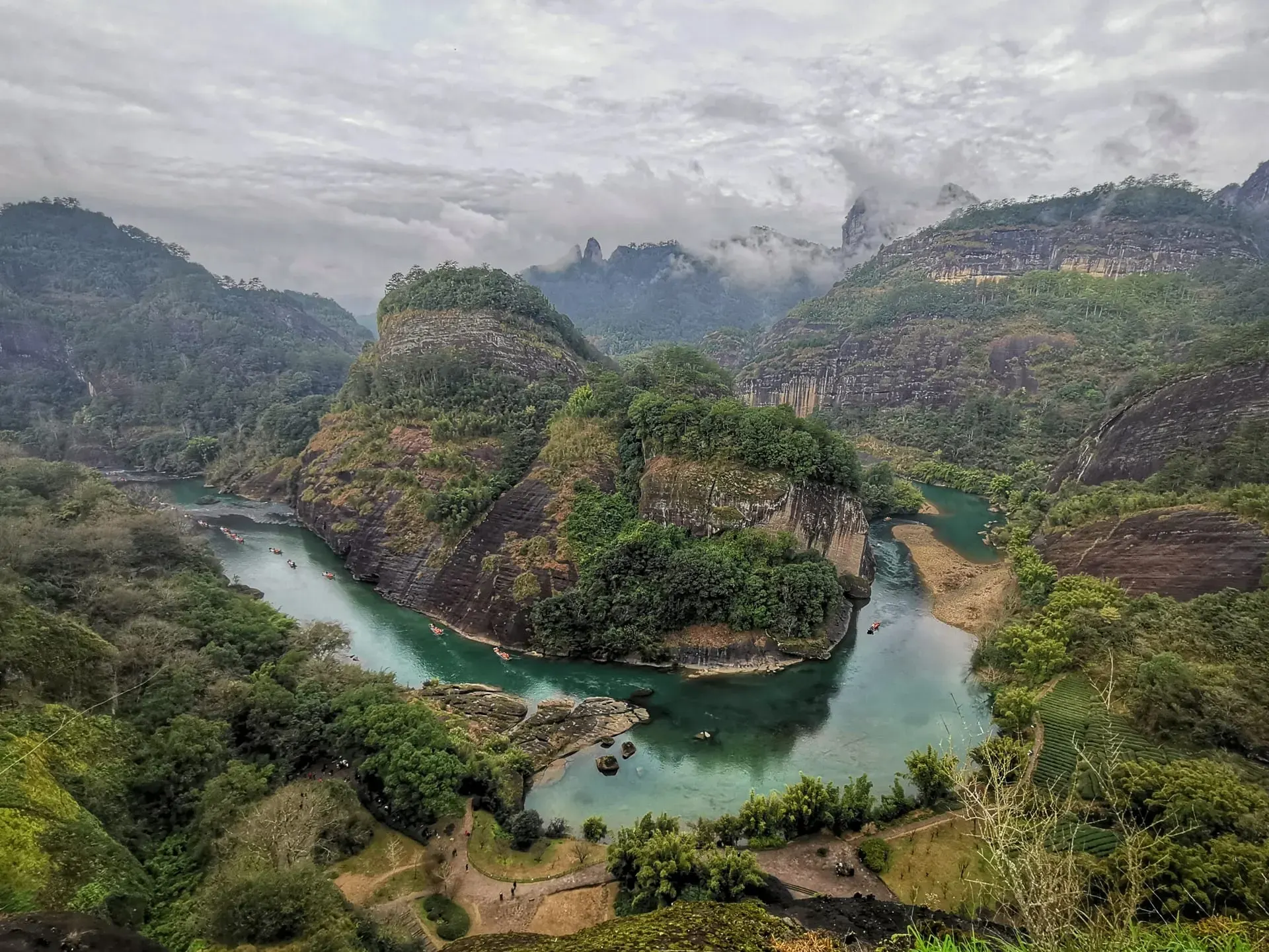
Wuyishan Scenic Area & Nine-Bend River (武夷山风景区/九曲溪, Wǔyí Shān Fēngjǐngqū/Jiǔ Qū Xī)
The core of Wuyishan: 70 square kilometers of Danxia peaks, gorges, and the winding Nine-Bend River. The 1.5-hour bamboo raft ride (¥130) drifts 9.5 km through the heart of the scenery — sheer red cliffs, ancient hanging coffins visible in rock crevices, 3,000-year-old boat-shaped coffins, and inscriptions carved into the cliff faces. Tianyou Peak (天游峰, Tiānyóu Fēng, 408 m) is the signature climb: 848 stone steps to a panoramic view of the Nine-Bend River snaking through the mountains. Scenic area entry: ¥140 (1-day) or ¥150 (3-day) as of June 2026.
Wikimedia Commons · CC-BY-SA
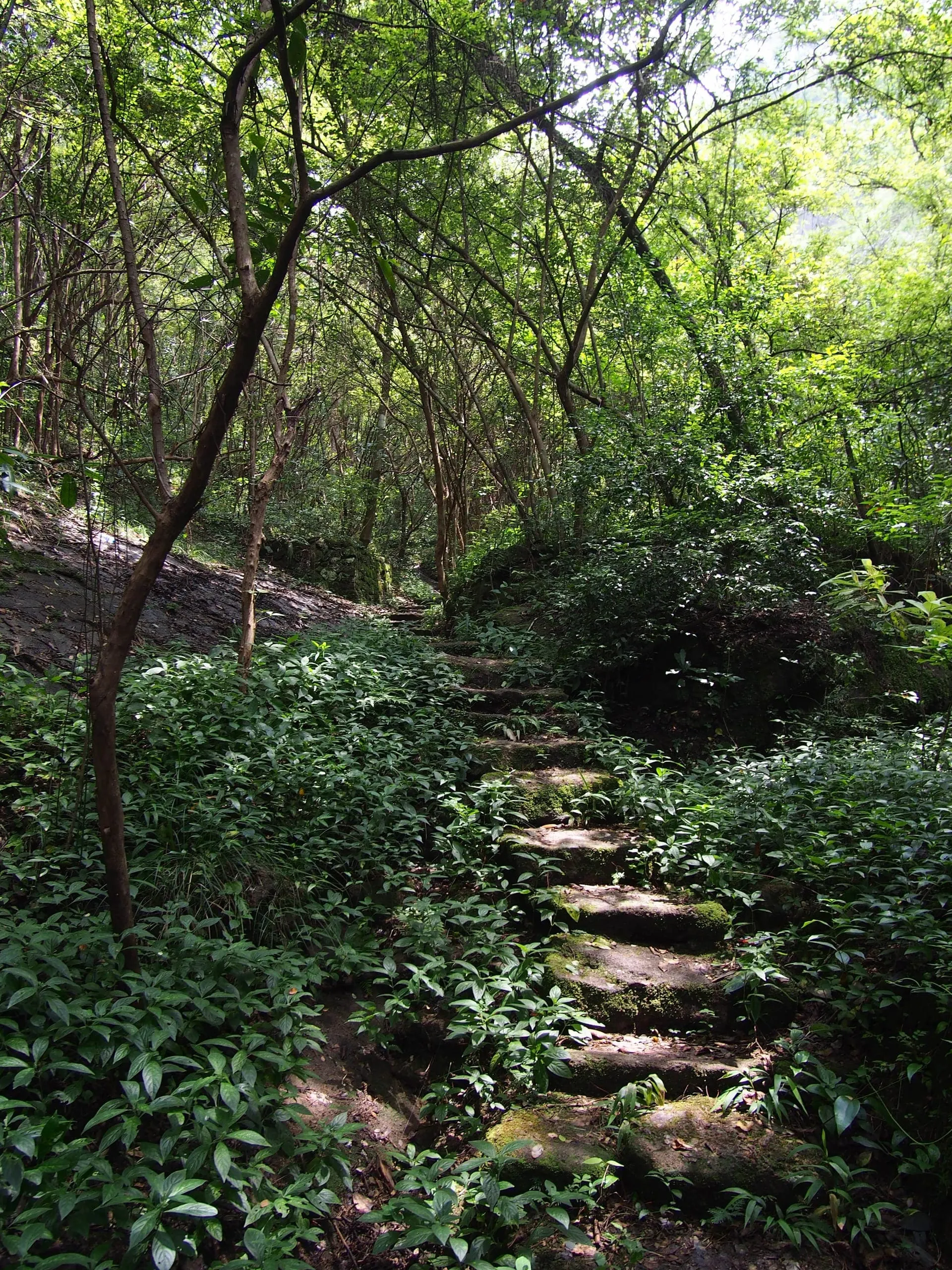
Da Hong Pao Tea Trees (大红袍母树, Dà Hóng Páo Mǔ Shù)
Six original Da Hong Pao tea bushes growing from a crack in a vertical cliff face, 340 meters above the valley floor. These bushes are over 350 years old and are the mother plants from which all Da Hong Pao tea originates. The last harvest from these original trees was in 2005 — the 20 grams produced sold for ¥208,000 (about US$28,000). The trees are now protected and no longer harvested. The walk to the viewing platform passes through the Da Hong Pao Valley (大红袍谷), lined with tea terraces growing descendants of the original plants. Free with scenic area entry. Allow 1 hour for the walk from the shuttle bus stop.
Wikimedia Commons · CC-BY-SA
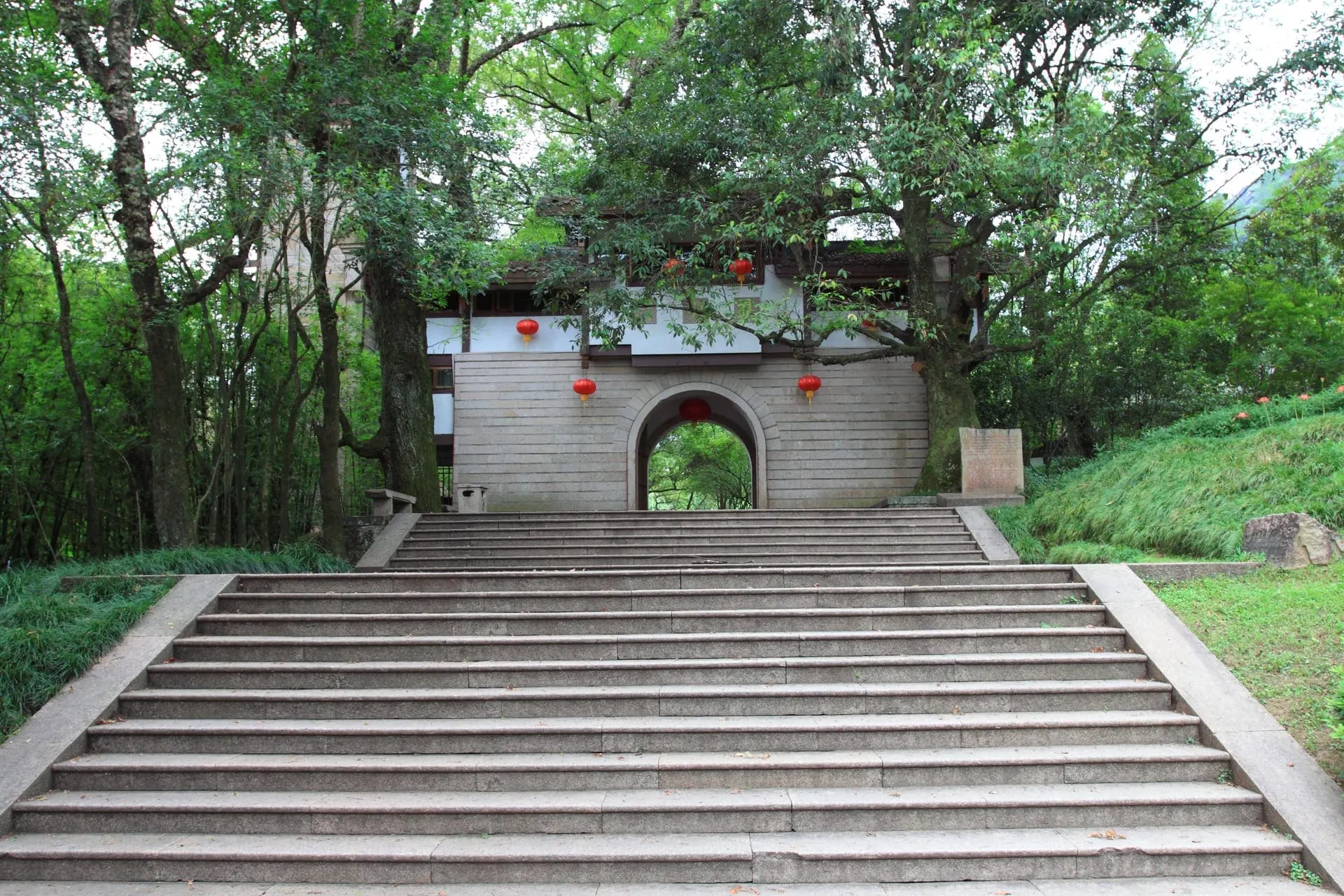
Wuyi Palace (武夷宫, Wǔyí Gōng)
A Song-dynasty Taoist temple complex at the foot of Dawang Peak (大王峰, Dàwáng Fēng), the most prominent mountain at the entrance to the scenic area. Built in the 7th century and expanded during the Song dynasty, it was a major center of Taoist worship and scholarship. The current buildings are Ming-Qing reconstructions. The complex includes the Wuyishan Museum (武夷山博物馆) with exhibits on the area's geology, ecology, tea history, and the mysterious hanging coffins of the ancient Min-Yue people. ¥20 for the museum, temple grounds free.
Wikimedia Commons · CC-BY-SA
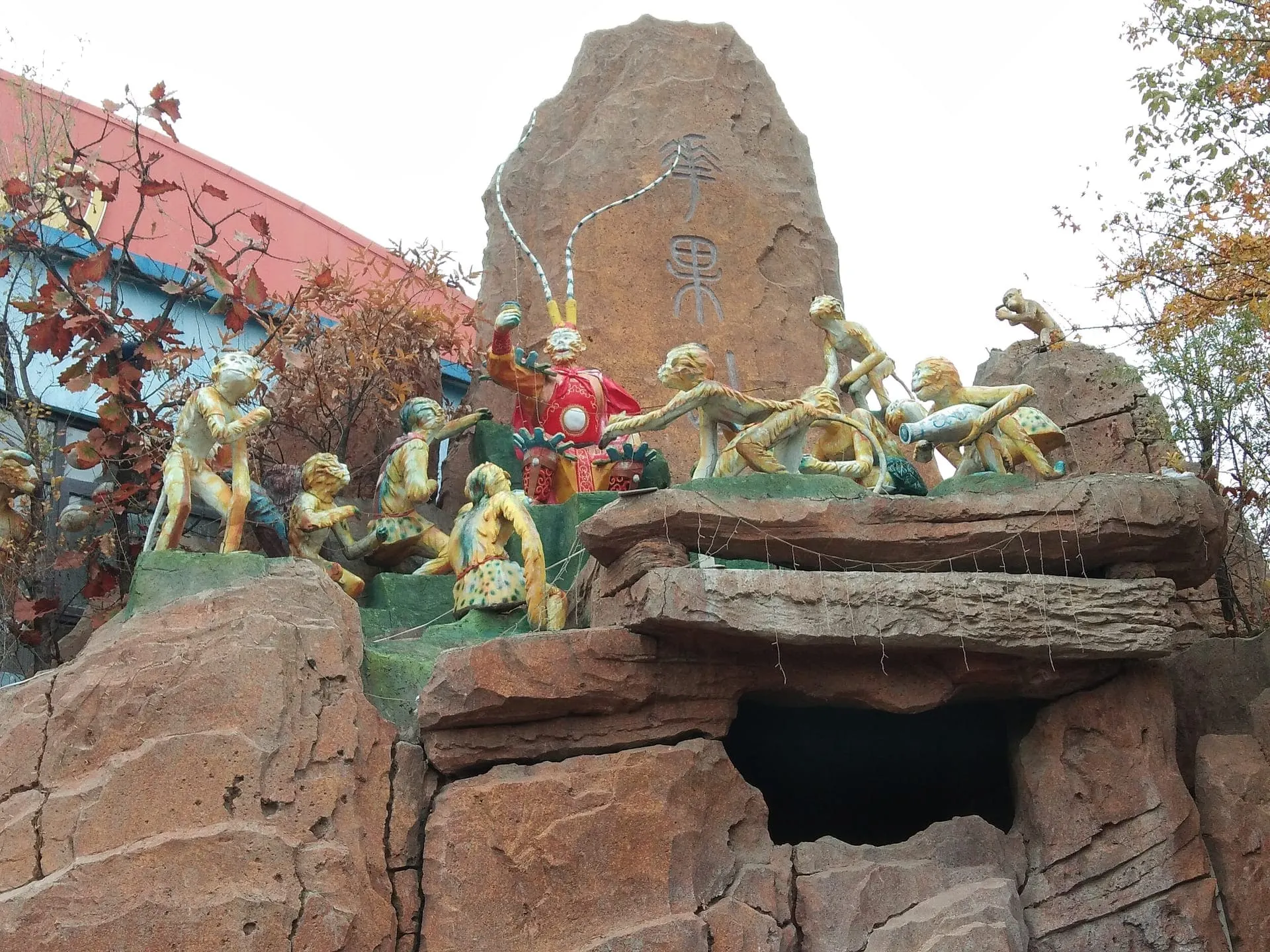
Shuilian Cave (水帘洞, Shuǐlián Dòng)
A vast natural rock shelter — 100 meters high and 100 meters wide — with a waterfall cascading over the overhang like a curtain of water beads (hence the name "Water Curtain Cave"). The cave contains ancient stone inscriptions and a small temple. The walk to the cave passes through tea plantations and bamboo groves. The waterfall is most impressive after rain; in dry periods it can be a trickle. Free with scenic area entry. Allow 1.5 hours for the walk from the shuttle bus stop.
Wikimedia Commons · CC-BY-SA

Xiamei Ancient Village (下梅古村, Xiàméi Gǔ Cūn)
A well-preserved Ming-Qing village about 8 km from the Wuyishan resort area, historically important as a tea-trading center on the ancient Tea Horse Road (茶马古道, Chá Mǎ Gǔdào). Xiamei's prosperity was built on the export of Wuyi rock tea to Russia and Europe in the 18th and 19th centuries. The village has cobblestone streets, canal-side granaries, merchant mansions with elaborate wood carvings, and a working tea-processing workshop. Less touristy than the scenic area. ¥60. Allow 2-3 hours. Bus or taxi from the resort area (20 minutes).
Wikimedia Commons · CC-BY-SA
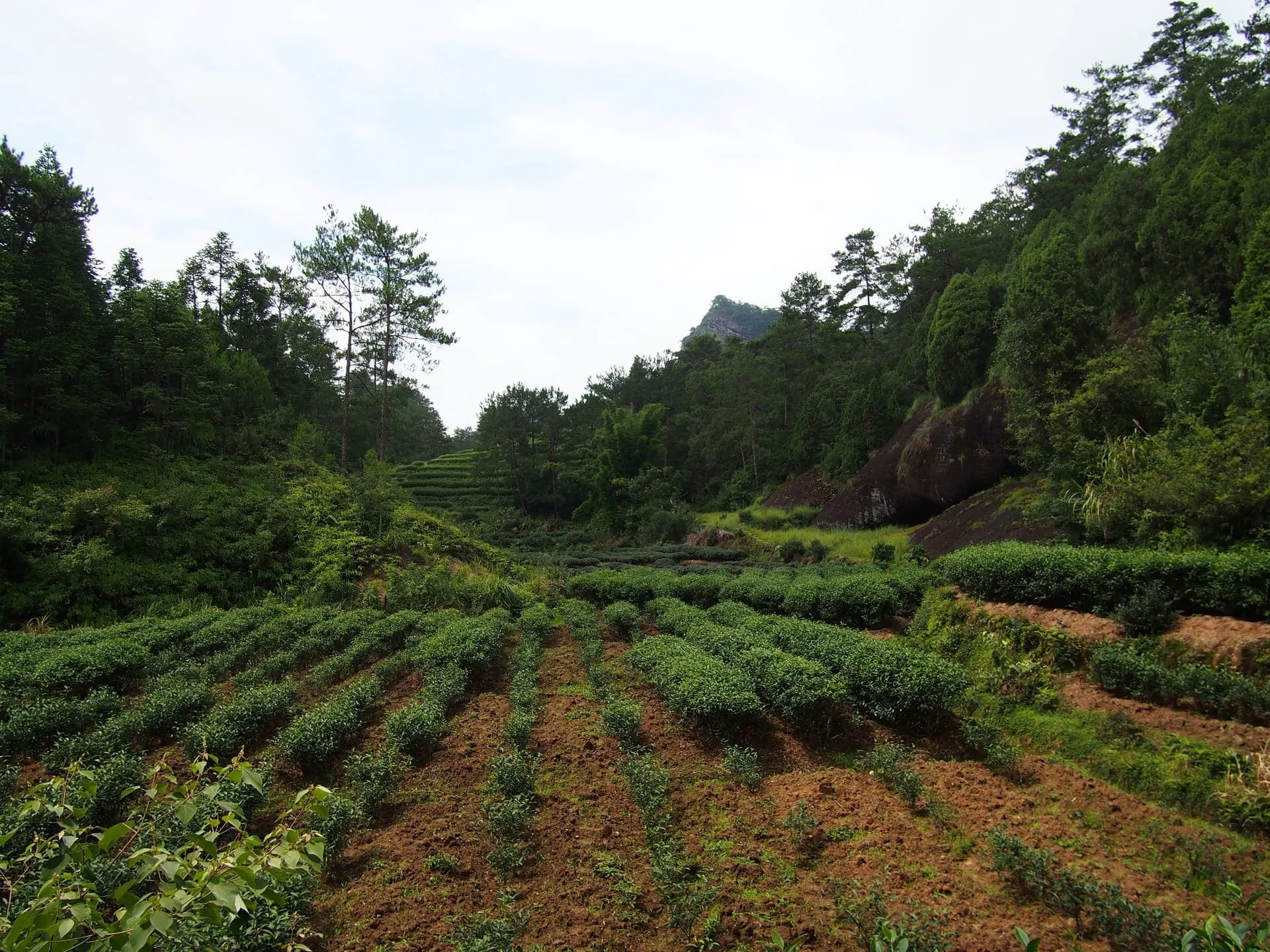
Wuyishan Tea Museum (武夷山茶博物馆, Wǔyí Shān Chá Bówùguǎn)
A modern museum in the resort area covering the full history and culture of Wuyi tea — from the Song-dynasty tribute tea system (when Wuyi tea was pressed into dragon-and-phoenix cakes for the imperial court) through the Ming-dynasty shift to loose-leaf oolong to the 18th-century export trade that introduced "Bohea" tea to Europe. Exhibits cover tea cultivation, processing, varieties (Da Hong Pao, Rou Gui, Shui Xian, Tie Luo Han), and the gongfu tea ceremony (工夫茶, gōngfū chá). Good English signage. ¥40. Allow 1-1.5 hours. Combine with a tea-tasting session in the museum tea house.
Wikimedia Commons · CC-BY-SA
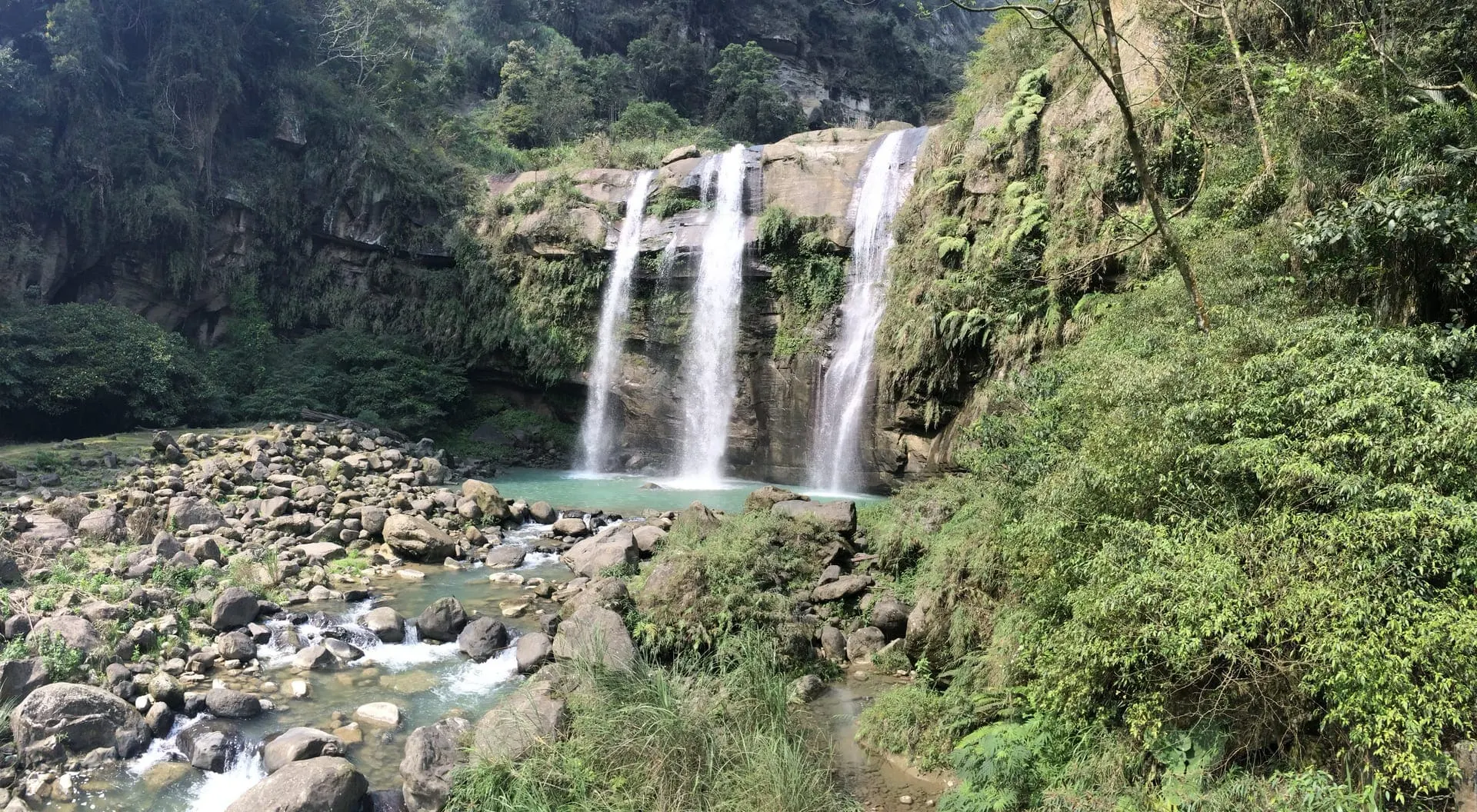
Qinglong Waterfall (青龙瀑布, Qīnglóng Pùbù)
A 100-meter waterfall in the Wuyishan National Nature Reserve, about 20 km from the resort area. The waterfall plunges down a red sandstone cliff into a deep pool surrounded by primary forest. The hike to the waterfall (about 40 minutes each way) passes through subtropical rainforest with ancient trees, ferns, and the possibility of spotting Wuyishan's wildlife — the area is home to rare species including the South China tiger (extremely rare, almost certainly not visible) and the Wuyi mountain pit viper. ¥60. Allow 2-3 hours including the hike. Accessible by taxi from the resort area.
Wikimedia Commons · CC-BY-SA
STAY
Where to stay in Wuyishan
Pick a base that matches the trip you want — imperial-central for sightseeing, hutong belt for character, Chaoyang for nightlife, or Qianmen for budget.
Sangu Resort Area
The main tourist hub at the scenic area entrance — hotels, restaurants, tea shops, and the Impression Da Hong Pao theater
#resort-areaWuyishan Scenic Area
The 70 sq km UNESCO core — Nine-Bend River, Tianyou Peak, Da Hong Pao Valley, Shuilian Cave, and Wuyi Palace
#scenic-areaXiamei Ancient Village
Ming-Qing tea-trading village 8 km away — cobblestone streets, merchant mansions, and working tea workshops
#xiameiNational Nature Reserve
The wilder, less-visited side of Wuyishan — Qinglong Waterfall, primary forest, rare wildlife, and mountain trails
#nature-reserveTea Valleys & Plantations
The valleys radiating from the scenic area — terraced tea gardens, family-run tea factories, and the source of Wuyi yancha
#tea-valleys
ITINERARIES
Sample itineraries from Wuyishan
Three ready-made routes, from a 1-day imperial sprint to a 5-day deep dive. Copy the day-by-day plan and adapt to your own pace.
- 1 DAY
One-Day Wuyishan Essentials
A packed day covering the bamboo raft ride, Tianyou Peak, the Da Hong Pao mother trees, and a tea tasting. Physically demanding — start early.
- Day-trippers from Fuzhou
- Transit visitors
- Tight schedules
- Day 01
Morning
Arrive at scenic area entrance by 07:15. Take the first shuttle bus to the Nine-Bend River put-in point. Board the first raft (07:30-08:00, ¥130, 1.5 hours) — morning light, mist, fewest people. After the raft ride, walk to Wuyi Palace (20 min) to see the temple and museum (¥20, 45 min).
Afternoon
Lunch in the resort area — tea-smoked duck, braised bamboo shoots. Afternoon: shuttle bus to Tianyou Peak trailhead (12:30). Climb to the summit (848 steps, 45-60 min up). Panoramic photos of the Nine-Bend River from the top. Descend by 14:30. Shuttle bus to Da Hong Pao Valley — walk to the mother trees viewing platform (30 min each way, 15 min at the platform).
Evening
Return to the resort area by 16:30. Tea tasting at a Dawangfeng Road tea shop (1 hour, ¥50-100). Dinner of mountain mushroom hotpot and Nine-Bend River fish. Depart by 19:00.
- 2 DAYS
Two-Day Wuyishan Experience (Recommended)
The ideal visit: raft ride, Tianyou Peak, Da Hong Pao, Shuilian Cave, the Tea Museum, a proper tea tasting, and the Impression Da Hong Pao show. Two nights gives you time for all dimensions of Wuyishan.
- First-time visitors
- Tea enthusiasts
- Nature lovers
- Weekend trips
- Day 01
Morning
Scenic area entry (¥150 3-day pass). First raft departure (08:00, ¥130, 1.5 hours). Walk to Wuyi Palace and Wuyishan Museum (10:00-11:00).
Afternoon
Lunch. Tianyou Peak climb (12:30-14:30). Da Hong Pao Valley walk (15:00-16:00) — mother trees viewing platform, tea terraces. Return to resort area by 17:00.
Evening
Dinner. Impression Da Hong Pao show (¥198-298, 70 minutes, usually 19:30 or 20:00 start). Walk back through the resort area — tea shops are open late.
- Day 02
Morning
Shuilian Cave walk (08:00-09:30, 1.5 hours round-trip) — waterfall curtain, ancient inscriptions, tea terraces. Then Wuyishan Tea Museum (¥40, 10:00-11:00) for the tea history and culture exhibits.
Afternoon
Proper gongfu tea tasting at a reputable shop on Dawangfeng Road (11:30-13:00, ¥50-200 depending on teas). Taste Da Hong Pao, Rou Gui, Shui Xian side by side. Lunch. Afternoon: half-day trip to Xiamei Ancient Village (¥60, 20 min by DiDi). Walk the cobblestone streets, visit the merchant mansions, see the tea-processing workshop. Return by 16:30.
Evening
Final dinner. Buy tea to take home — Da Hong Pao, Rou Gui, or Shui Xian from the shop where you tasted. Pack carefully for travel.
- 3 DAYS
Three-Day Wuyishan Deep Dive
Three days adds Qinglong Waterfall in the National Nature Reserve, a second tea-tasting session, and a more relaxed pace with time to revisit favorite spots.
- Slow travelers
- Tea connoisseurs
- Hikers
- Photographers
- Day 01
Morning
First raft departure (08:00, ¥130). Wuyi Palace and Wuyishan Museum (10:00-11:00).
Afternoon
Lunch. Tianyou Peak climb (12:30-14:30). Da Hong Pao Valley walk (15:00-16:00).
Evening
Dinner. Impression Da Hong Pao show (¥198-298). Evening walk in the resort area.
- Day 02
Morning
Shuilian Cave walk (08:00-09:30). Wuyishan Tea Museum (¥40, 10:00-11:00).
Afternoon
Gongfu tea tasting (11:30-13:00) — compare Da Hong Pao, Rou Gui, Shui Xian, Tie Luo Han. Lunch. Xiamei Ancient Village (14:00-16:30, ¥60) — cobblestone streets, merchant mansions, tea workshop.
Evening
Dinner at a back-street family restaurant — the ones with Chinese-only menus. Second tea-tasting session if desired — focus on a single variety to understand its nuances.
- Day 03
Morning
DiDi to Qinglong Waterfall in the National Nature Reserve (08:00, 40 min, ¥60 entry). Hike to the 100-meter falls through primary forest (2-3 hours round-trip). The waterfall and forest are a wilder, less-managed Wuyishan experience.
Afternoon
Return to the resort area by 13:00. Lunch. Free afternoon: revisit a favorite viewpoint, do a final tea tasting, buy tea and souvenirs. Or, if energy allows, hike the Wuyishan Tea Trail (4-5 hours, guide required, ¥300-500) — a trail connecting tea plantations and ancient villages.
Evening
Final dinner — Nine-Bend River fish one more time. Depart by evening HSR or stay a third night. Pack tea carefully in carry-on luggage.
BUDGET
What a Wuyishan trip costs
Per-person, per-day costs across three spending tiers. Excludes international flights and visa fees.
| Line item | Backpacker | Mid-range | Luxury |
|---|---|---|---|
| Accommodation (per night) | $8 | $40 | $150 |
| Scenic area entry (3-day pass) | $21 | $21 | $21 |
| Nine-Bend River raft ride | $18 | $18 | $18 |
| Meals (per day) | $10 | $25 | $60 |
| Local transport (per day) | $3 | $10 | $25 |
| Tea tasting (1 session) | $7 | $15 | $30 |
| Impression Da Hong Pao show | $28 | $35 | $42 |
| Xiamei Ancient Village (entry + transport) | $12 | $18 | $30 |
| Qinglong Waterfall (entry + transport) | $15 | $22 | $40 |
| Total per day | $122 | $204 | $416 |
$ USD per person per day, before international flights and visas. Last verified: Q3 2026.
STAY SAFE
Emergency contacts in Wuyishan
Save these three numbers before you board the plane. China uses different hotlines than most countries — there's no 911.
- POLICE
110
- AMBULANCE
120
- FIRE
119
- TOURIST HOTLINE
12301 (China National Tourism Administration hotline). The scenic area also has a tourism police post at the main entrance.
- ENGLISH-SPEAKING ER
Wuyishan Municipal Hospital (武夷山市立医院) — basic emergency services only. For serious conditions, transfer to Fuzhou (1h HSR) or Xiamen (2.5h HSR) is essential.
Problems travelers hit in Wuyishan
- Why is my Alipay not working?You linked a foreign Visa or Mastercard to Alipay but every transaction is rejected at the merchant.
- My China visa was denied — what now?Your L visa application was refused at the Chinese consulate and your trip is in 2–4 weeks.
- My passport was lost or stolen in China — what do I do?Your passport is gone (theft or loss) and you're in mainland China without travel documents.
- Why can't I book on 12306 with my foreign card?You tried to book a high-speed rail ticket on 12306.cn and your foreign Visa/Mastercard is rejected at checkout.
- Why is my VPN not working in China?You arrived in China, opened your VPN, and it will not connect at all or connects but no traffic loads.
- Why can't I book a Tibet trip on my own?You try to book Lhasa flights and hotels yourself but the booking fails, or you're turned away at the Lhasa airport without a permit.
Book activities in Wuyishan
These are licensed tour operators and booking platforms we've vetted independently. Booking through these links may earn us a commission — see our affiliate disclosure. This never affects our editorial recommendations or the price you pay.
Frequently asked questions
Is Wuyishan worth the high cost?
How do I book the Nine-Bend River raft ride?
What is the difference between Da Hong Pao and other oolong teas?
How difficult is the climb to Tianyou Peak?
Can I visit Wuyishan as a day trip from Xiamen or Fuzhou?
What should I buy in Wuyishan?
Show all 20 FAQs
Is Wuyishan suitable for elderly travelers?
How do I taste and evaluate Wuyi tea properly?
What wildlife can I see in Wuyishan?
Can I combine Wuyishan with Xiamen or the Fujian tulou?
What is the Impression Da Hong Pao show?
How does Wuyishan compare to Zhangjiajie or Huangshan?
What is the best time of day for photography in Wuyishan?
Is Wuyishan family-friendly?
Do I need a guide for Wuyishan?
What is yanyun, the rock rhyme that tea connoisseurs talk about?
Can I see the hanging coffins up close on the Nine-Bend River raft ride?
How do I get from Wuyishan Airport to the resort area?
What is the best souvenir to bring home from Wuyishan besides tea?
Is Wuyishan a good destination for photography?
References

Related guides & destinations
Guide
How We Research 2026: NihaoVisit’s Methodology for China Travel Information
How NihaoVisit sources, verifies, and maintains 700+ pages of China travel information — our source hierarchy, fact-checking process, update
Guide
Fact-Checking Log 2026: Verified China Travel Information — NihaoVisit
A public log of fact-checking verification passes on NihaoVisit, showing what was verified, when, and against which sources — covering visa
Guide
Best Time to Visit China 2026: Month-by-Month Weather, Crowds, and Prices
The best time to visit most of China is April–May and September–October. Winter (Dec–Feb) is cold but cheap; summer (Jun–Aug) is hot and cro
Guide
VPN for China 2026: Which VPNs Work, eSIM Alternatives, and the Complete Pre-Trip Checklist
Most Western apps and websites are blocked in mainland China. A reliable VPN is essential for Google, Gmail, WhatsApp, Instagram, and most n
Guide
China SIM Card and eSIM Guide 2026: Stay Connected Without WeChat
A Chinese SIM or eSIM lets you use mobile data, maps, and ride-hailing without WiFi. Here is how to get one, the cost, and which provider to
Guide
Solo Female Travel in China 2026: Safety, Tips, and Real Experiences
China is one of the safer destinations for solo female travelers. Petty theft is rare, violent crime against tourists is extremely uncommon,