Xiahe (Labrang)
Xiahe (夏河, Xiàhé), known to Tibetans as Labrang (拉卜楞, Lābǔléng), is a small county town in southern Gansu province, about 230 kilometers southwest of Lanzhou. It sits at 2,900 meters above sea level in the transition zone between the Loess Plateau and the Tibetan Plateau, surrounded by green hills that in summer turn into grassland carpets dotted with yak and sheep. The town exists almost entirely because of Labrang Monastery (拉卜楞寺, Lābǔléng Sì), one of the six great Gelugpa monasteries of Tibetan Buddhism and the most important Buddhist institution outside the Tibet Autonomous Region. Founded in 1709, Labrang once housed over 4,000 monks across six colleges covering Buddhist philosophy, medicine, tantric ritual, astrology, and law. Today roughly 1,500 monks study and live here, and the monastery complex stretches for over a kilometer along the north side of town. The 3-kilometer kora (pilgrimage circuit) lined with 1,174 prayer wheels is the longest in the world, and walking it at dawn alongside elderly Tibetan pilgrims in traditional chuba robes is one of the most moving experiences available in Gansu. Two to three days is enough for the monastery, the grasslands, and a day hike; budget roughly ¥100-200 per day for mid-range comfort. Xiahe is not comfortable, not convenient, and not polished — but it is real, and that matters more.
Why Xiahe (Labrang) in 2026.
Gansu's Tibetan Buddhist heart — the golden-roofed Labrang Monastery, 3-kilometer prayer wheel corridors, and grasslands that stretch to the edge of the sky at 2,900 meters.
Quick Answer
Xiahe (夏河, Xiàhé), known to Tibetans as Labrang (拉卜楞, Lābǔléng), is a small county town in southern Gansu province, about 230 kilometers southwest of Lanzhou. It sits at 2,900 meters above sea level in the transition zone between the Loess Plateau and the Tibetan Plateau, surrounded by green hills that in summer turn into grassland carpets dotted with yak and sheep. The town exists almost entirely because of Labrang Monastery (拉卜楞寺, Lābǔléng Sì), one of the six great Gelugpa monasteries of Tibetan Buddhism and the most important Buddhist institution outside the Tibet Autonomous Region. Founded in 1709, Labrang once housed over 4,000 monks across six colleges covering Buddhist philosophy, medicine, tantric ritual, astrology, and law. Today roughly 1,500 monks study and live here, and the monastery complex stretches for over a kilometer along the north side of town. The 3-kilometer kora (pilgrimage circuit) lined with 1,174 prayer wheels is the longest in the world, and walking it at dawn alongside elderly Tibetan pilgrims in traditional chuba robes is one of the most moving experiences available in Gansu. Two to three days is enough for the monastery, the grasslands, and a day hike; budget roughly ¥100-200 per day for mid-range comfort. Xiahe is not comfortable, not convenient, and not polished — but it is real, and that matters more.
| Worth visiting | Yes, if Tibetan Buddhism interests you or if you want to see the grasslands of the Amdo region — one of the most culturally distinct corners of China |
|---|---|
| Recommended days | 2-3 days |
| Best time to visit | June-September (grasslands are green, days are warm, but expect rain) and late January for the Monlam Festival (bitter cold but spectacular) |
| Daily budget | $25 (backpacker) / $75 (mid-range) / $180+ (luxury) |
| Family friendly | Moderate — the monastery and grasslands are engaging for older children, but the altitude and basic facilities are tough for young kids |
| Solo friendly | Yes — safe, walkable, and easy to meet other travelers at the few guesthouses; a classic stop on the Gansu-Sichuan overland route |
| Airport | No airport. Nearest is Lanzhou Zhongchuan (LHW), about 4 hours away by bus and car |
| High-speed rail | No direct HSR. Nearest station is Lanzhou West — take a bus (3.5-4 hours, ¥75) or private car (3 hours, ¥400-500) from Lanzhou |
| Language | Tibetan (Amdo dialect) and Mandarin; English is essentially nonexistent outside Labrang Monastery guesthouse |
| Currency | CNY (¥) — cash is still king here; Alipay and WeChat Pay work at hotels and larger restaurants but not at small stalls or the monastery ticket office |
| Time zone | China Standard Time (UTC+8) |
| Last updated | 2026-06-18 |
Want a Xiahe (Labrang) plan built for you?
Jump to:
Labrang Monastery·The Kora·Monk Debates·Sangke Grasslands·Bajiao Fort Village·Getting There·Where to Stay·Food·Itineraries·Weather·Tips & Warnings·Emergency Contacts·FAQ·Culture & Etiquette
Why visit Xiahe? Is Labrang worth the trip?
Xiahe is the single most important Tibetan Buddhist site outside the Tibet Autonomous Region. If you cannot or have not yet arranged travel to Lhasa, Labrang Monastery is the closest you can get to the scale, the atmosphere, and the spiritual intensity of a major Tibetan Buddhist center without crossing into the TAR — and in some ways it is actually better than Lhasa for an unmediated encounter with monastic life. The reasons to come, ranked: the monastery itself, the pilgrimage culture around it, and the grasslands. Labrang is one of the six great Gelugpa (Yellow Hat) monasteries of Tibetan Buddhism, alongside Ganden, Sera, Drepung, Tashilhunpo, and Kumbum. At its peak in the 1950s, it housed over 4,000 monks across six colleges. The Cultural Revolution destroyed much of the complex, and what you see today is a mixture of surviving structures and post-1980 reconstructions — but the reconstruction was done with care and the atmosphere of a living, functioning monastery is intact. Roughly 1,500 monks still study, debate, and pray here. It is not a museum; it is a working religious institution. The honest downside: Xiahe is genuinely hard to reach. It is a 3.5-4 hour bus ride from Lanzhou on a road that winds through mountain passes, and there is no train. The altitude (2,900 meters) is high enough to cause mild altitude headaches for arrivals from sea level. Modern facilities are sparse — hot water is not guaranteed, English is nonexistent, and the town shuts down hard by 9 PM. If you want comfort and convenience, Xiahe is not your town. If you want one of the most culturally distinct places in China, and you are willing to trade comfort for authenticity, it is one of the best stops in the northwest.
What is the history of Labrang Monastery and why is it important?
Labrang Monastery was founded in 1709 by the First Jamyang Shepa, Ngawang Tsondru (1648-1721), a Mongolian-born Gelugpa scholar who was recognized as an emanation of Manjushri (the bodhisattva of wisdom). He chose the site at the confluence of the Daxia River and the Sangke River because the landscape resembled the auspicious symbols described in Buddhist texts — the hills formed the shape of a conch shell, the river curved like a mandala. The name Labrang means "the residence of a lama" in Tibetan, a reference to the founder's living quarters. Over the 18th and 19th centuries, Labrang grew into the dominant religious, political, and economic institution in the Amdo region (southern Gansu, northern Sichuan, and eastern Qinghai). It was not just a monastery — it was a small kingdom, controlling vast tracts of grazing land, collecting taxes from nomadic tribes, and operating as the region's de facto government. The monastery developed six colleges: the College of Logic (Tsennyi Dratsang), the Lower Tantric College, the Upper Tantric College, the Medical College, the Astrology College, and the Kalachakra College. Each trained monks in a different scholastic discipline, and the debate courtyards were (and still are) the intellectual engine of the institution — monks gather in the afternoon to debate Buddhist philosophy using an elaborate system of hand gestures and syllogistic argument that has remained essentially unchanged for centuries. The monastery was brutally suppressed during the Cultural Revolution (1966-1976). Most of the buildings were destroyed, thousands of monks were forcibly disrobed and sent to labor camps, and the monastic colleges ceased to function. Reconstruction began haltingly in 1980, accelerated through the 1990s, and continues today. What you see now is a monastery rebuilt — but rebuilt by the same community that had preserved its teachings in secret for a decade. The continuity of practice is real, and when you watch the morning debate in the courtyard or hear the deep horns (dungchen) sounding at dawn, you are hearing traditions that survived one of the 20th century's most comprehensive attempts at cultural erasure. Labrang is historically independent from Lhasa. The Jamyang Shepa lineage is its own reincarnation line, and the monastery has always operated with significant autonomy within the Gelugpa tradition. This matters because it means Labrang is not a satellite of the larger monasteries in Tibet — it is a center in its own right, with its own teaching lineages, its own artistic traditions, and its own complex relationship with the Chinese state. The monastery today walks a careful line: it is a functioning religious institution, a major domestic tourism attraction, and a symbol of state-approved Tibetan cultural revival. Monks study, tourists photograph, pilgrims prostrate. All three activities happen in the same courtyards, and the juxtaposition is part of what makes Xiahe fascinating.
How to get to Xiahe: the long road from Lanzhou
Xiahe is not easy to reach, and that is part of its character. The nearest major city is Lanzhou (兰州, Lánzhōu), the capital of Gansu province, about 230 kilometers to the northeast. The journey takes 3.5 to 4.5 hours depending on road construction, weather, and the number of stopped trucks on the mountain passes. The most common route is: fly or take high-speed rail to Lanzhou, then take a bus or hire a car to Xiahe. From Lanzhou Zhongchuan Airport (LHW): there is usually one direct bus to Xiahe per day in summer (about ¥100, departs around 10:00-11:00, 4.5 hours). If you miss it, take the airport shuttle to Lanzhou city (¥30, 1 hour), then transfer to Lanzhou South Bus Station (兰州汽车南站, Lánzhōu Qìchē Nánzhàn). From Lanzhou South Bus Station: buses to Xiahe run roughly every 40-60 minutes from 07:00 to 16:00 as of June 2026. The fare is ¥75-80. The journey is 3.5-4 hours on a two-lane road that climbs from Lanzhou at 1,500 meters to Xiahe at 2,900 meters. The scenery transforms dramatically — the yellow hills of the Loess Plateau give way to green grassland, and by the time you pass through the mountain tunnel near Linxia (临夏, Línxià, a Hui Muslim city with its own impressive mosque architecture), you are unmistakably in the Tibetan world. Yaks replace cattle on the roadsides, and prayer flags appear on the slopes. Hiring a private car from Lanzhou costs ¥400-600 one way (3 hours, faster than the bus because the driver takes the expressway to Linxia and the newer road from Linxia to Xiahe). This is worth the splurge if you are tight on time or traveling with luggage. The driver will drop you at your hotel. There is no train to Xiahe as of June 2026. A railway line to Xiahe has been discussed for years but not built. The nearest HSR station is Lanzhou West (兰州西站), which connects to Xi'an (3 hours), Xining (1 hour), and Urumqi (10 hours). From Lanzhou West, take a taxi or metro to Lanzhou South Bus Station (40 minutes, ¥30-40 by taxi) and catch the bus. From other cities: direct buses to Xiahe run from Xining (西宁, 5-6 hours, ¥110-120) and from Linxia (2 hours, ¥35-40). If you are traveling the Gansu-Sichuan overland route (Lanzhou → Xiahe → Langmusi → Zoige → Chengdu), Xiahe is the logical first stop after Lanzhou. A note on the road: the Linxia-Xiahe section is mountainous and subject to summer landslides and winter ice. In July and August, afternoon thunderstorms can cause delays. In winter (December-February), the road may close after heavy snow. Check conditions with your hotel before departing.
What is the Labrang Monastery visitor experience actually like?
The Labrang Monastery is a small town of worship, not a single building. The entrance ticket (¥40 as of June 2026) gets you a monk-led guided tour through the main assembly halls, visiting in a group of 10-30 people. The tour is in Mandarin. If you do not speak Mandarin, you will understand almost nothing of what the monk says — but you will still see the interiors of the halls, which are extraordinary: towering gilded statues of Tsongkhapa, Sakyamuni, and Maitreya; walls of butter-lamp niches glowing orange in the dim light; tangkas (religious paintings) centuries old; and the thrones of the successive Jamyang Shepa incarnations. Photography inside the halls is strictly prohibited. Monks enforce this. Do not test them. The tour visits roughly 5-6 of the most important halls over about 2 hours. After the tour ends, you are free to wander the monastery grounds on your own — the alleys between halls, the courtyards where monks debate, the areas around the printing house where woodblocks are still used to print scriptures. The afternoon debates, roughly 15:00-17:00 depending on the college schedule, are the best thing to watch: monks sit or stand in pairs, one seated and one standing, the standing monk shouting syllogisms and clapping his hands at the conclusion of each argument. The intensity is real. This is not a performance; it is their education. Watch from a respectful distance, do not step inside the debate circle, and do not photograph monks without permission. The kora (pilgrimage circuit) is arguably the best experience in Xiahe, and it is free. The 3-kilometer path circles the entire monastery, lined with 1,174 prayer wheels that pilgrims spin as they walk clockwise. The best time to walk it is at sunrise (roughly 06:00-07:30 in summer, 07:30-09:00 in winter), when elderly Tibetan pilgrims in traditional dress are out in force, rosaries in hand, murmuring mantras. The golden roofs of the monastery catch the first light against the backdrop of green hills. It is quiet, cool, and deeply atmospheric. A full circuit takes 45-60 minutes at a walking pace. The path is also walkable at sunset, which gives you the golden light from the opposite direction. Practical notes: The monastery opens roughly 08:00-17:00. The ticket office is near the main gate on the south side, facing the river. English-language information at the monastery is minimal — download a guide or bring a book. The Labrang Monastery Guesthouse (拉卜楞宾馆, attached to the monastery) sometimes has English-speaking monks available; ask at the reception. Dress respectfully: long pants, covered shoulders, no hats inside halls. Remove shoes before entering shrine rooms. Walk clockwise around stupas and prayer wheels. Tashi Delek (扎西德勒, zhā xī dé lè, "blessings and good luck") is the standard Tibetan greeting — use it and you will get smiles.
How is the food in Xiahe? What should I eat?
The food in Xiahe is simple, filling, and divided between two culinary traditions: Tibetan and Hui Muslim. Neither is fancy; both are satisfying at high altitude after a day of walking. Tibetan food dominates the small restaurants around the monastery and the eastern end of the main street. The staples: tsampa (糌粑, zānbā), roasted barley flour mixed with butter tea into a dough and eaten by hand — earthy, nutty, and surprisingly energizing at altitude. Yak butter tea (酥油茶, sūyóu chá), salty and rich, made from yak butter, tea, and salt whisked together. Most foreigners find it an acquired taste; I find it genuinely good, especially on a cold morning. Then there is momo (藏包, zàng bāo), Tibetan dumplings filled with yak meat and onion, steamed and served with chili-vinegar dipping sauce. A plate of 10-15 momo costs ¥20-30. You will eat these every day. Yak meat (牦牛肉, máoniú ròu) is the protein of the plateau. It appears in noodle soups (牦牛肉面, máoniú ròu miàn, ¥18-25), stir-fries, and hotpot. The meat is leaner and gamier than beef — think bison. Yak yogurt (酸奶, suānnǎi) is the other Tibetan essential: thick, sour, and usually topped with sugar and sometimes crushed walnuts. ¥8-12 for a bowl. Tibetan families sell homemade yogurt from their doorsteps in the lanes north of the main street; look for hand-painted signs. It is the best yogurt you will eat in China. Hui Muslim cuisine is the second strand. Linxia (临夏), the Hui city you pass through on the way to Xiahe, is a major center of Chinese Islamic culture, and Hui restaurants in Xiahe serve some of the best lamb noodles in Gansu. Look for hand-pulled noodle shops (拉面馆, lāmiàn guǎn) and lamb kebab stalls (羊肉串, yángròu chuàn, ¥3-5 per skewer). The lamb here is grass-fed on the surrounding pasture and tastes dramatically better than feedlot lamb — cleaner, sweeter, less gamey. Specific restaurants worth finding: Little Tsampa Restaurant (小糌粑, on the main street near the monastery gate) does reliable momo and yak noodle soup, with a picture menu. Snowy Mountain Restaurant (雪山餐厅, Xuěshān Cāntīng) is the social hub for backpackers and the closest thing to a travelers' cafe — yak burgers, Tibetan-style pizza (more like a stuffed flatbread), and decent coffee. ¥30-60 per person. Nomad Restaurant (游牧人餐厅, Yóumùrén Cāntīng), farther east on the main street, does the best lamb skewers in town and serves local Gansu beer (¥8-10). The honest downside: if you want variety, Xiahe will test your patience. After three days of momo, yak noodles, and lamb skewers, the menu starts to feel narrow. There is no international food, no salad bars, and the concept of vegetarianism as a consistent dietary practice is poorly understood (though momo and tsampa are naturally vegetarian if you confirm no meat). Bring snacks from Lanzhou if you want more variety. The altitude also suppresses appetite — you may find yourself eating less than expected. Stay hydrated; dehydration at 2,900 meters makes everything worse.
Where to stay in Xiahe: guesthouses, hotels, and Tibetan homestays
Xiahe has three tiers of accommodation, all clustered along the main street (人民东街, Rénmín Dōng Jiē) that runs east-west through town parallel to the river and the monastery. The backpacker tier: dorm beds at ¥40-60 per night at guesthouses like Labrang Baoma Hotel (拉卜楞宝马宾馆) and Overseas Tibetan Hotel (华侨饭店, Huáqiáo Fàndiàn). These are social, English-friendly, and the best places to meet other travelers and find shared cars to the grasslands or Langmusi. Bathrooms are shared, hot water is solar-heated (meaning it runs out by evening), and WiFi is present but slow. Book in person for the best rate; online prices are often ¥10-20 higher. The mid-range tier: ¥150-300 per night at places like Labrang Civil Aviation Hotel (拉卜楞民航大酒店) and Xiahe Jingmu Hotel (夏河锦牧酒店). These have private bathrooms, reliable hot water (electric, not solar), heating, and clean if unremarkable rooms. The Civil Aviation Hotel is the most established mid-range option and has the best restaurant in its class. Book through Trip.com for English interface. The top tier: the Labrang Monastery Guesthouse (拉卜楞宾馆, Lābǔléng Bīnguǎn), attached to the monastery itself, has rooms from ¥300-500. It is in a courtyard compound with Tibetan architectural details and offers the most atmospheric stay — you can hear the monastery horns at dawn. The Nirvana Resort (诺尔丹营地, Nuò'ěrdān Yíngdì), about 20 minutes outside town toward the Sangke Grasslands, is a luxury tented camp (¥1,200-2,500 per night, seasonal May-October) that is genuinely world-class — canvas tents with wood stoves, Tibetan rugs, and a view of the grasslands from your porch. It is expensive and worth it if you have the budget. Where to be: the east end of the main street is closer to the monastery and the bus station. The west end is closer to the Sangke Grasslands road. The town is small enough that you can walk from one end to the other in 20 minutes, so location matters less than the quality of your room. A crucial warning: hot water in Xiahe is not guaranteed at any property below ¥300/night. Solar water heaters are common and run out by evening, especially on cloudy days. If a hot shower matters to you, book a room with an electric water heater, and confirm this specifically when checking in. In winter (November-March), many guesthouses close entirely or reduce to one heated room. Call ahead. Altitude note: Xiahe is at 2,900 meters. Most people feel mild effects — a slight headache, shortness of breath on stairs, dry throat. The best guesthouses have oxygen canisters available (¥30-50). Drink water, avoid alcohol the first night, and take it easy. The altitude sickness risk is low at 2,900 meters for most healthy people, but it is real — if you feel seriously unwell (vomiting, confusion, severe headache that does not respond to ibuprofen), descend to Lanzhou immediately.
What are good 1-day, 2-day, and 3-day itineraries for Xiahe?
One-day sprint (transit stop): Start at dawn with the kora — walk the full 3-kilometer prayer wheel circuit clockwise while the light is golden and the pilgrims are numerous. This takes about an hour at a contemplative pace. By 08:30, buy your ticket at the monastery gate and join the first guided tour (about 2 hours). After the tour, climb the Gongtang Pagoda for the panoramic view. Lunch at Snowy Mountain Restaurant for momo and yak noodle soup. Afternoon: walk south across the river, climb the hill to the Tseway Nunnery for the reverse view of the monastery. By 16:00, you have seen the essentials. Two-day plan: Day 1 as above. Day 2: morning trip to the Sangke Grasslands (hire a car or take the local minibus from the main street, ¥10-15 per person, 20 minutes). Spend the morning walking the grasslands, visiting a nomad tent for butter tea, and riding a horse if you are inclined (¥50-100 per hour). Afternoon: visit a thangka workshop on the main street — the artists are welcoming to quiet observers, and the process of grinding mineral pigments and applying them to canvas with a fine brush is mesmerizing. Evening: walk the kora again at sunset; it is a different experience each time. Three-day plan: Days 1-2 as above. Day 3: hire a car for the day (¥300-400) and visit Bajiao Fort Village (八角城) in the morning — the eight-cornered Han-dynasty walls are remarkably intact, and a farming village still lives inside them. Continue to Dazong Lake for a midday walk around the sacred alpine lake. Return to Xiahe by late afternoon. Alternatively, use Day 3 to take the morning bus to Langmusi (郎木寺, about 4 hours, ¥60-70 if a direct bus is running; otherwise change at Hezuo 合作, 2 hours + 2.5 hours). This connects Xiahe to the next stop on the Gansu-Sichuan Tibetan overland route. If you are traveling in late January or early February (dates follow the Tibetan lunar calendar — check for the specific year), the Monlam Great Prayer Festival (默朗大法会, Mòlǎng Dà Fǎhuì) at Labrang transforms the monastery. Thousands of monks gather for chanting, ritual debates, and the unfurling of the giant Buddha thangka on the hillside above the monastery. The weather is punishing — -15°C to -20°C — but the spectacle is extraordinary, and the number of foreign visitors is close to zero. This is one of the most photogenic and culturally intense events in Tibetan Buddhism.
What is the best time to visit Xiahe and what is the weather like?
Xiahe has a high-altitude continental climate — cold winters, mild summers, intense sun year-round, and a short but glorious growing season from June through September. June to September is the consensus window. Daytime highs of 15-24°C, overnight lows of 5-10°C. The grasslands are green, the wildflowers are out, and the monastery is at its busiest with summer pilgrims. This is also the rainy season — afternoon thunderstorms are common, and a day of steady drizzle is not unusual. Bring a rain jacket. July and August are the warmest months and the peak of the grassland beauty. The disadvantage: this is also Chinese domestic tourist season, and Xiahe can feel surprisingly crowded on weekends and during the summer school holiday (July-August). Hotels book out; reserve ahead. October is the shoulder-season sweet spot: days of 8-15°C, cold nights, but generally dry and crisp. The autumn light on the golden monastery roofs is spectacular. Fewer tourists. Hotels are cheaper. The grasslands turn golden-brown, which is beautiful in a different way. October is my personal recommendation if you can handle the cold nights. November to March is winter. Daytime highs of -2 to 6°C, overnight lows of -15 to -25°C. The town goes very quiet. Many guesthouses and restaurants close. The monastery is still active — monks live here year-round — but the visitor infrastructure shrinks dramatically. The Monlam Festival in late January/early February brings a burst of activity. Roads may close after heavy snow. If you come in winter, you need serious cold-weather gear, a flexible itinerary, and a tolerance for basic conditions. April and May are muddy spring — snow melt, greening hills, unpredictable weather. May sees the first wildflowers. A decent time to visit but not the best. The road from Lanzhou can be rough in April due to meltwater damage. The altitude means the sun is intense even when the air is cold. Sunscreen, sunglasses, and a hat are essential year-round. The UV index at 2,900 meters is consistently high.
What practical tips do travelers to Xiahe need?
1. ALTITUDE SICKNESS IS REAL. Xiahe sits at 2,900 meters. Most healthy people adjust in 24 hours with mild symptoms — headache, shortness of breath, fatigue. Drink water constantly, avoid alcohol the first night, and do not plan strenuous activity on arrival day. If you fly into Lanzhou (1,500m) and bus straight to Xiahe, the rapid ascent can catch you. Acetazolamide (Diamox) is available at pharmacies in Lanzhou but not reliably in Xiahe. If your headache is severe and accompanied by vomiting or confusion, descend immediately. 2. CASH IS NOT DEAD HERE. Unlike most of urban China where mobile payment is universal, Xiahe still runs partially on cash. The monastery ticket office prefers cash. Small restaurants, street stalls, and Tibetan handicraft sellers often do not accept Alipay or WeChat Pay from foreign accounts. Bring ¥500-800 in cash for a 2-3 day visit, in small denominations (¥10, ¥20, ¥50 notes). ATMs exist on the main street (ICBC, Agricultural Bank of China) but occasionally run out of cash. 3. DRESS LIKE YOU RESPECT THE PLACE. Labrang is a functioning monastery, not a theme park. Long pants, covered shoulders, no revealing clothing. Remove shoes before entering shrine rooms. Walk clockwise around stupas, prayer wheels, and the kora. Do not point your feet at Buddha statues or monks — sit cross-legged or with feet tucked under you. Do not touch monks' robes or prayer beads. Ask before photographing anyone. 4. PHOTOGRAPHY ETIQUETTE IS SERIOUS. No photography inside monastery halls. Period. Monks enforce this strictly and may confiscate your camera if you persist. Outside the halls, photograph architecture freely. For portraits of monks or pilgrims, ask first — a smile and a gesture toward your camera is usually understood, and most monks will either nod or politely shake their head. Respect the refusal. 5. THE TOWN CLOSES EARLY. Restaurants start closing by 20:00-21:00. There is no nightlife. The streets are dark and quiet by 21:30. Plan your dinner accordingly. The Snowy Mountain Restaurant and a couple of Hui noodle shops stay open until about 21:00. 6. INTERNET IS SLOW AND VPN IS ESSENTIAL. WiFi at guesthouses is present but slow. The mobile data signal is better (China Mobile has the best coverage in Xiahe; China Unicom is patchy). Install and test your VPN before arriving — Google, WhatsApp, Instagram, and all Western social media are blocked, and the local internet is not fast enough to troubleshoot a VPN issue. 7. TOILETS ARE BASIC. Public toilets in Xiahe are mostly squat-style and may not have toilet paper or soap. Hotel bathrooms are better but still basic by Western standards. Carry your own toilet paper and hand sanitizer. 8. THE MONASTERY GUESTHOUSE IS WORTH THE MONEY. At ¥300-500, it is expensive for the town, but staying in a courtyard on the monastery grounds, hearing the morning horns, and walking to the kora in 3 minutes is worth the premium for at least one night. 9. SHARED CARS BEAT THE BUS FOR GRASSLANDS. The minibus to Sangke Grasslands is cheap (¥10-15) but drops you at the main tourist entrance, which charges ¥60. If you share a car with other travelers (¥100-150 for a half-day, split 4 ways), the driver can take you to quieter sections of the grasslands with no entrance fee. Ask at your guesthouse; drivers find you. 10. THE NEGATIVE YOU SHOULD KNOW: Xiahe in winter is genuinely bleak. The town is dead, the guesthouses are freezing, and the toilet pipes freeze. July and August are the opposite problem — packed with domestic tour groups. September and October are the sweet spot. Also, animal welfare standards for the horses and yaks at tourist sites vary. The horses at the Sangke Grasslands main entrance are not always well-treated. If this matters to you, skip the horse riding or ask around for a recommended operator.
What emergency contacts and health information do I need for Xiahe?
Emergency numbers: Police 110, Ambulance 120, Fire 119. These numbers work but operators will speak Mandarin (possibly with a Gansu accent). Your guesthouse front desk is your best first call in any emergency — they can translate and coordinate. Medical facilities in Xiahe are basic. The Xiahe County People's Hospital (夏河县人民医院) on the main street can handle minor injuries, altitude sickness, and basic illnesses, but has limited English-speaking staff. For anything serious, you need to get to Lanzhou — either by private car (3 hours) or by ambulance transfer. Comprehensive travel insurance covering medical evacuation is essential here. Altitude sickness: Mild symptoms (headache, shortness of breath, fatigue, disrupted sleep) are normal at 2,900m and usually resolve in 24 hours. Treat with rest, water, ibuprofen for headache. If symptoms worsen — severe vomiting, confusion, loss of coordination, or a headache that does not respond to medication — descend to Lanzhou (1,500m) immediately. Altitude sickness can kill, and Xiahe has no hyperbaric chamber. Tap water is not potable. Bottled water is cheap (¥2-3 per bottle) and available at every shop. Most guesthouses provide a kettle for boiling water. Sun exposure at 2,900 meters is intense even on cloudy days. Sunburn happens fast. Use high-SPF sunscreen, wear a hat, and bring sunglasses. Food safety: The food is generally safe — high turnover at the popular restaurants means ingredients are fresh. The main risk is undercooked yak meat. Stick to the busy spots where the local monks and tourists eat. The yak yogurt from street vendors is generally safe (the fermentation kills pathogens) but use your judgment about hygiene. Winter-specific: Temperatures of -15°C to -25°C are normal at night in January. Frostbite is a real risk if you are outside for extended periods — cover all exposed skin, wear insulated boots, and carry hand warmers (暖宝宝, nuǎn bǎobǎo, sold at convenience stores throughout China).
How does Xiahe fit into a larger China itinerary?
Xiahe is a key stop on the Gansu-Sichuan Tibetan overland route, one of the great road journeys of western China. The classic route: Lanzhou (1-2 days) → bus to Xiahe (2-3 days) → bus/taxi to Langmusi (1-2 days) → continue to Zoige Grasslands (若尔盖, Ruò'ěrgài) → Songpan (松潘) → Jiuzhaigou (九寨沟) or south to Chengdu. This route takes 8-14 days depending on pace and side trips, and it covers the full spectrum of Amdo Tibetan culture from monastery towns to high-altitude wetlands. If you are on a shorter trip, Xiahe works as a 2-3 day side trip from Lanzhou. Fly or train to Lanzhou, bus to Xiahe for two nights, bus back to Lanzhou. This is a clean long-weekend trip. Xiahe also connects well with Xining (西宁) and Qinghai Lake (青海湖). From Xiahe, a bus runs to Xining (5-6 hours, ¥110-120), from where you can visit Qinghai Lake, Chaka Salt Lake, and the Ta'er Monastery (Kumbum). A 5-6 day Gansu-Qinghai loop: Lanzhou → Xiahe (2 nights) → Xining (1 night) → Qinghai Lake (1 night) → return to Xining or continue to Zhangye/Dunhuang. The closest major airports are Lanzhou Zhongchuan (LHW, 4 hours) and Xining Caojiabao (XNN, 5-6 hours by bus, but only 2.5 hours by private car on the expressway). The nearest HSR station is Lanzhou West. Xiahe is not a first-time China destination. It is too remote, too basic, and too culturally demanding for someone still learning how to navigate Chinese infrastructure. It is a perfect second-trip or third-trip destination — something you graduate to after you have done Beijing, Xi'an, and maybe Chengdu, and you want to understand the China that exists beyond the Han majority cities. The Amdo Tibetan world is one of the most culturally distinct regions in China, and Xiahe is its most accessible entry point.
What should I know about Tibetan culture and etiquette when visiting Xiahe?
Xiahe is a Tibetan town in a Tibetan cultural region, and while Han Chinese tourism has transformed parts of the local economy, the cultural norms remain Tibetan Buddhist. Understanding basic etiquette matters enormously. WALK CLOCKWISE. This is the single most important rule, and you will break it accidentally if you are not paying attention. Walk around stupas, prayer wheels, temple halls, and the entire monastery complex in a clockwise direction. If you see a pilgrim walking clockwise, do the same. Walking counterclockwise is considered disrespectful and may elicit direct correction from locals. DO NOT TOUCH OR CLIMB ON RELIGIOUS OBJECTS. Prayer wheels should be spun gently clockwise — do not lean on them, do not spin them backward, and do not let children play with them. Stupas are sacred monuments; do not climb on them for a photo. The small offerings of coins, barley, or incense you see are not free souvenirs. PHOTOGRAPHY OF MONKS AND PILGRIMS REQUIRES PERMISSION. Many monks will say yes if you ask politely. Many pilgrims, especially elderly ones, will say no. The word "no" delivered with a head shake is your answer — do not push. Inside the monastery halls, photography of any kind is prohibited, and monks enforce this. The prohibition includes phone cameras. DRESS MODESTLY. Long pants or long skirts, covered shoulders, no cleavage, no shorts above the knee. This applies to both men and women. You will see tourists inappropriately dressed; do not join them. MONKS ARE NOT TOURIST ATTRACTIONS. Watching the afternoon debate is a privilege, not an Instagram opportunity. Stay outside the debate courtyard boundaries, watch quietly, and do not attempt to join the debate or mimic the hand gestures. If a monk engages you in conversation, be respectful — ask about their studies rather than treating them as a photo prop. TASHI DELEK (扎西德勒, zhā xī dé lè) is the standard Tibetan greeting meaning "blessings and good luck." It is appropriate in almost any interaction — when entering a shop, greeting a monk, or passing a pilgrim on the kora. Tibetan and Mandarin are both spoken in Xiahe; greeting in Tibetan first is appreciated. AVOID POLITICAL DISCUSSION. The status of Tibet, the Dalai Lama, the Chinese government's Tibetan policies, and the history of the Cultural Revolution are not topics for casual conversation with strangers or monks. You are a tourist, not an activist. Monks who engage with foreigners on these topics risk consequences they do not want. THE CULTURAL REVIVAL IS REAL AND COMPLEX. The monastery was suppressed, then rebuilt. The monks practice openly, but within state-defined limits. Tibetan is taught in local schools, but Mandarin is the language of advancement. The tension between cultural revival and state control is the background radiation of life in Xiahe. You do not need to discuss it to observe it — just pay attention to what is present and what is absent.
What should I expect at the afternoon monk debates at Labrang?
The afternoon debates (辩经, biàn jīng) at Labrang Monastery are the single most intellectually alive thing you will see in Xiahe, and one of the most photogenic religious rituals in Tibet.
How do I do the Sangke Grasslands day trip from Xiahe and what is it actually like?
The Sangke Grasslands (桑科草原, Sāngkē Cǎoyuán) are the visual counterweight to Labrang Monastery. The monastery gives you the cultural intensity; the grasslands give you the space. The two together are why people come to Xiahe. The grasslands are 15 kilometers southwest of town, in a broad valley at roughly 3,050 meters — slightly higher than Xiahe itself. In summer (July and August), the grass comes up to your knees, dotted with wildflowers — yellow, purple, white — and grazed by yaks, sheep, and horses belonging to Tibetan nomad families who move their camps seasonally between fixed sites. In October, the grass turns the color of straw and the light is golden for hours after sunrise. From November to May, the grasslands are frozen, brown, and largely empty. GETTING THERE. There are three options, in order of cost. The cheap option is the shared minibus that runs from the main street near the bus station, costing ¥10-15 per person and taking about 20 minutes. It drops you at the main tourist entrance, which charges ¥60 per person for entry. The middle option is to share a taxi with other travelers — your guesthouse can usually find three or four people heading the same way, splitting a ¥100-150 fare for a half-day. The driver can drop you at quieter sections of the grasslands where there is no entrance fee, if you ask. The expensive option is to hire a private car for the day (¥300-400) and combine the grasslands with a visit to the Tseway Nunnery on the way back. The cheap option gets you there; the middle option gets you a better experience. WHAT YOU ACTUALLY DO. The main entrance has a cluster of nomad-style tents selling butter tea, yak yogurt, and basic Tibetan food. There are horses available for hire (¥50-100 per hour), and the horses are the main draw for many domestic tourists — an hour of slow riding through the grass with a photo in traditional Tibetan dress. The animal welfare standards at the main entrance are inconsistent. Some horses are well cared for; some are thin and tired, and the saddles are basic. If this matters to you, walk away from the entrance for 15-20 minutes and look for horses at smaller camps; the horses further out are often in better condition and the operators less stressed. If you are not riding, the grasslands are best experienced on foot. Walk in any direction for 30 minutes and you will leave the main tourist area entirely. The grass rustles. Yaks watch you with the patient indifference of large herbivores. Tibetan nomad families sit outside their tents in the afternoon, drying yak cheese, mending saddles, doing nothing in particular. You can approach and say "Tashi Delek." If they invite you in for butter tea, accept. The tea is salty, the conversation will be in Tibetan or basic Mandarin, and the experience is one of the most genuine cultural exchanges available in the Gansu-Tibetan borderlands. Do not photograph the family or the tent interior without asking. A small gift — a few apples from the Xiahe market, a packet of biscuits — is appreciated but not required. WALK-IN FOR FREE. The main tourist area charges ¥60 per person. If you walk or drive in from the side roads — ask your driver to drop you on the back side of the main entrance — there is no fee, no fence, and no one to collect money. This is not stealing. The grasslands are common grazing land, and the entrance fee only applies to the developed tourist area. Discretion matters: do not walk in through the main gate and then claim to be entering from the side. Pay the fee or approach from the side; do not mix the two. WHAT TO BRING. Sunscreen and a hat — the UV at 3,000+ meters burns fast, even on cloudy days. A windbreaker, because the afternoon wind on the grasslands can be sharp even in July. Water, because there are no shops past the entrance. Sturdy shoes, because the ground is uneven yak-grazed pasture and the yak patties are unavoidable. A light scarf or bandana is useful for the dust if the wind picks up. TIME TO SPEND. Half a day is enough for most visitors. A morning visit gets you the green light and the active nomad camps; an afternoon visit gets you the golden light and quieter conditions. If you are staying overnight at the Nirvana Resort tented camp, you can do an evening walk and a sunrise walk, which is the best version of the grasslands. The honest downside: Sangke is not the empty grassland of your imagination. There are other tourists, the entrance area is built up, and the horses at the main camp are not always well-treated. Walk 30 minutes in any direction and the emptyness returns. But if you are looking for the unbroken horizon of pure wilderness, this is not it. The genuine pastoral-nomad experience — staying with a family, learning to milk a yak, watching the evening milking — requires more time and more Tibetan language than most foreign visitors have. The compromise is a half-day visit plus a respectful walk, and accepting that the grasslands are not pristine. The best time to go: mid-July to mid-August for the grass height and wildflowers. Late September for the golden light and fewer tourists. Avoid weekends in July-August — the entrance area is overrun with domestic tour groups and the experience suffers.
What is Bajiao Fort Village and is it worth the detour?
Bajiao Fort (八角城, Bājiǎo Chéng) is the most underrated attraction in Xiahe, and almost no foreign visitor makes it there. It is a Han-dynasty earthen fort with eight-cornered walls, about 35 kilometers from Xiahe, still inhabited by a small farming community that has lived inside the walls for generations. If you have a half-day to spare and a tolerance for bumpy roads and zero tourist infrastructure, it is one of the most atmospheric historical sites in Gansu. The fort was built during the Western Han dynasty, roughly 2,000 years ago, as a frontier military outpost guarding the route between the Han heartland and the Tibetan plateau. The shape is unusual — most Han forts are square or rectangular. Bajiao is an octagon, with walls about 2 kilometers in circumference, and the eight corners give the fort its name. The walls are made of rammed earth, standing 5-10 meters high in places, and they are remarkably intact. The Han built the fort, but the Tibetan empire controlled it for centuries after, and the layers of occupation are visible in the wall construction. GETTING THERE. There is no public transport. The only option is to hire a car from Xiahe for the day, which costs ¥200-300 round trip depending on the driver and the road conditions. The road out of Xiahe heads west toward the Sangke Grasslands, then turns south onto a smaller road that climbs through a mountain pass and drops into a broad agricultural valley. The drive is about 1 hour each way. The road is paved for the first half and gravel for the second half. In winter, snow can close the gravel section; in summer, the road is generally passable for any car. WHAT YOU ACTUALLY SEE. The fort itself: walk the perimeter on a dirt path that runs along the inside of the walls. The walls are intact enough to give a sense of the original scale. At each of the eight corners, you can climb a small rise and look out across the valley — the views are unremarkable compared to the grasslands, but the geometry of the octagonal walls is striking from above. Inside the walls, a farming village of perhaps 100 households grows wheat, barley, and potatoes. The villagers are Hui Muslim (the area around Bajiao has been Hui for centuries, even though Xiahe itself is predominantly Tibetan). They are used to occasional foreign visitors but not jaded by them. Children will follow you around. Adults will offer tea if you walk up to a farmhouse door. Photography is fine. The atmosphere is the point: a 2,000-year-old military structure being used as a quiet farming village. The village has no tourist facilities. No shops, no toilets, no restaurants. Bring water, snacks, and toilet paper. The visit takes 1-2 hours including the drive each way, so a half-day from Xiahe is enough. IS IT WORTH THE DETOUR? If you are interested in Chinese history, in the layered cultural geography of the Han-Tibetan frontier, or in seeing a place that has not been developed for tourism, yes. Bajiao is one of the few sites in Gansu where you can stand inside a Han-dynasty structure that is not behind a glass case and not surrounded by a ticketed heritage zone. It is a working village that happens to be inside a 2,000-year-old fort. That combination is rare. If you are not interested in Chinese history, or if you have limited time in Xiahe, skip it. The grasslands and the monastery give a stronger experience of the region. Bajiao is for the second or third day, when you have already seen the obvious attractions and want something quieter. A practical note: combine Bajiao with Dazong Lake if you have a full day. The two sites are in the same general direction (Bajiao south of Xiahe, Dazong east), but a full loop requires a separate car or a long negotiation with the driver. Most drivers will do Bajiao in the morning and Dazong in the afternoon for ¥350-400 total. Ask at your guesthouse; the drivers know the route and the timing. The honest downside: Bajiao is dusty, the road is rough, and the fort itself is impressive from a distance but unremarkable up close if you are not already interested in Han frontier history. There are no interpretive signs in any language. You will not learn anything from the visit beyond what you brought with you. Bring a guidebook on the Han dynasty or read about the site beforehand. Without context, the walls are just walls; with context, they are the easternmost surviving example of a specific type of Han frontier fortification, and the village inside them is a continuous thread of human habitation across two millennia.
What is the kora ritual and how do I walk it respectfully?
The kora (转经道, zhuǎn jīng dào) is the 3-kilometer pilgrimage circuit that circles the entire Labrang Monastery complex, lined with 1,174 prayer wheels — the longest such corridor in the world. Walking it is the single most memorable experience in Xiahe, and it costs nothing. This section is a practical guide to walking it correctly, at the right time, in the right spirit. WHAT THE KORA ACTUALLY IS. A kora is a Buddhist practice of circumambulation — walking clockwise around a sacred site, usually a stupa, a temple, or in this case an entire monastery complex. The act of walking is the practice. Each circuit accumulates merit; the accumulated merit is believed to support the practitioner's path toward enlightenment. At Labrang, the kora is walked by monks, by Tibetan pilgrims from across Amdo, and increasingly by foreign visitors who come for the experience rather than the religious obligation. All three categories of walker share the same path, and the etiquette applies to all of them. The path is roughly 3 kilometers around the monastery walls. It is paved with stone and easy to walk. The prayer wheels are mounted in a continuous wooden corridor on the inside of the path, and each wheel is inscribed with the mantra Om Mani Padme Hum — the mantra of Avalokiteshvara, the bodhisattva of compassion. Spinning a wheel is equivalent to reciting the mantra once. Walking the entire kora and spinning all 1,174 wheels is equivalent to reciting the mantra 1,174 times. The kora is not a path you walk; it is a sequence of small acts of devotion, one per wheel. THE BEST TIME TO WALK. Sunrise is the consensus answer, and it is the right one. In summer, dawn is around 06:00-07:30; in winter, 07:30-09:00. The first light hits the golden roofs of the monastery from the east, and the western hills are still in shadow. Elderly Tibetan pilgrims come out in force at dawn — women in striped aprons, men in chuba robes, both carrying rosaries and murmuring mantras. The pilgrims spin each wheel as they pass, often with both hands, the wheel clicking softly as it rotates. The atmosphere is quiet, cool, and devotional. Sunset is the second-best time. The light comes from the west, hits the eastern facade of the monastery, and the pilgrim crowd is thinner. You will see more monks in robes at sunset than at sunrise — they walk the kora after their evening prayers. The temperature drops fast; bring a jacket in shoulder seasons. Midday is functional but unremarkable. The light is flat, the pilgrim crowd is at its lowest, and the visual impact of the golden roofs is diminished. The kora is walkable 24 hours a day, and a night walk under a full moon is genuinely atmospheric, but do not walk alone at night — the town is dark and quiet after 21:00, and the path is uneven in places. HOW TO WALK. Walk clockwise. This is non-negotiable. Tibetan Buddhists walk clockwise around sacred sites as a sign of respect; counterclockwise is associated with funerary rites and is considered inappropriate. The prayer wheels spin clockwise; do not spin them backward. Spin each wheel as you pass it. The motion is a light push with one hand — let the wheel rotate, do not force it. Some pilgrims spin the wheel hard enough that the wooden frame creaks; that is fine but not necessary. The sound of 1,174 wheels clicking in sequence as pilgrims walk past is one of the distinctive sounds of Xiahe. Do not step off the path into the prayer wheel corridor. The corridor is for the wheels and for pilgrims who want to stop and pray at a specific wheel; it is not a shortcut. Do not photograph pilgrims at close range without permission. The kora is a private religious practice for most walkers; do not turn it into an Instagram backdrop. Photograph the architecture, the corridor, the golden roofs, and the general scene. If you want a portrait, ask first. Dress respectfully. Long pants, covered shoulders. This applies to the entire walk; you are not entering a building, but you are walking a sacred path. WHAT TO EXPECT. A full circuit at a contemplative pace takes 45-60 minutes. Walk slowly. Stop when you want to. Watch the pilgrims. Listen to the wheels. If a monk or a Tibetan elder greets you with Tashi Delek, return it. If a small child tries to sell you a plastic prayer wheel or a string of plastic beads, a polite decline is fine; do not buy the cheap trinkets, which are made in factories and sold by entrepreneurial families near the monastery entrance. The kora is the only attraction in Xiahe that I genuinely think every foreign visitor should do, regardless of interest in Tibetan Buddhism. It is free, it takes an hour, and it puts you in direct contact with the living religious practice of the monastery. The monastery tour shows you the buildings. The kora shows you what the buildings are for. The honest downside: the kora is also the most-photographed part of Xiahe, and on summer weekends the eastern stretch near the main entrance can feel crowded with tourists doing the same sunrise walk. Walk the other direction along the kora at sunrise — start at the western end of the corridor and walk east-to-west — and you will have most of the path to yourself. The dawn light is slightly less dramatic from this direction, but the solitude is worth it.
What should I know about Tibetan culture and etiquette when visiting Xiahe?
Xiahe is a Tibetan town in a Tibetan cultural region, and while Han Chinese tourism has transformed parts of the local economy, the cultural norms remain Tibetan Buddhist. Understanding basic etiquette matters enormously. WALK CLOCKWISE. This is the single most important rule, and you will break it accidentally if you are not paying attention. Walk around stupas, prayer wheels, temple halls, and the entire monastery complex in a clockwise direction. If you see a pilgrim walking clockwise, do the same. Walking counterclockwise is considered disrespectful and may elicit direct correction from locals. DO NOT TOUCH OR CLIMB ON RELIGIOUS OBJECTS. Prayer wheels should be spun gently clockwise — do not lean on them, do not spin them backward, and do not let children play with them. Stupas are sacred monuments; do not climb on them for a photo. The small offerings of coins, barley, or incense you see are not free souvenirs. PHOTOGRAPHY OF MONKS AND PILGRIMS REQUIRES PERMISSION. Many monks will say yes if you ask politely. Many pilgrims, especially elderly ones, will say no. The word "no" delivered with a head shake is your answer — do not push. Inside the monastery halls, photography of any kind is prohibited, and monks enforce this. The prohibition includes phone cameras. DRESS MODESTLY. Long pants or long skirts, covered shoulders, no cleavage, no shorts above the knee. This applies to both men and women. You will see tourists inappropriately dressed; do not join them. MONKS ARE NOT TOURIST ATTRACTIONS. Watching the afternoon debate is a privilege, not an Instagram opportunity. Stay outside the debate courtyard boundaries, watch quietly, and do not attempt to join the debate or mimic the hand gestures. If a monk engages you in conversation, be respectful — ask about their studies rather than treating them as a photo prop. TASHI DELEK (扎西德勒, zhā xī dé lè) is the standard Tibetan greeting meaning "blessings and good luck." It is appropriate in almost any interaction — when entering a shop, greeting a monk, or passing a pilgrim on the kora. Tibetan and Mandarin are both spoken in Xiahe; greeting in Tibetan first is appreciated. AVOID POLITICAL DISCUSSION. The status of Tibet, the Dalai Lama, the Chinese government's Tibetan policies, and the history of the Cultural Revolution are not topics for casual conversation with strangers or monks. You are a tourist, not an activist. Monks who engage with foreigners on these topics risk consequences they do not want. THE CULTURAL REVIVAL IS REAL AND COMPLEX. The monastery was suppressed, then rebuilt. The monks practice openly, but within state-defined limits. Tibetan is taught in local schools, but Mandarin is the language of advancement. The tension between cultural revival and state control is the background radiation of life in Xiahe. You do not need to discuss it to observe it — just pay attention to what is present and what is absent.
Top attractions
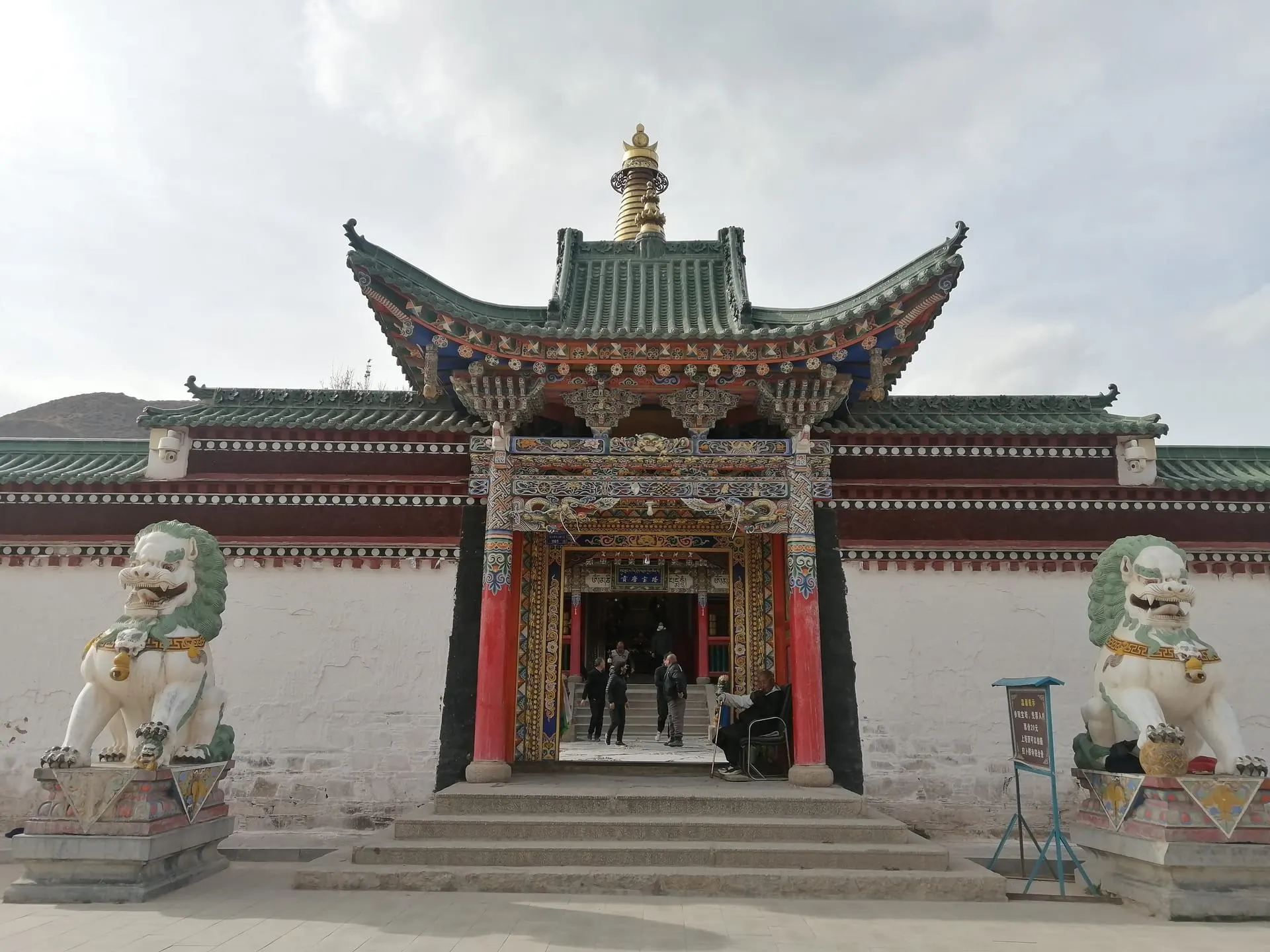
Labrang Monastery (拉卜楞寺, Lābǔléng Sì)
The crown jewel of Xiahe — one of the six great Gelugpa monasteries, founded 1709. Six colleges, golden roofs, assembly halls, and the longest prayer wheel corridor in the world (1,174 wheels, 3 km). ¥40 entrance as of June 2026. Monk-guided tours in Mandarin; no English. Photography inside halls is prohibited — respect this.
Wikimedia Commons · CC-BY-SA
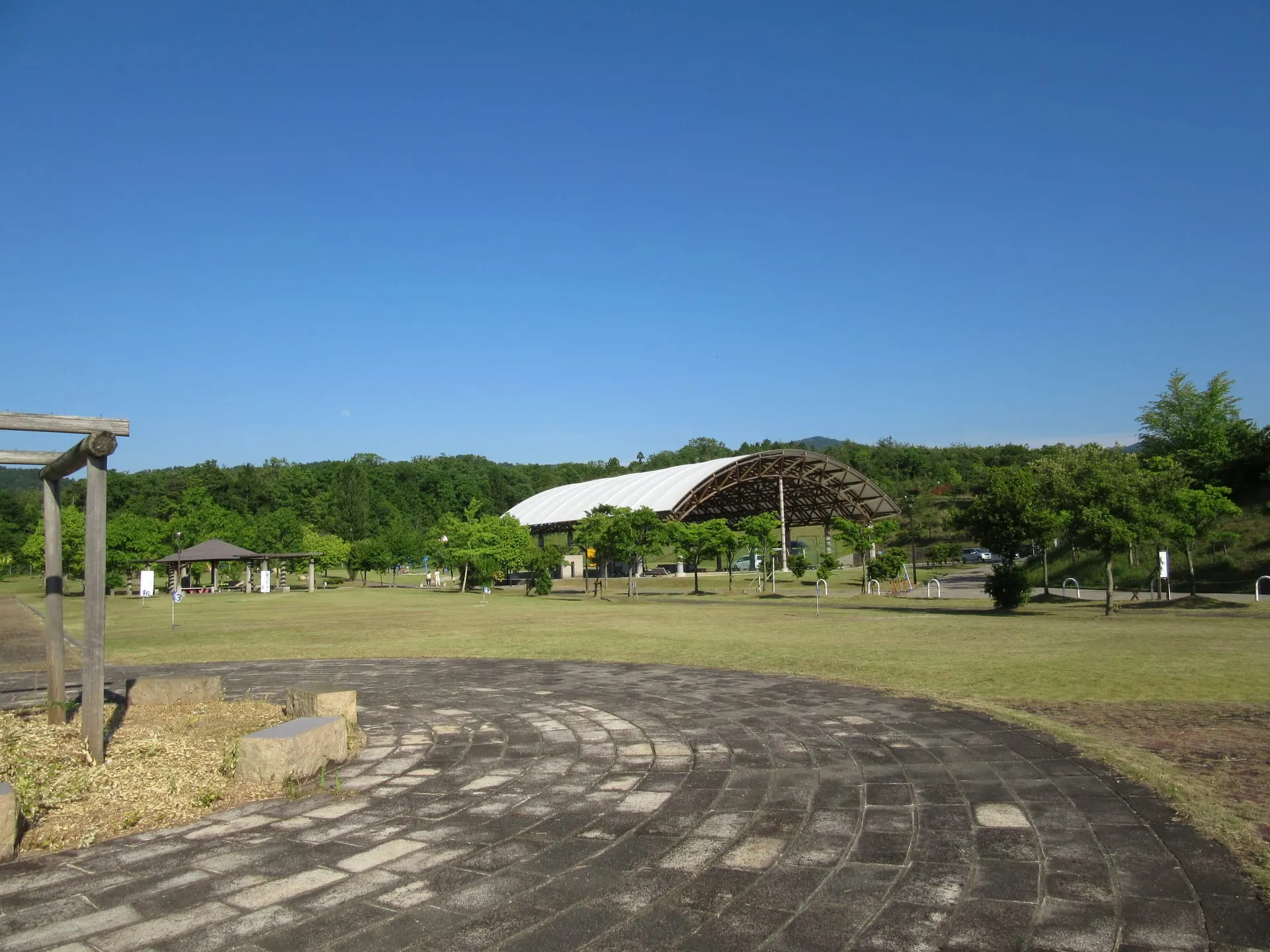
The Kora (Pilgrimage Circuit, 转经道, Zhuǎn Jīng Dào)
The 3-kilometer clockwise path around the monastery walls, lined with 1,174 prayer wheels. Walk it at sunrise or sunset — Tibetan pilgrims in traditional dress, monks chanting, the golden roofs catching first or last light. Free. The most authentic experience in Xiahe, and it costs nothing.
Wikimedia Commons · CC-BY-SA
Sangke Grasslands (桑科草原, Sāngkē Cǎoyuán)
Vast high-altitude grasslands 15 km southwest of town. Yak herds, Tibetan nomad camps, wildflowers in July and August. ¥60 entry for the main tourist area; you can walk in from side roads for free if you are discreet. Horse riding ¥50-100 per hour. Best in July-August when the grass is knee-high.
Wikimedia Commons · CC-BY-SA
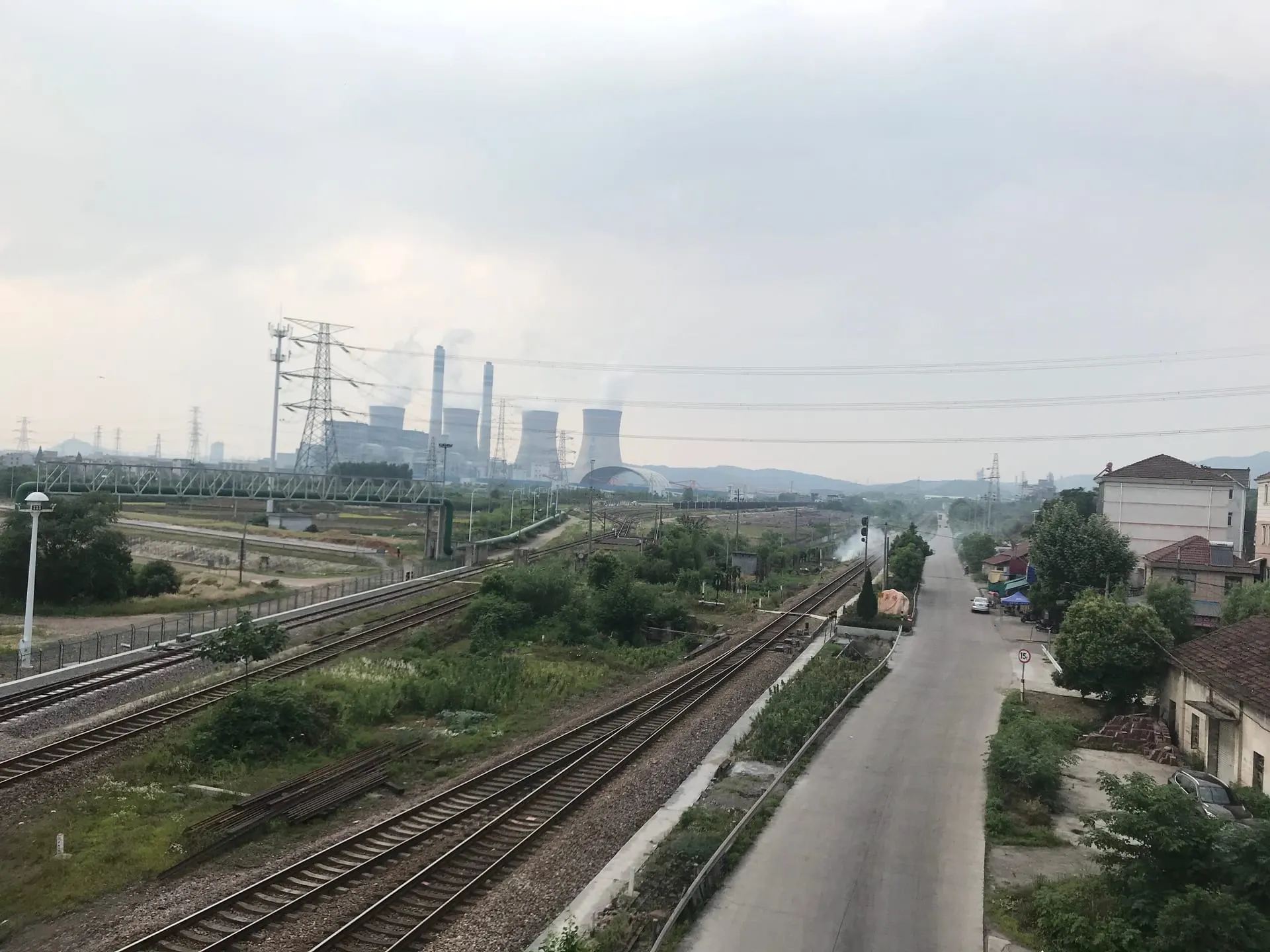
Gongtang Pagoda (贡唐宝塔, Gòngtáng Bǎotǎ)
A golden stupa on the northern edge of the monastery complex, rebuilt in 1993 after the original was damaged in the mid-20th century. Climb to the top for the best panoramic view of the monastery and the town. ¥20. The interior Buddha statue is five stories tall.
Wikimedia Commons · CC-BY-SA
Tseway Nunnery (尼姑寺, Nígū Sì)
A small Buddhist nunnery on a hill south of the river, overlooking the town. Far fewer visitors than Labrang, and the nuns are often willing to chat (in Mandarin or Tibetan). The climb is steep but the view back over the monastery's golden roofs is worth it. Free. A quiet, contemplative counterpoint to the main monastery.
Wikimedia Commons · CC-BY-SA
Bajiao Fort Village (八角城, Bājiǎo Chéng)
A Han-dynasty earthen fort with eight-cornered walls, about 35 km from Xiahe. Still inhabited by a small farming community. The walls are remarkably intact. Remote, dusty, and deeply atmospheric. ¥20. No public transport — hire a car (¥200-300 round trip) from Xiahe.
Wikimedia Commons · CC-BY-SA
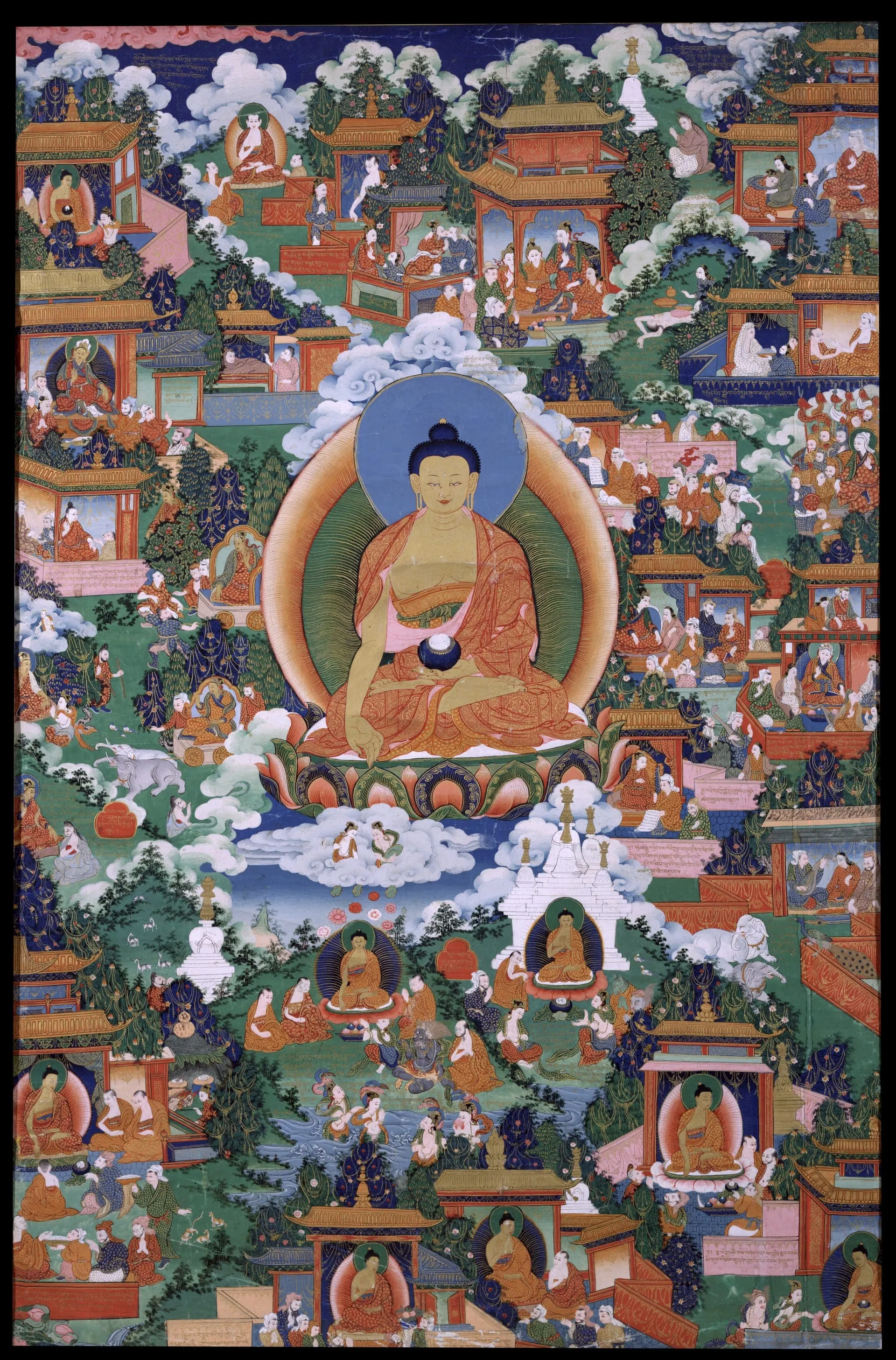
Thangka Art Workshops (唐卡画室, Tángkǎ Huàshì)
Several small studios in town where Tibetan artists paint thangka (religious scroll paintings) using traditional mineral pigments. You can watch them work, and some studios offer half-day workshops (¥150-300). The Labrang Thangka Art Center on the main street is the most visitor-friendly. Ask before photographing.
Wikimedia Commons · CC-BY-SA
Dazong Lake (达宗湖, Dázōng Hú)
A sacred alpine lake at 3,300 meters, about 20 km east of Xiahe. Tibetan pilgrims circumambulate the lake as a religious act. The turquoise water against the bare surrounding hills is stark and beautiful. No public transport; hire a car (¥250-350 round trip). Best June-October; frozen November-May.
Wikimedia Commons · CC-BY-SA
STAY
Where to stay in Xiahe (Labrang)
Pick a base that matches the trip you want — imperial-central for sightseeing, hutong belt for character, Chaoyang for nightlife, or Qianmen for budget.
Monastery Area (寺院区)
The heart of Xiahe — Labrang Monastery, the kora, monk dormitories, and pilgrimage activity
#monastery-areaEast Main Street (人民东街东段)
The backpacker strip — guesthouses, restaurants, shops, and the bus station
#main-street-eastWest Main Street (人民东街西段)
Quieter end of town — access road to Sangke Grasslands, Tibetan family homes
#main-street-westSouth Bank (河南岸)
Across the Daxia River — the nunnery hill, quieter lanes, and views back to the monastery
#south-bankSangke Grasslands (桑科草原)
15 km southwest — yak herds, nomad tents, horse riding, and high-altitude pasture
#sangke-grasslands
ITINERARIES
Sample itineraries from Xiahe (Labrang)
Three ready-made routes, from a 1-day imperial sprint to a 5-day deep dive. Copy the day-by-day plan and adapt to your own pace.
- 1 DAY
Xiahe in One Day — Monastery & Kora
A focused day covering Labrang Monastery, the kora at sunrise and sunset, the Gongtang Pagoda, and the nunnery view. Best for transit stops on the Gansu-Sichuan route.
- Transit travelers
- Quick cultural visit
- Budget travelers
- Day 01
Morning
Dawn kora walk (3 km, 1 hour) with pilgrims. Monastery guided tour starting at 08:30 (2 hours). Gongtang Pagoda climb.
Afternoon
Lunch at Snowy Mountain Restaurant. Walk across the river, climb to Tseway Nunnery for the panorama. Visit a thangka studio.
Evening
Sunset kora walk. Dinner at Nomad Restaurant for lamb skewers and local beer.
- 2 DAYS
Xiahe in Two Days — Monastery & Grasslands
The classic Xiahe experience — one day for the monastery and pilgrimage culture, one day for the grasslands and Tibetan pastoral life.
- First-time visitors
- Cultural travelers
- Photography
- Day 01
Morning
Sunrise kora. Monastery tour (2 hours). Explore monk dormitory lanes and debate courtyards.
Afternoon
Gongtang Pagoda. Lunch at Little Tsampa Restaurant. Afternoon monk debate (15:00-17:00). Thangka workshop visit.
Evening
Sunset kora. Dinner at Snowy Mountain Restaurant. Walk the quiet monastery lanes after dark.
- Day 02
Morning
Early start to Sangke Grasslands (shared minibus or taxi). Walk the grasslands, visit a nomad tent for butter tea. Optional horse riding.
Afternoon
Return to Xiahe. Explore the south bank lanes and Tibetan family neighborhoods. Visit the Tseway Nunnery.
Evening
Final kora walk. Dinner at a Hui lamb noodle shop. Pack for onward travel.
- 3 DAYS
Xiahe in Three Days — Full Immersion
Add a day trip to Bajiao Fort and Dazong Lake to the two-day plan. The most complete Xiahe experience for travelers with time.
- Deep cultural immersion
- Hiking and exploration
- Off-the-beaten-path travelers
- Day 01
Morning
Dawn kora. Monastery tour. Explore monk dormitory lanes.
Afternoon
Gongtang Pagoda. Lunch. Afternoon monk debate. Thangka workshop.
Evening
Sunset kora. Dinner at Snowy Mountain Restaurant.
- Day 02
Morning
Sangke Grasslands — walk, nomad visit, optional horse riding.
Afternoon
Return to town. South bank exploration. Tseway Nunnery.
Evening
Dinner at Nomad Restaurant. Evening walk through the quiet lanes.
- Day 03
Morning
Hire a car. Drive to Bajiao Fort Village (八角城) — explore the Han-dynasty walls and the living village inside them.
Afternoon
Continue to Dazong Lake (达宗湖). Walk the sacred alpine lake circuit. Return to Xiahe by late afternoon.
Evening
Final meal at your favorite restaurant. Prepare for onward travel to Langmusi or Lanzhou.
BUDGET
What a Xiahe (Labrang) trip costs
Per-person, per-day costs across three spending tiers. Excludes international flights and visa fees.
| Line item | Backpacker | Mid-range | Luxury |
|---|---|---|---|
| Guesthouse dorm bed | $8 | $0 | $0 |
| Budget hotel (private room) | $0 | $25 | $0 |
| Mid-range hotel | $0 | $0 | $50 |
| Luxury tented camp (Nirvana Resort) | $0 | $0 | $200 |
| Monastery entrance | $6 | $6 | $6 |
| Meal (local restaurant) | $4 | $8 | $15 |
| Sangke Grasslands transport (shared) | $3 | $8 | $0 |
| Sangke Grasslands transport (private car) | $0 | $0 | $30 |
| Daily total estimate | $25 | $75 | $180 |
| Total per day | $46 | $122 | $481 |
$ USD per person per day, before international flights and visas. Last verified: Q3 2026.
STAY SAFE
Emergency contacts in Xiahe (Labrang)
Save these three numbers before you board the plane. China uses different hotlines than most countries — there's no 911.
- POLICE
110
- AMBULANCE
120
- FIRE
119
- TOURIST HOTLINE
0941-7121128 (Xiahe County Tourism Bureau)
- ENGLISH-SPEAKING ER
Nearest: Lanzhou University Second Hospital (兰州大学第二医院), about 4 hours away. Xiahe County People's Hospital for basic care.
Problems travelers hit in Xiahe (Labrang)
- Why is my Alipay not working?You linked a foreign Visa or Mastercard to Alipay but every transaction is rejected at the merchant.
- My China visa was denied — what now?Your L visa application was refused at the Chinese consulate and your trip is in 2–4 weeks.
- My passport was lost or stolen in China — what do I do?Your passport is gone (theft or loss) and you're in mainland China without travel documents.
- Why can't I book on 12306 with my foreign card?You tried to book a high-speed rail ticket on 12306.cn and your foreign Visa/Mastercard is rejected at checkout.
- Why is my VPN not working in China?You arrived in China, opened your VPN, and it will not connect at all or connects but no traffic loads.
- Why can't I book a Tibet trip on my own?You try to book Lhasa flights and hotels yourself but the booking fails, or you're turned away at the Lhasa airport without a permit.
Book activities in Xiahe (Labrang)
These are licensed tour operators and booking platforms we've vetted independently. Booking through these links may earn us a commission — see our affiliate disclosure. This never affects our editorial recommendations or the price you pay.
Frequently asked questions
Is Xiahe worth visiting if I am not Buddhist?
How do I get from Lanzhou to Xiahe?
How high is Xiahe, and will I get altitude sickness?
What is the best time to visit Xiahe?
Can I visit Labrang Monastery without a guide?
Is photography allowed at Labrang Monastery?
Show all 20 FAQs
What is the kora and why is it important?
What should I eat in Xiahe?
How many days do I need in Xiahe?
What is the Monlam Festival?
Is Xiahe safe for solo travelers?
Do I need a VPN in Xiahe?
Can I use mobile payment in Xiahe?
How is Xiahe different from Lhasa?
What should I pack for Xiahe?
How do I get to the Sangke Grasslands from Xiahe?
Is the Tseway Nunnery worth a visit?
Is Bajiao Fort worth the drive from Xiahe?
Can I watch the monk debates at Labrang as a tourist?
Should I take altitude sickness medication before going to Xiahe?
References

Related guides & destinations
Guide
How We Research 2026: NihaoVisit’s Methodology for China Travel Information
How NihaoVisit sources, verifies, and maintains 700+ pages of China travel information — our source hierarchy, fact-checking process, update
Guide
Fact-Checking Log 2026: Verified China Travel Information — NihaoVisit
A public log of fact-checking verification passes on NihaoVisit, showing what was verified, when, and against which sources — covering visa
Guide
Best Time to Visit China 2026: Month-by-Month Weather, Crowds, and Prices
The best time to visit most of China is April–May and September–October. Winter (Dec–Feb) is cold but cheap; summer (Jun–Aug) is hot and cro
Guide
VPN for China 2026: Which VPNs Work, eSIM Alternatives, and the Complete Pre-Trip Checklist
Most Western apps and websites are blocked in mainland China. A reliable VPN is essential for Google, Gmail, WhatsApp, Instagram, and most n
Guide
China SIM Card and eSIM Guide 2026: Stay Connected Without WeChat
A Chinese SIM or eSIM lets you use mobile data, maps, and ride-hailing without WiFi. Here is how to get one, the cost, and which provider to
Guide
Solo Female Travel in China 2026: Safety, Tips, and Real Experiences
China is one of the safer destinations for solo female travelers. Petty theft is rare, violent crime against tourists is extremely uncommon,