Xining
Xining (西宁, Xīníng) is the capital of Qinghai province and sits at 2,275 meters above sea level, making it one of the highest provincial capitals in China. It is the gateway to the Tibetan plateau, Qinghai Lake — China\'s largest lake — and the Kumbum Monastery, birthplace of the Gelug school of Tibetan Buddhism. The city itself is a dense mix of Hui Muslim and Han Chinese culture, with one of China\'s four great mosques, Tibetan Buddhist temples, and a food scene that pulls from both traditions. Plan 2-3 days for the city and a full day for Qinghai Lake. High-speed rail from Lanzhou takes 1 hour. Altitude sickness is the biggest practical concern for new arrivals. Xining is also the cleanest and most affordable launchpad for the Qinghai-Tibet Plateau, and travelers who want the full Tibetan-plateau experience without the expense of Lhasa will find Xining a useful base for Qinghai Lake, the Kumbum Monastery, and the Amdo Tibetan regions to the south. Xining also works as a base for one of China's great underrated road trips: the 5-day drive south from Xining into Amdo Tibet via Tongren, Repkong, and the Yushu grasslands — a route few foreign travelers take and one of the most culturally layered in the country.
Why Xining in 2026.
Qinghai's high-altitude capital. Kumbum Monastery, the vast Qinghai Lake, Hui Muslim markets, and a Tibetan-Han cultural crossroads at 2,275 meters.
Quick Answer
Xining (西宁, Xīníng) is the capital of Qinghai province and sits at 2,275 meters above sea level, making it one of the highest provincial capitals in China. It is the gateway to the Tibetan plateau, Qinghai Lake — China\'s largest lake — and the Kumbum Monastery, birthplace of the Gelug school of Tibetan Buddhism. The city itself is a dense mix of Hui Muslim and Han Chinese culture, with one of China\'s four great mosques, Tibetan Buddhist temples, and a food scene that pulls from both traditions. Plan 2-3 days for the city and a full day for Qinghai Lake. High-speed rail from Lanzhou takes 1 hour. Altitude sickness is the biggest practical concern for new arrivals. Xining is also the cleanest and most affordable launchpad for the Qinghai-Tibet Plateau, and travelers who want the full Tibetan-plateau experience without the expense of Lhasa will find Xining a useful base for Qinghai Lake, the Kumbum Monastery, and the Amdo Tibetan regions to the south. Xining also works as a base for one of China's great underrated road trips: the 5-day drive south from Xining into Amdo Tibet via Tongren, Repkong, and the Yushu grasslands — a route few foreign travelers take and one of the most culturally layered in the country.
| Worth visiting | Excellent gateway to the Tibetan plateau with a unique Hui-Tibetan-Han cultural mix, but the city itself is modest — the draw is the surrounding Qinghai landscape |
|---|---|
| Recommended days | 2-3 days for Xining plus 1 day for Qinghai Lake |
| Best time to visit | June to September for warm weather, Qinghai Lake rapeseed bloom in July, and escape from the lowland summer heat |
| Daily budget | $40 (backpacker) / $120 (mid-range) / $300+ (luxury) |
| Family friendly | Moderate — altitude and long drives are the main challenges for young children |
| Solo friendly | Good — safe, affordable, and easy to navigate with DiDi and high-speed rail connections |
| Airport | Xining Caojiabao International Airport (XNN), 28 km east of the city center |
| High-speed rail | 1 hour to Lanzhou, 4 hours to Xi'an, 5 hours to Chengdu |
| Language | Mandarin and Qinghai dialect; Tibetan and Hui Chinese spoken in ethnic communities; English is rare outside international hotels |
| Currency | CNY (¥) — Alipay and WeChat Pay accept foreign Visa/Mastercard |
| Time zone | China Standard Time (UTC+8) |
| Last updated | 2026-06-18 |
Want a Xining plan built for you?
Jump to:
Why visit Xining·Best time to visit·Getting there·Getting around·Kumbum Monastery·Dongguan Mosque·Qinghai Lake day trip·Where to stay·What to eat·Itineraries·Altitude sickness·Weather & packing·Money & internet·Safety·Emergency contacts·Larger China trip·History·Tibetan Medicine Museum·Shopping·Day trips beyond Qinghai Lake·Ethnic diversity·Kumbum without the crowds·Qinghai-Tibet Railway to Lhasa·Summer climate·Tibetan culture beyond Kumbum·Silk Road history·FAQ
Why visit Xining?
Xining is not a pretty city. It has none of the ancient walled charm of Xi'an or the glass-tower skyline of Shanghai. The streets are wide and dusty, the winters are long, and the altitude means every newcomer spends the first day slightly out of breath. Most travelers treat Xining as a transit stop — a place to sleep and repack before pushing on to Qinghai Lake or the Tibetan plateau. That is a mistake, or at least a missed opportunity. Xining is one of the most ethnically layered cities in China, and the cultural density of Hui Muslim, Tibetan Buddhist, and Han Chinese traditions compressed into a single valley gives it a texture that more polished destinations lack. In a single afternoon you can walk from a fourteenth-century mosque holding 30,000 worshippers to a Tibetan Buddhist monastery where monks mix yak butter with mineral pigments, and then eat hand-grabbed mutton (手抓羊肉, shǒuzhuā yángròu) at a Hui restaurant where the owner's grandfather ran the same shop in 1930. The city is the best base for Qinghai Lake, the only place in China where you can see the full sweep of Tibetan medical tradition in a modern museum, and the cheapest high-altitude city in the country to use as a launchpad for the plateau. If you want charm, go to Lijiang. If you want a raw, functional, deeply interesting city that actually teaches you something about the western edge of Han China, Xining earns its place.
When is the best time to visit Xining and Qinghai Lake?
July and August are the sweet spot. Daytime highs sit around 22-25°C — a genuine escape from the 35°C+ heat frying Beijing, Shanghai, and Chengdu. The Qinghai Lake rapeseed flowers (油菜花, yóucàihuā) peak in mid-to-late July, covering the lakeshore in electric yellow fields against the deep blue water. This is when Xining is busiest, and hotel prices rise by about 30-50% compared to the shoulder seasons. June and September are cooler, quieter, and nearly as good — the flowers are gone in September but the lake is still dramatic and the morning light is sharper. October brings the first snow to the surrounding peaks and daytime temperatures drop into the 10-15°C range, but the crowds vanish and hotel rates fall sharply. Winter (November to March) is harsh: daytime highs of 0-5°C, nighttime lows down to -15°C or worse, and many guesthouses on the lake shut down completely. Spring (April to May) is dry, windy, and dusty, with temperatures swinging 15 degrees between day and night. The single best window is the third week of July, but book hotels at least a month ahead if you are targeting that week.
How to get to Xining
Xining Caojiabao International Airport (XNN) sits 28 km east of the city. Direct flights from Beijing (2.5 hours, roughly ¥600-1200 one way as of mid-2026), Shanghai (3-3.5 hours, roughly ¥800-1500), Xi'an (1.5 hours, roughly ¥400-700), and Chengdu (1.5 hours, roughly ¥400-700). For international travelers, flying into Lanzhou Zhongchuan Airport and taking the 1-hour high-speed rail to Xining is often cheaper and offers more flight options. The high-speed rail station is Xining Railway Station in the city center. Trains to Lanzhou West take 1 hour (¥50-80 second class), Xi'an North takes 4 hours (¥230-280), and Chengdu takes about 5.5 hours (¥300-400). The Lanzhou-Xining HSR line is one of the most heavily trafficked high-speed routes in western China and trains run roughly every 30 minutes during daylight hours. The Xining-Lhasa railway — the Qinghai-Tibet Railway — departs from Xining and takes 20-22 hours to reach Lhasa. Tickets for the Lhasa train sell out weeks in advance in July and August, so book through a travel agency or the 12306 app well before your travel dates. From the airport, a DiDi or taxi to the city center costs roughly ¥80-120 and takes 35-45 minutes. The airport shuttle bus costs ¥20 and runs to the city center on a rolling schedule.
How to get around Xining
Xining is a long, narrow city squeezed into a valley, and most destinations are reachable by DiDi for ¥15-40 within the center. The city has a single metro line (Line 1) that runs east-west and connects the railway station to the main commercial areas — it is clean, modern, and signed in Chinese and English, though it does not reach Kumbum Monastery or the airport. City buses are cheap (¥1-2) but slow and Chinese-only. Taxis are plentiful and most drivers use the meter, with typical fares of ¥8-25 within the center. DiDi is the best option for foreign travelers because it removes the language barrier and the haggling. For Kumbum Monastery, a DiDi from the city center takes 35-40 minutes and costs roughly ¥60-80 one way, or you can take the tourist bus from the Xining Bus Station near the railway station for ¥15. For Qinghai Lake, most travelers book a full-day car with driver (roughly ¥400-600 for the day as of June 2026, covering the 300 km round trip), or join a group tour that bundles transport and the Erlangjian entrance fee for ¥200-300 per person. Driving yourself is possible but not recommended — the high-altitude roads are straightforward in summer but icy and dangerous from October to April, and foreign driver's licenses are not valid without a Chinese license.
What should you expect at Kumbum Monastery (塔尔寺)?
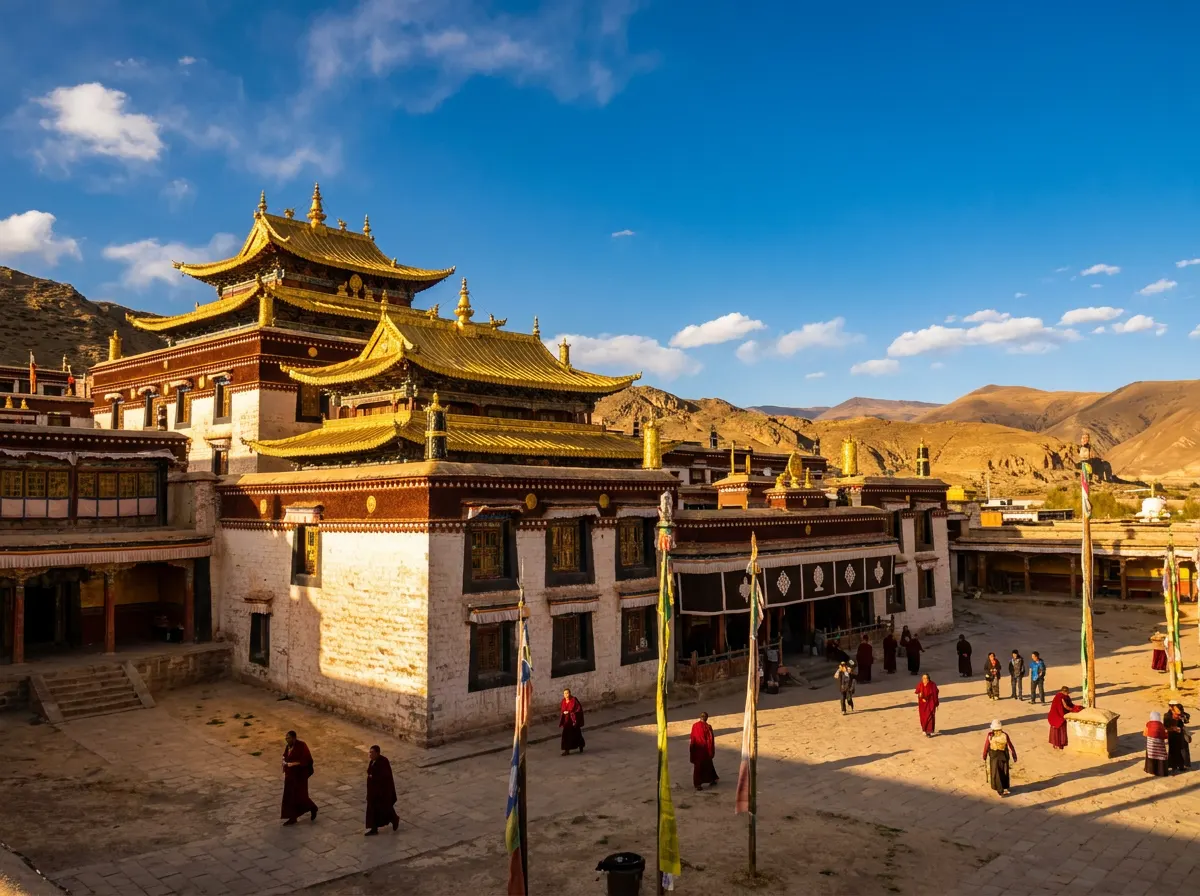
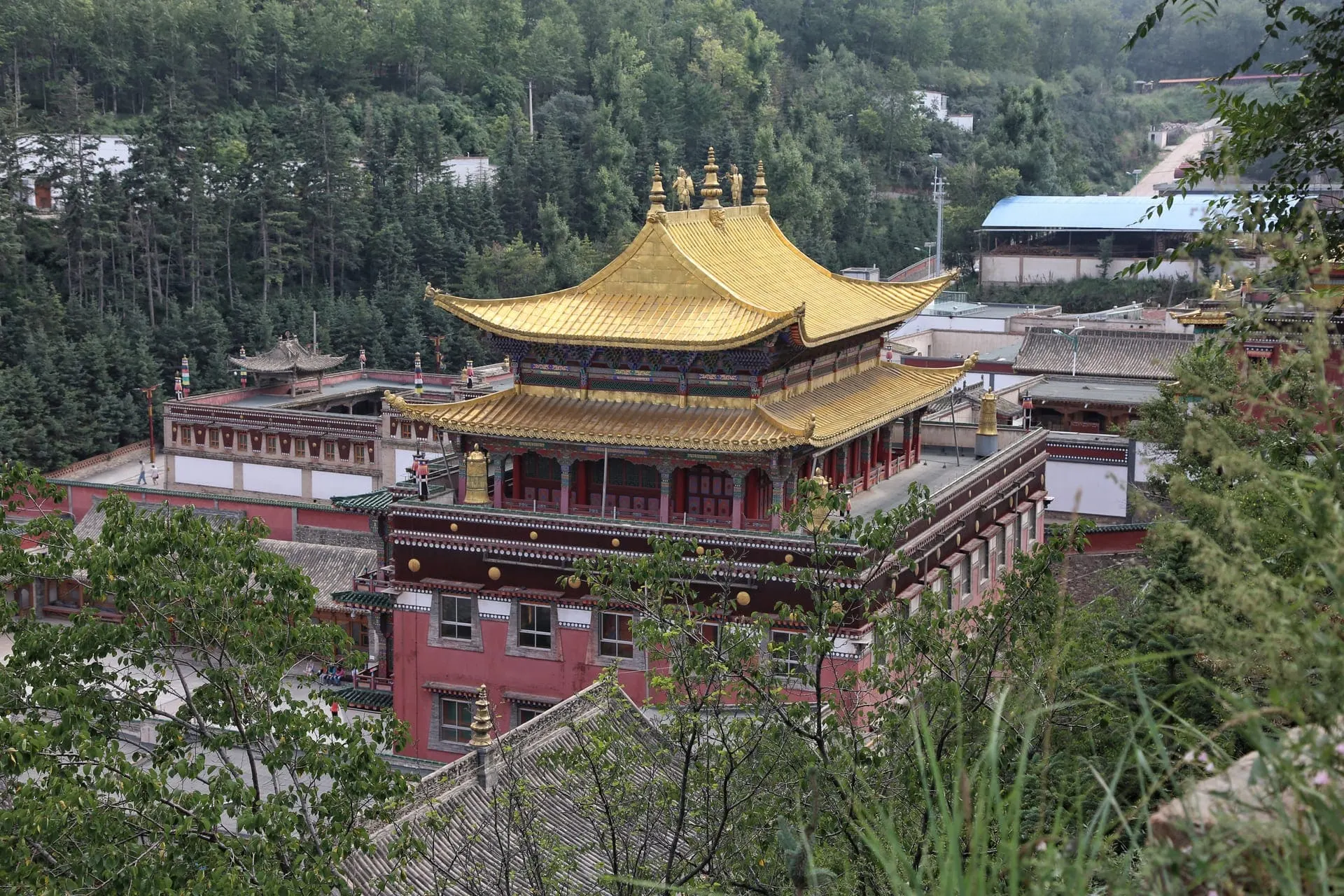
Kumbum Monastery (塔尔寺, Tǎ'ěr Sì) is the most important Tibetan Buddhist site in Qinghai and one of the six great monasteries of the Gelug (Yellow Hat) sect. It was built in 1577 at the birthplace of Tsongkhapa (宗喀巴, Zōngkābā), the founder of the Gelug school, whose teachings shaped Tibetan Buddhism as it is practiced today from Lhasa to Mongolia. The monastery occupies a hillside 26 km south of Xining, with a dense cluster of golden-roofed halls, white stupas, and monk dormitories spread across a small valley. When I visited in July 2024, the yak-butter sculptures in the main hall were the single most unexpected thing — monks carve them by hand, dipping their fingers in cold water between strokes so body heat does not melt the butter, and the detail is startling, like miniature marzipan temples rendered in fat and mineral pigment. The sand mandalas on the second floor take a team of monks several days to construct, and most travelers walk past them without stopping long enough to register the grain-by-grain precision. That is a loss. The Eight Stupas (八大如意宝塔) at the entrance are the classic photo, but the real weight of the place is in the Assembly Hall, where hundreds of monks chant morning prayers and the yak-butter lamps burn continuously. Admission is ¥80 as of June 2026. Allow 3-4 hours. Hire a guide at the entrance (roughly ¥150-200) if you want the iconography explained — the wall paintings and statues are dense with references that are opaque without context. Photography is restricted inside most halls, and the monks are generally tolerant of visitors but get annoyed by loud conversation and flash photos. Dress modestly, walk clockwise around stupas and prayer wheels, and do not point your feet at altars or monks. The monastery is busiest on weekends and Tibetan holidays. Go on a weekday morning.
What should you know about Dongguan Mosque and Xining's Muslim quarter?
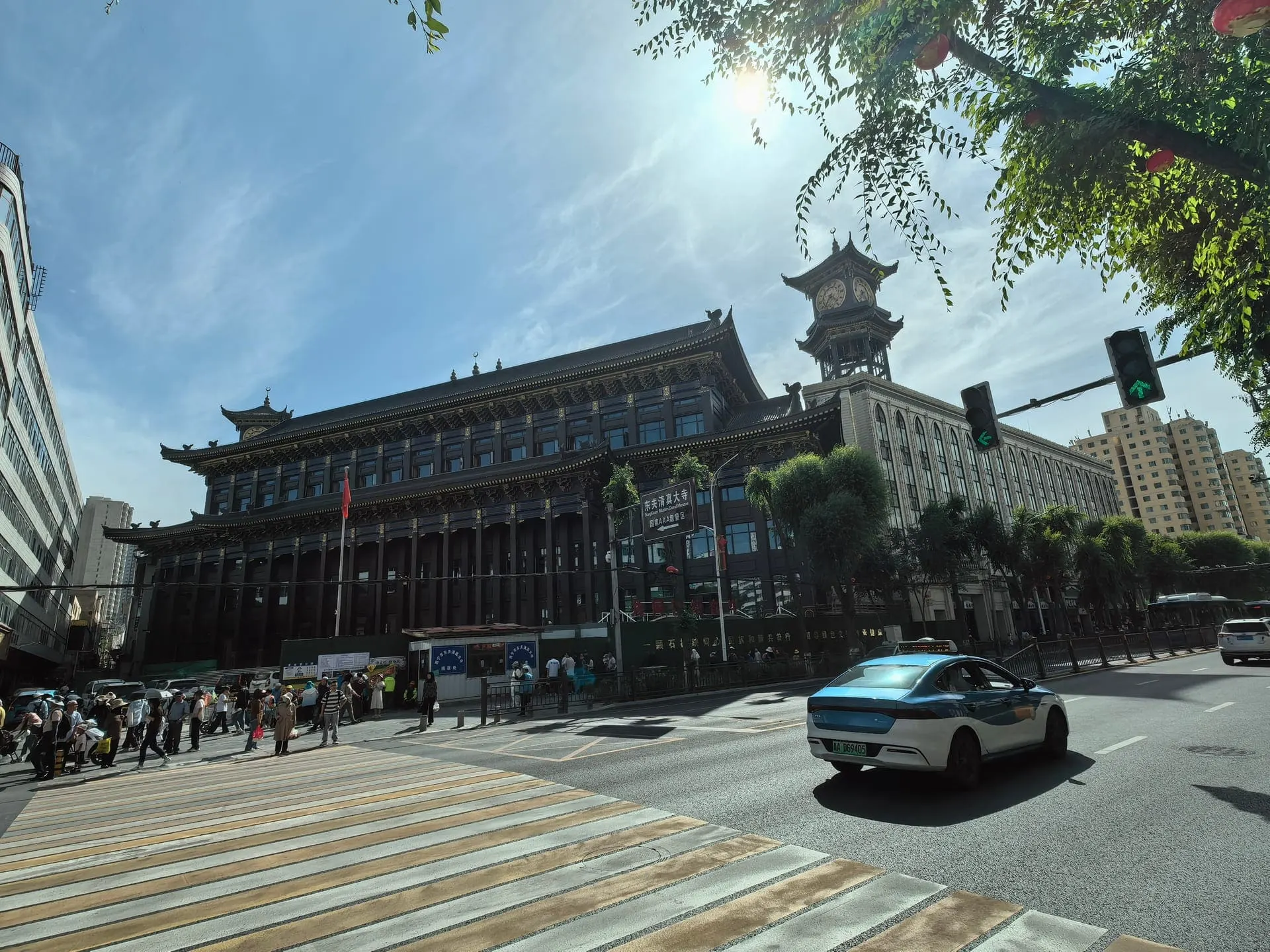
Dongguan Mosque (东关清真大寺, Dōngguān Qīngzhēn Dàsì) is one of the four great mosques of China and the religious heart of Xining's Hui Muslim community. The current structure dates mainly to the early Ming dynasty, with significant Qing-era expansions, and the architecture is a distinct northwestern Chinese Islamic style — green glazed tile domes, Arabic calligraphy carved into stone archways, and a large rectangular prayer hall that holds 30,000 worshippers during Friday prayers and Eid. The mosque sits in the Dongguan district, the historic Muslim quarter of Xining, and the surrounding streets are dense with halal restaurants, beef noodle shops, and small bakeries selling Hui flatbread and pastries. Non-Muslims are welcome outside of prayer times, and there is no entrance fee, but modest dress is required and women should bring a scarf to cover their hair inside the prayer hall. Friday midday prayers are the most impressive time to visit — the streets around the mosque fill with worshippers, the call to prayer echoes through the quarter, and the scale of the congregation is a reminder that Xining is one of the largest Muslim cities in China. The first time I walked through Dongguan on a Friday afternoon, I was caught in a crowd of maybe 10,000 men spilling out of the mosque and into the side streets, and the sheer density of the moment made every other Chinese mosque I had visited feel like a museum. The mosque itself takes about 45-60 minutes to tour. Combine it with a walk through the surrounding streets for lunch — the hand-grabbed mutton (手抓羊肉, shǒuzhuā yángròu) at the halal restaurants east of the mosque is the best in the city, and the flatbread (大饼, dàbǐng) from the corner bakeries comes hot from clay ovens. Most travelers expect a quick photo stop and end up staying two hours.
How do you plan the Qinghai Lake day trip?
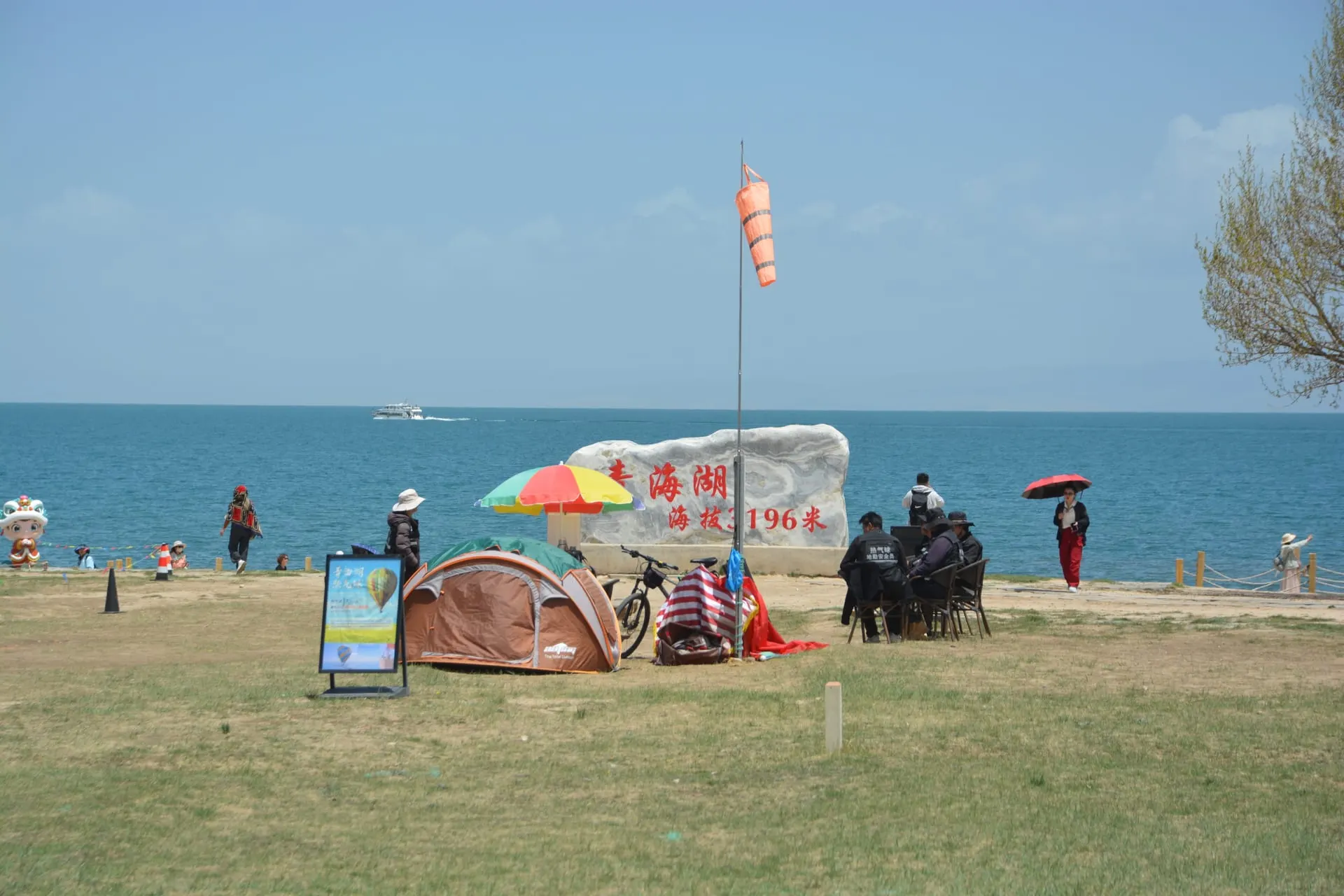
Qinghai Lake (青海湖, Qīnghǎi Hú) is China's largest lake — 4,500 square kilometers of high-altitude water, saline and impossibly blue on a clear day, surrounded by grasslands that erupt in yellow rapeseed flowers every July. The lake sits at 3,200 meters, nearly a thousand meters above Xining, and is 150 km from the city. The drive takes roughly 2.5 hours each way. Most travelers visit the Erlangjian Scenic Area (二郎剑景区), the main developed access point on the south shore, which has a pier, boat rides, bike rentals, and the standard ticket gates. Admission is ¥100 as of June 2026. It is functional but touristy — expect tour buses, souvenir stalls, and selfie crowds in July and August. The alternative is to hire a driver and circle the lake on the 360 km ring road, stopping at undeveloped sections of shoreline, small Tibetan villages, and the bird-watching wetlands at Bird Island (鸟岛, Niǎo Dǎo, closed for ecological restoration as of 2026 — check status before planning). A full lake circuit takes 6-8 hours with stops and costs roughly ¥600-800 for a car with driver. The rapeseed flower fields near the lake are private farmland, and farmers charge ¥10-20 per person to enter and photograph them — pay it, the photos are worth it. The altitude at the lake is higher than Xining, and altitude sickness hits harder here. Headaches, dizziness, and shortness of breath are common. Drink water constantly, avoid alcohol the night before, and descend back to Xining if symptoms worsen. Cycling the lake — a popular bucket-list activity — takes 3-4 days for the full circuit, and bike rentals are available in Xining and at the lake. For a day trip, the Erlangjian area rents bikes by the hour (roughly ¥30-50/hour) for a short ride along the shore. Pack a windbreaker even in July — the lake is cold and windy even on sunny days, and afternoon storms roll in fast.
Where to stay in Xining
Xining's accommodation is concentrated in three areas. The city center around Ximen (西门) and the commercial district near the Xining Railway Station has the largest cluster of international and domestic chain hotels, with mid-range options at ¥200-400 per night and a handful of five-star properties at ¥600-1200. This is the most convenient base for sightseeing, with easy DiDi access to all city attractions, walking distance to Mozart Street for dinner, and the metro line for the station. The area around Dongguan Mosque is cheaper and more atmospheric, with small Hui-run guesthouses and budget hotels at ¥80-180 per night — clean, basic, and immersed in the Muslim quarter, but with limited English and simpler facilities. The third cluster is around Xining Caojiabao Airport and the eastern outskirts, which only makes sense if you have an early flight or are transiting. For Qinghai Lake overnight stays, small Tibetan family-run guesthouses and yurt camps cluster near Erlangjian and Heimahe (黑马河) on the south shore, at ¥150-400 per night. These are basic — shared bathrooms, no heating, thin walls — but they let you see the lake at sunrise and sunset without the 5-hour round trip from Xining. Book lake accommodations 2-3 weeks ahead in July and August. Most travelers expect a comfortable high-altitude resort and get a cold yurt with a yak-dung stove. Temper it: the lake sunrise and the starry sky at 3,200 meters with no light pollution are worth the rough night.
What to eat in Xining
Xining's food sits at the intersection of Hui Muslim, Tibetan, and Han Chinese cooking traditions, and it is one of the most distinctive regional cuisines in China. The signature dish is hand-grabbed mutton (手抓羊肉, shǒuzhuā yángròu) — large cuts of lamb boiled with salt, Sichuan pepper, and nothing else, served on the bone with raw garlic and a dish of cumin salt for dipping. The meat is from Qinghai's grass-fed sheep, and the flavor is cleaner and less gamey than the mutton in eastern China. Expect to pay ¥60-100 per person for a good plate. Cold noodles in sauce (酿皮, niáng pí) are the city's everyday snack — thick, chewy wheat-starch noodles dressed with chili oil, black vinegar, crushed garlic, and sesame paste, sold from street stalls and small shops for ¥8-15. Xining yogurt (酸奶, suānnǎi) is famous throughout China — dense, tart, and set in small ceramic pots, sold by street vendors for ¥5-8. Tibetans and Hui both claim to have invented it, and the competition shows in the quality. Roasted barley flour (糌粑, zānba) is the Tibetan staple, a nutty high-altitude grain mixed with yak butter tea into a dough and eaten by hand — most travelers find it an acquired taste, but it is calorically efficient at altitude and genuinely interesting as food anthropology. Milk tea (奶茶, nǎichá) in Xining means butter tea (酥油茶, sūyóu chá) in Tibetan restaurants and salty milk tea in Hui ones — both are savory, warming, and slightly disorienting if you expect sweet chai. Lamb skewers (羊肉串, yángròu chuàn) grilled over charcoal with cumin and chili powder are the street food staple, ¥3-5 per skewer in June 2026, best eaten standing at a Mozart Street stall. Laghman noodles (拉条子, lātiáozi) — thick hand-pulled wheat noodles with beef, peppers, and tomato — are the Hui-Muslim answer to Lanzhou lamian, and the best versions come from small Dongguan shops for ¥15-25. For the adventurous, boiled yak tongue and tripe are common in Tibetan restaurants around the monastery. Mozart Street (莫家街, Mòjiā Jiē) is the central food street and the easiest place to sample everything in one evening, though the locals' recommendation is to eat mutton in Dongguan and noodles anywhere.
What are the best Xining itineraries for 1, 2, and 3 days?
Day 1 covers the city core. Start at Dongguan Mosque in the morning (arrive by 9 AM, before the midday heat and the tour groups, allow 1 hour), then walk the surrounding Muslim quarter for an early lunch of hand-grabbed mutton at a halal restaurant. After lunch, DiDi to Kumbum Monastery (35 minutes, arrive by 1 PM, allow 3-4 hours for the full complex including the yak butter sculptures and the debating courtyard). Return to the city by 6 PM, rest, then walk Mozart Street for dinner — lamb skewers, niang pi, and street yogurt. Day 2 is the Qinghai Lake day trip. Leave by 7:30 AM with a hired car or join a group tour. Arrive at Erlangjian by 10 AM, spend 2-3 hours at the lake (bike rental, photos, the pier), then drive to a flower field and a quieter shoreline section. Have lunch at a lakeside Tibetan restaurant (yak meat noodles, butter tea), then return to Xining by 6 PM. Day 3 adds depth: the Qinghai Provincial Museum in the morning (2 hours, free, closed Mondays), followed by Beishan Temple (1.5 hours, the cliff-side Taoist shrines) and the Tibetan Medicine Museum (2 hours, the medical thangkas alone justify the visit). Evening: a proper sit-down meal at a Dongguan halal restaurant. Travelers with only 1 day should pick Dongguan Mosque in the morning, Kumbum Monastery in the afternoon, and Mozart Street at night — skip the lake, which demands a full day. Travelers with 4 days can add an overnight at Qinghai Lake, including sunrise at Heimahe and the Chaka Salt Lake (茶卡盐湖, Chákǎ Yánhú) 150 km further west, a photogenic salt flat often called China's "mirror of the sky."
What do you need to know about altitude sickness in Xining?
Xining sits at 2,275 meters, and Qinghai Lake is at 3,200 meters. Altitude sickness (高原反应, gāoyuán fǎnyìng) is the single biggest practical concern for visitors arriving from sea level. Symptoms usually start within 6-12 hours of arrival: headache, dizziness, fatigue, shortness of breath, and loss of appetite. Most people adjust within 24-48 hours, but some do not, and pushing on to higher elevations while symptomatic is dangerous. The most important rule: take it easy on the first day. Do not climb stairs fast, do not drink alcohol, do not plan a Qinghai Lake trip on your arrival day. Drink water constantly — 3-4 liters a day at a minimum — because dehydration worsens altitude symptoms at high elevations where dry air pulls moisture from your lungs faster than you realize. The altitude medication acetazolamide (Diamox) is available in China but bring it from home if you know you need it, since the pharmacy label will be in Chinese and the dosage instructions may differ. If symptoms worsen — severe headache that does not respond to ibuprofen, vomiting, confusion, or loss of coordination — descend immediately. Most travelers expect Xining to feel like a normal city, but actually walking up three flights of stairs leaves you winded in a way that surprises even fit people. I have seen marathon runners gasping on the steps of Kumbum Monastery while elderly pilgrims shuffled past them without breaking rhythm. Altitude does not care about your VO2 max. The Tibetan saying is pragmatic: "Go slowly, drink water, sleep low."
What is the weather like in Xining and what should you pack?
Xining has a cold semi-arid climate (Köppen BSk) with long cold winters, cool summers, strong UV year-round, and a daily temperature swing that routinely hits 15°C. January lows sit around -15°C with daytime highs of 0-2°C. July highs reach 22-25°C but nights drop to 10-12°C. The UV index at 2,275 meters is consistently high — the sun feels stronger here than at the same temperature at sea level, and sunburn happens fast even on cloudy days. Pack sunscreen (SPF 50+), sunglasses, and a wide-brimmed hat regardless of season. A lightweight down jacket or fleece is useful even in July for evenings and the Qinghai Lake wind. In winter, bring the full cold-weather kit: thermal base layers, insulated boots, a heavy coat rated to at least -20°C, gloves, a scarf, and a hat that covers your ears. Rain is most common in July and August, and a packable rain jacket is more useful than an umbrella in the lake wind. The single most common packing mistake: bringing summer clothes for a July trip and freezing on the lake shore in a 10°C afternoon wind while locals in down jackets watch you shiver. On the Qinghai Lake ring road, wind speeds of 30-40 km/h are normal even in July.
What practical information do you need on money, internet, and visas?
The currency is the Chinese yuan (CNY, ¥). Alipay and WeChat Pay are universal in Xining hotels, restaurants, and attractions. Both apps now accept foreign Visa and Mastercard — link your card before arriving in China. Cash is rarely needed in the city but useful for small street stalls around Dongguan Mosque and the Qinghai Lake flower field farmers (who typically take only WeChat Pay, so have a Chinese friend pay and reimburse them). Bank of China and ICBC ATMs near the railway station and Ximen accept foreign cards. For internet, China's Great Firewall blocks Google, Instagram, WhatsApp, Gmail, and most Western platforms. Download and test a VPN before entering China — many VPN services are blocked on Chinese networks, and you cannot download them once inside the country. A Chinese SIM card from China Mobile or China Telecom costs roughly ¥100-200 for a month of 10-30 GB of data, available at the airport on arrival. Bring your passport for SIM registration. Hotel Wi-Fi is generally fast in Xining mid-range hotels but may block VPNs on some networks. DiDi (the ride-hailing app) has an English interface and accepts foreign cards — it is the most reliable way to get a taxi in Xining without language issues. For visas, Xining is in Qinghai province, which is open to foreign travelers on a standard Chinese tourist visa (L visa). Qinghai does not currently offer any visa-free transit schemes beyond the national 144-hour transit policies. Always check the latest rules with the Chinese embassy before booking.
What safety and warnings should you know for Xining?
Xining is a safe city by any reasonable standard. Violent crime against foreigners is extremely rare, and the biggest day-to-day risks are traffic, altitude, and sunburn. That said, there are specific things to watch for. First: altitude sickness is real and can escalate quickly. If you have a heart condition, respiratory issues, or are pregnant, consult a doctor before traveling to Xining and especially before going to Qinghai Lake. Second: the Qinghai Lake ring road has sections with no guardrail, a lot of tour bus traffic, and drivers who overtake on blind curves. If you rent a bike, wear a helmet, stay visible, and assume every driver is distracted. Third: do not photograph military facilities, police checkpoints, or security personnel. Qinghai has a significant military presence, and the rules around photography are enforced strictly. Fourth: at Kumbum Monastery, do not photograph monks without permission — most are indifferent to tourists but some find it intrusive, and a few will wave you off sharply. Fifth: the street food hygiene on Mozart Street is generally fine, but avoid raw vegetables washed in tap water and stick to cooked food if your stomach is sensitive to unfamiliar bacteria. Sixth: scams are rare, but the usual China travel cautions apply — decline invitations from strangers to tea ceremonies or art exhibitions, and use DiDi rather than unmarked taxis outside the railway station. The most counterintuitive danger: July and August afternoons on the Qinghai Lake shore can produce rapid-onset thunderstorms with lightning strikes on open grassland — if you see dark clouds building, get back in the car.
What are the emergency contacts in Xining?
Police: 110. Ambulance: 120. Fire: 119. Qinghai Provincial People's Hospital (青海省人民医院) at 2 Gonghe Road has an emergency department and some English-speaking staff. Xining No. 1 People's Hospital (西宁市第一人民医院) is the other major hospital. For altitude sickness, both hospitals are experienced with treatment. Your country's embassy or consulate is the first call for lost passports or serious legal issues — the nearest major consulates are in Chengdu (about 5 hours by HSR, covering Sichuan, Yunnan, and Guizhou) and Beijing (for everything else). The Xining Public Security Bureau (Entry-Exit Administration) handles visa extensions and lost passport replacements at 80 Kunlun Middle Road. Travel insurance with high-altitude coverage and medical evacuation is essential — Qinghai Lake is 2.5 hours from Xining by car, and serious altitude sickness requiring descent may need transport to Lanzhou or Chengdu for lower-elevation recovery. The Xining Tourism Complaint Hotline is 0971-12301, though English is unlikely.
How Xining fits into a larger China trip
Xining works best as a 3-4 day detour from a longer China itinerary rather than a standalone destination. The most natural pairing is Lanzhou: fly into Lanzhou, spend a day at the Gansu Provincial Museum and the Yellow River Bund, then take the 1-hour HSR to Xining for 2-3 days before flying out of Xining or returning to Lanzhou for an onward flight. This Lanzhou-Xining pair is a logical 4-5 day western loop that you can append to a Xi'an-Beijing-Shanghai itinerary. The second common routing is the Silk Road + Qinghai loop: Xi'an to Lanzhou to Zhangye (Danxia Rainbow Mountains) to Jiayuguan (Great Wall western end) to Dunhuang (Mogao Caves), then drop south from Lanzhou to Xining and Qinghai Lake before flying home. This takes 10-14 days and covers the full Hexi Corridor plus the Tibetan plateau edge. The third option is the overland route to Lhasa on the Qinghai-Tibet Railway — 20-22 hours from Xining, climbing to 5,072 meters at the Tanggula Pass. This is the highest railway in the world and a trip in itself, though altitude considerations are serious and the Lhasa arrival requires a Tibet Travel Permit arranged through a licensed agency. Xining is also the most practical launchpad for the Qinghai-Gansu loop through the Qilian Mountains to Zhangye (the 227 National Highway, often called China's most beautiful road), which takes 3-4 days by car and passes through high-altitude grasslands, snow-capped passes, and the Danxia landscapes of northern Qinghai. For most travelers, Xining is not the destination — it is the key that opens Qinghai, and the province is the real draw.
What is the history of Xining from Han garrison to Tibetan-Hui crossroads?
Xining's recorded history begins in the Western Han dynasty (206 BC-9 AD), when Emperor Wu established a military garrison here to control the Hehuang valley. This corridor between the Yellow River and the Huangshui River connects the Chinese heartland to the Tibetan plateau. The Han called it Xiping Commandery (西平郡), literally "Western Pacification," and that name captures the city's original purpose: a fort at the edge of the empire. For the next two thousand years, Xining was fought over by Han dynasties, Tibetan kingdoms, Tangut empires, and Mongol khans, changing hands so often that the city's ethnic composition is a living archaeological record. The Tang dynasty (618-907) used Xining as a staging post for campaigns into Tibet, and Tibetan Buddhism first took root in the surrounding valleys during this period. The Ming dynasty (1368-1644) fortified the city, built the core of Dongguan Mosque, and encouraged Hui Muslim traders to settle in the valley, creating the ethnic mix that defines Xining today. Kumbum Monastery was founded in 1577 during a period of Tibetan Buddhist revival under Mongol patronage, and it rapidly became the second-most important Gelug monastery after Ganden in Tibet. The Qing dynasty (1644-1912) incorporated Qinghai into the empire and used Xining as the administrative center for the Amdo region of historical Tibet. The city was largely rebuilt under the PRC in the 1950s-60s, and most of the old city walls were demolished, which is why Xining today looks more like a functional mid-century Chinese industrial city than a preserved historical site. But the layers are there if you look: the Ming foundations under Dongguan Mosque, the Northern Song halls at Nanchan Temple, the Qing-era street grid in the Dongguan district, and the Tibetan pilgrims circling the Eight Stupas at Kumbum. Understanding even the outline of this history changes how the city reads — it is not a dull provincial capital, it is a palimpsest of empires compressed into a single valley.
What should you know about the Tibetan Medicine Museum and traditional Sowa Rigpa?
The Tibetan Medicine Museum of Qinghai (青海藏医药博物馆) in Xining is the world's best single collection of traditional Tibetan medical knowledge. It is worth two hours of any visit to the city even if you have no prior interest in herbal medicine. Tibetan medicine, or Sowa Rigpa (the "science of healing"), is a systematic medical tradition that synthesizes Indian Ayurveda, Chinese herbal medicine, Persian Unani, and indigenous Tibetan plant knowledge into a unified framework of diagnosis, pharmacology, and therapy. The museum displays hundreds of preserved medicinal herbs — many from the Qinghai-Tibet plateau at elevations above 4,000 meters where plant compounds adapt to extreme UV and cold — along with surgical tools, diagnostic charts, and a remarkable collection of medical thangka paintings. These thangkas are teaching aids, not just art objects: they map the human body according to Tibetan humoral theory, showing the three nyepa (humors) — rLung (wind), mKhris-pa (bile), and Bad-kan (phlegm) — and the 360 points of the body used in moxibustion and bloodletting. The most famous piece is a 60-meter-long thangka scroll illustrating the complete cycle of Tibetan medical training, from herb collection to diagnosis to pharmacy. Admission is ¥60 as of June 2026. The museum also has a working pharmacy on the ground floor where Tibetan doctors diagnose patients by pulse reading and dispense powdered herbal formulas — foreigners can observe but cannot easily get treatment without a translator. The museum is about 4 km north of the city center, reached by DiDi in 15 minutes for roughly ¥20. The labels are in Chinese and Tibetan with partial English, so an audio guide or a pre-read is helpful.
What is worth buying when shopping in Xining?
Xining is not a great shopping city in the conventional sense — it has no luxury malls worth crossing town for, and the souvenir selection is thinner than in tourist-heavy destinations like Lijiang or Yangshuo. What it does have is a handful of genuine local products that are hard to find elsewhere. Tibetan carpets (藏毯, zàngtǎn), hand-knotted from Qinghai wool and dyed with natural pigments, are sold at the Tibetan Carpet Factory on Nanshan Road and range from ¥500 for a small wall hanging to ¥5,000+ for a room-size piece. The quality is high and the designs are traditional Tibetan geometric and floral patterns. Yak wool scarves and shawls from the Qinghai Yak Wool Company are softer than sheep wool and warmer, at ¥150-400. Tibetan medicine — particularly the herbal formulas for altitude adjustment and digestion — is available at pharmacies near the Tibetan Medicine Museum, though you need a consultation for anything beyond basic remedies. Dried yak meat (风干牦牛肉, fēnggān máoniúròu) is the local jerky, sold in vacuum packs at supermarkets and the railway station for ¥30-60 per pack — salty, chewy, and genuinely good as trail food. Xining yogurt is perishable and does not travel, but the ceramic pots it is served in make good small souvenirs. The Dongguan district has Hui bakeries selling fresh flatbread (大饼, dàbǐng) and pastries that are better consumed immediately than packed. The Tibetan quarter near Kumbum Monastery sells thangka paintings, prayer flags, and small bronze Buddha statues, though quality varies widely and most thangkas marketed to tourists are mass-produced prints rather than hand-painted pieces — a proper hand-painted thangka costs ¥1,000+ and comes with a certificate from the monastery. Bargain politely in markets but not in monastery shops, where prices are fixed.
What day trips from Xining go beyond Qinghai Lake?
Beyond Qinghai Lake, Xining has several excellent day trips. The Kumbum Monastery and the surrounding Huangzhong county is the closest and best — it is a 35-minute drive and fills a half-day, with the monastery in the morning and the Tibetan village of Huangyuan (湟源, Huángyuán) in the afternoon for a quieter dose of Amdo Tibetan culture. The Chaka Salt Lake (茶卡盐湖, Chákǎ Yánhú) is 300 km west of Xining, a 4-5 hour drive each way, and is a shallow salt flat that produces mirror-like reflections of the sky on calm days. It is photogenic and genuinely strange — a white salt plain stretching to the horizon — but it is a long day with a lot of driving for a single photo opportunity, and the site is heavily developed for Chinese domestic tourism. Most travelers find it more rewarding to combine Chaka with an overnight at Qinghai Lake rather than cramming both into one day. The Kanbula National Forest Park (坎布拉国家森林公园, Kǎnbùlā), 100 km southeast of Xining, is a lesser-known landscape of red Danxia rock formations, a turquoise reservoir, and Tibetan villages, reachable in 2 hours by car. It is quieter than the more famous Danxia parks in Zhangye, with hiking trails and a boat ride across the Lijiaxia Reservoir. The Qilian Mountain grasslands (祁连山草原, Qílián Shān Cǎoyuán) north of Xining are a half-day trip through alpine meadows, yurts, and yak herds, best in July and August when the wildflowers bloom. The Buddhist grottoes at Bingling Temple (炳灵寺, Bǐnglíng Sì), 180 km east near Lanzhou, are a longer day trip by car and boat, with Northern Wei to Tang dynasty cave carvings on a reservoir overlooking the Yellow River.
What is Xining's ethnic diversity and what does it mean for travelers?
Xining is one of the most ethnically diverse cities in China, and that diversity is immediately visible. Hui Muslims make up roughly 16% of the city population, concentrated in the Dongguan district, where halal restaurants outnumber non-halal ones and the call to prayer structures the rhythm of the day. Tibetans make up about 5% of the city population, visible in the Tibetan neighborhoods near the bus station and around the monastery access roads, where shops sell prayer flags, butter lamps, and yak wool. The remaining majority is Han Chinese, plus smaller populations of Monguor (Tu), Salar, and Mongols. For travelers, this means three things. First, the food scene is genuinely different from the rest of China — you can eat Hui halal mutton, Tibetan yak butter tea, and Han noodles within a single afternoon, and the quality of each is driven by communities that have cooked these dishes for centuries. Second, the cultural norms shift by neighborhood — dress modestly in Dongguan, walk clockwise at Kumbum, and do not assume that Mandarin fluency means Han identity in a city where many Hui and Tibetans are bilingual. Third, the ethnic diversity is a security concern for the Chinese state, and the police presence is heavier than in eastern Chinese cities — police checkpoints on the highway to Qinghai Lake, ID checks at the railway station, and a visible security apparatus that can feel disconcerting if you have not traveled in China's western provinces before. This is normal, it is not directed at foreign tourists, and it is not as intrusive as the security setup in Xinjiang. Keep your passport on you, do not photograph the checkpoints, and be patient when buses or trains are delayed by routine inspections. The payoff for navigating this lightly is a city that feels more like Central Asia than coastal China, at a fraction of the distance and with all the infrastructure of a modern Chinese provincial capital.
How to visit Kumbum Monastery without the crowds
Kumbum Monastery handles heavy tourist traffic from June through October, with domestic tour groups arriving in the late morning and staying through mid-afternoon. The crowds peak between 10 AM and 3 PM, when the main halls are shoulder-to-shoulder and the Eight Stupas become a throng of selfie sticks. To avoid this, arrive at opening time (8 AM) or go in the late afternoon (after 3 PM). The early-morning window is the best: the morning chanting in the Assembly Hall starts around 6:30-7 AM and runs for about an hour, with the deep-throated sound of hundreds of monks reciting sutras echoing through the halls. The light is softer, the monks are more relaxed, and you can stand quietly at the back of the hall. Weekdays are noticeably better than weekends. The summer months (July-August) are the busiest overall. Winter (November to March) is nearly empty, with fewer monks in residence and some halls closed, but the monastery in snow is atmospheric and the solitude is profound. If you are photographing, morning light hits the golden roofs from the east and produces a warm glow; afternoon light is flatter but catches the detail of the wood carvings. Most travelers spend too little time at Kumbum and leave with a handful of exterior shots and no sense of what goes on inside the halls. Slow down. Sit in the debating courtyard and watch the novice monks practice their logic exercises, a ritualized back-and-forth of clapping and questioning that is half philosophical training and half theatre. Find the yak butter sculpture hall on the upper level and spend ten minutes with a single piece. The monastery rewards patience.
What is the Qinghai-Tibet Railway experience from Xining to Lhasa like?
The Qinghai-Tibet Railway (青藏铁路, Qīngzàng Tiělù) is the highest railway in the world and the most spectacular overland journey available from Xining. The full Xining-to-Lhasa run takes 20-22 hours and climbs from 2,275 meters in Xining to a maximum elevation of 5,072 meters at the Tanggula Pass (唐古拉山口) before descending to Lhasa at 3,650 meters. Trains depart from Xining Railway Station, and the route passes through Golmud (格尔木), the second largest city in Qinghai, the Kunlun Mountain range, the vast Changtang grassland of northern Tibet, and the headwaters of the Yangtze, Yellow, and Mekong rivers. Tickets cost roughly ¥500-700 for a hard sleeper berth and sell out weeks in advance between June and September, so book through the 12306 app, a travel agency, or your hotel concierge as early as possible. The hard sleeper (硬卧) is the standard class for foreign travelers: six-berth compartments with three tiers, shared toilets at the end of each carriage, and a hot water dispenser for instant noodles and butter tea. Soft sleeper (软卧) four-berth compartments cost more and are slightly more comfortable, but the experience is the same. Most travelers board the evening train from Xining, sleep through the lower-altitude sections, and wake up around 7 AM as the train crosses the permafrost zone of the Kunlun range. The scenery is the point. The first four hours from Xining climb through the agricultural valleys of the Huangshui River, with Tibetan barley fields and Hui villages visible from the window. After Golmud the train enters the true high plateau, and the landscape flattens into open grassland dotted with yak herds, distant snow peaks, and the occasional nomadic tent. The oxygen supply system is engaged above 3,000 meters, and pressurized compartments keep the cabin air breathable at the high passes, but you will still feel the altitude when you step onto the platform at Tanggula station for the brief photo stop. Altitude sickness is a real concern: most travelers experience mild headache and fatigue on arrival in Lhasa, and the standard advice is to spend the first day in Lhasa resting, drinking water, and not climbing stairs. The Tibet Travel Permit is required for boarding the train, and must be arranged in advance through a licensed Tibetan travel agency in your home country or in a major Chinese city like Chengdu or Beijing. Permits are not issued at the Xining station. The train also runs a shorter Xining-to-Golmud leg (about 7 hours) that is a useful sampler for travelers who want the high-altitude railway experience without committing to the full Lhasa journey. Photography from the train is unrestricted except at military installations along the route; do not photograph checkpoints, soldiers, or restricted buildings. The dining car serves Chinese rice and noodle dishes at roughly ¥35-50 per meal, and most travelers supplement with instant noodles, fruit, and yak butter tea bought from vendors at major station stops. The toilets function for most of the journey but become unreliable at the very high passes, where the vacuum system occasionally struggles. Bring warm clothing even in July — cabin temperatures at 5,000 meters can drop near freezing overnight, and the heating system is uneven. The Qinghai-Tibet Railway is a journey, not a transit option, and travelers who treat it as a checkbox miss the point. The slow climb, the changing light on the plateau, the sudden appearance of a glacier, the long silence of the grassland, and the dawn at 4,500 meters are the experience. Budget two full days for it. The most underrated experience is a stop at the small Tibetan teahouses in the eastern neighborhoods. For ¥10-15 you can sit at a low table, drink several cups of butter tea, watch the older Tibetan men play mahjong or shoot the breeze, and absorb a social rhythm that is hard to find in any other Chinese city. The teahouses are not tourist-oriented, but they are welcoming to outsiders who behave respectfully. Order the tea, sit down, and let the room settle around you. This is a small thing that turns a day trip into a memory.
What should you know about Xining's summer climate and using it as an escape from the lowland heat?
Xining in July and August is one of the best-kept secrets in Chinese domestic tourism, and the reason is simple: it stays cool when everywhere else in eastern China is suffocating. Daytime highs in Xining reach 22-25°C, with nighttime lows dropping to 10-12°C, while Beijing, Shanghai, Chengdu, and Xi'an are all sitting in 32-38°C humidity. The dryness is part of it. Xining's cold semi-arid climate means the air is thin, the sun is strong, and there is almost no humidity to trap the heat. The result is a city that feels more like a high-altitude European summer than a Chinese July. This climate is exactly why Qinghai has become the summer escape of choice for wealthy Chinese tourists from the eastern seaboard, and why hotel rates in Xining and around Qinghai Lake rise 30-50% in July and August compared to the shoulder seasons. The cool weather shapes what you do with the day. Mornings are for active sightseeing — Kumbum Monastery before the heat and the tour buses, Dongguan Mosque before the Friday prayer crowds, the Tibetan Medicine Museum before the afternoon light flattens. The middle of the day is the time to rest, have a long lunch, and read in a café, since the UV is at its most punishing between 11 AM and 3 PM. Late afternoons and evenings are the reward. The temperature drops, the light turns golden, the crowds thin, and the city's outdoor food culture takes over. Mozart Street after 6 PM is the prototype. Locals in short sleeves walk the lanes eating lamb skewers, niang pi cold noodles, and yogurt from ceramic pots, and the air carries the smell of charcoal grills, cumin, and chili. It is an evening ritual, and the contrast with the steamed windows of an August night in Shanghai is part of the appeal. The cool climate also lets you do things that would be punishing in the lowland summer. The Beishan Temple cliff paths are pleasant in July rather than exhausting. The Qinghai Provincial Museum is comfortable to walk through without air-conditioning. The drive to Qinghai Lake at 3,200 meters is bracing rather than dangerous. And the small Hui guesthouses in Dongguan are pleasant at night rather than hot and airless. The single biggest mistake travelers make is packing only summer clothes. Even in July, Xining nights are cool enough for a fleece, and the Qinghai Lake shore is cold and windy most afternoons, with wind speeds of 30-40 km/h common. A lightweight down jacket, a windbreaker, and long pants will not be wasted. The summer climate is the reason to come. Lean into it: take the morning for serious sightseeing, the afternoon for rest and food, and the evening for the slow outdoor life that makes the city feel human. Pack a light scarf as well — the dryness at altitude pulls moisture from your skin and lips, and a scarf helps with the wind and the sun on Qinghai Lake. Bring a refillable water bottle and aim to drink 3-4 liters a day; dehydration at altitude is the most common cause of the headaches that travelers blame on the air.
How do you experience Tibetan culture in Xining beyond Kumbum Monastery?
Kumbum Monastery is the obvious Tibetan attraction, and most travelers stop there. But the Tibetan presence in Xining runs deeper than a single monastery, and the city offers several less-visited ways to engage with Amdo Tibetan culture, the regional Tibetan tradition that differs from the Lhasa-centered Central Tibetan style. The first is the Tibetan neighborhoods in the eastern parts of the city, particularly around the bus station and the access roads to Kumbum. These are working-class Tibetan areas, not tourist zones, and the shops sell butter lamps, prayer flags, thangka prints, yak wool sweaters, and Tibetan incense alongside everyday groceries. Walking through in the early evening — when Tibetan families come out to sit on stools and chat — gives a sense of how Tibetan Xining actually lives, which is more prosaic and more interesting than the monastery. The second is the food. Tibetan restaurants in Xining serve a different menu from Hui or Han places, and trying the dishes in order is a useful introduction. Yak butter tea (酥油茶, sūyóu chá) is the entry point: salty, warming, and slightly rancid to a Western palate, but genuinely restorative at altitude. Tsampa (糌粑, zānba) is roasted barley flour mixed with butter tea into a dough and eaten by hand, an acquired taste that keeps you full for hours. Thenthuk (藏族面条) is hand-pulled Tibetan noodle soup, often with yak meat, vegetables, and a clear broth. Yak momo (藏式饺子) are Tibetan dumplings, often filled with yak meat and onion, steamed or fried. Momo are sold at Tibetan restaurants around the city and at small stalls near the bus station for ¥15-25 per plate. The third is the Tibetan Medicine Museum, which I have covered separately, but which is worth mentioning in the cultural context: the museum is not just a display of herbal medicine, it is the most accessible introduction to the Tibetan cosmological worldview available in China, with thangka paintings that show the relationship between body, mind, and the natural world in a way that no Chinese medicine museum does. The fourth is the Tibetan calendar festivals that pass through Xining each year. The most accessible to foreign visitors is Monlam (莫朗节, Mòlǎng jié), the Great Prayer Festival, celebrated in the first month of the Tibetan calendar (usually February-March), with prayer gatherings at Kumbum Monastery and processions in the city. Saga Dawa (萨噶达瓦), the Buddha's enlightenment celebration, falls in the fourth Tibetan month (May-June) and brings pilgrims to the monastery. Losar (藏历新年, Tibetan New Year) is the biggest event, with dances, butter sculptures, and family gatherings in the Tibetan neighborhoods. The festivals are atmospheric and largely untranslated for foreign audiences, but the visual spectacle is universal. The fifth is simply talking to Tibetan people. Many Tibetans in Xining speak some Mandarin, and the younger generation often speaks a few words of English from school. Tibetan culture in Xining is not a museum exhibit — it is a living community with its own rhythms, and the city gives you a chance to engage with it on human terms rather than purely as a tourist. Slow down, eat the food, drink the tea, walk the streets, and the cultural layer of the city that the Kumbum crowd misses will surface on its own. The sixth is photography. Tibetan Xining is a photographer's subject: the prayer flags snapping on rooftops, the butter tea steaming in metal pots, the dark wool chubas (traditional coats) against the bright concrete of the city, the elderly women walking to the monastery at dawn with prayer wheels turning in their hands. Ask before photographing people directly; the older generation in particular dislikes surprise camera use.
What is the Silk Road history of Xining and how does it shape the city today?
Xining sits on the eastern end of the ancient Silk Road, and the trade routes that brought Hui Muslims, Tibetans, and Mongols into the same valley shaped the city over two thousand years.
How do travelers experience the Qinghai-Tibet Railway from Xining to Lhasa, and what altitude adjustments are needed?
The Qinghai-Tibet Railway (青藏铁路, Qīngzàng Tiělù) is the highest railway in the world and one of the great overland journeys of the planet. The full Xining-to-Lhasa run stretches 1,956 km and takes roughly 21 hours end to end, climbing from 2,275 meters at the Xining platform to a maximum elevation of 5,072 meters at the Tanggula Pass (唐古拉山口) before descending to Lhasa at 3,650 meters. Construction began in 1958 on the first stretch out of Xining, was paused for twenty years, and the full line was completed in 2006 — a project of extraordinary engineering that crosses the Kunlun, Hoh Xil, and Tanggula ranges and runs more than 550 km on elevated track across continuous permafrost. The line opened to passenger service on 1 July 2006 and immediately became the most famous rail journey in Asia, drawing travelers who would never have considered the overland approach to Lhasa a decade earlier. Three classes are available: hard seat (硬座), hard sleeper (硬卧, six berths per compartment across three tiers), and soft sleeper (软卧, four berths per compartment across two tiers). Most foreign travelers take the hard sleeper for the full social experience — sharing a compartment with Chinese tourists, Tibetan pilgrims, and the occasional backpacker creates a moving microcosm of the route — and tickets run roughly ¥560-720 for the full journey as of June 2026. The train itself is engineered for high altitude. Above 3,000 meters, the carriages are pressurized and an oxygen supply system is engaged automatically, with oxygen outlets at each berth and emergency masks deployed if cabin pressure drops. Soft sleeper passengers also receive individual oxygen tubes on request. You will still feel the altitude when stepping onto the platform at Tanggula station for the brief photo stop — the air is thin, the cold is sharp, and most people gasp after a few steps — but the cabin environment is engineered to keep you functional for the journey. The scenery is the point. From Xining, the first four hours climb through the agricultural valleys of the Huangshui River, with Tibetan barley fields, white stupas on hilltops, and Hui villages visible from the window. After Golmud (格尔木), the second-largest city in Qinghai, the train enters the true high plateau: the Kunlun range to the north, the open Changtang grassland stretching south, and the great peak-to-peak silence of the Tibetan plateau unfolding. You cross the Hoh Xil (可可西里, Kěkěxīlǐ) nature reserve, established in 1995 to protect the endangered Tibetan antelope (藏羚羊, zànglíngyáng) and one of the largest uninhabited regions in Asia, and you pass the headwaters of the Yangtze, Yellow, and Mekong rivers within a single 200 km stretch. The Tanggula Pass photo stop is the highest point any passenger train reaches anywhere in the world, and even with the oxygen system the five minutes on the platform is bracing. The Kekexili reserve and the Tanggula reserve together cover more than 450,000 km² of the northern plateau, and the train is one of the only ways to see this landscape at all — there are no roads, no settlements, and the only human presence is the railway itself. Altitude sickness is the single most important practical consideration for this journey. Xining at 2,275 meters is the recommended two-day acclimatization stop, and the standard medical advice for travelers flying directly to Lhasa from sea level — "go low, go slow, sleep low" — applies in reverse for rail passengers: do not board the train until you have spent at least two nights in Xining. Mild symptoms (headache, fatigue, shortness of breath, disturbed sleep) are common and usually resolve in 24-48 hours, but on the train you cannot descend if symptoms worsen, and the medical care at high-altitude stations along the route is minimal. The first four hours from Xining stay below 3,000 meters and are the gentlest stretch; the dramatic climb begins after Golmud at hour 9-10. Bring ibuprofen or acetaminophen, drink 4-5 liters of water across the journey, avoid alcohol entirely, and accept that you will feel worse for the first 12-18 hours at altitude. Acetazolamide (Diamox) is available over the counter at Chinese pharmacies; the standard 125 mg twice daily, starting 24 hours before ascent, is the typical medical protocol. On arrival in Lhasa at 3,650 meters, plan to spend the first full day in your hotel: no sightseeing, no stairs, no alcohol, no spicy food, and an early night. The combination of the train altitude, the long journey, and the thin Lhasa air catches up to most travelers within 24 hours of arrival. A practical cultural day in Xining before the train fits naturally into the acclimatization plan. Most travelers spend day one with a slow morning at Dongguan Mosque (东关清真大寺, Dōngguān Qīngzhēn Dàsì), one of the four great mosques of China, founded in 1380 during the early Ming dynasty and the religious heart of the city's Hui Muslim community. The current structure holds 30,000 worshippers during Friday prayers and Eid, and the surrounding streets are the most atmospheric in the city. Arrive by 9 AM for a quiet walk before the tour groups, take tea at one of the halal restaurants east of the mosque, and then sit for an hour in the prayer hall courtyard — you do not need to be Muslim to appreciate the architecture, but women should bring a scarf and modest dress is required inside the hall. After lunch in the Dongguan quarter, take a slow afternoon walk to Nanchan Temple (南禅寺, Nánchán Sì) on the hillside south of the city — Xining's oldest Buddhist site, dating to the Northern Song dynasty (960-1127), small, quiet, and a useful counterpoint to the mosque. By evening you have spent the day moving between two of the city's three great cultural traditions without rushing, your lungs are adjusting to 2,275 meters, and you are ready for a 7 PM lamb skewer dinner on Mozart Street and an early night before the train. Day two of acclimatization is a half-day at Kumbum Monastery (35 minutes south, 26 km, return by 4 PM) followed by a final light dinner and a 9 PM hotel check-in. Day three you board the train. This three-day pre-train sequence — Dongguan cultural day, Kumbum acclimatization, and an early train departure — is the structure that experienced overland travelers to Lhasa use, and it works.
Top attractions
Kumbum Monastery (塔尔寺, Tǎ'ěr Sì)
Tibetan Buddhist monastery complex 26 km from Xining, birthplace of Tsongkhapa (founder of the Gelug sect). Yak butter sculptures, sand mandalas, and 1,000+ monks in residence. ¥80 as of June 2026. Allow 3-4 hours.
Wikimedia Commons · CC-BY-SA
Dongguan Mosque (东关清真大寺)
One of the four great mosques of China, holds 30,000 worshippers during Friday prayers. Ming-Qing Hui Muslim architecture with green domes and Arabic calligraphy. Free. Allow 1 hour.
Wikimedia Commons · CC-BY-SA
Qinghai Lake (青海湖, Qīnghǎi Hú)
China's largest lake, 150 km from Xining at 3,200m elevation. Cycling, bird watching, and the July rapeseed flower bloom. ¥100 for Erlangjian Scenic Area. Full day trip required.
Wikimedia Commons · CC-BY-SA
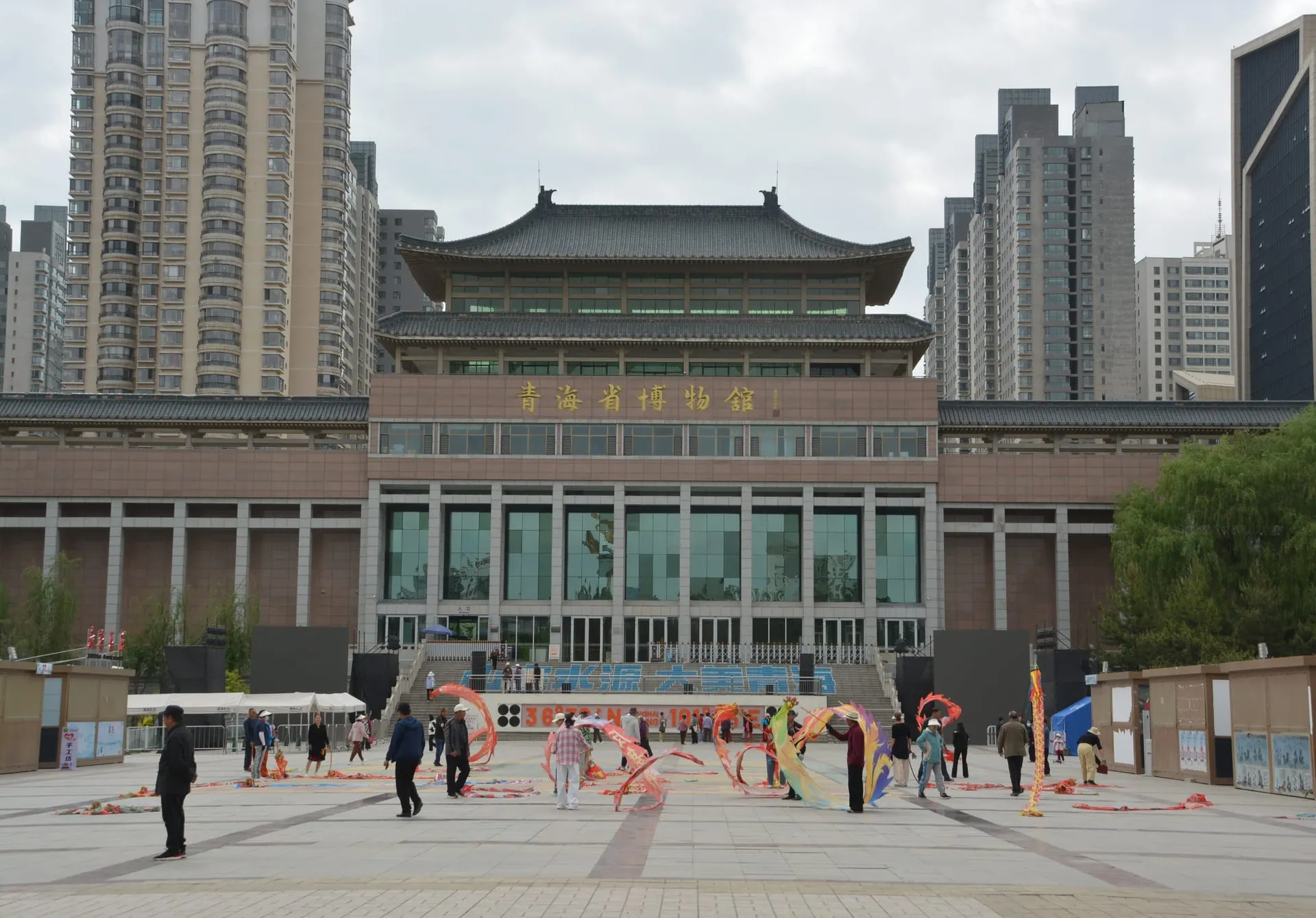
Qinghai Provincial Museum (青海省博物馆)
Tibetan and Hui cultural exhibits, prehistoric Qaidam Basin artifacts, and Tang-era Silk Road finds. Free. Allow 2 hours. Closed Mondays.
Wikimedia Commons · CC-BY-SA
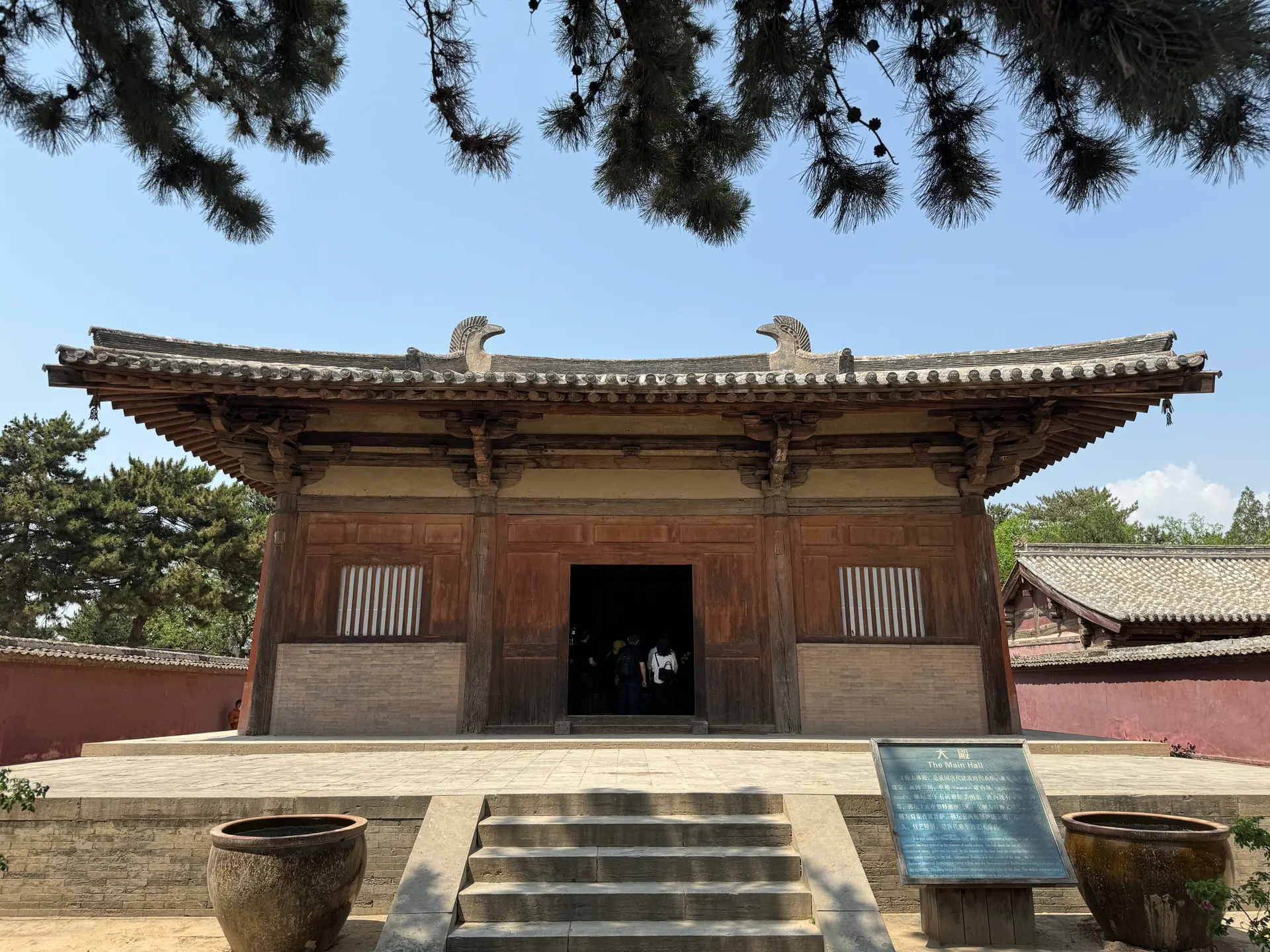
Nanchan Temple (南禅寺, Nánchán Sì)
The oldest Buddhist temple in Xining, dating to the Northern Song dynasty (960-1127). Small, quiet compound on a hillside with city views. Free. Allow 45 minutes.
Wikimedia Commons · CC-BY-SA
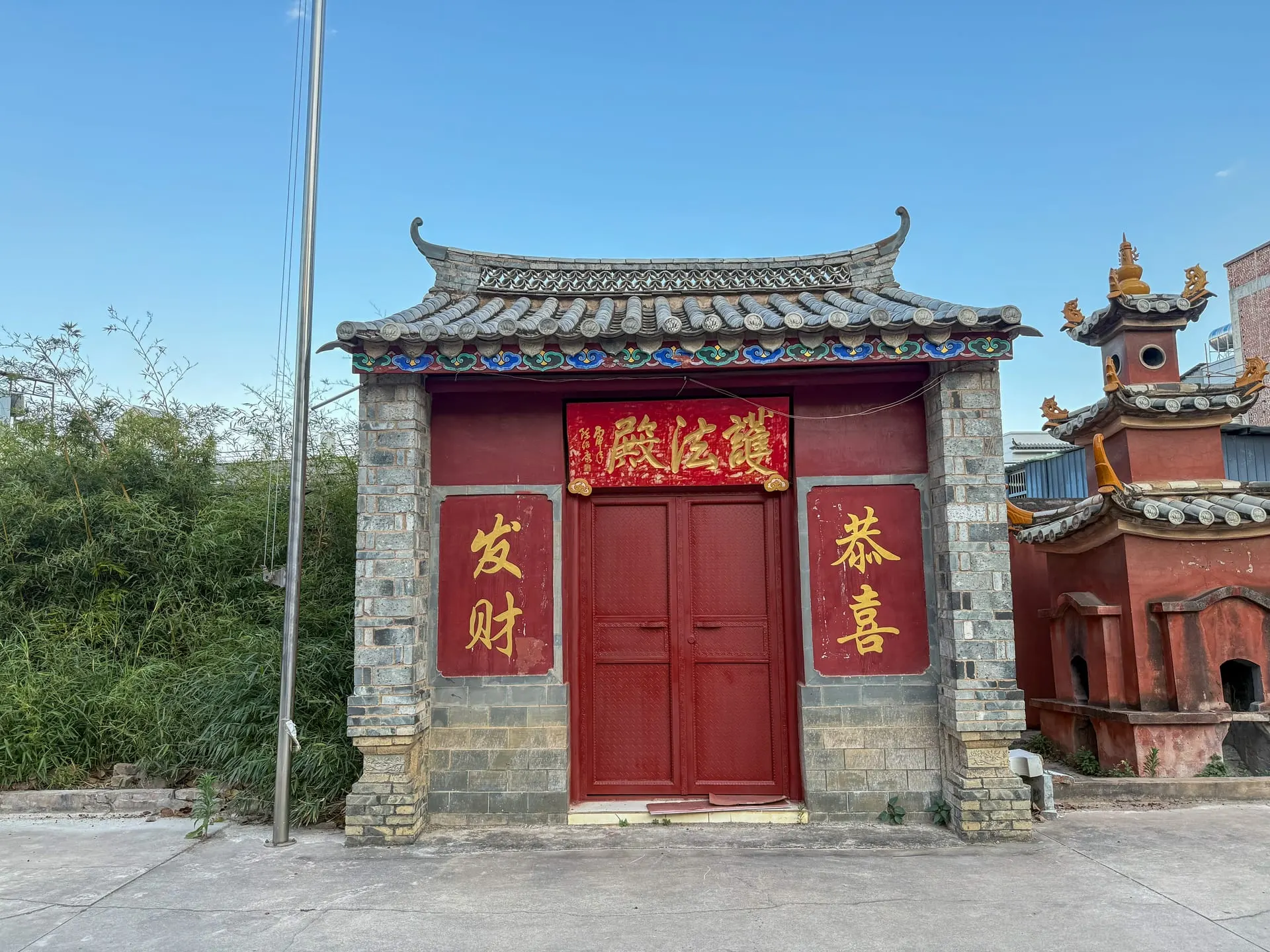
Beishan Temple (北山寺, Běishān Sì)
Taoist temple built into a cliff face north of the city, with cave shrines and a pagoda. Steep climbs reward panoramic views. ¥20. Allow 1.5 hours.
Wikimedia Commons · CC-BY-SA
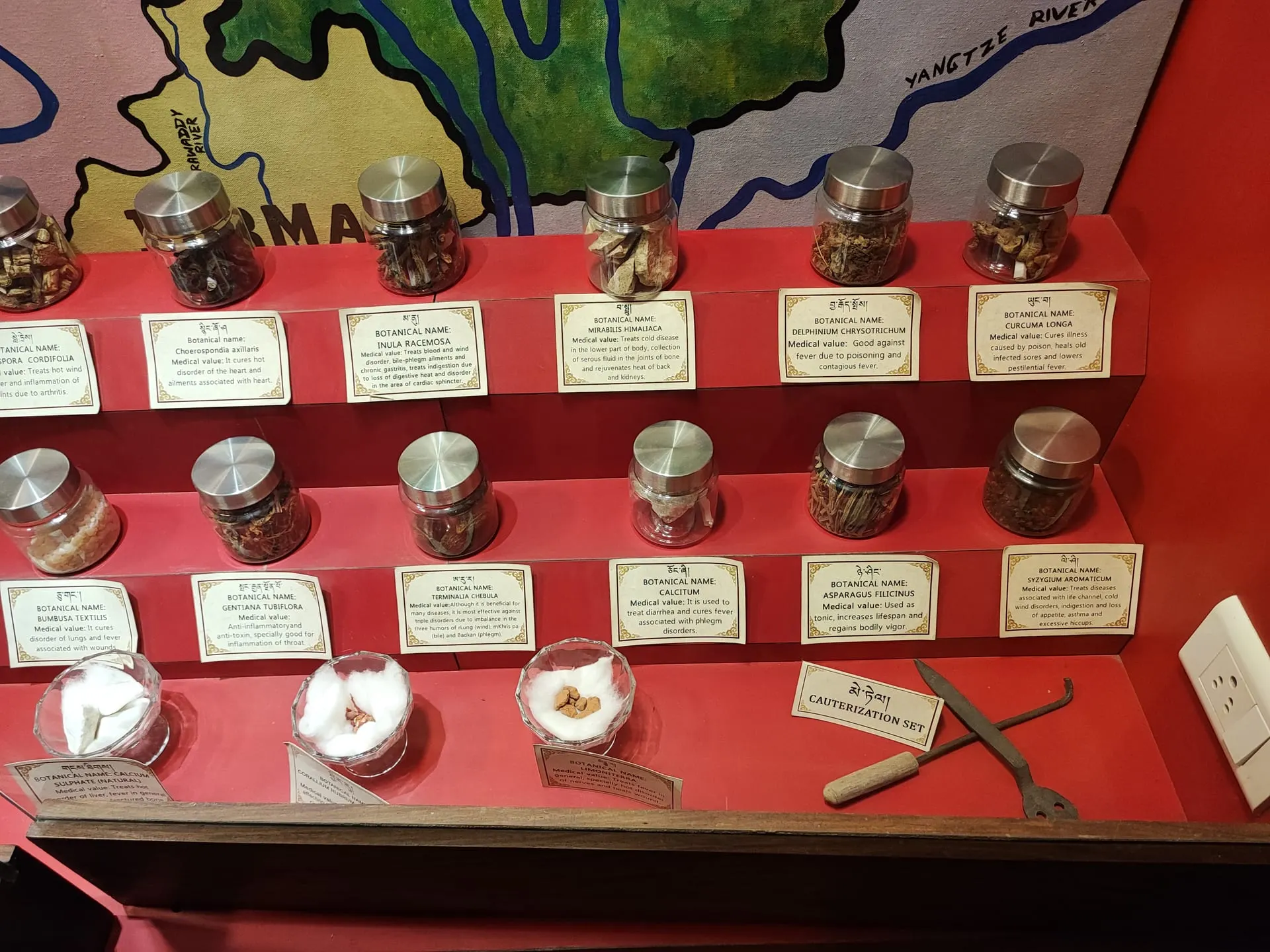
Tibetan Medicine Museum of Qinghai (青海藏医药博物馆)
Dedicated to traditional Tibetan medicine (Sowa Rigpa), with herb displays, medical thangka paintings, and diagnostic tools. ¥60. Allow 2 hours.
Wikimedia Commons · CC-BY-SA
Mozart Street Night Market (莫家街, Mòjiā Jiē)
Xining's main food street for lamb skewers, yogurt, hand-grabbed mutton, and Hui pastries. Dense, loud, and the best dinner walk in the city. Free. Best after 6 PM.
Wikimedia Commons · CC-BY-SA
STAY
Where to stay in Xining
Pick a base that matches the trip you want — imperial-central for sightseeing, hutong belt for character, Chaoyang for nightlife, or Qianmen for budget.
Ximen City Center (西门)
Commercial and hotel district — chain hotels, metro access, department stores, and walking distance to Mozart Street night market
#ximen-centerDongguan Muslim Quarter (东关)
Historic Hui neighbourhood around Dongguan Mosque — the best halal mutton, flatbread bakeries, and street food in the city
#dongguanHuangzhong / Kumbum area (湟中)
Tibetan village 26 km south — gateway to Kumbum Monastery with Tibetan guesthouses, yak-butter tea shops, and monastery-view rooms
#huangzhongRailway Station area (火车站)
Transit hub on the east side — budget hotels, Lanzhou HSR departures, and the bus station for Qinghai Lake coaches
#railway-station
ITINERARIES
Sample itineraries from Xining
Three ready-made routes, from a 1-day imperial sprint to a 5-day deep dive. Copy the day-by-day plan and adapt to your own pace.
- 1 DAY
Xining in a Day: Mosque, Monastery & Mutton
The essential one-day sampler — Dongguan Mosque at prayer time, Kumbum Monastery's yak-butter sculptures, and hand-grabbed mutton in the Muslim quarter.
- Transit travelers
- First-time visitors
- Lanzhou–Xining day-trippers
- Day 01
Morning
Dongguan Mosque (1 hour) — arrive by 9 AM, walk the surrounding Hui quarter for flatbread and tea
Afternoon
DiDi to Kumbum Monastery (35 min, ¥60–80) — spend 3–4 hours exploring the golden halls, yak butter sculptures, and debating courtyard, ¥80
Evening
Mozart Street Night Market — lamb skewers, niang pi cold noodles, and Xining yogurt in ceramic pots; walk through the Dongguan quarter after dark for the atmospheric food streets
- 2 DAYS
Two Days: Xining + Qinghai Lake
Combine the city's Tibetan and Hui cultural highlights with a full-day excursion to China's largest lake at 3,200 metres.
- Nature lovers
- Photography enthusiasts
- July rapeseed bloom chasers
- Day 01
Morning
Dongguan Mosque (1 hour) then DiDi to Kumbum Monastery (3–4 hours) — arrive by 10 AM for the morning chanting
Afternoon
Late lunch in Huangzhong village — yak noodle soup (thenthuk, ¥20–30) at a Tibetan restaurant near the monastery
Evening
Mozart Street for dinner — full spread of hand-grabbed mutton, lamb skewers, niang pi, and street yogurt
- Day 02
Morning
Depart 7:30 AM by hired car or group tour to Qinghai Lake (2.5 hours, 150 km) — arrive Erlangjian Scenic Area by 10 AM, ¥100 entry
Afternoon
Shoreline walk, bike rental (¥30–50/hour), rapeseed flower field photos (¥10–20 farmer fee in July), lakeside lunch of yak meat noodles
Evening
Return to Xining by 6 PM; recovery dinner at a Dongguan halal restaurant — laghman noodles (拉条子, ¥15–25) and milk tea
- 3 DAYS
Three Days: Xining + Lake + Chaka Salt Flat
The full Qinghai sampler — Tibetan monastery, Hui food culture, Qinghai Lake, and the surreal mirror-like Chaka Salt Lake.
- Photography travelers
- Adventure seekers
- Plateau explorers
- Day 01
Morning
Qinghai Provincial Museum (2 hours, free) — Silk Road and Tibetan exhibits, then Dongguan Mosque (1 hour)
Afternoon
DiDi to Kumbum Monastery (3–4 hours, ¥80) — full monastery exploration including the yak butter sculpture hall
Evening
Mozart Street Night Market — full street-food dinner
- Day 02
Morning
Early departure (7 AM) to Qinghai Lake — arrive by 10 AM, spend the morning at Erlangjian (¥100)
Afternoon
Lakeside lunch, then drive west to Chaka town (2.5 hours, 150 km) — overnight at a Chaka guesthouse (¥150–300)
Evening
Sunset at Chaka Salt Lake (茶卡盐湖, ¥70) — the mirror effect is strongest in calm evening light; dinner at a Hui restaurant in Chaka town
- Day 03
Morning
Sunrise at Chaka Salt Lake — the early light and smaller crowds make for the best photographs; breakfast in Chaka
Afternoon
Drive back to Xining (4–5 hours, 300 km) through the Qinghai grasslands; lunch stop at a Tibetan town en route
Evening
Arrive Xining by 5 PM; farewell dinner in the Dongguan quarter — hand-grabbed mutton and eight-treasure tea
BUDGET
What a Xining trip costs
Per-person, per-day costs across three spending tiers. Excludes international flights and visa fees.
| Line item | Backpacker | Mid-range | Luxury |
|---|---|---|---|
| Budget hotel/hostel (per night) | $12 | $35 | $110 |
| Meals (per day) | $10 | $25 | $55 |
| Local transport (per day) | $5 | $15 | $35 |
| Attractions (per day) | $6 | $20 | $45 |
| Day tours / private driver | $0 | $35 | $90 |
| Daily total (per person) | $33 | $130 | $335 |
| Total per day | $66 | $260 | $670 |
$ USD per person per day, before international flights and visas. Last verified: Q3 2026.
STAY SAFE
Emergency contacts in Xining
Save these three numbers before you board the plane. China uses different hotlines than most countries — there's no 911.
- POLICE
110
- AMBULANCE
120
- FIRE
119
- TOURIST HOTLINE
0971-12301 (Qinghai Tourism Hotline)
- ENGLISH-SPEAKING ER
Qinghai Provincial People's Hospital (青海省人民医院), 2 Gonghe Road — emergency department with some English-speaking staff, experienced with altitude sickness treatment
Problems travelers hit in Xining
- Why is my Alipay not working?You linked a foreign Visa or Mastercard to Alipay but every transaction is rejected at the merchant.
- My China visa was denied — what now?Your L visa application was refused at the Chinese consulate and your trip is in 2–4 weeks.
- My passport was lost or stolen in China — what do I do?Your passport is gone (theft or loss) and you're in mainland China without travel documents.
- Why can't I book on 12306 with my foreign card?You tried to book a high-speed rail ticket on 12306.cn and your foreign Visa/Mastercard is rejected at checkout.
- Why is my VPN not working in China?You arrived in China, opened your VPN, and it will not connect at all or connects but no traffic loads.
- Why can't I book a Tibet trip on my own?You try to book Lhasa flights and hotels yourself but the booking fails, or you're turned away at the Lhasa airport without a permit.
Book activities in Xining
These are licensed tour operators and booking platforms we've vetted independently. Booking through these links may earn us a commission — see our affiliate disclosure. This never affects our editorial recommendations or the price you pay.
Frequently asked questions
Is Xining worth visiting on its own or just as a gateway to Qinghai Lake?
How do I get from Xining to Qinghai Lake?
Do I need a Tibet Travel Permit to visit Xining or Qinghai Lake?
What is the altitude in Xining and will I get altitude sickness?
What is the best food in Xining?
Is Xining safe for solo female travelers?
Show all 20 FAQs
How do I get from Lanzhou to Xining?
Can I visit Kumbum Monastery independently?
What is the best time of year to see the Qinghai Lake rapeseed flowers?
Does Xining have good hotels?
How do I buy train tickets from Xining to Lhasa?
Is the Dongguan Mosque open to non-Muslim visitors?
What is the weather like in Xining and what should I pack?
What are the best day trips from Xining?
Do people speak English in Xining?
How much does a trip to Xining cost?
Is Xining a good destination for families with kids?
Can I cycle around Qinghai Lake?
What is there to see at the Qinghai Provincial Museum?
Where is the best place to try Tibetan food in Xining?
References

Related guides & destinations
Guide
How We Research 2026: NihaoVisit’s Methodology for China Travel Information
How NihaoVisit sources, verifies, and maintains 700+ pages of China travel information — our source hierarchy, fact-checking process, update
Guide
Fact-Checking Log 2026: Verified China Travel Information — NihaoVisit
A public log of fact-checking verification passes on NihaoVisit, showing what was verified, when, and against which sources — covering visa
Guide
Best Time to Visit China 2026: Month-by-Month Weather, Crowds, and Prices
The best time to visit most of China is April–May and September–October. Winter (Dec–Feb) is cold but cheap; summer (Jun–Aug) is hot and cro
Guide
VPN for China 2026: Which VPNs Work, eSIM Alternatives, and the Complete Pre-Trip Checklist
Most Western apps and websites are blocked in mainland China. A reliable VPN is essential for Google, Gmail, WhatsApp, Instagram, and most n
Guide
China SIM Card and eSIM Guide 2026: Stay Connected Without WeChat
A Chinese SIM or eSIM lets you use mobile data, maps, and ride-hailing without WiFi. Here is how to get one, the cost, and which provider to
Guide
Solo Female Travel in China 2026: Safety, Tips, and Real Experiences
China is one of the safer destinations for solo female travelers. Petty theft is rare, violent crime against tourists is extremely uncommon,