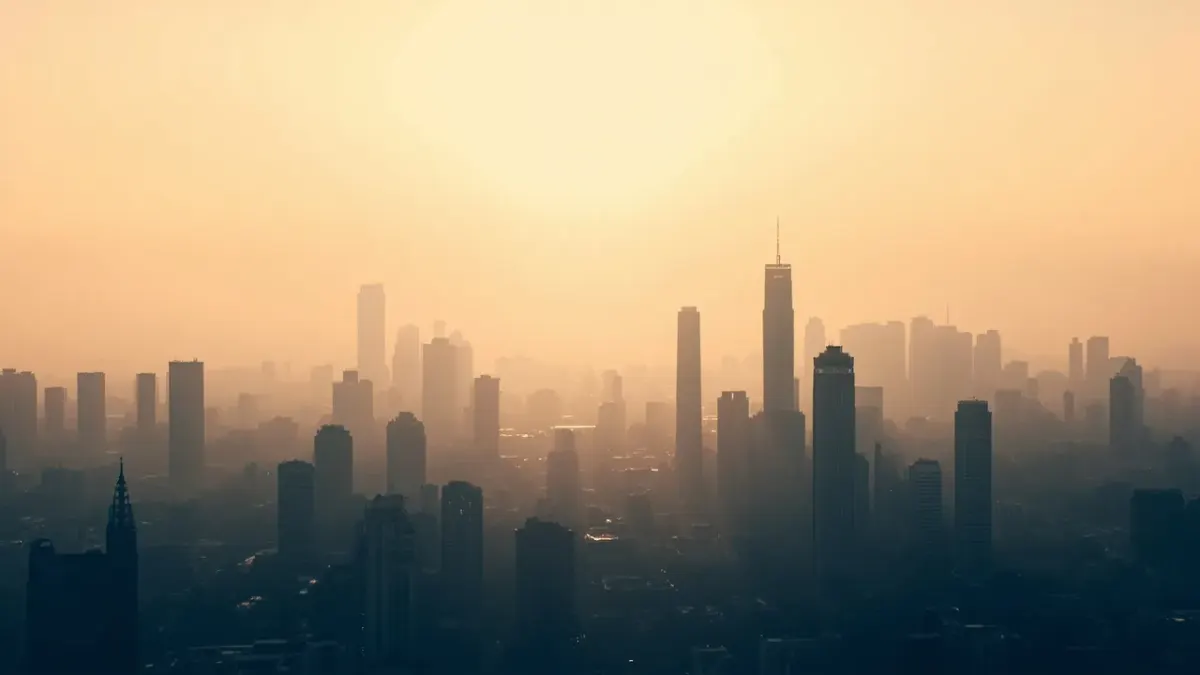
Yan'an
Yan'an (延安, Yán'ān) in northern Shaanxi province is one of the most historically significant cities in modern Chinese history. From 1935 to 1948 — the period that included the end of the Long March, the Second Sino-Japanese War, and the Chinese Civil War — Yan'an was the headquarters of the Chinese leadership of the time and the base from which the eventual 1949 government emerged. The cave dwellings (窑洞, yáodòng) carved into the loess hillsides where Mao Zedong, Zhou Enlai, Zhu De, and other leaders of the period lived and worked are preserved as national heritage sites, and Yan'an is the center of \"red tourism\" (红色旅游, hóngsè lǚyóu) — patriotic tourism that draws millions of Chinese visitors annually. But Yan'an is more than revolutionary history: it sits on the Loess Plateau (黄土高原, Huángtǔ Gāoyuán), one of China's most distinctive landscapes — a vast, eroded highland of yellow silt, deep ravines, and terraced hillsides. The Yellow River's Hukou Waterfall (壶口瀑布, Húkǒu Pùbù), shared with Shanxi province, is one of the world's few yellow waterfalls and one of China's most powerful natural spectacles. Yan'an deserves 2 days for the historical sites and Hukou Waterfall. Budget roughly ¥80-220 per day for mid-range comfort. The honest downside: Yan'an is a heavily history-focused destination where the narrative follows the official line, the historical sites can feel repetitive, and the city itself is a functional modern town with limited charm. The value is in understanding this formative chapter of modern Chinese history and in seeing the extraordinary Loess Plateau landscape. Yan'an is also a base for seeing the Loess Plateau landscape, with day trips to the Hukou Waterfall on the Yellow River and the cave-house villages that the same geology made possible across the whole of northern Shaanxi. Yan'an also rewards travelers who read up on the period before visiting. The Yan'an years (1935-1948) are some of the most analyzed in modern Chinese history; arriving with a sense of who was here, who argued with whom, and what was written in these caves, turns a half-day of cave-poking into a much richer experience.
Why Yan'an in 2026.
A key base of China's mid-20th-century history from 1935 to 1948 — cave dwellings, Pagoda Hill, the Loess Plateau, and a formative chapter of modern China, set in one of the country's most distinctive landscapes.
Quick Answer
Yan'an (延安, Yán'ān) in northern Shaanxi province is one of the most historically significant cities in modern Chinese history. From 1935 to 1948 — the period that included the end of the Long March, the Second Sino-Japanese War, and the Chinese Civil War — Yan'an was the headquarters of the Chinese leadership of the time and the base from which the eventual 1949 government emerged. The cave dwellings (窑洞, yáodòng) carved into the loess hillsides where Mao Zedong, Zhou Enlai, Zhu De, and other leaders of the period lived and worked are preserved as national heritage sites, and Yan'an is the center of \"red tourism\" (红色旅游, hóngsè lǚyóu) — patriotic tourism that draws millions of Chinese visitors annually. But Yan'an is more than revolutionary history: it sits on the Loess Plateau (黄土高原, Huángtǔ Gāoyuán), one of China's most distinctive landscapes — a vast, eroded highland of yellow silt, deep ravines, and terraced hillsides. The Yellow River's Hukou Waterfall (壶口瀑布, Húkǒu Pùbù), shared with Shanxi province, is one of the world's few yellow waterfalls and one of China's most powerful natural spectacles. Yan'an deserves 2 days for the historical sites and Hukou Waterfall. Budget roughly ¥80-220 per day for mid-range comfort. The honest downside: Yan'an is a heavily history-focused destination where the narrative follows the official line, the historical sites can feel repetitive, and the city itself is a functional modern town with limited charm. The value is in understanding this formative chapter of modern Chinese history and in seeing the extraordinary Loess Plateau landscape. Yan'an is also a base for seeing the Loess Plateau landscape, with day trips to the Hukou Waterfall on the Yellow River and the cave-house villages that the same geology made possible across the whole of northern Shaanxi. Yan'an also rewards travelers who read up on the period before visiting. The Yan'an years (1935-1948) are some of the most analyzed in modern Chinese history; arriving with a sense of who was here, who argued with whom, and what was written in these caves, turns a half-day of cave-poking into a much richer experience.
| Worth visiting | Yes, if you are interested in modern Chinese history and how this formative period is presented today — the cave-dwelling sites are fascinating as both history and narrative. The Loess Plateau and Hukou Waterfall are worth the trip independently. |
|---|---|
| Recommended days | 2 days |
| Best time to visit | April-June and September-October. Spring brings green to the Loess Plateau. Autumn is dry and crisp. Avoid July-August (hot, dusty) and winter (cold, grey, and the loess landscape is bleak). |
| Daily budget | $25 (backpacker) / $80 (mid-range) / $220+ (luxury) |
| Family friendly | Moderate — the revolutionary sites are educational for older children (10+) studying modern history. The cave dwellings and Hukou Waterfall are visually engaging for all ages. Younger children may find the history-focused sites repetitive. |
| Solo friendly | Yes — safe, affordable, and the sites are well-organized with signage. The red tourism context means the sites are designed for independent Chinese visitors, which works for independent foreign travelers too. |
| Airport | Yan'an Nanniwan Airport (ENY) — domestic flights from Beijing (2h), Xi'an (1h), Shanghai (2.5h). About 12 km from the city center. |
| High-speed rail | Yes — Yan'an station (延安站). Xi'an (2h), Taiyuan (3h), Beijing (5h). HSR service has improved significantly since 2020. |
| Language | Mandarin with Shaanxi dialect (陕西话). English is extremely rare — even at the revolutionary sites, English signage is limited. A translation app is essential. |
| Currency | CNY (¥) — Alipay and WeChat Pay accepted in the city center. Cash useful for rural areas around Hukou Waterfall and village food stalls. |
| Time zone | China Standard Time (UTC+8) |
| Last updated | 2026-06-18 |
Want a Yan'an plan built for you?
Jump to:
Pagoda Hill·Yangjialing & Zaoyuan·Revolutionary History·Daily Life in the Caves·Lesser-Known Sites·Red Tourism·When to Visit·Engaging with the Narrative·Hukou Waterfall·Loess Plateau·Getting There·Where to Stay·Food·Itineraries·Weather·Tips·Emergency Contacts·FAQ
What is red tourism and how does Yan'an fit into China's patriotic tourism industry?
Red tourism (红色旅游, hóngsè lǚyóu) is the Chinese government's official term for travel to sites associated with the Communist Party's revolutionary history. It is a deliberate industry — designed, promoted, and partially funded by the state — that turns CCP heritage sites into patriotic pilgrimage destinations for domestic Chinese tourists. Yan'an is the crown jewel of the red tourism network. The industry emerged in the late 1990s and was formalized by the State Council in 2004 with the publication of the first "National Red Tourism Outline" (全国红色旅游发展规划纲要). The plan identified 100 major red tourism sites, designated 12 "classic red tourism routes" spanning the revolutionary geography of China, and set targets for visitor numbers, infrastructure investment, and educational programming. Yan'an sits at the center of one of these classic routes — the Shaanxi-Gansu-Ningxia route — and is routinely described in official documents as the "holy land of the revolution" (革命圣地, gémìng shèngdì). What this means in practice for visitors: the revolutionary sites are well-funded, well-maintained, and well-signposted. The Yangjialing, Zaoyuan, Nanniwan, and Revolutionary Memorial sites all benefit from ongoing state investment in their preservation. The infrastructure for visitors — parking lots, paved paths, museums with climate-controlled galleries, public toilets, and souvenir shops — is significantly better than at comparable rural heritage sites in China. The trade-off is that the narrative is curated: the sites present the period's leadership s official version of history, and there is no public discussion of the Yan'an Rectification Movement's purges, the internal violence of the period, or any critical perspective on the revolution. The museums, audio guides, and site signage all carry the same heroic, simplified tone. The visitor demographic is overwhelmingly domestic Chinese — school groups on patriotic study tours (红色研学, hóngsè yánxué), party cadres on mandatory training visits, retired workers on organized group tours, and families introducing children to the party's history. Foreign visitors are rare, which is part of why the English signage is limited and the on-site experience is designed for Chinese audiences. This makes a Yan'an visit feel genuinely off the standard foreign-tourist circuit — there is no English menu at the museum cafe, no English-speaking guides at the cave dwellings, and very few other foreigners. It is a different China than the one most visitors encounter. The Yan'an section of the red tourism network also includes the revolutionary-era press museum, the anti-Japanese military and political university site, the date orchards around Zaoyuan that the leadership cultivated, and several restored villages that hosted party meetings. A growing segment of red tourism focuses on "study tours" — multi-day educational programs where participants study party history, recite revolutionary slogans, eat in reconstructed communal kitchens, and engage in team-building exercises modeled on the Yan'an period production campaigns. These programs are primarily aimed at CCP members and state employees, but the infrastructure they have built benefits all visitors. For foreign travelers, the red tourism framing is useful to understand. You are visiting a site that the Chinese state has invested billions of yuan in preserving and promoting — and the presentation reflects that investment. The cave dwellings are not ruins; they are actively maintained as a political and cultural message. Read the experience as you would read any national museum in any country: as a curated statement about identity, memory, and legitimacy. The cave dwellings, the museums, the propaganda posters, and the revolutionary-era songs played over the site loudspeakers are all part of that statement.
Why visit Yan'an? What makes it significant beyond revolutionary history?
Yan'an is the most important site for understanding how the Chinese leadership of the period tells its own origin story. The cave dwellings where Mao Zedong, Zhou Enlai, and other revolutionary leaders lived from 1935 to 1948 are preserved as near-sacred spaces, and the Yan'an Revolutionary Memorial presents the official narrative of the revolution — the Long March, the Yan'an years, the war against Japan, the civil war — with the weight of national mythology. Visiting Yan'an is not about evaluating the historical accuracy of this narrative (the sites present the period's leadership s version, not a neutral account); it is about understanding how China's ruling party constructs its identity and legitimacy. The experience is genuinely instructive, whether or not you share the political perspective. Beyond the revolutionary history, Yan'an offers two other compelling reasons to visit. First, the Loess Plateau (黄土高原, Huángtǔ Gāoyuán) — a vast, 640,000-square-kilometer highland of wind-deposited yellow silt (loess) that has been eroded over millennia into a landscape of deep ravines, vertical cliffs, and terraced hillsides. The loess is hundreds of meters thick in places, and the landscape — especially at dawn and dusk when the low sun catches the yellow earth — is starkly, hauntingly beautiful. The cave dwellings (窑洞, yáodòng) carved into the loess are a traditional form of housing that predates the revolutionary period by centuries and are still inhabited in the surrounding countryside. Second, the Hukou Waterfall (壶口瀑布, Húkǒu Pùbù) on the Yellow River is one of China's most powerful natural spectacles — a thundering, spray-filled cascade of yellow-brown water forced through a narrow gorge. It is a 2.5-3 hour drive from Yan'an and can be visited as a day trip. The waterfall is at its most dramatic in spring (snowmelt) and autumn (clear skies, manageable water levels for viewing). The honest downside: Yan'an is a politically curated destination. The revolutionary sites present a single narrative — heroic, triumphal, and simplified. There is no acknowledgment of the violence of the Yan'an Rectification Movement (1942-1944), the internal purges, or the complex and often brutal realities of the revolutionary period. If you are looking for a balanced historical account, you will not find it here. What you will find is a powerful demonstration of how a political party constructs its origin myth — and that is worth seeing.
What was daily life like in the cave dwellings during the revolutionary period?
The cave dwellings at Yangjialing and Zaoyuan are preserved almost exactly as they were in the 1930s and 1940s — the same arched loess ceilings, the same kerosene lamps, the same wooden furniture.
What lesser-known sites near Yan'an should I visit beyond the main revolutionary compounds?
Beyond Yangjialing, Zaoyuan, the Revolutionary Memorial, and Pagoda Hill, Yan'an and its surroundings have several lesser-known but rewarding sites. They are less famous than the central revolutionary compounds but they reward a curious visitor — and they get a fraction of the crowds. Date Garden Hill (枣园 / Zaoyuan) deserves a longer look than most visitors give it. Beyond Mao's larger cave and the date orchards, the site includes the Central Committee office buildings, a small theater where the leadership watched revolutionary operas, and the meeting room where the Politburo held its sessions in 1944-1947. The atmosphere is quieter and more pastoral than Yangjialing — it is the place where the period's leadership leadership relaxed when they could. There is a small lake and a few walking paths that most visitors miss; an hour at Zaoyuan at a slow pace reveals much more than the standard 45-minute circuit. The Lu Xun Academy of Arts and Literature Site (鲁迅艺术文学院旧址, Lǔ Xùn Yìshù Wénxuéyuàn Jiùzhǐ) in the old town marks where, from 1938 to 1945, the period's leadership trained its cultural cadres — writers, composers, actors, painters. Many of the most influential Chinese revolutionary songs (the ones still sung at party events today) were written here, and the famous 1942 "Talks at the Yan'an Forum on Literature and Art" (在延安文艺座谈会上的讲话, Zài Yán'ān Wényì Zuòtánhuì Shàng de Jiǎnghuà), Mao's foundational statement on CCP cultural policy, were delivered in this building. The site is small and rarely crowded; it is interesting for visitors interested in the cultural side of the revolution. The Wangjiaping Revolutionary Site (王家坪革命旧址, Wángjiāpíng Gémìng Jiùzhǐ) was the headquarters of the Eighth Route Army (八路军, Bālùjūn) during the anti-Japanese war. The site includes the army command cave, the headquarters of commanders Peng Dehuai and Zhu De, and a small museum on the anti-Japanese resistance in northern Shaanxi. It is less visited than Yangjialing or Zaoyuan but covers an important part of the story that the more famous sites do not emphasize. The Yan'an News Memorial (延安新闻纪念馆, Yán'ān Xīnwén Jìniànguǎn), a small museum near the Yan River, covers the revolutionary-era press and propaganda operations. The CCP's first radio station, the Xinhua News Agency's wartime predecessor, and the party newspapers that were produced in Yan'an are all covered. It is a niche subject but a useful one for visitors who want to understand how the party communicated its message during the Yan'an years. ¥30 entry, about 1 hour. The Yangquan Gorge (杨泉沟 / 杜甫川) — a quiet loess gorge south of the city — has a small historic temple and several old cave dwellings that have been converted into small teahouses. It is a good place for a half-hour walk away from the revolutionary sites. Locals sometimes call it "Du Fu's Stream" because the Tang poet is said to have passed through on his way to Chang'an. The Yan'an University (延安大学, Yán'ān Dàxué) was founded in 1941 as a successor to several wartime schools. It is the alma mater of generations of CCP cadres and remains a respected regional university. The campus, north of the city center, has a few small memorials and a museum on the wartime university that most visitors miss. It is a peaceful spot to walk and see contemporary Yan'an beyond the revolutionary sites. For visitors with an extra day, a countryside loop outside Yan'an — passing through three or four villages with inhabited yaodong, terraced fields, and small roadside markets — gives a more complete picture of Loess Plateau life than the curated sites. A half-day taxi tour (¥300-400) is the easiest way to do this. The villages around Nanniwan and along the road to Hukou Waterfall have the densest concentrations of inhabited cave dwellings and the most photogenic loess landscapes.
When is the best time to visit Yan'an based on weather, crowds, and waterfall flow?
Yan'an has a continental climate on the Loess Plateau — cold winters, hot summers, and sharp day-night temperature swings year-round. The best windows for foreign visitors are late April through early June, and again mid-September through late October. These two shoulder seasons offer the best combination of comfortable temperatures, manageable crowds, and (for spring) high water flow at Hukou Waterfall. April and May are arguably the single best pair of months for Yan'an. The Loess Plateau greens up — the hillsides that were grey-brown all winter begin to show new growth, and the terraced fields around Nanniwan and Zaoyuan turn a vivid yellow-green that contrasts strikingly with the yellow earth. Daytime temperatures are pleasant (highs in the 20s°C, lows in the high single digits). The Yellow River carries snowmelt from the Tibetan Plateau, which makes Hukou Waterfall at its most powerful — the spray rises higher, the thunder is louder, and the falls feel overwhelming. The two disruptions to avoid: the Qingming Festival in early April (3 days, heavy domestic tourism) and the Labour Day holiday in early May (May 1-5, the year's second-busiest domestic travel week). Visit in late April or mid-to-late May to avoid the worst of the holiday crowds. September and October are the second-best window. The summer heat and humidity break in mid-September, the rain tapers off, and the loess hillsides begin to take on a softer, more golden tone as the grasses cure. Daytime temperatures remain warm (highs 18-24°C) and the air is dry and clear. Hukou Waterfall drops back to manageable levels after the summer flood season. The single biggest disruption is the National Day holiday, October 1-7 — hotels double in price, every site is packed, and the bus tours to Hukou are crammed. Avoid that week entirely. The second half of October is one of the most peaceful times to visit Yan'an — clear skies, golden hills, comfortable temperatures, and a fraction of the peak-season crowds. Summer (June through August) is mixed. Temperatures reach the low 30s°C, humidity rises, and afternoon thunderstorms are common. This is also the peak of the red tourism season — Chinese student groups and party cadres flood the revolutionary sites in July and August. The advantage: the Yan'an Revolutionary Memorial sometimes has special exhibitions and the August 1st Army Day brings ceremonies and events at the sites. If you visit in summer, go early in the morning to the revolutionary sites (before the tour buses arrive) and plan indoor activities (museums, restaurants) for the afternoon. The Hukou Waterfall viewing platforms sometimes close during summer floods — check conditions with your hotel before you go. Winter (November through February) is cold and grey. Daytime highs hover around freezing in January, lows drop to -10°C or below at night, and the Loess Plateau landscape takes on a bleak, monochromatic quality. The revolutionary sites are quiet — almost no crowds — and hotel prices are at their lowest. The loess is dustier in winter because there is no vegetation to hold the soil. The two winter compensations: Hukou Waterfall partially freezes into massive ice formations (extraordinary to see, though the viewing platforms can be icy and the spray freezes on the railings), and Pagoda Hill's view over the city is at its clearest in the cold winter air. If you visit in winter, bring serious cold-weather gear — heavy coat, thermal underwear, gloves, scarf, sturdy boots — and accept that the loess landscape will not look its best. A few practical timing notes. The Chinese national holidays that disrupt Yan'an most are Qingming (early April, 3 days), Labour Day (May 1-5), the Dragon Boat Festival (early June, 3 days), summer school holidays (July-August), National Day (October 1-7), and the period's leadership anniversary (July 1, when Yan'an has special events but also much heavier crowds). Plan around these windows. The cheapest flights and hotels are in November, February, and the first half of March. The most expensive are the first week of May, the last week of August, and the first week of October. A second note on photography and light. The Loess Plateau is at its most photogenic at dawn and dusk, when the low sun catches the yellow earth and the gullies glow gold. If photography matters to you, plan your Pagoda Hill climb and your countryside drives for the golden hours. Midday light on the loess is flat and harsh — the landscape looks washed out. Overcast days, common in spring, are surprisingly good for the loess: the diffused light brings out the texture of the eroded hillsides. A third note on weekends and weekdays. Even in the off-season, the revolutionary sites are noticeably busier on weekends — Saturday mornings in particular see large groups of Chinese visitors. If your schedule allows, plan the Yangjialing and Zaoyuan visits for a weekday morning. The sites are at their emptiest and most contemplative between Tuesday and Thursday, 09:00-11:00, outside of school holidays. The Pagoda Hill climb is also quieter on weekday evenings, when the sunset light is best. A fourth note on festival timing. Two Chinese festivals that fall in Yan'an's shoulder seasons are worth knowing about. Qingming (early April, 3 days) is the tomb-sweeping holiday when Chinese families visit ancestral graves — Yan'an's revolutionary sites see especially heavy domestic traffic as school groups combine the holiday with red tourism study tours. National Day (October 1-7) is the biggest travel week of the Chinese year — every site in Yan'an is packed, hotels in the city center triple in price, and bus tours to Hukou require advance booking. Avoid both windows. The smaller festivals — Dragon Boat Festival (early June, 3 days) and Mid-Autumn Festival (September or early October, 3 days) — are less disruptive but still bring domestic travel spikes. A fifth note on school holidays and political anniversaries. Yan'an's revolutionary sites see heavy traffic during Chinese school holidays: the winter break (late January through mid-February, coinciding with Spring Festival), the summer break (July-August), and the October National Day holiday. The CCP's Party Day (July 1) and Army Day (August 1) bring ceremonial events at the revolutionary sites and noticeably heavier crowds. If you visit during any of these windows, expect the cave dwellings at Yangjialing and Zaoyuan to be crowded by mid-morning, plan to arrive at the gates before 09:00, and book your hotel well in advance. Off-season weekdays outside the national holidays are the calmest time at the sites. Finally, a practical observation about the Loess Plateau climate. The continental climate produces sharp temperature swings — a spring day may start at 5°C and reach 25°C by afternoon, and a summer evening can drop 15°C from the daytime high. Layering is essential year-round. The strong UV at this latitude (Yan'an is around 36°N, similar to southern Spain) means sunburn is a real risk in spring and summer even when temperatures feel mild. The plateau is also windy — spring dust storms can be severe enough to close the Hukou Waterfall viewing platforms. Checking the weather forecast the morning of your visit is worth the small effort, particularly for the Hukou day trip where road conditions and visibility change quickly.
What was the Yan'an period and why does it matter in Chinese history?
The Yan'an period (1935-1948) was the most formative era in the history of the Chinese leadership of the period. In October 1935, the remnants of the period's leadership s Red Army — perhaps 8,000-10,000 survivors out of the 86,000 who had begun the Long March a year earlier — arrived in northern Shaanxi after a 9,000-kilometer retreat through some of China's most difficult terrain. They established a base in the loess hills around Yan'an, a poor, remote town far from the Nationalist government's centers of power in Nanjing and Chongqing. Over the next 13 years, Yan'an became the crucible in which the period's leadership transformed from a defeated, fleeing guerrilla force into a disciplined, ideologically coherent party capable of winning a civil war and governing a country. Several things happened in Yan'an that shaped modern China: The Yan'an Rectification Movement (延安整风运动, Yán'ān Zhěngfēng Yùndòng, 1942-1944). Mao Zedong consolidated his leadership over the party through a campaign of ideological study, self-criticism, and purges of internal rivals. The movement established Mao Zedong Thought (毛泽东思想, Máo Zédōng Sīxiǎng) as the guiding ideology of the period's leadership — a position it holds to this day — and created the Leninist party structure that has governed China since 1949. The 7th National Congress (1945). Held in the Central Auditorium at Yangjialing, this was the first party congress since 1928 and the one that formally installed Mao as Chairman and enshrined Mao Zedong Thought in the party constitution. The auditorium — a surprisingly modest Western-style building with wooden benches and a stage — is preserved as it was, with the original banners, podium, and delegates' seating. The Mass Line (群众路线, Qúnzhòng Lùxiàn). The CCP developed its governing philosophy in Yan'an: the party should "learn from the masses, concentrate their ideas, and carry them through to the masses." This principle — that the party derives its legitimacy from its connection to ordinary people — remains central to CCP rhetoric and governance. The production campaigns. Under the Nationalist blockade, Yan'an faced severe shortages. The party responded with large-scale agricultural and industrial production campaigns — soldiers farming, spinning cotton, mining coal — that became propaganda symbols of self-reliance. Nanniwan, the valley where the 359th Brigade transformed wasteland into farmland, is the most famous example. When the Nationalists captured Yan'an in March 1947, the period's leadership leadership had already evacuated, and they retook the city in April 1948. The civil war was effectively over by late 1948, and the People's Republic of China was declared on October 1, 1949. The Yan'an period — those 13 years in the loess hills — is where the period's leadership s identity was forged.
How to visit the Yan'an revolutionary sites: Yangjialing, Zaoyuan, and the cave dwellings?
The Yan'an revolutionary sites are clustered in and around the city, and most are free. Here is how to visit them effectively: Yangjialing Revolutionary Site (杨家岭革命旧址). The most important site — the period's leadership Central Committee headquarters from 1938 to 1947. Free entry, passport registration at the gate. Allow 1.5-2 hours. The site is about 3 km northwest of the city center — take bus 1, 3, or 8 (¥1-2) or DiDi (¥10-15). Enter through the main gate. Walk up the hill to Mao's cave dwelling first — it is the largest and best-preserved. The cave is simple: a brick-faced arch carved into the loess, with a desk, a wooden bed, a bookshelf, and a few chairs. Mao's calligraphy brush and inkstone are on the desk. The atmosphere is quiet and surprisingly intimate — you are standing in the room where Mao wrote "On Protracted War" (论持久战, Lùn Chíjiǔzhàn, 1938) and "On New Democracy" (新民主主义论, Xīn Mínzhǔzhǔyì Lùn, 1940). Continue to the cave dwellings of Zhou Enlai, Zhu De, and Liu Shaoqi — smaller but similarly preserved. Walk down to the Central Auditorium (中央大礼堂), the Western-style building where the 7th Party Congress was held in 1945. The auditorium is preserved as it was, with the original wooden benches, the stage, and banners with Mao's portrait and party slogans. Zaoyuan Revolutionary Site (枣园革命旧址). The second major compound, where the leadership moved in 1943. Free entry, passport registration. Allow 1-1.5 hours. About 8 km northwest of the city center — bus 3, 8, or 13 (¥1-2) or DiDi (¥15-20). Zaoyuan is greener, quieter, and less crowded than Yangjialing. The cave dwellings are set among date trees and gardens on a hillside. Mao's cave here is larger — a suite of rooms rather than a single chamber — reflecting the party's growing stability. The site includes a small museum with photographs and documents from the late Yan'an period. Yan'an Revolutionary Memorial (延安革命纪念馆). The central museum, about 2 km northeast of the city center. Free entry, passport registration. Allow 2 hours. The museum traces the full arc of the Yan'an period — from the Long March through the Yan'an years to the 1949 victory. The exhibits are well-designed with some English signage. The highlight is the collection of photographs, personal effects (Mao's coat, Zhou's briefcase, Zhu De's binoculars), and the dioramas of key events. The museum narrative is unapologetically CCP-official — the heroes are heroic, the enemies are villainous, and the outcome is inevitable. Read it as political narrative, not neutral history. Pagoda Hill (宝塔山). ¥65 entry. Allow 1-1.5 hours. Climb the stone steps (about 30 minutes, moderate) or take the shuttle car (¥20). The pagoda itself is a Song-dynasty structure rebuilt in the Ming — it predates the revolutionary period by centuries — but it became the symbol of Yan'an during the period's leadership years. The hilltop view over the city and the Yan River valley is the essential Yan'an panorama. The pagoda is lit up at night and visible from across the city. Practical tips: All revolutionary sites require passport registration at the gate — carry your passport. Photography is permitted throughout. The sites are busiest on weekends and during "red tourism" peaks (summer school holidays, National Day, Party anniversary on July 1). Visit Yangjialing first (it is the most important and gets the most crowded), then Zaoyuan for a quieter experience. A half-day covers Yangjialing and Zaoyuan; a full day adds the museum and Pagoda Hill.
How to get to Yan'an: flights, high-speed rail, and connections from Xi'an?
Yan'an is in northern Shaanxi province, about 300 km north of Xi'an. By air: Yan'an Nanniwan Airport (ENY) is about 12 km southwest of the city center. Domestic flights serve Beijing (2 hours, ¥600-1,200), Xi'an (1 hour, ¥400-700), Shanghai (2.5 hours, ¥800-1,500), and Guangzhou (3 hours, ¥1,000-1,800). From the airport, a taxi to the city center takes 20 minutes (¥25-35). Flight schedules are limited — book well ahead. By high-speed rail: Yan'an station (延安站, Yán'ān Zhàn) is the HSR station, about 5 km south of the city center. Direct trains serve Xi'an North (2 hours, ¥95-140), Taiyuan (3 hours, ¥150-210), and Beijing West (5 hours, ¥300-400). The Xi'an-Yan'an HSR line (opened 2020) is the most important connection — trains run every 30-60 minutes. Xi'an is the natural gateway city for Yan'an. From Yan'an station to the city center: taxi (¥15-20, 15 minutes) or bus (¥2, 20 minutes). Conventional rail: Yan'an also has a conventional railway station (延安老站) for slower K- and T-class trains, including overnight sleepers from Beijing (12 hours) and Shanghai (16 hours). The HSR is faster and more comfortable for most connections. Getting around Yan'an: The city center is compact and partly walkable — Pagoda Hill, the Revolutionary Memorial, and the city-center hotels are within 2-3 km of each other. DiDi is the most practical option for point-to-point trips (¥10-20 within the city). Metered taxis (flagfall ¥7) are common. City buses (¥1-2) cover all major routes but are Chinese-only. For Yangjialing (3 km northwest), Zaoyuan (8 km northwest), and Nanniwan (45 km southeast), DiDi or bus is required. For Hukou Waterfall (170 km southeast, 2.5-3 hours) and Huangdi Mausoleum (140 km south, 2 hours), a hired taxi for the day (¥500-800) or a bus tour is the best option.
Where to stay in Yan'an: city center, revolutionary-themed hotels, or near the sites?
Yan'an's accommodation options are modest by Chinese city standards — this is not a luxury destination. The city center (around Yan'an Railway Station and Erdao Street / 二道街) is the most convenient base: walking distance to restaurants, shops, and Pagoda Hill, and a short DiDi ride to Yangjialing and the Revolutionary Memorial. Mid-range hotels cluster here — Jinjiang Inn (¥150-250), Hanting Hotel (¥150-250), Ji Hotel (¥200-350). Revolutionary-themed hotels are a Yan'an specialty. Several hotels in the city center and near Yangjialing decorate rooms in cave-dwelling style — arched ceilings, loess-colored walls, simple wooden furniture, and revolutionary-era photographs on the walls. The Yan'an Cave Hotel (延安窑洞宾馆, ¥250-450) near Yangjialing is the most atmospheric — some rooms are in actual restored cave dwellings with modern amenities (heating, private bathrooms) added. The experience of sleeping in a yaodong is memorable, though the cave rooms can be humid in summer and the heating can be inconsistent in winter. For backpackers: Yan'an has a few youth hostels near the city center with dorm beds at ¥40-60. The Yan'an Red Army Hostel (延安红军青年旅舍) near Pagoda Hill is the most established, with revolutionary-themed common areas and occasional documentary screenings. Luxury: Yan'an has no international five-star hotels. The top end is the Yan'an Hotel (延安宾馆, ¥400-700), a large state-owned hotel with comfortable rooms and a central location, and the Jinze International Hotel (金泽国际酒店, ¥500-800), the newest and most modern option. A practical note: as of June 2026, all hotels in Yan'an must register foreign guests with the Public Security Bureau. Most mid-range and above hotels can do this without issues. Budget guesthouses and cave-themed hotels sometimes struggle — confirm when booking through Trip.com with the "accepts foreign guests" filter.
What to eat in Yan'an: Shaanxi northern cuisine, lamb, millet, and revolutionary-era dishes?
Yan'an's food is northern Shaanxi cuisine (陕北菜, Shǎnběi cài) — hearty, wheat-based, and heavily reliant on lamb, millet, potatoes, and the region's famous vinegar and chili. The cuisine reflects the Loess Plateau's agricultural constraints: limited vegetables, abundant grains, and a tradition of preserving food through drying, pickling, and curing. The dishes you should try: Yan'an lamb soup (延安羊杂汤, Yán'ān yáng zá tāng). A rich, savory soup of lamb offal — tripe, liver, lung, heart — simmered with vermicelli noodles, tofu skin, wood ear mushrooms, and cilantro in a clear lamb broth. Served with flatbread (饼, bǐng) for dipping. ¥20-35. The definitive Yan'an breakfast, sold at street stalls and small restaurants across the city. Add chili oil and black vinegar to taste. Millet congee (小米粥, xiǎomǐ zhōu). Millet (小米, xiǎomǐ) is the staple grain of the Loess Plateau — drought-resistant, nutritious, and deeply associated with the Yan'an revolutionary period (Mao and the soldiers ate millet every day). The congee is thick, golden, and mildly sweet, served plain or with pickled vegetables. ¥5-10. A simple, comforting dish with historical resonance. Lamb paomo (羊肉泡馍, yángròu pàomó). The Shaanxi classic, Yan'an style: a bowl of rich lamb broth filled with torn pieces of flatbread (馍, mó), sliced lamb, vermicelli noodles, wood ear mushrooms, and cilantro. The bread soaks up the broth and the lamb is tender and fragrant. ¥25-45. The Yan'an version is simpler and more rustic than the Xi'an version — less elaborate broth, coarser bread. Braised lamb with vermicelli (羊肉炖粉条, yángròu dùn fěntiáo). Chunks of lamb braised with wide sweet potato vermicelli, potatoes, carrots, and chili in a dark, savory sauce. A one-pot meal that is the standard Yan'an family dinner. ¥48-78, serves 2-3. Buckwheat noodles (荞面, qiáo miàn). Grey-brown noodles made from buckwheat flour, a Loess Plateau staple. Served cold with chili oil, vinegar, garlic, and shredded cucumber in summer (荞面凉粉, qiáomiàn liángfěn, ¥12-18) or hot in lamb broth in winter (荞面饸饹, qiáomiàn héle, ¥15-22). The flavor is nutty, earthy, and slightly bitter — an acquired taste, but authentically local. Zaoyuan date cake (枣园枣糕, Zǎoyuán zǎo gāo). Steamed cakes made from millet flour and Yan'an's famous red dates (红枣, hóngzǎo), grown in the Zaoyuan area. The cakes are dense, sweet, and studded with whole dates. ¥10-15 for a piece. Sold at Zaoyuan and Yangjialing — a good snack for the revolutionary-site circuit. Where to eat: Erdao Street (二道街) in the city center is the main food street, with restaurants, street stalls, and night-market vendors. For lamb soup and millet congee, go in the morning (07:00-09:00) when the breakfast stalls are busiest. For dinner, the restaurants on Erdao Street and the parallel Nanjie (南街) serve the full range of northern Shaanxi dishes. The restaurants near Yangjialing and Zaoyuan are tourist-oriented — eat in the city center for better food at lower prices.
What are good 1-day, 2-day, and 3-day itineraries for Yan'an?
One-day sprint: Start at Yangjialing Revolutionary Site at 08:30 (free, 1.5 hours) — Mao's cave, the Central Auditorium, the other leaders' cave dwellings. Then DiDi to Zaoyuan Revolutionary Site (09:45, free, 1 hour) — the quieter compound, Mao's larger cave, the date gardens. Mid-morning: Yan'an Revolutionary Memorial (11:00, free, 2 hours) — the full historical sweep of the Yan'an period. Lunch on Erdao Street — lamb soup (羊杂汤) and millet congee. Afternoon: Pagoda Hill (14:00, ¥65, 1-1.5 hours) — climb to the pagoda for the panoramic city view. Late afternoon: walk the Yan River riverfront, photograph the loess hillsides at dusk. Dinner of braised lamb with vermicelli (羊肉炖粉条) on Erdao Street. A packed day that covers the essential revolutionary sites and the city's landmark. Two-day plan (recommended): Day 1 as above. Day 2: full-day trip to Hukou Waterfall (depart 07:00, 2.5-3 hours by hired taxi or bus tour, ¥90 entry). The waterfall is at its best in the morning light. Walk both the upper and lower viewing platforms (1-2 hours). The sound is thunderous, the spray is intense — wear clothes you do not mind getting wet. Lunch at a local restaurant near the waterfall — Yellow River carp (黄河鲤鱼, ¥88-128). Return to Yan'an by late afternoon (arrive 18:00-19:00). Dinner on Erdao Street. If you prefer cultural over natural, substitute Hukou Waterfall with Huangdi Mausoleum (黄帝陵, ¥90, 2 hours south, full-day trip including the cypress forest, the tomb mound, and the memorial hall). Three-day plan: Days 1-2 as above. Day 3: morning trip to Nanniwan (depart 08:00, 1 hour by DiDi, free entry). Walk the terraced fields, visit the small museum on the 359th Brigade's agricultural campaign, photograph the loess landscape. Return to Yan'an by noon. Lunch. Afternoon: free exploration — revisit Yangjialing or Zaoyuan at a slower pace, walk the city's back streets to see daily life in a northern Shaanxi town, or visit the Yan'an News Memorial (延安新闻纪念馆, ¥30, a small museum on the revolutionary-era press and propaganda operations). Alternatively, drive into the Loess Plateau countryside to see inhabited cave dwellings in the villages around Yan'an — the most authentic yaodong experience is not at the revolutionary sites but in the living villages where people still carve their homes into the loess. A hired taxi for a half-day countryside tour costs ¥300-400. The three-day plan gives you the full Yan'an experience: revolutionary history, natural spectacle (Hukou), and the living Loess Plateau landscape.
What is the Loess Plateau and why is the landscape around Yan'an so distinctive?
The Loess Plateau (黄土高原, Huángtǔ Gāoyuán) is one of China's four major plateaus, covering about 640,000 square kilometers across Shaanxi, Shanxi, Gansu, Ningxia, and parts of Inner Mongolia and Henan. It is the largest loess deposit on Earth — wind-blown silt (loess) from the Gobi Desert and the Mongolian steppe, accumulated over 2.6 million years to depths of 100-300 meters. The Yellow River (黄河, Huáng Hé) gets its name and its color from the loess it carries — about 1.6 billion tons of sediment annually, the highest sediment load of any major river in the world. The landscape around Yan'an is classic Loess Plateau: deep ravines (塬, yuán — flat-topped loess platforms), steep gullies, vertical cliff faces, and terraced hillsides. The loess is soft and easily eroded, which has created a landscape of extraordinary texture — ridges, ridges, ravines, and sharp-edged plateaus that glow yellow-gold in the low light of dawn and dusk. It is a starkly beautiful landscape, unlike anything in coastal or southern China. The cave dwelling (窑洞, yáodòng) is the traditional architecture of the Loess Plateau and the defining image of Yan'an. Yaodong are rooms carved horizontally into loess hillsides, with arched ceilings (the arch is the strongest structural shape and prevents collapse in the soft loess) and brick or stone facades. They are naturally insulated — cool in summer, warm in winter — and have been built for thousands of years. An estimated 40 million people still live in yaodong across the Loess Plateau, though the number is declining as younger generations move to cities. To see inhabited yaodong: drive into the countryside in any direction from Yan'an — within 15-20 minutes you will see cave dwellings carved into the hillsides, some with solar panels, satellite dishes, and motorcycles parked outside. The villages around Nanniwan and along the road to Hukou Waterfall have the densest concentrations. Do not enter private yaodong without invitation, but photographing from the road is fine. A half-day countryside tour (¥300-400 for a hired taxi) is the best way to see the living Loess Plateau rather than just the curated revolutionary sites.
What is Hukou Waterfall and how do I visit it from Yan'an?
Hukou Waterfall (壶口瀑布, Húkǒu Pùbù) is one of China's most dramatic natural spectacles and the second-largest waterfall in the country by volume. The Yellow River, 300 meters wide above the falls, is forced into a 20-30 meter wide gorge — the name "Hukou" means "kettle mouth" — and plunges 15 meters into the narrow chasm below in a thunderous cascade of yellow-brown water and spray. It is one of the world's very few yellow waterfalls, and the sight and sound are overwhelming: the roar can be heard from a kilometer away, and the spray rises in a permanent mist that creates rainbows in the sunlight. The waterfall is on the border between Shaanxi and Shanxi provinces, about 170 km southeast of Yan'an (2.5-3 hours by road). Both provinces have viewing platforms. The Shaanxi side (closer to Yan'an) offers the classic front-on view of the falls from an elevated platform. The Shanxi side offers a closer, more immersive experience — you can descend into the gorge and view the falls from below. Both sides charge ¥90 as of June 2026. The Shaanxi side is more convenient from Yan'an; the Shanxi side requires crossing the Yellow River bridge (an additional 30-40 minutes of driving). How to visit from Yan'an: Hire a taxi or private car for the day (¥500-800 round-trip, 5-6 hours of driving plus 1-2 hours at the falls). The driver will wait for you at the waterfall parking lot. Alternatively, bus tours depart from Yan'an Bus Station (延安汽车站) at 07:00-08:00, returning around 17:00-18:00 (¥150-200 including transport and entry ticket). Book through your hotel or the bus station. The bus tour is cheaper but less flexible — you are on a fixed schedule with a group. Best time to visit: Spring (April-May) when snowmelt from the Tibetan Plateau swells the Yellow River to its highest volume — the waterfall is at its most powerful. Autumn (September-October) for clear skies, golden loess hills, and manageable water levels (summer floods can close the viewing platforms). Winter (December-February) for the extraordinary sight of the waterfall partially frozen — massive ice formations, frozen spray, and a quieter, more eerie atmosphere (the viewing platforms may be icy — wear proper shoes). Practical tips: Wear clothes you do not mind getting wet — the spray is intense near the viewing platforms, especially in high-water seasons. Protect cameras and phones in waterproof bags. The best light is mid-morning (09:00-11:00) when the sun is behind you on the Shaanxi side viewing platform. There are restaurants and toilets at the parking area. The walk from the parking lot to the viewing platforms is about 10 minutes on paved paths.
What practical information do I need: language, money, internet, and getting around?
Language: English is extremely rare in Yan'an — significantly rarer than in larger Chinese cities. Even at the revolutionary sites, English signage is limited (some labels at the Revolutionary Memorial, very few at Yangjialing and Zaoyuan). Restaurants have Chinese-only menus, taxi drivers do not speak English, and hotel staff have minimal English. A translation app (Pleco, Baidu Translate) with offline Chinese is essential. Save your hotel address, site names, and useful phrases in Chinese characters. Useful phrases: "Yángjiālǐng zài nǎlǐ?" (杨家岭在哪里? — Where is Yangjialing?), "Zǎoyuán zài nǎlǐ?" (枣园在哪里? — Where is Zaoyuan?), "Húkǒu Pùbù zěnme zǒu?" (壶口瀑布怎么走? — How do I get to Hukou Waterfall?), "yáng zá tāng" (羊杂汤 — lamb soup), "xiǎomǐ zhōu" (小米粥 — millet congee), "yáodòng" (窑洞 — cave dwelling). Money: Alipay and WeChat Pay are accepted in the city center, larger restaurants, hotels, and at the revolutionary sites (most are free, but Pagoda Hill accepts mobile payment). Carry ¥300-500 in cash for street food, village restaurants near Hukou Waterfall, and countryside exploration. ATMs at ICBC and Bank of China branches on Erdao Street accept foreign cards. Internet: Standard China restrictions — install and test a VPN before arriving. WiFi is standard in hotels but can be slow. A Chinese SIM card (¥100-200 for 30 days) gives the most reliable connectivity. 4G coverage is good in the city and along main roads; signal can be weak in the Loess Plateau ravines and around Hukou Waterfall. Getting around: DiDi is the most practical option in the city (¥10-20 per ride). Metered taxis (flagfall ¥7) are common. City buses (¥1-2) cover all routes but are Chinese-only. For Hukou Waterfall, Huangdi Mausoleum, Nanniwan, and countryside exploration, hire a taxi for the day (¥400-800 depending on distance) — negotiate the price in advance, write it down, and confirm it includes waiting time and return trip. Hotel front desks can help arrange a driver.
What tips, warnings, and things should I avoid in Yan'an?
1. THE REVOLUTIONARY SITES ARE A SINGLE NARRATIVE. The Yangjialing, Zaoyuan, and Revolutionary Memorial sites present the period's leadership s official version of history — heroic, simplified, and carefully curated. There is no mention of the Yan'an Rectification Movement's purges, the internal violence, or the complex realities of the revolutionary period. This is not a criticism — it is what these sites are designed to do — but it is important to understand before visiting. You are seeing a political narrative, not a neutral historical account. Read the sites as you would read a national museum in any country: as an expression of how a nation or party constructs its identity. 2. PHOTOGRAPHY ETIQUETTE AT REVOLUTIONARY SITES. The revolutionary sites are treated with near-religious reverence by many Chinese visitors. Avoid posing irreverently with Mao statues, making jokes at the cave dwellings, or treating the sites as photo opportunities for humor. Be respectful of other visitors — many are on personal or political pilgrimages and the sites are deeply meaningful to them. 3. THE LOESS PLATEAU IS DUSTY. Yan'an and the surrounding countryside are dusty — the loess soil is fine and powdery, and wind picks it up easily. Wear closed shoes, carry tissues or a handkerchief, and expect your clothes and shoes to get dusty. In spring, dust storms are possible. 4. HUKOU WATERFALL IS A LONG DAY TRIP. The 2.5-3 hour drive each way means a Hukou trip is a full day (7:00-18:00). The roads are good (paved highway most of the way), but the journey is long. Bring water, snacks, and entertainment for the drive. The bus tours are cheaper but less comfortable — a private taxi is worth the extra cost for the flexibility. 5. CAVE HOTELS CAN BE DAMP AND COLD. Cave-dwelling themed hotels are atmospheric but can have humidity issues in summer and heating issues in winter. The cave rooms are naturally cool (good in summer) but can be damp. In winter, space heaters and electric blankets are the norm — central heating is rare. If you prioritize comfort over atmosphere, stay in a conventional hotel and visit the cave dwellings during the day. 6. AVOID THE SUMMER RED TOURISM PEAK. July and August are peak "red tourism" season — Chinese student groups, party cadres on study tours, and domestic tourists flood the revolutionary sites. The cave dwellings can be crowded, the museum galleries are packed, and the atmosphere shifts from contemplative to chaotic. Visit in spring (April-May) or autumn (September-October) for a calmer experience. 7. THE CITY IS NOT A TOURIST DESTINATION IN ITSELF. Yan'an is a functional northern Shaanxi town — wide streets, concrete buildings, minimal charm. The value is in the revolutionary sites, the Loess Plateau landscape, and Hukou Waterfall. Do not expect atmospheric ancient streets or a pleasant urban environment. The city center has restaurants and shops but nothing worth exploring for its own sake. 8. DON'T SKIP THE REVOLUTIONARY MEMORIAL. Some visitors go straight to the cave dwellings and skip the museum. The Revolutionary Memorial provides the historical context that makes the cave dwellings meaningful — without it, you are looking at empty rooms. Visit the museum first or between Yangjialing and Zaoyuan. 9. THE HUANGDI MAUSOLEUM IS A SEPARATE DECISION. The Yellow Emperor's tomb (黄帝陵) is a major cultural site but is 140 km south of Yan'an — a full-day trip that competes with Hukou Waterfall. Choose based on your interests: Hukou for natural spectacle, Huangdi for cultural pilgrimage. Both in a 2-day itinerary is possible but exhausting. 10. A counter-intuitive recommendation: spend an hour in the Loess Plateau countryside, not just at the curated sites. Drive 15-20 minutes in any direction from Yan'an and you will see inhabited cave dwellings, terraced fields, donkeys on the roads, and a way of life that has continued for centuries. The living Loess Plateau is more affecting than the museum version.
What are the emergency contacts and health information for Yan'an?
Police: 110. Ambulance: 120. Fire: 119. Traffic accident: 122. These numbers work from any phone. English-speaking operators are theoretically available but Mandarin is standard. Your hotel front desk is your best first call in any emergency. Tourist complaint hotline: 12301 (China National Tourism Administration). Medical facilities: Yan'an People's Hospital (延安市人民医院) on Erdao Street is the main medical facility with emergency services. It is a prefecture-level hospital — adequate for basic medical issues but limited for serious conditions. English-speaking staff are extremely rare. For serious medical emergencies, transfer to Xi'an (2 hours by HSR) is necessary. Comprehensive travel insurance covering medical evacuation is essential. Tap water is not potable. Bottled water is widely available (¥2-3 per bottle). Most hotels provide a kettle and complimentary bottled water. Carry water on the Hukou Waterfall day trip — the drive is long and there are few stops. Air quality in Yan'an is moderate — the Loess Plateau dust, winter coal heating, and surrounding industry mean AQI typically ranges from 60-120. Better than Beijing or Xi'an in winter but worse in spring (dust storms can push AQI above 150). Sensitive visitors should carry an N95 mask, especially in spring. Altitude: Yan'an is at about 960 meters above sea level — no altitude concerns for most travelers. The Loess Plateau countryside ranges from 800-1,500 meters.
What is the Lu Xun Academy of Literature and Arts in Yan'an and why does it matter to modern Chinese history?
The Lu Xun Academy of Literature and Arts (鲁迅艺术学院, Lǔ Xùn Yìshù Xuéyuàn, often shortened to 鲁艺, Lǔ Yì) was founded in April 1938 in Yan'an. It is one of the most consequential cultural institutions in modern Chinese history. Established just two years after the period's leadership arrived in northern Shaanxi, the academy was conceived as the party's training ground for writers, composers, painters, actors, and other cultural workers — the people who would translate CCP ideology into songs, operas, paintings, novels, and theatrical productions that could reach a largely illiterate peasant population. The academy was named after Lu Xun (鲁迅), the Republican-era writer who had died in 1936 and was the most revered figure in modern Chinese literature. Lu Xun himself never visited Yan'an — he died before the Long March arrived — but Mao Zedong cultivated a careful posthumous relationship with his legacy, and naming the academy after him signaled that CCP cultural policy would inherit and extend Lu Xun's reformist literary tradition rather than reject it. The founding group included Zhou Yang, a leading literary theorist who would become the party's chief cultural enforcer for the next four decades, and the composer Xian Xinghai (冼星海), whose "Yellow River Cantata" (黄河大合唱, Huánghé Dà Héchàng, 1939) — premiered in Yan'an — became one of the most performed choral works in 20th-century Chinese music and remains standard repertoire today. The academy's physical site is in the old town, near the historic Lu Xiu cave area west of the Yan River. The site includes the original cave classrooms and dormitories where students lived and studied, the assembly hall where Mao delivered cultural-policy speeches, and a small museum displaying photographs, manuscripts, and instruments from the academy's most productive years. It is one of the quieter, less-crowded destinations in Yan'an — most foreign visitors skip it, which is a mistake, because it is the only major Yan'an site that explains the cultural rather than the military-political side of the revolutionary period. The academy's most famous moment came in May 1942, when Mao delivered his "Talks at the Yan'an Forum on Literature and Art" (在延安文艺座谈会上的讲话, Zài Yán'ān Wényì Zuòtánhuì Shàng de Jiǎnghuà). These two speeches — delivered over three evenings to an audience of approximately 100 writers, artists, and party cultural officials — became the foundational document of CCP cultural policy and remain canonical today. The Talks argued that literature and art should serve the workers, peasants, and soldiers; should be rooted in the lives of ordinary people rather than the concerns of urban intellectuals; and should be guided by party direction rather than by individual artistic freedom. The Talks effectively ended the relative cultural pluralism that had existed in the early Yan'an years and inaugurated the era in which writers, painters, and composers were expected to subordinate their work to explicit party objectives. The consequences were profound and continue to shape Chinese cultural production: the Talks are still studied, quoted, and invoked in Chinese cultural policy debates nearly 85 years after they were delivered. The Yangge (秧歌) folk dance movement emerged from the academy in 1943-1944 as a direct application of the Talks' principles. Yangge is a traditional northern Chinese folk dance form, performed at festivals and weddings, with simple steps, colorful costumes, and often satirical content. The academy's cultural workers created a "New Yangge" (新秧歌, xīn yāngē) movement that stripped the dance of its supernatural and erotic elements, rewrote the lyrics to celebrate peasants, workers, and soldiers, and sent performers into the countryside to teach it to villagers. The New Yangge was wildly successful and became one of the most effective CCP propaganda tools of the Yan'an period — a genuinely popular art form that also served explicit political purposes. The model of using folk forms to carry revolutionary content, established in the New Yangge movement, became the template for CCP cultural work for the rest of the 20th century, including the revolutionary operas (革命现代京剧, gémìng xiàndài jīngjù) of the Cultural Revolution era. The revolutionary operas — the "Model Operas" (样板戏, yàngbǎnxì) that dominated Chinese cultural life during the Cultural Revolution (1966-1976) — were a direct intellectual descendant of the Lu Xun Academy's work. The Model Operas (the most famous being "Taking Tiger Mountain by Strategy" 智取威虎山, "The Red Lantern" 红灯记, and "Shajiabang" 沙家浜) used the same principles: traditional performance forms (Beijing opera) repackaged with revolutionary content, performed by actors trained to subordinate individual expression to collective political purpose. The lineage runs directly from the Lu Xun Academy through the Yan'an cultural workers to the Cultural Revolution stage. The Fenghuangshan (凤凰山, Phoenix Mountain) area, near the Lu Xun Academy site, contains several related cave-dwelling museums including the former residences of the foreign journalists and writers who visited Yan'an in the 1940s — most famously the American journalist Edgar Snow, whose 1937 book "Red Star Over China" introduced Mao and the Long March to Western readers. The Phoenix Mountain area is a useful complement to a Lu Xun Academy visit and the two can be combined in a half-day. The current Yan'an Revolution Memorial Hall (延安革命纪念馆, Yán'ān Gémìng Jìniànguǎn), reopened in its present form in 2009 after a major expansion, treats the Lu Xun Academy as one of the foundational achievements of the Yan'an period. A section of the museum is dedicated to the academy's work, the Talks at the Yan'an Forum, and the New Yangge movement. The memorial hall is designated a national patriotic education site (全国爱国主义教育示范基地), one of approximately 400 such sites in China, and receives hundreds of thousands of student and party-member visitors each year. For foreign visitors, the most useful context is to understand that the Yan'an Revolution Memorial Hall presents the Lu Xun Academy as a triumphant chapter in CCP cultural history — the moment when revolutionary art and revolutionary politics fused into a coherent program that would shape Chinese cultural life for the next 70 years. The 1937-1947 Yan'an period shaped modern Chinese literary and cultural policy in ways that are still visible today. The institutional model (party-directed cultural production), the aesthetic model (folk forms carrying progressive content), the political model (artists as ideological workers), and the relationship model (the party's authority over cultural production) all have their origins in the Lu Xun Academy and the 1942 Talks. A visit to the academy site — small, quiet, easy to reach from the city center — is the most direct way to engage with this dimension of Yan'an's significance. Plan 1.5-2 hours. The site is free with passport registration, signage is bilingual in places, and it is far less crowded than Yangjialing or Zaoyuan.
Top attractions
Pagoda Hill (宝塔山, Bǎo Tǎ Shān)
Yan'an's most well-known landmark — a 44-meter, nine-story Song-dynasty pagoda (built 766-779, rebuilt during the Ming) atop a loess hill overlooking the city. The pagoda became the symbol of the Yan'an revolutionary base and appears in countless propaganda posters, paintings, and photographs. The hilltop offers panoramic views of Yan'an city, the Yan River valley, and the surrounding Loess Plateau. The climb is about 30 minutes up stone steps or ¥20 for the shuttle car. ¥65 entry as of June 2026. The pagoda is lit up at night — the view from the city below is Yan'an's defining image.
Yangjialing Revolutionary Site (杨家岭革命旧址, Yángjiālǐng Gémìng Jiùzhǐ)
The most important historical site in Yan'an: the cave-dwelling compound where Mao Zedong lived and worked from 1938 to 1943, and where the central leadership of the period was headquartered from 1938 to 1947. The site includes Mao's cave dwelling (窑洞, yáodòng) — a simple arched room carved into the loess hillside with a brick facade, containing his desk, bed, books, and personal effects — as well as the cave dwellings of Zhou Enlai, Zhu De, and Liu Shaoqi. The Central Auditorium (中央大礼堂), a Western-style building constructed in 1942, hosted the 7th National Congress in 1945. The site is a pilgrimage destination for Chinese visitors. Free entry, passport registration required.
Zaoyuan Revolutionary Site (枣园革命旧址, Zǎoyuán Gémìng Jiùzhǐ)
The second major historical compound, where the leadership moved in 1943 and remained until evacuating Yan'an in 1947. Zaoyuan ("Date Garden") is a quieter, more pastoral site — cave dwellings set among date trees and gardens on a hillside. Mao's cave here is larger and more comfortable than at Yangjialing, reflecting the growing security and stability of the period. The site includes the offices of the central leadership, the cave dwellings of the "Five Secretaries" (Mao, Zhou, Liu Shaoqi, Zhu De, Ren Bishi), and a small museum. Free entry, passport registration required. Less crowded than Yangjialing — a better experience for quiet contemplation.
Yan'an Revolutionary Memorial (延安革命纪念馆, Yán'ān Gémìng Jìniànguǎn)
The central museum of the Yan'an historical period, covering the full arc from the Long March (1934-1935) through the Yan'an years (1935-1948) to 1949. The exhibits include photographs, documents, weapons, personal effects of the leaders, and dioramas of key events — the Long March, the Yan'an Rectification Movement (延安整风, 1942-1944), the 7th Congress, and the evacuation of Yan'an. The narrative follows the official history of the period. The museum is well-designed with some English signage. Free entry, passport registration required. Allow 2 hours. The outdoor plaza has a large Mao statue and a collection of artillery pieces and vehicles from the civil war period.
Huangdi Mausoleum (黄帝陵, Huángdì Líng)
The legendary tomb of the Yellow Emperor (黄帝, Huángdì), the mythical ancestor of all Chinese people, located about 140 km south of Yan'an near Huangling County. The Yellow Emperor is said to have reigned around 2600 BCE and is credited with inventing writing, the calendar, agriculture, and traditional Chinese medicine. The mausoleum complex — set on a cypress-covered hill with some trees over 1,000 years old — is one of China's most important cultural sites and a place of pilgrimage for Chinese from around the world. The annual Qingming Festival (April) ceremony is attended by national leaders. ¥90. A full-day trip from Yan'an (2 hours by bus or taxi each way). Allow 3 hours at the site.
Nanniwan (南泥湾, Nánníwān)
A valley about 45 km southeast of Yan'an that became famous during the Yan'an period as the site of a large-scale military-agricultural reclamation project. In 1941, with Yan'an under Nationalist blockade and facing severe food shortages, the period's leadership dispatched the 359th Brigade of the Eighth Route Army to transform the Nanniwan wasteland into farmland. The soldiers grew grain, raised livestock, and built irrigation systems — the effort became a propaganda symbol of self-reliance and collective struggle. Today Nanniwan is a rural scenic area with terraced fields, a small museum, and recreated army-cultivation sites. Free entry. Half-day trip from Yan'an (1 hour by bus or taxi). The landscape — terraced loess hillsides, poplar windbreaks, and the wide river valley — is beautiful in its own right.
Hukou Waterfall (壶口瀑布, Húkǒu Pùbù)
One of China's most dramatic natural spectacles: the Yellow River, which is 300 meters wide above the falls, is forced through a 20-30 meter wide gorge, plunging 15 meters into a narrow chasm in a thunderous, spray-filled cascade of yellow-brown water. It is one of the world's few yellow waterfalls and the second-largest waterfall in China by volume (after Huangguoshu in Guizhou). The waterfall is on the border between Shaanxi and Shanxi provinces — both sides have viewing platforms. The Shaanxi side (closer to Yan'an) offers the classic front-on view; the Shanxi side offers a closer, more immersive experience from the gorge bottom. ¥90 as of June 2026. About 170 km from Yan'an (2.5-3 hours by bus or taxi). Best in spring (snowmelt, high water) and autumn (clear skies). The waterfall can partially freeze in winter, creating extraordinary ice formations.
ITINERARIES
Sample itineraries from Yan'an
Three ready-made routes, from a 1-day imperial sprint to a 5-day deep dive. Copy the day-by-day plan and adapt to your own pace.
- 1 DAY
One-Day Yan'an Revolutionary Sites
A packed day covering Yangjialing, Zaoyuan, the Revolutionary Memorial, and Pagoda Hill — the essential revolutionary sites and the city's landmark.
- Day-trippers from Xi'an
- History-focused visitors
- Tight schedules
- Day 01
Morning
Arrive at Yangjialing by 08:30 (free). Visit Mao's cave dwelling, the other leaders' caves, and the Central Auditorium (1.5 hours). DiDi to Zaoyuan (09:45, free, 1 hour) — the quieter compound with Mao's larger cave and the date gardens. DiDi to Yan'an Revolutionary Memorial (11:00, free, 2 hours) — the full historical sweep of the Yan'an period.
Afternoon
Lunch on Erdao Street — lamb soup (羊杂汤) and millet congee (小米粥). Afternoon: Pagoda Hill (14:00, ¥65, 1-1.5 hours). Climb to the pagoda (30 min) or take the shuttle (¥20). Panoramic photos of the city and the Yan River valley. Walk down by 15:30.
Evening
Walk the Yan River riverfront. Photograph the loess hillsides at dusk — the yellow earth glows in the low light. Dinner of braised lamb with vermicelli (羊肉炖粉条) on Erdao Street. See Pagoda Hill lit up after dark. Depart by 20:00 (last HSR to Xi'an around 21:00).
- 2 DAYS
Two-Day Yan'an with Hukou Waterfall (Recommended)
The ideal Yan'an visit: revolutionary sites on Day 1, the spectacular Hukou Waterfall on Day 2. Two nights lets you experience the city at a comfortable pace.
- First-time visitors
- History and nature combination
- Weekend trips from Xi'an
- Day 01
Morning
Yangjialing (08:30-10:00, free). Zaoyuan (10:15-11:15, free). Yan'an Revolutionary Memorial (11:30-13:30, free).
Afternoon
Lunch on Erdao Street. Pagoda Hill (14:30-16:00, ¥65) — climb to the pagoda, panoramic views. Walk the city center. Late afternoon: explore Erdao Street market area.
Evening
Dinner of braised lamb with vermicelli. Walk the riverfront after dark. See Pagoda Hill illuminated. Stay overnight in a city-center hotel.
- Day 02
Morning
Depart 07:00 for Hukou Waterfall (2.5-3 hours by hired taxi, ¥500-800 round-trip). Arrive 09:30-10:00. Walk the viewing platforms — the front-on view from the Shaanxi side, the closer gorge-level view from the Shanxi side if you cross the bridge. The spray, the thunder, the yellow cascade — spend 1-2 hours.
Afternoon
Lunch near the waterfall — Yellow River carp (黄河鲤鱼, ¥88-128). Depart for Yan'an around 13:00. Arrive back in Yan'an by 16:00-16:30. Rest. Late afternoon: revisit a favorite site or explore a new corner of the city.
Evening
Final dinner on Erdao Street. Buy dates (红枣) from Zaoyuan — Yan'an's famous red dates — as a souvenir. Depart by evening HSR to Xi'an or stay a second night.
- 3 DAYS
Three-Day Yan'an Deep Dive
Three days adds Nanniwan and the Loess Plateau countryside, a visit to Huangdi Mausoleum, or a second day exploring the revolutionary sites at a more contemplative pace.
- Slow travelers
- Modern history enthusiasts
- Loess Plateau landscape exploration
- Day 01
Morning
Yangjialing (08:30-10:00). Zaoyuan (10:15-11:15). Revolutionary Memorial (11:30-13:30).
Afternoon
Lunch. Pagoda Hill (14:30-16:00, ¥65). City exploration.
Evening
Dinner on Erdao Street. Riverfront walk. Pagoda Hill at night.
- Day 02
Morning
Hukou Waterfall day trip (depart 07:00, return 16:00).
Afternoon
Return to Yan'an. Rest. Late afternoon free time.
Evening
Dinner. Try buckwheat noodles (荞面) — a Loess Plateau specialty.
- Day 03
Morning
Option A: Nanniwan (08:00-12:00, 1 hour drive, free). Walk the terraced fields, visit the 359th Brigade museum, photograph the loess landscape. Option B: Huangdi Mausoleum (depart 07:00, 2 hours south, ¥90, 3 hours at the site).
Afternoon
Return to Yan'an by early afternoon. Option C: Loess Plateau countryside tour — hired taxi (¥300-400) to villages with inhabited cave dwellings. See the living yaodong, the terraced fields, the donkeys on the roads.
Evening
Final dinner — lamb soup one more time. Buy red dates and millet as souvenirs. Depart by evening HSR to Xi'an.
STAY SAFE
Emergency contacts in Yan'an
Save these three numbers before you board the plane. China uses different hotlines than most countries — there's no 911.
- POLICE
110
- AMBULANCE
120
- FIRE
119
- TOURIST HOTLINE
12301 (China National Tourism Administration hotline)
- ENGLISH-SPEAKING ER
Yan'an People's Hospital (延安市人民医院) — basic emergency services only. For serious conditions, transfer to Xi'an (2h HSR) is essential.
Problems travelers hit in Yan'an
- Why is my Alipay not working?You linked a foreign Visa or Mastercard to Alipay but every transaction is rejected at the merchant.
- My China visa was denied — what now?Your L visa application was refused at the Chinese consulate and your trip is in 2–4 weeks.
- My passport was lost or stolen in China — what do I do?Your passport is gone (theft or loss) and you're in mainland China without travel documents.
- Why can't I book on 12306 with my foreign card?You tried to book a high-speed rail ticket on 12306.cn and your foreign Visa/Mastercard is rejected at checkout.
- Why is my VPN not working in China?You arrived in China, opened your VPN, and it will not connect at all or connects but no traffic loads.
- Why can't I book a Tibet trip on my own?You try to book Lhasa flights and hotels yourself but the booking fails, or you're turned away at the Lhasa airport without a permit.
Book activities in Yan'an
These are licensed tour operators and booking platforms we've vetted independently. Booking through these links may earn us a commission — see our affiliate disclosure. This never affects our editorial recommendations or the price you pay.
Frequently asked questions
Is Yan'an worth visiting for foreign tourists?
How many days do I need in Yan'an?
How do I get from Xi'an to Yan'an?
Are the revolutionary sites free?
What is the best time to visit Hukou Waterfall?
What should I wear in Yan'an?
Show all 20 FAQs
Can I visit the cave dwellings independently?
Is Yan'an family-friendly?
How does Yan'an compare to other red tourism destinations like Jinggangshan or Zunyi?
What is the Loess Plateau and can I explore it beyond Yan'an?
Is Yan'an safe for solo travelers?
Can I combine Yan'an with Xi'an?
Do I need a guide for Yan'an?
What is the significance of Pagoda Hill?
How do I hire a taxi for the Hukou Waterfall day trip?
What is red tourism and why is Yan'an so heavily visited by domestic Chinese tourists?
Are the Yangjialing cave dwellings the actual rooms where Mao and the other leaders lived?
What is the Yan'an spirit and where can I learn about it?
Can I see inhabited cave dwellings in the countryside around Yan'an?
What is Nanniwan and why is it significant?
References

Related guides & destinations
Guide
How We Research 2026: NihaoVisit’s Methodology for China Travel Information
How NihaoVisit sources, verifies, and maintains 700+ pages of China travel information — our source hierarchy, fact-checking process, update
Guide
Fact-Checking Log 2026: Verified China Travel Information — NihaoVisit
A public log of fact-checking verification passes on NihaoVisit, showing what was verified, when, and against which sources — covering visa
Guide
Best Time to Visit China 2026: Month-by-Month Weather, Crowds, and Prices
The best time to visit most of China is April–May and September–October. Winter (Dec–Feb) is cold but cheap; summer (Jun–Aug) is hot and cro
Guide
VPN for China 2026: Which VPNs Work, eSIM Alternatives, and the Complete Pre-Trip Checklist
Most Western apps and websites are blocked in mainland China. A reliable VPN is essential for Google, Gmail, WhatsApp, Instagram, and most n
Guide
China SIM Card and eSIM Guide 2026: Stay Connected Without WeChat
A Chinese SIM or eSIM lets you use mobile data, maps, and ride-hailing without WiFi. Here is how to get one, the cost, and which provider to
Guide
Solo Female Travel in China 2026: Safety, Tips, and Real Experiences
China is one of the safer destinations for solo female travelers. Petty theft is rare, violent crime against tourists is extremely uncommon,