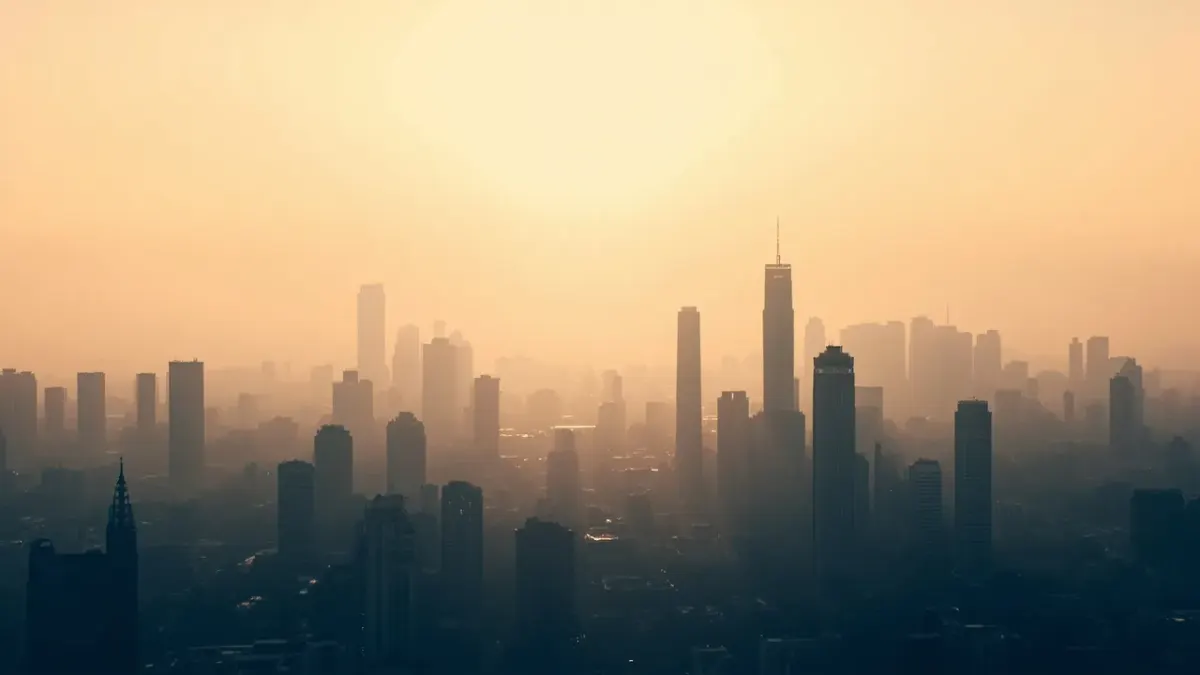
Zhangye
Zhangye (张掖, Zhāngyè) is a mid-sized city on the Hexi Corridor (河西走廊), the narrow strip of arable land between the Qilian Mountains and the Gobi Desert that was the only viable route between China and Central Asia for 2,000 years. Every Silk Road traveler, army, and merchant caravan passed through here. Today, Zhangye is famous for one thing above all others: the Zhangye Danxia Landform Geological Park (张掖丹霞国家地质公园), a UNESCO Global Geopark where the hills are striped in layers of red, yellow, orange, green, white, and blue — the result of 24 million years of sandstone and mineral deposits folded and exposed by tectonic uplift. It looks photoshopped in person. It is not. The city also holds the Giant Buddha Temple (大佛寺, Dàfó Sì), housing China's largest indoor reclining Buddha at 34.5 meters, and the Mati Temple (马蹄寺, Mǎtí Sì), a complex of cave temples carved into a cliff face by Tibetan Buddhist monks. Zhangye is a 2-day stop on a Gansu Silk Road itinerary — compact, manageable, and genuinely spectacular. Budget roughly ¥100-160 per day for mid-range comfort. Zhangye also works as a base for the broader Hexi Corridor, with Jiayuguan two hours west by HSR and Dunhuang four hours further, and most travelers see all three as a single westward trip. Zhangye also works as a base for the broader Hexi Corridor, and a 4-5 day itinerary that adds Jiayuguan (2h west by HSR) and Dunhuang (4h further) is one of China's great underrated cultural journeys, with the well-preserved Yulin and Mogao cave temples at Dunhuang as the highlight.
Why Zhangye in 2026.
Home to the Rainbow Danxia landforms — UNESCO-listed striped mountains of red, yellow, green, and blue — plus China's largest reclining Buddha and a deep Silk Road history on the Hexi Corridor.
Quick Answer
Zhangye (张掖, Zhāngyè) is a mid-sized city on the Hexi Corridor (河西走廊), the narrow strip of arable land between the Qilian Mountains and the Gobi Desert that was the only viable route between China and Central Asia for 2,000 years. Every Silk Road traveler, army, and merchant caravan passed through here. Today, Zhangye is famous for one thing above all others: the Zhangye Danxia Landform Geological Park (张掖丹霞国家地质公园), a UNESCO Global Geopark where the hills are striped in layers of red, yellow, orange, green, white, and blue — the result of 24 million years of sandstone and mineral deposits folded and exposed by tectonic uplift. It looks photoshopped in person. It is not. The city also holds the Giant Buddha Temple (大佛寺, Dàfó Sì), housing China's largest indoor reclining Buddha at 34.5 meters, and the Mati Temple (马蹄寺, Mǎtí Sì), a complex of cave temples carved into a cliff face by Tibetan Buddhist monks. Zhangye is a 2-day stop on a Gansu Silk Road itinerary — compact, manageable, and genuinely spectacular. Budget roughly ¥100-160 per day for mid-range comfort. Zhangye also works as a base for the broader Hexi Corridor, with Jiayuguan two hours west by HSR and Dunhuang four hours further, and most travelers see all three as a single westward trip. Zhangye also works as a base for the broader Hexi Corridor, and a 4-5 day itinerary that adds Jiayuguan (2h west by HSR) and Dunhuang (4h further) is one of China's great underrated cultural journeys, with the well-preserved Yulin and Mogao cave temples at Dunhuang as the highlight.
| Worth visiting | Yes — the Danxia landforms are one of the most photogenic landscapes in China. Combine with Mati Temple for a superb 2-day stop. |
|---|---|
| Recommended days | 2 days |
| Best time to visit | May-June and September-October (best light for Danxia photography; avoid July-August midday heat and winter when snow obscures the colors) |
| Daily budget | $35 (backpacker) / $100 (mid-range) / $260+ (luxury) |
| Family friendly | Yes — the Danxia park has boardwalks and shuttle buses, the Giant Buddha Temple is walkable, and the wetland park is good for children |
| Solo friendly | Yes — compact city, straightforward logistics, the Danxia shuttle bus system works well for solo travelers |
| Airport | Zhangye Ganzhou Airport (YZY) — 15 km south of the city, flights from Xi'an (2h), Lanzhou (1h), limited schedule |
| High-speed rail | Yes — Lanzhou (3-4h, ¥150-200), Jiayuguan (1.5h, ¥65-90), Xining (2h, ¥90-130). On the Lanzhou-Urumqi HSR line. |
| Language | Mandarin with Gansu dialect; English is rare outside hotels |
| Currency | CNY (¥) — Alipay and WeChat Pay are widely accepted; carry ¥200 cash for rural vendors |
| Time zone | China Standard Time (UTC+8) |
| Last updated | 2026-06-18 |
Want a Zhangye plan built for you?
Jump to:
Danxia Landforms·Giant Buddha Temple·Mati Temple·History·Food·Getting There·Getting Around·Top Attractions·Where to Stay·Weather·Tips·Itineraries·Practical Info·Emergency Contacts·Danxia Geology·Mati Temple History·Hexi Corridor Silk Road·Hexi Corridor Trip Plan·Danxia Photography·Ethnic Diversity·FAQ·Danxia and Mati Preservation·Photography and Gear·Hexi Corridor Itinerary
Why visit Zhangye? Is it worth going for the Danxia alone?
The Zhangye Danxia landforms are one of the most photographed landscapes in China for a reason — they look impossible. Hills striped in parallel bands of red, yellow, green, white, blue, and orange, like a geological layer cake tilted on its side and weathered into waves. The colors are real — they come from iron oxide (red), limonite (yellow), chlorite (green), and other mineral deposits in sandstone layers laid down over 24 million years. The formations are a UNESCO Global Geopark and one of the most distinctive landforms on the planet. But Zhangye is more than the Danxia. The Giant Buddha Temple in the city center holds China's largest indoor reclining Buddha — 34.5 meters of serene, sleeping Nirvana, housed in a Western Xia dynasty hall from 1098. Mati Temple, an hour south of the city, is a Tibetan Buddhist cliff-cave complex carved into the Qilian Mountain foothills — fewer visitors, more atmosphere, and spectacular mountain scenery. Ping Shan Hu Grand Canyon, an hour north, is a slot canyon that rivals anything in the American Southwest. Zhangye sits on the Hexi Corridor, the narrow passage between the Qilian Mountains and the Gobi Desert that was the Silk Road's only viable route west. The city was a major garrison and trading post for 2,000 years. Today it is a compact, functional city of about 1.2 million people — not beautiful in itself, but surrounded by some of the most photogenic landscapes in northwestern China. The honest assessment: Zhangye city is not a destination. The Danxia are. You come here for the landscapes. The city is a base — comfortable, cheap, well-connected by HSR to Lanzhou and Jiayuguan — and the food is good Gansu beef-noodle fare. Two days is the right amount of time. One day for Danxia and the Giant Buddha Temple, one day for Mati Temple or Ping Shan Hu. Combine Zhangye with Jiayuguan (1.5h by HSR) and Dunhuang for a 5-7 day Hexi Corridor itinerary.
What is the history of Zhangye: Silk Road garrison on the Hexi Corridor?
Zhangye was founded as a Han dynasty military colony in 111 BCE after Emperor Wu's forces drove the Xiongnu nomads from the Hexi Corridor. The name 张掖 (Zhāngyè) literally means "to extend the arm" — a reference to the Han empire's reach into Central Asia. The city became one of the four key garrison towns on the Hexi Corridor, alongside Wuwei, Jiuquan, and Dunhuang. For the next 2,000 years, Zhangye was a Silk Road crossroads. Caravans carrying silk, spices, jade, and glass passed through. Buddhist monks traveling between India and China stopped here — the Giant Buddha Temple, the Mati Temple caves, and numerous other Buddhist sites testify to Zhangye's role as a center of Buddhist art and scholarship. The Western Xia kingdom (1038-1227), a Tangut-ruled state that controlled the Hexi Corridor before Genghis Khan destroyed it, made Zhangye one of its major cities — the Giant Buddha Temple is a Western Xia construction. Marco Polo passed through Zhangye (which he called "Campichu") in the 1270s and described a city of "idolaters, Mohammedans, and Christians" with a large Buddhist monastery. The city remained a trading hub through the Mongol Yuan dynasty, the Ming, and the Qing, declining only when sea trade replaced the Silk Road in the early modern period. Modern Zhangye is a prefecture-level city of about 1.2 million people in Gansu province. The economy is based on agriculture (irrigated by the Heihe River, the second-largest inland river in China), tourism (driven by the Danxia geopark, which received over 3 million visitors in 2025), and its position on the Lanzhou-Urumqi HSR line. The city has the sleepy, manageable feel of a provincial capital that has not yet been fully discovered by mass tourism — for now, the Danxia are busy but the rest of the city is quiet.
What to eat in Zhangye: Hexi Corridor beef noodles and local specialties?
Zhangye food is Gansu cuisine — wheat-based, halal-influenced, built around beef, lamb, and noodles. It is less spicy than Sichuan, less Central Asian than Xinjiang, and characterized by simple, hearty flavors. The essential foods: Lanzhou beef noodles (兰州牛肉面, Lánzhōu niúròu miàn). Yes, Lanzhou is the namesake, but the beef noodle culture extends throughout Gansu and Zhangye does an excellent version. Hand-pulled wheat noodles in clear beef broth with sliced beef, radish, chili oil, cilantro, and green onion. ¥10-18 per bowl. Order by noodle width: 二细 (èr xì, medium-thick) is the standard; 毛细 (máo xì, angel-hair thin) if you like delicate noodles; 大宽 (dà kuān, belt-wide) if you want drama. Look for shops with a window where you can watch the noodle-pulling. Zhangye搓鱼面 (cuō yú miàn, "rubbed fish noodles"). A local specialty — short, stubby noodles hand-rolled into fish shapes (hence the name), stir-fried with vegetables, egg, and optionally lamb. The noodles are chewy and the dish is hearty. ¥15-25 per plate. Available at local noodle shops throughout the city. Stir-fried lamb with cumin (孜然羊肉, zīrán yángròu). Gansu lamb is excellent — the animals graze on high-altitude Qilian Mountain pastures and the meat is tender and less gamey than lowland lamb. Stir-fried with cumin, chili, and onion. ¥40-60 per plate. Zhangye stuffed pancakes (张掖肉夹馍, Zhāngyè ròujiāmó). Similar to the Xi'an version but with a flatter, crispier bread and spicier meat filling. ¥8-15 each. Sold from street stalls and small shops throughout the city. Apricot kernel tea (杏皮茶, xìngpí chá). A local drink made from dried apricot kernels, slightly sweet, slightly bitter, and refreshing. ¥5-10 per cup. It is the Hexi Corridor's answer to iced tea and genuinely good on a hot day. Gansu noodles with sauce (甘肃凉皮, Gānsù liángpí). Cold wheat-starch noodles with vinegar, chili oil, sesame paste, cucumber, and bean sprouts. ¥8-12 per bowl. A perfect summer lunch. For vegetarians: Gansu cuisine is more vegetarian-friendly than Xinjiang. Beef noodle soup can be ordered without meat (素面, sù miàn). Cold noodles (凉皮) are vegetarian by default. The Muslim restaurants (清真, qīngzhēn) have vegetable stir-fries. Zhangye's markets sell excellent dried fruits and nuts. A printed vegetarian card in Chinese is recommended but less critical than in Xinjiang.
How to get to Zhangye: high-speed rail, flights, and connections?
Zhangye West Railway Station (张掖西站) is the high-speed rail station, about 5 km west of the city center on the Lanzhou-Urumqi HSR line. This is how almost all foreign visitors arrive. From Lanzhou: 3-4 hours, ¥150-200 second class, multiple daily trains. From Jiayuguan: 1.5 hours, ¥65-90. From Xining: 2 hours, ¥90-130. From Urumqi: 8-9 hours, ¥450-550 (a long day, but doable). The HSR station is connected to the city center by taxi (¥10-15, 10 min) and bus 23 (¥1, 20 min). Zhangye Ganzhou Airport (YZY) is 15 km south of the city with limited flights — primarily from Xi'an (2 hours, ¥400-700), Lanzhou (1 hour, ¥300-500), and seasonal charters. The HSR is generally more practical than flying for most itineraries. Zhangye Railway Station (张掖站, the conventional-rail station) is in the northeast of the city and handles slower K/T trains. You will almost certainly use Zhangye West (HSR) instead. Zhangye is a natural stop on a Hexi Corridor itinerary. The classic route: Lanzhou → Zhangye (3-4h HSR, 2 days) → Jiayuguan (1.5h HSR, 1-2 days) → Dunhuang (3.5h HSR or 4-5h drive, 2-3 days). This 5-7 day westbound journey covers the highlights of the Chinese Silk Road in a logical, efficient order. You can also work Zhangye into a Silk Road itinerary starting from Xi'an: Xi'an → Lanzhou → Zhangye → Jiayuguan → Dunhuang → fly out from Dunhuang or return to Lanzhou.
How to get around Zhangye: taxis, buses, and site transport?
Zhangye's city center is compact and walkable. The Giant Buddha Temple, Wooden Pagoda, and the main restaurants are all within 20-30 minutes on foot from each other. For the Danxia Geopark: the park is 40 km west of the city (about 50 minutes by taxi). A round-trip taxi costs ¥150-200 including waiting time. Public bus from Zhangye West Bus Station (张掖汽车西站) runs to the Danxia park roughly every 30-60 minutes (¥10, 1 hour). Inside the park, a shuttle bus system connects the four viewing platforms — the shuttle is included in the ¥75 entrance ticket. You cannot walk between platforms (distances are too large), and you cannot leave the boardwalks (the formations are protected). For Mati Temple: 65 km south of the city (about 1.5 hours by taxi). A round-trip taxi with waiting costs ¥250-350. There is a tourist bus from Zhangye Bus Station in summer (May-October, roughly ¥30 one way) but the schedule is irregular and Chinese-only. Hiring a taxi is strongly recommended. For Ping Shan Hu Grand Canyon: 56 km north of the city (about 1 hour by taxi). Round-trip taxi with waiting costs ¥200-300. Taxis within the city center cost ¥5-10 per ride. Flagfall is ¥5. For a full day of sightseeing, you can hire a taxi for ¥400-500 to cover Danxia + Mati Temple or Danxia + Ping Shan Hu. Arrange through your hotel front desk. DiDi operates in Zhangye. The supply is reasonable in the city center, thinner at the sites — arrange a pickup time with your driver or use the park shuttle back to the city and then DiDi from there. Public buses in the city are ¥1-2 but Chinese-only and not practical for site access.
What are the top attractions in Zhangye, ranked and described?
1. Zhangye Danxia National Geopark (张掖丹霞国家地质公园). ¥75 (including shuttle bus). This is the reason you are in Zhangye. The park covers 510 km² but the accessible area is concentrated around four viewing platforms connected by shuttle bus. Platform 1 (七彩仙缘台, Rainbow Fairy Terrace) has the broadest panorama — arrive here first. Platform 4 (七彩红霞台, Rainbow Red Cloud Terrace) has the most vivid colors and is the best for sunset photography. The colors are most saturated in the hour before sunset when low-angle sunlight hits the mineral layers. Cloudy days and midday wash them out significantly. The park has boardwalks throughout — you cannot leave them. Allow 3-4 hours. The visitor center has clean toilets, a food court, and a gift shop. The park is extremely popular with domestic tourists — expect crowds, especially on weekends and holidays. Go on a weekday and arrive by 14:00 for the afternoon light progression. 2. Giant Buddha Temple (大佛寺). ¥40. China's largest indoor reclining Buddha — 34.5 meters of painted wood and clay, lying on his right side in the Nirvana posture, with a serene expression that genuinely calms you. The hall was built in 1098 during the Western Xia dynasty and the original Song-dynasty murals survive on the walls. Behind the Buddha are ten standing disciples, and the hall's wooden-beam ceiling is painted with Buddhist motifs. The temple complex includes a sutra library, a hall of arhats, and a small museum. It is in the city center and takes about 1 hour. The contrast between the 1,000-year-old temple and the modern city outside its walls is part of the experience. 3. Mati Temple (马蹄寺). ¥74. A Tibetan Buddhist cliff-cave complex carved into the Qilian Mountain foothills 65 km south of Zhangye. The highlight is the 33-Heaven Grotto (三十三天石窟) — seven stories of chambers connected by steep tunnels and ladders inside the cliff face, with Buddha statues and faded murals in each chamber. It is dark, cramped, and genuinely adventurous. The climb requires some fitness — the ladders are steep and the tunnels narrow. The mountain scenery around the temple is spectacular: snow peaks on the Qilian range, alpine meadows, grazing yaks, and Tibetan prayer flags flapping in the wind. There is a Tibetan Buddhist monastery still active at the base. The site has fewer visitors than Danxia and feels more remote. Allow 3-4 hours including the drive. Combine with Danxia for a full but rewarding day — Danxia in the afternoon, Mati Temple in the morning. 4. Ping Shan Hu Grand Canyon (平山湖大峡谷). ¥130 (including shuttle). A deep red sandstone canyon 56 km north of Zhangye, often compared to Antelope Canyon. The viewpoints from the rim are dramatic — red-orange walls plunging 100+ meters into a narrow gorge. You can hike down into the canyon floor (about 45 minutes down, 1 hour up) through slot passages where the walls narrow to a few meters. It is less crowded than Danxia and more physically engaging. The canyon is particularly photogenic in morning light. Allow 3-4 hours. Wear hiking shoes — the canyon floor trail is uneven and involves some scrambling. 5. Zhangye National Wetland Park (张掖国家湿地公园). Free. A surprising oasis of reeds, lotus ponds, and bird habitat on the city's northern edge. Boardwalks wind through the wetlands for 3-4 km. It is a good place for a relaxed morning walk, birdwatching (black-necked cranes in spring, bar-headed geese in autumn), or escaping the Danxia crowds. Best in spring and summer when the reeds are green. Free entry. 6. Wooden Pagoda (木塔寺). ¥20. A nine-story wooden pagoda in the city center, 32.8 meters tall, one of the few surviving wooden pagodas in northwestern China. Originally Northern Zhou dynasty (6th century), rebuilt in 1926 after the original burned. It is photogenic from the square in front, especially at dusk when the pagoda is lit. The temple complex around it is small and quiet. Allow 30 minutes. 7. Shandan Horse Farm (山丹军马场). ¥50. One of the world's oldest continuously operating horse farms, established 121 BCE. Set at 2,800m in a high-altitude grassland valley between Qilian peaks — the scenery is the draw more than the horses themselves. You can ride horses (¥100-200 per hour), watch herds gallop, and visit the stables. About 100 km southeast of Zhangye — a full-day excursion that requires a hired car. Best June-September when the grasslands are green. Worth it for horse enthusiasts and photographers; skippable for most visitors with only 2 days.
Where to stay in Zhangye: neighborhoods, prices, and recommendations?
The city center around the Giant Buddha Temple and Drum Tower (鼓楼, Gǔlóu) is the best base. It is walking distance to the main temples, restaurants, and the night market. Mid-range options: Zhangye Huachen International Hotel (华辰国际大酒店, ¥250-400), Jinjiang Inn Zhangye (¥180-280). There is a Zhangye Youth Hostel near the Drum Tower with dorm beds at ¥45-60. Near Zhangye West Railway Station (张掖西站) there is a cluster of budget and mid-range chain hotels (¥150-300) convenient for late HSR arrivals or early departures. The station area is functional and charmless but practical for a one-night transit stop. Near the Danxia Geopark (40 km west of the city): several guesthouses and farm-stays have opened near the park entrance. Staying here lets you be at the park for sunrise or sunset without the 50-minute drive from the city. Prices run ¥120-250 per night. The tradeoff: you are in a rural area with limited restaurant options and no city amenities. This is worth doing if you are a serious photographer who wants both sunrise and sunset at Danxia on consecutive days. For luxury: the Zhangye Hotel (张掖宾馆) is the city's top option at ¥400-700 per night with reliable air conditioning, English-speaking staff, and a good breakfast buffet. For the Danxia area, the Zhangye Danxia Kangsheng Hotel (七彩丹霞康盛酒店) is the best option near the park at ¥250-400. Foreigner registration: as everywhere in China, hotels must register foreign guests with the Public Security Bureau. Budget hotels and guesthouses may refuse foreign guests. Book through Trip.com with the foreign-guest filter or call ahead.
What is the weather in Zhangye and when is the best time to visit?
Zhangye has a cold semi-arid climate — hot summers, cold winters, low precipitation, and large daily temperature swings (15-20°C between day and night). January: -13°C to -1°C. Cold, dry, often sunny. The Danxia may have snow — beautiful but the colors are muted. Lowest tourist numbers. February: -9°C to 4°C. Still cold. Spring Festival brings some domestic tourism. March: -3°C to 11°C. Warming but dusty. Sandstorms from the Gobi possible. April: 3°C to 19°C. Pleasant — cool mornings, warm afternoons. The start of the good season. May: 9°C to 25°C. Excellent. Clear skies, green on the lower slopes, comfortable temperatures. The first great month. June: 14°C to 30°C. Good — warm but not scorching. The Qilian Mountains are snow-capped and the grasslands are green. The second great month. July: 17°C to 33°C. Hot. Midday sightseeing at Danxia (no shade) is uncomfortable. The grasslands at Mati Temple and Shandan are at their peak greenness. August: 16°C to 31°C. Marginally cooler than July. Still hot at midday. The Danxia colors are good in afternoon light. September: 10°C to 25°C. Excellent — cooling down, clear skies, autumn light makes the Danxia colors pop. The best month for photography. October: 2°C to 17°C. Good — crisp, clear, autumn colors in the valley. The second-best photography month. Cold at night. November: -6°C to 7°C. Getting cold. The Danxia are still visitable but the light is flatter. Fewer tourists. December: -12°C to 0°C. Cold, dry, quiet. Lowest prices. The Danxia under snow are photogenic but cold. The consensus best months are May, June, September, and October. July and August are hot but visitable with morning/afternoon timing. The Danxia colors are most vivid in low-angle light — early morning and late afternoon — regardless of season. Midday light washes out the colors significantly. Winter (November-March) is cold and the colors are muted, but you will have the park almost to yourself.
What are the top tips, warnings, and things to know about Zhangye?
1. THE DANXIA COLORS DEPEND ON THE LIGHT. The park is at its most spectacular in the hour before sunset when low-angle sunlight saturates the mineral colors. At midday under high sun, the colors are noticeably flatter — still interesting, but not the Instagram version. On cloudy days, the colors are muted to the point of disappointment. Plan your visit for a clear day and arrive by 14:00-15:00 for the afternoon light progression. Check the weather forecast the night before and adjust your schedule accordingly — if tomorrow is cloudy, swap Danxia for the Giant Buddha Temple and Mati Temple, and do Danxia the next day. 2. THE DANXIA IS HEAVILY CROWDED. The park received over 3 million visitors in 2025 and the viewing platforms can be packed, especially on weekends and during Chinese holidays (Labour Day, National Day, summer vacation July-August). Go on a weekday if possible. Arrive by 14:00 to secure a spot on Platform 4 for sunset — the best photography position fills up by 17:00 in peak season. The shuttle buses between platforms also have queues during peak hours. 3. YOU CANNOT LEAVE THE BOARDWALKS AT DANXIA. The formations are fragile and protected. Walking on them causes erosion that takes decades to repair. Stay on the boardwalks at all times — rangers enforce this. Drones are prohibited. 4. MATI TEMPLE REQUIRES FITNESS. The 33-Heaven Grotto involves steep ladders, narrow tunnels, and some crawling. It is not wheelchair-accessible and is challenging for anyone with mobility issues, vertigo, or claustrophobia. The base area is accessible and still worth visiting. If you cannot or do not want to climb, the Thousand Buddha Caves (千佛洞) at the base are easier to access and contain good murals. 5. ALTITUDE AT MATI TEMPLE AND SHANDAN. Mati Temple is at roughly 2,500m, Shandan Horse Farm at 2,800m. Most people feel fine at these altitudes, but you may notice shortness of breath on the Mati Temple ladders. Zhangye city is at 1,500m — high enough to notice but low enough that altitude sickness is rare. 6. THE DANXIA COLORS ARE REAL, NOT PHOTOSHOPPED — BUT THEY ARE ENHANCED IN MOST PHOTOS. The stripes exist. They are visible to the naked eye. But many of the viral images you have seen were taken in ideal light conditions (sunset after rain, which saturates the minerals) and have had saturation boosted in post-processing. Manage your expectations: the Danxia are stunning, but they look more like a very vivid version of the American Southwest than a Candyland fever dream. The best light is after rain when the dust is washed off the formations and the colors are at their most saturated. 7. PING SHAN HU VS. DANXIA — IF YOU CAN ONLY DO ONE. If you prefer hiking and solitude, choose Ping Shan Hu Grand Canyon. If you want the well-known Zhangye image, choose Danxia. They are complementary — Danxia is about color, Ping Shan Hu is about form. Doing both in two days is very feasible. 8. THE GIANT BUDDHA TEMPLE IS CLOSED FOR LUNCH. Like many Chinese museums and temples, the Giant Buddha Temple closes from roughly 12:00-14:00 for a lunch break. Plan your visit for morning (08:00-11:30) or afternoon (14:00-17:00).
What are good 1-day and 2-day itineraries for Zhangye?
1-day sprint: Morning — Giant Buddha Temple (¥40, 1 hour) and Wooden Pagoda (¥20, 30 min). Drive to the Danxia Geopark (50 min). Arrive by 14:00 for the afternoon light. Spend 3-4 hours working through the four viewing platforms — Platform 1 first for the panorama, Platform 4 last for sunset. Return to the city for dinner. This covers the two essential Zhangye experiences in a single day. You miss Mati Temple and Ping Shan Hu, but you get the core. 2-day plan (recommended): Day 1 — Morning at the Giant Buddha Temple and Wooden Pagoda. Afternoon at Danxia (arrive by 14:00, stay through sunset). Evening: Zhangye night market for Gansu street food. Day 2 — Choose your adventure: Option A: Mati Temple (morning departure, 3-4 hours including drive). Afternoon: Zhangye National Wetland Park or free time in the city. Option B: Ping Shan Hu Grand Canyon (morning departure, 3-4 hours including drive). Afternoon: Giant Buddha Temple if you skipped it on Day 1. Option C: Shandan Horse Farm full-day excursion (leave early, return late afternoon — this consumes the entire day). If you are combining Zhangye with Jiayuguan and Dunhuang, the 2-day Zhangye plan is ideal. Day 1 Danxia + Giant Buddha Temple, Day 2 Mati Temple, then afternoon HSR to Jiayuguan (1.5h). This is the most efficient Hexi Corridor sequence.
What practical information do I need: visa, money, internet, language?
Visa-free entry: As of June 2026, citizens of 45+ countries can enter China visa-free for up to 30 days. Confirm your eligibility with the nearest Chinese consulate. Money: CNY (¥). ¥100 ≈ US$14. Alipay and WeChat Pay are accepted at hotels, restaurants, the Danxia park, and most city-center businesses. Link a foreign Visa/Mastercard before traveling. Carry ¥200-300 in cash for rural vendors near Mati Temple and small food stalls. ATMs at Bank of China and ICBC in the city center accept foreign cards. Internet: China's Great Firewall applies. Install and test a VPN before arriving. Internet speeds in Zhangye are decent. Download offline maps before heading to Mati Temple or Ping Shan Hu — mobile signal is weak at both sites. Language: Mandarin is spoken universally. English is rare outside international hotel front desks. A translation app (Pleco, Baidu Translate, Microsoft Translator) is essential. Save your hotel address and key site names in Chinese characters. Useful phrase: "丹霞日落几点最好?" (Dānxiá rìluò jǐ diǎn zuì hǎo?, "What time is sunset best at Danxia?"). Health: Zhangye city is at 1,500m — altitude sickness is unlikely. Mati Temple (2,500m) and Shandan Horse Farm (2,800m) may cause mild shortness of breath. The main health concern is sun exposure — UV radiation is strong at these altitudes and the Danxia park has no shade. Sunscreen, hat, and sunglasses are essential. Danxia park logistics: The park opens roughly 06:30-18:30 (summer) or 07:00-17:30 (winter). Last entry is 1 hour before closing. The shuttle bus runs continuously. Food and toilets are available at the visitor center and Platform 2. There is no food or water on Platforms 3 and 4 — carry water.
What are the emergency contacts and health information for Zhangye?
Police: 110. Ambulance: 120. Fire: 119. Traffic accident: 122. These work from any phone. English-speaking operators are unlikely — have your hotel make the call if possible. International medical care: Zhangye People's Hospital (张掖市人民医院) is the main hospital and can handle most emergencies. English-speaking staff are very limited. For serious medical issues, medical evacuation to Lanzhou (3-4 hours by HSR) or Xi'an (2 hours by air from YZY airport) may be necessary. Comprehensive travel insurance covering medical evacuation is recommended. Sun and heat exposure: the main health risk at the Danxia park and Ping Shan Hu is sun exposure and heat — both sites have minimal shade. Carry at least 1.5 liters of water per person. Sunscreen, hat, and sunglasses are essential. Heat exhaustion (headache, nausea, dizziness) requires shade, water, and rest. Altitude: Zhangye city (1,500m) rarely causes altitude issues. Mati Temple (2,500m) may cause mild shortness of breath during the ladder climb — rest as needed. Shandan Horse Farm (2,800m) may cause mild AMS symptoms in sensitive individuals. Tap water is not potable. Bottled water is widely available (¥2-3). Hotels provide kettles. Air quality: generally better than eastern Chinese industrial cities. Spring dust storms (March-May) from the Gobi can push the AQI high. Carry an N95 mask in spring if you have respiratory sensitivity.
How did the Danxia landforms form, geologically speaking?
The Zhangye Danxia landforms are a 24-million-year sequence of red sandstones and conglomerates uplifted by the Himalayan orogeny and sculpted by wind and rain into the banded ridges the park is famous for.
What is the history and meaning of Mati Temple beyond the cliff face?
Mati Temple (马蹄寺, Mǎtí Sì) is a 1,600-year-old Tibetan Buddhist cave complex carved into a Qilian Mountain cliff near Maqên, 65 km south of Zhangye.
Why was the Hexi Corridor the only viable Silk Road route, and what was Zhangye's role?
The Hexi Corridor was the only continuous strip of arable land between the Tibetan Plateau and the Gobi Desert, and from the Han dynasty it was the obligatory east-west route for caravans.
How do you plan a Hexi Corridor trip from Zhangye through Jiayuguan to Dunhuang?
The standard Hexi Corridor itinerary runs westbound from Zhangye to Jiayuguan (220 km, 2.5 hours by HSR) and then to Dunhuang (360 km, 4 hours by HSR). Five to seven days is the right pace.
What is the best photography setup for the Danxia landforms?
The Danxia landforms reward patience, golden-hour light, and a polarizing filter. Platform 4 is the most-photographed viewpoint and the only one with a guaranteed sunset composition.
What should I know about the ethnic and cultural diversity of the Zhangye region?
The Zhangye region is one of the most ethnically diverse parts of Gansu, home to Han Chinese, Hui Muslims, Tibetans, Yugur, and a small Mongolian community. The Yugur (裕固族) are particularly worth knowing about: a Turkic-speaking nomadic minority of roughly 14,000 people.
How does the Hexi Corridor history and Silk Road heritage shape what travelers experience in Zhangye today?
The Hexi Corridor is the single most important geographic concept for understanding Zhangye, and it is worth a section of its own because almost every notable site in the city links back to it. The Hexi Corridor (河西走廊, Hexi Zoulang) is the long, narrow strip of arable land running about 1,200 km between the Qilian Mountains (祁连山) on the south and the Gobi Desert and Inner Mongolia highlands on the north. It is the only continuous natural corridor through the mountains and deserts that separate the Chinese heartland from Central Asia, and for roughly 2,000 years it carried the entire overland Silk Road traffic between China and the West. Caravans, armies, monks, envoys, and merchants all had to pass through it, and Zhangye — then called Ganzhou (甘州) — was one of the four major garrison towns that the Han dynasty established in 111 BCE to control the corridor. The other three were Wuwei (武威) in the east, Jiuquan (酒泉) in the middle, and Dunhuang (敦煌) in the west, and they form the classic Hexi Corridor itinerary that travelers still follow today. Zhangye's command position on the corridor is the reason it grew wealthy and culturally rich in ancient times, and it is the reason you can find Buddhist cave temples, a giant reclining Buddha, a wooden pagoda, a Muslim district, and a Tibetan monastery all within a 30-minute drive of each other. The corridor was officially opened in the Han dynasty under Emperor Wu (汉武帝, reign 141-87 BCE), who sent the explorer Zhang Qian (张骞) westward in 138 BCE to seek alliances against the nomadic Xiongnu and came back with the intelligence that opened the Silk Road to continuous Han control. The four Hexi commanderies followed in 111 BCE, and Zhangye's Ganzhou became the second-most important of them. By the Tang dynasty (618-907 CE) it was a major stopover on the imperial courier road, with official post stations, granaries, and Buddhist monasteries funded by both imperial patronage and merchant donations. The Tang poet Li Bai visited, and several of the cave temples at Mati Temple date to the Tang period. The Sogdian merchants who ran much of the Silk Road trade had a permanent quarter here, and the cultural mixing is visible in the art and architecture of the period — Chinese, Tibetan, Indian, Central Asian, and Persian influences all appear. The most photogenic Zhangye site linked to this corridor history is the Danxia Landform Geological Park (张掖丹霞国家地质公园), which UNESCO designated as a Global Geopark in 2019. The danxia formation is not itself a Silk Road artifact — it is a natural geological feature — but its location within the corridor is the reason it became a destination in the first place. The 510 square kilometer park sits about 30 km west of the city, and the striped sandstone hills you see were laid down as flat sediments in a Cretaceous-era lake and river system about 135 to 65 million years ago, then folded and uplifted by the same tectonic forces that pushed up the Qilian Mountains, then eroded by wind and water into the ridges and valleys you see today. The colors are mineralogical: red from iron oxide, yellow from limonite and sulfur, green from chlorite, white from calcium carbonate, blue-gray from organic matter and other minerals. The 24-million-year color banding is a textbook example of a continental red-bed deposit, and it is the most vivid of seven danxia sites in China that UNESCO has recognized as a serial nomination. Most international travelers had never heard of danxia formations before 2010, when the site went viral on Chinese social media, but the science has been studied since the 1920s and the term 'danxia landform' was coined in 1928 by Chinese geologist Feng Jinglan at a different Guangdong site. The Zhangye variant is, however, the largest and most colorful in continuous exposure. The Giant Buddha Temple (大佛寺, Dafosi) is the single most important Silk Road heritage site within Zhangye city limits. Built in 1098 CE during the Western Xia dynasty (西夏, 1038-1227), the temple was originally a Tang-era site that the Western Xia rulers expanded into a major regional monastery. The 34.5-meter reclining Buddha inside the main hall (the Guanyin Hall) is the largest indoor reclining Buddha in China and one of the largest wooden buildings of the Western Xia period, with 9 internal floors of Buddhist statuary. The Western Xia were a Tangut people who controlled the Hexi Corridor for about 190 years before being destroyed by the Mongols, and the temple preserves rare artifacts from that era: a silver casket said to contain the ashes of a Buddha relic, a Ming dynasty edition of the Buddhist canon printed at the temple in 1431 and now in the British Library, and a Song dynasty mural cycle depicting the journey of the historical Buddha. The temple suffered badly during the Cultural Revolution, but the Buddha statue was protected by local residents who bricked up the hall and pretended it was a storage building. The temple reopened in 1979 and was recognized as a Major National Historical and Cultural Site in 1996. A one-hour visit is enough, but plan for half a day if you also want to walk the grounds and the small museum at the back. Mati Temple (马蹄寺, Mati Si) is the other Hexi Corridor heritage site worth a half-day detour, 65 km south of the city in the foothills of the Qilian Mountains. The temple complex was started in the Northern Liang dynasty (北凉, 397-439 CE) and expanded over the following 1,500 years by Tibetan Buddhist monks, who carved dozens of small meditation caves and several larger assembly halls directly into a sandstone cliff face at about 2,500 m elevation. The name means 'Horse Hoof Temple' and refers to a legendary hoofprint left by a divine horse at the site. The architectural highlight is the 33-Heaven Grotto (三十三天石窟), seven stories of chambers connected by narrow tunnels and ladders carved into the cliff, which the visitor climbs from inside the rock. The site suffered significant damage during the Cultural Revolution — most of the original Buddhist statuary was destroyed, and only the empty cave architecture survives — but the cliffside setting remains spectacular, and the grasslands and yak pastures of the Qilian foothills are the most beautiful part of the drive. Allow 3-4 hours including the round trip, and pack a light jacket: the elevation makes this noticeably cooler than Zhangye city, especially in spring and autumn. Marco Polo actually passed through Zhangye in 1275 CE during his 17-year journey through the Mongol Empire, and his description of the city — which he spelled 'Campichu' — is the first detailed Western account. He wrote that it was 'a magnificent city' and noted the multi-religious character (Buddhist, Muslim, Christian Nestorian), the productive agriculture, and the strong wine. Giacomo Puccini never visited China, but he used Marco Polo's descriptions extensively when writing the 1926 opera 'Turandot' — and one of the opera's most famous arias, 'Nessun dorma,' is set in a fictionalized imperial Beijing rather than in Zhangye. Puccini's librettists did draw on Marco Polo's account of the Hexi Corridor for the atmosphere of the northern Chinese winter, but the Princess Turandot of the opera is loosely based on a Turfan (Turpan) princess, not a Zhangye one. The most surprising historical connection is with Pope John XXII, who in 1326 dispatched a Franciscan mission through Zhangye on its way to the Yuan imperial court, and the city is one of the few places in inland China with documented pre-modern Catholic contact. The modern transport revolution is what has made Zhangye accessible to independent foreign travelers. The Lan-Xin High-Speed Railway (兰新高铁) opened in late 2014 and connected Zhangye to Lanzhou (3-4 hours, ¥150-200) in the east and to Urumqi (about 8 hours) in the west, with a stop at Jiayuguan (1.5 hours, ¥65-90) in between. The parallel G30 Lianyuo Expressway (连霍高速) covers the same corridor by road. The new transport has transformed the logistics of the classic Hexi itinerary: 5 to 7 days by HSR is now the standard for a Zhangye + Jiayuguan + Dunhuang trip, and the rail connections are reliable enough that independent travel works fine without a guide. The Zhangye Ganzhou Airport (张掖甘州机场, IATA code YZY) has limited scheduled flights to Xi'an, Lanzhou, and a few other cities, but most international travelers arrive by HSR or by road from Dunhuang. The city is compact and walkable, the taxi system is metered and cheap (¥10 base fare), and the major sites are all reachable in a 30-to-60-minute drive. English is not widely spoken outside the larger hotels, so a translation app is helpful. The best season is May through October: winter brings snow that obscures the Danxia colors and closes the mountain roads, and July-August midday heat is genuinely uncomfortable at 1,500 m elevation in the desert. The shoulder months of late September and early October are the photographer's choice, with stable weather, no summer crowds, and the late-afternoon Danxia light at its warmest.
What are the engineering, scientific, and preservation challenges behind the Danxia formations and the Mati Temple cliff carvings?
The two flagship sites of Zhangye, the Danxia landforms and the Mati Temple, are active scientific and engineering problems — not just scenic attractions. Understanding the preservation challenges behind them explains a great deal about what you see on a visit. Both sites are under formal protection from Chinese national and international bodies, both are subject to ongoing geological and structural monitoring, and both illustrate the broader tension between tourism development and heritage preservation that defines much of modern Chinese cultural policy. The Danxia formation is, geologically, a work in progress. The 510 square kilometer park sits in a region of active tectonic stress, and the same folding and uplifting that created the colored strata is continuing today at a rate that geologists can measure. The Qilian Mountain range, which forms the southern boundary of the Danxia basin, is rising at approximately 1-2 millimeters per year, and the resulting strain is slowly reshaping the formations. The visible color bands are not static: they are being slowly tilted, fractured, and eroded, and the most photographed peaks of the park are expected to look noticeably different in 1,000 years. The most dramatic example is the famous Seven-Color Screen (七彩屏), a single near-vertical wall of multicolored sandstone that is the centerpiece of Platform 4. The wall is being slowly undercut by water erosion at its base, and geologists have calculated that the overhanging portions will eventually collapse. The park has installed monitoring stations and restricted the closest approach to the wall, but the eventual collapse is inevitable on a geological timescale. The management response to these geological realities has been cautious. Visitor access to the most fragile formations is restricted to elevated boardwalks and designated viewing platforms. Climbing on the formations, picking up samples, and even standing on the colored rock faces are all prohibited. The most photogenic peak (the Giant Scarf Mountain, 大扇丹霞) is now off-limits to direct approach due to a 2018 rockfall that injured three tourists, and the photograph you see of it on most promotional material is taken from Platform 2 with a long lens. Despite these restrictions, the park still allows visitors to walk between platforms on marked paths, and the photographs you can take are still spectacular. The combination of formal protection and accessible viewing is one of the success stories of Chinese geopark management. Mati Temple faces a different set of challenges. The cliff-cut cave temples are at the intersection of three preservation problems: structural (the cliff face is fractured and the caves are at risk of collapse), religious (the caves are still used by Tibetan Buddhist monks who maintain altars and statues inside them), and tourism (the visitor traffic through the narrow 33-Heaven Grotto tunnel system puts additional stress on the ancient wood and stone). The 33-Heaven Grotto in particular is a structural concern. The 7-story tunnel complex was carved into the sandstone cliff over a period of 1,500 years, and the original wooden ladders and floors have been replaced several times. The current floors and ladders are modern (post-2000) and the tunnels themselves are structurally sound, but the constant foot traffic of thousands of visitors per year is wearing down the interior surfaces. The park has implemented timed entry tickets that limit the number of visitors in the grotto at any one time, but the fundamental tension between access and preservation remains. The Buddhist religious use of Mati Temple complicates the preservation picture in a way that is rare in Chinese heritage management. The caves are not just monuments; they are living religious sites. Several of the caves house resident monks who maintain altars, perform daily rituals, and live in the cliff-side cells. The Tibetan Buddhist sect that manages Mati Temple is the Gelugpa (Yellow Hat) school, and the monastery is one of the major Gelugpa centers in Gansu. The monks are not museum staff; they are religious practitioners who have a legitimate claim on the use of the caves, and the park management has to balance tourist access with the monks' religious needs. The current compromise is: certain caves are off-limits to visitors because they are still used for religious purposes, and the public areas are clearly marked. Visitors who respect the boundaries generally find the monks welcoming and the religious use adds to the atmosphere rather than detracting from it. The erosion of the cliff face itself is the most serious long-term preservation challenge at Mati Temple. The cliff is composed of red sandstone and conglomerate that is friable and prone to both gradual weathering and catastrophic rockfall. The 2010 restoration project, funded by the provincial government and the State Administration of Cultural Heritage, installed a series of rockfall barriers and drainage systems to manage the most acute risks, but the cliff face will continue to erode. The 2023 rockfall that closed one of the lower caves for two months is a reminder that the park is not a static museum. The long-term plan, currently in the consultation phase, is to relocate some of the most endangered Buddhist statuary to the museum at the visitor center and to create a smaller, more controlled visitor experience at the cliff itself. The scientific and engineering response to these challenges has been a mixture of national park-style management, modern geological monitoring, and traditional Buddhist stewardship. The result is imperfect but functional, and the sites remain open and accessible to the kind of visitor who respects the boundaries. The future of both sites depends on continued investment, on careful management of visitor numbers, and on the willingness of visitors to treat what they see as a heritage site rather than a backdrop for personal photography. The Danxia formations and the Mati Temple have survived 24 million years and 1,500 years respectively, and they will survive the tourist era if current management continues. They will not survive if visitor pressure continues to grow unchecked. The broader context for understanding these preservation challenges is the 2019 UNESCO Global Geopark designation and the parallel 2014 UNESCO World Heritage inscription of the China Danxia serial site that includes Zhangye. The UNESCO designation provides international visibility and standards-based management guidance, but it does not provide direct funding. The financial responsibility for the park's operations falls on the provincial government and on ticket revenue, and the budget has been consistently under pressure. The combination of UNESCO visibility, ticket revenue pressure, and religious stewardship at Mati Temple is the practical reality of heritage management in inland China, and it is worth knowing when you visit because it shapes what you are allowed to see, what you are allowed to photograph, and what the experience actually feels like.
What are the practical photography, timing, and gear considerations for capturing the Danxia and the broader Zhangye region?
Photography is the single most common reason that international travelers visit Zhangye. The practical considerations for capturing the Danxia and the surrounding sites are different enough from usual landscape photography conventions to merit their own section. The combination of unusual lighting conditions, restricted access, weather variability, and a small but real altitude effect at some sites makes the Zhangye photography experience one that rewards planning and punishes the casual snap-shooter. The first and most important consideration is timing. The Danxia colors are real but they are not constant: they are intensely saturated for about 90 minutes around sunset, noticeably muted during midday, and at their absolute peak for 20-30 minutes after a rainstorm when the dust has been washed off the formations. The ideal photography plan, if you have flexibility, is to spend at least one full afternoon in the park with a Plan A (sunset from Platform 4) and a Plan B (cloudy-day composition from Platform 2 if the weather does not cooperate). The platforms are connected by the park shuttle bus, which runs until about 19:30 in summer and 18:00 in winter, so you can move between platforms easily. The single most common mistake that amateur photographers make is to arrive at the park at midday, see the muted colors, and leave disappointed. If you arrive at 16:00 and stay through sunset, the same formation will look completely different. The second consideration is gear. The standard landscape photography kit works: a wide-angle lens (16-35mm equivalent) for the broad valley views, a mid-range zoom (24-70mm) for the most common compositions, and a telephoto (70-200mm or longer) for the close-up color-band shots. A tripod is useful but not essential at the platforms, which have plenty of stable surfaces. A polarizing filter is genuinely useful for cutting the haze and bringing out the color saturation, and a graduated neutral density filter helps with the high-contrast sunrise/sunset compositions. The most important accessory is a microfiber cloth: the Danxia basin is in the desert-adjacent Hexi Corridor, dust is constant, and you will be cleaning your lens every 15-20 minutes. The third consideration is composition. The default composition that every tourist takes is the wide shot from Platform 4 of the most colorful hill in front of you. This is a fine photograph but it is identical to the one in every promotional image. Better compositions are available if you are willing to work. The most rewarding are: (a) close-up color-band shots that show the mineral striping in detail, (b) compositions that include the foreground of an adjacent hill at a different angle to create depth, (c) silhouettes of the formations against the sunset sky, (d) high-ISO handheld shots at blue hour that capture the contrast between the dark formations and the saturated sky, and (e) panoramic stitches of the wider valley that show the scale of the Danxia formation. The Platform 2 viewpoint is the best for the close-up and detailed shots; Platform 1 is the best for the broadest panoramic view; Platform 4 is the best for the classic sunset; and the rarely-visited Platform 5 is the best for the most off-the-beaten-path compositions. The fourth consideration is altitude. The Danxia park is at about 2,000 meters elevation, which is high enough that some visitors feel mild altitude effects, particularly if they have arrived from lowland China the same day. The symptoms are mild: headache, slight shortness of breath on exertion, and fatigue. They pass quickly with rest and hydration. Mati Temple is higher (2,500m at the entrance, 3,500m at the upper caves), and the effects there are more pronounced. If you are sensitive to altitude, plan to spend a day acclimatizing in Zhangye city (1,500m) before going to Mati. The fifth consideration is access. The park is well-managed but the rules are strict: no climbing on the formations, no drone flights without advance permit, no tripod placement on the formations, and no off-boardwalk photography. The drone rules in particular are worth knowing in advance because the Danxia basin is one of the most photogenic drone locations in China and the temptation to fly is strong. The park requires written advance permission (apply at the visitor center on arrival, allow 1-2 days for processing) and even with permission, flight is restricted to certain zones and certain hours. The rules are enforced and the fines for unauthorized drone use are substantial (¥5,000-20,000). The sixth consideration is the wider region. The Zhangye region has several other worthwhile photography locations that most visitors skip. The Ping Shan Hu Grand Canyon (already mentioned in attractions) has dramatic slot canyon photography that compares favorably with the American Southwest. The Qilian Mountain grasslands southeast of the city (reachable via the Shandan Horse Farm road) have outstanding summer wildflower and yak-herder photography. The Mati Temple upper trail has panoramic mountain photography that is best at sunrise. The Qilian Mountain glaciers are accessible by full-day 4WD excursion and provide high-altitude mountain photography. And the Hexi Corridor itself, with its endless horizon, irrigation channels, and adobe villages, is one of the most evocative landscape subjects in inland China. The Zhangye region is, in the end, a photographer's destination in a way that goes well beyond the Danxia, and a 3-4 day stay that combines Danxia, Mati, Ping Shan Hu, and the Qilian foothills will produce a portfolio of images that few other Chinese regions can match. The combination of subject, light, gear, and access makes Zhangye one of the more demanding landscape photography destinations in China, but also one of the most rewarding. The visitors who plan, who arrive at the right time, and who have the patience to wait for the light are uniformly thrilled with what they capture. The visitors who arrive at midday, shoot for 30 minutes, and leave are uniformly disappointed. The difference is almost entirely in the planning.
What is the best way to combine Zhangye with Jiayuguan and Dunhuang in a single 5-7 day Hexi Corridor itinerary?
The classic Hexi Corridor itinerary is one of the most underrated multi-city trips in China, and Zhangye is the natural middle stop. The recommended structure is 2 days Zhangye, 1 day Jiayuguan, 2-3 days Dunhuang, with the Jiayuguan stop in between. The route works east-to-west or west-to-east, but east-to-west (starting in Lanzhou or Zhangye, ending in Dunhuang) is the more common direction because it puts the most spectacular site (the Mogao Caves) last. Day 1 Zhangye: Arrive by morning HSR, drop bags at hotel, visit the Giant Buddha Temple in the city center (1 hour), then head to Danxia in the afternoon and stay through sunset. Day 2 Zhangye: Mati Temple in the morning (drive 1 hour each way, 3 hours at site), Ping Shan Hu Grand Canyon in the afternoon if time permits, or just relax in the city. Day 3: HSR to Jiayuguan (1.5h), check in, visit the Jiayuguan Fort (3-4 hours including the museum), overnight. Day 4: HSR or drive to Dunhuang (4h by HSR, 5-6h by road), check in, visit the Dunhuang Museum in the late afternoon, overnight. Day 5: Mogao Caves in the morning (book tickets in advance, 3-4 hours), Crescent Lake and Mingsha Mountain in the late afternoon for sunset, overnight. Day 6: optional Yulin Caves (Western Thousand Buddha Caves, 2h drive each way) or Western Xia Tomb visit, or relax in Dunhuang. Day 7: depart. The route can be shortened to 4-5 days by skipping Jiayuguan and going directly from Zhangye to Dunhuang, or by combining Zhangye and Jiayuguan into a single 2-day stop. It can be extended to 9-10 days by adding the Yulin Caves and the Yardang National Geopark west of Dunhuang. Either version works, and the choice depends on whether you prefer natural landscapes (Danxia, Yardang) or historical sites (Mogao, Yulin, Jiayuguan).
Top attractions
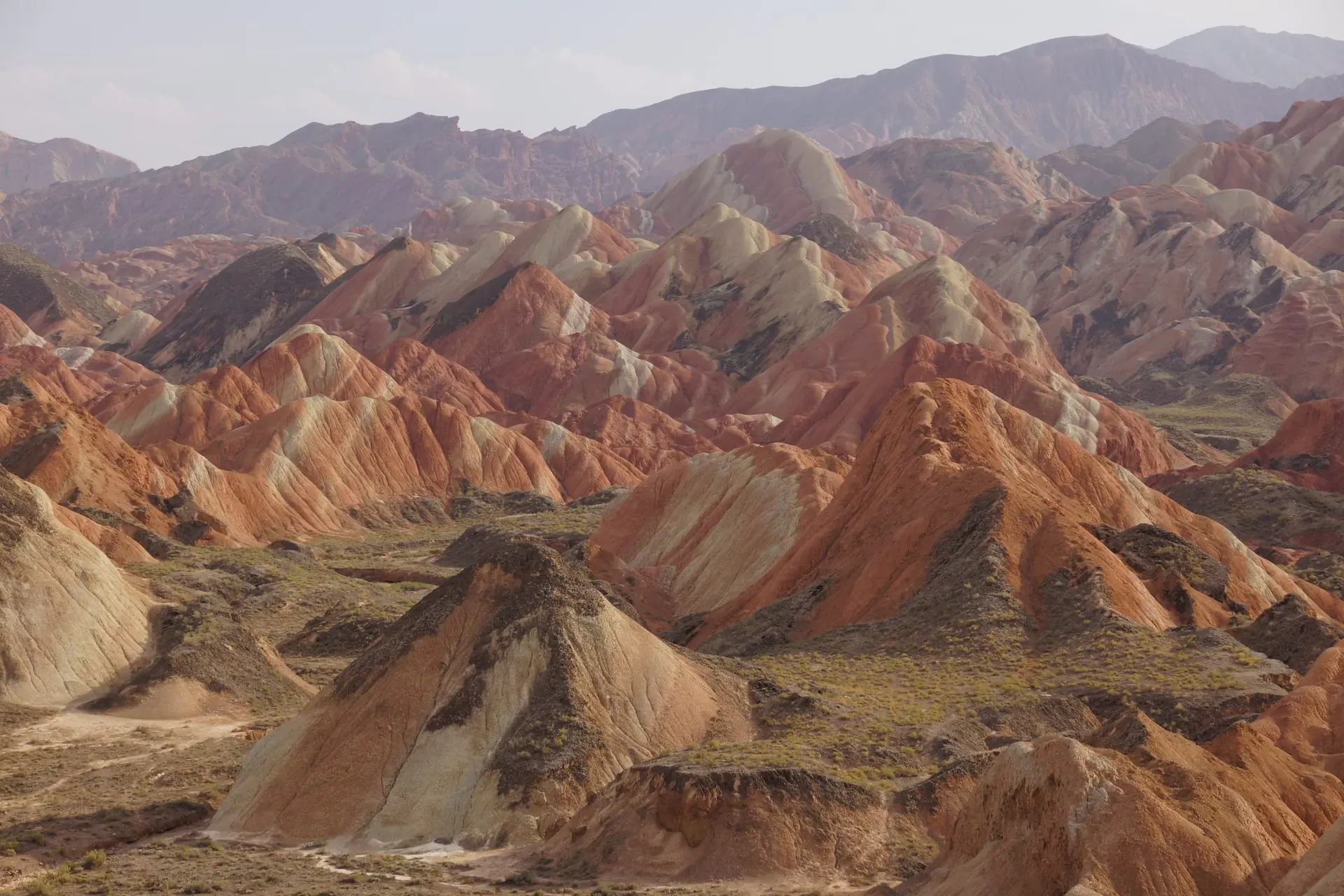
Zhangye Danxia National Geopark (张掖丹霞国家地质公园)
A UNESCO Global Geopark of 510 km², famous for its rainbow-striped hills — layers of red, yellow, green, white, blue, and orange sandstone and mineral deposits folded over 24 million years. Four viewing platforms connected by shuttle bus. Best light is late afternoon when the colors are most saturated. ¥75 (includes shuttle bus). Allow 3-4 hours. The park's colors are real but are enhanced by low-angle sunlight — cloudy days and midday wash them out.
Wikimedia Commons · CC-BY-SA
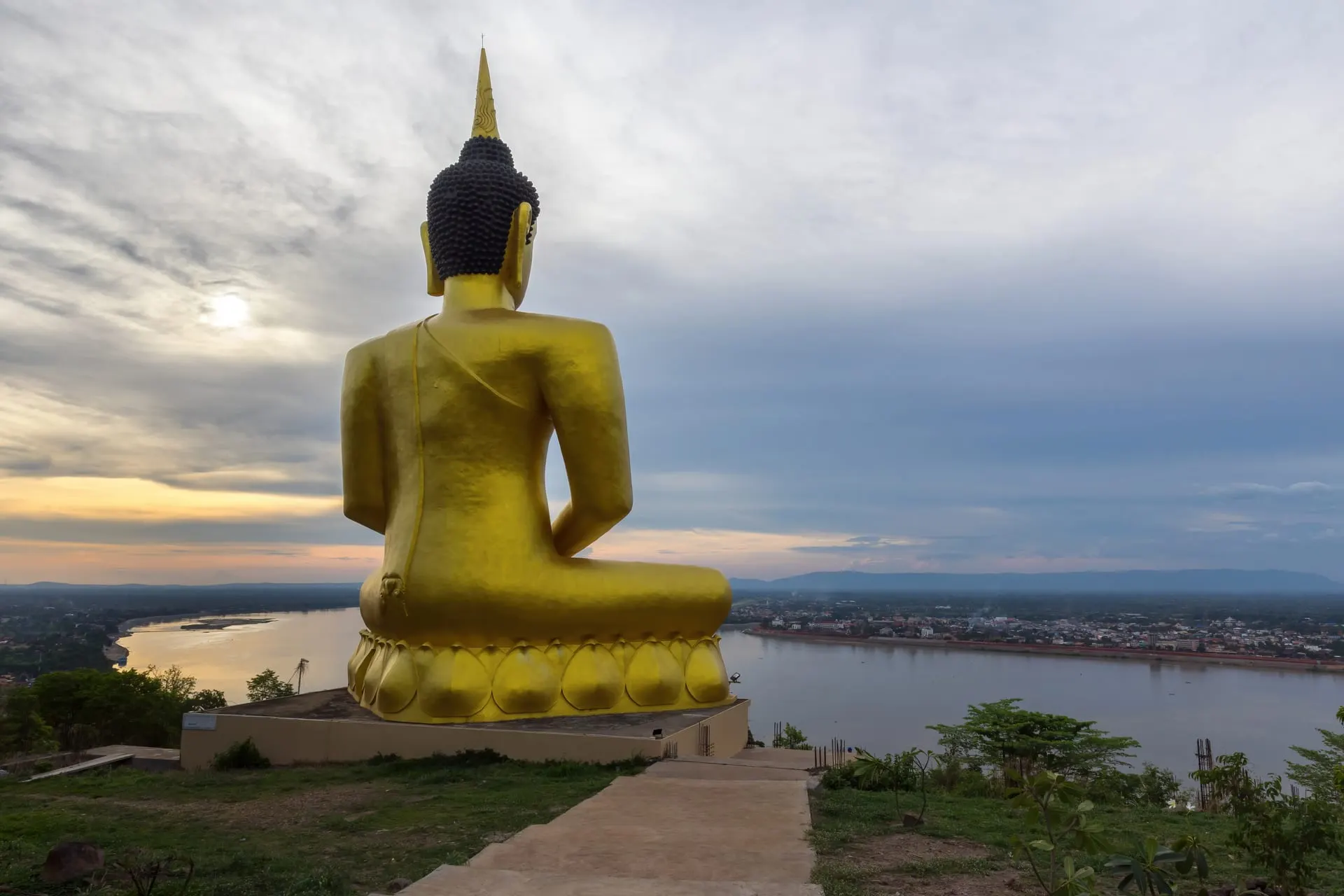
Giant Buddha Temple (大佛寺, Dàfó Sì)
Built in 1098 during the Western Xia dynasty, this temple houses China's largest indoor reclining Buddha — 34.5 meters long, 7.5 meters high, with a serene expression and ten disciples behind him. The temple architecture is Western Xia style with carved wooden beams and Song-dynasty murals. ¥40. In the city center. Allow 1 hour.
Wikimedia Commons · CC-BY-SA
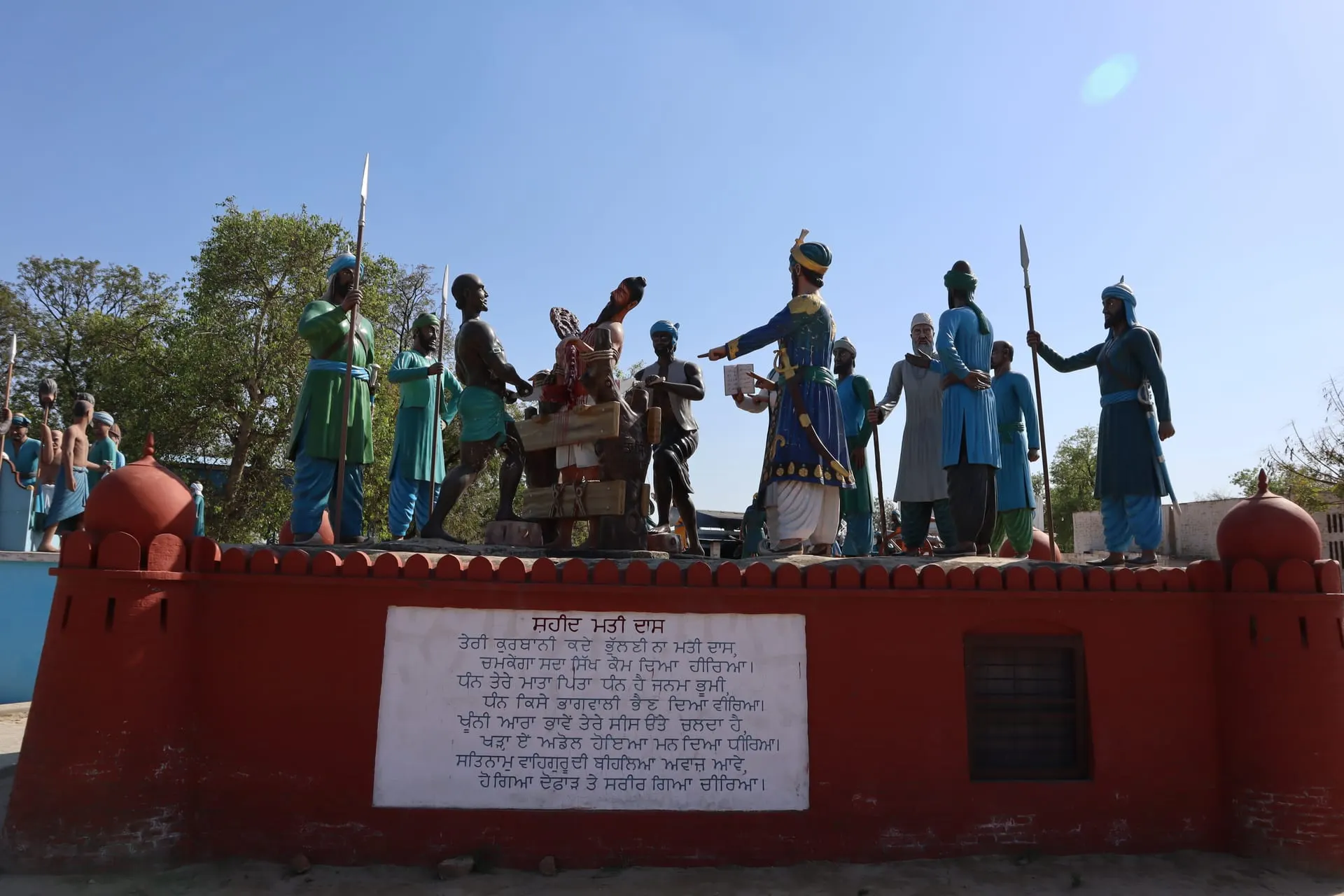
Mati Temple (马蹄寺, Mǎtí Sì)
A complex of cave temples and shrines carved into a sandstone cliff face 65 km south of Zhangye, built by Tibetan Buddhist monks from the 4th century onward. The name means "Horse's Hoof Temple" after a legendary hoofprint left by a divine horse. The highlight is the 33-Heaven Grotto (三十三天石窟) — seven stories of chambers connected by tunnels and ladders inside the cliff. ¥74. Allow 3-4 hours including the drive. The mountain scenery around the temple is spectacular — Qilian peaks, grasslands, and grazing yaks.
Wikimedia Commons · CC-BY-SA

Ping Shan Hu Grand Canyon (平山湖大峡谷, Píng Shān Hú Dà Xiágǔ)
A deep sandstone canyon 56 km north of Zhangye, often compared to Arizona's Antelope Canyon or the Grand Canyon. Red and orange rock walls, narrow slot passages, and dramatic viewpoints. Less crowded than Danxia and arguably more impressive for canyon enthusiasts. ¥130 (includes shuttle). Allow 3-4 hours. Wear hiking shoes — the canyon floor trail involves scrambling.
Wikimedia Commons · CC-BY-SA
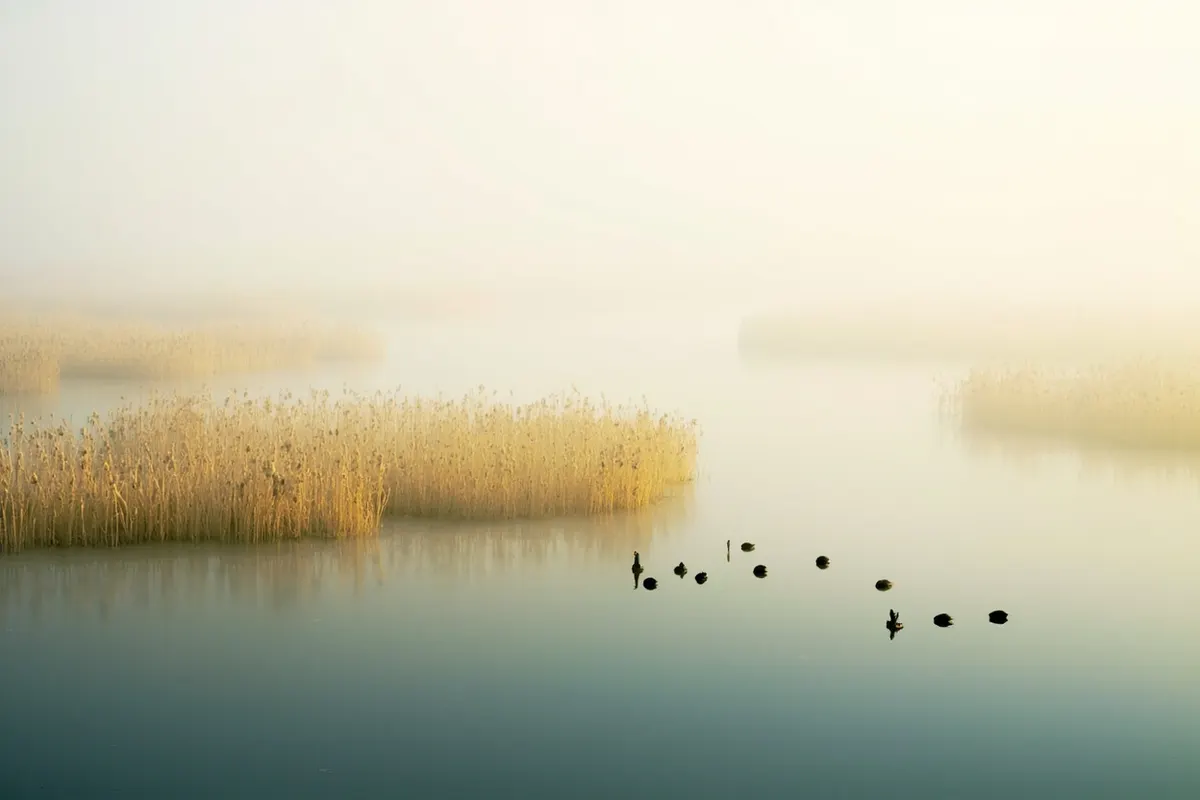
Zhangye National Wetland Park (张掖国家湿地公园)
A 40 km² wetland reserve on the city's northern edge — surprising in the arid Hexi Corridor context. Boardwalks through reed beds, lotus ponds, and bird habitats. Free entry. Good for a relaxed morning walk or birdwatching (black-necked cranes, bar-headed geese). Best in spring and summer when the reeds are green.
Wikimedia Commons · CC-BY-SA
Wooden Pagoda (木塔寺, Mùtǎ Sì)
A nine-story wooden pagoda in the city center, originally built during the Northern Zhou dynasty (557-581) and rebuilt in 1926. At 32.8 meters, it is one of the few surviving wooden pagodas in northwestern China. ¥20. In a small temple complex. Best photographed from the square in front. Allow 30 minutes.
Wikimedia Commons · CC-BY-SA
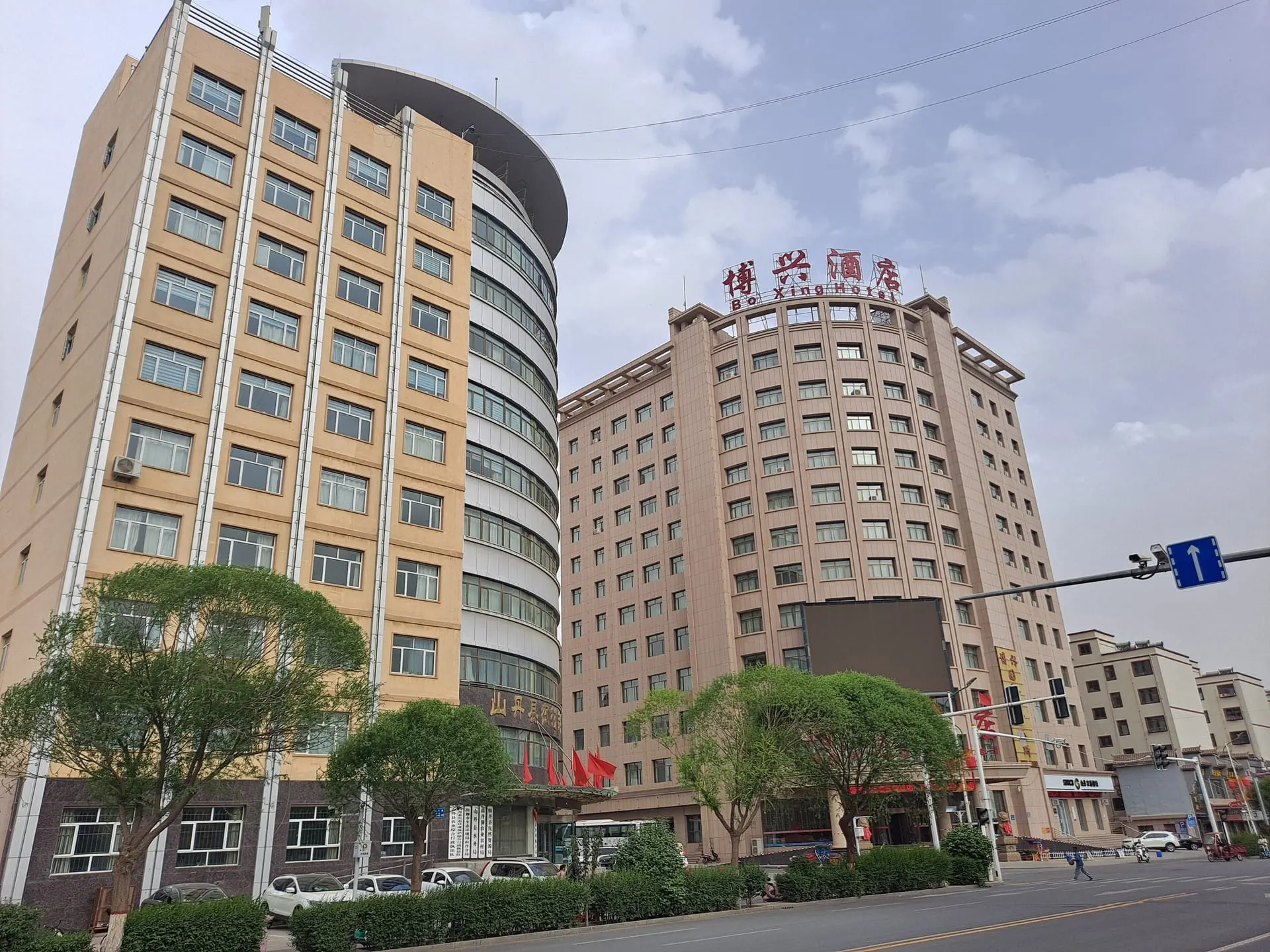
Shandan Horse Farm (山丹军马场, Shāndān Jūnmǎchǎng)
One of the world's oldest horse farms, established in 121 BCE by Han dynasty general Huo Qubing to breed cavalry horses for the Silk Road garrisons. Set in a high-altitude grassland valley (2,800m) between the Qilian Mountains. You can ride horses, watch herds gallop across the steppe, and visit the breeding stables. ¥50. About 100 km southeast of Zhangye — a full-day excursion. Best June-September when the grasslands are green.
Wikimedia Commons · CC-BY-SA
STAY
Where to stay in Zhangye
Pick a base that matches the trip you want — imperial-central for sightseeing, hutong belt for character, Chaoyang for nightlife, or Qianmen for budget.
City Center / Drum Tower (市中心/鼓楼)
Walking distance to Giant Buddha Temple, Wooden Pagoda, restaurants, and night market
#city-centerZhangye West Station Area (张掖西站)
Budget and mid-range chain hotels, convenient for HSR arrivals and departures
#west-stationDanxia Park Area (丹霞景区)
Guesthouses and farm-stays near the park entrance — best for photographers wanting sunrise access
#danxia-areaSouth Gate / Mati Temple Road (南门/马蹄寺路)
Quiet residential area on the road south toward Mati Temple, few hotels but good local restaurants
#south-gate
ITINERARIES
Sample itineraries from Zhangye
Three ready-made routes, from a 1-day imperial sprint to a 5-day deep dive. Copy the day-by-day plan and adapt to your own pace.
- 1 DAY
1-Day Zhangye Highlights
Danxia and the Giant Buddha Temple — the two essential Zhangye experiences in a single efficient day.
- Travelers with one day on a Hexi Corridor transit
- Day 01
Morning
Giant Buddha Temple (¥40, 1h) and Wooden Pagoda (¥20, 30 min). Walk the city center. Early lunch — Lanzhou beef noodles (¥15).
Afternoon
Depart for Danxia Geopark at 13:30. Arrive 14:30. Work through Platforms 1, 2, 3, arriving at Platform 4 by 17:00 for sunset.
Evening
Sunset at Danxia. Return to city by 20:00. Dinner at the night market — try Zhangye rubbed fish noodles.
- 2 DAYS
2-Day Zhangye Complete
Danxia, Giant Buddha Temple, and Mati Temple — the definitive Zhangye experience at a comfortable pace.
- Most travelers — the recommended plan
- Day 01
Morning
Giant Buddha Temple (¥40, 1h). Wooden Pagoda (¥20, 30 min). City center walk and market visit.
Afternoon
Depart for Danxia at 14:00. Arrive 14:50. Platform 1 → 2 → 3 → 4 for sunset. Stay through the color change.
Evening
Sunset at Danxia. Return to city. Dinner — try stir-fried lamb with cumin (¥50).
- Day 02
Morning
Early departure for Mati Temple (¥74, leave 07:30, arrive 09:00). Climb the 33-Heaven Grotto. Explore the base monastery and Thousand Buddha Caves.
Afternoon
Return to city by 13:00. Lunch. Zhangye National Wetland Park for a relaxed walk (free). Afternoon HSR to Jiayuguan (1.5h) or stay second night.
Evening
If staying: night market dinner. If departing: HSR to next destination.
- 2 DAYS
2-Day Zhangye Adventure (Alternative)
Danxia plus Ping Shan Hu Grand Canyon — the landscape-focused version for hikers and photographers.
- Outdoor enthusiasts and photographers
- Day 01
Morning
Giant Buddha Temple (¥40, 1h). Early lunch.
Afternoon
Danxia Geopark — arrive 14:00, Platforms 1-4, sunset at Platform 4.
Evening
Return to city. Dinner.
- Day 02
Morning
Ping Shan Hu Grand Canyon (¥130, leave 07:30, arrive 08:30). Rim viewpoints, then hike into the canyon floor. Allow 3-4 hours.
Afternoon
Return to city by 13:00. Lunch. Optional: Wooden Pagoda and city center walk. Afternoon departure or stay second night.
Evening
If staying: explore the night market. If departing: HSR to next destination.
BUDGET
What a Zhangye trip costs
Per-person, per-day costs across three spending tiers. Excludes international flights and visa fees.
| Line item | Backpacker | Mid-range | Luxury |
|---|---|---|---|
| Backpacker (per day) | $120 | $0 | $0 |
| Mid-range (per day) | $0 | $325 | $0 |
| Luxury (per day) | $0 | $0 | $650 |
| Total per day | $120 | $325 | $650 |
$ USD per person per day, before international flights and visas. Last verified: Q3 2026.
STAY SAFE
Emergency contacts in Zhangye
Save these three numbers before you board the plane. China uses different hotlines than most countries — there's no 911.
- POLICE
110
- AMBULANCE
120
- FIRE
119
- TOURIST HOTLINE
0936-12301
- ENGLISH-SPEAKING ER
Zhangye People's Hospital (张掖市人民医院), 0936-8215484 — limited English, medical evacuation to Lanzhou for serious cases
Problems travelers hit in Zhangye
- Why is my Alipay not working?You linked a foreign Visa or Mastercard to Alipay but every transaction is rejected at the merchant.
- My China visa was denied — what now?Your L visa application was refused at the Chinese consulate and your trip is in 2–4 weeks.
- My passport was lost or stolen in China — what do I do?Your passport is gone (theft or loss) and you're in mainland China without travel documents.
- Why can't I book on 12306 with my foreign card?You tried to book a high-speed rail ticket on 12306.cn and your foreign Visa/Mastercard is rejected at checkout.
- Why is my VPN not working in China?You arrived in China, opened your VPN, and it will not connect at all or connects but no traffic loads.
- Why can't I book a Tibet trip on my own?You try to book Lhasa flights and hotels yourself but the booking fails, or you're turned away at the Lhasa airport without a permit.
Book activities in Zhangye
These are licensed tour operators and booking platforms we've vetted independently. Booking through these links may earn us a commission — see our affiliate disclosure. This never affects our editorial recommendations or the price you pay.
Frequently asked questions
Are the Zhangye Danxia colors real or photoshopped?
When is the best time to photograph the Danxia landforms?
How many days do I need in Zhangye?
Is the Giant Buddha Temple worth visiting?
What is the best way to get to the Danxia park from Zhangye city?
Can I visit Mati Temple and Danxia in one day?
Show all 21 FAQs
How does Zhangye compare to Jiayuguan and Dunhuang?
Is Zhangye suitable for children?
What is the single best experience in Zhangye?
Can I use a drone at the Danxia Geopark?
What should I wear for the Danxia park?
Is Zhangye on the way to Dunhuang?
Do I need to book Danxia tickets in advance?
What does the name Zhangye mean and why was the city named that?
Is the Mati Temple 33-Heaven Grotto climb worth the effort?
How long does the Silk Road trip from Zhangye to Dunhuang take?
What is the best lens for Danxia photography?
Can I do a day trip to Mati Temple from Zhangye city?
What is the difference between Danxia and Ping Shan Hu Grand Canyon?
Is Zhangye safe for foreign tourists traveling solo?
When is the Danxia park least crowded?
References

Related guides & destinations
Guide
How We Research 2026: NihaoVisit’s Methodology for China Travel Information
How NihaoVisit sources, verifies, and maintains 700+ pages of China travel information — our source hierarchy, fact-checking process, update
Guide
Fact-Checking Log 2026: Verified China Travel Information — NihaoVisit
A public log of fact-checking verification passes on NihaoVisit, showing what was verified, when, and against which sources — covering visa
Guide
Best Time to Visit China 2026: Month-by-Month Weather, Crowds, and Prices
The best time to visit most of China is April–May and September–October. Winter (Dec–Feb) is cold but cheap; summer (Jun–Aug) is hot and cro
Guide
VPN for China 2026: Which VPNs Work, eSIM Alternatives, and the Complete Pre-Trip Checklist
Most Western apps and websites are blocked in mainland China. A reliable VPN is essential for Google, Gmail, WhatsApp, Instagram, and most n
Guide
China SIM Card and eSIM Guide 2026: Stay Connected Without WeChat
A Chinese SIM or eSIM lets you use mobile data, maps, and ride-hailing without WiFi. Here is how to get one, the cost, and which provider to
Guide
Solo Female Travel in China 2026: Safety, Tips, and Real Experiences
China is one of the safer destinations for solo female travelers. Petty theft is rare, violent crime against tourists is extremely uncommon,