Zhengzhou
Zhengzhou (郑州, Zhèngzhōu) is the capital of Henan province and the most connected high-speed rail city in China — the north-south Beijing-Guangzhou line and the east-west Xi\'an-Lianyungang line cross here, putting 200+ cities within half a day\'s train ride. It was a Shang dynasty capital 3,600 years ago, and the Henan Museum (河南博物院) holds one of China\'s three best provincial collections, including a 9,000-year-old bone flute that is the oldest playable instrument on earth. The Shaolin Temple (少林寺, Shàolín Sì), birthplace of Chan Buddhism and kung fu, sits 90 km southwest. Most travelers use Zhengzhou as a transit hub and spend a single night. They are wrong — the museum alone deserves a full day, the food is distinct and characterful, and the city\'s raw, under-construction energy is a window into how the other half of urban China lives. Two days is right for the city core; add a third for the Shaolin Temple day trip. Zhengzhou also works as a base for Henan province travel, with the Shaolin Temple 1.5 hours west, the Longmen Grottoes in Luoyang 2 hours west, and the Song-dynasty capital of Kaifeng just 20 minutes by HSR — the three together are a tight 4-5 day Henan cultural loop. Zhengzhou also rewards a slow evening walk along the Erqi Memorial Tower and the surrounding commercial streets, where the food stalls serve Shanxi-style knife-cut noodles, kaifeng-style steamed dumplings, and Henan-style hui mian, and the pedestrian life is the real heart of the city — not the rail network that brings you here in the first place.
Why Zhengzhou in 2026.
China's most connected HSR hub and the ancient Shang dynasty capital. The Henan Museum, Shaolin Temple, and a bowl of huìmiàn noodles that defines the city. Best April to May and September to October for the mild weather and clear skies; summers are hot and humid, winters are cold and dry. Allow 2 to 3 days for the city sights and a day trip to Shaolin or Kaifeng. Budget 200 to 400 yuan per day for mid-range comfort including a comfortable hotel and two good meals. Direct flights from Beijing, Shanghai, and most major Chinese cities land at Xinzheng International Airport, and HSR connects Zhengzhou to Beijing, Shanghai, Xi'an, and Wuhan in 2 to 4 hours.
Quick Answer
Zhengzhou (郑州, Zhèngzhōu) is the capital of Henan province and the most connected high-speed rail city in China — the north-south Beijing-Guangzhou line and the east-west Xi\'an-Lianyungang line cross here, putting 200+ cities within half a day\'s train ride. It was a Shang dynasty capital 3,600 years ago, and the Henan Museum (河南博物院) holds one of China\'s three best provincial collections, including a 9,000-year-old bone flute that is the oldest playable instrument on earth. The Shaolin Temple (少林寺, Shàolín Sì), birthplace of Chan Buddhism and kung fu, sits 90 km southwest. Most travelers use Zhengzhou as a transit hub and spend a single night. They are wrong — the museum alone deserves a full day, the food is distinct and characterful, and the city\'s raw, under-construction energy is a window into how the other half of urban China lives. Two days is right for the city core; add a third for the Shaolin Temple day trip. Zhengzhou also works as a base for Henan province travel, with the Shaolin Temple 1.5 hours west, the Longmen Grottoes in Luoyang 2 hours west, and the Song-dynasty capital of Kaifeng just 20 minutes by HSR — the three together are a tight 4-5 day Henan cultural loop. Zhengzhou also rewards a slow evening walk along the Erqi Memorial Tower and the surrounding commercial streets, where the food stalls serve Shanxi-style knife-cut noodles, kaifeng-style steamed dumplings, and Henan-style hui mian, and the pedestrian life is the real heart of the city — not the rail network that brings you here in the first place.
| Worth visiting | Yes, especially if you are already changing trains here. The Henan Museum is world-class and the food is the best reason to leave the station. |
|---|---|
| Recommended days | 1-2 days for the city; add 1 day for Shaolin Temple |
| Best time to visit | April-May and September-October (avoid July-August — 35-39°C and humid) |
| Daily budget | $35 (backpacker) / $90 (mid-range) / $220+ (luxury) |
| Family friendly | Moderate — the museum and Shaolin Temple are excellent for kids; the city itself is a concrete megacity with heavy traffic |
| Solo friendly | Yes — the metro is modern, DiDi works well, and the museum and food streets are easy solo experiences |
| Airport | Zhengzhou Xinzheng International Airport (CGO) — Metro Chengjiao Line connects to the city center (¥7-9, 60 min) |
| High-speed rail | Yes — China's most connected HSR hub: Beijing (2.5h), Xi'an (2h), Wuhan (2h), Shanghai (4h), Changsha (3h) |
| Language | Mandarin with Henan dialect (中原官话); English is rare outside hotels and the museum |
| Currency | CNY (¥) — Alipay and WeChat Pay accept foreign Visa/Mastercard |
| Time zone | China Standard Time (UTC+8) |
| Last updated | 2026-06-18 |
Want a Zhengzhou plan built for you?
Jump to:
Henan Museum·Shaolin Temple·Food & Dining·Getting Around·Where to Stay·Day Trips·Itineraries·Tips & Warnings·Emergency Contacts·FAQ·HSR Hub Explained·Songshan Mountain Range·Henan Cuisine in Depth
Why visit Zhengzhou? Is it worth more than a transit stop?
Zhengzhou is not a beautiful city. It is not atmospheric. It does not try to charm you. It is a 12-million-person industrial and transport megalopolis that has been under continuous construction for two decades, and it shows — the skyline is a forest of half-finished towers, the roads are perpetually dug up, and the air on a bad winter day tastes like concrete dust. Most foreign visitors pass through Zhengzhou purely as a rail interchange, spending 45 minutes in the HSR station and never stepping outside. I have done that twice, and both times I regretted it later. The reason to stop is the Henan Museum (河南博物院, Hénán Bówùyuàn), which is one of China's three best provincial museums along with Shaanxi History Museum in Xi'an and Nanjing Museum. It holds 170,000 artifacts and several of them are genuinely world-historical: the Jiahu bone flute (贾湖骨笛, Jiǎhú gǔdí), carved from a crane wing bone around 7,000 BC and still playable — the oldest musical instrument ever found; the Shang-dynasty bronze ritual vessels from the Zhengzhou Shang city site, massive and intricately cast; Tang-dynasty sancai (三彩) glazed tomb figures in luminous green, amber, and cream; and Song-dynasty Ru and Jun porcelain so fine it looks like frozen jade. The museum is free with a reservation and deserves four hours minimum. The second reason is the food. Henan cuisine does not get the publicity of Sichuan or Cantonese, but it is the ur-cuisine of the Central Plains (中原, Zhōngyuán) — wheat-based, hearty, shaped by the Yellow River and 4,000 years of agricultural civilization. Zhengzhou's defining dish is huìmiàn (烩面), wide hand-pulled noodles braised in a milky lamb broth with wood-ear fungus, tofu skin, and quail eggs. It costs ¥15-25 a bowl and is the best bowl of noodles I have eaten north of the Yangtze. The city's húlàtāng (胡辣汤), a peppery beef-and-tofu soup eaten for breakfast, is Henan's other great contribution to the breakfast canon. The third reason is access. Zhengzhou is the single best base in China for short-hop day trips by HSR. Kaifeng (开封) is 20 minutes away. Luoyang (洛阳), with the Longmen Grottoes — a UNESCO site of 100,000 Buddhist statues — is 40 minutes. The Shaolin Temple is 90 minutes by road. You can see more historically significant sites from a Zhengzhou hotel room in three days than from almost any other Chinese city.
What is the history of Zhengzhou: Shang dynasty capital to modern rail megalopolis?
Zhengzhou is older than almost anywhere in China and it does not look it. The city was the capital of the Shang dynasty around 1,600-1,300 BCE, making it roughly 3,600 years old. The surviving Shang city walls — rammed-earth fortifications up to 10 meters thick and 7 km in circumference — still stand in the eastern part of the modern city, and they are one of the oldest urban archaeological sites in China. The Shang rulers who governed from here produced the bronze ritual vessels (鼎, dǐng) that now fill the Henan Museum, some weighing over 80 kg and decorated with the taotie (饕餮) monster-mask motif that defines early Chinese art. The city declined after the Shang period and spent most of the next 3,000 years as a provincial town. Its transformation into a major city was a 20th-century railway story. In 1906, the Beijing-Hankou railway was completed through Zhengzhou, followed by the Longhai railway (Lianyungang to Lanzhou) in the 1930s, making Zhengzhou the only place in China where the north-south and east-west trunk railways crossed. The city exploded — from roughly 20,000 people in 1900 to 2 million by 1950 to 12 million today. Zhengzhou is, in the most literal sense, a city that the railways built. The 1923 Erqi (February 7) railway workers' strike is the city's other defining historical event. Workers on the Beijing-Hankou line struck for better conditions; the warlord government crushed the strike with mass arrests and executions. The Erqi Memorial Tower (二七纪念塔, Èrqī Jìniàn Tǎ), a distinctive twin pagoda at the city's central intersection, commemorates the strike and is the city's most recognizable landmark. The tower is free to enter and the small museum inside tells the strike story with period photographs and documents — a rare look at early Chinese labor history.
What is the geography and climate of Zhengzhou: the Central Plains and the Yellow River?
Zhengzhou sits on the southern bank of the Yellow River (黄河, Huáng Hé) in the heart of the Central Plains (中原, Zhōngyuán). This flat, fertile alluvial floodplain has been the geographic core of Chinese civilization for 5,000 years. The terrain is almost entirely flat — the city's elevation ranges from 80 to 110 meters above sea level — with the Mangshan hills rising to about 200 meters northwest of the city, providing the only relief and the best Yellow River viewpoints. The Yellow River is the defining geographic fact. It flows about 30 km north of the city center, and the riverbed here has risen so high from centuries of silt deposition that the river literally flows above the surrounding land — a "hanging river" (地上河, dìshàng hé) contained behind raised levees. At the Yellow River Scenic Area, you can stand on the embankment and see the river surface visibly higher than the fields below. This is the geological reason the Yellow River has been China's most destructive force across history, flooding the Central Plains hundreds of times and killing millions. Climate is continental and extremes are the rule. Summer (June-August) brings daytime highs of 35-39 °C with humidity that makes the heat oppressive — the city is not listed among the "Four Furnaces" but feels like it belongs. Winter (December-February) drops to -5 to 5 °C, dry and cold with persistent grey skies. Spring (March-May) and autumn (September-October) are the only comfortable windows. April is windy and can bring dust storms from the northwest. October is the consensus best month: 15-23 °C, dry, clear skies, and the osmanthus trees in the university district are in bloom. The honest assessment: Zhengzhou's weather is not good. The summers are brutal, the winters are dreary, and the comfortable windows are short. If weather matters to your trip, pick your dates carefully. If you are coming for the museum and the food and will be indoors most of the time, the season matters less.
How to get to Zhengzhou: flights, China's best HSR hub, and the metro link
Zhengzhou is the most connected HSR city in China. Zhengzhou East Station (郑州东站, Zhèngzhōu Dōng Zhàn) and Zhengzhou Station (郑州站) together handle over 500 high-speed trains daily on the country's two busiest corridors: the north-south Beijing-Guangzhou line and the east-west Lianyungang-Xi'an-Lanzhou line. This means direct trains to Beijing (2.5 hours, ¥245-370 second class as of June 2026), Xi'an (2 hours, ¥150-230), Wuhan (2 hours, ¥145-210), Shanghai (4 hours, ¥340-485), Changsha (3 hours, ¥195-280), Luoyang (40 minutes, ¥40-65), and Kaifeng (20 minutes, ¥18-30). The station names matter: most long-distance high-speed trains use Zhengzhou East, while Zhengzhou Station handles conventional trains and some HSR. They are 10 km apart, connected by Metro Line 1. Zhengzhou Xinzheng International Airport (CGO) is 37 km southeast of the city center. It handles domestic flights to every major Chinese city plus international connections to Seoul, Bangkok, Singapore, and Tokyo. The Chengjiao Metro Line (城郊线) connects the airport to the city center (¥7-9, about 60 minutes to Erqi Square). A taxi or DiDi from the airport costs ¥100-140 and takes 45-60 minutes. The transit setup is so efficient that Zhengzhou is often the cheapest airport to fly into for a Henan trip — flights here tend to be 20-30% cheaper than Xi'an or Beijing for domestic routes, and the HSR connections let you reach Xi'an, Wuhan, or Beijing within 2-3 hours of landing. If you are doing a multi-city China trip, pricing a flight into Zhengzhou and out of another city is worth the calculator time.
How to get around Zhengzhou: metro, DiDi, and the traffic problem
Zhengzhou's metro is modern and expanding fast. As of June 2026, eight lines cover the core city, with full English signage and announcements. Fares are ¥2-8 depending on distance. The most useful lines: Line 1 (east-west: Zhengzhou East Station, Erqi Square, Zhengzhou Station), Line 2 (north-south through the city center), and the Chengjiao Line to the airport. Metro runs roughly 06:00-23:00. Pay with Alipay's transport QR code or buy tickets from the English-language machines. DiDi is the better option for anything the metro does not reach directly. A ride within the city core costs ¥12-25; Zhengzhou East Station to the Henan Museum is about ¥20-30. The app accepts foreign phone numbers and cards — set it up before arriving. Metered taxis start at ¥8 for the first 2 km, then ¥1.5 per additional km. Always have your destination written in Chinese characters. The traffic is the problem. Zhengzhou has been under construction for two decades, and the constant roadwork, metro expansion, and new high-rise projects mean that journeys that look short on a map can take 45 minutes. The metro is the most reliable option for cross-city travel. DiDi is good for short hops. Driving yourself is not advisable — the road network changes constantly, lane markings are suggestions, and the construction chaos is genuinely overwhelming. Leave extra time for any road journey. When I visited, a 4-km DiDi ride from the museum to Erqi Square took 35 minutes on a Tuesday afternoon because three separate intersections were being rebuilt simultaneously. Buses are ¥1-2 but Chinese-only in signage and announcements. Meituan (yellow) and Hello (blue) shared bikes are everywhere at ¥1.5 per 30 minutes. The area around Zhengdong New District has dedicated bike lanes and is the most pleasant cycling in the city. Zhengzhou is a large, spread-out metropolis — do not plan to walk between distant sights. The metro and DiDi are essential.
What are the top attractions in Zhengzhou, ranked and in detail?
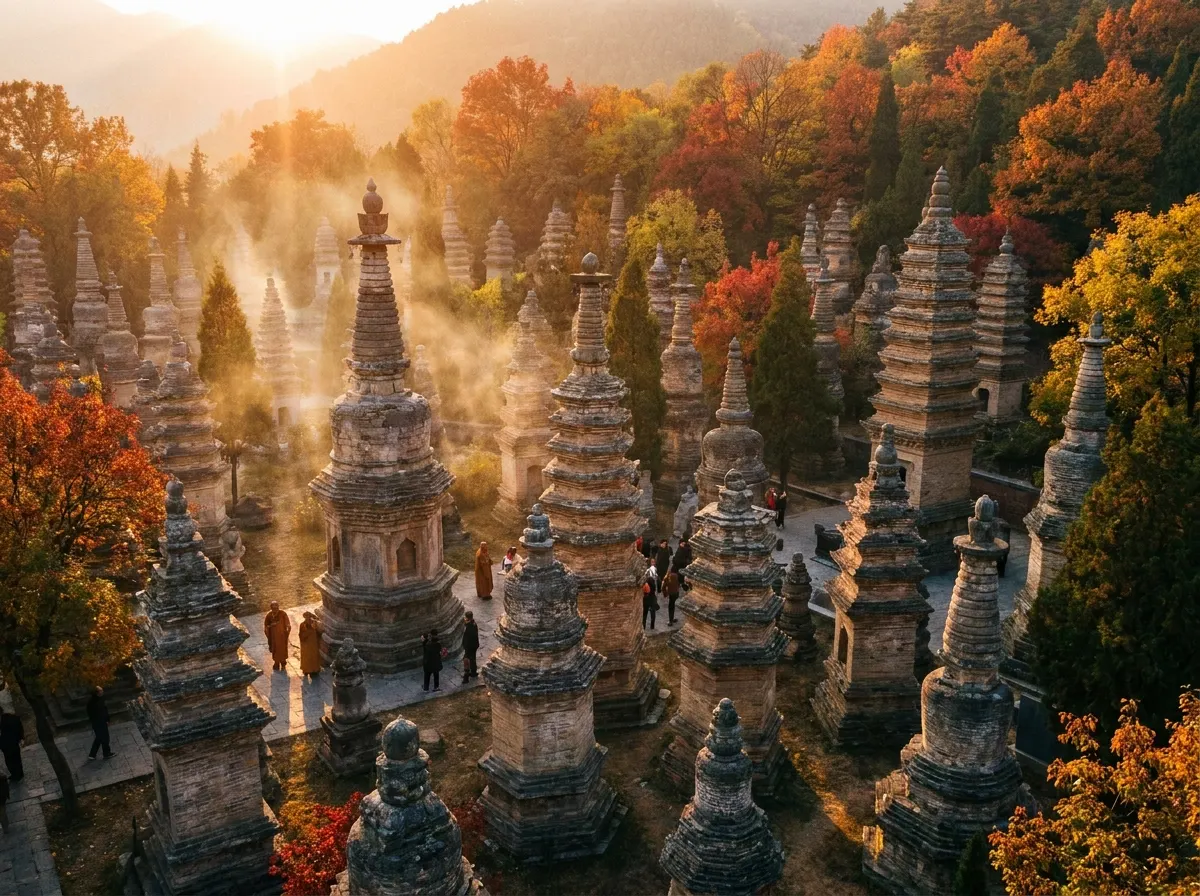
1. Henan Museum (河南博物院, Hénán Bówùyuàn). Free, reservation required via the official WeChat mini-program. This is one of China's three great provincial museums and the single best reason to stop in Zhengzhou. The collection spans 8,000 years of Central Plains civilization across 16 exhibition halls, and the hit rate — the number of genuinely world-class objects per room — is extraordinarily high. The Jiahu bone flute (贾湖骨笛), carved from a red-crowned crane's wing bone around 7,000-5,700 BC, is the oldest playable musical instrument on Earth — the museum plays a recording of it in the gallery and the sound is thin, reedy, and impossibly ancient. The Shang bronze gallery holds the Duling square ding (杜岭方鼎), a 64-kg ritual food vessel from 1,300 BC that is one of the largest Shang bronzes ever found. The Tang sancai gallery has the famous camel-and-musician figures in green, amber, and cream glaze. The Song porcelain galleries show Ru (汝) and Jun (钧) wares that rank among the most refined ceramics ever produced anywhere. Allow 3-4 hours. The English audio guide (¥20) is essential — labels are primarily Chinese. The museum is free but requires a reservation booked at least 1-2 days ahead through the "河南博物院" WeChat mini-program. Closed on Mondays. Metro Line 2 to Guanhutun station, then a 10-minute walk. 2. Shaolin Temple (少林寺, Shàolín Sì). ¥100 as of June 2026. Located 90 km southwest of Zhengzhou in the Songshan mountains near Dengfeng city, the Shaolin Temple is the birthplace of Chan (Zen) Buddhism and the legendary home of Shaolin kung fu. The complex has three main parts. The temple itself: the Mountain Gate (山门, Shānmén), the Hall of Heavenly Kings, the Mahavira Hall (大雄宝殿, Dàxióng Bǎodiàn), and the Thousand Buddha Hall (千佛殿, Qiānfó Diàn) where the stone floor is dented with decades of monks' foot-stomping kung fu practice. The Pagoda Forest (塔林, Tǎlín): 240+ stone pagodas from the Tang through Qing dynasties, the largest collection of stupa tombs in China, housing the ashes of successive abbots. The kung fu performance: a 30-minute outdoor show (included with entry, multiple times daily) featuring monks breaking iron bars over their heads, spearing throats, and performing the animal-style forms that made Shaolin famous worldwide. It is spectacular and completely unironic about its own theatricality. The temple gets very crowded from 10:00 AM onward. Arrive at opening (08:00) or go on a weekday. The commercial strip outside the temple gate is aggressively touristy — walk through fast. A round-trip from Zhengzhou by car or tour bus takes a full day (2 hours each way plus 4-5 hours at the site). 3. Yellow River Scenic Area (黄河风景名胜区, Huáng Hé Fēngjǐng Míngshèng Qū). ¥48 as of June 2026. About 30 km north of the city, this park sits on the Mangshan hills overlooking the Yellow River. The key features: the colossal statues of Yandi (炎帝) and Huangdi (黄帝), the two mythical founding emperors of Chinese civilization, carved into the hillside; the raised levee viewing platform where you can see the "hanging river" effect — the water level visibly above the surrounding farmland; and the long river-view promenade with the broad, silt-brown river stretching to the northern horizon. The park is large and requires walking or the tourist tram (¥20). It is most atmospheric on a clear autumn day; in summer it is hot and hazy. Allow 2-3 hours. Reach by tourist bus from the Zhengzhou North Bus Station (¥15, 1 hour) or by DiDi (¥60-80, 45 minutes). 4. Erqi Memorial Tower (二七纪念塔, Èrqī Jìniàn Tǎ). Free. A 63-meter twin pagoda at the central intersection of the city, built in 1971 to commemorate the 1923 railway workers' strike. The tower is Zhengzhou's defining landmark — everyone in Henan knows it — and the small museum inside covers the strike history with period photographs, documents, and an English-language summary. The top-floor viewing platform gives a 360-degree panorama of the city center: the old commercial district, the new towers, the perpetual construction. Allow 45 minutes. The tower is lit up at night in shifting colors and is at its most photogenic then. Metro Line 1 to Erqi Square. 5. Shang Dynasty Ruins (郑州商城遗址, Zhèngzhōu Shāng Chéng Yízhǐ). Free. The 3,600-year-old rammed-earth walls of the Shang dynasty capital run for roughly 7 km in the eastern part of the modern city, and surviving sections rise up to 6 meters tall in places. The site is open-air and free to walk, with interpretive signs (Chinese-only) explaining the wall construction and the Shang-period city layout. The best section is at the Shangcheng Road park (商城路) in the Guancheng district, where a landscaped path runs along the wall. It is a walk, not a museum — there are no artifacts in situ — but standing on a 3,600-year-old city wall in the middle of a modern Chinese megacity is a particular kind of historical vertigo that the museum cannot deliver. Allow 45 minutes to 1 hour. Combine with the Henan Museum for a Shang-themed morning. 6. Zhengdong New District (郑东新区, Zhèngdōng Xīnqū). Free. The planned business district east of the old city, centered on Ruyi Lake (如意湖, Rúyì Hú) — a giant circular artificial lake ringed by office towers, the Henan Art Center (河南艺术中心, a cluster of five golden egg-shaped buildings), and the Zhengzhou International Convention Center. It is most impressive at night, when the towers around the lake light up in coordinated displays and the circular pedestrian walkway fills with families and evening strollers. The architecture is ambitious and corporate, not beautiful, but it shows you the Zhengzhou the city government wants to present — the planned, ordered, modern capital — rather than the construction chaos of the old city. Metro Line 1 to Convention and Exhibition Center. 7. Zhengzhou Confucius Temple (郑州文庙, Zhèngzhōu Wénmiào). Free. A restored Ming-dynasty Confucian temple in the eastern part of the old city, with carved stone dragon pillars, a series of quiet courtyards, and a main hall with a large Confucius statue. The temple is calm, uncrowded, and a genuine pocket of stillness in a loud city. The annual Confucius Birthday ceremony (September 28) is the busiest day. Allow 30-45 minutes. Pair with the Shang city wall section 500 meters northwest. 8. The food neighborhood around Erqi Square. The blocks radiating from Erqi Tower are Zhengzhou's de facto food district — huìmiàn noodle shops, húlàtāng breakfast joints, grilled-skewer lanes, and Henan snack stalls. The best noodle shops are on the side streets east of Erqi Square, not on the main commercial strip. See the food section below for specifics. The area wakes up for breakfast around 06:30 and runs late with barbecue and beer until midnight. Free to walk; budget ¥30-60 for a full meal crawl.
Where to stay in Zhengzhou: neighborhoods and typical prices
Erqi Square (二七广场) and the area within a 2-km radius is the best base for first-time visitors. This is the commercial center, at the intersection of Metro Lines 1 and 3, with walking access to the tower, the main food streets, and the Zhengzhou Railway Station. Mid-range hotels (Ji Hotel, Atour, Hanting) run ¥200-350 per night. The area is the most walkable and food-accessible part of the city and the best choice for a 1-2 night stop. Zhengdong New District (郑东新区) holds the city's luxury and business hotels. The JW Marriott Zhengzhou (¥800-1,200 per night) and the Le Meridien (¥600-900) both have lake-view rooms and are the top choices for comfort-focused travelers. The area is modern and quiet but removed from the old city's food and atmosphere — you will need DiDi for everything. The Zhengzhou East Station area has a dense cluster of mid-range and budget chain hotels (¥150-300) convenient for late arrivals or early HSR departures. Functional, charmless, efficient — similar to train-station hotel zones worldwide. Fine for one night. For backpackers, hostels near Erqi Square and the university district offer dorm beds from ¥50-80. The Zhengzhou Zhongyuan International Youth Hostel near Zhengzhou University is the most established option. Budget travelers should note that Zhengzhou's cheapest hotels (below ¥120/night) frequently refuse foreign guests because the PSB registration process is unfamiliar to them. Book through Trip.com and filter for "accepts foreign guests" to avoid this.
What to eat in Zhengzhou: huìmiàn, húlàtāng, and the food of the Central Plains
Henan cuisine (豫菜, Yù cài) is the foundational cooking of the Central Plains — wheat-based, meat-and-starch-heavy, balanced rather than spicy, shaped by 4,000 years of farming on the Yellow River floodplain. It lacks the heat of Hunan, the delicacy of Cantonese, and the numbing complexity of Sichuan, and for that reason it gets far less attention than it deserves. The food is savory, satisfying, and built around wheat in all its forms: noodles, flatbreads, dumplings, steamed buns, and fried dough. The dish that defines Zhengzhou is huìmiàn (烩面). These are wide, hand-pulled wheat noodles, roughly the width of fettuccine, braised in a milky white lamb-bone broth with wood-ear fungus (木耳, mù'ěr), tofu skin (豆腐皮, dòufu pí), vermicelli, quail eggs, and sliced lamb. The broth is the point — simmered for hours, rich and slightly gelatinous, absorbing the sweet lamb and the earthy fungus. A bowl costs ¥15-25 as of June 2026 and is a complete meal. The best-known shop is Xiao Ji San Xian Huimian (萧记三鲜烩面), a Zhengzhou institution with multiple branches near Erqi Square. He Ji (合记) is the other major name, also excellent. The broth quality varies — Xiao Ji is more consistent — and the best bowls come from shops where the broth pot has been running since 6 AM. A word of warning: the portion is enormous. One bowl feeds a hungry adult for four hours. Húlàtāng (胡辣汤) is Henan's defining breakfast. The name means "pepper-spicy soup" and the dish is exactly that: a thick, brown, aggressively peppery beef broth loaded with gluten chunks (面筋, miànjīn), tofu skin, wood-ear fungus, vermiculite noodles, and shredded beef, with a vinegar hit at the end. It is dark, sludgy-looking, and absolutely delicious — warming, pungent, and unlike anything in Western breakfast cuisine. A bowl costs ¥8-12. The canonical shop is Fang Zhongshan Hulatang (方中山胡辣汤), a Henan-wide chain whose Zhengzhou flagship draws queues from 06:00. Eat it with a youtiao (油条, fried dough stick, ¥2) or a sesame flatbread (烧饼, shāobǐng, ¥3-5). Húlàtāng is an acquired taste — the pepper heat and the viscous texture are surprising on first encounter — but by the third mouthful, most people are converts. I was not; it took me two bowls across two mornings to understand it. Now I miss it. Other essential Zhengzhou foods: Guantang bao (灌汤包), Kaifeng-style soup dumplings that are available in Zhengzhou because Kaifeng is 20 minutes away and the two cities share a food culture — thin-skinned pork dumplings with scalding-hot broth inside, ¥25-35 for a basket; boiled Yellow River carp (红烧黄河鲤鱼, hóngshāo huánghé lǐyú), a sweet-savory braised whole carp from the Yellow River in soy sauce, ginger, and spring onion, ¥68-120; and grilled lamb skewers (羊肉串, yángròu chuàn), the universal Henan night-market food, sold from smoke-belching charcoal grills for ¥3-5 per stick on streets east of Erqi Square. For vegetarians, Henan food is marginally easier than Hunan because the cooking fat is less ubiquitously pork-based. Huìmiàn can be made with vegetable broth at Buddhist vegetarian restaurants (素菜馆, sùcài guǎn) — the Shaolin Temple has its own vegetarian restaurant that serves a famous monk's noodle bowl. The phrase "wǒ chī sù" (我吃素) and a printed vegetarian card are still essential. The university district has the most vegetarian options.
What are good 1-day, 2-day, and transit-stop itineraries for Zhengzhou?
One-day sprint (the museum-focused transit stop): Start at the Henan Museum at 09:00 (booked 2-3 days ahead). Spend 3-4 hours — focus on the Jiahu bone flute (Gallery 1), the Shang bronzes (Gallery 3), and the Tang sancai and Song porcelain galleries (upstairs). Lunch: Xiao Ji San Xian Huimian near the museum or in the Erqi area (¥15-25). Afternoon: walk the Shang city wall section at Shangcheng Road park (30 minutes), then visit the Erqi Memorial Tower (45 minutes) for the city view. Late afternoon: Zhengdong New District for the lake walk and the modern skyline. Dinner: food crawl around Erqi Square — huìmiàn if you did not have it for lunch, grilled lamb skewers, and a local beer. This is a packed day and you will be tired. It is the minimum effective dose. Two-day plan: Day 1 as above, with a more relaxed pace — add the Confucius Temple and more time in the food streets. Day 2: full-day Shaolin Temple trip, departing by 07:00, returning by 17:00. Evening: a second food crawl or a walk around Ruyi Lake lit up. Transit stop (2-4 hours between trains): Zhengzhou East Station has luggage storage (¥10-20 per bag as of June 2026). Take Metro Line 1 to Erqi Square (15 minutes). Walk the food streets. Eat huìmiàn. Photograph the Erqi Tower. Return to the station. Time needed: 2.5-3 hours minimum. This is the single best use of a short Zhengzhou transit window.
What day trips can I take from Zhengzhou: Kaifeng, Luoyang, and the Shaolin Temple?
Zhengzhou is the best base in central China for short-hop day trips, and the HSR network makes three historically significant destinations reachable as day outings. Kaifeng (开封, Kāifēng): 20 minutes by HSR from Zhengzhou East (¥18-30, 50+ trains daily). The Northern Song dynasty capital (960-1127 AD) and one of the largest cities in the medieval world. Key sights: Millennium City Park (清明上河园, ¥120), a Song-dynasty theme park with 50+ daily historical performances; the Iron Pagoda (铁塔, ¥40), a 56-meter glazed-brick tower from 1049 AD; and the Gulou Night Market (鼓楼夜市), one of the oldest continuously operating night markets in China. Allow a full day. Last HSR back to Zhengzhou departs around 21:00. Luoyang (洛阳, Luòyáng): 40 minutes by HSR from Zhengzhou East (¥45-70, 30+ trains daily). The Tang dynasty's eastern capital and home to two UNESCO sites: the Longmen Grottoes (龙门石窟, ¥90), 100,000+ Buddhist statues carved into limestone cliffs above the Yi River between the 5th and 8th centuries — one of the four great Buddhist cave complexes in China — and the White Horse Temple (白马寺, ¥50), the first Buddhist temple in China, founded 68 AD. Allow a full day. The grottoes are best in morning light. Book entry online. Shaolin Temple: 90 km southwest of Zhengzhou by road (about 1.5-2 hours each way). See attraction detail above. A tour bus from Zhengzhou costs ¥150-200 round-trip; a private car with driver is ¥500-700 for the full day. Combine with the Songyang Academy (嵩阳书院, Sōngyáng Shūyuàn), one of China's four ancient academies, located near the temple. A classic 4-day Henan itinerary using Zhengzhou as a base: Day 1 — Zhengzhou (Henan Museum + city). Day 2 — Kaifeng day trip. Day 3 — Luoyang day trip (Longmen Grottoes + White Horse Temple). Day 4 — Shaolin Temple, then evening HSR or flight out. This packs six UNESCO and major historical sites into four efficient days with minimal moving of luggage.
What practical information do I need: visa, money, internet, and language?
Visa-free entry: As of June 2026, citizens of 45+ countries can enter China visa-free for up to 30 days. Confirm your eligibility with the nearest Chinese consulate before booking. Zhengzhou Xinzheng airport is an approved port of entry for the visa-free policy. Money: CNY (¥). ¥100 ≈ US$14 as of June 2026. Alipay and WeChat Pay are accepted everywhere — link a foreign card before traveling. Carry ¥200-400 in cash for street food, small temples, and the rare vendor who does not accept mobile payment. ATMs at ICBC and Bank of China accept foreign cards. Tipping is not customary. Internet and VPN: China blocks Google, Facebook, Instagram, WhatsApp, YouTube, X, and most Western sites. Install and test a VPN before arriving. A Chinese SIM card from the China Mobile or China Unicom counter at CGO airport (¥100-200 for 30 days, 30-50 GB) is the most reliable option. eSIMs work but do not provide a Chinese phone number. Language: Mandarin with the Henan (Zhongyuan) dialect. English is rare everywhere except the Henan Museum, international hotel front desks, and HSR station ticket counters. The Henan Museum audio guide (¥20) is your most reliable English resource. A translation app (Pleco, Baidu Translate) is essential. Save hotel and destination names in Chinese characters.
What tips, warnings, and things should I avoid in Zhengzhou?
1. THE TRAFFIC IS LEGENDARY. Zhengzhou has been under continuous construction for 20 years and shows no signs of stopping. A 4-km journey can take 35 minutes on a weekday afternoon. The metro is always faster than a car for cross-city travel. Leave 30 minutes of buffer for any road trip. Do not attempt to drive yourself — the construction chaos, the constantly changing road layouts, and the local driving style are not something a foreign visitor should navigate. 2. ZHENGZHOU EAST STATION AND ZHENGZHOU STATION ARE NOT THE SAME PLACE. They are 10 km apart, about 25 minutes by Metro Line 1. Check your ticket carefully. Mixing them up will almost certainly mean missing your train. Most HSR trains use Zhengzhou East. Assume that unless your ticket explicitly says otherwise. 3. THE AIRPORT IS FAR FROM THE CITY. Zhengzhou Xinzheng Airport is 37 km southeast of the city center — budget 60-75 minutes door-to-door by metro or car. The metro is reliable but slow. A DiDi is faster but subject to the traffic warning above. Allow 90 minutes from city hotel to boarding gate. 4. BUDGET HOTELS MAY REFUSE FOREIGN GUESTS. Hotels in China must register foreign guests with the Public Security Bureau, and many budget properties (below ¥120/night) are not licensed or trained for this process. Book through Trip.com and use the "accepts foreign guests" filter. If a hotel refuses you at check-in, it is usually not hostility — it is genuinely being unable to process your registration. 5. THE SHAOLIN TEMPLE IS COMMERCIALIZED. The temple complex is heavily touristed and the commercial strip outside the main gate is a gauntlet of souvenir stalls, overpriced restaurants, and kung fu school touts. Manage expectations. The temple itself, the Pagoda Forest, and the kung fu performance are genuinely impressive. The commercial wrapper around them is not. 6. AIR QUALITY VARIES. Zhengzhou's annual average AQI in 2026 is roughly 80-100 — moderate, worse than coastal cities, better than Beijing. Winter inversions can push the AQI above 150. Check aqicn.org and carry an N95 mask. The air is clearest after summer rainstorms and in October. 7. TAP WATER IS NOT POTABLE. Bottled water is ¥2-3 and available everywhere. Hotels provide kettles. 8. THE BEST FOOD IS NOT ON THE MAIN ROADS. The huìmiàn shops and húlàtāng stalls on the side streets east and north of Erqi Square are better and cheaper than the ones on the main commercial drag. Walk 200 meters off the main street. Follow the local crowd. A long queue at 07:00 means the húlàtāng is right. 9. A counter-intuitive piece of advice: Zhengzhou is a better base than Luoyang or Kaifeng for seeing Henan. The three cities are connected by frequent 20-40 minute HSR services, and Zhengzhou has the best hotels, the best food variety, and the best onward connections. Most guidebooks suggest staying in Luoyang or Kaifeng. Unless you specifically want the night-market atmosphere of Kaifeng, stay in Zhengzhou and commute.
What are the emergency contacts and health information for Zhengzhou?
Police: 110. Ambulance: 120. Fire: 119. Traffic accident: 122. Your hotel front desk is your best first call in any emergency — they can translate and coordinate with emergency services. International medical options: the Henan Provincial People's Hospital (河南省人民医院) in the Jinshui district is the province's largest hospital and has some English-speaking staff, particularly in the VIP international wing. The Zhengzhou Yihe Hospital (郑州颐和医院) also treats foreign patients. For serious emergencies, medical evacuation to Beijing or Shanghai may be necessary — comprehensive travel insurance that covers medical evacuation is essential. Tap water is not potable. Drinks: bottled water (¥2-3), the boiled hot water provided at hotels (safe), and bottled beverages from convenience stores. The Yellow River water used for cooking is treated — huìmiàn broth and húlàtāng are safe to consume from established restaurants. Air quality: see warning above. Sensitive visitors should pack an N95 mask and check the AQI daily on aqicn.org or the Apple Weather app.
How Zhengzhou fits into a larger China itinerary
Zhengzhou works best as a 2-3 day stop within a broader Henan loop or as a transit break on a north-south rail journey. The classic Henan itinerary: fly into Zhengzhou, 2 days in the city (museum, food, Shang ruins), day trip to Kaifeng (20 min HSR), day trip to Luoyang (40 min HSR), day trip to Shaolin Temple, fly out of Zhengzhou or take HSR to the next destination. Total: 4-5 days, covering five major historical sites from a single hotel. For a broader China itinerary, Zhengzhou is the natural stop on the Beijing-Xi'an overland route: Beijing (3-4 days) → HSR to Zhengzhou (2.5 hours, 2-3 days) → HSR to Xi'an (2 hours, 3-4 days) → fly or HSR onward. This route covers four Chinese capitals (current, Shang, and two ancient) with minimal transit friction and avoids backtracking. Zhengzhou also works as a starting point for a Silk Road-adjacent itinerary: fly into Zhengzhou, see Henan, HSR to Xi'an (2 hours), then continue west to Lanzhou, Jiayuguan, Dunhuang, and Urumqi. The east-west HSR corridor through Zhengzhou is the fastest way to connect China's eastern cities to the Silk Road route. For travelers on a 2-3 week first-time China trip, Zhengzhou is probably not the right stop — Beijing, Xi'an, Shanghai, and Guilin/Yangshuo are more essential. For second-time visitors, for travelers who care about museums (the Henan Museum is legitimately world-class), or for anyone already passing through on the rail network, it is a rewarding and efficient 2-day break.
What should I see in each gallery of the Henan Museum in depth?
The Henan Museum is too large to see fully in one visit. Here is a priority route through the four essential galleries, designed for a 3-4 hour visit. The museum is arranged chronologically across two floors of the main building — start on the ground floor and work upward. Ground floor, Gallery 1 — Dawn of Civilization (文明曙光): The Jiahu bone flutes (贾湖骨笛) are the marquee objects. Two of them, carved around 7,000-5,700 BC from the wing bones of red-crowned cranes, are displayed in a small glass case. The museum plays a recording of someone playing a replica — the notes are thin and high, a five-tone scale that predates written language in China. Also in this gallery: Peiligang culture pottery, the earliest known fired ceramics in the Yellow River basin. Ground floor, Gallery 3 — Bronze Age of the Central Plains (中原青铜): This is the Shang and Zhou bronze gallery and the museum's single best room. The Duling square ding (杜岭方鼎), cast around 1,300 BC, is an 87-cm-tall, 64-kg bronze ritual food vessel covered in the taotie (饕餮) monster-mask pattern — two staring eyes, no lower jaw, a face that is meant to be terrifying and protective simultaneously. It is one of the largest Shang bronzes ever excavated. The room also holds a stunning collection of wine vessels (爵, jué; 觚, gū; 尊, zūn) from the Anyang and Zhengzhou Shang sites, plus inscribed Zhou-dynasty bronzes that are the earliest examples of continuous Chinese prose. First floor, Gallery 8 — Tang Sancai and Glories of the Silk Road (唐三彩与丝绸之路): The Tang dynasty (618-907 AD) sancai (三彩, "three-color") glazed pottery is the most visually stunning material in the museum. The signature pieces: a camel loaded with a full merchant caravan, musicians on horseback, and guardian tomb figures in luminous green, amber, and cream glaze. The colors have survived 1,300 years of burial. This gallery also has gold and silver objects from the Silk Road trade and a superb group of Tang-dynasty female figurines showing the period's relatively relaxed dress codes. First floor, Gallery 11 — Song Dynasty Porcelain (宋代瓷器): The Song (960-1279 AD) produced the most refined ceramics in Chinese history, and Henan was the production center for two of the five "great wares" (五大名窑). Ru ware (汝瓷) from the imperial kilns near modern Baofeng is a pale blue-green celadon of almost unbelievable subtlety — the glaze looks wet, like a frozen pond, and the surviving pieces number fewer than 100 worldwide. The museum has three. Jun ware (钧瓷) from Yuzhou uses a copper-red glaze that produces purple and crimson splashes on a blue ground. The gallery also has Cizhou (磁州) folk pottery with bold black-on-white painted decoration. The Song porcelain gallery rewards slow looking — the pieces are small, quiet, and demand attention in a way the Tang sancai do not. Exit through the ground-floor gift shop (one of the better museum shops in provincial China — reproduction bone flutes and bronze ding miniatures) and the courtyard, which has a pleasant tea house. The museum visit pairs well with lunch at the noodle shops near Erqi Square, 15 minutes away by DiDi.
What is the Shaolin Temple really like: beyond the legend
The Shaolin Temple occupies a unique place in the global imagination through kung fu movies, martial arts novels, and video games. The reality is both more modest and more interesting than the legend. The temple was founded in 495 AD by the Indian monk Batuo (跋陀), who came to China to spread Buddhism and was granted land by the Northern Wei emperor. Chan (Zen) Buddhism was established here by Bodhidharma (达摩, Dámó), a Indian or Persian monk who arrived around 527 AD and, according to tradition, meditated facing a wall in a cave above the temple for nine years. The martial arts tradition developed later — possibly as exercise for monks who spent long hours in seated meditation, possibly as a practical defense against bandits — and by the Ming dynasty (1368-1644) Shaolin's fighting monks were a recognized military force that fought Japanese pirates and defended the temple from attack. The temple today is a functioning monastery and a major tourist attraction — the two identities sit uneasily together. The monks you see in the kung fu performance are trained martial artists and genuine monastics, but the performance itself is a show, timed and choreographed for the tour groups. The commercial strip outside the gate is dispiriting — stalls selling plastic nunchucks, restaurants with laminated photo menus, and persistent touts. The experience improves significantly once you pass through the Mountain Gate into the temple courtyards: the incense, the 1,500-year-old cypress trees planted during the Tang dynasty, the Mahavira Hall with its Sakyamuni statue and the murals of the 13 staff-fighting monks who saved the Tang emperor, and the Thousand Buddha Hall (千佛殿, Qiānfó Diàn) where the stone floor is visibly dented from centuries of monks' footwork. The Pagoda Forest (塔林) 300 meters west of the temple is the quietest and most authentic part of the visit: 240+ stone and brick stupas from the 7th to the 19th centuries, each the tomb of a Shaolin abbot, arranged in rows on a hillside. The older pagodas (Tang and Song) are small and elegant; the larger, more elaborate Ming and Qing structures have carved scenes from the abbot's life. No photography restrictions — the pagodas fill a wide-angle frame beautifully. The counter-intuitive truth: Shaolin is a better historical site than a martial arts experience. The temple architecture, the Pagoda Forest, and the Chan Buddhist context are more rewarding than the kung fu show, which is impressive but brief and commercial. If you are a serious martial arts student, the kung fu schools around Dengfeng offer multi-week training programs that are the real thing. For a one-day visit, focus on the temple history and the Pagoda Forest, watch the performance once, and leave the commercial strip as quickly as possible.
Why is Zhengzhou called the "rice-shaped" HSR hub of China?
Zhengzhou is called the "rice-shaped" (米字形) HSR hub because the eight major high-speed rail lines radiating from the city form a character that looks like the Chinese word for rice.
What is Songshan Mountain, and is it worth visiting beyond Shaolin Temple?
Songshan (嵩山, Sōngshān) is one of the Five Great Mountains (五岳, Wǔyuè) of traditional China — the central sacred mountain among the five cardinal peaks of the ancient Chinese worldview. It sits about 70 km west of Zhengzhou city center in the Dengfeng area, the same region as the Shaolin Temple, and it is one of the most concentrated zones of classical Chinese cultural heritage in the country. A UNESCO World Heritage inscription in 2010 grouped the Shaolin Temple, the Songyang Academy, the Zhongyue Temple, the Gaocheng Astronomical Observatory, the Taishi and Shaoshi peaks, and the Huanggong Gateway into a single "Historic Monuments of Dengfeng" site — eight monuments inside one listing. The most rewarding non-Shaolin attraction is the Songyang Academy (嵩阳书院, Sōngyáng Shūyuàn), a few kilometers from the Shaolin Temple. Founded in 484 AD during the Northern Wei dynasty, it is one of China's four great ancient academies — the institutions that served as the country's proto-universities during the Song, Yuan, Ming, and Qing dynasties. The academy sits in a quiet valley surrounded by old cypress trees, with stone courtyards, lecture halls, and a 4,500-year-old cypress planted (according to legend) by the mythical Yellow Emperor. Two enormous Tang-dynasty stone stelae, each over 10 meters tall, stand at the front gate and are among the largest complete stone tablets in China. The academy is small, free, and entirely uncrowded compared to the Shaolin Temple 3 km away. It rewards 1-2 hours. The Zhongyue Temple (中岳庙, Zhōngyuè Miào), about 8 km from Dengfeng, is the imperial temple dedicated to the central sacred mountain. Built originally in the Qin dynasty and rebuilt many times since, it is one of the oldest and largest temple complexes in China — 11 courtyards stretching over 1 km up a hillside, with massive gates, ancient cypresses, stone stelae from every dynasty, and the kind of incense-and-architecture atmosphere that the Shaolin Temple's commercialism has erased. The temple costs ¥50, is far less visited than Shaolin, and gives a much better feel for how imperial China organized its relationship with the sacred landscape. The Gaocheng Astronomical Observatory (告成观星台, Gàochéng Guānxīngtái), 12 km southeast of Dengfeng, is the world's oldest surviving astronomical observatory. Built in 1276 AD by the Yuan-dynasty astronomer Guo Shoujing, the 9.46-meter stone gnomon is the central instrument — a horizontal stone arm on top of a vertical stone wall used to measure the sun's shadow and thereby calculate the length of the tropical year. Guo's measurement was accurate to within a few minutes of the modern value, and the observatory predates European equivalents by roughly 300 years. It is a small, low-key site (¥50) but unique in the world — there is no other observatory from this era anywhere in Asia or Europe that still stands. The two main peaks of Songshan — Taishi (太室山, 1,492 m) and Shaoshi (少室山, 1,510 m) — offer real hiking, with the Shaoshi peak holding the famous "Shusheng Ladder" (三皇寨, Sānhuáng Zhài), a 5-km cliff-side granite staircase connecting the Shaolin Temple to the summit. The hike is strenuous (3-5 hours one way) but rewards with views of central China's Central Plains rolling flat to the horizon. Most day-trippers from Zhengzhou skip the hikes; serious hikers can spend 2 days on the mountains. Practicalities for visiting Songshan beyond Shaolin: the Dengfeng attractions cluster within a 15-km radius, and the Shaolin Temple day trip from Zhengzhou can be extended to include the Songyang Academy (10 minutes from Shaolin) and the Zhongyue Temple (20 minutes). Combined ticket: Shaolin Temple ¥100 plus Songyang Academy ¥30 plus Zhongyue Temple ¥50, all available at each gate. The Gaocheng Observatory is slightly out of the way and better saved for a dedicated second day or for travelers specifically interested in ancient astronomy. Allow an extra 2-3 hours beyond the standard Shaolin day trip to add the academy and the Zhongyue Temple. The UNESCO "Historic Monuments of Dengfeng" brochure is available at the Shaolin Temple visitor center for free — pick it up for a useful map. The honest verdict: the Shaolin Temple is the most famous Songshan attraction and the most visited, but it is also the most commercialized. For travelers who want the same mountain, the same historical weight, and the same depth of classical Chinese culture without the tour-bus crowds, the Songyang Academy, the Zhongyue Temple, and the Gaocheng Observatory together offer a quieter, more contemplative version of the Dengfeng heritage zone. Visiting both in a single long day is feasible and rewards patience. The Dengfeng region as a whole is the densest concentration of UNESCO-listed Tang-era, Song-era, and Yuan-era cultural heritage anywhere in Henan, and skipping it to go straight back to Zhengzhou after the Shaolin Temple is, in retrospect, the mistake most foreign visitors make.
What is Henan cuisine (Yu Cai 豫菜) and what are the signature dishes travelers should try in Zhengzhou?
Henan cuisine (豫菜, Yù cài) is one of China's eight great culinary traditions (八大菜系, Bā Dà Cài Xì) and arguably the most underrated of the eight. The other seven — Sichuan, Cantonese, Hunan, Shandong, Jiangsu, Zhejiang, and Fujian — each have devoted international followings; Henan remains the cooking of the Central Plains (中原, Zhōngyuán) that visitors tend to encounter only by accident. That is a loss. Henan cuisine is the foundational cooking of wheat-and-lamb China, the food of the Yellow River agricultural heartland, and the diet that fed the country's capitals for most of the imperial period. It shaped Lu (鲁, Shandong) cuisine to the east and provided much of the technical vocabulary that northern Chinese cooking still uses today — braising techniques, broth-clearing methods, the use of dried tofu and gluten, and the deep faith in a long-simmered, milky-white stock that defines the entire northern half of the country. In other words, if you have eaten well in Beijing or Xi'an, you have already eaten Henan's children. Eating it in Zhengzhou is meeting the parent. The single signature dish of Zhengzhou, and the most-searched Henan food on the Chinese internet, is huìmiàn (烩面, braised lamb noodle soup). Wide, hand-pulled wheat noodles — roughly the width of fettuccine, with a slightly chewy, irregular edge from the pulling — sit in a milky, almost opalescent lamb-bone broth, topped with thin slices of braised lamb, wood-ear fungus (木耳, mù'ěr), sheets of yellow tofu skin (豆腐皮, dòufu pí), vermicelli, a pair of quail eggs, and a slick of chili oil. The broth is the entire point. It is simmered for six to eight hours from lamb bones and aromatic vegetables, and the finished stock should be pale, slightly thickened, and sweet from the marrow — a flavor profile that no shortcut can replicate. A bowl costs ¥15-25 in central Zhengzhou as of June 2026 and is, by itself, a complete meal. The two famous brands are He Ji (合记, Hé Jì) and Xiao Ji (萧记, Xiāo Jì), each with multiple branches near Erqi Square and a century-old rivalry. He Ji is the original — founded in the 1950s and credited with standardizing the modern recipe. Xiao Ji (full name 萧记三鲜烩面, Xiao Ji San Xian Huimian) is the challenger, dating to the 1980s, and is widely considered the more consistent bowl today: the broth is whiter, the noodles are pulled fresh to order, and the toppings more generous. Locals split into two camps; travelers should try both and pick a side. The He Ji branch on Renmin Road (人民路) and the Xiao Ji branch near Erqi Square (二七广场) are the canonical places to start. The second essential Zhengzhou food is guantang bao (灌汤包, soup dumplings) — sometimes called "Kaifeng xiaolongbao" because the technique was perfected in Kaifeng, the Northern Song capital 20 minutes east by HSR. The Zhengzhou version is a thin-skinned steamed pork dumpling holding a teaspoon of scalding-hot gelatinized pork broth inside the filling; the gelatin melts during steaming and turns into liquid soup when the dumpling is bitten. The technique is the same as Shanghai xiaolongbao but the wrappers are thicker, the filling is more heavily seasoned with ginger and black vinegar, and the size is larger — typically golf-ball-sized, served eight to a steamer. The defining brand is Kaifeng First (开封第一楼, Kāifēng Dì Yī Lóu), with a Zhengzhou branch in the old city and a devoted local following. Order a basket (¥25-35), a small dish of black vinegar with julienned ginger, and proceed with care: bite a small hole in the side, let the steam vent for two seconds (the soup is genuinely hot enough to scald), then drink the broth before eating the dumpling. Beyond these two pillars, the Zhengzhou food canon includes several dishes that reward adventurous eating. Kaifeng stinky tofu (开封臭豆腐) is the deep-fried fermented tofu you smell before you see: pitch-black, crispy on the outside, soft in the middle, served with chili sauce and pickled vegetables. The fermentation uses amaranth brine (the same compound that makes stinky tofu from Changsha or Shaoxing), and the resulting smell is alarming; the taste is not. Yu xin qiu (油炸鬼, yóu zhá guì) — literally "oil-fried ghost" — is the long, golden, salt-seasoned fritter that Henan people eat at breakfast alongside húlàtāng; the name is colloquial and refers to its ancient association with a Song-dynasty political plot. He nan mifan (河南米饭, Hénán mǐfàn) is Henan-style steamed rice cooked with salted pork, dried mushroom, and potato — a savory, one-pot rice dish eaten as a main course at lunch, and a Henan answer to the more famous claypot rice of the south. The two best places to find the most authentic versions of these foods in Zhengzhou are the Hui Mian Museum (烩面博物馆) on Jinshui Road — a small, free exhibit-and-restaurant complex that traces the history of the noodle from its Silk Road-era origins to the modern bowl — and the Zhengzhou Dong Da Si (东大街) night market, which opens around 18:00 and runs until 01:00 with stalls serving everything above plus grilled lamb skewers, jianbing (savory crepes), boiled yellow river carp, and lamb paomo (soaked flatbread in lamb broth, a Shaanxi import that has colonized Henan street food). For a more curated experience, Jianshe Road food street (建设路美食街) west of the city center concentrates the better-known brands — He Ji, Xiao Ji, Kaifeng First, several húlàtāng specialists — into a single walkable stretch. The rule for all three: avoid the main commercial strip nearest Erqi Tower (the stalls are overpriced and the broth has been watered for tourist pace), walk 200 meters off the main street, and follow the local crowd. A long queue at 19:00 means the noodles are right.
Top attractions
Henan Museum (河南博物院, Hénán Bówùyuàn)
One of China's three great provincial museums. 170,000+ artifacts: the Jiahu bone flute (7,000 BC, world's oldest playable instrument), Shang bronzes, Tang sancai, Song porcelain. Free, reservation required. Allow 3-4 hours.
Wikimedia Commons · CC-BY-SA
Shaolin Temple (少林寺, Shàolín Sì)
Birthplace of Chan (Zen) Buddhism and Shaolin kung fu. The temple complex, Pagoda Forest (240+ stupas), and kung fu performances. ¥100 as of June 2026. 90 km southwest of Zhengzhou — a full-day trip.
Wikimedia Commons · CC-BY-SA
Yellow River Scenic Area (黄河风景名胜区, Huáng Hé Fēngjǐng Míngshèng Qū)
Yandi and Huangdi statues, river views from Mangshan, and the raised embankment showing the "hanging river" effect. ¥48. 30 km north of the city.
Wikimedia Commons · CC-BY-SA
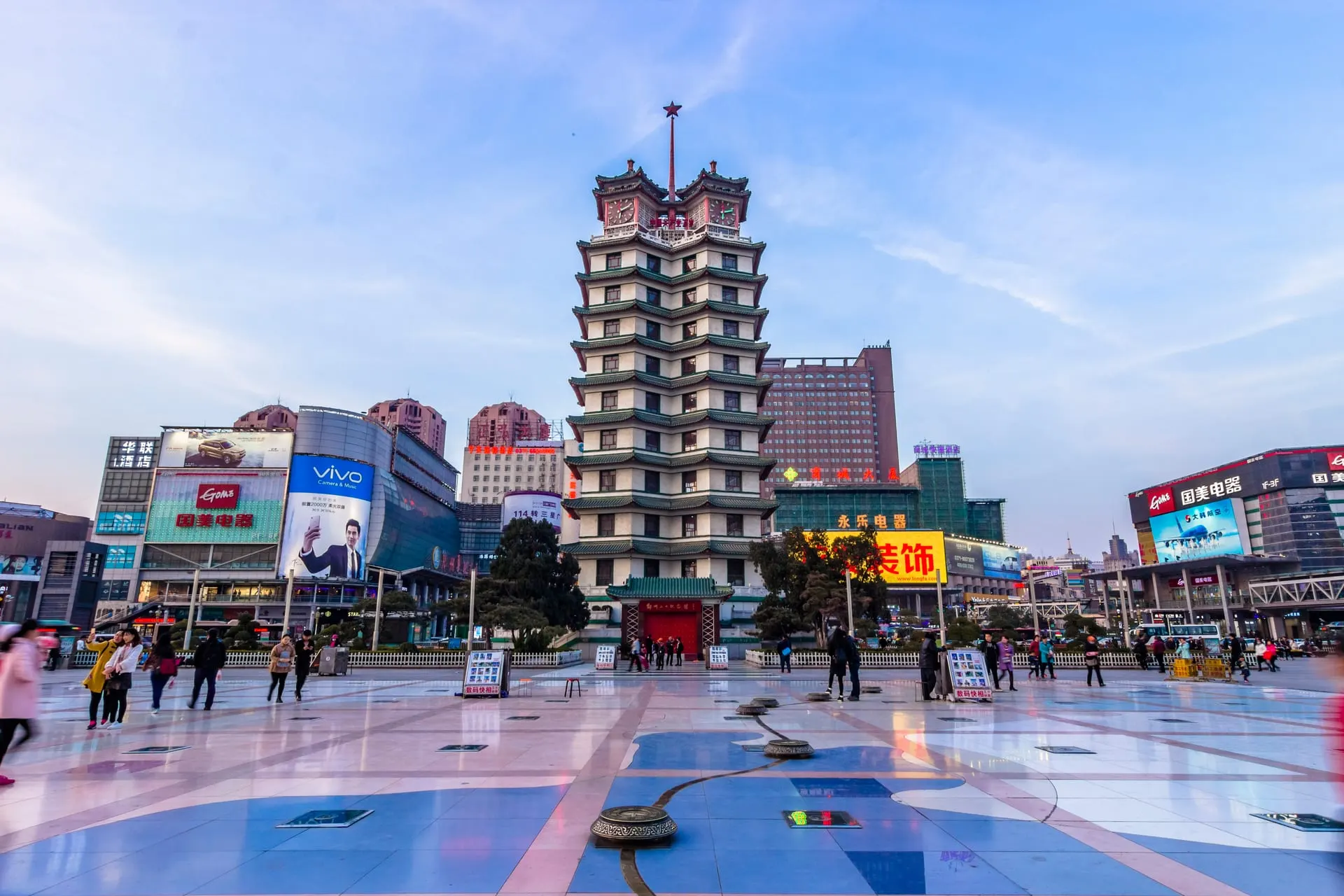
Erqi Memorial Tower (二七纪念塔, Èrqī Jìniàn Tǎ)
A 63-meter twin pagoda commemorating the 1923 railway workers' strike. The city's defining landmark. Free. Museum inside covers early Chinese labor history.
Wikimedia Commons · CC-BY-SA
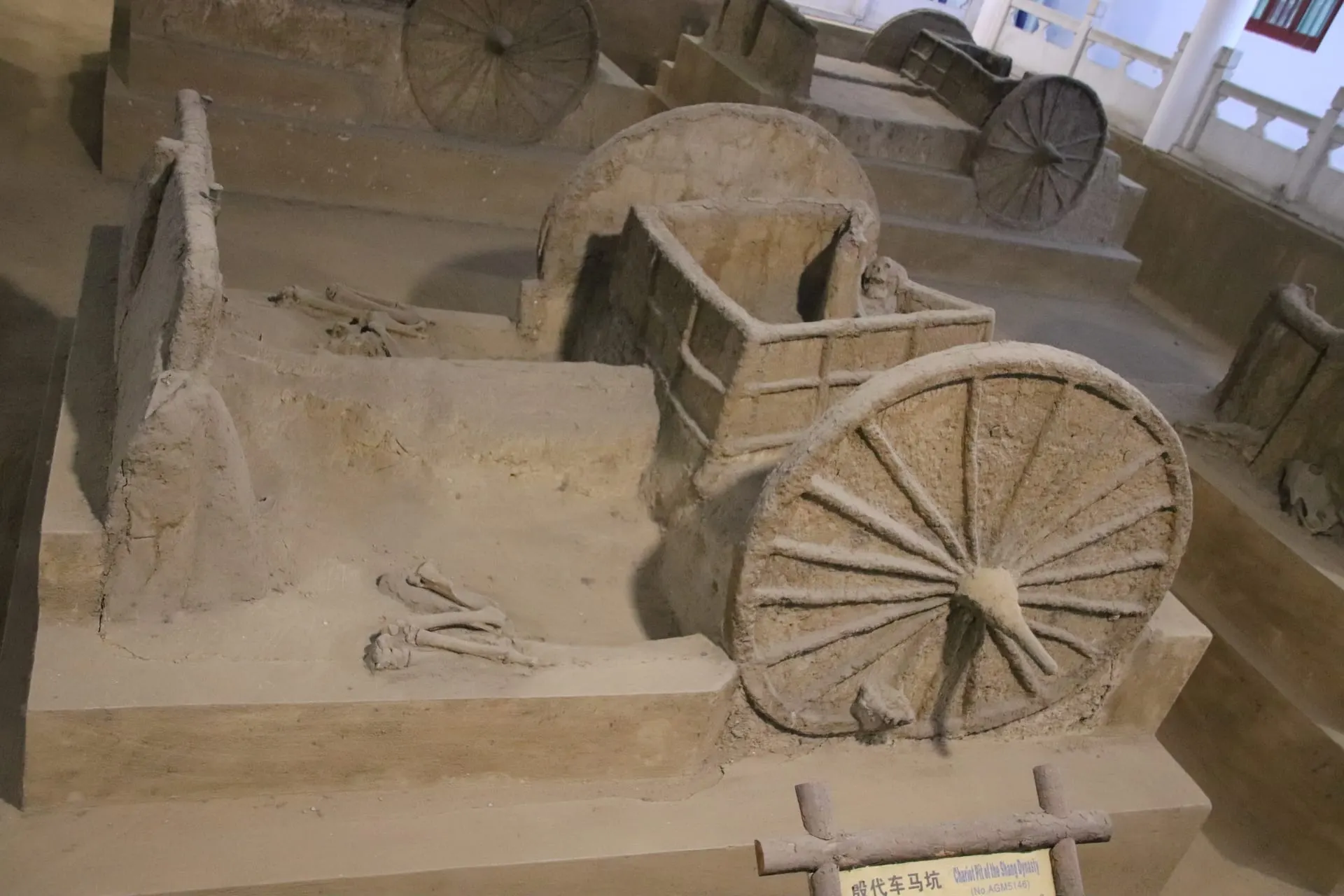
Shang Dynasty Ruins (郑州商城遗址, Zhèngzhōu Shāng Chéng Yízhǐ)
3,600-year-old city walls from the Shang dynasty — one of the oldest urban sites in China. Free, open-air, walk along the surviving rammed-earth sections.
Wikimedia Commons · CC-BY-SA
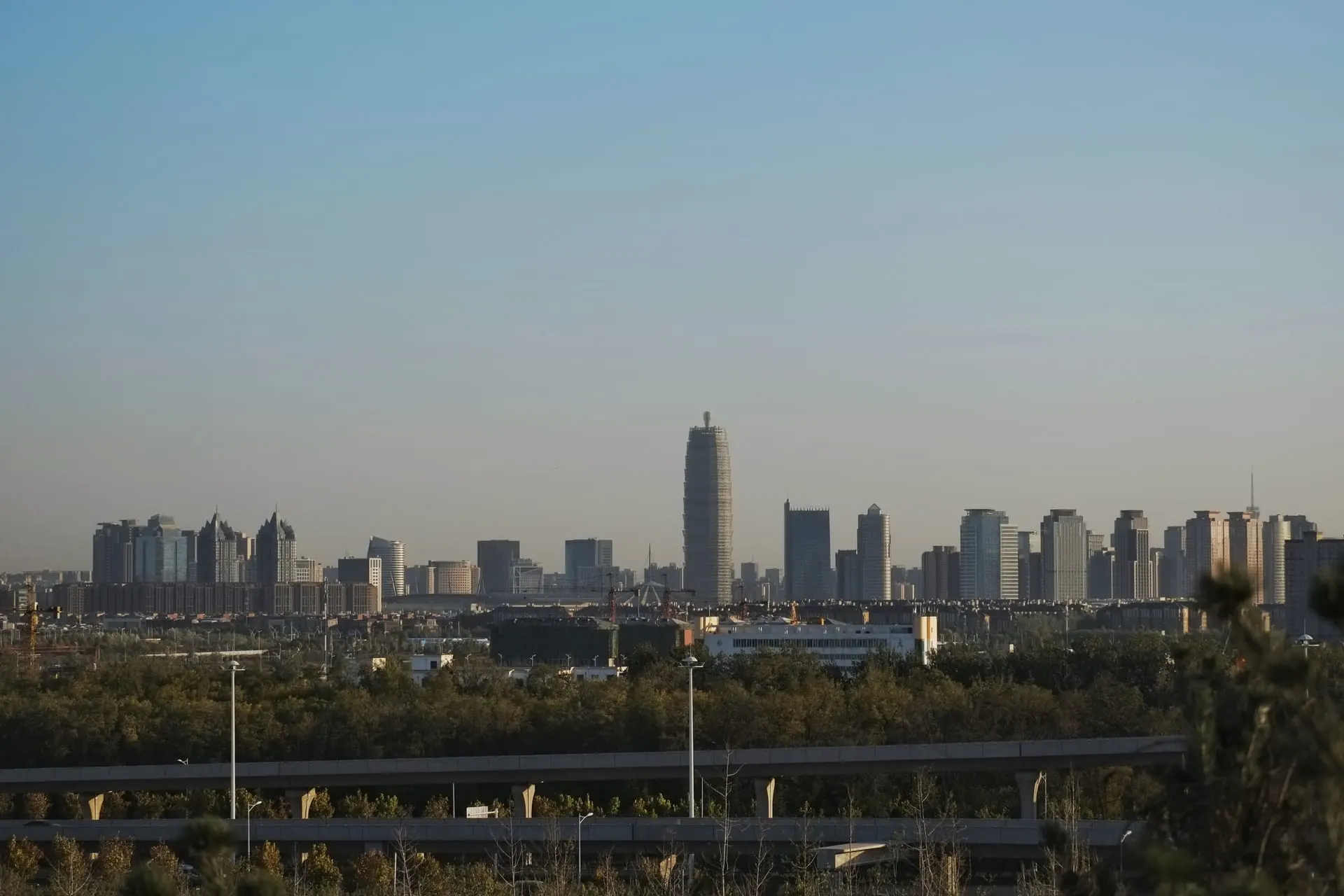
Zhengdong New District (郑东新区, Zhèngdōng Xīnqū)
The modern face of Zhengzhou — a planned business district with a giant circular lake, the Henan Art Center, and the city's most ambitious architecture. Free. Best in the evening when the towers light up.
Wikimedia Commons · CC-BY-SA
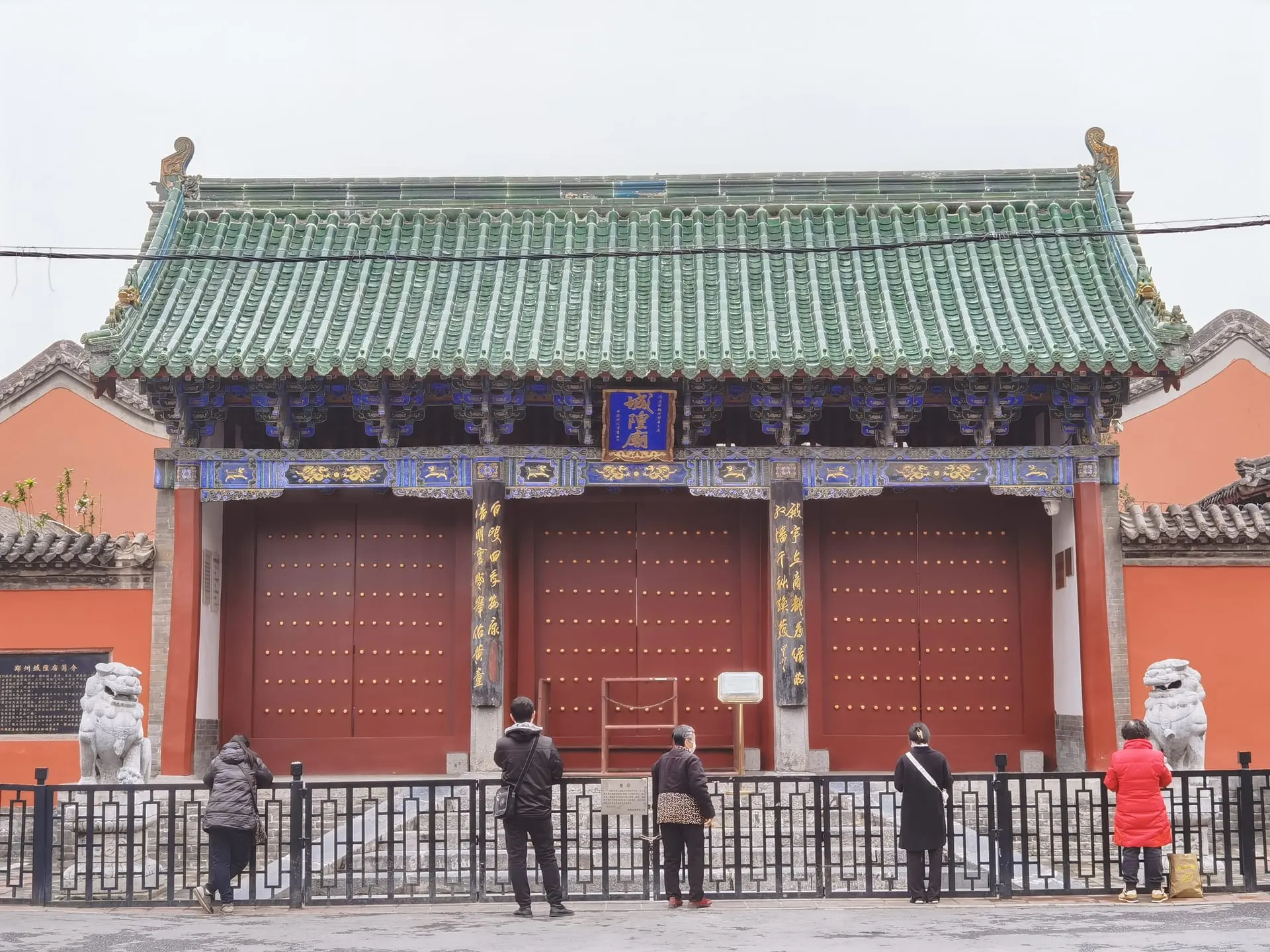
Zhengzhou Confucius Temple (郑州文庙, Zhèngzhōu Wénmiào)
A restored Ming-dynasty Confucian temple with carved stone gateways and a quiet atmosphere unusual for central Zhengzhou. Free. 30-45 minutes.
Wikimedia Commons · CC-BY-SA
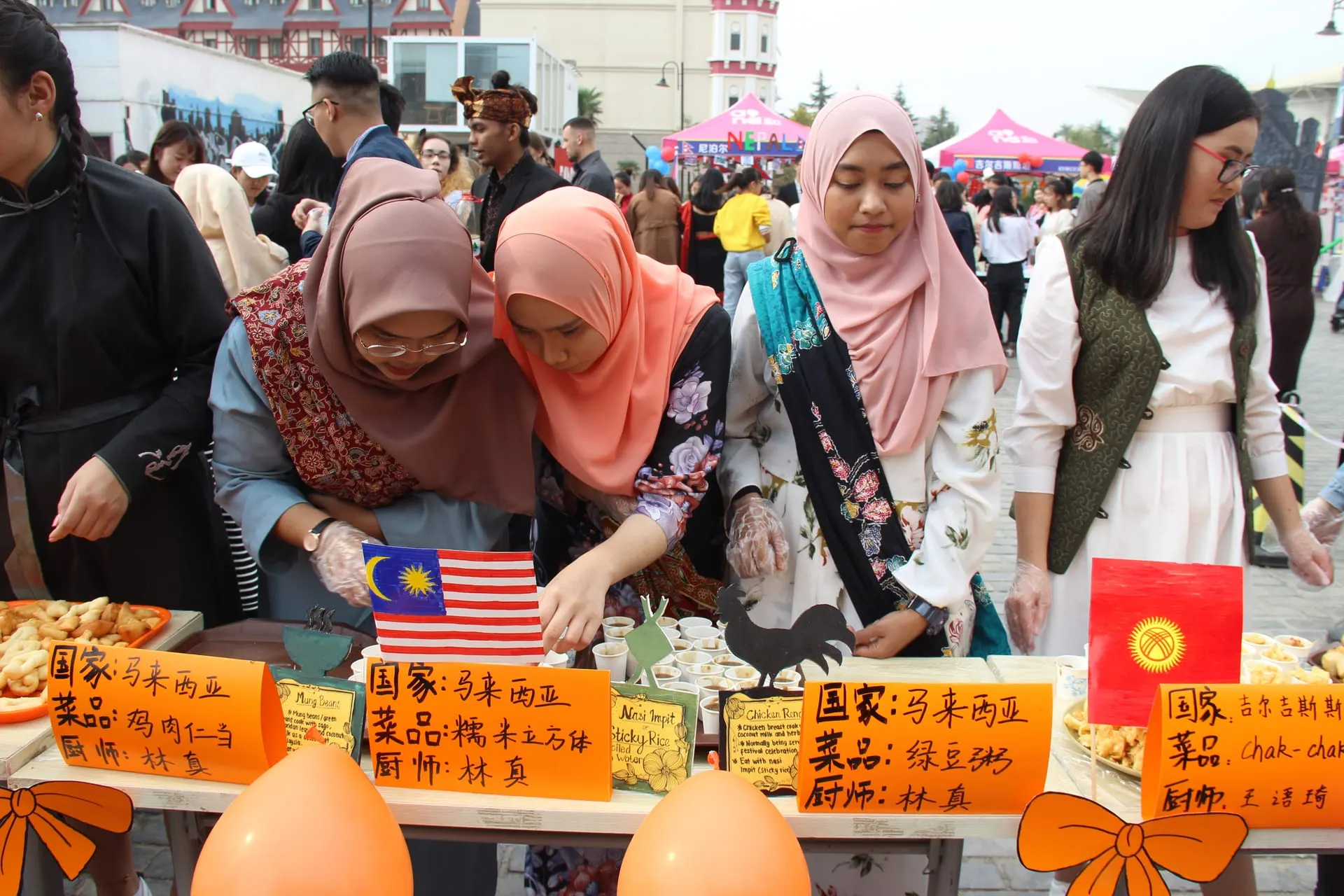
Henan Food Street (河南美食街) around Erqi Square
The area around Erqi Tower is packed with huìmiàn noodle shops, húlàtāng breakfast stalls, and grilled-skewer lanes. Not a single street — a food neighborhood. ¥0 entry, ¥15-40 per meal.
Wikimedia Commons · CC-BY-SA
STAY
Where to stay in Zhengzhou
Pick a base that matches the trip you want — imperial-central for sightseeing, hutong belt for character, Chaoyang for nightlife, or Qianmen for budget.
Erqi Square / Old City (二七广场/老城区)
Commercial centre with the well-known Erqi Tower, dense food streets, and Metro Lines 1 and 3 — best base for first-time visitors.
#erqi-squareZhengdong New District (郑东新区)
Planned business district around Ruyi Lake with the JW Marriott, Henan Art Center, and the city's most ambitious modern skyline.
#zhengdongJinshui District (金水区)
North of the centre with the Henan Museum, university campuses, and some of the city's better mid-range hotels — quieter than Erqi.
#jinshuiZhengzhou East Station area (郑州东站周边)
HSR mega-hub zone with dense chain hotels — convenient for late arrivals and early departures, charmless for anything else.
#zhengzhou-east
ITINERARIES
Sample itineraries from Zhengzhou
Three ready-made routes, from a 1-day imperial sprint to a 5-day deep dive. Copy the day-by-day plan and adapt to your own pace.
- 1 DAY
Zhengzhou in One Day (Transit Stop)
A museum-and-noodles sprint — the Henan Museum, a bowl of huìmiàn, and the Erqi Tower, all reachable by metro.
- HSR transit stopovers
- first-time visitors with limited time
- museum enthusiasts
- Day 01
Morning
Henan Museum at 09:00 (booked 2+ days ahead) — focus on the bone flute, Shang bronzes, Tang sancai, and Song porcelain (3–4 hours).
Afternoon
Lunch at Xiao Ji San Xian Huimian near Erqi Square (¥15–25). Walk the Shang city wall section at Shangcheng Road park (30 min).
Evening
Erqi Memorial Tower (free, 45 min) for the city view. Food crawl around Erqi Square — grilled lamb skewers, second bowl of huìmiàn if hungry, local beer.
- 2 DAYS
Zhengzhou in Two Days
The museum and food on day one, then a full-day Shaolin Temple trip — the classic Zhengzhou combo.
- martial arts enthusiasts
- culture travellers
- families with older children
- Day 01
Morning
Henan Museum at 09:00 (3–4 hours) — bone flute, bronzes, porcelain.
Afternoon
Shang city wall walk. Erqi Memorial Tower. Zhengzhou Confucius Temple (30 min).
Evening
Food crawl around Erqi Square — huìmiàn, húlàtāng if still available, grilled skewers. Zhengdong New District lake walk at night.
- Day 02
Morning
Depart 07:00 for Shaolin Temple (90 km, 1.5–2 hours by car). Temple complex, Pagoda Forest, kung fu performance (30 min).
Afternoon
Lunch at Shaolin vegetarian restaurant. More temple exploration. Return to Zhengzhou by 17:00.
Evening
Dinner near hotel. If energy remains, a night walk around Ruyi Lake in Zhengdong. Otherwise rest — the Shaolin day is long.
- 3 DAYS
Zhengzhou in Three Days (Henan Highlights)
Museum day, Shaolin day, plus a choice day trip — Kaifeng (20 min HSR) or Luoyang (40 min HSR) — from a single Zhengzhou hotel.
- history buffs
- UNESCO site collectors
- travellers wanting maximum Henan coverage
- Day 01
Morning
Henan Museum at 09:00 (3–4 hours).
Afternoon
Shang city wall walk, Erqi Memorial Tower, Confucius Temple. Lunch at a huìmiàn shop near Erqi.
Evening
Food crawl around Erqi Square. Zhengdong New District lake walk. Early night.
- Day 02
Morning
Option A: Kaifeng day trip — 20 min HSR (¥18–30). Millennium City Park (¥120), Iron Pagoda (¥40). Option B: Luoyang day trip — 40 min HSR (¥45–70). Longmen Grottoes (¥90, morning light is best), White Horse Temple (¥50).
Afternoon
Kaifeng: Gulou Night Market. Luoyang: Old Town and local food. Both: HSR back to Zhengzhou by 19:00–21:00.
Evening
Late dinner near the hotel in Zhengzhou. Rest.
- Day 03
Morning
Depart 07:00 for Shaolin Temple. Temple complex, Pagoda Forest, kung fu performance.
Afternoon
Shaolin vegetarian lunch. More exploration or Songyang Academy (嵩阳书院) nearby. Return to Zhengzhou by 17:00.
Evening
Final Henan dinner — one last bowl of huìmiàn or a splurge at a Zhengdong restaurant. Depart or stay the night.
BUDGET
What a Zhengzhou trip costs
Per-person, per-day costs across three spending tiers. Excludes international flights and visa fees.
| Line item | Backpacker | Mid-range | Luxury |
|---|---|---|---|
| Hostel dorm bed (per night) | $8 | $0 | $0 |
| Budget hotel (per night) | $0 | $25 | $0 |
| International 4–5 star hotel (per night) | $0 | $0 | $100 |
| Street-food meal (huìmiàn, skewers) | $3 | $5 | $8 |
| Mid-range restaurant meal | $0 | $8 | $20 |
| Metro / bus (single ride) | $0.5 | $0.5 | $0.5 |
| DiDi ride (city core, ~5 km) | $0 | $3 | $3 |
| Attraction entry (average ticket) | $3 | $5 | $10 |
| SIM card (30 days, 30 GB) | $15 | $15 | $15 |
| Daily total excl. accommodation | $15 | $30 | $50 |
| Total per day | $44.5 | $91.5 | $206.5 |
$ USD per person per day, before international flights and visas. Last verified: Q3 2026.
STAY SAFE
Emergency contacts in Zhengzhou
Save these three numbers before you board the plane. China uses different hotlines than most countries — there's no 911.
- POLICE
110
- AMBULANCE
120
- FIRE
119
- TOURIST HOTLINE
12301
- ENGLISH-SPEAKING ER
Henan Provincial People's Hospital (河南省人民医院), +86 371 6558 0000, 7 Weiwu Road, Jinshui District — VIP international wing with English-speaking staff
Problems travelers hit in Zhengzhou
- Why is my Alipay not working?You linked a foreign Visa or Mastercard to Alipay but every transaction is rejected at the merchant.
- My China visa was denied — what now?Your L visa application was refused at the Chinese consulate and your trip is in 2–4 weeks.
- My passport was lost or stolen in China — what do I do?Your passport is gone (theft or loss) and you're in mainland China without travel documents.
- Why can't I book on 12306 with my foreign card?You tried to book a high-speed rail ticket on 12306.cn and your foreign Visa/Mastercard is rejected at checkout.
- Why is my VPN not working in China?You arrived in China, opened your VPN, and it will not connect at all or connects but no traffic loads.
- Why can't I book a Tibet trip on my own?You try to book Lhasa flights and hotels yourself but the booking fails, or you're turned away at the Lhasa airport without a permit.
Book activities in Zhengzhou
These are licensed tour operators and booking platforms we've vetted independently. Booking through these links may earn us a commission — see our affiliate disclosure. This never affects our editorial recommendations or the price you pay.
Frequently asked questions
Is Zhengzhou worth visiting?
How many days should I spend in Zhengzhou?
Is the Henan Museum really one of China's three best?
How do I get to the Shaolin Temple from Zhengzhou?
What is the difference between Zhengzhou East and Zhengzhou railway stations?
What is huìmiàn and where should I eat it?
Show all 21 FAQs
What is húlàtāng and should I try it?
Can I do Zhengzhou as a transit stop?
Is Zhengzhou safe for tourists?
What is the best time of year to visit Zhengzhou?
How do I book the Henan Museum?
Can I visit Kaifeng and Luoyang as day trips from Zhengzhou?
What is the Shang dynasty and why does Zhengzhou matter for it?
Is the Yellow River Scenic Area worth the trip?
What should I pack for Zhengzhou?
Is Zhengzhou family-friendly?
Do I need a guide for Zhengzhou?
What is the single best day in Zhengzhou?
Can I combine Zhengzhou with a trip to Xi'an and Beijing?
What is the Erqi strike and why does it matter?
How does Zhengzhou compare to Wuhan as a transit city?
References

Related guides & destinations
Guide
How We Research 2026: NihaoVisit’s Methodology for China Travel Information
How NihaoVisit sources, verifies, and maintains 700+ pages of China travel information — our source hierarchy, fact-checking process, update
Guide
Fact-Checking Log 2026: Verified China Travel Information — NihaoVisit
A public log of fact-checking verification passes on NihaoVisit, showing what was verified, when, and against which sources — covering visa
Guide
Best Time to Visit China 2026: Month-by-Month Weather, Crowds, and Prices
The best time to visit most of China is April–May and September–October. Winter (Dec–Feb) is cold but cheap; summer (Jun–Aug) is hot and cro
Guide
VPN for China 2026: Which VPNs Work, eSIM Alternatives, and the Complete Pre-Trip Checklist
Most Western apps and websites are blocked in mainland China. A reliable VPN is essential for Google, Gmail, WhatsApp, Instagram, and most n
Guide
China SIM Card and eSIM Guide 2026: Stay Connected Without WeChat
A Chinese SIM or eSIM lets you use mobile data, maps, and ride-hailing without WiFi. Here is how to get one, the cost, and which provider to
Guide
Solo Female Travel in China 2026: Safety, Tips, and Real Experiences
China is one of the safer destinations for solo female travelers. Petty theft is rare, violent crime against tourists is extremely uncommon,