Zhuhai
Zhuhai (珠海, Zhūhǎi) is a coastal city in Guangdong province, wedged between the South China Sea and the Macau border. Most foreign travelers have never heard of it, and those who have usually pass through on the way to Macau — which is a mistake. Zhuhai is one of China's most livable cities, a title it has won repeatedly in national rankings, with clean air, palm-lined boulevards, 146 islands scattered across its waters, and a pace of life that feels nothing like the grinding intensity of Guangzhou or Shenzhen. The Lovers' Road (情侣路, Qínglǚ Lù) runs 28 kilometers along the coastline, past the Fisher Girl statue, the Zhuhai Opera House — two enormous white shells nicknamed the "Sun and Moon Shells" (日月贝, Rì Yuè Bèi) — and dozens of beaches. The Hong Kong-Zhuhai-Macau Bridge (HZMB), the world's longest sea crossing at 55 kilometers, starts here and connects the Pearl River Delta in a way that was science fiction twenty years ago. Zhuhai is not a museum city — it is a place to eat fresh seafood, island-hop, walk a coastline, and cross a border to Macau for an afternoon of egg tarts and Portuguese wine. The city's flagship attraction is the Fisher Girl statue on Lovers Road, but the real reward is the slow daytime rhythm — a flat, green, walkable city where the sea is always within ten minutes. HSR connects Zhuhai to Guangzhou in an hour and to Shenzhen in roughly two hours, and the Hong Kong-Zhuhai-Macau Bridge adds the option of crossing directly to Hong Kong in forty minutes by car. Day-trip ferries to the outer islands — Wanshan, Guishan, Dong-ao, Hebao — start from ¥80-150 round trip and are the single best use of a clear-weather day. The Chimelong Ocean Kingdom on Hengqin Island is one of Asia's largest aquariums and works for a half-day family visit, while the Hengqin Chinese-Portuguese cultural district just across the border from Macau offers a quieter evening of Portuguese-influenced food and architecture.
Why Zhuhai in 2026.
Guangdong's coastal resort city, bordering Macau. The Hong Kong-Zhuhai-Macau Bridge, Chimelong Ocean Kingdom, island-hopping across the Pearl River Delta, and some of the freshest seafood in southern China. Best October to April for cool dry weather; summers are hot and humid and typhoons are possible from July through September. Allow 2 to 3 days to combine the city sights, one or two island day trips, and an afternoon in Macau across the border. Budget roughly 200 to 400 yuan per day for mid-range comfort including a clean hotel, two good seafood meals, and a ferry to one of the outer islands. Plan an extra day if you want to add Chimelong Ocean Kingdom or Hengqin Island, both worth the detour for families. Bring sunscreen year-round, light layers even in summer, and a refillable water bottle.
Quick Answer
Zhuhai (珠海, Zhūhǎi) is a coastal city in Guangdong province, wedged between the South China Sea and the Macau border. Most foreign travelers have never heard of it, and those who have usually pass through on the way to Macau — which is a mistake. Zhuhai is one of China's most livable cities, a title it has won repeatedly in national rankings, with clean air, palm-lined boulevards, 146 islands scattered across its waters, and a pace of life that feels nothing like the grinding intensity of Guangzhou or Shenzhen. The Lovers' Road (情侣路, Qínglǚ Lù) runs 28 kilometers along the coastline, past the Fisher Girl statue, the Zhuhai Opera House — two enormous white shells nicknamed the "Sun and Moon Shells" (日月贝, Rì Yuè Bèi) — and dozens of beaches. The Hong Kong-Zhuhai-Macau Bridge (HZMB), the world's longest sea crossing at 55 kilometers, starts here and connects the Pearl River Delta in a way that was science fiction twenty years ago. Zhuhai is not a museum city — it is a place to eat fresh seafood, island-hop, walk a coastline, and cross a border to Macau for an afternoon of egg tarts and Portuguese wine. The city's flagship attraction is the Fisher Girl statue on Lovers Road, but the real reward is the slow daytime rhythm — a flat, green, walkable city where the sea is always within ten minutes. HSR connects Zhuhai to Guangzhou in an hour and to Shenzhen in roughly two hours, and the Hong Kong-Zhuhai-Macau Bridge adds the option of crossing directly to Hong Kong in forty minutes by car. Day-trip ferries to the outer islands — Wanshan, Guishan, Dong-ao, Hebao — start from ¥80-150 round trip and are the single best use of a clear-weather day. The Chimelong Ocean Kingdom on Hengqin Island is one of Asia's largest aquariums and works for a half-day family visit, while the Hengqin Chinese-Portuguese cultural district just across the border from Macau offers a quieter evening of Portuguese-influenced food and architecture.
| Worth visiting | Yes, if you want a clean, relaxed Chinese coastal city with island day trips, excellent seafood, and easy Macau access — not for big-city buzz or ancient history. |
|---|---|
| Recommended days | 2-3 days |
| Best time to visit | October-December and March-May (avoid June-August — typhoon season, high humidity, and 33°C+ heat) |
| Daily budget | $30 (backpacker) / $95 (mid-range) / $240+ (luxury) |
| Family friendly | Excellent — Chimelong Ocean Kingdom is one of the world's best aquariums, beaches are clean, and the city is flat and walkable |
| Solo friendly | Yes — safe, navigable, and the seafood restaurants at Gongbei and Wanzai work perfectly for solo dining |
| Airport | Zhuhai Jinwan Airport (ZUH) — about 45 km west of the city center, airport bus (¥25, 60 min) or DiDi (¥120-160, 50 min) |
| High-speed rail | Yes — Guangzhou (1h, ¥70), Macau/Zhuhai Gongbei border reached by city bus in 20 min, Shenzhen via ferry (1h, ¥130) or HSR via Guangzhou |
| Language | Mandarin and Cantonese; English signage at the border and major attractions, but limited English spoken on the street |
| Currency | CNY (¥) — Macanese Pataca (MOP) is used in Macau; Hong Kong Dollars are widely accepted in Macau but not in Zhuhai proper |
| Time zone | China Standard Time (UTC+8) |
| Last updated | 2026-06-18 |
Want a Zhuhai plan built for you?
Jump to:
Lovers' Road·Opera House·Chimelong Ocean Kingdom·Island Hopping·Macau Border·Getting Around·Where to Stay·Itineraries·Weather·Food & Seafood·Tips & Warnings·Emergency Contacts·FAQ
Why visit Zhuhai? Is it worth going as a foreign tourist?
Zhuhai is not Xi'an or Beijing. It has no ancient city wall, no UNESCO-listed temples, and no world-changing history. What it has is space, air, and water — three things in short supply in most Chinese megacities. The city was built as a resort town and it still feels like one, with wide boulevards, a 28-kilometer coastal road, and more trees per square kilometer than almost anywhere else in Guangdong. The case for visiting Zhuhai rests on three things. First, it is the most pleasant city in the Pearl River Delta — cleaner air than Guangzhou (AQI regularly 30-60), less traffic than Shenzhen, and an actual coastline you can walk along without inhaling port fumes. Second, it is the jumping-off point for some of the best island day trips in southern China: Wailingding and Dong'ao islands have clear(ish) water, granite landscapes, and seafood restaurants where the fish was swimming an hour before it hit your plate. Third, it shares a border with Macau — you can walk from Zhuhai's Gongbei district into Macau in 15 minutes, eat egg tarts and pastéis de nata, lose ¥200 at a casino, and walk back to your Zhuhai hotel, which costs a third of what you would pay in Macau. The honest downside: Zhuhai can be boring if you are looking for intensity. The nightlife is subdued by Chinese standards, the cultural attractions are limited, and the city lacks the crackling energy of Guangzhou or the futuristic gloss of Shenzhen. It is a place to slow down, not to party. If your China trip is a seven-day blitz of the greatest hits, skip Zhuhai. If you have two weeks or more and want a breather between the chaos of Guangzhou and the casinos of Macau, it fits perfectly.
What is the history of Zhuhai — from fishing village to Special Economic Zone?
Zhuhai was a collection of fishing villages on the western shore of the Pearl River estuary for most of its history. During the Tang and Song dynasties it was part of Xiangshan County (香山县), a backwater of Guangdong administered from what is now Zhongshan. The islands in the Pearl River Delta were known as pirate havens, and the coastal villages survived on fishing, oyster farming, and salt production. The turning point came in 1980, when Deng Xiaoping designated Zhuhai one of China's first four Special Economic Zones (SEZs), alongside Shenzhen, Shantou, and Xiamen. But Zhuhai took a very different path from Shenzhen. While Shenzhen became a factory-floor megacity, Zhuhai's early leadership decided to prioritize environmental quality over breakneck industrialization. The city rejected heavy-polluting factories, invested in green space, and marketed itself as a garden city and tourism destination. The result is a city of 2.5 million that feels nothing like the Pearl River Delta stereotype — no endless factory blocks, no permanently grey sky, no traffic that makes you want to abandon your DiDi and walk. The other major development was the return of Macau to Chinese sovereignty in 1999. Zhuhai's Gongbei district, abutting the Macau border, transformed from a smuggling town into a legitimate commercial zone. The Hong Kong-Zhuhai-Macau Bridge, opened in October 2018 after nine years of construction and ¥127 billion in cost, physically connected Zhuhai to Hong Kong for the first time and cemented the city's role as the western anchor of the Greater Bay Area. As of 2026, Zhuhai is positioning itself as a leisure and innovation hub — the Hengqin New Area, a special development zone on the island adjacent to Macau, is being built as a tech and finance park with preferential policies for Macau-registered businesses.
How do I get to Zhuhai and what is the geography of the city?
Zhuhai sits on the western shore of the Pearl River estuary (珠江口, Zhūjiāng Kǒu), where the Pearl River empties into the South China Sea. It is bordered by Zhongshan to the north, the South China Sea to the east and south, and Macau to the southwest. The city's territory includes 146 islands — hence "City of a Hundred Islands" (百岛之市, Bǎi Dǎo zhī Shì) — though most are uninhabited rock outcroppings. The main urban area stretches along a narrow coastal strip from Tangjiawan in the north to Gongbei and Hengqin in the south, about 40 kilometers end to end. Zhuhai Jinwan Airport (ZUH, 珠海金湾机场) is in the west of the city, about 45 km from the Gongbei area. It serves domestic flights to most major Chinese cities (Beijing 3h, Shanghai 2.5h, Chengdu 2.5h, Kunming 2h) and limited international routes to Southeast Asia. There is no direct international long-haul flight — most foreign visitors arrive via Guangzhou Baiyun (CAN), Hong Kong (HKG), or Macau (MFM). From Guangzhou Baiyun Airport, take the airport bus to Zhuhai (¥95, 2.5 hours) or HSR from Guangzhou South to Zhuhai Station (¥70, 1 hour). From Hong Kong Airport, the HZMB shuttle bus runs directly to Zhuhai Port (¥65, 40 minutes). From Macau Airport, it is a 30-minute taxi or bus ride to the Gongbei border, then walk across into Zhuhai. High-speed rail: Zhuhai Station (珠海站) is at the Gongbei border, the terminus of the Guangzhou-Zhuhai Intercity Railway (广珠城际, Guǎngzhū Chéngjì). Trains run every 15-30 minutes from Guangzhou South (¥70, 1 hour) and less frequently from other cities. Zhuhai Changlong Station serves the Chimelong area on Hengqin Island. Ferries: Zhuhai Jiuzhou Port (九洲港) runs ferries to Hong Kong (China Ferry Terminal in Tsim Sha Tsui, ¥180-220, 70 minutes) and Shenzhen Shekou (¥130, 60 minutes). These are scenic and often faster than overland routes.
How to get around Zhuhai: bus, tram, DiDi, and bike share
Zhuhai has no metro and limited public transport, so you will rely on buses, the tram, DiDi, and bikes. (A metro line is under construction as of June 2026 but years from opening.) The Zhuhai Tram (珠海有轨电车, Zhūhǎi Yǒuguǐ Diànchē) runs a single line along Meihua Road from Shangchong to Haihong Park, useful for east-west travel through the northern part of the urban core. It is more of a novelty than a practical transport backbone — ¥2 flat fare, runs roughly 06:30 to 21:30. The tram cars are modern and air-conditioned, but the route covers a limited area. Buses are the workhorse. ¥2 flat fare on most routes, pay with Alipay transport QR code. The most useful routes for visitors: Bus 9 and Bus 99 run north-south along Lovers' Road from Gongbei to Tangjiawan, covering the coastal strip and most hotels. Bus 2 connects Gongbei to Xiangzhou (the central business district). Bus L1 is the "sightseeing bus" that loops through the main attractions (¥5). Bus K10 goes to the Chimelong area on Hengqin Island. Schedules and route numbers are posted in Chinese only — use Baidu Maps or the Gaode Maps app (both have English-interface options) to plan bus trips. DiDi is the easiest option for point-to-point trips. Within the urban core, fares are ¥10-25; from Gongbei to Jinwan Airport is ¥120-160; from Xiangzhou to Chimelong is ¥35-50. Metered taxis are everywhere — flagfall ¥10 for the first 2.5 km, ¥2.6 per km after — but drivers rarely speak English. Have destinations written in Chinese. Zhuhai is one of China's best cycling cities. The Lovers' Road coastal path is wide, flat, and separated from traffic for most of its length. Meituan (yellow) and Hello (blue) shared bikes are ¥1.5 per 30 minutes. Rent a bike at Gongbei, cycle north along the coast to the Opera House (about 8 km, 40 minutes), stop for photos and coconut water, and continue to Tangjiawan if you have the legs. The Yeli Island causeway to the Opera House is bike-accessible and the views at dusk are excellent.
What are the top attractions in Zhuhai, ranked and described in detail?
1. Lovers' Road (情侣路, Qínglǚ Lù). Free. This 28-kilometer coastal boulevard is Zhuhai's defining feature — a palm-lined promenade running from Gongbei in the south to Tangjiawan in the north, with the South China Sea on one side and the city on the other. Best experienced by bike (shared bikes everywhere, ¥1.5/30 min) in the late afternoon when the sun drops toward the water and the Macau skyline becomes visible across the bay. The Fisher Girl statue (珠海渔女, Zhūhǎi Yúnǚ) at the midpoint is the city's icon — a granite statue of a fisherwoman holding a pearl aloft, installed in 1982, and the single most photographed object in Zhuhai. The statue itself is kitsch, but the waterfront around it is genuinely lovely. The Xianglu Bay Beach (香炉湾沙滩) next to the Fisher Girl is a man-made swimmable beach, free, with showers and changing rooms (¥10). The northern stretch of Lovers' Road past the Opera House is quieter, with fewer vendors and more locals fishing off the rocks. 2. Zhuhai Opera House (日月贝, Rì Yuè Bèi). Free exterior; performances from ¥180. The two white-shell buildings on Yeli Island are Zhuhai's architectural landmark — the larger "sun" shell (90 meters tall) is the main 1,550-seat theater, the smaller "moon" shell is a 500-seat multi-purpose hall. Designed by Chinese architect Chen Keshi and completed in 2017, they are inspired by the shape of a scallop shell and are most photogenic at dusk when the exterior LED lighting comes on and the shells glow against a darkening sky. The causeway to Yeli Island is a popular sunset-walking and cycling route, with the shells reflected in the water on both sides. Inside, the main theater hosts opera, ballet, and orchestral performances — check the schedule on damai.cn. Even if you do not attend a performance, the exterior and the island park are worth the trip. 3. Chimelong Ocean Kingdom (长隆海洋王国, Chánglóng Hǎiyáng Wángguó). ¥395 adult, ¥280 child/senior as of June 2026. Located on Hengqin Island, this is the flagship attraction of the Chimelong group and one of the best marine theme parks in the world. The centerpiece is the Whale Shark Aquarium, the largest aquarium window on the planet at 39.6 by 8.3 meters, holding 22.7 million liters of water and eight whale sharks. The park also has a massive penguin exhibit (Emperor and Gentoo penguins in a -5°C habitat), a polar bear enclosure, dolphin shows, and roller coasters — the "Parrot Coaster" is a B&M Wing Coaster that reaches 108 km/h and holds the record for longest winged coaster track. The nightly "Ocean Resistance" show combines fireworks, drones, water screens, and music and is genuinely spectacular. The honest downsides: it is expensive (¥395 entry, ¥68 for a basic meal, ¥268 for the express-pass to skip queues), crowded on weekends and holidays, and the animal welfare debate around large marine mammals in captivity is real — the whale sharks and belugas are crowd draws but ethically complicated. Allow a full day; arrive at 10:00 opening and stay through the 20:00 night show. The park is accessible by Bus K10 from Gongbei (¥2, 50 minutes) or DiDi (¥35-50, 30 minutes). 4. New Yuanming Palace (圆明新园, Yuánmíng Xīnyuán). Free (since 2020). A partial replica of Beijing's Old Summer Palace — the Yuanmingyuan that was looted and burned by British and French forces in 1860 — built in the 1990s on 1.4 square kilometers of land near Gongbei. The replica reproduces the Western-style water fountains (大水法, Dà Shuǐfǎ) and several classical Chinese garden compounds, set around a large lake with paddle boats and teahouses. It is undeniably inauthentic — a 1990s theme-park version of an 18th-century original built by Jesuits for the Qianlong Emperor — but the craftsmanship is surprisingly good, the gardens are well-maintained, and it is free. The locals treat it as a park rather than a historic site, walking dogs, flying kites, and practicing tai chi. Allow 1.5-2 hours. Best in the early morning when it is quiet. The Qing-dynasty costume photography studios scattered around charge ¥30-80 for dress-up photos — tacky but fun if you have teenagers. 5. Wailingding Island (外伶仃岛, Wàilíngdīng Dǎo). Ferry from Xiangzhou Port (香洲港), ¥120 each way, about 1.5 hours as of June 2026. This is the most accessible of Zhuhai's inhabited outer islands and the best one-day island escape from the city. The island is small — you can walk the circumference in about 2 hours — with granite cliffs and boulders, a 311-meter peak (Lingding Peak, 伶仃峰) with a hiking trail, and a cluster of seafood restaurants lining the main waterfront street. The water is not the Maldives — the Pearl River sediment keeps the sea a milky green rather than turquoise — but it is swimmable and the beaches are clean. The hiking trail to the summit takes about 45 minutes and offers sweeping views over the South China Sea and, on clear days, the outline of Hong Kong's Lantau Island in the distance. Seafood restaurants: pick your fish from the tank, they weigh it, you pay by the jin (斤, 500g), and they cook it. Expect ¥80-150 per person for a generous meal. The island has small guesthouses (¥200-400/night) if you want to stay overnight, which I recommend — the sunset and sunrise from the peak are the island's best moments and the day-trippers are gone by 17:00. 6. Dong'ao Island (东澳岛, Dōng'ào Dǎo). Ferry from Hengqin Port (横琴码头), ¥85-130 each way, about 50 minutes as of June 2026. Dong'ao is the upmarket alternative to Wailingding. Nansha Bay (南沙湾) has a genuine crescent of white sand — one of the best beaches in the Pearl River Delta — and the water is slightly clearer than at Wailingding. The Club Med Dong'ao Island Resort occupies the prime beachfront and drives the pricing: expect ¥1,200-2,500/night at Club Med, or ¥300-600 at independent guesthouses in the village. A restored Qing-dynasty artillery fort sits on a headland above the bay, built to defend against pirates and later against European ships. The hiking trails are better marked than Wailingding and the island is quieter — fewer day-trippers, more overnight guests. Bring insect repellent; the mosquitoes are aggressive at dusk. The ferry schedule is limited (about 4-6 sailings per day in each direction) and fills up on weekends — book through the "香洲港" WeChat mini-program or at the port ticket office. 7. Jintai Temple (金台寺, Jīntái Sì). Free. About 40 minutes northwest of the city center by DiDi (¥60-80) in Doumen district, this Buddhist temple is built into a hillside overlooking a green reservoir. The original temple was founded in 1279 by a loyalist of the fallen Southern Song dynasty, destroyed during the Qing, and rebuilt in the 1990s. The setting is what makes it special: the temple climbs the mountain in a series of halls connected by stone steps, with panoramic views of the reservoir and surrounding forest. The main hall houses three large Buddha statues, and the side halls contain a columbarium and a vegetarian restaurant (¥30-50 for a meal, cash only). It is rarely crowded — most visitors are local worshippers — and the combination of mountain, water, and incense makes it one of the most peaceful spots in Zhuhai. There is no English signage; download a translation app. 8. HZMB Viewing Platform (港珠澳大桥观景台, Gǎng Zhū Ào Dàqiáo Guānjǐng Tái). ¥30 for the viewing platform on the Zhuhai Port artificial island. The Hong Kong-Zhuhai-Macau Bridge is 55 kilometers long, cost ¥127 billion, and opened in 2018 after nine years of construction and multiple fatalities among construction workers. The Zhuhai-side artificial island has a visitor center with a museum-quality exhibit on the bridge's construction — models, videos, and English captions — and an outdoor viewing platform where you can see the bridge stretching across the Lingdingyang waters toward Hong Kong. The engineering is staggering: the bridge includes a 6.7-kilometer underwater tunnel (so ships can pass above), two artificial islands built from scratch, and a cable-stayed section designed to withstand magnitude-8 earthquakes and super typhoons. The shuttle bus across the bridge to Hong Kong departs from the same artificial island: ¥65, 40 minutes, running every 15-30 minutes from roughly 07:00 to 22:00. You need a valid Hong Kong visa or visa-free entry eligibility to take the shuttle — do not board without checking your Hong Kong entry requirements.
How does the Macau border work and what should I know about cross-border visits?
The Zhuhai-Macau border at Gongbei (拱北口岸, Gǒngběi Kǒu'àn) is one of the busiest land borders in the world, processing over 300,000 people per day. Walking from Zhuhai into Macau is straightforward: follow the signs from Gongbei Bus Terminal, pass through Chinese exit immigration (your passport and visa/visa-free eligibility), walk through a covered corridor, then pass through Macau immigration. The whole process takes 15-30 minutes during normal times and can exceed an hour during Chinese holidays (especially the first week of October and Chinese New Year). The border is open 07:00-01:00. There is also a 24-hour border crossing at the Hong Kong-Zhuhai-Macau Bridge Zhuhai Port for those arriving by HZMB shuttle. The Gongbei underground shopping mall (拱北地下商场) is a sprawling labyrinth of shops, food stalls, and money changers directly beneath the border checkpoint. It is where Zhuhai locals buy imported cosmetics, snacks, and奶粉 (milk powder) brought in by Macau traders. The money changers offer competitive rates for RMB-to-MOP and RMB-to-HKD — better than banks, but count your money carefully. Important cross-border practicalities: Most foreign passport holders (USA, EU, UK, Canada, Australia, etc.) can enter Macau visa-free for 30-90 days — check your specific nationality. You can enter Macau and return to mainland China on the same day, but it counts as one entry each way. If you have a single-entry Chinese visa, leaving for Macau will invalidate it. China's 30-day visa-free policy (as of June 2026) applies to entry at Gongbei. The Macanese Pataca (MOP) is the local currency, but Hong Kong Dollars (HKD) are accepted almost everywhere in Macau at 1:1 (a small loss for you). Chinese Yuan is rarely accepted in Macau; withdraw MOP or HKD from ATMs inside Macau. What to do with a day in Macau from Zhuhai: Walk across the border by 09:00. Take the free casino shuttle bus from the Macau side of the border to the Venetian Macao (20 minutes) — the largest casino in the world, with a replica of Venice's Grand Canal inside. Then bus or taxi to the Historic Centre of Macau, a UNESCO World Heritage site: the Ruins of St. Paul's, Senado Square, the A-Ma Temple (Macau's oldest, from 1488). Lunch: Lord Stow's Bakery in Coloane for the original Macanese egg tart (¥12 MOP), plus a pork chop bun (猪扒包) at Tai Lei Loi Kei in Taipa. Afternoon: a Portuguese wine at a small bar in the São Lázaro district, or the Macau Museum. Dinner: António's in Taipa for authentic Portuguese-Macanese food (¥300-500 MOP per person). Walk back across the border by 22:00 or earlier if you want to avoid the late-night crush. Total spending: ¥300-600 MOP excluding gambling, which is a separate discussion entirely. A note on the casino buses: they are free, comfortable, and run frequently — but they do not go to the border after about 21:00 for most properties. Take a public bus (Bus 25, 26A, or MT4 to the border, MOP ¥6) or a taxi (¥80-150 MOP to Gongbei) to get back.
What to eat in Zhuhai: seafood, Portuguese-Chinese food, and Doumen specialties
Zhuhai's food scene is defined by its coastline and its proximity to Macau. The two poles are fresh seafood — fish, crab, shrimp, oysters, and shellfish pulled from the Pearl River Delta that morning — and Macanese/Portuguese-influenced food that crosses the border in both directions. Seafood is the headline act. The best seafood experience in Zhuhai is at Wanzai Seafood Street (湾仔海鲜街, Wānzǎi Hǎixiān Jiē), a covered market about 10 minutes by taxi from Gongbei where you walk through rows of vendors with bubbling tanks, pick your fish/crab/shrimp/lobster/shellfish, negotiate the price, pay by weight, then carry your purchase to one of the adjacent restaurants that will cook it for a cooking fee (加工费, jiāgōng fèi) of ¥15-30 per dish. A typical meal: a whole steamed grouper (石斑鱼, shí bān yú, ¥60-100 depending on size), salt-and-pepper mantis shrimp (椒盐濑尿虾, jiāoyán làniào xiā, ¥40-60/jin), garlic-steamed scallops with vermicelli (蒜蓉粉丝蒸扇贝, suànróng fěnsī zhēng shànbèi, ¥8-15 each), and stir-fried morning glory (空心菜, kōngxīncài, ¥25). Total for two people: ¥200-350 all in. Go for lunch on a weekday — weekends are chaotic and prices rise. The negotiation is part of the experience; start at 60% of the asking price and settle around 75-80%. Oysters (蚝, háo) are a Zhuhai specialty. The waters around Hengqin Island produce plump, briny oysters that are served grilled with garlic, steamed with ginger and scallion, or raw with lemon. Hengqin Oyster Feast (横琴蚝宴, Héngqín Háo Yàn) is the local name for a multi-course oyster meal. The Hengqin Oyster Ecological Village (横琴蚝生态园) on Hengqin Island is a cluster of open-air restaurants near the Chimelong resort serving oysters every conceivable way. A dozen grilled oysters costs ¥30-60; a full oyster dinner for two runs ¥150-250. Portuguese-Macanese food has bled into Zhuhai through the border. The area around Gongbei has Portuguese egg tart shops (葡式蛋挞, púshì dàntà) selling tarts at ¥6-8 each — compare to ¥12 MOP in Macau. The custard is slightly less rich, the pastry slightly less flaky, but they are 80% of the Macau original at 50% of the price. The Macanese pork chop bun (猪扒包, zhū pá bāo) — a boneless pork chop on a crusty roll — is also widely available near the border for ¥12-18. Doumen district, northwest of the city center, has its own food traditions distinct from coastal Zhuhai. Doumen heavy-gravy crab (斗门重壳蟹, Dǒumén Zhòng Ké Xiè) is a seasonal delicacy — crabs molting their old shell while the new one is still soft, caught at the exact moment when both shells are present, steamed with ginger and served whole. It is expensive (¥120-200 depending on size) and only available in late spring and early autumn. Doumen dried fruit (斗门果干) — dried longan, lychee, and persimmon — makes a good edible souvenir. For vegetarians: seafood restaurants are somewhat adaptable — order vegetable dishes (清炒时蔬, qīngchǎo shíshū, seasonal greens ¥20-30), tofu (麻婆豆腐 or 家常豆腐 if you ask them to skip the minced pork), and steamed rice. The Buddhist vegetarian restaurant at Jintai Temple (金台寺素菜馆) serves a full vegetarian menu (¥30-50 per person). As always in China, "我吃素" (wǒ chī sù, I eat vegetarian) and "不要肉" (bùyào ròu, no meat) are essential phrases. A printed vegetarian card in Chinese is recommended — even vegetable dishes in Guangdong are often cooked with oyster sauce or pork stock.
Where to stay in Zhuhai: neighborhoods and typical prices
Gongbei (拱北) is the most convenient base for first-time visitors. This is the border district abutting Macau, with the highest density of hotels, restaurants, currency exchange booths, and transport connections. The Zhuhai HSR station is here, the Gongbei bus terminal serves routes across the city, and you can walk to Macau in 15 minutes. Mid-range Chinese chain hotels (Jinjiang Inn, Hanting, Atour, Ji Hotel) run ¥200-400 per night. The Gongbei Holiday Inn (¥500-700) and Pullman Zhuhai (¥600-900) are the international options. The area is busy, loud, and commercial — not scenic, but practical. Stay near the Yingbin South Road (迎宾南路) corridor for the best access. Jida (吉大) is the coastal district between Gongbei and Xiangzhou, home to the Fisher Girl statue, the Opera House, and the best stretch of Lovers' Road. It is quieter than Gongbei, greener, and walking distance to the waterfront. Hotels skew toward mid-range and upscale: the Zhuhai Marriott Hotel (¥700-1,200) has sea-view rooms, the Yindo Jasper Hotel (¥400-600) is a solid mid-range choice near the Jiuzhou Port ferry terminal. This is the best neighborhood if you want to walk out of your hotel and be on the coast in five minutes. Xiangzhou (香洲) is the city's administrative center and the northern gateway to Tangjiawan and the university district. Hotels here are predominantly business-oriented — cheaper on weekends when business travelers go home. Xiangzhou has good local food streets and a more "real Zhuhai" feel than the border-bustle of Gongbei. The Xiangzhou Bus Terminal serves routes to the outer-island ferry ports and Jintai Temple. Hengqin Island (横琴) is the Chimelong-and-casinos zone. If Chimelong Ocean Kingdom is your main draw, stay at one of the three Chimelong hotels: the Penguin Hotel (¥800-1,400, rooms overlook the penguin habitat), the Hengqin Bay Hotel (¥1,000-1,800, beachfront), or the Circus Hotel (¥600-1,000). All offer package deals that bundle park tickets. Hengqin is also where Macau casino operators are building non-gaming resorts — the area feels like a construction site in places as of mid-2026, with cranes and half-finished towers. For backpackers: Zhuhai International Youth Hostel (珠海国际青年旅舍) near Jida has dorm beds at ¥60-80 and is the most established backpacker option. The Gongbei area has several smaller hostels and guesthouses (¥50-80 dorm, ¥120-180 private room), quality varies. For luxury: the St. Regis Zhuhai (¥1,500-3,000) in the Zhuhai Tower in Hengqin is the top pick, with panoramic views of Macau across the water. The Sheraton Zhuhai Hotel (¥900-1,500) is on the same strip.
What are good 1-day, 2-day, and 3-day itineraries for Zhuhai?
One-day sprint (transit stop between Guangzhou and Macau): Start at Gongbei at 08:00. Walk or DiDi to the Fisher Girl statue (10 minutes by car) for the obligatory photo, then continue north along Lovers' Road to the Opera House — cycle it on a shared bike (40 minutes, flat and scenic). Late morning: DiDi to Wanzai Seafood Street (¥15) for the pick-your-fish-and-they-cook-it experience — budget ¥150 per person and 90 minutes. Afternoon: one of two paths. Path A (families): Chimelong Ocean Kingdom from 13:00 to 20:00 (¥395, you will only see half the park but the aquarium and night show are doable). Path B (independent travelers): HZMB Viewing Platform and visitor center (¥30, 90 minutes), then walk across the Gongbei border into Macau for dinner (Senado Square, egg tarts, Portuguese wine) and return by 22:00. Two-day plan (the standard visit): Day 1 as Path B above — Lovers' Road, Fisher Girl, Opera House, Wanzai Seafood lunch, HZMB viewing, Macau dinner. Day 2: Chimelong Ocean Kingdom from opening (10:00) to night show (20:00), with a lunch break at the Hengqin Oyster Village nearby (oysters, grilled shrimp, cold beer, ¥100-150 per person). If you skip Chimelong, replace Day 2 with a Wailingding Island day trip — ferry at 09:00, hike the peak, seafood lunch on the waterfront, swim, ferry back at 16:30. Three-day plan (the relaxed version): Day 1: Lovers' Road bike ride, Fisher Girl, Opera House exterior, New Yuanming Palace, Wanzai Seafood Street lunch, evening in Macau. Day 2: Chimelong Ocean Kingdom full day. Day 3: Wailingding Island day trip (ferry 08:40 out, 16:30 back), with the summit hike and a lazy waterfront lunch. Or substitute Jintai Temple for a half-day mountain-and-temple escape (morning temple visit, lunch at the temple vegetarian restaurant, afternoon at a Tangjiawan beach). Zhuhai works as a 2-3 day breather in a larger Pearl River Delta itinerary. Example 8-day loop: Hong Kong (3 days) → HZMB shuttle to Zhuhai (2 days) → walk to Macau (2 days) → ferry to Hong Kong Airport for departure. Or Guangzhou (3 days) → HSR to Zhuhai (2 days) → Macau (2 days) → fly out of Macau.
What is the monthly weather and the best time to visit Zhuhai?
January: 13-18°C, cool and dry. The low tourist season. Hotels are cheapest but the water is too cold for swimming. The Lovers' Road promenade is still walkable with a light jacket. February: 14-20°C, slightly warmer. Chinese New Year (dates vary) brings crowds to Chimelong and the Macau border — book hotels 3-4 weeks ahead if traveling during the holiday. Spring Festival flower markets appear in Xiangzhou. March: 17-23°C, the start of the comfortable window. Humidity is moderate, skies are hazy, and the islands start to become pleasant. The air quality is generally good (AQI 30-60). March is the best month for Jintai Temple — the surrounding hills are green from winter rain. April: 21-27°C, warm but not yet hot. The last truly comfortable month before the humidity builds. Good island weather. April showers are frequent and brief — carry an umbrella. The Labour Day holiday (first 3-5 days of May) sees domestic tourism spike; avoid this period. May: 24-30°C, humidity begins. The transition to summer. Island ferries are running on full schedule. The sea is warm enough for swimming by mid-May. Thunderstorms increase in frequency. June: 26-32°C, humid, the start of typhoon season. Rainfall is heavy and comes in intense bursts. The Dragon Boat Festival (June) brings dragon-boat races off the Xiangzhou waterfront. Typhoon risk is real — monitor forecasts and have a flexible itinerary. July: 27-33°C, peak heat and humidity. Typhoon season in full swing. The sea is bathtub-warm (28-29°C) and island swimming is at its best. Chimelong Ocean Kingdom is packed with summer-holiday families. Air conditioning is your best friend. Expect at least one typhoon alert during a week-long visit — the city handles them well (buildings are typhoon-rated, there are clear evacuation protocols), but ferries stop running and you may lose a day. August: 27-33°C, identical conditions to July. The busiest domestic tourism month. Chimelong and the islands are at capacity. If you must visit in August, book everything in advance. Late August sees fewer crowds as schools reopen. September: 26-32°C, still hot, still typhoon-possible. The Mid-Autumn Festival (dates vary) brings mooncakes and lantern displays along Lovers' Road. By late September, the humidity starts to ease. October: 23-29°C, the consensus best month. Humidity drops noticeably, skies clear, typhoon risk recedes. The sea is still warm for swimming (26-27°C). The National Day Golden Week (first week of October) is a tsunami of domestic tourism — Gongbei border is gridlocked, Chimelong hits capacity by 10:30, and hotel prices triple. Avoid the first week of October absolutely. The second and third weeks of October are ideal. November: 18-25°C, crisp and dry. The second-best month. Perfect weather for walking Lovers' Road, island hiking, and outdoor dining. The Macau Grand Prix (mid-November) fills Macau hotels but does not affect Zhuhai much — you can watch the race in Macau during the day and sleep in Zhuhai. December: 13-19°C, cool and dry. The sea is chilly but the air is clear. Christmas is celebrated in Macau (Portuguese heritage) but not in Zhuhai — cross the border for Macau's Christmas lights and seasonal Portuguese food. Zhuhai hotel prices are at their annual low.
What practical information do I need: visa, money, internet, and language?
Visa-free entry: As of June 2026, citizens of 45+ countries can enter mainland China visa-free for up to 30 days. If you enter at Gongbei from Macau, the same policy applies. Confirm your eligibility with the nearest Chinese consulate before booking. If you plan to cross between Zhuhai and Macau multiple times, check that your Chinese visa or visa-free eligibility allows multiple entries — crossing the border counts as one exit and one re-entry. Macau entry: For most Western passport holders, Macau is visa-free (30-90 days depending on nationality). The Macau border does not require a visa for day trips from Zhuhai for eligible nationalities. Hong Kong is also visa-free for most Western visitors (90-180 days). The HZMB shuttle bus to Hong Kong requires valid Hong Kong entry permission. Money: CNY (¥) in Zhuhai. ¥100 ≈ US$14 as of June 2026. Alipay and WeChat Pay dominate — link a foreign Visa/Mastercard before you travel. For Macau day trips, withdraw MOP from ATMs in Macau (the rate is better than changing CNY at border money changers, though the changers offer speed). Hong Kong Dollars (HKD) circulate in Macau at roughly 1:1 with MOP but you will lose a few percent. CNY is not widely accepted in Macau except at some border-facing shops. Carry ¥200-300 in cash for Zhuhai street food and small purchases. Internet and VPN: Same as mainland China — Google, Facebook, Instagram, WhatsApp, YouTube, and X are blocked. Install and test a VPN (ExpressVPN, Astrill, NordVPN) before arriving. A Chinese SIM (¥100-200 for 30 days with 30-50 GB) from China Mobile or China Unicom at the airport or Gongbei shops is the most reliable option. In Macau, the internet is uncensored and international data roaming works normally — if you have a Hong Kong or international SIM, you can use it freely in Macau. The Chinese SIM stops working once you cross the Macau border unless you have international roaming enabled. Language: Mandarin is the lingua franca; Cantonese is widely spoken locally. English is present on signage at the border, at Chimelong, and at the HZMB visitor center, but minimal on the street. In Macau, Cantonese and Portuguese are official, and English is more common (especially in casinos and tourist areas). For Zhuhai, a translation app (Pleco, Baidu Translate) is essential. Useful Cantonese phrases in Zhuhai: néih hóu (你好, hello), m̀hgòi (唔該, thank you/excuse me), géidō chín (幾多錢, how much). But Mandarin works everywhere. Getting to and from Macau: The Gongbei border is walkable. Follow signs from either side. Have your passport ready. Avoid the border between 08:00-09:30 (commuters) and 17:00-19:00 (returning cross-border workers) on weekdays, and avoid the first and last 30 minutes before the 01:00 closing time (chaotic crush). Health and safety: Tap water is not potable. Bottled water is ¥2-3 everywhere. Zhuhai's AQI is consistently 30-60 — better than Guangzhou (often 80-120) and dramatically better than Beijing. The air quality is one of Zhuhai's genuine selling points. Mosquitoes are present year-round and more active in the summer months; carry repellent, especially on the islands and at Jintai Temple.
What tips, warnings, and things should I avoid in Zhuhai?
1. TYPHOON SEASON IS REAL. June through September, the Pearl River Delta sits in the western Pacific typhoon belt. Zhuhai is well-prepared — buildings are typhoon-rated and evacuation protocols are established — but ferries to Wailingding and Dong'ao stop running a day before a storm hits, Chimelong closes outdoor rides, and you may lose a travel day. Monitor the Hong Kong Observatory typhoon tracker (hko.gov.hk) and have a flexible itinerary. If a T8 signal or above is hoisted, stay indoors. Typhoon Hato in 2017 killed 12 people in Zhuhai and Macau and caused ¥28 billion in damage — the city takes these storms seriously. 2. THE MACAU BORDER GETS HORRIFICALLY CROWDED. The Gongbei checkpoint processes 300,000+ people per day. On weekend evenings, Chinese national holidays, and the hour before closing, the queues stretch for hundreds of meters. The best times to cross: weekday mornings before 09:00, mid-afternoon 14:00-16:00, and late evening after 21:00. The worst times: Friday and Saturday 17:00-20:00, the first week of October (National Day Golden Week), any evening during Chinese New Year. If you are doing a Macau day trip, leave Zhuhai by 09:00 and return before 21:00. 3. ZHuhai HAS NO METRO. As of June 2026, Zhuhai is one of the few Chinese cities of its size without a metro. A line is under construction (Zhuhai Metro Line 1, connecting Gongbei to Jinwan Airport) but the opening date has slipped repeatedly — do not count on it for 2026 travel. 4. DON'T EXPECT MALDIVES-WATER AT THE BEACHES. The Pearl River discharges enormous volumes of sediment into the estuary. The water along Zhuhai's coast and at Wailingding Island is milky green, not turquoise. It is clean enough to swim in (the government monitors water quality regularly), but it is not clear. The white-sand beach at Dong'ao Island's Nansha Bay is the clearest water within reach. If crystalline water is the priority, fly to Hainan. 5. CHIMELONG IS EXPENSIVE AND CROWDED. ¥395 per adult is a serious ticket price by Chinese standards, and once inside, food, drinks, and express passes add up fast. A family of four can easily spend ¥2,000-2,500 for a day. Go on a Tuesday or Wednesday for the lowest crowds. The whale-shark aquarium genuinely is world-class — if that is your main draw, the price is justifiable. If you are lukewarm on marine parks, skip it and spend the money on a Dong'ao Island stay instead. 6. THE NEW YUANMING PALACE IS NOT THE OLD ONE. It is a 1990s replica, not a historic site. It is free and pleasant enough, but do not schedule it expecting an authentic Qing-dynasty imperial garden. The real Yuanmingyuan was in Beijing and it is gone. 7. AVOID SEAFOOD SCAMS AT WANZAI. The pick-your-fish system at Wanzai Seafood Street is generally honest, but the two common scams are: (a) the vendor swaps your live fish for a smaller or lower-quality one when you are not looking — watch the fish go from tank to bag to kitchen, and (b) the restaurant inflates the cooking fee for tourists — confirm the cooking price before handing over your seafood. Prices are posted in Chinese on the wall of each restaurant; ask your hotel to write the expected cooking fees in Chinese if you cannot read them. 8. DON'T TRY TO GAMBLE IN ZHUHAI. Gambling is illegal on the mainland. The casinos are in Macau, a 15-minute walk across the border. Crossing the border to gamble and returning the same evening is what most Zhuhai visitors do. 9. THE ZHUHAI TRAM IS A NOVELTY, NOT TRANSPORT. Its single line covers a small northern section of the city and is not useful for most tourist itineraries. Use buses, DiDi, or bikes. 10. RESPECT THE HEAT AND HUMIDITY IN SUMMER. June-September is punishing if you are not used to subtropical climates. 32°C with 85% humidity feels like 40°C. Dress in the lightest fabrics you own, drink water constantly, and plan outdoor activities for before 10:00 and after 16:00. Heat stroke is a real risk — know the symptoms (headache, nausea, confusion, hot dry skin) and get into air conditioning if you feel them.
What are the emergency contacts and health information for Zhuhai?
Police: 110. Ambulance: 120. Fire: 119. Traffic accident: 122. These numbers work from any phone. English-speaking operators exist in theory; in practice, Mandarin or Cantonese is the default. Your hotel front desk is your best first call in any emergency — they can translate, coordinate, and navigate the local system. The main hospital with international-standard care is the Fifth Affiliated Hospital of Sun Yat-sen University (中山大学附属第五医院, Zhōngshān Dàxué Fùshǔ Dìwǔ Yīyuàn) in Xiangzhou, near the coast. It has some English-speaking staff and an international VIP wing. The Zhuhai People's Hospital (珠海市人民医院) in the city center also treats foreign patients. For serious medical emergencies, Medevac to Hong Kong is the standard protocol — comprehensive travel insurance with medical evacuation coverage is essential. Some foreign visitors choose to cross into Macau for medical care, where the Hospital Conde de São Januário (the public hospital, established 1874) and the Macau University of Science and Technology Hospital (the private option) both have English-speaking staff and Western-standard care. Macau private hospital consultations start at roughly ¥500 MOP. Tap water is not safe to drink. Bottled water is ¥2-3 per bottle and available at every convenience store. Most hotels provide two complimentary bottles per day and a kettle. Air quality in Zhuhai is among the best in the Pearl River Delta. The AQI averages 30-60 year-round — dramatically lower than Guangzhou (80-120) or Shenzhen (50-90). The sea breeze and the lack of heavy industry are the reasons. Winter inversions rarely push it above 100. An N95 mask is generally unnecessary in Zhuhai unless you are particularly sensitive. Typhoon preparedness: If you are visiting during typhoon season (June-September), download the Hong Kong Observatory app, which covers the Pearl River Delta. Know the signal system: T1 = storm approaching, T3 = strong wind (expect ferry cancellations), T8 = gale/storm force (stay indoors), T10 = hurricane force (extremely rare, complete shutdown). The Zhuhai government issues evacuation orders via loudspeakers in Chinese — if you hear them, follow locals to designated shelters.
How Zhuhai fits into a larger China itinerary: Pearl River Delta and beyond
Zhuhai works best as a 2-3 day segment in a Pearl River Delta (Greater Bay Area) itinerary that strings together Hong Kong, Macau, and Guangzhou. The ideal 10-day Bay Area loop: Fly into Hong Kong (3 days: Victoria Peak, Star Ferry, Temple Street Night Market, dim sum in Central, a day trip to Lantau Island). Take the HZMB shuttle from Hong Kong to Zhuhai (40 minutes, ¥65) — the bridge crossing itself is an attraction. Zhuhai (2 days: Lovers' Road, Opera House, Wanzai seafood, Chimelong, Macau evening). Walk across the Gongbei border to Macau (2 days: Historic Centre, casinos, egg tarts, Portuguese food, Taipa Village, Coloane). Ferry from Macau to Hong Kong Airport (1 hour) for departure. This loop requires no backtracking, uses the bridge for a genuinely interesting crossing, and gives you three distinct places — the global city, the resort town, and the former colony — in one trip. For a broader southern China itinerary, Zhuhai slots between Guangzhou and Macau: Guangzhou (3 days: Chen Clan Academy, Canton Tower, dim sum, Shamian Island) → HSR to Zhuhai (1 hour, ¥70) → Zhuhai (2 days) → Macau (2 days) → fly out of Macau or ferry to Hong Kong. Zhuhai is not a natural stop on a first-time China itinerary — Beijing, Xi'an, Shanghai, and Guilin are more essential. It works best for: (1) second-time China visitors who have done the classics, (2) travelers already planning to visit Hong Kong or Macau who want a mainland add-on that is not Guangzhou or Shenzhen, (3) families with children (Chimelong is the anchor), and (4) anyone seeking a lower-stress Chinese city break with good air and seafood.
What is the Hong Kong-Zhuhai-Macau Bridge and why is it significant?
The Hong Kong-Zhuhai-Macau Bridge (HZMB, 港珠澳大桥, Gǎng Zhū Ào Dàqiáo) is not just a bridge — it is a 55-kilometer sea-crossing system that includes a 6.7-kilometer underwater tunnel, two artificial islands, three cable-stayed bridges, and a four-lane highway. It is the longest sea crossing in the world, opened in October 2018 after nine years of construction, with a reported cost of ¥127 billion (US$18.8 billion). The bridge connects three jurisdictions with three different legal systems, currencies, and immigration regimes: Hong Kong (a Special Administrative Region), Zhuhai (mainland China), and Macau (another SAR). The engineering challenges were immense — the Pearl River Delta is one of the busiest shipping lanes in the world, the seabed is soft silt up to 80 meters deep, and the region sits in a typhoon belt. The solution: a bridge-tunnel-bridge design. The tunnel section allows the world's largest container ships to pass overhead unimpeded, and the two artificial islands — each about 200,000 square meters — serve as transition points where the bridge dives into the tunnel. For travelers, the HZMB is both a mode of transport and an attraction. The Zhuhai Port artificial island has a visitor center (¥30 entry) with detailed exhibits on the bridge's design, construction, and environmental mitigation measures. The exhibits are in Chinese and English and are genuinely interesting — scale models show how the tunnel sections were prefabricated in Shanghai, towed 1,600 kilometers to the site, and sunk into trenches on the seabed. The viewing platform looks out over the bridge as it stretches eastward across the Lingdingyang waters toward Hong Kong's Lantau Island. The HZMB shuttle bus (the "gold bus," 金巴, jīn bā) is the cheapest way to cross from Zhuhai to Hong Kong: ¥65 daytime, ¥70 nighttime, 40 minutes, running every 15-30 minutes from roughly 07:00 to 22:00. On the Hong Kong side, you arrive at the Hong Kong Port artificial island and take a local bus or taxi to the city. The shuttle is comfortable but basic — it is a point-to-point bus, not a tour. Private cars can also use the bridge but require special cross-boundary permits that are expensive and limited. A practical note: the bridge does connect Lantau Island (where Hong Kong Disneyland and the airport are) to Zhuhai, but the Hong Kong Port artificial island is not at the airport — you need a connecting bus or taxi (20-30 minutes) between the bridge port and the airport. Factor this into airport connections. The fastest airport-to-Zhuhai route remains the direct ferry from Hong Kong Airport SkyPier to Zhuhai Jiuzhou Port (70 minutes, ¥280-350), which is airside — you do not clear Hong Kong immigration — and handles your luggage. The HZMB shuttle is cheaper; the ferry is faster if you are going airport-to-Zhuhai directly.
How do I plan an outer-island day trip and which island should I pick?
Zhuhai administers 146 islands in the Pearl River Delta, but only a handful are practical for a foreign tourist on a one-day visit: Wailingding (外伶仃岛), Dong'ao (东澳岛), Guishan (桂山岛), and Hebao (荷包岛). Each has a distinct character, a different ferry port, and a different rhythm, and the choice comes down to what you want from the day. Wailingding is the default pick. It is the most accessible from the city — ferries leave Xiangzhou Port (香洲港) in the north of Zhuhai several times a day (¥120 each way as of June 2026, about 1.5 hours), and the island is small enough to walk the circumference in roughly two hours. The main draw is the 311-meter Lingding Peak (伶仃峰) hike, a 45-minute climb that rewards you with sweeping views over the South China Sea and, on a clear day, the distant outline of Hong Kong's Lantau Island. The waterfront seafood street is the second draw — pick your fish from the tank, pay by the jin, and have the adjacent restaurant cook it for a small fee. The water is the standard Pearl River milky green rather than turquoise, but it is swimmable and the beaches are clean. Wailingding works for almost any visitor and is the right choice if you have never island-hopped in this part of China. Dong'ao is the upmarket alternative. Ferries run from Hengqin Port (横琴码头, ¥85-130 each way, about 50 minutes), and Nansha Bay (南沙湾) on the island is one of the few genuine white-sand beaches in the Pearl River Delta. The Club Med Dong'ao Island resort dominates the prime stretch, but the public beach, the restored Qing-dynasty headland fort, and the marked forest trails are all open to day visitors. Dong'ao is a better choice than Wailingding if your priority is actually swimming on a real beach. The ferry schedule is thinner than Wailingding's — book the day before through the "香洲港" WeChat mini-program on weekends or you may be turned away. Guishan and Hebao are for travelers who have already done Wailingding and want variety. Guishan (桂山岛) sits closer to Macau and has a working fishing-village feel plus a small WWII memorial — ferries from Xiangzhou Port, about 70 minutes. Hebao (荷包岛) is the quietest of the four and a popular camping island among Hong Kong and Shenzhen weekenders, with basic tents-for-rent on the beach; ferries from Nanping Port (南平港) on the western side of Zhuhai. Neither is essential on a first visit, but both reward a second or third Zhuhai trip. Practical rules that apply to all four islands: bring cash for the ferry and any island-side fees; pack sunscreen, a hat, and insect repellent; check the weather and ferry schedule the morning of your trip because cancellations are common when seas are rough; arrive at the ferry terminal 30-45 minutes before departure for ticket pickup and security; and eat lunch on the island rather than bringing your own food — the seafood restaurants are part of the experience. The ferry terminals themselves are not particularly scenic, so do not arrive expecting charm; the charm starts when the engines cut and the island appears on the horizon.
Top attractions
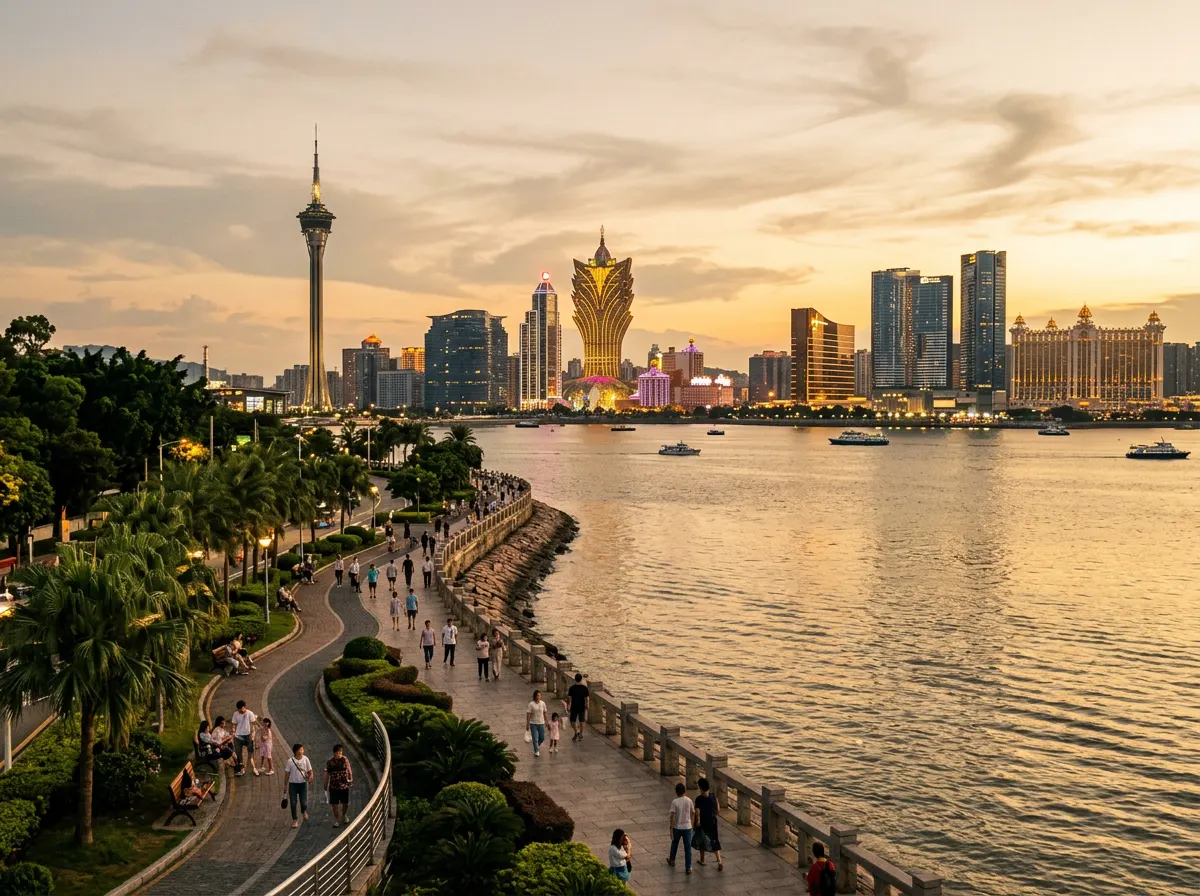
Lovers' Road (情侣路, Qínglǚ Lù)
A 28-kilometer coastal boulevard stretching from Gongbei to Tangjiawan, lined with palm trees, sculptures, and sea views. The Fisher Girl statue, the city's icon, stands midway. Best cycled or walked at sunset. Free.
Wikimedia Commons · CC-BY-SA
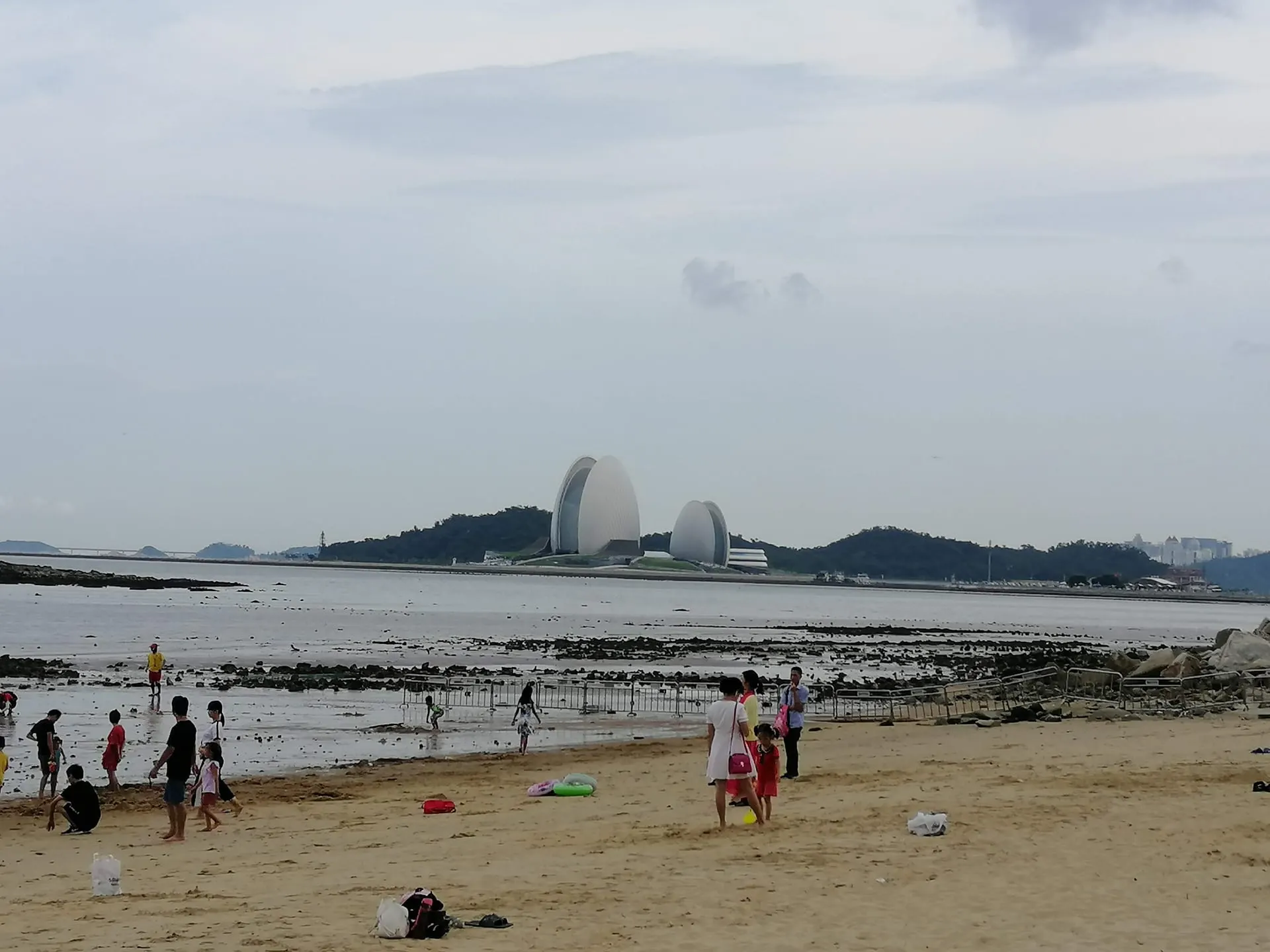
Zhuhai Opera House / Sun and Moon Shells (日月贝, Rì Yuè Bèi)
Two enormous shell-shaped buildings on Yeli Island — one white (the sun), one translucent (the moon) — designed by Beijing-based architect Chen Keshi. The larger shell seats 1,550. The exterior is free to photograph; performances from ¥180 as of June 2026.
Wikimedia Commons · CC-BY-SA
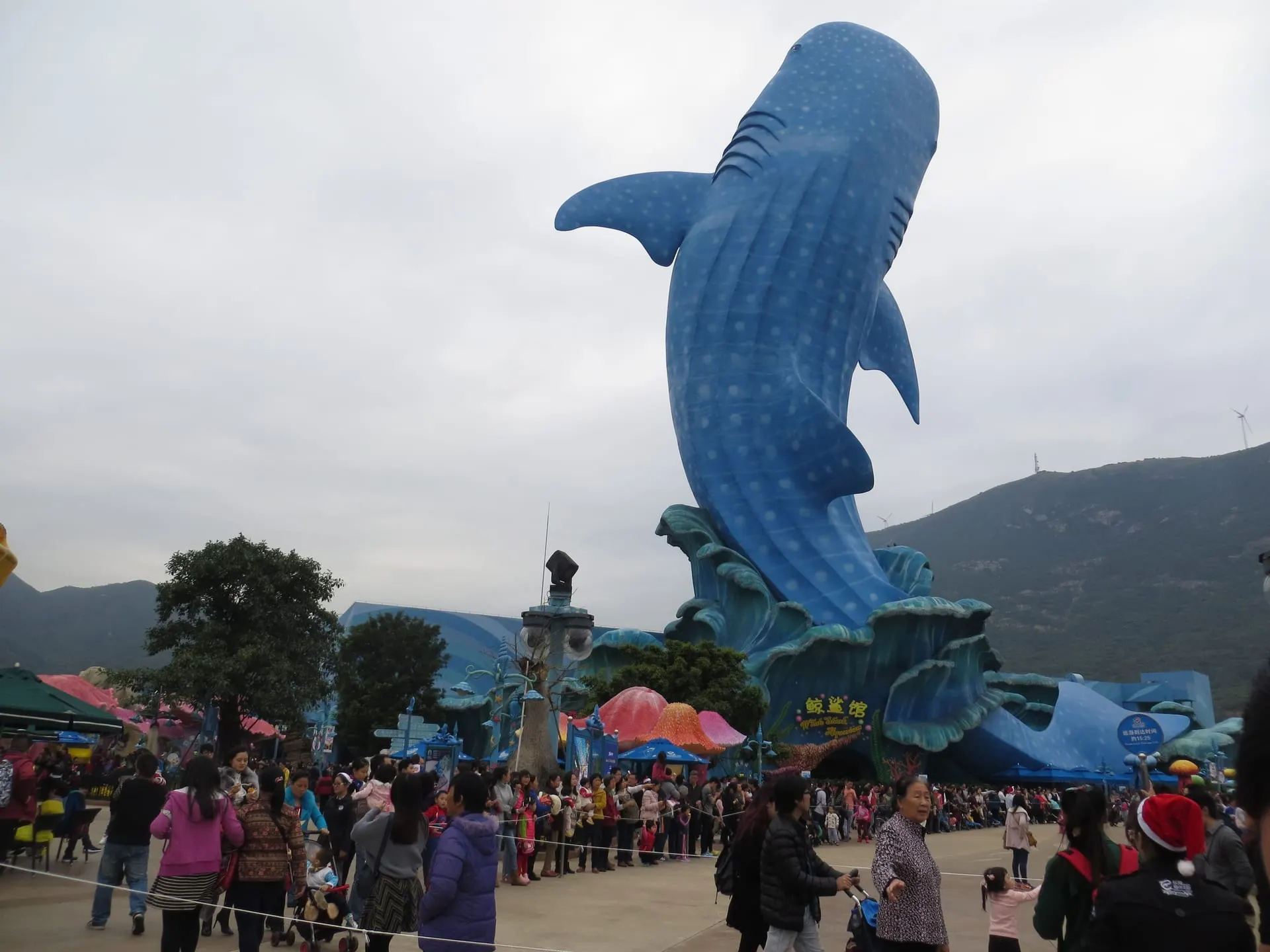
Chimelong Ocean Kingdom (长隆海洋王国, Chánglóng Hǎiyáng Wángguó)
A 130-hectare marine theme park on Hengqin Island with the world's largest aquarium tank (22.7 million liters), whale shark exhibits, penguin habitat, and a night parade with fireworks. ¥395 per adult as of June 2026 — expensive but genuinely world-class.
Wikimedia Commons · CC-BY-SA
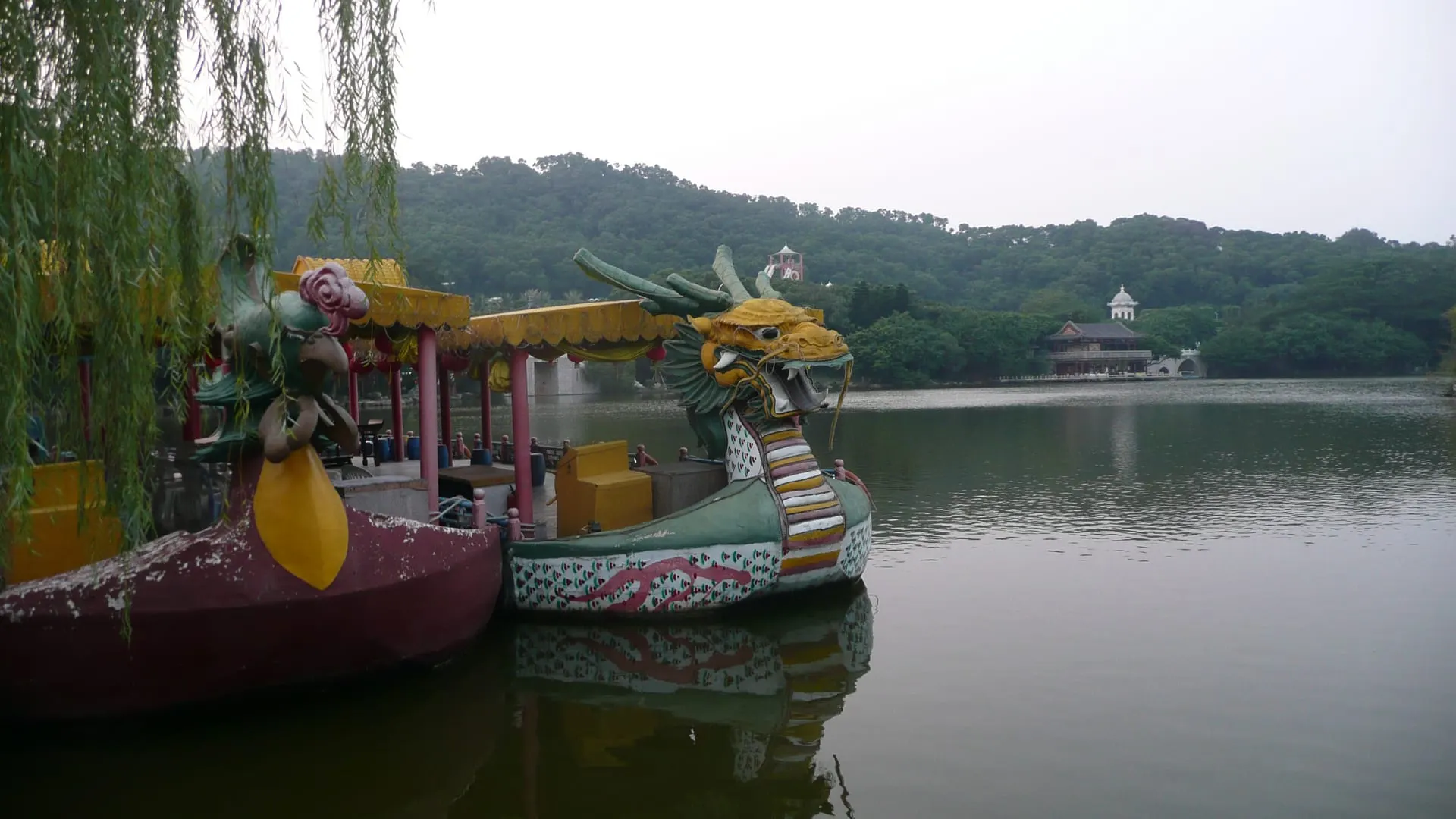
New Yuanming Palace (圆明新园, Yuánmíng Xīnyuán)
A partial replica of Beijing's Old Summer Palace (Yuanmingyuan), built in the 1990s on 1.4 square kilometers with lakes, classical gardens, and Qing-style pavilions. Free entry since 2020. Kitschy but photogenic.
Wikimedia Commons · CC-BY-SA
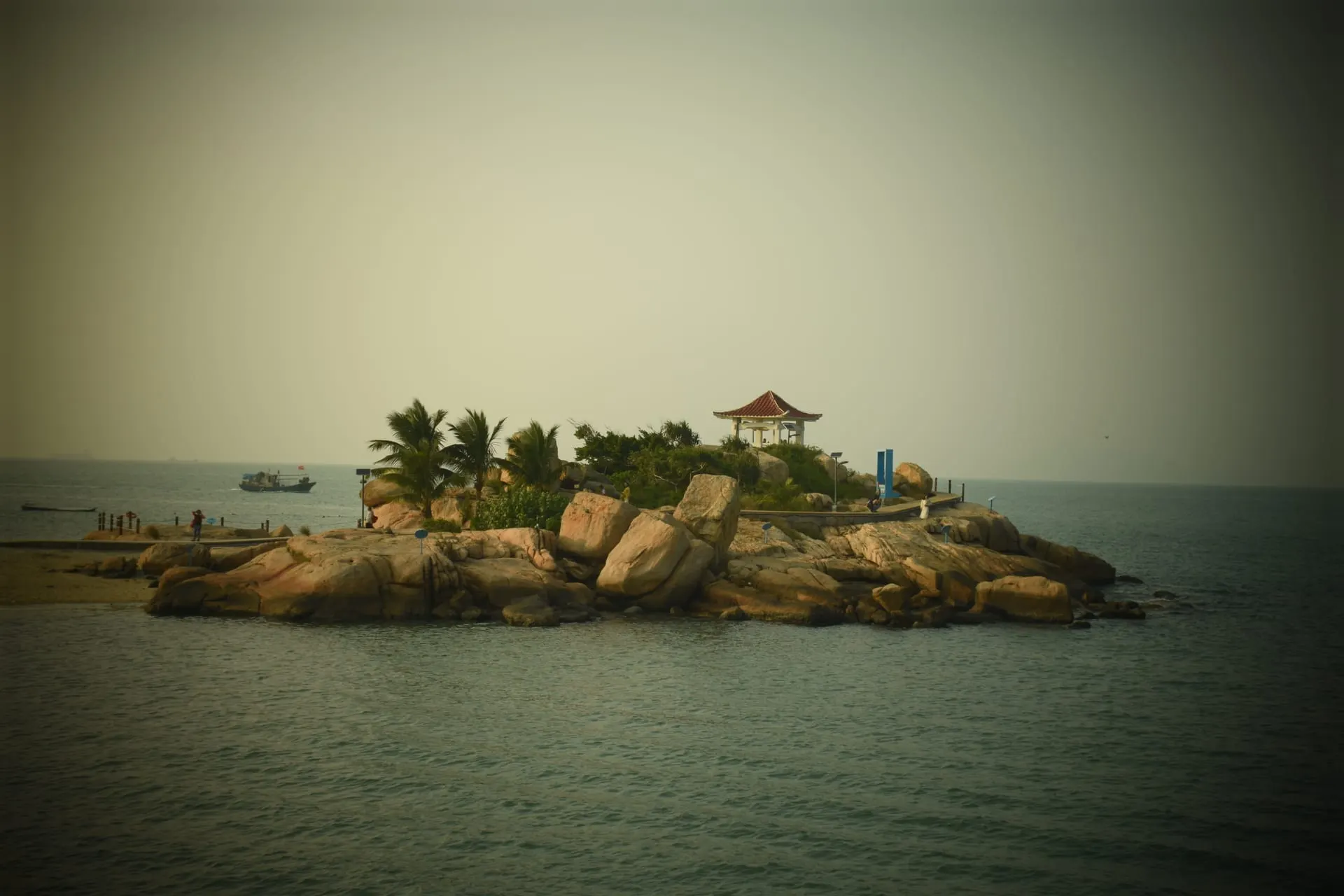
Wailingding Island (外伶仃岛, Wàilíngdīng Dǎo)
The most accessible of Zhuhai's outer islands, about 1.5 hours by ferry from Xiangzhou Port. Clear water, granite boulders, hiking trails up Lingding Peak (311m), and fresh seafood restaurants along the waterfront. Ferry ¥120 each way as of June 2026.
Wikimedia Commons · CC-BY-SA
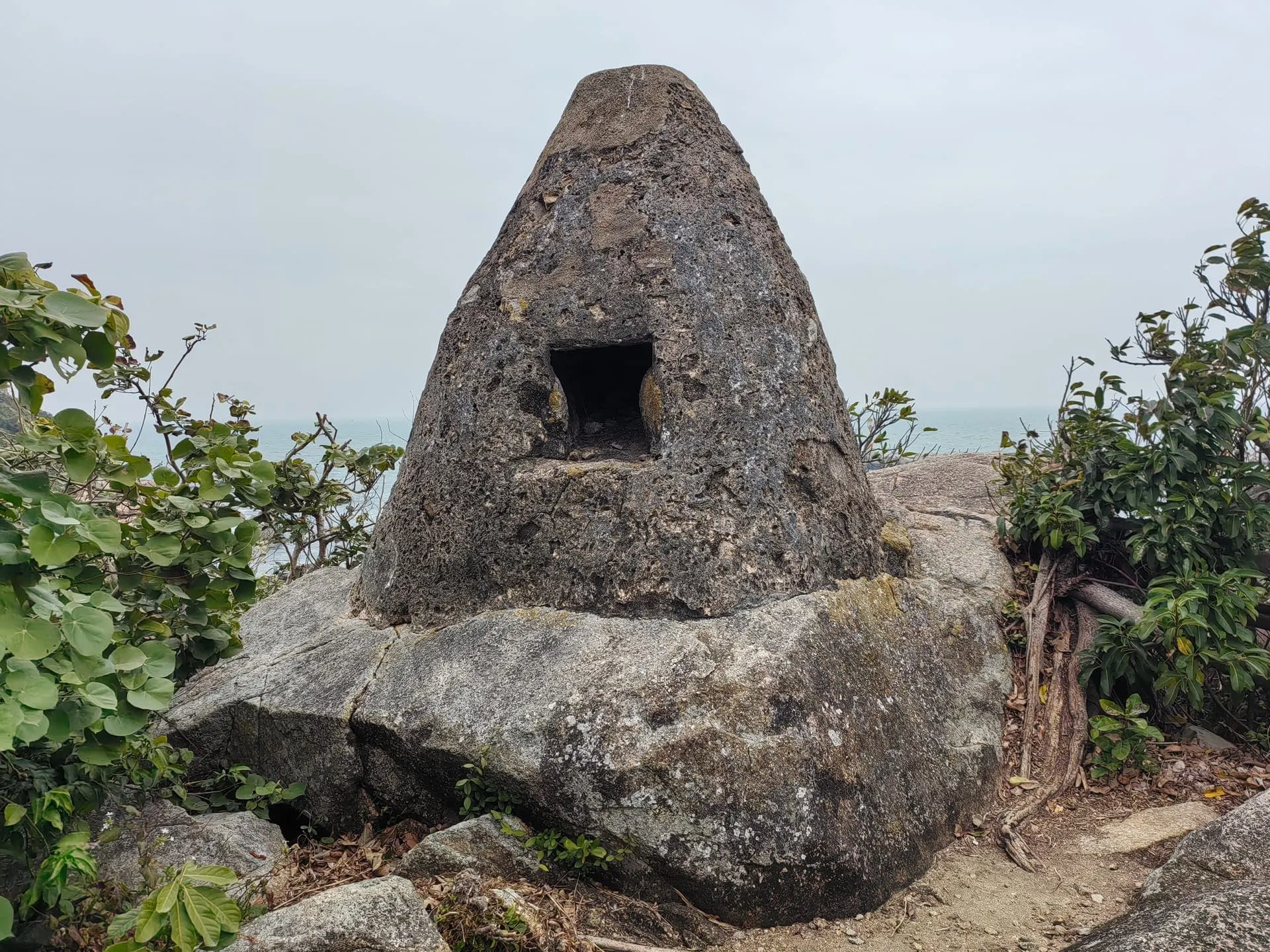
Dong'ao Island (东澳岛, Dōng'ào Dǎo)
A quieter, more upscale island 50 minutes by ferry from Hengqin Port, with a crescent white-sand beach (Nansha Bay), forest trails, and a restored Qing-dynasty fortress. The Club Med Dong'ao Island resort dominates the higher end. Ferry ¥85-130 each way.
Wikimedia Commons · CC-BY-SA
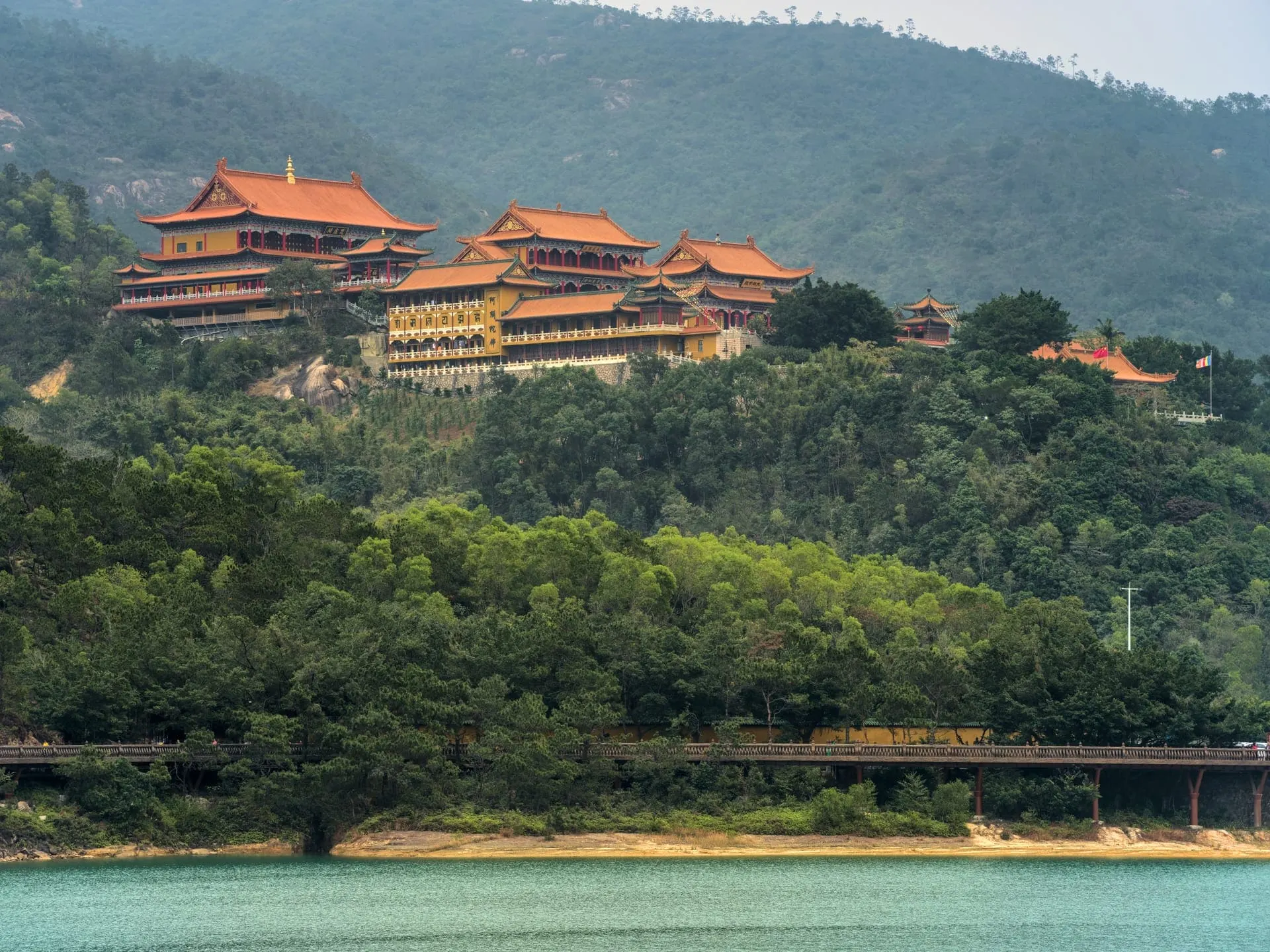
Jintai Temple (金台寺, Jīntái Sì)
A Buddhist temple perched on a hillside overlooking a reservoir in Doumen district, about 40 minutes northwest of the city center. Originally built in 1279 during the Southern Song, rebuilt in the 1990s. Free; the mountain setting and reservoir views are the real draw.
Wikimedia Commons · CC-BY-SA

Hong Kong-Zhuhai-Macau Bridge (港珠澳大桥, Gǎng Zhū Ào Dàqiáo)
The world's longest sea crossing at 55 km, opened in 2018. The Zhuhai Port artificial island has a viewing platform and visitor center explaining the engineering (¥30). You can also ride a shuttle bus across the bridge to Hong Kong (¥65, 40 minutes).
Wikimedia Commons · CC-BY-SA
Problems travelers hit in Zhuhai
- Why is my Alipay not working?You linked a foreign Visa or Mastercard to Alipay but every transaction is rejected at the merchant.
- My China visa was denied — what now?Your L visa application was refused at the Chinese consulate and your trip is in 2–4 weeks.
- My passport was lost or stolen in China — what do I do?Your passport is gone (theft or loss) and you're in mainland China without travel documents.
- Why can't I book on 12306 with my foreign card?You tried to book a high-speed rail ticket on 12306.cn and your foreign Visa/Mastercard is rejected at checkout.
- Why is my VPN not working in China?You arrived in China, opened your VPN, and it will not connect at all or connects but no traffic loads.
- Why can't I book a Tibet trip on my own?You try to book Lhasa flights and hotels yourself but the booking fails, or you're turned away at the Lhasa airport without a permit.
Book activities in Zhuhai
These are licensed tour operators and booking platforms we've vetted independently. Booking through these links may earn us a commission — see our affiliate disclosure. This never affects our editorial recommendations or the price you pay.
Frequently asked questions
Is Zhuhai worth visiting for foreign tourists?
How many days do I need in Zhuhai?
Can I do a day trip to Macau from Zhuhai?
What is the best way to get from Zhuhai to Hong Kong?
How do I get to Wailingding Island and is it worth it?
Is Chimelong Ocean Kingdom worth ¥395?
Show all 20 FAQs
What is the difference between Wailingding and Dong'ao islands?
Where is the best seafood in Zhuhai?
Do I need to speak Cantonese in Zhuhai?
What is the best time of year to visit Zhuhai?
Is Zhuhai safe?
Can I use Alipay and WeChat Pay in Zhuhai?
What should I pack for Zhuhai?
Is Zhuhai family-friendly?
Can I visit Zhuhai as part of a Macau trip?
What is the Zhuhai Opera House and is it worth seeing?
How does Zhuhai compare to Shenzhen or Guangzhou?
What is the Hong Kong-Zhuhai-Macau Bridge and can I visit it?
Are there good beaches in Zhuhai?
What is the single best day in Zhuhai?
References

Related guides & destinations
Guide
How We Research 2026: NihaoVisit’s Methodology for China Travel Information
How NihaoVisit sources, verifies, and maintains 700+ pages of China travel information — our source hierarchy, fact-checking process, update
Guide
Fact-Checking Log 2026: Verified China Travel Information — NihaoVisit
A public log of fact-checking verification passes on NihaoVisit, showing what was verified, when, and against which sources — covering visa
Guide
Best Time to Visit China 2026: Month-by-Month Weather, Crowds, and Prices
The best time to visit most of China is April–May and September–October. Winter (Dec–Feb) is cold but cheap; summer (Jun–Aug) is hot and cro
Guide
VPN for China 2026: Which VPNs Work, eSIM Alternatives, and the Complete Pre-Trip Checklist
Most Western apps and websites are blocked in mainland China. A reliable VPN is essential for Google, Gmail, WhatsApp, Instagram, and most n
Guide
China SIM Card and eSIM Guide 2026: Stay Connected Without WeChat
A Chinese SIM or eSIM lets you use mobile data, maps, and ride-hailing without WiFi. Here is how to get one, the cost, and which provider to
Guide
Solo Female Travel in China 2026: Safety, Tips, and Real Experiences
China is one of the safer destinations for solo female travelers. Petty theft is rare, violent crime against tourists is extremely uncommon,