
Summary
Give Anshan two full days: one for the granite peaks of Qianshan, the 5A scenic area whose highest point, Xianrentai, stands 708.3 m above the Liaoning plain, and one for the city — the Jade Buddha Palace with its 260.76-tonne figure carved from a single Xiuyan boulder, an afternoon soak in Tanggangzi's hot mineral water, and dinner on Haicheng pie. May-June and September-October are the reliable windows; mid-range spending runs about 500-1000 CNY per person per day. The city sits on the Harbin-Dalian high-speed line — 20-30 minutes from Shenyang, roughly 1.5 hours from Dalian — which makes it an easy bracket around either city.
This guide is written for travelers deciding whether Anshan earns its own stop between Shenyang and Dalian, and how to chain the mountain, the jade and the springs without a car. Every figure below was cross-checked against our trip-day data for Anshan and current price notices in October 2026.
Why Anshan
Anshan is a prefecture-level city of about 3.3 million people roughly 90 km southwest of Shenyang, and its identity is written in three materials: steel, jade and granite. The steel is the loudest. On 9 July 1949, Angang — the Anshan Iron and Steel Group — held its reopening ceremony as New China's first large steel complex; the first ladle of steel, the first steel rail and the first seamless steel tube of the People's Republic all came out of its works. Locals still call the city gangdu, the steel capital.
The jade is quieter but older in the memory. The 260.76-tonne boulder that became the Jade Buddha came out of the Xiuyan mines in the county's hills, and jade trading still fills the workshops of Xiuyan county two hours to the southeast. The granite belongs to Qianshan — "thousand mountains", traditionally counted as 999 peaks of gray rock and pine, the number-one mountain of Liaodong — and it frames the horizon from almost any street in town.
The honest trade-offs: Anshan's city center is a working grid built around the mills, not a preserved old town; English signage thins out within a few steps of the main ticket halls; and between November and March the weather is dry, sharp and cold, with daytime highs around or below freezing. The city rewards travelers who come for the mountain and the jade and treat the urban grid as a comfortable, inexpensive base — not those expecting a second Dalian.
Top Sights
Qianshan: the 5A peak forest
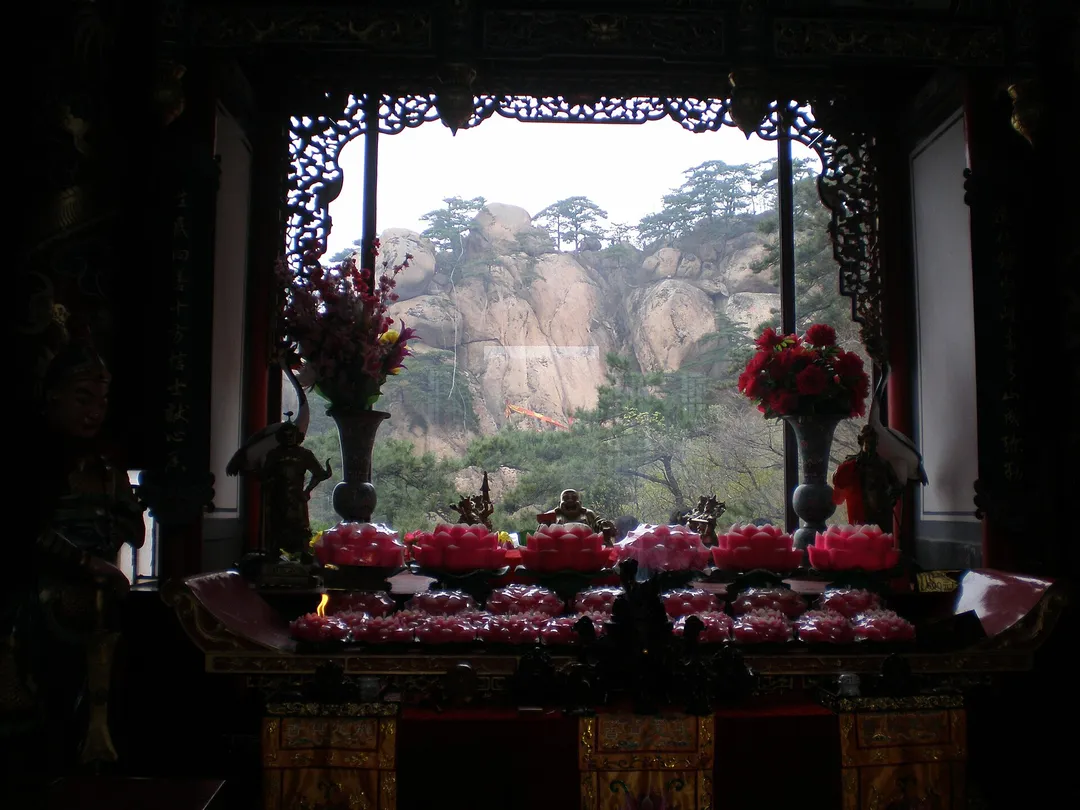
Qianshan National Park lies about 17 km southeast of downtown, a 30-40 minute ride. It has carried the national scenic-area designation since 1982 (in the first batch) and the 5A rating since 2017, and its granite domes stack up in ridges the way the classical painters drew them. The summit circuit tops out at Xianrentai, 708.3 m — a snake-back ledge some 20 m long, guarded by the temples of the southern valley. Monasteries have worked these slopes since the Liao and Jin dynasties; the "five great Chan monasteries" — Longquan Temple is the best kept — share the ridges with Taoist compounds such as Wuliang Guan, founded in the early Qing.
Entry costs CNY 80 in season (concession CNY 40); three cableways — Tiantianshang, Dafo and Wufoading — lift walkers past most of the stair work at about CNY 50 one way. Gates run 06:00-18:00 in season, with the visitor center open 08:00-17:00. The natural Maitreya Buddha — a rock face that reads unmistakably as a seated giant once it is pointed out, identified in 1993 — sits on its own circuit with a cableway of its name. Real walking shoes matter: even with the cable, the ridgeline is stairs, and a full circuit takes most of a day.
Jade Buddha Palace: one boulder, two faces
In the city's Tiedong district, next door to 219 Park, the Jade Buddha Palace (Yufuyuan) was built around a single stone. The boulder — 7.95 m long, 6.88 m wide, 4.1 m high, 260.76 tonnes of polychrome Xiuyan jade — was quarried in 1960, hauled to Anshan in 1992, and carved over 17 months by a team of 120 jade craftsmen: Sakyamuni on the front, a sea-crossing Guanyin on the back, the two faces placed where the stone's own colors wanted them. In 1997 Guinness certified it as the largest jade Buddha in the world. The double-eaved pavilion that shelters it rises 33 m. Entry runs about CNY 70; an unhurried visit, with the temple grounds and the neighboring park, fills half a day.
Tanggangzi: springs and hot mud
The hot-spring district of Tanggangzi sits about 15 km south of downtown, on ground people have soaked in since the Tang dynasty — court tradition credits Emperor Taizong's eastern campaigns with putting the springs on the map. Zhang Zuolin built his Longquan Villa here in the 1920s, and in 1932 the last emperor, Puyi, bathed twice at the Dragon Palace spa; the bathhouses of his era still stand inside the sanatorium, which the state organized in 1950 as one of China's four major rehabilitation centers, with some 1,800 beds. The signature is the hot mineral mud — vats held at roughly 72 °C, applied as packs in the mud halls. Day passes to the bathing area start around CNY 50; treatments cost more. Half a day, matched with an early dinner back downtown, is the right dose.
219 Park and the Ansteel Museum
219 Park, the city's green lung beside the Jade Buddha Palace, takes its name from 19 February 1948 — the day Anshan was liberated in the civil war. Lakeside paths, boating and an amusement corner make it the local evening ritual. For the steel half of the story, the Ansteel Group Museum puts the old No. 1 blast furnace — about 71 m tall and some 2,000 tonnes of iron, preserved as a national first-class relic — at the center of galleries covering the 1949 reopening, model worker Meng Tai's salvage campaigns, and the first rails that went out to build the country's railways. The city museum nearby adds the jade and steel collections. Together: a half-day, mostly indoors, welcome in any weather.
Xiuyan: the jade county
Two hours southeast by road, Xiuyan Manchu Autonomous County is where the Buddha's boulder was born. The county town runs on jade: a carving expo center, blocks and bangles in every shopfront, and workshops where you can buy from the cutter. It needs its own day and pairs naturally with a second Qianshan morning — squeeze it into an afternoon and you will see neither properly.
Where to Stay
Stay in Tiedong, the district that holds the Jade Buddha Palace and 219 Park: mid-range chains around the pedestrian streets run roughly 200-350 CNY a night, breakfast noodle shops open within two blocks, and both the mountain road and the Tanggangzi road start from here. The Qianshan gate area has spa hotels of its own — the sensible choice if a second mountain morning or a foot soak is the priority. Business hotels near Anshan West station suit travelers bending straight through by rail. Book ahead for the first week of May and October; walk in otherwise.
Food: Pies, Pears and Dongbei Tables
Anshan eats like Liaoning: big portions, pan flavors, wheat and corn where the south eats rice. The dish to order first is the Haicheng pie — xianbing from Haicheng, the county-level city under Anshan, most famously the Niuzhuang version from the old river town that the 1858 Treaty of Tianjin listed as a treaty port. Thin skin, generous filling (beef, pork, or the local "sea three delicacies"), griddle-crisped outside and juicy within; the craft has held provincial intangible-heritage status since 2011 and its origin stories reach back a century or more. A stack of pies and a bowl of millet porridge runs 15-25 CNY.
Autumn adds the nanguo pear, the small, aromatic, slightly russeted pear grown in the hills around Haicheng — street crates appear from mid-September and the best ones perfume a whole room. For sit-down meals, Dongbei standards — di-sanxian braised vegetables, guobaorou sweet-sour pork, dumplings by the tray — feed two for 60-100 CNY. Pay by Alipay or WeChat almost everywhere; keep CNY 50 or so in small notes for market stalls.
Getting There and Around
The Harbin-Dalian high-speed railway opened on 1 December 2012 — the world's first HSR built for severe-cold regions, 921 km end to end, designed for 350 km/h — and Anshan West station sits on it between Liaoyang and Haicheng. The conventional station, Anshan, keeps the slower stopping trains. Most long-haul flyers arrive via Shenyang Taoxian airport (SHE) and transfer to rail; Anshan's own small airport carries a thin domestic schedule.
| Route | Typical time | Typical cost |
|---|---|---|
| Shenyang → Anshan West | HSR, 20-30 min | from about CNY 40 |
| Dalian North → Anshan West | HSR, about 1-1.5 h | from about CNY 130 |
| Harbin West → Anshan West | HSR, about 2-2.5 h | from about CNY 250 |
| Anshan West → downtown (Tiedong) | taxi, about 25 min | about CNY 30-40 |
| Downtown → Qianshan gate | bus or taxi, 30-40 min | bus a few CNY; taxi about CNY 50 |
| Downtown → Tanggangzi | taxi or bus, 20-30 min | taxi about CNY 30 |
Fares are second-class listings and move with demand — reconfirm close to travel. Inside the city there is no metro: buses, taxis and the Didi app cover everything the visitor needs for 10-20 CNY a ride.
When to Go
Ranked: first, September-October — clear air on the Qianshan ridgeline, the nanguo pear harvest from mid-September, the light photographers wait for; second, May-June, when the mountain greens up and temperatures sit in the low twenties. Winter is the honest-weather season: the granite domes carry snow and the hot springs earn their keep, but ridgeline walks close in ice and January highs hover around freezing. July-August bring heat around 30 °C and the year's rain. Whatever the season, skip the national holiday weeks in early February, early May and early October — the 80 CNY mountain ticket sells beside queues that eat whole mornings.
A Two-Day Plan
Work it in this order and swap only if rain moves in:
- Day 1 — Qianshan. Through the gate by 08:00, cableway up, temple circuits while the tour coaches are still on the road, ridge walk toward Xianrentai as far as legs allow. Down by late afternoon; pies in Tiedong for dinner.
- Day 2 — Jade, steel and springs. Jade Buddha Palace at opening (about CNY 70), 219 Park loop, then the Ansteel Museum through the middle of the day. Late afternoon taxi to Tanggangzi (about 20 minutes) for a mud pack and a soak; back downtown for a proper Dongbei dinner.
With a third day, put Xiuyan's jade workshops first on the list, or hand the day to Shenyang — the Mukden Palace, an early-Qing imperial residence UNESCO listed since 2004, sits half an hour north by HSR. Our trip-day planners for Anshan spread the same stops across 5, 7 and 14 days.
Beyond the Highlights
The sessions nobody schedules are the ones that make the city stick: morning queues outside pie shops in Tiedong; the Martyrs' Hill steps at dusk for the panorama of mills and mountains; evening taiji around the 219 Park lake; and the moment, halfway up a Qianshan stair, when the next temple roof appears under the granite. The lunar calendar still runs the background — temple fairs on festival days fill the mountain courtyards with local pilgrims rather than tour groups, and prices at the gate do not change with them.
Frequently Asked Questions
How many days does Anshan need?
Two full days cover the essential triangle — Qianshan, the Jade Buddha Palace, Tanggangzi — at an unhurried pace. A third day adds Xiuyan's jade market or a Shenyang side trip; beyond that, most travelers move on.
How do I get to Qianshan without a car?
The park gate is about 17 km from downtown, 30-40 minutes by taxi (about CNY 50 one way) or by city bus for a few CNY. There is no metro in Anshan; taxis and Didi are the practical default.
Can I use Tanggangzi springs on a day trip?
Yes. Day access to the bathing area starts around CNY 50, with mud-bath treatments priced separately; the mineral mud vats run at roughly 72 °C. Go late afternoon, bring your own swimwear, and expect the full circuit to take two to three hours.
When is nanguo pear season?
Mid-September through October. Street crates peak around the autumn equinox; buy small, fragrant fruit with a russet blush rather than the largest size.
Is the Jade Buddha really one stone?
Yes — a single 260.76-tonne boulder of Xiuyan jade, 7.95 m long, carved by 120 craftsmen over 17 months and certified by Guinness in 1997 as the world's largest jade Buddha. Sakyamuni faces the entrance, Guanyin the rear.
Decision Support
Map
Orient on one line and three spurs. The rail line runs north-south through Anshan West station; from downtown Tiedong, three roads fan out — southeast to Qianshan (17 km), south to Tanggangzi (about 15 km), and southeast onward to Xiuyan (two hours). Amap (Gaode) handles local routing best; download it offline before the mountain, where signal drops in the valleys.
Cost breakdown
| Per person, per day, 2026 | Backpacker | Mid-range | Comfort |
|---|---|---|---|
| Accommodation | 100-150 CNY | 300-600 CNY | 700+ CNY |
| Food | 50-80 CNY | 100-200 CNY | 250+ CNY |
| Local transport | 20-30 CNY | 30-60 CNY | 100+ CNY (car with driver) |
| Attractions | 0-80 CNY | 80-180 CNY | 200+ CNY |
| Daily total | about 170-340 CNY | about 500-1000 CNY | 1200+ CNY |
The mountain day resets the math: 80 CNY entry plus about 50 CNY per cableway ride, then nothing for the next day's park-and-museum circuit. Budget numbers above line up with the roster's mid-range benchmark of roughly 100 units per standard day, excluding tickets.
When to go
One answer: late September — ridge air, pear crates, and pre-holiday calm at the gate. The roster's "most pleasant" answer, spring (April-May) and autumn (September-October), is right for walking; just keep clear of the first weeks of May and October.
Practical
Five calls carry the trip. One: base in Tiedong, two nights minimum. Two: enter Qianshan by 08:00 and buy entry plus cableway together. Three: put the springs on the afternoon of the city day — the mud halls thin out after 16:00. Four: carry about CNY 100 in small notes for pie stalls and pear crates. Five: if rain wins, swap the mountain day with the city day, in that order.
Useful Phrases
| Chinese | Pinyin | Meaning |
|---|---|---|
| 鞍山 | Ānshān | Anshan, "saddle mountain" |
| 千山 | Qiānshān | Qianshan, "thousand mountains" |
| 玉佛苑 | Yùfóyuàn | Jade Buddha Palace |
| 钢都 | gāngdū | steel capital, the city's nickname |
| 海城馅饼 | Hǎichéng xiànbǐng | Haicheng pie |
| 南果梨 | nánguǒlí | nanguo pear |
| 多少钱 | duōshǎo qián | how much |
| 谢谢 | xièxie | thank you |
Emergency Contacts
- Police: 110
- Ambulance: 120
- Fire: 119
- Tourist hotline: 12301
Sources and Verification
Ticket and cableway figures for Qianshan were checked in October 2026 against the scenic area's published price notices (CNY 80 in season, 06:00-18:00 hours) and aggregator listings; the jade Buddha's weight, carving team and 1997 Guinness certification, the Tanggangzi spa history and the Harbin-Dalian HSR opening date against reference listings, and the rest against our own trip-day data for Anshan. Prices move with the seasons — reconfirm within a fortnight of travel.
Anshan rewards travelers who give it two real days: peaks in the morning light, one stone that became two buddhas, mud and hot water at dusk, and pie after. Last verified 2026-10-12.