

Loudi at a Glance

Loudi is the least advertised prefecture in Hunan, and its two headline sights are worth the detour precisely because of that. The first is vertical: Ziquejie, in Xinhua county, where rice has been planted for more than 2,000 years on some 5,300 hectares of terraces stepping up slopes of 30-50 degrees between 500 and 1,200 metres — watered by hillside springs rather than dams, which is why the fields flood in April-May and turn gold in September-October. The second is a house: Fuhou Tang in Shuangfeng county, the residence begun in 1865 for the family of Zeng Guofan, the Qing statesman whose book towers here once held some 300,000 volumes. Between them sits the cave country — the Meishan Dragon Palace system runs 4.66 kilometres with a boat ride on its underground river — and a city that makes no effort to charm, which after Hunan's big names reads as honesty.
The numbers: a mid-range day runs 500-1000 CNY per person including a 300-600 CNY hotel; the circuit works in 2-3 days; and Loudi South station puts Changsha about an hour behind you.
Why Loudi
Loudi does not do postcards, and this guide will not pretend otherwise. The city grew on coal and steel — the Lian riverfront in the photo above runs under exactly that working skyline — and the reward for travellers is a prefecture whose countryside holds sights that busier counties would have fenced, ticketed and coached by now. At Ziquejie you share the ridge paths with farmers. At Fuhou Tang the courtyards are quiet enough to hear the bamboo. The Meishan caves run boats on a river that has never seen a queue.
The trade-offs are real: intercity distances are road distances (Fuhou Tang is about 85 km southeast of the station), English signage is close to zero outside hotels, and the city itself is a functional overnight base rather than a destination. What you get is Hunan at its most local — for less money and less crowd than anywhere on the provincial highlight reel.
Fuhou Tang: the Residence and the Library
Southeast of the city in He-ye township, Shuangfeng, Fuhou Tang (富厚堂) is the ancestral estate of the Zeng family — begun in 1865 and best known as the home of Zeng Guofan (1811-1872), the general and statesman who put down the Taiping Rebellion and whose family letters became the manual of Chinese household education. The compound's book towers, built to house the family library, once held some 300,000 volumes — one of the largest private libraries of the Qing. The halls, courtyards and stone-flagged walks take 1.5-2 hours at a real pace, and the estate's setting among lotus ponds and low hills does the rest.
Practical frame: about 85 km from Loudi South station, call it 1.5 hours by road; pair it with the Lian riverfront walk back in the city for the evening.
Ziquejie: the Terraces Without Dams
Ziquejie (紫鹊界), in Shuiche township of Xinhua county, is the reason photographers end up in Loudi. Rice arrived here more than 2,000 years ago, and generations carved around 5,300 hectares of terraces into slopes of 30-50 degrees, stacked between roughly 500 and 1,200 metres. The engineering secret is the water: no reservoir, no pump — the hillsides' own springs seep through the soil and feed every level, which makes the terrace system one of the few of its kind still running on its original design.
Two windows do the scenery justice. In late April-May the flooded fields turn the whole amphitheatre into stacked mirrors at dawn; in late September-October the same slopes go gold before harvest. Zhenglong old village sits at the foot of the fields — timber houses, stone paths, and an overnight that puts you on the ridge before sunrise. Terraces plus village make a full day from Loudi, or a relaxed overnight in Shuiche.
Meishan Dragon Palace and the Cave Country
The karst under Loudi's hills runs deep: the Meishan Dragon Palace (梅山龙宫) system, about 28 km from Xinhua county town, extends some 4.66 kilometres, and the visit runs a walkway past halls and curtains of flowstone with a boat ride on the underground river — cool, dark and echoing, a sharp change from the ridge tops of Ziquejie. Count half a day with the drive. The same karst country produced Loudi's other nickname, the home of Meishan culture, the old upland tradition of central Hunan; its festivals still colour the mountain towns.
What to Eat in Loudi
The kitchen is Hunan's hill-country version of itself: stronger, saltier, built for farm work.
- Xinhua beef noodles — the red-broth beef noodles of Xiangdong Street in Xinhua, the standard stop before the evening train; a bowl runs 10-20 CNY.
- Ziquejie rice and river fish — the terraces' own short-grain rice with fish from the springs.
- Smoked pork and cured meats — the upland larder, best in village kitchens.
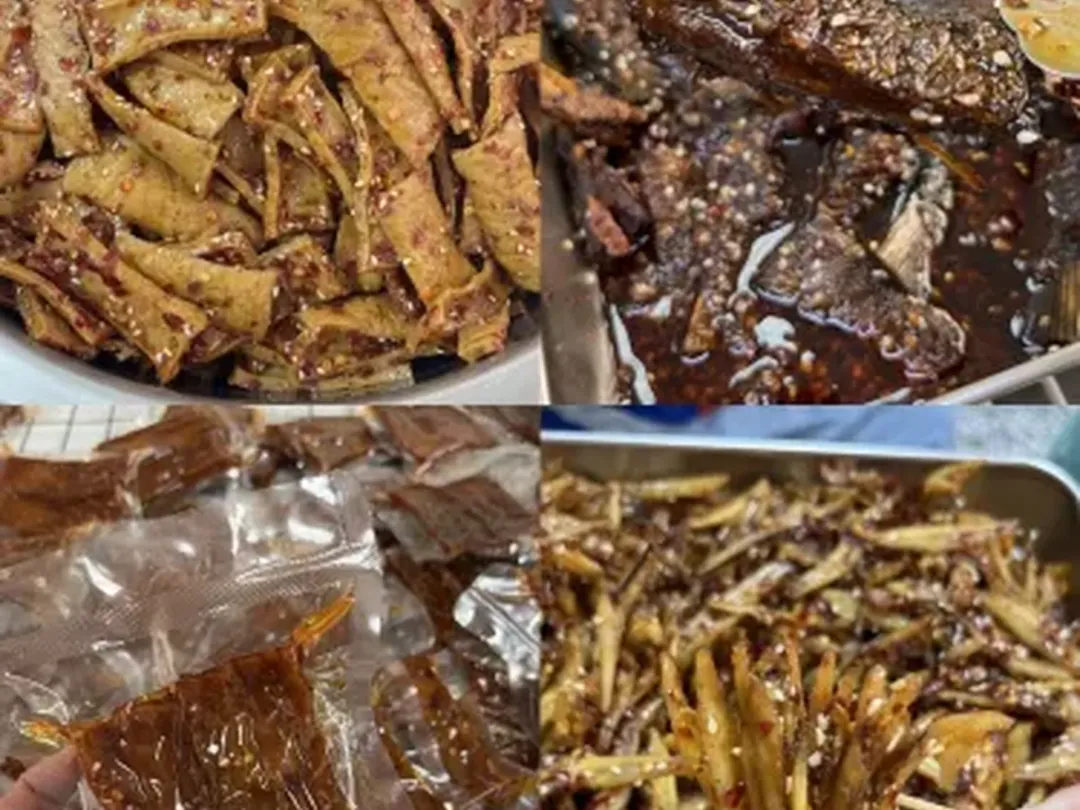
- Yongfeng chili sauce — the county's jarred staple, taken home by the suitcase.
Count 60-120 CNY a day for eating well; the beef noodles are the cheapest memorable meal in Hunan.
A Three-Day Plan
- Day 1 — the statesman and the river. Morning road to Fuhou Tang (about 85 km), the estate through lunch, back for the Lian riverfront at dusk.
- Day 2 — the terraces. Early start to Ziquejie; the ridge paths and viewpoints through the morning, Zhenglong village at the foot for lunch, overnight in Shuiche if the light is good.
- Day 3 — the caves and the train. Meishan Dragon Palace mid-morning, Xiangdong Street beef noodles in Xinhua, and the evening high-speed train from Xinhua South.
The hour-by-hour versions live in our 3-day Loudi trip builder, and the 5-day and 7-day routes fold in Changsha and the wider Hunan circuit.
Getting There: HSR and Local Transport
Loudi South station sits on the Changsha–Huaihua HSR line: Changsha is about an hour east, and Xinhua South — the stop for the terraces and the caves — lies one stop further west. Everything else is road: Fuhou Tang, Ziquejie and the cave are all drives of 1-2 hours from the county seats, so taxis and hired cars carry the itinerary.
| Route | Time | Notes |
|---|---|---|
| Changsha → Loudi South (HSR) | about 1 h | Changsha–Huaihua line |
| Loudi South → Fuhou Tang (Shuangfeng) | about 1.5 h by road | about 85 km southeast |
| Loudi → Ziquejie terraces (Shuiche) | about 1.5-2 h by road | dawn runs reward early starts |
| Xinhua county town → Meishan Dragon Palace | about 40 min by road | about 28 km |
| Xinhua → Xiangdong Street beef noodles | 10-15 min walk from Xinhua South | pre-train stop |
| Loudi South → Xinhua South (HSR) | under 30 min | one stop |
Keep the Chinese name of your destination written down — 娄底 for the city, 紫鹊界 for the terraces, 富厚堂 for the residence — as drivers rarely read English.
Where to Stay
Stay near Loudi South station for arrival and departure ease, or in the centre by the Lian river for dinner options: mid-range hotels run 300-600 CNY a night and everything is a short taxi ride. For the terraces, an overnight in Shuiche township or a guesthouse at Zhenglong village buys sunrise on the ridge; rooms are simple and priced like it. Book nothing special for holidays except Golden Week, when Changsha day-trippers fill the mountain road.
What a Day Costs
| Item | Price | Notes |
|---|---|---|
| Fuhou Tang estate | low seasonal fee | 1.5-2 hours on site |
| Ziquejie terraces | low seasonal fee | viewpoints along the ridge road |
| Meishan Dragon Palace | low-to-mid fee | boat ride included |
| Zhenglong village overnight | 100-200 CNY | simple guesthouse |
| Mid-range hotel (Loudi city) | 300-600 CNY/night | station or riverfront |
| Meals | 100-200 CNY/day | beef noodles to farm tables |
| Local transport | 30-60 CNY/day | taxis; charters extra |
| Attractions | 50-150 CNY/day | one headliner a day |
Match this against our roster's estimate for the city — accommodation 300-600 CNY, food 100-200 CNY, transport 30-60 CNY and tickets 50-150 CNY — for a mid-range total of 500-1000 CNY per person per day. A backpacker day on hostels, buses and noodle shops lands near 40; the luxury ceiling is about 300.
When to Go
April-May floods the terraces — dawn mirrors, plum rain risk. September-October turns them gold before the harvest, with the clearest air of the year. Summer is hot and green in the hills; winter is grey and the springs keep the fields wet. The only true squeeze is the first week of October, when the provincial holiday meets the harvest at the same viewpoints.
Practical Tips
- Payment: link an international card to Alipay or WeChat Pay before arrival; keep 50-100 CNY in small notes for village kitchens and guesthouses.
- eSIM: a tourist data eSIM (about 5-30 USD) avoids the phone-shop passport queue; install a VPN before you fly, since Google, WhatsApp and Instagram are blocked on the mainland.
- English is close to zero outside hotels: screenshot destinations in Chinese and show the characters to drivers.
- Terrace paths are farm paths — wet stone after rain; shoes with grip earn their space.
- Emergencies: police 110, ambulance 120, fire 119, national tourist hotline 12301.
Frequently Asked Questions
How many days do I need in Loudi?
Two cover the residence and the terraces; a third adds the cave system and the beef noodles of Xinhua with a relaxed departure from Xinhua South. One day holds only a rushed Ziquejie loop — possible from Changsha, but thin.
How do I get from Changsha to Loudi?
High-speed trains run Changsha to Loudi South in about 1 hour on the Changsha–Huaihua line; Xinhua South, the stop for Ziquejie and the caves, is under 30 minutes further. Buy on the 12306 app with a passport. From either station, the sights are road trips of 1-2 hours.
When should I see Ziquejie terraces?
Late April-May for the flooded fields — stacked mirrors at dawn — and late September-October for gold before harvest. The water system is the point: about 5,300 hectares of terraces on slopes of 30-50 degrees between 500 and 1,200 metres, fed by hillside springs with no dam. Overnight near Shuiche or Zhenglong village for sunrise.
What is Fuhou Tang and why visit?
The Zeng family residence begun in 1865 in Shuangfeng county — the estate of Zeng Guofan, the Qing statesman, whose family library here once held some 300,000 volumes. It is one of the best-preserved gentry compounds in Hunan, about 85 km southeast of Loudi South, and takes 1.5-2 hours at a real pace.
Is the Meishan Dragon Palace cave worth it?
If you like caves, yes: the system runs about 4.66 kilometres, some 28 km from Xinhua county town, and includes a boat ride on its underground river. Count half a day with the drive and pair it with the beef noodles of Xiangdong Street before the evening train.
What should I eat in Loudi?
Xinhua's red-broth beef noodles first — the Xiangdong Street classic, 10-20 CNY a bowl — then terrace rice with spring fish, upland smoked pork, and Yongfeng chili sauce to carry home. Eating well costs 60-120 CNY a day.
Do I need cash in Loudi?
In the cities, mostly no: Alipay or WeChat Pay linked to an international card works at hotels, restaurants and ticket windows. In the villages — Zhenglong, the Shuiche lanes — keep 50-100 CNY in small notes; some guesthouses and farm tables still do not scan.
Useful Phrases
| Chinese | Pinyin | Meaning |
|---|---|---|
| 你好 | nǐhǎo | hello |
| 谢谢 | xièxie | thank you |
| 多少钱 | duōshǎo qián | how much |
| 娄底 | Lóudǐ | Loudi |
| 紫鹊界梯田 | Zǐquèjiè Tītián | Ziquejie rice terraces |
| 富厚堂 | Fùhòu Táng | Fuhou Tang residence |
| 梅山龙宫 | Méishān Lónggōng | Meishan Dragon Palace cave |
| 正龙古村 | Zhènglóng Gǔcūn | Zhenglong old village |
| 向东街 | Xiàngdōng Jiē | Xiangdong Street beef noodles |
Final Notes
Every figure above — the 2,000-year, 5,300-hectare terrace system on 30-50-degree slopes between 500 and 1,200 metres, the 1865 residence with its 300,000-volume library, the 85 km road to Shuangfeng, the 4.66-kilometre cave river 28 km from Xinhua, the 10-20 CNY beef noodles and the 500-1000 CNY daily band — was checked in October 2026 against our Loudi trip-days data and the sites' published listings. Prices move; reconfirm within a fortnight of travel. Loudi will not perform for you; that is precisely why it is worth the road — mirrors at dawn on Ziquejie, bamboo shadows in a statesman's courtyard, and a bowl of noodles the whole province quietly envies.
- Source: China National Tourism Administration — policy and seasonal notices.
- Source: Trip.com — live train and hotel listings for cross-checks.
Last verified 2026-10-16.