Shenyang · history museum
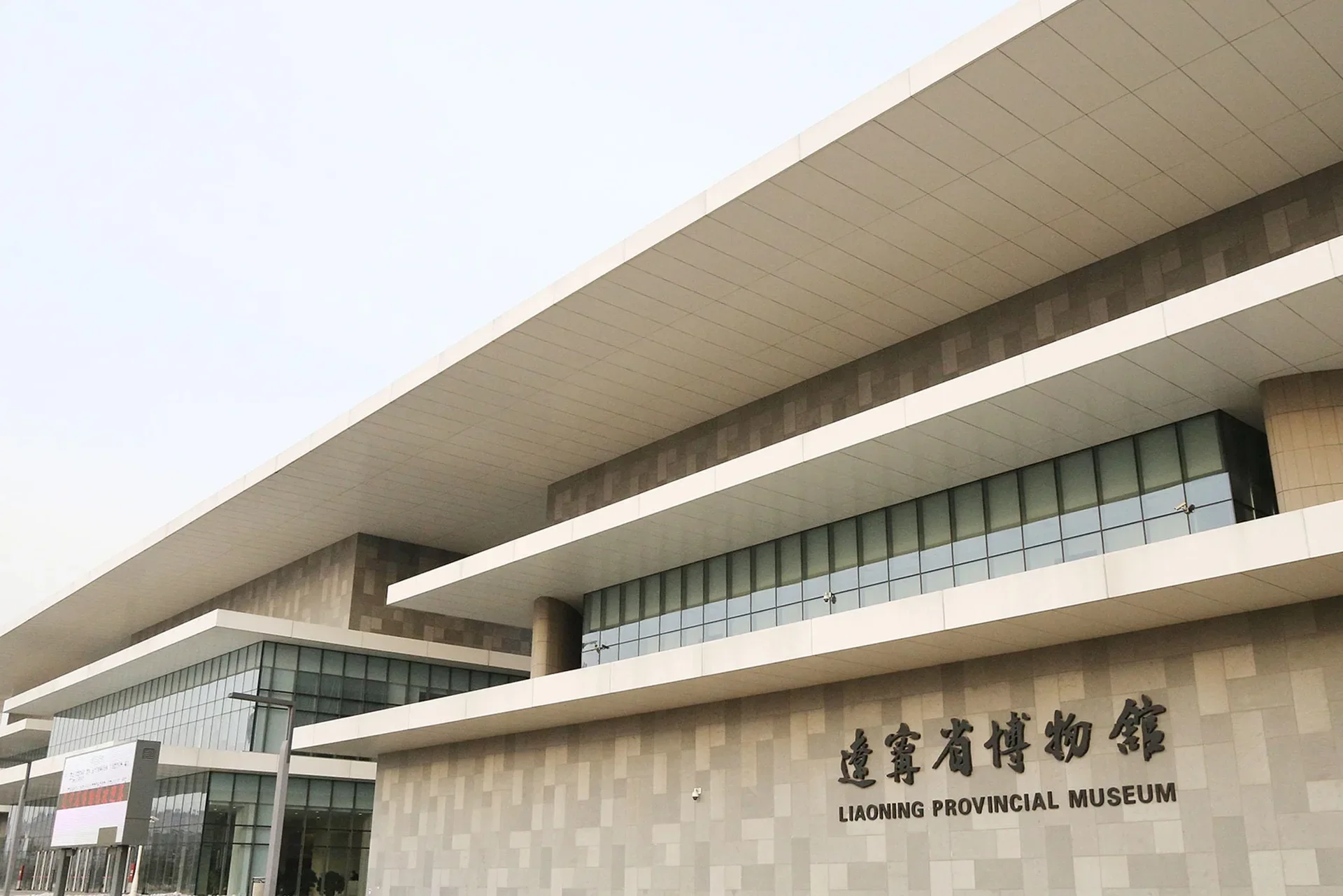
Liaoning Provincial Museum (辽宁省博物馆, Liáoníng Shěng Bówùguǎn)
"The Liaoning Provincial Museum (辽宁省博物馆) opened in Shenyang's Shenhe District in 2011, replacing an older building and becoming the premier cultural institution for Northeast China. Liaoning's geography — bordering North Korea, Russia, and Mongolia, and the historic homeland of the Manchu people who founded the Qing Dynasty — gives the museum a distinctive northeastern Asian cultural scope. The four main collection areas are: (1) Liao Dynasty (Khitan) Buddhist art — the largest collection of Liao Dynasty Buddhist sculpture and paintings in the world, documenting the culture of the nomadic Khitan people who ruled northern China from 907-1125; (2) Paleolithic and Neolithic archaeology of the Northeast — including materials from the Zhoukoudian cave system (Peking Man) and the 10,000-year-old Xinglongwa culture; (3) Manchu and early Qing history — objects from the Nurhaci and Hong Taiji periods before the Qing conquest of China; (4) northeast Chinese ceramics — the distinctive Liaoning black glaze and export ceramics from the Song-Liao period.".
Last updated:
Quick Answer
Is Liaoning Provincial Museum worth visiting?
"Northeast China's strongest museum — the definitive collection of Liao Dynasty (Khitan) Buddhist art,.".. 2026 verified.
Quick facts
| Category | history |
|---|---|
| Ticket | Free. Passport required. Timed entry via Liaoning Museum WeChat mini-program or website. |
| Hours | 9:00-17:00 (last entry 16:00). Closed Mondays. |
| Recommended duration | 3-4 hours. |
| Best time to visit | May through October. Shenyang has extreme continental winters (November-March, -15°C to -5°C) and hot humid summers (June-August, 30-35°C). Spring (April-May) and autumn (September-October) are ideal. |
| How to get there | Metro Line 2 to Liaoning Provincial Museum Station (辽宁省博物馆站), Exit A. Bus routes 108, 130, 152, 214, 238, 272, 333 to Liaoning Museum stop. From Shenyang Railway Station by DiDi: ¥20-30. From Shenyang Taoxian International Airport: ¥50-70. |
| English signage | partial |
Why visit
The Liao Dynasty Buddhist sculpture collection is the finest in the world — the Khitan (Liao) people were major patrons of Buddhist art, producing enormous stone steles, gilded bronze figures, and mural paintings that influenced Buddhist art across all of East Asia. The Manchu-Qing history section provides essential context for understanding the Qing Dynasty origins before visiting the Shenyang Imperial Palace (沈阳故宫).
Collection highlights
- Liao Dynasty Buddhist stone steles — enormous carved stone steles with Buddhist imagery from the 10th-12th century Liao Dynasty, the largest collection of Liao Buddhist stone carving in the world
- Khitan gilded bronze Buddhist figures — small-scale but exquisite gilded bronze Buddhist images produced by the Khitan Liao Dynasty court
- Peking Man (Zhoukoudian) connection materials — archaeological materials from the Zhoukoudian cave system and other northeast China hominid sites, including stone tools and fossil replicas
- Xinglongwa culture artifacts — 10,000-year-old pottery and stone tools from the earliest Neolithic culture of Northeast China
- Manchu and early Qing objects — objects from the Nurhaci (努尔哈赤) and Hong Taiji (皇太极) periods including seals, weapons, and Buddhist objects from before the Qing conquest of Beijing
- Liao Dynasty fresco fragments — mural paintings removed from Liao Dynasty Buddhist temple sites, showing the lively color palette and Buddhist iconography of Khitan art
Tips
- Combine with the Shenyang Imperial Palace (沈阳故宫, 5 minutes by metro) for a full day of Qing Dynasty and Northeast China cultural history
- The Liao Dynasty Buddhist gallery is the most internationally significant — prioritize it
- The museum is adjacent to the Shenyang Imperial Palace and the "Three and Eight" (三八) commercial district for lunch
- Shenyang is a major industrial and commercial city — allow 2-3 days to see both the imperial palace and the museum properly
- The museum is large — allocate at least 3 hours
- Winter visits are feasible because the museum is fully heated — useful if visiting Shenyang's cold winter months
Frequently asked questions
What was the Liao Dynasty?
The Liao Dynasty (辽朝, 907-1125 CE) was founded by the Khitan people (契丹), a nomadic Altaic-speaking people from Mongolia and Northeast China. At its peak, the Liao Empire controlled Mongolia, parts of the Russian Far East, and northern China including present-day Beijing. The Liao Dynasty was a major patron of Buddhist art, and its Buddhist sculpture and paintings were highly influential across East Asia, particularly in Japan and Korea. The Liaoning Provincial Museum has the world's largest collection of Liao Dynasty Buddhist art.
How does this museum compare to the Shenyang Imperial Palace?
They are complementary. The Shenyang Imperial Palace (沈阳故宫) is the physical palace complex where the Qing dynasty's father (Nurhaci) and emperor (Hong Taiji) lived before the conquest of Beijing. The Liaoning Provincial Museum collects and displays objects from all of Northeast China's history, including the Liao Dynasty Buddhist art, prehistoric archaeology, and the broader context of the Qing origins. Both are essential for understanding Northeast China history.
What is the Zhoukoudian connection?
Zhoukoudian (周口店) is the famous cave site near Beijing where "Peking Man" (Homo erectus pekinensis) was discovered in the 1920s-1930s. Liaoning Province has many similar Paleolithic cave sites and shares geological formations with the Zhoukoudian system. The museum has materials from these Northeast China sites, connecting Liaoning to the broader "Peking Man" narrative.
Does Liaoning Provincial Museum have English signage?
Partial — the Liao Dynasty Buddhist section has English labels. The prehistoric archaeology and Manchu-Qing sections have limited English. Audio guides in English are available (¥30 deposit, ¥20 rental).
How does Liaoning Museum compare to Jilin's museums?
Liaoning Museum is the strongest and largest museum in Northeast China. Jilin Province's main museum (吉林省博物馆) is in Changchun and focuses on the Korean ethnic minority culture and Japanese occupation history. Heilongjiang's museum (黑龙江省博物馆) in Harbin focuses on the Russian border culture and the "Northeast China Tiger" ecology. Liaoning Museum is the most significant for ancient history.
Read next
Other things to do in Shenyang
9.18 Historical Museum
Inside a converted 1936 Japanese barracks on the very rail line where Japan staged its 1931 invasion of Manchuria, this 18,000 m² memorial packs 800+ artifacts and 700 photos into roughly 2 hour…
Qing Fu Tombs (East Mausoleum / Dongling Park)
"Shenyang's 388-year-old Qing imperial tomb spreads across roughly 19.4 hectares of pine forest on the eastern outskirts; budget 90 minutes for the one-way Sacred Way and main structures.".
Qing Zhao Tombs / Beiling Park
"A 3.3 million sq m imperial mausoleum park in northern Shenyang holding the tomb of Hong Taiji (r. 1626–1643), doable in 2–3 hours including a slow loop of the lake.".
Shenyang Imperial Palace (Mukden Palace)
"A 1625 Manchu imperial complex of 114 buildings across 60,000 sqm — readable in 2 hours, and the only Forbidden City you can finish without a shuttle bus.".