Jinan · history museum
Shandong Museum (山东博物馆, Shāndōng Bówùguǎn)
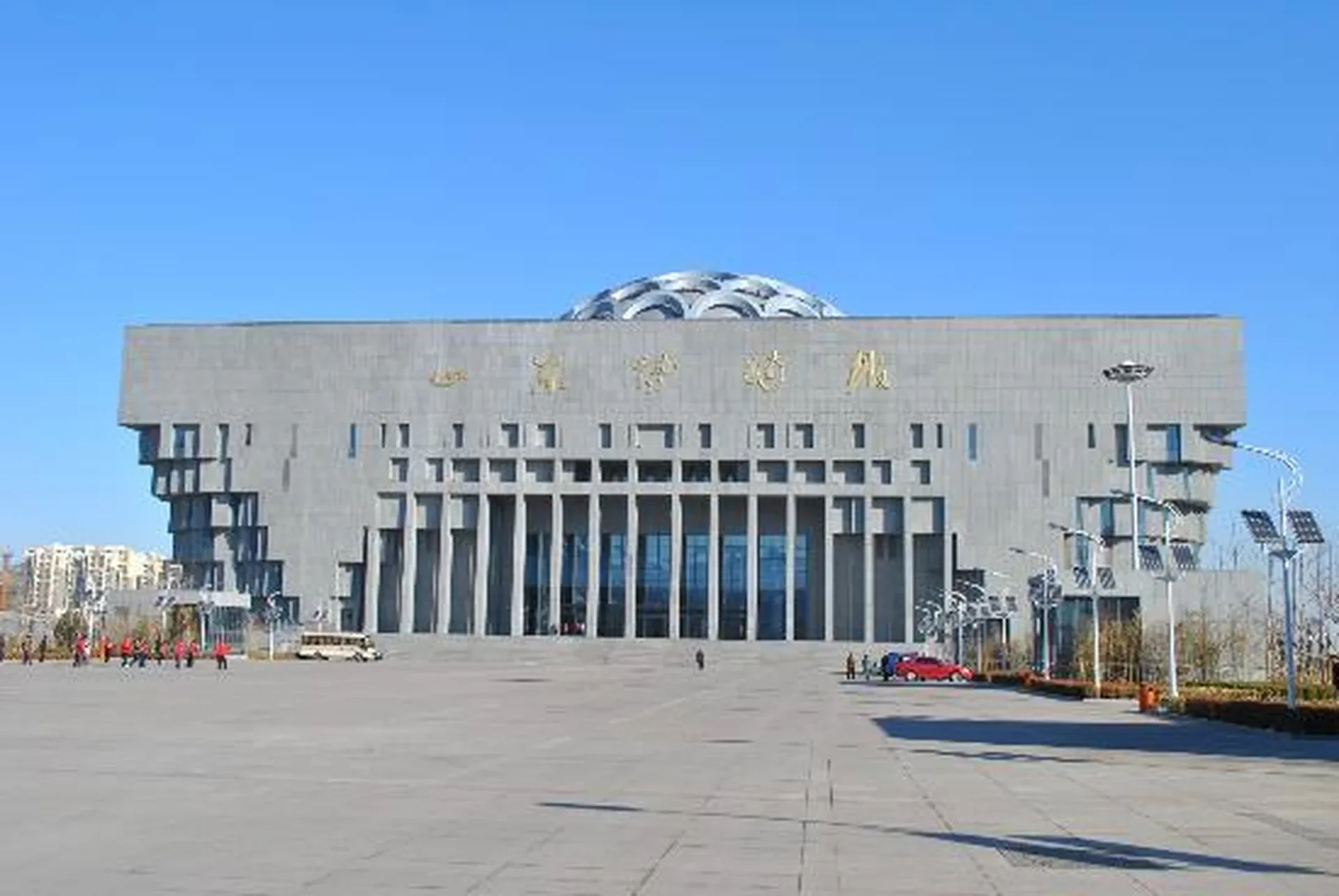
"The Shandong Museum (Shandong Provincial Museum) relocated in 2010 to a colossal new building east of Jinan's city center, shaped to evoke a mountain-and-water landscape. Its collection of 210,000 objects is anchored in Shandong's status as the birthplace of Confucius (551-479 BC) and home to the Dawenkou Neolithic culture (4100-2600 BC). The bronze collection is exceptional — Shandong was a heartland of Shang and Zhou bronze casting, and the museum holds inscribed ritual vessels that document early Chinese state formation. The Confucian-era exhibit covers the Warring States through Han, with bamboo slips, jade ritual objects, and bronze mirrors from the Lu state (Confucius's home state). The Dawenkou gallery displays pottery with the earliest known examples of Chinese pictographic marks — possible precursors to written Chinese characters.".
Last updated:
Quick Answer
Is Shandong Museum worth visiting?
"Confucius-era artifacts, Shang and Zhou Dynasty bronzes, and the Dawenkou Neolithic culture — Shandong's provincial powerhouse. Free. A massive 2010 building east of Jinan's center.".
Quick facts
| Category | history |
|---|---|
| Ticket | Free. Passport required. Reserve via the Shandong Museum WeChat mini-program or scan the QR code at the entrance. Walk-ins usually accommodated on weekdays. |
| Hours | 9:00-17:00 (last entry 16:00). Closed Mondays. |
| Recommended duration | 2.5-3 hours for the main galleries. Add 1 hour for the Buddhist sculpture and calligraphy halls. |
| Best time to visit | Tuesday-Thursday mornings. Jinan springs (March-April) are pleasant and the museum is less crowded than summer. Avoid the week of Qingming Festival (early April) and National Day (October 1-7) — the museum fills to capacity. |
| How to get there | Metro Line 2 to Shandong Museum (山东博物馆), Exit A. Walk east 5 minutes. Or bus routes 115, 119, 139, 152, 160, 171, 187, 202, 326, BRT5, BRT6 to Shandong Museum stop. From Jinan West Station, take bus 202 (50 minutes). DiDi from central Jinan costs ¥25-40. |
| English signage | partial |
Why visit
The Shang and Zhou bronze gallery rivals anything in Beijing or Shanghai — Shandong was home to several major bronze-casting states (Qi, Lu, Ju) and the inscribed vessels here are primary historical documents cast in metal. The Dawenkou neolithic pottery with proto-writing symbols (dated to 3000-2600 BC) is one of the most important collections for understanding the origins of Chinese script.
Collection highlights
- Dawenkou Culture pottery with proto-writing marks — 5,000-year-old pottery vessels incised with symbols that may be precursors to Chinese characters, predating oracle bone script by 1,500 years
- Shang Dynasty inscribed bronze ding from the Ju state — a tripod ritual vessel with over 100 characters cast into its interior wall recording a land grant
- Lu State bronze mirrors and jade — artifacts from Confucius's home state, including ritual jade bi discs and cong tubes from the Spring and Autumn period (770-476 BC)
- Qi State horse-and-chariot burial — a reconstructed pit showing 13 chariots and 32 horses sacrificed for a Warring States nobleman, discovered in Linzi in 1990
- Northern Qi Buddhist stelae — limestone carved with Buddha triads and donors, 6th century AD, from temples around Jinan
- Confucian bamboo slip texts — Han Dynasty copies of Confucian classics discovered in a Linzi tomb in 1972
Tips
- The museum is massive — the building has 4 floors and 15 galleries. Prioritize the Dawenkou, Shang-Zhou bronze, and Buddhist sculpture halls on the 2nd floor
- I visited the Shandong Museum in April 2026 and the bronze inscription gallery was nearly empty while the dinosaur hall (aimed at children) was packed — the serious archaeology content gets very little traffic, which means you can study inscribed bronzes at leisure
- The museum cafe on B1 serves Shandong-style jianbing (煎饼, ¥12) and tea — it is functional but the food court at the nearby Vientiane City mall (万象城) 500 m south is much better
- Combine with a trip to Mount Tai (Tai Shan, 泰山) and Qufu (Confucius's hometown) — the museum provides excellent context for both
- The museum's WeChat mini-program has an audio guide covering about 60 objects in both Chinese and English — bring earbuds
- English signage is strongest in the bronze and Dawenkou galleries, weakest in the calligraphy and painting halls
Frequently asked questions
What is the Shandong Museum known for?
The Shandong Museum is best known for three things: its Shang and Zhou Dynasty bronze collection (Shandong was home to several major bronze-casting states), the Dawenkou Neolithic culture artifacts (including pottery with possible proto-writing from 5,000 years ago), and its Confucian-era relics from the states of Qi and Lu. It is one of China's stronger provincial museums and justifies a stop in Jinan for archaeology-focused travelers.
Where is the Shandong Museum located?
The Shandong Museum is at 11899 Jingshi Road, Lixia District, Jinan (济南市历下区经十路11899号). It is located about 8 km east of Jinan's city center, in the new administrative and cultural district. Metro Line 2 has a dedicated station (Shandong Museum stop). It is not in the old city center — plan 30-40 minutes from Daming Lake or Baotu Spring by DiDi.
Is the Shandong Museum in Qingdao?
No, the Shandong Museum is in Jinan, the provincial capital. Qingdao has the Qingdao Municipal Museum (青岛市博物馆), which is smaller and focuses on Qingdao's maritime and German colonial history. The provincial-level museum with the major collection is in Jinan. High-speed trains from Qingdao to Jinan take 2-2.5 hours.
Does the Shandong Museum have English signage?
Partial — major galleries (Dawenkou, Shang-Zhou bronzes) have English labels for key artifacts. Buddhist sculpture, calligraphy, and painting galleries have very limited English. The WeChat audio guide covers about 60 objects in English. Download WeChat and the museum mini-program before your visit.
What is the connection between Shandong and Confucius?
Confucius (Kongzi, 孔子, 551-479 BC) was born in the state of Lu, in what is now Qufu, Shandong Province, about 130 km south of Jinan. He spent most of his life in Lu, and his descendants have lived in Qufu continuously for over 2,500 years. Shandong is sometimes called the "cradle of Chinese civilization" because of its prominent role in the development of the Yellow River civilizations that produced Confucianism. The museum's Lu state collection directly illustrates the world Confucius inhabited.
Can I visit the Shandong Museum and Mount Tai in one trip?
Yes — this is an excellent 3-day itinerary: Day 1 in Jinan (Shandong Museum + Daming Lake + Baotu Spring), Day 2 train to Tai'an (30 minutes) and ascend Mount Tai, Day 3 descend and visit Dai Temple at the mountain base. The museum provides essential historical context for the region.
Read next
Other things to do in Jinan
Badaguan (Eight Great Passes)
A tree-lined colonial estate district built in the 1920s–30s by European and American expatriates, with over 200 buildings in a dozen architectural styles from Spanish Colonial to English Countr…
Laoshan Mountain
laoshan-mountain in Beijing: 海上名山第一,海拔1132米,道教全真派发源地,太清宫千年古树蔽日。
May Fourth Square
A 10-hectare seaside civic plaza in central Qingdao, anchored by the 30-meter red "Wind of May" sculpture commemorating the 1919 May Fourth Movement — walkable in 30 to 45 minutes and free to en…
Olympic Sailing Center
olympic-sailing-center in Beijing: 2008北京奥运会帆船比赛举办地,帆船之都象征,情人坝夕阳绝佳。
Qingdao Museum
qingdao-museum in Beijing: 了解青岛百年历史的最佳去处,馆藏文物3万余件,免费开放。
Zhanqiao Pier
"Qingdao's 440-meter waterfront pier juts into Jiaozhou Bay from a 1891 German-era causeway; free to walk, allow 30–60 minutes including the Huilan Pavilion turnaround.".