Summary
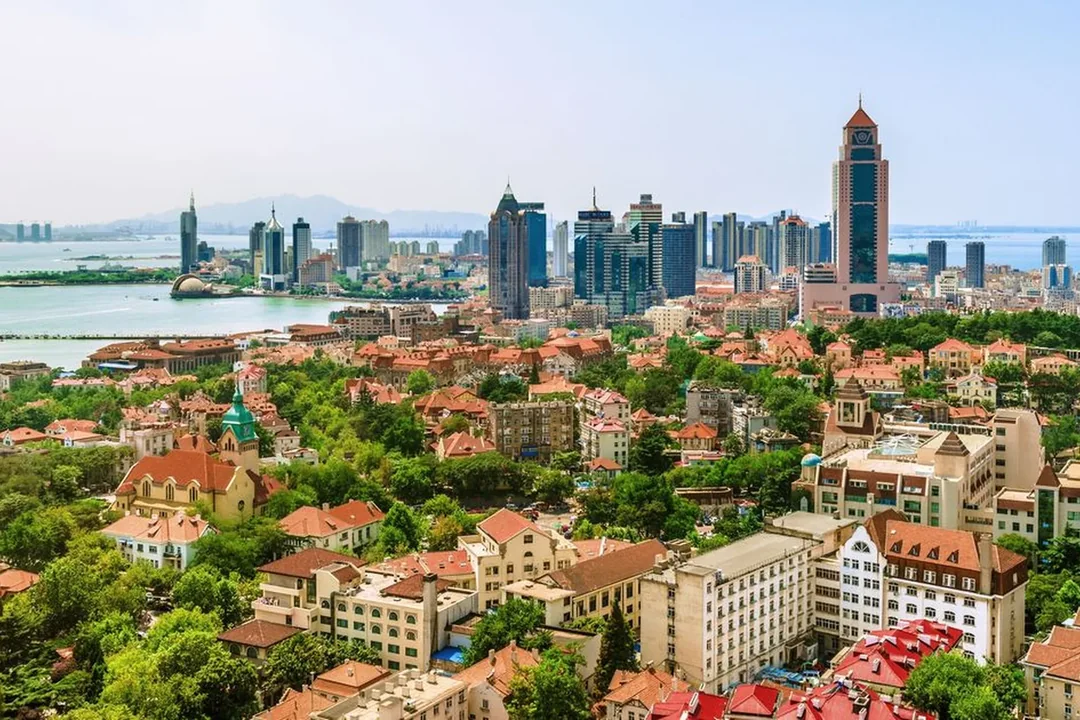
Qingdao (青岛) is China's most convincing seaside city break: a German-built old town on the Yellow Sea, a beer culture so casual it sells fresh lager in plastic bags by the liter, public beaches inside the city limits, and a Taoist mountain rising straight off the coast thirty kilometers to the east. It is the hometown of Tsingtao beer, the sailing venue of the 2008 Olympics, and the closest thing East Asia has to a northern European port town, with Shandong seafood attached.
We have walked the old town in fog, queued for clams at neighborhood beer houses, and climbed Laoshan in August heat, and we still rate Qingdao as one of the most repeatable cities in China: compact enough for a weekend, layered enough for a week. This guide is written for decision-making, not daydreaming. We tell you which two neighborhoods make sense for a hotel, which Laoshan route matches your legs, what a fair price for a bag of fresh beer looks like, and why August is simultaneously the best and the worst month to arrive.
Plan on two to three days in the city plus an optional extra day for Laoshan or the west-coast beaches. Bring your passport, a working Alipay or WeChat Pay setup, and an appetite for clams. Everything else — visas, metro lines, festival logistics, budgets down to the CNY — is covered in the sections below, written from repeated visits through 2026 rather than from a brochure.
Why Qingdao
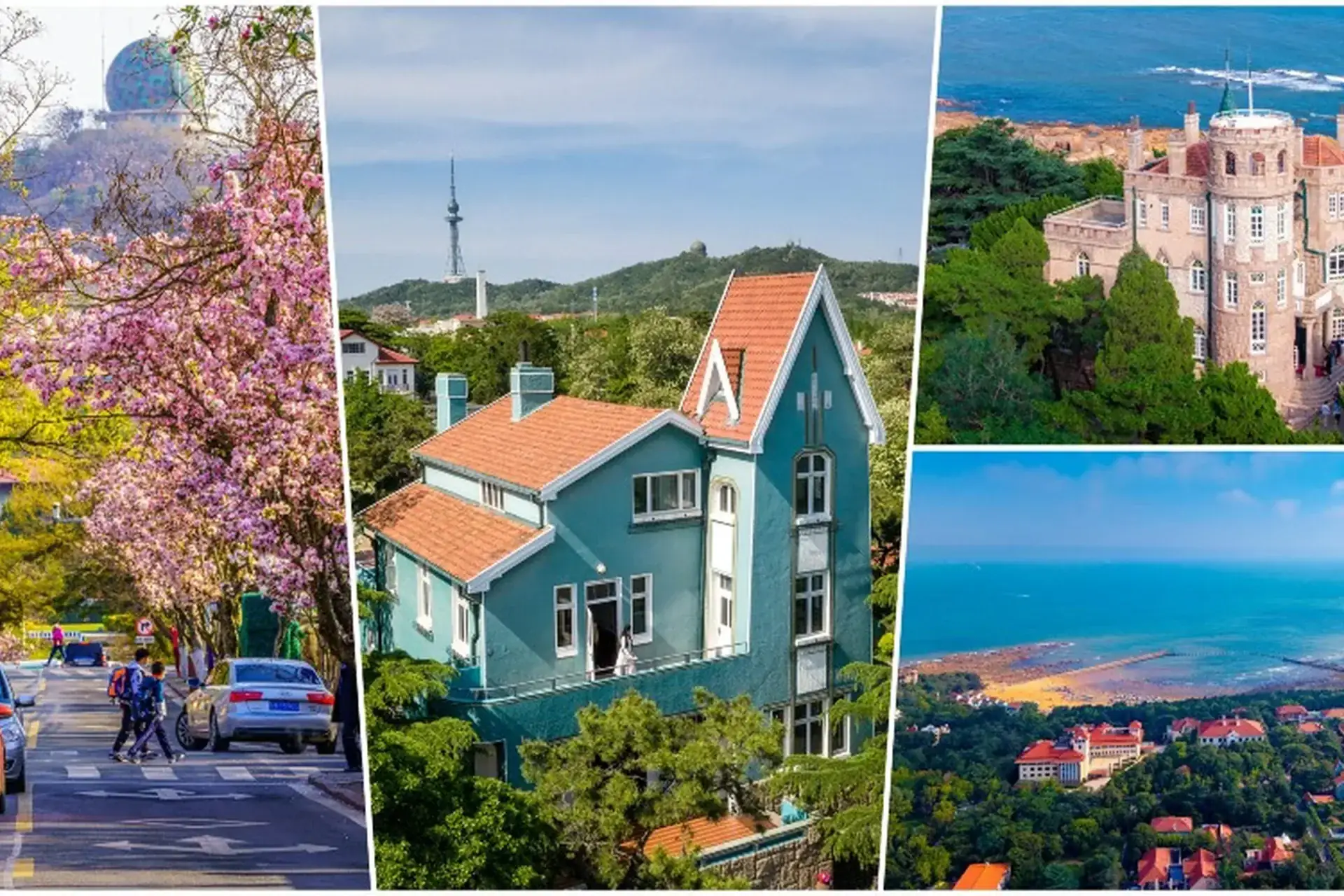
Most Chinese megacities feel like variations on one theme. Qingdao does not, and the reason is history. In 1898 the German Empire forced a lease over Jiaozhou Bay and built a planned, Baltic-style port city — red-tiled roofs, church spires, tree-lined avenues, a brewery — on what had been a fishing peninsula. The colony lasted only sixteen years, but the architecture survived Japanese occupation, war, and a century of redevelopment. Today several square kilometers of European old town still stand above the harbor as if lifted from Hamburg, and the city has learned to charge admission to almost none of it.
That inheritance gives Qingdao three things no other Chinese city combines at this scale:
- A walkable historic core — the cathedral quarter, Badaguan's villa streets, the Governor's mansion — concentrated within two kilometers of the pier.
- A drink with a passport. Tsingtao, brewed since 1903 on the same Dengzhou Road site, is China's most exported beer, and the city treats its own supply as a birthright: unpasteurized, cheap, and sold by the bag at street kiosks.
- Sea and mountain in one frame. Public beaches sit ten minutes from the CBD by taxi, and Laoshan — the highest coastal mountain in China, topped by working Taoist temples — is a day trip, not an expedition.
There are practical reasons to pick Qingdao over Beijing or Shanghai for a short trip, too. The sights cluster along a ten-kilometer coastal strip, so you lose less of the day in transit. Summer highs sit around 25-26°C instead of 35°C. High-speed trains reach Beijing in three to four hours, and direct flights connect Qingdao Jiaodong airport to most of East Asia. The tourist infrastructure — metro with English signage, ubiquitous QR payments, hostels through five-star hotels — is mature without feeling engineered.
The honest downside list: winter is windy and gray, June and July bring sea fog that delays flights, August festival crowds push hotel prices up by half or more, and English collapses quickly outside the main sights. We still think the trade is worth it. The specifics are in When to go.
Top Attractions
The five sights below justify the trip by themselves, ordered the way we would actually visit them: old town first, brewery second, mountain when your legs are ready. Combined entry cost for all five is under 300 CNY per person at 2026 prices, which makes Qingdao one of the cheapest headline cities in China. Opening hours shift seasonally; the numbers below reflect recent practice, so treat them as planning figures and re-check anything mission-critical.
Zhanqiao Pier (栈桥)
Zhanqiao is where Qingdao started: a 440-meter iron jetty built in 1892 as a naval loading pier, now the city's signature image, with the octagonal Huilan Pavilion at its end. Entry is free and always has been, which is remarkable given what it is. Walk out at 07:30 and you get the pavilion, the skyline of the CBD across the bay, and the gulls to yourself; walk out at noon on a Saturday and you get a solid file of tour groups moving at shuffle speed.
From November to March, thousands of black-headed gulls winter around the pier, and vendors sell bread sticks for a few CNY — the photos are better than they deserve to be. The pier's base meets Zhongshan Road, the old commercial spine of the city, and looks across the narrow channel to Little Qingdao island (小青岛, small entry fee, roughly 10 CNY), whose white lighthouse is the second-most-photographed object in town. Budget 45 minutes unless you are photographing, then budget two hours.
Badaguan (八大关)
Badaguan — "Eight Great Passes" — is a 1920s and 1930s garden district where a grid of streets is named after passes of the Great Wall and lined with more than two hundred villas in some twenty architectural styles: Tudor, Spanish, Japanese, Bauhaus, Russian Orthodox curvature. It was where Republican-era generals and film stars built summer houses; it is now the city's favorite wedding-photo backdrop, and on any weekend you will count a dozen bridal parties rotating through the same stone walls.
Wandering is free and is the entire point; the district works as a two-hour slow walk between Bathing Beach No. 1 and Bathing Beach No. 2, under plane trees that turn gold in early November. A handful of villas charge admission — Huashi Lou, the granite "Flower Stone House" from around 1930, runs roughly 8-10 CNY, the Danish-style Princess House around 15-20 CNY — but most visitors spend nothing and miss little. Our advice: come before 09:00 for empty streets, pick one paid villa at most, and walk out onto the sand at the south end rather than doubling back.
Tsingtao Beer Museum (青岛啤酒博物馆)
The museum occupies the original 1903 Germania-Brauerei plant at 56 Dengzhou Road, still a working corner of the Tsingtao brewery complex. It is the single best-value attraction in the city, and we say that as people who have been through it three times. The standard ticket runs in the 50-60 CNY range and includes the two exhibition halls — history in Hall A, brewing science and a working bottling line in Hall B — plus tastings: one raw, cloudy, unpasteurized beer (原浆) and one pure draft, with a pack of beer nuts thrown in. Premium guided tasting packages exist at considerably more (the official packages climb toward 260 CNY) and are only worth it for serious beer travelers.
Hours are 08:30-17:30 with last entry at 16:30, and the ticket includes a small pour at the simulation bar and the gift shop where brewery-only merchandise sells cheaper than anywhere else in China. Book online for a timed slot in July-August; weekday mid-mornings are quiet the rest of the year. Allow ninety minutes, then walk twenty meters outside: Dengzhou Road becomes Beer Street (啤酒街), lined with beer-themed restaurants pouring the fresh stuff the museum made you want.
St. Michael's Cathedral (圣弥厄尔天主教堂)
The twin-spired Catholic cathedral on Zhejiang Road was built 1932-1934 in a Gothic-Romanesque hybrid and dominates the old town skyline from almost every angle. Entry costs around 10-15 CNY and buys you a restored interior, a pipe organ, and exhibits on the diocese's German missionary history. The building survived the Cultural Revolution with damage and was restored in the 1980s; it remains an active parish, so check mass times if you want quiet — and expect wedding-photo crews on the square outside nearly every weekend, a Qingdao industry in itself.
The cathedral is the natural anchor for an old-town walking loop: down Zhejiang Road to the former Governor's office on the hill, past the 1910 Protestant church with its green clock tower (separate small entry, around 10 CNY), then down Zhongshan Road toward the pier. The whole loop is under three kilometers and is the densest stretch of colonial architecture anywhere in China.
Laoshan (崂山)
Laoshan is a granite massif that comes out of the Yellow Sea at 1,132 meters, making it the highest coastal mountain in China, and its Taoist temples — Taiqing Palace chief among them — are older than every building downtown. It is managed as five separate scenic zones with separate tickets, and this matters: you cannot "do Laoshan" in a generic way, you pick a route. Peak-season (April-October) official prices have held steady for several years: Jufeng (the summit cable car route) 80 CNY, Taiqing (the classic south coast route with the big temple) 90 CNY, Beijiushui (Nine Waters, a northern stream-and-pool walk) 65 CNY, Yangkou (granite domes and coastal views) 60 CNY. A five-zone combo runs 140 CNY plus a 70 CNY shuttle pass valid three days. Taiqing Palace itself charges about 27 CNY extra inside the Taiqing zone, and one-way cable cars run 35-45 CNY depending on the line.
Our route advice for a first visit with ordinary fitness: Taiqing, arriving by 08:30, temple first before the crowds, then walk the coastal boardwalk. If you want a summit without a pilgrimage, take Jufeng's cable car up and walk the crater rim. Beijiushui is the pick in summer heat or with children — it is about water and shade, not elevation. Realistic total for a day including transport, ticket, shuttle and lunch: 250-400 CNY per person. The scenic area hotline is 0532-96616, and free-ticket promotions appear some years — note that even then, shuttles, cable cars and Taiqing Palace still charge.
Where to Stay
Qingdao's hotel geography is simple because the city is simple: the old town in the southwest, the modern CBD arc along the bay to the northeast, mountain and beaches beyond. Pick the wrong zone and you will spend your trip in taxis; pick right and you walk half of everything.
Old town (Zhongshan Road / cathedral quarter). Boutique hotels and hostels inside or beside the German-era streets, walking distance to the pier, cathedral and Beer Museum. Dorm beds run 60-150 CNY, doubles in converted buildings 250-500 CNY. The trade: quieter nightlife, some buildings are genuinely old in both the charming and the drafty senses, and the seaward streets empty after dark. We recommend it for a first visit of two nights if sightseeing outranks comfort.
Shinan coastal (Hong Kong Middle Road / May Fourth Square). The business district along Fushan Bay, twenty minutes on foot or one metro stop from Badaguan, with the international chains — Shangri-La, InterContinental, Westin and peers — between 400-900 CNY midweek and more in August. Metro Lines 2 and 3 run through, the sailing marina and the light show are outside the door, and the restaurant density is the city's best. This is our default recommendation for most travelers: highest floor of convenience for the money.
East coast (Shilaoren / Laoshan district). Resort territory along the beaches east of the CBD, from 300 CNY apartments to 1,500 CNY seaside resorts. Choose it only if you are prioritizing beach days or an early Laoshan start; commuting to the old town costs 40-60 minutes each way.
West coast (Huangdao). Across the bay via Metro Line 1 or the tunnel buses, next to Golden Sand Beach and the Beer Festival grounds. Modern towers, 250-600 CNY, and during festival season the only sane place to sleep if you plan to drink seriously at the Beer City more than one night.
Book two to three weeks ahead for May and September-October; book six to eight weeks ahead for August, when festival demand roughly doubles prices in every tier. Use the Chinese platforms (Trip.com works in English; Ctrip and Meituan hold extra inventory) and check both, because the same room is routinely listed at different rates. Serviced apartments around the CBD suit stays of four nights or more and come with washing machines — relevant if you plan beach days. Whatever you book, confirm the registration setup: all hotels in China must be licensed to host foreign guests, and the overwhelming majority in Qingdao's tourist zones are.
Gastronomy
Eating in Qingdao is a two-column ledger: beer and seafood, and the city's whole culinary personality sits in the overlap.
Beer first. Tsingtao in Qingdao is not the green bottle you know from home; it is raw beer (原浆), unpasteurized and cloudy with yeast, with a shelf life counted in hours rather than months. The most local version is bagged beer (袋装啤酒): fresh draft ladled from street kiosks into clear plastic bags, priced by weight, typically 10-20 CNY for a two-liter bag. You buy it, you get a straw or you pour it into whatever you have, and you drink it the same day — locals will tell you, correctly, that it is a different beverage from the bottled export. Restaurant Tsingtao runs 8-20 CNY a bottle; convenience-store bottles 3-6 CNY. Ask which plant bottled it and someone will inevitably tell you that only Plant No. 1 (一厂) beer counts. Let them.
Clams are the city dish. Spicy stir-fried clams (辣炒蛤蜊) — garlic, dried chili, a fast wok — appear on every table, and locals pronounce the word 蛤蜊 as "gala" in dialect, which is worth knowing before you order. A plate runs 30-60 CNY depending on clam size and venue. The supporting cast: Spanish mackerel dumplings (鲅鱼水饺, 30-50 CNY a plate), seaweed jelly (海菜凉粉, a cold appetizer locals love and visitors puzzle over), grilled squid at every night market, sea urchin dumplings as the splurge, and Laoshan-grown vegetables and spring water from the mountain. Two local drinks to try exactly once: Laoshan Cola (herbal, gentler than cola) and White Flower Snake Grass Water (白花蛇草水), a health tonic that tastes like punishment — ordering it for a friend is a Qingdao joke, and the joke is on the drinker.
Where to eat, in order of value.
- Yingkou Road Market and its beer houses (营口路). The city's best food experience: buy live seafood by weight inside the market — clams, shrimp, crab, scallops — then walk it to a neighboring beer house (啤酒屋) that cooks it for a per-dish fee of roughly 10-30 CNY. You pay market price for the seafood, a few CNY for the fresh beer, and you eat among locals doing exactly the same thing. Budget 80-150 CNY per person and go hungry.
- Yunxiao Road (云霄路), a full street of mid-range seafood restaurants south of the CBD; a safe, sit-down 100-200 CNY dinner with menus that rarely surprise.
- Taidong night market (台东), street food at scale — grilled squid, oysters, skewers, sweets — 30-80 CNY grazed over an evening.
- Pichaiyuan (劈柴院), the historic food courtyard off Zhongshan Road. We will be blunt: it is tourist-priced and inconsistent, worth ten minutes of atmosphere, not a meal plan.
Breakfast in Qingdao is a street affair: steamed buns, soy milk, flaky shaobing and jianbing crepes from morning stalls for 5-15 CNY, with old-timers standing around plastic stools. Hotels will sell you a buffet; the street is better and twenty times cheaper. For a non-food souvenir of the food culture, buy a small tin of Laoshan green tea (the mountain's second most famous export) and brew it as a palate reset between seafood meals — locals consider it the correct pairing.
Two warnings that save real money. At any restaurant with live seafood tanks at the door, confirm the price per 500 grams (斤) and the approximate weight before cooking — disputed crab bills are Qingdao's most common tourist complaint. And pay by QR code (Alipay/WeChat) wherever possible; the prices are the same, the receipts are automatic, and the arithmetic is not negotiable in your favor otherwise.
Practical Information
Visa
China's entry situation improved dramatically through 2024-2026, and most leisure travelers now arrive without a consulate visa. Two schemes matter: unilateral visa-free entry for 30 days, covering a long list of European countries plus others, and the 240-hour (ten-day) transit visa-free policy for 54 countries including the United States, United Kingdom, Canada and Australia, which requires an onward ticket to a third country or region. Qingdao Jiaodong airport and the ferry and rail ports are designated entry points. Policies and country lists shift; verify your exact nationality's status on an official Chinese government source or with your airline before booking, because airlines board you based on the rules of the day. Passports should have six months of validity.
Currency and Payments
The currency is the renminbi (CNY, written 元 or ¥). In practice Qingdao is close to cashless: Alipay and WeChat Pay both accept international credit cards, and one QR account covers markets, taxis, metro and street kiosks. Set the app up before you land. Cash still helps for elderly market vendors and as a fallback; exchange a small amount at the airport, and ATMs of ICBC and Bank of China take foreign cards reliably. Prices in this guide are in CNY. Tipping is not practiced anywhere, including restaurants and taxis. A realistic daily rhythm: 30-60 CNY on local transport, 60-150 CNY on food at mid-range pace, attractions as itemized above.
Getting Around
The metro is the spine: Line 3 links the old town's Qingdao Railway Station through the CBD to Qingdao North station; Line 2 sweeps the coastal arc past May Fourth Square toward the east; Line 1 dives under Jiaozhou Bay to the west coast; Line 11 runs up the eastern shore toward Laoshan's north side; Line 8 connects to Jiaodong airport. Fares are 2-10 CNY, stations have bilingual signage, bags go through X-ray, and last trains leave around 22:30-23:00. Buses cost 1-2 CNY; taxis start around 10 CNY and Didi rides across the tourist strip run 15-40 CNY. From Jiaodong airport (TAO), 40 kilometers northwest, count on Line 8 plus a transfer (about an hour), an airport bus at 20-40 CNY, or 100-150 CNY by taxi. High-speed rail: Beijing 3-4 hours, Shanghai 4.5-7 depending on service, Jinan about 2-3. For Laoshan's south side, Line 11 only helps partway — a taxi or the tourist bus from downtown is the practical answer.
Do not overlook walking. The coastal boardwalk threads nearly continuously from the pier along the bays toward Badaguan and the marina — one of the great free city walks in Asia, broken only by a couple of headlands — and shared bikes (scan via Alipay or the Meituan bike app, roughly 1.5-2 CNY per ride) fill the gaps where the trail detours inland. On a clear May or October afternoon, walking the last six kilometers of coast at sunset beats any bus route.
Best Time to Visit
The weather case is straightforward: May and June plus September and October are the pleasant months, with 15-25°C days and the sea still swimmable into early October. July and August bring heat, humidity, occasional typhoon brush pasts and the crowds of school holidays — but also the Beer Festival and peak beach season, so the worst weather window is the best festival window; see Events and Festivals. November deserves a special mention: thin crowds, gold foliage in Badaguan, gulls at the pier, 10-15°C. Winter (December-February) is gray, windy and 0-8°C, but the cheapest and emptiest, and the museums do not care about weather. Avoid the first weeks of May and October and Chinese New Year week entirely — national holidays fill every train and double every price.
Cultural Considerations
Qingdao is relaxed by Chinese standards, but a few local codes are worth knowing. Beer is drunk socially and frequently; at a beer house, clinking with an elder means holding your glass slightly below theirs, and a full "ganbei" (empty it) invitation should be honored or politely declined early — refills arrive otherwise. Locals say "ha pijiu" (哈啤酒), not the textbook "he"; using it earns you a grin and probably a companion.
At the table, seafood is hands-on: gloves are offered, shells pile up on the tablecloth by design, and refusing the clams a host orders is a small insult. Tap water is not drinkable anywhere in China; hotels provide kettles, and every convenience store sells large bottles for a few CNY. At Laoshan's temples, speak quietly, ask before photographing monks or interior halls, and dress with shoulders covered; Taiqing Palace is a working religious site, not a photo set. The cathedral is likewise an active parish — Sunday mass takes priority over sightseeing, and the wedding photographers on the square have paid for their spots, so shoot around them.
Queues are respected in museums and metro stations, less strictly at night markets — mild firmness is normal, not rude. Smoking persists outdoors and around beer tables but is banned indoors nearly everywhere. Small gifts travel well here: bring something from your home region, and expect reciprocal generosity in food; refusing a poured beer outright reads colder than negotiating a smaller glass. If someone offers you White Flower Snake Grass Water as a gift, they are joking; drink it with a straight face and you win. Finally, Mandarin gets you everywhere, English gets you through the hotels and museums, and a translation app covers the rest; nobody in a neighborhood beer house expects English, and they will feed you well anyway.
Two-Day Itinerary
Two days is the minimum honest visit; this plan covers the old town, the brewery, the coast and one hill, with meal stops that are destinations in themselves.
Day 1 — old town and beer. Start at Zhanqiao Pier at 07:30 for empty-boardwalk photos and, in winter, the gulls. Walk up Zhongshan Road to St. Michael's Cathedral for opening time (roughly 08:30-09:00), then loop past the Protestant church and the former Governor's office, ending at the Governor-General's mansion museum if it is open on your route. Lunch in the old town or, better, taxi fifteen minutes to Yingkou Road Market, buy seafood, and have a beer house cook it. Take the museum seriously after lunch: Tsingtao Beer Museum at 14:00-15:30, timed entry booked ahead in summer, one raw beer tasting included, then an early dinner on Beer Street or carry the evening to Taidong night market for grilled squid and shopping. Total walking: about seven kilometers; total spend beyond meals: under 100 CNY.
Day 2 — coast and views. Badaguan at 08:30 while the bridal parties are still in makeup, wandering south to Bathing Beach No. 1 and the sandspit that connects it toward the pier road. Climb Signal Hill late morning (a few CNY entry, city-and-sea panorama from the deck), then walk five minutes to Daxue Road for coffee and the red-wall photo corner, with lunch in a café or at a mackerel-dumpling shop nearby. Metro Line 3 to May Fourth Square in the afternoon, walk the marina at the Olympic Sailing Center — optional one-hour sailing trips run roughly 100-300 CNY — and stay for the light show that plays across Fushan Bay's towers on most in-season evenings around 19:30. Dinner in the Hong Kong Middle Road area. If you have a third day, spend it in Laoshan via the Taiqing route, or on the west coast at Golden Sand Beach; both are covered under Day Trips.
Beyond the Highlights
Daxue Road (大学路)
Daxue Road and its continuation Yushan Road form the leafy street that runs past Ocean University's historic campus, under camphor trees, past a dense run of independent cafés and small galleries. The red brick wall at the Daxue-Yushan corner has become the most photographed stretch of pavement in the city; on weekends a queue forms to stand against it, which tells you something about Qingdao and something about photography. Come on a weekday morning instead, take the picture in ninety seconds, then keep walking: the lanes behind hide courtyard cafés that are genuinely good, and the pace is the attraction.
Signal Hill Park (信号山公园)
At 98 meters, Signal Hill — named for the signal station that once guided ships into the German harbor — is the best viewpoint per unit of effort in the city: a ten-minute walk up from the church quarter, entry around 5 CNY, and a circular viewing deck with a 360-degree sequence of red roofs, the bay, the pier and the CBD towers. Late morning gives the clearest light on the old town; sunset splits the difference between city and sea. Combine it with Daxue Road, which begins at its foot.
Governor-General's Mansion (德国总督楼旧址博物馆)
The 1905-1907 residence of the German governor — a hilltop fantasy of granite, timber and tiles later used by Mao and other leaders — is Qingdao's most complete single building, and the interior (furniture, fixtures, the four-story main hall) outclasses the exterior. Entry runs roughly 15-20 CNY, audio guides are available, and ninety minutes covers it with room to linger. It is the one old-town sight we would move to the top of the list for architecture-minded travelers.
Nightlife
Qingdao at night runs on three engines. The first is the beer house (啤酒屋) — small neighborhood joints pouring fresh raw beer by the liter for 15-40 CNY, where regulars bring or buy clams and the kitchen exists to support the drinking. These are scattered through every residential district; the clusters around Yingkou Road are the most visitor-friendly. The second is Beer Street and Dengzhou Road, which after the museum closes fills with terrace seating and live-ish music; it is touristy, and one evening is enough, but the beer is fresh and the people-watching is not fake. The third is the marina: the walk from May Fourth Square to the Olympic Sailing Center, with the Fushan Bay light show playing across the skyline, is free and is the city at its most romantic after dark.
Beyond that: Taidong night market runs late and loud; the Hong Kong Middle Road arc holds hotel bars and an increasing number of craft taprooms pouring local small-batch brews alongside the industrial lager (worth one evening for contrast); and the student quarter inland toward Ocean University supports a scruffy, sincere livehouse scene — rock shows, acoustic sets and open mics on weekend nights, tickets typically 50-120 CNY at the door, schedules posted on venue social accounts a day or two ahead. Realistic costs: fresh beer 15-40 CNY a liter, cocktails 50-80 CNY, a full evening out 100-250 CNY. Getting home is easy — Didi is cheap and safe, metered taxis are honest, and the metro runs to about 23:00. Solo travelers of any gender will find Qingdao's late streets among the safest in the region; ordinary urban care applies.
Day Trips
Laoshan (崂山) as a day trip
Laoshan is detailed under Top Attractions, but as logistics: from downtown, the Taiqing (south) route is about an hour by taxi or tourist bus; the Beijiushui (north) route is reachable via Metro Line 11 partway plus a taxi, closer to ninety minutes. Leave by 07:30, pick one zone — Taiqing for temple and coast, Jufeng for summit, Beijiushui for water and shade, Yangkou for granite domes — and be back for dinner. Do not plan two zones in one day; the shuttle transfers eat the afternoon. Admission 60-90 CNY by zone, shuttle 40-70 CNY, Taiqing Palace about 27 CNY extra, cable cars 35-45 CNY one way. Weekdays are quiet; October weekends are not.
Huangdao and Golden Sand Beach (金沙滩)
Cross under the bay — Metro Line 1 or a 2 CNY tunnel bus — and the west coast opens up: Golden Sand Beach is the best broad urban beach in the region, free to walk, with showers and lockers for a small fee, and water that is genuinely swimmable July through September. The Beer Festival's permanent grounds (the Beer City) sit just inland, so in late July and August this trip and the festival are the same trip. Outside festival season it is a half-day of sand and a seafood lunch on the front. Count on 60-90 minutes door to door from the CBD. A further option inland: the Jimo district's hot springs and old town, about 1-1.5 hours by car, best as a winter half-day when the coast is gray. The springs are a working spa town rather than a scenic attraction — soak houses from 80-200 CNY — and the old town adds a walled temple and lanes that predate everything German in the region. Renting a car for the day makes sense only for Jimo; for everything else, public transport wins.
Events and Festivals
The Qingdao International Beer Festival (青岛国际啤酒节), running since 1991, is the event the city is known for: roughly three weeks from mid-July into mid-August, centered on the Beer City grounds at Golden Sand Beach on the west coast, with a parallel scene downtown. Recent editions have made grounds entry free, with the drinking done through beer tents and food stalls at festival prices — a liter mug typically 40-100 CNY, food stalls 20-60 CNY a round. Go on a weekday evening, take Metro Line 1 and the shuttle rather than driving, and treat the closing-weekend crowds with respect. Hotel prices across the whole city rise for the duration; book six-plus weeks out.
The rest of the year: Zhongshan Park's cherry blossoms draw the whole city for about three weeks from mid-April (free, go on a weekday morning); Qingdao International Sailing Week and associated regattas fill the marina in August with free viewing from the seawall; the Qingdao Marathon takes over the coastal boulevards on a spring Sunday; and the consumer-electronics expo each July is a business event that nonetheless empties nearby hotels. Lunar New Year temple fairs add lanterns and crowds to the old town in late winter. For a quiet visit, aim for the gaps: May-June and September-October have the best weather-to-crowd ratio of the calendar.
Shopping
Qingdao is not a shopping destination on the order of Shanghai, but it covers the bases. The CBD arc along Hong Kong Middle Road holds the serious retail — the MixC mall for mainstream brands, Hisense Plaza for luxury, AEON for a Japanese-style department store run — within a ten-minute walk of each other. Taidong pedestrian street is the volume play: cheap fashion, phone accessories, and street food, open into the night, haggling light but not zero at the stalls.
Souvenirs worth the suitcase weight, in our order: brewery merchandise from the Tsingtao Beer Museum gift shop (glassware, 1903-label gear, gift-box beers, priced below airport and downtown equivalents); Laoshan green tea, bought from licensed shops rather than roadside stalls, roughly 60-200 CNY per 500 grams by grade; dried seafood — shrimp, kelp, fish floss — which we advise buying at supermarkets like the local Liqun chain rather than market stalls, where scales can be creative and prices unfixed; and the outsized steamed breads of Wanggezhuang (王哥庄大馒头), a Laoshan specialty that travels surprisingly well for a day or two.
Two practical notes. Participating stores offer instant departure tax refunds (即买即退) for foreign visitors — bring your passport when you shop and expect a minimum same-store spend around 200 CNY under current rules. And check customs limits for your home country on food items; dried seafood is generally fine, fresh and live products are not.
Decision Support
Map
Geography in one paragraph: the old town (pier, cathedral, Beer Museum) occupies the southwest tip of the peninsula; the modern CBD and its hotels arc northeast along Fushan Bay (May Fourth Square, marina); Badaguan sits between the two; Laoshan is a further 30-40 kilometers east; the west coast beaches are across the bay via Line 1. Everything a first-time visitor needs fits on a ten-kilometer coastal strip. Use Amap (Gaode) or Baidu Maps as your primary — they beat Google in China on everything including walking directions — with OpenStreetMap as a backup and offline PDF before you land.
Cost breakdown
Per person, per day, at 2026 prices: hostel bed 60-150 CNY, mid-range hotel room 300-600 CNY (double occupancy halves the split), luxury 700-1,500 CNY. Food: 30-80 CNY at markets and street level, 100-200 CNY at proper seafood restaurants, 300+ CNY at hotel dining. Transport: metro and buses 10-30 CNY, taxis 30-80 CNY depending on ambition. Attractions average 50-100 CNY on sightseeing days, 250-400 CNY on a Laoshan day. Realistic daily totals: backpacker 250-400 CNY, mid-range 600-1,000 CNY, comfortable-with-luxury 1,500 CNY and up. The Beer Festival and August hotels are the two line items that blow budgets; everything else behaves.
When to go
Decision table: best weather — May-June and September-October. Best festival — mid-July to mid-August (Beer Festival), accepting heat, crowds and hotel premiums. Quietest with good light — late October-November, with gulls from November and gold foliage in Badaguan. Cheapest — December-February, gray but empty, museums and beer houses unaffected. Never — the first week of May, the first week of October, and Lunar New Year week, when the entire country travels simultaneously. If you must combine beach and budget, the last week of August after the festival closes is the sleeper pick.
Practical
Non-negotiables: passport with six months validity; Alipay or WeChat Pay bound to a card before arrival; Amap installed; train and museum bookings made with passport numbers; power adapter for China's two-flat-pin outlets; and travel insurance that covers flight delays, because Qingdao's summer fog is real. Useful: a translation app with camera mode, an eSIM or roaming plan arranged at home (airport counters exist but queue), small cash for very old vendors, and sun protection — the seaside UV is stronger than the temperature suggests. Emergency numbers: police 110, ambulance 120, fire 119, national tourist hotline 12301, Laoshan scenic area 0532-96616. Tap water: no. QR payments: yes, nearly everywhere. English: functional in hotels and museums, thin on the street.
Sources
https://www.tsingtaomuseum.com/ — official Tsingtao Beer Museum site: current opening hours (08:30-17:30, last entry 16:30), ticket tiers, and booking for the Dengzhou Road plant.
https://qdlaoshan.cn/ — official Laoshan scenic area micro-site: per-zone ticket prices, shuttle and cable car fees, reservation policy, and the 0532-96616 service hotline.
https://www.trip.com/travel-guide/qingdao/ — aggregated, frequently updated practical reference for hours, transport connections and traveler reviews; cross-check against the official sites above before locking plans.