Maiji Mountain Grottoes麦积山石窟
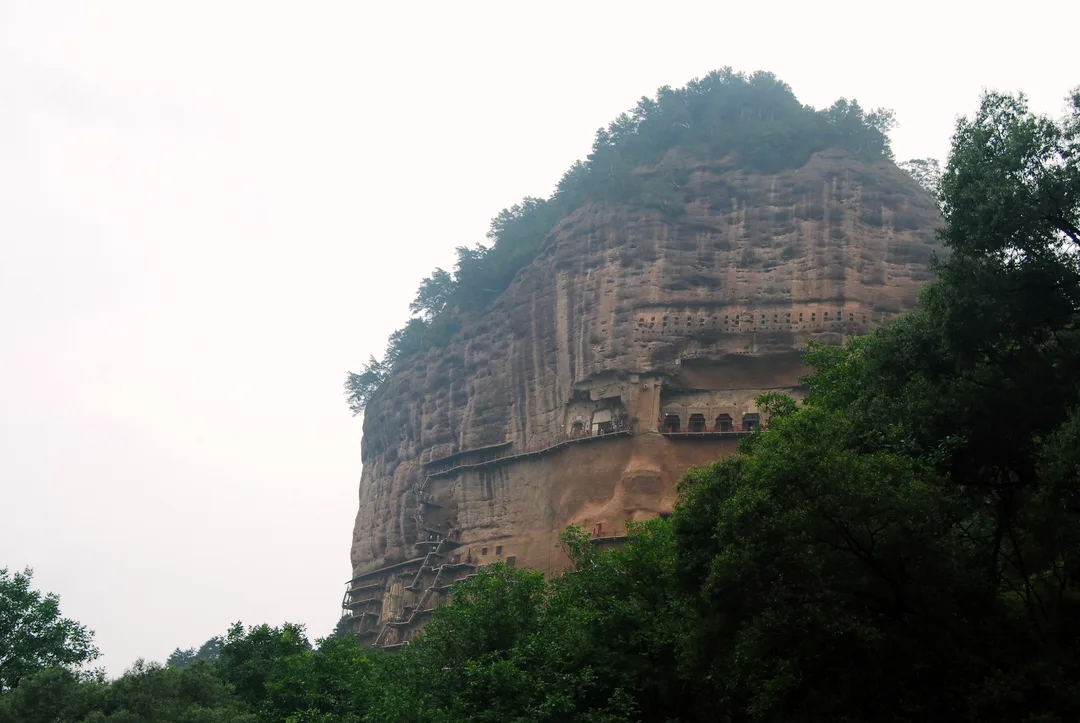
Maiji Mountain (麦积山) is one of China's four great ancient Buddhist cave temple sites, alongside Mogao (Dunhuang), Yungang (Datong), and Longmen (Luoyang). The grottoes were carved into a cliff face of rhyolite tuff over a period spanning the 4th to 19th centuries, resulting in a extraordinary vertical gallery of Buddhist art — 221 caves, 10,000+ sculptures, and 1,000+ square meters of murals. The mountain's distinctive shape — a lone rhyolite peak rising from the surrounding plain — makes it visually dramatic. It is located 30 km southeast of Tianshui city.
Tianshui · Visitor Guide2026-10-18
Quick Answer
Is Maiji Mountain Grottoes worth visiting?
One of China's four great ancient Buddhist cave temple sites. 221 caves, 10,000+ sculptures on a cliff face. ¥90 entry. 2 hours from Xi'an.
Quick facts
| Ticket | ¥90 per person (as of 2026). Half-price for students and seniors. Cable car: ¥15 one way, ¥25 round trip. |
|---|---|
| Hours | 8:00–17:00 (summer), 8:30–16:30 (winter). |
| Recommended duration | Half day (3–4 hours including travel from Tianshui city). |
| Best time to visit | Spring (April–June) and autumn (September–October) for comfortable weather and good photography light. Summer can be hot. Winter is cold and some caves are closed. Avoid Chinese public holidays when the site is packed. |
| How to get there | From Tianshui city center, take Bus 34 or 37 from Tianshui Railway Station to Maiji Mountain (麦积山) stop (¥10, 50 minutes). A DiDi costs ¥60–80, 40 minutes. The site is 30 km southeast of Tianshui city. |
| English signage | Partial |
| Wheelchair accessible | No |
| Caves | 221 caves carved into the cliff face |
| Sculptures | 10,000+ Buddhist figures |
| Period | 4th–19th centuries (1,500 years of continuous carving) |
| Rock type | Rhyolite tuff — easily carved but durable |
| Access | Wooden walkway network on the cliff face (rebuilt multiple times) |
What to expect
Maiji Mountain is a lone volcanic rhyolite tuff peak that rises abruptly from the rolling hills of southeastern Gansu, 30 kilometers southeast of Tianshui. The mountain's name means "Wheat Stack Mountain" — its shape resembles a haystack. The cliffs of Maiji are naturally suited to cave carving: the rhyolite tuff is soft enough to carve with basic tools but hardens on exposure to air, creating durable structures. Over 1,500 years, Buddhist monks carved 221 caves into the cliff face, populating them with tens of thousands of Buddhist figures in clay, stucco, and stone.
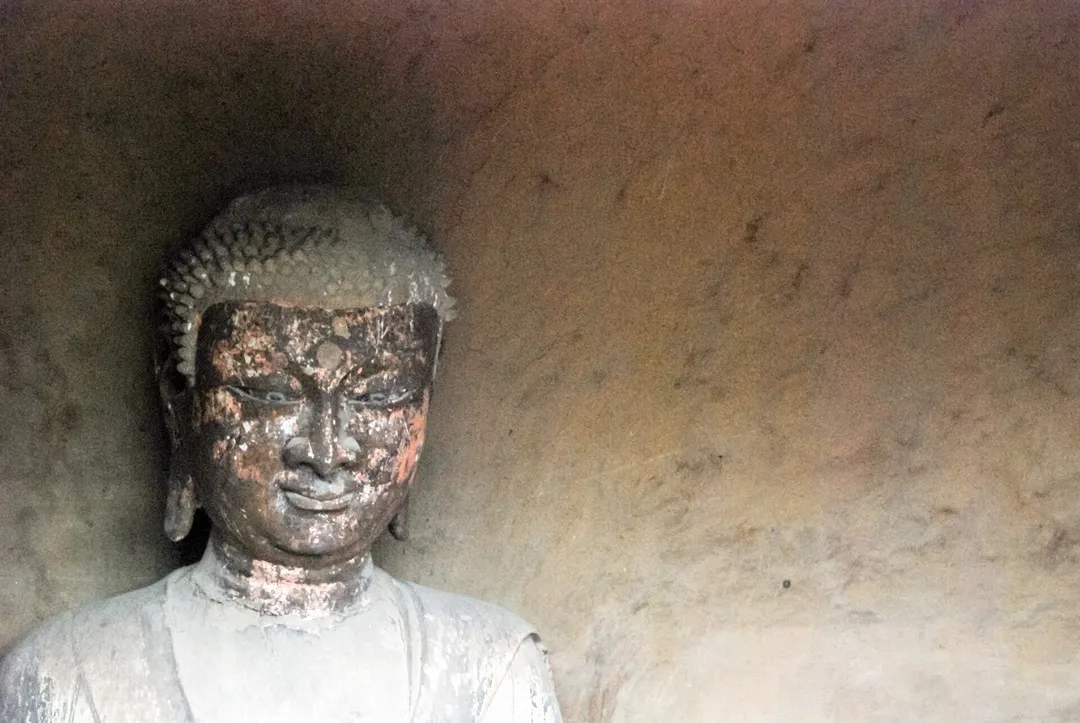
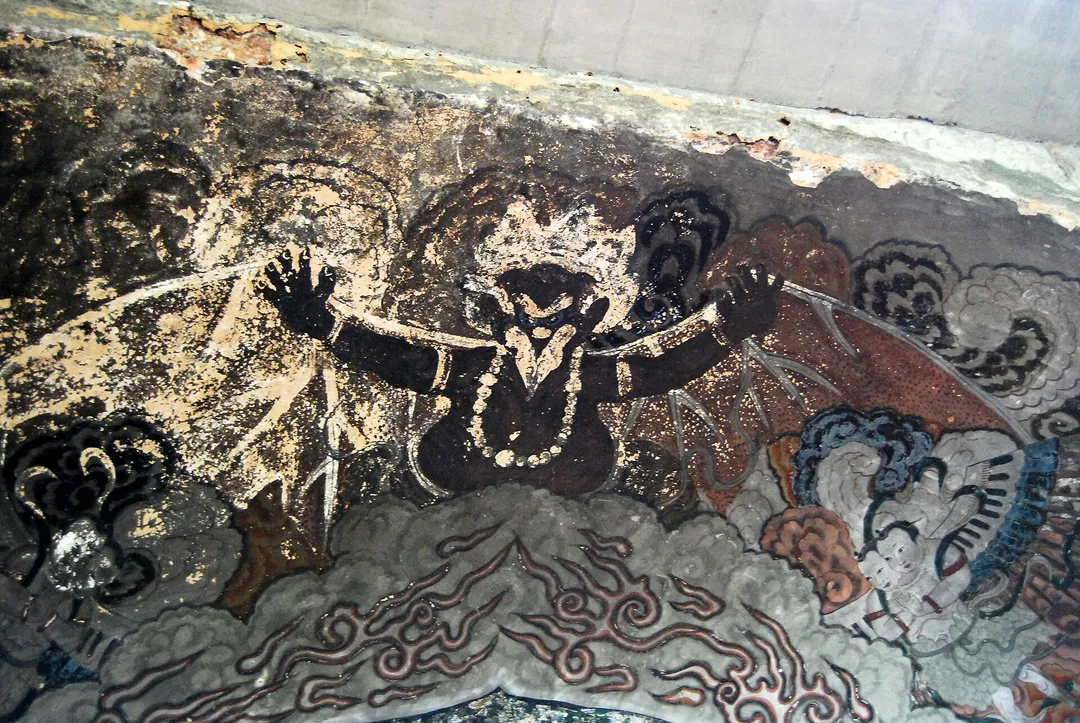
The caves span five major periods of creation, representing the evolution of Chinese Buddhist art from the 4th century through the Ming and Qing dynasties. The earliest caves, from the Northern Wei period (386–534 AD), feature austere, elongated figures with a strong Central Asian influence. The Sui dynasty caves (581–618 AD) mark a transition to more humanistic, Chinese forms. The Tang dynasty caves (618–907 AD) are the most numerous and artistically sophisticated — large, well-lit caves filled with elaborate Buddha figures, Bodhisattvas, and colorful murals.
The cave complex is approached via a wooden walkway (栈道, zhandao) that was originally built in the 6th century and rebuilt many times since. The walkway snakes up the cliff face, passing cave openings at multiple levels. The highest walkway offers a vertiginous view over the surrounding landscape. The original wooden walkways were a remarkable piece of engineering — some sections cantilevered over empty space hundreds of meters above the valley floor.
How to get there
From Tianshui Railway Station or city center, take Bus 34 or 37 to Maiji Mountain (麦积山) stop (¥10, approximately 50 minutes). A DiDi from Tianshui city costs ¥60–80, 40 minutes. The site is 30 km southeast of the city.
Best photo spots
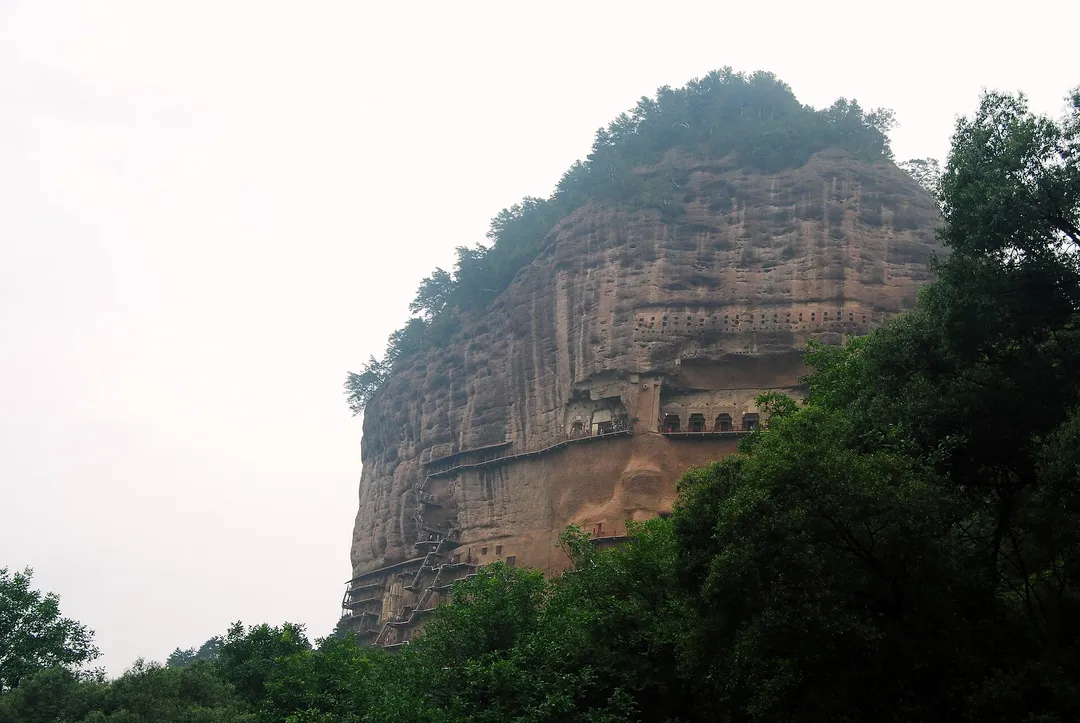
- The全景 of Maiji Mountain from the valley floor — the lone peak with the cave openings visible on the cliff face
- The wooden walkway network from the highest viewing platform — the vertigo-inducing zhandao climbing the cliff
- The Tang dynasty cave interiors — colorful murals and elaborate Buddha figures
- The spring waterfall at the base of the mountain (季节性) — best in summer after rain
Tips
- Start from Tianshui early — the site fills with tour groups by 10:00 AM; arrive at opening (8:00 AM) for the most atmospheric visit
- The wooden walkway is not for those afraid of heights — some sections are narrow and exposed, hundreds of meters above the valley
- The cable car (¥15 one way) takes you to the mid-level viewing platform, saving a steep walk up the hill
- Combine with a visit to the Tianshui Fuxing Temple (伏羲庙) in the city after returning — the two sites make a natural full-day itinerary
- The nearby Fuxing Temple (伏羲庙) is 45 minutes away by bus — consider an overnight stay in Tianshui
Scams to avoid
- "Unofficial guides" at the entrance who offer to show caves — the cave commentary from the official audio guide (¥30) is better than ad-hoc explanations
- "Special access" tours claimed by freelancers near the site — the caves are the same for everyone; there is no special access
Frequently asked questions
Is Maiji Mountain worth visiting?
Yes — it is one of China's four great Buddhist cave temple sites and a UNESCO World Heritage Site. The setting (a lone dramatic peak in Gansu countryside) is as impressive as the caves. Budget a half-day from Tianshui.
How does Maiji Mountain compare to Yungang and Longmen?
Each has distinct character. Yungang (Datong) has the oldest caves and the most Central Asian influence. Longmen (Luoyang) has the most refined Tang dynasty figures. Maiji has the most dramatic natural setting and the most accessible vertical layout. All three are worth visiting if you have time.
Is the wooden walkway safe?
The walkways are rebuilt regularly and are structurally sound. However, some sections are narrow and exposed — not suitable for those with serious vertigo. The vertigo-inducing sections are on the upper levels; the lower levels are more stable.
Is Maiji Mountain wheelchair accessible?
No. The wooden walkway system on the cliff face is not accessible for wheelchair users. The valley floor and the visitor center area are accessible.
How much time do I need at Maiji Mountain?
2–3 hours at the site itself. Combined with travel time from Tianshui, allow a half-day (4–5 hours total).
Read next
Other things to do in Tianshui
Xianren Cliff (Immortal Cliff)
Mountain valley with Buddhist temples and a seasonal waterfall, 50 km from Tianshui. Great for hiking and scenery. ¥40 entry. Combine with Maiji Mountain.
Southern and Northern Residences (Nanbei Zhaizi)
Best-preserved Ming-Qing dynasty residential complex in western China. Free entry. Two grand courtyard houses with distinctive Gansu architecture. 30 minutes from Maiji Mountain.
Fuxing Temple (Fuxi Temple)
Temple dedicated to Fuxi, the legendary inventor of the I Ching and Chinese writing system. In central Tianshui. Free entry; 1–2 hours for the unique architectural layout.