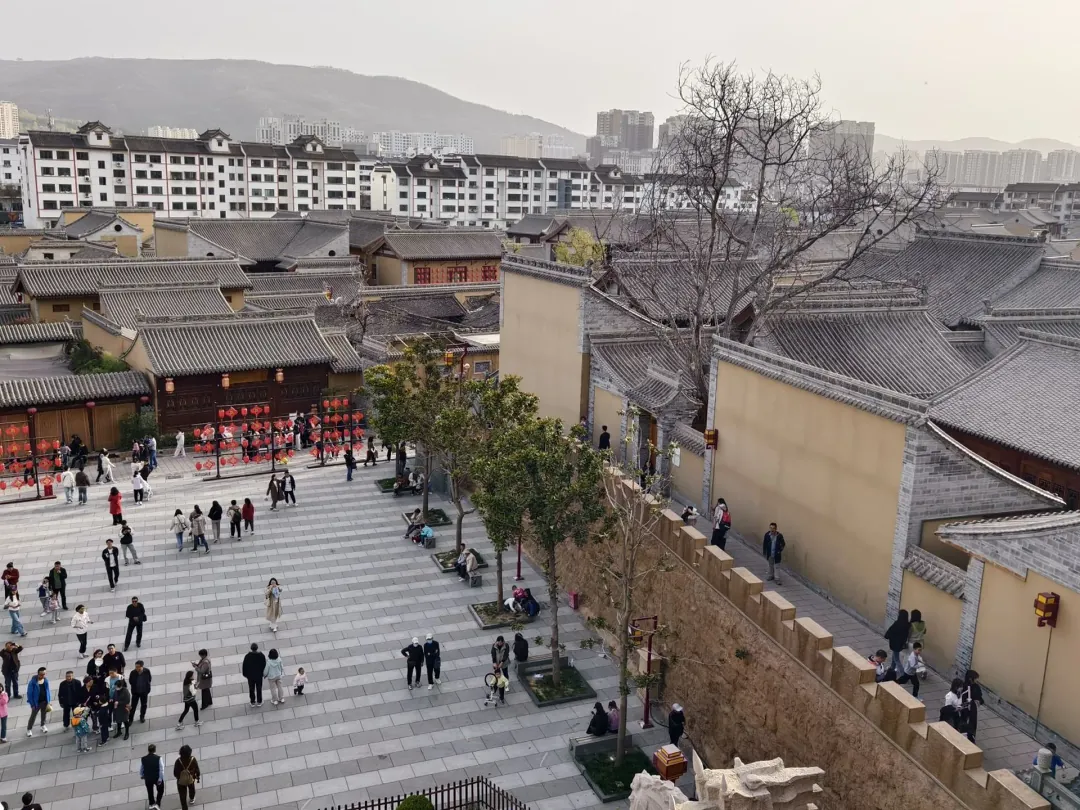
Southern and Northern Residences (Nanbei Zhaizi)南北宅子
The Southern and Northern Residences (南北宅子) are two adjacent Ming-Qing dynasty courtyard houses in central Tianshui that together form the best-preserved example of traditional western Chinese residential architecture in the region. The Southern Residence (南宅子) dates from the Ming Dynasty (late 16th century) and the Northern Residence (北宅子) from the Qing Dynasty (18th century). Both feature the distinctive architectural style of Gansu — white-plastered walls, dark timber frames, upturned eaves, and elaborate wooden carvings. The complex is free to enter and offers a rare look at historical domestic architecture in this part of China.
Tianshui · Visitor Guide2026-10-18
Quick Answer
Is Southern and Northern Residences (Nanbei Zhaizi) worth visiting?
Best-preserved Ming-Qing dynasty residential complex in western China. Free entry. Two grand courtyard houses with distinctive Gansu architecture. 30 minutes from Maiji Mountain.
Quick facts
| Ticket | Free entry (as of 2026). |
|---|---|
| Hours | 8:30–17:30 (Tuesday–Sunday). Closed Monday. |
| Recommended duration | 1–2 hours. |
| Best time to visit | Weekday mornings for a quiet visit. Spring and autumn for pleasant weather. Avoid Chinese public holidays. The residence is less known than Maiji Mountain and rarely crowded. |
| How to get there | Located in central Tianshui on Mingguan Street (民权路). Take Bus 2, 3, 6, 7, 9, or 14 to Nanbei Zhaizi (南北宅子) stop. A DiDi within Tianshui costs ¥10–15. The residence is a 15-minute walk from Tianshui's main square. |
| English signage | Partial |
| Wheelchair accessible | No |
| Southern Residence | Ming Dynasty (late 16th century) |
| Northern Residence | Qing Dynasty (18th century) |
| Architectural style | Gansu residential — white walls, dark timber, upturned eaves |
| Significance | Best-preserved Ming-Qing residential complex in western China |
| Location | Central Tianshui, Mingguan Street |
What to expect
The Southern and Northern Residences (南北宅子) are two grand courtyard houses that represent the height of residential architecture in Tianshui during the Ming and Qing dynasties. The Southern Residence (南宅子) was built in the late 16th century during the Ming Dynasty by a wealthy merchant family and has remained largely unchanged since. It follows the traditional Chinese courtyard house layout — a series of connected courtyards arranged on a north-south axis, with the main rooms facing south for maximum sunlight. The Southern Residence is considered the more architecturally significant of the two.
The Northern Residence (北宅子) was built in the 18th century during the Qing Dynasty by an official family and reflects the more ornate aesthetic of the Qing period — more elaborate wooden carvings on the brackets and door frames, more decorative tile patterns, and larger rooms. Together, the two residences span 300 years of architectural evolution in western China.
The Gansu residential style is characterized by thick white-plastered walls (which provide insulation against the cold winters), dark timber frames, upturned eaves, and carved wooden brackets. The climate in this part of Gansu — cold winters, hot summers — shaped the architecture significantly. The residences are surrounded by the living fabric of central Tianshui — narrow lanes, small shops, and local life.
How to get there
The residences are on Mingguan Street (民权路) in central Tianshui, a 15-minute walk from the main square. Bus routes 2, 3, 6, 7, 9, and 14 stop at Nanbei Zhaizi (南北宅子). From Tianshui Railway Station, take Bus 6 for 15 minutes.
Best photo spots
- The main gate of the Southern Residence — ornate carved wooden door frame and door knockers
- The central courtyard of the Southern Residence — the classic Chinese courtyard perspective
- The wooden bracket sets (斗拱) on the Qing dynasty Northern Residence — elaborate carvings
- The street frontage on Mingguan Street — traditional shop-houses with upturned eaves
Tips
- Combine with the Fuxing Temple (5-minute walk away) — both are free and make a natural half-day itinerary
- The Southern Residence (Ming) is more architecturally significant; start there
- Go on a weekday morning for the most atmospheric experience — the complex is used by local cultural organizations and may have events
- Look for the carved wooden panels on the doors and window frames — the craftsmanship is exceptional
- The nearby Mingguan Street is a good place to find local Tianshui crafts and snacks
Scams to avoid
- No significant scams at this free, low-key heritage site
Frequently asked questions
How much time do I need at the residences?
One to two hours for a thorough visit. The complex is not large but the architectural details reward careful observation.
Is the Southern Residence older than the Northern Residence?
Yes — the Southern Residence dates from the late Ming Dynasty (16th century). The Northern Residence was built in the Qing Dynasty (18th century). They represent 300 years of architectural evolution.
Is the residence wheelchair accessible?
No. The historic buildings have thresholds, narrow passages, and internal stairs that make them inaccessible for wheelchair users.
What is distinctive about Gansu residential architecture?
Gansu residential architecture is adapted to the region's climate — cold winters and hot summers. Thick white-plastered walls provide insulation, dark timber frames are durable, and upturned eaves provide shade in summer. The style is less ornate than southern Chinese residential architecture but more robust.
What is nearby?
The Fuxing Temple (伏羲庙) is a 5-minute walk away on the same street. The Maiji Mountain Grottoes are 30 km away and require a separate half-day trip.
Read next
Other things to do in Tianshui
Maiji Mountain Grottoes
One of China's four great ancient Buddhist cave temple sites. 221 caves, 10,000+ sculptures on a cliff face. ¥90 entry. 2 hours from Xi'an.
Xianren Cliff (Immortal Cliff)
Mountain valley with Buddhist temples and a seasonal waterfall, 50 km from Tianshui. Great for hiking and scenery. ¥40 entry. Combine with Maiji Mountain.
Fuxing Temple (Fuxi Temple)
Temple dedicated to Fuxi, the legendary inventor of the I Ching and Chinese writing system. In central Tianshui. Free entry; 1–2 hours for the unique architectural layout.