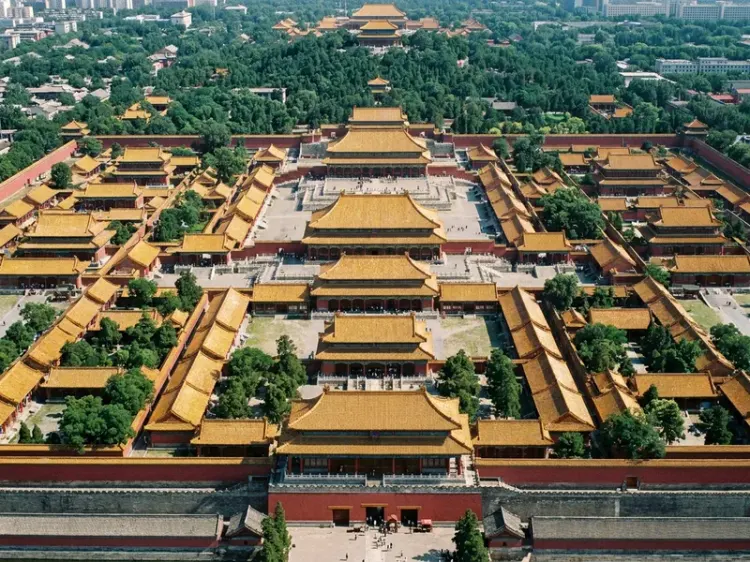
Choose China if you are
China
Top reasons to pick this side
- Geschichtsbegeisterte
- Kostenbewusste Reisende
- Alle, die Größe und Vielfalt suchen
Comparison
China gewinnt bei Kosten und Größe. Japan gewinnt bei Infrastruktur, Beschilderung und Benutzerfreundlichkeit. Beide belohnen eine 7- bis 10-tägige Reise.
TL;DR verdict
Quick Answer
For most travelers, Japan is the safer pick — but the other side wins on the axes that matter most.
For most travelers, Japan is the safer pick — but the other side wins on the axes that matter most for Japan.
| China | Japan VERDICT | |
|---|---|---|
| Visa for US/UK/EU/AU | 30-day visa-free (38+ Länder, darunter UK, CA, AU, NZ, die meisten EU-Länder, JP, KR). | 90 Tage visumfrei für die meisten westlichen Pässe. Einfacher und länger. |
| Cost (mid-range, per day) | 100–200 $/Tag. Peking/Schanghai liegen etwa 30 % unter Tokio/Osaka. | 150–250 $/Tag. Höhere Grundkosten, besonders in Tokio. |
| English-friendliness | Lückenhaft außerhalb von Hotels und großen Sehenswürdigkeiten. Übersetzungs-Apps unerlässlich. | Ausgezeichnet für ein nicht englischsprachiges Land. Züge, Speisekarten und Schilder sind alle auf Englisch. |
| Public transport | HSR + Metro ist das Beste der Welt. DiDi für Taxis (Alipay erforderlich). | JR + Tokioer U-Bahn sind für Touristen berühmt einfach. IC-Karte funktioniert überall. |
| Payment friction | Bargeld/fremde Karten eingeschränkt. Alipay für vollständige Abdeckung erforderlich. | Bargeldfreundlich, IC-Karten funktionieren überall, Karten werden in den meisten Geschäften akzeptiert. |
| Cultural depth | 5.000+ Jahre dynastische Geschichte, Seidenstraße, Große Mauer, Terrakotta-Armee. | 2.000+ Jahre, Samurai, Geisha, Shinto, Nachkriegsmoderne. |
| Food | Acht große Küchenregionen. Starke regionale Vielfalt. Von scharf bis delikat. | Weltklasse. Sushi, Ramen, Kaiseki, Tempura. Universelles Qualitätsniveau. |
| Safety | Global unter den Top 10 im Global Peace Index. Sehr sicher. | Global unter den Top 10. Äußerst sicher. |
Bar length reflects the per-axis evidence length; the winner of each axis is highlighted in terra-cotta.
Visa for US/UK/EU/AU
Japan wins
China
Japan
Cost (mid-range, per day)
China wins
China
Japan
English-friendliness
Japan wins
China
Japan
Public transport
Japan wins
China
Japan
Payment friction
Japan wins
China
Japan
Cultural depth
tie
China
Japan
Food
tie
China
Japan
Safety
tie
China
Japan
Final score
Based on 8 weighted axes. Japan edges ahead by 3 of 8.
Pros
Cons
Here's who each destination suits best — pick the side that matches your trip.
Choose China if you are
Top reasons to pick this side
Choose Japan if you are
Top reasons to pick this side
Editor-curated, then same-category, then the rest of the catalog.
Beijing vs Shanghai
Beijing for imperial history, the Great Wall, and hutong culture. Shanghai for skyline views, French Concession cafes, and xiaolongbao. Most first-timers do both — here is how to choose if you only have time for one.
Xi'an vs Luoyang
Xi'an for the Terracotta Army, the Ming city wall, and the Silk Road crossroads. Luoyang for the Longmen Grottoes, the White Horse Temple (Buddhism's first Chinese temple), and a quieter ancient capital. Both are essential China history; pick by interest.
Guilin vs Yangshuo
Guilin is the gateway city with the karst peaks and the cruise starting point. Yangshuo is the smaller, more scenic town downstream — the cruise ends there and most travelers prefer to stay. The right answer is usually: cruise one way, stay the other.
Hong Kong vs Shanghai
Hong Kong is a Special Administrative Region with its own visa regime, English-language default, and Cantonese culture. Shanghai is the mainland's most international city. Both are dense, food-obsessed, and Asian finance centers — but very different in feel.
Chengdu vs Chongqing
Chengdu for pandas, traditional Sichuan food, and the most relaxed major city in China. Chongqing for the dramatic hill-city skyline, Chongqing hotpot, and the Yangtze River setting. Both are essential for Sichuan food; choose by vibe.
Alipay vs WeChat Pay
Alipay wins for foreign travelers on setup speed, English UI, and broader merchant coverage. WeChat Pay wins for anyone already using WeChat for messaging, and for social payments like splitting bills with Chinese friends. Most experienced travelers install both — here is exactly when to use each.
High-Speed Rail (HSR) vs Domestic Flights
For trips under 1,000 km, HSR wins on price, reliability, and door-to-door time. For longer distances, fly.
Trip.com vs Booking.com
For China trips, Trip.com wins decisively. For international extensions, Booking.com has more inventory.
Beijing vs Tokyo
Beijing for history at scale. Tokyo for polished modernity. Both deserve 4-5 days.
China vs Thailand
Thailand is easier and beachier. China is deeper and cheaper. Different trips.
Chengdu vs Xi'an
Chengdu for slow-paced food and panda travel, Xi'an for ancient Silk Road history. Both are essential for a 10–14 day China route — pick based on whether food or history ranks higher for you.
Shanghai vs Shenzhen
Shanghai for historic Bund + international food scene, Shenzhen for tech-themed travel and the Pearl River Delta gateway. Both are 20M+ megacities with excellent transit.
Side-by-side reference for the 5 metrics travelers weigh most.
| Metric | China | Japan |
|---|---|---|
| Axes compared | 8 axes · winner: Japan | |
| FAQ answered | 5 of the most-asked questions | |
| Wikipedia reference | Available ↗ | Available ↗ |
| Category | general · 70+ comparisons live | |
| Last verified | 2026 rates · editor-reviewed monthly | |
Authoritative background reading on the two subjects of this comparison.
Tell us your travel dates and priorities — we'll help you choose and send a personalized plan within 24 hours.