Summary
We will walk you through the most important points of Beijing, with practical information on transport, accommodation, food and local culture. We believe three full days will let you appreciate the historical depth of the Chinese capital while experiencing the modern vitality of its hutongs and dynamic CBD. This guide is written from the perspective of a traveler who has visited the city multiple times, not from a tourist brochure.
Unlike many generic guides, we focus on practical decisions: when to visit the Forbidden City to avoid crowds, how to combine the Great Wall with the Summer Palace in one day, where to find the best authentic Peking cuisine outside tourist traps. We also cover essential information on digital payments (Alipay / WeChat Pay work with international cards), VPN navigation, and basic etiquette at historic sites.
If this is your first time in China, this guide answers the most common questions. If you have been before, we hope the sections on lesser-known neighborhoods and the current food scene will be useful.
Why Beijing
Beijing is not just the political capital of China; it is a city where three millennia of imperial history, republicanism, revolution and ultra-fast modernity condense. In a single day you can walk through the Forbidden City (1420), visit a Starbucks inside a restored hutong (2010) and dine at an upscale restaurant in Sanlitun (2024). This juxtaposition is not a tourism slogan: it is the everyday experience of Beijing.
For the international traveler, Beijing offers a unique combination of:
- UNESCO World Heritage Sites (Forbidden City, Great Wall, Summer Palace, Temple of Heaven)
- Mature tourist infrastructure (metro, English signage, digital payments)
- Celebrated regional cuisine (Peking duck, zhajiangmian, jianbing)
- Access to other regions (high-speed train to Xian in 4.5 hours, to Shanghai in 5 hours)
- Contemporary events (798 Art District, galleries in Caochangdi, nightlife in Sanlitun)
essential Attractions
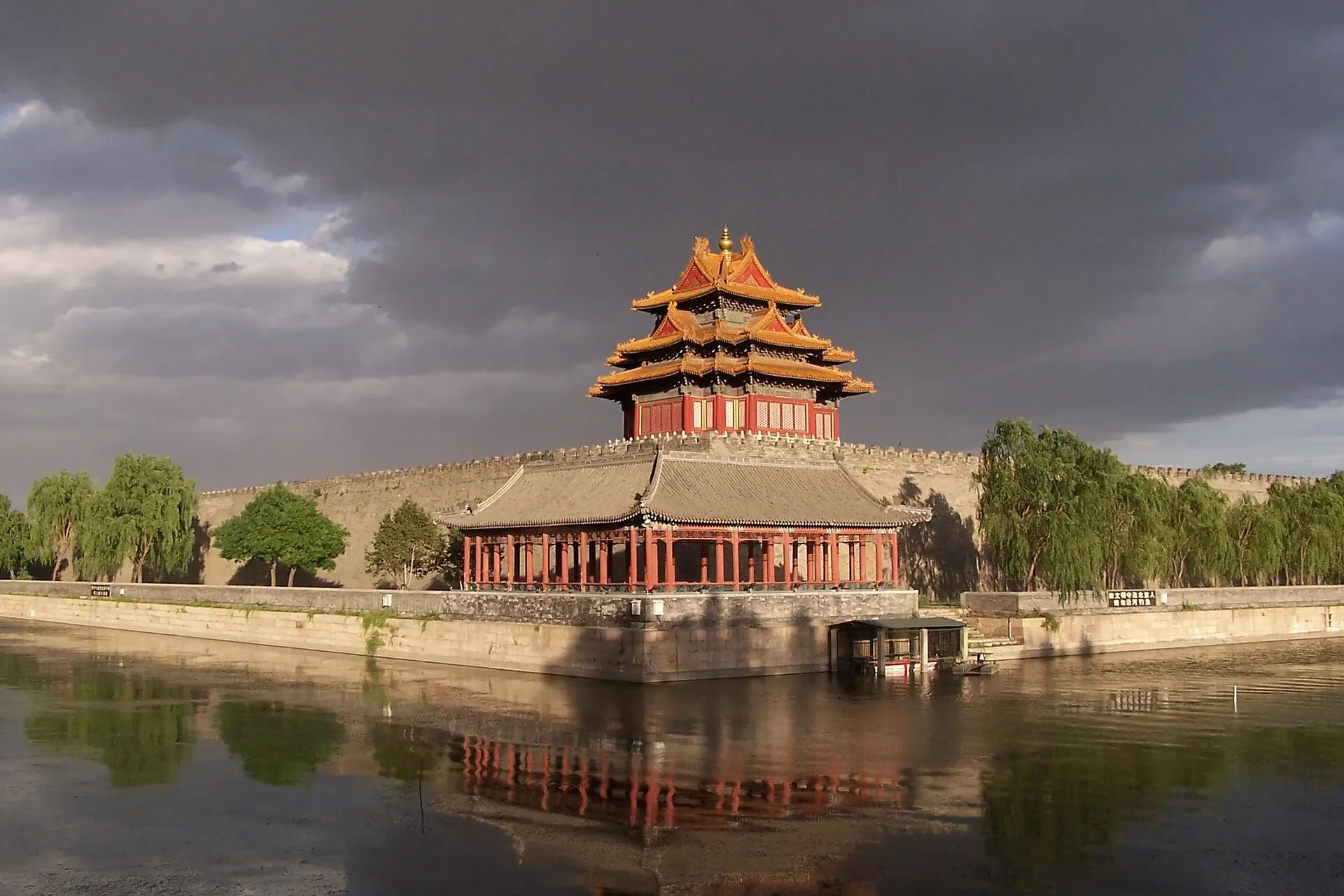
Forbidden City (故宫)
The Forbidden City, also known as the Imperial Palace or Zijin Cheng, was the residence of 24 emperors of the Ming and Qing dynasties between 1420 and 1912. With 980 buildings on 72 hectares, it is the largest palace complex in the world and a UNESCO World Heritage Site since 1987.
In our experience, a complete tour requires at least 3-4 hours. We recommend entering through the Meridian Gate (Wumen) at 8:30 AM (opening) and exiting through the Gate of Divine Valor (Shenwumen) towards Jingshan Hill for the classic view of the palace from the north at sunset. Avoid weekends and Chinese holidays: crowds can quadruple.
The museum houses a collection of over one million artifacts, but only a fraction is on rotating display. The most notable halls include the Hall of Supreme Harmony (Taihedian), the Palace of Heavenly Purity (Qianqinggong) and the Imperial Gardens. We recommend the audio guide (available in English at the north entrance) to appreciate the symbolism of each hall.
Admission: 60 yuan (peak season, April-October) / 40 yuan (off-season). Book online at least 1 day in advance on the Palace Museum's official website; tickets sell out especially in summer.
Tiananmen Square (天安门)
Tiananmen Square is the world's largest urban square (44 hectares) and the symbolic heart of the People's Republic of China. The founding of the country was proclaimed here on October 1, 1949, and it remains the setting for major national ceremonies today.
For the visitor, the square is an obligatory pass-through between the Forbidden City and the National Museum. We recommend visiting early in the morning to avoid crowds and see the flag raising (sunrise, every day). Access requires passing through security checks and presenting a passport.
Around the square you will find:
- Tiananmen Gate: with the portrait of Mao Zedong
- Monument to the People's Heroes: 38-meter obelisk
- Great Hall of the People: seat of the Chinese parliament
- National Museum of China: on the east side (free admission, highly recommended)
- Museum of the Chinese Revolution: on the west side
Great Wall (长城)
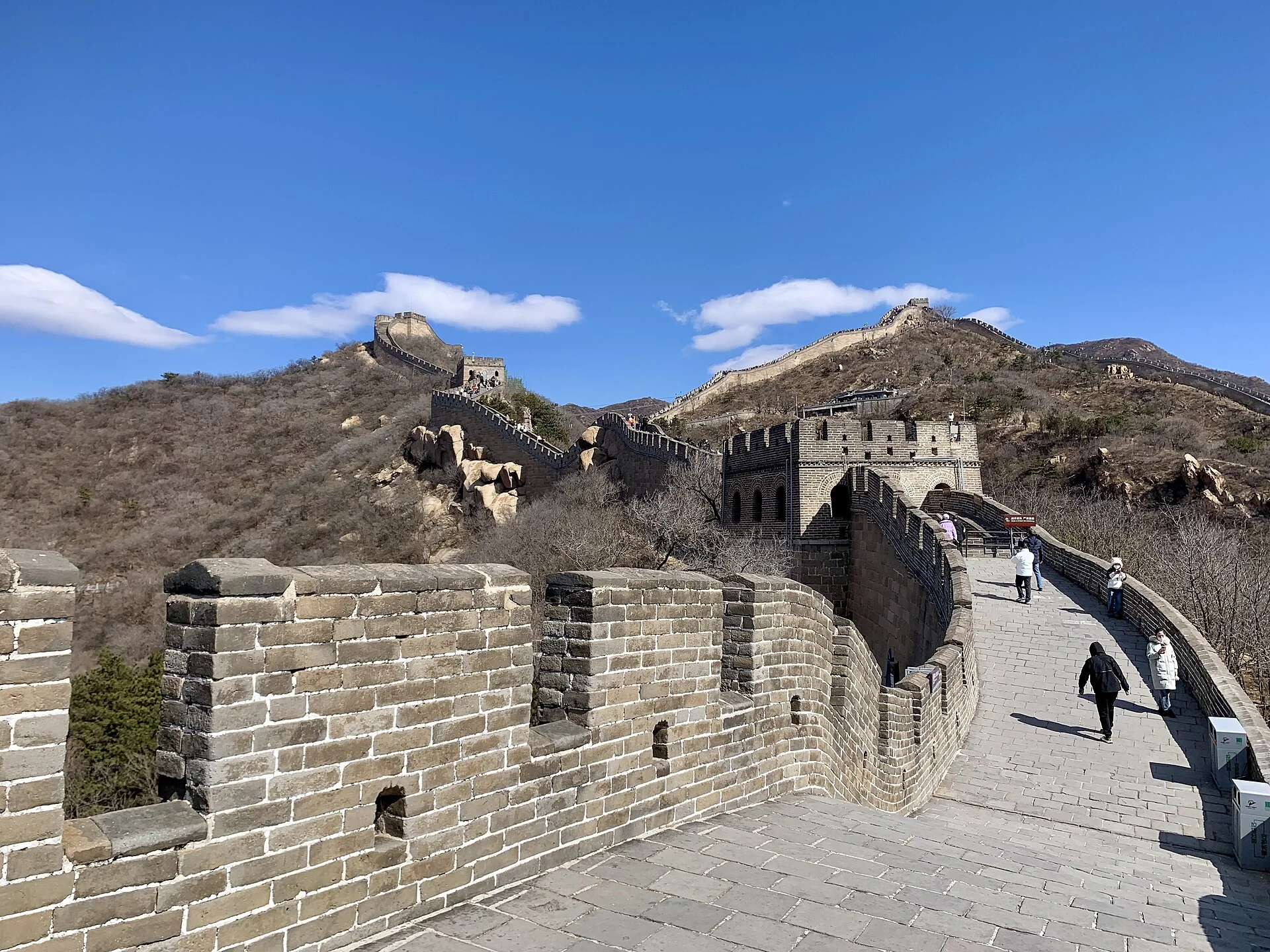
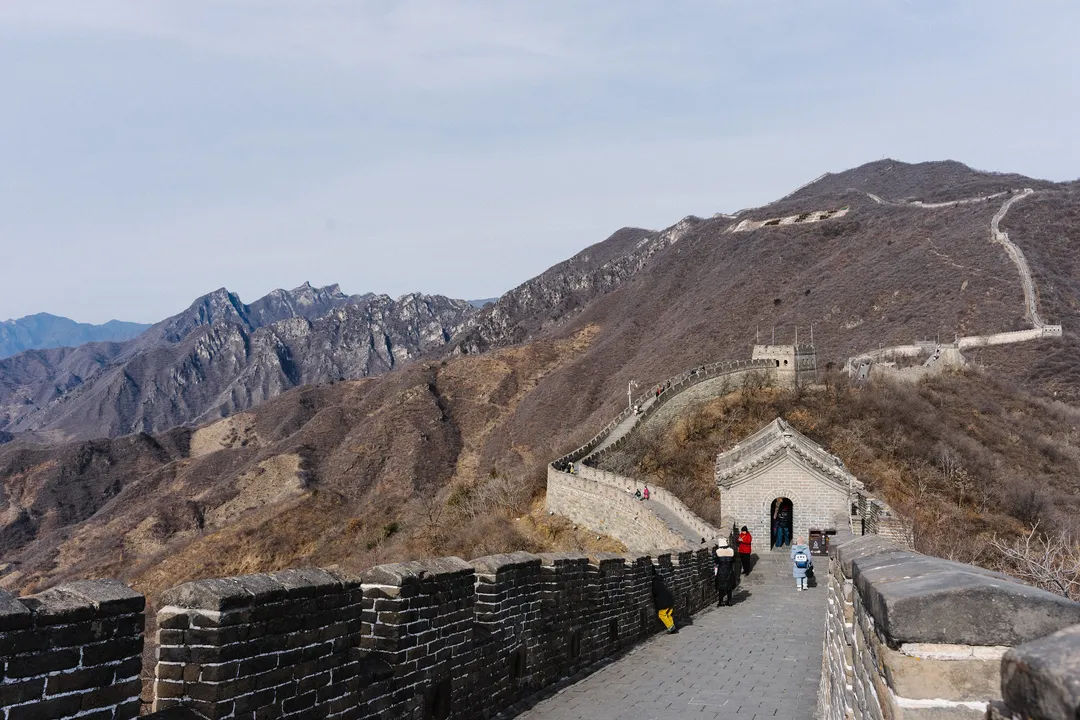
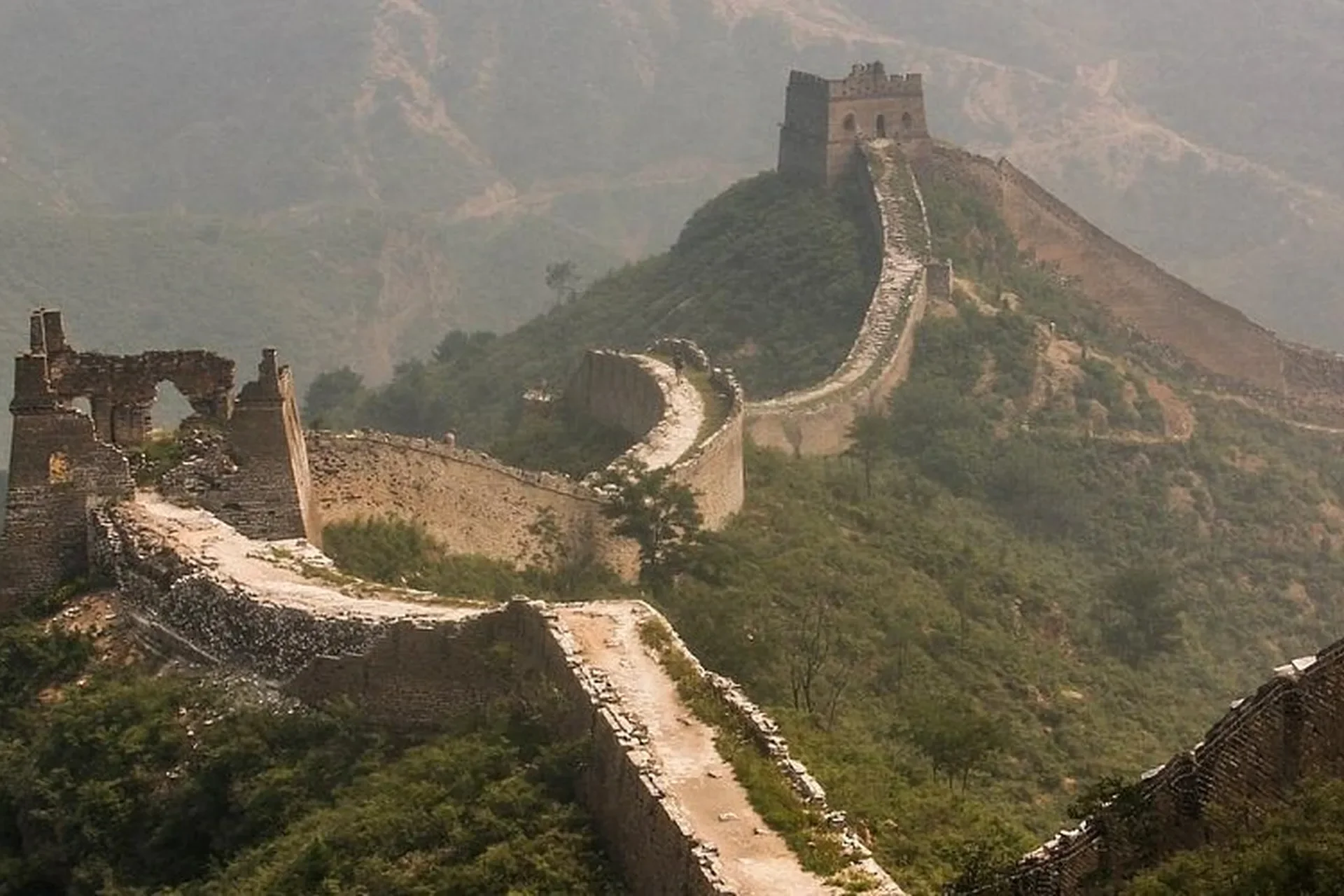
The Great Wall is not a single structure but a network of fortifications extending more than 21,000 km. To visit from Beijing, the most popular sections are Mutianyu (慕田峪) and Badaling (八达岭), with different visitor profiles. In our detailed analysis (see Comparisons section), Mutianyu is preferable for most travelers: fewer crowds, better conservation, wilder atmosphere.
Mutianyu is 70 km from central Beijing. Access by bus from Dongzhimen (916 Express, ~1.5 hours) or by private car (~1 hour). The restored section allows 2-3 hours of walking, with cable car option (round trip 120 yuan) or toboggan descent (滑道, 100 yuan). We recommend bringing water, sunscreen and comfortable shoes; the slopes are steep in some sections.
Badaling is closer (60 km) and more developed for tourism. It is the classic option for day trips from cruises or organized tours, but crowds are significantly higher. The cable car here is an enclosed cable car, different from Mutianyu.
Summer Palace (颐和园)
The Summer Palace is the best-preserved imperial garden in China, with 290 hectares combining lake, hill and palatial architecture. Originally built in 1750 during the Qing dynasty, it was burned down in 1860 by British and French troops during the Second Opium War, and restored by Empress Dowager Cixi with funds earmarked for the imperial navy (a historical fact that local guides love to tell).
The garden is divided into four main areas: the Hill of Longevity (Wanshoushan), Kunming Lake, the Daily Life Area and the Imperial Agricultural Areas. We recommend a 3-hour tour entering through the East Palace Gate (Donggongmen) and exiting through the North Palace Gate (Beigongmen), which allows a gradual panoramic view without backtracking.
Admission: 30 yuan (peak season) / 20 yuan (off-season). The garden opens at 6:30 AM in summer (7:00 in winter), ideal to avoid crowds and heat.
Temple of Heaven (天坛)
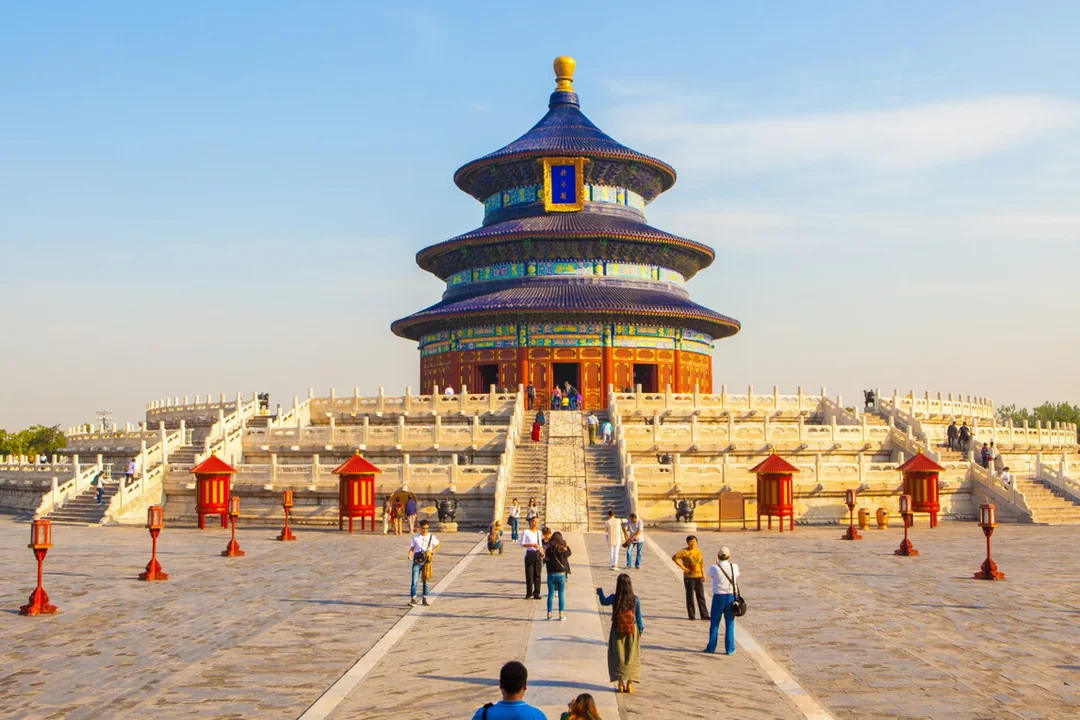
The Temple of Heaven is a complex of ceremonial buildings where emperors of the Ming and Qing dynasties offered sacrifices to heaven to ensure good harvests. Built in 1420, it is designed with cosmological symbology: the 圜丘坛 (Circular Mound Altar) is circular and represents heaven, while the base is square, representing earth.
The most impressive hall is the Hall of Prayer for Good Harvests (祈年殿), with its triple blue roof symbolizing the sky. The acoustics are notable: a single person speaking in the center can be heard clearly at any point of the perimeter, thanks to the properties of the circular design.
Admission: 15 yuan (main temple) or 35 yuan (access to the complete park). Opens at 6:00 AM; locals come early to practice tai chi, 羽毛球 (badminton) and other exercises. It is one of the best places to observe the daily life of Beijing residents.
Where to Stay
We recommend three areas according to your profile:
Sanlitun / 工体 (Gongti): The most lively area for nightlife, international restaurants, art galleries and bars. Hotels like the Opposite House or the East Beijing offer contemporary design. Close to metro Line 10. Ideal for: couples, young travelers, design lovers.
Wangfujing / 东单: Close to the Forbidden City and Tiananmen Square, with excellent metro connections. Hotels like the Peninsula Beijing or the Regent Beijing offer classic luxury. Ideal for: families, first visit, accessibility.
Hutongs (Nanluoguxiang / 后海): Accommodation in traditional patio houses converted to boutique inns (客栈). Authentic experience but fewer standard services. Ideal for: cultural travelers, photographers, writers.
Gastronomy
Beijing cuisine (京菜) is one of the 八大菜系 (eight great culinary traditions) of China. The must-try dishes:
- Peking Duck (北京烤鸭): The most famous dish. We recommend Da Dong (大董, Sanlitun branch) for a modern experience or Quanjude (全聚德, Wangfujing) for the classic version. Price: 200-500 yuan per person.
- Zhajiangmian (炸酱面): Noodles with fermented soybean sauce, ubiquitous in Beijing. Try any local restaurant: 20-30 yuan.
- Jianbing (煎饼): Street crepe, popular breakfast. 10-15 yuan at street stalls.
- Beijing Hotpot (涮羊肉): Local version with lamb. Donglaishun (东来顺) is the classic since 1903.
- Beijing Yogurt (老北京酸奶): Small ceramic bottles, 5 yuan, ubiquitous in convenience stores.
Practical Information
Visa
China offers visa exemption (免签) for citizens of many countries, including most European countries, Australia, New Zealand, and more recently several Latin American countries. Check the updated list before traveling on the Chinese consulate's website. For those who require a visa, the process usually takes 4-7 business days.
Currency and Payments
The official currency is the Renminbi Yuan (CNY, 人民币). The exchange rate fluctuates between 7.0-7.3 CNY per USD. Digital payments (Alipay 支付宝 and WeChat Pay 微信支付) dominate; however, both apps now accept international cards with Tourist Card. We recommend:
- Install Alipay before traveling
- Verify that your international credit/debit card works
- Carry some cash (renminbi) for small markets and tips
Internal Transport
The Beijing metro is extensive (24 lines, 400+ stations), punctual, clean and economical (3-9 yuan per trip). Bilingual signage (Chinese-English) at all stations. For short surface trips, taxis are abundant and Didi (滴滴) applications work with tourists.
Best Time to Visit
- Spring (April-May): Pleasant weather, flowers in parks, moderate crowds
- Autumn (September-October): The best season, clear skies, autumn foliage, comfortable temperatures
- Summer (June-August): Hot and humid (30-35°C), peak season with more Chinese tourists
- Winter (November-March): Cold (-5 to 5°C), fewer tourists, possible snow on the Wall (impressive)
Cultural Considerations
- Punctuality: Tours and restaurant reservations in China are less strict than in the West; arriving 5-10 minutes late is normal
- Tipping: Not customary in China, but in luxury tourist restaurants a 10% may be expected
- Photography: Allowed in most tourist places, but prohibited in military areas, police stations and some temples
- Internet Access: Sites like Google, Facebook, Twitter, Wikipedia are blocked. Install a VPN before traveling
- Tap water: Not potable; use bottled water
Three-Day Itinerary
We recommend the following itinerary for a first visit:
Day 1 (Imperial History): Tiananmen → Forbidden City → Jingshan Hill → Peking duck dinner Day 2 (Great Wall): Mutianyu (full day) → Return to city Day 3 (Culture and Local Life): Temple of Heaven (sunrise) → Summer Palace → Hutongs (Nanluoguxiang) → Sanlitun
Beyond the essential
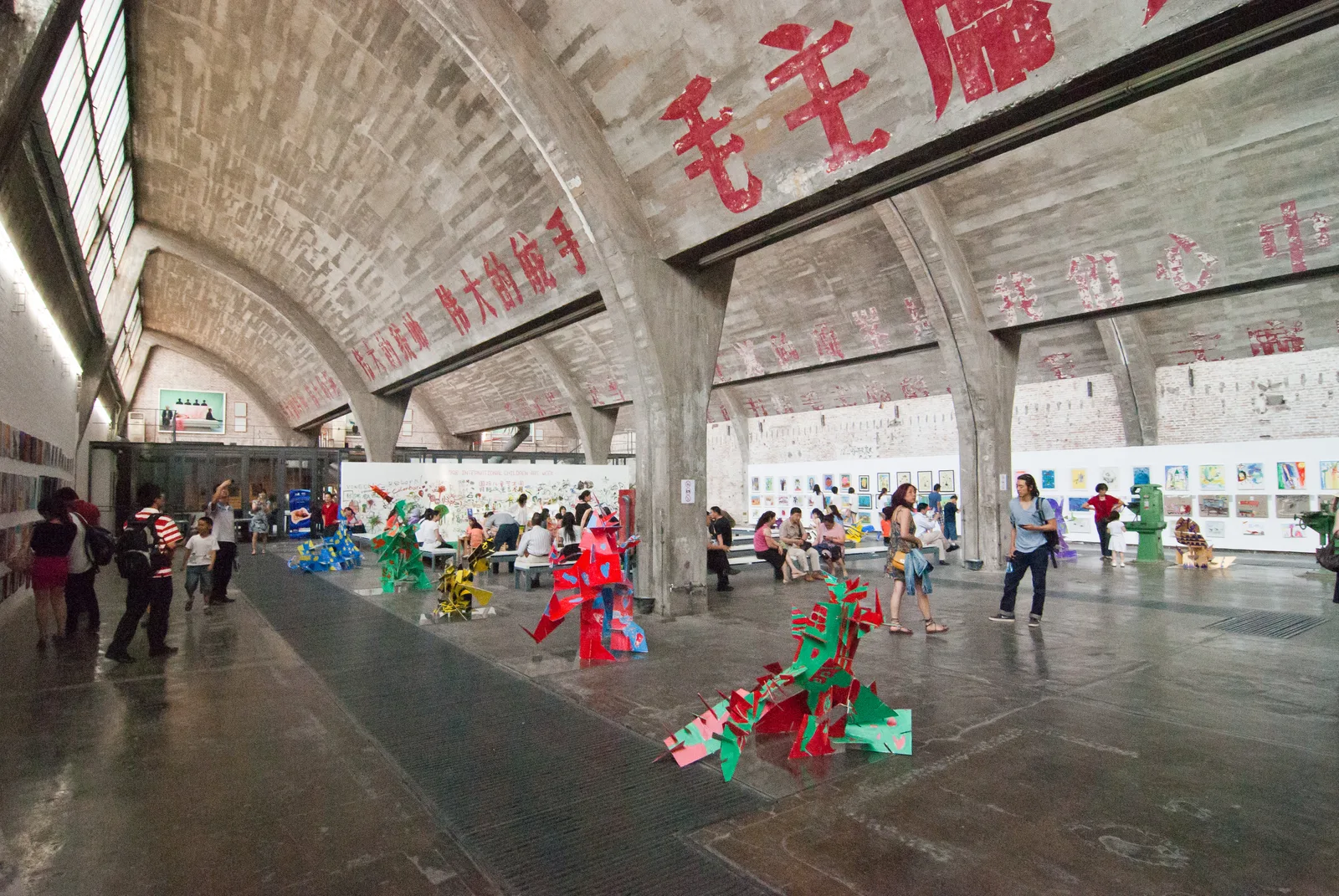
798 Art District (798艺术区)
The 798 Art District is the main contemporary art enclave in Beijing, located in a former electronics factory built in the 1950s with German technical assistance (hence the code name "Joint Factory 718", of which wing 798 is the most famous). After the deindustrialization of the 1990s, the spaces were progressively occupied by artists, galleries and studios, until becoming the main alternative cultural pole of the capital.
In our visit we found an eclectic combination:
- Ullens Center for Contemporary Art (UCCA): The most prestigious gallery, with temporary exhibitions of first-level Chinese and international artists. Admission: 60-100 yuan depending on exhibition.
- Galleria Continua: Chinese branch of the Italian gallery, with large-scale installations.
- M WOODS: Private museum inaugurated in 2014, with a collection of contemporary and modern Chinese art.
- Numerous galleries and studios: More than 100 spaces, many with free entry.
We recommend dedicating half a day (4-5 hours), especially if you are interested in contemporary art. The area also has design cafes (Ideal Cafe, O'Leisure) and restaurants (At Cafe, Mary's). Arrive by metro to Wangjing (line 14) or by taxi from Sanlitun (~20 minutes).
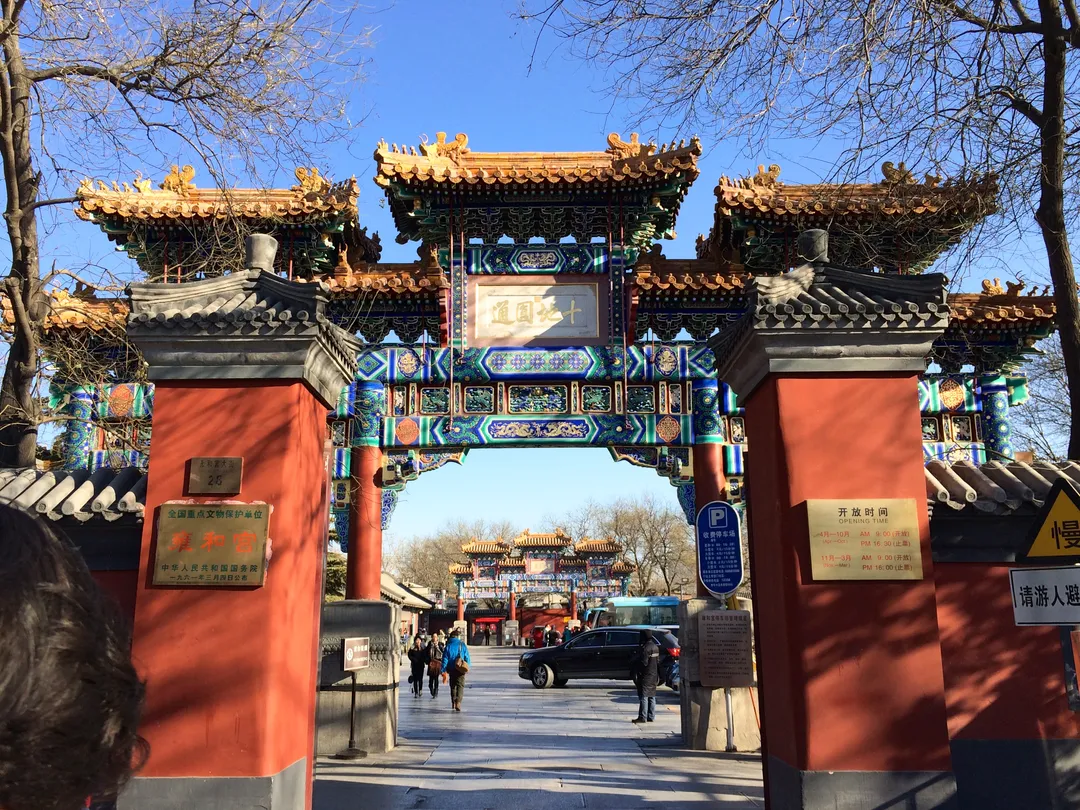
Lama Temple (雍和宫)
The Lama Temple (Yonghegong) is the most important Tibetan Buddhist monastery in Beijing outside Tibet. Built in 1694 as the residence of Prince Yongzheng (future emperor), it was converted to a Lamaist monastery in 1744. Today it is an active complex 480 meters long with multiple prayer halls.
Highlights:
- The Longevity Gate: Main entrance with two guardian lions
- Hall of Celestial Kings: With a 26-meter statue of Maitreya (Future Buddha) carved from a single piece of sandalwood
- Hall of Harmony and Peace: Where the statue of Tsongkhapa, founder of the Gelug school, is located
- Hall of the Wheel of the Law: With Tibetan frescoes and a gilded bronze Kalachakra
Admission is 25 yuan; open 9:00 to 16:30. Mondays close earlier (16:00). We recommend visiting early in the morning, when the monks perform their morning prayers and the atmosphere is more authentic.
National Museum of China (中国国家博物馆)
Located on the east side of Tiananmen Square, the National Museum is one of the largest museums in the world (65,000 square meters of exhibition, more than one million pieces in collection). It combines the former Museum of History and the Museum of the Chinese Revolution in a single building modernized in 2011.
The visit requires at least 3 hours for a first approach. The most notable permanent collections are:
- The Simuwu Ding: The heaviest bronze vessel in the world (832 kg), from the Shang dynasty
- The original Terracotta Warriors: A selection from the tomb of the first Qin emperor (the majority remains in Xian)
- Jade collection: Pieces from the Neolithic to the Qing dynasty
- Calligraphy and painting: Works by Wang Xizhi, Su Shi, and other masters
Free admission with online reservation (passport required). 1-7 days advance booking required depending on season. We recommend booking at the start of your trip.
Beihai Park (北海公园)
Beihai Park is one of the oldest imperial gardens in Beijing, with a central lake (which covers a third of the park) and the famous Jade Island (琼华岛) crowned by a white Tibetan-style stupa. The park dates from the Liao dynasty (Khitan dynasty, 938) and was expanded during the Yuan, Ming and Qing dynasties.
It is especially popular among local residents for morning activities:
- Tai chi (太极拳): Groups of 20-50 people practicing at dawn
- Square dances (广场舞): Visible especially on weekends
- Amateur singing: Spontaneous choirs in the pavilions
- Shuaijiao (摔跤): Traditional Chinese wrestling
Admission: 10 yuan (park), additional 10 yuan to access the temples on Jade Island. Open 6:30 to 21:00 in summer. It is an excellent place to observe daily life.
Drum Tower & Bell Tower (钟鼓楼)
The Drum Tower and the Bell Tower, located at the northern end of the central hutongs, were the official clocks of Beijing during the Ming and Qing dynasties. The Drum Tower (1420) contains 24 drums that were beaten to mark the hours; the Bell Tower (1745) housed a large copper bell that resonated 13 times at 7:00 AM to mark the start of the day.
Today they are a museum with exhibits on ancient Beijing urban life and panoramic views of the surrounding hutongs. We recommend visiting at sunset (5-6 PM in summer) to see the transition from day to night over the traditional gray rooftops.
Admission: 20 yuan (each tower) or 30 yuan combined. Open 9:00 to 17:00.
Nightlife
Beijing has a lively nightlife scene that goes far beyond conventional tourist offerings. We recommend three areas:
Sanlitun: Main street of bars and discos, as well as international restaurants. For a more authentic experience, explore the side streets (Taikoo Li Sanlitun, a design commercial complex with restaurants and contemporary stores).
Houhai / 后海: Artificial historic lake surrounded by bars, restaurants and tea houses. In summer it is especially lively, with outdoor tables and live music. For a more traditional experience, look for the tea houses along the north lake.
Gulou / 鼓楼: The area around the Drum Tower has a more hipster atmosphere, with galleries, specialty cafes and small indie music bars. Nanluoguxiang Street is the most famous, although now quite touristy; we recommend the parallel streets like Yandai Xie Street.
Day Trips from Beijing
Tianjin (天津)
30 minutes by high-speed train from Beijing South Station (G-series trains, 54 yuan second class), Tianjin is a port city with a unique European colonial legacy in China. Highlights:
- The Five Great Avenues (五大道): Colonial mansions from the 19th and 20th centuries, now museums and restaurants
- Italian Concession Zone: Restored Italian architecture, ideal for walking
- Tianjin Radio Tower: 415 meters, one of the tallest in the world, with a viewpoint
- Ancient Culture Street (古文化街): Traditional market with crafts and local food
We recommend a full day or a one-night stay. It is particularly interesting for those who have seen the main points of Beijing.
Chengde (承德)
4-5 hours by train from Beijing, Chengde is a UNESCO World Heritage Site for its Mountain Resort (避暑山庄), the largest imperial garden in China (560 hectares, 4 times the Summer Palace). It was the summer residence of Qing emperors, with palaces, temples and natural landscapes.
It is a popular 2-day / 1-night excursion. If you have limited time, prioritize the Mountain Resort (half day) and the Eight Outer Temples (1 day).
Great Wall - Alternative Sections
In addition to Mutianyu and Badaling, there are lesser-known sections:
- Jinshanling (金山岭): 125 km away, wilder section with unrestored parts, ideal for full-day trekking
- Gubeikou (古北口): 150 km away, combination of restored and wild sections
- Huanghuacheng (黄花城): 80 km away, section with a lake, popular in autumn
These sections require more logistical planning (private car or specialized tour) but offer more authentic experiences.
Events and Festivals
Beijing has a calendar of events that can transform a visit:
- Chinese New Year (春节, January-February): The most important festivity, with parades, fireworks and red decorations throughout the city. Tourist attractions are open but with extreme crowds
- Lantern Festival (元宵节, 15 days after Chinese New Year): Traditional lanterns in parks and temples
- Qingming (清明节, April): Tomb-sweeping day, very busy parks
- Dragon Boat Festival (端午节, June): Boat races in parks with water
- Mid-Autumn Festival (中秋节, September-October): Moon cakes and moon observation
- National Day (国庆节, 1-7 October): Golden Week with extreme crowds, but also special events (fireworks, parades)
Shopping
Beijing offers a shopping experience ranging from traditional markets to luxury boutiques:
Wangfujing: The oldest commercial street, with the Wangfujing Department Store (百年老店) and the pedestrian zone. More oriented to souvenirs and mid-range fashion.
Sanlitun Taikoo Li: The most modern commercial complex, with international brands, design stores and contemporary restaurants. The area is the most cosmopolitan in Beijing.
Silk Market (丝绸市场): Although touristy, it remains interesting for silks, pearls and crafts at negotiable prices. We recommend haggling aggressively (start at 30% of the initial price).
Liulichang (琉璃厂): Historic street of antiques, calligraphy, brushes and old books. Essential for collectors and lovers of traditional culture.
798 Art District: For art, design and unique contemporary objects. Many studios have small stores with pieces from emerging artists.
Final Reflections
After multiple visits to Beijing over the years, we want to share some observations that do not appear in conventional guides:
Beijing is a city that reinvents itself constantly. The last time we visited the hutong neighborhood near the Drum Tower, we found a specialty cafe in what had been a third-generation noodle shop. The owner, a 60-year-old woman, had decided to close her family's restaurant and rent the place to young entrepreneurs. This type of transformation is the norm, not the exception.
The key to appreciating Beijing is to accept the contradiction. Don't try to reconcile the Forbidden City with Sanlitun, or the hutongs with the CBD. Each is authentic in its own way. The city is large, noisy, sometimes chaotic, but also deeply generous: in our experiences, locals usually respond warmly to travelers who show genuine interest in their culture.
If I had to recommend one thing you should not miss, it would be the Temple of Heaven at sunrise. Not for the buildings themselves, but for what you will see around them: synchronized tai chi groups, grandmothers dancing in pairs, men playing cards in the shadows. It is a microcosm of modern and traditional China coexisting.
For a second visit, we suggest exploring the lesser-known hutongs to the east (Dongdan) or south (Tiantan), walking along the fully restored Qianmen Street, or making a half-day excursion to the Western Mountains park (西山) to escape the urban noise.
Useful Terms Glossary
- Hutong (胡同): Traditional alleys in central Beijing, formed by houses with patios (四合院 siheyuan)
- Siheyuan (四合院): Traditional square patio house, typical of the hutongs
- Dongcheng / Xicheng / Haidian / Chaoyang (东城/西城/海淀/朝阳): The four main central districts of Beijing
- Qiánmén (前门): Front gate, term also used for the historic commercial street
- Lóng (龙) / Fènghuáng (凤凰): Dragon and Phoenix, recurring imperial symbols
- Fó (佛): Buddha, present in many Buddhist temples
- Chá (茶): Tea, central culture in Beijing (especially jasmine tea)
Emergency Contacts
In case you need assistance during your stay:
- Tourist police: 110 (general police), also 12301 for specific tourist complaints
- Ambulance: 120
- Firefighters: 119
- Your country's embassy: Keep the address and phone handy
- Hospitals with international attention: Peking Union Medical College Hospital (北京协和医院), Beijing United Family Hospital (北京和睦家医院)
Additional Resources
To deepen your knowledge of Beijing, we recommend:
- Books: "Peking Opera" (Colin Mackerras), "The Last Quarter of the Moon" (Aimee Nezhukumatathil), "Beijing Coma" (Ma Jian)
- Films: "Farewell My Concubine" (Chen Kaige, 1993), "In the Heat of the Sun" (Jiang Wen, 1994), "Shower" (Zhang Yang, 1999)
- Apps: Pleco (Chinese dictionary), Dianping (restaurants), Baidu Maps (alternative to Google Maps)
Beijing is a city worth multiple visits. Each time we return, we discover something new: a small museum in a hutong we didn't know, a new restaurant in Chaoyang, a temporary exhibition at 798. We hope this guide is the beginning of your exploration of this extraordinary city.
Decision-Aid Sections
Map
Source: Official Beijing Map - We recommend downloading the offline map of Beijing through the Baidu Maps or Maps.me application before your arrival. For the main tourist attractions, paper maps are available in 4-5 star hotels and tourist information centers.
Source: Public transport system - The Beijing metro is the most efficient way to get around. The official "Beijing Subway" (北京地铁) app offers real-time route planning. For taxis, Didi (滴滴) is the standard application.
Cost breakdown
Source: Accommodation - Hotel prices vary enormously by season and location. Wangfujing and Sanlitun have the most expensive hotels; the hutongs offer more authentic options at reasonable prices.
Source: Meals - A typical street breakfast costs 10-20 yuan; a lunch in a local restaurant 50-100 yuan; dinner at an upscale restaurant 200-500 yuan per person.
Source: Transport - The metro costs 3-9 yuan per trip (fare based on distance). Taxis have a base fare of 13 yuan (the first 3 km) and 2.3 yuan per additional km.
Source: Attractions - The main attractions cost 30-60 yuan each. The combined "Beijing Tourist Pass" package (300 yuan) includes access to 12 main attractions.
When to go
Source: Beijing Climate - Spring (April-May) and autumn (September-October) are the best seasons. Summer is hot and humid; winter is cold but with fewer tourists. Chinese national holidays (especially Golden Week in October) bring extreme crowds.
Source: Festivals - Chinese New Year (January-February) is the most important festivity but also the most crowded. The Mid-Autumn Festival (September-October) offers a traditional atmosphere.
Getting there
Source: Airport - Beijing Capital International Airport (PEK) and Beijing Daxing International Airport (PKX) are the two main ones. PEK is connected to the center by Airport Express (25 yuan, 30 min). PKX has the Daxing Airport metro line (35 yuan, 40 min).
Source: Train station - Beijing has multiple stations: Beijing Station (south), Beijing West (west), Beijing North (north), Beijing South (south, for HSR). Make sure to verify which one to use according to your destination.
Getting around
Source: Metro - The Beijing metro is extensive, punctual and economical. 24 lines, 400+ stations. First class: 5:00-23:00 (varies by line). Fare: 3-9 yuan.
Source: Taxi - Abundant and relatively cheap. Base fare 13 yuan (3 km) + 2.3 yuan/km. The Didi and Caocao Mobility applications are the most used.
Source: Bicycle - The shared bicycle system (Mobike, Ofo, Hellobike) is widespread. 1.5 yuan per 30 minutes. We recommend downloading the app before arriving.
Practical
Source: Electricity - China uses type A plugs (two flat pins), type C (two round) and type I (three pins). Voltage 220V, 50Hz.
Source: Water - Tap water is not potable. We recommend buying bottled water (1-2 yuan per 500ml bottle in convenience stores).
Source: Vaccination - No special vaccines required for Beijing. We recommend being up to date with routine vaccines.
Source: Travel insurance - We recommend contracting an insurance that covers international medical care, as private hospitals are expensive.
Source: Behavior - Chinese people are generally kind to tourists. Avoid sensitive political discussions, especially about Tibet, Xinjiang, Taiwan, or the 1989 protests.
SIM
Source: Mobile connectivity - China is the world's largest smartphone market. 4G/5G networks are excellent in Beijing. For tourists, the most practical options are:
- International eSIM (Airalo, Holafly): 5-30 USD depending on plan and duration
- Pocket WiFi portable: 30-50 CNY/day, available at airports
- Local operator roaming: Expensive but convenient
- Local Chinese SIM: Requires registration, better for long stays
Source: Essential apps - Install before traveling:
- Pleco (Chinese-English dictionary)
- Alipay (payments)
- WeChat (communication and payments)
- Baidu Maps (navigation)
- Didi (taxis)
- Meituan (delivery and restaurants)
- Dianping (local reviews)
ATM
Source: ATMs - There are ATMs in all banks and many hotels. They accept Visa, Mastercard, UnionPay, and increasingly American Express. Most have interface in Chinese and English.
Source: Currency exchange - The main banks (ICBC, Bank of China, China Construction Bank) exchange the main international currencies. Rates are competitive. Better avoid exchanging in hotels (worse rates).
Source: Commissions - Your bank may charge a commission for international withdrawals (typically 1-3% of the amount). We recommend withdrawing large amounts to minimize commissions.
Source: Limits - Chinese ATMs have a daily limit of 2500-5000 CNY per transaction. For larger amounts, go to the bank counter.
Source: Western Union - Available in main banks for international transfers.
Connectivity
Source: Internet - China has the Great Firewall blocking Google, Facebook, Twitter, Instagram, YouTube, WhatsApp. Install a reliable VPN before arrival.
Source: Hotel WiFi - All 4-5 star hotels offer free WiFi. 3-star and below varies.
Source: Public WiFi - Available in some shopping centers, subway stations (requires Chinese phone number).
Source: Mobile data - 4G/5G coverage is excellent. Most cafes and restaurants have WiFi.
Source: International calls - Skype, WhatsApp (with VPN) and other VoIP services work but require VPN.
Updated Information
We verified this guide with information from August 2026. However, we recommend:
- Consult the official website of China National Tourism Administration for updated visa information
- Verify the Chinese holiday calendar on timeanddate.com (affects crowds)
- Review the situation of digital payments before traveling (apps evolve quickly)
- Confirm hours and prices of attractions on their official websites
Beijing is a city that rewards those who take the time to explore it in depth. We hope this guide is useful for discovering both its imperial treasures and its lively contemporary life.
Acknowledgments and Final Notes
This comprehensive guide represents our best efforts to provide practical, accurate, and culturally sensitive information for visitors to Beijing. We have drawn on our own experiences as travelers, supplemented with insights from local friends, fellow travel writers, and official documentation from the Beijing Tourism Bureau and other government sources.
We want to acknowledge that Beijing is a city of contrasts and complexities that cannot be fully captured in any single guide. Our hope is that this information helps you navigate the practical aspects of your trip while leaving ample room for your own discoveries and unexpected encounters. Some of the most memorable moments of any visit to Beijing are those that happen when you stray from the well-trodden path: a conversation with a local in a teahouse, an unexpected encounter in a quiet hutong, or stumbling upon a small neighborhood festival.
We encourage you to approach Beijing with curiosity, patience, and respect. The city has undergone enormous transformation in recent decades, and continues to evolve at a rapid pace. What we have written here reflects the state of Beijing in mid-2026; conditions, prices, and policies may change.
For the most current information, please consult:
- The official Beijing Tourism Bureau website
- The Palace Museum's official website
- Recent reviews on TripAdvisor and Lonely Planet
- Local Beijing news sources for current events
We wish you an enriching and memorable visit to one of the world's great capitals. Welcome to Beijing!
Detailed Annual Calendar of Beijing Events
Understanding the rhythm of Beijing's annual event calendar is crucial for planning your visit, as it significantly affects both the crowd levels and the overall atmosphere of the city. Below is a month-by-month guide to help you plan effectively.
January is the heart of winter in Beijing, with temperatures ranging from -10 to 5 degrees Celsius. The city often experiences gray skies and occasional snow, which can create magical winter scenes at the Great Wall and Forbidden City. However, late January and early February bring the most important event of the year: Chinese New Year, also known as Spring Festival. This is when Beijing transforms with red lanterns, traditional decorations, and the largest annual migration of people in the world. Many shops and restaurants close for the holiday week, but special temple fairs at parks like Ditan Park and Longtan Park offer cultural performances, traditional snacks, and folk arts. The downside is extreme crowds and the closure of many tourist attractions for at least 3-5 days.
February continues the Chinese New Year celebrations with the Lantern Festival on the 15th day of the lunar calendar. The lanterns displayed at various parks are impressive, and you can see traditional performances, riddles written on lanterns, and tangyuan (sweet rice balls). The winter weather persists, so pack warm clothing. This is an excellent time to visit the Great Wall, as the snow-capped mountains in the distance create dramatic photographic opportunities.
March marks the transition to spring. Temperatures begin to warm to 5-15 degrees Celsius, and the city sees the first signs of cherry blossoms and magnolias. The National People's Congress session typically occurs in early March, which can result in some additional security measures and occasional traffic restrictions around the Tiananmen area. Tourist crowds remain relatively low, making it a good time to visit popular attractions without long lines.
April is one of the most pleasant months to visit Beijing, with mild temperatures (10-20 degrees Celsius), blooming flowers, and clear skies. The Qingming Festival (Tomb-Sweeping Day) occurs in early April and is a 3-day holiday when many Chinese people return to their hometowns. Tourist sites can be slightly busier during this period. The Beijing International Film Festival takes place in mid to late April, attracting cinema enthusiasts from around the world.
May is peak spring season and arguably one of the best times to visit Beijing. Temperatures are ideal (15-25 degrees Celsius), humidity is low, and the city's parks and gardens are in full bloom. The Peking University campus and Tsinghua University are particularly beautiful with their lilacs and peonies. Labor Day (May 1) is a 3-day holiday, so expect some crowding at popular destinations. International Workers' Day on May 1 often features special events and exhibitions.
June brings warmer weather and the start of the rainy season. Temperatures rise to 20-30 degrees Celsius, and humidity increases significantly. The Dragon Boat Festival occurs in early June and features boat races at various parks with water features. Summer tourism begins to increase, especially with school holiday crowds from other parts of China. Indoor attractions like museums become more popular as people escape the heat.
July is one of the hottest and most humid months in Beijing, with temperatures often exceeding 35 degrees Celsius. Afternoon thunderstorms are common. This is the peak domestic tourism season, with families traveling during school holidays. International tourists who can handle the heat will find fewer crowds at major attractions. The Summer Palace is particularly popular during this time, as visitors seek the cool of its lakeside pavilions.
August continues the hot, humid summer weather. The Beijing International Book Fair takes place in late August, and various music festivals occur throughout the city. Many Chinese tourists travel abroad during this period, which can mean slightly fewer domestic tourists at some attractions. Air quality can be variable, so check forecasts and consider wearing a mask on high-pollution days.
September brings relief from the summer heat and the beginning of autumn. Temperatures cool to 15-25 degrees Celsius, and humidity drops significantly. This is one of the best months to visit Beijing, with comfortable weather and beautiful autumn colors beginning to appear. The Mid-Autumn Festival occurs in September or early October and is celebrated with mooncakes and family gatherings. Many businesses close for the 3-day holiday.
October is perhaps the most beautiful month in Beijing, with autumn foliage in full display and crisp, clear weather (10-20 degrees Celsius). However, the first week of October is National Day Golden Week, the largest annual travel period in China. Expect extreme crowds at all major attractions, increased prices, and book transportation and accommodation well in advance. After Golden Week, the second half of October is excellent for travel, with comfortable weather and fewer crowds.
November brings cooler weather (0-15 degrees Celsius) and the last of the autumn colors. The Great Wall sections like Mutianyu are particularly remarkable with autumn foliage. Crowds thin out significantly after Golden Week, making this an underrated month to visit. Some attractions may have reduced hours as winter approaches.
December is the beginning of winter in Beijing, with temperatures ranging from -5 to 5 degrees Celsius. The city is less crowded, except for the Christmas and New Year holiday period. Ice skating rinks appear at various parks, and the winter scenery at the Great Wall can be impressive. The Beijing Design Week occurs in early October but events continue into December, showcasing the city's contemporary design scene.
Final Travel Tips from Our Experience
After years of traveling to Beijing, we have compiled a few final tips that we believe will enhance your visit:
First, learn a few basic Chinese phrases before arriving. While many people in the tourism industry speak some English, knowing simple phrases like "你好" (hello), "谢谢" (thank you), "请问" (excuse me), and "多少钱" (how much) will be greatly appreciated and open up more authentic interactions.
Second, download the apps we mentioned before you leave home, as some of them (especially Alipay and WeChat Pay) require Chinese phone numbers or specific configurations to set up.
Third, be prepared for security checks at major tourist sites, hotels, and metro stations. Carry your passport at all times, as it is required for ticket purchases, hotel check-ins, and sometimes for verification at attractions.
Fourth, embrace the unexpected. Some of our best Beijing memories have come from unplanned encounters: a local family sharing their home-cooked lunch with us in a hutong, a university student who walked with us for 30 minutes to help us find a specific restaurant, or a shop owner who insisted on teaching us how to properly brew jasmine tea. The city rewards those who approach it with openness and curiosity.
Fifth, return home with a plan to come back. Beijing is a city that reveals new layers with each visit. The first time you visit, you see the notable landmarks. The second time, you discover the neighborhoods. The third time, you understand the rhythm. The fourth time, you feel at home. We hope this guide helps you take the first steps on what we hope will be many visits to this extraordinary city.
Welcome to Beijing, and safe travels!