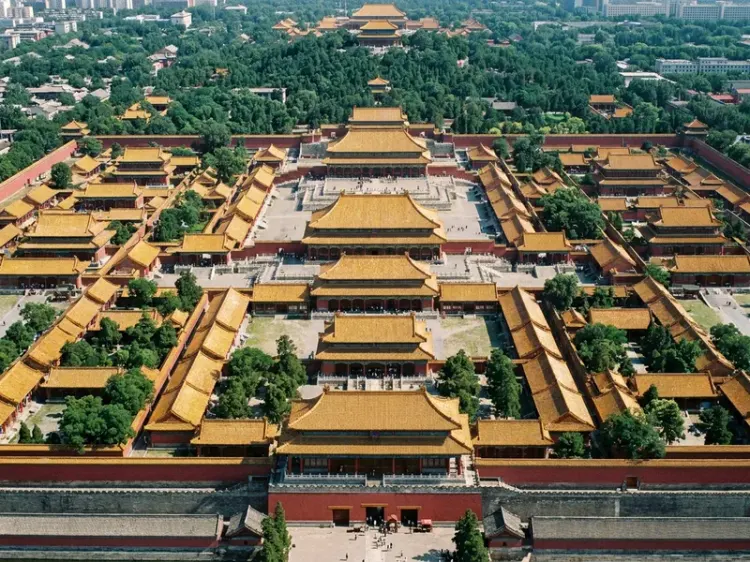
Choose China if you are
China
Top reasons to pick this side
- Budget-Reisende (30–50 % günstiger als Japan)
- Abenteuerlustige Esser (regionale Vielfalt der Küche)
- Geschichtsinteressierte (5.000 Jahre vs. 2.000 Jahre)
Comparison
China für dramatische Landschaften, 5.000 Jahre Geschichte und die vielfältigste Küche der Welt. Japan für Präzision, Raffinesse und die effizienteste Infrastruktur der Welt. Beide sind außergewöhnlich. Asien-Erstbesucher wählen oft Japan; Budget-Reisende wählen China.
TL;DR verdict
Quick Answer
For most travelers, Japan is the safer pick — but the other side wins on the axes that matter most.
For most travelers, Japan is the safer pick — but the other side wins on the axes that matter most for Japan.
| China | Japan VERDICT | |
|---|---|---|
| Cost (mid-range 10-day trip) | 2.500-3.500 $ (ohne internationale Flüge). 30-50 % günstiger als Japan. | 3.500-5.500 $ (ohne internationale Flüge). Höhere Lebenshaltungskosten, schwächerer Yuan-zu-Yen-Wechselkurs. |
| Visa | 30-day visa-free für 38+ Länder (Stand 2026). USA, Großbritannien, Kanada, Australien, die meisten EU-Länder. | 90 Tage visafrei für 68+ Länder (Stand 2026). Mehr berechtigte Länder, längere Aufenthaltsdauer. |
| Internet | Google, Gmail, YouTube, Instagram, WhatsApp, Facebook ALLE GESPERRT. VPN erforderlich. | Offenes Internet. Keine Einschränkungen. Einfach einen Pocket-WLAN-Router oder eine SIM-Karte mitbringen. |
| English level | Eingeschränkt außerhalb von Hotels und Touristenorten. Alipay und DiDi verfügen über englische Benutzeroberflächen. Die Übersetzungs-App Pleco ist unverzichtbar. | In Städten relativ verbreitet. Bahnhöfe, Restaurants und Museen verfügen häufig über englische Beschilderung. |
| Payment | Alipay oder WeChat Pay sind für die meisten Transaktionen erforderlich. Bargeld ist selten. Ausländische Karten funktionieren über die Alipay Tour Card. | Bargeld ist in kleineren Geschäften immer noch üblich. IC-Karten für den Nahverkehr. Internationale Karten werden weitgehend akzeptiert. |
| Public transport | Weltweit größtes HSR-Netz (45.000+ km). Peking nach Schanghai: 4,5 Stunden. Günstige U-Bahn-Systeme. | Weltklasse-Schienennetz. Shinkansen (Hochgeschwindigkeitszug). Tokio nach Kyoto: 2,5 Stunden. Makellos sauber. |
| Cuisine variety | 8 große Küchen, die sich über 34 Provinzen erstrecken. Sichuan, Kantonesisch, Hunan usw. – radikal unterschiedliche regionale Stile. | Sushi, Ramen, Tempura, Kaiseki – äußerst raffiniert, aber weniger regionale Vielfalt. Tokio vs. Kyoto: subtile Unterschiede. |
| Historical depth | 5.000+ Jahre ununterbrochene Geschichte. Große Mauer, Verbotene Stadt, Terrakotta-Armee, Seidenstraße. | 2.000+ Jahre. Kyoto-Tempel, Samurai-Burgen, Geisha-Kultur. Am besten erhaltene historische Architektur außerhalb Europas. |
Bar length reflects the per-axis evidence length; the winner of each axis is highlighted in terra-cotta.
Cost (mid-range 10-day trip)
China wins
China
Japan
Visa
Japan wins
China
Japan
Internet
Japan wins
China
Japan
English level
Japan wins
China
Japan
Payment
Japan wins
China
Japan
Public transport
Japan wins
China
Japan
Cuisine variety
China wins
China
Japan
Historical depth
China wins
China
Japan
Final score
Based on 8 weighted axes. Japan edges ahead by 2 of 8.
Pros
Cons
Here's who each destination suits best — pick the side that matches your trip.
Choose China if you are
Top reasons to pick this side
Choose Japan if you are
Top reasons to pick this side
Editor-curated, then same-category, then the rest of the catalog.
China vs Vietnam
Vietnam for visa simplicity and Southeast Asia warmth, China for history, HSR network, and food diversity. Both are excellent value but quite different experiences.
China vs South Korea
South Korea for visa simplicity, K-culture, and food quality; China for sheer scale of history, HSR, and regional cuisine variety.
VPN vs eSIM
eSIM for data connectivity, VPN for Western app access. They solve different problems — most travelers need both.
China vs India
China for infrastructure, food safety, and HSR efficiency. India for spirituality, color, and lower costs. Both overwhelm — pick based on your travel style.
China vs Taiwan
Taiwan for English-friendly infrastructure, night markets, and visa simplicity. Mainland China for scale, HSR, and historical depth. Different visa rules apply.
China vs Indonesia
China for imperial history, HSR connectivity, and eight regional cuisines. Indonesia for Bali beaches, Komodo dragons, and Borobudur. Very different trips at similar price points.
China vs Philippines
China for ancient history and HSR efficiency. Philippines for English-friendly island-hopping, diving, and the cheapest beach travel in Asia.
China vs Malaysia
China for ancient history and HSR scale. Malaysia for English-friendly infrastructure, multi-cultural food (Malay, Chinese, Indian), and visa simplicity.
China vs Singapore
China for scale, history, and HSR connectivity. Singapore for English-first infrastructure, hawker food, and the easiest first Asia trip. Very different price points.
China vs Thailand
Thailand for visa ease, beaches, and first-time Asia warmth. China for 5,000 years of history, HSR, and the deepest regional food variety in Asia. Two different trips.
China vs Vietnam
Vietnam for visa simplicity, lower costs, and Southeast Asia warmth. China for 5,000 years of history, HSR connectivity, and deeper food variety.
Sichuan vs Cantonese
Sichuan for numbing-spicy heat (mala) and bold flavors. Cantonese for delicate dim sum, roast meats, and seafood. Two of China's eight great cuisines, very different.
Side-by-side reference for the 5 metrics travelers weigh most.
| Metric | China | Japan |
|---|---|---|
| Axes compared | 8 axes · winner: Japan | |
| FAQ answered | 7 of the most-asked questions | |
| Wikipedia reference | — | — |
| Category | travel · 70+ comparisons live | |
| Last verified | 2026 rates · editor-reviewed monthly | |
Tell us your travel dates and priorities — we'll help you choose and send a personalized plan within 24 hours.