
Summary
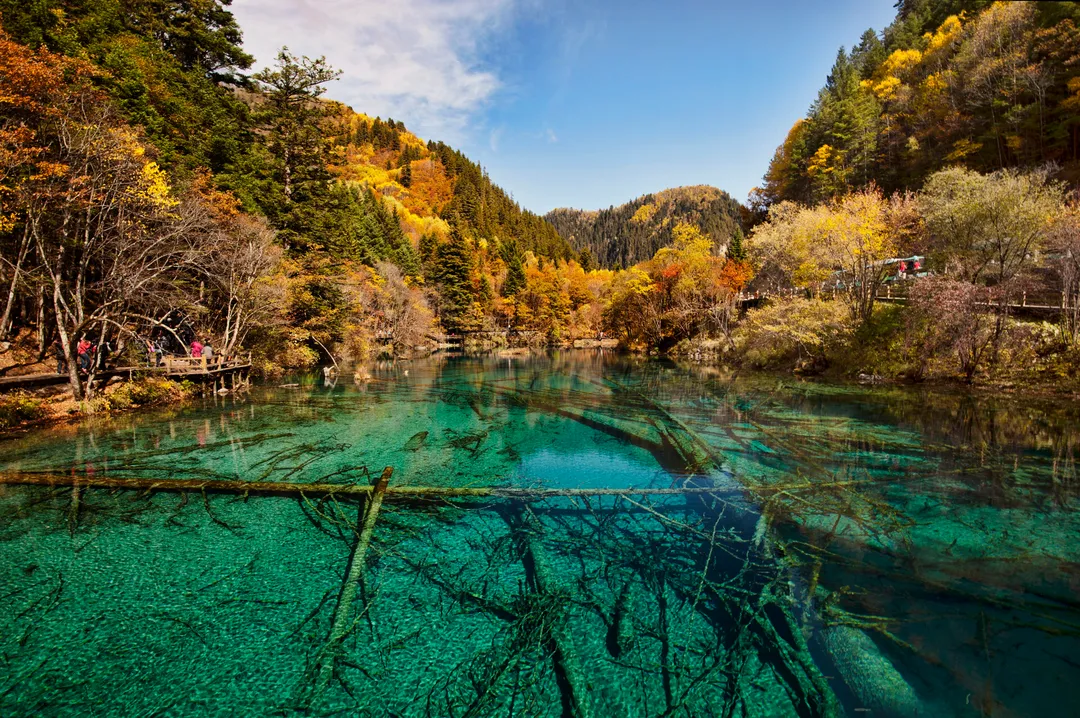
This guide introduces Aba (阿坝) — officially the Aba Tibetan and Qiang Autonomous Prefecture in northwest Sichuan. Recommended stay: 2-3 days, built around Jiuzhaigou and Huanglong.
We focus on the practical decisions a first-time visitor needs: how to get to the parks, how to handle the altitude, what to budget, and where to base yourself between park days.
Why Aba
Aba is landscape country: a high-altitude prefecture on the eastern edge of the Tibetan Plateau, 2,000–4,000 m above sea level. Jiuzhaigou's turquoise travertine lakes and Huanglong's terraced pools are two of the most photographed landscapes in China — both inscribed by UNESCO in 1992. Beyond the headline parks there are Qiang watchtower villages, the panda reserves of Wolong, and the 6,250 m Mount Siguniang. It is a slow-travel destination: distances are long, and the reward is China's best mountain-and-lake scenery.
Top Attractions
- Jiuzhaigou Valley (九寨沟) — UNESCO World Heritage park of mineral-blue lakes, terraced waterfalls and Tibetan villages in a Y-shaped valley. Full day; mandatory shuttle included in entry.
- Huanglong (黄龙) — terraced travertine pools at 3,000–3,600 m, roughly 2 hours from Jiuzhaigou. A cable car shortens the climb; go early before the crowds and afternoon cloud.
- Mount Siguniang (四姑娘山) — Sichuan's "Alpine Queen" (6,250 m) with three hikeable valleys (Shuangqiao, Changping, Haizi) above Rilong town.
- Wolong Panda Reserve (卧龙) — giant panda breeding and research base about 2 hours from Chengdu, on the way in.
For full attraction details, see the dedicated attraction pages.
Where to Stay
Base yourself in Zhangzha Town (漳扎镇) at the Jiuzhaigou park gate for park days, or in Songpan (松潘) ancient town between Huanglong and the grasslands. Tibetan-run guesthouses and mid-range hotels both cluster near the gates; book at least two weeks ahead in October, when the autumn foliage peaks.
Gastronomy
This is Tibetan-Qiang country: yak meat hotpot, butter tea, tsampa (roasted barley flour), highland barley wine, and wild mushroom dishes in summer. Towns near the parks cater to tour groups, so walk a few streets back for family-run kitchens. Use mobile payment (Alipay / WeChat Pay); carry a few hundred yuan in cash for village stalls.
Practical Information
Mobile payment: Alipay with international card works in park towns. SIM: tourist eSIM recommended (Airalo 5-30 USD). Altitude: Jiuzhaigou sits at 2,000–3,100 m and Huanglong tops 3,500 m — take the first day easy, hydrate, and skip alcohol on arrival day. English signage is limited to the main park entrances; screenshot your destinations in Chinese.
When to Go
Best seasons: October for Jiuzhaigou's autumn colour, and May–June for green valleys and fewer crowds. Avoid Chinese national holidays (early February, early May, early October) due to extreme crowds; winter brings ice-covered waterfalls but sub-zero nights.
Itinerary Suggestions
A 2-3 day stay covers the headline pair: day 1 in Jiuzhaigou, day 2 for Huanglong, day 3 for Mount Siguniang or the drive back. Since 2024 the Chuanqing railway runs from Chengdu to Huanglong-Jiuzhai station in about two hours; buses and tours cover the final stretch to the park gates.
Beyond the Highlights
Side trips give the prefecture its depth: Qiang watchtower villages around Maoxian and Lixian, the Songpan horse-trekking trails, and the Wolong panda reserve. The Qiang New Year (羌年) and Tibetan Losar festivals are genuine cultural events, but expect transport and hotels to book out around them.
Reflections
The best Aba trips balance headline sights with everyday moments — a morning at the main attraction, an afternoon in a quiet neighbourhood, an evening meal where locals go. This guide is a starting point; the rest is up to you.
Glossary of Useful Terms
| Chinese | Pinyin | Meaning |
|---|---|---|
| 你好 | nǐhǎo | hello |
| 谢谢 | xièxie | thank you |
| 多少钱 | duōshǎo qián | how much |
Emergency Contacts
- Police: 110
- Ambulance: 120
- Fire: 119
- Tourist hotline: 12301
Additional Resources
- Nearby cities in the same province: see related links at the top
- Trip planning: see the trip-days tool
Final Reflections
Aba offers a focused window into regional Chinese life. We hope this guide helps you plan a trip that suits your time and interests. Updated 2026-09-01.