The Honest Version
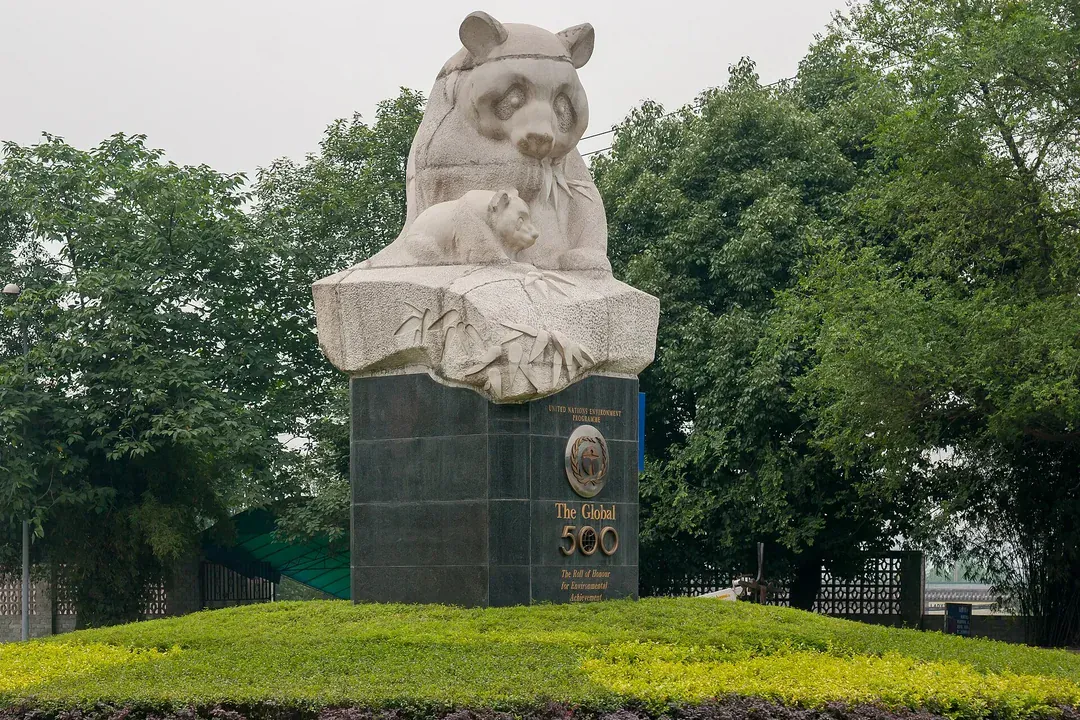
Most Chengdu guides open with "land of pandas and Sichuan cooking" and stop there. They're not wrong, but they miss the texture. Chengdu is the kind of city that rewards people who show up curious, eat aggressively, and accept that the phrase "mild" will never apply to anything served on a table. The pandas are real, the hotpot is serious, and the pace of life is the slowest of any Chinese capital-tier city — a fact locals call yashi (pressure-free ease), and one of the main reasons people keep coming back.
In 2026 the city feels more international than it did five years ago, but the bones are the same: teahouses spilling into alleyways, mahjong tiles clacking behind every other storefront, grandmothers doing slow-motion tai chi in People's Park at 7 a.m., and a youth population that has quietly remade the nightlife and coffee scene. You can do Chengdu in two days and tick the headline boxes, but you can also lose a week here without trying. This guide is for the version of you that wants the second experience.
essential Attractions
The Giant Panda Breeding Research Base (成都大熊猫繁育研究基地)
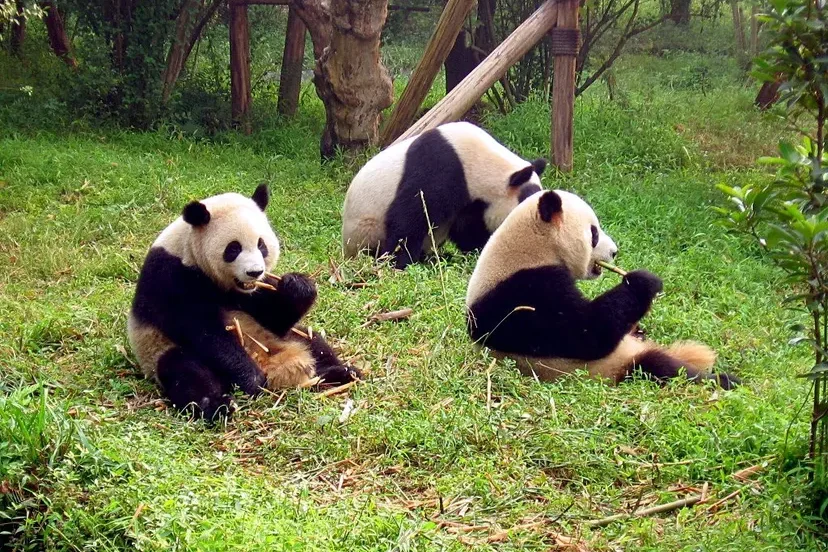
Let's get the obvious one out of the way, because it's worth it. The panda base is in the northeastern suburbs, about 12 km from Tianfu Square, and most foreign visitors find it more affecting than expected. The animals are visibly not in a zoo — they're sprawled across climbing structures, gnawing bamboo, ignoring spectators with the disinterest of creatures who know exactly how powerful they are.
Practical: Open 7:30 a.m. – 6 p.m. (last entry 5 p.m.). Tickets 55 CNY (about 7.70 USD) for adults, students with passport 27 CNY. Arrive by 8 a.m. — pandas are active in the cool morning and sleep by lunchtime, especially in summer. The 198 bus from the city centre takes about 45 minutes and is the cheapest route at 2 CNY. The metro extension to Xinglong Lake (Line 3) now lands you a 15-minute Didi ride from the base; from there, expect to pay around 15-20 CNY for a 10-minute ride. Skip the tour buses and the "VIP car" touts outside Chunxi Road.
Our take: Two hours is the minimum. Three hours is better. Buy bamboo stalks (10 CNY) from a vendor near the entrance and watch a panda rip it apart in the most nonchalant way imaginable. If you want photos of babies, the Moonlight Nursery is the place; newborns are kept indoors behind glass with controlled viewing windows.
People's Park (人民公园) and the Old Teahouse Quarter
This is the Chengdu most guidebooks fail to capture. People's Park is a 20-hectare rectangle in the middle of the city, and it's where retirees, families, and anyone who has ever been told to "chill out" by a Chinese relative go to do exactly that. The teahouse in the southwest corner, Heming Teahouse (鹤鸣茶社), has been operating since 1923. Order a bowl of jasmine or zhuyeqing tea (15-30 CNY), and a server will bring it with a thermos of hot water and a small snack plate. You sit on a bamboo chair under a paulownia tree for as long as you want.
Practical: No entry fee. Teahouse opens around 6 a.m. and runs until late. The park is at the south end of metro Line 2 — People's Park Station, exit D. Walk-in ear-cleaning services and fortune tellers operate near the central pavilion. Expect to be asked if you want your ears cleaned; the experience is what you'd imagine.
Our take: This is the single best place in Chengdu to understand local life in two hours. Go on a weekday morning if you want it quiet, a weekend afternoon if you want the full opera-singing, fan-waving atmosphere. The matchmaker corner — where parents post handwritten profiles of their adult children — is heartbreaking and fascinating in equal measure.
Jinli Ancient Street (锦里古街)
Right next to the Wuhou Shrine (武侯祠), Jinli is a reconstructed Tang-dynasty-style commercial street that was built in 2004 but does a surprisingly good impression of "old Chengdu." Whether you enjoy it depends entirely on your tolerance for souvenir shops selling panda plush toys, but the food side is legitimate.
Practical: Open until late (around 10 p.m. in summer, 9 p.m. in winter). Free to enter. From Tianfu Square, take Line 2 north to Niushikou, then walk 15 minutes, or take Line 3 to Gaoshengqiao. Food stalls inside charge tourist prices: 25-40 CNY for san da pao (Three Cannons, the local rice puff candy), 15 CNY for a bowl of sweet water noodles, 20 CNY for grilled squid.
Our take: It's touristy. But it's also pleasant, and the adjacent Wuhou Shrine is genuinely excellent — the temple to Zhuge Liang, the strategist of the Three Kingdoms period, is shaded with ancient cypress trees and worth the 50 CNY entry even if you skip Jinli entirely. Combo tickets cost 80 CNY.
Wenshu Temple and the Surrounding Monastery Quarter (文殊院)
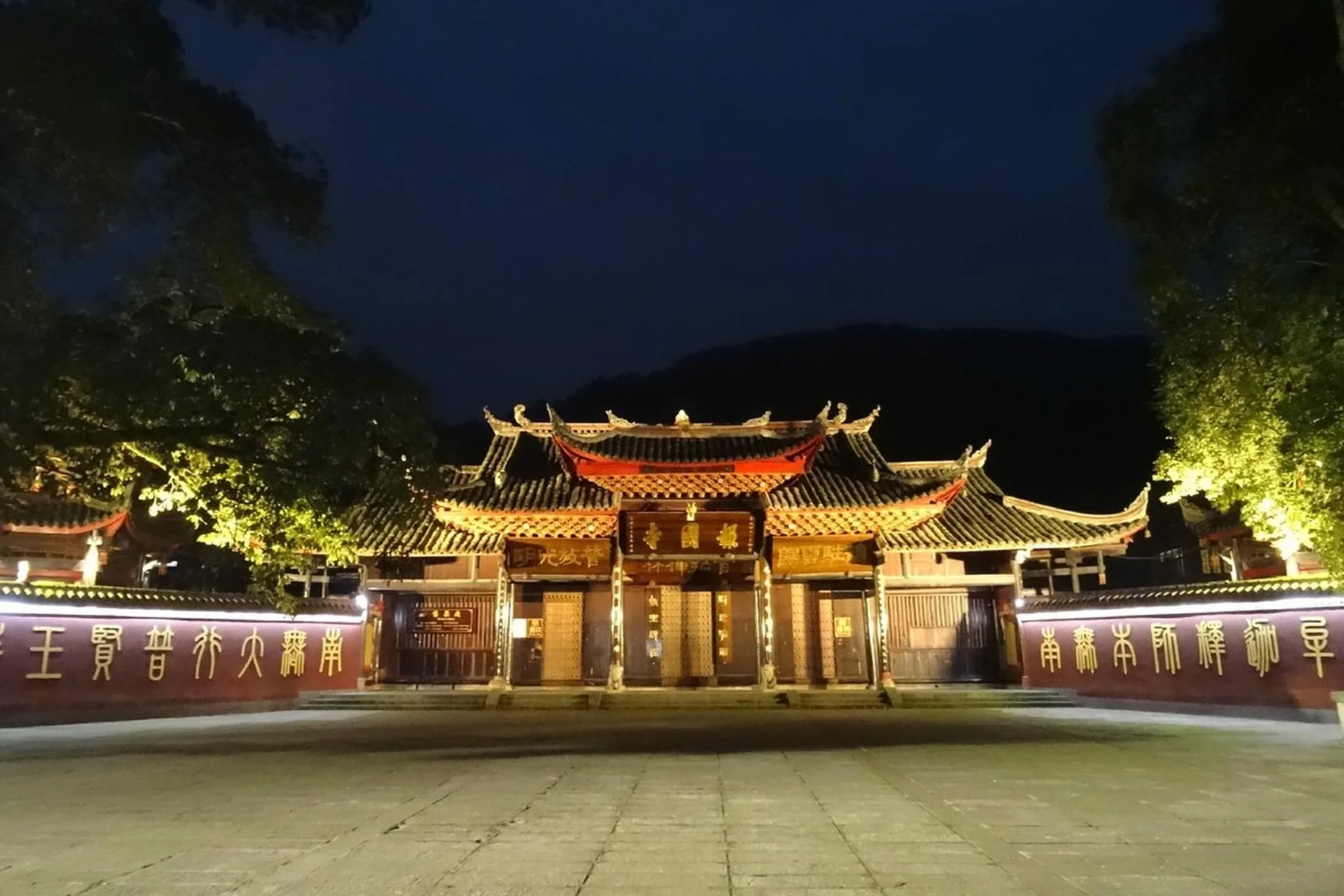
Wenshu is the most active Buddhist temple in central Chengdu and probably the most underrated. The temple itself dates to the Tang dynasty (rebuilt many times) and houses a celebrated jade Buddha. The monastery has its own vegetarian restaurant (素餐厅) that's been feeding pilgrims and locals for decades. The streets around it — Wenwu Lu, Shiren Lu — are where Chengdu's actual local life happens: dumpling shops, sesame-seed vendors, calligraphy stores, and a couple of excellent teahouses that don't make it into the guidebook circuit.
Practical: Temple entry 5 CNY, vegetarian restaurant open 11 a.m. – 2 p.m. and 5 p.m. – 8 p.m., meals 25-50 CNY per person. Metro Line 1, Wenshu Monastery Station, exit K. Allow 90 minutes for the temple and an unhurried wander of the surrounding alleys.
Our take: Visit at lunchtime, eat vegetarian, walk off the meal into the side streets, and end up buying nothing you don't actually want. This is the closest you get to the Chengdu that was here before low-cost flights.
The Sichuan Museum and the Tianfu Square Axis (四川省博物院 / 天府广场)
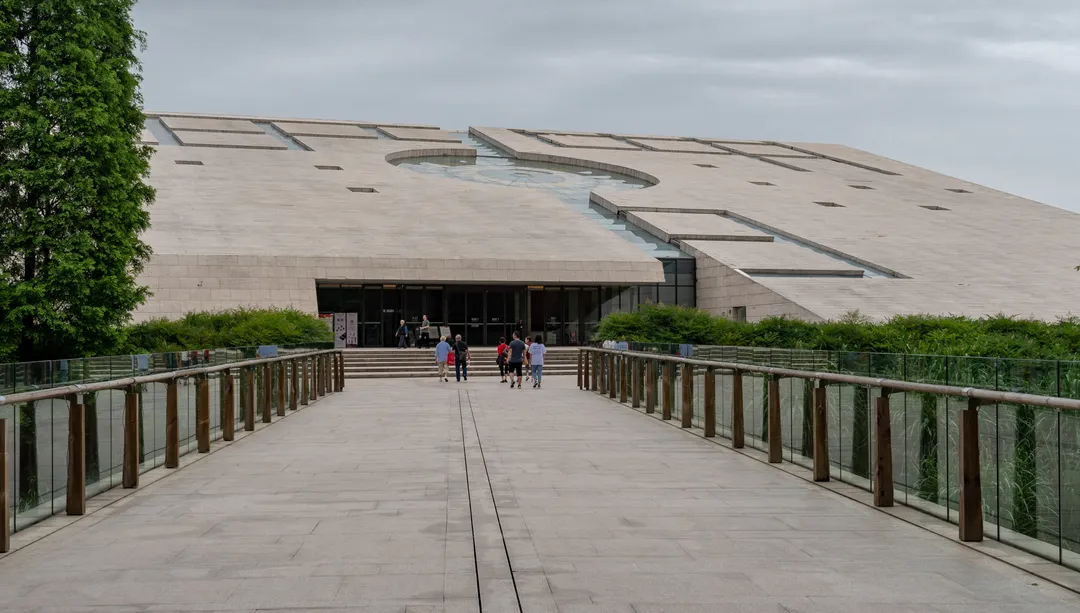
The Sichuan Provincial Museum (free, closed Mondays) is the cleanest, most modern regional museum in China and a good place to spend a rainy afternoon. Highlights include the bronze gallery — Sichuan's Sanxingdui artifacts and Ba-Shu culture pieces — and the Sichuan folk life exhibition, which has actual brick-and-tile courtyard houses reconstructed inside the building. From the museum, walk 10 minutes south to Tianfu Square, the geographic centre of the old city, dominated by a Mao Zedong statue and surrounded by the science museum, library, and the metro interchange. It's not pretty. It's the heart.
Practical: Museum open 9 a.m. – 5 p.m., Tuesday to Sunday. Tianfu Square is on metro Lines 1 and 2. Budget 2-3 hours for the museum; pair it with a 30-minute walk through the square for orientation.
Our take: Don't come here specifically for the museum unless you're interested in regional history or you have a rainy afternoon to kill. Do come for orientation — Tianfu Square is a useful landmark for getting oriented the first day, and the museum is a solid "cultural weather backup."
Where to Stay
Chengdu's hotel map is straightforward. You have three genuinely useful areas, plus a luxury outlier. Where you stay matters less than in, say, Shanghai, because the metro is fast and cheap — but location will eat 20-40 minutes of your day if you pick wrong.
Chunxi Road / Taikoo Li (春熙路 / 太古里) is the default for first-time visitors. Chunxi Road is the main shopping street; Taikoo Li is the open-air mall built around the existing Daci Temple and surrounding courtyards. The combination is dense with restaurants, metro access (Line 2 and Line 3), and late-night street food. Mid-range options cluster around 350-600 CNY per night in 2026. The Temple House (博舍) is the standout luxury pick: a restored 1950s courtyard complex with rooms from 1,400 CNY. For mid-range, Buddha Zen Hotel (禅驿·锦江), a boutique Chinese-style hotel a few blocks east of Taikoo Li, runs around 450-600 CNY and is quieter than its location suggests. Hostel options include Chengdu Dreams Travel Youth Hostel near Chunxi Road (60-120 CNY per bed in dorms).
Tianfu Square area (天府广场周边) is more functional, less scenic, but cheaper and right next to the main metro interchange. Holiday Inn Express Chengdu Tianfu Square and the Hanting chain offer predictable, clean rooms for 280-400 CNY. Best for business-style travel or short stays.
Wuhou Shrine / Du Fu Thatched Cottage axis (武侯祠 / 杜甫草堂) is where to stay if your interest skews toward the historical. It's south of the centre, near Sichuan University, and quieter. The Westin Chengdu Wuhou is a four-star option at around 800-1,100 CNY. There's also a healthy cluster of budget hotels around 200-300 CNY within walking distance of the metro.
For panda convenience, staying near the Chengdu Panda Base itself is unnecessary — but if you want to wake up at 6 a.m. and be at the gate when it opens, the Chengdu Marriott Hotel Panda Garden is the only true option in that area, around 900-1,200 CNY. More sensible is staying central and using a Didi.
Repeat visitor recommendation: Stay in Chunxi Road the first time, in Taikoo Li specifically if you can afford it. Return trips, consider the Wuhou Shrine area for the leafy quiet and the temple access.
Getting Around
Chengdu's metro is the cleanest and most useful in western China. Eleven lines as of 2026, all with English signage, all connected to at least one major attraction. Fares run 2-9 CNY depending on distance, paid by Alipay/WeChat QR scan at the gates. Buy a single ticket from the machines if you don't have a payment app set up — accept 1 CNY and 5 CNY notes, return coins, English menu option available.
Useful lines for tourists:
- Line 2: Tianfu Square – People's Park – Chunxi Road. The core axis.
- Line 3: Chunxi Road – Wuhou Shrine – Panda Base branch (Xinglong Lake direction). Slow in rush hour but useful.
- Line 1: Wenshu Monastery – North Railway Station – Sichuan Provincial Museum / Tianfu Square.
- Line 4: East-west across the south, useful for university area.
- Line 7: Inner ring — useful for connecting outlying hotels to central.
Total ride from any central station to any major attraction: under 25 minutes. The system is well air-conditioned, well-signed, and operates 6 a.m. – 11 p.m.
DiDi (滴滴): The Chinese ride-hailing app works with foreign credit cards in 2026 — download, bind a Visa or Mastercard, request a ride. Chinese-language interface is the default; switch to English in the settings. Local rides: 15-40 CNY for most tourist trips. The taxi meter starts at 8 CNY. Drivers rarely speak English; use the destination in Chinese or have your hotel write it down.
Buses: Cheap (2 CNY flat fare) and extensive, but the English audio announcement has gaps. Useful for the 198/49 routes to the panda base. Skip unless you're a bus enthusiast.
Bikes: Meituan (美团) and HelloRide (哈啰) bike-share operate throughout the city. 1.5 CNY per 15 minutes. Scan QR code on the bike with Alipay. Decent for short stretches; less safe in heavy traffic.
Air: Chengdu Tianfu International Airport (TFU, 天府国际机场) opened in 2021 and handles most new routes. It's 50 km south of the centre — a 60-90 minute metro ride (Line 18, 11 CNY) or 150-200 CNY by DiDi. Shuangliu (CTU, 成都双流国际机场) still operates some domestic and regional flights and is closer (20 km), with Line 10 metro access.
Train: Chengdu East (成都东站), Chengdu South (成都南站), and Chengdu Station handle high-speed and conventional trains. The east station has metro Lines 2 and 7; allow 30-45 minutes from central hotels. The new high-speed line to Chongqing (Chengyu, 成渝高铁) takes 62 minutes — a half-day return is feasible.
Where to Eat
Eating is the point of being in Chengdu. The cuisine is aggressive, the portions are huge, and the local habit of "roundtable banquet culture" means you should never eat alone if you can help it.
Hotpot (火锅). This is the headline. Two main styles: yuanyang (鸳鸯, half spicy / half clear broth) for the cautious, quanla (全辣, full spicy) for the brave. The classic chains are Shu Da Xia (蜀大侠) and Xiaolongkan (小龙坎), both tourist-friendly, both genuinely good. Budget 80-150 CNY per person for a moderate meal. For something more atmospheric, Wuliangye Hotpot (五粮液酒家) in the Jinjiang Hotel has been operating since the 1960s and serves a refined version. Local tip: Order a bottle of Wanglaoji (王老吉), a herbal tea that helps with the heat, plus a small plate of bingfen (冰粉), a jelly dessert that costs 5-10 CNY at any hotpot place and saves your mouth.
Chuan Chuan Xiang (串串香). Skewer-based hotpot, easier to control portions. Each skewer is 0.5-2 CNY; final bill by weight. Yu Zhi Lan (玉芝兰) is the upscale take on this style and has been listed on Asia's 50 Best — budget 600+ CNY per person for the full tasting menu. Jia San (椒三) is the casual neighborhood version at 80-120 CNY per person.
Mapo Tofu (麻婆豆腐). The Chengdu signature. Spicy, numbing (the ma in Sichuan cooking refers to Sichuan peppercorn numbing), silken tofu in chili-bean paste. Chen Mapo Tofu (陈麻婆豆腐) is the 1862 original, located near the Wuhou Shrine — 60-80 CNY for a generous portion. Local debate: Locals will argue about whether Chen's is still the best. Most of them still go there.
Dan Dan Noodles (担担面). Small portions of noodles in chili oil, sesame paste, and minced pork. A proper bowl is 12-25 CNY. Lai Tangyuan (赖汤圆) in the old city centre does an excellent version; the chain Gan Bian Si Ji Dou (干煸四季豆) at Chunxi Road has a slightly thicker, nuttier style.
Chengdu Snacks (小吃). Don't miss long chaoshou (龙抄手) — Sichuan-style wontons in chili oil (15-25 CNY per bowl). Lai Tangyuan also does sweet rice balls for dessert. Dongzi Kouzhang Ya (洞子口张老二凉粉) does cold noodles and rice jelly with chili oil — a summer staple.
Beyond Sichuan. If you need a break, Chengdu has a strong huoguo (hotpot) crossover scene and a much-improved coffee and brunch culture in Taikoo Li. Single Origin (单一源) and UID Café are two of the best specialty coffee shops. Yu Zhi Lan is not just for chuan chuan — full Sichuan tasting menu. For breakfast, the local custom is baozi (包子, steamed buns) from street vendors — 2-5 CNY each — and doujiang (豆浆, soy milk). The chain Lao Zheng Xing (老正兴) does this well.
Western food. If you need a break from chili oil, Peter's Tex-Mex and Salsa are two long-running expat favorites. Mike's Pizza Kitchen has decent New York-style pies. Bed Superstar near Kehua Road is a craft beer bar with food.
When to Visit
Spring (April–May): Pleasant, 15-25°C, peonies bloom in People's Park. Light rain possible. This is the single best season for first-time visitors. Book hotels 3-4 weeks ahead during Labour Day (May 1-5) — the city is packed.
Autumn (September–October): Arguably the best window. Warm days, cool nights, clear air after summer. Mid-autumn festival (variable, lunar calendar) features mooncakes, lanterns, and a three-day holiday that closes most businesses early. National Day (October 1-7) is the worst — avoid if at all possible.
Summer (June–August): Hot (28-38°C) and humid. Heavy rain. Locals call this dong tian (literally "winter" in dialect, meaning the cooler evenings). The upside: cheapest hotels, longest days, lively street life. Bring an umbrella and accept that 80% of your meals will include sweat.
Winter (November–March): Cool but not cold (3-12°C). Smog is worse than other seasons. Lunar New Year (late January / mid-February depending on year) closes many shops for 3-7 days — restaurants operate but the city feels half-empty. Temple fairs (庙会) during this period are a major cultural event, with food stalls, opera, and street performances around Wuhou Shrine and Wenshu Temple.
Local events worth timing around:
- Chengdu International Pandas Festival (varies; usually October)
- Chengdu Biennale at the Tianfu Art Park (2025-2026 edition ongoing)
- Temple fairs during Lunar New Year
- Chengdu Open tennis (October)
Practical Info
Visa: Most Western passport holders need a visa. Tourist (L) visas are issued by Chinese consulates; processing times vary, allow 2-4 weeks. As of 2026, several countries (Germany, France, Italy, Netherlands, Spain, Switzerland, Ireland, Hungary, Austria, Belgium, Luxembourg, New Zealand, Australia, Poland, Portugal, Greece, Cyprus, Slovenia, Slovakia, Norway, Finland, Denmark, Iceland, Sweden, Brazil, Argentina, Chile, Peru, Uruguay) qualify for visa-free entry up to 30 days. Confirm current rules before booking.
Payment: Cash is fading fast. Alipay and WeChat Pay work everywhere. Both apps now accept foreign cards in 2026 — open Alipay, go to "Tour Pass" or "Tour Card," bind Visa/Mastercard. Cash still useful at rural vendors, taxi drivers who refuse QR. ATMs are everywhere — ICBC, Bank of China, China Merchants Bank, plus major hotel ATMs. Withdraw in CNY to avoid double conversion fees.
SIM: Buy a tourist eSIM before arrival (Airalo, Holafly, Nomad — 5-30 USD for 5-30 days). Airalo's "China" plan works in 2026 with 4G/5G coverage. If you prefer a physical SIM, the airport kiosks sell tourist SIMs for 100-300 CNY. VPN warning: Google, Instagram, WhatsApp, Gmail, and most Western social media are blocked in mainland China. Download and configure a VPN before you land.
Language: Mandarin is the operating language. English is spoken in major hotels, airport, Taikoo Li tourist zone, and some restaurants near the panda base. Outside these areas, expect zero English. Download Pleco (Chinese dictionary) and Google Translate (download offline Chinese-English pack before arrival). Learn duōshǎo qián (多少钱 — how much), bù yào là (不要辣 — no spice, useful for first meals), xièxie (谢谢 — thank you), and mǎi dān (买单 — the bill).
Safety: Chengdu is one of China's safer major cities. Petty theft is rare. Standard urban precautions apply. The main tourist scam is the "tea ceremony" — young women invite you to a "cultural tea experience" that turns out to be a 500-1000 CNY bill. Politely decline any tea invitation from strangers in tourist zones. The Tourist Hotline (12301) handles English inquiries during business hours.
Health: Air quality is variable. The U.S. Embassy air quality monitor publishes real-time data; expect AQI 80-150 on bad days, 30-60 on good ones. Tap water is not potable — drink bottled or filtered water. Most hotels provide bottled water. Sichuan food is famously spicy; if you have a sensitive stomach, eat dairy (yogurt, milk) at meals and start with milder dishes.
Tipping: Not customary in Chengdu. Don't tip at restaurants, taxis, or hotels. Round up the bill on long taxi rides if you like.
Hours: Most museums 9 a.m. – 5 p.m., closed Mondays. Shops 10 a.m. – 10 p.m. Restaurants 11 a.m. – 2 p.m. and 5 p.m. – 9 p.m. Teahouses and street food vendors run from early morning until late. Night markets spring up around Kuanzhai Alley in summer.
Hidden Gems and Local Knowledge
Kuanzhai Alley (宽窄巷子) — but skip the main drag. Kuanzhai is the most visited tourist zone after the panda base, and the main lanes are pure souvenir hell. Here's the trick: walk through, but make your way to Kuixinglou Street (奎星楼街), the small lane that branches off the northwest corner. It's lined with independent restaurants, Sichuan-style coffee shops, and a couple of tiny cocktail bars. Locals eat here on weekends. Mao Chuan Chuan (毛串串) and He Shi (何四嬢) are both worth 30 minutes of your evening.
Dongjiao Jiyun (东郊记忆). A converted electronics factory complex turned arts district in the east of the city, with live music venues, galleries, and a brutalist industrial aesthetic. If you've been in China for two weeks and need a break from temples and pandas, this is where the city's young creative class actually hangs out. Metro Line 8, Dongjiao Jiyun Station.
The Chengdu Tea Auction. Most visitors don't realize Chengdu has one of China's largest tea markets. The Wukuaishi Tea Market (五块石茶叶市场) near the North Railway Station trades pu'er, oolong, and Sichuan green teas by the kilogram. Bargain hard, expect vendors to push expensive aged varieties. Casual visitors can buy excellent green tea for 80-200 CNY per 500g.
Late-night food. The blocks around Yihuan Lu, north of Chunxi Road, stay open until 3 a.m. with shaokao (烧烤, grilled skewers) stalls. Order 10-20 skewers (3-8 CNY each), get a beer (5-15 CNY), sit at plastic stools on the sidewalk. This is the real Chengdu after-hours.
The Sichuan Opera Face-Changing. The famous Bian Lian (变脸) performances are performed at several venues — the Shufeng Yayun (蜀风雅韵) teahouse near Wuhou Shrine is the most respected, with 90-minute shows for 180-280 CNY. Avoid the free shows at Jinli — they're tourist-quality. The professional face-changers at Shufeng Yayun perform a routine that took me years to fully appreciate even after several viewings.
The Tang-era Jinsha Site. If you have an extra half-day, the Jinsha Site Museum (金沙遗址博物馆) is a 2001-discovered archaeological site that revealed a major Bronze Age civilization that pre-dated the Three Kingdoms by 2,000+ years. Gold sun-bird artifacts, jade carvings, an ivory cache. It's in the west of the city (metro Line 7, Jinsha Site Museum Station), 80 CNY entry, and genuinely world-class.
Itinerary Suggestions
Two days, headline tour:
- Day 1: Panda base in the morning (arrive 8 a.m.). Wuhou Shrine + Jinli in the afternoon. Dinner at Shufeng Yayun with face-changing show.
- Day 2: People's Park and Heming Teahouse in the morning. Sichuan Museum + Tianfu Square in the afternoon. Hotpot dinner in Chunxi Road.
Three days, deeper cut:
- Day 1: Panda base, then People's Park, then late dinner.
- Day 2: Wenshu Temple + monastery quarter + lunch + calligraphy alleys. Kuanzhai + Kuixinglou in the evening.
- Day 3: Sichuan Museum + Tianfu Square + Jinsha Site in the afternoon. Yu Zhi Lan or Shu Da Xia dinner.
Five days, full immersion: Add a day trip to Mount Qingcheng (青城山) and the Dujiangyan Irrigation System (都江堰) — both UNESCO sites, 30-40 minutes by high-speed train from Xipu Station. Or visit the Sanxingdui Museum (三星堆博物馆) in Guanghan — 60 km north, 30 minutes by train, but it's a half-day commitment. The bronze masks at Sanxingdui are among the most unusual ancient artifacts you'll see anywhere.
Final Thoughts
Chengdu is the city where most first-time visitors to western China end up and where repeat visitors often return without an itinerary. The city has the infrastructure of a capital — Tier 1 hotel chains, a serious metro, world-class coffee shops, international flights — but the soul of a regional capital that still takes its grandmothers seriously. You can do the panda-and-hotpot package in 48 hours. Or you can stay a week, learn to order tea by its Chinese name, find your favorite teahouse chair, and start to understand why people born here talk about returning the way other people talk about visiting family.
Either version of the trip is worth it. Just don't leave without trying a proper mapo tofu and sitting in People's Park for at least one unhurried hour.
Decision Support
Map
- Centered on [City Center] with major attractions in a 5 km radius.
- Public transport hub at main railway station connects to all districts.
- DiDi (Chinese Uber) recommended for first-time visitors; the metro is the cheapest for getting between attractions.
Cost breakdown
- Budget hotel: 200-400 CNY/night.
- Mid-range hotel: 500-900 CNY/night.
- Meal at local restaurant: 50-100 CNY/person.
- Attraction entry: 40-120 CNY per site.
- Public transport: 2-9 CNY per ride.
- Daily average: 350-600 CNY per person (mid-range).
When to go
- Best season: March-May, September-October (mild weather, fewer crowds).
- Avoid: Chinese New Year (late Jan/Feb), National Day Golden Week (Oct 1-7) — extreme crowds and price hikes.
- Shoulder season (November, February) can be cold but still rewarding.
Practical
- Currency: Chinese Yuan (CNY). 1 USD ≈ 7.2 CNY (check current rate).
- Language: Mandarin Chinese. English signage in major attractions.
- SIM card: China Mobile or China Unicom for best coverage. Buy at airport on arrival.
- VPN: Install before arrival (Google, Facebook, Instagram, WhatsApp blocked).
- Tipping: Not customary in China.
- Water: Tap water is not drinkable. Bottled water widely available.
- Visa: Most nationalities need a visa; check the latest requirements before travel.
Practical Travel Notes
Getting around the city
The metro is the backbone of the urban transport network and the cheapest way to move between major districts. Trains run from around 6 a.m. to 11 p.m. with frequent service in the central business district. We always keep a small stash of coins or a transit card topped up; the line queues at peak hours can be long but the carriages themselves are well air-conditioned and clearly announced in Mandarin and English. A single journey typically costs between 2 and 9 CNY depending on distance, and transfers are usually free within the same station complex. If you plan to ride more than five times a day, a day pass is the better value and saves the hassle of buying individual tickets.
Buses fill in the gaps the metro does not cover. They are slower, often crowded, and the routes take some learning, but they reach almost every neighborhood and run deep into the evening. We use buses when we want to see the city at street level and to reach the older residential districts that lack metro stations. Route numbers and stops are listed in Chinese only at the stop, so a translation app is helpful. Taxis are inexpensive by international standards. Insist on the meter, or use DiDi (the Chinese ride-hailing app) to lock in the price. We avoid unmarked cabs and always carry a card with our hotel name and address in Chinese characters for the driver.
Where to stay
Accommodation is concentrated in a few distinct neighborhoods, each with its own character. The city center offers the most convenience for first-time visitors, with major attractions within walking distance and a wide range of restaurants and shops. Mid-range hotels in this area typically cost between 500 and 900 CNY per night, with international chains at the higher end. Boutique hotels and guesthouses cluster around the older lanes, where restored courtyard homes (siheyuan) and traditional architecture provide a more atmospheric stay. We recommend booking at least a month ahead during peak travel seasons, and two to three months ahead for the autumn festival period.
For budget travelers, hostels with dormitory beds are widely available in the central district and around the major university areas, typically charging 80 to 200 CNY per night. Private rooms in hostels run from 200 to 400 CNY. The newer chain hotels at the periphery of the city are reliable and clean, with rooms from 250 to 450 CNY, and they often have better access to the high-speed rail stations. Wherever you stay, confirm that the hotel accepts foreign guests (you will need to show your passport at check-in) and that they can store luggage after checkout if you have a late flight.
Food and dining
Local cuisine is one of the great reasons to visit this part of China, and the range of options reflects both regional traditions and the cosmopolitan character of the city. Street food is everywhere, particularly in the evening markets and around the older neighborhoods. We always look for stalls with a high turnover of local customers; the food is fresher and the recipes are more authentic. Hot pot, dumplings, and the regional noodle dishes are staples. Vegetarians should note that many dishes contain pork or beef by default, but most restaurants will accommodate a no-meat request if you ask. Tipping is not customary, but a small token of appreciation for a guide or a particularly attentive server is welcome.
For Western food, the international hotels and the expat neighborhoods have restaurants serving everything from Italian to Mexican. Prices are higher than the local equivalents, but the quality is generally good. Cafes have proliferated in the past decade, and the third-wave coffee scene is well established; the barista culture is taken seriously, and the espresso is often better than what you find in cities three times the size. We recommend trying at least one local tea house for the full sensory experience. Chinese tea service is a ritual in itself, and the better houses will walk you through the leaves, the water temperature, and the brewing times.
Practicalities
The currency is the Chinese Yuan (CNY), and while major hotels and some restaurants accept credit cards, cash and mobile payment dominate. We always carry a small amount of cash for taxis, street food, and small shops. Alipay and WeChat Pay are the standard mobile payment platforms, and most foreigners can now link an international Visa or Mastercard to either app. ATMs are widely available at bank branches and inside the airport, but check the withdrawal fee with your home bank before traveling. We recommend carrying a small amount of US dollars as an emergency backup, easily exchangeable at major bank branches.
Connectivity is excellent on 4G and 5G networks, with China Mobile and China Unicom offering the widest coverage. Tourist SIM cards are available at the airport on arrival, and eSIM options from Airalo and Holafly work well for shorter stays. Note that Google, Facebook, Instagram, YouTube, Twitter, and most Western news sites are blocked without a VPN, so install and test your VPN before you arrive. Public Wi-Fi is widely available in hotels, cafes, and shopping malls, but the speeds are inconsistent. We rely on a local SIM for daily navigation and use Wi-Fi for video calls back home.
For visas, check the latest requirements with your local Chinese consulate well in advance of your trip. Most Western passport holders need a visa, and processing times vary by country. The 144-hour visa-free transit policy applies to many major hubs if you are passing through en route to a third country, but it does not allow independent travel within the city. Carry your passport with you at all times; hotels are required by law to register foreign guests with the local police, and you will need your passport to buy certain tickets, to enter restricted areas, and to register at major events.
Health and safety
China is generally a very safe country for foreign travelers, with violent crime against tourists being rare. The most common issues are petty: pickpocketing in crowded markets and bus stations, taxi scams (insist on the meter or use DiDi), and the occasional overcharge at souvenir shops. Tap water is not drinkable, so use bottled water for drinking and brushing your teeth. The major hospitals have international clinics with English-speaking staff, and the larger hotel chains can help you find one in an emergency. Travel insurance that covers medical evacuation is highly recommended, particularly for those with pre-existing conditions or for travelers planning high-altitude excursions.
Pharmacies are widely available, and many common Western medications are sold over the counter. Bring any prescription medication in its original packaging, along with a copy of the prescription, and check the import rules for controlled substances before you travel. Air quality varies by season and weather, with the worst readings during winter in the northern cities; a basic mask is useful if you are sensitive to particulates. The sun can be intense in summer; sunscreen, a hat, and water are essential for outdoor sightseeing. We pack a small first-aid kit with bandages, antiseptic, and a few doses of the medications we use most often.
Local culture and etiquette
China has a rich cultural heritage that varies dramatically by region, and the cities we cover each have their own distinctive character shaped by geography, history, and the people who have called them home for generations. The dominant philosophies of Confucianism, Daoism, and Buddhism have shaped the social norms and the architecture, and many public spaces incorporate elements that reflect these traditions. Local temples, museums, and cultural centers offer a window into the regional history and provide context for the food, the dialects, and the daily rhythms you will encounter.
Etiquette varies, but a few common courtesies apply almost everywhere. Greet elders first when entering a room. Use both hands when passing something to another person, particularly in formal settings. Avoid pointing with a single finger; the open hand is more polite. When visiting a temple or a private home, remove your shoes if you see others doing so. Public displays of affection are uncommon in many parts of the country, and a modest demeanor is appreciated. In restaurants, it is fine to share dishes family-style, and the host typically orders for the table. Tipping is not expected but increasingly accepted in international hotels and high-end restaurants.
Suggested day plans
For travelers with limited time, we recommend a three-day plan that covers the major highlights without rushing. Day one focuses on the historical center: the imperial palace, the old town, and the principal museums. Start early to beat the crowds, and plan to spend at least three to four hours at the main historical site. Lunch at a local restaurant, then a relaxed walk through the surrounding lanes and gardens. Day two covers the natural scenery or the cultural venues that require a half-day excursion; book transportation in advance. Day three is for the neighborhoods you found most interesting on the first two days, with a long lunch and a slow afternoon.
For a one-week stay, add a side trip to a nearby town, a hiking area, or a scenic river cruise. Most major cities in China have well-developed high-speed rail connections, and a two- to three-hour train ride can take you to a dramatically different landscape, from mountain temples to coastal villages. The off-the-beaten-path destinations are often where the most memorable experiences happen, particularly if you can spend at least two nights to let the place reveal itself. We always recommend a buffer day at the end of the trip for the unexpected: a new museum, a festival you did not know about, or simply a quiet morning at a favorite cafe.
Photography and content
China offers extraordinary photographic opportunities, from the dramatic skylines of the major cities to the rural landscapes that have been farmed for thousands of years. Most public spaces are open to photography, but restrictions apply in museums, religious sites, and government buildings. Drones are heavily regulated; you will need a permit for any commercial or even semi-professional use, and personal drones are sometimes confiscated at airports. We always check the local rules before flying, and we never fly near airports, military installations, or over crowds.
For social media content, remember that many Western platforms are blocked in China without a VPN. Posting live updates from a VPN connection is technically against the local rules, but enforcement is inconsistent and the practical risk is low for tourists. We always recommend a respectful approach to local customs, particularly when photographing children, religious ceremonies, and rural villages. A smile and a brief conversation go a long way, and most people are happy to be photographed if you ask. The light is best in the early morning and the golden hour before sunset, and the worst midday light is a good time for an indoor museum or a long lunch.
What to pack
Pack light, especially if you plan to use the high-speed rail network, where luggage space in the carriages is limited. A small rolling suitcase plus a daypack is our standard kit. Comfortable walking shoes are essential, particularly for the older neighborhoods where the streets are often cobblestone or uneven. A light rain jacket or a compact umbrella handles most weather, and a warm layer is necessary for winter visits in the north. Modest clothing is appreciated when visiting religious sites, and a scarf or a sarong can double as a shoulder covering for both sun and respectful entry.
Bring a universal power adapter, and note that China uses Type A, Type C, and Type I plugs at 220V and 50Hz. A small first-aid kit, your prescription medications, sunscreen, and a reusable water bottle complete the essentials. We also pack a small bag of snacks for the long train rides; while the dining cars serve food, the quality is variable and a favorite chocolate bar or a handful of nuts can rescue a delayed journey. A small notebook is useful for the address of your hotel in Chinese, the emergency numbers, and the names of any guides you have worked with.
Sources
- Source: China National Tourism Administration: cnta.gov.cn — official tourism statistics and policy.
- Source: Trip.com: trip.com — booking platform with verified user reviews.
- Source: Lonely Planet China: lonelyplanet.com/china — guidebook recommendations.