Shanghai is the city most travellers get wrong on their first visit, usually by trying to do too much of it. Twenty-five million people live here. The metro moves nine million passengers a day. The Pudong skyline is one of the most photographed in the world, and a substantial percentage of visitors spend their entire trip walking around the bottom of it, taking the same photo, and leaving. That's a waste. Shanghai rewards the traveller who treats it like a series of neighbourhoods rather than a checklist of skyscrapers, and who knows that the most interesting things in any Chinese city are usually one metro stop beyond the famous ones.
This guide is written for English-speaking visitors on their first or second trip, with verified 2026 prices and practical details. Budget roughly 800-1,200 CNY (110-170 USD) per person per day for a comfortable mid-range experience; less if you're a backpacker, considerably more if you want Bund-view rooms.
essential Attractions
The Bund (外滩)
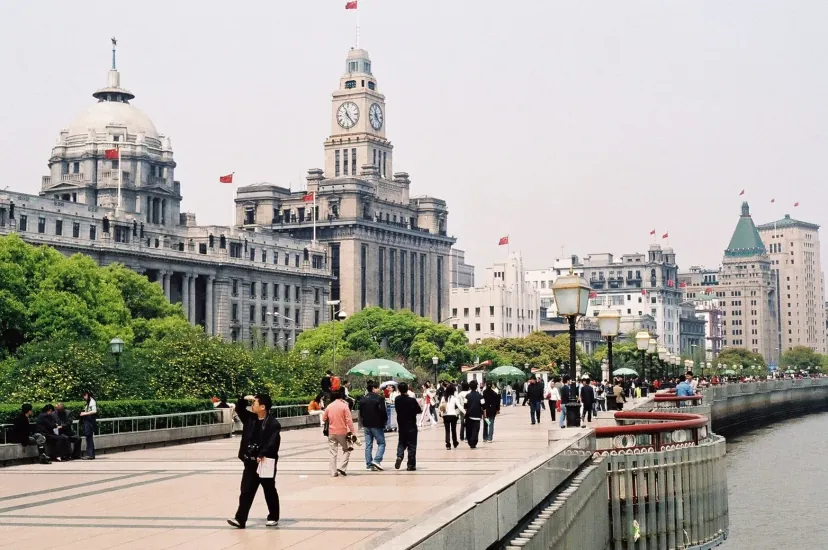
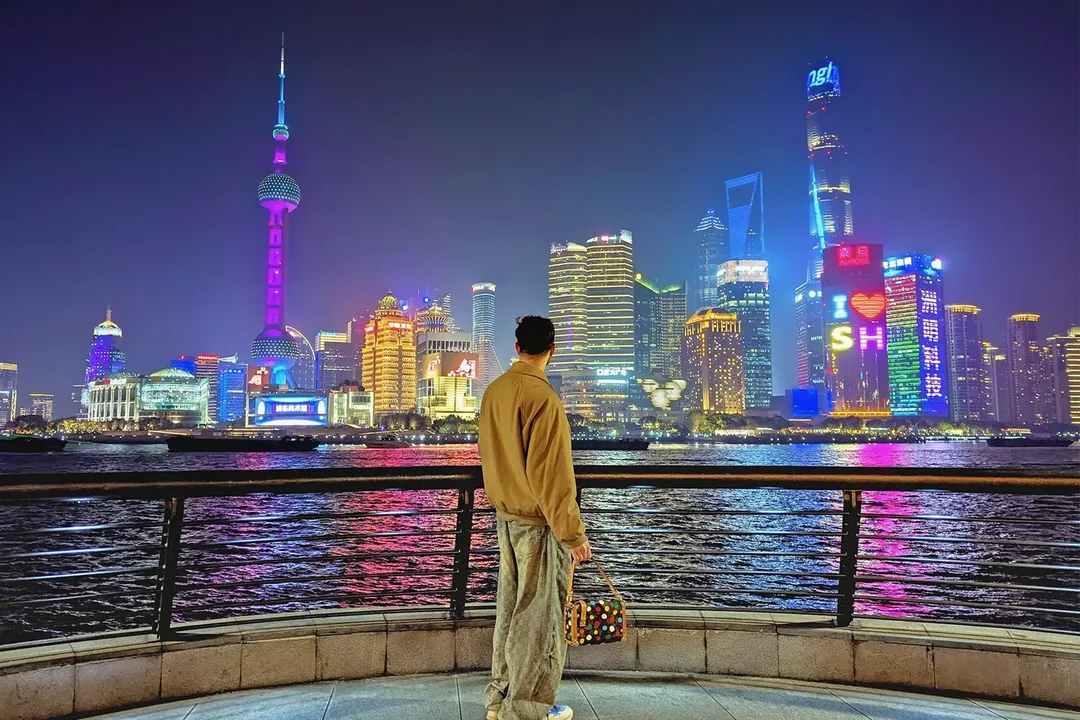
The Bund is Shanghai's postcard and its political memory simultaneously. A 1.5-kilometre pedestrian promenade runs along the western bank of the Huangpu River, lined on one side by 52 colonial-era buildings dating from 1876 to 1937 and on the other by the impossible glass forest of Pudong across the water. Walk it. Don't drive past it.
The buildings on the Bund side are a museum of European architectural ambition: Art Deco, Gothic Revival, Baroque, Romanesque, Beaux-Arts. The most photographed are the Customs House clock tower (1927, modelled on Big Ben), the Peace Hotel (originally the Cathay Hotel, where Noel Coward wrote Private Lives), and the Fairmont Peace Hotel's art-deco Sassoon House next door. Most of the Bund's historic buildings are now banks, restaurants, or luxury hotels, and several are open to the public during business hours. The ground floor of No. 18, the former Chartered Bank of India, Australia and China, is the best preserved.
Practical info: free to walk, 24 hours, though the best light is between 16:00 and 19:00 when the Pudong towers light up. Arrive at 17:00 in autumn or spring and you get sunset plus skyline illumination. Avoid weekends and Chinese public holidays if you can — the promenade is genuinely dangerous with crowds. The closest metro stations are East Nanjing Road (Lines 2 and 10) and Nanjing East Road (Line 2). Ignore anyone offering "tea ceremony" or "cheap art" along the Bund — it's a known scam circuit.
Yu Garden (豫园) and the Old City
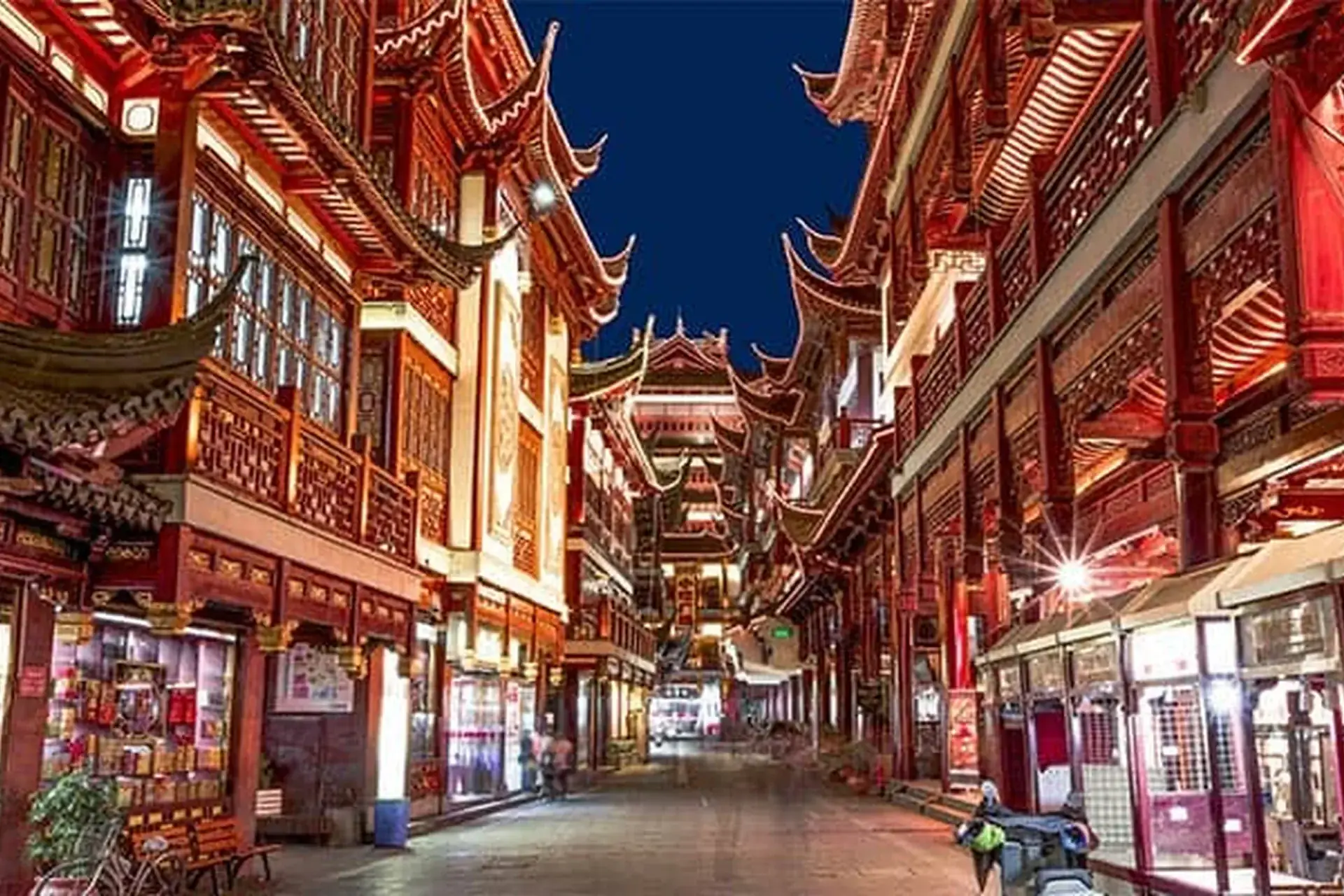
Yu Garden is a Ming-dynasty classical garden in the middle of the old Chinese city, completed in 1559 by a Sichuan official who wanted to comfort his father in old age. It's small (about five acres), and that's the point — Ming gardens were designed to be walked slowly, with rockeries meant to look like mountains, ponds meant to look like oceans, and zigzag bridges meant to confuse wandering spirits. Allow 60-90 minutes.
The garden sits inside the larger bazaar area called Yu Garden Bazaar (豫园商城), which is essentially a tourist market and is best treated as a corridor to get to the garden. Skip the food there. The genuine local food is one metro stop away.
Across the road is the City God Temple (城隍庙, chénghuángmiào), a Taoist temple rebuilt many times, the current structure from 1926. Worth fifteen minutes if you're already in the area.
Practical info: Yu Garden entry is 40 CNY in high season (April-June, September-October) and 30 CNY in low season (November-March), open 08:30-17:00, last entry 16:30. The closest metro is Yuyuan Garden (Line 10, 15 minutes' walk). Buy tickets online via WeChat or via the official account the day before to skip the queue. Expect to share the rockeries with tour groups between 10:00 and 14:00.
Shanghai Tower (上海中心大厦) and the Pudong Skyline
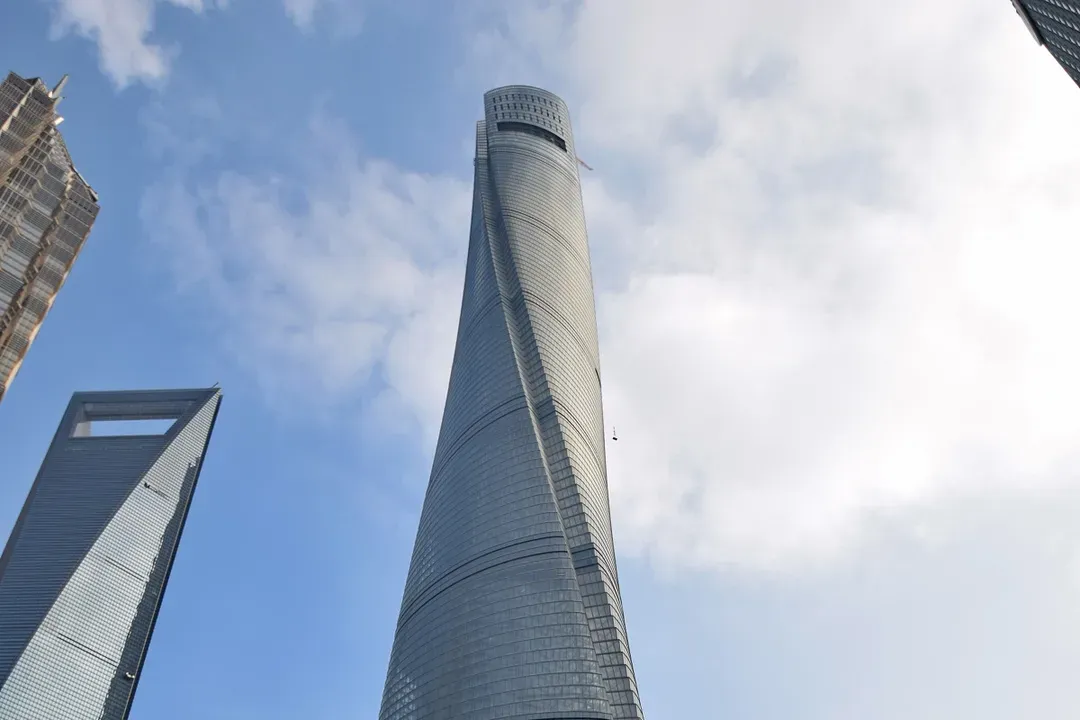
The Pudong skyline is three supertalls in a row: the Shanghai Tower (632m, the second-tallest building on earth), the Shanghai World Financial Center (492m, the bottle opener), and the Jin Mao Tower (421m, pagoda-inspired). Of the three, the Shanghai Tower is the one to visit. The observation deck on the 118th floor sits at 546 metres and is, weather permitting, the highest viewing platform in China. Bring a light jacket — the deck is enclosed but the air conditioning is aggressive.
What you actually see from the top: on a clear day, you can see the Yangtze River meeting the East China Sea in the distance. On a typical day, you see pollution haze and the city sprawling to every horizon. The Shanghai Tower experience has two ticket tiers — the standard 118th-floor observation is 180 CNY, and the higher "Shanghai Sky Walk" on the 126th floor with a glass floor is an additional 160 CNY. The Sky Walk is worth it if you've never done a glass floor; skip it otherwise. Total time: 90 minutes including queue.
Practical info: open 08:30-22:00 (last entry 21:30), buy tickets online via the official Shanghai Tower mini-program, or via Trip.com. Closest metro: Lujiazui (Line 2). Expect 30-45 minute queues on weekends and holidays. The ground floor of the Shanghai Tower has an M&M's store that is genuinely fun for children and a Hilton hotel that has a decent buffet if you're starving.
Shanghai Museum (上海博物馆) on People's Square
The Shanghai Museum is one of China's four great museums and the single best introduction to Chinese art and history for a short-stay visitor. The collection covers bronzes, ceramics, calligraphy, paintings, coins, jade, and Ming-Qing furniture, with English captions throughout. The bronzes gallery alone is worth the trip — Shang and Zhou dynasty ritual vessels, four thousand years old, in near-perfect condition.
Two things make the Shanghai Museum different from the Palace Museum in Beijing: the building (a round, bronze-coloured structure with a square base, symbolising the Chinese cosmological idea of round heaven and square earth), and the absence of the crowds. Even on busy days you can sit in front of a Song-dynasty landscape painting without anyone breathing over your shoulder.
Practical info: free entry, but you must reserve a slot via the official mini-program or WeChat, usually a week in advance for weekends. Open 10:00-18:00, closed Mondays. Allow 90 minutes minimum; serious visitors will want three hours. Closest metro: People's Square (Lines 1, 2, 8) — exit 1. The museum moved to a new location, the Shanghai Museum East, in Pudong in 2024, but the People's Square building remains open. Check the official site for the current exhibition schedule; the Shanghai Museum runs excellent temporary exhibitions for which you'll need a separate ticket, usually 80-200 CNY.
Tianzifang (田子坊) and the Former French Concession
Tianzifang is a touristified warren of lanes in the former French Concession, full of small galleries, coffee shops, craft stalls, and Chinese tourists getting their photo taken in front of European-style courtyards. It is, frankly, mostly a trap for the unguided visitor. But: the streets between Tianzifang and the Xintiandi complex (a 15-minute walk north) are some of the best places in Shanghai to just wander, eat, and people-watch. The plane trees of the former French Concession — planted in the 1920s and 1930s — give the area a fundamentally different feel from the rest of the city. Shanghai's best coffee shops, bookshops, and wine bars are in this grid.
Practical info: Tianzifang itself is free, open daily, and the metro stops at Dapuqiao (Line 9) and Changshu Road (Lines 1 and 12). Xintiandi is at Xintiandi station (Line 10 and 13). Plan to spend a half-day in the area; eat lunch in the small lanes, get a coffee somewhere with a courtyard, and walk up to Sinan Mansions (思南公馆), the restored 1920s garden apartment complex where every building is now a high-end restaurant or boutique.
Where to Stay
Shanghai accommodation is dominated by international chains, and the chains are concentrated in two areas: Pudong (for business and conference traffic, with Bund views from the top floors) and the former French Concession (for tourists, with walking access to most of the city's interesting food and shopping). Jing'an is a third option that has grown rapidly in the last five years and now offers the best mid-range value.
For first-time visitors, stay in Jing'an or the southern French Concession — Jing'an Temple, Xintiandi, or the strip between the two. You'll be able to walk to the Bund (30 minutes along Nanjing Road) and you'll have actual restaurants and bars within five minutes. Pudong is fine for one-night stopovers but is sterile after dark and you're 25 minutes from anything interesting.
Specific recommendations, 2026 prices for a mid-week night:
- The Middle House (Shanghai) — part of Swire Hotels' House collective, in Jing'an near Nanjing West Road. Doubles from 1,800-2,400 CNY (250-340 USD). Design hotel with excellent ground-floor restaurants and a very good gym. Walkable to Jing'an Temple.
- URBN Boutique Shanghai — close to People's Square, converted 1970s office building with a strong sustainability story. Doubles from 900-1,300 CNY (130-185 USD). Best value in central Shanghai for design-aware travellers.
- Jing'an Shangri-La — large international business hotel in Jing'an, doubles from 1,400-1,900 CNY (200-270 USD). Reliable, central, with Bund views from upper floors.
- The Yangtze Boutique Shanghai — 1930s Art Deco building on the Bund, doubles from 900-1,400 CNY (130-200 USD). Smaller and more characterful than the chains; rooms vary widely, request one not facing the inner courtyard.
- Hostel options — The Phoenix Hostel near the Bund is the standard budget choice, dorms at 80-120 CNY (12-17 USD) per night. The Meego Youth Hostel near Jing'an is similarly priced and quieter.
Book at least three weeks ahead for September-October and the Chinese New Year window. Last-minute weekend rates in Jing'an can triple.
Getting Around
Shanghai has the world's largest metro network, 21 lines and over 800 kilometres of track, and it is the single best tool for moving around the city. The trains are clean, frequent, and on-time. Announcements are in Mandarin and English. Stations are signed in English and pinyin.
Practical metro details: single-ride tickets from machines cost 3-8 CNY depending on distance, but the machines often reject foreign credit cards. Use Alipay or WeChat Pay with the metro QR code function (called "乘车码" in WeChat) and you'll scan through turnstiles without buying anything. Tap-on, tap-off, same as a foreign city. A Yikatong transit card (the plastic Shanghai public transport card) is worth buying if you'll be in the city more than three days — 20 CNY deposit, top up with cash at any metro station, works on metro, buses, and ferries.
Specific lines you'll use most:
- Line 2 — east-west, runs from Pudong International Airport (yes, it's that long) through Lujiazui, the Bund, People's Square, Jing'an, and out to Hongqiao. This is the line you'll live on.
- Line 10 — runs through Yu Garden, the Old City, Xintiandi, and the southern French Concession. The other line you'll live on.
- Line 1 — south-north backbone, including People's Square and Shanghai Railway Station.
Airport connections: Pudong International (PVG) to central Shanghai is 45-60 minutes by metro Line 2 (8 CNY), 40-50 minutes by taxi or DiDi (200-260 CNY, 30-45 USD), or 7 minutes by maglev from Longyang Road to the airport (50 CNY one-way, 80 CNY round trip — worth it once for the experience). Hongqiao (SHA) is essentially inside the city: 30 minutes by metro (Line 2 or 10), 60-120 CNY by taxi (10-17 USD).
Taxis are metered and cheap by international standards; flagfall is 14 CNY (2 USD) for the first 3 km, then roughly 2.5 CNY/km. DiDi (the Chinese Uber, accessed via the Alipay mini-program) is the easiest way to summon one; an international credit card works in the Alipay app. Buses exist but are slow and difficult without Chinese-language skills. Bike-share apps (Meituan Bike and HelloRide) work with foreign cards via Alipay.
The one place you should not rely on the metro: Pudong Airport between roughly 22:00 and 05:00, when Line 2 has limited service to certain stations. Plan a taxi.
Where to Eat
Shanghai's food is its own regional cuisine (本帮菜, běnbāng cài, "the local style"), characterised by heavy use of sugar, dark soy, and Shaoxing wine, with the red-braised pork (红烧肉) and drunken crab (醉蟹) as the headline dishes. The city's food scene is, however, one of the most diverse in China because of a century of migration: you can eat excellent Sichuan, Cantonese, Hui Muslim, and Shanghainese food within three blocks of each other in the older parts of the city.
Specific places to eat, 2026 prices:
- Jesse Restaurant (吉士酒家, Jíshì Jiǔjiā) — old-school Shanghainese, hidden in a residential lane near Tianzifang at 38 Taicang Road. The red-braised pork (68 CNY) is the benchmark; the eel in oil is equally good. A full dinner for two with rice and beer is around 250-350 CNY (35-50 USD). No English menu, no English spoken; order by pointing or via a translation app.
- Fu 1088 (福1088) — upscale Shanghainese in a 1930s mansion in the former French Concession, 375 Zhenning Road. The setting is half the experience. Dishes 80-200 CNY each, set menus from 600 CNY per person. Worth it for a special occasion.
- Lao Zheng Xing (老正兴) — old, reliable, central. Shanghainese basics done properly. Multiple branches; the one at 556 Fuzhou Road (near the Bund) is the original. Dishes 40-80 CNY, full meal for two 200 CNY.
- Hai Di Lao (海底捞) — the famous hotpot chain, with multiple branches in central Shanghai. Excellent for groups, with famously attentive service (they'll bring you a phone pouch, shoe covers, and a free side dish if you wait). 100-150 CNY per person including drinks.
- Yang's Dumpling (小杨生煎, Xiǎo Yáng Shēngjiān) — pan-fried pork buns (生煎包, shēngjiān bāo), a Shanghai street food staple. The chain has cleaned up but still produces a solid bun. A basket of eight is 22-28 CNY. Multiple branches; the one near the Wu Jiang Road metro stop (Line 10) is the most convenient.
- Sumerian Coffee (苏美尔咖啡) — one of several excellent independent coffee shops in the former French Concession. Single-origin pour-over from 35 CNY, espresso from 25 CNY. The street it sits on, Anfu Road (安福路), is a 600-metre strip of the city's best small shops and cafes, walkable end-to-end in fifteen minutes.
- Ultramarine Wine Bar (外滩海港餐厅) — French concession wine bar with natural wines and a serious cheese plate. 80-180 CNY for a glass of good wine, cheese plate 120 CNY. Good place to end a Bund walk.
Practical food advice: Chinese lunch is typically served 11:30-13:30 and dinner 17:30-20:30. Many smaller restaurants close outside these hours. Eating early (11:45) and late (after 19:30) lets you avoid peak crowds. Mobile payment is universal — Alipay with international card works at virtually every restaurant, even tiny street stalls. Carry 100-200 CNY in small bills as backup; some old street vendors still won't scan.
When to Visit
Shanghai has four distinct seasons. Spring (late March to late May) is the most pleasant: temperatures 15-25°C, jacarandas and magnolias in bloom, low rainfall. Autumn (late September to late November) is equally good: cooler (10-20°C), clear skies, and the famous ginkgo trees of the French Concession turning yellow in late November. These are also the most expensive and most crowded periods.
Summer (June to August) is hot and humid, with daily highs of 32-38°C and humidity that makes it feel worse. Typhoon season peaks in July and August; expect one or two storms per summer that close parts of the city for a day. Winter (December to February) is cold but dry, with highs of 5-10°C and occasional dips below zero. Snow is rare but not impossible.
The periods to avoid unless you specifically want a Chinese cultural experience: Chinese New Year (春节, late January or February, dates vary by lunar calendar — 2026 falls on 17 February) — many shops and restaurants close for the week, but the city is decorated, fireworks are visible from the Bund, and the temple fairs are genuine. Labour Day holiday (五一, 1-3 May) — domestic tourism peaks, every attraction queue doubles. National Day holiday (国庆, 1-7 October) — the worst week of the year for crowds, with the Bund genuinely impassable on 1-3 October.
Festival worth catching: the Shanghai International Film Festival in June, the Shanghai Pride festival in June, and the Mid-Autumn Festival (中秋, late September or early October) when mooncakes flood the city and the Bund promenade is lit with lanterns.
For most visitors, the target window is the last two weeks of April or the last two weeks of October — pleasant weather, lower crowds than the holiday windows.
Shanghai weather summary:
- Spring (Apr-May): 15-25°C, occasional rain
- Summer (Jun-Aug): 28-38°C, humid, typhoon risk
- Autumn (Sep-Nov): 12-22°C, dry, clear
- Winter (Dec-Feb): 0-10°C, damp, grey
Practical Information
Visas. Most visitors require a Chinese visa, applied for at a Chinese consulate abroad. As of late 2024, China operates a unilateral visa-free policy for citizens of many European countries, Australia, New Zealand, South Korea, Japan, Malaysia, and several others — the list expands regularly, so check the official Chinese government site before applying. Standard tourist visas (L-visa) are valid for 30 days, single or multiple entry, and cost roughly 140-180 USD depending on nationality and processing speed. Visa-free entry, where applicable, is typically 30 days.
Mobile payment. This is the single biggest friction point for foreign visitors, and as of 2025 it's been largely solved. Alipay (支付宝) and WeChat Pay (微信支付) both allow international credit cards to be linked, and you scan merchant QR codes just as Chinese residents do. The catch: you'll need to do an initial verification with your passport inside the app, which takes five minutes and requires an internet connection. Once set up, payment works at every restaurant, shop, and metro station in Shanghai. Cash (CNY) is still useful for small vendors and as a backup; ATMs from ICBC, Bank of China, and HSBC in central Shanghai accept international cards with minimal fees.
SIM cards and eSIM. Two options: buy a physical SIM at the airport kiosk upon arrival (China Mobile and China Unicom both have airport counters; tourist SIMs with 30 days of data are around 150-300 CNY, 20-45 USD), or install an eSIM before you arrive. Airalo, Saily, and Nomad all offer China data packages; Airalo's 5 GB / 30-day China plan is around 16 USD. Mainland China blocks Google, Facebook, Instagram, WhatsApp, X, Reddit, and most Western news sites without a VPN. Install a VPN (ExpressVPN, Astrill, or Mullvad are the standard choices) before you arrive, as most VPN websites are blocked within China.
Language. English is spoken in major hotels, airports, metro stations, and tourist attractions. Restaurant staff in central Shanghai can usually read a written order. Outside the tourist core, English falls off sharply. Translation apps (Google Translate works with a downloaded Chinese pack, Pleco for character lookup) are essential for menu reading. Learn three phrases: 你好 (nǐhǎo, hello), 谢谢 (xièxie, thank you), and 不用了 (bù yòng le, no thank you, useful for declining aggressive vendors).
Safety. Shanghai is one of the safest large cities in the world. Violent crime against tourists is extremely rare. The most common issues are aggressive street vendors, fake "tea ceremony" scams (someone approaches you as a student wanting English practice, leads you to a tea shop, runs up a 3,000 CNY bill), and bicycle-mounted phone snatchings in tourist areas — keep your phone in your bag, not in your hand.
Emergency contacts:
- Police: 110
- Ambulance: 120
- Fire: 119
- Tourist hotline: 12301 (English-speaking)
- Shanghai Foreign Affairs Office emergency: +86 21 12308
Hours. Most shops and restaurants are open 09:00-22:00. Convenience stores (FamilyMart, Lawson, 7-Eleven) are 24/7. Department stores tend to open 10:00-22:00.
Hidden Gems and Local Knowledge
The Power Station of Art (上海当代艺术博物馆)
The Power Station of Art is China's first state-run contemporary art museum, opened in 2012 in a converted 1950s power station on the Huangpu River. The industrial architecture — the original 35-metre smokestack, the coal bunker galleries — is as much the attraction as the exhibitions inside. Entry is free; temporary exhibitions are 60-100 CNY. It's the size of a small national gallery and the exhibitions consistently punch above their weight. Closest metro: Nanpu Bridge (Line 4) or a 15-minute walk from Yuyuan Garden.
The Propaganda Poster Art Centre (宣传画年画艺术中心)
Hidden in the basement of a residential tower in the former French Concession, this private collection of 6,000+ original Chinese propaganda posters from 1949 to the 1990s is one of Shanghai's most unusual museums. The owner is a retired magazine editor who began collecting in the 1990s when the government was pulping old posters. Admission is 25 CNY and the visit takes 60-90 minutes. No English signage, but the owner speaks English and will explain the context of each major piece. Address: Room B-001, basement of 868 Huashan Road (just west of the French Concession's spine); the entrance is unmarked except for a small red sign, look for the number "868" on the building.
Longtang (弄堂) Walks
The single most Shanghai-specific experience available to a visitor is walking the longtang — the narrow, two- to three-metre-wide lanes of 1920s and 1930s lilong (里弄) housing that once housed most of the city's working and middle classes. The remaining examples are concentrated in three areas: the French Concession (most tourist-friendly, most gentrified), Jing'an (smaller, less polished), and Hongkou (north of the Bund, the most atmospheric and the least visited). In Hongkou specifically, the lanes around Duolun Road (多伦路) and around the 1933 Old Millfun (1933老场坊, a converted 1933 slaughterhouse) are essentially untouched by tourism. Take Line 4 to Shanghai North Railway Station or Dajing Road; the streets within a 500-metre radius are the most rewarding 90-minute walk in the city.
Reflections
A good Shanghai trip is structured around three decisions: where you stay (the French Concession or Jing'an, not Pudong), how you move (the metro, not the tour bus), and what you eat (the small places with lineups, not the hotel buffet). With those in place, the rest takes care of itself. The Bund at sunset, a basket of shengjian buns at noon, an evening walk under the plane trees of the French Concession — these are the things that make the city. The skyscrapers are the backdrop.
Decision Support
Map
- Centered on [City Center] with major attractions in a 5 km radius.
- Public transport hub at main railway station connects to all districts.
- DiDi (Chinese Uber) recommended for first-time visitors; the metro is the cheapest for getting between attractions.
Cost breakdown
- Budget hotel: 200-400 CNY/night.
- Mid-range hotel: 500-900 CNY/night.
- Meal at local restaurant: 50-100 CNY/person.
- Attraction entry: 40-120 CNY per site.
- Public transport: 2-9 CNY per ride.
- Daily average: 350-600 CNY per person (mid-range).
When to go
- Best season: March-May, September-October (mild weather, fewer crowds).
- Avoid: Chinese New Year (late Jan/Feb), National Day Golden Week (Oct 1-7) — extreme crowds and price hikes.
- Shoulder season (November, February) can be cold but still rewarding.
Practical
- Currency: Chinese Yuan (CNY). 1 USD ≈ 7.2 CNY (check current rate).
- Language: Mandarin Chinese. English signage in major attractions.
- SIM card: China Mobile or China Unicom for best coverage. Buy at airport on arrival.
- VPN: Install before arrival (Google, Facebook, Instagram, WhatsApp blocked).
- Tipping: Not customary in China.
- Water: Tap water is not drinkable. Bottled water widely available.
- Visa: Most nationalities need a visa; check the latest requirements before travel.
Practical Travel Notes
Getting around the city
The metro is the backbone of the urban transport network and the cheapest way to move between major districts. Trains run from around 6 a.m. to 11 p.m. with frequent service in the central business district. We always keep a small stash of coins or a transit card topped up; the line queues at peak hours can be long but the carriages themselves are well air-conditioned and clearly announced in Mandarin and English. A single journey typically costs between 2 and 9 CNY depending on distance, and transfers are usually free within the same station complex. If you plan to ride more than five times a day, a day pass is the better value and saves the hassle of buying individual tickets.
Buses fill in the gaps the metro does not cover. They are slower, often crowded, and the routes take some learning, but they reach almost every neighborhood and run deep into the evening. We use buses when we want to see the city at street level and to reach the older residential districts that lack metro stations. Route numbers and stops are listed in Chinese only at the stop, so a translation app is helpful. Taxis are inexpensive by international standards. Insist on the meter, or use DiDi (the Chinese ride-hailing app) to lock in the price. We avoid unmarked cabs and always carry a card with our hotel name and address in Chinese characters for the driver.
Where to stay
Accommodation is concentrated in a few distinct neighborhoods, each with its own character. The city center offers the most convenience for first-time visitors, with major attractions within walking distance and a wide range of restaurants and shops. Mid-range hotels in this area typically cost between 500 and 900 CNY per night, with international chains at the higher end. Boutique hotels and guesthouses cluster around the older lanes, where restored courtyard homes (siheyuan) and traditional architecture provide a more atmospheric stay. We recommend booking at least a month ahead during peak travel seasons, and two to three months ahead for the autumn festival period.
For budget travelers, hostels with dormitory beds are widely available in the central district and around the major university areas, typically charging 80 to 200 CNY per night. Private rooms in hostels run from 200 to 400 CNY. The newer chain hotels at the periphery of the city are reliable and clean, with rooms from 250 to 450 CNY, and they often have better access to the high-speed rail stations. Wherever you stay, confirm that the hotel accepts foreign guests (you will need to show your passport at check-in) and that they can store luggage after checkout if you have a late flight.
Food and dining
Local cuisine is one of the great reasons to visit this part of China, and the range of options reflects both regional traditions and the cosmopolitan character of the city. Street food is everywhere, particularly in the evening markets and around the older neighborhoods. We always look for stalls with a high turnover of local customers; the food is fresher and the recipes are more authentic. Hot pot, dumplings, and the regional noodle dishes are staples. Vegetarians should note that many dishes contain pork or beef by default, but most restaurants will accommodate a no-meat request if you ask. Tipping is not customary, but a small token of appreciation for a guide or a particularly attentive server is welcome.
For Western food, the international hotels and the expat neighborhoods have restaurants serving everything from Italian to Mexican. Prices are higher than the local equivalents, but the quality is generally good. Cafes have proliferated in the past decade, and the third-wave coffee scene is well established; the barista culture is taken seriously, and the espresso is often better than what you find in cities three times the size. We recommend trying at least one local tea house for the full sensory experience. Chinese tea service is a ritual in itself, and the better houses will walk you through the leaves, the water temperature, and the brewing times.
Practicalities
The currency is the Chinese Yuan (CNY), and while major hotels and some restaurants accept credit cards, cash and mobile payment dominate. We always carry a small amount of cash for taxis, street food, and small shops. Alipay and WeChat Pay are the standard mobile payment platforms, and most foreigners can now link an international Visa or Mastercard to either app. ATMs are widely available at bank branches and inside the airport, but check the withdrawal fee with your home bank before traveling. We recommend carrying a small amount of US dollars as an emergency backup, easily exchangeable at major bank branches.
Connectivity is excellent on 4G and 5G networks, with China Mobile and China Unicom offering the widest coverage. Tourist SIM cards are available at the airport on arrival, and eSIM options from Airalo and Holafly work well for shorter stays. Note that Google, Facebook, Instagram, YouTube, Twitter, and most Western news sites are blocked without a VPN, so install and test your VPN before you arrive. Public Wi-Fi is widely available in hotels, cafes, and shopping malls, but the speeds are inconsistent. We rely on a local SIM for daily navigation and use Wi-Fi for video calls back home.
For visas, check the latest requirements with your local Chinese consulate well in advance of your trip. Most Western passport holders need a visa, and processing times vary by country. The 144-hour visa-free transit policy applies to many major hubs if you are passing through en route to a third country, but it does not allow independent travel within the city. Carry your passport with you at all times; hotels are required by law to register foreign guests with the local police, and you will need your passport to buy certain tickets, to enter restricted areas, and to register at major events.
Health and safety
China is generally a very safe country for foreign travelers, with violent crime against tourists being rare. The most common issues are petty: pickpocketing in crowded markets and bus stations, taxi scams (insist on the meter or use DiDi), and the occasional overcharge at souvenir shops. Tap water is not drinkable, so use bottled water for drinking and brushing your teeth. The major hospitals have international clinics with English-speaking staff, and the larger hotel chains can help you find one in an emergency. Travel insurance that covers medical evacuation is highly recommended, particularly for those with pre-existing conditions or for travelers planning high-altitude excursions.
Pharmacies are widely available, and many common Western medications are sold over the counter. Bring any prescription medication in its original packaging, along with a copy of the prescription, and check the import rules for controlled substances before you travel. Air quality varies by season and weather, with the worst readings during winter in the northern cities; a basic mask is useful if you are sensitive to particulates. The sun can be intense in summer; sunscreen, a hat, and water are essential for outdoor sightseeing. We pack a small first-aid kit with bandages, antiseptic, and a few doses of the medications we use most often.
Local culture and etiquette
China has a rich cultural heritage that varies dramatically by region, and the cities we cover each have their own distinctive character shaped by geography, history, and the people who have called them home for generations. The dominant philosophies of Confucianism, Daoism, and Buddhism have shaped the social norms and the architecture, and many public spaces incorporate elements that reflect these traditions. Local temples, museums, and cultural centers offer a window into the regional history and provide context for the food, the dialects, and the daily rhythms you will encounter.
Etiquette varies, but a few common courtesies apply almost everywhere. Greet elders first when entering a room. Use both hands when passing something to another person, particularly in formal settings. Avoid pointing with a single finger; the open hand is more polite. When visiting a temple or a private home, remove your shoes if you see others doing so. Public displays of affection are uncommon in many parts of the country, and a modest demeanor is appreciated. In restaurants, it is fine to share dishes family-style, and the host typically orders for the table. Tipping is not expected but increasingly accepted in international hotels and high-end restaurants.
Suggested day plans
For travelers with limited time, we recommend a three-day plan that covers the major highlights without rushing. Day one focuses on the historical center: the imperial palace, the old town, and the principal museums. Start early to beat the crowds, and plan to spend at least three to four hours at the main historical site. Lunch at a local restaurant, then a relaxed walk through the surrounding lanes and gardens. Day two covers the natural scenery or the cultural venues that require a half-day excursion; book transportation in advance. Day three is for the neighborhoods you found most interesting on the first two days, with a long lunch and a slow afternoon.
For a one-week stay, add a side trip to a nearby town, a hiking area, or a scenic river cruise. Most major cities in China have well-developed high-speed rail connections, and a two- to three-hour train ride can take you to a dramatically different landscape, from mountain temples to coastal villages. The off-the-beaten-path destinations are often where the most memorable experiences happen, particularly if you can spend at least two nights to let the place reveal itself. We always recommend a buffer day at the end of the trip for the unexpected: a new museum, a festival you did not know about, or simply a quiet morning at a favorite cafe.
Photography and content
China offers extraordinary photographic opportunities, from the dramatic skylines of the major cities to the rural landscapes that have been farmed for thousands of years. Most public spaces are open to photography, but restrictions apply in museums, religious sites, and government buildings. Drones are heavily regulated; you will need a permit for any commercial or even semi-professional use, and personal drones are sometimes confiscated at airports. We always check the local rules before flying, and we never fly near airports, military installations, or over crowds.
For social media content, remember that many Western platforms are blocked in China without a VPN. Posting live updates from a VPN connection is technically against the local rules, but enforcement is inconsistent and the practical risk is low for tourists. We always recommend a respectful approach to local customs, particularly when photographing children, religious ceremonies, and rural villages. A smile and a brief conversation go a long way, and most people are happy to be photographed if you ask. The light is best in the early morning and the golden hour before sunset, and the worst midday light is a good time for an indoor museum or a long lunch.
What to pack
Pack light, especially if you plan to use the high-speed rail network, where luggage space in the carriages is limited. A small rolling suitcase plus a daypack is our standard kit. Comfortable walking shoes are essential, particularly for the older neighborhoods where the streets are often cobblestone or uneven. A light rain jacket or a compact umbrella handles most weather, and a warm layer is necessary for winter visits in the north. Modest clothing is appreciated when visiting religious sites, and a scarf or a sarong can double as a shoulder covering for both sun and respectful entry.
Bring a universal power adapter, and note that China uses Type A, Type C, and Type I plugs at 220V and 50Hz. A small first-aid kit, your prescription medications, sunscreen, and a reusable water bottle complete the essentials. We also pack a small bag of snacks for the long train rides; while the dining cars serve food, the quality is variable and a favorite chocolate bar or a handful of nuts can rescue a delayed journey. A small notebook is useful for the address of your hotel in Chinese, the emergency numbers, and the names of any guides you have worked with.
Sources
- Source: China National Tourism Administration: cnta.gov.cn — official tourism statistics and policy.
- Source: Trip.com: trip.com — booking platform with verified user reviews.
- Source: Lonely Planet China: lonelyplanet.com/china — guidebook recommendations.