Quick answer
Altitude sickness in Tibet is a real, manageable risk: Lhasa sits at 3,650 m, and most itineraries push higher — Shigatse near 3,900 m, Namtso Lake above 4,700 m, Everest Base Camp around 5,200 m. Acute mountain sickness (headache, nausea, poor sleep) affects roughly half of visitors who fly straight in, usually starting 6–12 hours after arrival and settling within two to three days if you climb no further. The playbook is boring and effective: ascend gradually, rest the first 48 hours, hydrate, skip alcohol, consider acetazolamide with your doctor's approval, and know the red-flag symptoms that mean descend immediately. I crossed from Xining by train in August 2026 and refreshed this guide.
Why this matters in 2026
Tibet has moved from expedition territory to a rail-and-highway destination: the Qinghai–Tibet railway, paved roads to Everest Base Camp, and daily flights into Lhasa Gonggar airport mean travelers go from sea level to 3,650 m in one morning. The altitude has not changed — only the speed of getting there. Foreign travelers also need a Tibet Travel Permit arranged by a registered agency, which forces an itinerary in advance; building the acclimatization days into that itinerary before you book is the single most effective altitude decision you will make.
Key facts at a glance
- Lhasa elevation: 3,650 m; Gonggar airport at 3,570 m; Shigatse about 3,850 m; Everest Base Camp around 5,200 m
- Symptom onset: typically 6–12 hours after arrival; mild headache and broken sleep are the most common first signs
- Acclimatization window: plan 2–3 low-effort days in Lhasa before going higher
- Acetazolamide (Diamox): prescription prophylaxis, commonly 125 mg twice daily starting 1–2 days before ascent — discuss with your travel doctor
- Qinghai–Tibet railway: about 21–24 hours from Xining; carriages oxygen-enriched above Golmud
- Permit: Tibet Travel Permit for foreign nationals, via a registered Tibetan agency, checked at boarding
Step-by-step walkthrough
Step 1: See a travel doctor 4–6 weeks out
Disclose any heart, lung, or sleep conditions, and ask about acetazolamide for your specific itinerary. Get prescriptions filled at home — Tibetan pharmacies stock Chinese brands whose dosing you may not be able to read.
Step 2: Design the itinerary to climb slowly
Fly into Lhasa and stay two to three nights before moving to Shigatse or Namtso. If you have the time, the Xining–Lhasa train adds a gradual climb on top. Never plan the highest point of your trip in the first 72 hours.
Step 3: Start the medication on schedule
If prescribed, begin acetazolamide 1–2 days before arrival at altitude and continue per your doctor's instructions. Tingling fingers and fizzy drinks tasting flat are normal side effects, not reasons to stop without asking.
Step 4: Rest the first 48 hours
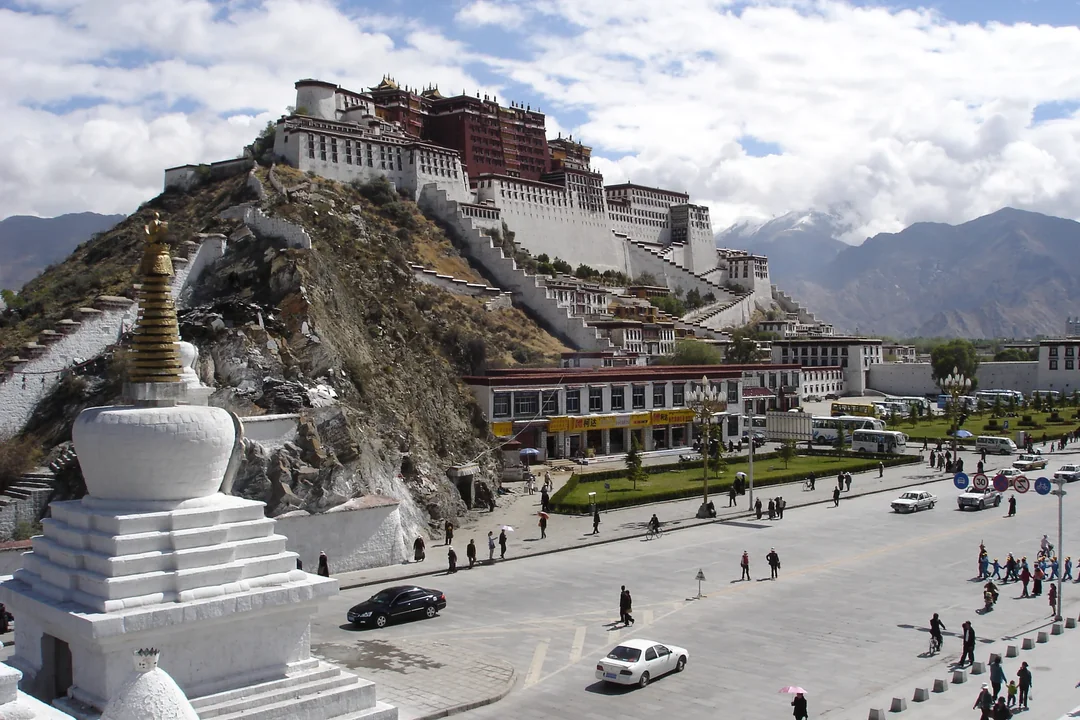
Lhasa's old town is walkable and tempting — keep walks short, no running, no stairs for sport, no alcohol the first two nights, and drink water steadily. Visit the Potala Palace on day three, not day one: the ticketed climb is the worst first-day activity in the city.
Step 5: Track symptoms honestly
A headache that eases with water and ibuprofen is normal altitude adjustment. Nausea that blocks eating, a headache that ignores painkillers, or broken sleep every night means hold your elevation. Unsteady walking, confusion, or breathlessness at rest means descend now — these are emergency signs, not tiredness.
Step 6: Know your descent and care options
From Lhasa, the fastest real descent is the flight or train back to Xining (2,200 m). Lhasa's People's Hospital treats severe altitude illness, pharmacies sell portable oxygen canisters cheaply, and most hotels can arrange oxygen. Save 120 (ambulance) and your insurer's hotline before you go.
Common scenarios and use cases
1. Standard Lhasa city trip (4–5 days)
Fly in, rest two days around the Jokhang and Barkhor at a gentle pace, visit the Potala on day three, leave for Shigatse or the lake on day four or five. This pace alone prevents most moderate cases.
2. Everest Base Camp itinerary
Add at least three Lhasa nights, then climb via Shigatse (3,850 m) with a night there before base camp (5,200 m). Sleep at base camp is optional — many itineraries visit and return to lower towns the same day, which is the smarter altitude play.
3. Arriving by the Qinghai–Tibet railway
The train from Xining climbs over about a day, with oxygen-enriched carriages above Golmud and oxygen outlets by the bunks. You still arrive at 3,650 m, so keep the same two-day rest rule after arrival.
4. Trekking above 4,500 m (Ganden to Samye and similar)
Only after a full Lhasa acclimatization block, with a pulse oximeter, a planned exit route, and a companion. Radio coverage is patchy; the universal rule above 4,500 m is never ascend to sleep higher with symptoms.
Costs and pricing breakdown
- Acetazolamide (per course): USD 10–30 at home; bring it — Tibetan pharmacies may not stock the brand you know
- Portable oxygen canister in Lhasa: roughly CNY 20–60 per canister at pharmacies
- Hotel with oxygen supply: CNY 250–600 per night in Lhasa mid-range
- Consultation at Lhasa People's Hospital: CNY 50–200 general; budget more for international-grade care
- Xining–Lhasa hard sleeper train: roughly CNY 500–800 depending on the season and class
- Travel insurance with evacuation cover: USD 30–80 for a two-week trip; confirm high-altitude trekking is not excluded
Pitfalls to avoid
- Packing the itinerary wall-to-wall: altitude symptoms appear with exertion. A day-by-day plan with nothing booked the first two days is protection, not laziness.
- Flying straight to Shigatse or Ali to "save time": skipping the Lhasa step pushes your first night above 3,800 m and is the most common recipe for a rescue-level headache.
- Celebrating the first night: alcohol at 3,650 m hits far harder than at sea level and wrecks the acclimatization sleep you need.
- Treating red-flag symptoms as "pushing through": unsteady gait, confusion, or breathlessness at rest are descend-now signs. No view at 5,000 m is worth cerebral edema.
- Ignoring the permit rules: boarding for Tibet without the Tibet Travel Permit in order stops you at the station or airport gate — the altitude plan dies there, not on the mountain.
Alternatives and trade-offs
- Train in from Xining: gradual climb, high-plateau scenery the whole way, oxygen-enriched carriages. Costs a full day each way.
- Fly in, rest longer: fastest, and with two disciplined rest days it works as well as the train for most people.
- Yunnan or Qinghai as altitude warm-ups: starting in Kunming (1,900 m) or Xining (2,200 m) for a few days softens the jump to Lhasa without wasting days.
- Skip Tibet, choose the Sichuan highlands: western Sichuan (Kangding, Litang) delivers Tibetan-plateau scenery with fewer permit constraints — but similar altitude physics apply.
- Oxygen canisters vs medication: canisters relieve symptoms for minutes; acetazolamide actually aids acclimatization. Use the right tool for the job.
Local context and customs
Lhasa's pilgrim circuit around the Jokhang is walked at a prayer pace — match it, and your body will thank you at 3,650 m. Hotels hang oxygen in lobbies like fire extinguishers; using it carries no stigma. Carry small bills for monastery entrances, dress shoulders and knees covered for religious sites, and always walk clockwise around religious structures. Pharmacies in the old town are used to altitude questions — showing symptoms on a translation app works when language doesn't.
Verifying current information
Permit rules, train schedules, and health advice shift seasonally. Confirm through:
- Tibet Travel Permit policy: your registered Tibetan travel agency, the only official channel for foreign permits
- China Railway 12306: https://www.12306.cn for Xining–Lhasa train schedules
- CDC travel pages: https://wwwnc.cdc.gov/travel for altitude medicine guidance
- Your insurer's hotline: confirm high-altitude coverage in writing before departure
- Lhasa People's Hospital: the reference point for serious altitude illness in the region
Putting it all together
In my experience the travelers who suffer in Tibet are the ones who booked a five-day highlights sprint; the ones who thrive built in dead time on purpose. Two rest days in Lhasa, medication started on schedule, water instead of beer, the Potala on day three — then the plateau opens up: Namtso's blue at 4,700 m, Shigatse's monastery, and, if the body agrees, the road to base camp. The altitude sets the pace. Respect it and Tibet is the easiest hard trip in China.