Quick answer
Several of China's historic mosques welcome outside visitors outside prayer times — Xi'an's Great Mosque (founded 742, a walled garden complex, entry around CNY 25), Beijing's Niujie Mosque (996), Guangzhou's Huaisheng Mosque, Quanzhou's Qingjing Mosque (1009), and Kashgar's Id Kah. The rules are simple and universal: dress covering shoulders and knees, remove shoes before entering prayer halls, keep quiet and out of worship lines, ask before photographing people. Last verified October 11, 2026.
Why this matters in 2026
Islam arrived in China over 1,300 years ago along the maritime and overland Silk Roads, and the mosques it built are among the country's architectural treasures — Chinese courtyard layouts fused with Islamic function, stele inscriptions in Arabic and Chinese side by side. These are working places of worship first and heritage sites second, and visits are welcome on that understanding. A traveler who arrives at the wrong hour (Friday midday) or treats the prayer hall as a photo set creates friction that is entirely avoidable; one that follows the house rules is usually greeted with warmth — and often with tea.
Key facts at a glance
- Visitor-friendly historic mosques: Xi'an Great Mosque (Huajue Lane, entry ~CNY 25), Beijing Niujie Mosque, Guangzhou Huaisheng Mosque, Quanzhou Qingjing Mosque, Hangzhou Phoenix Mosque, Kashgar Id Kah
- Hours: typically 08:00–17:00 outside worship times; Friday midday (Jumu'ah) is for worshippers — schedule around it
- Dress: shoulders and knees covered; women cover hair inside prayer halls where custom requires; shoes off at hall thresholds
- Photography: courtyards and architecture generally fine; ask before photographing worshippers, and never inside an active prayer hall
- The compound: these are living mosques with schools and ablution areas — follow signs and staff direction
Step-by-step walkthrough
Step 1: Pick your hour
Visit mid-morning or mid-afternoon on any day except Friday midday, when the main prayer fills the halls. During the five daily prayers the halls close to sightseeing; between them, courtyards are calm and staffed.
Step 2: Dress before you enter
Cover shoulders and knees — light long trousers or a long skirt is the easiest answer in summer. Bring a scarf if you are a woman planning to enter prayer halls; some compounds lend them at the door. Shoes come off at the hall threshold — socks are normal, wear easy-off shoes that day.
Step 3: Move like a guest
Enter courtyards through the open gates, keep to walkways, and do not cross the lines of worshippers or step on prayer rugs with shoes. Speak at conversation volume or below; phone calls go outside. Seats and rugs facing Mecca are for worship — stand or walk, don't sprawl.
Step 4: Photograph with judgment
Architecture, calligraphy steles, and courtyards: generally fine. People mid-worship: no. Any individual: ask first, accept a no gracefully. Tripods and drone rigs are not welcome without explicit permission.
Step 5: Read the compound properly
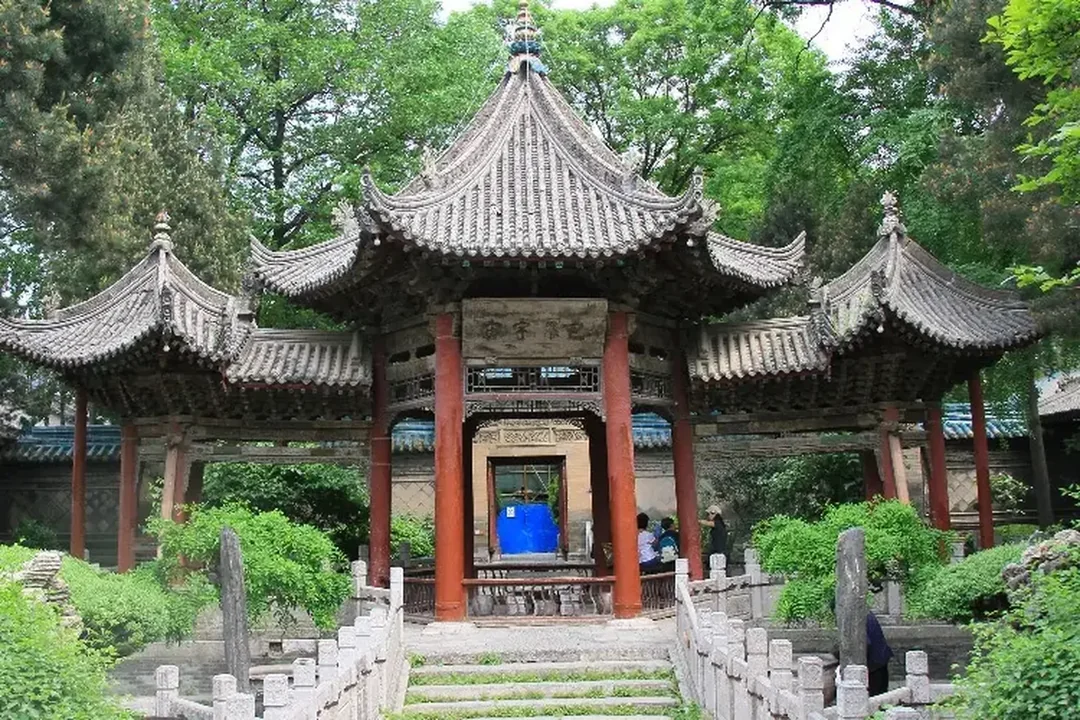
Xi'an's Great Mosque is the best classroom: four successive courtyards, a Chinese memorial archway framing an Islamic prayer hall, and stele courts where 700-year-old inscriptions record the community's history. Take the 30–45 minutes to walk it in order; the architecture narrates the synthesis.
Step 6: Support the house lightly
Entry tickets and donation boxes maintain these heritage mosques; a small donation is appreciated, never demanded. If invited to tea — a real possibility at the smaller compounds — accept; refusing hospitality twice reads as cold.
Common scenarios and use cases
1. Xi'an: Great Mosque plus the Muslim Quarter
Enter from Huajue Lane (entry ~CNY 25, budget 45–60 minutes), then walk 10 minutes to the quarter's food lanes for lunch. The mosque's quiet courtyards make the sharpest possible contrast with the street's bustle — pair them deliberately.
2. Beijing's Niujie Mosque
An active neighborhood mosque (996 origins, rebuilt in Ming-Qing style). Visit outside prayer times, then eat your way down Niujie's halal food street — the mosque and the meal are one itinerary.
3. Quanzhou and Guangzhou: the maritime route
Quanzhou's Qingjing Mosque (1009) is stone-built in Arab style — the oldest of its kind in China; Guangzhou's Huaisheng Mosque tradition dates to the Tang era. Both anchor day trips through China's oldest port histories.
4. Kashgar's Id Kah
The square-facing grand mosque anchors old Kashgar; visits follow local rules of the compound, and the surrounding old city walkable lanes make the visit half a day. Respect the tighter local custom on dress and photography.
Costs and pricing breakdown
- Xi'an Great Mosque entry: around CNY 25
- Most other compound mosques: free or nominal donation
- Guide (optional): CNY 150–300 for a 1–2 hour cultural walkthrough
- Scarf loan at the door: usually free
- Donation boxes: CNY 5–20 is a normal gesture
- Combined quarter visit: mosque + food street costs little beyond the food
Pitfalls to avoid
- Arriving at Friday midday: the main weekly prayer packs halls and courtyards; sightseeing is out of place. Come another hour.
- Photographing worshippers unasked: the single fastest way to wear out a welcome. Ask; accept refusal.
- Shoes on prayer-hall floors: even a step inside with shoes reads badly. Booties or bare/socked feet only.
- Loud group guiding inside halls: guide groups speak in courtyards, whisper in halls.
- Treating the ablution fountains as photo props: they are working facilities; give them space.
Alternatives and trade-offs
- Heritage route without mosques: Xi'an's Bell Tower, Quanzhou's Kaiyuan Temple (Buddhist), Guangzhou's Shamian — for travelers who prefer to admire from outside.
- Chinese-style vs. Arab-style compounds: Xi'an and Niujie show the Chinese-courtyard synthesis; Quanzhou shows the stone Arab inheritance — visit one of each for the full picture.
- Guided vs. solo: solo visits are easy at the major compounds; a guide earns their fee at Kashgar and in Hui quarters where context is deep.
- Food pairing: every mosque quarter pairs with a halal food street — Niujie, Huajue Lane, Sajinqiao. Plan the meal after the visit.
Local context and customs
China's mosque architecture tells the accommodation story in stone: the Hui mosques of the interior (Xi'an, Niujie) wear pagoda minarets and courtyard plans — Islam in a Chinese idiom — while the Uyghur west (Id Kah) and the old ports (Qingjing) keep Central Asian and Arab forms. Community life centers on the five daily prayers and the Friday gathering; visitors who come outside those windows slide into the compound's rhythm without displacing anything. Hospitality is a strong custom — tea, explanations, occasional stele translations from elderly volunteers. The whole etiquette reduces to one principle: you are a guest of a working place of worship, and guests behave like guests.
Verifying current information
Opening hours, entry fees, and visitor policies vary by compound and season. Last verified October 11, 2026. Reconfirm through:
- The mosque or local Islamic association's official listings: current hours and visitor rules
- Dianping/attraction listings: entry fees and opening status
- Your hotel or guide: day-of customs, especially around religious calendar events
- On-site staff: definitive inside the compound
Putting it all together
Plan mosque visits as paired itineraries — the compound plus its quarter's food street — scheduled outside Friday midday and prayer windows. Dress covered, shoes off at thresholds, camera courteous, wallet modest. The great compounds (Xi'an, Niujie, Qingjing, Id Kah) are working sanctuaries and masterpieces of synthesis at once; treated as such, they are among the most welcoming heritage sites in China.
FAQ
Can non-Muslims visit mosques in China?
Yes, at the major historic compounds during public hours — Xi'an's Great Mosque is one of Xi'an's most-visited heritage sites. Follow house rules and visit outside prayer times.
What exactly should I wear?
Shoulders and knees covered, easy-to-remove shoes, and a headscarf for women entering prayer halls where custom requires. Summer answer: loose long trousers and a light overshirt.
Is there an entry fee?
Xi'an's Great Mosque charges around CNY 25; most other compounds are free or ask a small donation.
Can I take photos?
Architecture and courtyards: generally yes. Worshippers: ask first. Inside active prayer halls: no.
What happens if I arrive during prayer?
Wait in the outer courtyard or come back in 30–60 minutes. The staff will tell you when sightseeing can resume.
Are guides available?
At the big compounds, licensed guides can be booked through agencies; some smaller mosques have volunteer explainers. English depth varies — Xi'an is the easiest.
Is Friday a bad day to visit?
Midday Friday, yes — that is the main congregational prayer. Friday morning or late afternoon is fine at most compounds.
How do Ramadan hours affect visits?
Daytime visits continue but may run shorter; evening iftar hours transform the surrounding food quarters. Ask staff for that week's rhythm.