Quick answer
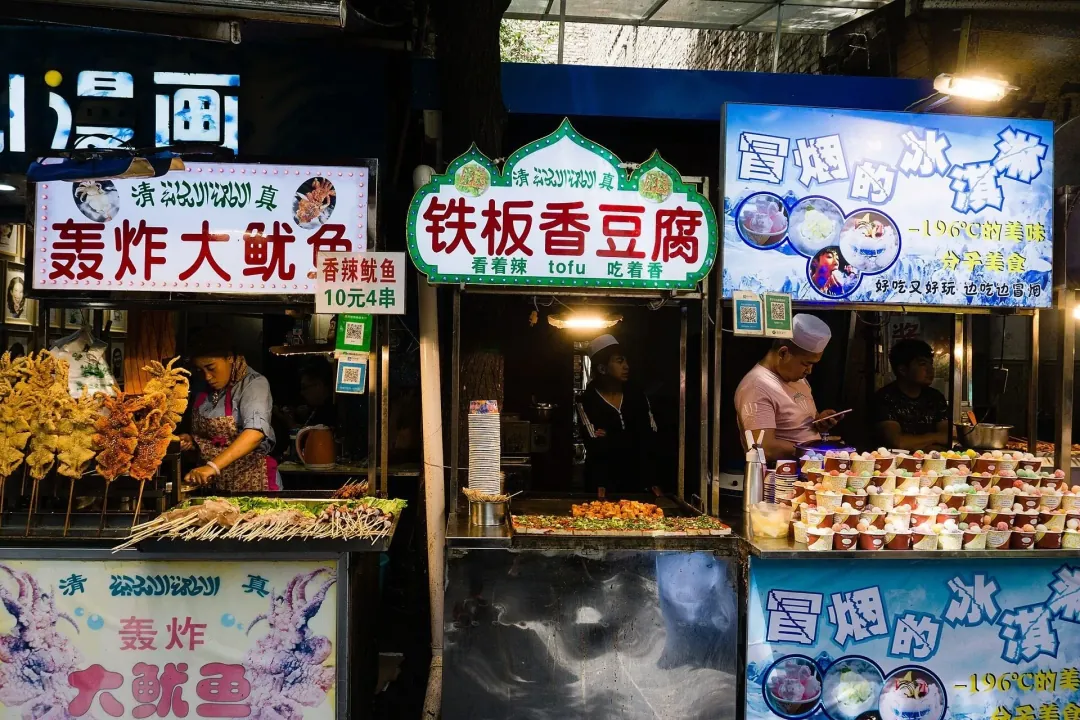
Halal food (清真, qīngzhēn) is an established, nationwide category in China, identified by the green 清真 sign on storefronts. The great halal tables: Xi'an's Muslim Quarter (beef roujiamo CNY 10–15, yangrou paomo mutton stew CNY 35–55), Lanzhou beef noodles (CNY 9–15), Beijing's Niujie district and century-old lamb hotpot houses (CNY 120–180 per person), and Xinjiang's kebabs, polo rice, and big-plate chicken (kebabs CNY 5–10 each; big-plate chicken CNY 60–98). Last verified October 11, 2026.
Why this matters in 2026
China's Muslim communities — the Hui, Uyghur, Kazakh, Dongxiang, and other peoples — have shaped Chinese food for centuries, and their kitchens are among the country's most celebrated: the noodle masters of Lanzhou, the lamb stews of Xi'an, the charcoal kebabs of Urumqi, the copper-pot hotpot of Beijing's Niujie. For Muslim travelers the practical question is reliability: how certification works, which cities have dense halal districts, and how to confirm a kitchen's status beyond a sign. For everyone else, these are simply some of the best meals in China — and the etiquette is easy once stated plainly: no outside food or alcohol brought in, and patience during Ramadan hours.
Key facts at a glance
- The marker: green 清真 signage (often with a crescent); Lanzhou beef-noodle shops are almost universally halal in Lanzhou itself
- Xi'an: the Beiyuanmen/Huajue Lane quarter — beef and lamb roujiamo (CNY 10–15), paomo (CNY 35–55), persimmon cakes (CNY 5–8)
- Beijing: Niujie (Ox Street) for beef and lamb; century-old hotpot names such as Donglaishun (founded 1903), copper-pot lamb CNY 120–180 per person
- Xinjiang: lamb kebabs CNY 5–10, polo (手抓饭) CNY 25–45, laghman noodles CNY 20–35, baked buns (烤包子) CNY 5–8, naan CNY 5–10
- Dense halal cities: Xi'an, Lanzhou, Linxia, Yinchuan, Urumqi, Kashgar, Beijing (Niujie), plus Muslim quarters in most provincial capitals
Step-by-step walkthrough
Step 1: Read the certification landscape
Restaurants self-identify with the 清真 sign; in many cities local halal-food associations or industry bodies run certification or registration schemes, and visibility varies by province. Practical rule: the sign plus a Muslim-owned kitchen (often staffed accordingly) is the everyday standard travelers rely on. In doubt, ask "这里是清真的吗" — the question is normal and answered plainly.
Step 2: Anchor your trip on the great halal cities
Northwest: Xi'an, Lanzhou, Linxia (the "little Mecca" of Hui scholarship), Yinchuan in Ningxia, Xining in Qinghai. Far west: Urumqi, Turpan, Kashgar. Elsewhere: Beijing's Niujie, Guangzhou's historical Muslim quarter near the Huaisheng Mosque, Shanghai's scattered halal streets (e.g., around Huxi). Each supports a full day or more of eating.
Step 3: Learn the canonical dishes
Northwest Hui canon: yangrou paomo (lamb soup with crumbled flatbread), beef roujiamo, liangpi, hand-pulled beef noodles. Xinjiang canon: cumin lamb kebabs, polo rice with carrot and lamb, big-plate chicken with potatoes and peppers, baked buns, naan. Beijing canon: copper-pot lamb hotpot with sesame dip, roast lamb skewers.
Step 4: Verify before you sit
Check the 清真 sign at the door, the name of the shop (many print 清真 in the title), and the menu's shape — a halal kitchen lists no pork dishes at all, which is itself a fast check. Apps: Dianping supports the 清真 filter; HappyCow-adjacent halal apps exist but are patchy; local recommendations beat everything.
Step 5: Respect house rules
Do not bring outside food — especially pork products or alcohol — into a halal restaurant. Many halal kitchens serve no alcohol at all; tea, sodas, and labang (yogurt drinks) are the table's drinks. During Ramadan, daytime hours may shift; eateries in Muslim districts often swell at iftar after sunset.
Step 6: Eat the classics properly
Paomo: crumble the flatbread yourself to pea-size — the kitchen finishes the soup; smaller crumb, better soup. Kebabs: order by the 串 and eat off the skewer with bread in the other hand. Hotpot: swish paper-thin lamb 5–10 seconds in rolling broth, then through the sesame dip.
Common scenarios and use cases
1. A day in Xi'an's Muslim Quarter
Go early or late morning: beef roujiamo (CNY 12–15), liangpi (CNY 8–12), one persimmon cake (CNY 5), and paomo for a full meal (CNY 40–55). Side lanes beat the main street's first hundred meters.
2. Lanzhou for breakfast
Beef noodles at a famous shop before 09:00 (CNY 9–15, +CNY 7–12 for the beef-and-egg upgrade), eaten standing among commuters. Virtually every shop is halal.
3. Beijing's Niujie circuit
Morning: Niujie market snacks (beef pastries, tangmian doughnuts, CNY 5–15). Evening: copper-pot lamb hotpot at a century-old house — CNY 120–180 per person with the sesame dip and sugar garlic.
4. Xinjiang road trip
Urumqi's Grand Bazaar for naan and kebabs (CNY 5–10 each), polo lunch (CNY 25–45), Kashgar's old-city teahouses for bread and tea. Big-plate chicken (CNY 60–98) feeds 3–4.
Costs and pricing breakdown
- Street-level items (roujiamo, naan, kebabs, buns): CNY 5–15
- Full noodle or rice meal: CNY 10–45
- Paomo or big-plate chicken (sharing): CNY 35–98
- Copper-pot lamb hotpot: CNY 120–180 per person
- Market snacks in Niujie or the bazaars: CNY 5–15 per item
- Daily halal food budget: CNY 80–150 covers a traveler comfortably
Pitfalls to avoid
- Assuming a "western-food" or hotpot chain is halal without the sign: chains vary by branch; the sign at that door is what counts.
- Bringing outside drinks or snacks in: in Muslim-district restaurants this reads as disrespect even when unintended.
- Eating at the main street's first stalls in tourist quarters: walk 200 meters deeper for the queues of locals.
- Confusing 兰州拉面 franchises elsewhere with Lanzhou standards: in Lanzhou the real thing is 牛肉面, and it is everywhere halal.
- Scheduling tight connections during Ramadan in Muslim districts: kitchen hours shift; plan around sunset meals.
Alternatives and trade-offs
- Hotel dining: most international-chain hotels in provincial capitals can arrange halal meals with advance notice (1 day).
- Halal food streets vs. neighborhoods: themed streets are convenient; living neighborhoods (Niujie, Sajinqiao) are better and cheaper.
- Supermarket counters: in Xinjiang and the northwest, halal-certified counters make picnic meals trivial (CNY 15–40).
- Delivery apps: Meituan/Eleme support the 清真 filter in big cities; useful for verified in-room meals.
Local context and customs
Halal food in China is inseparable from the histories of its peoples: Hui merchants carried beef-noodle craft along the Silk Road corridors; Uyghur kitchens preserved Central Asian pillar dishes — polo, naan, kebab — that predate modern borders.清真 dining culture is family-centered and generous: portions skew large, sharing is assumed, and tea is bottomless. Fridays center on the mosque, and the quarter's restaurants hum before and after prayers. The everyday etiquette asks little of guests: no pork or alcohol through the door, patience in Ramadan, and respect at the table — the same courtesies any tradition asks.
Verifying current information
Certification practice and shop status vary by city and change over time. Last verified October 11, 2026. Reconfirm through:
- Dianping (大众点评): the 清真 filter, plus recent reviews mentioning halal status
- Local halal-restaurant associations where they exist: city-level listings
- Ask at the mosque: the neighborhood knows its own kitchens best
- Your hotel: "附近的清真餐厅" is a standard question front desks answer daily
Putting it all together
Build each stop around the local halal canon: paomo and roujiamo in Xi'an, beef noodles in Lanzhou, copper-pot lamb in Beijing's Niujie, kebabs and polo in Xinjiang. Check the 清真 sign, never carry outside food in, and budget CNY 80–150 a day. Travelers who keep halal will find China's northwest among the easiest regions to eat through; travelers who don't will simply eat some of the best food in the country.
FAQ
How do I recognize a halal restaurant?
The green 清真 sign at the entrance — often with a crescent or Arabic script — and a menu with no pork dishes anywhere. In doubt, ask "这里是清真的吗".
Is Lanzhou beef noodle soup halal?
In Lanzhou, essentially all of it — the craft came out of Hui kitchens. Elsewhere, look for the 清真 sign on the specific shop.
Which cities have the densest halal food scenes?
Xi'an, Lanzhou, Linxia, Yinchuan, Xining, Urumqi, and Kashgar; Beijing's Niujie district for the capital's tradition.
Can I find halal food in Shanghai or Shenzhen?
Yes — dedicated halal restaurants and small clusters exist in every tier-1 city; Dianping's 清真 filter lists them. Density is lower than the northwest.
Do halal restaurants serve alcohol?
Most do not. Tea, sodas, and yogurt drinks are the standard table. Do not bring your own.
What is Ramadan like for food travelers in Muslim districts?
Daytime service narrows and evening iftar crowds are lively; tourist-area shops may run normal hours. Plan the day's main meal after sunset in those neighborhoods.
Is there vegetarian food in halal kitchens?
Plenty — vegetable and noodle dishes are core to the canon (naan, polo with vegetables, liangpi, noodle soups). Broth questions still apply; ask as anywhere.
How strictly should etiquette be observed?
Simply and consistently: no outside pork or alcohol, respect the sign's meaning, and ordinary table courtesy. That is the whole code, and hosts reciprocate with generosity.