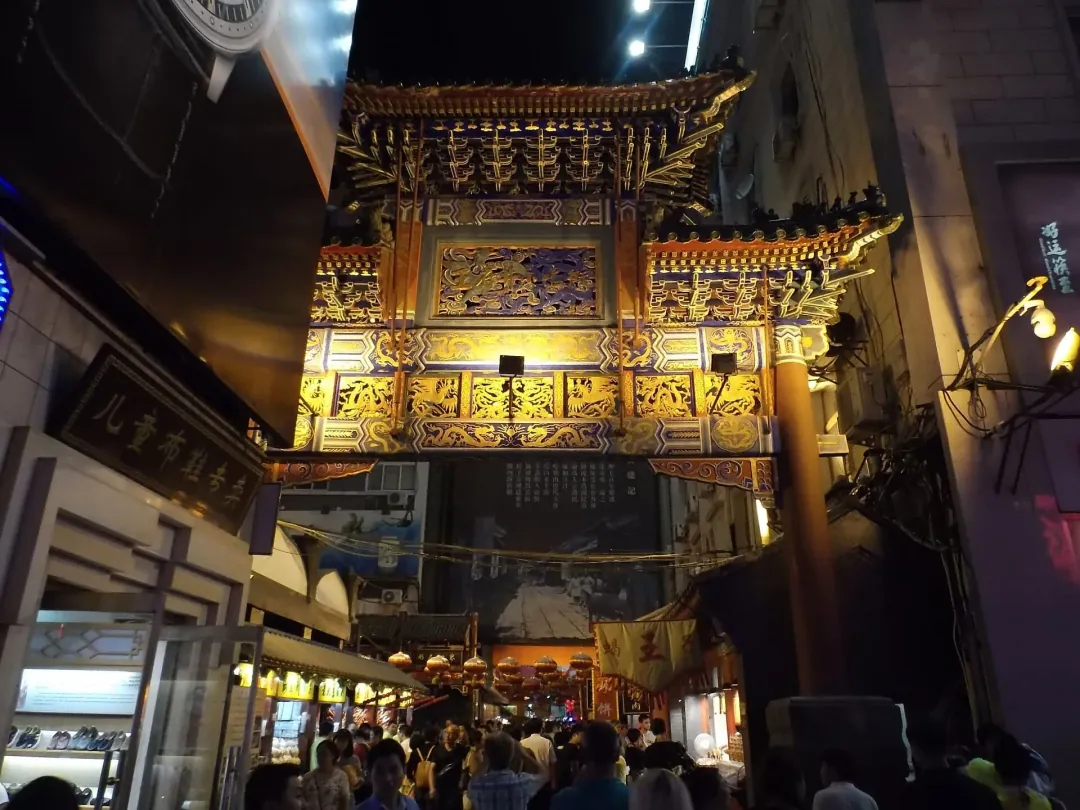
Quick answer
Night markets (夜市) run roughly 17:00–23:00, peak 19:00–21:00, and price out at CNY 30–80 for a full grazing dinner. The strongest scenes: Xi'an's Muslim Quarter, Changsha's Pozi Street and Sifangping, Kaifeng's Drum Tower market, Shenyang's Xingshun market (Northeast China's biggest), Nanning's Zhongshan Road, and Chengdu's Jianshe Road. Pay by QR code, ask prices at unmarked stalls, and eat one item per stall. Last verified October 11, 2026.
Why this matters in 2026
The night market is China's most democratic meal: folding tables, plastic stools, and CNY 10 dinners eaten standing among thousands of locals doing exactly the same. It is also where regional food identity is loudest after dark — Changsha's stinky tofu and crayfish, Kaifeng's century-old soup dumplings under gaslight, the Northwest's grilled lamb smoke. The tourist version (gated "food streets" with entrance gates) is a pale copy; the real thing is free to enter, unmapped in English, and two metro stops from your hotel. The skill is knowing which markets are living neighborhoods after dark versus stage sets, and how to spend CNY 50 well.
Key facts at a glance
- Hours: stalls out by 17:30–18:00, peak 19:00–21:00, packing up 22:00–23:00; weekends run later
- Budget: CNY 30–80 per person for a full night-market dinner; single items CNY 5–25
- Marquee markets: Xi'an Beiyuanmen, Changsha Pozi Street/Sifangping, Kaifeng Drum Tower, Shenyang Xingshun, Nanning Zhongshan Road, Chengdu Jianshe Road, Guiyang Erqi Road
- Payment: QR codes universal; carry CNY 30–50 cash as backup at legacy stalls
- What each city does best: Changsha stinky tofu (CNY 10–15) and crayfish; Kaifeng soup-filled buns and mutton soup; Xi'an roujiamo and grilled meat; Northeast grilled everything; Guangdong sweet soups and congee
Step-by-step walkthrough
Step 1: Pick the right market type
Living markets (locals shop and eat weekly): Kaifeng Drum Tower, Shenyang Xingshun, Nanning Zhongshan Road. Tourist-adjacent but real: Xi'an Beiyuanmen (walk into the side lanes). Themed set-ups: skip or treat as window-shopping. One living market beats three themed streets.
Step 2: Arrive at the golden hour
18:30–19:30: stalls are fully fired, locals are on their first round, and queues are short. After 21:00 the famous stalls start selling through; after 22:00 the best are packing. Friday/Saturday extend everything by an hour.
Step 3: Do one full loop before eating
Walk the market end to end once (10–15 minutes), noting three things: which stalls have locals queueing, what this city's signature items are, and where the shared seating is. Then commit your CNY 50–80 across 4–6 stalls.
Step 4: Order like a regular
One item per stall — the thing they are known for. Ask prices at unmarked stalls ("多少钱") before ordering. At grilled-meat stalls order by the skewer (5–10 CNY each); at shellfish stalls watch your tray get weighed (ask to see the scale); share big items like whole grilled fish (CNY 60–98) between two.
Step 5: Manage payment and hygiene
Scan QR codes at each stall, or pay cash where signs say 现金. Choose stalls with high turnover and visible cooking fire; skip pre-plated items sitting at room temperature; bottled drinks (CNY 3–6) beat open-air blended ice on a hot night.
Step 6: End at the right stall
Save the last 10 minutes for the city's night-cap item: sweet fermented rice balls in Xi'an, milk tea in Changsha, sweet soup (糖水) in Guangzhou and Nanning, or a bag of roasted chestnuts anywhere (CNY 15–25).
Common scenarios and use cases
1. A Xi'an evening
Enter Beiyuanmen, then dive into the lanes: grilled lamb skewers (CNY 5–10), roujiamo (CNY 12–15), a bowl of 酸梅汤 (CNY 5–8), persimmon cake (CNY 5). Full evening: CNY 40–60.
2. A Changsha night crawl
Pozi Street for stinky tofu (black-shell version, CNY 10–15) and sugar-oil baba (CNY 5–8), then Sifangping for crayfish (CNY 88–128 per portion, shared) and milk tea. Changsha eats late — 22:00 is early.
3. Kaifeng's Drum Tower market
The oldest continuous scene: mutton soup (CNY 15–25), soup-filled soup dumplings (CNY 15–30 a basket), almond tea (CNY 8–12) — all under the rebuilt tower's lights. Budget CNY 50 for the full circuit.
4. A Northeast mega-market
Shenyang Xingshun runs hundreds of stalls: grilled skewers of every protein (CNY 3–10 each), 烤冷面 (CNY 8–12), and giant fruit cups. Go hungry, go with two people, share everything (CNY 50–80 total).
Costs and pricing breakdown
- Single item: CNY 5–25
- Full market dinner: CNY 30–80 per person
- Shared premium items (crayfish, grilled fish): CNY 60–128 per dish
- Drinks: CNY 3–15
- Souvenirs/snacks to go: CNY 10–30
- Tourist food-street premium: 1.5–3× the open market
Pitfalls to avoid
- Eating at the entrance gates: the first 50 meters of any market are priced for one-time visitors. Walk in twice your planned distance.
- Ordering shellfish without watching the weigh: ask to see the scale reading; it is normal and expected.
- Skipping the seat logic: communal tables are first-come with food in hand; guarded stools belong to the adjacent stall.
- Assuming "night market" means late: most wrap by 22:30–23:00. The 19:00–21:00 window is the whole show.
- Buying the Instagram item: "milk-fried" novelties and insect skewers exist for cameras. Spend your CNY 50 on what locals are queueing for.
Alternatives and trade-offs
- Morning markets: same neighborhood energy, breakfast instead of dinner; pairs perfectly with a night market the evening before.
- Food streets at scenic areas: convenient after a day of sightseeing, expensive and average; eat light, save for the real market.
- 24-hour skewer joints and crayfish houses: the sit-down version of night eating; CNY 60–120 per person, open to 02:00 in cities like Changsha.
- Delivery: most market stalls deliver within 3 km; the smoke and queue are lost, the food arrives in 30 minutes.
Local context and customs
Night markets are licensed street commerce with neighborhood memory: many stall families have worked the same corner for 20–30 years, and locals time their week around them. Markets are family territory — kids do homework at folding tables, grandparents hold stools. The crowd is the point: eating shoulder-to-shoulder with a city at 20:00 is the most honest snapshot of it you will get. Q-queue etiquette is informal but real — ask "谁是最后一位" to join cleanly; vendors keep loose mental order. And when a stall owner waves you toward the shared bench, sit; the market runs on proximity and conversation.
Verifying current information
Markets close for city renovations and reopen elsewhere — faster than any listing. Last verified October 11, 2026. Reconfirm through:
- Dianping/Meituan: search the market name; check reviews from the last 30 days only
- Xiaohongshu: stall-level intel with photos from the current month
- Your hotel front desk: "附近的夜市还有吗" gets a current answer with directions
- Metro station staff: they know which exits feed which markets
Putting it all together
Give every city one night-market evening: arrive 18:30, walk the full loop first, spend CNY 50–80 across 4–6 stalls ending with the local sweet, and leave by 22:00. Learn the two sentences (多少钱 / 谁是最后一位), keep CNY 30 cash, and photograph the smoke, not the menu board. Across a 4-city trip that is under CNY 300 of eating — and the single most local thing you will do in China.
FAQ
Are night markets safe for foreign visitors?
Yes — they are family spaces, well-lit, and policed. Pick busy stalls with high turnover and visible cooking; the crowd is your quality control.
Do stalls accept foreign cards or cash?
QR codes dominate; most also take small cash. Foreign cards directly — almost never. Set up Alipay/WeChat with your foreign card before you go.
What if I don't eat spicy or pork?
Every market has grilled corn, eggs, breads, congee, sweets, and beef or lamb options — especially in the northwest, where the whole market is halal. Ask "有牛肉的吗".
Can I sit anywhere?
At shared benches, yes, with food in hand. Individual stools belong to the stall you bought from.
What is the one item to try in every market?
The local grilled skewer — every region's fire tells you its flavor map. Then the local sweet to close.
How late is "too late"?
If you arrive at 22:00, expect sell-outs and packing stalls. Famous stalls that survive all night exist (Changsha), but they are the exception.
Is bargaining expected?
For food, no — prices are fixed and fair. For toys, phone gadgets, and socks on the same street, yes: start at half and settle around 60–70%.
What about allergies at unmarked stalls?
Sauce bases hide peanuts and shellfish. A translation card (花生过敏 / 海鲜过敏) shown before ordering works at most stalls; grilled-on-the-spot items are the safest bet.