Quick answer
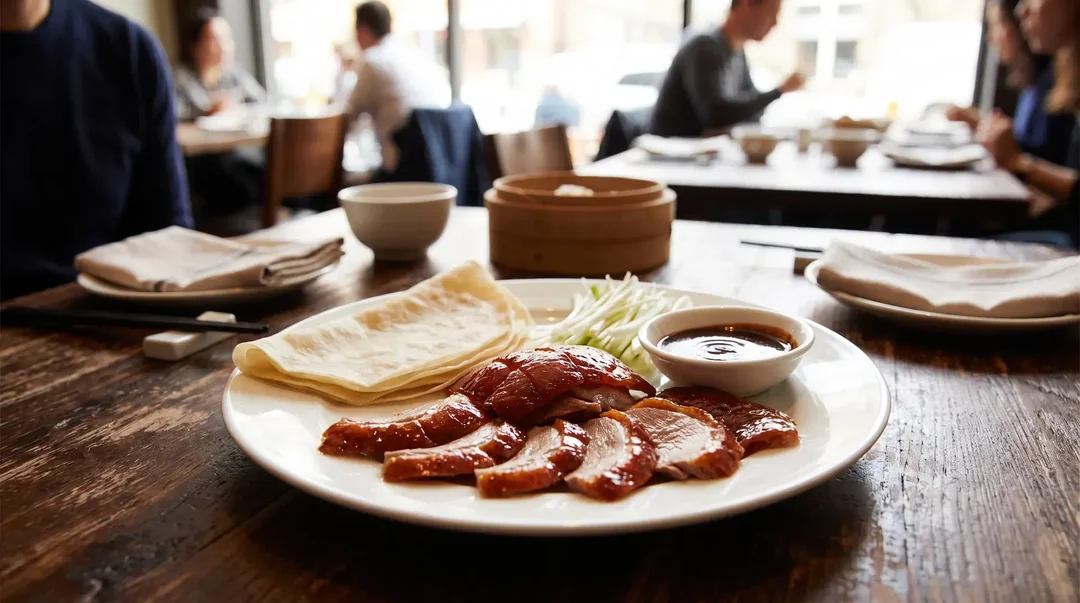
The best Peking duck (北京烤鸭) is still eaten in Beijing, roasted over fruit wood and carved tableside into roughly 100+ lacquered slices. Book Siji Minfu or Da Dong for crisp modern skin (CNY 268–298 a duck), Quanjude or 600-year-old Bianyifang for old-school ritual, and eat it as three courses: skin with sugar, then pancake wraps, then carcass broth. This guide was last verified on October 11, 2026.
Why this matters in 2026
Peking duck is a 600-year-old dish with two living traditions: the hung-oven (挂炉) roast over jujube and pear wood, and the closed-oven (焖炉) roast that Bianyifang has run since 1416. The duck is air-dried, lacquered with maltose, and roasted for 45–75 minutes until the skin cracks like glass. It is also the single most over-priced tourist trap in Beijing: the same dish that costs CNY 268–298 at a serious duck house is resold at CNY 150 with half the craft near Wangfujing. Knowing which house to book — and what "three ways" means on the menu — is the difference between a highlight of the trip and a themed dinner.
Key facts at a glance
- Price at serious houses: CNY 238–298 per whole duck; half duck CNY 140–168; budget neighborhood shops CNY 88–128
- Two roast traditions: hung-oven (挂炉, Quanjude lineage, since 1864) and closed-oven (焖炉, Bianyifang, since 1416)
- Carving: done tableside, 108–120 slices is the shop-floor benchmark
- The wraps: thin 荷叶饼 pancakes, sweet-bean sauce, scallion slivers, cucumber, radish pickles
- Booking: reserve 1–3 days ahead; Siji Minfu's Forbidden City branch runs 1–2 hour queues at peak
Step-by-step walkthrough
Step 1: Pick your style
Modern-crisp (Da Dong, Siji Minfu): skin like glass, leaner bird, lighter plates — CNY 150–250 per person all-in. Old-line ritual (Quanjude, Bianyifang): fattier duck, tableside ceremony, heavier sauce — CNY 150–300 per person. Neighborhood shops: honest duck, no theatre, CNY 80–130 per person.
Step 2: Book, or arrive at opening time
Reserve a whole duck by phone or on Dianping 1–3 days ahead (a week for weekends at famous branches). Walk-in? Arrive at 11:00 opening or after 13:30, when the first lunch queue has cleared. Dinner queues at famous houses routinely run 40–90 minutes.
Step 3: Order the full set
A whole duck feeds 2–3 as a centerpiece with 2–3 side dishes. Order 鸭架汤 (carcass broth, CNY 15–25) or take the bones home — the "third way" of eating. Skip set menus that bundle duck with unrelated banquet dishes unless you want the full ceremony.
Step 4: Eat in three stages
Stage one: the chef carves tableside, 108–120 slices. Eat the first skin-only slices dipped in fine sugar — that is the texture test. Stage two: build wraps — sauce on the pancake, duck skin plus a little fat, scallion, cucumber, roll and eat in two bites. Stage three: broth from the carcass to finish.
Step 5: Time the carving
Ask for the duck carved soon after it lands; wait 10 minutes and the skin steams soft. If your group photographs first (everyone does), prop the duck away from the steam table and be quick about it.
Step 6: Settle the bill
QR code or card, no tipping. At Quanjude-class houses expect a 10% service charge on the bill; neighborhood shops charge nothing extra.
Common scenarios and use cases
1. First visit, want the classic
Quanjude Qianmen flagship (the 1864 lineage) for the ceremony, or Bianyifang for the rarer closed-oven style. Budget CNY 250–300 per person with a side of 鸭架汤.
2. Food-first traveler
Siji Minfu or Da Dong. Order the duck plus a cabbage-tofu casserole and a cold dish; skip the state-banquet extras. CNY 150–250 per person, and book — both fill by 12:00.
3. Traveling on a budget
A neighborhood roast-duck shop or supermarket roast counter sells a solid quarter/half duck for CNY 30–80. Buy pancakes and sauce at the same counter, assemble at your hotel — Beijing locals do exactly this.
4. Family with children
Lunch instead of dinner (quieter, faster), one duck for four with extra pancakes (CNY 3–6 each), and ask the server to cut slices small. Kids reliably prefer the sugar-dipped skin stage.
Costs and pricing breakdown
- Whole duck, famous houses: CNY 238–298
- Half duck: CNY 140–168
- Neighborhood whole duck: CNY 88–128
- Pancakes: CNY 3–6 per steamer basket
- Carcass broth (鸭架汤): CNY 15–25, or bones packed free to go
- All-in per person: CNY 150–300 at serious houses; CNY 80–130 at shops
Pitfalls to avoid
- Duck-focused tourist strips near Wangfujing/Qianmen alleys: photo-menu storefronts resell ordinary roast duck at duck-house prices. Check the shop's history before sitting.
- Letting the duck sit while photos happen: 10 minutes of steaming turns glass skin into gauze. Photograph fast, eat fast.
- Overloading the wrap: two bites is the design. Sauce-sodden footballs are how locals spot a first-timer.
- Skipping the sugar for the first slices: skin-only with fine sugar is the connoisseur's first course, not a quirk.
- Buying "Beijing duck" gift boxes at the airport: vacuum-packed room-temperature duck travels badly and tastes like it; buy from the shop's own chilled counter instead.
Alternatives and trade-offs
- Bianyifang closed-oven (焖炉): moister bird, softer skin, fewer branches — worth it if hung-oven fat is a concern.
- Supermarket roast counters: CNY 30–80 for a quarter/half; 80% of the experience at 20% of the price.
- Duck delivery: major duck houses run delivery via Meituan; skin suffers in 30 minutes of box steam — order broth and wraps instead.
- Other cities' roast duck: Nanjing salt-water duck and Cantonese roast duck are different dishes, not substitutes; try them as their own stops.
Local context and customs
Beijingers treat duck as an occasion dish — family birthdays, returning relatives, closing a deal — not a weekday meal. The hung-oven craft is on China's national intangible-heritage list, and houses guard their wood mix (jujube, pear, sometimes apple) the way bakeries guard sourdough. Wrapping your own pancake is expected; a server will demo once and then leave you alone. In winter, locals pair duck with hot sour-plum drink or a strong jasmine tea to cut the fat; in summer, cold soda. The carcass always goes somewhere — broth at the table, or folded into tomorrow's congee at home.
Verifying current information
Duck houses open branches, close flagships, and reprice annually. Last verified October 11, 2026. Reconfirm through:
- Dianping (大众点评): https://www.dianping.com — live queue numbers and current duck prices
- Official shop WeChat accounts: booking lines for Da Dong and Siji Minfu
- Your hotel concierge: will call ahead and note allergies
- Trip.com restaurants: https://www.trip.com/restaurants for English booking
Putting it all together
Book one serious duck house on day one or two in Beijing — Siji Minfu for crisp skin, Quanjude or Bianyifang for history — and go at lunch to dodge the queue. Budget CNY 150–300 per person, order the carcass broth as your third course, and let the first sugar-dipped slice answer whether the house is serious. If the budget tightens, the neighborhood shop with CNY 98 ducks is not a consolation prize; Beijingers eat there too.
FAQ
Is Quanjude still worth it in 2026?
For the ritual and the 1864 lineage, yes — go in knowing the modern-crisp houses have overtaken it on skin texture. Split the difference: Quanjude once for history, Siji Minfu once for craft.
How many people does one duck feed?
Two hungry people or three with side dishes. Four should add a half duck or two vegetable plates — one duck for four is thin.
Do I need a reservation for a half duck?
Most famous houses require the whole duck to be pre-ordered; half ducks are walk-in items. Book the whole bird and be safe.
What do I do with the duck head and feet?
They arrive as a garnish on the platter. Leave them; nobody expects you to eat them, and the server will clear them with the plate.
Can I get duck without the ceremony?
Yes — most houses offer a "duck only, pre-carved in kitchen" option at the same price, served in 10 minutes instead of the tableside show.
Is the skin actually healthy?
It is the indulgence part: duck skin runs high in fat. The classic balance is lean slices, plenty of scallion and cucumber, and jasmine tea alongside.
What's the drink pairing?
Hot jasmine tea or sour plum drink (酸梅汤). Baijiu at duck lunch is a business-dinner thing, not required.
Can I take a whole cooked duck on the train?
Yes, within China — ask for the vacuum/chilled pack from the shop's counter and eat within 24 hours. Skip room-temperature gift boxes.